
Last reviewed: September 24, 2026
A versatile custom bag range is not one tote reproduced in several colours. Each format must fit what it carries, how a person opens and moves it, how it is displayed or packed, and which brand details must remain consistent across the collection.
This guide compares custom bag types and the specification priorities that change between them. It is a product-selection hub—not a supplier ranking, a generic material list or a step-by-step production article. Use the Custom Bag Manufacturer Buyer’s Guide for the full sourcing framework, How to Choose a Custom Bag Manufacturer for supplier evaluation, and Custom Bag FAQ for MOQ, price, timing and delivery questions.
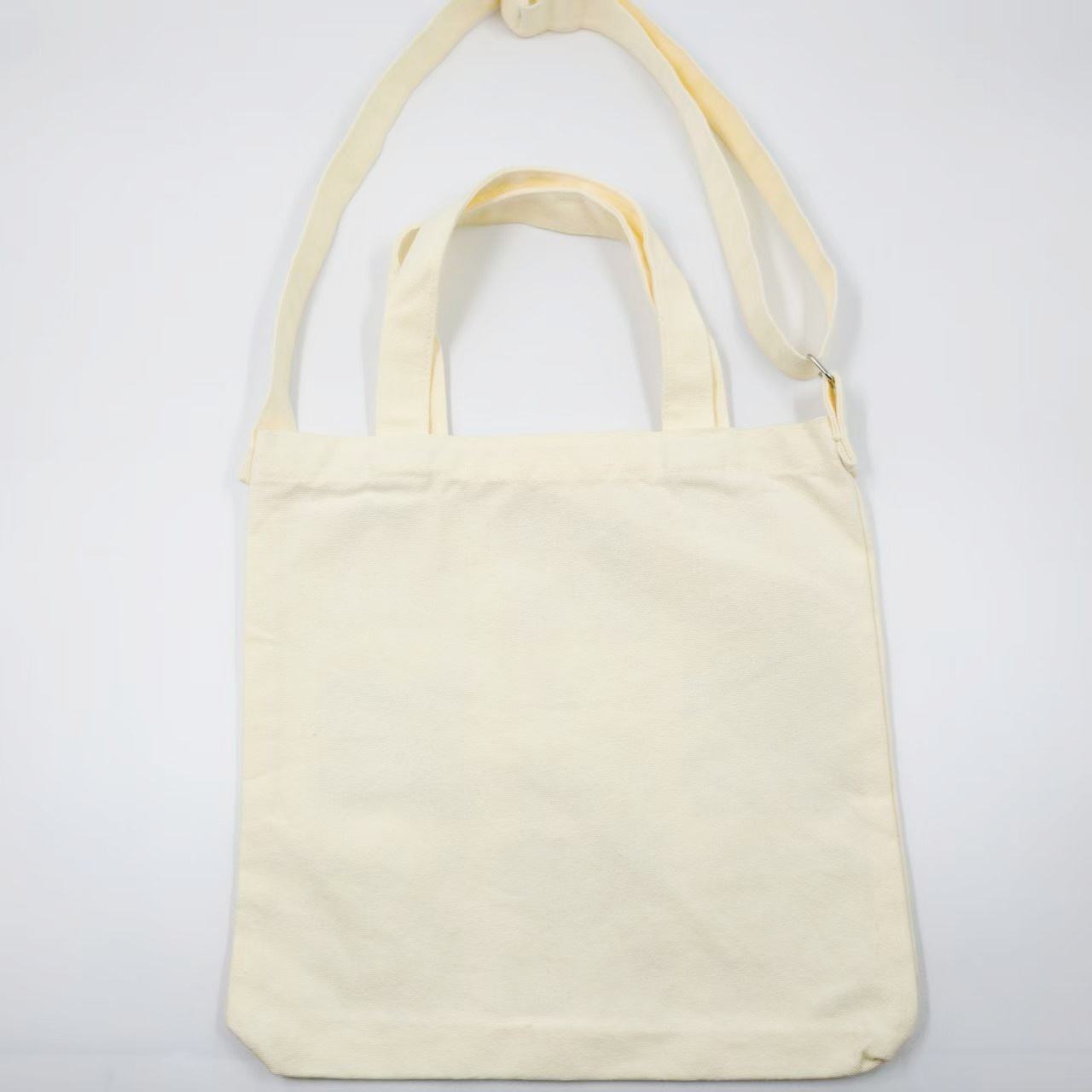
Custom bag types at a glance
Begin with the packed item and user action, then choose the silhouette. Material and decoration follow. The table below is a selection map; it is not a promise that every construction fits every order.
| Bag type | Typical role | Format-defining decisions | Approve with |
|---|---|---|---|
| Tote or shoulder bag | Retail merchandise, events, everyday carry, gift-with-purchase | Opening, handle drop, shoulder clearance, reinforcement, base and optional closure | Loaded carry test and handle/body sample |
| Retail shopping bag | Point-of-sale handover and branded carrier | Product fit, gusset, bottom support, handle type, display and pack-out | Actual product fit and carton fold test |
| Drawstring bag | Light carry, sports, kits and simple closure | Usable height below cord channel, cord route, eyelets, corners and opening action | Filled opening/closing and pull check |
| Drawstring pouch | Small product presentation, sets and secondary packaging | Neck loss, cord ends, seam finish, base shape and product protection | Pack-out with the intended item |
| Cosmetic bag or case | Beauty, toiletry, travel and organized storage | Zipper opening, lining, compartments, hardware, cleanability and standing shape | Filled access, closure and lining sample |
| Flat pouch | Documents, accessories, amenity kits and compact organization | Usable opening, seam allowance, zipper length, corner shape and label position | Actual item insertion and removal |
| Cooler or protective bag | Temperature-sensitive or cushioned carry | Layer stack, closure, seams, leakage path, insulation target and cleaning method | Order-specific functional test plan |
| Mesh or open-structure bag | Produce, sports, visibility or ventilation-led use | Opening size, snag risk, stretch, edge binding, handle integration and shrinkage | Loaded dimensions and construction sample |
| Transparent bag | Visibility-led presentation or access-control use | Film type, thickness route, seam method, edge finish, opacity, stiffness and cold/heat behavior | Material swatch plus assembled sample |
Step 1: define the job before choosing a silhouette
Write one sentence that describes the bag’s job without using a material name: “Carry two boxed products from checkout to car,” “organize travel-size toiletries,” or “hold a sports kit while allowing airflow.” This prevents a familiar-looking bag from being selected before the functional requirements are known.
Then define five conditions:
- Contents: maximum product dimensions, weight, shape, hard edges, moisture or cleanliness needs.
- User action: hand carry, shoulder carry, crossbody wear, pull closure, repeated zipper use or one-time presentation.
- Environment: retail counter, outdoor event, travel, bathroom, sports venue, warehouse or shipping carton.
- Brand moment: high-impact handover, subtle daily use, promotional visibility or coordinated product packaging.
- Evidence: approved sample, measurements, functional checks, claim support and inspection records required for the order.
If the choice is still too broad, compare material families only after these conditions are fixed. The Custom Bag Material Selection Guide and Wholesale Bag Material Guide explain how construction, finish and evidence change the decision. A material name alone does not define fabric weight, coating, layer structure, performance or compliance.
Step 2: translate the job into a product architecture
Every bag can be described as a set of connected systems. A change to one system can affect the others. For example, a wider opening may require a longer zipper; a deeper gusset changes flat packing; a longer strap changes load leverage; and a stiffer material changes the way corners turn and seams sit.
| System | Questions to specify | Common approval gap |
|---|---|---|
| Body | Finished dimensions, usable volume, panel shape, gusset, base and layer structure | External size is approved without checking internal usable space. |
| Opening | Open top, zipper, snap, drawstring, flap, hook-and-loop or another order-specific route | The packed item fits the body but cannot pass through the opening. |
| Carry | Handle type, drop, width, strap adjustment, attachment and reinforcement | Flat appearance is approved without a loaded carry check. |
| Interior | Lining, pockets, dividers, binding, labels, padding and cleanability | Interior layers reduce capacity or interfere with closure. |
| Branding | Method, size, location, colour reference, surface interaction and revision | A digital proof is treated as approval of physical colour and texture. |
| Pack-out | Folding, inserts, individual packing, barcode, units per carton and marks | The bag is approved open but creases or hardware pressure appear after packing. |
The Custom Bag Manufacturing Process explains how these decisions move from brief to delivery. If your team is deciding who owns design development, compare the routes in OEM vs ODM Bag Manufacturing.
Illustrative selection logic for three different products
The following examples are decision examples, not LUCKYSTAR customer cases. A boxed candle set leaving a retail counter may point toward a structured paper carrier or a gusseted reusable shopping bag because base support, product orientation and handover presentation matter. The packed box should determine the opening, gusset and handle spacing before artwork is placed.
A lightweight sports kit may point toward a drawstring carry bag when quick closure and compact storage matter. The same silhouette is less suitable if the contents have hard corners, require organization or create uncomfortable cord loading. In that situation, a tote with wider handles, a zipper case or another structured format may better fit the user action.
A travel-size beauty set may fit inside a small drawstring pouch for presentation, but a repeat-use toiletry product may need a lined cosmetic bag with wider zipper access and internal organization. The visible brand system can remain related across both SKUs while the opening, lining, seams, closure and quality checks change. This is the central principle: choose the format from the job, then express the brand through that format.
Tote bags: simple outline, many engineering choices
A tote is defined less by a single material than by the relationship between body, opening and handles. A shallow hand-carry tote, a long-handle shoulder tote and a convertible two-handle bag may share a rectangular body, but they do not share the same user fit or load path.
Specify these tote decisions
- Finished width, height and depth, with measurement points.
- Usable opening and any closure that reduces it.
- Handle length or drop, width, spacing, attachment position and reinforcement.
- Flat, boxed or shaped base and whether the filled bag must stand.
- Internal pocket, lining, strap, label and decoration relationships.
- Expected packed contents and the loaded evaluation method.
Use How to Choose a Tote Bag Manufacturer for the sourcing route, the Tote Bag Size Guide for measurement planning and Fabric Weight for Custom Tote Bags for construction questions. When comparing canvas and cotton directions, read Canvas vs Cotton Tote Bags; for decoration selection, use Custom Tote Bag Printing Methods.
Retail shopping bags: design from product fit and handover
A retail carrier should be designed around the items leaving the store, not an isolated flat dimension. Boxed goods may require bottom support and gusset control. Soft merchandise may need a different proportion. Handle style affects both the customer experience and how bags nest, fold and pack.
The Shopping Bag Size and Capacity Guide helps translate product dimensions into a carrier. Continue with the Shopping Bag Handle Guide and Gusset and Bottom Reinforcement Guide. Decoration must be approved on the proposed substrate and construction; compare routes in Custom Shopping Bag Printing Methods.
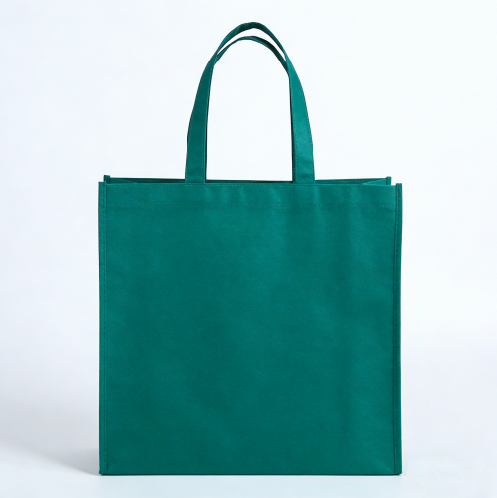
Choose the shopping-bag family after the use case
- Paper carrier: confirm paper construction, handle route, top and bottom structure, surface finish, print and expected handling. See Custom Paper Shopping Bags.
- Woven or non-woven PP direction: distinguish the material structures, converting route, surface and expected reuse scenario. See Woven PP vs Non-Woven PP Shopping Bags.
- Jute construction: agree fibre/material route, lamination if proposed, edge finish, handle attachment and shedding expectations. See the Jute Shopping Bag Construction Guide.
- Cotton mesh: check opening size, load stretch, snag risk, finished dimensions and care/shrinkage route. See Cotton Mesh Shopping Bag Sizing and Construction.
Drawstring bags and pouches: protect usable space
Drawstring formats look efficient because the closure is integrated into the top, but the cord channel consumes height and changes the opening. A backpack-style drawstring bag also transfers load through cords, eyelets or corner tabs. A small pouch prioritizes presentation and product fit; a larger carry bag prioritizes repeated opening and loaded comfort.
For carry formats, use the Custom Drawstring Bag Supplier Guide. For packaging-led formats, compare Custom Drawstring Pouch Packaging and Bulk Cotton Drawstring Bag Sourcing.
Approve drawstring formats with the product inside
Record the usable height below the cord channel, opening width when relaxed and when pulled, cord length, knot or end treatment, channel construction, eyelet or corner reinforcement, seam finish and base shape. Insert the intended product, close the bag and evaluate whether the top gathers as expected. A flat sample can fit the dimensions and still fail at the opening.
Cosmetic bags, cases and flat pouches: access is as important as capacity
Beauty and travel formats are defined by how easily the user can see, reach and organize the contents. A flat zipper pouch minimizes bulk but provides limited structure. A box cosmetic bag provides depth and a wider access zone. A train-case direction can add organization and shape, but also introduces more hardware, layers, seams and packing considerations.
Start with Flat Pouch vs Box Cosmetic Bag vs Train Case and the Cosmetic Bag Size and Capacity Guide. Then define closure components with the Cosmetic Bag Zipper and Hardware Guide and interior requirements with the Cosmetic Bag Lining Guide. The Cosmetic Bag Manufacturer Selection Guide connects these product decisions to supplier evaluation.
Cooler, transparent and specialty formats: define the functional boundary
Specialty bags need more than a category label. “Cooler,” “water-resistant,” “clear” or “protective” can mean different things to different teams. Convert the label into a measurable order requirement and identify the relevant part of the bag.
| Format | Define before quoting | Do not assume from a photo |
|---|---|---|
| Cooler or insulated bag | Layer stack, closure, intended contents, temperature/time target if required, seams, leakage path and cleaning route | That appearance proves insulation performance, food-contact suitability or a universal test result. |
| Transparent bag | Film/material identity, thickness route, clarity, colour, stiffness, smell expectations, joining method, edge finish and environment | That all clear plastics have the same flexibility, cold behavior or regulatory scope. |
| Coated or laminated bag | Base substrate, coating/lamination, coverage, seam and opening behavior, care and claim boundary | That a treated surface makes the complete bag waterproof. |
| Protective or padded bag | Protected item, drop/abrasion risk, padding structure, closure, interior contact and test method | That thickness alone proves protection. |
For cooler projects, use the Custom Cooler Bag Sourcing Guide as the product-specific starting point. For transparent materials, compare Clear PVC vs TPU Shopping Bags. Any performance, environmental or compliance statement must be tied to the proposed material, document scope, applicable entity, destination and order; one image or one historical report cannot support a whole product line.
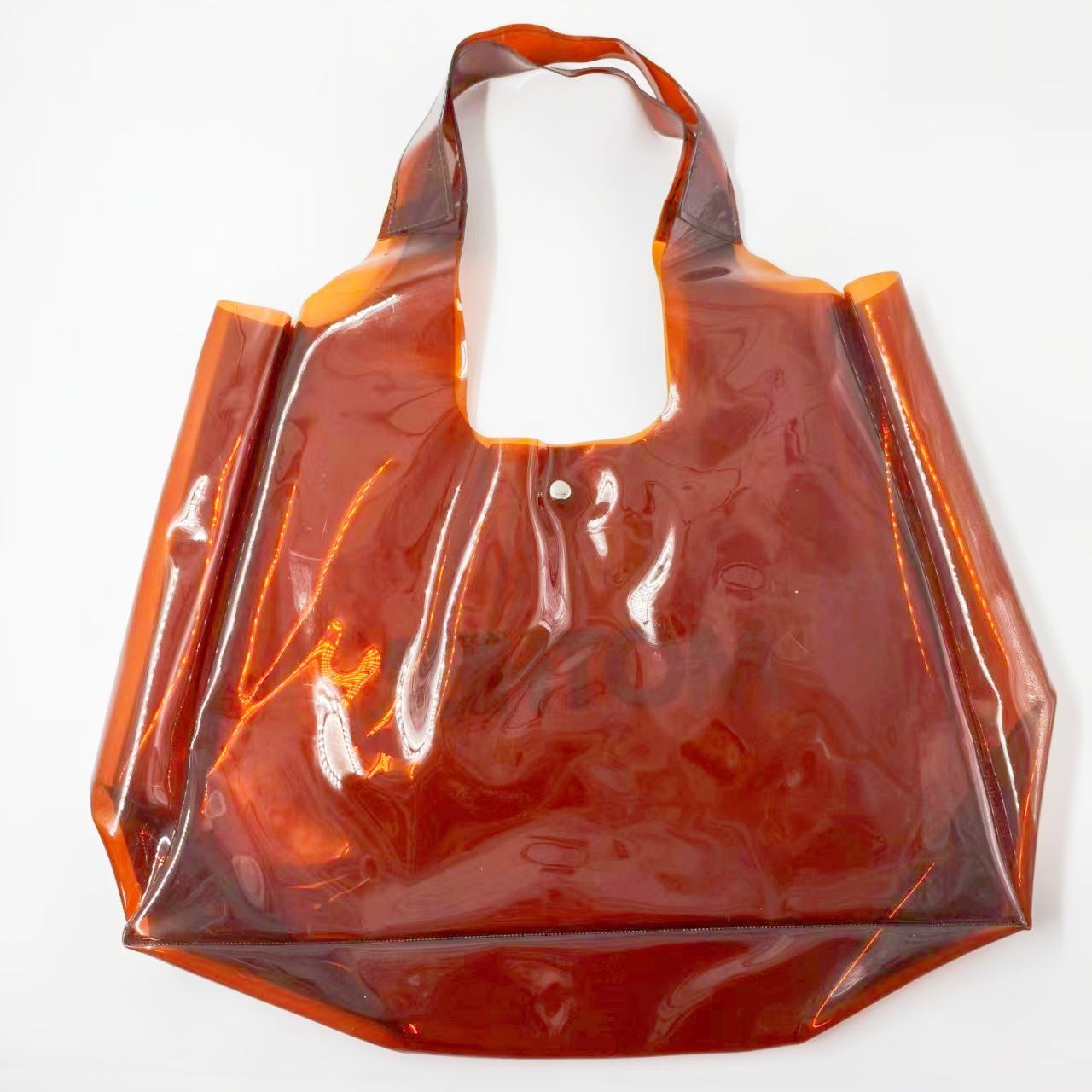
One brand language, different product engineering
A coordinated collection can share visible rules without forcing every SKU into the same construction. Keep the brand system consistent where customers notice it; allow product engineering to change where the contents and user action demand it.
| Can stay consistent | Usually changes by bag type | Control document |
|---|---|---|
| Artwork master and approved logo proportions | Print size, placement datum and decoration method | SKU-specific artwork proof |
| Colour direction | Physical result across paper, fabric, film, hardware and printing | Material-specific colour reference or approved sample |
| Label hierarchy and wording | Label size, position, seam insertion and regulatory content | SKU label file and placement drawing |
| Collection naming and packaging hierarchy | Folding, protective packing, barcode location and units per carton | SKU pack-out specification |
| Quality vocabulary and defect classes | Critical-to-quality characteristics and functional checks | SKU inspection checklist |
Do not scale one artwork proportion automatically across a tote, pouch and cosmetic case. Each surface has different seams, curvature, gussets, opening hardware and viewing distance. Use one master asset, then issue controlled production artwork for each SKU.
Build a multi-SKU custom bag range without losing control
1. Create a one-page range map
List each SKU, use case, packed item, dimensions, carry/closure system, material direction, branding route, quantity and destination. Mark shared components and SKU-specific components. This reveals where standardization may reduce unnecessary complexity without removing functional features.
2. Separate fixed requirements from options
A fixed requirement might be the product fit, logo master, label content or delivery destination. An option might be the exact material route, zipper pull shape or packing fold. Suppliers can propose alternatives only where the brief identifies room to do so.
3. Approve representative risks, not only the easiest sample
If several SKUs share a material but use different openings, handles or decoration, one sample may not cover all risks. Build an approval matrix: which sample proves colour, which proves printed surface, which proves zipper access, which proves loaded carry, and which controls pack-out. The Custom Bag Sample Development Process explains sample stages and approval gates.
4. Give every SKU measurable CTQs
Critical-to-quality characteristics may include finished dimensions, opening, handle or strap attachment, seam route, closure function, logo position, colour reference, cleanliness, label content and pack-out. Use the Custom Bag Quality Inspection Checklist to organize checks and Bag Quality Standards: Build a CTQ Acceptance Plan to define evidence and release authority.
What to send for a useful custom bag quotation
- SKU list and one-sentence use case for every bag.
- Contents, maximum packed dimensions, weight and handling risks.
- Finished external dimensions, usable internal space and measurement method.
- Opening, carry system, base/gusset, interior, hardware and reinforcement.
- Material direction plus the characteristics that matter; avoid relying on a generic name.
- Vector artwork, colour references, finished decoration size, location and revision.
- Quantity split by SKU, colour and design.
- Sample stages, functional checks, claim evidence and inspection requirements.
- Individual packing, carton, barcode, destination and delivery basis.
Current product directions can be reviewed through LUCKYSTAR’s custom tote bags, custom shopping bags, custom drawstring bags, custom pouch bags and custom cosmetic bags. You can also review current public listings on LUCKYSTAR’s Alibaba.com storefront and LUCKYSTAR’s Made-in-China storefront. Platform pricing, MOQ, specifications and timing are dynamic listing information and do not replace an order-specific written quotation.
To discuss a coordinated range, send LUCKYSTAR the SKU map, intended contents, artwork and delivery destination. Or email a prefilled multi-SKU brief. Material, sample route, MOQ, price, timing, testing, performance and claims remain subject to the final specification and written confirmation.






