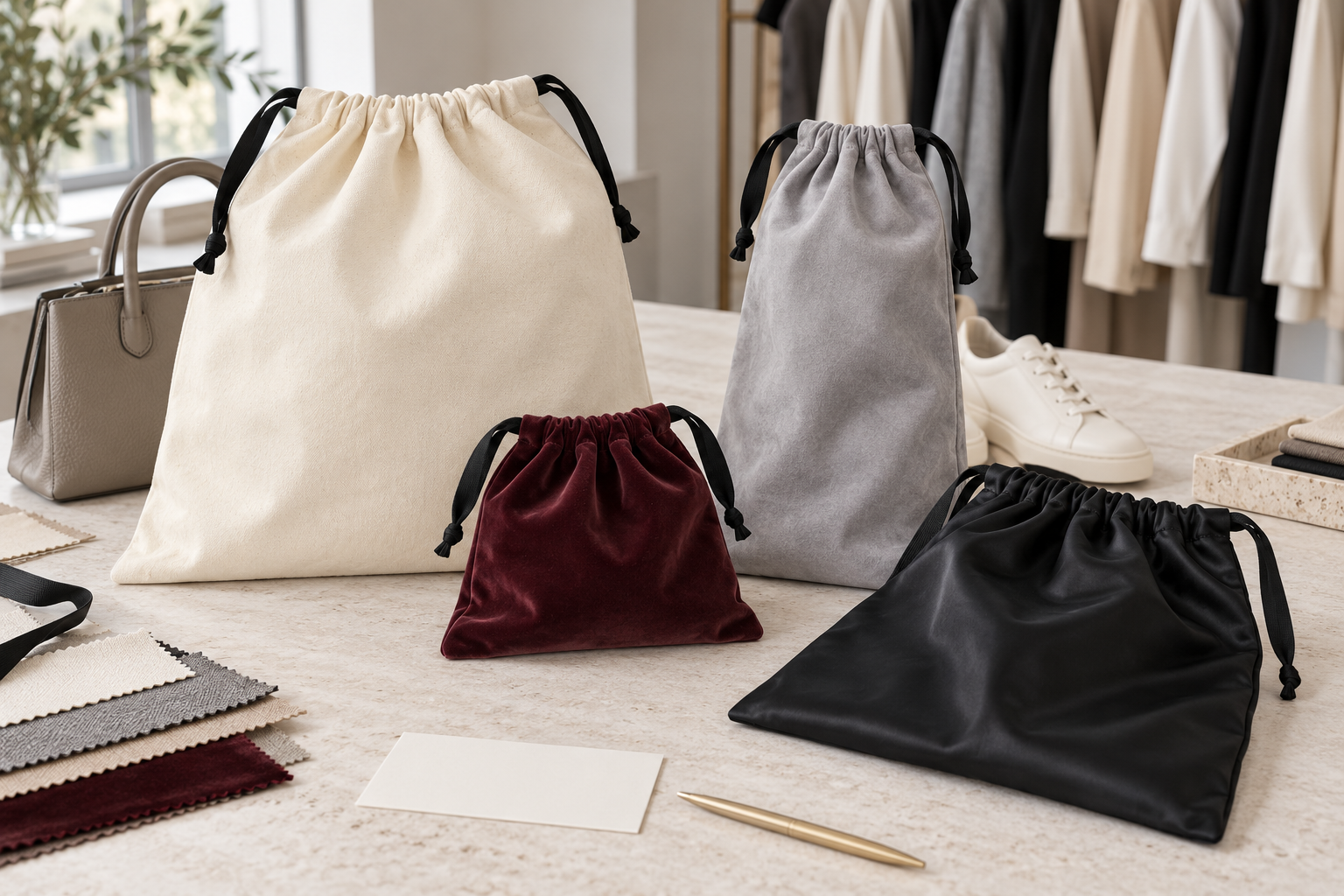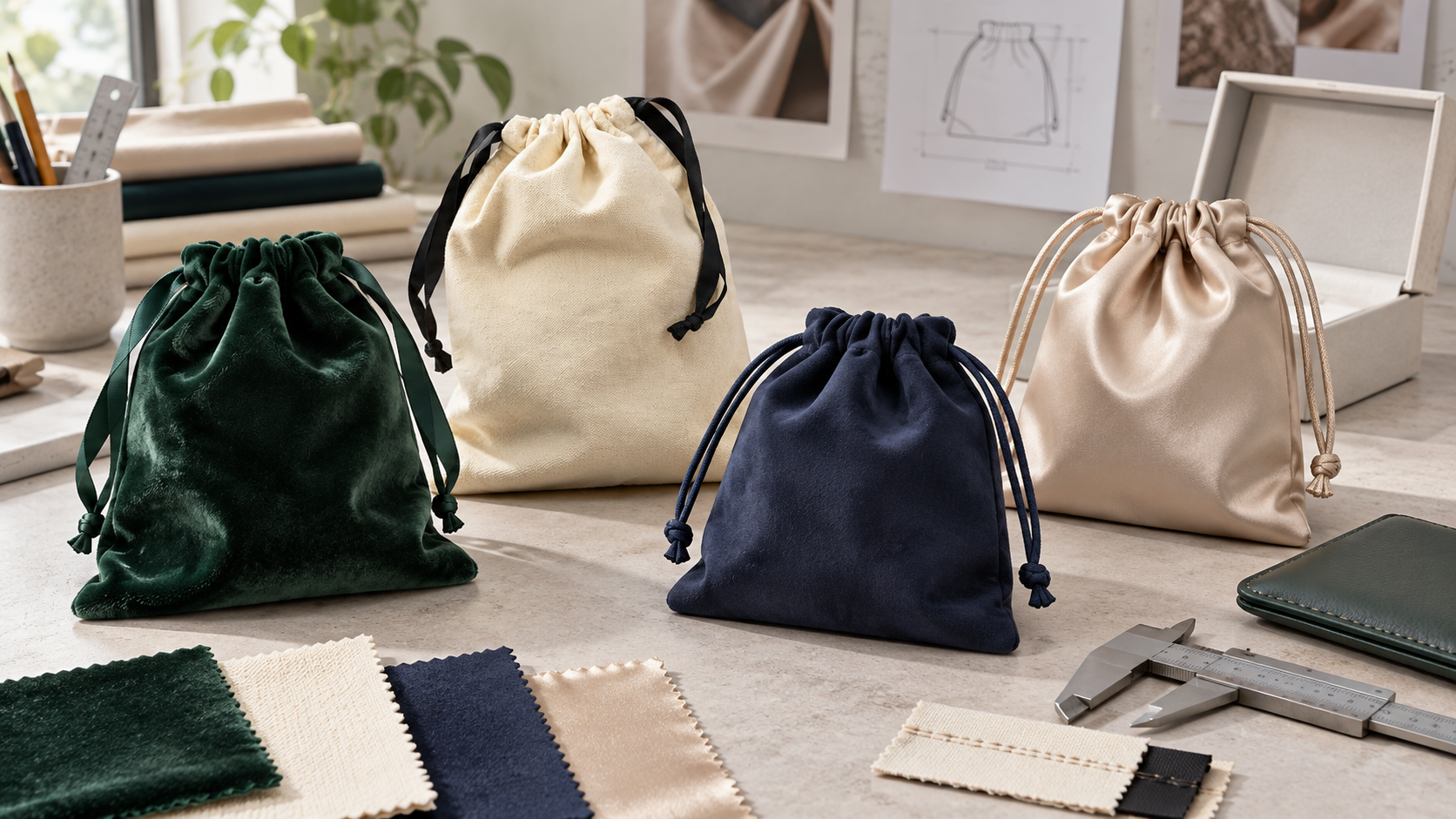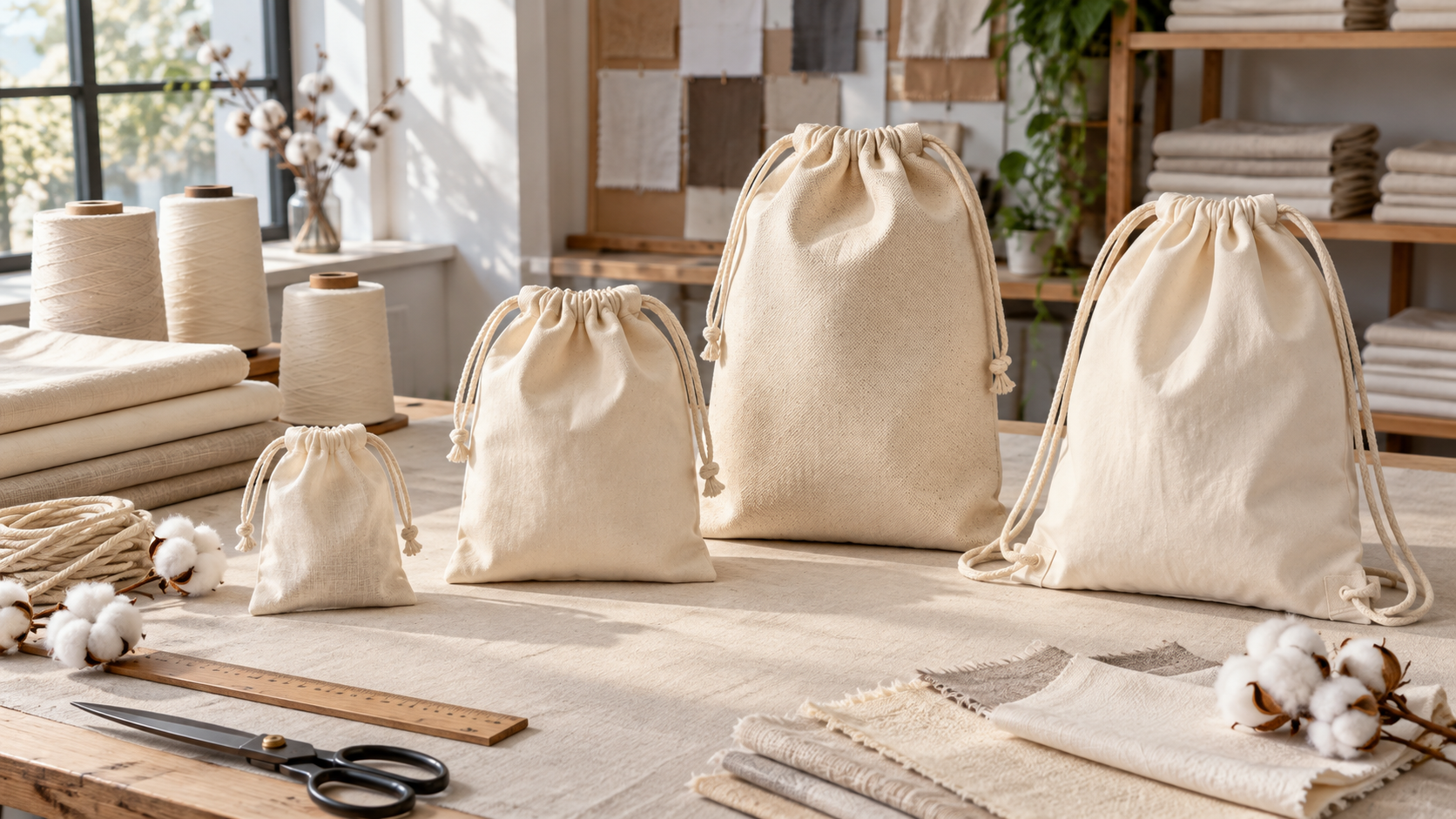
Ask three suppliers for the “best fabric weight” for a tote bag and you may receive three different answers. One may recommend 140 GSM cotton for a short campaign, another 280 GSM canvas for retail, and a third 12 oz canvas for a premium program. None is automatically wrong. They are solving different product briefs.
The practical answer is that fabric weight must match the job the finished bag has to do. Load, shape, logo method, target price, packing plan and expected lifetime all matter. If you are defining a new tote program, review our custom tote bag options alongside this guide. For the wider supplier, sampling and production framework, use the Custom Bag Manufacturer Guide.
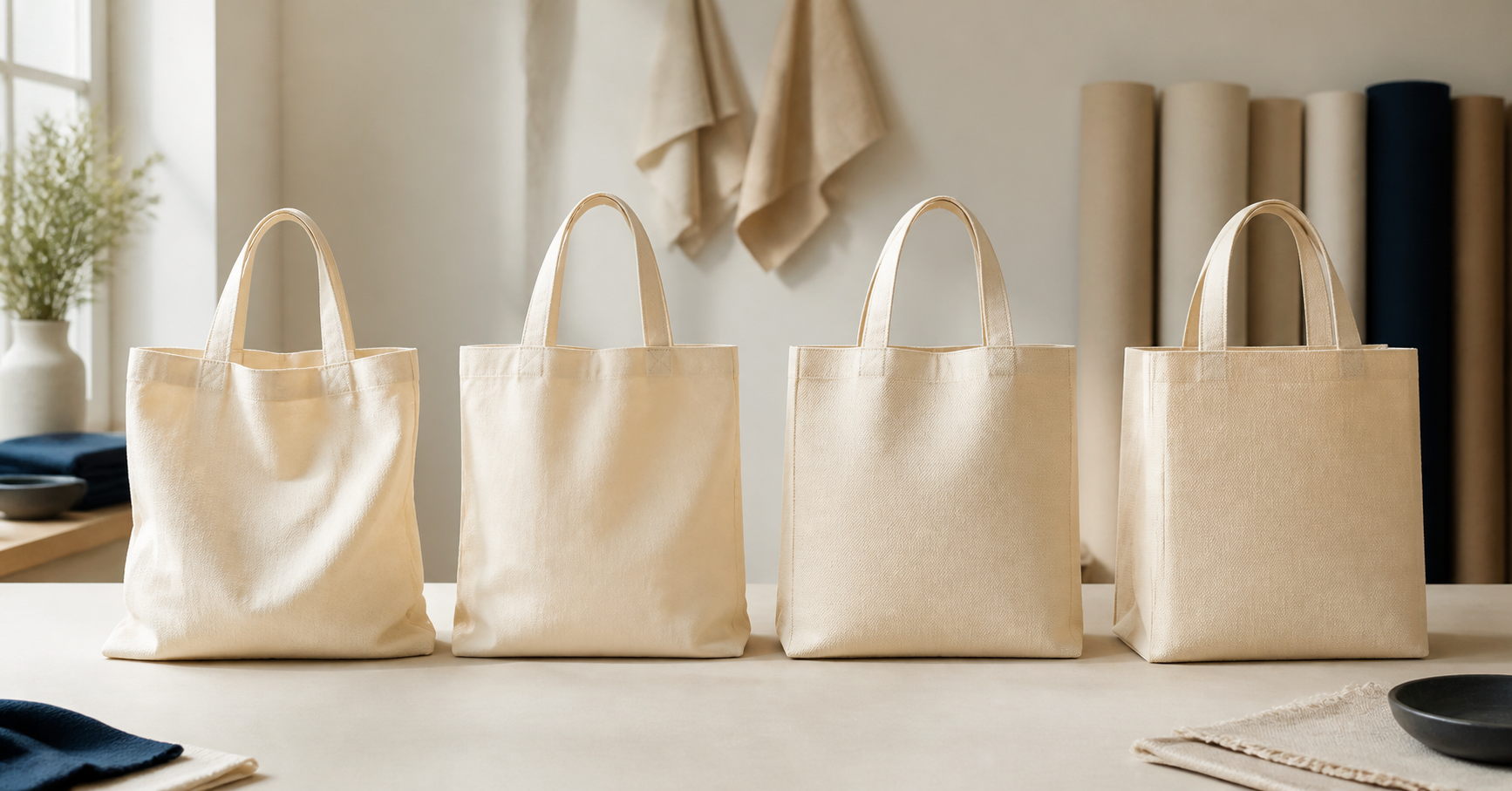
The same pattern can feel like a foldable giveaway or a structured retail product when the fabric weight changes.
Need a fabric-weight brief tied to the finished tote? Send the intended contents and load, finished size and construction, fibre/weave/finish, target mass-per-area range and tolerance, colour, artwork method, quantity, required tests, packing, destination and arrival date. LUCKYSTAR can return its own proposed material route, sample gates and quotation assumptions.
Quick answer: which tote bag fabric weight should you choose?
For early planning, the ranges below are more useful than a single “best” number. They are purchasing bands, not universal industry grades. Weave, yarn, finishing and construction can make two fabrics at the same GSM behave differently.
| Planning range | Typical product direction | What the buyer should expect | Main watch-out |
|---|---|---|---|
| 120–160 GSM | Foldable promotions, event handouts, light packaging | Soft hand, low material use, compact packing | Show-through, limited body and greater sensitivity to a heavy ink deposit |
| 180–240 GSM | Upgraded promotions, branded packaging, light everyday use | Better opacity and hand feel without becoming bulky | Still needs appropriate handle and seam construction for the intended load |
| 270–340 GSM | Retail merchandise, bookstores, daily-use canvas totes | Noticeable body, durable perception and a substantial print surface | Higher raw-material, sewing and freight impact than a promotional tote |
| 380–475 GSM | Premium canvas totes and structured private-label styles | Dense hand and strong shape retention when the pattern supports it | Thicker seams, needle choice, turning operations and decoration need development |
| Above 475 GSM | Specialty utility or fashion-led construction | Very substantial material and a distinctive premium feel | Not automatically “better”; it may add unnecessary cost, bulk and production difficulty |
What GSM and oz/yd² actually measure
GSM means grams per square metre. It describes mass per unit area; it does not directly describe thickness, strength, fibre identity or quality. Oz/yd² means avoirdupois ounces per square yard. The official NIST conversion factor is 0.03390575 kg/m² for 1 oz/yd², equivalent to about 33.91 g/m². That conversion applies to ounces per square yard, not an unspecified “oz” trade label or ounces per linear yard.
| oz/yd² | Approximate GSM | How to use the number |
|---|---|---|
| 4 oz | 136 GSM | Light promotional starting point |
| 5 oz | 170 GSM | Light-to-medium transition |
| 6 oz | 203 GSM | More opacity and hand than very light cotton |
| 8 oz | 271 GSM | Substantial everyday tote development range |
| 10 oz | 339 GSM | Dense retail canvas direction |
| 12 oz | 407 GSM | Heavy, premium development direction |
| 14 oz | 475 GSM | Very heavyweight specialty direction |
Conversions are simple; trade descriptions are not. Some sellers use “oz” without stating the area basis, and some duck fabrics have historically been described by weight per linear yard at a specified width. Put the full unit and method in the specification: for example, “target 340 g/m² measured on conditioned fabric by the agreed method,” rather than “10 oz canvas.” Use the NIST unit conversion only for unit translation; approve the actual fabric and lot-control method separately.
There is no best GSM without a use case
A buyer choosing weight before defining use is working backwards. Start with what will go into the bag, how it will be carried, how often it should be reused and what impression it must create. A museum shop selling a tote is making a different promise from a conference organizer distributing one with brochures.
| Use case | Good first sample range | Why | Development question |
|---|---|---|---|
| One-day event or mailer | 120–160 GSM | Easy to fold and economical to ship | Will the artwork or contents show through? |
| Retail packaging with reuse value | 180–240 GSM | Balances presentation, packability and cost | Does the bag still fold neatly at checkout? |
| Bookstore or daily shopping tote | 270–340 GSM | More body and a durable consumer impression | Are handles and top hem engineered for the load? |
| Premium merchandise | 340–475 GSM | Dense hand supports a higher-value position | Does added weight improve the design or only make it bulky? |
| Structured fashion tote | Test fabric plus interlining as a system | Shape may come from backing and construction, not shell GSM alone | Which component controls the silhouette? |
Fabric weight is not the same as fabric identity
Cotton describes fiber content; canvas describes a fabric construction or category. Many canvas tote bags are made from cotton, so “cotton versus canvas” is not a clean technical comparison. If this distinction matters to your range, read our Canvas vs Cotton Tote Bags guide.
A 220 GSM plain cotton cloth and a 220 GSM canvas can have different yarn sizes, thread density, surface character and drape. Recycled cotton blends, polyester canvas and coated fabrics create more variation. Weight should therefore sit beside fiber content and construction—not replace them.
| Specification field | What it tells you | What it does not prove |
|---|---|---|
| Fiber content | Which fibers are present | Finished strength, hand or exact environmental impact |
| GSM or oz/yd² | Mass per unit area | Thickness, tear resistance or seam performance |
| Weave/construction | How yarns are arranged | Actual batch weight or color consistency |
| Finish | Whether fabric is washed, dyed, coated or softened | Performance after the buyer’s exact use and care cycle |
| Finished bag test | How the construction performs as a product | That every production unit is identical without process control |
Why nominal weight and finished weight can differ
Do not assume a quoted fabric weight describes the exact condition you will receive. Dyeing, washing, calendaring, coating and moisture condition can influence measured mass and hand. A fabric may also be marketed at a nominal weight while a laboratory result is reported from a conditioned specimen.
| Question for the factory | Why it matters | Better specification wording |
|---|---|---|
| Is the value greige, dyed or finished? | Processing can change the measured and perceived fabric | State the point in production at which weight is controlled |
| Is the number nominal or tested? | A catalog label may be a target, not a result | Require a target plus an agreed tolerance |
| Which test method is used? | Sampling and conditioning affect comparability | Name the agreed method and reporting basis |
| How is lot variation handled? | One approved swatch may not represent every roll | Define roll sampling and disposition for out-of-tolerance material |
ASTM D3776/D3776M-20(2025) covers fabric mass per unit area and includes methods for full pieces, full-width samples, small swatches and narrow fabrics. Its public scope notes that a small-swatch result applies to the sample and may not represent the source lot. The purchase order should therefore identify the method, conditioning, sampling location, target, tolerance, lot definition and action for nonconformance rather than relying on one development swatch.
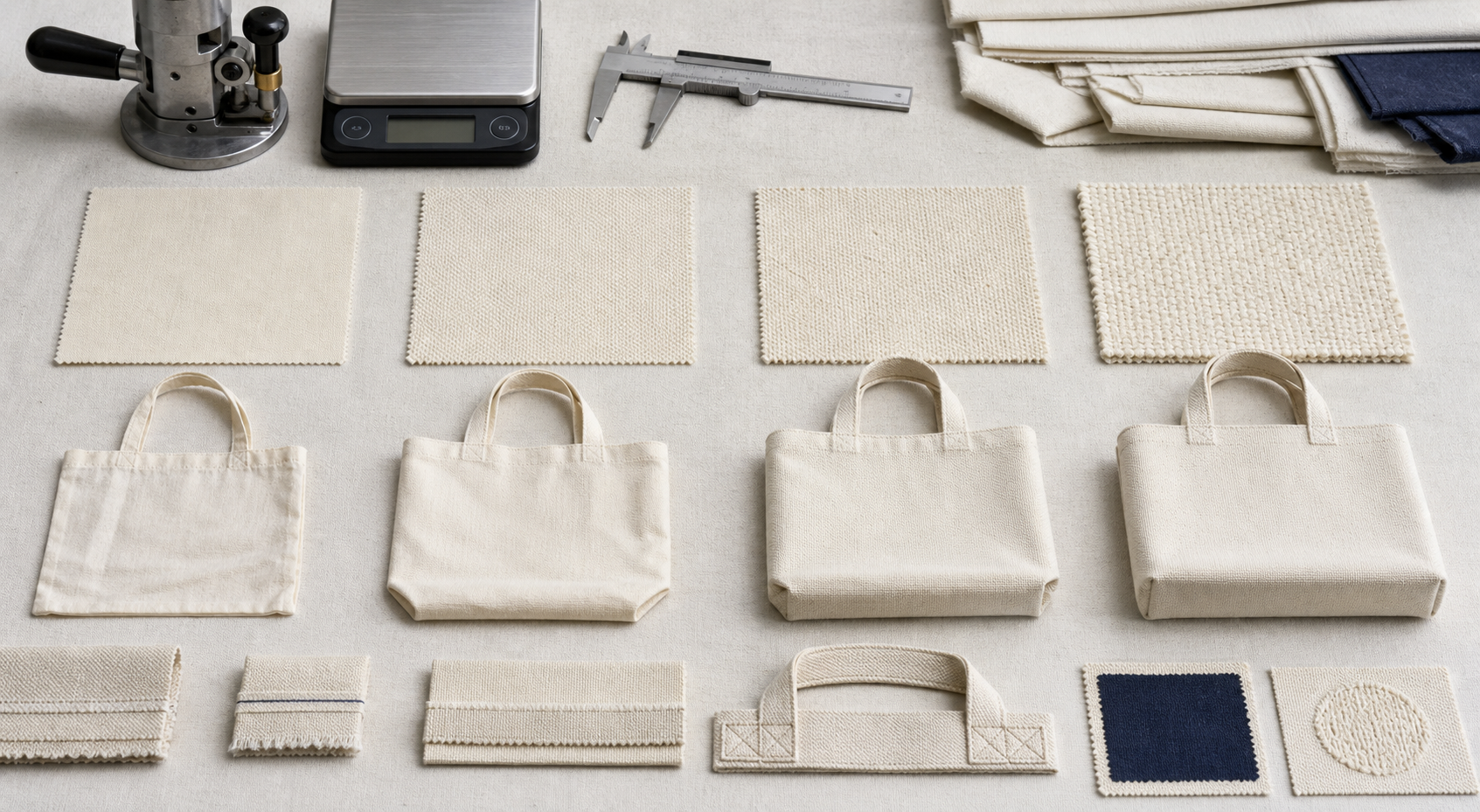
Weight approval works best when the swatch, construction sample and measurement method are reviewed together.
Match fabric weight to the decoration method
The logo is part of the material decision. A lightweight cloth may move or show distortion under a dense decoration. A coarse, heavy canvas can make very fine lines behave differently from the same artwork on a smooth cloth. The solution is not always to add weight; it may be to adjust the print method, underbase, artwork, frame or stabilizer.
| Decoration | Weight-related consideration | What to approve on the sample |
|---|---|---|
| Screen print | Surface texture and ink deposit can matter as much as GSM | Edge definition, opacity, hand feel and show-through |
| Heat transfer | Heat, pressure and fabric movement need testing | Bond, surface mark, flexibility and wash result if applicable |
| Digital textile print | Fiber, pretreatment, color and surface smoothness influence output | Color, detail, crocking and any pretreatment halo |
| Embroidery | Dense stitches may need backing even on heavier fabric | Puckering, reverse-side finish, distortion and placement |
For a broader look at print, stitching and delivery risks, see what buyers overlook in tote bag orders. This article stays focused on turning fabric weight into a controllable specification.
Heavier fabric does not guarantee a stronger tote
GSM is only one input in a load-bearing system. Yarn quality, weave, seam allowance, stitch type, stitches per unit length, top-hem construction, handle material and handle attachment all contribute. A heavy shell with poorly attached handles can fail earlier than a lighter shell with well-engineered reinforcement.
| Performance area | Variables beyond GSM | Useful validation |
|---|---|---|
| Body durability | Yarn, weave, abrasion and tear behavior | Material test selected for the intended risk |
| Handle security | Webbing or self-fabric construction, overlap and reinforcement | Finished-bag load test with an agreed method |
| Seam durability | Seam type, allowance, thread and needle damage | Seam inspection plus relevant strength testing |
| Shape retention | Pattern, gusset, lining, backing and finish | Filled sample review after rest and handling |
| Care performance | Fiber, finish, dye and construction balance | Agreed cleaning or wash evaluation where the product claim requires it |
Build the checks into your custom bag quality inspection checklist rather than accepting “heavy duty” as evidence.
How fabric weight changes price, packing and freight
Moving from 140 to 340 GSM more than doubles the shell mass per square meter before cutting waste, handles, thread, printing and packing are considered. It can also change needle requirements, seam bulk and production speed. The commercial effect is therefore wider than the fabric price per meter.
| Cost area | What generally changes as weight increases | How to compare quotations fairly |
|---|---|---|
| Main material | More fiber mass per unit area | Use the same finished GSM, usable width and finish |
| Cutting and sewing | Bulkier plies and seams may require different handling | Keep pattern, reinforcement and workmanship identical |
| Decoration | Surface and heat behavior may require a revised process | Quote the same artwork, size, colors and method |
| Packing | Fewer units may fit a carton; creasing rules can change | Compare units per carton, carton size and gross weight |
| Freight | Shipment mass and sometimes volume rise | Compare the same Incoterm and packing configuration |
For budget planning beyond fabric, use our custom bag cost guide. If you are comparing several product types, the full Product Range helps keep the tote specification in context.
What to put in a tote bag fabric specification
A useful purchase order does not say only “heavy cotton canvas.” It makes the material measurable and links it to the approved sample. Your supplier may recommend adjustments after development, but the final approved basis should be clear to both sides.
| Field | Example of useful wording | Why it prevents disputes |
|---|---|---|
| Fiber content | State the agreed composition and any certification requirement | Separates material identity from fabric weight |
| Construction and finish | Canvas/plain weave, dyed or natural, washed or unwashed, coating if any | Explains the surface and handling expected |
| Weight | Target finished GSM with agreed tolerance | Makes the acceptance point measurable |
| Test basis | Named method, sample condition and lot-sampling plan | Improves comparability between approvals and bulk |
| Color and hand | Approved lab dip or bulk standard plus signed fabric swatch | Numbers alone cannot define appearance or touch |
| Product performance | Finished-bag checks based on intended load and claims | Connects fabric selection to real use |
A practical sample approval sequence
- Define the use: contents, expected reuse, target look, selling price and care claim.
- Shortlist two weight bands: do not force a decision from swatches alone.
- Make comparable prototypes: keep dimensions, seams, handles and artwork constant.
- Review empty and filled: check drape, show-through, comfort, shape and decoration.
- Measure the approved material: record the fabric condition, test basis and result.
- Approve the full system: fabric, color, construction, print and packing together.
- Translate approval into bulk controls: define tolerance, sampling and action for variance.
The process is covered in more detail in our custom bag sample development guide. When supplier capability is still being evaluated, use the tote bag manufacturer selection checklist.
Common fabric-weight buying mistakes
| Mistake | Why it causes trouble | Better action |
|---|---|---|
| Treating “10 oz” as complete | The area or linear-width basis may be unclear | Write oz/yd² and the GSM equivalent |
| Choosing the heaviest option | Cost and bulk may rise without improving the user experience | Approve against the product brief |
| Judging an unprinted swatch | Decoration can change hand, drape and visual quality | Approve a decorated construction sample |
| Using GSM as a strength claim | Construction variables remain uncontrolled | Specify finished-bag performance checks |
| Ignoring bulk sampling | One swatch may not represent multiple rolls | Agree how incoming rolls are checked |
Company-claim boundary: the following section is LUCKYSTAR publisher self-description and a commercial service proposal. It is not independent proof of factory ownership, fibre identity, material availability, mass-per-area conformity, strength, water resistance, load capacity, sample or bulk quality, MOQ, price or delivery. Legal seller, nominated mill and production sites, material, test methods, tolerances, samples, inspection and schedule depend on the exact order and written confirmation.
How LUCKYSTAR describes its tote fabric review
LUCKYSTAR states that it can review an order brief and propose a material and construction route for sample validation.
- Define the duty: record contents, load, carry mode, reuse and care expectations, opacity, structure, artwork and packout.
- Specify the material: identify fibre composition, weave or knit, finish, colour route, target mass per area, tolerance, width and conditioning/method.
- Connect construction: evaluate seams, hems, handles, attachment and reinforcement with the shell rather than treating GSM as the load rating.
- Approve the actual route: use production-equivalent fabric for colour, decoration, construction, functional and packed-sample gates.
- Control bulk: define material lots, sampling points, test records, acceptable variation, substitutions and reapproval triggers.
Review the custom tote bag range and quality-inspection guide, then send the performance brief for an order-specific response.
FAQ: custom tote bag fabric weight
Is 200 GSM good for a tote bag?
It can be an editorial sample-development starting point for some upgraded promotional, packaging or light-use briefs, but 200 GSM alone does not establish suitability. Approve fibre, weave, finish, opacity, decoration, seams, handles, load method and packing against the intended contents before bulk release.
Is 12 oz canvas the same as 340 GSM?
No. If “12 oz” means 12 oz/yd², it converts to approximately 407 GSM. About 10 oz/yd² converts to 339 GSM. Always confirm that the supplier is quoting ounces per square yard.
Does a higher GSM make a tote waterproof?
No. Water resistance depends on fiber, construction, coating, lamination and seam design. A heavier untreated cotton canvas can still absorb water.
What GSM is best for screen-printed tote bags?
There is no print-only answer. Artwork, ink system, surface texture, bag color and target hand all matter. Test the actual decoration on the proposed fabric instead of selecting by GSM alone.
Should the PO allow a GSM tolerance?
Yes, when both parties agree on the target, tolerance, measurement method and fabric condition. The appropriate tolerance depends on the material and process, so it should be confirmed during development rather than copied from an unrelated product.
Choose fabric by measured duty and released evidence
Connect the load and presentation brief to fibre, construction, mass-per-area method and tolerance, production-equivalent decoration, finished-bag tests, lot controls and packing.

Review LUCKYSTAR custom tote bag options, then send the fabric and performance brief through the contact form or Email a project brief. The email link opens a prefilled draft for your review before sending.
Legal seller, mill and facility, fibre/material identity, finish, colour, mass per area, strength, water performance, samples, tests, inspection, MOQ, price, packing, schedule and delivery terms are subject to current evidence, final specification, quotation, contract and written confirmation.