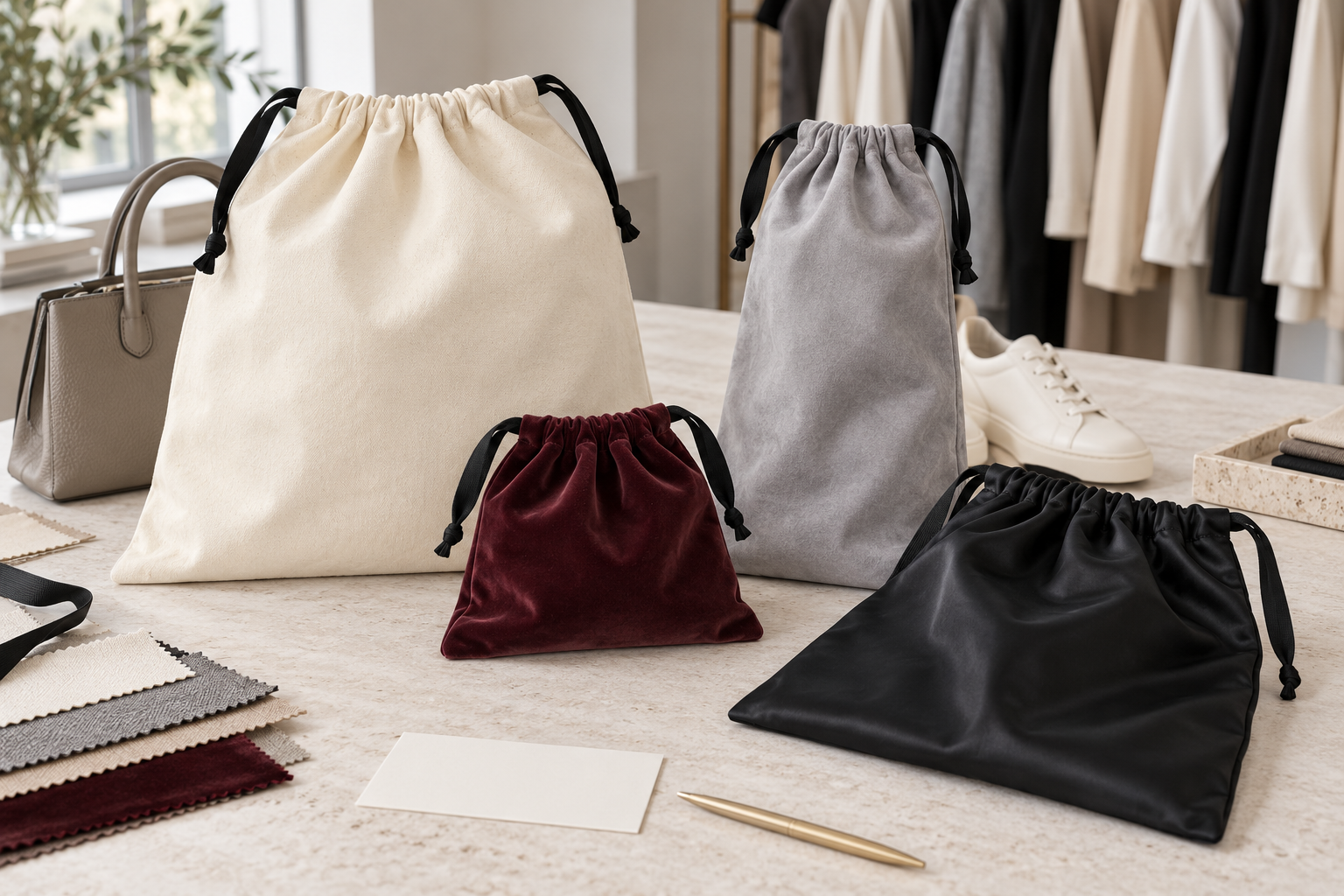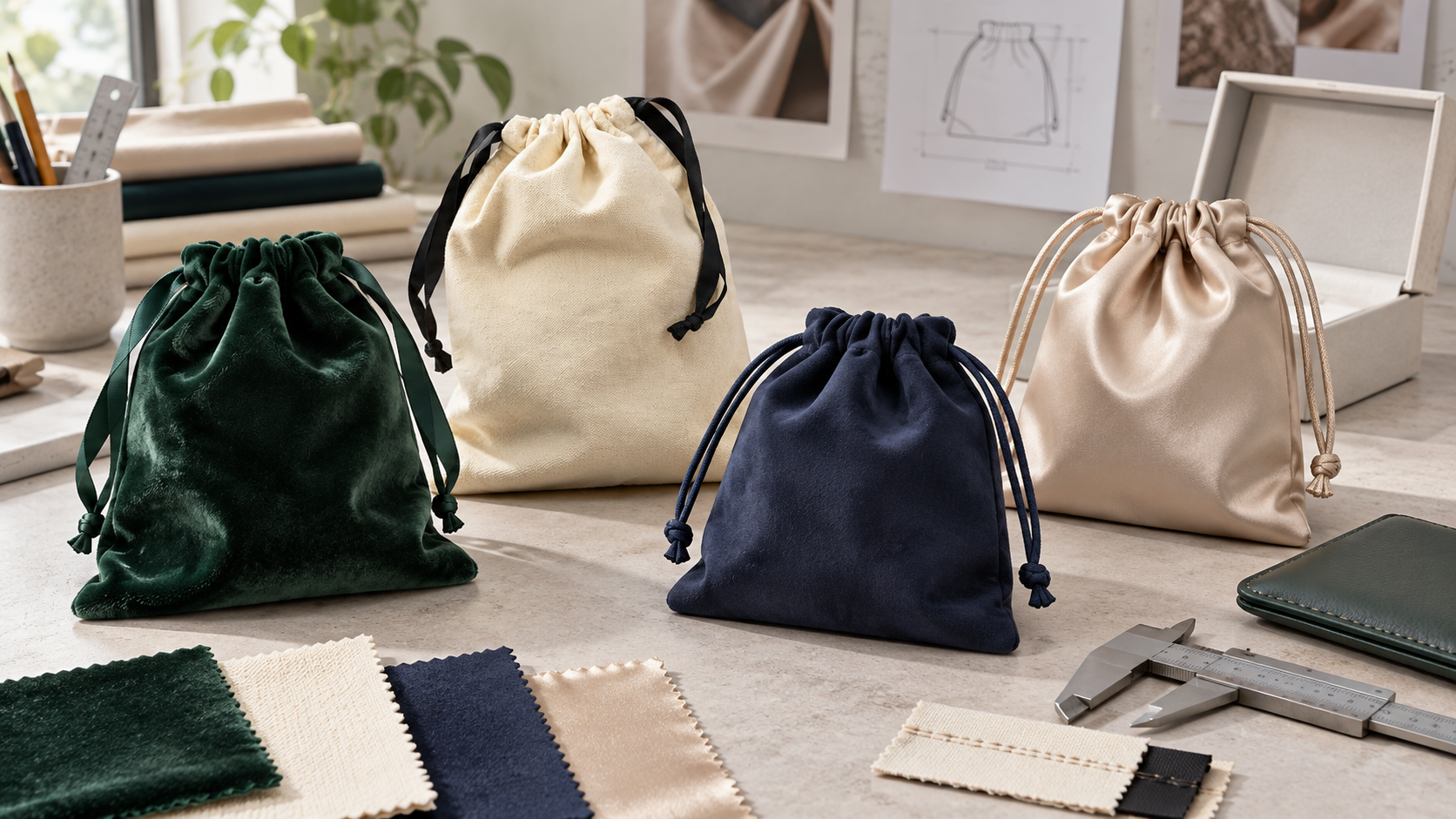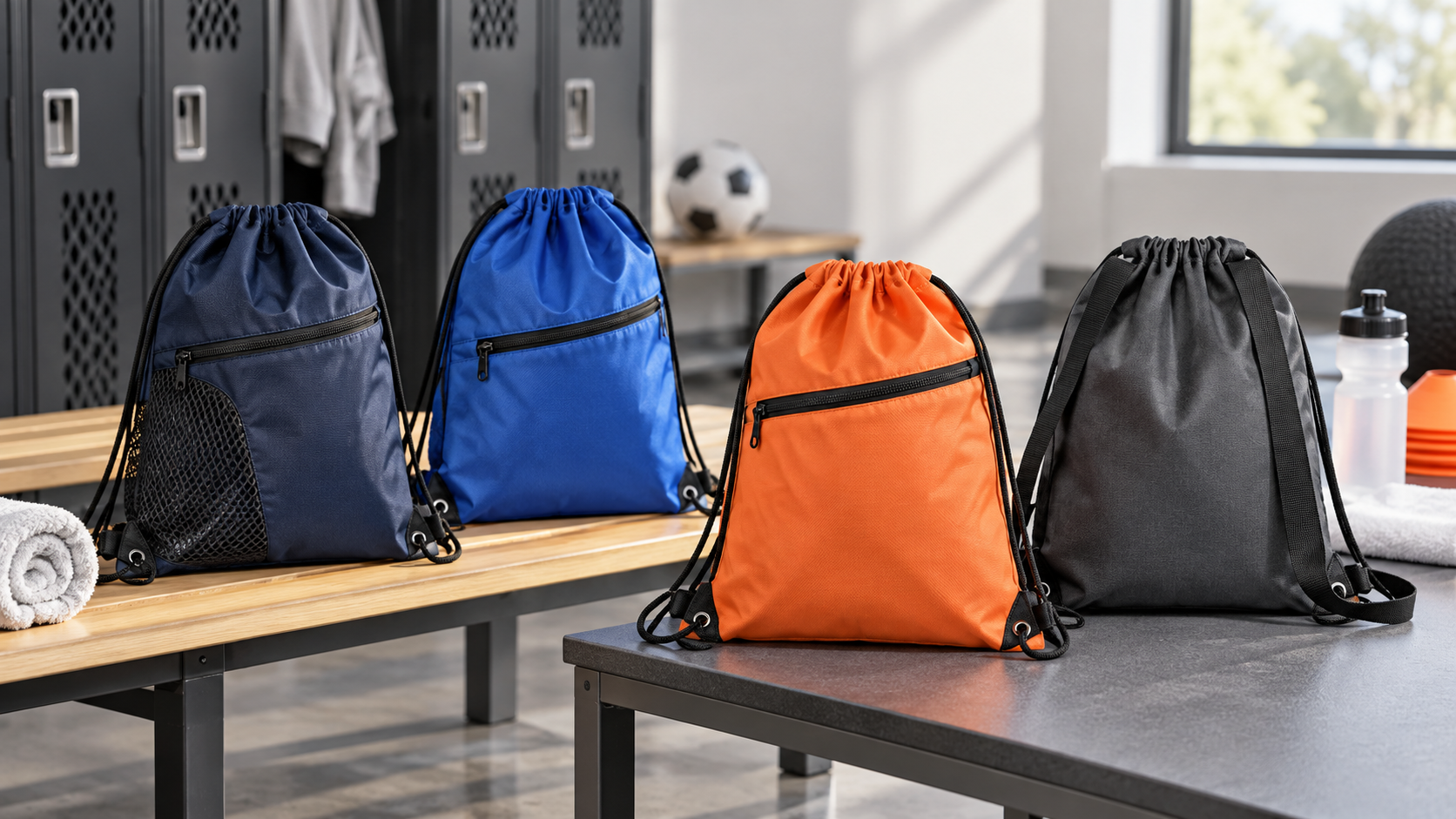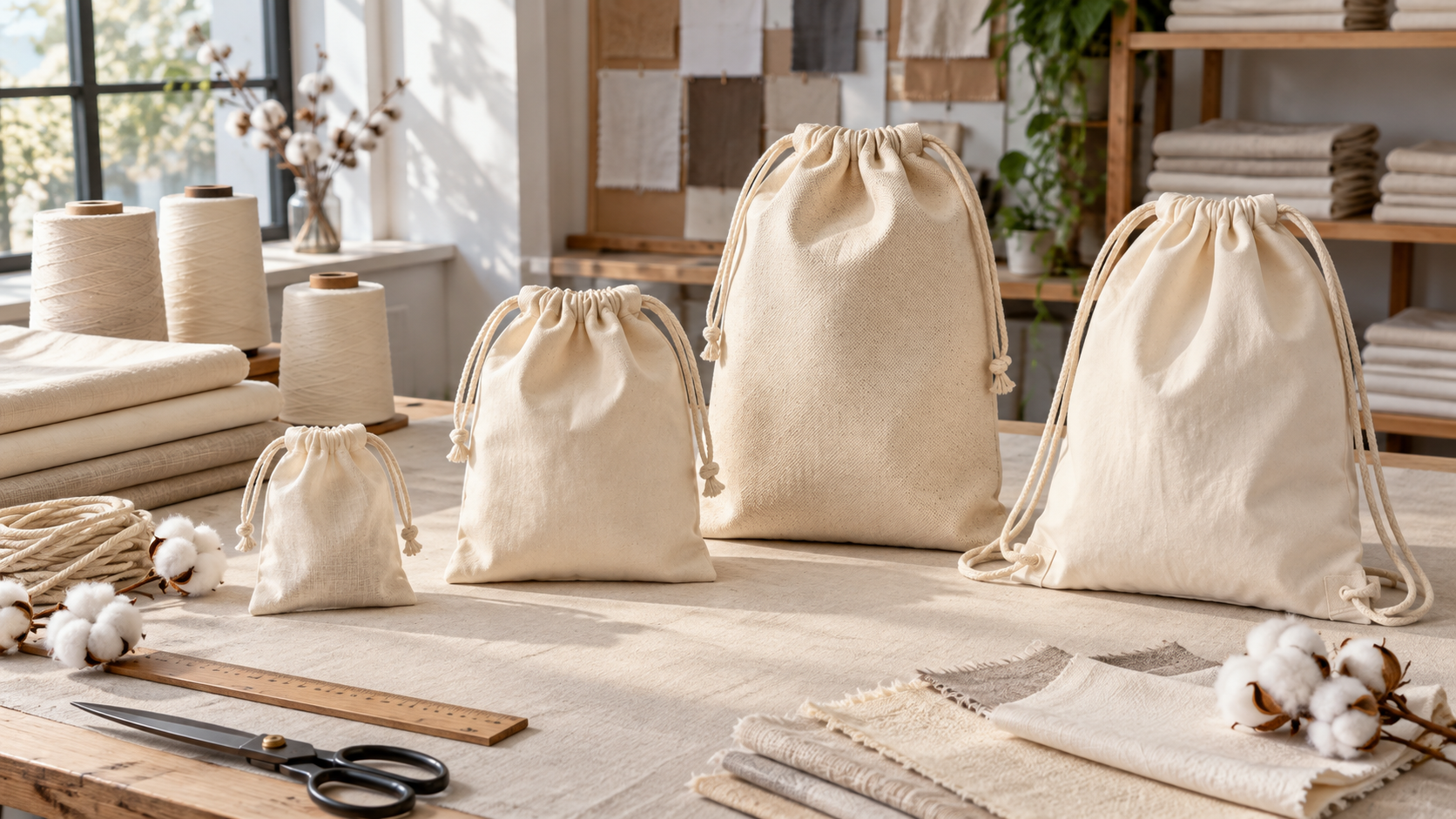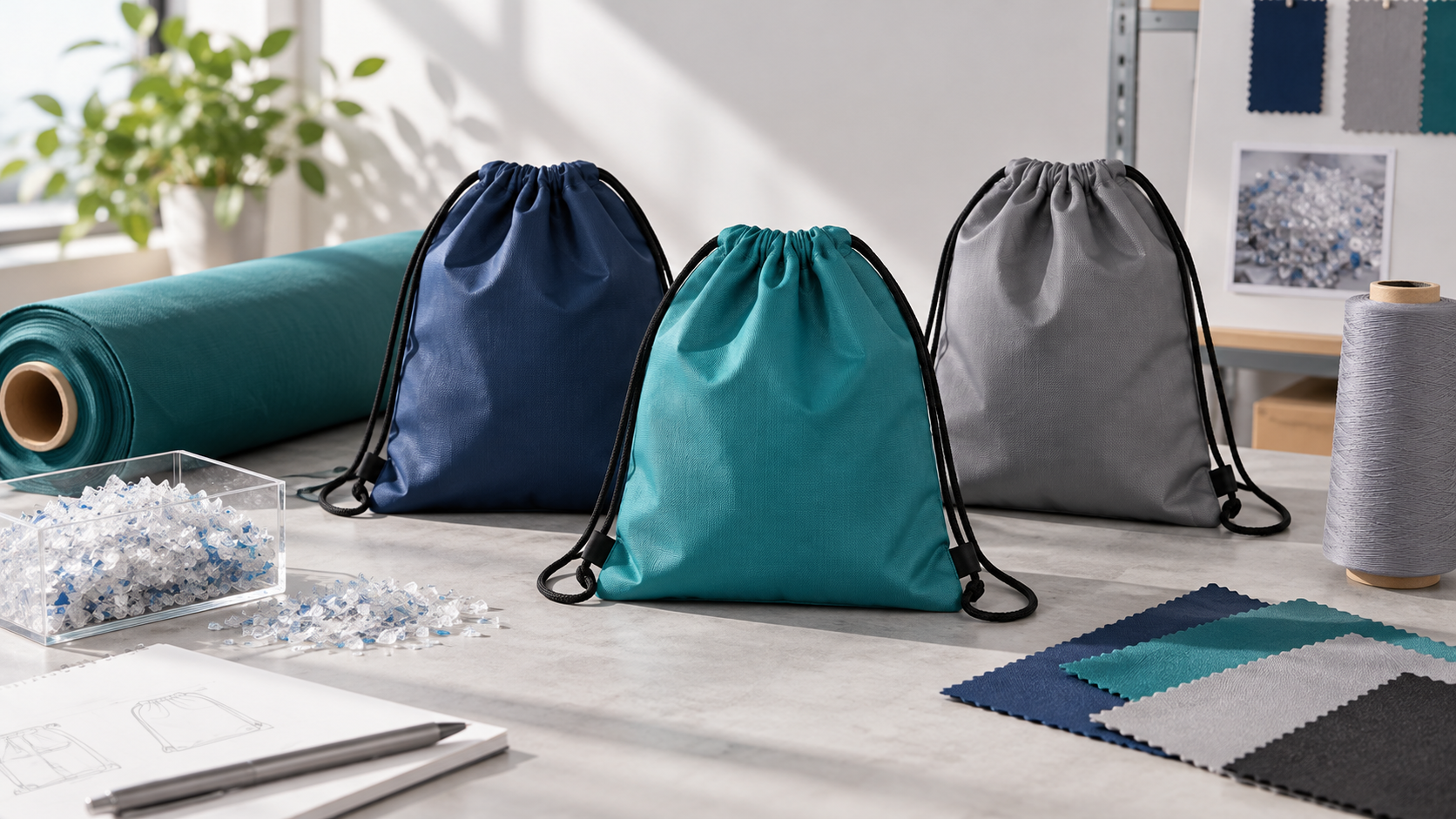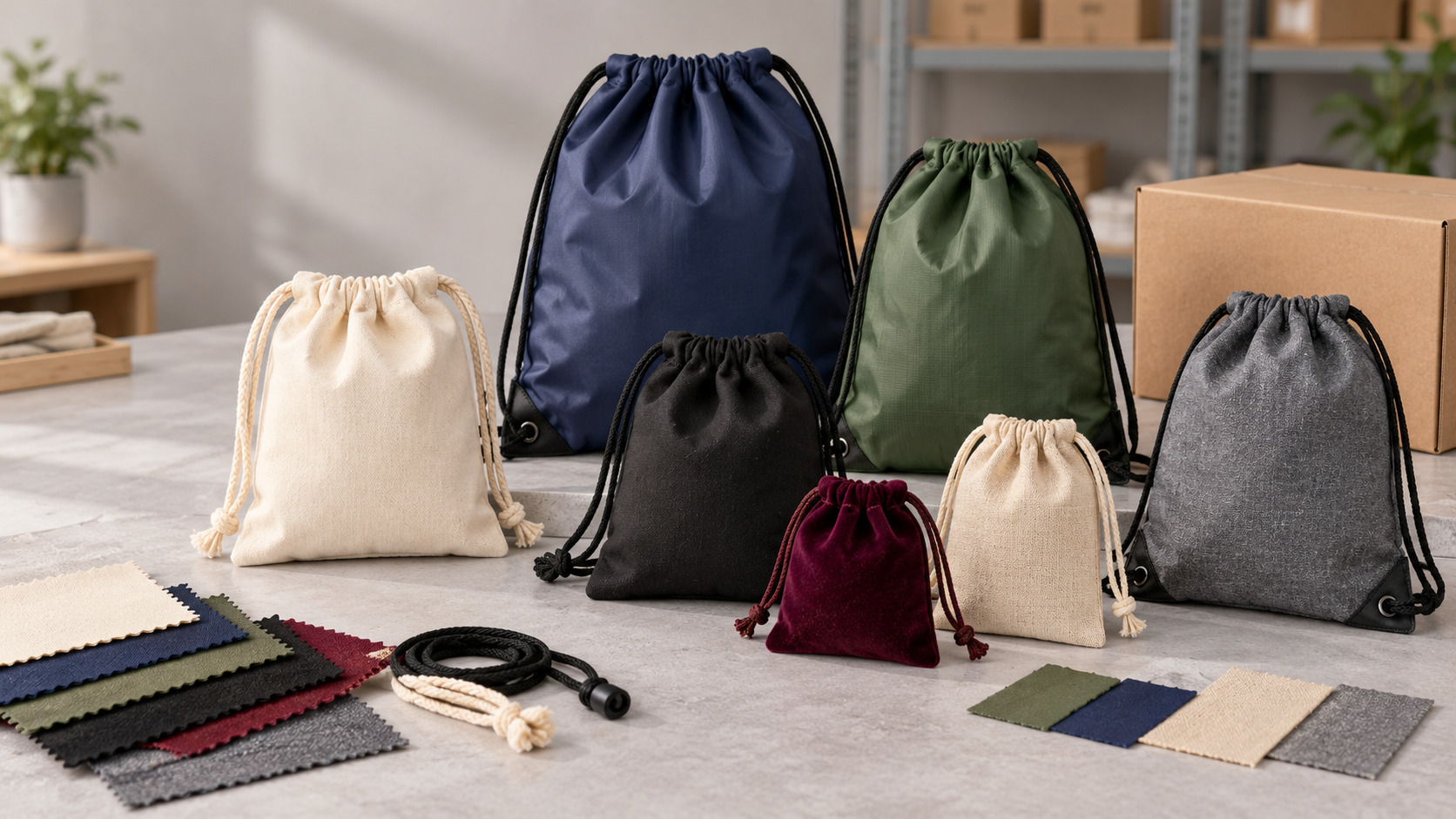
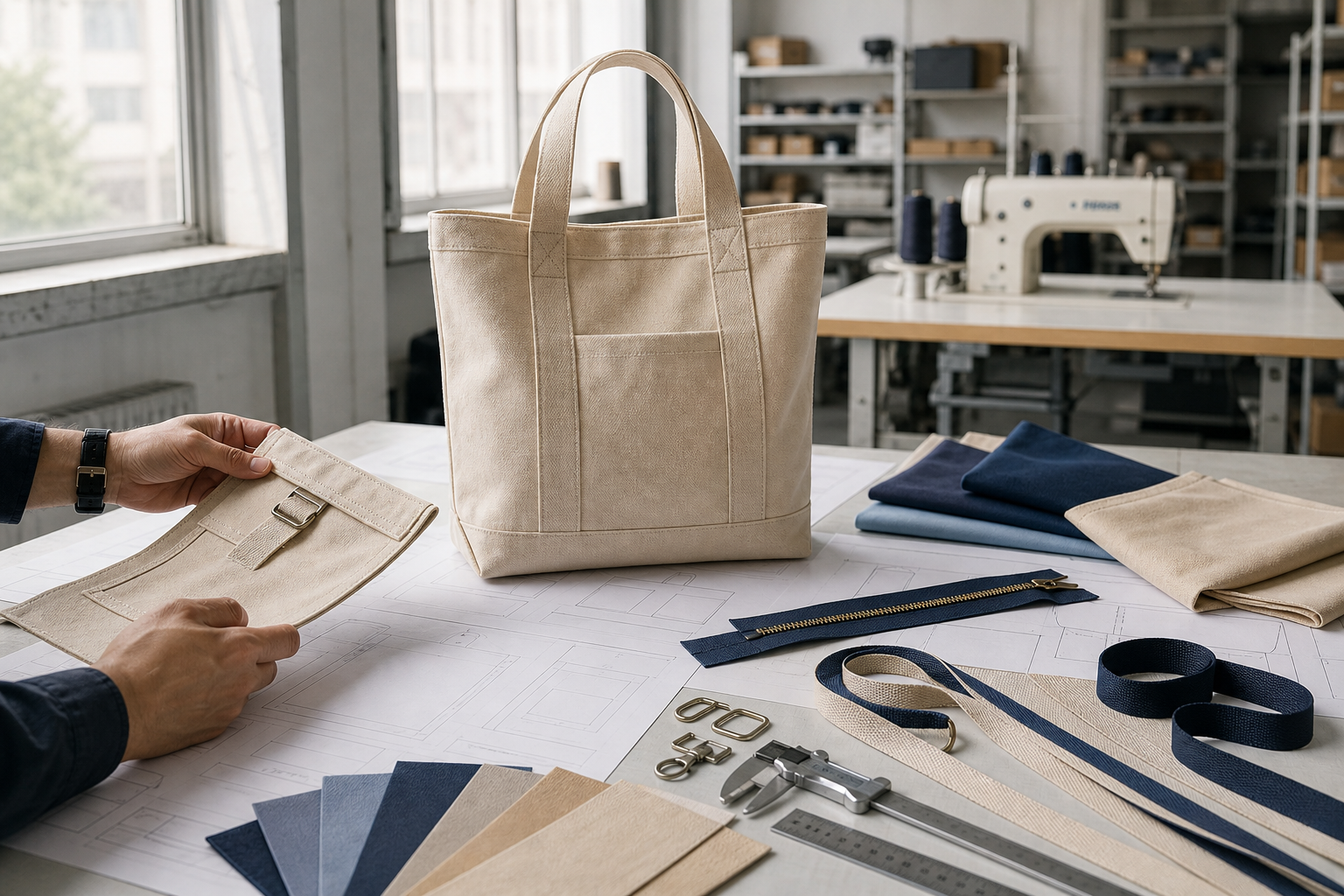
A custom bag does not travel in a straight line from a sketch to a shipping carton. It moves through a series of decisions, and every decision affects the next one. A handle that becomes wider may require a different reinforcement. A coated fabric may change the print method. A new pocket can alter the pattern, sewing sequence, labour cost and packed volume.
For buyers, the purpose of understanding the custom bag manufacturing process is not to manage a sewing line from a distance. It is to know when a decision is still flexible, when approval is required and what evidence should exist before the order advances. If you are still comparing supplier capabilities, begin with our complete Custom Bag Manufacturer guide. The guide explains how to identify the right operating model; this article follows what happens once development starts.
Need a project-specific manufacturing route? Send the bag use, drawing or reference, quantities by SKU, materials, artwork, sample stage, tests, packing and required arrival date. LUCKYSTAR can return its proposed gates, sites, evidence and written schedule assumptions.
Custom Bag Manufacturing Process at a Glance
The exact route varies with the product. A simple printed cotton tote has fewer components than a lined cosmetic case or insulated cooler. Even so, well-managed projects share the same control points.
| Stage | Buyer input | Factory output | Approval gate |
|---|---|---|---|
| 1. Product brief | Use, size, quantity, market, target date and budget direction | Feasibility questions and proposed route | Scope is clear enough to develop |
| 2. Engineering | Sketch, reference sample or tech pack | Construction, pattern and material recommendations | Key details are documented |
| 3. Sampling | Artwork, colours and consolidated comments | Physical sample and revised specification | Approved sample or recorded changes |
| 4. Pre-production | Purchase order, packaging and test requirements | Final bill of materials, artwork and production plan | Production standard is frozen |
| 5. Bulk production | Timely answers to exceptions | Cut, decorated and assembled bags | Inline checks pass |
| 6. Inspection and delivery | Inspection level and shipping instructions | Inspection result, packed cartons and documents | Release for shipment |
1. Turn the Idea into a Manufacturing Brief
A mood board may communicate style, but it cannot control production. The first useful document explains what the bag must do. State who will use it, what it will carry, how it will be sold or distributed, the required quantity, destination market and target delivery date. Add dimensions, preferred materials, colour references, logo files, pockets, closures, lining and packaging if these are already known.
Separate requirements from preferences. For illustration only, a buyer might define an intended load and test method as a requirement, while treating fabric weight and colour as options subject to sampling. The figures in an example brief are not LUCKYSTAR product performance claims or standard specifications; the actual limits must be agreed and verified for the order.
Reference products are helpful when they are annotated. Say whether you like the silhouette, stiffness, handle drop, zipper action or simply the colour. Otherwise, the factory may copy the wrong feature. Buyers who have not chosen a construction can review our product range and use a relevant model as the starting point.
2. Review Feasibility and Engineer the Construction
The manufacturer now translates the brief into parts and operations. This is where an attractive concept becomes a bag that can be cut, sewn and inspected repeatedly. The review should cover seam type, seam allowance, reinforcement, edge finishing, handle attachment, zipper route, lining method, pockets, base structure and decoration placement.
Small changes can have practical consequences. A print that crosses a side seam may need to be applied before assembly and can be difficult to align. A narrow gusset in heavy canvas may create bulky corners. A pocket placed too close to a zipper can slow sewing and distort the opening. A good development conversation exposes these conflicts before material is purchased.
Construction should reflect the category. A custom tote bag may depend on handle reinforcement and bottom stability, while a custom cosmetic bag needs careful zipper, lining and binding control. The most expensive-looking choice is not automatically the most appropriate one.
3. Select Materials, Trims and Decoration as One System
Fabric, thread, webbing, zippers, hardware, lining, foam and decoration must work together. “Canvas,” “polyester” or “non woven” is only a material family, not a complete specification. Weight, weave, coating, finish, colour method and usable width influence appearance, durability and cost.
| Decision | What to define | Why it matters in production |
|---|---|---|
| Main fabric | Composition, weight, weave, coating, finish and colour reference | Controls hand feel, sewing behaviour, colour consistency and intended use |
| Webbing and handles | Width, thickness, fibre, length, colour and attachment | Affects comfort, load distribution and reinforcement method |
| Zippers and hardware | Size, finish, puller, strength and corrosion expectations | Must suit fabric thickness, use frequency and destination conditions |
| Decoration | Artwork size, position, colours and print/embroidery technique | Determines artwork preparation, application order and tolerances |
| Packaging | Folding, individual bag, inserts, barcode, carton and assortment | Influences labour, carton size, product presentation and freight |
Ask the supplier to identify stock components and custom-developed components. Stock colours and standard zipper sizes can reduce risk and lead time, but only if they fit the brand and performance target. Custom dyeing can improve coordination, yet it introduces minimums, lab-dip approval and colour-variation considerations.
4. Build the Tech Pack, Pattern and First Prototype
A practical tech pack brings scattered decisions into one controlled record. It typically includes a dimensioned drawing, materials and trims, colour references, artwork, stitch and reinforcement notes, label positions, packaging and tolerances. The pattern maker then converts the finished dimensions into individual cut pieces with seam allowances, folds, notches and construction marks.
The first prototype tests shape and assembly. It may use substitute colours or unprinted fabric when the immediate question is proportion or construction. That is acceptable when substitutions are listed clearly. What matters is knowing exactly what the sample proves—and what it does not.
| Sample type | Primary purpose | Do not assume it confirms |
|---|---|---|
| Mock-up | Check size, shape and general construction quickly | Final colour, material or workmanship standard |
| Development sample | Review function, proportions, materials and decoration | That every component is from the bulk lot |
| Pre-production sample | Confirm the intended bulk specification before the line starts | That unrecorded verbal comments are included |
| Production or shipping sample | Show an item taken from bulk production | That the whole order passes an agreed inspection plan |
5. Review the Sample with Measurable Comments
“Make it nicer” is not a production instruction. Measure the sample, load it as intended, operate every closure, inspect the inside, compare colour under suitable light and check artwork from normal viewing distance. Then consolidate comments into one revision file.
Each comment should identify the location, current condition, required change and responsibility. For example: “Increase the internal slip pocket width from 140 mm to 160 mm; keep its top edge 35 mm below the zipper tape.” Photographs with arrows help, but they should support—not replace—written dimensions. Record which sample and revision the comment refers to.
One decision-maker should issue the final feedback. Separate comments from marketing, design and purchasing often conflict, causing avoidable sample rounds. For a broader supplier evaluation before committing, use our custom bag manufacturer selection checklist.
6. Confirm Costing, Order Terms and the Production Standard
Sampling answers technical questions; final costing answers commercial ones. Use the custom bag pricing guide to compare the same specification and review component-level MOQ drivers before treating quotations as equivalent. Confirm the quoted quantity, materials, printing, labels, packaging, tests, tooling, sample charges, payment terms, incoterm and quotation validity. If the price changes, ask which specification or assumption changed. A lower price based on lighter fabric or simplified packing is not the same product.
Before bulk production, freeze an approved reference set: signed sample, dimension sheet with tolerances, bill of materials, artwork files, colour standards, packing instruction and inspection criteria. This is the production standard. Chat messages can clarify an exception, but the controlled specification should be updated so the line and inspectors work from the same information.
7. Plan Procurement and Pre-Production
Lead time does not begin and end with sewing. Fabric may need weaving, dyeing, coating or lamination. Custom hardware can require moulding or plating. Printed packaging may have its own proofing cycle. The manufacturer should map the longest-lead components and decide which materials can be ordered only after sample approval. For a focused schedule and cost-risk plan, see how to reduce custom bag lead time and cost.
A pre-production meeting aligns the approved sample with the practical sequence on the floor. The team reviews patterns, decoration placement, special operations, tolerances, known risk points, packaging and inspection. A pilot run or first-off piece is valuable for new constructions because it tests whether instructions remain clear when the product moves from the sample room to a production line.
8. Cut, Decorate, Sew and Assemble the Bags
Incoming materials should be checked for identity, colour, width, visible defects and relevant performance before cutting. Fabric is then spread and cut according to marker plans. Shade-sensitive materials should be controlled so panels from noticeably different dye lots do not end up in one bag.
Decoration may happen before or after sewing. Screen printing and embroidery are often applied to flat panels for better access; transfer methods depend on heat and pressure compatibility; labels and patches need positioning templates. The team should verify artwork orientation and distance from seams before the full batch is decorated.
During sewing, operators assemble panels in a planned sequence. Critical areas—handle bases, shoulder strap anchors, zipper ends and loaded corners—may receive bar tacks, box-X stitching, backing patches or extra seam rows. Line supervisors should compare first pieces with the approved sample and correct drift before it affects a large quantity.
9. Control Quality During Production, Not Only at the End
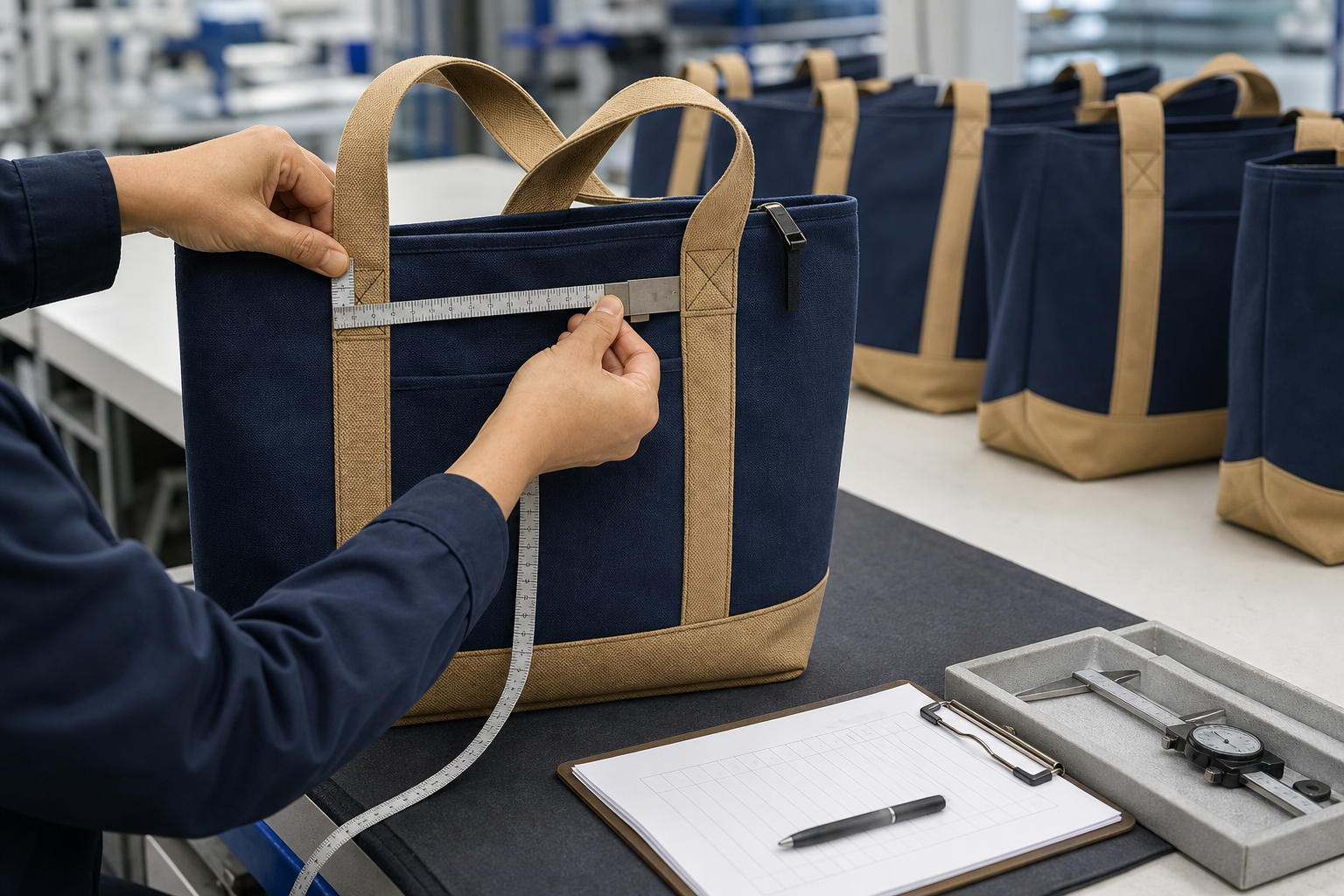
Final inspection is important, but it is too late to discover that an entire print batch is misplaced or every handle was attached with the wrong spacing. Quality control should follow the risk through the process: incoming materials, cutting, decoration, first pieces, sewing, finishing and packing.
| Checkpoint | Typical checks | Best timing |
|---|---|---|
| Incoming materials | Material identity, shade, usable width, coating, zipper function and hardware finish | Before bulk cutting or assembly |
| Cut panels | Pattern, grain direction, notches, size and defect removal | After cutting, before decoration/sewing |
| Decoration | Artwork, colour, position, adhesion, embroidery tension and surface damage | At setup and during the run |
| Assembly | Dimensions, seam allowance, stitch consistency, reinforcement and symmetry | First piece and inline intervals |
| Finished goods | Appearance, function, measurements, cleanliness, labels and packing | Before carton sealing and shipment release |
Inspection criteria should reflect use. A retail-facing custom shopping bag may need strong appearance control and barcode accuracy; a load-bearing tote also needs construction and performance attention. Define critical, major and minor defects for the project, along with the sampling plan or inspection level. Testing may include colourfastness, seam strength, load, zipper cycling, material composition or restricted substances when required by the destination market or buyer programme.
10. Finish, Pack and Prepare Delivery
Finishing removes loose threads, marks and dust, shapes the bag and checks closures. Packing must follow an approved method: how the bag folds, where straps sit, whether hardware needs protection, which inserts are included, how units are assorted and how cartons are marked. Poor folding can create permanent creases or make a well-made bag look careless when unpacked.
Carton dimensions and weight affect freight, storage and manual handling. Confirm the actual packed data rather than relying on an early estimate. Export paperwork varies with the shipment and destination, but the commercial invoice, packing list, shipping marks and transport booking details must agree. If the buyer uses a forwarder, contact information and handover responsibilities should be shared early.
What Commonly Delays a Custom Bag Order?
- An incomplete brief: sampling starts while size, material or closure is still undecided.
- Slow or fragmented feedback: different stakeholders send contradictory comments over several days.
- Late artwork: the bag is approved, but print-ready files or Pantone references are missing.
- Custom components: dyed fabric, bespoke hardware or printed packaging introduces separate approvals and minimums.
- Approval after material booking: a change to colour or construction makes purchased material unusable.
- Unplanned testing: compliance requirements appear only when production is nearly complete.
- Shipping assumptions: the requested “delivery date” is not clearly defined as factory completion, port departure or arrival.
A realistic schedule includes buyer response time as well as factory time. Identify the decision owner, reserve review windows and agree which milestones affect the delivery date. When a deadline is immovable, simplify uncertain components before compressing the controls that protect quality.
Buyer’s Approval Checklist
- Does the sample match the recorded dimensions and tolerances?
- Are fabric, lining, webbing, zipper, hardware and thread individually identified?
- Are logo size, colour, position and application method approved?
- Have load, function, care and destination-market requirements been discussed?
- Are all sample substitutions and unresolved points listed?
- Is the approved revision number visible across the specification, artwork and comments?
- Are packaging, carton marks, labels, assortment and barcode data final?
- Are inspection criteria, tests, shipment terms and the meaning of the delivery date agreed?
Company-claim boundary: the following section is LUCKYSTAR publisher self-description and a commercial process proposal. It is not independent proof of factory ownership, sites, capacity, staff, testing competence, certified quality system, performance, MOQ, price or delivery. Legal seller, production and inspection sites, upstream sources, sample approval, test/inspection scope, materials and schedule remain order-specific and subject to current evidence, final specification, quotation, contract and written confirmation.
How LUCKYSTAR describes an order-specific process review
LUCKYSTAR states that it can review the buyer brief and return a proposed route with named approval gates and evidence requirements.
- Define parties and sites: identify the proposed seller, material suppliers, production/decoration and inspection locations and responsible contacts in the contract file.
- Freeze a controlled reference: connect SKU, latest specification, approved sample, bill of materials, artwork, test and packing instructions.
- Set gates: state sample approval, material release, first-off, inline checks, final inspection and shipment release with decision owners.
- Record changes: document substitutions, revised costs and dates, affected lots and reapproval before bulk work continues.
- Close delivery scope: distinguish cargo-ready, carrier handover and arrival dates, plus the agreed trade rule and named place.
Review the bag product range and inspection checklist, then send the brief for an order-specific route.
Frequently Asked Questions
How long does the custom bag manufacturing process take?
There is no responsible universal number. Development time depends on how complete the brief is, how many sample rounds are needed and whether materials or hardware are custom. Production time depends on quantity, construction, capacity and material availability. Ask for a milestone schedule that separates design clarification, sampling, approvals, material procurement, production, inspection and transport.
Can bulk materials be ordered before the sample is approved?
Sometimes, but it transfers risk. Standard, confirmed materials may be reserved early when the deadline requires it. Custom-dyed fabric, printed lining or special hardware should not be committed casually while related design details can still change. The purchase decision, financial exposure and cancellation limits should be explicit.
Is one sample enough?
A simple adaptation of a proven bag may need fewer rounds than a new multi-compartment design. The right number is the number required to resolve meaningful uncertainty. What matters is that final approval refers to a documented specification and sample, not that the project achieves an arbitrary one-sample target.
What should a buyer inspect besides appearance?
Check dimensions, capacity, closure operation, handle comfort, reinforcement, interior workmanship, artwork adhesion, labels and packing. Load or function checks should resemble the intended use. Appearance is only one part of conformance.
Turn the design into a version-controlled order route
Agree on the product reference, decision owners, material and production sites, quality gates, records and a dated handover before committing to bulk production.

Review the LUCKYSTAR bag range, then send the project brief through the contact form or Email a project brief. The email link opens a prefilled draft for your review before sending.
Legal seller and facilities, material sources, samples, testing, inspection, capacity, MOQ, price, packing, schedule and delivery terms are subject to current evidence, final specification, quotation, contract and written confirmation.