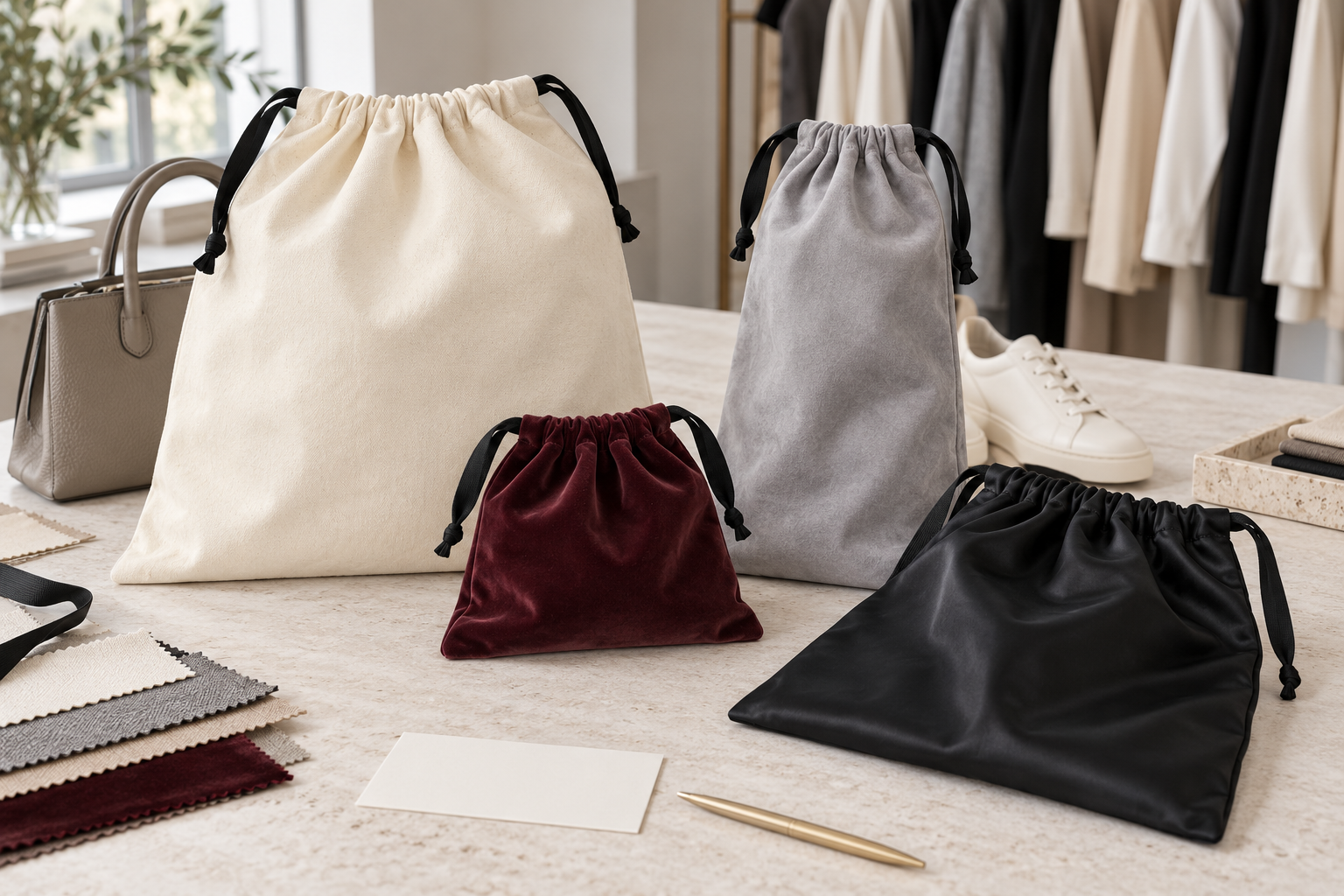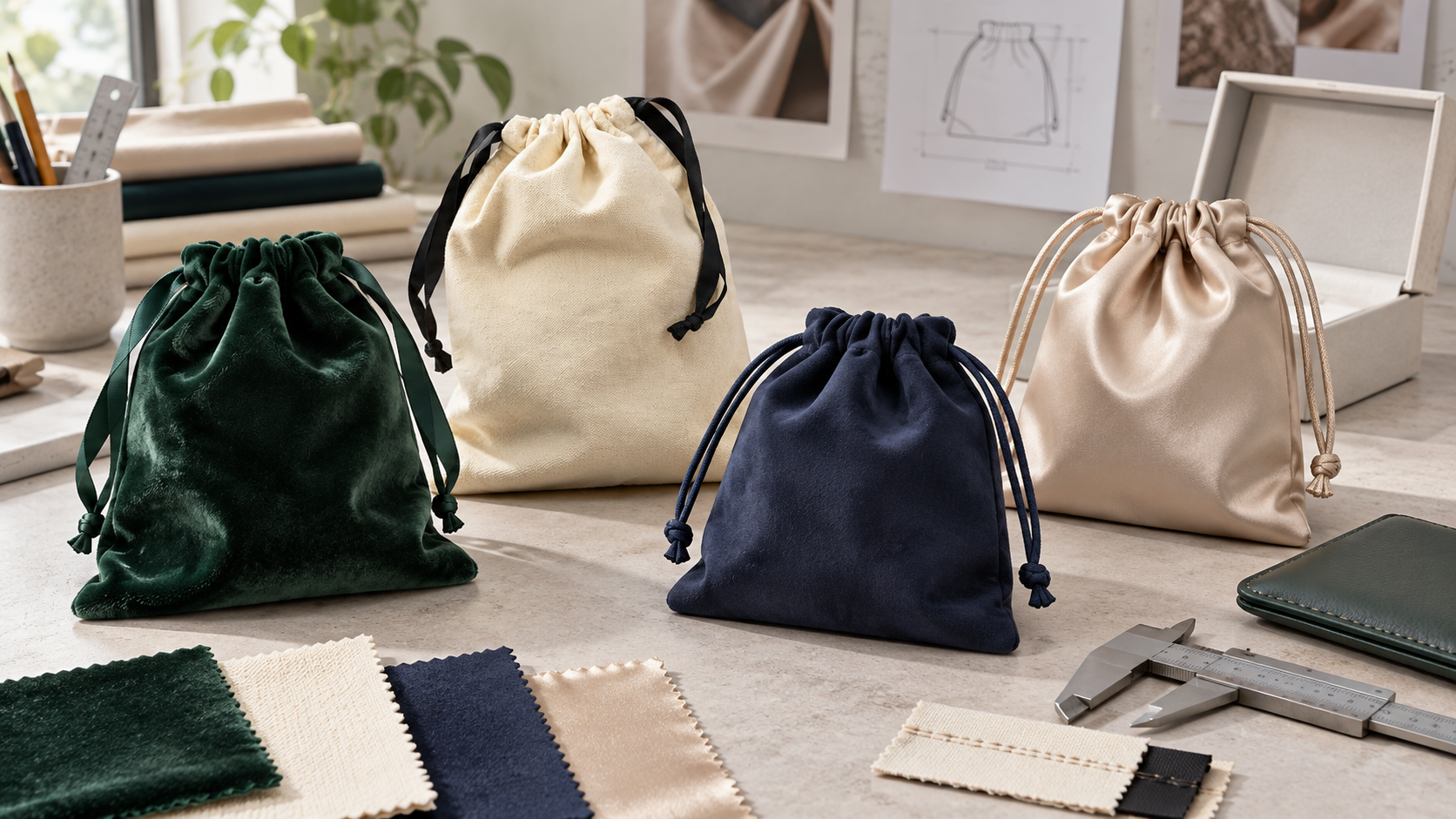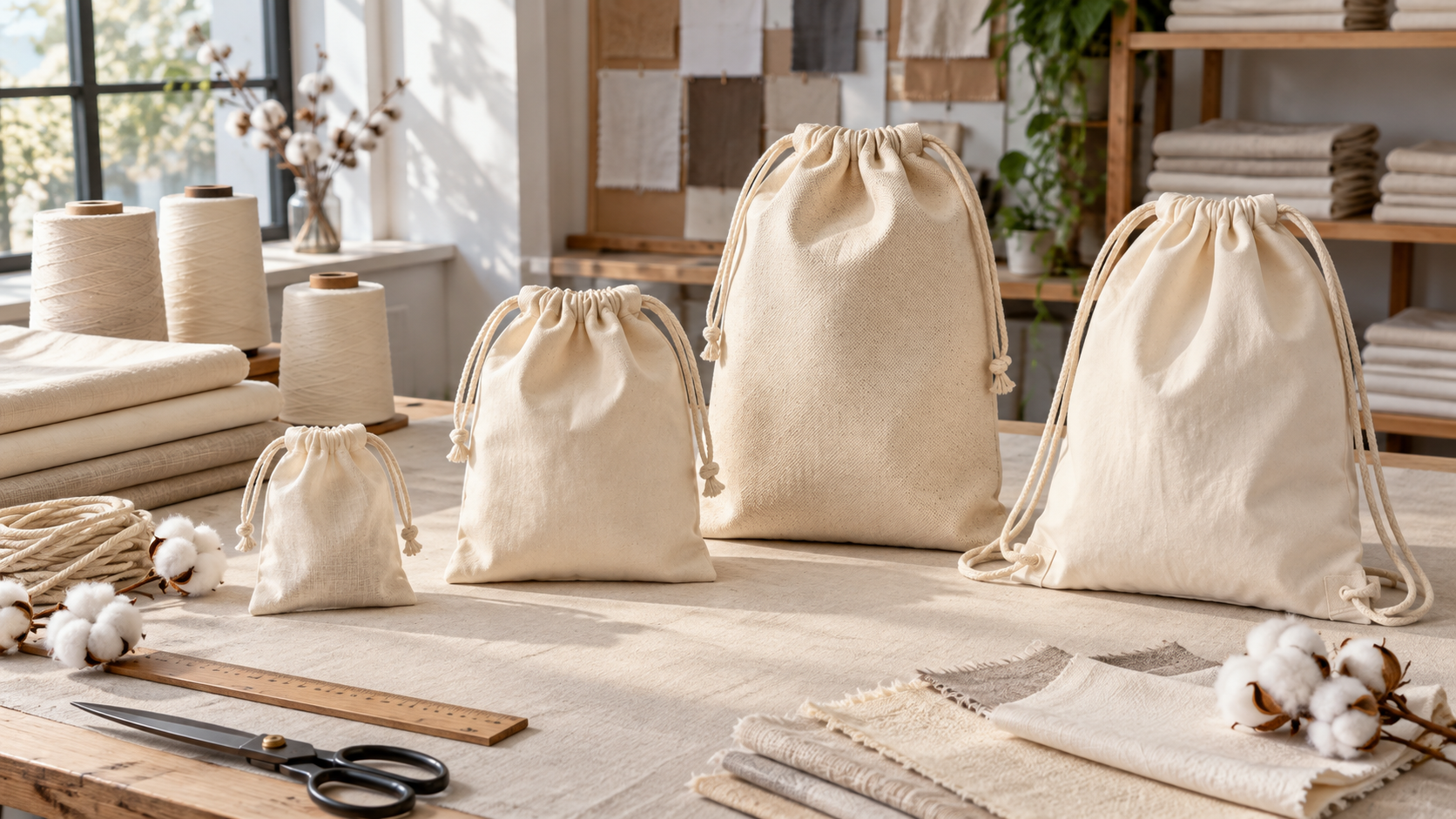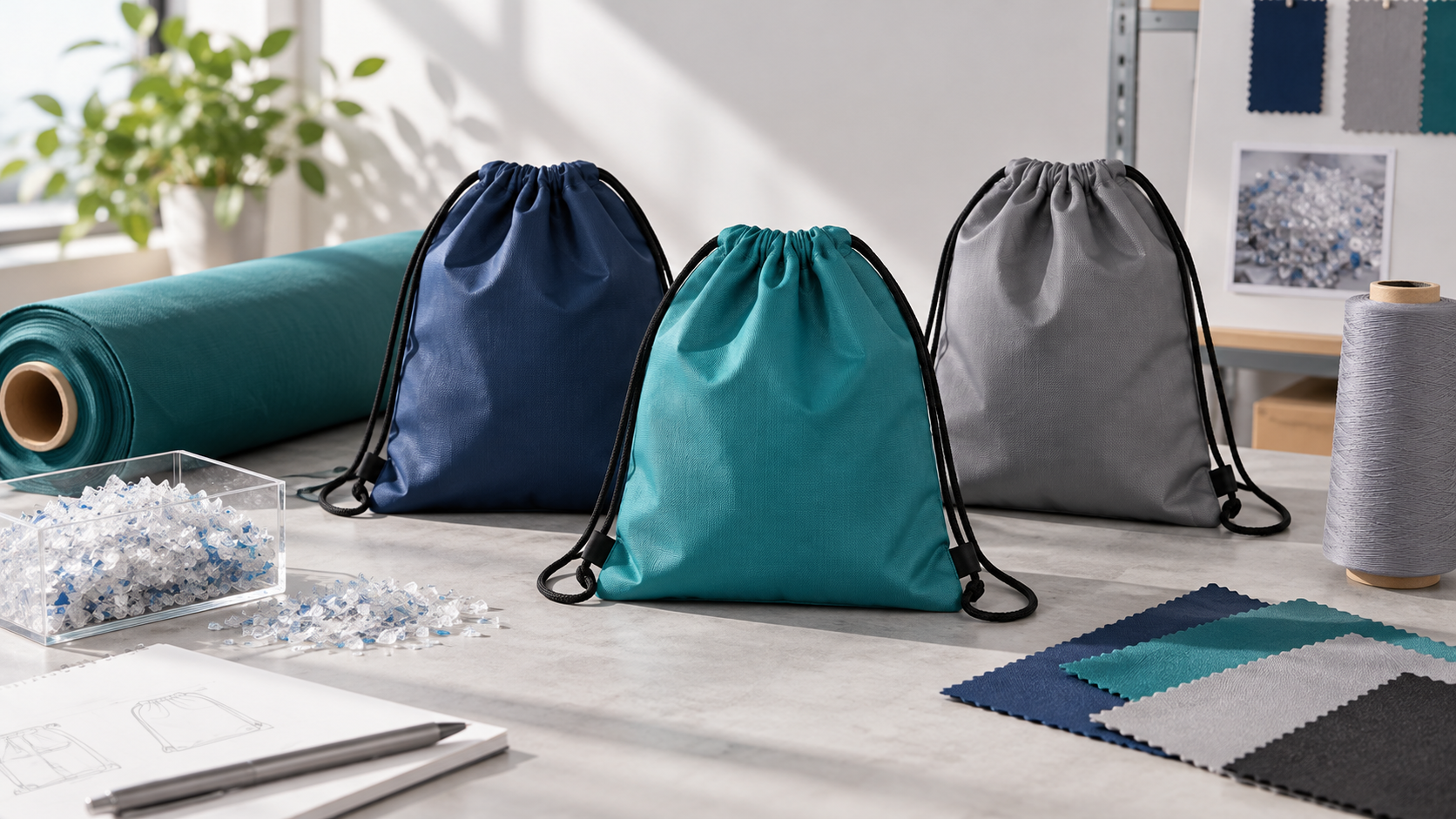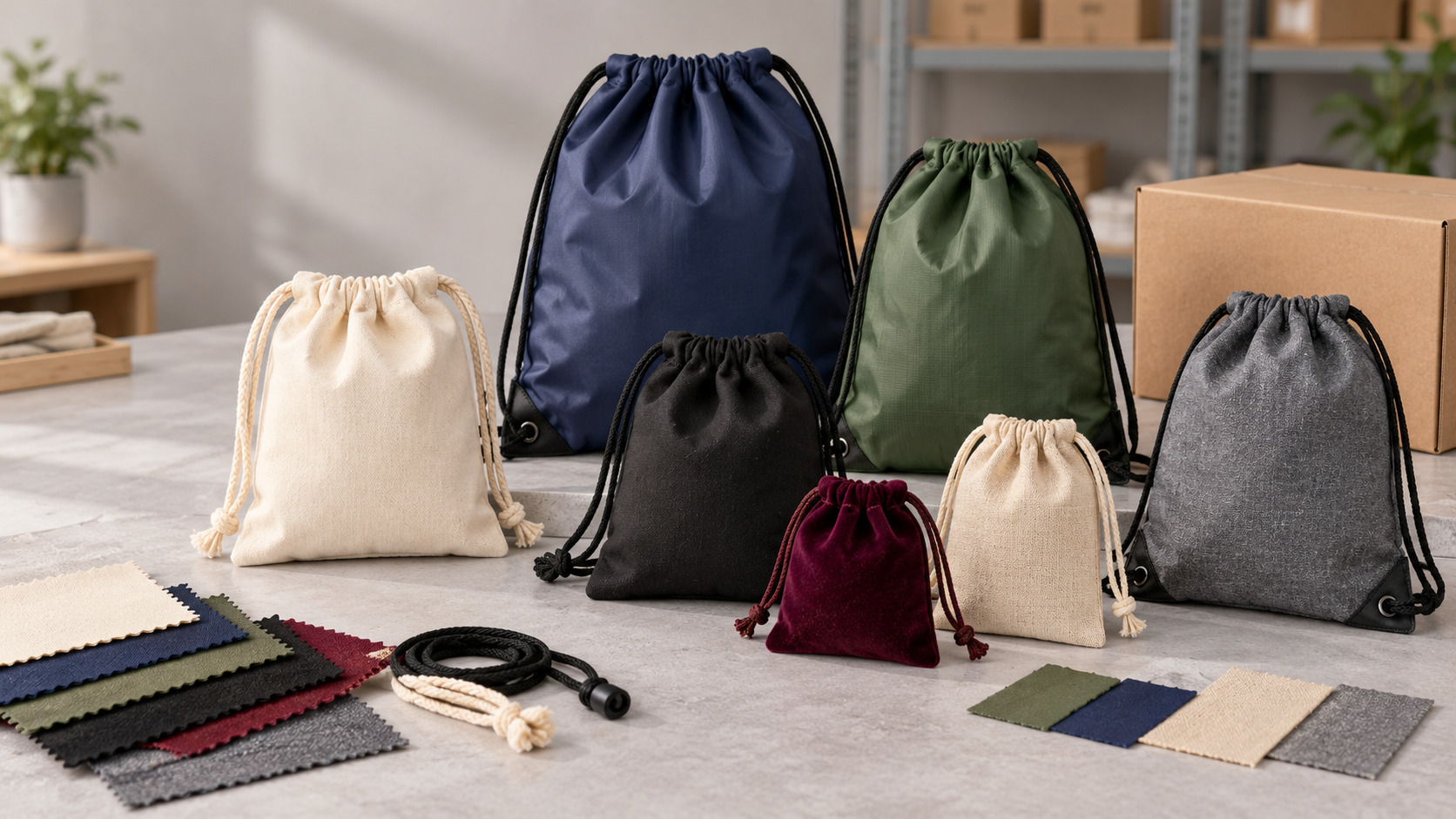
Choosing a tote bag manufacturer is not a beauty contest between catalogues. It is a test of whether a supplier can repeatedly build your bag—with the right hand feel, proportions, print, load performance and packing method—after the approved sample leaves the sample room.
That distinction matters because “tote bag” covers very different products. A flat non-woven giveaway, a 12 oz canvas retail bag, a jute grocery tote and a lined zip-top commuter tote do not require the same machinery, operators or quality controls. A supplier that is excellent at one may be an awkward fit for another.
This guide gives buyers an evidence-based way to shortlist and compare factories. It focuses specifically on supplier selection, rather than repeating broad sourcing advice, trend forecasts or a price-only comparison. If you are still mapping the wider sourcing process, start with our Custom Bag Manufacturer Guide. If your brief is already tote-specific, browse our custom tote bag range to see how materials and constructions change across different use cases.
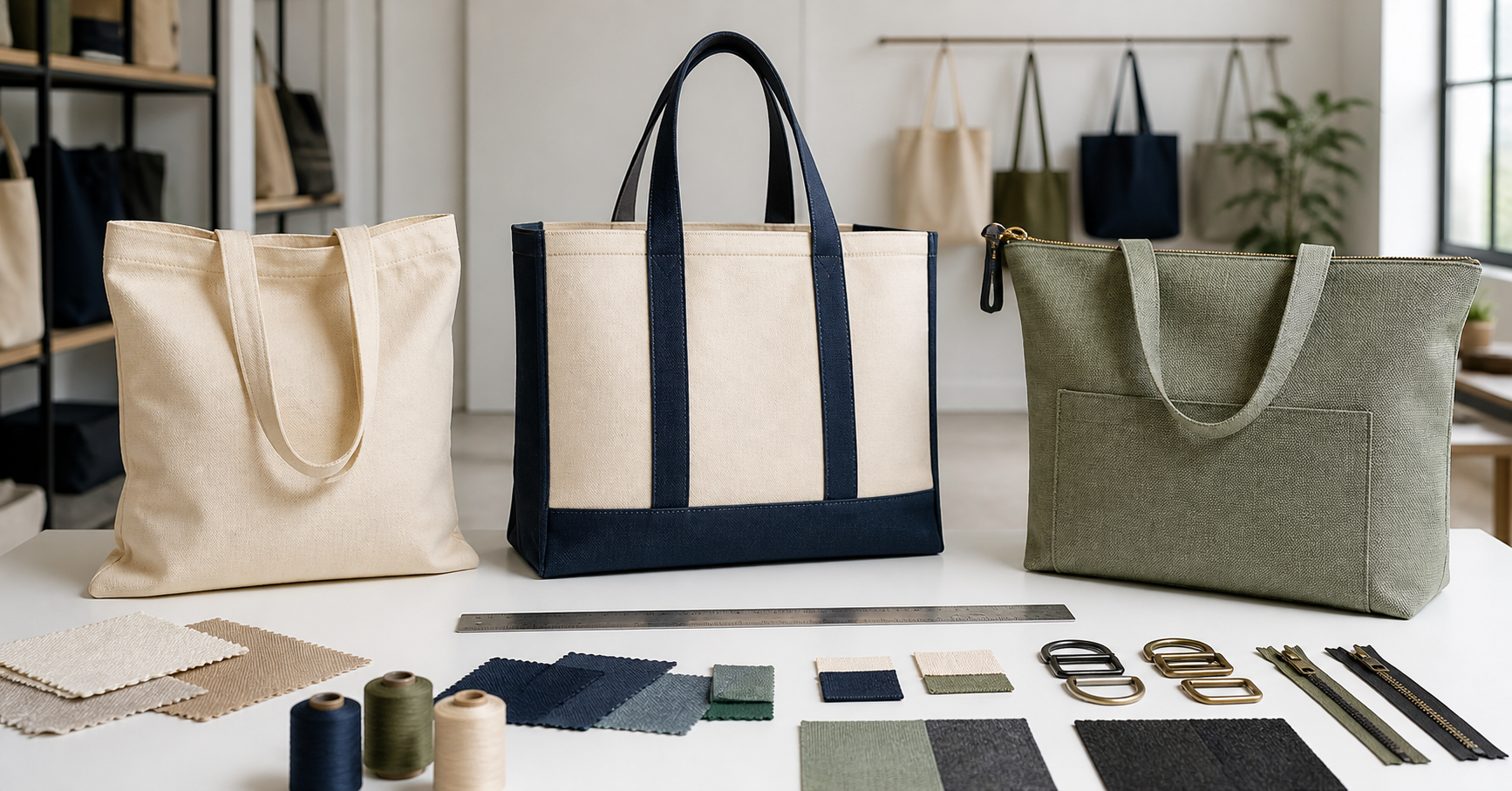
Need a tote brief and comparison sheet before supplier selection? Send the intended use and load, construction and materials, artwork, quantity/SKU matrix, claims and tests, approval samples, inspection scope, packing, Incoterm/named place, destination and arrival date. LUCKYSTAR can return its own proposed route, open assumptions and quotation for comparison with alternatives.
If you need a supplier shortlist before applying this checklist, start with our worldwide comparison of custom tote bag manufacturers.
Start with the tote program, not the supplier list
Before sending requests for quotation, reduce the project to one clear product profile. A vague request such as “large cotton tote with logo” forces every factory to make different assumptions. The resulting prices may look comparable, but they are not. One supplier may quote a light fabric and a single row of stitching; another may allow for heavier material, reinforced handles and individual packing.
A useful first-page brief states the bag’s job, target user, expected load, finished size, fabric specification, handle drop, closure, internal features, decoration, quantity and delivery destination. Even provisional figures are better than empty fields—provided they are marked for confirmation.
| Tote program | What the manufacturer must control | Evidence to request |
|---|---|---|
| Flat promotional tote | Efficient cutting, simple seam consistency and stable logo placement at volume | Production sample, print alignment tolerance and daily output for the exact style |
| Structured retail tote | Body shape, gusset symmetry, reinforcement, clean finishing and retail-ready packing | Inside-out construction photos, load test and packed-carton sample |
| Lined or zip-top tote | Multi-operation sewing, lining control, zipper installation and pocket positioning | Pre-production sample plus operation flow and critical inspection points |
| Jute, recycled or claim-led tote | Material traceability, natural variation and accurate claim documentation | Current certificates or transaction documents matched to the quoted material |
1. Look for category fit, not a long product range
A broad catalogue can show commercial experience, but it does not prove deep capability in your construction. Ask what percentage of recent orders resembles your tote, which operations are handled in-house, and which steps are subcontracted. Subcontracting is not automatically a problem. Uncontrolled subcontracting is.
For example, a factory may cut and sew cotton totes but send screen printing to a specialist. That route can work well when the supplier discloses it, sets an approved colour standard and inspects printed panels before sewing. Risk rises when nobody can explain who owns the print approval or how rejected panels are replaced without delaying assembly.
| Supplier statement | Better follow-up question | Useful proof |
|---|---|---|
| “We make all kinds of tote bags.” | Which three recent styles are closest to this construction? | Dated production photos, anonymised specifications or reference samples |
| “Printing is no problem.” | Who controls ink, curing, placement and colour approval? | Printed strike-off, colour standard and rub/wash test method where relevant |
| “Quality is guaranteed.” | Which defects are critical, major and minor for this bag? | Style-specific inspection sheet with measurement points and defect photos |
| “Capacity is sufficient.” | What line, start date and weekly output are reserved? | Capacity plan showing material arrival, line allocation and packing window |
2. Evaluate the sample as manufacturing evidence
A good sample is more than a sales prop. It reveals how the manufacturer interprets unclear instructions, manages tolerances and records changes. Send the same specification and review format to every shortlisted supplier. Otherwise, you are comparing different assignments.
Do not judge only the front view. Turn the bag inside out. Check seam allowance, raw-edge treatment, thread ends, stitch density around stress points and whether the lining pulls or twists. Load the tote with a realistic weight, lift it repeatedly and note whether the handle attachments distort the body. Close and open zippers under light tension. Put the packed sample back into its shipping carton: presentation damage often begins in packing, not sewing.
| Sample check | What it can reveal | What it cannot prove alone |
|---|---|---|
| Finished measurements | Pattern accuracy and the supplier’s interpretation of measuring points | Bulk consistency across different operators and fabric lots |
| Handle attachment | Reinforcement choice, stitch balance and visual workmanship | Long-term strength without a defined load or pull test |
| Logo execution | Artwork handling, placement and colour communication | Resistance to rubbing, washing or UV exposure unless tested |
| Packing presentation | Folding method, crease risk, labels and carton fit | Protection through the full shipping route without transit validation |
Keep an annotated sample report. Photograph every issue, identify its location, state the required correction and assign a revision number. Our custom bag sample development process explains how to move from prototype feedback to a production-ready approval sample.
3. Inspect the construction details that make totes fail
Tote bags look simple because their shape is familiar. In production, small details interact. A heavy body fabric attached to a narrow, soft handle can feel uncomfortable. A large print placed before gusset folding can shift visually after sewing. A zipper length copied from the overall bag width can create puckering or awkward end stops.
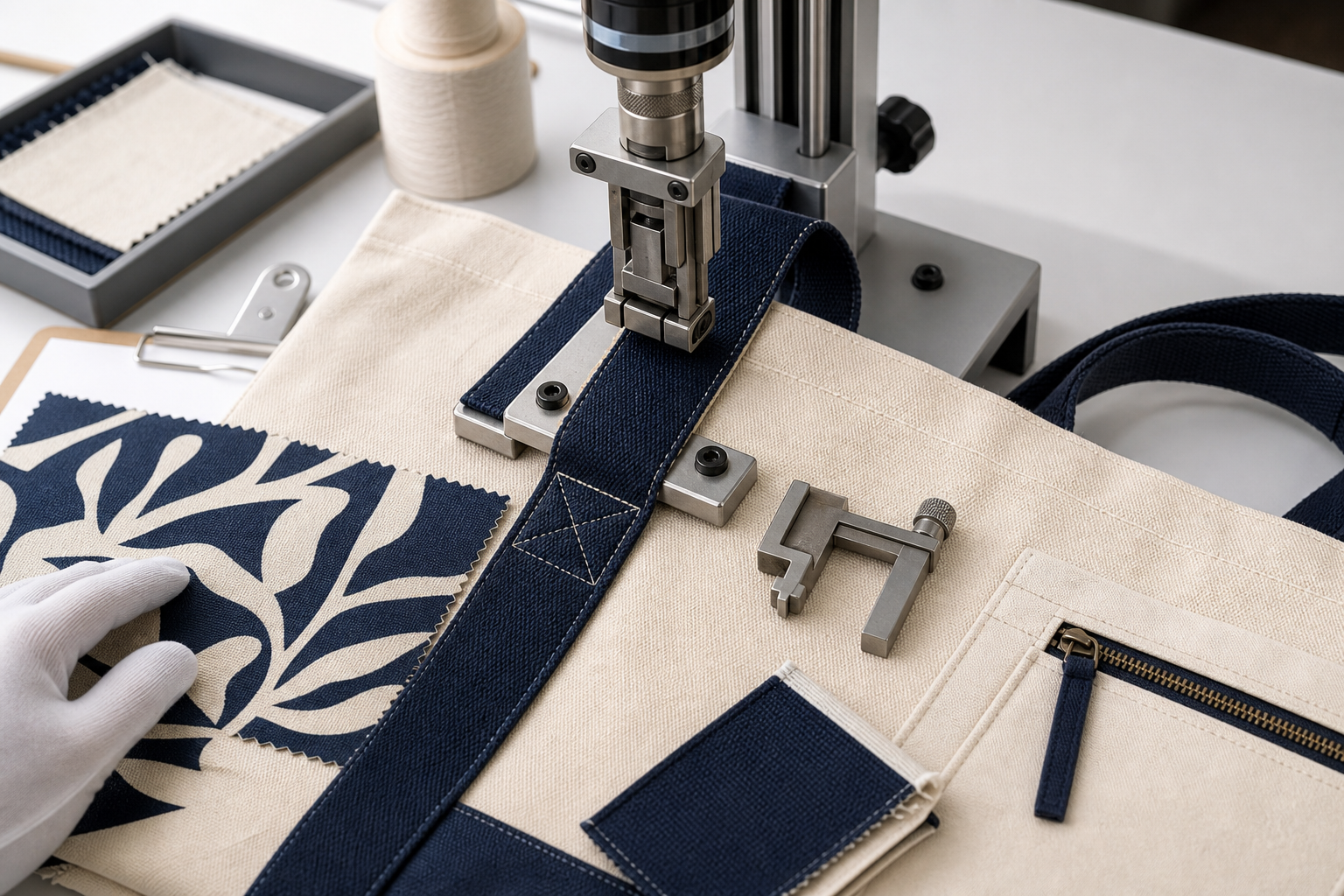
| Construction area | Define in the specification | Check on the sample |
|---|---|---|
| Body material | Fibre, construction, weight/thickness, colour reference and finish | Hand feel, shade, opacity, shrinkage risk and consistency with approved swatch |
| Finished size | Width, height, depth/gusset, measuring method and tolerance | Symmetry, base shape and usable volume—not only flat dimensions |
| Handles | Material, width, finished length or drop, spacing and reinforcement | Comfort, pair alignment, attachment distortion and load behaviour |
| Seams | Seam type, allowance, stitch requirement and edge finishing | Skipped stitches, seam grin, loose thread, puckering and raw-edge exposure |
| Closure and pockets | Component size, position, opening direction and attachment method | Ease of use, alignment, zipper wave and pocket accessibility |
| Decoration | Artwork size, position, colour standard, process and acceptable variation | Coverage, registration, adhesion, embroidery backing and distortion |
4. Ask material questions that are measurable
Words such as “canvas,” “cotton” and “recycled” are starting points, not complete specifications. Canvas can vary in weave, weight, finish, shrinkage and dye lot. Non-woven fabric is usually controlled by weight and structure rather than the language used for woven textiles. Jute brings natural colour and fibre variation that should be represented honestly in the approved range.
Ask the supplier how material is specified on the purchase order, what tolerance applies, how colours are approved and how substitutions are prevented. If a certification or recycled-content claim is commercially important, request the scheme name, certificate number, certified legal entity, sites, product/process scope, issuer, validity and order-level transaction evidence where the scheme requires it. Use the relevant official database; for example, GOTS certified suppliers for that scheme and IAF CertSearch for covered accredited management-system certificates. A generic logo, a certificate for another entity/site or an earlier material stage does not prove the quoted finished product.
| Material question | Why it matters | Decision evidence |
|---|---|---|
| What is the purchase specification? | Prevents two visually similar but functionally different materials being treated as equal | Named construction plus measurable weight/thickness and tolerance |
| How is colour approved? | Reduces argument over shade after bulk dyeing or printing | Physical swatch, lab dip or defined colour standard with viewing conditions |
| What changes after washing or loading? | The bag’s appearance may shift after real use | Relevant shrinkage, colourfastness or performance test agreed before production |
| Is the claimed fibre traceable? | Sustainability language can create legal and reputational exposure | Scope-matched, current documentation for the quoted material route |
5. Match decoration to the fabric and use case
A manufacturer should be able to explain why a decoration method fits the fabric, artwork, order volume and end use. Screen printing can be efficient for bold spot colours, but the result depends on ink system, mesh, curing and fabric surface. Heat transfer can reproduce detailed artwork but may alter hand feel. Embroidery adds texture and durability, while dense stitching may pull a lightweight panel out of shape.
Ask for a strike-off or decorated sample on the actual production fabric. Approve colour and placement on the finished bag, not only on a flat panel. The manufacturer should also state what happens if the fabric shade changes slightly: the same ink formula can appear different on a new base colour.
| Decoration route | Best evaluated through | Common selection risk |
|---|---|---|
| Screen print | Colour, opacity, edge quality, curing and rub resistance | Quoting by colour count while overlooking coverage or underbase requirements |
| Heat transfer | Detail, edge, adhesion, flexibility and hand feel | Artwork looks sharp but the film feels too heavy for the product |
| Embroidery | Stitch density, backing, puckering, reverse-side finish and placement | Light fabric cannot support the approved artwork without reinforcement |
| Woven or sewn label | Colour, fold, edge comfort, placement and attachment | Correct label produced but inserted in the wrong orientation during sewing |
6. Normalise quotations before comparing price
The lowest unit price is sometimes just the quotation with the most missing assumptions. Put every offer into the same comparison sheet. Separate one-time costs from unit costs, record currency and validity, and confirm whether packing, tests, inspection, freight, duty and tax are included. Under the current Incoterms® 2020, the three-letter rule needs an exact named place or port; the rule helps allocate delivery obligations, costs and risks but does not replace the sales contract. Ask suppliers to mark every deviation from the brief instead of simply “rechecking” a number.
| Quote field | What to record | Why buyers miss it |
|---|---|---|
| Product basis | Material, dimensions, handles, lining, closure, decoration and packing | Suppliers may silently simplify a construction to reach a target price |
| Quantity and colour split | Total pieces, number of body colours and artwork versions | A total quantity may hide smaller, less efficient sub-runs |
| One-time charges | Sampling, screens, moulds, lab tests and artwork setup | A low unit price can be offset by unlisted development costs |
| Trade terms | Named Incoterm, named place, currency, payment terms and validity | EXW, FOB and delivered offers cannot be compared in one column |
| Lead-time basis | Trigger date, material lead time, production window and shipment readiness | “30 days” may start after deposit, final artwork or material approval |
For a deeper breakdown of cost drivers, see How Much Do Custom Bags Cost?. The purpose here is different: first make every supplier quote the same bag, then decide whether the price is commercially sound.
7. Require a quality plan written for your tote
A generic statement that products are “100% checked” does not describe a quality system. Ask who checks incoming material, what operators verify during production, how inspectors sample finished goods and who can stop shipment. If acceptance sampling is used, identify the standard and edition, lot definition, inspection level, plan, AQL by defect class, sample selection, acceptance/rejection numbers and switching/reinspection rules. The current ISO 2859-1:2026 covers AQL-indexed lot-by-lot attribute sampling; it does not prove every unit was checked or replace style-specific measurements, functional tests and critical-defect controls.
Dimensions need agreed measuring points and tolerances. Appearance standards should use defect examples where words could be interpreted differently. Functional checks may include handle attachment strength, seam strength, zipper operation, print adhesion or colourfastness, depending on the product and market. Tests should follow a defined method; “pull hard” is not a repeatable test.
| Stage | Tote-specific checks | Record to retain |
|---|---|---|
| Incoming material | Fabric identity, colour, weight/thickness, usable width and visible defects | Receiving result linked to material lot |
| Cutting and print | Panel size, grain/direction, placement, colour and cure/adhesion where relevant | First-piece or strike-off approval |
| Sewing in process | Seams, handle spacing, reinforcement, gusset alignment and closure operation | Line check with defect and correction log |
| Final inspection | Workmanship, measurements, function, assortment, labels, packing and carton marks | Inspection report with sample size, defects and photos |
Use our Custom Bag Quality Inspection Checklist to turn these points into a practical pre-shipment review.
8. Verify capacity with dates and constraints
Capacity is not a permanent number. It depends on material availability, the complexity of your bag, labour, colour changes, printing bottlenecks and the factory’s live order book. Ask for a timeline built around your order rather than a maximum monthly figure copied from a company profile.
A credible plan identifies when material is ordered, when artwork is locked, when a pre-production meeting occurs, which line or workshop handles the order, how many days are allowed for inspection and what date goods are ready for shipment. It also explains the constraint. On one project the sewing line may be limiting; on another, the print room or a custom zipper may set the pace.
| Capacity claim | Verification question | Strong answer |
|---|---|---|
| “We can meet your deadline.” | Which milestone has the least float? | Names material or process bottleneck and provides a dated buffer |
| “We can make 100,000 pieces monthly.” | What output applies to this exact construction and colour split? | Uses a comparable style and states assumptions |
| “Rush orders are possible.” | Which step changes, and what risk does that create? | Explains overtime, split shipment or pre-booked material without removing quality gates |
Our guide to custom bag production lead time shows how sampling, materials, manufacturing and logistics fit together.
9. Score communication as an engineering skill
Fast replies are pleasant, but accurate replies protect the order. During sampling, note whether the supplier identifies contradictions, confirms units, separates open questions from approved details and returns one controlled specification after changes. A manufacturer that merely says “yes” to everything may be transferring unresolved decisions to the production line.
Try a simple test: issue three sample corrections in a numbered list. The next response should acknowledge all three, show the revised values and explain any trade-off. If feedback disappears across chat messages, the same can happen when sales, sampling, purchasing and production hand the project from one team to another.
10. Use a pilot order when the risk justifies it
A pilot is valuable when the construction is new, the brand launch is important, the material is unfamiliar or the forecast is large. Its purpose is not only to obtain a few pieces. It tests the real production route: bulk material, production operators, inspection documents, packing and shipment handover.
Define success before placing the pilot. State which measurements and performance checks must pass, how defects will be reviewed, whether the pilot sample becomes the sealed reference, and what must change before scale-up. A small first order that uses a completely different material or shortcut process gives false reassurance.
Scorecard boundary: the weights below are editorial starting values, not measured market probabilities or independent rankings. Set the weights before opening commercial offers, define evidence and scoring anchors, record conflicts and exclusions, and keep the completed matrix with the sourcing decision.
A weighted tote bag manufacturer scorecard
Price deserves a place in the decision, but it should not dominate risks it cannot measure. Adjust the weights to suit your program. A promotional event bag may give more weight to output and cost; a premium retail tote may prioritise construction, decoration and consistency.
| Evaluation area | Suggested weight | Score 1–5 based on |
|---|---|---|
| Category and construction fit | 20% | Comparable work, process ownership and ability to explain the construction |
| Sample quality and revision control | 20% | Accuracy, workmanship, problem solving and documented corrections |
| Material and decoration control | 15% | Measurable specifications, traceability and relevant test evidence |
| Quality system | 15% | Style-specific checkpoints, defect standards and inspection records |
| Capacity and delivery plan | 10% | Dated plan, realistic output and transparent bottlenecks |
| Communication and project control | 10% | Clear ownership, version control and timely escalation |
| Normalised commercial offer | 10% | Comparable scope, complete costs and balanced terms |
Multiply each score by its weight and record one sentence of evidence. Do not award points for presentation quality alone. A polished slide deck does not outweigh a sample that misses its dimensions or a quotation that omits the lining.
Warning signs to resolve before paying a deposit
- The quote does not repeat the fabric, finished size, decoration and packing assumptions.
- The supplier will not identify which processes are performed elsewhere.
- The sample changes material or dimensions without written approval.
- Certification claims are shown without scope, validity or connection to the quoted supply route.
- The lead time is a single number with no start trigger or milestone dates.
- Quality answers rely on “experienced workers” but provide no tolerances, defect standard or report.
- Production can allegedly begin before artwork, materials and the approval sample are locked.
A warning sign is a prompt to investigate, not an automatic rejection. What matters is how the supplier answers: with traceable evidence and a corrective plan, or with another vague assurance.
Questions to ask a shortlisted tote bag manufacturer
- Which recent tote construction is most similar to ours, and what was difficult about producing it?
- Which steps will be done in-house and which will be outsourced?
- How will the bulk fabric be specified, approved and linked to the order?
- What reinforcement and test method do you recommend for the handles at our intended load?
- How will logo colour, placement and performance be approved?
- Which measurements and defects will be checked during sewing and final inspection?
- What is excluded from the quotation?
- What event starts the production lead time?
- What is the current bottleneck for this order, and what buffer is included?
- Who owns the specification after the sales-to-production handover?
Company-claim boundary: the following section is LUCKYSTAR publisher self-description and a commercial service proposal. It is not independent proof of factory ownership, production capability, certificate coverage, material traceability, capacity, quality, MOQ, price or delivery. Legal seller, nominated mills, production and decoration sites, subcontractors, material route, documents, samples, inspection and schedule depend on the exact order and written confirmation.
How LUCKYSTAR describes its tote-project review
LUCKYSTAR states that it can review a controlled tote brief and return its own proposed sourcing and production route for buyer evaluation.
- Disclose the proposed route: identify legal seller, nominated mill, cut-and-sew and decoration sites, outsourced steps and responsibility for changes.
- Close the product basis: record bill of materials, dimensions, construction, artwork, tolerances, labels and packing.
- Show approval evidence: connect swatches, strike-offs, samples, test reports, certificates and transaction documents to the proposed entities and product.
- Define bulk control: state incoming/in-process/final checks, sampling, defect classes, retained references, reapproval triggers and corrective action.
- Make the offer comparable: record currency, validity, inclusions, quantity/SKU split, Incoterm and named place, milestones, constraints and change rules.
Review the custom tote bag range and sample-development guide, then send the controlled brief for LUCKYSTAR’s order-specific proposal. Compare that proposal independently with qualified alternatives.
Keep the shortlist and quotation comparison separate: first issue one quote-ready tote bag RFQ brief, then score each manufacturer against the same released specification, sample route, evidence and commercial basis.
Frequently asked questions
Should I choose a factory or a trading company?
Choose the operating model that gives you the clearest control over your product. Direct factory access can simplify technical communication; a well-managed sourcing partner may coordinate specialised materials and decoration more effectively. In either case, verify who performs each operation, who approves changes and who is accountable for the finished bag.
How many manufacturers should I sample?
As an editorial starting point, a buyer may sample two or three qualified finalists after documented pre-screening, but there is no universal correct count. Increase or reduce the pool according to project value, novelty, geographic and route concentration, compliance risk, timing and fallback needs. Give every finalist the same controlled brief, evidence request and scorecard.
Is the lowest tote bag price usually the best?
No. It may be competitive, or it may be based on a lighter material, different reinforcement, simplified packing or excluded charges. Normalise specifications and commercial terms before comparing landed value and production risk.
What should be approved before mass production?
At minimum, approve the controlled specification, materials and colours, artwork and placement, construction, measurements and tolerances, labels, packing, quality standard, reference sample and production timeline. Any open point should have an owner and deadline.
Where can I compare different custom tote constructions?
Review the custom tote bag collection for examples spanning materials and applications. For adjacent categories, the complete Product Range provides a broader view.
What evidence should be attached to the final supplier score?
Keep the released RFQ, supplier deviations, legal-entity and production-route checks, material and claim evidence, approved sample revision, inspection plan, landed-cost basis, milestone dates and written decision notes. The score should point to evidence, not replace it.
RFQ handoff, visible FAQ, structured answers and conversion attribution updated September 23, 2026. Supplier selection remains evidence- and order-specific.
Make the supplier decision traceable to evidence
Issue one controlled brief, compare disclosed routes and complete evidence, approve production-equivalent samples, and retain the weighted decision record with the contract and quality plan.

Review LUCKYSTAR custom tote bag options, then send the tote and supplier-route brief through the contact form or Email a project brief. The email link opens a prefilled draft for your review before sending.
Legal seller and facilities, mill and subcontractors, materials, certificate and claim scope, samples, tests, inspection, capacity, MOQ, price, packing, schedule and delivery terms are subject to current evidence, final specification, quotation, contract and written confirmation. Independently verify the selected route before commitment.