Last reviewed: September 28, 2026
A custom drawstring bag supplier does more than print artwork on a ready-made sack. The supplier must translate the intended use into a repeatable specification: finished size, usable capacity, fabric, cord, channel construction, seam strength, reinforcement, decoration, packing and inspection standards. When those decisions are vague, two quotations that look comparable may describe very different products.
This guide consolidates the most useful ideas from our earlier articles on supplier selection, eco-friendly materials, branding and long-term cooperation. It is written for importers, promotional-product distributors, retailers, gift companies and brand teams that need reliable bulk production. For the broader framework covering supplier types, OEM/ODM responsibilities and factory evaluation, begin with our Custom Bag Manufacturer guide.
Buyer Quick Answer
Custom Drawstring Bags at a Glance
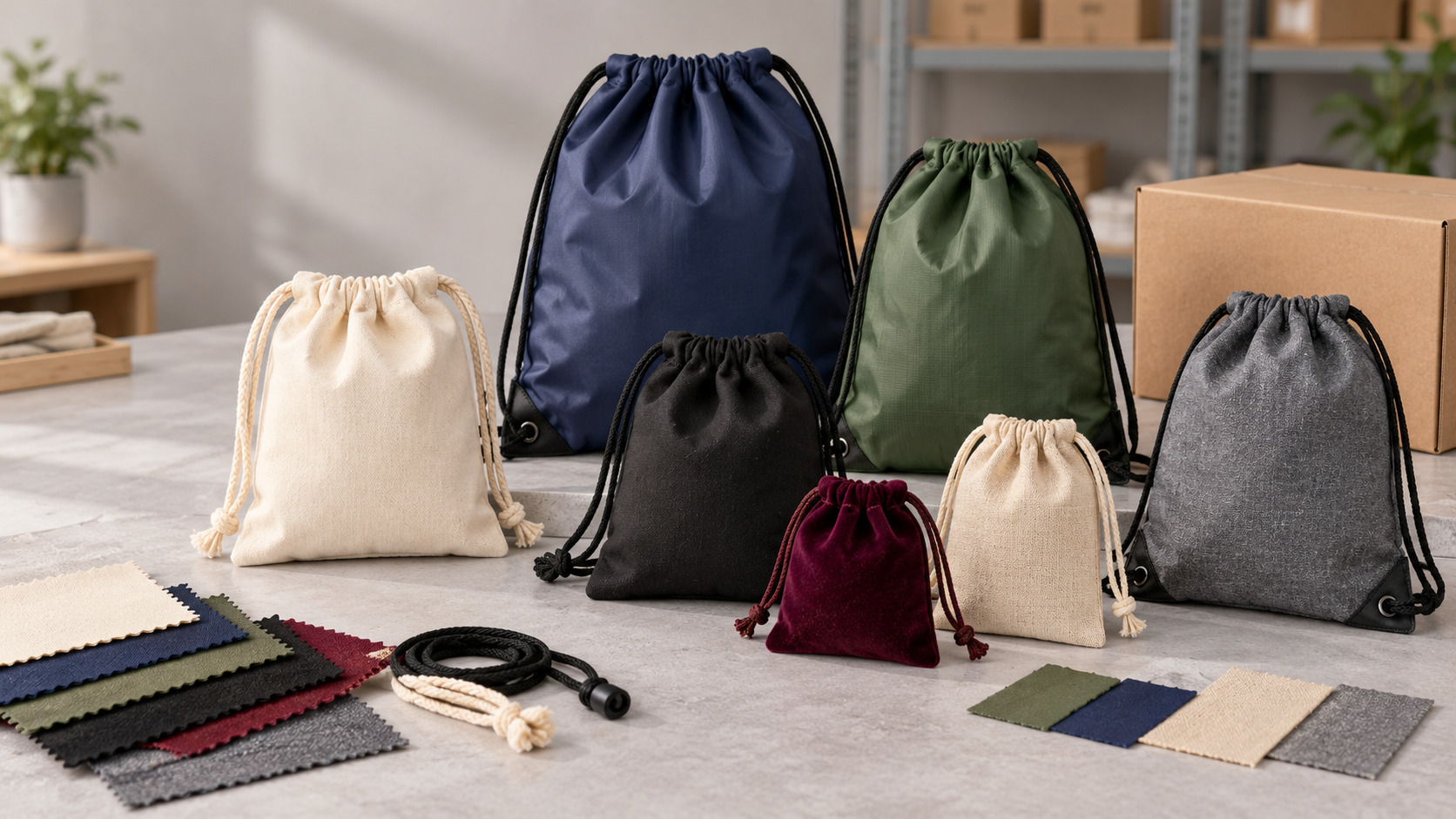
The word “drawstring bag” covers several constructions. A flat cotton pouch for jewelry packaging is not sourced in the same way as a sports sack expected to carry shoes and a water bottle. Define the product family before asking for a unit price.
| Bag type | Typical use | Common material | Critical check |
|---|---|---|---|
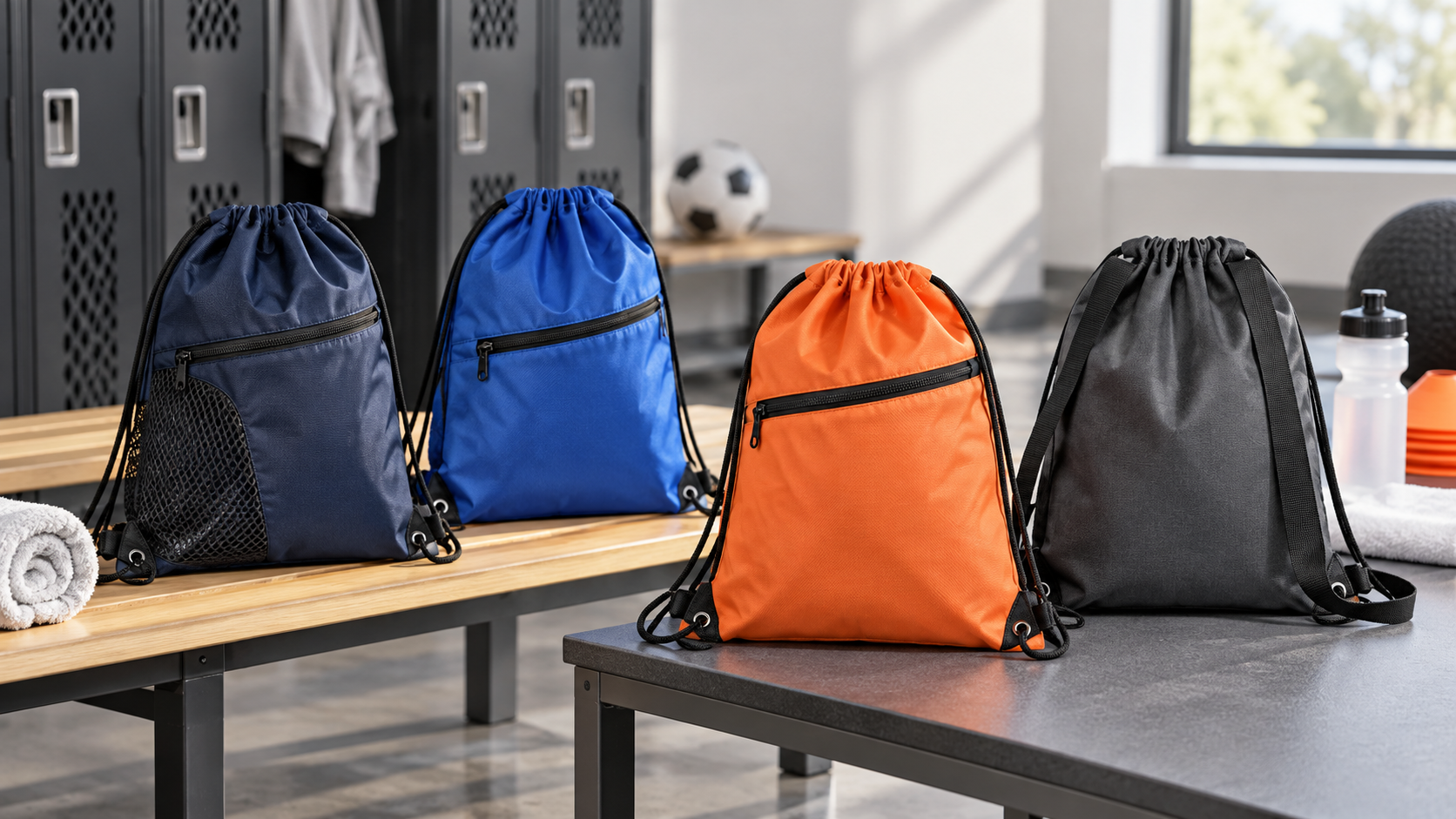
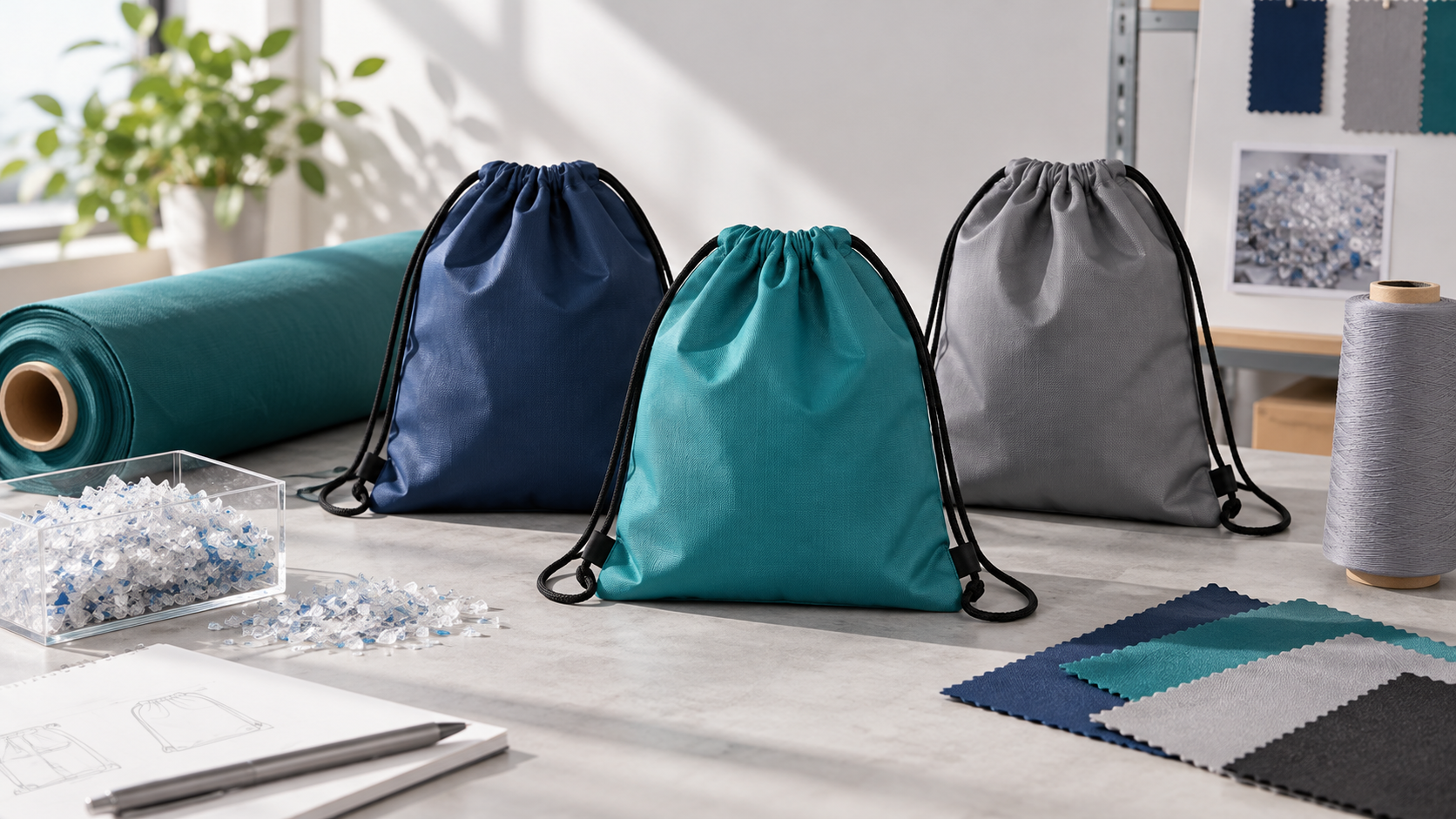
| Sports sack | Events, gyms, schools and team kits | Polyester, recycled polyester or non-woven | Cord comfort, corner reinforcement and loaded shape |
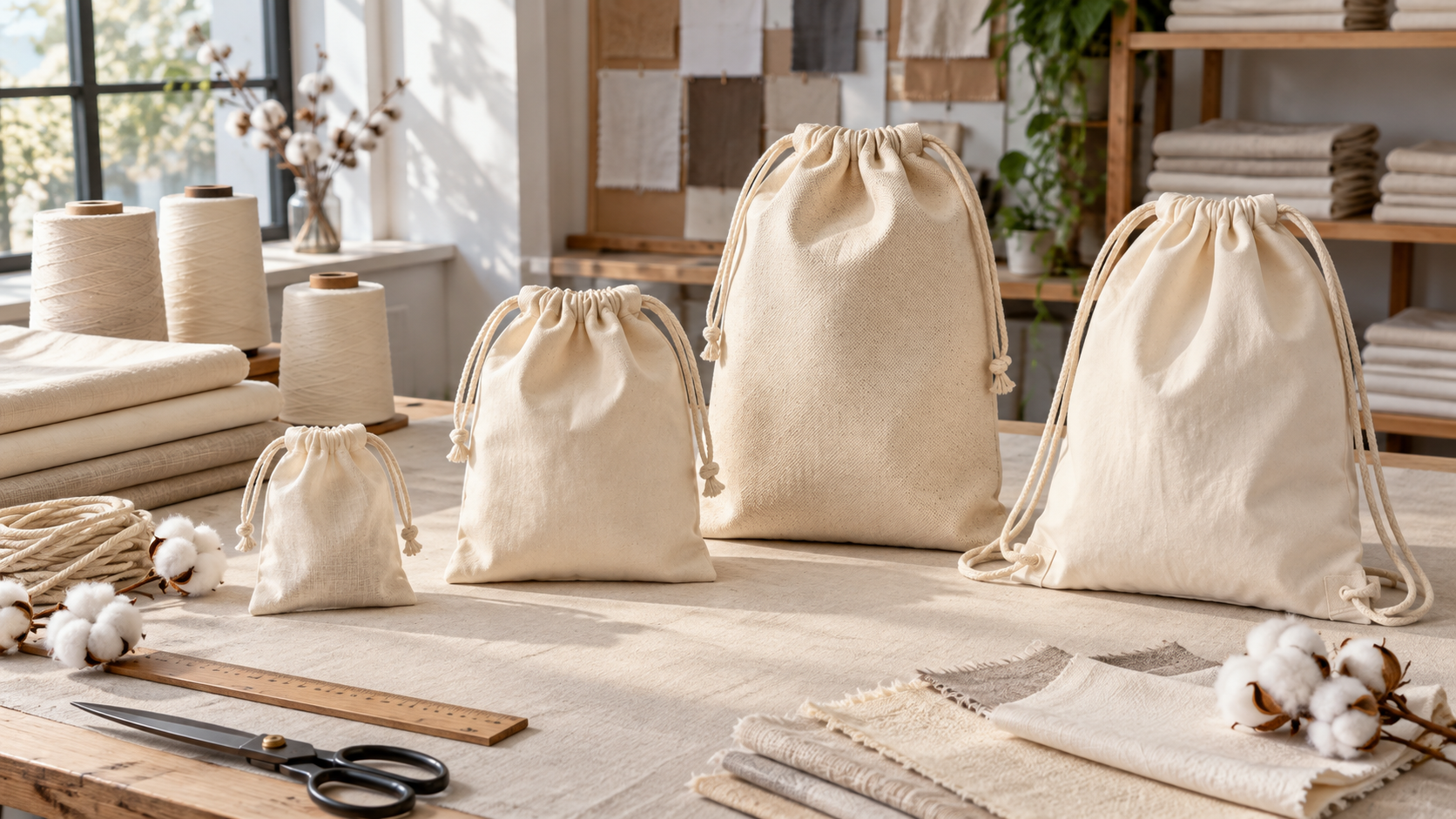
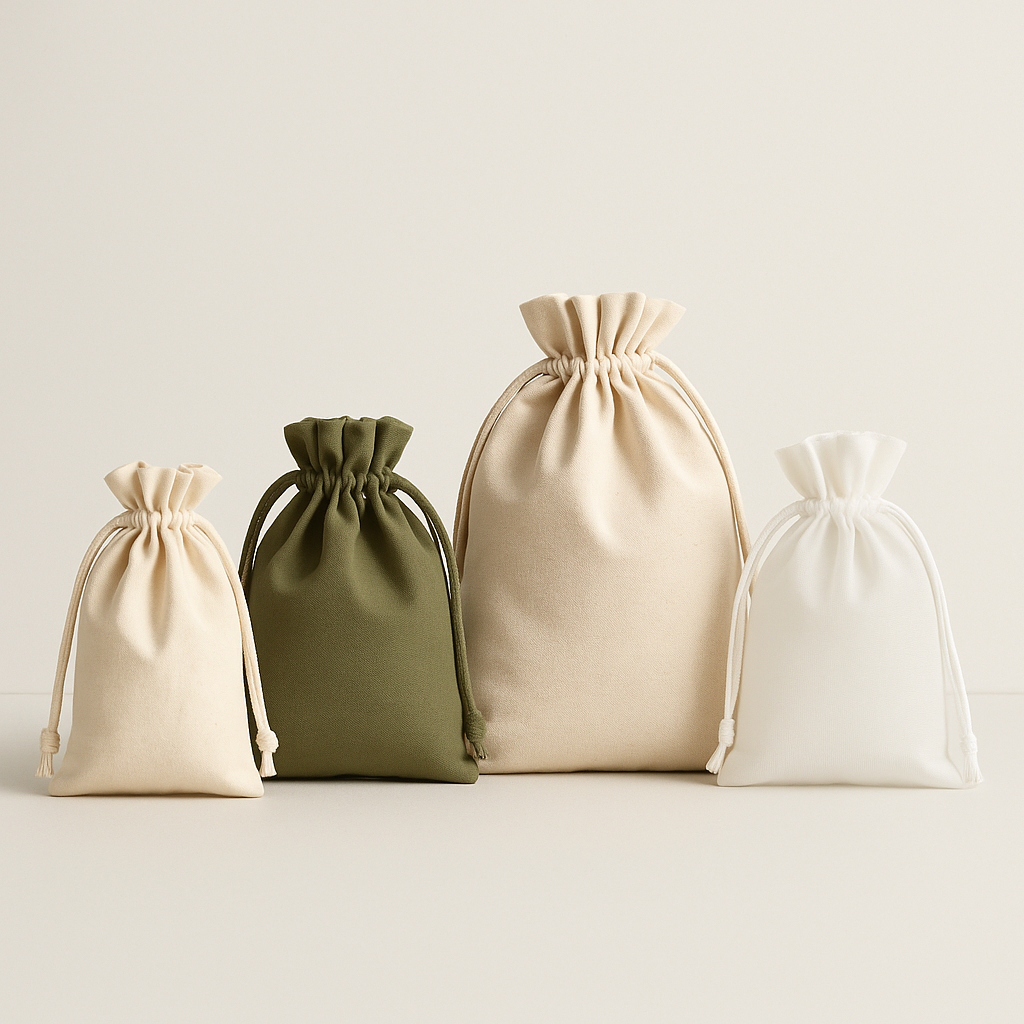
| Cotton or canvas bag | Retail merchandise, gifting and reusable packaging | Cotton, canvas or recycled cotton blend | Shrinkage, color, print surface and seam finish |
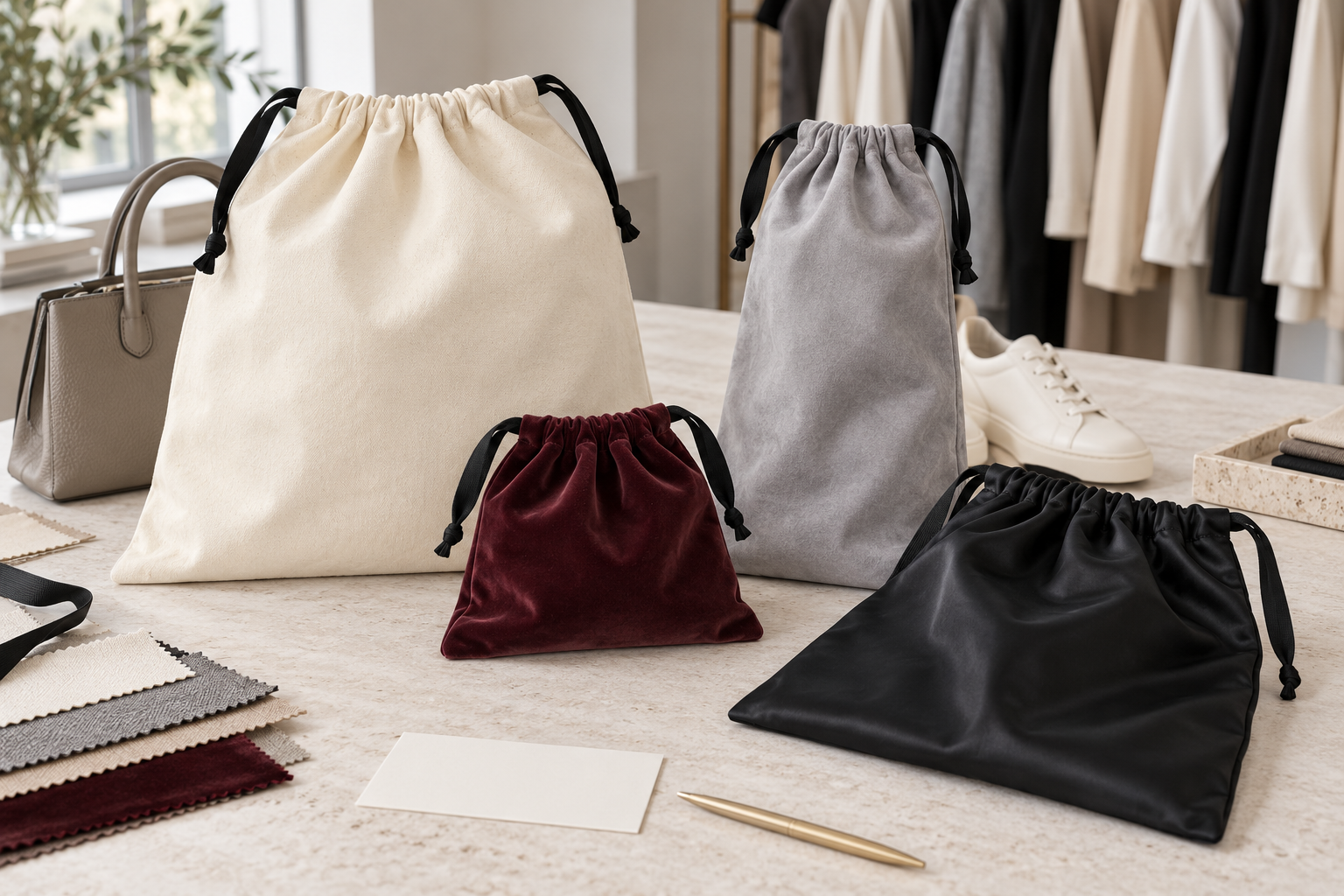
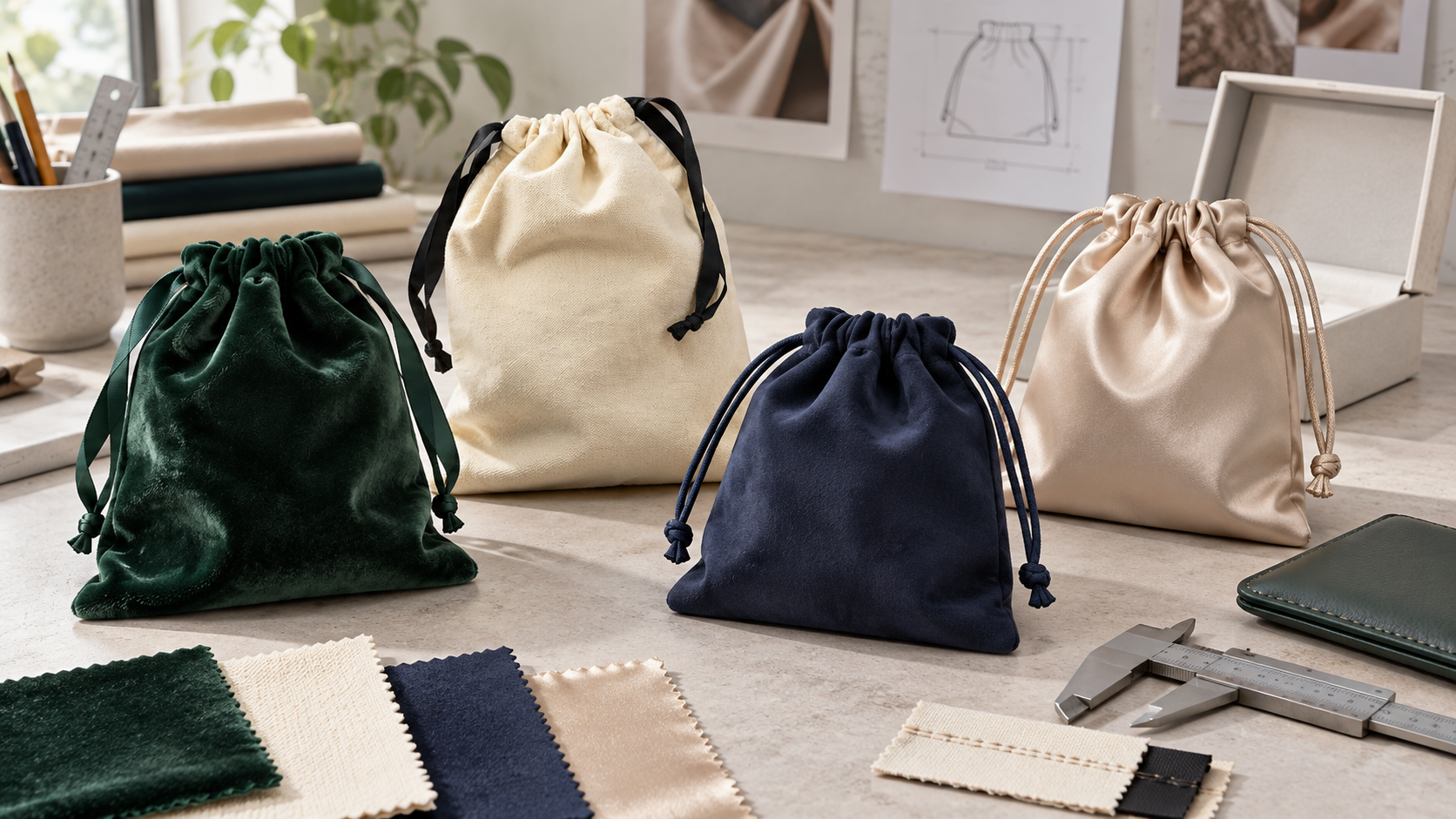
| Soft pouch | Jewelry, cosmetics, electronics and premium gifts | Velvet, satin, microfiber or brushed fabric | Hand feel, product protection and drawcord action |
| Mesh bag | Produce, laundry, travel and visible storage | Polyester or recycled polyester mesh | Mesh opening, snag resistance and seam binding |
| Lined or structured bag | Gift sets, kits and higher-value retail programs | Outer fabric plus lining, foam or pocket components | Internal capacity, layer alignment and added operations |
Buyers can review common starting formats in our custom drawstring bag range, but the final order should be controlled by an approved specification rather than a catalog photograph.
Start with Use, Load and Finished Size
A good RFQ begins with what the bag must do. State what it will carry, how often it will be used, whether it is sold or given away, the destination market, order quantity and required delivery date. A bag used as gift packaging may prioritize hand feel and presentation. A sports sack needs cord comfort, reinforced corners and enough volume to hold the intended load without excessive distortion.
Dimensions also need a clear measurement method. Confirm whether width and height are measured flat, whether a gusset is included, and how the drawcord channel affects usable height. For shaped pouches, provide the product dimensions and required clearance. If the supplier only receives a reference image, it may estimate proportions that look correct but do not fit the item.
- Provide finished width, height and gusset where applicable.
- State the intended contents and approximate loaded weight.
- Identify required pockets, lining, labels, safety notices and packaging.
- Send vector artwork, logo colors and the expected decoration size.
- Separate mandatory requirements from preferences that can be optimized.
Compare Materials by Evidence, Not Marketing Labels
“Eco-friendly,” “natural” and “recycled” are not complete material specifications. A responsible supplier should identify fiber composition, fabric weight, construction, finish, color method and the evidence available for the claim being made. The best material depends on use, order volume, budget, decoration and end-of-life expectations.
| Material | Strengths | Buyer checks |
|---|---|---|
| Cotton or canvas | Natural hand feel, familiar appearance and good surface for screen printing | Weight, weave, shrinkage, dyeing, colorfastness and cotton claim |
| Polyester | Lightweight, durable, quick drying and suitable for sports sacks | Denier, coating, tear resistance, colorfastness and print compatibility |
| Recycled polyester | Can reduce demand for virgin material while retaining useful performance | Recycled-content documentation, batch traceability and claim wording |
| Non-woven polypropylene | Cost-efficient for high-volume promotions and available in many stock colors | GSM, seam method, loaded performance and reuse expectations |
| Velvet, satin or microfiber | Soft presentation for jewelry, cosmetics and gift packaging | Dye transfer, abrasion, lint, cord friction and product protection |
Ask which certification or transaction document applies to the exact order rather than accepting a generic factory certificate. Confirm whether testing is required for restricted substances, colorfastness, load, flammability or another market-specific risk. Sustainability is strongest when the claim, material record, durability and packaging plan agree.
Construction Details That Control Real Quality
The simplest drawstring bag still depends on several interacting parts. Cord diameter must suit the channel. Eyelets or reinforced corners must withstand the load. The seam method must suit the fabric edge. A decorative print should not sit where the material folds or where a cord rubs repeatedly.
| Checkpoint | What to define | Typical risk |
|---|---|---|
| Drawcord | Material, diameter, length, color, end finish and pull force | Fraying, color transfer, discomfort or uneven lengths |
| Channel | Fold depth, opening, stitch line and cord clearance | Binding, poor closure or loss of usable height |
| Corners and eyelets | Reinforcement patch, stitch pattern, eyelet size and corrosion expectation | Tearing, pull-out or damage around the hardware |
| Seams | Seam type, allowance, stitch density, thread and edge finish | Open seams, fraying, puckering or inconsistent dimensions |
| Branding | Artwork, position, color, method and tolerance | Misalignment, cracking, migration or poor legibility |
Quality should be checked during production, not only after every bag is finished. Incoming fabric, the first cut pieces, decorated panels, first assembled units and packed cartons are all useful control points. The custom bag quality inspection checklist shows how to turn appearance, dimensions, workmanship, function and packing into verifiable release criteria.
Choose a Branding Method That Fits the Substrate
Branding method affects appearance, hand feel, minimum quantity and production sequence. Screen printing is efficient for suitable artwork and volume. Heat transfer supports detailed or multicolor graphics but must be tested for adhesion and hand feel. Sublimation works on compatible light-colored polyester. Embroidery adds texture but may distort lightweight fabric if stitch density and backing are not controlled. Woven labels and patches can create a consistent identity across several bag materials.
| Method | Best fit | Approval evidence |
|---|---|---|
| Screen print | Bold graphics on cotton, canvas and many flat panels | Strike-off, Pantone reference, position and rub/wash check |
| Heat transfer | Detailed or multicolor artwork on compatible fabrics | Color, edge, adhesion, stretch and heat-mark review |
| Sublimation | All-over or vivid graphics on suitable polyester | Color proof, seam alignment and white-mark control |
| Embroidery | Premium, textured branding on stable fabric | Thread card, stitch-out, backing and distortion check |
| Label or patch | Cross-material brand systems and repeat programs | Artwork proof, attachment method, edge quality and placement |
MOQ and Price: Compare the Same Specification
MOQ is affected by material availability, custom dyeing, cord and hardware choices, decoration setup, packaging, number of colors and production efficiency. A stock polyester sports sack with one-color printing can support a different minimum from a custom-dyed cotton bag with matched cords, embroidery and retail packing.
Ask whether the quoted minimum applies per design, color, size or total order. Separate one-time charges such as screens, dies, artwork preparation and sample courier from the unit price. Then compare the same incoterm, packaging and test scope. Our guides to typical custom bag MOQs and custom bag pricing explain why a low unit price alone is not a reliable buying decision.
Sampling and Production Timeline
A digital mockup confirms artwork direction; it does not prove material, dimensions, cord action, seam quality or loaded performance. Approve a physical sample and record every accepted detail. When a substitute material or color is used for the first prototype, list exactly what remains to be confirmed in the pre-production sample.
| Stage | Typical planning range | Buyer approval |
|---|---|---|
| Brief and feasibility | 1–3 working days | Scope, material direction, quantity and target date |
| Material and artwork confirmation | 2–7 working days | Swatch, color reference, logo file and method |
| Sample development | 5–12 working days plus courier | Dimensions, function, workmanship, branding and packing |
| Bulk production | Approximately 20–40 days after approvals | Pre-production standard and exception decisions |
| Inspection and shipping | Depends on inspection and transport route | Inspection result, carton data and shipment release |
These ranges are illustrative, not promises. Custom fabric, peak season, testing, revisions and transport can change the critical path. The sample development guide explains the approval gates, while the custom bag manufacturing process follows the order from specification through shipment. For deadline-sensitive programs, review how to reduce lead time and cost without removing controls.
How to Evaluate a Custom Drawstring Bag Supplier
Supplier selection should be evidence-based. A polished website and quick quotation do not prove that the factory can control your exact material, drawcord system, branding and deadline. Ask questions that reveal who owns each part of the process.
- Relevant production experience: request examples with a similar material, load, closure and decoration—not simply any drawstring bag.
- Specification discipline: confirm whether dimensions, tolerances, bill of materials, artwork and packing are recorded in one controlled document.
- Material traceability: ask how the supplier identifies lots, color standards and sustainability documents for the order.
- Sample-to-bulk control: verify how the approved sample becomes the production reference and how revisions are closed.
- Quality evidence: request examples of inline records, final inspection reports and corrective-action handling.
- Capacity and lead-time logic: ask which operations are in-house, which are subcontracted and which component controls the schedule.
- Communication: one accountable project contact should report exceptions before they become shipment problems.
- Export and packing experience: confirm carton marks, barcode, labeling, test documents and the required incoterm.
Use our practical guide on how to choose a custom bag manufacturer for a wider due-diligence checklist. The strongest long-term partnership is not the supplier that says yes to every request; it is the one that identifies conflicts early, documents decisions and repeats the approved result.
Send an RFQ That Produces Comparable Quotations
| Buyer sends | Supplier confirms |
|---|---|
| Use case, contents and load | Recommended construction and risk points |
| Finished dimensions and quantity | Measurement method, tolerance and MOQ basis |
| Material direction and color references | Composition, weight, finish, stock/custom status and evidence |
| Artwork, size, position and colors | Decoration method, setup, tolerance and approval proof |
| Packaging, labeling and tests | Included scope, extra charges and production impact |
| Destination, incoterm and required delivery date | Sample time, production time, inspection and shipping assumptions |
Common Sourcing Mistakes
- Comparing prices before the fabric weight, size, cord and packing are aligned.
- Using “eco-friendly” without defining the material claim and supporting evidence.
- Approving only a digital artwork proof instead of the physical decoration on the chosen fabric.
- Ignoring usable capacity lost to the drawcord channel or gusset construction.
- Changing color, packaging or accessories after sample approval without reviewing cost and lead time.
- Leaving inspection expectations until the order is already packed.
Frequently Asked Questions
What is a typical MOQ for custom drawstring bags?
The minimum depends on fabric availability, custom color, bag size, decoration, accessories and packaging. Stock-material promotional bags may support a lower MOQ than custom-dyed cotton, lined pouches or designs with special hardware. Ask whether the MOQ is per design, color or total order.
Which material is best for an eco-conscious program?
There is no universal answer. Cotton, recycled polyester, recycled cotton blends and reusable non-woven materials have different performance and sourcing profiles. Define the intended reuse, required evidence, durability and disposal context before selecting a claim.
Should I approve a physical sample?
Yes. A physical sample allows you to check dimensions, capacity, fabric, color, cord action, seam quality, reinforcement, logo and packing. Record approved details and unresolved substitutions before bulk production.
How should drawstring bags be inspected?
Inspection should cover material and color, finished measurements, stitching, cord and channel function, corner reinforcement, decoration, cleanliness, quantity and packaging. Loaded-use testing should reflect the intended product rather than an arbitrary weight.
What information speeds up an accurate quotation?
Send the intended use, size, quantity, material direction, artwork, color, accessories, packing, destination, incoterm and required delivery date. Mark which details are mandatory and which are open to factory recommendations.
Build a Repeatable Drawstring Bag Program
A dependable supplier turns a concept into a controlled product and then reproduces it. That requires a clear brief, suitable material, compatible branding, approved sample, measurable inspection criteria and realistic schedule. When these controls are visible, buyers can compare quotations on equal terms and make sustainability, cost and quality decisions with fewer assumptions.
Return to the Custom Bag Manufacturer pillar guide for the complete sourcing framework. When your project is ready, share the use, quantity, material direction, logo and delivery window so our team can propose a workable specification.
Email a prefilled drawstring-bag RFQ