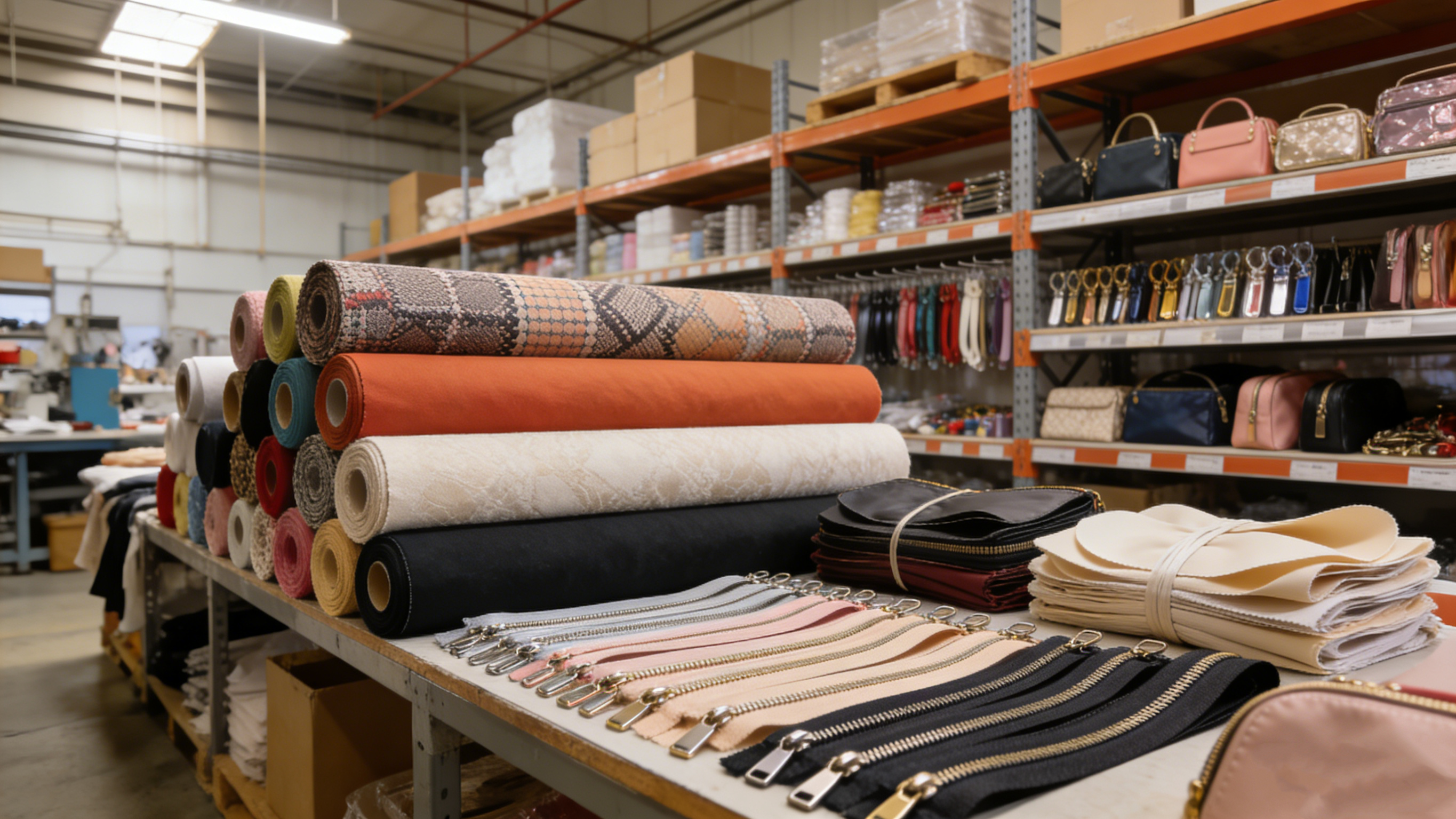
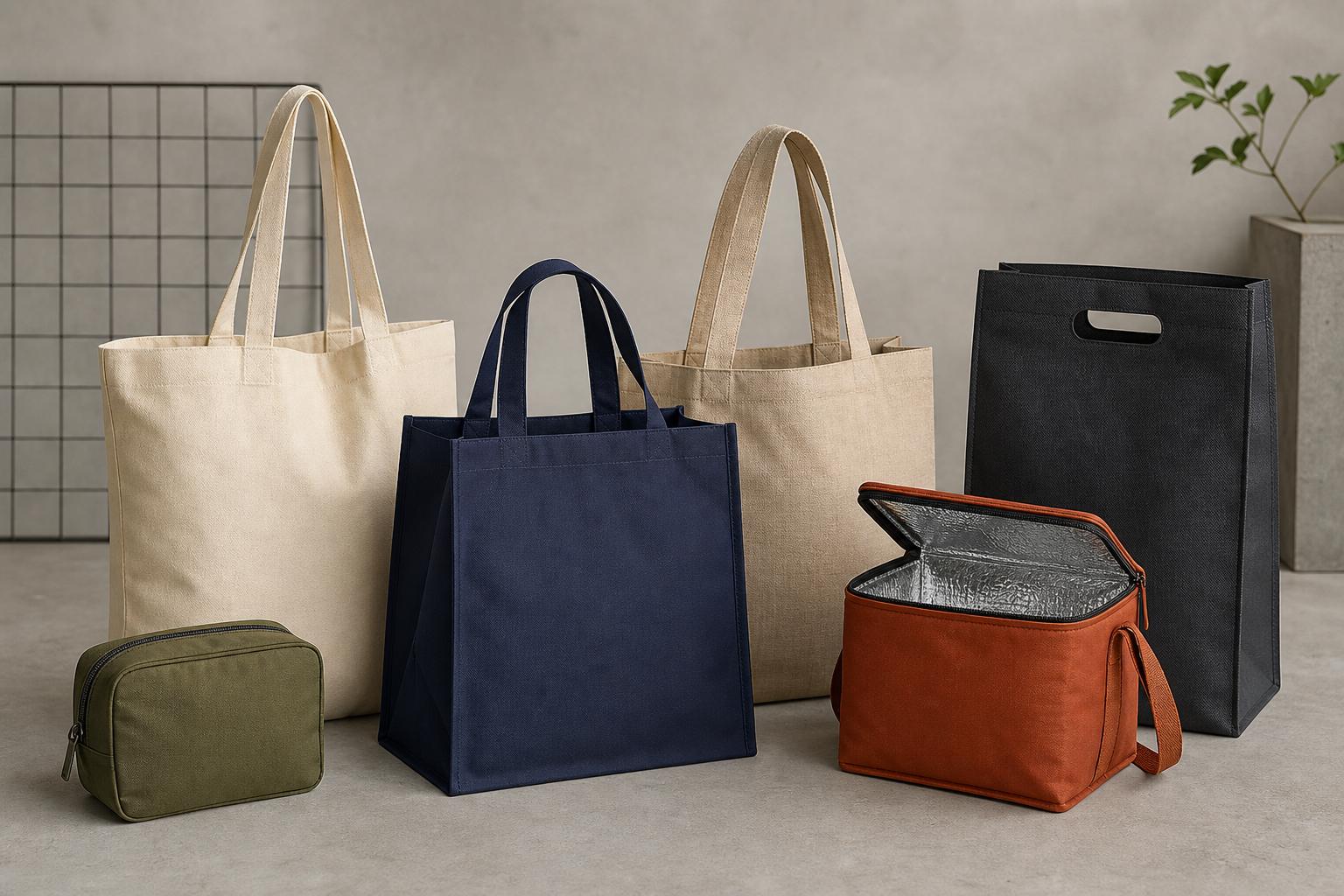
Choose a custom bag manufacturer by checking relevant construction experience, specification control, sample approval, inspection evidence and written delivery responsibilities. Start with the bag’s intended use and required dimensions, then compare suppliers against the same brief. A company label or product photograph alone does not establish who performs each production step.
Building a supplier shortlist? Use the How to Choose a Custom Bag Manufacturer checklist to score candidates against the same brief, evidence and approval gates.
Comparing production routes for a custom bag? Send the bag use, specification or reference, quantities by SKU, materials, decoration, sample status, inspection needs, destination and arrival date. Request the proposed legal seller, actual production/inspection sites, development scope and written quotation assumptions.
That is why two suppliers can quote the same drawing and still deliver very different results. One may understand retail packaging but have limited experience with insulated structures. Another may make excellent canvas totes yet struggle with a cosmetic pouch that needs neat binding, zipper control and a wipe-clean lining. A useful supplier search therefore begins with the bag’s job, not with a generic price request.
Use this guide as the sourcing overview: select the bag category, decide how much development is needed, prepare an RFQ and verify the proposed production route. The linked sample, cost, timeline and quality guides provide the detailed working checklists. Explore our product range when the bag format is still undecided.
What Does a Custom Bag Manufacturer Actually Do?
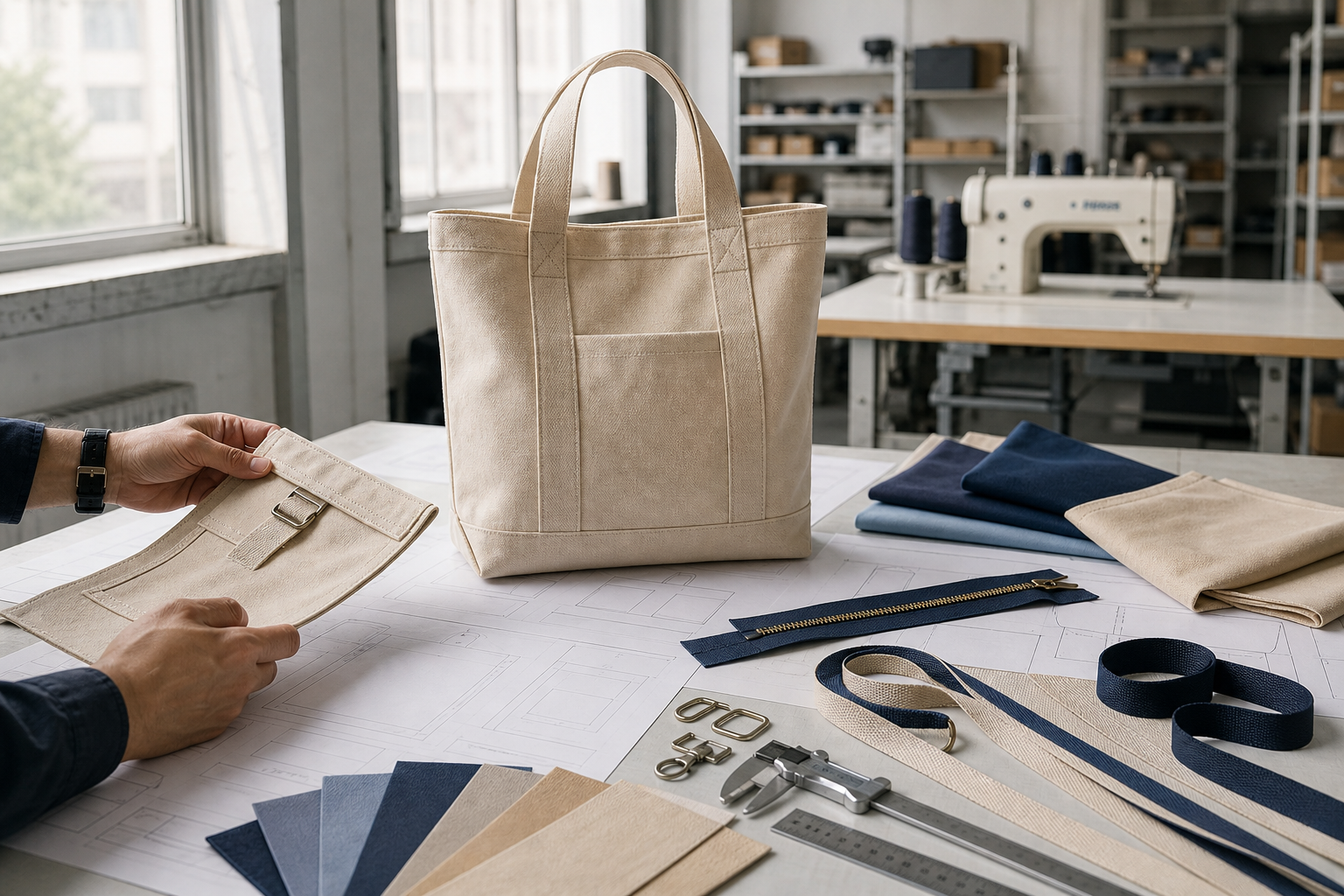
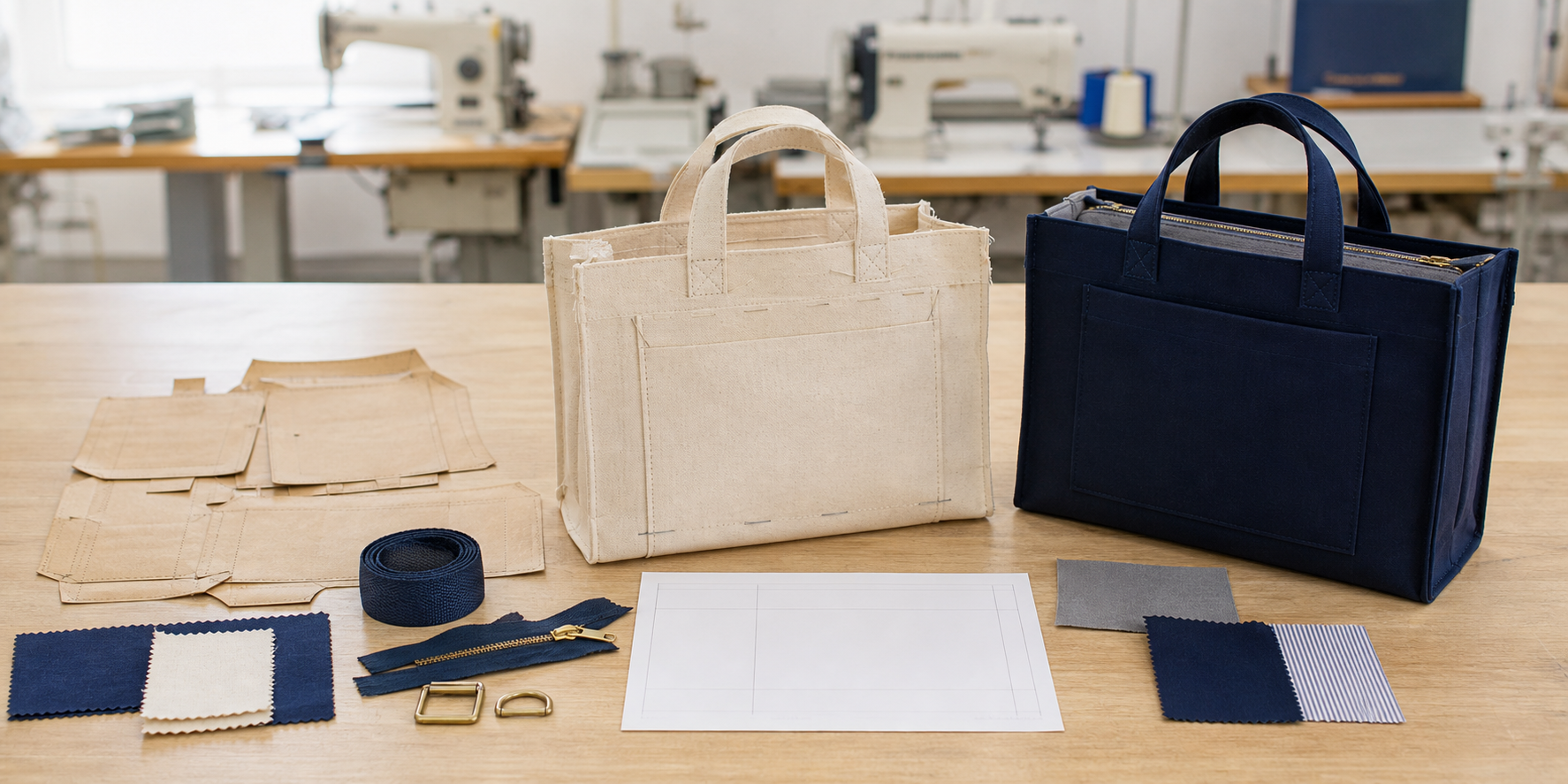
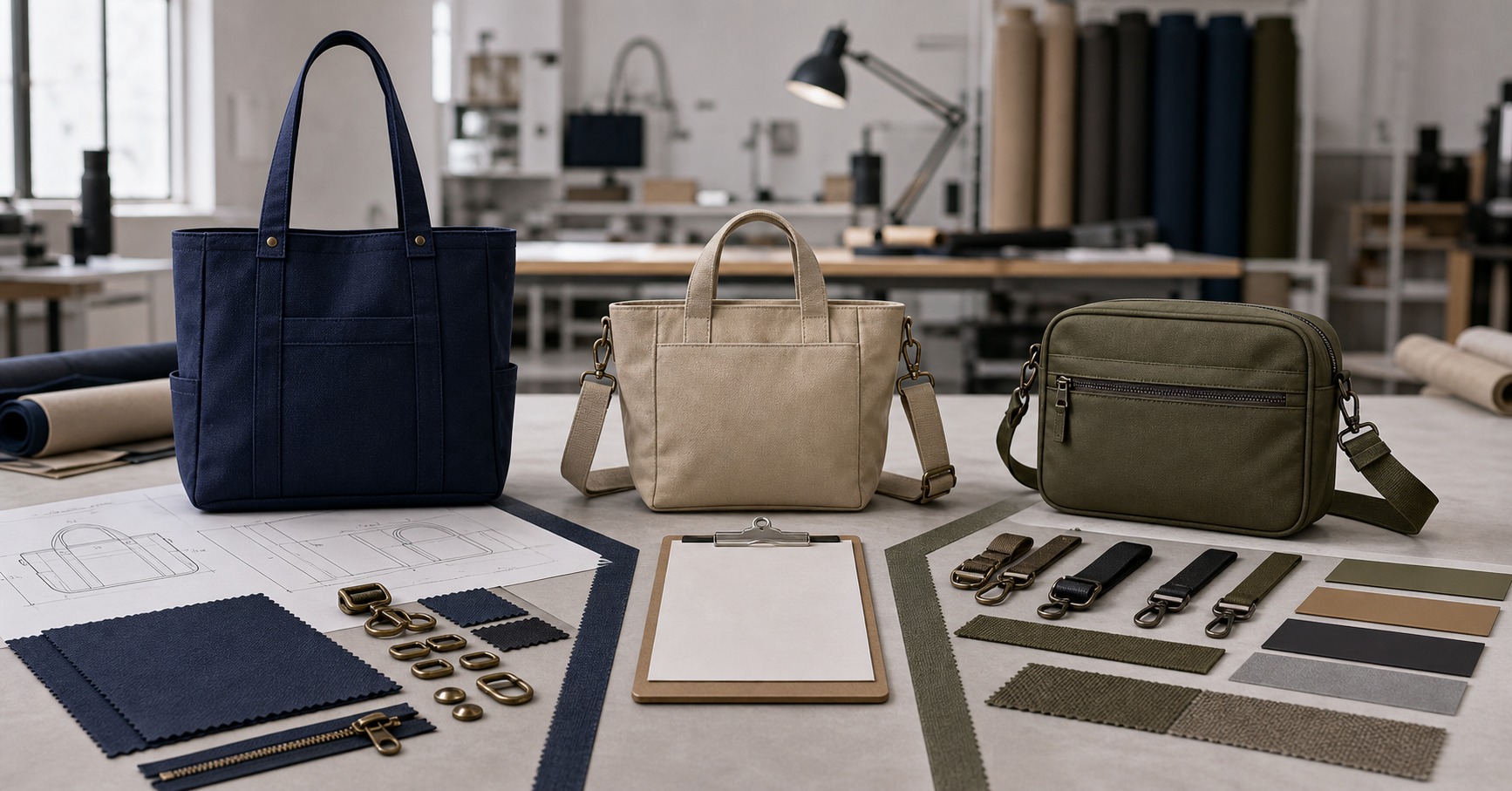
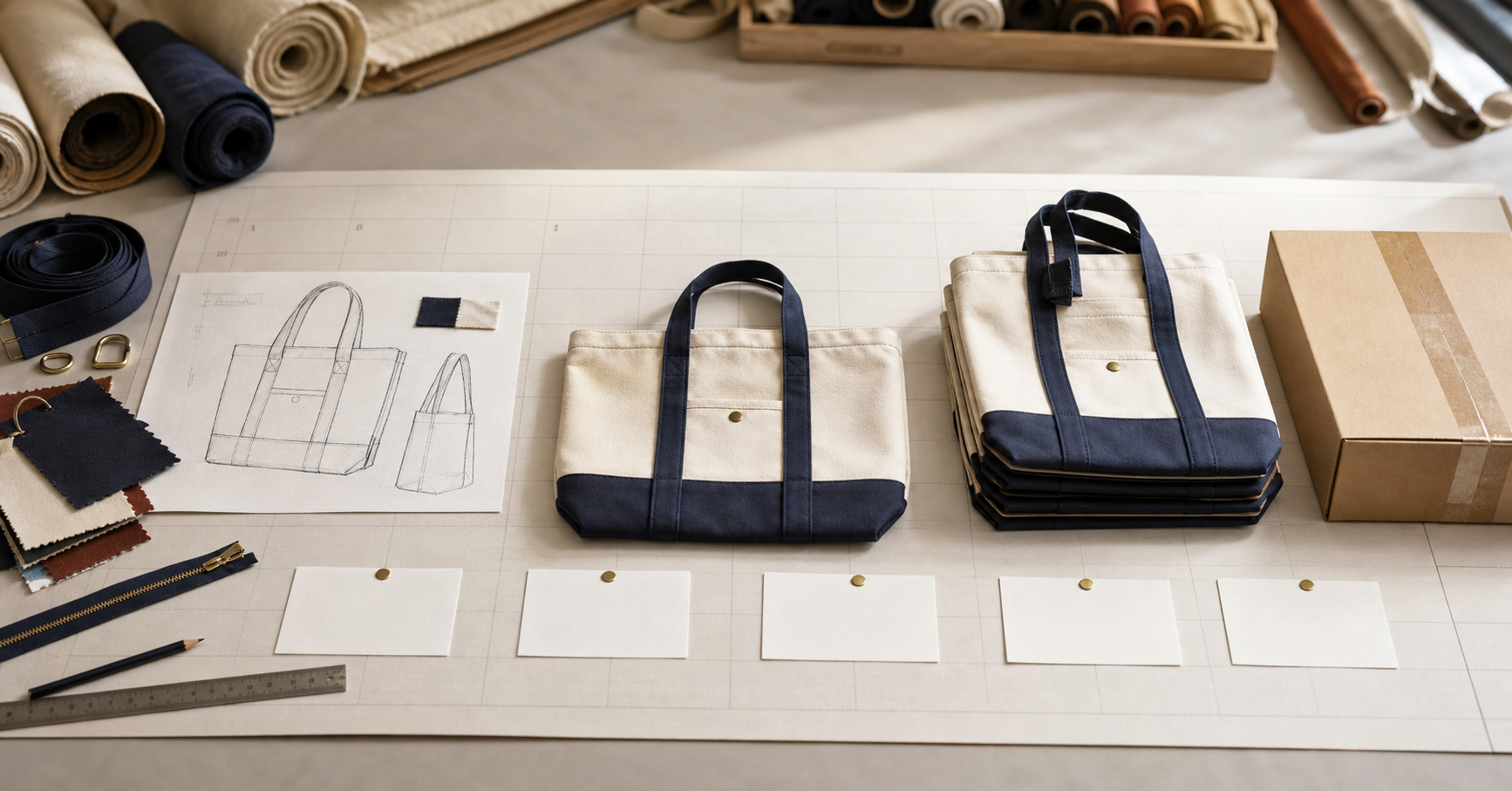
A capable manufacturer connects design decisions with production reality. Before fabric is cut, the team may review the intended load, bag size, seam allowance, handle attachment, closure, printing area, lining, reinforcement and carton requirements. During development, it turns these decisions into a sample and a working specification. During production, it coordinates materials, cutting, decoration, sewing, inspection and packing.
The work usually falls into three layers:
- Product engineering: converting a sketch, reference sample or specification into patterns, construction details and measurable tolerances.
- Manufacturing control: arranging materials and components, planning production steps and keeping workmanship consistent across the order.
- Commercial coordination: confirming quantities, sample approvals, packaging, lead-time assumptions and shipping information before bulk production begins.
For a closer look at the development route, see our guide to the custom bag manufacturing process from design to delivery.
Custom Bag Manufacturer vs. Custom Bag Factory
Buyers often use Custom Bag Manufacturer and Custom Bag Factory interchangeably. In practice, the labels matter less than the responsibilities a supplier can actually control. A manufacturer may coordinate development, sourcing, production and export service, while a factory may focus more narrowly on physical production. Some businesses do both. The important point is to verify the operating model for your particular order.
| Supplier description | Typical strength | What the buyer should verify |
|---|---|---|
| Custom Bag Manufacturer | End-to-end development and order coordination | Which steps are handled in-house, who owns the specification and how quality is controlled |
| Custom Bag Factory | Production focus, machinery and line management | Experience with your construction, decoration method, material and order scale |
| Trading or sourcing company | Broader supplier access and multi-product coordination | Production visibility, inspection process, accountability and communication path |
Ask direct questions. Where will cutting, printing and sewing take place? Who checks incoming material? Will you receive an approved specification with the sample? What happens if the bulk product differs from that sample? Clear answers are more useful than a broad claim about factory status.
Which Bag Specialist Fits Your Project?
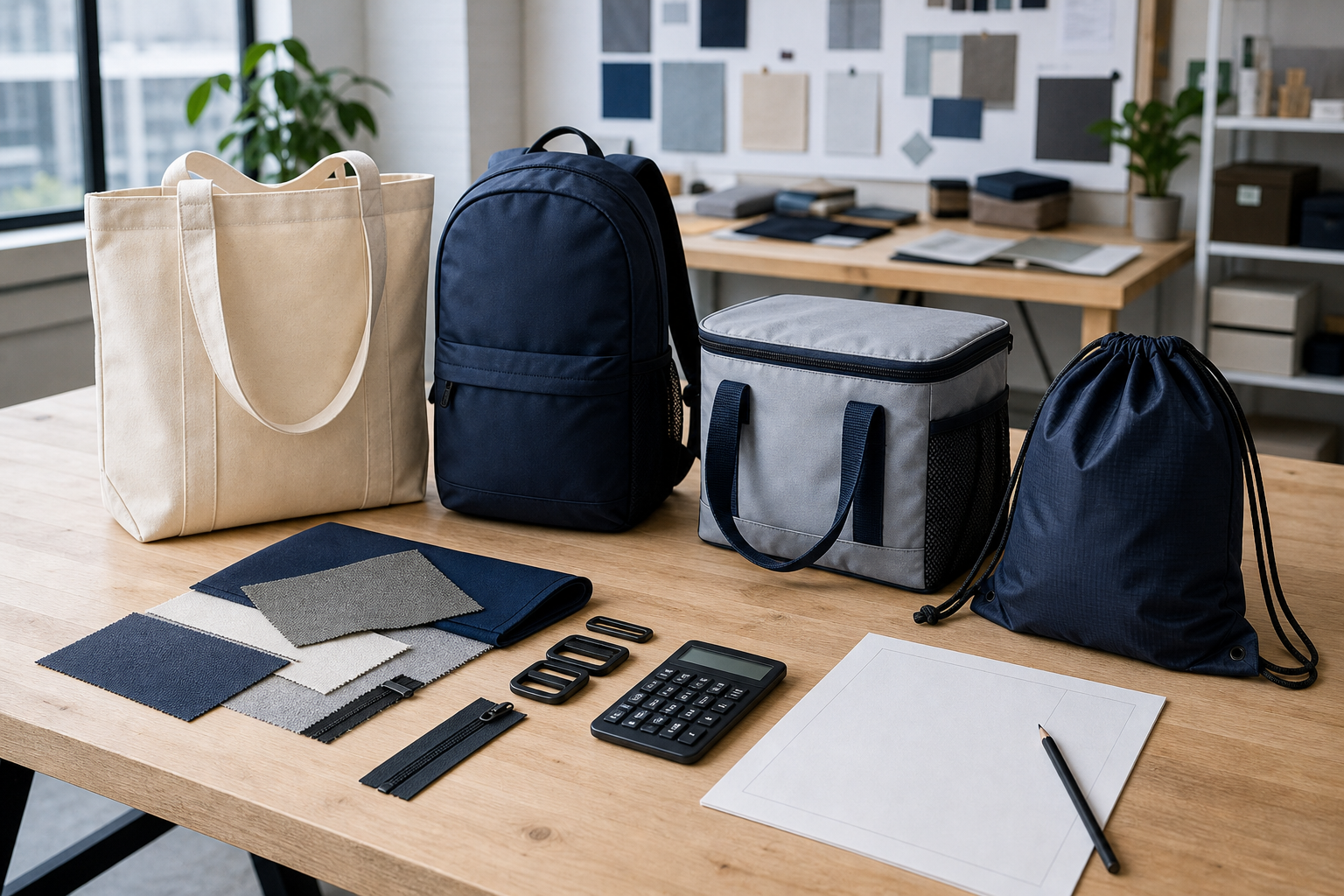
Bag categories overlap, but each one has a different risk profile. The table below maps the ten common supplier searches to the decisions that normally deserve the most attention.
| Supplier keyword | Best suited to | Important checkpoints |
|---|---|---|
| Custom Bag Manufacturer | Original designs or branded variations across several bag types | Development support, specification control and category experience |
| Custom Bag Factory | Production-ready designs with defined materials and construction | Capacity, processes, subcontracting and inspection records |
| Promotional Bag Manufacturer | Events, campaigns, gifts and branded merchandise | Print legibility, unit cost, pack-out and delivery date |
| Tote Bag Manufacturer | Retail, lifestyle, gifting and everyday carry | Handle drop, handle reinforcement, bottom shape and load expectation |
| Canvas Bag Manufacturer | Structured, heavier-feel totes and reusable merchandise | Fabric weight, shrinkage, color variation and needle choice |
| Cotton Bag Manufacturer | Lightweight drawstring bags, totes and soft promotional styles | Weave, fabric weight, finishing, printing and dimensional stability |
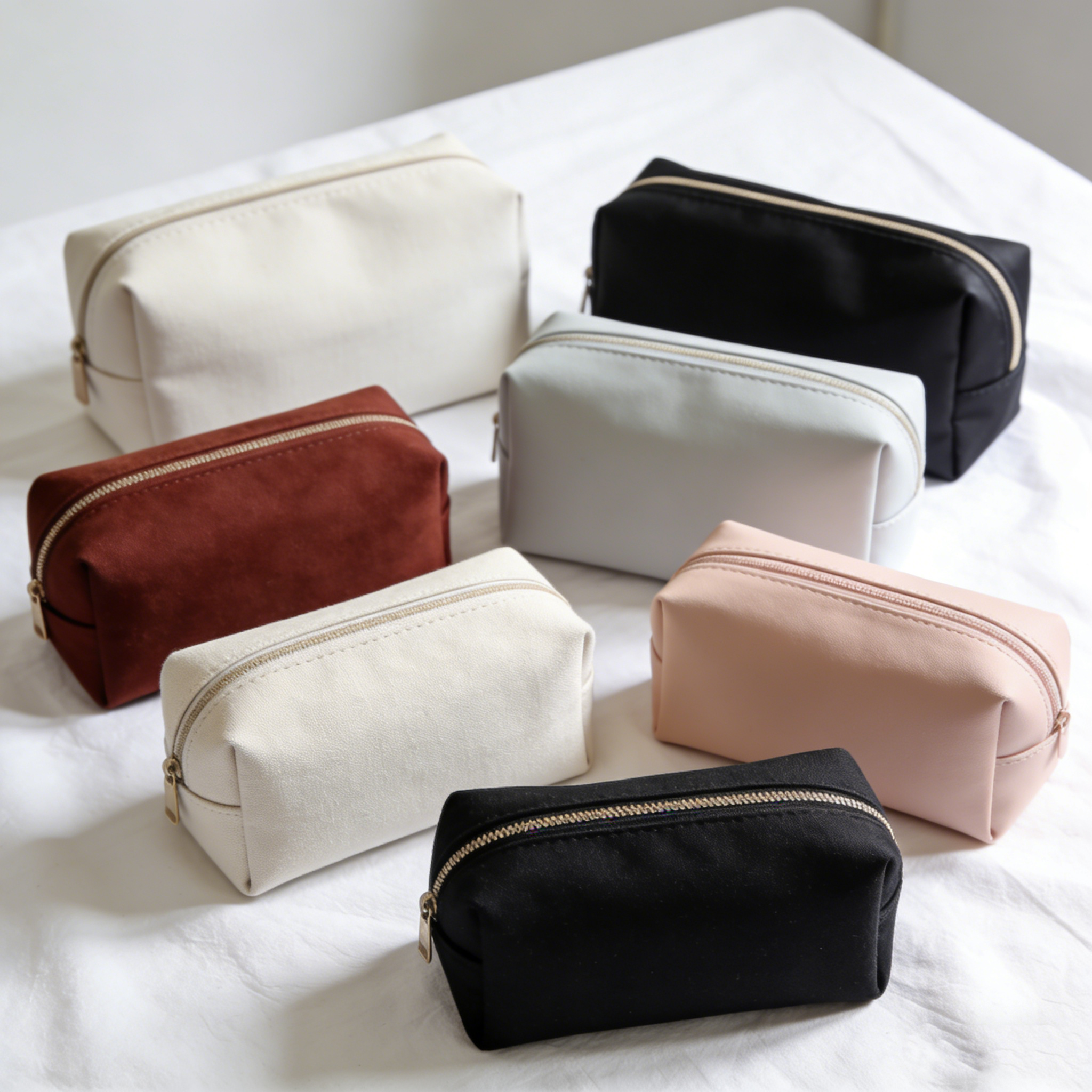
| Cosmetic Bag Manufacturer | Beauty kits, pouches, travel organizers and gift-with-purchase programs | Zipper path, lining, binding, pocket placement and clean interior finishing |
| Shopping Bag Manufacturer | Retail carry bags, store programs and reusable checkout bags | Bag volume, handle strength, foldability, branding area and carton efficiency |
| Non Woven Bag Manufacturer | High-volume promotions, retail packaging and event distribution | Material weight, edge construction, seam method, print adhesion and load target |
| Cooler Bag Manufacturer | Food delivery, picnics, beverage promotions and insulated kits | Insulation stack, lining seams, zipper closure, cleaning requirements and temperature-use expectation |
A supplier does not need a different production line for every label above, but it should understand the construction logic behind your category. For example, a cooler bag is more than a tote with silver lining; insulation thickness, closure gaps and internal seam treatment influence performance. Similarly, a cosmetic pouch should be assessed from the inside as carefully as from the outside.
For retail totes and reusable merchandise programs, use our Canvas Shopping Bags for Retail Brands buyer guide to compare fabric, construction, branding, MOQ, sampling and quality checkpoints.
If beauty packaging is your priority, our separate China cosmetic bag manufacturer buyer guide goes deeper into category-specific purchasing points.
For beauty launches, gift-with-purchase programs and branded retail pouches, use our Custom Logo Makeup Bags Wholesale buyer guide to compare formats, materials, decoration, MOQ, sampling and quality control.
For 2026 assortment planning and wholesale sourcing priorities, review our Wholesale Cosmetic Bags 2026 buyer demand guide covering travel formats, materials, OEM/ODM customization, gift packaging, MOQ and supplier reliability.
For transparent beauty kits, travel organizers and retail gift sets, review our Custom Clear PVC Bag Trends 2026 buyer guide for material, construction, branding, compliance and quality checkpoints.
Seven Related Sourcing Directions in the Custom Bag Cluster
A bag program often expands beyond totes, shopping bags and cosmetic pouches. The following seven directions belong in the same sourcing conversation, but they should each become a focused supporting page over time. The first four remain closely tied to bag construction; the final three connect bags with a broader branded merchandise program.
| Related topic | Typical project scope | Decisions that deserve a dedicated brief |
|---|---|---|
| Custom Drawstring Bag Supplier | Sports events, shoe bags, school programs, gift packaging and lightweight promotions | Cord type, channel construction, corner reinforcement, fabric weight and loaded shape |
| Backpack Manufacturer | Daily carry, school, commuting, outdoor promotions and branded staff kits | Strap comfort, back panel, zipper route, compartment layout, reinforcement and intended load |
| Travel Bag Manufacturer | Duffels, organizers, weekend bags, toiletry cases and travel sets | Carrying modes, capacity, hardware, lining, pocket access and packing efficiency |
| Packaging Bag Manufacturer | Reusable product packaging, drawstring pouches, presentation bags and retail pack-outs | Product fit, closure, surface protection, unboxing sequence, labels and outer-carton arrangement |
| Promotional Product Manufacturer | Coordinated campaign items that may combine bags with accessories or daily-use products | Cross-item color matching, logo consistency, testing needs, packaging and consolidated delivery |
| Promotional Gift Manufacturer | Gift-with-purchase programs, event giveaways, client gifts and employee kits | Recipient, perceived value, presentation, set assembly, inserts and campaign deadline |
| Custom Apparel Manufacturer | Branded apparel coordinated with bags for uniforms, events or merchandise collections | Size range, fit, fabric, decoration, labeling, care information and color coordination with the bag |
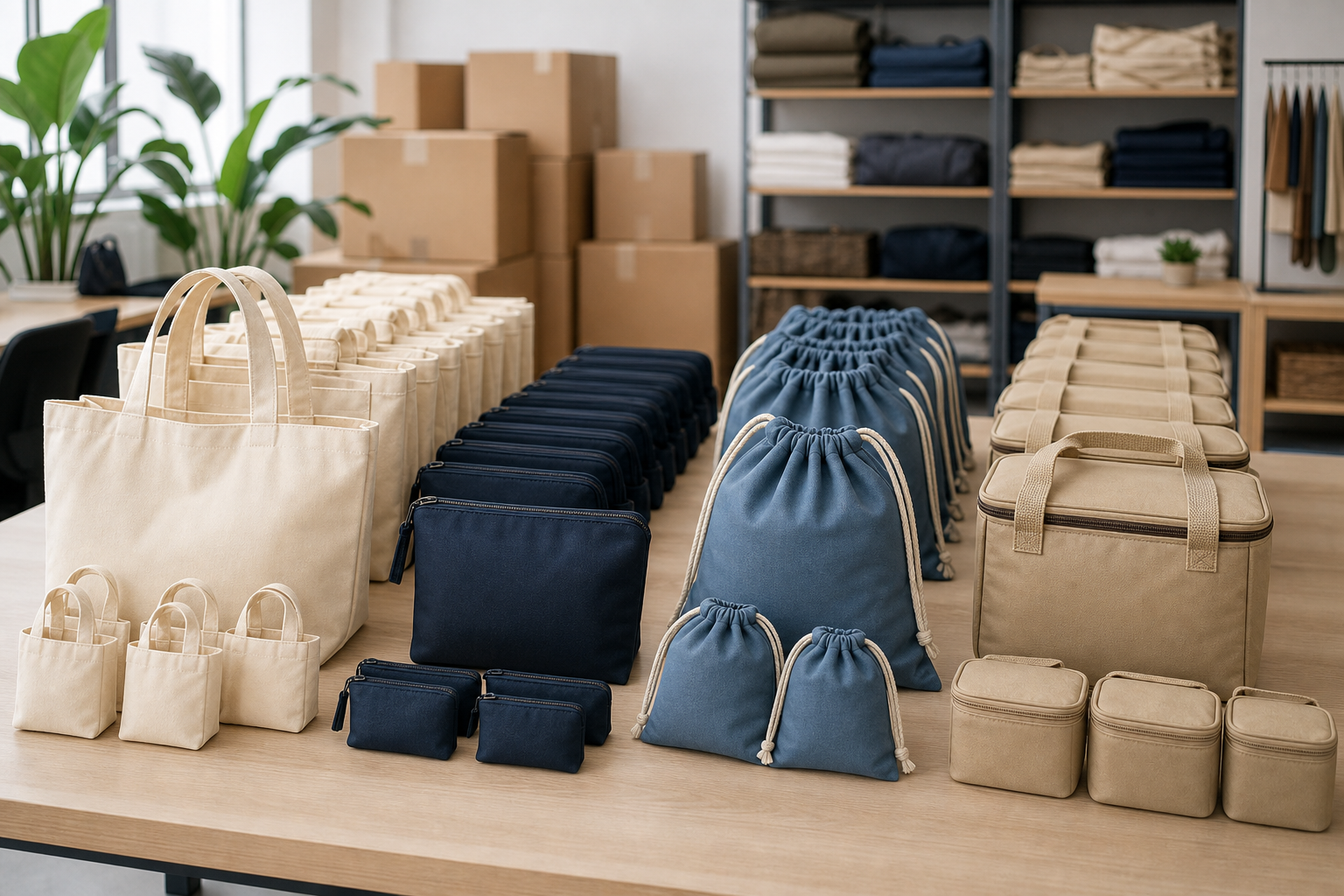
These topics are related, but they should not be forced into one undifferentiated quotation. A backpack needs more construction detail than a simple drawstring pouch, while an apparel order introduces fit and size control that do not apply to bags. When several products belong to one campaign, prepare a shared brand guide and then give each item its own specification.
If the program combines T-shirts, bags and caps, use our Basic Wear Versatility guide to plan fit, fabric, size allocation, decoration and cross-product color control before writing the separate item briefs.
OEM or ODM: Decide How Much Development You Need
Most custom bag projects sit somewhere between OEM and ODM. Under an OEM route, the buyer provides a more complete design: dimensions, materials, artwork, construction and packaging expectations. The manufacturer develops and produces to that brief. Under an ODM route, the buyer starts from an existing shape or reference and adjusts color, fabric, logo, trim or selected details.
Neither route is automatically better. OEM offers more differentiation but usually requires more development decisions and tighter approval control. ODM can shorten the path to a workable sample because the core structure is already understood. A practical hybrid is common: begin with a proven silhouette, then change the parts customers will notice and use.
Before contacting suppliers, decide which of these statements is closest to your project:
- “We have a full technical specification and need production execution.”
- “We have a reference sample and want specific changes.”
- “We know the use case, target price and brand direction, but need construction advice.”
- “We need a quick branded option based on an existing model.”
This single clarification helps a manufacturer estimate the real development workload and respond with relevant questions.
For a detailed decision framework covering design ownership, development responsibility, customization scope, cost and speed, read our OEM vs ODM Bag Manufacturing buyer guide.
From Brief to Shipment: A Practical Production Route
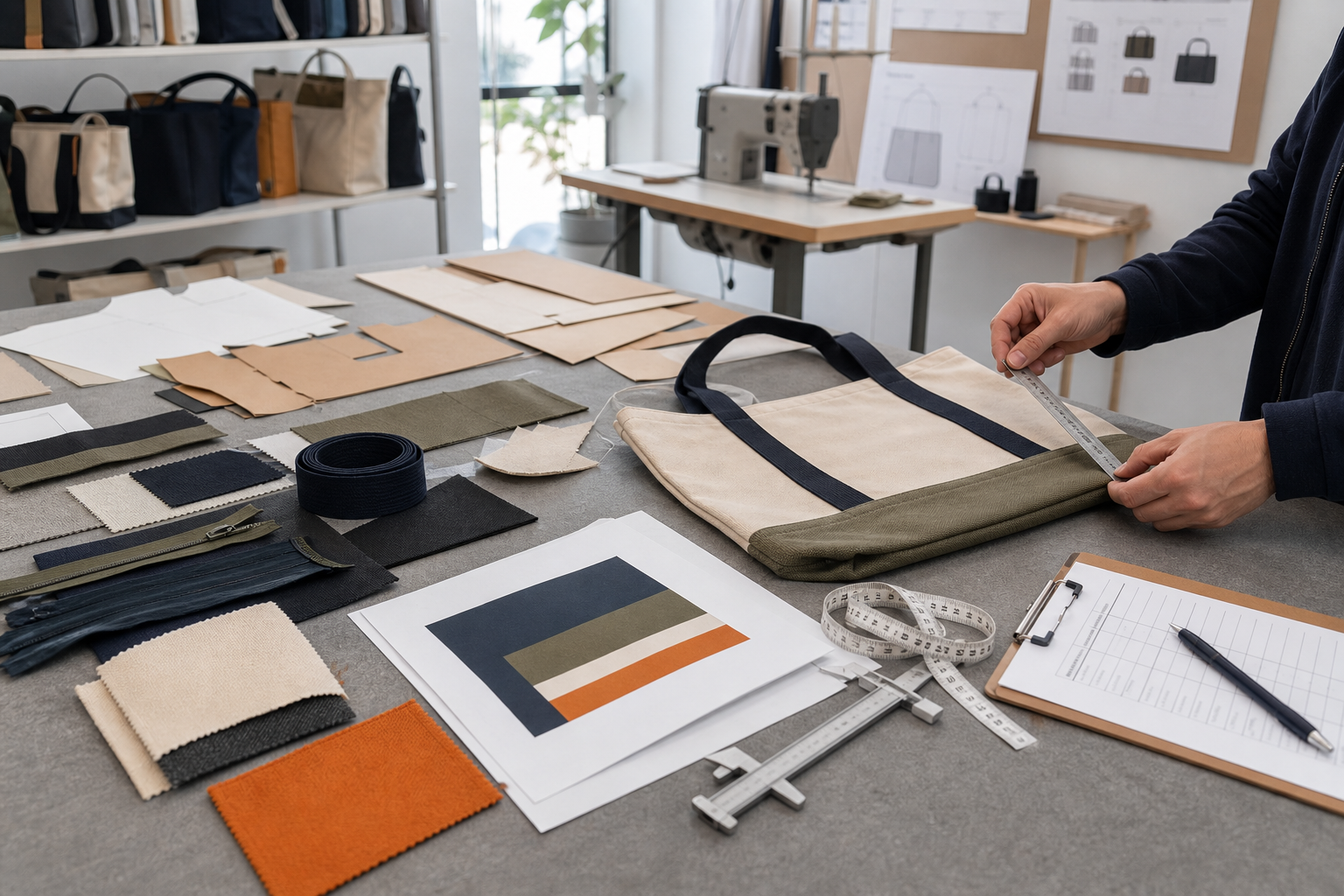
- Requirement review. The supplier checks the use case, dimensions, quantity, target market, material direction, logo, packaging and timing.
- Construction proposal. Details such as seams, reinforcement, closure, pockets, lining and handles are defined or clarified.
- Material and trim selection. Fabric, webbing, zippers, buckles, foam, lining and decoration methods are matched to the brief.
- Sample development. A physical sample reveals proportions, hand feel, function and workmanship more clearly than a drawing.
- Sample review and approval. Comments should be written, measurable and consolidated into one revision record.
- Pre-production confirmation. Approved sample, artwork, colors, packaging and inspection criteria are frozen before bulk work begins.
- Bulk production and in-process checks. Material identity, cutting, decoration, stitching and assembly are monitored at relevant stages.
- Final inspection and packing. Finished goods are checked against the agreed specification before cartons are closed and shipment is arranged.
The costly mistake is treating sample approval as a casual “looks good.” An approved sample should be supported by written details because memory, screen colors and informal chat messages are not reliable production standards.
To plan prototype rounds, comment sheets, approval gates and the final production reference, continue with our Custom Bag Sample Development Process.
Materials: Choose for the Job, Not Just the Name
“Cotton,” “canvas” or “non-woven” is not a complete material specification. Fabric weight, weave, coating, color method, hand feel and finishing all affect appearance and sewing behavior. A light cotton may suit a simple event bag, while a heavier canvas may be better for a structured retail tote. Polyester can serve a wide range of uses depending on yarn, density and coating. Non-woven polypropylene may be efficient for high-volume retail programs, but construction still needs to match the intended load.
| Material direction | Common applications | Questions to settle before sampling |
|---|---|---|
| Cotton | Totes, drawstring bags, promotional bags | Fabric weight, natural or dyed finish, shrinkage expectation, print method |
| Canvas | Heavier totes, structured carry bags, tool or gift bags | Weight, weave, wash/finish, seam bulk, reinforcement |
| Polyester or nylon | Cooler bags, cosmetic bags, travel and promotional styles | Denier/density, coating, color, water-resistance expectation, lining |
| Non-woven polypropylene | Shopping bags, events, retail packaging | Material weight, laminated or plain surface, seam/edge method, print area |
| Insulated material stack | Lunch bags, grocery coolers, beverage carriers | Outer fabric, insulation layer, inner lining, seam treatment, cleaning needs |
When performance matters, describe the expected use in plain language. Tell the manufacturer what the bag will carry, how often it will be used, whether it may encounter moisture and how the customer will clean it. This gives the development team a better basis for recommending construction.
Logo and Branding Methods
Brand decoration should be chosen together with the base material. Screen printing is widely used for bold artwork and practical color counts. Heat transfer can reproduce finer detail on compatible surfaces. Embroidery creates texture but adds thread, stitch density and backing considerations. Woven labels, rubber patches, metal badges and custom zipper pullers can make branding part of the construction rather than a surface graphic.
Send vector artwork when possible and specify:
- finished logo dimensions and exact placement;
- color references, especially for brand-critical shades;
- whether the artwork may be adjusted for production;
- the acceptable appearance on seams, textured fabrics or curved panels;
- which version is required for each bag color.
Request a decorated sample or a relevant print strike-off when the logo is central to the product. A digital mock-up confirms layout, but it cannot fully show ink coverage, embroidery texture or how a transfer behaves on the actual fabric.
MOQ, Sampling, Lead Time and Price
There is no single meaningful MOQ or lead time for all custom bags. The result depends on material availability, color, decoration, hardware, construction complexity, packaging and factory schedule. A standard material with an existing trim is a different project from a custom-dyed fabric with branded hardware and multiple pockets.
Instead of asking only “What is your MOQ?”, ask what drives it. The limiting factor may be fabric dyeing, printed material, a special zipper, a packaging component or an efficient production run. Sometimes a design adjustment can remove the constraint without damaging the product concept.
For component-level MOQ drivers, quotation trade-offs and ways to evaluate a low-volume supplier, use our Typical MOQ for Custom Bags buyer guide. It compares custom totes, cosmetic bags and other sewn products without presenting unsupported universal minimums; obtain a current written offer for each SKU.
A useful quote separates the main assumptions:
- order quantity and number of colorways;
- material and construction basis;
- logo method and color count;
- individual packaging and carton packing;
- sample cost and sample timing;
- bulk production timing after approval;
- trade term and shipping basis.
Price comparisons are only reliable when suppliers quote the same specification. A lower number may reflect lighter material, simpler reinforcement, different packaging or an incomplete interpretation of the design.
Use our custom bag pricing guide to compare specification fields, quotation exclusions and total project costs. Obtain current order-specific prices rather than treating a generic bag category as a verified price benchmark.
For a practical action plan covering specification control, stock materials, SKU consolidation, approval gates, production scheduling and in-line quality checks, read our guide to reducing custom bag cost and lead time. It shows which steps can safely run in parallel and which controls should never be skipped.
For a realistic schedule covering briefing, sampling, material booking, bulk sewing, inspection and delivery, use our Custom Bag Production Timeline guide.
Quality Control That Buyers Can Verify
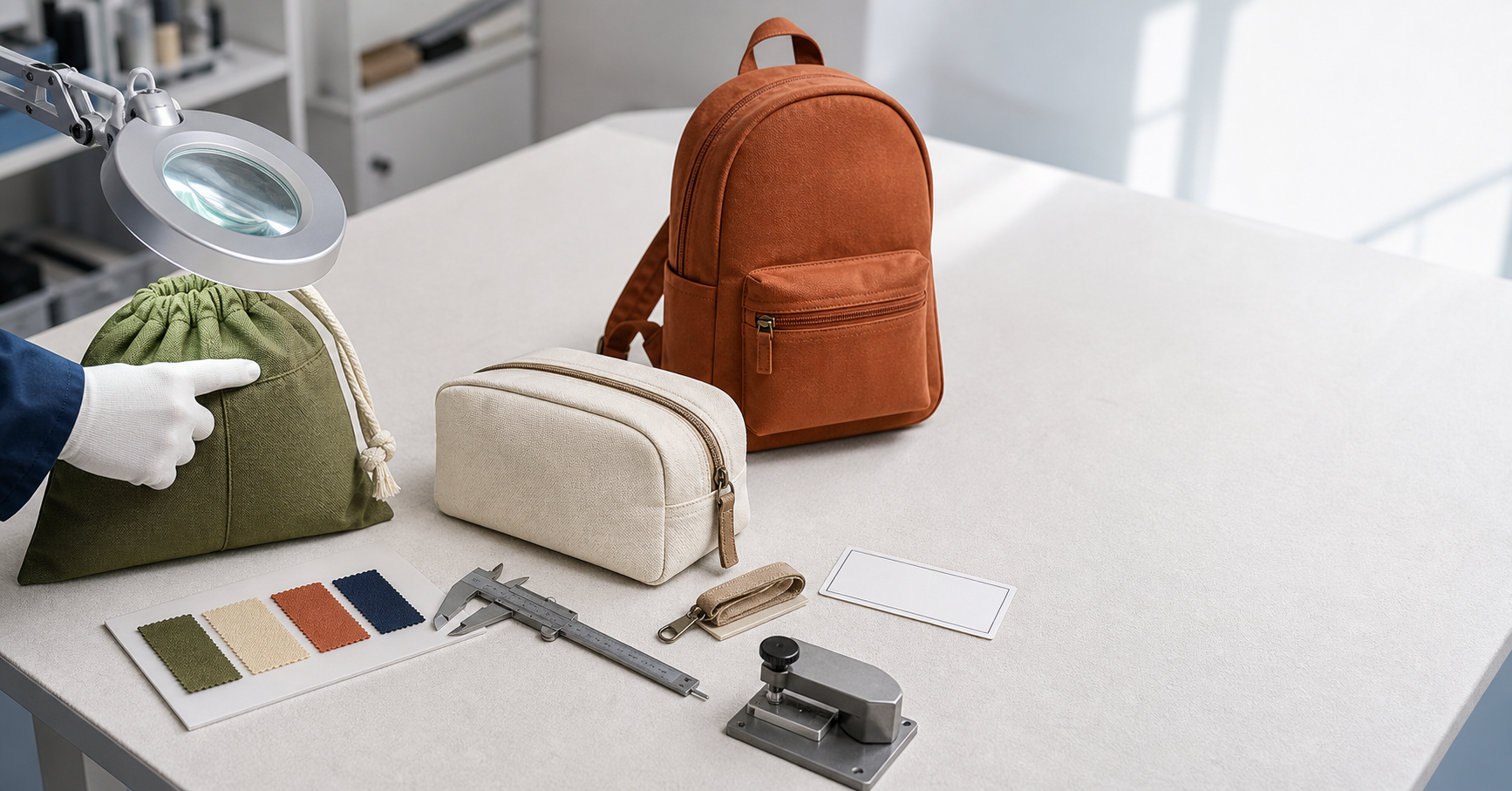
Quality is easier to manage when requirements are visible and measurable. “Good stitching” is subjective; stitch appearance, seam position, skipped stitches, loose threads and reinforcement points can be inspected. “Correct size” becomes more useful when dimensions and tolerances are listed. “Right colour” needs an approved physical or standardized reference, not only a phone screen.
| Checkpoint | What to verify | Useful reference |
|---|---|---|
| Incoming materials | Material identity, color, visible defects and required components | Approved swatch and bill of materials |
| Cutting and decoration | Panel dimensions, artwork position, color and print condition | Pattern, placement diagram and approved strike-off |
| Sewing and assembly | Seams, reinforcement, symmetry, zipper operation and attachments | Approved sample and workmanship checklist |
| Finished dimensions | Width, height, gusset, handle drop and pocket positions | Measurement chart with agreed tolerances |
| Packing | Folding, labels, quantity per carton, carton marks and protection | Approved packing instruction |
Agree on the inspection plan before production: checks, reference documents, sampling method, acceptance criteria, required records and the person authorized to release the shipment. ISO 10005 quality-plan guidance is a general reference for developing and using quality plans; it is not evidence of a supplier certification or a bag-specific test requirement. Any performance or market requirement must be tied to the actual product and destination.
For a practical inspection framework covering materials, dimensions, workmanship, branding, function and packing, use our Custom Bag Quality Inspection Checklist.
How to Evaluate a Manufacturer Before Ordering
A polished website is useful, but the development conversation reveals more. Strong suppliers ask questions that protect the project. They notice missing dimensions, clarify how a bag will be used, challenge an impractical detail and explain which variable changes cost or timing.
Use the following evaluation sequence:
- Check relevant product experience. Ask for examples with similar material, structure or decoration—not simply any bag.
- Review the questions you receive. A thoughtful response should expose unknowns in the brief.
- Compare the quote basis. Confirm that every supplier is pricing the same materials, size, logo, packing and quantity.
- Assess the sample carefully. Test the opening, handles, pockets, zipper and loaded shape. Photograph and list every revision.
- Confirm change control. Make sure the final approved details are collected into one record before bulk production.
- Discuss inspection and communication. Agree on progress updates, approvals and the response path if an issue appears.
Choose the next guide by the decision you need to make: OEM or ODM development route, sample approval, quotation comparison, production milestones, or quality inspection. For sports sacks and storage pouches, use the focused drawstring bag supplier guide.
What to Include in a Custom Bag RFQ
A clear request for quotation saves time for both sides and makes supplier comparisons more accurate. You do not need a perfect technical pack to start, but you should identify what is fixed and what is open to recommendation.
| RFQ item | Information to provide |
|---|---|
| Use and market | What the bag carries, customer type, sales region and expected use |
| Dimensions | Width, height, depth/gusset, handle drop and key internal dimensions |
| Material | Preferred fabric, weight, color, lining, insulation or openness to alternatives |
| Construction | Closure, handles, pockets, reinforcement, binding and special functions |
| Branding | Vector artwork, size, placement, colors and preferred application method |
| Quantity | Total units, color breakdown and possible repeat-order volume |
| Packing | Folding, individual packing, labels, inserts and carton preferences |
| Timing and delivery | Required arrival date, destination and preferred trade/shipping basis |
| References | Sketches, photos, technical pack or a physical sample, with differences clearly marked |
Company-claim boundary: the following section is LUCKYSTAR publisher self-description and a commercial response route. The site is associated in the current company knowledge base with Ningbo Luckystar Commodities Co., Ltd.; that association does not establish the legal seller or payee for every future order. It is not independent proof of factory ownership, current production sites, capacity, quality system, certification, performance, MOQ, price or delivery. Seller and facilities, sources, customer-artwork permissions, samples, tests, inspection and schedule remain order-specific and subject to current evidence, final specification, quotation, contract and written confirmation.
How LUCKYSTAR describes its supplier-route review
LUCKYSTAR states that it can review the product brief and return its proposed development, sourcing and production route for buyer evaluation.
- Identify the parties: state proposed seller, payee, material and component sources, production/decoration sites, subcontractors and inspection responsibility.
- Control the design: identify buyer artwork rights, specifications, sample revisions, substitutions and final approval owner.
- Define evidence: request relevant sample, process, test and inspection records for the exact construction and material lot.
- Quote one scope: separate minimums, sample/tooling charges, unit price, packing, testing, delivery basis, validity and exclusions.
- Track the route: record approvals, material readiness, first-off review, production gates and cargo handover against a dated plan.
Review the bag product range and process guide, then send the sourcing brief for an order-specific response.
Frequently Asked Questions
Can a manufacturer work from a photo or rough sketch?
Often, yes. A photo or sketch can begin the discussion, but the supplier will still need dimensions, material direction, construction details and intended use. A reference should be accompanied by notes explaining what to copy, what to change and what is still undecided.
Should I order a sample before bulk production?
For a custom design, a physical sample is one of the most useful risk-control steps. It allows you to check proportion, function, material, color, logo and workmanship. The approved outcome should then be documented for production.
Why do quotations from different factories vary so much?
The suppliers may be assuming different fabric weights, trims, seam construction, printing, packaging or quality requirements. Ask each one to state its material and construction basis, then compare line by line.
What makes a promotional bag different from a retail bag?
A promotional project often prioritizes campaign timing, branding visibility, pack-out and unit economics. A retail bag may place more weight on tactile quality, construction detail, shelf presentation and repeat customer use. The distinction affects where the budget should go.
How can I reduce development delays?
Send one consolidated brief, answer technical questions promptly, approve colors and artwork through clear references, and combine sample comments into a single revision list. Also separate essential changes from optional improvements so the team knows what blocks approval.
Before sampling begins, use our guide to preparing a custom bag tech pack to document drawings, measurement points, materials, construction, artwork, packaging and quality checks in one controlled specification.
If your sourcing plan continues beyond factory selection, use our guide to importing custom bags from China to connect supplier approval with Incoterms, inspection, shipping documents, customs clearance and landed-cost planning.
Compare suppliers against one controlled bag brief
Define the product, then ask each proposed seller to identify the actual sites and owners for development, materials, production, inspection and handover. Compare the same specification, evidence and delivery scope.

Review the LUCKYSTAR bag range, then send the sourcing brief through the contact form or Email a project brief. The email link opens a prefilled draft for your review before sending.
Legal seller/payee and facilities, materials, samples, artwork permissions, testing, inspection, capacity, MOQ, price, packing, schedule and delivery terms are subject to current evidence, final specification, quotation, contract and written confirmation.