Last reviewed: September 28, 2026
Choosing a custom cooler bag factory is an engineering and supply-chain decision, not simply a search for the lowest unit price. A bag may look correct in a sample photo yet underperform when foam thickness, liner construction, seam control, zipper quality, or packing method changes during production. Buyers therefore need a specification that connects the intended use, thermal target, branding, test method, inspection standard, and delivery plan.
This guide gives procurement teams, retail brands, food and beverage companies, corporate-gift distributors, and promotional product buyers a practical framework for evaluating suppliers. For a broader view of factory sourcing, sampling, costing, quality control, and logistics across bag categories, start with our custom bag manufacturer guide.
Buyer Quick Answer
1. Define the Use Case Before Requesting a Quote
A factory cannot recommend the right construction from dimensions and logo artwork alone. Begin with what the bag will carry, how long it should help manage temperature, the expected ambient conditions, the quantity and type of coolant, the opening frequency, the cleaning method, and the weight a user may load. “Keep cold for eight hours” is incomplete unless both buyer and supplier agree on a repeatable test protocol.
| Application | Useful bag format | Priority features | Questions to resolve |
|---|---|---|---|
| Lunch and employee programs | Compact zip-top tote | Easy cleaning, comfortable handle, flat storage | Meal-container size, daily-use load, name label or pocket |
| Grocery and retail | Large insulated shopper | Capacity, reinforced base, shoulder carry | Carton size, stacking, checkout presentation |
| Beverage promotion | Can cooler or structured soft cooler | Defined capacity, water-resistant exterior, bold decoration | Can/bottle count, ice or cold-pack use, event duration |
| Picnic and outdoor | Shoulder cooler or backpack | Ergonomics, hardware strength, compartments | Walking distance, target load, pocket layout |
| Delivery service | Box-style tote or backpack | Stable shape, large opening, cleanable surfaces | Route length, opening frequency, vehicle conditions |
| Temperature-sensitive samples | Protocol-specific insulated carrier | Validated configuration and traceable test records | Product-specific limits, logger placement, regulatory responsibility |
If an existing bag platform suits the program, review custom bag product options. An insulated shopping format can also borrow useful proportions from custom shopping bags or carry details from custom tote bags.
2. Understand the Insulation System as a Complete Assembly
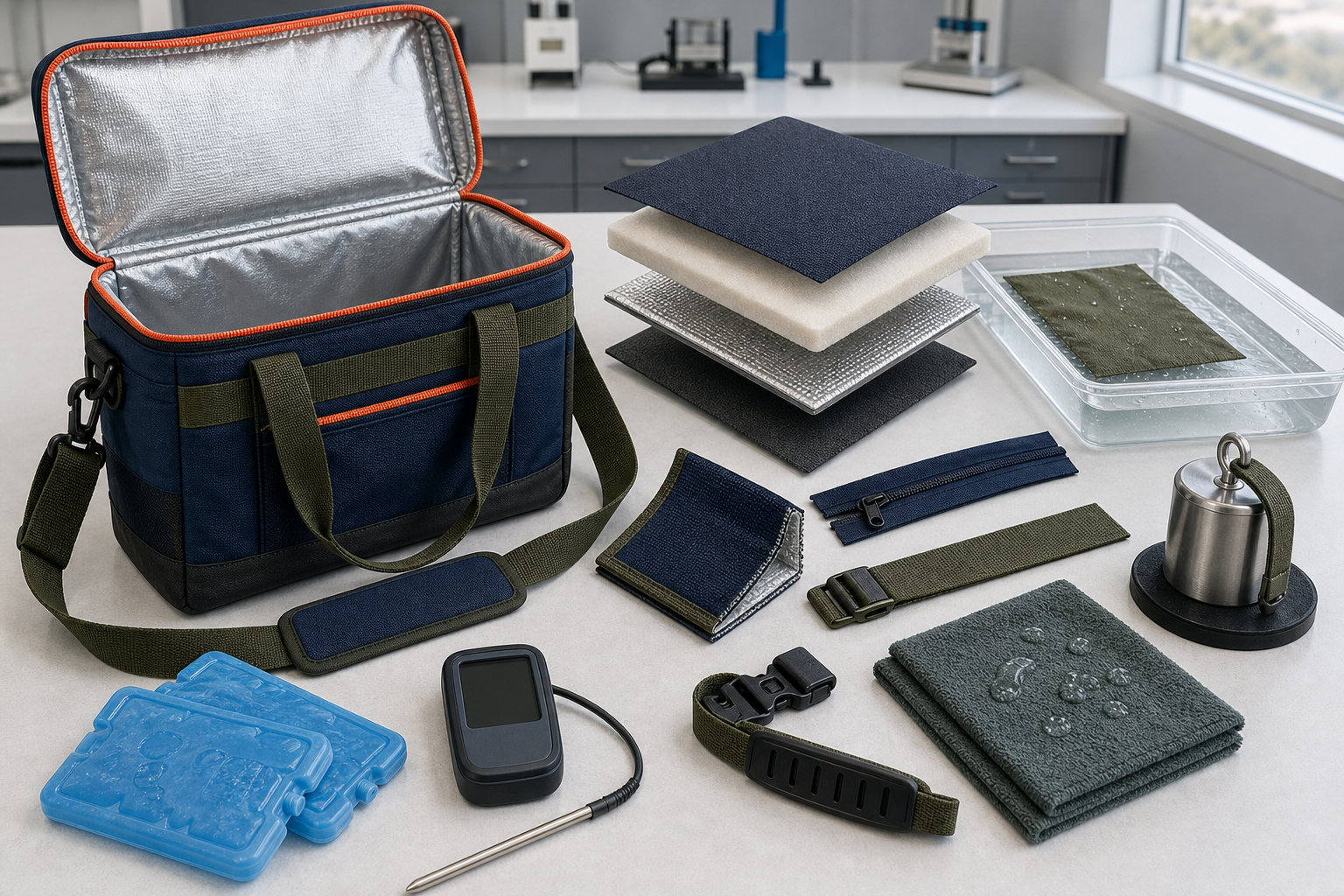
Thermal performance comes from the interaction of every layer. A thicker foam can help, but gaps at the zipper, compressed panels, heat bridges at seams, and an unsuitable liner can offset that benefit. Ask the custom cooler bag factory to list the material, thickness or weight, finish, and function of each layer on the approved specification.
| Construction element | Main function | Buyer specification | Sample check |
|---|---|---|---|
| Outer shell | Abrasion resistance and appearance | Fiber, weave, weight, coating, color standard | Rub, stain, color, print adhesion |
| Insulation | Slows heat transfer and adds structure | Foam type, nominal thickness, density if critical | Panel thickness, recovery, compression consistency |
| Inner liner | Contains the load and supports cleaning | Material, gauge, joining method, intended contact use | Odor, wipe test, seams, pinholes, leakage protocol |
| Closure | Limits air exchange | Zipper, hook-and-loop, roll top, lid overlap | Opening force, alignment, end stops, gap control |
| Base and walls | Maintain usable shape | Foam board or removable insert, foldability target | Load stability, creasing, pack-out behavior |
| Binding and seam design | Protects raw edges and joins layers | Binding width, stitch type, seam allowance | Skipped stitches, exposed foam, puckering |
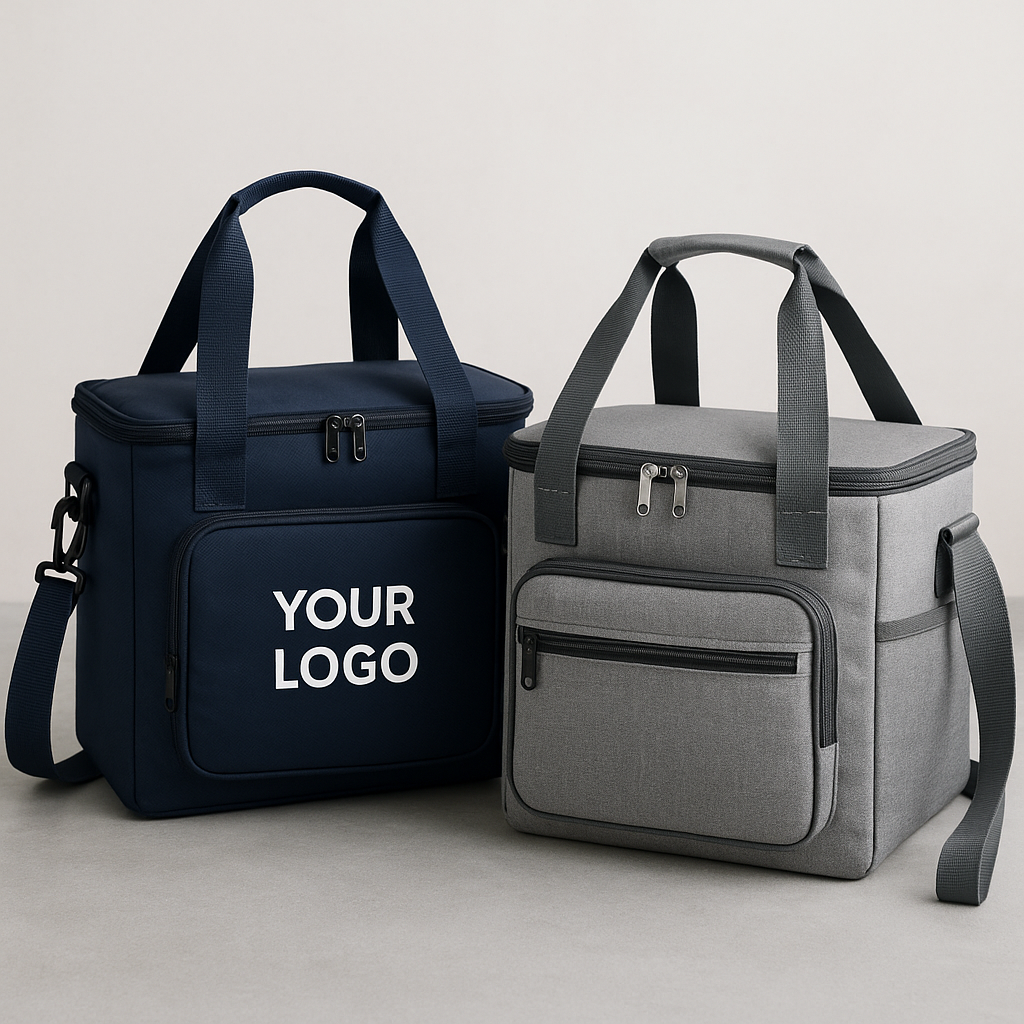
The original article image above is retained as a visual reference. During sampling, confirm that the actual cut section matches the bill of materials. Color, hand feel, foam resilience, and liner finish should be approved with physical swatches because screen images cannot define these variables reliably.
3. Create a Repeatable Thermal Test Plan
Do not accept a temperature-retention claim without its conditions. Two suppliers can test the same bag and report different results simply because one uses frozen packs, the other uses loose ice, or they measure air temperature in different locations. The product specification should state the protocol and the pass/fail rule before the pre-production sample is approved.
| Test variable | What to document | Why it matters |
|---|---|---|
| Ambient condition | Room or chamber temperature and exposure | Heat gain changes with surroundings |
| Starting condition | Preconditioned bag, product simulant, and cold-pack temperature | Creates a comparable baseline |
| Load configuration | Mass, pack geometry, free air space, coolant ratio | Fullness and thermal mass affect results |
| Opening schedule | Closed test or defined opening frequency and duration | Openings introduce warm air |
| Sensor placement | Number, position, calibration status, logging interval | A single location may hide hot spots |
| Test duration | Hours and target temperature range | Turns a vague claim into a measurable requirement |
| Acceptance rule | Maximum, average, or time-above-limit criteria | Prevents interpretation after the test |
Also define whether the program needs condensation, splash, or leakage checks. “Waterproof” should not be used casually: a zippered soft cooler may resist splashes yet still leak if filled with melting ice. Test the configuration customers will actually use, inspect seam intersections, and agree whether cold packs are required.
4. Compare Liner, Foam, and Outer Materials
Material names alone do not prove suitability. PEVA, foil-faced film, woven polyester, recycled polyester, and foam are families with many grades. Request the exact construction and supporting documents for the destination market and intended use. A declaration or report should correspond to the supplied material, not merely to a similar material used in another product.
| Material option | Typical strengths | Points to verify | Best fit |
|---|---|---|---|
| PEVA-style liner | Flexible, wipeable, smooth appearance | Gauge, odor, seam joining, applicable contact documentation | Lunch totes and retail coolers |
| Foil-faced film | Reflective appearance and low weight | Tear strength, creasing, bonding, cleanability | Promotional bags and light-duty programs |
| TPU or technical film | Can support robust welded constructions | Grade, weld method, cost, production capability | Performance-led specifications |
| EPE or similar closed-cell foam | Lightweight insulation and cushioning | Thickness tolerance, density, compression recovery | Broad soft-cooler use |
| Polyester or Oxford outer | Durable, printable, widely available | Denier/weight, backing, water-repellent finish, colorfastness | Retail, delivery, and corporate programs |
| Recycled polyester outer | Supports a recycled-content material story | Chain-of-custody evidence, actual recycled content, finish durability | Programs with documented sustainability requirements |
For small accessories, condiment pockets, or removable organizers, a supplier familiar with custom pouch bags can help coordinate materials and hardware. Any environmental or food-contact statement should be checked against current documentation for the order; it should never be inferred from a material nickname.
5. Inspect Seams, Zippers, Handles, and the Base
Daily-use failures often occur at stress concentrations rather than across the main fabric panel. The handle attachment, shoulder-strap anchor, zipper ends, lid corners, and base seams deserve specific construction details and test methods.
| Area | Risk | Practical control |
|---|---|---|
| Carry handles | Stitch pull-out under load | Defined reinforcement pattern, stitch density, and loaded carry test |
| Shoulder strap | Hook, buckle, or anchor failure | Component rating or agreed pull test; smooth edge check |
| Main zipper | Jamming, slider separation, end failure | Approved zipper sample, cycle test, aligned sewing, secure stops |
| Interior seams | Leaks or trapped residue | Consistent joining method and protocol-specific leakage check |
| Bottom panel | Sagging, abrasion, loss of shape | Reinforcement or removable board plus load and drop checks |
| Binding | Fraying or exposed foam | Controlled width, overlap, stitch placement, visual standard |
Put critical dimensions and tolerances on the specification, including opening size, usable internal capacity, handle drop, and strap range. A dimensionally correct exterior does not guarantee that containers fit through the opening.
6. Match the Decoration Method to the Bag Design
Branding should be engineered at the same time as the panels. A large print can cross a pocket seam, embroidery can compress insulation, and transfer graphics may behave differently on coated fabric. Give the factory vector artwork, color references, print dimensions, placement measurements, and an approved visual standard.
| Decoration method | Advantages | Watch-outs | Suitable programs |
|---|---|---|---|
| Screen printing | Efficient for bold spot colors | Setup per color, ink/fabric compatibility, seam clearance | Volume promotions and simple logos |
| Heat transfer | Fine detail and multicolor artwork | Adhesion, edge lifting, heat sensitivity, wash/abrasion expectation | Campaign graphics and gradients |
| Embroidery | Textured, premium appearance | Backing, needle holes, weight, insulation compression | Corporate gifts and understated marks |
| Woven or rubber patch | Consistent badge-like branding | Attachment method, edge finish, added lead time | Outdoor and retail collections |
| Custom woven label | Subtle identity and low coverage | Fold, placement, color and legal copy accuracy | Minimal designs and line extensions |
Approve decoration on the actual production fabric rather than a paper proof. Include a ruler or placement template in the approval record so bulk inspection has an objective reference.
7. Use a Controlled OEM Development Process
A disciplined custom cooler bag factory should translate the brief into traceable approvals. The workflow commonly includes feasibility review, quotation, material confirmation, prototype, functional testing, pre-production sample, bulk production, inspection, packing, and shipment.
- RFQ and feasibility: share use case, drawings, target quantity, destination, test requirement, and deadline.
- Specification and quotation: align the bill of materials, dimensions, decoration, packaging, tooling, and commercial assumptions.
- Prototype: review fit, capacity, usability, appearance, and construction. See the custom bag sample development process.
- Performance approval: run the agreed thermal, condensation, leakage, and load tests; record the method and results.
- Pre-production control: seal a sample and a signed specification before cutting bulk material.
- Production and inspection: control incoming materials, first output, in-line quality, and final random inspection.
- Packing and delivery: confirm folding, carton quantity, carton marks, moisture protection, and shipping documents.
For the full sequence and decision gates, read custom bag manufacturing from design to delivery. Buyers comparing development ownership can also review OEM vs. ODM bag manufacturing.
8. Request Evidence, Not Blanket Compliance Claims
The required evidence depends on the country, distribution channel, claims, liner contact scenario, chemical restrictions, packaging, and labeling. Ask which party is responsible for the compliance assessment and testing. Request current reports or declarations for the exact material or finished product where appropriate, and check supplier name, sample description, test method, issue date, and scope.
A factory audit or quality-system certificate can support supplier evaluation, but it does not prove that every cooler bag material meets every market requirement. Likewise, “eco-friendly,” “food grade,” and “recyclable” need defined criteria and evidence. Keep approved documents, material references, artwork, and the sealed sample in the order file.
9. Build an Inspection Plan Around Real Failure Modes
Final inspection should combine quantity, workmanship, dimensions, function, appearance, packaging, and record review. Set the sampling approach and acceptance limits in the purchase documents. Critical safety or regulatory defects may require zero tolerance, while other defects can be classified as major or minor according to business risk.
| Inspection area | Examples | Verification method |
|---|---|---|
| Materials | Outer fabric, foam, liner, webbing, hardware | Approved swatches, BOM, color and hand-feel comparison |
| Dimensions and capacity | Overall size, opening, pockets, strap range | Defined measurement points and tolerances |
| Workmanship | Stitches, binding, exposed foam, stains, sharp edges | Visual standard under suitable lighting |
| Function | Zipper operation, buckle engagement, pocket access | Cycle or operation check on sampled units |
| Performance | Load, leakage, condensation, thermal protocol | Agreed sample size and documented method |
| Branding | Color, size, location, adhesion, embroidery finish | Approved artwork and sealed sample |
| Packing | Folding, polybag, labels, carton count and marks | Packing specification and drop/stack review if needed |
Use our bag manufacturer selection checklist when shortlisting suppliers. A detailed inspection standard should be agreed before production, not improvised when goods are ready to ship.
10. Understand MOQ, Cost, and Lead-Time Drivers
The lowest quoted price may assume a stock fabric, thin insulation, simple print, loose tolerance, compressed packing, or a different test scope. Ask suppliers to state quotation assumptions so offers can be compared on the same basis.
| Driver | Effect on MOQ or cost | Planning response |
|---|---|---|
| Custom-dyed fabric or liner | Mill minimums and longer material lead time | Use stock colors for a pilot or consolidate colors |
| Foam thickness and structure | Material, sewing difficulty, and carton volume | Validate performance before specifying excess thickness |
| Decoration colors and coverage | Setup, process time, rejects, or tooling | Simplify artwork or group designs on shared materials |
| Custom hardware or mold | Tooling charge and component MOQ | Use proven standard parts unless differentiation justifies tooling |
| Testing and documentation | Laboratory and sample costs | Define required scope early and budget it separately |
| Individual retail packaging | Material, packing labor, carton efficiency | Share packaging artwork and barcode rules at RFQ stage |
| Compressed shipment packing | Can reduce freight but risk creasing or foam recovery | Approve folding and recovery with a packed sample |
For commercial planning, compare typical custom bag MOQs, custom bag cost drivers, and custom bag production timelines.
11. Custom Cooler Bag Factory Supplier Checklist
- Can the supplier explain the complete layer construction and tolerances?
- Will it run a buyer-approved thermal protocol rather than give an unsupported duration claim?
- Are liner, foam, shell, zipper, webbing, and reinforcement references recorded?
- Can it make and revise a functional sample before the production commitment?
- Are artwork, colors, dimensions, and decoration positions measurable?
- Does the quotation separate tooling, sampling, testing, packaging, and freight assumptions?
- Can current documents be matched to the exact material and intended market?
- Are in-line and final inspection checkpoints written into the order?
- Is there a change-control process if an approved material becomes unavailable?
- Can the packing plan protect shape while meeting freight targets?
A capable partner should be willing to explain trade-offs. If a requested price, timeline, or thermal goal conflicts with the proposed construction, the supplier should flag the risk during development.
Frequently Asked Questions
How do I specify how long a cooler bag should stay cold?
Define ambient temperature, starting temperatures, load, coolant type and ratio, opening schedule, sensor positions, duration, and the pass/fail temperature rule. Without those conditions, an hour claim cannot be compared reliably.
Which insulation thickness is best?
There is no universal thickness. The correct choice depends on bag size, closure, seams, load, coolant, duration, pack-out, and cost. Compare prototypes using one agreed test rather than choosing foam thickness alone.
Can a soft cooler bag be leakproof?
Some welded constructions can be designed for strong liquid containment, but many sewn, zippered coolers are only intended to resist condensation or splashes. State the use scenario and test method; do not assume “waterproof” from appearance.
What should I send for an accurate quotation?
Send drawings or reference dimensions, capacity and use case, layer preferences, target test, logo files, colors, accessories, packing, quantity by design, destination, compliance needs, and delivery date. State which requirements are mandatory and which are open to factory recommendation.
Should I approve a golden sample?
Yes. Keep a signed or otherwise controlled pre-production sample together with the final specification, BOM, color references, artwork, test method, and packing standard. This gives the factory and inspector a shared baseline.
Request a Project-Specific Cooler Bag Quote
To receive a useful proposal, share the application, capacity, quantity, destination market, target delivery date, logo artwork, packing requirements, and any thermal or compliance protocol. Luckystar can then review construction options and identify the information needed for sampling and production planning.
Email a prefilled cooler-bag test brief