
Last reviewed: September 21, 2026
Buyer answer in 60 seconds
A retail-ready custom jute tote is an assortment, not just a decorated bag. Before requesting a quote, define each SKU's use, finished size, gusset, handle, visible materials, artwork, label, unit pack, carton quantity and approval owner. Then approve one physical reference and convert every change into a controlled specification.
This page focuses on retail launch and replenishment readiness. Use the jute material and environmental-claims guide for evidence questions, the jute tote design-system guide for colour and collection planning, and the premium jute tote specification guide for close-range trim and finish details.
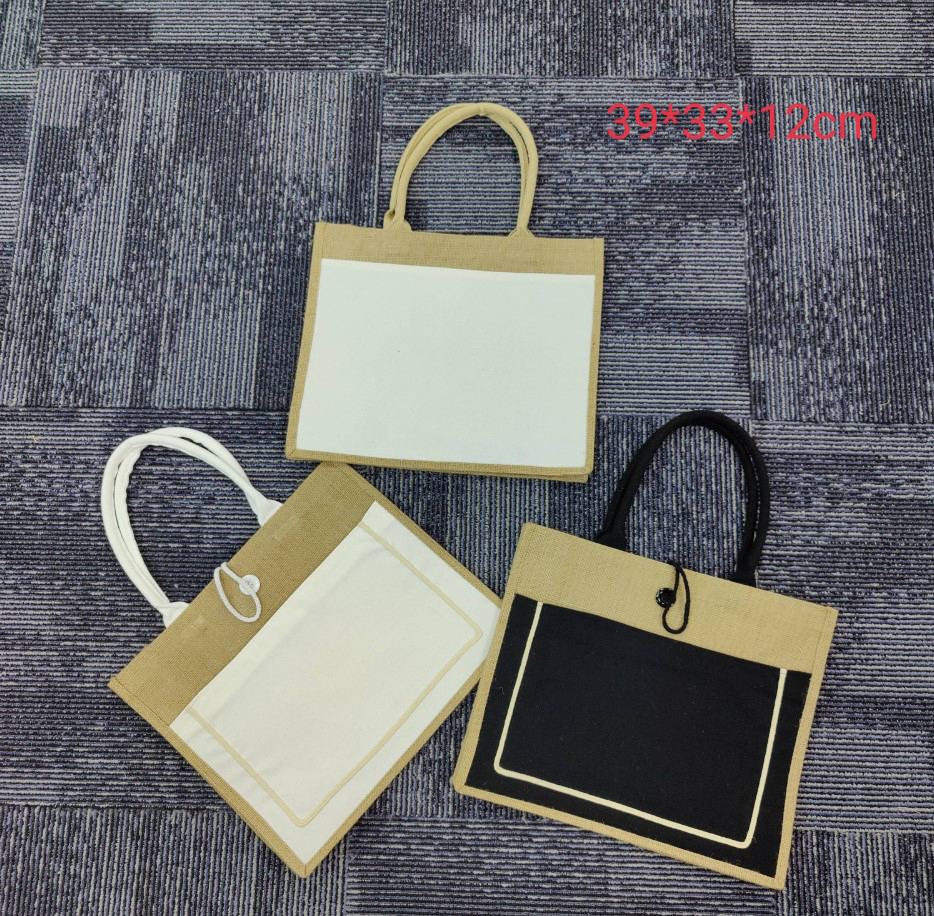
What this guide covers—and what it deliberately does not repeat
The existing LUCKYSTAR library already explains fibre claims, construction, styling and supplier selection. Repeating those pages would create competing answers for the same search. This guide instead answers a narrower commercial question: how does a buyer turn a jute tote concept into a sellable, scannable, packable and repeatable retail programme?
| Buyer question | Primary page | Purpose |
|---|---|---|
| What evidence supports a material or environmental statement? | Materials and claims | Composition, backing, reuse and substantiation |
| How should colours, panels and collection hierarchy work? | Design system | Silhouette, colour blocking and family consistency |
| Which details make the tote look more considered? | Premium specification | Trim, handles, interior finish and sample criteria |
| How is a jute shopping bag physically constructed? | Construction guide | Fabric, grain, fray control, gussets and seams |
| How should we launch and replenish a retail assortment? | This guide | SKU matrix, artwork, labels, pack-out, release and reorders |
Start with the retail job, not a catalogue photograph
Define the shopper mission
A grocery carry bag, gift-with-purchase tote, seasonal promotion, home-storage carrier and premium gift bag may all use jute, yet they require different capacities, handles, opening behaviour and presentation. Record what the consumer is expected to carry, where the bag is displayed, whether it is sold or given away, and how it reaches the checkout.
Define the store operation
Ask where units are received, counted, stored, labelled, displayed and replenished. A bag that looks attractive unfolded can create labour if every handle must be reshaped or every barcode must be relabelled at store level. The design brief should include operational handling, not only marketing artwork.
Define the buying boundary
Separate the product specification from order-specific commercial terms. Minimum quantities, prices, samples, production timing, inspection scope and delivery arrangements depend on the released configuration and current written quotation. The retail and wholesale jute-bag guide provides broader category context, while the wholesale tote buying guide covers cross-material programme questions.
Build one assortment matrix before asking for prices
A single total quantity can hide several small production lots. Suppliers need the split by size, body colour, trim, handle, artwork, label and pack-out. Use one line per finished SKU and identify which components are shared.
| Matrix field | What to record | Why it changes feasibility |
|---|---|---|
| SKU and channel | Retail, gift, event, e-commerce or internal code | Controls labels, presentation and allocation |
| Finished geometry | Width, height, gusset, usable opening and measurement state | Changes material use, capacity and carton volume |
| Visible material system | Jute face, backing/lining, trim and handle references | Affects appearance, construction and evidence |
| Decoration | Method, side, colours, finished size and placement | Determines setup and reproducibility |
| Retail identification | Hangtag, label, barcode file, price marking and attachment point | Controls scan and store handling |
| Pack-out | Fold, protection, pieces per inner/carton and assortment ratio | Affects presentation and receiving accuracy |
| Quantity | Units for this exact combination, plus reorder expectation | Exposes fragmented lots and component exposure |
For dimension planning, use the retail tote size guide. For quantity and timing logic, see the shopping-bag MOQ and production-time guide; treat every figure as project-specific until confirmed in writing.
Use a good–better–best architecture only when each tier has a job
Good: simple core carrier
A core SKU can use a restrained material and decoration route with one practical size. It should still have clear dimensions, handle construction, seam controls and pack-out. “Basic” must not mean undefined.
Better: branded retail workhorse
The middle tier might add a more structured panel, contrasting trim, a pocket or a more demanding artwork route. Keep shared components visible so the range does not become a collection of unrelated prototypes.
Best: presentation-led edition
A premium or limited edition may use additional finish, hardware, lining or retail packaging, but each feature should have a commercial reason. Review the jute tote branding guide before adding decoration simply because it is available.
Translate capacity into measurable geometry
“Large” and “small” are not sufficient. Define finished width, total height, gusset depth, handle drop, opening width and usable internal space. State whether measurements are taken flat, standing, empty or filled. If the bag must carry a known product, provide that product's maximum dimensions and approximate mass.
A wider gusset can improve capacity but also change panel proportions, bottom behaviour and carton cube. The gusset and bottom reinforcement guide shows what to review, while the shopping-bag handle guide covers handle type, length, attachment and comfort.
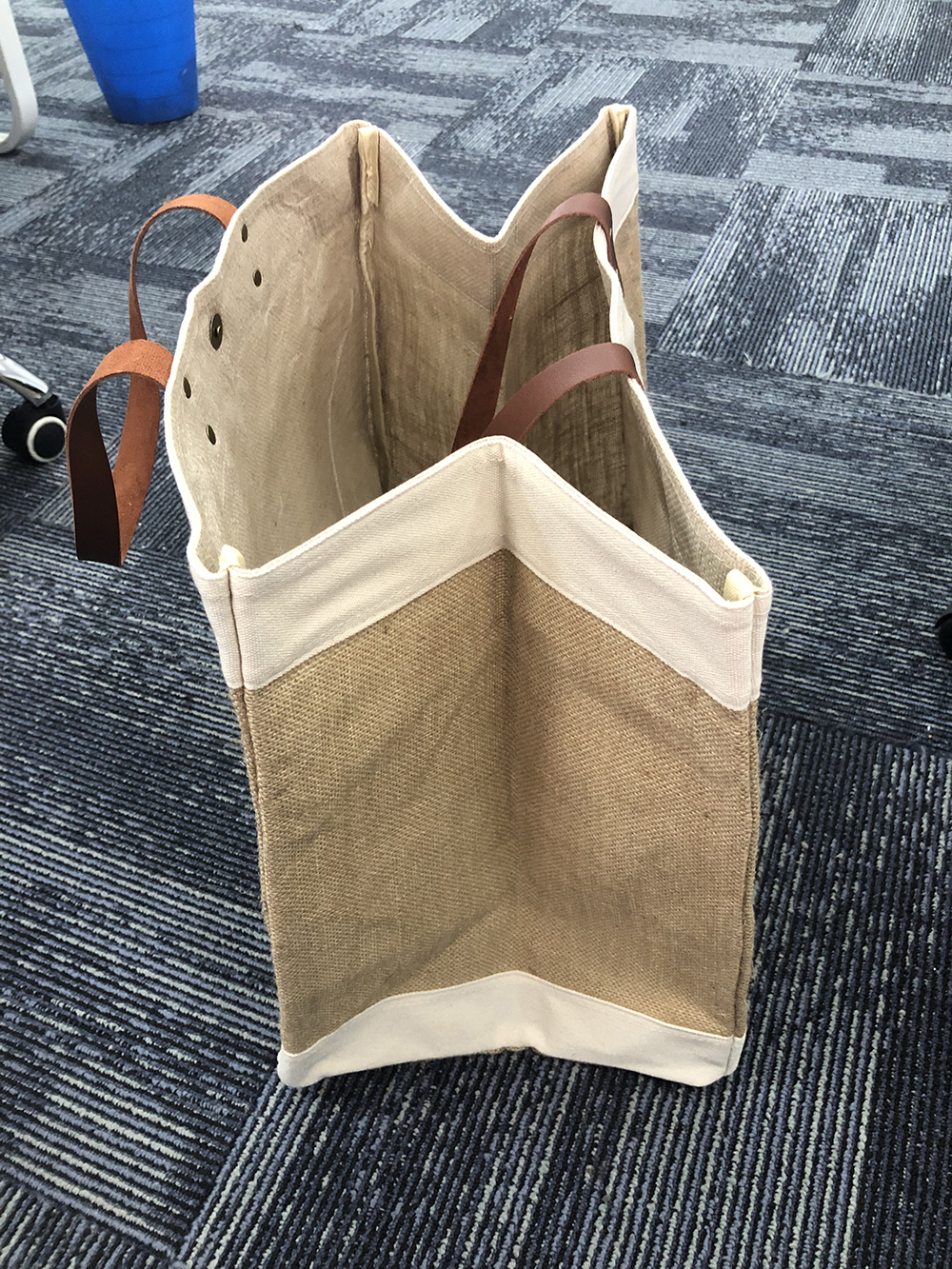
Specify the material as a layered system
Name every visible and hidden layer
Do not use “jute bag” as the complete bill of materials. Record the jute or jute-style face, backing or lamination if present, lining, binding, reinforcement, handle and thread. A claim about one layer must not be expanded to the whole product.
Set appearance boundaries
Natural-fibre surfaces may show yarn, slub and shade variation. The approved sample should be accompanied by written boundaries for visible defects, loose yarns, contamination, severe shade mismatch and panel distortion. This keeps “natural character” from becoming an unlimited acceptance rule.
Connect durability to the intended load
Handle attachment, bottom structure and seam route should be evaluated for the actual contents and use. The longer-service-life design guide explains why durability decisions must be tied to construction and verification rather than a broad promise.
Design the printable panel around the real substrate
Open weave, backing, seams and panel curvature affect detail reproduction. Lock the decoration method only after reviewing the current substrate and artwork. Ask for production artwork with finished dimensions, colours, location from fixed reference points and any acceptable process variation.
Use the custom tote printing-method guide to choose a route, the material and print-quality guide to identify substrate risks, and the logo placement and print-size guide to define the viewing area. Production files should follow the shopping-bag artwork and dieline checklist.
Make colour approval physical and revision-controlled
A monitor cannot establish final jute, trim or ink colour. Identify the target reference, substrate, lighting/viewing condition, approval sample and tolerance method. Record whether colour is inherent to a supplied material, dyed, printed or applied as trim. The colour matching and bulk approval guide explains how to separate digital intent from physical evidence.
For repeat orders, keep the approved reference and note unavoidable material-route changes. The reorder logo and colour consistency guide provides a practical continuity checklist.
Plan hangtags, labels and barcodes before the sample is final
Identify who owns the product code
The buyer should provide or approve product identifiers and barcode artwork. GS1 explains that barcodes encode identifiers such as a GTIN and that the appropriate symbol depends on the scanning environment. Do not invent or copy a code from another SKU.
Protect the scan area
Confirm barcode dimensions, quiet zones, contrast, print surface, orientation and attachment point with the buyer's retailer or GS1 member organisation. Test the actual printed label or tag rather than a screen preview. A decorative woven surface is not automatically a suitable barcode substrate.
Keep consumer claims separate from mandatory information
Country-of-origin, fibre, care, safety, packaging and environmental wording can vary by product and destination. The buyer should identify applicable requirements and approve final copy. LUCKYSTAR can coordinate supplied files and order-specific evidence but should not infer legal text from a mood board.
Treat “eco-friendly” as a claim to qualify, not a product nickname
Claim-control rule: the word “eco-friendly” in this legacy article title is not a blanket product certification. The U.S. Federal Trade Commission advises marketers not to make broad, unqualified environmental benefit claims because they are difficult to substantiate. EU Directive (EU) 2024/825 also addresses generic environmental claims and the information needed to support them.
Replace broad wording with a specific, relevant and documented statement. Identify the claimed attribute, the material or packaging component it applies to, the percentage or method where relevant, the evidence holder, scope, standard, validity and target market. A supplier quotation, sample photograph or archive filename does not by itself prove an environmental claim.
For material-to-market comparison, use the jute vs non-woven vs paper guide; for broad promotional use, see bulk burlap shopping-bag applications. Neither page replaces order-level verification.
Approve samples in gates, not one vague “looks good” message
| Gate | Approval object | Release question | Record to retain |
|---|---|---|---|
| 1. Direction | Material, trim and component references | Is the proposed route feasible for use and artwork? | Dated reference list and open issues |
| 2. Artwork | Strike-off, print panel or decoration proof | Are method, colour, scale and placement acceptable? | Approved artwork revision and physical proof |
| 3. Construction | Unbranded or branded pre-production sample | Do geometry, handles, gusset and finish meet CTQs? | Measurements, photos and approval comments |
| 4. Retail pack | Folded unit, tags, barcode and carton arrangement | Can receiving, scanning and display work as intended? | Packed sample and pack-out instruction |
| 5. Bulk release | First output or agreed production reference | Does production match the released specification? | Signed decision and corrective actions if any |
The sample-development guide explains how to structure iterations. Put approved requirements into the shopping-bag tech-pack, and use the printing quality-control checklist for artwork-critical checkpoints.
Design pack-out for receiving, display and recovery
Unit presentation
Specify fold direction, handle position, surface protection, tag visibility and whether the bag must recover to an agreed shape after unpacking. Avoid an unnecessarily bulky pack, but do not compress the product so heavily that presentation suffers.
Inner and master carton
Record pieces per inner, pieces per carton, assortment ratio, carton marks and orientation. If several SKUs share a carton, state how they are separated and counted. Carton dimensions and mass should be confirmed after the pack method is approved.
Receiving evidence
Agree which carton, SKU, quantity and inspection records accompany release. Retail-ready does not mean adding paperwork without purpose; it means the next team can identify and handle the correct product without guesswork.
Use a launch calendar with decision owners
| Milestone | Buyer input | Supplier coordination | Decision owner |
|---|---|---|---|
| Brief frozen | Use, SKU matrix, artwork, claims and destination | Feasibility questions and assumptions | Buyer product/brand lead |
| References approved | Materials, colours and components | Current samples and documented alternatives | Buyer quality/brand lead |
| Sample approved | Consolidated comments | Revised sample and change log | Named approver |
| Bulk released | Final quantity matrix and files | Current written quotation and production plan | Buyer purchasing |
| Inspection/release | Acceptance criteria and reporting route | Agreed checks and records | Buyer quality/purchasing |
| Reorder review | Sales, returns and change request | Availability and change-risk confirmation | Buyer category lead |
Do not publish a permanent lead-time promise from this framework. The design-to-delivery process guide shows the dependencies that should be confirmed for each project.
Cost the assortment, not a generic “jute tote”
Price follows the released configuration: dimensions, layers, trim, handles, decoration, SKU splits, labels, packing, quality work, evidence and delivery boundary. Setup may be repeated across artwork or colour variants, and custom components can create order-specific minimums or unused-material exposure.
Use the custom shopping-bag pricing guide to compare quotations. A useful request separates unit price, one-time development, samples, testing, inspection, packing and logistics. All values remain subject to specification and written confirmation.
Build the reorder file before the first order ships
A reorder package should contain the approved tech pack, artwork revision, material/component references, physical approval sample, pack-out, carton marks, inspection criteria and a change log. Record substitutions explicitly. “Same as last time” is not enough if a material lot, process route, label file or regulation has changed.
After launch, collect scan failures, handling complaints, returns, surface damage, handle issues and display feedback by SKU. Use those observations to make controlled improvements, not silent deviations.
Run one retail-release check before shipment
| Release area | Pass evidence | Stop condition |
|---|---|---|
| Product identity | SKU, artwork and label match the released matrix | Mixed, missing or obsolete identifiers |
| Critical construction | Agreed dimensions, handles, seams and gusset checks recorded | Out-of-tolerance feature affecting use or presentation |
| Decoration | Position, scale, legibility and approved colour route checked | Wrong file, poor adhesion or material/process mismatch |
| Retail data | Approved barcode/label attached and scan check completed where required | Unreadable, duplicated or incorrect product identifier |
| Pack-out | Unit fold, assortment, carton quantity and marks match instruction | Receiving team cannot identify or count the correct SKU |
| Claims/documents | Only approved wording and in-scope current evidence are released | Unsupported generic claim or mismatched document scope |
Use the shopping-bag quality-control checklist for a fuller inspection plan. The acceptance criteria, sampling method and remedy route should be confirmed for the order rather than inferred from this editorial example.
Why buyers may choose LUCKYSTAR
LUCKYSTAR can help buyers turn an initial jute tote idea into a controlled sourcing brief across product, artwork, samples, packing and reorder records. This is a coordination capability, not a claim that every possible material and process is performed in one company-owned facility.
Specification-first discussion
Dimensions, gussets, handles, visible layers, artwork, labels and packing can be separated into reviewable fields.
Range-level thinking
Shared components and SKU differences can be mapped before quotations, reducing hidden fragmentation.
Approval continuity
Sample comments, artwork revisions and pack-out decisions can be moved into one released record.
Claim restraint
Environmental, certification and performance statements should be tied to current order-level evidence and applicable scope.
Buyers can review LUCKYSTAR's custom tote bags, custom shopping bags, custom bag categories, product overview and one jute tote product reference. Product-page details remain subject to the current project specification.
For broader supplier due diligence, start with the Custom Bag Manufacturer Guide, then use the shopping-bag manufacturer selection checklist and the custom tote supplier guide.
What to send LUCKYSTAR for a useful quotation
- Retail channel, use, intended contents and approximate filled mass.
- One-line quantity matrix for every size, colour, artwork, label and pack SKU.
- Finished dimensions, gusset, opening and handle drop with measurement method.
- Jute face, backing/lining, trim, reinforcement, handle and thread direction.
- Native artwork, print size, colours, position and decoration preference.
- Hangtag, label, barcode and retail-copy files with responsible approver.
- Environmental, performance or certification claims plus required evidence.
- Sample gates, tests, inspection level and critical-to-quality points.
- Fold, unit pack, inner/carton ratio, carton marks and destination.
- Target milestones, commercial handover point and acceptable alternatives.
Any MOQ, price, development charge, production time, testing, packing or delivery term should be stated in the current written quotation for the released specification.
Frequently asked questions
Are custom jute tote bags automatically eco-friendly?
No. A broad environmental conclusion cannot be inferred from the word “jute.” Review the complete material system, intended reuse, backing, trim, packaging, disposal context and current evidence, then use specific qualified wording for the target market.
How many sizes should a retail jute tote range include?
Use the fewest sizes that cover distinct shopper missions. Each added size can change material use, artwork placement, packing, order splits and inventory. Begin with contents and merchandising needs rather than a generic small/medium/large set.
What information is needed for an accurate quote?
Provide dimensions, material layers, handles, decoration, SKU quantities, labels, packing, quality/evidence requirements, destination and commercial boundary. A photograph alone cannot define hidden construction or retail preparation.
Can one sample represent several colours and artworks?
Only when the buyer and supplier document which variables the sample proves. Separate colour or artwork proofs may still be required where substrate, ink, coverage or process behaviour changes.
Should the barcode be printed directly on jute?
Not by default. Scan performance depends on symbol, dimensions, quiet zones, contrast, surface and printing. A verified label or hangtag may be more controllable; confirm the solution with the retailer and relevant GS1 guidance.
What should be checked in a pre-production sample?
Check dimensions, materials, shade, grain, seams, gussets, handles, decoration, labels, barcode, fold and packed recovery against the released specification. Record decisions rather than approving with a general “looks good.”
How should MOQ be handled across several SKUs?
Show the exact quantity per component combination. A large total order can still contain many small lots. Ask the quotation to disclose SKU, material and decoration minimums and any surplus custom-component exposure.
How can buyers improve repeat-order consistency?
Retain an approved physical sample, tech pack, artwork, material references, pack-out and inspection record. At reorder, identify changes in materials, processes, regulations and files before confirming “same.”
Can LUCKYSTAR guarantee one fixed lead time?
No universal lead time should be assumed. Timing depends on specification maturity, samples, materials, artwork, quantity mix, quality work, packing and logistics. Confirm the current schedule in writing.
Does LUCKYSTAR operate every production process in its own factory?
This page does not make that claim. LUCKYSTAR coordinates product development and sourcing across applicable supply routes; the responsible entity, production route, test scope and commercial terms should be confirmed for the actual order.
Related LUCKYSTAR planning resources
- Shopping-bag quality-control checklist
- Retail campaign bag planning
- Designing for brand visibility
- Promotional tote design
- Common bag-industry questions
- Shopping bags for longer service life
Public storefronts and current listing checks
For public listing references, buyers may also review LUCKYSTAR-related storefronts on Alibaba Luckystarcreation, Alibaba Eco Green Bag, Alibaba NB Eco Green, Alibaba NB Luckystar and Made-in-China. Listing prices, minimums, materials and delivery terms are dynamic references, not permanent company-wide commitments.
Official references used for claim and retail controls
- U.S. FTC: Environmental Claims—Summary of the Green Guides
- EUR-Lex: Directive (EU) 2024/825
- GS1: Barcode standards
Prepare a retail-ready jute tote brief
Send the intended use, SKU matrix, dimensions, material direction, artwork, labels, pack-out, destination and approval needs. LUCKYSTAR can review open assumptions and coordinate an order-specific route.
Request a project reviewEmail a prefilled brief
Editorial and evidence note: This page was reviewed against the LUCKYSTAR company knowledge base and a live inventory of 490 English CMS blog records on September 21, 2026. Five legacy list records returned 404 on detail lookup and contained no retrievable content for semantic comparison. The three product images are real, unbranded archive photographs and were checked against the retrievable blog-image corpus before publication. They do not prove stock, ownership of a production site, current certification, material composition, price, MOQ, capacity or lead time.





