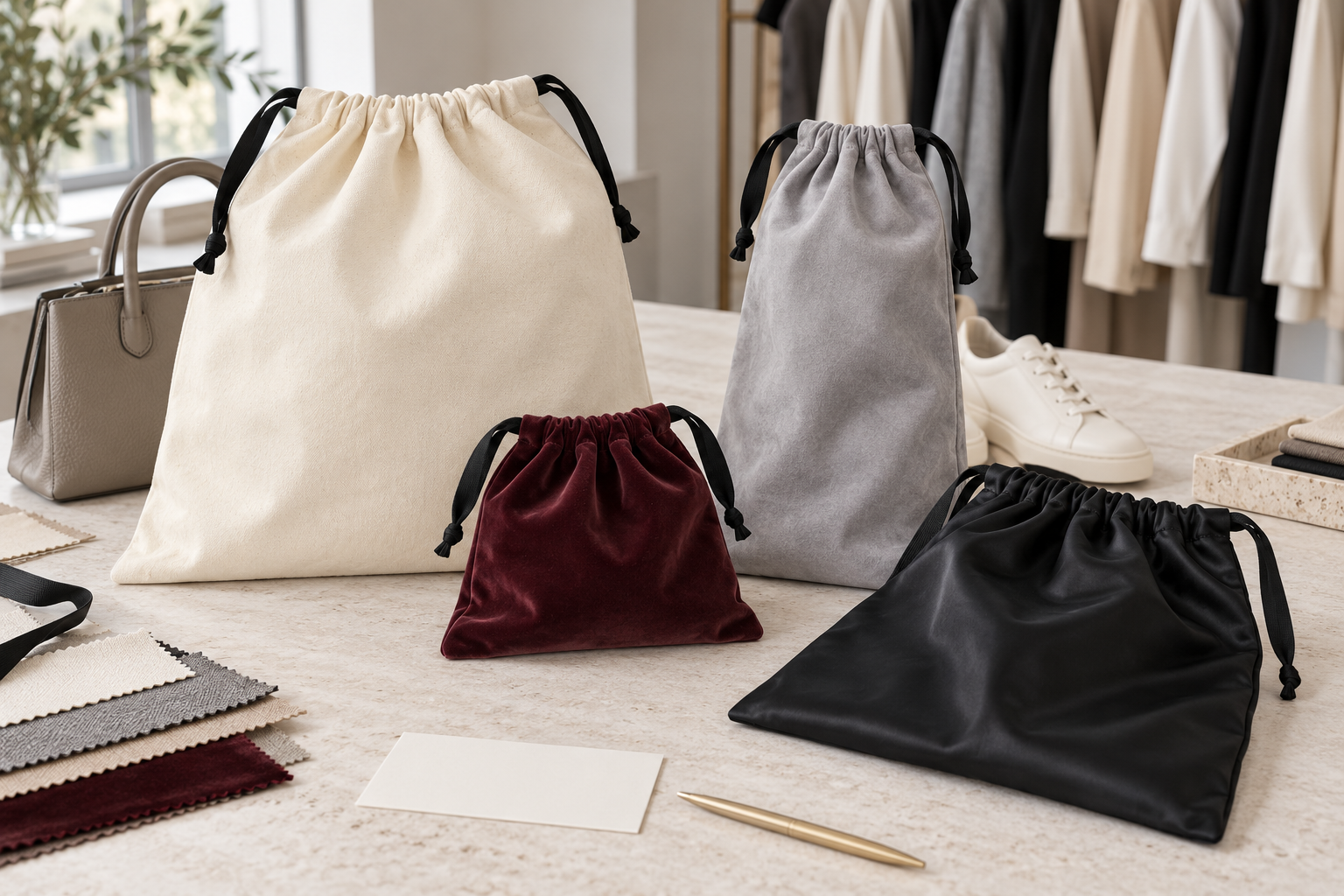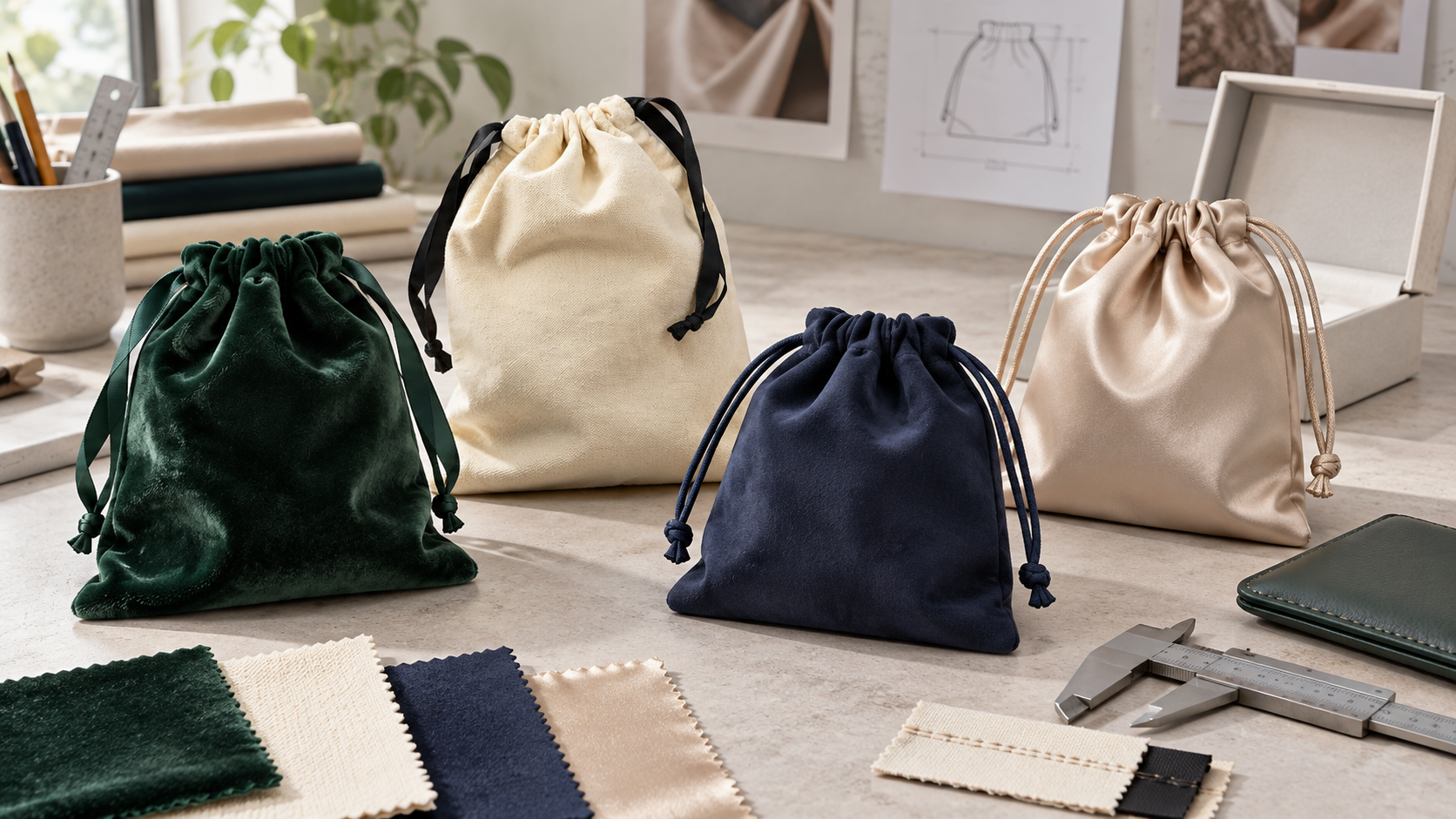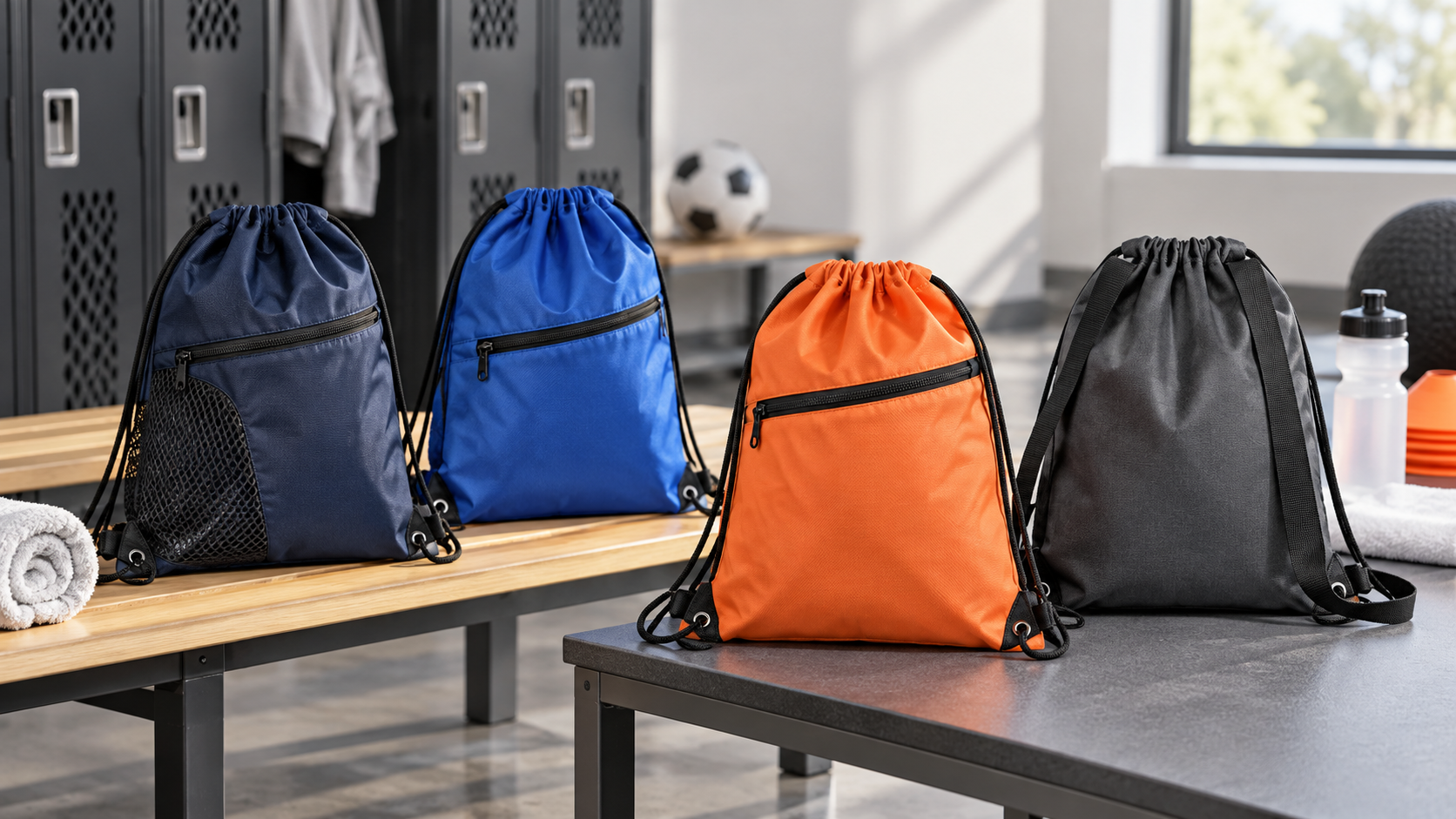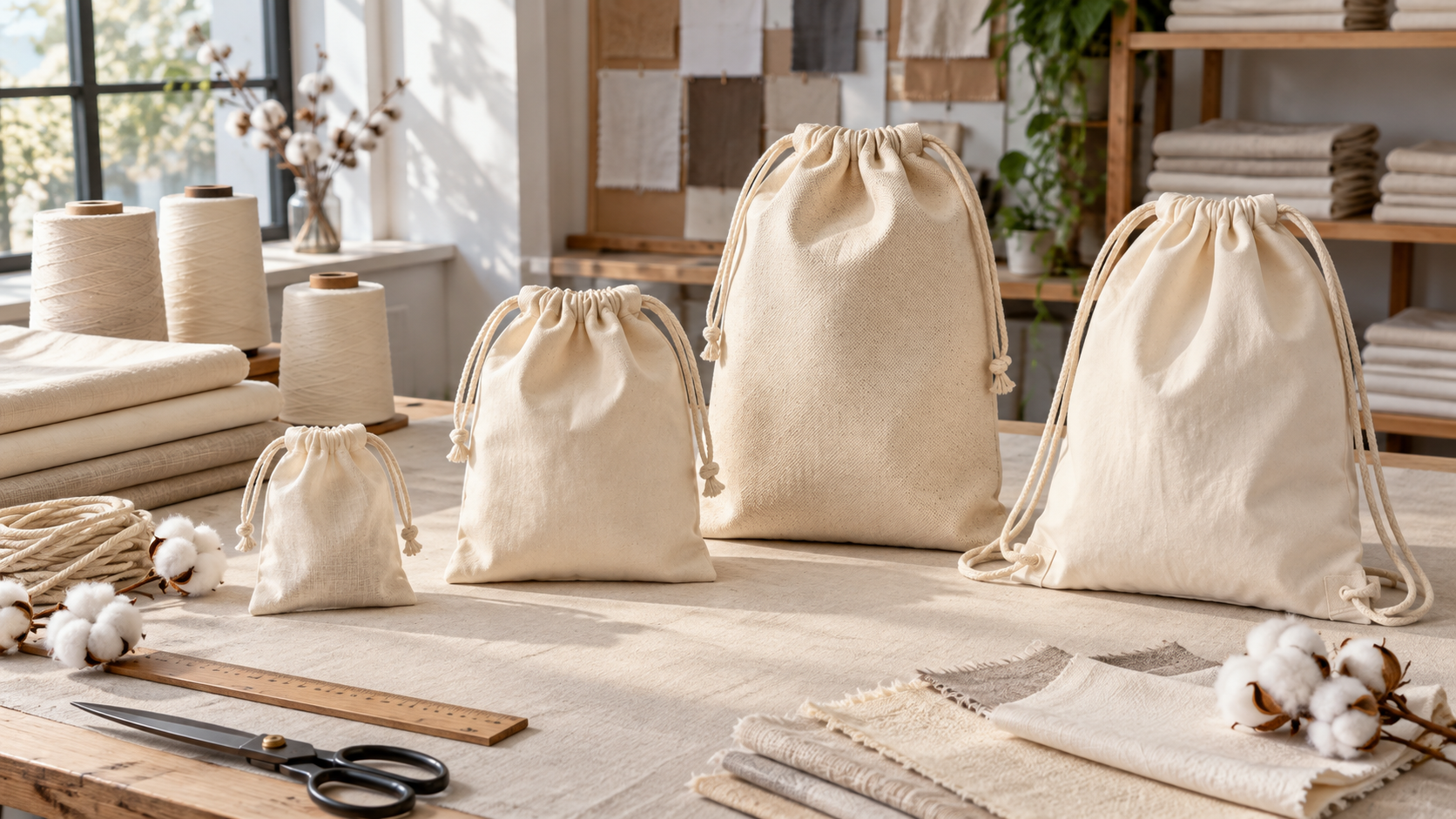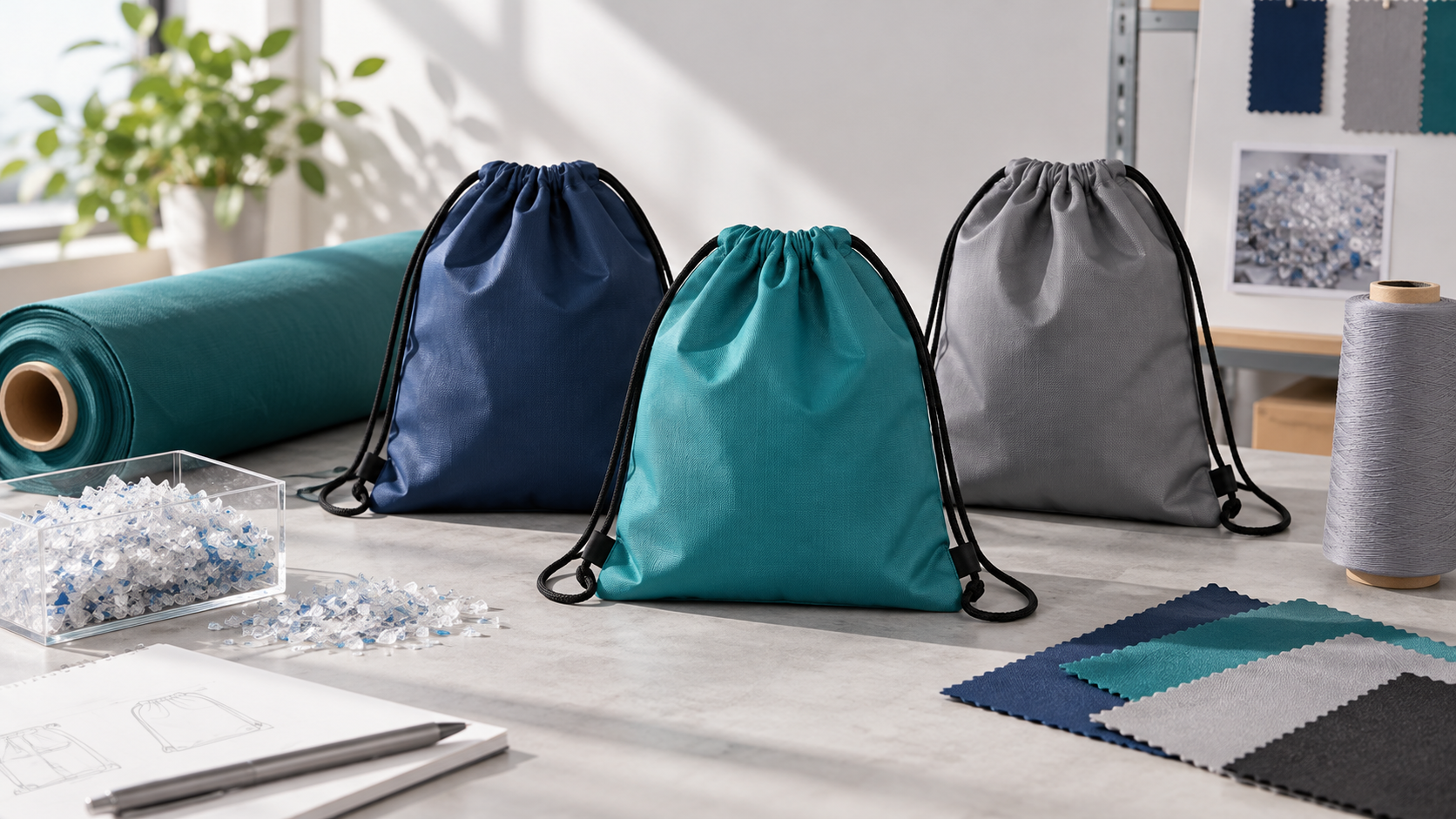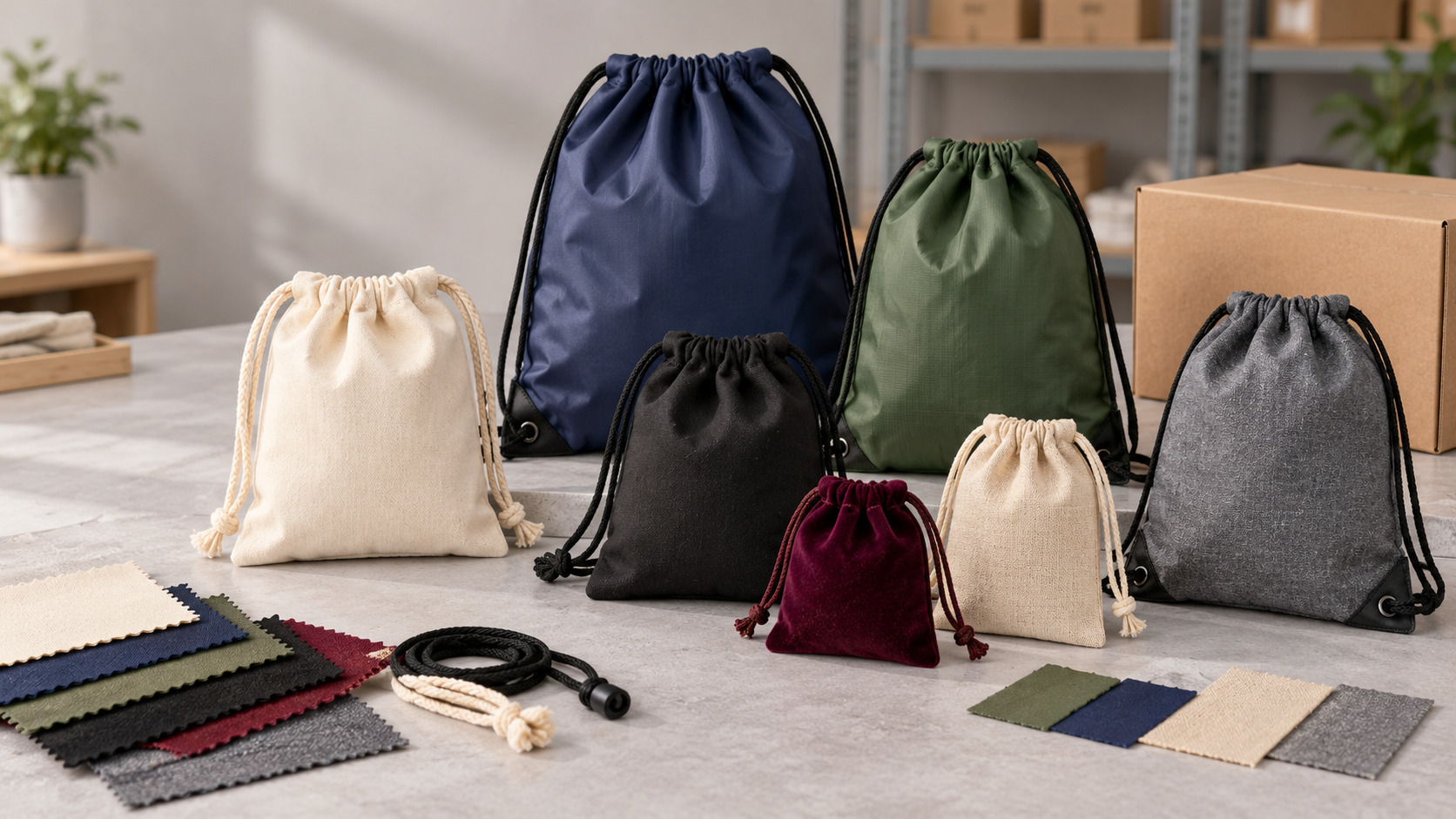
Custom shopping bag cost can vary materially because a product photo does not define the construction, quantity split, quality scope, packing or delivery basis. That is not a pricing contradiction. “Shopping bag” covers paper carriers converted at high speed, sewn jute bags, laminated woven-PP grocery shoppers, clear TPU presentation bags and many constructions in between. Each has its own material yield, print setup, labor and freight profile.
This Shopping Bag Pricing Guide explains how to build a useful 2026 budget without treating a search-result price as a factory quotation. It focuses on the economics of retail carriers: size families, handles, gussets, artwork splits, folding and cost per delivered thousand. For broader bag categories, see How Much Do Custom Bags Cost?. If you are comparing suppliers rather than budgets, use How to Choose a Custom Shopping Bag Manufacturer and the Custom Bag Manufacturer Guide.
LUCKYSTAR's custom shopping bag range includes paper, reusable, jute, mesh, canvas and transparent directions. That breadth matters because the lowest-cost construction changes with the checkout load, presentation level, reuse target and order quantity.
Planning an order? Send one quote-ready shopping bag brief. Include the retail use, dimensions, material, handles, printing, quantity by SKU, quality scope, packing, destination, trade term and required date.

A meaningful price begins with the physical cost stack: body material, handles, decoration, converting, quality control and pack-out.
2026 custom shopping bag pricing: the short answer
There is no reliable universal unit-price band for “custom shopping bags.” Paper, non-woven PP, laminated woven PP, jute, canvas and transparent-film bags use different materials, processes, tooling and packing. A useful budget is a set of comparable live quotations against one frozen brief.
One current public example illustrates the required specificity. On 15 September 2026, QinPrinting's supplier-controlled page published an EXW example for a 220 × 60 × 330 mm paper bag using 250 gsm C1S paper, outside matte lamination and cotton handles: US$0.78 each at 500 pieces and US$0.34 each at 20,000 pieces, with shipping excluded. This is one supplier's dated example for one construction, not a market range, not a LUCKYSTAR price and not transferable to another size, material, finish, destination or date.
| Quote layer | Minimum comparison detail | Why it changes the result |
|---|---|---|
| Finished bag | Dimensions, gusset, material grade/weight, handle, reinforcement and printing | Controls yield, process route and labor |
| Runnable quantity | Units per size, body color and artwork | Determines material pooling and setup dilution |
| One-time charges | Samples, plates, cylinders, dies, molds, testing and inspection | Can materially change total project cash |
| Packing | Fold, protection, units per carton, carton size and gross weight | Changes packing labor and freight cube |
| Commercial basis | Currency, validity, trade term and named place | Defines which costs and risks remain with the buyer |
Use a live RFQ for the actual program. If a supplier offers only a headline unit price, treat material identity, setup, quality, packing and logistics as unresolved costs.
What is actually inside the unit price?
A factory's unit price is the result of six layers: materials, conversion labor/machine time, decoration, setup/tooling allocation, quality and packing, plus commercial margin. The final Custom Shopping Bag Cost is therefore a construction result, not a price attached to a product photo. The percentage carried by each layer changes by route. Paper cost is heavily influenced by sheet area and yield. In a jute bag, sewing and trimming have greater weight. A laminated woven-PP bag adds printed film and lamination before assembly even begins.
| Route | Largest variable-cost pool | Typical setup cost | Hidden cost buyers miss |
|---|---|---|---|
| Paper | Paper area, coating/lamination and handle system | Plates, die and finishing setup | Large gussets reduce sheet yield; foil or spot effects add passes |
| Non-woven PP | Spunbond weight plus bonding/sewing route | Screen/plate and machine setup | A low body price can omit strong handle patches or wide seams |
| Laminated woven PP | Woven substrate, printed film and lamination | Cylinder/plate, artwork separation and lamination setup | More artwork SKUs fragment film runs and increase changeovers |
| Jute/canvas | Material grade, cut yield and sewing minutes | Screen, pattern and jig | Natural variation, fray control and bulky packing |
| Clear film | Film, binding/zipper and welding or sewing labor | Cutting die/template, print and welding setup | Scratch protection and individual packing can be substantial |
This is why a credible quotation describes the construction, not just a picture. It should state finished dimensions, body grade or weight, handle material and size, reinforcement, print method and coverage, packing and trade basis. A price that omits those details is difficult to compare and easy to change later.
Price driver 1: size, gusset and material yield
Small dimensional changes are not always small cost changes. Adding 20 mm to a gusset may push a paper layout onto a larger sheet or reduce the number of panels cut across a fabric width. Increasing handle drop adds material to every unit. A bottom board creates another component and may make the folded bag thicker.
Start with what the store actually sells. Make a “normal basket” and a “maximum sensible basket,” then prototype around them. An oversized bag wastes body material and shipping cube on every order. An undersized one produces double-bagging at checkout, which destroys the apparent saving.
For multi-size programs, look for shared handles, paper grade, fabric color and print ink. Common components do not remove each SKU's setup, but they can simplify purchasing and reduce leftover material.
Price driver 2: body material and construction route
Material should be quoted as a measurable specification. “Kraft paper,” “non-woven,” “jute” or “canvas” is not enough. Record paper basis weight and finish; polypropylene gsm and whether it is virgin, recycled or laminated; jute construction and lamination; fabric composition and weight; or transparent-film type and thickness.
For paper claims, use the FSC chain-of-custody system to verify the certificate holder, validity, product scope, claim and sales documentation for the actual order. For recycled-content claims, consult GRS 5.0 and its transition information. Verify the certificate holder and product scope, then obtain shipment-level transaction evidence where applicable. Certification, testing and documentation can add cost, while an unsupported claim creates a different business risk.
Do not select by gsm alone. A heavier body with weak handles is not a stronger shopping bag. The relevant question is how the entire load path—base, gussets, seams/bonds, reinforcement and handles—behaves with the intended products.
Price driver 3: printing and brand finish
Decoration cost is governed by setup, number of passes, coverage, substrate behavior and reject risk. A small one-color screen print on stock non-woven is economical for a simple logo. Photographic artwork on a woven grocery bag is usually more logical as printed film before lamination. Premium paper may justify offset printing, foil or embossing, but each finish needs its own setup and quality control.
| Brand treatment | Best-fit shopping bag routes | Cost behavior | Approval risk |
|---|---|---|---|
| One-color screen/flexo print | Non-woven, jute, canvas and simple paper | Low unit cost after setup; each color/design adds setup | Ink holdout, opacity and texture can change appearance |
| Multi-color offset print | Premium paper carriers | Efficient at volume; plates, make-ready and finishing remain | Color shifts after lamination; artwork at folds and glue laps |
| Printed film + lamination | Woven PP and selected non-woven bags | Strong full-coverage value at scale; higher setup and route minimum | Registration around gussets and laminate bond |
| Heat transfer/digital route | Shorter runs or complex textile graphics | Lower setup in some cases, higher unit application cost | Hand feel, edge, wash/rub behavior and color consistency |
| Foil, emboss/deboss or spot finish | Premium paper and selected synthetic surfaces | Tooling plus an additional production pass and yield risk | Fine detail, pressure, alignment and cracking near folds |
Approve the effect on the actual substrate. A screen preview cannot predict ink absorption on jute, film gloss after lamination or metallic-foil behavior across a paper crease.
Price driver 4: handles, reinforcement and retail function
Handles are both a design feature and a structural system. Twisted paper, flat paper, cotton rope, ribbon, die-cut openings, non-woven loops and sewn webbing have different material and attachment costs. A long shoulder drop consumes more material and creates greater leverage on the bag wall.
Ask the supplier to specify attachment: glue patch, folded turn-in, ultrasonic bond, box stitch, cross stitch, rivet or another method. Then define a load test based on the shopping basket. Paying for the correct reinforcement is usually cheaper than using a heavier body to compensate for an under-engineered handle.
Price driver 5: MOQ, SKU count and artwork splits
Factories quote by runnable quantity, not by the headline purchase order total. An order for 6,000 pieces divided among three sizes, two colors and two logos can behave like twelve 500-piece jobs. Material may be shared, but printing setup, cutting, line change, sorting and carton identification repeat.
| 6,000-piece order design | Runnable quantity | Cost effect | Smarter option |
|---|---|---|---|
| One size, one color, one artwork | 1 × 6,000 | Best dilution of setup and simplest packing | Use when the product basket and store format are consistent |
| Three sizes, same material/color/artwork | 3 × 2,000 | Separate patterns/dies and line setup; some inputs can pool | Standardize handles, substrate and print color |
| Two colors × three artworks | 6 × 1,000 | More material segregation and repeated print changeovers | Keep body color common and vary a label, belly band or one print plate |
| Three sizes × two colors × two artworks | 12 × 500 | May fall below route minimums; highest setup and sorting load | Launch a controlled core range, then add proven variants on reorder |
Low MOQ is therefore not automatically low commitment. A tiny unit count can require expensive digital decoration, stock materials, surcharges or a much higher price per bag. For the broader logic, see What Is the Typical MOQ for Custom Bags?
Three realistic budget patterns
1. Boutique paper carrier
A fashion or beauty retailer may prioritize crisp color, a comfortable rope handle and a clean fold. The body material is only part of the budget; lamination, handle fitting, die cutting and finish control carry weight. The best saving is often a disciplined size family and one shared paper/handle specification, not stripping away the presentation that customers notice.
2. Reusable grocery program
For woven or non-woven PP, look beyond first cost to service use. A stronger handle, base reinforcement or easier-cleaning surface can raise unit price while reducing replacement and improving perceived value. Divide delivered cost by the intended credible uses—but do not advertise an unverified reuse number.
3. Seasonal premium shopping bag
A holiday jute, canvas or clear bag may combine special material, multiple trims and gift-ready packing. The risk is not simply “expensive material”; it is late approval, fragmented art variants and rework on visible details. Lock the hero treatment early and standardize the invisible construction wherever possible.
Price driver 6: packing density and freight cube
Shopping bags often occupy freight by volume before they reach a weight limit. Paper gussets, rope handles, base boards, jute texture and sewn seams all create folded thickness. A unit price that saves three cents but adds a bulky handle arrangement can cost more per delivered thousand.
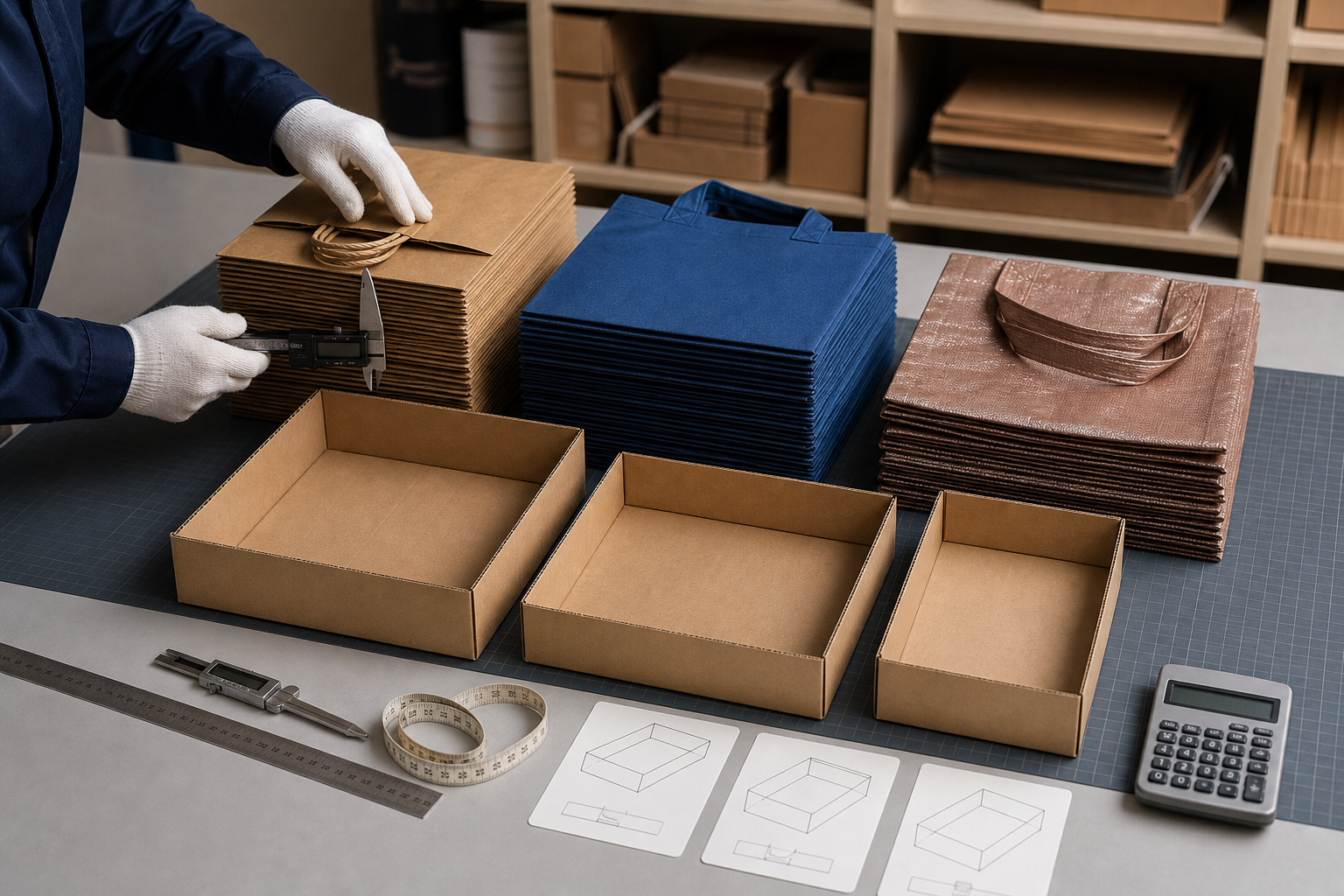
A physical pack-out trial converts folded thickness into carton count, CBM and handling—not just an estimated packing line in a spreadsheet.
| Pack-out measure | How to verify it | Why it affects cost | Decision it supports |
|---|---|---|---|
| Conditioned thickness of 50/100 bags | Pack production-representative units and measure after a defined hold | Predicts units per bundle/carton more reliably than one loose bag | Fold, handle lay and compression method |
| Units per master carton | Count a physical trial carton and reopen sample units | Changes carton material, handling and total shipment count | Protection vs packing density |
| External carton dimensions | Measure the closed packed carton, not an empty box | Determines cubic volume and dimensional calculations | Freight plan and pallet/container fit |
| Gross carton weight | Weigh the sealed sample carton | Affects handling limits and weight-rated transport | Carton count, material and safe lift |
| Delivered condition | Open units after a representative packed hold or transit trial | Over-compression can deform paper, crack finishes or mark clear film | Interleaving, bagging and compression limit |
Ask for carton dimensions, gross weight, units per carton and total CBM with the quote. When the bag changes, repeat the pack-out. Do not reuse an old carton assumption for a new handle or thicker body.
EXW, FOB and landed cost are not comparable prices
A factory number may stop at the workshop, at an export handover point or at a named destination. The ICC Incoterms® 2020 rules allocate specific costs, risks and obligations between seller and buyer. They do not define the bag, inspection level, payment terms or every destination charge.
| Quote basis | Confirm in writing | Add before comparison | Common mistake |
|---|---|---|---|
| EXW named place | Exact pickup point, packing and readiness | Origin pickup/handling, export tasks, main freight, insurance if selected, import and inland delivery | Comparing it directly with a delivered number |
| FOB named port | Named port, included origin charges and document scope | Main freight, insurance if selected, import and destination/inland charges | Assuming all pre-shipment inspection or certificates are included |
| CIF named destination port | Named port, freight basis and insurance scope | Import, destination terminal/handling as applicable and inland delivery | Reading “port price” as warehouse-delivered cost |
| Delivered/landed model | Named address, service scope, exclusions and tax/duty assumptions | Any explicitly excluded tax, brokerage, accessorial or storage exposure | Using a generic duty rate without product/destination classification |
Normalize every supplier to one commercial basis: same quantity per SKU, specification, quality/test scope, packing, named place, currency and validity date. Then compare total cash, arrival timing and risk—not unit price alone. Buyers importing from China can use How to Import Custom Bags from China as a broader workflow.
How to reduce cost without weakening the bag
- Design around the shopping basket. Remove unused volume before reducing material performance.
- Standardize the hidden system. Share body color, handles, reinforcement and cartons across visible artwork variants.
- Put complexity where customers notice it. One strong brand surface often performs better than several small premium processes.
- Protect runnable quantity. Consolidate artwork and avoid splitting the order into uneconomic micro-SKUs.
- Engineer the fold. Reduce empty cube without crushing handles, creases or clear surfaces.
- Approve once, clearly. A frozen sample, artwork and bill of materials prevent change and rework.
- Plan the reorder. Retain color, print, component and carton standards so the second run does not restart development.
Never remove a reinforcement or lower a material grade only because it is invisible. Test a value-engineered sample with real products, then accept the change only when appearance and function remain suitable.
Company-claim boundary: LUCKYSTAR statements in this section are publisher self-description, not third-party verification, not a published price list and not a lowest-price claim. Confirm the contracting entity, assigned production site, subcontracting, material and process route, samples, quality scope, packing, quantity, schedule and commercial terms for each order.
How LUCKYSTAR describes its shopping bag cost review
LUCKYSTAR helps a buyer compare routes around one retail brief. The public custom shopping bag product page shows materially different construction directions that buyers can use to frame a cost comparison. The assigned factory, material, process and capability must be confirmed for the actual order. LUCKYSTAR states that its project team can discuss paper, reusable PP, jute, mesh, canvas or transparent concepts against presentation, load, order scale and pack-out, subject to specification and written confirmation.
The requested output should be a quote with visible assumptions: size, material, handles, decoration, reinforcement, quantity per SKU, sample plan, quality scope, carton count and trade basis. LUCKYSTAR can then review value-engineering options without quietly changing the product that was approved.
Brands planning coordinated merchandise can also review LUCKYSTAR's full Product Range. For production sequencing, read Custom Shopping Bag Manufacturing Process: From Design to Delivery; for timing risk, use How Long Does Custom Bag Production Take?
What to send for an accurate custom shopping bag quote
| RFQ item | Minimum useful detail | Why the factory needs it |
|---|---|---|
| Retail job | Products, normal/maximum load, store format and whether sold or given away | Selects suitable dimensions, route and strength target |
| Size and structure | Finished W × H × gusset, opening, handle drop, pockets/closure and base support | Calculates material yield, patterns/dies and labor |
| Material | Type, composition, weight/thickness, color, finish and claim/certification need | Prevents substitution and prices evidence requirements |
| Artwork | Vector file, colors, print area/coverage, placement and special finish | Selects the print route, setup and expected waste |
| Quantity matrix | Units by size × body color × artwork, plus forecast reorder | Reveals actual runnable quantity and material pooling |
| Quality and compliance | Load method, inspection level, destination rules and requested reports | Adds the right control and testing rather than a vague allowance |
| Packing and delivery | Individual packing, units/carton, labels, destination, required arrival and quote basis | Calculates carton cube, logistics scope and realistic schedule |
Send these details to LUCKYSTAR and ask for alternatives to be separated rather than blended into one number. For example, request stock-color non-woven versus laminated woven PP, or standard paper versus premium laminated paper, using the same size, artwork and destination assumptions.
Frequently asked questions
How much is one custom shopping bag?
There is no responsible universal per-bag answer without a controlled specification. Request a live quote for the exact size, material, construction, decoration, quantity by SKU, quality scope, packing, trade term, named place and delivery requirement.
Why do two shopping bags that look similar have different prices?
Photos hide paper weight, fabric grade, film structure, handle length, reinforcement, seam/bond method, print coverage, inspection and packing. Those differences affect performance and production cost even when the outside shape looks similar.
Does a larger quantity always lower the price?
Usually it spreads setup and improves material/run efficiency, but only within a stable specification. If volume is split across many sizes, colors and artworks, each variant may remain a short run. Storage, obsolescence and cash tied in unused bags can also outweigh the unit saving.
Are paper shopping bags cheaper than reusable bags?
Sometimes, but not automatically. A simple paper carrier at scale may cost less than a sewn reusable bag. Premium coated paper with rope handles, foil and rigid reinforcement can exceed a basic non-woven option. Compare a defined product and, where relevant, a credible cost per use.
How much does custom printing add?
It depends on the method, colors, coverage, order split and substrate. One-color printing is often economical after setup. Full-coverage laminated graphics and specialty finishes carry more setup and process steps. Ask for unprinted, standard-print and premium-finish alternatives on the same specification.
Are tooling and sample charges included?
Not necessarily. Confirm plates/screens/cylinders, dies, pre-production samples, courier, testing and repeat-order ownership separately. A low unit price can exclude one-time costs that materially change the project total.
What is the cheapest way to lower shopping bag cost?
Reduce unused size, standardize components, consolidate variants, simplify decoration and improve packing density. Validate any material or reinforcement reduction with a representative sample and load test.
How should I compare three supplier quotes?
Put them on one line-by-line specification and one commercial basis. Compare quantity per SKU, body material, handles, construction, printing, setup, sample/testing, quality, packing, carton data, trade term, named place and validity. Treat missing detail as an unresolved cost or risk.
Price the retail system, not the product photo
A useful Custom Shopping Bag Price answers three questions: what exactly will be made, how will it perform at checkout and what will it cost at the agreed handover point. The lowest factory unit is not always the lowest delivered or per-use cost. Size discipline, runnable SKU quantities and physical pack-out can matter as much as the material name.
Compare constructions on the custom shopping bags page, review the Shopping Bag Manufacturer selection guide and connect the project to the broader Custom Bag Manufacturer Guide. When your quantity matrix and destination are ready, request a project-specific quote from LUCKYSTAR.

Request a comparable shopping bag quotation
Define the retail use, dimensions, material, handles, printing, runnable quantity by SKU, one-time charges, quality scope, packing, destination, trade term, named place and required date.
Review LUCKYSTAR custom shopping bag options, then send your project details through the contact form or Email a project brief. The email link opens a draft for your review before sending.
Factory and subcontracting, material and process route, claims, certification scope, samples, testing, inspection, MOQ, price, currency, validity, packing, schedule and delivery terms are subject to due diligence, specification and written confirmation.