A Pantone number can start a shopping bag colour conversation, but it cannot finish one. Most Pantone graphics references are printed on specific coated or uncoated paper, while a shopping bag may be brown kraft, white art paper, coloured non-woven polypropylene, reverse-printed laminate, cotton, jute or clear TPU. The same ink recipe and the same measured values can look different when substrate colour, texture, gloss, transparency and white backing change.
This guide to Shopping Bag Color Matching: Pantone, Ink Drawdowns and Bulk Approval builds a practical print-colour control chain. It explains how to define the target, request substrate-specific drawdowns, standardise visual and instrumental review, approve the press first-off, monitor bulk drift and preserve evidence for reorders. Its subject is printed colour—not textile dye-lot lab dips or exact matching of every handle and trim.
Begin with LUCKYSTAR’s available retail-carrier constructions. Then use the category sourcing checklist for retail carriers alongside the broader supplier due-diligence pillar when qualifying who will control the colour trail.
Planning an order? Send a color-approval brief. Include exact substrate/lot and print side, coating or laminate stack, Pantone/system/suffix or signed master, ink and white/backing, physical drawdown, viewing and measurement conditions, target/tolerance and decision rule, artwork versions, first-off and bulk sampling, durability exposures, packing, destination and required date.
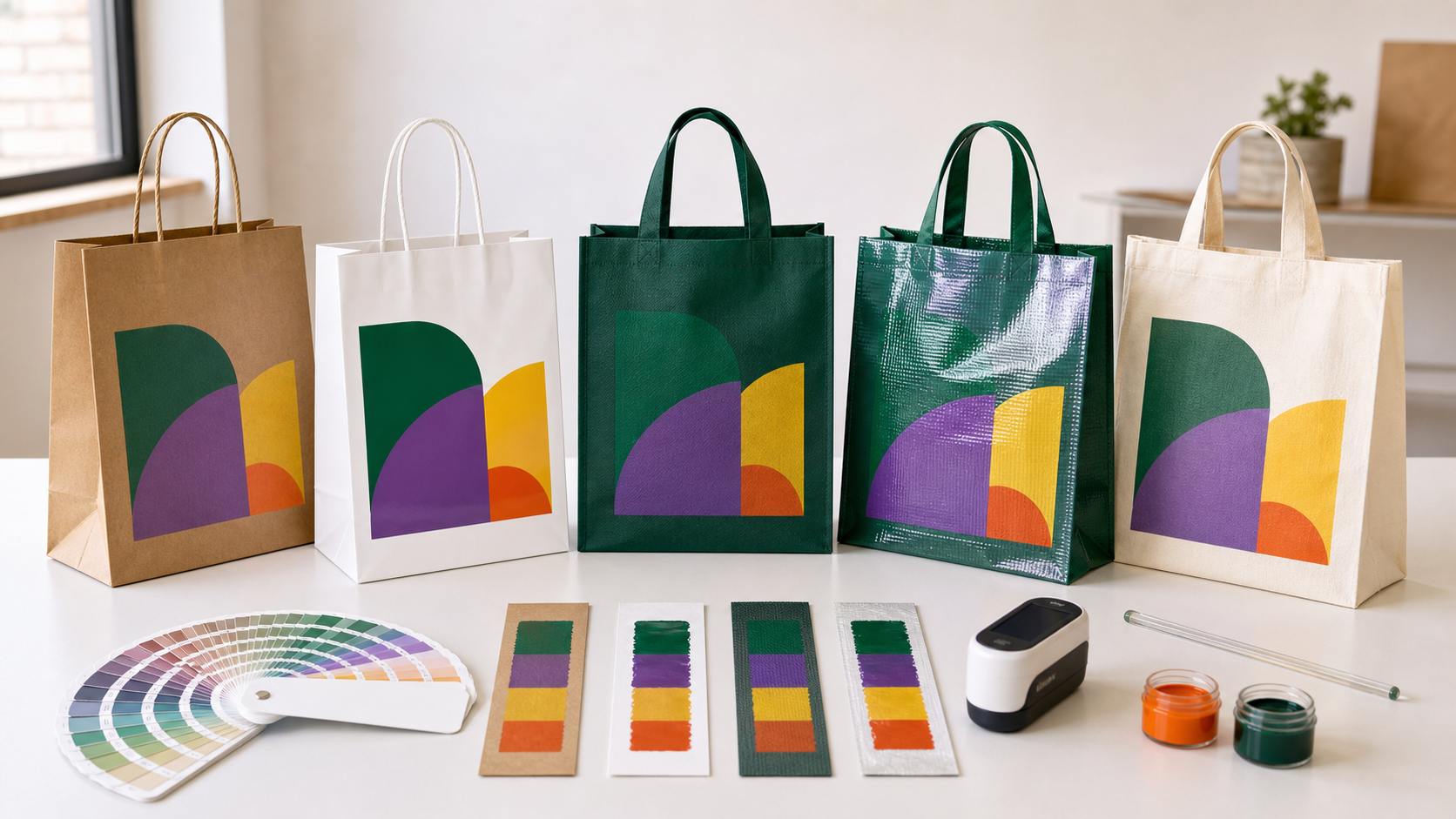
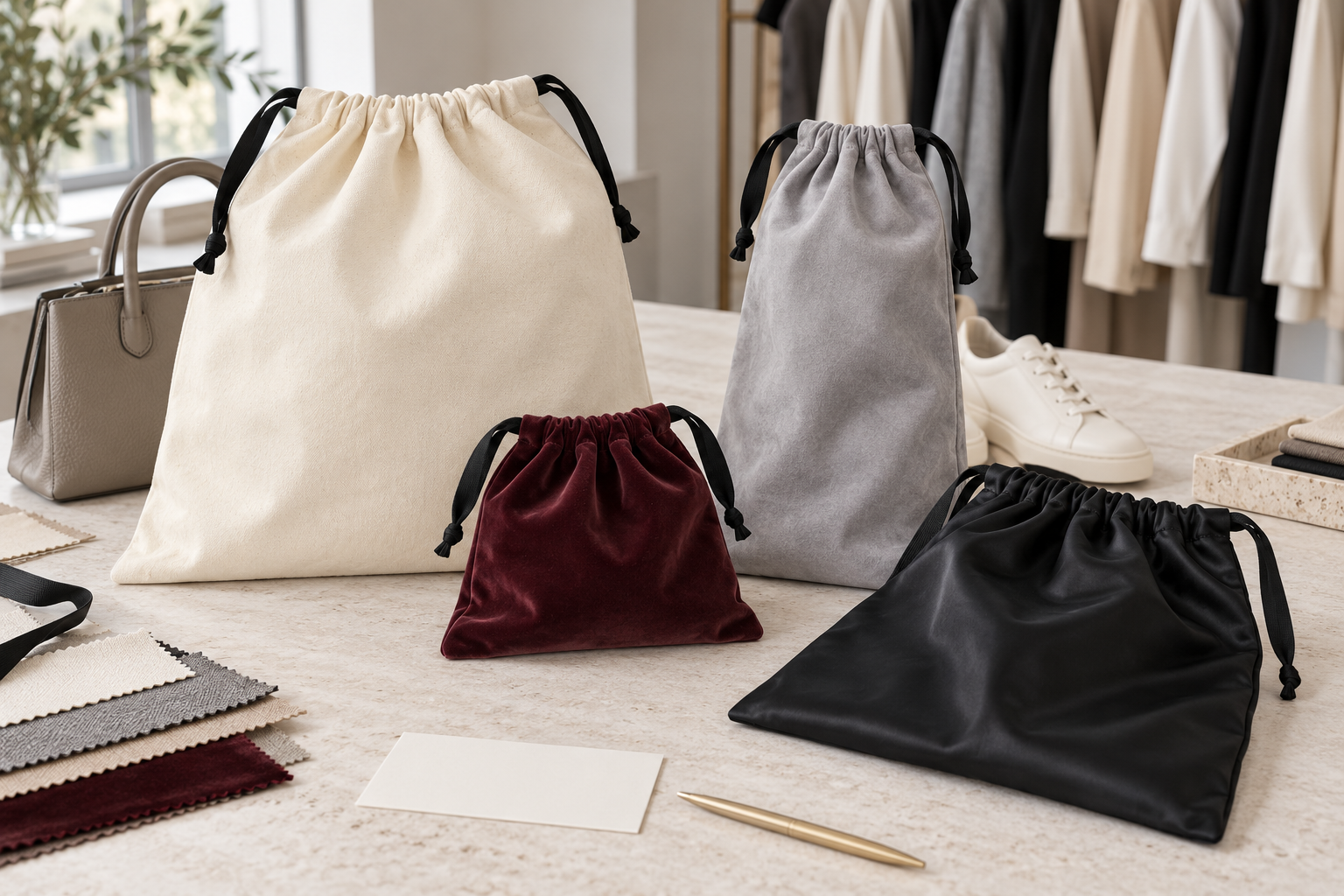
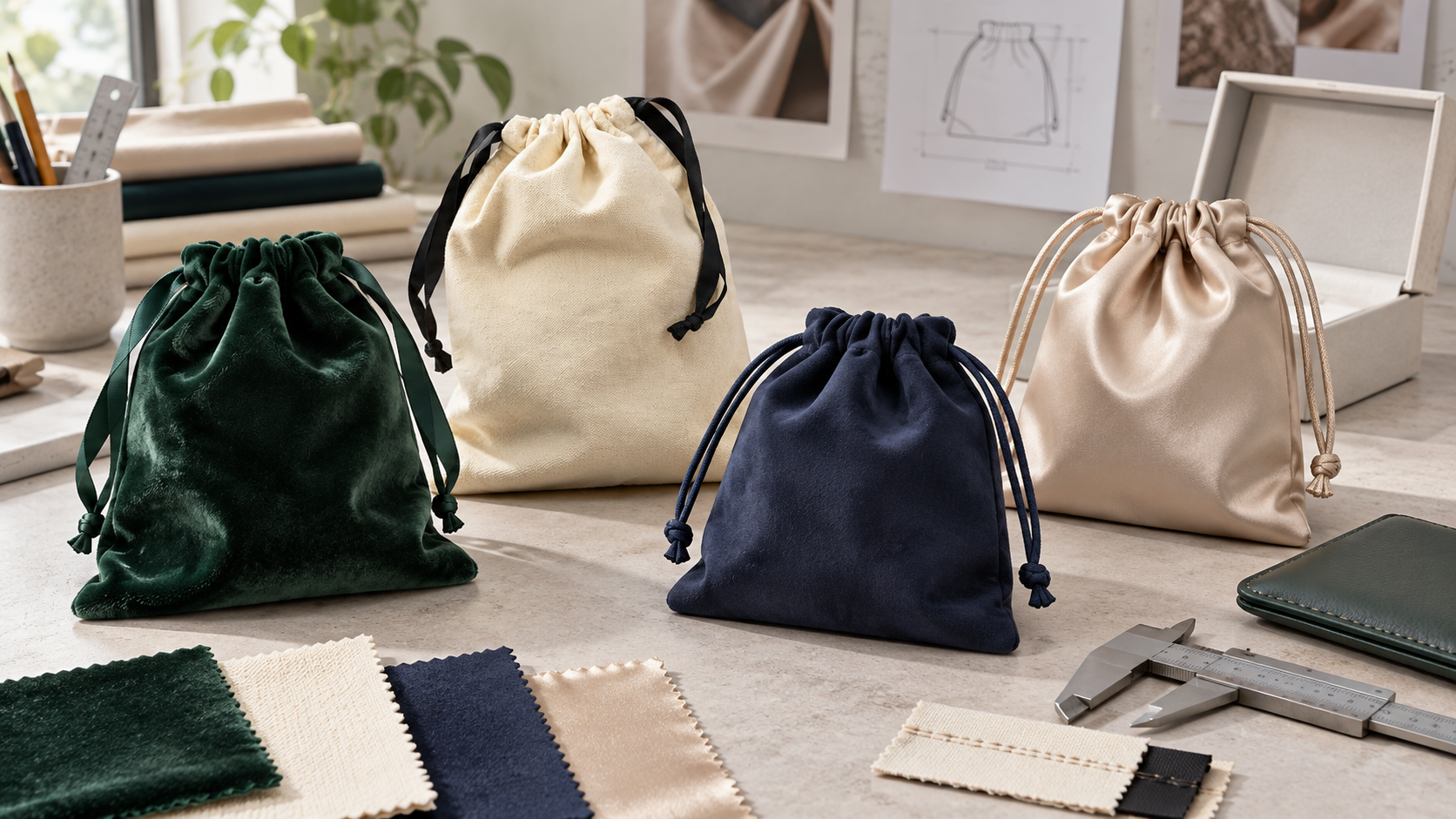
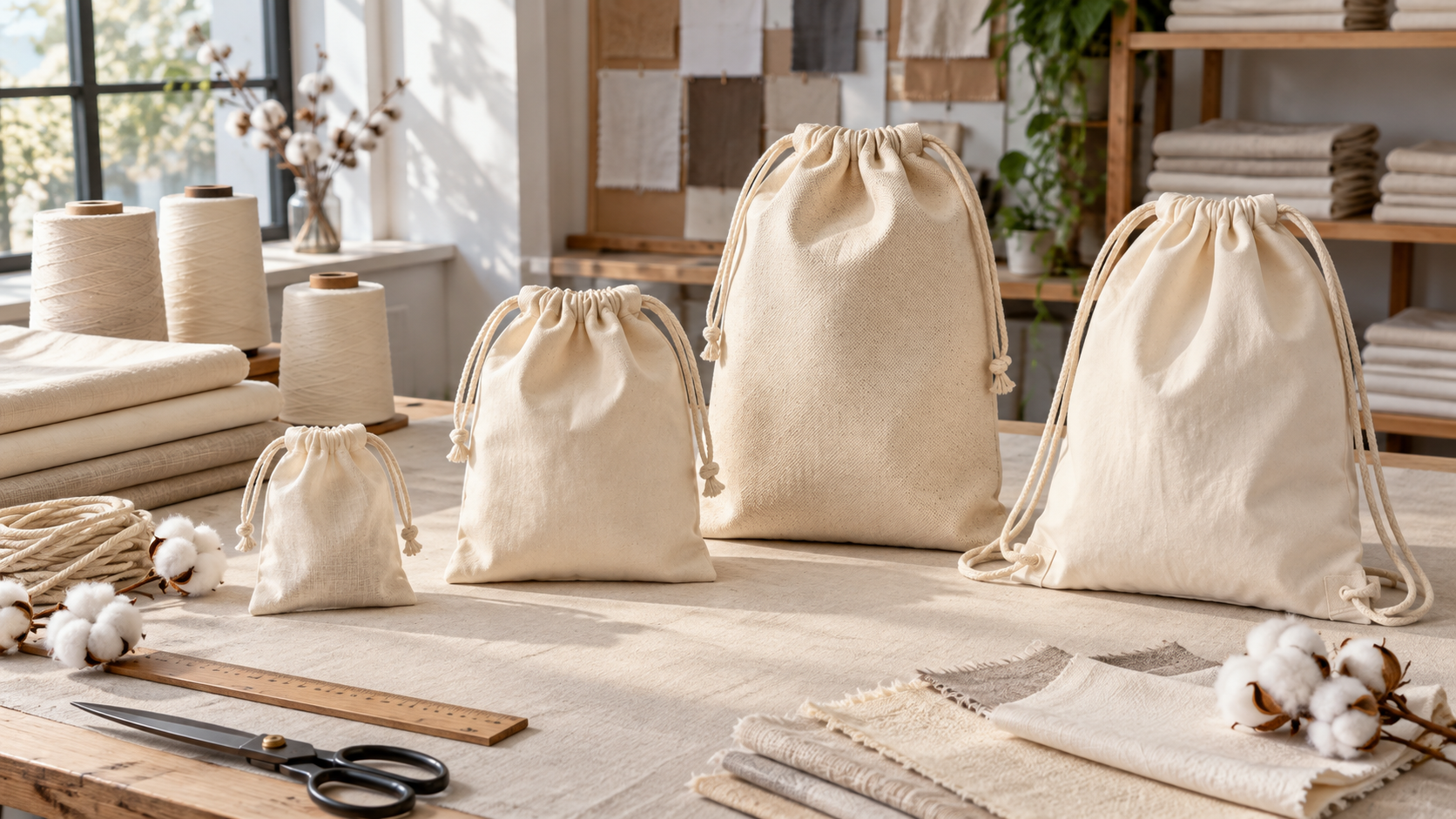
One brand palette changes across kraft, coated paper, non-woven PP, glossy laminate and cotton; each production surface needs its own approval evidence.
Page role: This color-control guide owns shopping bag Pantone targets, substrate-specific ink drawdowns, viewing conditions, spectral support, first-off approval, bulk drift monitoring and documented color acceptance. Use the worldwide shopping bag manufacturer guide for a supplier shortlist, and the custom shopping bag collection for specification and quotation planning.
1. Build a hierarchy of colour references
Colour disputes often begin because the buyer and printer are using different reference objects. A designer may view a monitor, the buyer may hold a paper fan deck, and the printer may compare a digital formula or an old product. All four can carry the same colour name while presenting different appearances.
Create an explicit hierarchy before ink is mixed. The primary target might be current licensed spectral data, a current physical Pantone guide, a supplied brand master or an approved printed sample. Secondary references can support communication, but they should not silently replace the primary one. Record the edition, suffix, condition and owner of the reference.
Also define the approval object. If the final product is a reverse-printed laminated woven PP bag, the decisive appearance is normally the finished laminate over its real backing—not ink alone on clear film. For a kraft paper carrier, the approved drawdown should use the intended kraft stock, not white coated paper. For direct screen print on non-woven PP, approve on the specified base colour and material weight.
| Reference level | Useful purpose | Control to record | What it cannot prove |
|---|---|---|---|
| Pantone code / name | Shared language for initial colour intent | System, number, suffix, guide edition and condition | Appearance on the production bag substrate |
| Spectral master data | Device-independent numerical target when licensed and correctly used | Data source, measurement condition and target version | Whether the chosen ink/substrate can reach the target acceptably |
| Brand physical master | Shows the brand owner’s accepted visual direction | Material, age, finish, storage and signed ownership | Direct formula transfer to a different print process |
| Ink drawdown | Screens ink direction, opacity and substrate interaction | Ink batch, substrate, deposit, white/backing, coating and date | Production press transfer, register or bag conversion |
| Production print carrier | Confirms colour through the intended press and print construction | Press condition, lot, speed, ink, station and retained sample | Final appearance after lamination, folding and joining |
| Converted golden bag | Defines accepted final appearance and placement | Bag revision, material lots, artwork/tooling and approval date | Every possible long-run variation unless monitoring continues |
2. Use Pantone as a target language, not a universal material sample
Pantone’s explanation of colour spaces distinguishes spot colours from process-colour simulations and notes that process output depends on the equipment and printing variables. Pantone’s coated and uncoated guidance explains that C and U indicate colour appearance on coated and uncoated paper; ink absorption contributes to their different look.
That distinction matters because “Pantone 123” without its system and suffix is incomplete. A C reference is not an instruction to coat a bag, and a U reference is not a universal target for all porous materials. Both are graphic-paper references. A kraft bag, non-woven PP panel or cotton carrier needs translation through a material-specific ink drawdown and finished-sample approval.
Do not copy an RGB, HEX or generic CMYK value from a screen and call it the Pantone match. RGB is emitted light. CMYK values depend on a printing condition. A spot ink is separately formulated. A digital or process-colour reproduction may be the best commercial option, but it should be described as a simulation and approved as such.
3. Map the colour path for each shopping bag substrate
Before asking “How close can you match?”, identify everything light passes through or reflects from. Brown kraft affects hue and brightness. White coated paper holds a sharper ink film. Non-woven PP has fibre texture and a coloured body. Reverse print is viewed through film and may sit over white ink, adhesive and woven reinforcement. Cotton absorbs ink and scatters light. Clear material may be judged over changing contents.
The shopping bag print-route overview helps identify whether colour enters the product on a web, an individual sheet, a pre-cut blank or an already formed carrier. Lock that sequence before approving a drawdown; otherwise a correct colour sample can represent the wrong construction.
| Production surface | Main colour influence | Drawdown / proof setup | Final approval view |
|---|---|---|---|
| Brown kraft paper | Paper colour, fibre variation, absorption and recycled-content variation | Exact grade and side; include white underbase if proposed | Folded bag under agreed reflective viewing condition |
| White coated paper | Coating, brightness, optical properties, gloss and post-print film/varnish | Production stock plus intended coating or laminate | Finished surface after crease and conversion |
| Unlaminated non-woven PP | Body colour, spunbond texture, treatment and ink deposit | Bulk-intent material lot, print side and underbase | Converted bag viewed flat and filled |
| Printed film for lamination | Film clarity, reverse-print order, opaque white, adhesive, backing and gloss | Film drawdown plus a representative laminated hand sheet | Converted laminate under reflective and practical retail light |
| Cotton or canvas | Natural/yarn colour, weave, absorbency, finish and texture | Actual finished fabric lot with intended print/cure | Sewn bag after relevant handling or conditioning |
| Jute | Strong fibre colour and coarse, irregular surface | Actual panel with simplified artwork and target opacity | Judge intended rustic result, not paper smoothness |
| Clear PVC or TPU | Transparency, backing/contents, white layer, surface chemistry and gloss | Exact clear sheet with white layer and light/dark backings | Finished bag over representative contents |
4. Decide whether the colour is spot, process, material or layered
A shopping bag can display brand colour in four ways. The body material may carry the colour. A spot ink may print a logo. Process channels may simulate the colour inside an image. A transparent ink may combine optically with an opaque white layer and coloured backing. These routes should not share one tolerance automatically.
Spot ink is often the most direct route for a critical solid mark, but some targets sit outside the practical gamut of the selected ink system or substrate. A CMYK simulation may change with the process condition and adjoining colours. A coloured body plus a printed logo creates two independent lots. Reverse printing adds the possibility that the film face and ink order alter the result.
If the project compares those two routes, the focused direct-screen and gravure-web comparison explains why a spot-colour panel and a multi-channel printed laminate need different tooling, proofing and bulk controls.
| Colour route | Best used for | Approval focus | Typical hidden variable |
|---|---|---|---|
| Body-material colour | Large visible area and unprinted bag identity | Material swatch/lot, finish and relevant colourfastness | Different fibres, resin, masterbatch or recycled input |
| Spot ink | Critical solid logo or limited brand palette | Ink drawdown, production deposit and substrate interaction | White underbase counted as another colour |
| CMYK/process simulation | Images, gradients and multicolour artwork | Printing condition, separation, proof and tonal balance | A Pantone spot target may not have an identical process reproduction |
| Extended-gamut simulation | Consolidating a palette within a capable fixed ink set | Qualified profile, proof and press consistency | Device and substrate dependence |
| Ink plus opaque white | Dark, metallic, clear or reverse-printed substrates | White density, colour-over-white and register/trap | Pinholes or halo alter perceived colour |
| Metallic / fluorescent ink | Special effects outside ordinary process appearance | Physical sample, application, lighting and durability | Instrument readings alone may not describe visual effect well |
5. Request ink drawdowns that reproduce the intended stack
An ink drawdown is a controlled wet-ink film applied across a chosen substrate with a defined tool or method. It is faster and less expensive than a full press trial, so it is useful for narrowing a formula. It is not the same as a lab dip, which normally refers to small dyed-material submissions, nor is it a guarantee of press colour.
Ask for a small, labelled set of purposeful alternatives rather than many unexplained shades. One can be the closest formulation; another may move warmer or cooler; a third may adjust lightness, chroma or opacity. The submission record should identify ink system, formula or batch, substrate lot, surface, drawdown bar/deposit where applicable, white layer, backing, coating/laminate, cure/dry condition and date.
Allow the sample to dry or cure according to the system before approval. Wet ink can look darker, glossier or more saturated. If the final print will be reverse viewed through film, laminate at least a representative hand sheet over the intended white/backing. If a protective varnish or matte film changes appearance, include it in the comparison.
| Drawdown field | What to specify | Reason | Reject / repeat trigger |
|---|---|---|---|
| Target identity | Pantone/system/suffix or signed master and hierarchy | Stops reference substitution | Wrong guide, suffix or master version |
| Substrate | Material name, supplier, grade, lot, colour, side and finish | Substrate drives colour appearance | Drawdown made on generic white card only |
| Ink system | Type compatible with process, use and substrate | Formula, cure and durability are system-dependent | Unapproved substitute or unknown batch |
| Deposit / application | Drawdown bar, mesh equivalent or other defined application | Ink film thickness changes shade and opacity | Options cannot be compared under one application |
| White and backing | White formula/deposit plus visual and measurement backing | Controls show-through and colour-over-white result | White/backing differs from final construction |
| Post-print stack | Varnish, coating, film, adhesive and laminate backing | Finish can shift gloss, density and visual depth | Approval changes after untested lamination |
| Conditioning | Dry/cure time, temperature/humidity and review date | Prevents wet-versus-dry approval error | Tack, blocking, continuing colour change or contamination |
6. Standardise visual evaluation
Two people can disagree honestly if one views a sample beside a window and the other under warm office lamps. Surrounding colour, light intensity, viewing angle, backing and gloss all influence perception. Standardise critical comparisons and keep practical retail viewing as a separate second check.
ISO 3664:2025 specifies viewing conditions for critical and practical appraisal of reflective and transmissive prints. Its existence does not mean every factory viewing booth is automatically compliant. Record the intended condition, maintain the booth, minimise coloured surroundings and place master and sample in the same plane and orientation.
Compare samples with a neutral mask that hides distracting edges. For directional or glossy surfaces, rotate master and sample together and inspect more than one angle. Review clear and reverse-printed work with the defined backing. Limit fatigue by taking breaks and avoiding long sequences of near matches without rechecking the master.
7. Instrumental colour data supports—not replaces—visual approval
A spectrophotometer can quantify direction and repeatability more reliably than comments such as “a little greener.” But a number is meaningful only when the measurement condition is fixed. Instrument model, calibration, aperture, geometry, illuminant/observer calculation, UV condition, backing, sample layers, orientation, number of readings and averaging can all affect the result.
ISO 13655:2017 covers spectral measurement and colorimetric computation for graphic-arts images, including screen, gravure, flexographic and digital printing. It also states that it does not address every material-production application. Use it where it fits the printed image and document any additional method needed for textured, translucent or non-flat bag samples.
Do not set a universal Delta E limit copied from another project. Tolerance depends on colour region, measurement equation, substrate variation, print process, use, aperture, surface and brand sensitivity. A sample may have a small numeric difference yet look unacceptable because of gloss, mottling or metamerism; another textured sample may measure variably but be visually acceptable. Agree both instrumental and visual acceptance.
8. Move from drawdown to production without changing the question
The selected drawdown becomes an ink-direction master, not permission to change substrate or process. The printer must translate that result through the real screen mesh, anilox/plate, gravure cylinder, offset condition or digital profile. Press speed, viscosity, ink temperature, impression, drying and overprint sequence can shift colour. A press proof or production-process sample is therefore the next gate.
For a laminated bag, evaluate printed film before lamination for process diagnosis, but approve the laminate as the commercial appearance. For a direct printed panel, inspect the panel and a converted bag because seam position, folds and handle patches change the visible field. For process images, check tonal balance and neighbouring colour—not only a single solid patch.
Use the sampling workflow for custom shopping bags to separate a visual prototype from a production-representative colour sample and to document which sample authorises tooling, material booking or bulk.
| Approval gate | Decision | Required evidence | Next action |
|---|---|---|---|
| Target confirmation | Which colour intent and hierarchy apply? | Code/data/master identity and intended substrate route | Authorize ink-formulation work |
| Drawdown selection | Which formulation direction is acceptable? | Signed drawdown with construction record and comments | Prepare production-process proof |
| Press / process proof | Can the production method reproduce the approved direction? | Press-condition sample, measurements and visual review | Adjust process or formula; do not silently replace master |
| Converted pre-production bag | Is final surface, placement and three-dimensional appearance acceptable? | Finished bag linked to all material and tooling revisions | Create golden sample and bulk criteria |
| Press first-off | Is the actual bulk setup inside the approved colour window? | First production sheet/web/panels and converted checks | Release, adjust, segregate or stop |
| In-line monitoring | Is colour stable across time, lanes and lots? | Time/roll/lot-linked readings, samples and process records | Correct before drift becomes a full lot |
| Final lot approval | Do packed bags conform to visual and measured limits? | Lot samples, defect disposition and retained references | Release shipment or document containment |
9. Approve the bulk first-off before the run becomes inventory
The first-off is the earliest production output made with bulk-intent material, tooling, ink and setup. It should be checked before the printer consumes the full substrate or the converter turns the entire web into bags. Define who can sign it, the response window and what happens if the buyer is in another time zone.
A remote photograph can support communication but is not an independent colour standard. Camera white balance, exposure, screen calibration and compression alter colour. If speed requires remote release, use local authorised visual/instrumental evaluation against retained masters, transmit the data and defect images, and courier a physical retain where risk justifies it.
The first-off record should identify time, machine, lane or station, substrate/film lot, ink batch, viscosity or relevant process settings, white layer, coating/lamination, tooling revision and inspector. If adjustment is made, quarantine pre-adjustment output and issue a new approved first-off.
10. Monitor drift through the bulk run
Colour can move after the approved first-off. Ink viscosity, temperature, deposit, screen condition, anilox/cylinder condition, substrate lot, drying, press speed, white density and lamination can change. Sampling only the first and last bag may miss a middle-roll event or one lane with a different result.
Build sampling around process risk. Use time intervals, roll changes, ink replenishment, substrate/film lot changes, restarts, cleaning, lane position and lamination shifts. Retain enough samples to reconstruct the run. Pair colour records with roll or bundle IDs so a local failure can be contained instead of rejecting or mixing the entire order.
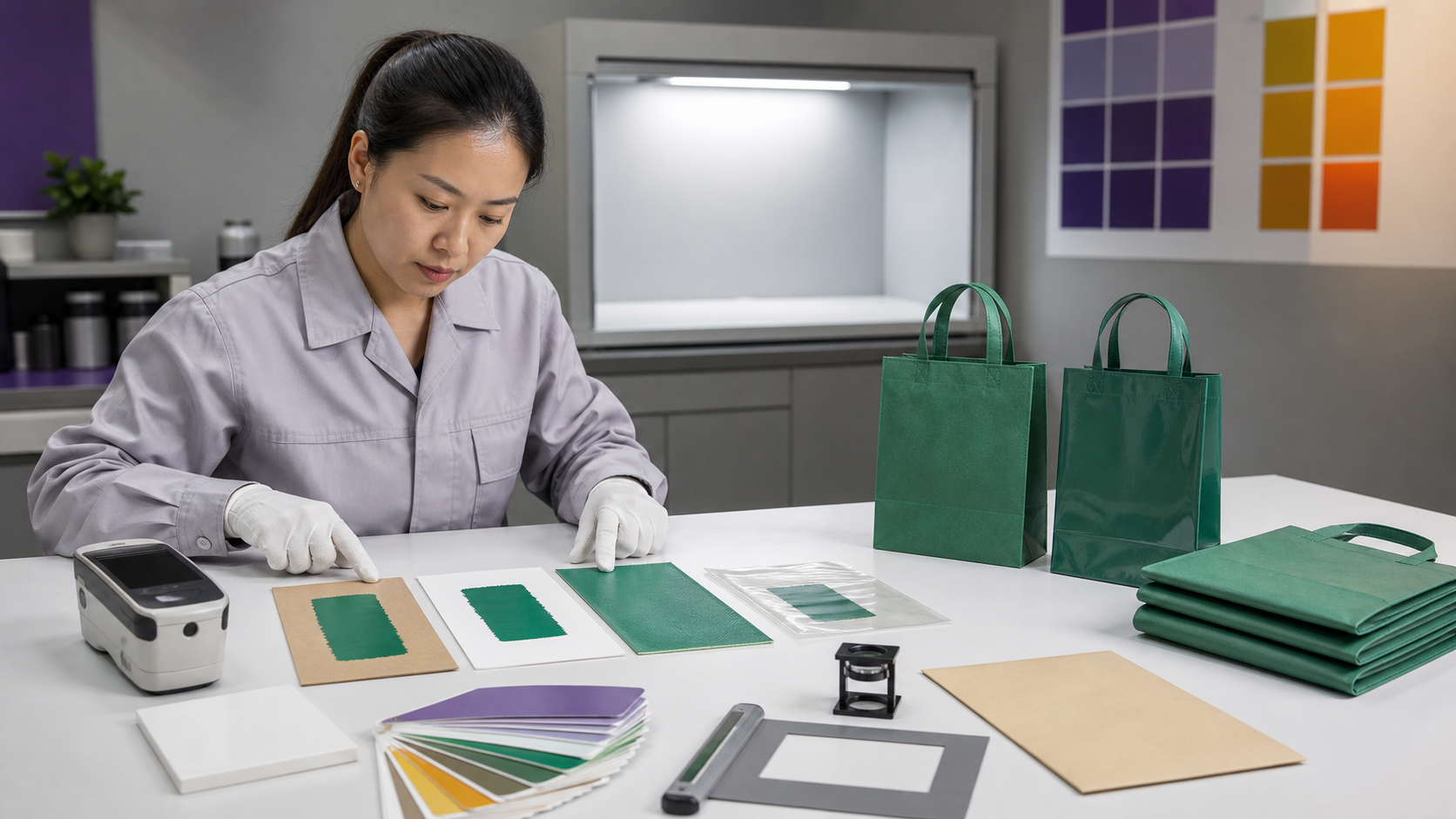
A defensible colour trail connects the target, drawdown, production print, converted first-off and sampled bulk lots under one documented viewing and measurement method.
| Bulk event | Colour control | Traceability field | Containment if outside limit |
|---|---|---|---|
| Start / restart | New first-off visual and instrumental comparison | Time, machine, operator, tool and ink batch | Hold output until stable approval |
| Scheduled interval | Measure/inspect agreed patch and overall image | Time, roll or bundle sequence | Identify last known-good and segregate the window |
| Ink replenishment / adjustment | Check shade, density/deposit and process variables | Addition, formula, viscosity and time | Pause, remix/adjust under control and reapprove |
| Substrate lot change | Compare colour and surface before continued run | Supplier lot, roll and side/orientation | Keep lots separated; reassess ink if necessary |
| White-layer change | Verify opacity and colour-over-white result | White ink batch, deposit and station | Hold affected print even if top colour formula is unchanged |
| Lamination change | Review colour, gloss, haze and bond after conditioning | Film, adhesive, backing lot, line and time | Segregate laminate and stop conversion if appearance shifts |
| End of run | Compare final samples to first-off and golden sample | Final roll/bundle and quantity balance | Document drift window and disposition before packing |
11. Diagnose colour failures before making another batch
Correct hue but too dark: examine ink deposit, white density, substrate colour, backing, overprint and finish—not only the formula. Matches under one light but not another: investigate spectral mismatch or metamerism and decide which viewing conditions control the programme. Correct drawdown but wrong press print: check transfer, mesh/anilox/cell, viscosity, speed, impression, drying and process sequence.
Correct printed film but wrong laminate: inspect film clarity, adhesive, white/backing, gloss, haze and lamination condition. One roll differs: trace substrate, ink additions, restart, lane and time. Bag-to-bag variation on texture: distinguish acceptable material/print mottle from directional process drift using multiple readings and visual boundary samples.
Do not “fix” a colour with an undocumented press adjustment and then mix old and new output. Identify the affected interval, hold it, confirm the cause, approve the correction and mark the new start point. Corrective action is useful only when the next reorder can reproduce it.
12. Separate colour match from durability and construction quality
An accurate initial match can rub off, crack, bleed, block or change after folding. Colour approval answers “does it match now under the defined condition?” Durability testing asks whether the print remains acceptable after the relevant stress. Specify dry/wet rub, scuff, fold/flex, blocking, light, water, chemical or cleaning exposure according to bag construction and use.
Colour also cannot release a structurally weak bag. Integrate the shade records with the complete retail-bag QC framework covering materials, dimensions, seams, handles, load performance and pack-out.
13. Coordinate a colour family without demanding impossible identity
A retail programme may combine paper, non-woven PP, laminated woven PP and cotton bags. Exact visual identity across every material, finish and process may be physically impossible or commercially wasteful. Decide which surface is the hero reference and which products should match closely, coordinate directionally or use a deliberate tonal family.
Do not approve one “green” and assume it covers every SKU. Give each substrate/process combination a child standard linked to the master intent. Where products are displayed together, review the collection as a set under retail light. Where they appear in separate channels, prioritise internal consistency within each production family.
Handles, bindings, sewing thread and body material may be dyed or masterbatched rather than printed. Their approval forms differ from ink drawdowns. Record whether each component is intended to match, coordinate or contrast; avoid silently applying print Delta E rules to textured textiles and plastics.
14. Plan cost, MOQ and schedule around the approval chain
Each custom spot colour can add formulation, drawdowns, screens/plates/cylinders, setup, wash-up and inspection. A white underbase adds another functional channel. Multiple bag colours may each need a new formula. Gravure cylinder changes, custom-coloured body materials or small artwork versions can create MOQ even when the total order looks large.
Colour approval also uses calendar time. Build in target confirmation, drawdown preparation and courier, comments, revised drawdown, press proof, converted sample and first-off response. Rushing by deleting the physical gate does not remove risk; it transfers that risk to finished inventory.
Use the 2026 retail-carrier pricing analysis to place colour work inside the complete cost model. When launch timing is fixed, cross-check the MOQ and scheduling reference for shopping bags before promising a date.
15. Sustainability claims still need evidence
Colour control can reduce remakes and rejected stock, but accurate colour alone does not make a bag sustainable. Ink, coating, laminate, body material, cleaning, waste, reuse and target-market end-of-life all matter. A formula described as water-based, low-VOC or eco does not automatically prove the complete printed bag is recyclable, safe for every use or compliant in every market.
When recycled material is specified, assess whether its normal shade variation affects the colour window. Do not hide that variability with heavier ink or extra laminate without evaluating cost, performance and end-of-life consequences. Set a realistic visual standard and communicate natural variation honestly where it is part of the product.
Company-claim boundary: LUCKYSTAR statements in this section are publisher self-description, not third-party verification, a color-management accreditation, laboratory result, Pantone certification, or guarantee of an exact color, cross-material identity, durability, reduced waste, price, MOQ or delivery. Confirm the contracting entity, assigned production/printing sites and subcontracting; exact substrate/lot, ink/film, white/backing, coating/laminate and construction; physical master and viewing/measurement conditions; samples, tolerance and release rule; claim evidence; packing; and order terms.
16. How LUCKYSTAR describes its shopping-bag color review
LUCKYSTAR states that its project team can connect a brand target to the actual bag material and print-and-convert route, subject to specification and written confirmation. The review can link substrate-specific drawdowns, white/backing decisions, proof limitations, converted samples, bulk first-off checks and retained references.
- Reference hierarchy: identify the controlling physical master, Pantone/system/suffix or data, acceptable child standards and who has release authority.
- Production stack: record substrate supplier/grade/lot/side, body color, ink/film, deposit, white/backing, coating/adhesive/laminate, cure and viewing direction.
- Evaluation: define conditioning, visual setup, illuminant, measurement geometry/mode/backing, formula, target/tolerance, metamerism review and visual override.
- Approval ladder: move from drawdown to production-like proof or web/panel, converted sample, bulk first-off and defined in-run sampling without changing the reference.
- Traceability: connect signed samples to ink, substrate, film, laminate, roll, bag and carton lots, with containment and disposition rules.
- Durability separation: assess rub, flex, fold, adhesion, blocking, storage or agent exposure separately from initial color match.
Review the public shopping bag manufacturing range. Teams still qualifying suppliers can use the shopping bag supplier framework and complete custom bag manufacturer guide. Then send the material stack and color-approval requirements for a project-specific review.
17. Send an RFQ that makes colour expectations measurable
Provide the colour reference with the bag specification. Include product use, size, body material and colour, print method, print side, artwork, colour route, white layer, finish, laminate, quantity per SKU and destination. State which elements are colour critical and which can coordinate rather than match.
The Custom Shopping Bag Tech Pack guide shows how to place the colour trail beside the dieline, bill of materials and workmanship criteria.
| RFQ field | Information to send | Supplier must return | Approval record |
|---|---|---|---|
| Target | System/code/suffix, master or licensed data and reference hierarchy | Feasibility and closest-match caveats | Target identity and owner |
| Construction | Substrate, colour, side, weight/thickness, coating, film, adhesive and backing | Complete print/laminate stack | Approved substrate/stack sample |
| Print condition | Method, spot/process route, white, positions, finish and artwork | Colour channels, tooling and prepress plan | Locked separation and process proof |
| Drawdowns | Number of options, desired directional alternatives and timing | Labelled formula/substrate/application records | Signed selected drawdown |
| Viewing / measurement | Viewing condition, instrument method, backing and tolerance rule | Equipment, capability and inspection method | Repeatable visual and numerical report |
| Bulk control | First-off response, sampling events, lot traceability and retain needs | Control plan, escalation and disposition route | Time/roll/lot-linked samples |
| Reorder | Expected repeat horizon and acceptable change-control process | Master storage, tooling/material continuity and reapproval triggers | Reorder colour history and change log |
Frequently asked questions
Is a Pantone code enough to approve shopping bag colour?
No. It communicates intent, but the bag substrate, finish, ink, white, backing and print process change appearance. Approve an ink drawdown and production-representative finished sample on the intended construction.
What is the difference between C and U Pantone references?
C and U show colour appearance on coated and uncoated paper. They are not universal labels for glossy versus matte shopping bags. State the suffix, then translate the target to the real bag substrate through physical proofing.
What is an ink drawdown?
It is a controlled ink film applied to a substrate to evaluate formula, shade, opacity and surface interaction before full press work. It screens colour direction but does not prove production transfer, registration, lamination or finished-bag appearance.
How many drawdown options should a supplier send?
There is no fixed number. A small labelled set with the closest match and purposeful directional alternatives is more useful than many unrecorded shades. Ask the supplier to explain how each option differs.
Should colour be approved before or after lamination?
Inspect printed film before lamination to diagnose printing, but approve the final laminate because film, white, adhesive, backing, gloss and haze influence appearance.
What Delta E tolerance should shopping bags use?
No universal value fits all bags. Agree the equation, target, instrument condition, backing, aperture, sample method and visual rule for the selected substrate and process. Texture and special effects may require additional judgement.
Can a phone photograph be used for colour approval?
A photo can document defects or identify a labelled sample, but it is not a reliable colour standard. Camera processing, light and the viewer’s screen change appearance. Use local controlled comparison and physical retains for critical decisions.
When should bulk colour be checked?
At first-off, regular intervals and risk events such as restart, ink adjustment, substrate-lot change, white-layer change and lamination change. Keep records linked to roll, time, lane or bundle.
Can one approved green apply to paper, PP and cotton bags?
Use one master intent, but create substrate/process child standards. Exact identity may be impossible across texture, gloss and material colour. Approve the collection together and state whether each surface must match or coordinate.
Does a correct initial colour guarantee durable printing?
No. Initial match and durability are separate approvals. Add relevant rub, scuff, fold, blocking, water, chemical, light or cleaning checks according to the finished bag and use.
Conclusion
Reliable shopping bag colour comes from traceable decisions, not a code copied into a purchase order. Define the target hierarchy, reproduce the real substrate stack in the drawdown, control viewing and measurement, approve the production process and converted bag, release a documented first-off and monitor the run by lot. The resulting trail protects the launch and makes the next reorder easier to reproduce.
To plan a colour-controlled programme, review LUCKYSTAR’s shopping bag manufacturing range, the shopping bag supplier framework and the complete custom bag manufacturer guide.

Request a substrate-specific color proposal
Lock the physical master, exact production stack, viewing and measurement conditions, tolerance/visual rule and bulk sampling before releasing color.
Review LUCKYSTAR custom shopping bag options, then send your project details through the contact form or Email a project brief. The email link opens a draft for your review before sending.
Factory/print-site assignment, material lots, ink/film, color, tolerance, durability, claim evidence, samples, testing, inspection, price, MOQ, packing, schedule and release terms are subject to due diligence, specification and written confirmation.