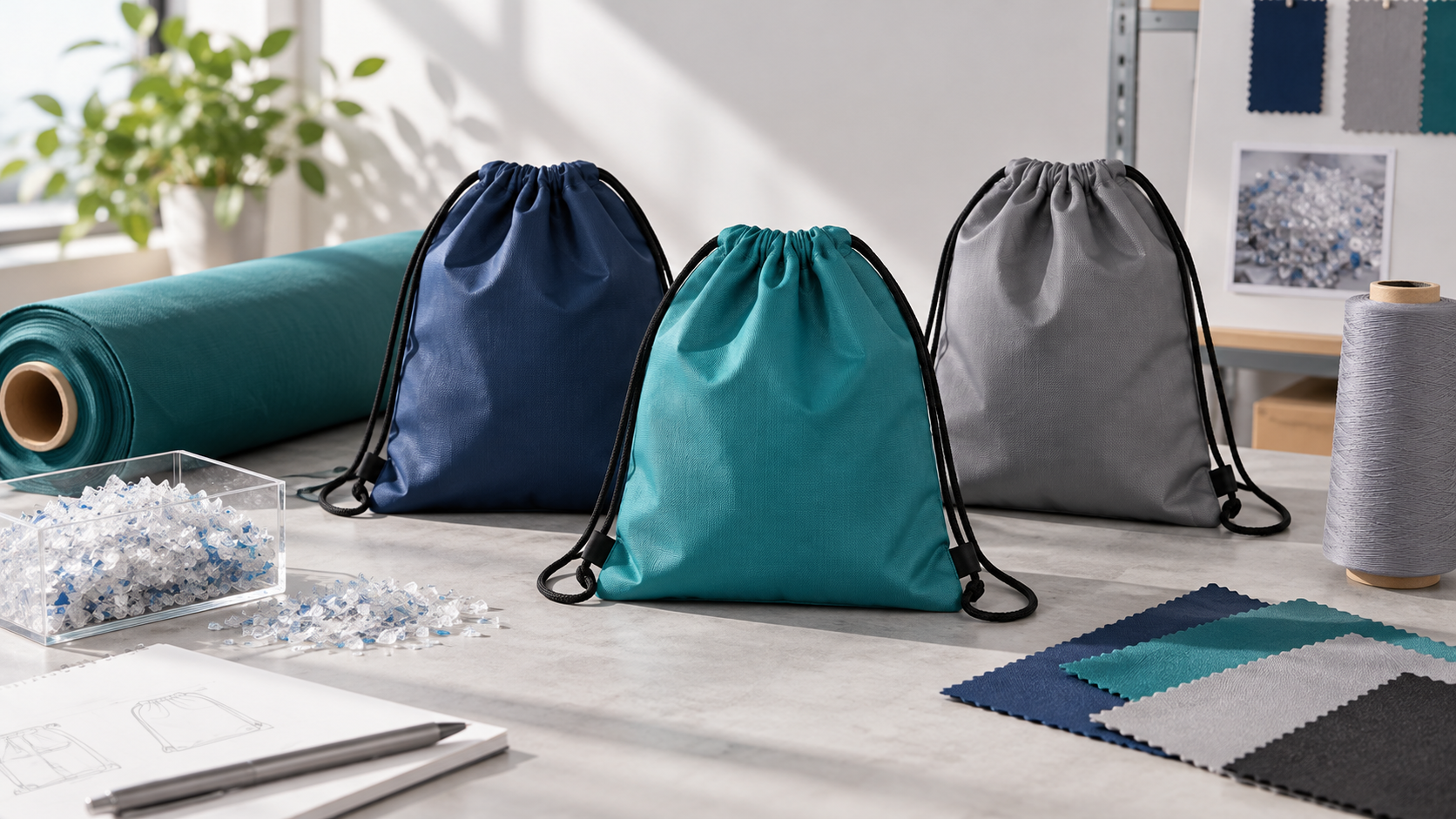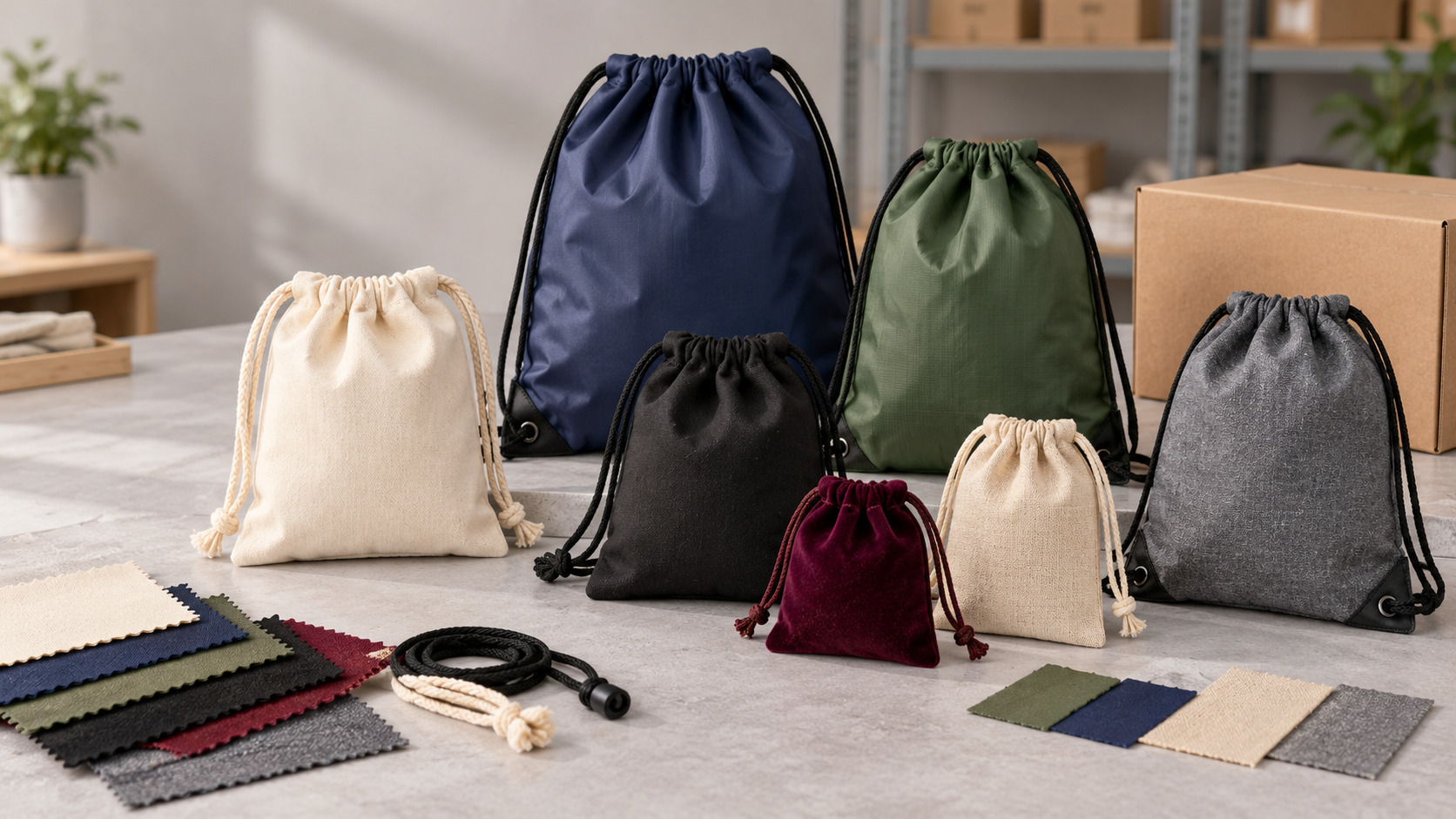
How Shopping Bag Materials Affect Print Quality
Shopping bag material affects print quality because ink does not sit on every surface in the same way. Texture changes edge sharpness; porosity changes ink holdout; surface chemistry changes wetting and adhesion; base color changes apparent color and opacity; coatings change gloss and printability; and folds or stretch change durability after the bag is made.
The practical conclusion is simple: do not approve artwork and then choose the bag material as a separate decision. Approve the material, print system, ink or transfer system, artwork treatment and acceptance criteria as one package. A logo that looks crisp on a laminated woven PP bag may look intentionally softer on canvas and broken on open mesh, even if the same digital file is used.
This guide explains the material side of that decision. For a process-by-process comparison, see our custom shopping bag printing methods guide. For a broader sourcing framework, use the custom bag manufacturer guide and how to choose a custom shopping bag manufacturer.
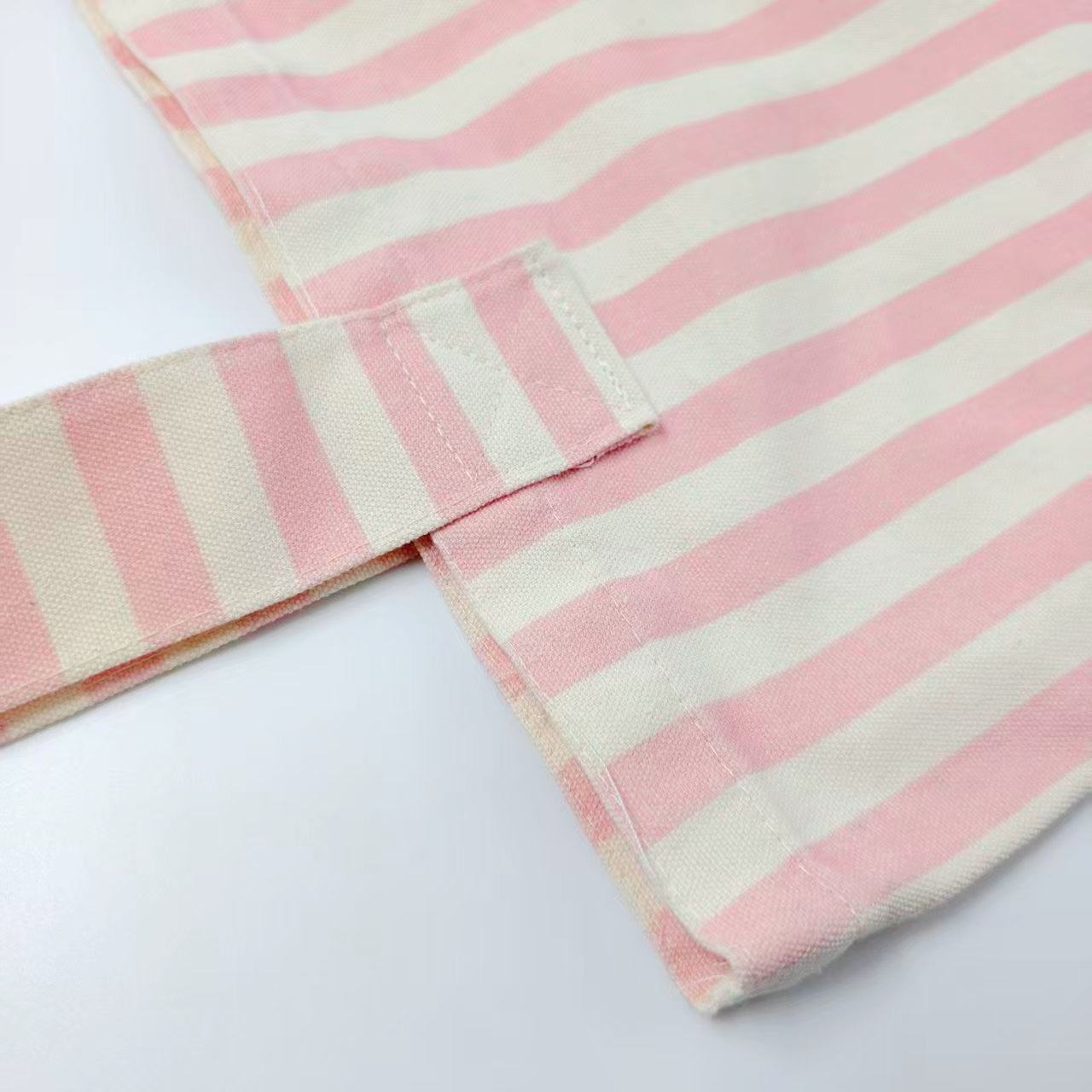
Real product imagery from a LUCKYSTAR public product listing. It demonstrates visible surface and construction only; it does not establish the exact fiber content, print process or performance of a future order.
Need a material-and-print feasibility review? Send intended use/market, quantity by SKU, bag construction, exact material colour/weight/finish/coating, vector artwork, print size/location/sides/colours, desired opacity/hand/appearance, physical colour reference, required adhesion/rub/fold tests, packing and required date. The team can return the material-dependent risks, sample gates and open assumptions for written confirmation.
The Short Answer: Seven Material Variables Control the Printed Result
Buyers often compare materials by name: canvas, jute, non-woven, woven PP, paper or PVC. A print supplier needs a more precise description. Two materials with the same commercial name can print differently because their weave, coating, color, treatment or production lot is different.
| Material variable | What changes at the print surface | Typical visible risk | What to define before sampling |
|---|---|---|---|
| Surface texture and weave | The printing face is flat, ribbed, coarse or open | Broken fine lines, pinholes, uneven solids, softer edges | Close-up texture, printable panel, minimum feature size and expected finish |
| Porosity and absorbency | Ink stays near the surface or penetrates the substrate | Feathering, dull color, uneven density or longer drying | Exact material and finish, ink system, deposit and drying/curing route |
| Surface energy and contamination | Ink wets the surface evenly or pulls back | Beading, poor coverage, peeling or inconsistent adhesion | Surface treatment, cleanliness, dyne/adhesion checks where relevant |
| Base color and opacity | The substrate color shows through the ink | Muted brand color, weak white, different color on each bag shade | Substrate color, white underbase strategy, opacity target and viewing condition |
| Coating or lamination | The surface may become smoother, less absorbent and glossier | Better detail but possible adhesion, cracking or glare issues | Coating/film specification, print side, ink compatibility and fold test |
| Heat and dimensional stability | The material may shrink, distort, glaze or mark during curing/transfer | Registration shift, panel distortion or texture change | Temperature/time/pressure window validated on the actual material |
| Flexing, folding and abrasion | The printed layer bends and rubs during converting and use | Cracking at folds, scuffing, delamination or color transfer | Fold locations, rub exposure, packing method and order-specific acceptance |
These variables interact. A coated surface may improve sharpness but demand more careful adhesion control. A porous fabric may accept ink readily but soften fine details. A dark material may be physically easy to print yet require an opaque white layer before the brand color can be judged.
Texture Determines How Much Detail the Surface Can Physically Hold
Print cannot bridge every valley, fiber or hole without changing the artwork or process. On a smooth, continuous surface, small text and fine linework have a better chance of reproducing cleanly. On coarse or open structures, the same detail can be interrupted by the material itself.
This is why a vector logo is necessary but not sufficient. Vector artwork preserves mathematical edges; it does not make the substrate flat. The print trial still needs to answer:
- What is the smallest positive line that remains continuous?
- What is the smallest reversed line that stays open rather than filling in?
- Do screened tints look even on the actual texture?
- Does the logo cross a seam, gusset, handle joint or fold?
- Is a label, patch or separate smooth panel more appropriate than direct printing?
For placement and usable-area planning, use our shopping bag logo placement and print size guide. If the design extends across multiple panels, the material decision must also be reviewed against the full-surface graphics guide.
Cotton and Canvas: Characterful Texture, but Not a Neutral White Screen
Cotton and canvas shopping bags can range from relatively fine and smooth to visibly coarse. The weave can remain visible through the ink film, which may be desirable for a tactile, natural-looking design but less suitable for tiny type or highly polished photographic detail.
The important variables are not merely “cotton” or “canvas.” Ask for the actual fabric construction, weight, color, finish and any washing or coating treatment. A natural or dyed base can shift the appearance of translucent inks. Absorbency can reduce surface holdout and make the printed color appear less saturated than the same ink on a coated sheet. Loose fibers can interrupt fine edges.
For a canvas project, the print sample should test:
- the actual production fabric or a clearly identified equivalent;
- the logo at final size, including the smallest text and reversed elements;
- solid areas for pinholes and weave show-through;
- the chosen curing or transfer conditions for surface change or distortion; and
- flexing, rubbing and any care requirement relevant to the intended use.
If the brand effect is better served by thread rather than ink, compare the trade-offs in embroidery vs printing for fabric shopping bags. Embroidery is not automatically superior; it changes hand feel, detail limits, cost drivers and the way the panel behaves.
Jute and Other Coarse Wovens: Design for Gaps, Fibers and Irregularity
Jute-style and other coarse woven surfaces make their structure visually obvious. Yarn diameter, spacing, fiber protrusion and surface variation can all interrupt a printed line. Large, simple marks often tolerate this character better than microtext, thin rules or subtle gradients.
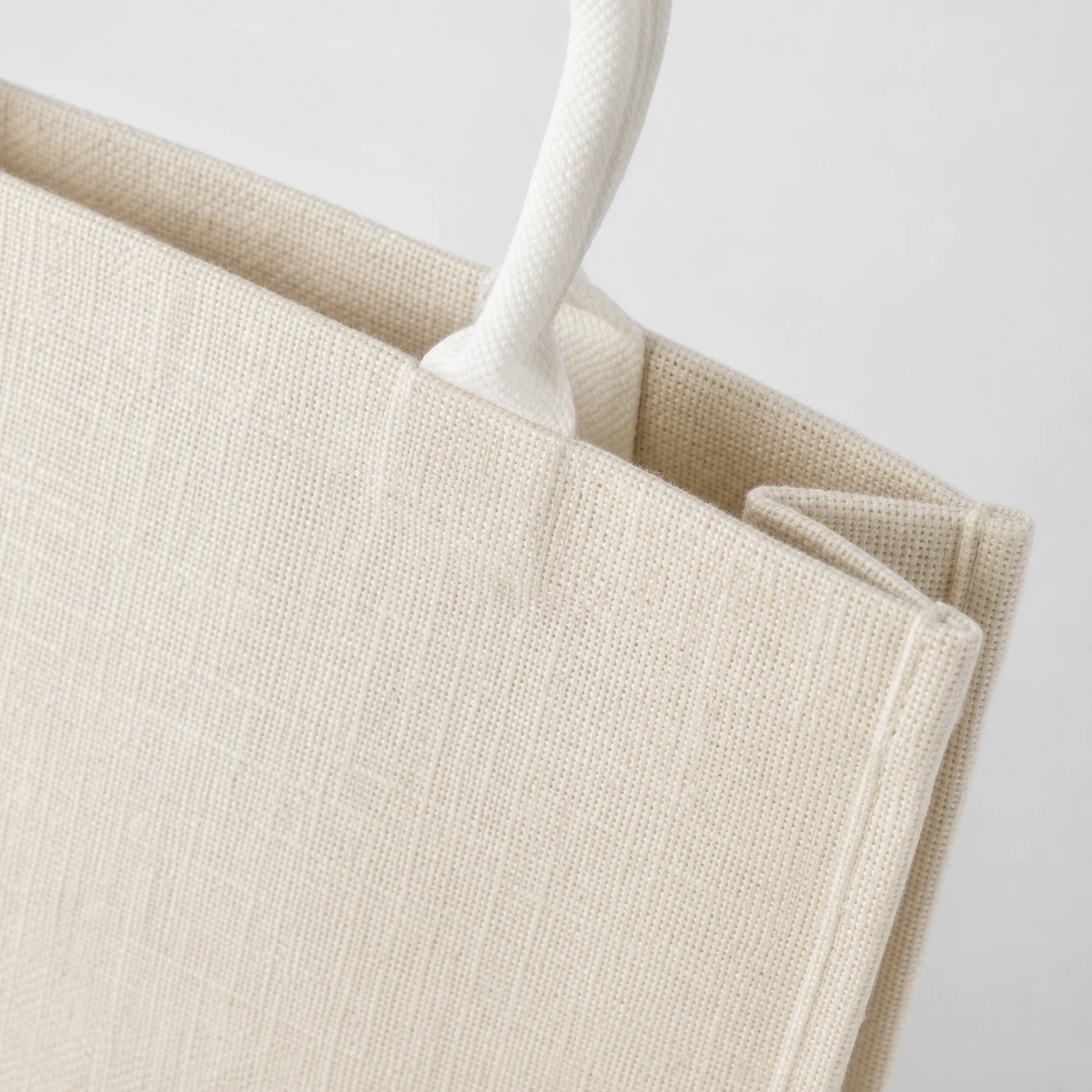
The close-up shows why a material name is not a complete print specification: visible yarn size, spacing and surface finish must be assessed on the actual sample.
The brand team should decide whether visible weave through the print is acceptable. If not, possible development routes may include revising the artwork, changing the print deposit or method, adding a compatible coated/laminated area, or applying a separate label or patch. Each route changes appearance and should be sampled rather than assumed.
Construction matters too. The print area should be chosen before cutting and sewing so that handles, seams and gussets do not create pressure or registration problems. Our jute shopping bag construction guide covers the structural questions that should sit beside the print brief.
Non-Woven PP: A Broad Panel Does Not Guarantee Adhesion
Non-woven PP bags often present a large, apparently flat branding area, but the visible bonding pattern, basis-weight variation, surface treatment, contamination and any lamination can change coverage and adhesion. Polyolefin surfaces may need a compatible pretreatment and ink system; the correct combination must be validated on the actual production substrate.
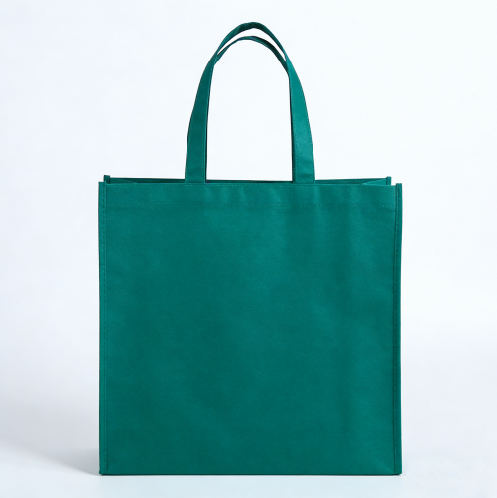
This unbranded product image shows the available panel shape. It does not by itself prove a particular weight, treatment, ink compatibility or performance level.
Unlaminated non-woven material can show texture through solid ink. Laminated construction can provide a smoother graphic surface and support a different image style, but the film, adhesive, print side and converting folds become part of the quality equation. Do not write “laminated is better” without defining the desired result.
For process choices specific to this construction, see printing methods for non-woven shopping bags. For the surface and construction trade-offs, see laminated vs unlaminated non-woven shopping bags.
Woven PP: Ribbed Fabric Versus a Laminated Graphic Surface
Unlaminated woven PP has a visible tape structure. The ribs and interlacing can interrupt fine detail or make an even solid appear textured. Once laminated with a printable film, the surface may become much smoother and more suitable for continuous graphics. However, the printed construction then needs adhesion and fold durability controls at gussets, edges and seams.
| Woven PP construction | Likely visual behavior | Main control point | Better suited artwork direction |
|---|---|---|---|
| Unlaminated woven surface | Weave remains visible; fine edges can break across ribs | Ink wetting, deposit and coverage on the actual weave | Bolder marks, larger text and designs that accept texture |
| Laminated woven PP | Smoother surface and potentially cleaner image reproduction | Film/ink compatibility, lamination integrity and fold durability | Multi-color graphics, finer detail or larger image areas after proofing |
| Printed film laminated to woven base | Image is created on the film before/with lamination | Registration, adhesive bond, trimming and converting stress | Repeat graphics and high-coverage designs with controlled files |
The printing methods for woven PP shopping bags explains the production routes in more detail. The material lesson is that “woven PP” is not one print surface; the exact laminated or unlaminated construction must appear in the approved specification.
Paper: Absorbency, Coating and Fold Lines Shape the Result
Paper shopping bags introduce another set of variables: paper grade, shade, coating, surface sizing, moisture condition and the relationship between printing, lamination, varnish, die-cutting, creasing and folding.
Uncoated paper can absorb ink and create a softer, more tactile image. Coated paper can support sharper dots and higher apparent gloss, but scuffing, cracking at folds and finishing compatibility need attention. Kraft-colored paper strongly influences translucent ink; a white underbase, opaque ink, spot color adjustment or different design approach may be required when visual brand matching matters.
The printing route also changes the control plan. Our flexographic vs offset printing for paper shopping bags compares the two processes without treating either as universally best. For premium finishes, review foil stamping, embossing and spot UV for shopping bags after the paper and coating stack has been confirmed.
Transparent and Colored Flexible Films: Opacity and Adhesion Become Visible
On a clear or translucent bag, the observer can see through the printed layer. Color therefore depends on what is behind the bag as well as the ink itself. White ink may be used as an underbase, a stand-alone graphic or a blocking layer, but its printed opacity must be assessed on the intended material and print configuration.
ISO 23498:2022 specifies a method for measuring the visual opacity of printed white ink and applies to transparent as well as white or colored opaque substrates. The standard is useful because it treats opacity as a property of the printed specimen, not merely a claim about the ink in its container.
Flexible film projects also need attention to surface treatment, ink or coating compatibility, scratch exposure, blocking, heat history and bending. ASTM F2252/F2252M-25 describes a tape-based practice for evaluating ink or coating adhesion to flexible packaging materials, but it explicitly leaves acceptance criteria to the user and producer. In other words, referencing the method is not enough; the purchase specification must define what result is acceptable.
PVC, TPU and EVA should not be treated as interchangeable labels. The exact material, thickness, hardness, surface finish and target-market requirements need to be confirmed per project. See our clear PVC vs TPU shopping bags guide for the specification questions; any compliance statement must remain tied to the tested sample or order evidence.
Mesh: The Printable Area May Be the Handle, Binding or an Added Panel
An open mesh has no continuous face for a normal solid print. Ink can land on yarns but not on the empty openings, so fine artwork becomes visibly fragmented. The solution is often structural rather than purely prepress: print a solid fabric panel, handle, binding, label or pouch component designed into the bag.
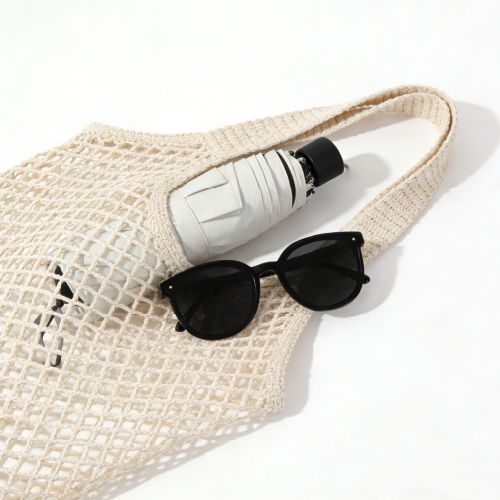
The open construction demonstrates why artwork cannot be evaluated independently of material geometry. Accessories in the photo are shown only for visual context.
The print and sewing teams should agree on the panel dimensions, seam allowance, final visible area and orientation before artwork approval. Our cotton mesh shopping bag guide explains other structure and dimensional questions that affect this type of bag.
Polyester and Nylon: Finish and Heat History Can Matter More Than the Fiber Name
Polyester and nylon shopping bags may be woven, coated, calendared, textured or treated for a particular surface effect. A water-repellent or other finish can change wetting and adhesion. A thin foldable fabric can move under pressure or heat. A strongly dyed base can affect color appearance and, in some systems, requires attention to migration or show-through.
Therefore, “print on polyester” is not an adequate production instruction. The specification should identify the exact fabric article, face side, color, coating/finish and approved print recipe. A heat-transfer route should be trialed at the intended time, temperature and pressure, while a direct-print route should be evaluated for wetting, cure and flex durability. Neither route should be selected solely from a generic compatibility chart.
Base Color Changes the Color Even When the Ink Formula Does Not
A color standard and a material standard must be reviewed together. Transparent or semi-opaque ink allows the substrate to influence the final appearance. Natural canvas, brown kraft, dark non-woven PP and transparent film all create different visual backgrounds.
| Base material condition | What the eye may see | Possible development response | Approval evidence |
|---|---|---|---|
| White or light neutral surface | Cleaner starting point, but whiteness and optical properties still vary | Tune ink on the actual stock and use controlled measurement/viewing conditions | Material swatch + printed drawdown + approved sample |
| Natural, kraft or beige surface | Warmer, muted appearance; light colors may lose brightness | Accept the material character, adjust formulation or use an underbase where feasible | Side-by-side sample against the approved material lot |
| Dark or saturated surface | Strong show-through and weaker apparent opacity | Opaque ink, white underbase, multiple passes or alternative decoration after testing | Approved opacity and color sequence on the final construction |
| Transparent/translucent film | Background and contents affect appearance | White layer, reverse-print stack or intentionally transparent design | Print stack diagram + sample over agreed backgrounds |
Color measurement should use a defined instrument setup and conditions. ISO 13655:2017 specifies spectral measurement and colorimetric computation procedures for graphic-arts images across processes including flexography, gravure, screen and digital printing. It does not replace an order-specific tolerance, approved sample or viewing agreement.
For brand-color workflow, use shopping bag color matching: Pantone, ink drawdowns and bulk approval and Pantone vs CMYK for custom shopping bags.
Material Lot Changes Can Reset a Previously Approved Print Recipe
Reorders sometimes drift even when the artwork file has not changed. A new material lot can differ in shade, coating level, surface treatment, texture or absorbency. Those differences can change the same ink or transfer film after the original sample was approved.
The reorder record should therefore connect:
- material supplier/article and approved face side;
- material color and measurable or visual reference;
- coating, lamination or surface-treatment status;
- ink/transfer system and recipe identification;
- artwork version, separations, underbase and print sequence;
- approved sample, drawdown or production retain; and
- inspection method and acceptance criteria.
If the material source or construction changes, treat it as a controlled change rather than an invisible substitution. Our guide to maintaining logo and color consistency across shopping bag reorders provides the broader change-control workflow.
A Material-to-Print Quality Decision Matrix
The table below is a briefing tool, not a universal compatibility guarantee. The actual route remains subject to the exact material, artwork, ink/transfer system, equipment and sample result.
| Material family | Material feature that most affects print | Artwork risk to test first | Evidence to approve |
|---|---|---|---|
| Cotton/canvas | Weave, absorbency, natural/dyed base, surface fibers | Fine lines, reversed text, solid coverage and color dulling | Actual fabric swatch, final-size logo sample, rub/flex result |
| Coarse jute-style weave | Large yarns, gaps and irregular fibers | Broken edges, pinholes and uneven solids | Close-up sample with agreed texture acceptance |
| Unlaminated non-woven PP | Bonding texture, treatment and basis-weight variation | Wetting, adhesion and solid uniformity | Treated production material + adhesion/coverage check |
| Laminated non-woven or woven PP | Film smoothness, ink compatibility and converting folds | Delamination, fold cracking, scuffing and glare | Printed laminate sample after folding/converting |
| Paper | Coating, absorbency, shade and crease behavior | Dry-back, dot/edge change, scuff and fold cracking | Printed sheet plus converted bag sample |
| Transparent/colored flexible film | Surface energy, opacity, print side and heat sensitivity | White opacity, show-through, blocking and adhesion | Defined print stack + opacity/adhesion result |
| Mesh/open structure | Lack of continuous print area | Fragmented artwork and lost small details | Approved added panel/label/handle construction |
| Polyester/nylon | Coating/finish, movement, dye and heat response | Adhesion, distortion, show-through or migration | Actual fabric trial at approved process settings |
Build the Sample Around the Hardest Material Risk
A decorative sample that only shows the overall bag shape is not enough. The print sample should deliberately include the elements most likely to fail on the selected material.
Use this sequence:
- Freeze the substrate definition. Record material article, construction, color, coating/lamination, face side and any treatment.
- Prepare a material-aware artwork test. Include the real logo plus the smallest text, reversed detail, solid block, white/underbase area and any gradient relevant to the design.
- Print on the actual material. If a substitute is unavoidable, label it clearly and repeat approval when production material arrives.
- Convert or simulate conversion. Fold, sew, heat-seal, laminate or crease the sample where production will stress the printed layer.
- Evaluate under agreed conditions. Check appearance, color, opacity, adhesion, rub/flex behavior and alignment using the order specification.
- Approve a physical master and digital record. Keep the signed sample, material swatch, artwork version, recipe/settings and evaluation results together.
- Control the first bulk output. Compare the first production pieces before the full run continues.
For a complete inspection sequence, use the shopping bag printing quality control checklist. If a problem is already visible, the common shopping bag printing defects guide helps separate the symptom from the material, ink, setup, curing and converting causes.
For flexographic packaging work, ISO 12647-6:2020 defines information exchange and printing aims for four-color flexographic production. It is a useful process-control reference, but the buyer and producer still need to define the exact substrate, characterization data and project acceptance conditions.
Company-claim boundary: LUCKYSTAR statements in this section are publisher self-description, not third-party verification, proof that every listed material is currently available, ISO/ASTM certification, laboratory accreditation, a production-lot test result or a compatibility guarantee. Material identity, fibre/resin content, colour, coating, ink/transfer system, tests, samples, MOQ, price, timing, packing and delivery are subject to current evidence, project scope and written confirmation.
How LUCKYSTAR describes its material-and-print review
LUCKYSTAR states that its project team can coordinate material, bag structure, artwork, sampling and inspection information for an agreed custom shopping-bag project.
- Identify the surface: record material article/lot, colour, weight/construction, weave or texture, coating/lamination, print side, treatment and contamination controls.
- Translate the artwork: test final-size fine lines, reversed text, solids, underbase, trapping, gradients and protected fold/seam/handle zones on the intended surface.
- Shortlist the route: compare print or decoration options against detail, coverage, hand, cure/heat, flexibility, abrasion and converting exposure.
- Approve representative evidence: connect the swatch, artwork revision, print stack, colour/opacity target, test condition and converted sample.
- Control changes: define which new material colour, lot, finish, supplier, ink, tooling, line or conversion change requires reapproval.
- Release the order: record first-off and in-process checks, accepted deviations, retained references and packing conditions for reorder use.
Review the public custom shopping bag range, the printing-method guide and the print-QC checklist. Then send the actual material target and final-size artwork for review.
What to Include in Your RFQ
To receive a useful print recommendation, include:
- bag use, target market and intended service conditions;
- required material or the result you want if material is still open;
- bag dimensions, gussets, handles, closures and final visible print area;
- material color, coating/lamination and texture preference;
- vector artwork plus color references and minimum text/detail;
- desired print appearance: opaque, tonal, matte, glossy, tactile or photo-like;
- quantity by design and color;
- required sample approval, color/opacity/adhesion/rub checks and packing method;
- compliance or test requirements tied to the exact market and order; and
- delivery destination and requested timeline for feasibility review.
Commercial terms, material availability, sampling, testing, MOQ and lead time are subject to the final specification and written confirmation.
Ready to test your artwork on the right shopping bag material? Send LUCKYSTAR your material, bag size, quantity, artwork and target print appearance for an order-specific recommendation.

Frequently Asked Questions
Which shopping bag material gives the sharpest print?
There is no single answer by material name alone. A smooth, continuous and compatible surface generally supports finer detail more readily than a coarse, porous or open surface, but coating, treatment, ink system, equipment and artwork still determine the result. Compare samples on the exact production construction.
Why does the same Pantone color look different on canvas and paper?
The two substrates differ in base shade, absorbency, texture and optical behavior. The same ink formula can therefore produce different measured and visual results. Approve each material/ink combination separately, with a defined viewing and measurement method.
Do dark shopping bags always need a white underbase?
Not always. It depends on the desired appearance, ink opacity, brand-color target and substrate. A tonal or intentionally transparent effect may not need white; a bright opaque logo often does. The approved sample should define the layer order and acceptable opacity.
Is laminated material always better for printing?
No. Lamination can create a smoother surface and support detailed graphics, but it adds variables such as film/ink compatibility, adhesion, glare, fold durability and delamination risk. The correct construction depends on the visual target and use case.
Can one print test cover all future material colors?
No. Different material colors change show-through and apparent color. A new shade may require a new underbase, ink adjustment or approval sample, especially when color consistency is important.
What is the most important print test for flexible film bags?
Opacity and adhesion are often central, but the plan should also cover scratch, blocking, bending/folding and any converting heat. The exact tests and acceptance criteria must be agreed for the specific film, print stack and use.
Can a product photo prove the material and print specification?
No. A photo can show visible appearance and construction, but it cannot prove fiber content, thickness, coating, treatment, ink system, certification or performance. Use a current material swatch, specification and approved physical sample.
What should be kept for a shopping bag reorder?
Keep the approved physical sample, material swatch/article, artwork version, color reference, ink or transfer recipe, print sequence, process settings where controlled, inspection criteria and change history. Revalidate when the material, coating, supplier, equipment or print system changes.
Technical review date: September 2, 2026. Product options, materials, testing, commercial terms and timelines are project-specific and subject to written confirmation.
Request a material-and-print feasibility review
Send the actual surface target and final-size artwork so texture, base colour, coating, heat, folds and performance checks can be reviewed together.
Review LUCKYSTAR custom shopping bag options, then send your material and artwork brief through the contact form or Email a project brief. The email link opens a draft for your review before sending.
Entity/site assignment, material identity and availability, compatibility, samples, tests, inspection, certification, price, MOQ, packing, schedule and release terms are subject to due diligence, current specification and written confirmation.