
Last reviewed: September 24, 2026
A useful custom tote bag quotation begins before a supplier enters a price. If buyers send different measurements, material descriptions, artwork versions or packing assumptions to each supplier, the resulting quotations do not describe the same bag.
This guide shows how to build a custom tote bag RFQ that exposes assumptions and makes supplier responses comparable. Its scope is deliberately narrow. Use the Custom Bag Manufacturer Buyer’s Guide for the complete sourcing framework, How to Choose a Tote Bag Manufacturer for capability evaluation, and Custom Tote Bag Supplier: Build a Repeatable Supply Program for post-selection approvals, change control and reorders.
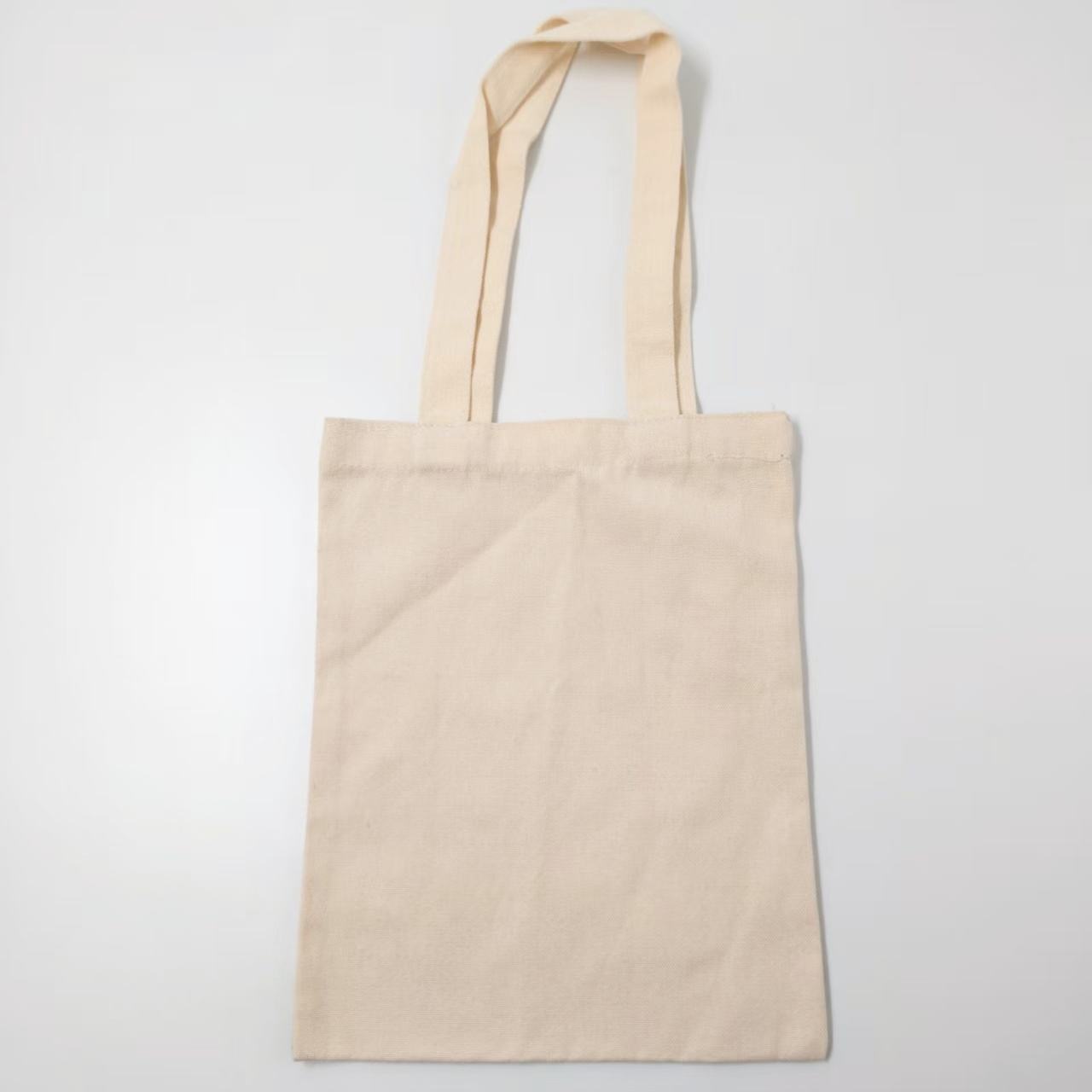
If you still need a shortlist, begin with our worldwide custom tote bag manufacturers, then send every candidate the same quote-ready brief.
What a custom tote bag RFQ must accomplish
An RFQ should let a supplier answer four questions without inventing the brief:
- What product and SKU combination is the buyer requesting?
- Which points are fixed, which are open for recommendation and which are not applicable?
- What evidence must be approved before production and shipment?
- Which commercial basis makes one response comparable with another?
The RFQ is not the final production specification. It is the controlled input used to check feasibility and build a quotation. After the route is agreed, approved samples, artwork, material references, tolerances, packing and quality records become the order controls. The Custom Bag Manufacturing Process explains that wider progression.
Custom tote bag RFQ field map
| RFQ section | Minimum information | Supplier response required | Risk if omitted |
|---|---|---|---|
| Use and contents | Channel, user, packed product, maximum weight and handling environment | Fit or construction concerns | A familiar silhouette is proposed for the wrong job. |
| Finished size | Width, height, depth/gusset, opening and measurement method | Achievable size and proposed tolerance route | Suppliers quote different usable volumes. |
| Material | Composition/family, construction, weight or thickness route, colour and finish priorities | Exact proposed material identity and evidence | One generic material name hides different products. |
| Construction | Panels, seams, base, handles, reinforcement, closure, pocket, lining and labels | Construction drawing or explicit assumptions | Low quotes exclude features the buyer expected. |
| Branding | Artwork file/revision, method if fixed, colours, finished size, position and number of locations | Method, setup, proof/sample route and limitations | Artwork cannot be priced or approved consistently. |
| SKU and quantity | Quantity by size, body colour and artwork | MOQ constraints and price by exact split | Total quantity is mistaken for per-SKU quantity. |
| Sample and evidence | Required sample stages, measurements, functional checks and approval owner | Sample scope, charges and milestone assumptions | Different sample routes are compared as one service. |
| Packing | Folding, individual packing, labels/barcode, units per carton and carton marks | Included packing and any alternatives | Price and freight basis change after approval. |
| Delivery basis | Destination, requested milestone/date and Incoterm or responsibility assumptions | Lead-time basis, exclusions and quote validity | Ex-works, port and delivered prices are ranked together. |
| Claims/compliance | Destination, intended claim and evidence required for the proposed order | Applicable document scope or an explicit gap | Historical or unrelated certificates are expanded to the product. |
Start with a status column: fixed, open or not applicable
Every material, construction, branding and packing field should carry a status. Fixed means the supplier must quote that requirement or identify why it is not feasible. Open means the supplier may recommend a route and must describe it. Not applicable prevents an empty field from being mistaken for missing information.
This simple status column also improves collaboration. A designer might fix artwork proportions but leave the physical print method open. Purchasing might fix destination and quantity but ask for two material routes. Quality might require a loaded evaluation while leaving the exact test method open for technical review. The supplier can then respond to each decision rather than filling gaps silently.
Add one more response status for the supplier: conforms, alternative proposed or clarification required. “Conforms” should mean the quoted route matches the numbered requirement. An alternative should identify the exact difference and its effect on function, appearance, evidence, price or schedule. A clarification should remain open until the buyer answers it. This makes deviations visible before samples or materials are committed.
1. Define use, packed contents and channel
Do not begin with “standard tote.” State whether the bag is retail merchandise, a checkout carrier, event merchandise, a gift-with-purchase, employee kit or another defined use. Add the intended contents, maximum packed dimensions, weight, hard edges and any presentation or handling priority.
The same body size can behave differently when it holds a light garment, boxed cosmetics or books. Product fit influences the gusset, base, handle load route, closure and reinforcement. If the right format is still undecided, review Custom Bag Types: Match Format to Brand Use Case before issuing the RFQ.
2. Use one measurement method
State whether dimensions are finished external measurements, usable internal measurements or flat cut-part dimensions. Identify the points used to measure width, height, gusset, opening, handle length or drop and any pocket. A sketch with arrows is more reliable than a sequence of numbers with no orientation.
Include the packed product dimensions and ask suppliers to state if the proposed seam allowance, lining, closure or gusset reduces usable space. The Tote Bag Size Guide for Retail Brands provides the product-fit method and common measurement fields.
3. Describe material by identity and required behavior
“Cotton,” “canvas” and “heavy duty” are not complete purchase specifications. Ask the supplier to name the proposed composition/fibre route, fabric construction, weight basis, colour process, coating or lamination if any, and relevant finish. If a numerical fabric weight is quoted, record the unit and whether it is a nominal target or an agreed control.
Separate material identity from the reason you are considering it. The buyer may need print detail, shape, folding, abrasion behavior, clean appearance or a particular hand feel. The supplier can then explain trade-offs rather than swapping one generic label for another. Use Canvas vs Cotton Tote Bags and Fabric Weight for Custom Tote Bags for tote-specific comparisons. Broader material questions belong in How to Choose the Right Custom Bag Material and the Wholesale Bag Material Guide.
Do not request “eco-friendly material” as an unsupported checkbox. If an environmental or recycled-content claim matters, identify the proposed wording, product/material scope, destination and evidence required. A current order must be matched to current documents; a listing title, product image or historical certificate is not proof for an entire range.
4. Draw construction instead of relying on adjectives
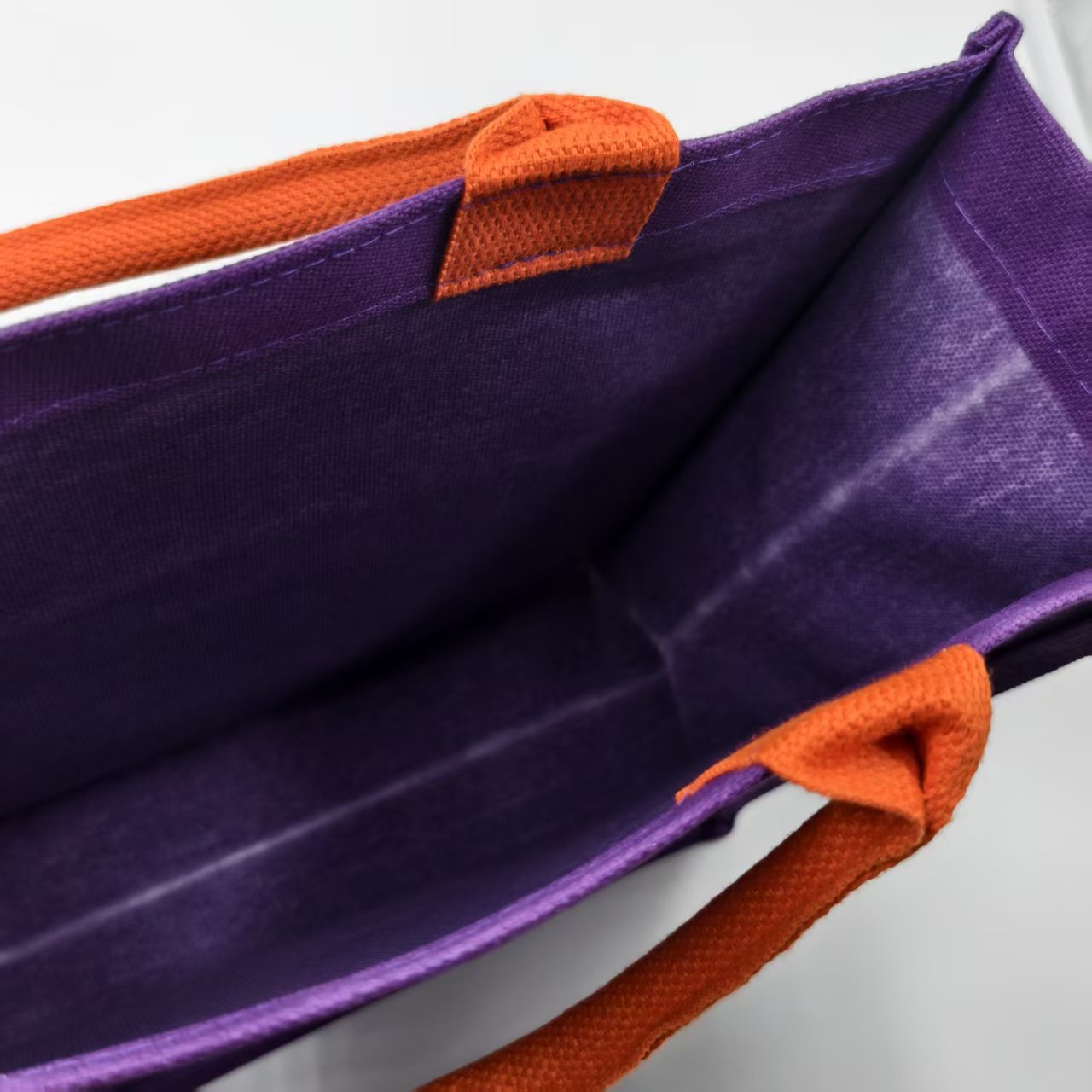
Construction fields should identify the panel layout, side and bottom form, seam finish, top finish, handles, attachment, reinforcement, closure, pockets, lining, labels and other components. Terms such as “reinforced” or “premium stitching” need a visible or measurable definition.
For handles, state length or drop, width, spacing, material, attachment position and expected carry mode. For a base or gusset, show the finished form and measurement. For an internal pocket, provide finished size, position, opening/closure and label relationship. A photograph may illustrate the idea, but the quoted route should be written.
5. Make artwork quote-ready
Send the current vector artwork where appropriate, identify the revision and include fonts or outlined text as needed. State the number of print locations, finished decoration size, placement from defined bag edges, colour references and whether exact brand colour or a visual direction is required.
If the decoration method is open, ask each supplier to name its proposed method, substrate preparation, colour route, setup, proof/sample stage and important limitations. If the method is fixed, require the supplier to confirm that the proposed material and design are compatible before pricing.
Compare methods in Custom Tote Bag Printing Methods and Screen Printing vs Heat Transfer for Tote Bags. For artwork coordinates, strike-offs and physical approval, use Custom Printed Tote Bags: Artwork Approval Guide.
6. Show the complete SKU split
A total request of 5,000 pieces does not tell a supplier whether it is one design or 20 small variants. List quantity by body colour, size, artwork, print colour and delivery allocation. Identify which components are shared and which change by SKU.
Ask the supplier to state which minimum applies to the material, colour, decoration setup, hardware or individual SKU. Do not assume that a low total minimum also allows unlimited colour and artwork splits. The Custom Tote Bag MOQ Guide explains these constraints; the Wholesale Tote Bag Assortment and Reorder Guide helps buying teams plan assortment and allocation.
7. Specify packing and destination before comparing price
Define the folding route, tissue or insert if required, individual packing, barcode and label, units per inner/master carton, carton marks and any allocation. Add the destination country/postcode and the requested commercial basis. If you ask for more than one Incoterm or freight option, require each response to use the same destination and date assumptions.
Packing affects labour, appearance, carton volume and receiving. It should not be treated as a free detail added after product approval. For later receiving control, link the final pack-out to the Tote Bag Order Receiving Checklist.
8. Separate product cost from commercial additions
Ask suppliers to separate the product unit price, decoration setup, sample, tooling if applicable, labels, special packing, testing, inspection, freight and other stated charges. Require currency, quantity tier, delivery basis, quotation validity, payment assumptions and tax/duty exclusions where relevant.
The goal is not to force every supplier into the same internal cost model. It is to stop one all-in response being ranked against a second response that excludes samples, packing or freight. Use How Much Do Custom Tote Bags Cost? for cost drivers and How to Reduce Custom Bag Cost and Lead Time for controlled value engineering.
9. Request evidence at the right stage
| Evidence | RFQ instruction | What it can confirm | What it cannot confirm alone |
|---|---|---|---|
| Public product image | Use only as a labelled visual reference. | Silhouette, colour direction or visible feature. | Exact material, dimensions, performance, authorization or bulk conformity. |
| Material swatch | Name the proposed material/colour and approval purpose. | Surface, colour direction, hand feel or construction route. | Finished size, seams, handles, decoration and pack-out. |
| Prototype | List the questions it must answer. | Size, opening, construction, carry and product fit. | Unspecified bulk tolerance or production consistency. |
| Decorated sample/strike-off | State material, artwork revision, method and approval points. | Physical decoration appearance on the proposed surface. | All SKU colours or undisclosed bulk process changes. |
| Pre-production sample | Link it to the current specification and approval owner. | Agreed product, branding and packing direction. | Automatic release of bulk without the agreed inspection evidence. |
| Inspection/test record | Name scope, method, lot/SKU, acceptance and timing. | The reported result for its stated sample and scope. | Every product, order, claim or destination outside that scope. |
Plan the sample sequence with the Custom Bag Sample Development Process. Build order-specific CTQs with the Custom Bag Quality Inspection Checklist and Bag Quality Standards: Build a CTQ Acceptance Plan.
Normalize supplier responses in one comparison sheet
Do not compare quotations only by copying the unit price into a spreadsheet. Give every supplier the same RFQ revision, then require them to answer the same response columns. Keep the supplier’s proposed route separate from the buyer’s original requirement.
| Comparison column | What to record | Decision use |
|---|---|---|
| Conforms / alternative / cannot quote | Status against each numbered RFQ line | Separates a compliant response from a different product. |
| Proposed specification | Actual material, construction, decoration and packing offered | Exposes hidden assumptions. |
| Quantity and SKU basis | Minimums and price quantity for each variant | Tests whether the response fits the assortment. |
| One-time charges | Sample, setup, tooling and development charges | Builds a comparable first-order cost. |
| Recurring unit scope | Included labels, packing, inspection and delivery basis | Prevents excluded work from appearing cheaper. |
| Sample route | Stage, scope, assumptions and approval dependencies | Compares development risk, not only sample price. |
| Milestone basis | What must be approved/paid before each timing starts | Turns a lead-time claim into a schedule assumption. |
| Evidence and gaps | Available documents plus missing or order-specific evidence | Prevents unsupported claims. |
| Quotation validity/exclusions | Currency, validity, Incoterm, freight and stated exclusions | Protects the commercial comparison. |
Once the product responses are normalized, evaluate supplier capability and production risk with How to Choose a Tote Bag Manufacturer. If design ownership or development responsibility differs, use OEM vs ODM Bag Manufacturing to define the route.
Control the RFQ revision
Give the RFQ a project name, revision, issue date and response deadline. Number requirements so questions and deviations can point to an exact line. Put artwork filenames and reference-image labels in the RFQ rather than relying on an email thread.
If the brief changes after suppliers respond, issue a new revision and ask affected suppliers to confirm which price, sample scope or milestone changed. Do not silently update a shared folder while old quotations remain active. The same discipline later connects the purchase order, approved sample and inspection plan.
Red flags in a tote bag quotation response
- A price is supplied without identifying the proposed material or construction.
- The response ignores the SKU split and treats total quantity as one variant.
- “Standard size” or “standard handle” appears without dimensions.
- Artwork is described as “printed logo” without method, size, location or colour basis.
- Sample, setup, labels, packing, testing, inspection or freight are not included or excluded explicitly.
- A fixed lead time is stated without material, approval and payment dependencies.
- A certificate is offered without matching the entity, product/material, scope, validity and intended claim.
- The supplier substitutes a different specification but presents it as full compliance.
A gap does not automatically disqualify a supplier. It becomes a clarification item. Record the answer in the comparison sheet and update the RFQ only when the buyer deliberately changes the requirement.
Copy-ready tote bag RFQ checklist
| Section | Buyer entry | Status | Supplier must return |
|---|---|---|---|
| Project/use | Channel, contents, user and handling environment | Fixed/open/N/A | Fit concerns and proposed product route |
| SKU table | SKU, dimensions, colour, artwork and quantity | Fixed/open/N/A | Minimum and price basis per SKU |
| Material | Composition/construction, weight/thickness, colour and finish | Fixed/open/N/A | Exact proposed identity and available evidence |
| Construction | Panels, base/gusset, seams, handles, reinforcement, closure, interior and labels | Fixed/open/N/A | Drawing/description and deviations |
| Branding | File/revision, method, size, location, colour and sides | Fixed/open/N/A | Proposed method, setup and approval route |
| Samples/QC | Sample stages, CTQs, tests, inspection timing and approval owner | Fixed/open/N/A | Scope, charges, timing dependencies and records |
| Packing | Fold, individual pack, barcode/label, cartons and marks | Fixed/open/N/A | Included pack-out and alternative if proposed |
| Commercial | Destination, delivery basis, requested date and payment/quote needs | Fixed/open/N/A | Price, currency, validity, Incoterm, exclusions and milestones |
The Custom Shopping Bag Tech-Pack Guide offers a related field-by-field structure for retail carriers. A tote RFQ can borrow the discipline, but the actual tote brief must still define its own handles, gusset/base, interior, decoration and intended carry use.
Frequently asked questions
What information is essential in a custom tote bag RFQ?
Include intended use, finished dimensions, material identity and weight basis, construction, handles, artwork, quantity by SKU, labels and packing, sample and quality requirements, destination, delivery basis and required date.
Is an RFQ the same as a tote bag tech pack?
No. The RFQ defines the quotation scope and open decisions; a tech pack gives detailed product instructions. Early projects may start with an RFQ and develop the controlled tech pack through sampling.
Should every supplier receive the same RFQ?
Yes. Use one revision and require each supplier to mark conforming points, alternatives, exclusions and unavailable items. This makes product, evidence, price and timing comparisons meaningful.
How should open specifications be handled?
Mark each field as fixed, open or not applicable. For an open field, ask the supplier to state the proposed option, trade-offs, evidence, price effect and approval stage rather than silently substituting a choice.
What evidence should be requested with a tote bag quote?
Request evidence appropriate to the decision stage: material records, route and entity information, sample plan, artwork proof, order-specific claim documents, inspection scope and a written list of gaps or conditions.
How many quantity tiers should buyers request?
Request the realistic pilot quantity and one or more repeat quantities using the same specification and SKU split. Separate unit price from setup, samples, testing, packing, inspection and freight.
Quote-scope answers, FAQ structured data and conversion attribution updated September 23, 2026. Commercial and evidence requirements remain order-specific.
Review LUCKYSTAR’s current public tote directions
Buyers can review current product directions through LUCKYSTAR’s custom tote bags, custom canvas bags and custom shopping bags. Current marketplace listings are also available on LUCKYSTAR’s Alibaba.com storefront and LUCKYSTAR’s Made-in-China storefront. Listing titles, prices, MOQ, specifications and timing are dynamic references; the project RFQ and written quotation control the proposed order.
For production context after the RFQ route is selected, review the Reusable Tote Bag Manufacturing Process. Campaign teams can use How to Design Promotional Tote Bags and Custom Bags as a Branding System for brand-side decisions. Importing teams can continue with How to Import Custom Bags from China.
Send a quote-ready tote bag brief
Send LUCKYSTAR your tote bag RFQ, artwork, SKU split and destination. Or email a prefilled tote RFQ. The team can review which fields are complete, identify assumptions that require confirmation and prepare a project-specific response. Material, MOQ, price, samples, timing, testing, performance, claims and delivery remain subject to the final specification and written confirmation.






