Custom Printed Shopping Bags for Retail Brand Campaigns
Custom printed shopping bags can carry a retail campaign beyond the checkout, but only when the physical bag is planned as carefully as the campaign artwork. A launch that looks simple on a mood board may involve several bag sizes, store groups, language versions, print files, approval rounds, carton labels and replenishment decisions. If those details are not controlled, the bag can become the weakest part of an otherwise polished rollout.
The practical answer is to treat the bag as a small production program. Define its retail job, build one approved master specification, control every artwork version, approve the decoration on the real material, and design the packout around how stores will receive and issue the bags. This guide explains that procurement-to-store workflow for brands buying custom shopping bags for seasonal launches, openings, collaborations, loyalty programs and other retail campaigns.
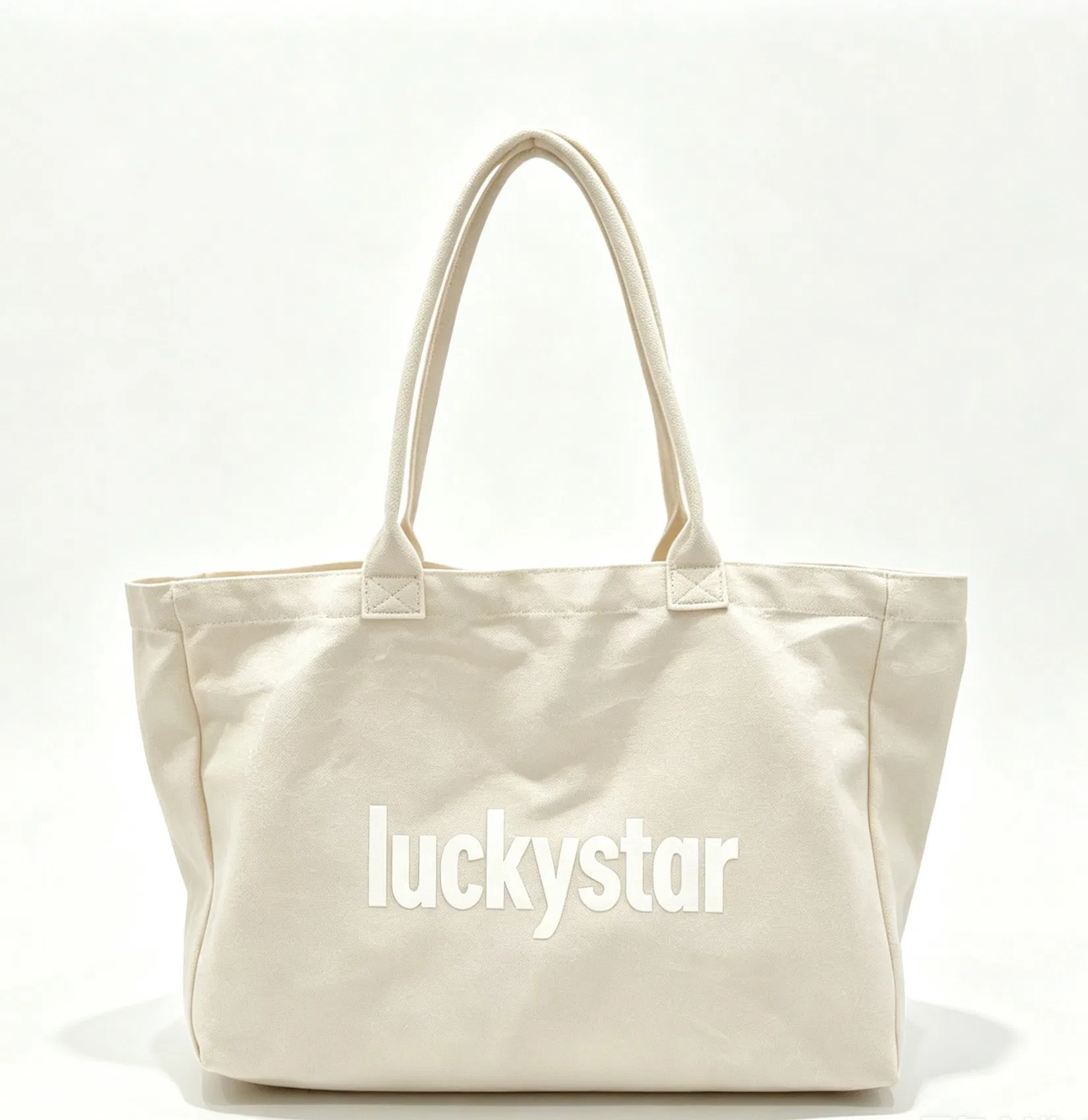
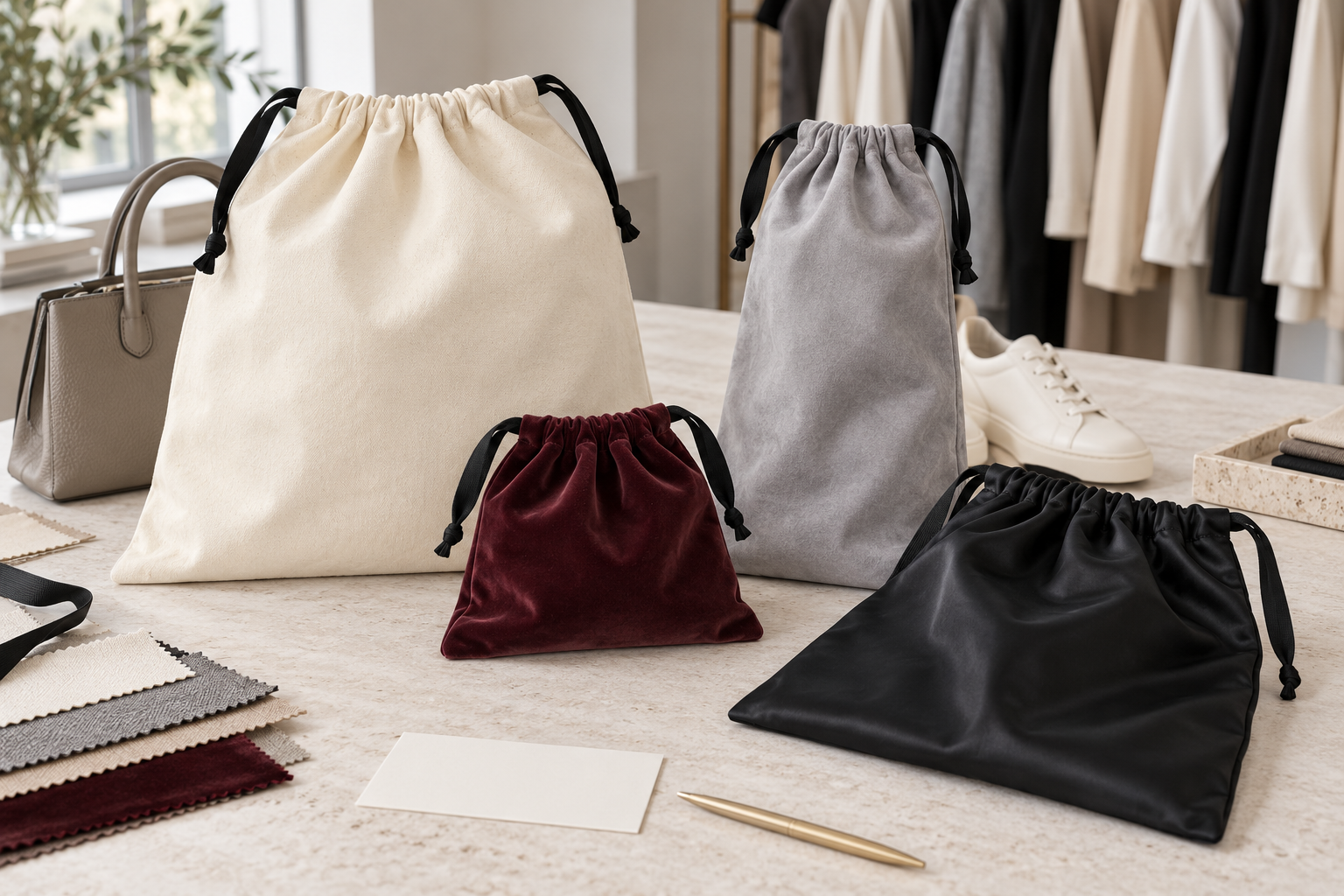
A real canvas tote example from a LUCKYSTAR public product channel. The image demonstrates a physical bag format and branded print area; final material, dimensions, construction and decoration are order-specific.
Planning a retail bag campaign? Send the campaign use and store date, product/basket dimensions and load, quantity by size/artwork/language/store, bag construction or performance target, vector artwork and rights owner, colour/QR requirements, sample gates, tests/claims, allocation/packout file, destination and replenishment plan. The team can return missing inputs and quotation assumptions for written confirmation.
The short answer: what makes a campaign shopping bag work?
A campaign bag works when five systems agree:
- Campaign intent: what the shopper should notice, remember or do.
- Physical specification: material, dimensions, gusset, handles, seams and finish.
- Artwork control: correct logo files, colors, version codes, placement and print limits.
- Approval control: samples and production references signed off by the right owners.
- Retail execution: quantities, store allocation, carton identification and replenishment.
The common mistake is to optimize only the second or third item. A beautiful bag can still fail if it does not fit the typical basket, if a QR code is too small to scan after printing, if two regional files are mixed, or if cartons arrive without store-level identification.
Before requesting a quote, align marketing, procurement and retail operations on the same brief. The supplier should not have to infer which artwork is current, which dimensions are outside measurements, or which stores receive each version. A controlled handoff reduces avoidable questions and makes quotations easier to compare.
What this guide covers—and what belongs on the related pillar pages
This article owns the campaign production and rollout workflow: translating a retail concept into a manufacturable bag program, managing variants, approving samples, planning quality release and preparing store-ready packout.
It intentionally does not duplicate three related subjects:
- For the broader supplier-sourcing framework, read the custom bag manufacturer guide.
- For due diligence and supplier comparison, use how to choose a custom shopping bag manufacturer.
- For campaign attribution, QR measurement logic and post-launch evaluation, see Retail Packaging Bags: Campaign Design & Measurement Plan.
- For message hierarchy and visual composition, see How to Design Promotional Tote Bags.
Keeping these jobs separate prevents keyword cannibalization and gives a project team a clearer route: strategy and measurement first, creative development second, then production execution here.
Start with the retail job, not the bag material
Material selection should follow the bag’s job. Start by describing the exact checkout or distribution moment in one sentence. “A reusable bag for a campaign” is too vague. “A shoulder-carry bag issued with a beauty launch set at 40 flagship stores for eight weeks” gives the sourcing team something useful to engineer.
Ask the following questions before discussing fabric weights or print techniques:
- Is the bag automatically included, sold, gifted above a threshold or reserved for members?
- What products and total load must it carry?
- Will staff fill it at a checkout, event counter, pop-up or fulfillment center?
- Is the campaign national, regional, multilingual or store-specific?
- Must the bag support one campaign window or later evergreen use?
- Will stock be allocated once, or must stores reorder during the program?
- Does the bag carry a legal line, offer end date, QR code or unique identifier?
- What happens to unused bags after the campaign closes?
That last question matters. Date-specific artwork can create stranded inventory, while a removable insert, tag or sticker can sometimes preserve the main bag for later use. The right choice depends on brand experience, durability, labor and cost; it should be decided before artwork approval.
| Retail campaign job | Bag decisions to lock early | Operational risk if left open |
|---|---|---|
| New product launch | Basket dimensions, launch color, issue rule, hero artwork | Product does not fit or launch files arrive too late |
| Store opening | Store/date version, delivery location, carton labels | Wrong city version reaches the wrong store |
| Seasonal promotion | Valid dates, evergreen versus seasonal elements, leftover plan | Obsolete stock remains after the promotion |
| Collaboration | Rights-approved artwork, approval owners, territory and campaign window | Unapproved marks or versions enter production |
| Loyalty or gift-with-purchase | Qualification rule, pack quantity, POS handling | Stores run out early or issue bags inconsistently |
| Multi-market campaign | Language matrix, local legal copy, color and barcode requirements | Regional content is mixed during packing |
Build a campaign bag architecture before creating SKUs
Retail teams often begin with a request for several sizes and colors. That can produce a long SKU list before anyone confirms whether each variant has a real operational purpose. A better sequence is to create a bag architecture:
- Define the base format. Choose the material family, opening, gusset, handle style and general load class.
- Choose the smallest useful size set. Base sizes on actual baskets rather than a generic small/medium/large convention.
- Separate physical variants from artwork variants. A different language on the same construction should not be mistaken for a new bag specification.
- Assign a code to every approved combination. The code should appear in the artwork filename, purchase order, packing list and carton mark.
- Define substitution rules. State what may not change without written approval—for example, fabric color, print method, handle length or ink system.
The objective is not always to minimize variants. It is to make every variant intentional and traceable. If a collaboration needs four languages and two sizes, the project has eight finished versions even if the physical construction is shared. That reality should appear in the quote request and production schedule.
For detailed dimension decisions, use the shopping bag size and capacity guide for retailers. For a reusable specification format, the custom shopping bag tech pack guide shows how to record the decisions.
Select a bag route that fits the campaign and checkout environment
Different material families support different structures and print conditions. The table below is a sourcing map, not a performance guarantee. Final suitability depends on the exact material, construction, decoration, load and approved sample.
| Bag route | Useful campaign role | Print and construction questions | Approval focus |
|---|---|---|---|
| Cotton or canvas | Gift-with-purchase, lifestyle launches, longer-carry programs | Surface texture, fabric color, seam allowances, ink opacity, handle attachment | Print coverage, hand feel, seam strength and shade |
| Non-woven PP | Broad store distribution and lightweight promotional programs | Fabric density, surface treatment, spot versus full coverage, heat sensitivity | Ink adhesion, registration, weld or seam quality |
| Woven PP or laminated woven PP | High-volume programs needing a structured, graphic surface | Lamination, panel distortion, edge finishing, fold lines | Lamination bond, panel alignment and rub resistance |
| Paper | Premium checkout presentation, gifting and shorter-use campaigns | Paper grade, coating, rope or ribbon handle, foil or ink, crease behavior | Color, scuffing, handle reinforcement and fold accuracy |
| Jute or coarse natural-look fabric | Rustic merchandising and gift programs | Weave variation, lining, transfer patch, ink holdout | Logo edge quality, weave variation and handle fixing |
| Mesh or open construction | Product visibility and category-specific carry needs | Printable patch, pocket or label area; containment of small items | Patch attachment, opening size and load retention |
| Transparent or flexible film | Visibility-led launches and event retail | Film composition, ink/adhesive compatibility, seams and handle joining | Clarity, odor, print adhesion and seam integrity |
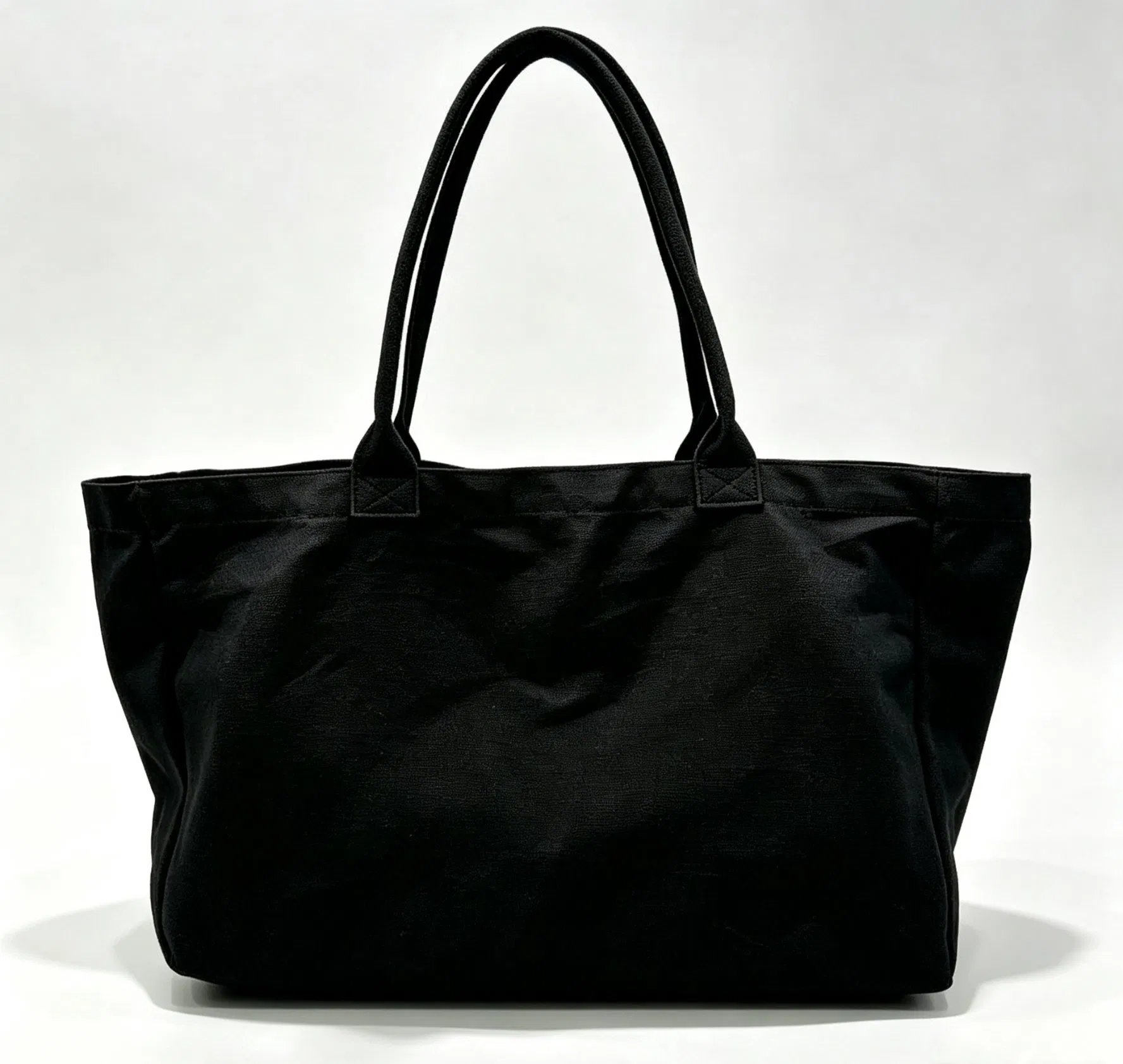
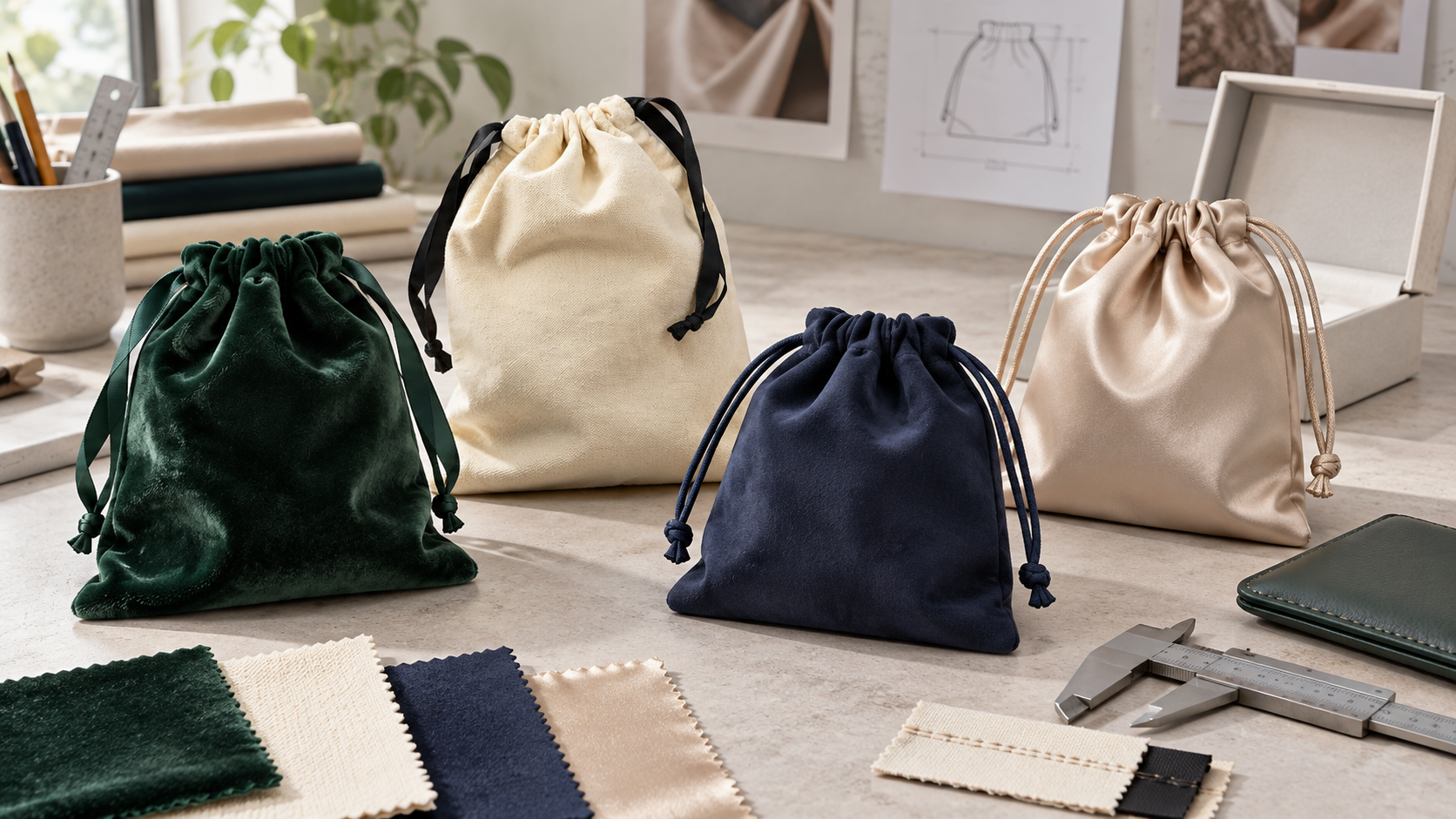
A real, unbranded canvas bag example from a LUCKYSTAR public product channel. It illustrates how gusset depth, body width and handle construction shape a campaign bag before artwork is added.
Do not select a route solely because it is described as “eco,” “premium” or “reusable.” Those words do not define a measurable specification. If the campaign needs a recycled-content, chemical, food-contact or other compliance claim, state the required standard, material scope, testing need and destination market. Evidence must be checked for the named material, product or order; a supplier badge or unrelated certificate is not enough.
For a closer comparison of print behavior by substrate, read How Shopping Bag Materials Affect Print Quality. For process selection, use the custom shopping bag printing methods guide.
Size the bag around the real basket and carry journey
A flat artwork mockup does not reveal whether the bag will work at checkout. Obtain representative products and test the physical loading sequence. Record the largest common item, the most frequent item combination and any item that can puncture, leak, tip or deform the bag.
Confirm these measurements and conventions in the specification:
- Finished width, height and gusset, with a drawing that defines each dimension.
- Usable opening after seams, closures and handle attachments.
- Handle drop, handle width and intended carry method.
- Internal pocket, base board, lining or closure if required.
- Target load and the proposed test method, including how long the load is held.
- Print safe area relative to seams, folds, gussets and handle attachments.
- Folding method and packed dimensions.
Then stage a short checkout simulation. A staff member should fill the bag with the intended products, close or present it, and carry it through the expected journey. Observe whether the opening is wide enough, the handles twist, the logo disappears in a fold, or the bag becomes unstable. These are inexpensive findings at sample stage and expensive findings after store allocation.
Lock one master specification before artwork versions multiply
The master specification is the controlled source for all physical versions. It should receive a revision number and an approval date. At minimum, include:
- Product code and campaign name.
- Material description and approved color reference.
- Finished dimensions and tolerances to be confirmed for the order.
- Handle material, color, width, drop and attachment method.
- Seam, weld, lamination, reinforcement, closure and accessory details.
- Print method, number of print locations and maximum print area.
- Artwork version table and orientation.
- Sampling and approval requirements.
- Inspection checkpoints and acceptance method.
- Unit packing, carton quantity, carton mark and allocation rule.
Avoid phrases such as “same as last time” or “standard quality.” They are not measurable and can break when a new campaign team, production line or material lot becomes involved. If a previous sample is the reference, identify it by sample code, date, photographs and retained physical reference. For future repeat orders, the shopping bag reorder logo and color consistency guide explains how to preserve those anchors.
Prepare a production-ready artwork package
Campaign artwork should arrive as an organized package, not as assets scattered across email and chat. Provide editable vector files for logos and line art, linked or embedded fonts as legally permitted, high-resolution raster images where needed, and a read-only PDF that shows the expected appearance.
Each file should answer four questions: which bag, which side, which market and which revision? A practical naming convention might be:
CAMPAIGN_BAGCODE_MARKET_SIDE_REV_DATE
For example, SPRING26_TOTE01_UK_FRONT_R03_20260903.ai is more useful than final-new-logo.ai. Do not use “final” as the only revision control; teams commonly create “final2,” “final-approved” and “final-real,” which makes production ambiguity almost inevitable.
Include the following in the artwork release:
- Logo master and minimum clear-space rule.
- Spot-color references or CMYK values, with the intended viewing priority.
- Finished print size in millimeters—not only a percentage on a mockup.
- Placement measurements from defined finished edges or centerlines.
- Underbase requirement for dark or transparent materials, if proposed.
- Bleed, trapping, minimum line and minimum text requirements agreed for the process.
- Front/back/gusset orientation.
- Variable copy, language and legal-line ownership.
- QR or barcode vector and the live destination used for testing.
- A release note that identifies the superseded files.
The shopping bag logo placement and print size guide gives a focused method for defining print position. When artwork is not prepared around the bag’s seams and folds, the supplier may need to resize or move elements, which then requires another approval.
Control campaign versions with a matrix, not a folder of files
Version errors are one of the most avoidable retail risks. Create a matrix that lists every finished combination and connects it to one released file. The same codes should move through quoting, proofing, production, inspection and packing.
| Version code | Physical bag | Artwork/language | Store group | Planned quantity field | Carton mark |
|---|---|---|---|---|---|
| RC26-T01-EN | Tote 01 | English master | Group A | Confirm in PO | RC26-T01-EN + store code |
| RC26-T01-FR | Tote 01 | French master | Group B | Confirm in PO | RC26-T01-FR + store code |
| RC26-T02-EN | Tote 02 | English master | Group C | Confirm in PO | RC26-T02-EN + store code |
| RC26-T02-EV | Tote 02 | Event copy | Pop-up sites | Confirm in PO | RC26-T02-EV + eventcode |
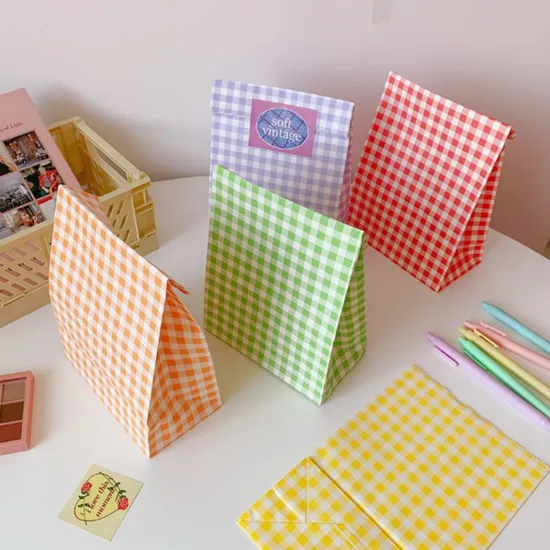
Real paper bag colorways from a LUCKYSTAR public product channel. Multiple colors can look simple in a photo, but every approved color, size and artwork combination needs a unique production and carton code.
Add columns for barcode, legal copy, approval owner and allocation date when relevant. Protect the matrix so only one project owner can release a new revision. If a store group changes after production begins, document whether cartons will be relabeled, redirected or repacked; do not solve the change only in a spreadsheet that the packing team never receives.
A “one artwork, many markets” approach can reduce complexity, but it should be a deliberate legal and brand decision. A shared evergreen bag plus market-specific insert may be more flexible, whereas a prominent launch line may justify separate printed versions.
Approve color on the actual substrate and print route
The same nominal color can look different on white paper, unbleached canvas, dyed fabric, non-woven PP and transparent film. Texture breaks up edges; absorbency changes ink holdout; a colored substrate influences the perceived result; lamination changes gloss and contrast. A screen preview cannot predict all of these effects.
Use a reference hierarchy:
- Brand color definition in the artwork brief.
- Process-specific target or ink drawdown where appropriate.
- Decorated sample on the actual proposed material.
- Signed pre-production or golden sample.
- Agreed production measurement or visual tolerance under controlled viewing conditions.
ISO 13655:2017 defines procedures for spectral measurement and colorimetric computation used across graphic-arts production processes, including screen, gravure and digital printing. It is a useful technical reference for measurement discipline, but mentioning it does not mean a bag, supplier or order is ISO-certified. See the official ISO 13655 overview.
For a buyer-level approval workflow, use the shopping bag color matching, Pantone and ink drawdown guide. If the artwork team is deciding between color systems, the Pantone vs CMYK guide for custom shopping bags explains the practical tradeoffs.
Treat QR codes and campaign links as production elements
A QR code may be part of the creative, but it must be managed like a functional mark. Confirm who owns the destination, whether the URL can remain live for the bag’s full useful life, whether regional routing is required, and what happens after the promotion ends.
Before bulk approval:
- Print the code at proposed size on the actual substrate.
- Test multiple production samples, not only a digital proof.
- Test under typical retail lighting and at realistic scanning distance.
- Use several current phone models and camera apps.
- Protect the quiet zone and contrast.
- Check distortion near seams, folds, gussets and curved filled surfaces.
- Confirm the destination page loads quickly and matches the market/version.
- Keep a human-readable fallback URL where the campaign permits it.
If the business case needs a standards-based identifier rather than a simple promotional URL, consult the current GS1 Digital Link standard. GS1 explains that a Digital Link URI can connect identifiers with online information and can be encoded in data carriers such as QR codes. Whether that framework is suitable should be decided by the brand’s data and retail teams; the bag printer should not invent identifiers.
Build the calendar backward from the in-store date
Do not ask only for “lead time.” Build a dated gate plan backward from the first required store date and include the decision time on the buyer’s side. The critical path can include:
- Final campaign and quantity release.
- Technical review and quotation alignment.
- Material and color confirmation.
- Artwork preflight and digital proof.
- Print or material sample approval.
- Decorated sample approval.
- Pre-production reference sign-off.
- Bulk production and in-process checks.
- Final inspection, packing and carton labeling.
- Shipment, customs and delivery to the distribution point or stores.
- Receiving buffer and store setup.
Every duration is order-specific. Material availability, number of versions, print method, sample rounds, quantity, packing complexity, destination and freight plan can all move the schedule. Therefore, dates, MOQ, sample cost and production time should be subject to specification and written confirmation.
The useful management question is not “Can it be fast?” but “Which approval or material gate controls the date, and who owns the response?” A schedule without approval owners is only a wish list.
Use a sample ladder that answers different risks
One sample rarely answers every question. Separate the approval stages so each has a clear purpose.
| Approval gate | What it should prove | Buyer decision | Evidence to retain |
|---|---|---|---|
| Construction mock-up | Size, opening, gusset, handles, loading and fold | Approve or revise physical design | Dated comments, measurements and photos |
| Color/print trial | Ink behavior, opacity, edge detail and substrate interaction | Approve target or request correction | Signed swatch, drawdown or print panel |
| Decorated sample | Overall appearance on the proposed bag | Approve artwork scale, placement and color direction | Sample code and approval record |
| Pre-production reference | Final combined material, construction, print and accessories | Release bulk production | Signed golden sample and controlled spec revision |
| Store-pack test | Unit fold, carton quantity, labels and store handling | Release packing method | Pack photo, carton mark and allocation checklist |
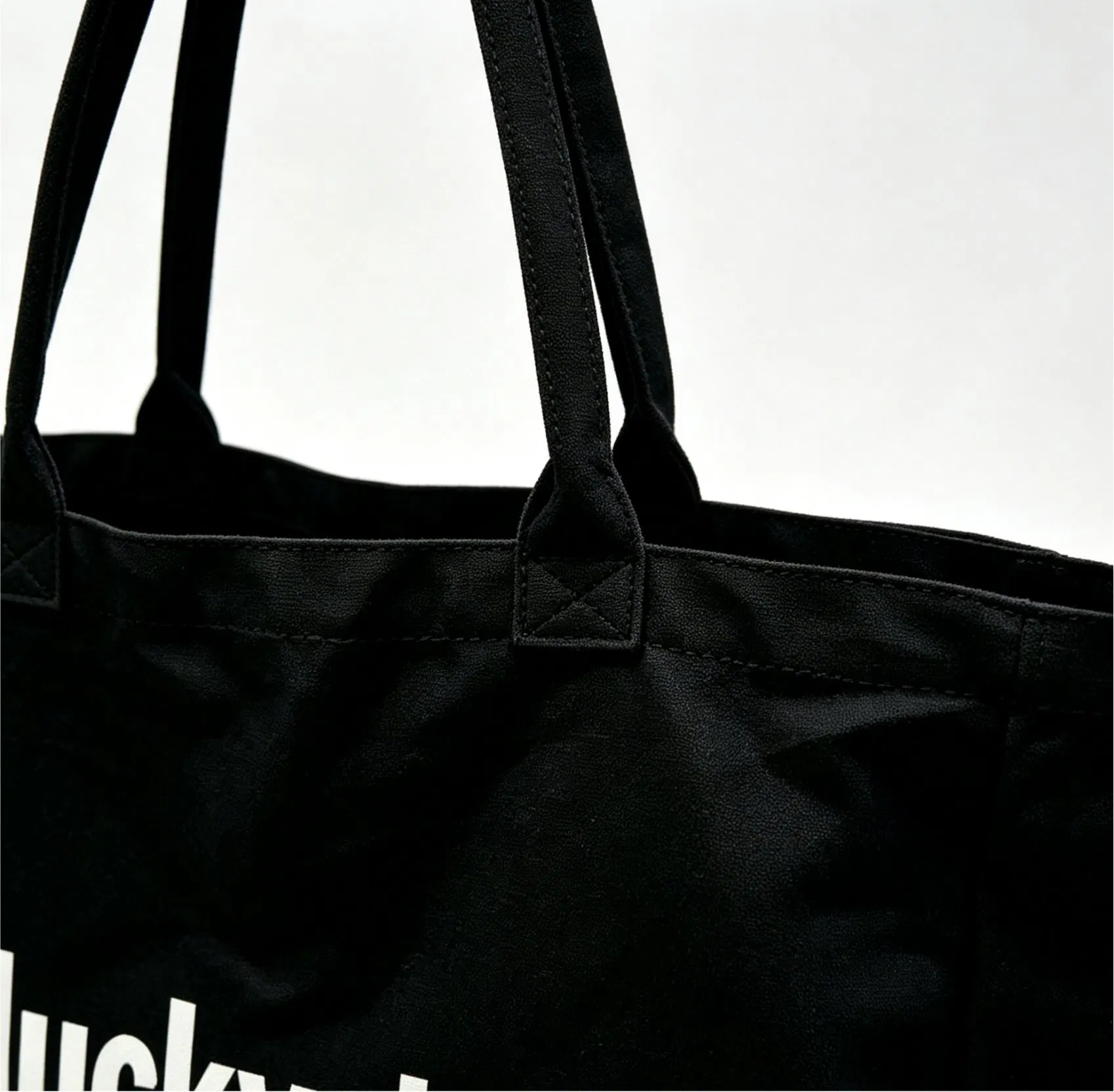
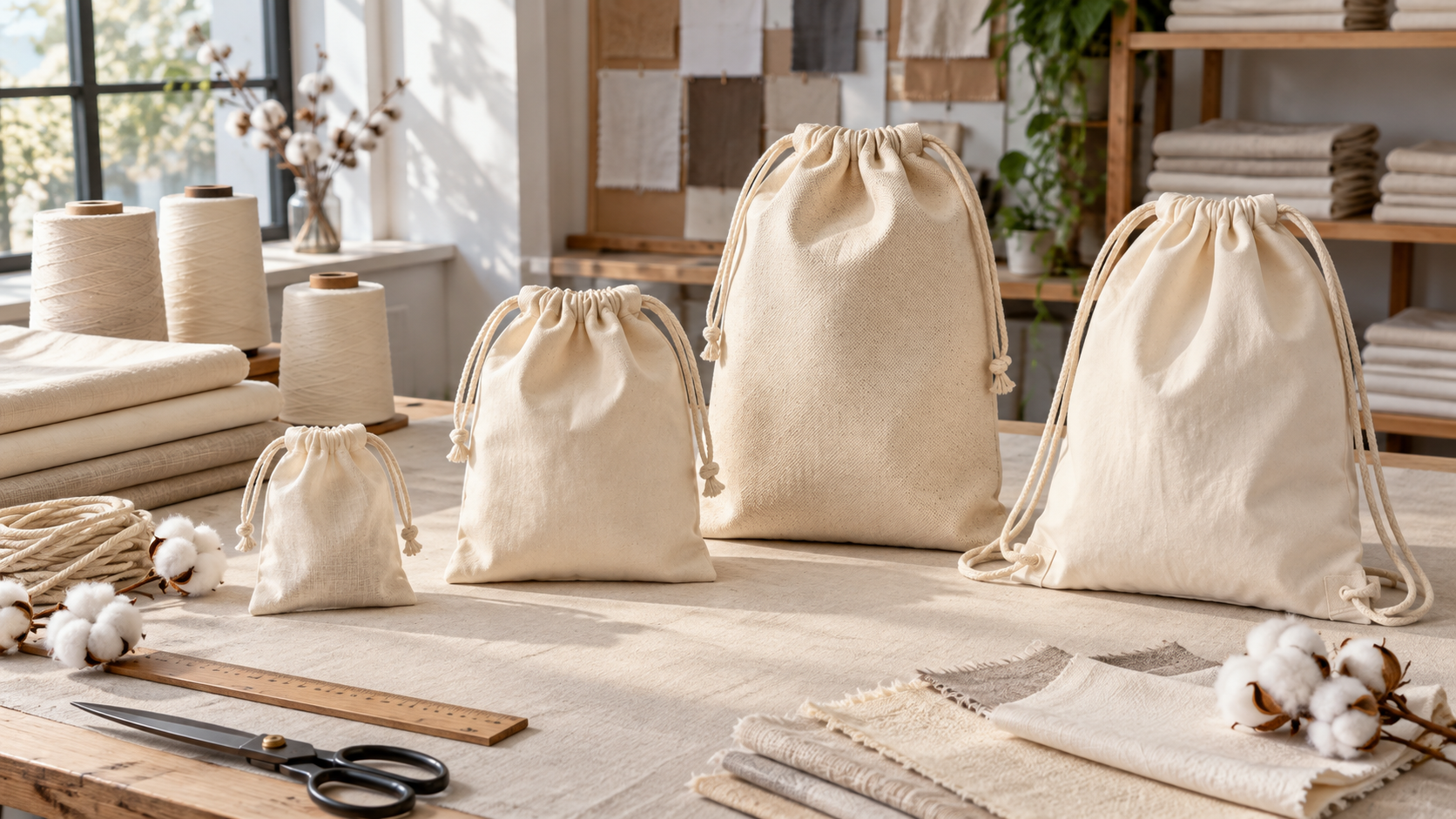
A real handle and seam close-up from a LUCKYSTAR public product channel. Campaign approval should include construction and packout—not only the front artwork.
For more detail on the buyer/supplier handoffs, see the custom shopping bag sample development process. Record every approval against a revision. A comment such as “looks good” in a chat is difficult to audit when the file, material or size later changes.
Define the quality release plan before production
Campaign urgency is not a reason to postpone quality criteria. The team should know which features are critical, major or minor before bulk goods exist. A practical plan can cover:
- Correct bag and artwork version.
- Finished size and handle drop.
- Material color and visible shade variation.
- Logo size, position, orientation and registration.
- Ink coverage, pinholes, smudging, bleeding, cracking or transfer.
- Seam, weld, lamination and reinforcement condition.
- Functional load or handle testing agreed for the order.
- Odor, cleanliness and foreign matter.
- Unit fold, packing count, assortment and carton mark.
- Barcode or QR scan where applicable.
The inspection method should state how pieces are selected, which reference is used and what happens when an issue is found. Do not rely on an undefined promise of “100% quality.” Instead, agree on measurable requirements and order-level acceptance criteria.
Use the shopping bag printing quality control checklist for decoration-focused checks and the custom shopping bag quality control checklist for the broader bag. The common shopping bag printing defects guide is useful when converting observed defects into preventive controls.
Design store-ready allocation and packout
The factory-ready bag is not yet store-ready. Distribution logic must be converted into packing instructions that can be executed and verified.
For each store or distribution group, define:
- Version code and approved quantity.
- Units per inner pack and units per carton.
- Whether variants may share a carton.
- Store, market, language and campaign identifiers on the carton.
- Barcode or shipping-label owner.
- Sequence or color coding if store staff must distinguish versions quickly.
- Whether spare stock is central, regional or store-held.
- Rules for partial cartons and over/under quantities.
- Receiving contact and delivery window.
Use simple carton-mark language and send a visual example. If the campaign has 80 stores, do not assume the supplier should create 80 store labels from an unverified planning spreadsheet. Freeze the allocation file, assign a revision and request a packout summary before shipment.
Consider a store opening kit: one top sample, a small handling instruction, and bags packed in the order staff will use them. This adds work and cost, but it may reduce setup errors for complex launches. The decision should be evaluated against campaign risk, not added automatically.
Plan replenishment without losing version control
Replenishment creates a second production problem: demand becomes visible only after stores start issuing bags, while the material, ink or campaign date may have limited availability. Decide before launch whether the program will use:
- One initial allocation only.
- A central reserve released to stores.
- A planned second production window.
- A reorder trigger based on remaining weeks of stock.
- An evergreen fallback bag after campaign stock is exhausted.
If a repeat production is possible, retain the approved specification, artwork, material reference, color target, sample code and carton mark. Also decide whether a new sample is required when material lots, print partners or long intervals change. “Same artwork” does not automatically mean the new bag will visually match the first run.
The article on maintaining logo and color consistency across shopping bag reorders provides a repeat-order control file. For order-planning variables, see custom shopping bag MOQ and production time. Any quoted minimum or time remains dependent on the final specification and written confirmation.
Understand the cost drivers without chasing a false unit-price shortcut
The lowest initial unit quote is not necessarily the lowest campaign cost. Compare quotations only after aligning the specifications and services included. Important cost drivers include:
- Material type, weight or thickness, color and availability.
- Finished dimensions, gusset and handle construction.
- Number of print locations, colors, coverage and print method.
- Artwork versions and changeovers.
- Sampling rounds and special color trials.
- Reinforcements, closures, pockets, labels and accessories.
- Inspection, testing or documentation requested for the order.
- Individual packing, store assortments and custom carton labels.
- Quantity by version—not only total quantity.
- Freight mode, destination, duty arrangement and delivery split.
A version with only 300 pieces may price differently from a total order of 3,000 pieces split across ten versions because setup and handling repeat. Ask suppliers to show assumptions and exclusions so procurement can compare equivalent scopes.
For a more detailed framework, read How Much Do Custom Shopping Bags Cost?. Use it to identify quote inputs rather than as a fixed price list; actual prices depend on specification, quantity, timing and commercial terms.
Company-claim boundary: LUCKYSTAR statements in this section are publisher self-description, not third-party verification, proof of current material availability/capacity, ISO/GS1 certification, rights clearance, campaign-performance evidence or a guarantee of store-date delivery. Product route, materials, samples, claims, tests, MOQ, price, capacity, packing, allocation and timing are subject to current evidence, final scope and written confirmation.
How LUCKYSTAR describes its retail-campaign review
LUCKYSTAR states that its project team can coordinate shopping-bag format, artwork, sampling, quality and packout information for an agreed retail campaign.
- Define the retail job: record issue rule, products/load, campaign dates, store or fulfilment handoff, destination markets and leftover-stock plan.
- Control the architecture: map size, material, colour, artwork, language, offer and store variants to unique SKU/version codes.
- Release production inputs: link specification, dieline, rights-approved artwork, colour reference, QR destination/owner, label copy and approval authority.
- Approve the real route: use construction, print and pre-production gates that identify material, revision, test/scan result and reapproval triggers.
- Plan retail packout: lock allocation revision, inner pack, carton quantity/mark, store code, mixed-carton rule and replenishment ownership.
- Retain the campaign record: preserve released files, samples, accepted deviations, inspection/packout evidence and changes before a repeat.
Review the public custom shopping bag range, the campaign measurement guide and the retail size/capacity guide. Then send the campaign matrix and required store date for review.
What to send LUCKYSTAR for an actionable campaign quote
The fastest route to a useful quotation is a complete decision pack. Send what is known and label what is still open.
Include:
- Campaign name, use case, launch date and destination markets.
- Product photos or dimensions showing what the bag must carry.
- Preferred material route—or the performance requirements if undecided.
- Finished width, height, gusset and handle drop.
- Target quantity by size, artwork and market version.
- Editable artwork plus a visual PDF.
- Color references and print locations.
- Required sample and approval sequence.
- Testing, documentation or destination-market requirements.
- Unit packing, carton quantity, allocation and carton-mark needs.
- Delivery destination, required arrival date and preferred trade terms.
- Replenishment or repeat-order expectation.
LUCKYSTAR can then identify missing inputs, propose a development route and confirm quotation assumptions. Start from the custom shopping bags product page or send the brief through our inquiry page.
Frequently asked questions
How early should a retail campaign bag project start?
Start as soon as the launch date, bag job and preliminary artwork direction are known. The required calendar depends on material availability, version count, sample rounds, production quantity, packing and shipping. Build backward from store receipt and include buyer approval time and a receiving buffer. Final dates are subject to the approved specification and written confirmation.
Should every store receive the same bag version?
Only if the campaign, language, legal copy and store format allow it. A shared version reduces complexity, but separate market or event versions may be necessary. Use a controlled matrix and unique codes so the decision is visible in artwork, the PO and carton labels.
Is canvas always the best choice for a retail brand campaign?
No. Canvas can support a substantial reusable format, but paper, non-woven, woven PP, jute, mesh or transparent materials may fit a different basket, price structure or campaign experience. Compare them using the same load, print, packout and approval requirements.
Can the campaign bag carry a QR code?
Yes, if the chosen substrate and print method reproduce it clearly and the destination is properly governed. Approve it on the actual printed material, test multiple samples and keep it away from folds, seams and distortion. Decide whether it is a simple promotional URL or part of a GS1 identification strategy.
How can we avoid mixed language or store versions?
Give every finished version a code; repeat it in the file name, proof, sample, purchase order, inspection record, inner pack and carton mark. Freeze the allocation matrix by revision and require a packout summary. Do not rely on artwork appearance alone.
Can one sample approve bulk production?
Sometimes, but complex campaigns often benefit from separate construction, print and pre-production approval gates. Each gate should answer a defined risk. If any material, process, size or artwork changes after approval, document whether reapproval is needed.
What certifications can be printed or claimed?
Only claims supported by current evidence that matches the relevant company or facility, product, material, standard, validity period and intended market. A platform badge, historical report or certificate for another item should not be generalized. Tell LUCKYSTAR the required claim at the briefing stage so the evidence path can be checked before artwork release.
What should be retained for a reorder?
Keep the released artwork, approved specification revision, material and color references, sample code, inspection criteria, packing instructions and production records available to the buyer. Then review whether any material, process or compliance condition has changed before authorizing the repeat.
Turn the campaign concept into a store-ready bag program
A custom printed shopping bag is a visible media surface, a load-carrying product and a distributed retail asset at the same time. The most reliable programs connect those three realities in one controlled workflow: define the bag’s job, rationalize formats, lock specifications, release versioned artwork, approve the real material, inspect against agreed criteria and pack by store need.
LUCKYSTAR can support that workflow across multiple bag formats and coordinate the details from development through packing. Share your campaign brief, artwork, product dimensions, version quantities and required arrival date. All commercial and production conditions are subject to the final specification and written confirmation.

Click the GET QUOTE image to send LUCKYSTAR your retail campaign shopping bag requirements.
Turn the campaign brief into a quote-ready bag program
Send one matrix that connects the store date, bag/SKU versions, artwork release, approval gates and allocation/packout rules.
Review LUCKYSTAR custom shopping bag options, then send your campaign brief through the contact form or Email a project brief. The email link opens a draft for your review before sending.
Entity/site assignment, material and capacity availability, rights, claims, samples, tests, price, MOQ, packing, allocation, schedule and release terms are subject to due diligence, current specification and written confirmation.