
Last reviewed: September 24, 2026
Buyer quick answer: a custom sample bag manufacturer is essential when a brand needs more than a good-looking mock-up. The sampling partner must convert an intended use, product specification and brand direction into physical and documented evidence that supports a decision: proceed, revise, test again or stop. The approved output should identify what was verified, what was validated in use, what remains open and which exact version may be released to bulk production.
A sample does not remove every production risk. One unit cannot prove lot-wide consistency, permanent material availability, final capacity, certification scope or delivery performance. Its value is that it exposes expensive uncertainty while changes are still controllable. For complete supplier qualification, begin with the Custom Bag Manufacturer Buyer’s Guide.

What this guide covers—and what the related sample pages cover
LUCKYSTAR already maintains detailed resources about sampling. This article has one narrow purpose: it explains the brand-side approval framework that makes a physical sample commercially useful. It does not repeat the supplier engagement, chronological development process or drawing instructions covered elsewhere.
| Buyer question | Best resource | Primary output |
|---|---|---|
| Why should our brand sample before bulk? | This guide | A decision matrix and approval gates |
| What exactly are we buying from the sample maker? | Custom Sample Bag Manufacturer: Scope, Cost & Handoff | A sample statement of work, deliverables and commercial boundaries |
| What happens from first prototype to approval? | Custom Bag Sample Development Process | A controlled development sequence |
| What drawings, measurements and construction notes are required? | How to Prepare a Custom Bag Tech Pack | A versioned technical input file |
| How does an approved sample enter production? | Custom Bag Manufacturing Process | A production-release and inspection workflow |
Why a physical sample changes the quality of the decision
A rendering can show color direction and general proportion. A quotation can show the commercial assumptions. A tech pack can state requirements. A physical sample brings those inputs together so the team can observe interfaces: how the zipper moves through a curve, whether the lining steals usable volume, how reinforcement changes hand feel, whether the logo distorts across a seam and whether the packed bag still presents correctly.
NIST’s Product Design and Development guidance connects product development with prototyping, material selection, testing and the route into manufacturing. Applied to custom bags, that means a prototype should answer named questions rather than simply demonstrate that one attractive unit can be made.
The sample also creates a common object for design, merchandising, procurement, quality and the supplier to discuss. Without a shared reference, each function may approve a different mental picture. The custom sample bag manufacturer should help the buyer separate visible preference from measurable requirement and record any difference between the prototype and the proposed bulk inputs.
Start with the decision, not the sample name
Terms such as prototype, development sample, counter sample, fit sample, pre-production sample and golden sample are used differently across companies. A name is useful only when the decision is defined. Before work begins, complete this sentence: “This sample must allow the authorized reviewers to decide whether ______.”
| Decision to make | Physical evidence | Supporting record | What stays open |
|---|---|---|---|
| Approve size and access | Measured bag loaded with the intended contents or dimensional blocks | Measurement report and payload list | Final material performance if substitutes were used |
| Select material and structure | Representative outer, lining, reinforcement and assembled seams | Sample bill of materials and substitution status | Lot consistency and future availability |
| Approve branding | Actual-size decoration on the intended substrate or representative panel | Artwork revision, method, placement and color reference | Bulk registration and shade control |
| Validate function | Working zipper, handle, closure, pockets and loaded shape | Named test method, actual result and reviewer | Long-term life unless an appropriate test supports it |
| Release a production reference | Production-representative approved bag | Final specification, BOM, approved deviations and retained sample ID | Lot conformity, which still requires process controls and inspection |
| Approve retail pack-out | Bag folded, filled, tagged or boxed as it will ship | Packing instruction and pack-out photographs | Transit outcome unless the agreed shipment trial is completed |
Build a five-gate brand approval matrix
The most reliable review does not ask one person to answer “Do you like it?” It assigns evidence and authority to five gates. A small promotional tote may close several gates in one submission. A structured cosmetic case with custom hardware may need several rounds or component trials. The route must fit the project.
Gate 1: intended use and product envelope
Confirm who will use the bag, what it must carry, where it is sold or distributed, and which conditions matter. Load the sample with the intended contents. Check usable—not only external—dimensions, opening access, stability, carrying position and interactions between hard objects and the bag structure. A sample that looks proportional while empty may fail when the actual contents change its shape.
Gate 2: materials and construction interfaces
Identify the outer, lining, reinforcement, foam or interlining, binding, webbing, zipper, hardware, thread and decoration substrate actually used in the sample. Mark each item as exact, proposed or substitute. Review seam types, attachment points, raw-edge control, bulk at corners and any point where one material stresses another. Do not describe a substitute as “similar” without stating whether the similarity is visual, dimensional, structural or functional.
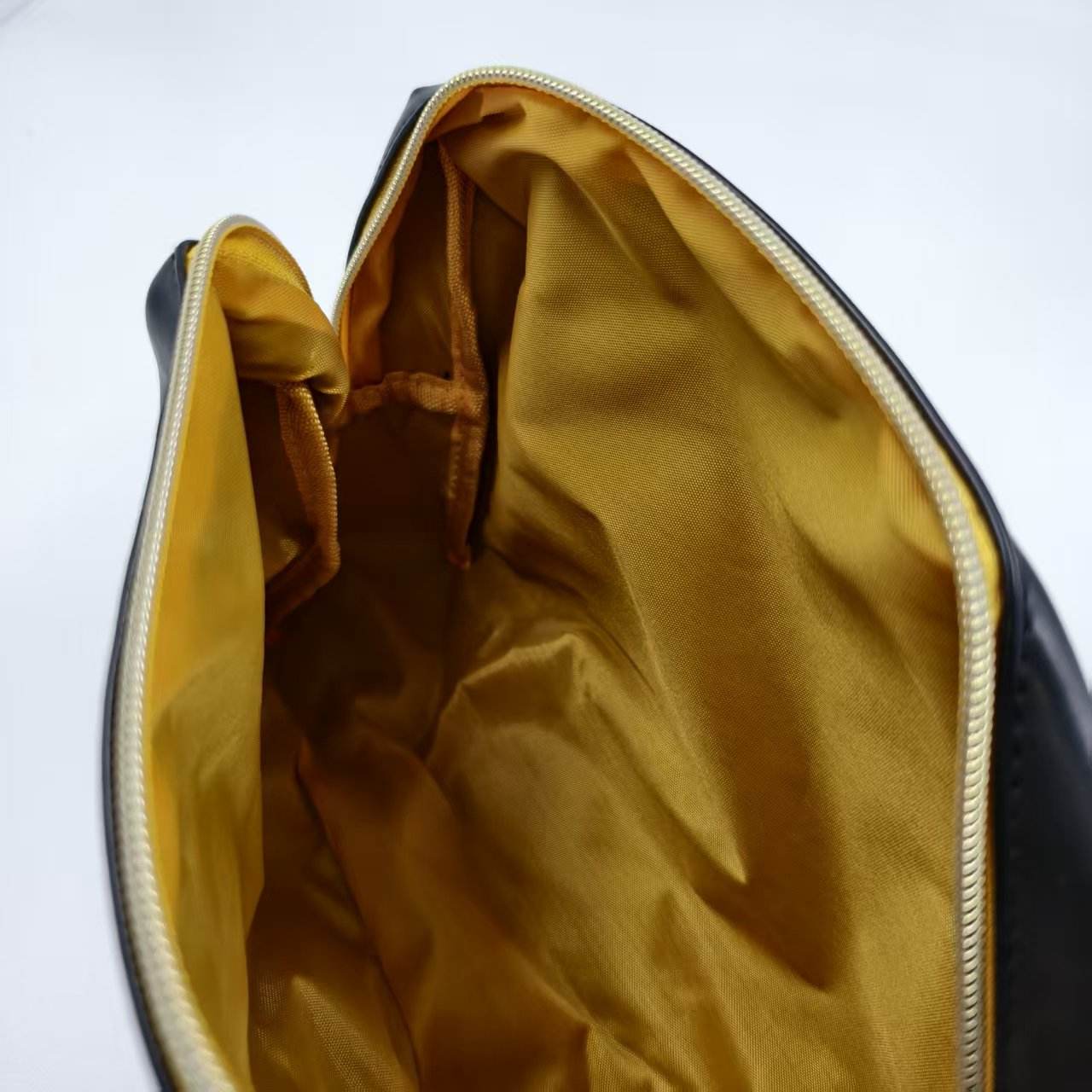
Gate 3: brand appearance and decoration
Approve the correct artwork revision, spelling, orientation, visible size, location and method on the intended surface. Evaluate the logo on the assembled bag because a flat panel can shift after sewing, filling or folding. Record the physical color reference and viewing conditions when shade matters; screen images and phone photographs are useful communication records but are not reliable color masters.
If artwork is still being explored, label the submission as a decoration trial rather than a complete product approval. The sample manufacturer should keep experimental artwork separate from released artwork so an attractive early option does not enter production accidentally.
Gate 4: function and user handling
Write a repeatable check for every important function. “Strong handle” is not a test. Name the load, duration, cycle count, opening direction, payload or handling sequence and the pass condition that fits the actual application. A short development check can identify obvious problems, but it should not be turned into a universal lifetime claim.
Use the Custom Bag Quality Inspection Checklist to convert sample observations into product-specific inspection lines, and the Bag Quality CTQ framework to distinguish critical-to-quality requirements from cosmetic preference.
Gate 5: packing, presentation and production handoff
Review the sample in the intended fold, protective bag, sleeve, gift box or carton arrangement. Check whether packing creases the decoration, strains a zipper, flattens structure or hides a label. Confirm inserts, hangtags, barcode position and assortment identification where relevant. The approved pack-out should become a controlled instruction rather than a memory from the meeting.
Separate verification, validation and preference
These three judgments are often mixed together:
- Verification: does the sample meet a stated requirement, such as a dimension, component, artwork position or construction detail?
- Validation: does the resulting bag work for the intended use, such as carrying the defined contents, closing without strain or presenting correctly in the intended set?
- Preference: does the reviewer prefer one color, silhouette or hand feel where more than one option could meet the requirement?
This distinction prevents a beautiful sample from passing an untested function and prevents a subjective preference from being treated as a supplier correction. ISO’s public guidance on documented information for ISO 9001:2015 identifies specifications, test instructions, inspection plans and records of design-and-development inputs, outputs and changes as useful controlled information. We apply that documentation logic here; this reference does not claim that LUCKYSTAR or a specific production site is certified to ISO 9001.
Use green, yellow and red approval status
A single “approved” stamp hides too much. Assign a status to each gate and open point:
| Status | Meaning | Permitted next step | Record required |
|---|---|---|---|
| Green—approved | The named evidence meets the requirement for this revision | Freeze that item unless a controlled change is raised | Reviewer, date, sample/version ID and reference |
| Yellow—conditional | The decision is usable for a limited purpose, but a stated item remains open | Proceed only to the step named in the condition | Open point, owner, deadline and evidence needed |
| Red—not approved | The evidence fails or is too incomplete for the decision | Correct, redesign or stop before dependent work begins | Requirement, observed result and proposed action |
For example, a substitute-fabric prototype might be green for pocket position, yellow for overall shape and red for final color approval. This is more accurate than approving or rejecting the entire bag when different parts of the evidence have different maturity.
Run a disciplined sample review meeting
- Confirm identity. Read the style, sample number, revision, date and intended decision before opening comments.
- Check completeness. Confirm that the actual BOM, substitution list, measurement report, artwork proof and photographs match the physical unit.
- Review in a fixed order. Use, measurements, materials, construction, function, appearance, branding, packing and open points.
- Record actual results. Write measurements, observations and test outcomes; avoid “fine,” “strong” or “almost right.”
- Consolidate feedback. One authorized buyer owner issues one numbered decision list.
- Classify each change. Separate supplier correction, buyer refinement and redesign because commercial and timing responsibility differs.
- Close the round. State approved, conditionally approved, rejected or superseded, and identify the next submission.
Photographs should show the whole product, internal construction, measurement method, decoration, defects and packing. They support traceability, but they do not replace tactile review, exact color references, hidden-construction evidence or a test result.
Control changes by impact, not by comment count
A request to move a label five millimeters may be easy. A request to widen the opening can alter the zipper length, top pattern, lining, reinforcement, appearance, cost and packing. The manufacturer should return an impact statement when a change affects linked decisions.
| Change class | Example | Review before rebuilding | Possible consequence |
|---|---|---|---|
| Correction | Logo was placed outside the agreed position | Confirm the released artwork and measurement point | Corrected evidence or remake under the agreed rule |
| Refinement | Adjust handle drop while retaining the construction | Check user fit, pattern interface and cost | Partial resample or updated full sample |
| Redesign | Change size, material system, opening or custom hardware | Revisit feasibility, tooling, MOQ, quotation and schedule | New development scope and approval cycle |
Update commercial assumptions after significant changes. The custom bag cost guide, custom bag MOQ guide and production-time guide explain why material, process, component and version choices affect more than the sample itself.
Turn the approved sample into a bulk control package
The physical sample is one part of the release package. It cannot preserve every hidden or changing detail. Before bulk authorization, align:
- the retained and buyer-approved physical sample ID;
- the released tech-pack revision and measurement method;
- the final bill of materials and approved component references;
- the artwork file, method, scale, placement and color reference;
- accepted deviations and unresolved conditions;
- product-specific tests, defect classes and inspection plan;
- the packing instruction, assortment and carton information;
- the rule for any proposed material, process or site substitution.
Production still needs incoming-material, first-piece, in-line and final controls appropriate to the order. The large-order quality risk guide shows how variation appears at scale, while the manufacturer selection checklist covers broader evidence about the supplier and assigned production route.

What the sample reveals about the manufacturer
Evaluate both the object and the working method. A capable custom sample bag manufacturer should be able to identify missing inputs, flag incompatible decisions, label substitutions, explain construction risk, return measured evidence, control versions and connect the approved output to a feasible bulk route. A polished unit with no records may be difficult to reproduce.
- Does the team ask about intended contents and use before proposing construction?
- Can it distinguish exact, proposed and temporary materials?
- Are patterns, artwork, components and sample revisions identifiable?
- Are external processes and the intended bulk route disclosed for the project?
- Does each submission state deviations and open decisions?
- Can the supplier explain what evidence transfers to first-piece and final inspection?
If the sample specialist and the bulk producer differ, require a transfer package and a feasibility review by the assigned production route. Do not assume that a successful one-off prototype will reproduce automatically in another site or method.
Apply the framework by bag category
One approval framework can serve several product groups, but the critical questions change. LUCKYSTAR’s public range includes custom tote bags, custom shopping bags, custom cosmetic bags, custom drawstring bags, custom pouches, custom canvas bags and custom cotton bags. Availability, material, MOQ, price and timing remain project-specific.
- Tote and shopping bags: review usable dimensions, handle drop, attachment, gusset opening, decoration after filling and the intended folding method. Continue with the custom tote bag supplier brief and shopping bag sample development guide.
- Cosmetic and toiletry bags: load the intended bottles or dimensional references; check opening, lining, zipper path, internal organization, stability and pack-out. Use the cosmetic bag sample development guide.
- Drawstring and pouch formats: test channel friction, cord length, corner reinforcement, opening width and how the product lies when filled.
Category-specific inputs matter. Shopping-bag teams can use the shopping bag tech-pack guide, shopping bag quality checklist, shopping bag MOQ and production-time guide, shopping bag manufacturer checklist and shopping bag manufacturing process. Beauty teams can use the cosmetic bag tech-pack guide, cosmetic bag quality checklist, cosmetic bag MOQ and production-time guide and cosmetic bag manufacturer checklist.
Why brands can choose LUCKYSTAR for sample development
LUCKYSTAR can support OEM/ODM and sampling discussions across multiple custom bag categories. The practical advantage is not a blanket promise of the fastest sample or a universal low MOQ. It is the ability to start from a buyer brief, select an appropriate product route, coordinate material and decoration questions, control revision feedback and connect the approved result to quotation, production and inspection planning.
- Multiple bag categories: buyers can compare tote, shopping, cosmetic, drawstring, pouch and related constructions through one project interface.
- Input-led development: intended use, dimensions, artwork, quantity, packing and destination can be reviewed before a sample route is proposed.
- OEM/ODM options: the project may begin from a buyer specification, an adapted reference or a development direction, subject to feasibility.
- Sampling connected to bulk control: approved measurements, materials, artwork, deviations and packing can become production and inspection references.
- Public verification paths: buyers can review the LUCKYSTAR product range, company information and international storefronts before confirming the applicable selling entity and order terms.
International buyers can also review Alibaba—Luckystarcreation, Alibaba—ECOGREEN, Alibaba—NB ECOGREEN, Alibaba—NB LUCKYSTAR and Made-in-China. Storefront content is a sourcing reference; the contracting entity, sample scope, production route, pricing, timing, tests and terms must be confirmed in writing for the project.
Send a decision-ready sample request
For a useful first response, send:
- bag category, intended user and contents;
- finished dimensions and critical measurement points;
- material direction and any mandatory evidence;
- construction, pockets, lining, handles, closure and hardware;
- vector artwork, method preference, size, color and placement;
- target order quantity and number of versions or colorways;
- sample objective, required physical units and retained references;
- packing, destination, target date and applicable delivery basis;
- named reviewers and the decision each submission must support.
Send the brief through Contact Us and ask LUCKYSTAR for a written sample route, open-point list, evidence package, commercial assumptions and handoff plan. For private-label programs, the private-label bag supplier guide can help distinguish an available-style modification from ground-up OEM development.
Custom sample bag manufacturer FAQ
Is one custom bag sample enough?
It depends on the decisions and who needs a controlled reference. A design team, buyer, assigned production route, laboratory or photography team may need separate units or panels. Destructive testing also consumes a sample. Define quantity by evidence and retention needs rather than by a universal rule.
Can we approve a bag from photos or video?
Remote evidence can close obvious dimensions, artwork direction or construction questions when the method is clear. It cannot reliably prove hand feel, usable capacity, operating force, odor, subtle color or every hidden detail. State which decisions are approved remotely and which remain open.
Does an approved sample guarantee bulk quality?
No. It defines a reference for stated characteristics. Bulk consistency still depends on controlled materials, processes, first-piece and in-line checks, final inspection and change management. A single sample is not statistical evidence for an entire lot.
Should the sample use final materials?
A production-approval sample should use the intended inputs wherever the gate requires them. Earlier shape or construction prototypes may use recorded substitutes. The approval must state exactly what each substitute does and does not validate.
Who should sign off the sample?
The brand should nominate one authorized approval owner who consolidates input from design, merchandising, procurement, quality and compliance. The manufacturer should receive one numbered decision record, not conflicting messages from several reviewers.
What happens when we change the design after approval?
Raise a controlled change, identify affected measurements, materials, artwork, tooling, cost, MOQ, schedule, tests and packing, and decide what must be resampled. Do not silently alter the approved reference or rely on an email thread with no final revision.
How much does custom bag sampling cost and how long does it take?
There is no reliable universal fee or duration. Pattern work, materials, custom components, logo setup, tooling, tests, documentation, revisions and courier requirements all matter. Request a project-specific written quotation and schedule trigger.
Turn the sample into a controlled brand decision
A custom sample bag manufacturer is essential when the engagement converts uncertainty into evidence. Define what the sample must decide, review it through use, material, branding, function and pack-out gates, control every change and release a physical-plus-digital package to bulk production.
To discuss a sample project with LUCKYSTAR, explore the product range and submit the bag type, dimensions, intended contents, material direction, artwork, quantity, packing, destination and target date through Contact Us. Or email a prefilled sample-approval brief. Sample route, cost, MOQ, timing, production allocation, testing and delivery terms remain subject to specification and written confirmation.






