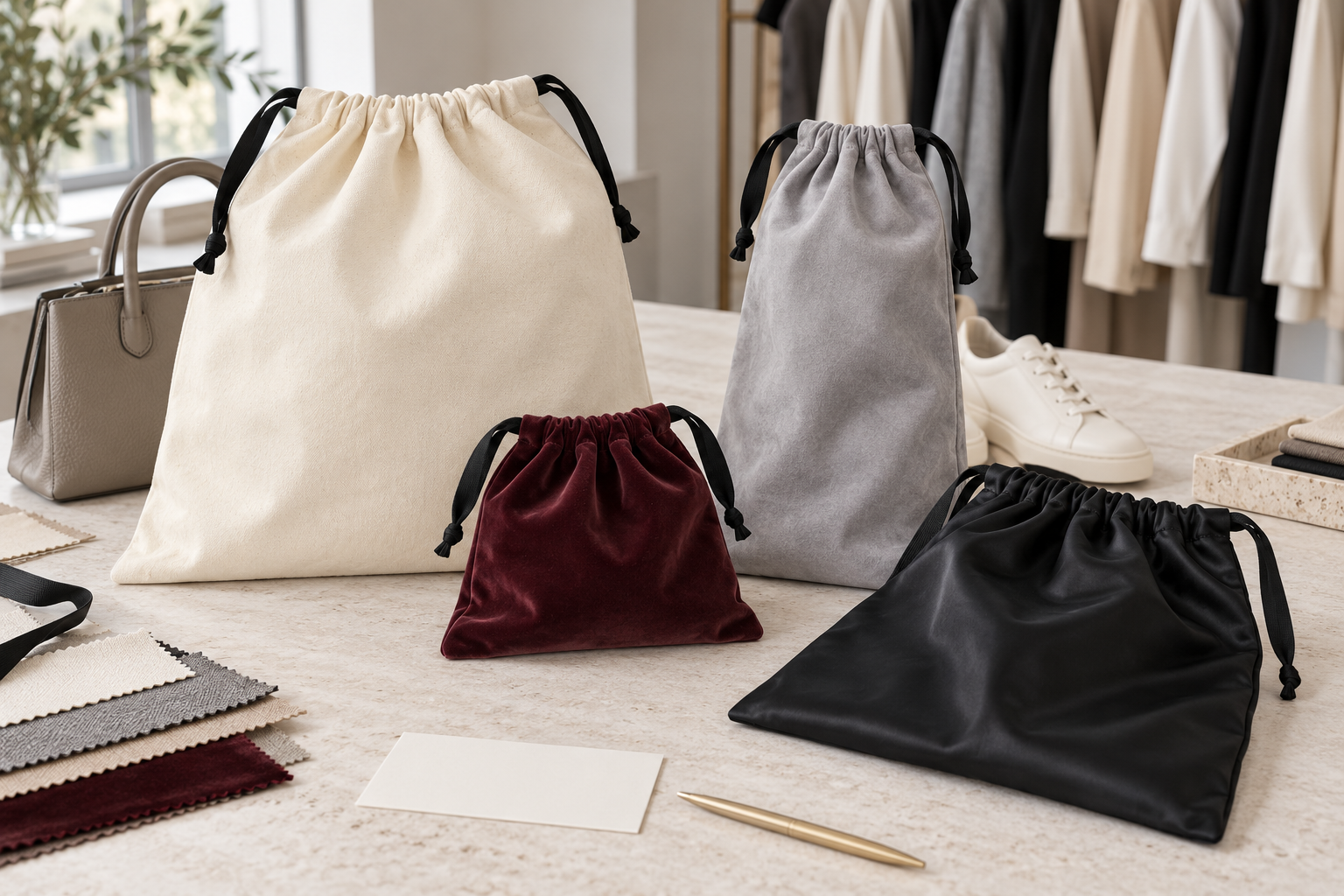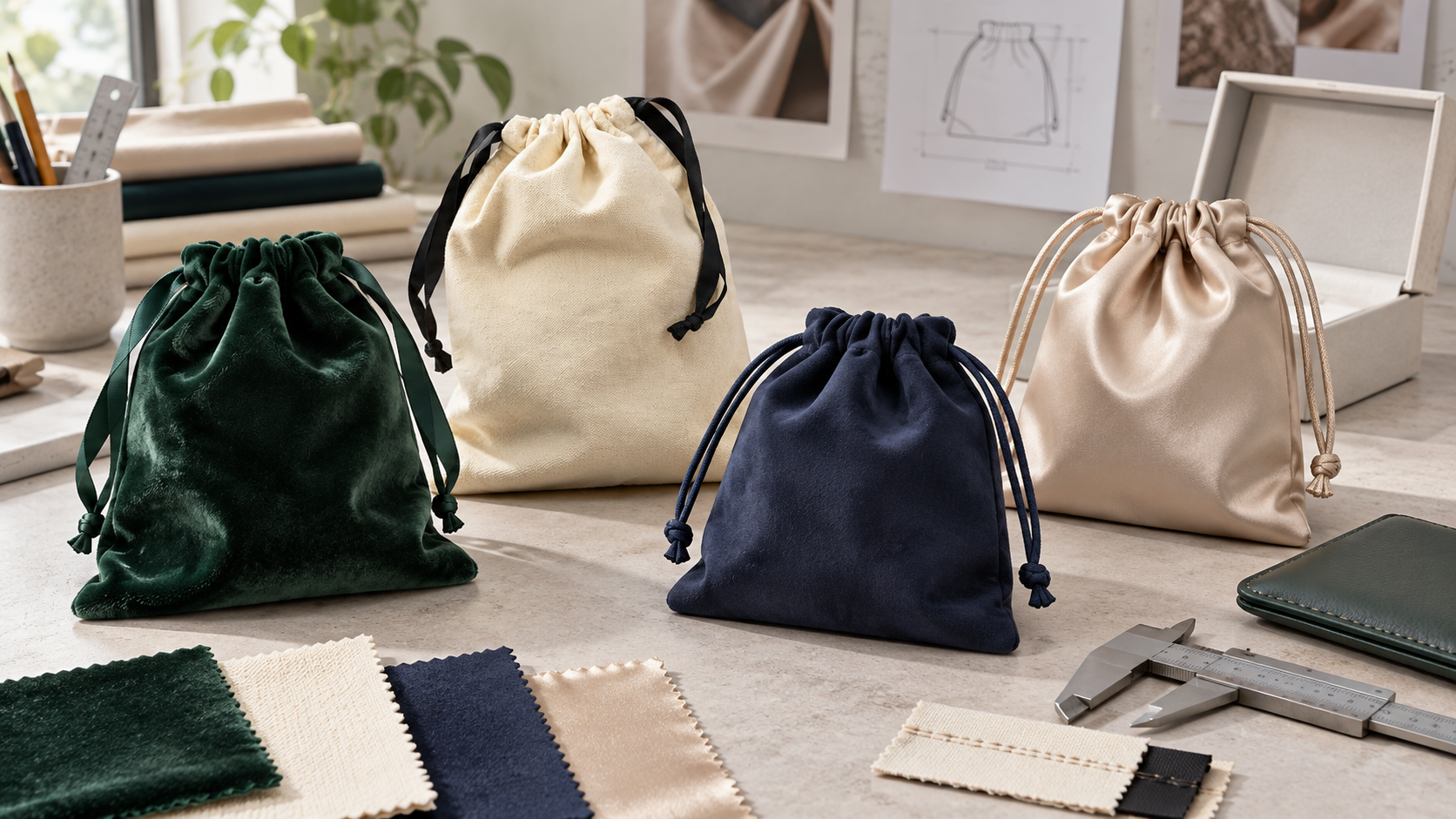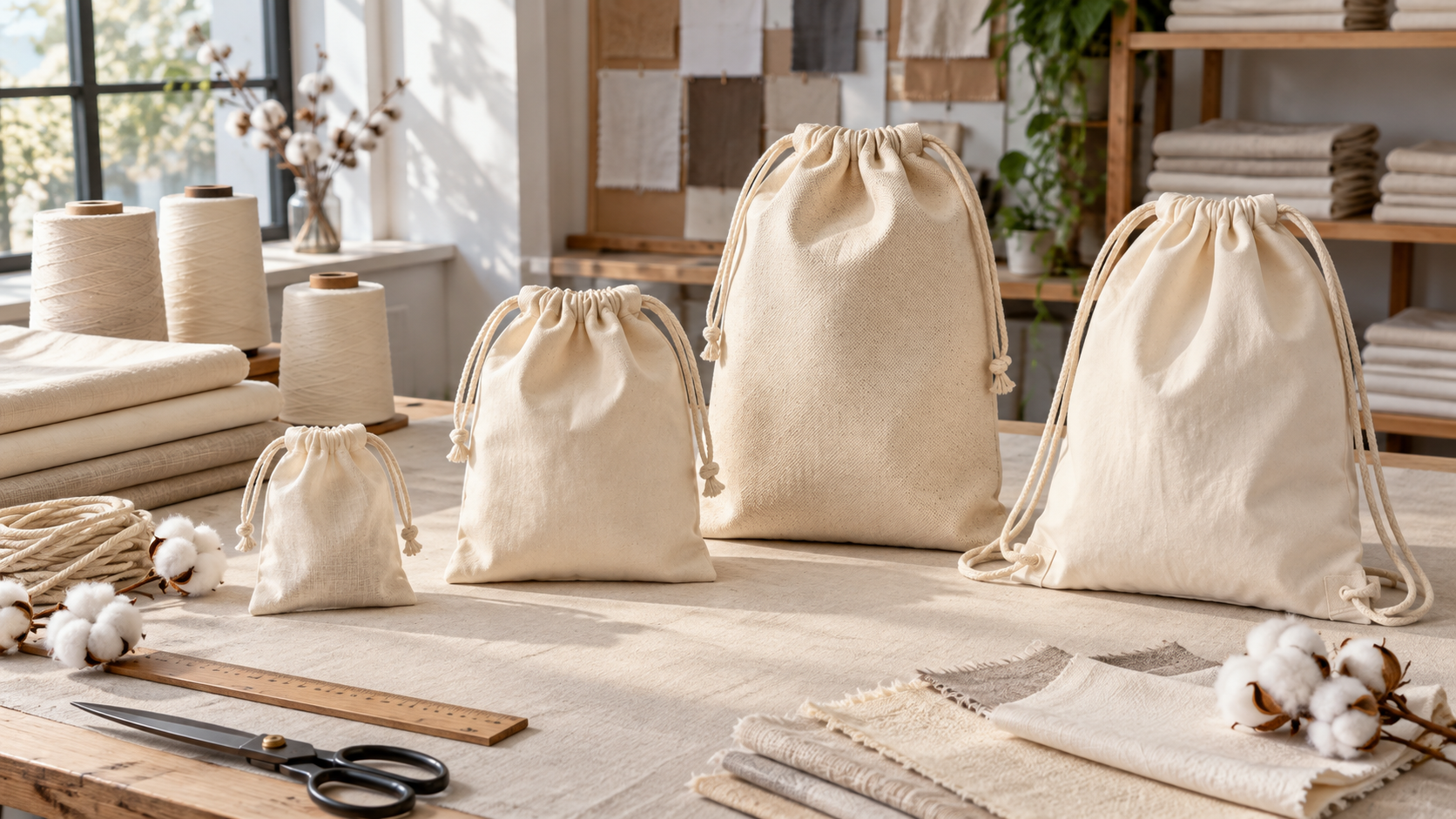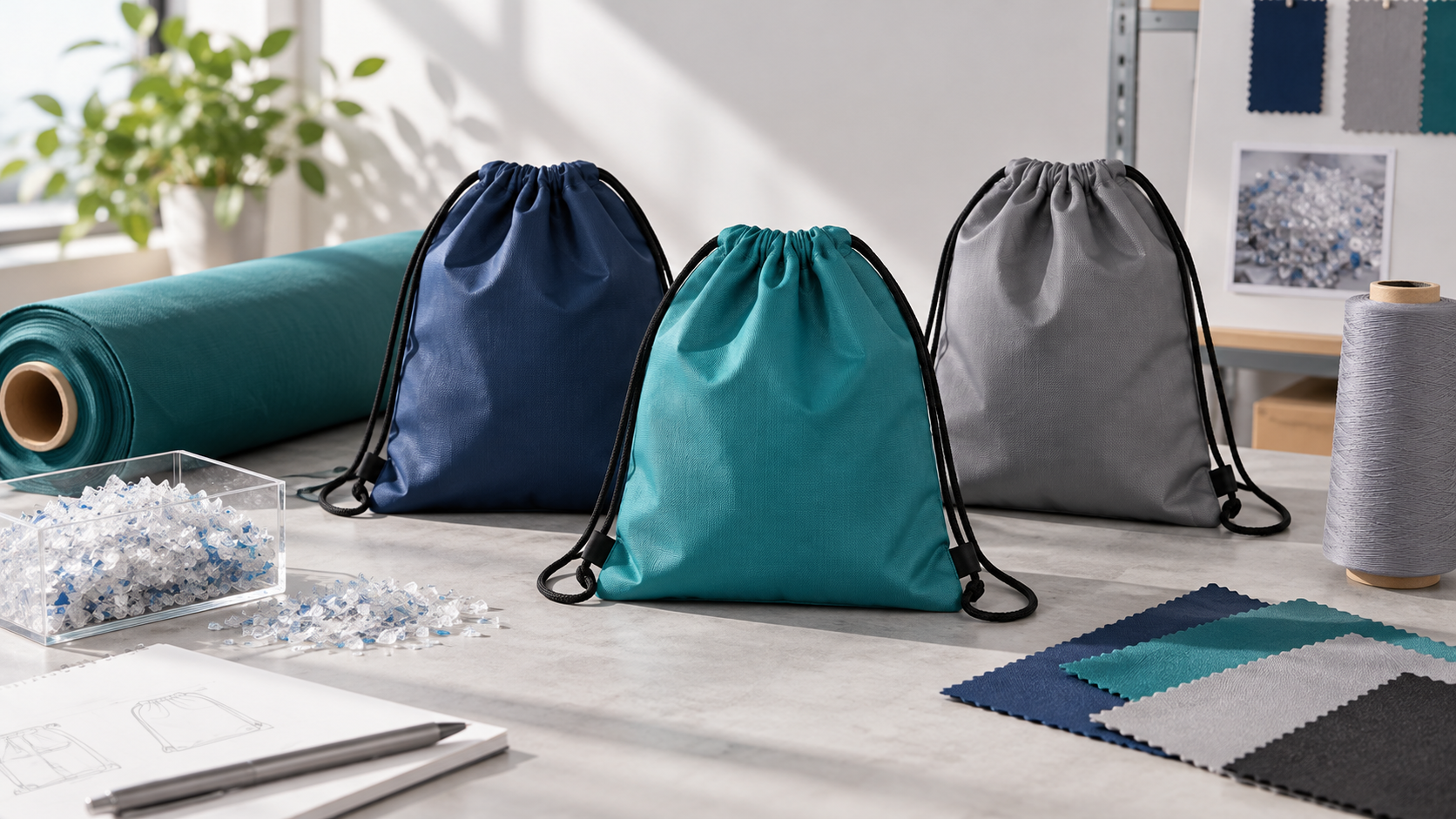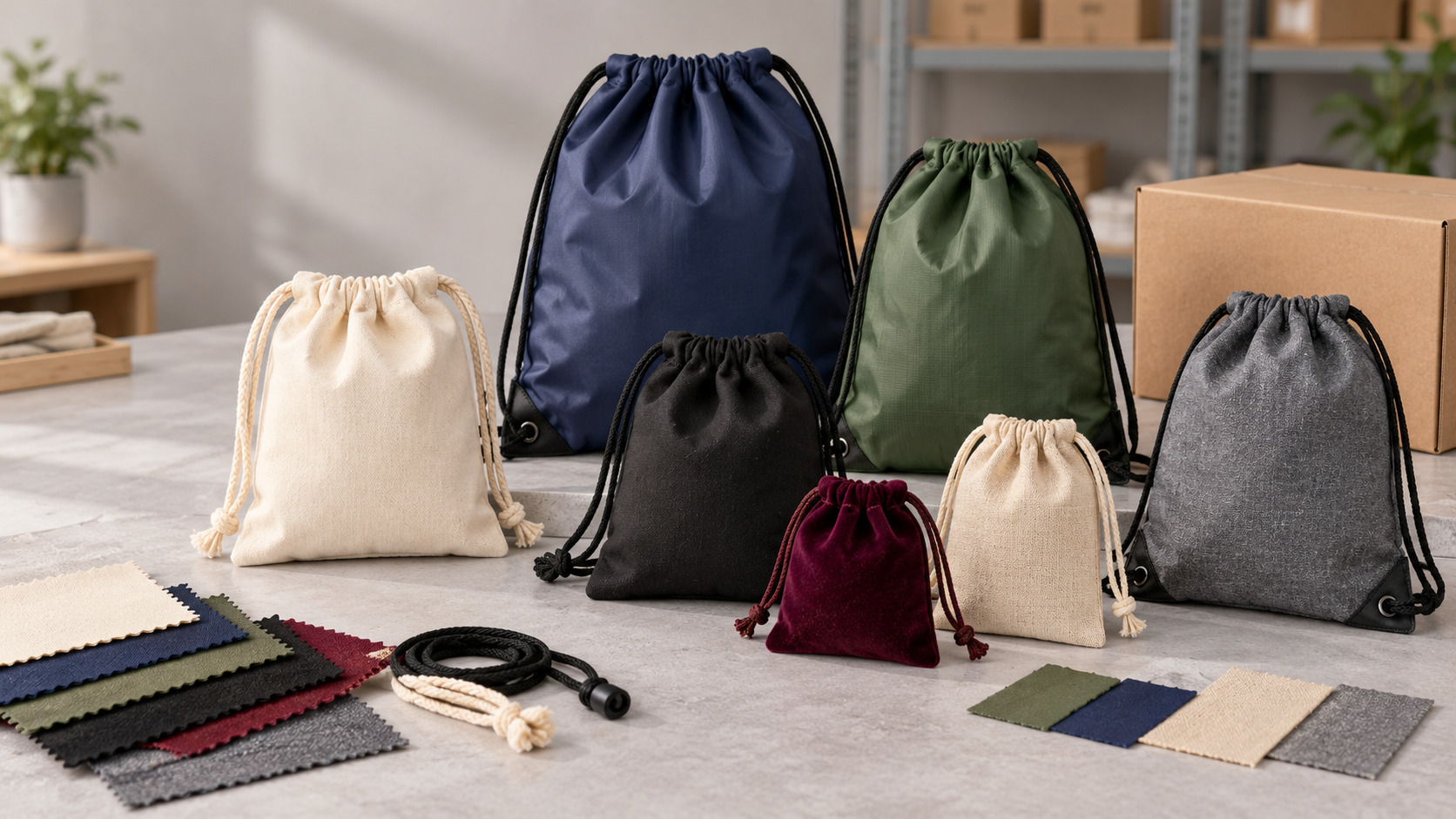
A buyer asks for 2,000 cosmetic bags in four colors. The total sounds production-friendly, but the factory does not sew one 2,000-piece batch. It may need four 500-piece outer-material lots, four zipper colors, two lining versions, several logo setups and market-specific packing. The order quantity stayed the same; the number of production runs did not.
Planning an order? Send the style and quantity split already known for an order-specific MOQ and schedule review. Include the finished size, material and construction, color and artwork allocation, logo method, packaging, total quantity, destination and required arrival date.
That is why cosmetic bag MOQ and production time should be planned together. Every color, material, logo, structure and packaging split can create another minimum quantity, approval or supplier lead time. A low headline MOQ may still produce a slow, expensive project when the specification is fragmented.
This guide explains the category-specific relationship between minimum order quantity and schedule. For cross-category planning ranges, see What Is the Typical MOQ for Custom Bags?. For the wider supplier framework, use the Custom Bag Manufacturer Guide. Buyers ready to define a style can review LUCKYSTAR’s custom cosmetic bag range.
Quick answer: use a route, not one universal number
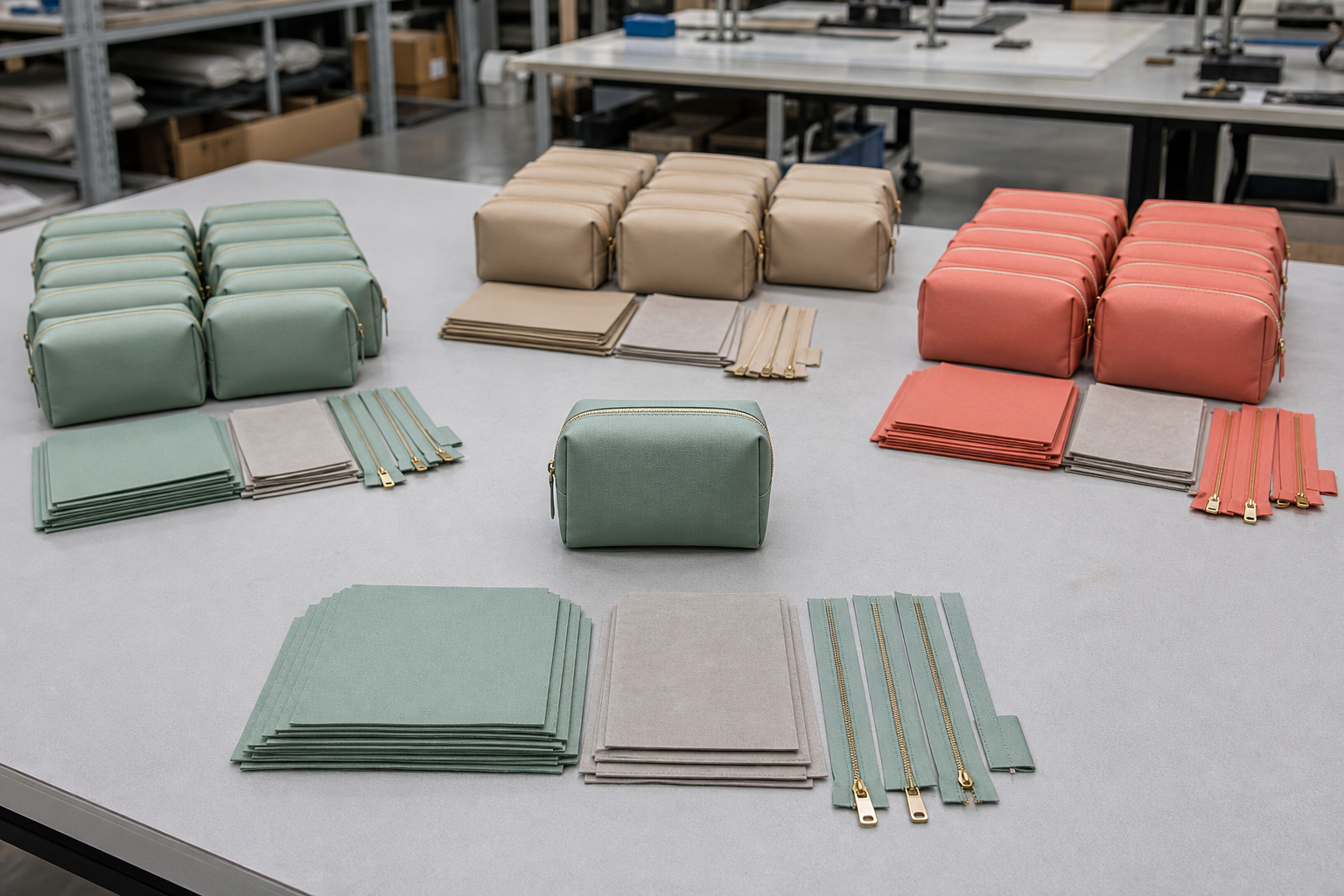
There is no universal MOQ for custom cosmetic bags. An available or production-proven pouch with simple branding may have a different floor from a new cut-and-sew style. Custom-dyed materials, printed lining, molded zipper pulls, plated hardware and specialized construction can each introduce a separate component minimum. Request a written MOQ for the finished bag and for every custom input after the style and SKU allocation are reviewed.
Timing follows the same logic. An available bag with simple branding can follow a shorter route than a new cut-and-sew project, while custom materials, tooling, several approval rounds or special testing add dependent stages. Request an order-specific schedule with named start and finish milestones. International transit comes after factory release unless the written schedule explicitly includes it.
The route comparison below is a planning framework, not a standing quotation or delivery commitment.The factory must review the exact specification, quantity allocation, material availability, approval process, current capacity and delivery point.
| Project route | Main MOQ driver | Main schedule driver | Main assumptions |
|---|---|---|---|
| Available or proven pouch + simple logo | Blank stock, decoration setup and packing allocation | Can start after the blank, artwork and packing route are approved | Existing size, material and color; uncomplicated decoration; standard packing |
| New cut-and-sew bag with common inputs | Material, decoration and packing floors by style, color and artwork | Requires brief, sample, material,bulk and release stages | Available material family and trims; controlled sample feedback; feasible capacity |
| Custom material, hardware or complex structure | Highest unavoidable material, tooling or component minimum | Adds sourcing, tooling, approval or testing dependencies | Color development, tooling, multiple sample rounds, special processes or testing |
| Repeat order to a controlled specification | Usually follows the established style/color policy | Can be shorter when materials and capacity are available | No design change, current components, valid approved references and timely booking |
1. A cosmetic bag has several MOQs, not just one
The finished-bag MOQ is the quantity quoted by the sewing supplier. Upstream vendors may apply separate minimums to body fabric, lining, zipper tape, metal finish, labels and printed packaging.The highest unavoidable constraint often determines the workable order—or creates surplus material that the buyer must pay for.
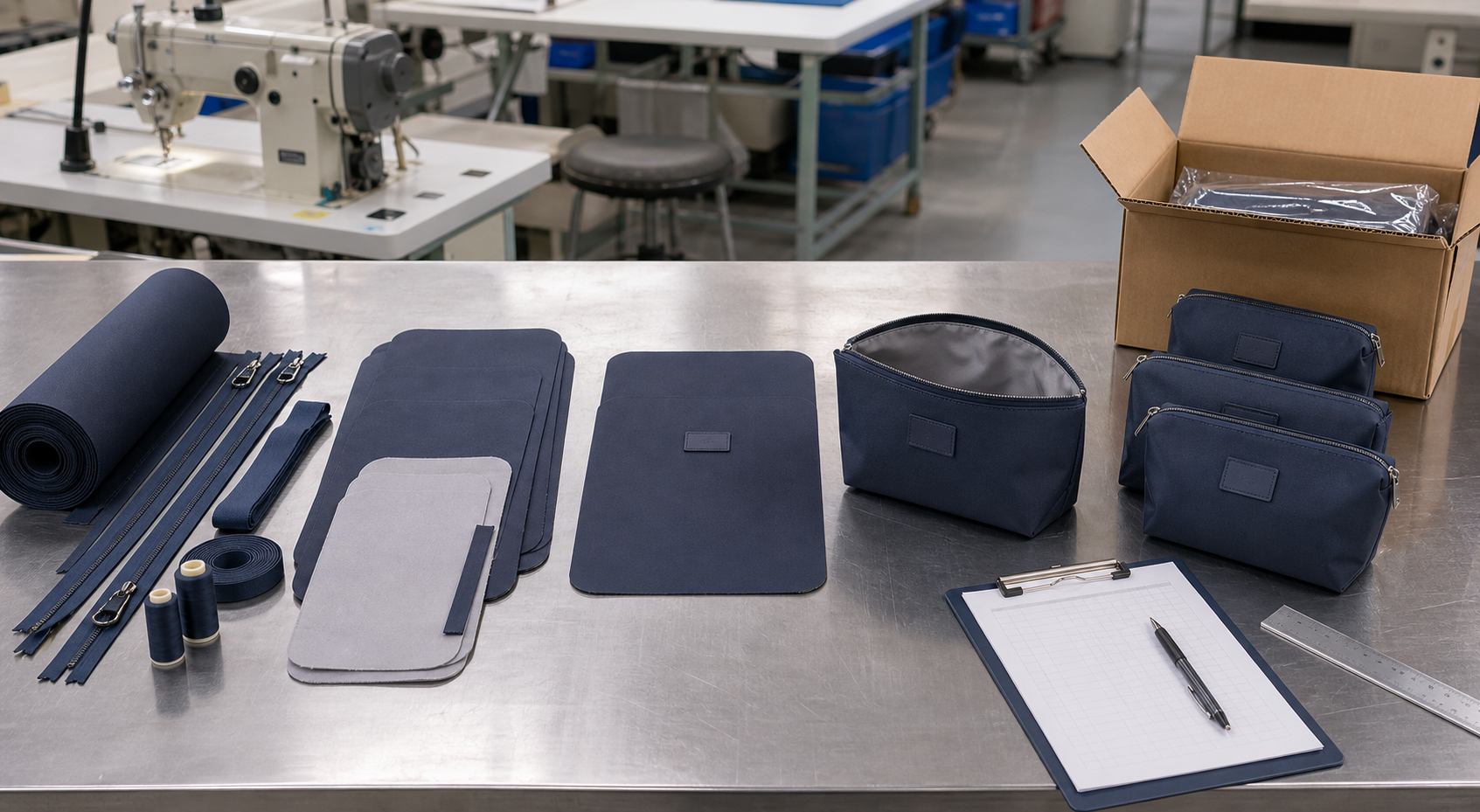
A lined cosmetic pouch makes this especially visible. One style can use two fabrics, interfacing, zipper, slider, binding, thread, a logo component and individual packaging. If each item is custom, the factory must align several supplier quantities and arrival dates before cutting can begin.
| MOQ layer | What creates the floor | Schedule effect | Useful buyer question |
|---|---|---|---|
| Outer material | Roll, dye lot, coating or print run | Lab dip, production and shade approval may control the start | Is the exact construction and color available from stock? |
| Lining and interlining | Separate color, print,weight or lamination | Another material booking and incoming check | Can one lining be shared across the color range? |
| Zipper system | Tape color, chain type, slider finish and custom puller | Dyeing, plating or molding can become the critical path | Which in-stock zipper is technically and visually acceptable? |
| Logo method | Screen, transfer setup, embroidery program, patch, plate or mold | Proofing and per-artwork setup add decision gates | Does each logo version require a separate setup or floor? |
| Retail packaging | Printed sleeve, hangtag, box,insert or market label | Printing and pack-out can delay goods that are already sewn | Can the first run use a common structure with variable labels? |
Material availability matters more than a generic material name. “Polyester” or “PU” does not identify a stock item. Weight, backing, surface, width, color and supplier reference affect both quantity and timing. Review Best Materials for Custom Cosmetic Bags and PU vs Polyester Cosmetic Bags before asking a factory to confirm the final minimum.
2. Split the purchase order before accepting the MOQ
Always translate the total quantity into a SKU allocation table. A 3,000-piece order may sound large, yet six colors create six 500-piece body lots. Adding two logo languages can turn those into twelve decoration allocations. If each market also needs a different information card, the packing team is managing twelve finished SKUs rather than one style.
Ask whether the MOQ applies per construction, outer color, lining color, artwork, zipper combination or packaging version. Do not assume that quantities can be pooled. A factory may combine cutting or sewing for shared inputs but still require minimum decoration or material quantities for every variant.
| Example allocation | Total pieces | Production lots created | Planning consequence |
|---|---|---|---|
| One style, one color, one logo | 2,000 | One main body/decoration route | Simplest material yield, setup and line scheduling |
| One style, four body colors | 2,000 | Four lots of 500 | Four color inputs and more changeovers; one shade can delay the range |
| Four colors, two logo versions | 2,000 | Up to eight finished allocations | Artwork proofing, identification and pack-out controls multiply |
| Four colors, shared lining and zipper | 2,000 | Four outer lots with pooled common components | Can reduce upstream fragmentation without changing the visible range |
| One common bag, four market labels | 2,000 | One bag run plus four packing SKUs | Bag production stays efficient; label approval and allocation remain critical |
3. MOQ and lead time meet on the critical path
Ordering more pieces does not automatically make production slower in direct proportion. A 2,000-piece run may fit one efficient line slot, while a 500-piece order with custom-dyed lining waits longer for its material than a larger stock-color order. The controlling item is the longest dependent task that must finish before the next stage can proceed.
For cosmetic bags, the critical path often begins with a custom color, zipper or logo component. It can later move to sample approval, a specialized sewing operation, inspection rework or printed packaging. Ask the supplier to name the current controlling task and update it when the project changes.
4. Build a category-specific production timeline
A useful schedule starts at the brief and ends at a named delivery milestone. “Thirty days” is incomplete unless it states what must already be approved and whether the end means packed goods, factory handover, vessel departure or warehouse arrival.
| Milestone | Planning dependency | Cosmetic-bag-specific output | Release gate |
|---|---|---|---|
| Brief review and quotation | Depends on brief completeness and unanswered commercial points | Dimensions, outer/lining route, zipper, logo, allocation and packing assumptions | Commercial route and open points accepted |
| First functional sample | Depends on approved inputs, construction, tooling and sample purpose | Bag shape, capacity, opening, pockets,lining and logo representation | Consolidated approval or numbered correction list |
| Revision and approval | Depends on the number and scope of controlled revisions | Corrected sample plus updated materials, measurements and artwork | Production reference is frozen |
| Bulk material preparation | Depends on availability, color development, tooling and supplier release | Outer, lining, interlining, zipper, hardware and packaging ready | Incoming checks and pre-production review pass |
| Cutting,decoration and sewing | Depends on quantity, SKU allocation, construction,capacity and approved inputs | Controlled lots assembled to the approved allocation | In-line findings closed and ordered quantity completed |
| Finishing, inspection and packing | Depends on inspection findings, pack-out complexity and release status | Thread cleaning, shape recovery, zipper check, SKU pack-out and cartons | Release decision and shipping data confirmed |
Some stages can overlap, but their sequence and duration differ from project to project. The general custom bag production time guide explains milestone scheduling and international transit in more detail. The Custom Bag Manufacturing Process shows how these stages connect from design to delivery.
5.Decide when the production clock really starts
A purchase order or deposit may start commercial activity, but it does not necessarily release cutting.A responsible bulk start normally requires the final specification, approved sample or defined production reference, artwork, quantity allocation, packaging, quality criteria and material decisions. If one item remains open, record whether the factory is waiting, proceeding at risk or completing only unaffected work.
Material may be reserved before final approval when the buyer accepts the commercial exposure. That can save time for an unchanged stock fabric. It becomes risky when size, dye color, print, lining or component details may still change. Write down ownership, cancellation limits and what happens to unusable material.
| Late change | What may restart | MOQ consequence | Schedule consequence |
|---|---|---|---|
| Bag dimensions | Pattern, sample, material consumption and packaging fit | Booked material may no longer yield the ordered quantity | Sampling and costing gates reopen |
| Body or lining color | Lab dip,material order and shade approval | A new per-color material floor can appear | The replacement lot may become the critical path |
| Zipper or puller | Compatibility check, ordering, plating or tooling | Component balance or mold quantity may exceed bag quantity | Assembly waits if no approved substitute exists |
| Logo size or method | Artwork proof, screen, program, die or panel preparation | Each artwork version can create a new setup floor | Decoration and cut-panel release are delayed |
| Retail packaging | Dieline, artwork,print proof and pack trial | Printer minimum may create surplus | Finished bags can wait unshipped for packaging |
Use the Custom Bag Sample Development Process to keep revision numbers, approval comments and the production reference connected.
6. Treat a repeat order as a verification exercise
A repeat cosmetic bag can move faster when the approved pattern, materials, artwork, packing and quality standard remain valid. However, “same as last time” is not a complete specification. Fabric or zipper references may have been discontinued, stored samples may have aged, and a new dye lot can still require shade approval.
Send the previous purchase-order reference and approved sample number, then list every intentional change. Ask the factory to verify material availability and capacity before reusing the earlier lead time. If the brand changes only the logo or packaging, separate that new approval path from the unchanged bag construction.
| Repeat-order checkpoint | If unchanged and available | If changed or unavailable |
|---|---|---|
| Pattern and dimensions | Existing cutting and sewing references may be reused | A new sample and consumption review may be required |
| Outer and lining materials | Bulk booking may begin after lot confirmation | Replacement sourcing, color approval and MOQ review reopen |
| Zipper and hardware | Known components reduce compatibility work | A substitute can affect appearance, function,price and timing |
| Artwork and labels | Approved files can move directly to controlled proofing | Every new version needs identification and approval |
| Factory capacity | A booked line window supports the established rhythm | Peak demand or a missed booking can extend the repeat schedule |
7. Construction complexity changes line capacity
A flat unlined pouch has fewer panels and handling steps than a structured cosmetic case. Adding full lining, binding, foam, pockets, elastic loops, a wide top opening, piping or a handle increases operations and inspection points. Clear film or coated materials may require different equipment and handling from woven textiles. The correct question is not only “How many pieces?” but also “How many minutes and specialist operations per piece?”
Quantity can improve efficiency after setup, but excessive SKU changes interrupt it. A line producing 5,000 identical pouches is easier to balance than a 5,000-piece order split across ten structures and colorways. Keep the construction common where the customer does not benefit from variation.
8.Reduce MOQ without creating a longer project
Some low-MOQ decisions genuinely simplify production. Others only move complexity elsewhere. For example, using a stock outer color can remove a dye lot, but insisting on a specially matched zipper reintroduces a separate minimum and wait. Adapt the visible features that matter most, then standardize the less visible components.
| Reduction lever | Why it can lower the floor | Likely time effect | Trade-off to approve |
|---|---|---|---|
| Use an existing pattern | Reduces pattern and line-development work | Can shorten sampling if fit is suitable | Less control over exact dimensions and structure |
| Choose available material colors | Avoids a custom dye lot | Removes color development and mill production | Brand color becomes a best available match |
| Share lining and zipper across colors | Pools common component quantities | Reduces separate procurement paths | Interior and trim are less individually matched |
| Use one decoration method and artwork | Limits setup and per-version minimums | Simplifies proofing and production identification | Fewer market or campaign variations |
| Adopt standard packing | Avoids printed packaging minimums | Removes printer and artwork dependencies | A simpler retail presentation |
| Place a paid pilot run | Can validate a process before scale when the factory route permits | Adds a deliberate pilot stage before the main run | Higher pilot unit cost and not suitable for every custom input |
9. Shorten production time by controlling decisions
The fastest responsible schedule is usually created before sewing begins. Send one complete brief, state which features are mandatory, provide vector artwork, identify every color and SKU quantity, and name the person who can approve. Consolidate sample comments in one numbered document instead of sending several conflicting messages.
Approve packaging early. The new guide to Custom Cosmetic Bag Packaging for Beauty Brands explains why labels, inserts and set assembly can hold finished bags at the end of production. Reserve capacity only when the approval dates are achievable. If a buyer misses a decision deadline, the factory may lose the planned line window even if the material is ready.
Do not remove inspection to recover time. Check first pieces and in-line production so a systemic issue is found before the whole quantity is completed.The Custom Bag Quality Inspection Checklist provides a framework for material, workmanship, function and packing controls.
10.Compare quotations on the same MOQ and schedule basis
Two suppliers can quote “500 pieces, 30 days” while offering different products and counting different dates.One may use stock fabric and count from approved artwork. Another may exclude sampling, packaging and final inspection. Normalize the quotation before treating either number as better.
| Quotation field | What must be stated | Why it matters |
|---|---|---|
| MOQ basis | Per order, style, color, artwork, material or packaging version | Prevents an apparently low total from becoming several noncompliant lots |
| Quantity tiers | Price at confirmed minimum, forecast quantity and next efficient tier | Shows setup absorption and a realistic growth path |
| Surplus components | Expected balance, ownership,payment and storage conditions | Reveals hidden material commitments |
| Timeline start | Deposit, approved sample, final artwork, material confirmation or another named gate | Makes lead-time claims comparable |
| Timeline finish | Packed goods, factory handover, port departure or delivered destination | Separates production from transit |
| Exclusions | Sample courier, tooling, tests, inspection, packaging, freight, duty and contingency | Prevents unit price and schedule gaps from surfacing late |
| Change policy | Which revisions trigger new price,MOQ or delivery dates | Keeps design decisions connected to commercial consequences |
For the wider landed-cost model, review How Much Do Custom Bags Cost?. A supplier should explain quantity and timing assumptions as clearly as the unit price.
Why choose LUCKYSTAR for cosmetic bag MOQ and production time?
LUCKYSTAR approaches MOQ as a component and production-planning question rather than offering one unexplained number. We review the cosmetic bag specification, quantity split and required date together so buyers can see which decisions drive the minimum and which task controls the schedule.
- Route comparison: available styles, adapted constructions and fully custom development can be evaluated against the launch volume.
- Component-level review: outer fabric, lining, zipper, hardware, logo and packaging minimums can be identified before order confirmation.
- SKU allocation planning: color, artwork and market splits are translated into real production lots rather than hidden inside one total.
- Milestone scheduling: sampling, approvals, materials, bulk work, inspection, packing and handover are separated into visible stages.
- Development support: OEM and ODM options help buyers balance differentiation with quantity and launch timing.
- Controlled quality gates: approved samples, first pieces, in-line checks and final inspection help protect the schedule from late surprises.
- Program coordination: buyers can combine cosmetic bags with selected items from LUCKYSTAR’s Product Range when planning broader campaigns.
Browse LUCKYSTAR’s custom cosmetic bags product page and send the desired dimensions, material direction, structure, colors, artwork split, packaging, total quantity, destination and required arrival date. Our How to Choose a Cosmetic Bag Manufacturer guide provides additional questions for evaluating the supplier behind the schedule.
Recommended buyer workflow
- Select the route: available/proven bag, adapted cut-and-sew style or new custom development.
- Prepare one product brief covering outer, lining, zipper, structure, logo, packing and use.
- Break the forecast into style, color, artwork and market quantities.
- Ask for the MOQ of both the finished bag and every custom upstream component.
- Request timeline ranges with named start and finish milestones.
- Develop and approve the sample using one controlled comment file.
- Freeze the production reference, allocation, packaging and quality plan.
- Confirm material readiness and factory capacity before releasing bulk work.
- Review first pieces and in-line findings before the full order is completed.
- Inspect, pack and release against the agreed SKU and delivery plan.
Return to the Custom Bag Manufacturer Guide when coordinating MOQ and timing with supplier capability, quality, price and repeat-order planning.
Frequently asked questions
What is the usual MOQ for custom cosmetic bags?
There is no reliable universal MOQ. The workable quantity can be set by the finished-bag route, outer or lining material, zipper color, logo setup, hardware, packaging and the number of SKUs. Send the specification and allocation table, then confirm the finished-bag and component minimums in writing.
Can I order 100 custom cosmetic bags?
It may be possible for an available style or simplified route, but it cannot be assumed. Ask the supplier to check the exact bag, stock status, logo method, packaging, component minimums and repeatability before confirming that quantity in writing.
Is the cosmetic bag MOQ per color?
It may be. Custom-dyed outer fabric and zipper tape often create a per-color constraint. Stock colors may offer more flexibility. Ask whether the quotation minimum applies to the total order or each color combination.
How long does custom cosmetic bag production take?
The schedule depends on the starting product, material and component availability, sample rounds, approval speed, tooling, SKU allocation, current capacity, inspection, packing and destination. Request dates for each milestone and confirm whether transit is included.
Does a larger order always take longer?
No. Material lead time, SKU fragmentation, construction and available factory capacity can matter more than the total alone. A larger uniform run can move more predictably than a smaller order divided across many custom colors and artworks.
Can material be ordered before sample approval?
Sometimes, when the input is confirmed and the buyer accepts the financial risk. Do not commit custom-dyed or printed material casually while dimensions, color or construction can still change. Record ownership and cancellation conditions.
How can a brand shorten the timeline safely?
Use available inputs where suitable, submit a complete brief, limit unnecessary variants, provide consolidated sample comments, approve packaging early, meet decision deadlines and perform first-piece and in-line checks. Removing quality control is rarely a safe recovery method.
Turn two headline numbers into one workable plan
A useful cosmetic bag MOQ states exactly what the quantity covers. A useful production time states exactly when the clock starts, what work occurs and where it ends. Connect those answers through the material plan, SKU allocation, approval gates and factory schedule.
LUCKYSTAR can then help identify a route that fits the brand’s volume without hiding surplus components or accepting a launch date that the specification cannot support.

Request an order-specific MOQ and schedule
Include the bag style, finished size, material and construction, color and artwork allocation, logo, zipper and packaging requirements, total quantity, repeat forecast if available, destination and required arrival date.
Send your project details through the contact form, or Email a project brief with this guide already referenced. The email link opens a draft for your review before sending.
MOQ, component minimums, material availability, sample route, capacity, pricing, production schedule and delivery terms are subject to specification and written confirmation.