Last reviewed: September 24, 2026
A custom bag sample is not a miniature bulk order. It is a paid development project that should reduce specific uncertainty: shape, fit, construction, materials, branding, function, manufacturability or the final production standard. The useful question is therefore not only "Can you make a sample?" It is "What decisions, physical outputs and records will this sample engagement deliver?"
This guide explains how to define a Sample Statement of Work, or sample SOW, with a custom sample bag manufacturer. It covers scope, fees, revision boundaries, material substitutions, ownership, evidence and production handoff. For supplier qualification, MOQ, costing, quality and delivery across the full order, use the Custom Bag Manufacturer Guide.
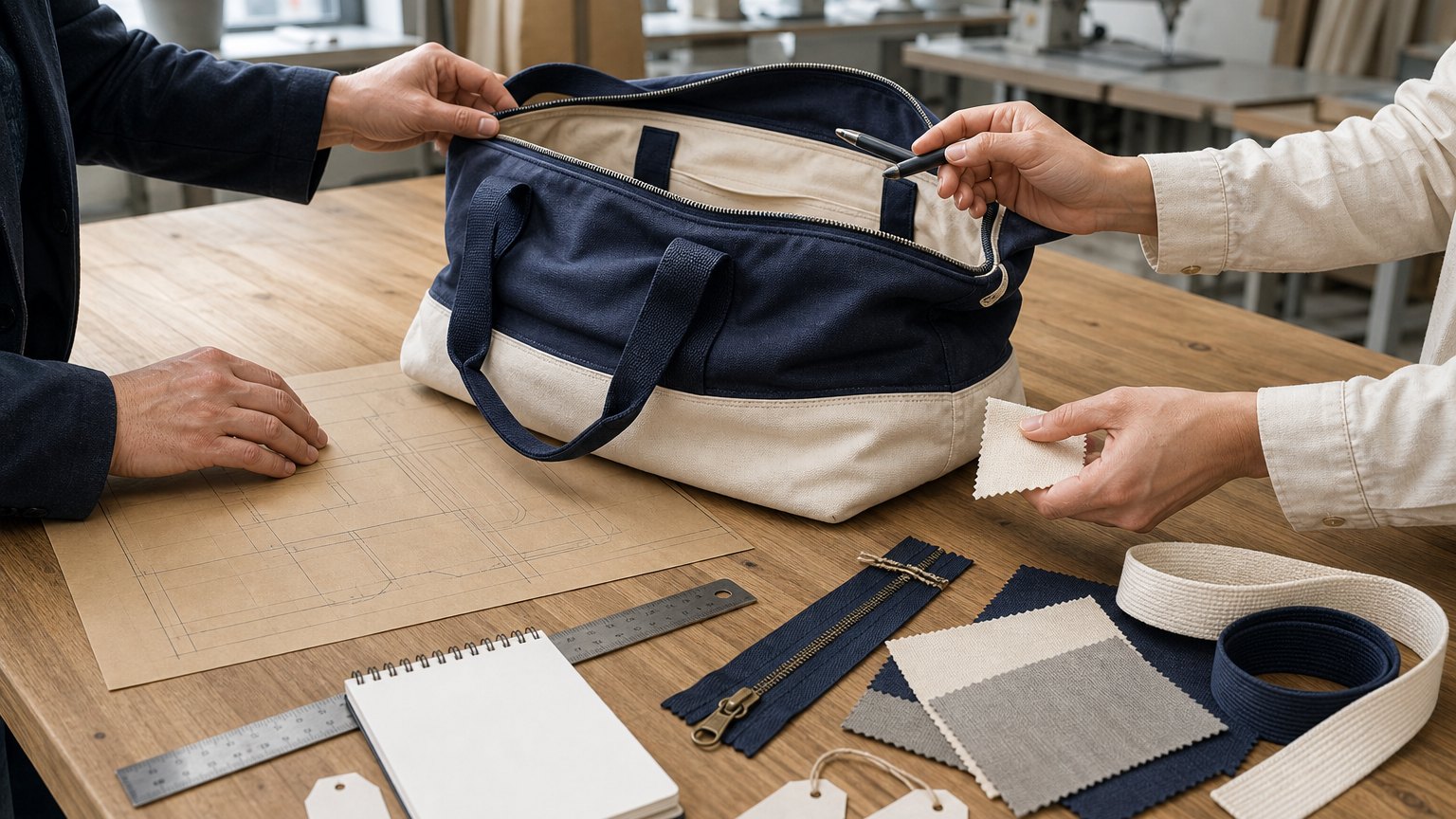
A sample quotation becomes decision-ready when the buyer and sample room agree on the question, deliverables, substitutions, revisions and handoff evidence.
Buyer Quick Answer
Send one controlled brief and ask the sample manufacturer to return a written scope before payment. The scope should name the sample objective, input revision, physical quantity, material status, pattern or tooling work, logo route, measurements, tests, evidence pack, included revision rounds, exclusions, schedule trigger, courier responsibility, ownership and the rule for approving or closing open points. A beautiful sample without those records may validate appearance while leaving bulk cost, materials and repeatability unresolved.
Scope: Manufacturer Engagement, Not Another Sampling Process
This page does not repeat the prototype-to-approval sequence covered in the Custom Bag Sample Development Process. It also does not replace the measurement and construction file explained in How to Prepare a Custom Bag Tech Pack. Its purpose is commercial and operational: defining exactly what the sample maker is being engaged to do, what evidence comes back and what can transfer to production.
What a Custom Sample Bag Manufacturer Actually Sells
The factory is selling skilled development time, not one unit at a bulk price. Work may include feasibility review, pattern engineering, small-quantity material sourcing, component matching, logo trials, hand cutting, first-time assembly, troubleshooting, measurement, testing, documentation and project communication. NIST's product design and development guidance connects prototyping with market validation, material selection, testing and the route to manufacturing. That broader development value explains why a sample fee cannot be judged against the future unit price alone.
Choose the Engagement Route Before Asking for a Fee
Three projects that look similar in an email can require very different work. A stock sample verifies an existing construction. A modified existing style may need a new size, material, pocket or logo application but reuse the base pattern. A ground-up OEM prototype requires pattern and construction development. State the route explicitly so suppliers do not quote different assumptions under the same phrase "custom sample."
Define the Decision the Sample Must Support
A sample should support a named decision: continue or stop the concept, select one construction, confirm capacity, approve decoration, test a failure risk, freeze the production reference or prepare retail photography. Do not ask one early prototype to prove every decision. If the sample uses substitute fabric, it may answer shape and pocket questions but cannot approve final color, hand feel or material performance.
Build the Sample SOW Before Payment
The SOW can be one or two pages. It should reference the current input revision, list buyer and supplier responsibilities, identify the sample type by purpose, state physical and digital deliverables, expose assumptions, define acceptance and record the commercial boundaries. ISO describes a specification as a document stating requirements and recognizes that documented information can provide evidence of results. A sample SOW applies that logic to a small but high-leverage development project.
Sample Objective and Deliverables Matrix
| Sample objective | Physical output | Minimum evidence | What it does not approve |
|---|---|---|---|
| Construction feasibility | One working prototype using stated available inputs | Pattern revision, substitution list, build notes and open issues | Final color, exact bulk material or production workmanship |
| Loaded fit and access | Prototype sized around the named contents | Payload list, fit observations, measurements and change decisions | Claims not included in the test plan |
| Decoration selection | Strike-offs or panels on representative surfaces | Artwork revision, method, size, color reference and substrate identity | Finished-bag placement unless separately checked |
| Pre-production approval | Production-representative bag in confirmed inputs | Final BOM, measurement report, approved references and closed open-point list | Lot conformity without production controls and inspection |
| Market presentation | Appearance-ready sample for review or photography | Statement of any cosmetic-only treatments or temporary components | Manufacturability or bulk cost unless explicitly validated |
Send One Controlled Input Bundle
The buyer bundle should contain one dated brief or tech pack, drawings, dimensions, intended contents, use case, material direction, component expectations, artwork, target quantity, destination, target market, timing and required evidence. Reference images can communicate direction but should not silently authorize copying. Remove outdated files from the active package and use one owner to issue each revision.
Create an Open-Decision Register
The first quotation should not pretend unresolved choices are final. List open decisions such as exact fabric, zipper series, lining color, reinforcement, print method, packaging or load target. For each, name who proposes the answer, what evidence will close it and whether it affects the fee or timeline. This prevents a temporary choice from becoming an accidental approval.
Require a Feasibility Review Output
"We can make it" is not a feasibility review. Ask for identified construction risks, missing dimensions, component conflicts, likely MOQ drivers, custom tooling, processes outside the assigned sample room, and differences between sample and bulk methods. NIST's MEP material describes Design for Manufacture as considering fabrication, assembly, testing, procurement, shipping, delivery and service during design. For a bag, feasibility should similarly look beyond the sewing machine.
Control Substitute Materials Explicitly
Available material can accelerate a shape prototype, but every substitution needs a status: visually representative, structurally representative, functionally representative or temporary only. Record supplier reference, composition or construction, weight or thickness where relevant, color status and expected bulk replacement. Never approve "similar fabric" without defining what similarity is meant to prove.
Separate Visual and Functional Equivalence
A substitute may match color but change stiffness, seam behavior, coating adhesion or cutting yield. Another may behave correctly but be the wrong shade for brand approval. Use two columns in the sample record: appearance relevance and performance relevance. This makes it possible to approve the sample's geometry while leaving material color or durability formally open.
Request a Sample BOM
The sample bill of materials should identify every visible and functional component actually used, including outer, lining, interlining, foam, zipper, slider, puller, webbing, reinforcement, thread, labels, decoration and packaging. Mark exact, proposed and substitute items. The sample BOM becomes the bridge between what the buyer touched and what the bulk quotation assumes.
Clarify Pattern, Artwork and Tooling Ownership
Before paying, ask who owns and may reuse paper patterns, digital patterns, grading, artwork preparation, print screens, embroidery files, dies, molds, custom hardware drawings and physical tooling. State whether the buyer receives source files or only the sample, whether storage is included, and what happens if the project stops or transfers. Do not assume a sample fee automatically purchases every development asset.
Scope Custom Components as Separate Mini-Projects
A custom puller, molded buckle, metal plate, printed lining, branded zipper or special foam can have its own artwork approval, tooling charge, minimum, lead time and sample evidence. Decide whether the first bag prototype uses a placeholder or waits for the custom component. If it uses a placeholder, the approval should say which interfaces remain unverified.
Understand the Sample Fee Anatomy
Ask the quotation to separate or explain pattern work, materials, components, decoration setup, custom tooling, sample-room labor, test work, documentation, revision allowance, packaging, courier and taxes or import charges where relevant. The point is not to force identical accounting. It is to reveal why two fees differ and which deliverables disappear with the cheaper option.
Confirm What the Fee Includes and Excludes
Common exclusions include bulk-only material development, laboratory testing, custom molds, repeated artwork changes, extra colorways, duplicate approval samples, photography finishing, courier, duties and additional revision rounds. Ask whether any portion is credited against a future purchase order and the exact conditions for that credit. A verbal "sample fee refundable" is not a commercial rule.
Budget Revisions by Decision Round
Revision count is less useful than revision scope. Define an included round as one consolidated comment set against one named sample version. State whether the next build is complete or whether panels, strike-offs or digital confirmation can close selected items. Drip-fed comments create hidden rounds and make schedule responsibility impossible to see.
Classify Changes Before Repricing
Use three change classes. A correction brings the sample back to the agreed input and should follow the nonconformance rule. A refinement changes a controlled detail while preserving the concept. A redesign changes size, structure, material system, custom component or use requirement and may reset fee and timing. Record the classification before work restarts.
Define the Schedule Start Trigger
"Sample in ten days" is incomplete. The start trigger may require the accepted SOW, payment, usable artwork, complete dimensions, available material confirmation and receipt of a reference sample. The finish point may be factory completion, internal approval, courier collection or buyer receipt. State working days, excluded procurement time and which decision can pause the clock.
Use One Buyer Approval Owner
Design, marketing, procurement and quality can all review the sample, but the manufacturer should receive one numbered decision list from one authorized owner. Contradictory messages create uncontrolled scope. The owner should separate mandatory corrections, requested refinements, questions and accepted deviations, then link every comment to a photograph, measurement or requirement.
Request a Submission Evidence Pack
A useful sample submission includes sample ID, style and revision, date, actual BOM, substitution and open-point lists, measurement report, construction or artwork evidence, tests completed, deviations, photographs and the supplier's recommended next decision. ISO's design and development guidance separates inputs, outputs, verification, validation and changes; the evidence pack makes those distinctions practical for a bag project.
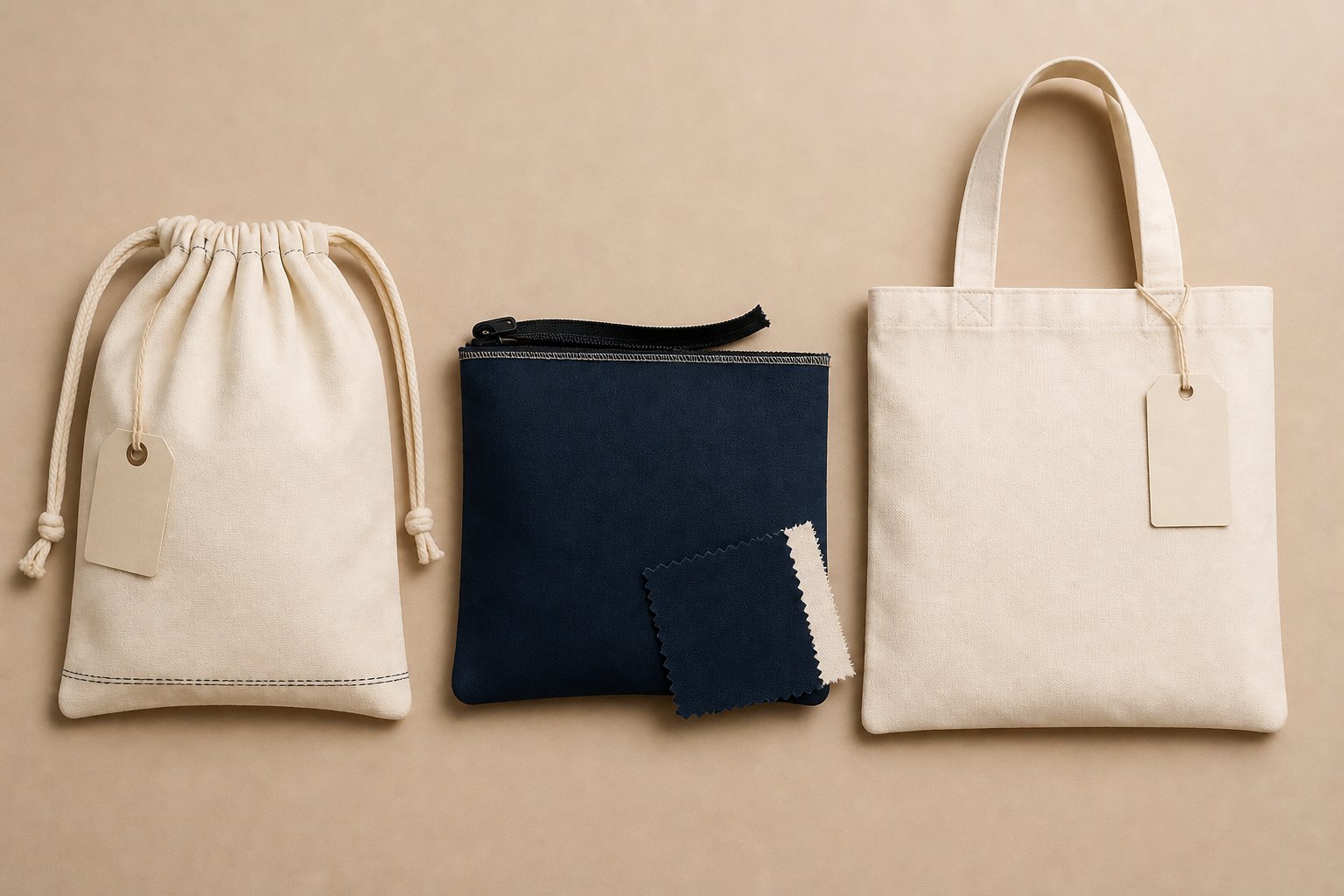
A construction prototype, material reference and production-representative approval sample answer different questions; the SOW must state which one is being delivered.
Do Not Let Sample Names Replace Definitions
Proto, counter sample, fit sample, development sample, pre-production sample, golden sample and shipment sample are used differently by companies. Define each by purpose, inputs, method and approval gate. The category-specific cosmetic bag sample development guide demonstrates why a loaded-fit prototype and a production approval sample need different evidence.
Decide How Many Physical Samples Are Required
One unit may be enough to review shape but not enough when the buyer, factory, test laboratory, photography team and approval owner each need controlled evidence. Destructive tests consume samples. Colorways and material routes may need separate units or panels. Define quantity by decision and retention need, not by a universal rule.
Protect the Sample During Shipping
State how the bag is shaped, filled, folded, protected and labeled for courier transport. Compression can distort foam, structure, print, coating and measurements. Ask for completion photographs before packing and record recovery time after receipt. The buyer should confirm the delivered sample ID before reviewing it against the report.
Approve Against Requirements, Not Excitement
Review intended contents, function, measurements, materials, construction interfaces, closure, comfort, decoration, workmanship, packing and open points in a fixed order. The new Bag Quality CTQ Acceptance Plan shows how to turn important customer needs into measurable acceptance lines instead of relying on "looks good."
Use Photographs for Triage, Not Full Approval
Photos and video can close obvious artwork, pocket, color-direction or construction questions, but they cannot reliably prove hand feel, usable capacity, comfort, operating force, odor, internal finish or subtle color. If a physical sample will not be sent, define exactly which decisions may be approved remotely and which remain open.
Convert Approval Into a Production Handoff
Approval should identify the exact physical sample, document revision, final BOM, measurements, artwork, approved deviations, test evidence, packing direction and closed open-point list. The sample itself is one artifact, not the entire standard. The custom bag manufacturing process explains how this package becomes a procurement and pre-production release.
Keep Sampling and Bulk Quotations Connected
After each significant sample decision, update bulk cost, MOQ and lead-time assumptions. A new zipper, reinforcement, material width or packaging method can change all three. Use the dedicated guides to compare custom bag cost, understand the typical MOQ for custom bags, and manage changes without hiding their commercial effect.
When the Sample Maker and Bulk Factory Differ
Specialist prototype work can be useful, but transfer risk rises when another factory must recreate the pattern, component sources, construction method and tacit decisions. Ask whether source patterns and build notes transfer, whether the bulk factory has reviewed feasibility, and who owns corrective work after handoff. A sample is not production-ready merely because another workshop made it successfully once.
Evaluate the Sample Manufacturer's Capability
Review experience with the actual bag construction, pattern-making skill, component sourcing, sample-room equipment, documentation discipline, test access, communication and the connection to bulk engineering. Supplier selection still requires business and production evidence; use How to Choose a Custom Bag Manufacturer for the broader qualification checklist.
Watch for Sample Engagement Red Flags
- The fee is quoted before the supplier identifies the sample objective or missing inputs.
- Substitute materials are used but not recorded.
- Every revision message creates an unexplained new charge.
- The supplier will not identify the pattern or sample revision.
- A cosmetic sample is presented as proof of bulk manufacturability.
- Approval is requested while cost, BOM, custom tooling or open points remain unclear.
- No handoff evidence connects the sample to production.
Compare Sample Manufacturers on One SOW
| Comparison field | Supplier A | Supplier B | Buyer decision |
|---|---|---|---|
| Objective and physical quantity | Record exact scope | Record exact scope | Are both answering the same question? |
| Materials and substitutions | Exact, proposed and temporary items | Exact, proposed and temporary items | Which approvals will remain open? |
| Development assets | Pattern, tooling and artwork deliverables | Pattern, tooling and artwork deliverables | What transfers and who owns it? |
| Revisions | Included round and change boundary | Included round and change boundary | What triggers more fee or time? |
| Evidence | BOM, measurements, tests and open-point record | BOM, measurements, tests and open-point record | Can the output support production? |
| Schedule | Start trigger, completion point and exclusions | Start trigger, completion point and exclusions | Are the dates truly comparable? |
Use a Sample SOW Approval Checklist
| SOW section | Required entry | Approval question |
|---|---|---|
| Identity | Style, version, owner and date | Is everyone using the same input? |
| Objective | Decisions the sample will support | What uncertainty should be removed? |
| Deliverables | Units, panels, records, files and retained samples | What exactly returns to the buyer? |
| Assumptions | Substitutions, open decisions and excluded evidence | What cannot be approved yet? |
| Commercial scope | Fee, credit rule, revisions, tooling, courier and taxes | What could create another charge? |
| Schedule | Start, pauses, completion and shipping point | When does each clock start and stop? |
| Ownership | Patterns, tooling, files, sample and reuse rights | Can the project be reproduced or transferred? |
| Closure | Approval, rejection, accepted deviation or next SOW | How is this engagement formally completed? |
Measure the Sample Program, Not Just the Sample
Track first-submission decision completeness, open points per round, correction versus redesign rate, days waiting for buyer input, days waiting for custom components, evidence completeness, and changes discovered after approval. These metrics show whether the SOW removes uncertainty or merely moves it downstream. They also improve future timing estimates without promising a universal number.
Why Work With LUCKYSTAR for Custom Bag Samples?
LUCKYSTAR can review a project as a defined sample engagement across tote, drawstring, cosmetic, shopping, cooler and other custom bag categories. The discussion can identify the appropriate route, expose missing inputs, define temporary versus final materials, align the sample BOM with the bulk assumption, and return a versioned decision package.
For repeat programs, the same discipline supports a controlled supplier handoff and product family. The custom tote bag supplier program shows how records protect reorders, while the OEM bag product platform guide explains how shared modules and change control support multiple SKUs.
Ask LUCKYSTAR for a custom bag sample SOW review. Send the bag type, intended use, dimensions, reference files, materials, logo, quantity target, destination, required date and the decisions the sample must support.
Frequently Asked Questions
How much does a custom bag sample cost?
There is no reliable universal fee. Pattern complexity, materials, components, logo setup, tooling, labor, tests, documentation, revisions and courier all matter. Compare quotations against the same SOW and ask what may be credited to a bulk order.
How long does a custom bag sample take?
Timing depends on input readiness, material and component availability, construction, tooling and revision decisions. Require a style-specific estimate with a start trigger and separate courier time instead of relying on one generic promise.
Can a bag manufacturer sample from a photo?
A photo can communicate direction, but dimensions, contents, materials, internal structure, components, performance, branding and legal design rights still need definition. Use it as an input, not a complete specification.
Who owns the bag pattern after sampling?
Ownership depends on the written agreement. Confirm rights to paper and digital patterns, grading, artwork files, molds, dies and custom component drawings before payment. A sample fee does not automatically answer that question.
Should the first prototype use final materials?
Only when that is necessary and practical for the decision. Available substitutes can accelerate construction learning, but their visual and functional relevance must be documented. A production approval sample should use confirmed representative inputs unless deviations are explicitly accepted.
Does an approved sample guarantee bulk quality?
No. It defines important product evidence but does not control every production unit. Bulk still needs controlled inputs, first-off and in-line checks, change control and final release. Use the Custom Bag Quality Inspection Checklist for those production gates.
Turn the Sample Request Into a Transferable Decision Package
A useful custom bag sample engagement begins with a defined uncertainty and ends with a physical output plus records that support the next decision. When objective, substitutions, fee, revisions, ownership, evidence and handoff are explicit, the sample can reduce both technical and commercial risk instead of becoming an attractive but isolated one-off.
Review the current custom bag range, then connect the sample SOW to the broader Custom Bag Manufacturer Guide, and use the cost and lead-time optimization guide to simplify unnecessary variation before starting another round.
Email a prefilled sample SOW brief