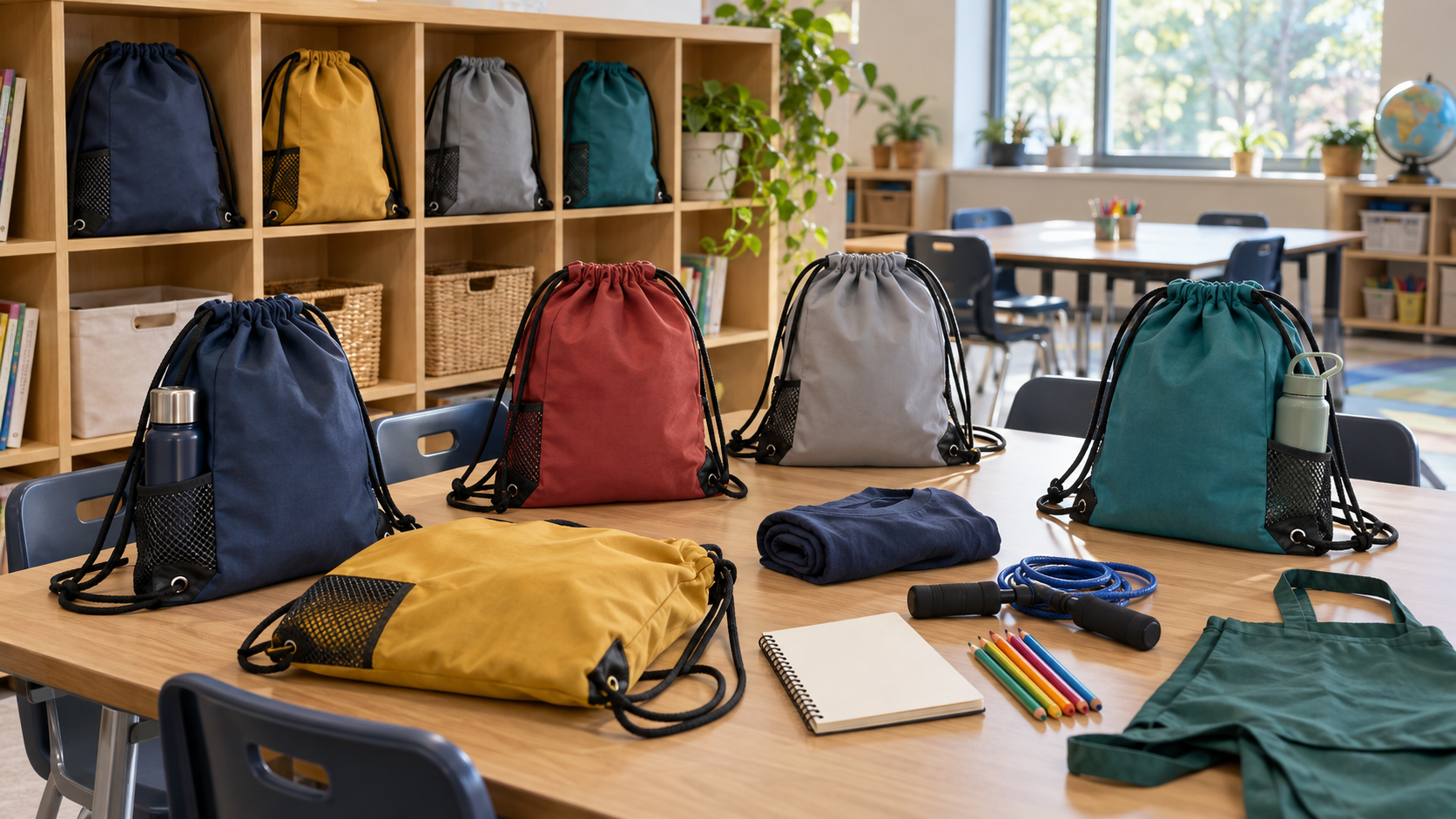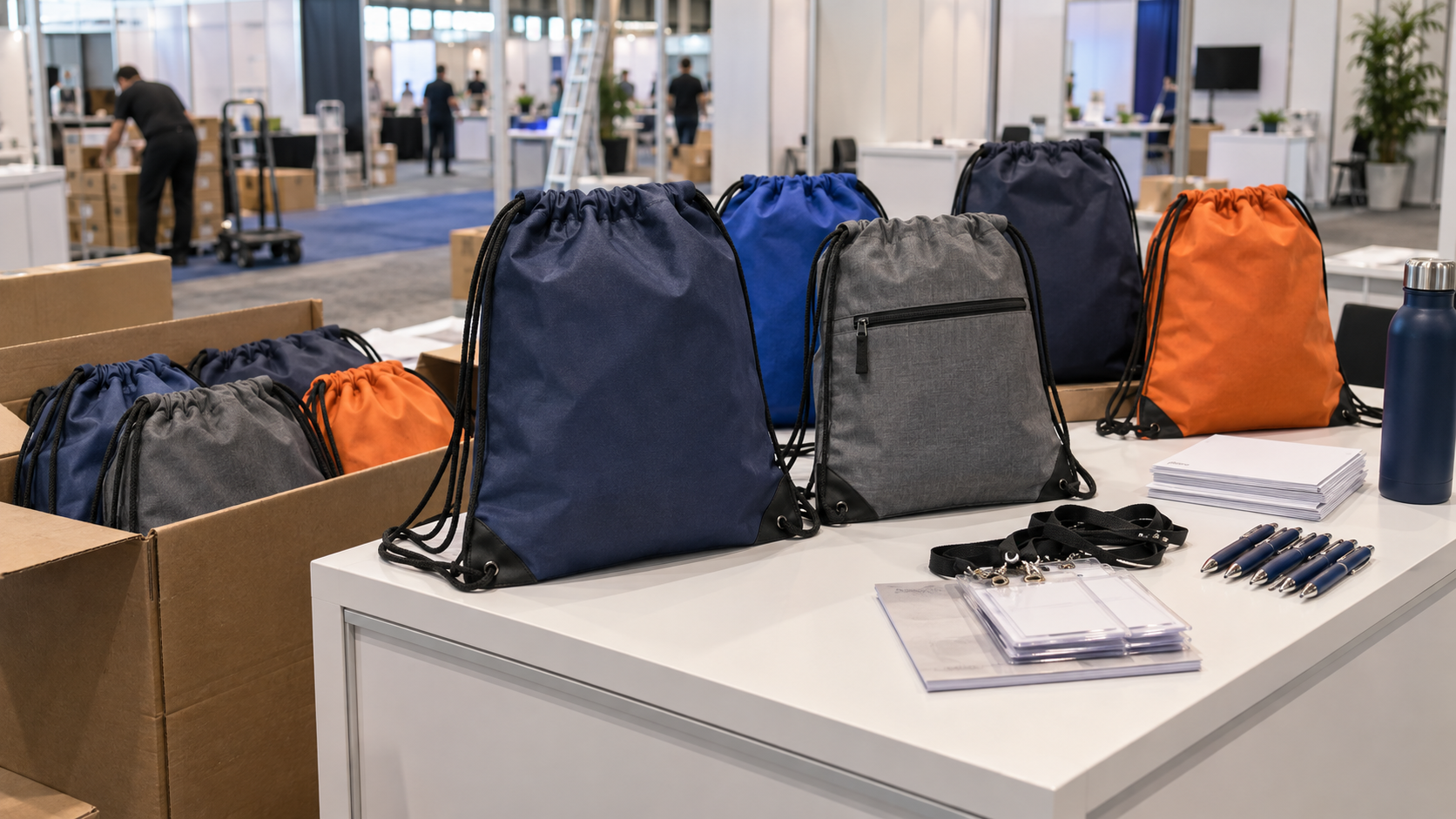
Custom Drawstring Bags for Sports Teams
Custom drawstring bags for sports teams work best when they are specified as equipment, not treated as generic promotional giveaways. The right bag must fit the actual kit, survive repeated loading, carry an authorized team identity, remain comfortable on the route from locker room to field, and arrive sorted so coaches do not spend hours matching names, numbers, and colors.
The practical answer is to start with a gear list and use case, then specify size, material, cord system, reinforcement, decoration, personalization, testing, and packing. A lightweight bag may be appropriate for a one-day tournament pack; a season-long training bag may need a stronger fabric, reinforced load points, ventilation, and a pocket for small items. There is no single “best” sports drawstring bag for every team.
This guide gives clubs, schools, academies, event organizers, distributors, and merchandise buyers a complete sourcing framework. It also explains how LUCKYSTAR can support an order-specific development process for custom drawstring bags, subject to the final specification, sample approval, applicable market requirements, and written commercial confirmation.
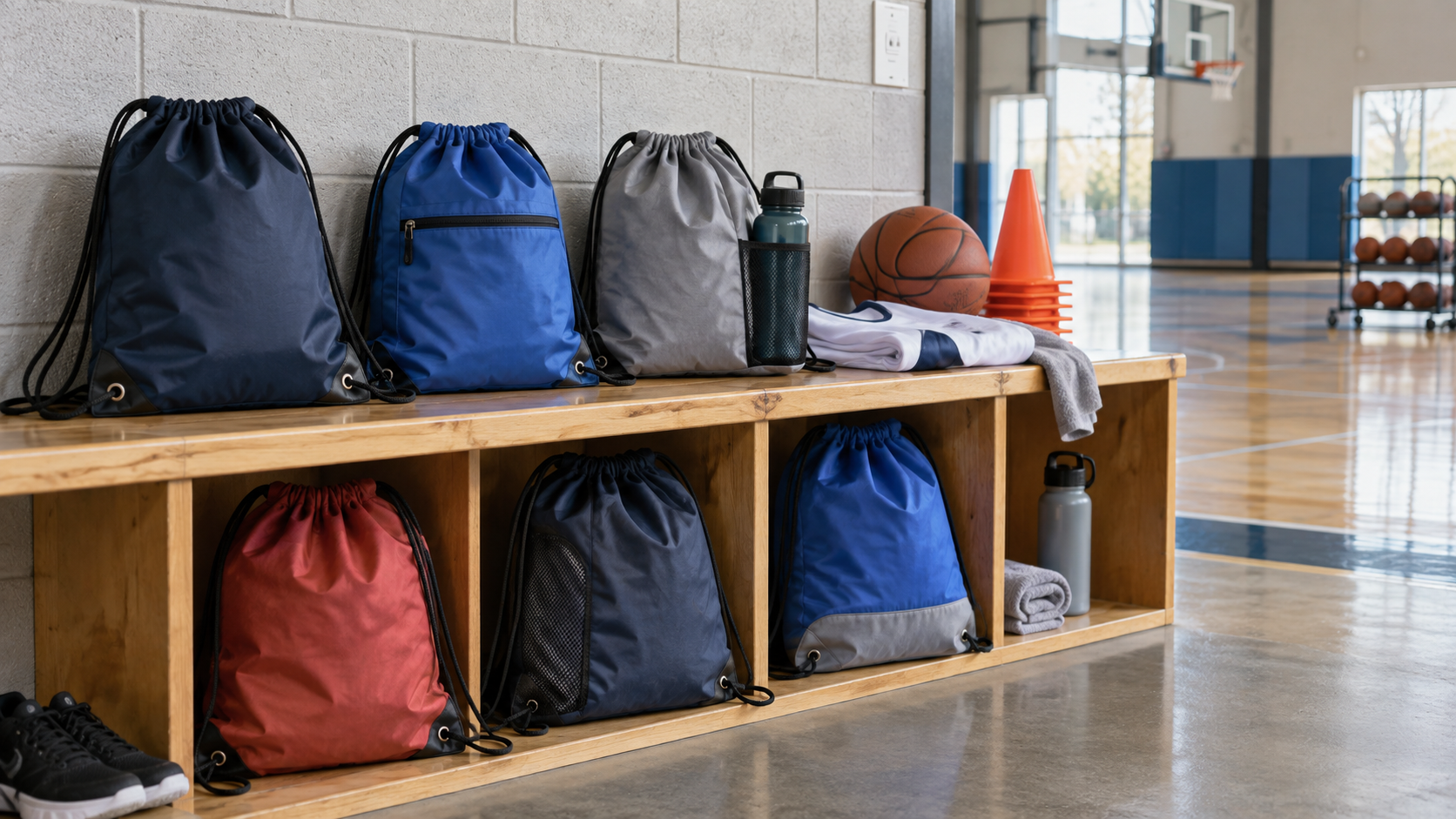
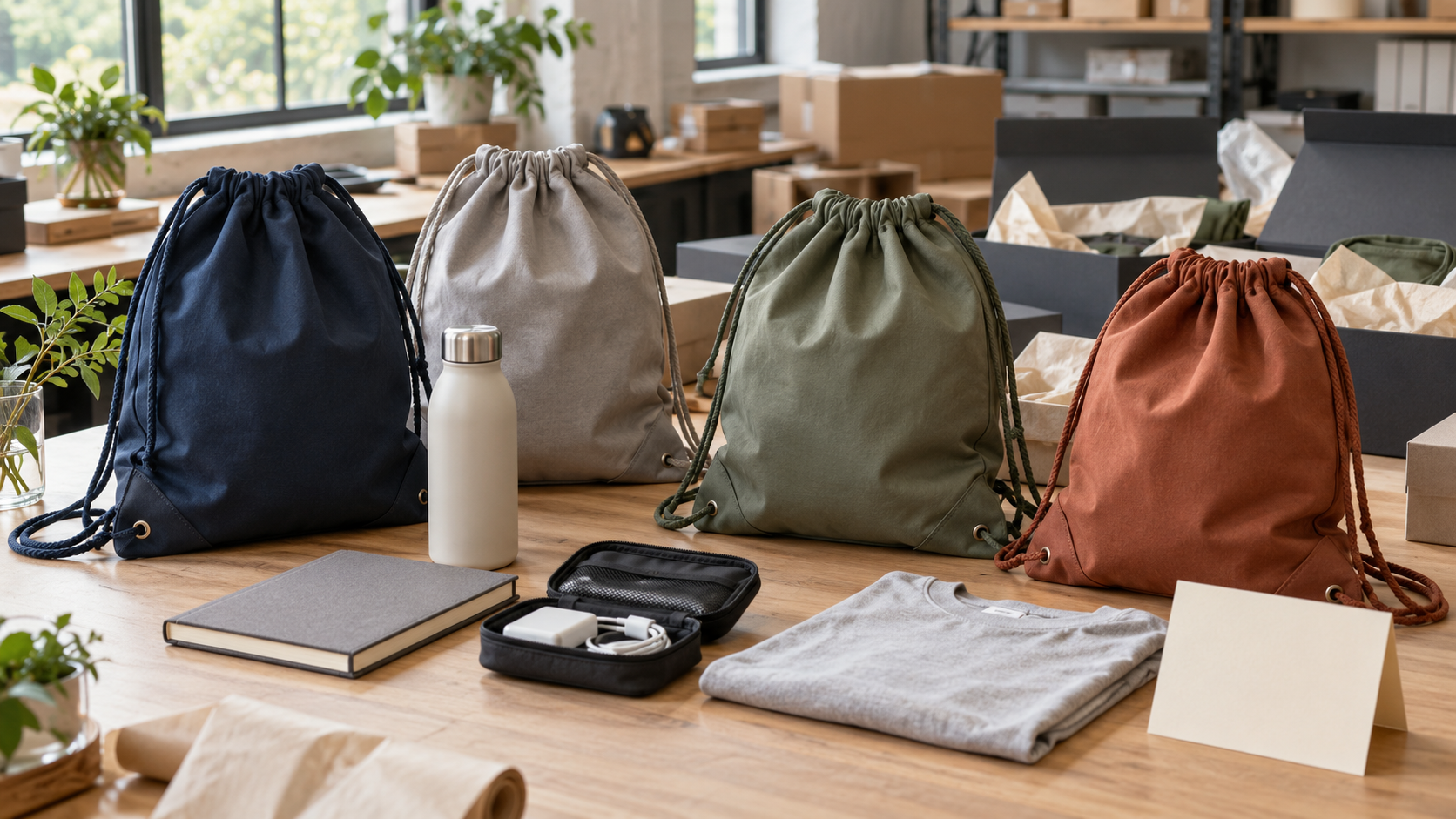
Editorial illustration generated for this guide. It depicts an unbranded sports-team use case and is not a customer order, factory record, or performance claim.
Quick Answer: What Should a Sports Team Drawstring Bag Include?
A well-specified team bag normally combines five elements: enough usable capacity for the named kit, a construction matched to the expected load and frequency, a comfortable cord or strap system, decoration suitable for the artwork and fabric, and a controlled roster-packing plan. Teams that expect wet towels or used clothing should also consider ventilation, a mesh section, or a separate pocket rather than assuming that a coated fabric will solve moisture management.
Use this short decision table before requesting a quotation.
| Team question | Why it changes the bag | What to define in the RFQ |
|---|---|---|
| What must each player carry? | Balls, shoes, bottles, uniforms, towels, and small items use space differently | Item list, approximate dimensions, total working load |
| How often will the bag be used? | A tournament giveaway and a season-long training bag face different wear | Expected use frequency and service period |
| Who will carry it? | Adult, youth, and mixed-age programs may need different dimensions and cord arrangements | Intended age group, body-size range, target market |
| Will every bag be identical? | Names, numbers, teams, or age groups create data and sorting risks | Personalization fields, roster version, packing sequence |
| Where will it be used? | Indoor courts, outdoor pitches, pools, and travel create different moisture and abrasion exposure | Sport, venue, weather exposure, storage conditions |
| How will it be distributed? | Coach-level cartons and player-level packs require different labeling | Pack-by-player, pack-by-team, or bulk packing instructions |
For a broader supplier-screening framework, read How to Choose a Custom Drawstring Bag Manufacturer and the Custom Bag Manufacturer Guide.
Why Sports-Team Bags Need a Different Specification
Generic promotional bags are often evaluated mainly by unit price, color, and print. Team programs introduce more variables. A sports bag may be loaded repeatedly, pulled by the cords, placed on abrasive floors, exposed to perspiration or rain, and mixed with dozens of visually similar bags. If it carries a player name or number, one data error can make an otherwise usable bag unacceptable to that recipient.
The bag also sits at the intersection of equipment and identity. Its construction affects usability, while its colors and marks affect how the team appears at training, travel, and events. That is why the approved sample should control both physical details and visual details.
Common sports-team scenarios
| Scenario | Typical contents | Priority features | Common mistake to avoid |
|---|---|---|---|
| Daily training | Shoes, shirt, shorts, towel, bottle | Reinforced load points, comfortable cords, pocket organization | Choosing size from a catalog name instead of a fit check |
| Match-day issue | Uniform, warm-up layer, personal items | Roster accuracy, team color consistency, easy distribution | Mixing players or age groups in cartons |
| Tournament welcome pack | Shirt, schedule, small merchandise, bottle | Efficient packing, clear branding, predictable print quality | Overloading a lightweight giveaway construction |
| School or youth program | Light sports kit and personal items | Age-appropriate design review, cord arrangement, market compliance | Assuming one adult configuration suits every child |
| Swimming or waterside activity | Wet towel, goggles, swimwear | Ventilation, drainage strategy, moisture-tolerant materials | Calling a sewn bag “waterproof” without a tested system |
| Fan or fundraiser merchandise | Apparel or event items | Retail appearance, artwork quality, labeling | Using a club crest without documented authorization |
The scenario should appear in the tech pack or purchase specification. “Sports drawstring bag” is not a complete construction description.
Start With the Gear List, Not a Standard Size
Capacity is determined by usable three-dimensional space, opening geometry, fabric flexibility, and how the contents stack. Two bags with the same flat width and height can behave differently if one has a gusset, a restrictive top channel, a front pocket, or a bulky reinforced base.
Build a representative kit before approving dimensions:
- List every item that must fit, including the largest shoe size or bottle format.
- Separate mandatory contents from occasional contents.
- Weigh the representative load.
- Arrange the items in the intended loading order.
- Place them in the sample and close the drawcord fully.
- Carry the loaded sample and check pressure at the shoulders.
- Repeat the check after adding personalization and pockets, because these can change usable space and flexibility.
The Drawstring Bag Size and Capacity Guide explains how to move from a flat measurement to an item-based fit test.
Size planning by kit type
| Kit profile | Useful design direction | What to verify on the physical sample |
|---|---|---|
| Light event kit | Flat body may be sufficient | Opening access, closure, print visibility when filled |
| Uniform plus towel | More depth or flexible fabric may help | Garment folding, top closure, cord pressure |
| Shoes plus clothing | Gusset or structured lower area may improve packing | Base distortion, seam load, soil separation |
| Bottle plus small valuables | Side mesh or zipped pocket may improve organization | Bottle retention, zipper access, balance |
| Wet and dry items | Ventilation or separated compartment may be needed | Moisture pathway, drying, seam and coating behavior |
Do not publish a universal capacity from dimensions alone. The defensible statement is that capacity was checked with an agreed representative kit and load.
Choose Material by Service Life, Load, and Decoration
Material selection should balance tear resistance, abrasion exposure, hand feel, weight, moisture behavior, print compatibility, and program budget. Denier, GSM, fiber type, weave, coating, and finishing are related but not interchangeable measurements.
Material comparison for sports programs
| Material route | Practical strengths | Limitations to manage | Suitable team uses |
|---|---|---|---|
| Lightweight polyester | Low mass, broad color options, efficient for events | Can feel thin and may need reinforcement at load points | Camps, tournament packs, light training kits |
| Heavier polyester | More structure and abrasion resistance potential | Higher material weight and pack volume | Season-long programs, shoes and training gear |
| Nylon | Smooth hand, strength potential, premium technical feel | Cost and print behavior vary by finish | Travel, outdoor, or premium team programs |
| Mesh | Ventilation and content visibility | Snagging, stretch, and limited print area | Swimming, equipment sorting, ball or laundry applications |
| Cotton or canvas | Natural hand and lifestyle appearance | Moisture absorption, shrinkage, longer drying | Club retail, yoga, light indoor activity |
| Verified recycled polyester | Recycled-content option when evidence matches the order | Claims require scope, chain-of-custody, and transaction evidence | Programs with documented recycled-content requirements |
For deeper comparisons, use Best Materials for Custom Drawstring Bags, 210D vs 420D vs 600D Polyester Drawstring Bags, and Mesh Drawstring Bags: Fabric, Strength and Applications.
If recycled content is part of the brief, define the claimed percentage, material scope, verification route, and documents required for the shipment. The RPET Drawstring Bags Certification and Sourcing Checklist explains why a general supplier statement is not enough. Any recycled-content or certification claim should be limited to the specific material, order, scope, and valid evidence.
Engineer the Cord, Corners, and Load Path
The most visible failure on a drawstring backpack often begins where a cord meets the body. Pulling the cords creates concentrated force at the lower attachment points and along the top channel. The design should create a continuous load path rather than relying on a decorative eyelet or a small patch to carry a season of repeated loading.
Cord-system choices
| Component | Options | Decision criterion | Approval evidence |
|---|---|---|---|
| Carry system | Single cord, double cord, flat cord, webbing | Closure behavior, comfort, target load, appearance | Loaded wear trial and closure cycle |
| Lower anchor | Metal eyelet, fabric loop, reinforced corner channel | Fabric compatibility, pull direction, corrosion or abrasion risk | Pull test and close visual inspection |
| Reinforcement | Extra fabric layer, bar tack, box stitch, seam capture | How force spreads into the bag body | Approved cross-section and stitch specification |
| Top channel | Folded channel, separate casing, reinforced opening | Cord friction, gathering, repeated cycling | Open-close trial and seam check |
| Cord end | Knot, heat-sealed end, tip, stopper | Fraying control, intended age group, loss risk | Approved sample and market review |
The Drawstring Cord, Eyelet and Reinforcement Guide and Single-Cord vs Double-Cord Drawstring Bags show how these choices affect function.
Comfort is a system outcome
Thicker or flatter cords can spread pressure, but comfort also depends on bag width, load distribution, cord spacing, surface finish, and the wearer’s body size. A soft cord cannot compensate for an overloaded bag or a narrow spacing that pulls the bag into the neck.
Use a loaded carry trial with representative users, not an empty-bag review. Record the load, trial duration, body-size range, and observations. The Shoulder Comfort Guide provides a structured evaluation method.
Add Pockets, Ventilation, and Gussets With a Purpose
Features should solve a named problem. Each addition also introduces seams, material transitions, cost, inspection points, and possible water-entry paths.
- A front zipper pocket can separate keys, access cards, or a phone from clothing.
- A mesh side pocket can hold a bottle, but its stretch and top binding must suit the bottle diameter.
- A mesh panel can improve air exchange, but it reduces privacy and can snag.
- A bottom gusset can improve loading, but its seam becomes part of the load path.
- A divider can separate clean and used items, but it reduces flexibility and adds construction complexity.
- A coated lining may resist light moisture transfer, but it does not automatically make the whole bag waterproof.
For any rain or waterside claim, specify whether the requirement is water resistance, splash resistance, or a tested waterproof system. Seams, zippers, cord openings, and needle holes matter as much as the base fabric. Use Waterproof Drawstring Bag Materials Explained before writing a performance claim.
Plan Team Branding Without Creating Rights Risk
Team crests, league marks, sponsor logos, player images, and event identities may be protected intellectual property. The World Intellectual Property Organization explains that trademarks distinguish goods and services and that sports merchandising commonly depends on licensed use of protected marks. See WIPO’s resources on sports brands and the international trademark system, sports licensing, and trademarks.
Before production, the buyer should confirm that it has the right to reproduce every supplied mark on the product, packaging, and requested sales channel. A logo file alone is not evidence of authorization. LUCKYSTAR should receive final approved artwork and written confirmation appropriate to the order; public display of a finished branded bag requires separate permission and should not be inferred from manufacturing authorization.
Branding-file checklist
| Asset | Buyer should provide | Production control |
|---|---|---|
| Team crest | Authorized vector artwork and approved color references | Preserve proportions and minimum detail size |
| Sponsor logo | Current approved lockup and placement rule | Confirm hierarchy and separation from team crest |
| Player name | Final spelling, capitalization, and character set | Data import and proof by roster version |
| Player number | Final number format and assignment | Duplicate and missing-number check |
| Team color | Pantone or other approved physical/digital reference | Substrate-specific sample approval |
| Event mark | Authorized version and valid usage period | Control outdated artwork after the event |
Color is not transferred identically across screens, dyed fabric, and ink. The Pantone vs CMYK Guide for Drawstring Bags explains how to establish a realistic approval reference.
Match the Print Method to Artwork and Fabric
Decoration should be selected after the fabric, coating, color, artwork, quantity, and use conditions are known. A method that looks excellent on a flat white polyester panel may not behave the same way on dark coated fabric, textured canvas, or mesh.
| Decoration method | Strong use case | Watchpoints for team bags | Sample question |
|---|---|---|---|
| Screen printing | Bold spot-color marks and repeat programs | Ink/substrate adhesion, fine lines, color opacity | Does the cured print survive folding and abrasion? |
| Heat transfer | Detailed multicolor graphics and shorter personalized runs | Edge lifting, heat sensitivity, transfer feel | Is the transfer compatible with the coating? |
| Sublimation | Full-color polyester panels, especially light base fabric | Requires compatible polyester; color shifts with substrate | Is artwork mapped before sewing and panel distortion checked? |
| Embroidery | Premium crests or text on suitable structured panels | Needle density, puckering, reverse-side contact | Does reinforcement prevent panel distortion? |
| Reflective decoration | Visibility accent in low-light settings | Must not be described as certified safety performance without evidence | What test or intended-use statement supports the claim? |
Use the Custom Drawstring Bag Printing Methods guide for process selection. If a team requests a reflective logo, review Reflective Printing for Sports Drawstring Bags. Reflective decoration can be a visual feature, but it should not be presented as personal protective equipment or a visibility guarantee unless the complete product and claim are supported by applicable evidence.
Control Names, Numbers, and Roster Data
Personalization changes the order from one artwork applied many times into a controlled data-production job. The major risk is usually not printing technology; it is version control.
Create one authoritative roster file with locked columns. At minimum, include:
- line number;
- team, squad, or age group;
- player name exactly as approved;
- player number, if used;
- bag color and size variant;
- artwork version;
- packing group;
- buyer approval status.
Do not accept roster changes through multiple email threads after proof approval. Issue a new version, highlight changes, and obtain written approval. Normalize spaces, capitalization, accented characters, and leading zeros before the data is sent to production.
Recommended roster-control gates
| Gate | Check | Owner | Output |
|---|---|---|---|
| Data receipt | Required columns complete; no unsupported characters | Buyer and account contact | Controlled roster v1 |
| Preflight | Duplicate numbers, blank names, color conflicts | Production coordinator | Exception list |
| Variable proof | Every unique name/number combination rendered | Buyer approver | Signed or digitally approved proof |
| First-piece review | Position, scale, spelling, adhesion | Production/QC | Approved first-piece reference |
| Packing verification | Physical bag matched to roster line | Packing/QC | Checked distribution list |
| Carton reconciliation | Counts by team and player group match | Final inspection | Carton-level roster summary |
For privacy, collect only the personal information necessary for production and distribution, limit access, and define how long files should be retained. Names associated with minors deserve especially careful handling.
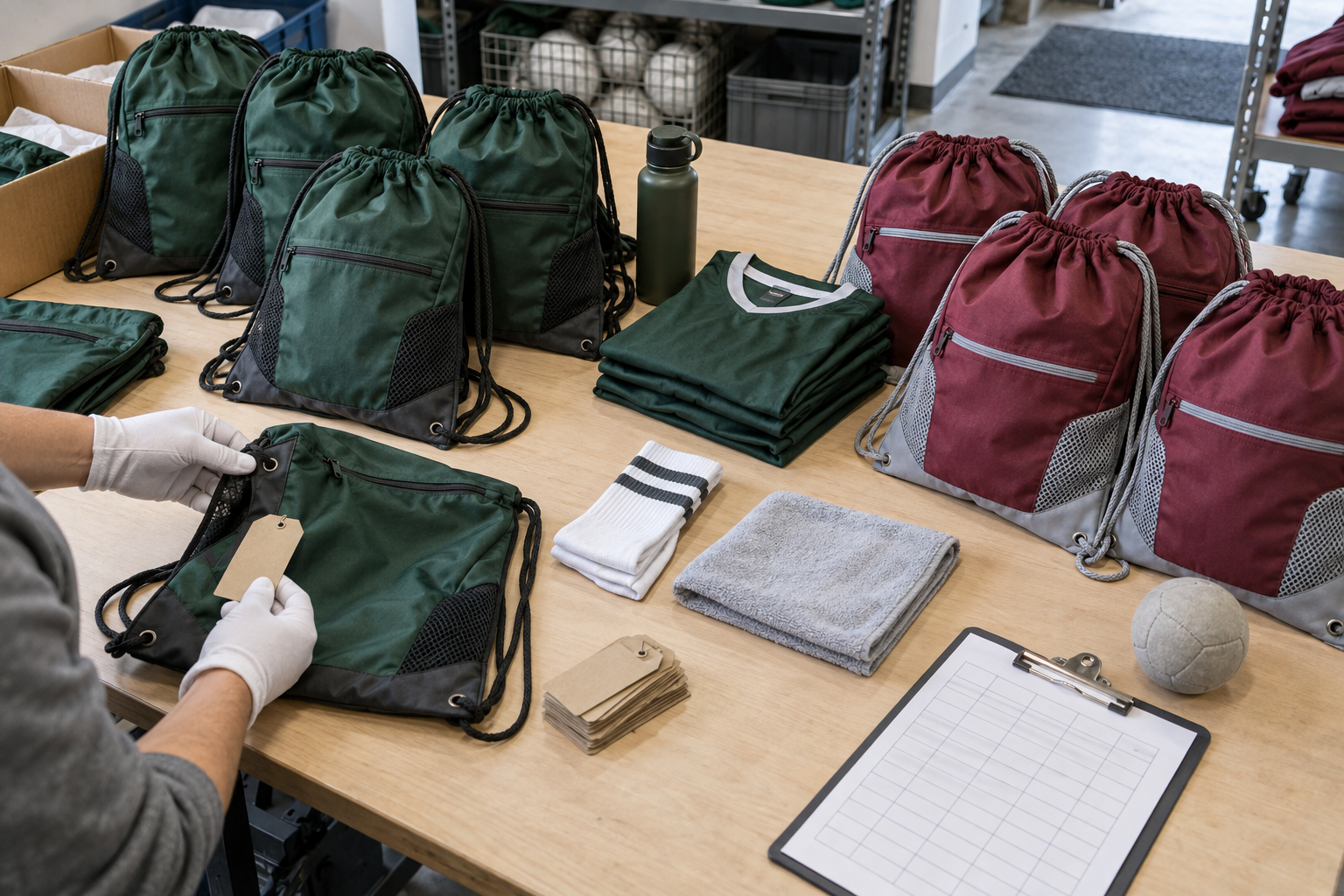
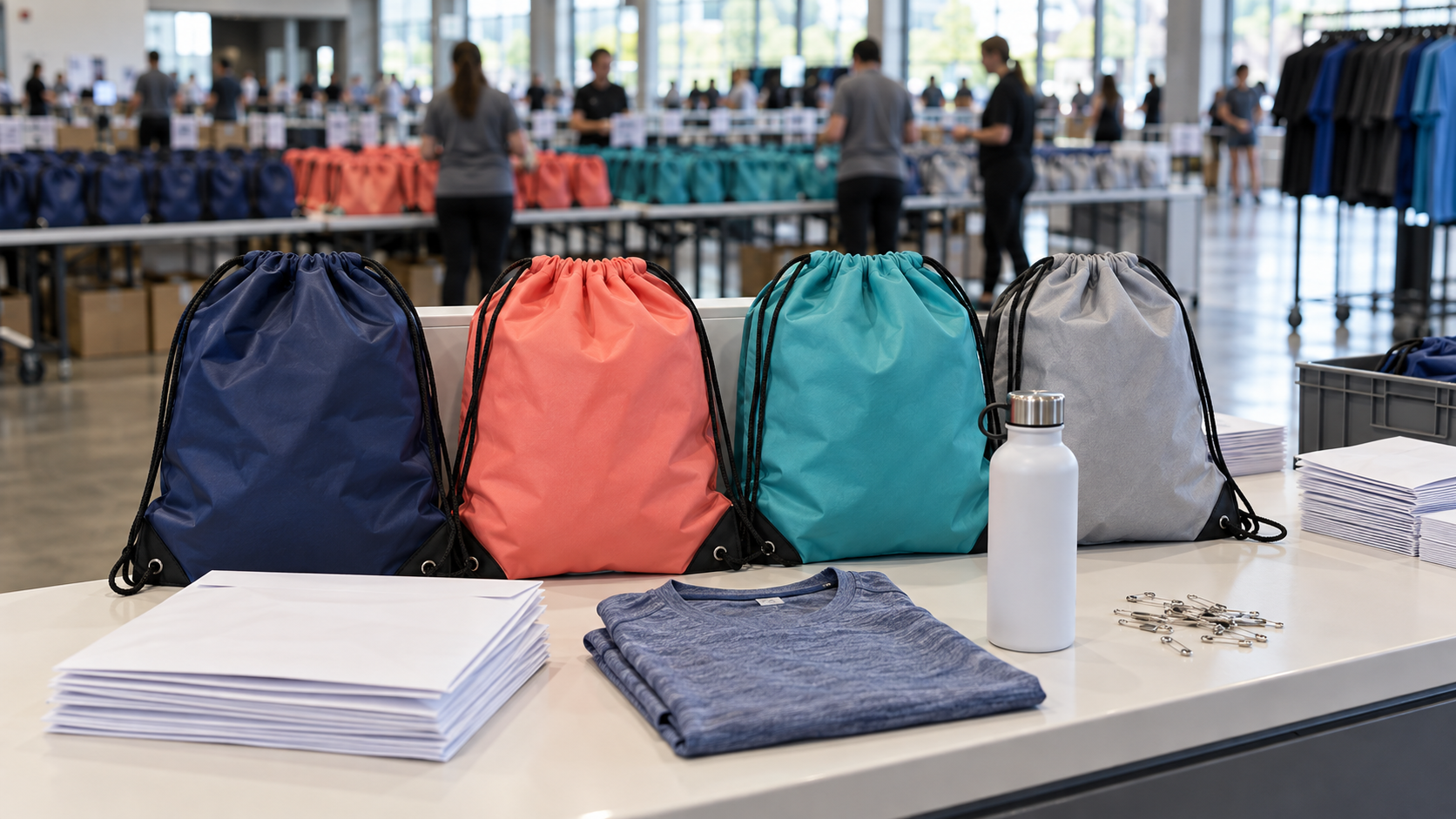
Editorial illustration generated for this guide. The unbranded scene demonstrates a possible sorting and QC concept; it is not evidence of a specific customer order or production facility.
Treat Youth-Team Orders as a Separate Review
A sports bag used by a youth team is not automatically regulated in the same way in every market. Classification can depend on intended age, design, labeling, promotional context, components, and local law. In the United States, the Consumer Product Safety Commission explains that whether an item is a children’s product depends on factors including the manufacturer’s statement, presentation, common recognition, and age determination. See the CPSC’s Children’s Products FAQ.
Therefore, the safe sourcing approach is not to declare every team bag a children’s product—or to assume none are.Instead:
- identify the intended age group and destination market;
- review cords, detachable components, decorations, coatings, and labels;
- determine which product rules and tests apply to the exact configuration;
- obtain buyer or qualified compliance guidance where the classification is uncertain;
- keep the supporting records with the order.
For younger users, also evaluate cord length and entanglement exposure in the intended activity, small removable parts, and whether the bag will be used near moving equipment. These are design-review questions, not a substitute for a market-specific compliance assessment.
Approve a Representative Sample, Not a “Similar” Bag
The approved sample should represent the production construction: actual fabric and finish, color route, cord diameter, attachment method, pocket, zipper, reinforcement, print process, artwork scale, and expected packing state. A sample made with substitute material can answer a shape question, but it cannot approve color, hand feel, print adhesion, or final performance.
Sample approval sequence
- Specification review: confirm gear list, dimensions, load, material, features, artwork, personalization, tests, and packing.
- Artwork proof: approve scale, position, colors, variable-data layout, and legal authorization.
- Physical sample: load it with the representative kit and complete a carry trial.
- Risk tests: perform the agreed order-specific checks on load points, cords, print, color, and any claimed feature.
- Golden-sample approval: sign or digitally approve the final reference and controlled specification.
- Change freeze: require written approval for material, color, component, artwork, or construction substitutions.
If the sample and production specification conflict, define which controlled document prevails before manufacturing begins. The Custom Drawstring Bag Sample Development Process provides a more detailed handoff sequence.
Define Testing Around Real Team Use
Testing should answer the order’s actual failure risks. No single universal test list applies to every drawstring bag, and a supplier’s unrelated report should not be extended to a new material or construction.
Practical sports-bag test plan
| Risk | Example check | What to record | Acceptance basis |
|---|---|---|---|
| Overloading | Static hold and repeated lift with agreed test load | Load, duration, cycles, damage location | Approved order protocol |
| Cord detachment | Pull test at lower anchors and top channel | Direction, force or load, dwell, result | Specification or buyer standard |
| Seam failure | Visual and functional review after loading | Opening, stitch break, seam slippage | Approved defect criteria |
| Print wear | Adhesion and abrasion checks on final fabric/ink system | Method, cycles, image change | Signed sample and test limit |
| Color transfer | Dry/wet rubbing or contact assessment where relevant | Conditions and grading | Order/market requirement |
| Closure fatigue | Repeated open-close cycles | Cycle count, fraying, channel damage | Approved functional limit |
| Water exposure | Method matched to claimed resistance | Exposure, duration, leakage path | Claim-specific protocol |
| Packing accuracy | Roster-to-product and carton reconciliation | Checked lines and discrepancies | Zero unresolved identity mismatch |
Use How to Test Drawstring Bag Load Capacity, the Drawstring Cord Strength and Pull Test Guide, and Print Adhesion and Abrasion Testing to build an order-specific protocol.
A test result applies to the tested sample or defined batch under stated conditions. It does not automatically prove that every future order, color, coating, print system, or construction will perform identically.
Inspect Production and Packing Before Shipment
Final inspection should begin only when the lot is complete enough to represent the shipment and when packed goods can be opened and checked. Inspectors need the approved sample, specification, artwork, roster, defect definitions, quantity list, and packing instructions.
For sports-team orders, inspection should include both ordinary workmanship and identity controls:
- material, color, dimensions, and construction against the approved reference;
- seam, cord, reinforcement, pocket, zipper, and closure function;
- logo position, print appearance, spelling, number, and team-color assignment;
- sample-based functional checks defined in the inspection plan;
- quantity reconciliation by design, player, and team;
- polybag or bundle labels where approved;
- carton assortment, shipping marks, count, and condition;
- photographic evidence of representative findings and any corrective action.
The Custom Drawstring Bag Quality Control Checklist defines in-process controls, while How to Inspect Custom Drawstring Bags Before Shipment focuses on final lot release.
Pack by the Way the Team Will Distribute
The cheapest bulk packing method can create hidden labor at destination. If a tournament organizer must open every carton, read every name, and rebuild team packs, the program has simply shifted cost downstream.
Choose one distribution logic and document it:
- Pack by player: each bag is matched with the intended kit or label.
- Pack by team: cartons contain one complete squad in roster order.
- Pack by age group or location: useful for multi-site academies and school districts.
- Bulk by design: appropriate when every bag is identical and destination sorting is simple.
Carton labels should use authorized internal references rather than exposing unnecessary personal data. The roster summary inside or attached to the carton should allow reconciliation without displaying more information than the distributor needs.
Packaging brief
| Field | Example instruction type | Verification point |
|---|---|---|
| Unit protection | Fold method, individual bag, bundle, or no polybag | Print and hardware protected without excessive material |
| Player identification | Removable coded label or controlled roster line | Correct match; no unauthorized public exposure |
| Inner grouping | Squad, color, location, or size | Group quantity matches list |
| Carton assortment | One team per carton or approved mixed ratio | Easy destination receipt |
| Carton limit | Maximum agreed gross weight and dimensions | Safe handling and freight planning |
| Spares | Defined quantity of blank or generic bags | Clearly separated from personalized units |
Plan Reorders Before the Season Starts
Teams change. Players join, numbers change, sponsors update, and a few bags are lost. A reorder plan is easier when the first order preserves controlled information.
Keep the final artwork files, approved color reference, bill of materials, construction details, component specifications, roster template, packaging logic, and sample record. For a new order, revalidate material and color rather than assuming a prior batch can be reproduced indefinitely. Fabric dye lots, coating lots, inks, and component availability may change.
Consider ordering a limited quantity of blank team-color bags for emergency additions if this fits the program. Avoid printing future player identities before the roster is confirmed. When exact shade continuity matters, discuss batch strategy and approved tolerance at quotation stage.
Why Choose LUCKYSTAR for Sports-Team Drawstring Bags?
LUCKYSTAR is a practical choice for buyers who need to translate a team program into a controlled bag specification rather than purchase an undefined stock item. The value is in coordinating the variables: material, capacity, cords, reinforcement, pockets, decoration, personalized data, sampling, inspection, and distribution packing.
What LUCKYSTAR can help coordinate
- Application-based development: start from the sport, gear list, intended user, use frequency, and target market.
- Material and construction options: evaluate polyester, nylon, mesh, cotton/canvas, verified recycled-material routes, reinforcement, gussets, and pockets for the specified use.
- Decoration planning: align artwork with screen printing, transfer, sublimation, embroidery, or other suitable methods after reviewing the substrate and design.
- Sample-to-production control: use approved specifications and samples to reduce ambiguity before bulk production.
- Order-specific QC: define checks for dimensions, workmanship, load path, cord attachment, print, color, personalization, and packing.
- Roster-aware packing: coordinate player, squad, color, or location grouping when the data and instructions are finalized.
- B2B communication: review commercial terms, lead time, MOQ, testing, and documentation against the actual specification rather than presenting them as universal promises.
These capabilities remain subject to the final design, quantity, material availability, target-market requirements, sample approval, testing scope, and written confirmation. Certification, recycled-content, waterproof, safety, and performance statements should only be used when valid evidence covers the relevant product, material, order, and claim.
RFQ Checklist for a Sports-Team Bag Program
Send a complete brief to receive a meaningful quotation. Missing information may force suppliers to assume a lighter material, simpler decoration, or bulk packing that does not match the actual program.
| RFQ section | Information to provide |
|---|---|
| Program | Sport, team type, destination market, intended age group, event/season date |
| Kit | Item list, largest item, representative load, wet/dry separation need |
| Bag | Dimensions or fit target, material, color, lining/coating, gusset, pockets, zipper |
| Carry system | Single/double cord, cord material/diameter, webbing, lower attachment method |
| Branding | Authorized vector files, color reference, placement, print method preference |
| Personalization | Names/numbers, roster count, file format, approval and change process |
| Compliance | Target-market requirements, restricted substances, labeling, documentation |
| Testing | Load, pull, cycling, print, color, moisture, or buyer-specific protocols |
| Packing | Pack-by-player/team/location, labels, carton assortment, spare-bag plan |
| Commercial | Quantity by variant, delivery destination, target date, Incoterm request |
MOQ, sample timing, production timing, unit price, and freight depend on the approved specification and current written quotation. Avoid comparing offers until the material, construction, decoration, testing, and packing assumptions are aligned.
Frequently Asked Questions
What is the best material for sports team drawstring bags?
There is no universal best material. Lightweight polyester can suit event packs; heavier polyester or nylon may suit repeated training use; mesh can support ventilation; cotton or canvas can suit lifestyle merchandise. Select the material after defining the kit, load, use frequency, environment, decoration, and budget.
What size should a team drawstring bag be?
The correct size is the smallest practical construction that fits the approved representative kit, closes properly, carries comfortably, and leaves enough tolerance for real packing variation. Validate it with the largest relevant shoes, bottle, uniform, towel, and other required items.
Can every player have a different name and number?
Yes, if the chosen decoration process and order plan support variable data. Use a controlled roster, a rendered proof for every combination, duplicate/missing-data checks, and roster-based packing. Feasibility and cost are subject to the artwork, method, quantity, and written quotation.
Can a team crest be printed from an image found online?
Technical resolution is only one issue. The buyer should have authorization to reproduce the crest and any sponsor or league marks. Supply an approved vector file and appropriate rights confirmation; do not assume public visibility online grants merchandise rights.
Are reflective logos suitable for night training?
Reflective decoration may increase visual contrast when illuminated, but it is not automatically certified safety equipment and should not be described as guaranteeing visibility. Define the intended use and evidence needed for any performance claim.
Should sports bags have metal eyelets?
Not always. Metal eyelets can create a clean finish, while fabric loops or reinforced channels may better suit some fabrics and load paths. Approval should consider pull direction, fabric reinforcement, abrasion, corrosion exposure, and the results of order-specific testing.
How can wet kit be carried in a drawstring bag?
Consider a mesh panel, ventilated compartment, drainage strategy, or removable inner pouch. A coated outer fabric alone does not manage trapped moisture, and a sewn bag should not be called waterproof without evidence for the whole construction.
What tests should a sports-team bag pass?
The test plan should reflect the agreed risks: representative load, repeated lifting, cord-anchor pull, seam condition, closure cycling, print adhesion/abrasion, color transfer, and any claimed moisture behavior. Youth or regulated-market orders may need additional product-specific compliance review.
How should team bags be packed for distribution?
For personalized programs, packing by player or squad with a controlled reconciliation list is usually more efficient than random bulk packing. For identical bags, bulk packing may be appropriate. Define carton assortment and privacy-safe labels before production.
Why request a physical sample before bulk production?
A physical sample reveals fit, closure, carrying comfort, construction, real color, decoration behavior, and pocket access in a way a digital proof cannot. Load it with the real kit and approve the final representative construction before bulk production.
Build a Team Bag Around the Real Program
The strongest sports-team bag brief does not begin with “send your cheapest drawstring bag.” It begins with the athletes, the kit, the load, the season, the identity, and the distribution plan. When those inputs are translated into a controlled sample, test plan, roster, and packing instruction, the bag becomes easier to quote, manufacture, inspect, reorder, and use.
LUCKYSTAR can review your program and help develop an order-specific route through the custom drawstring bag collection. Send the sport, player count, target market, kit list, artwork, personalization plan, required delivery date, and any testing or documentation requirements. All commercial and technical details are subject to final specification, sample approval, applicable requirements, and written confirmation.

The two editorial product scenes in this article are generated, unbranded illustrations created to explain specification and quality-control concepts. They are not customer endorsements, actual production records, certification evidence, or proof of a particular factory.