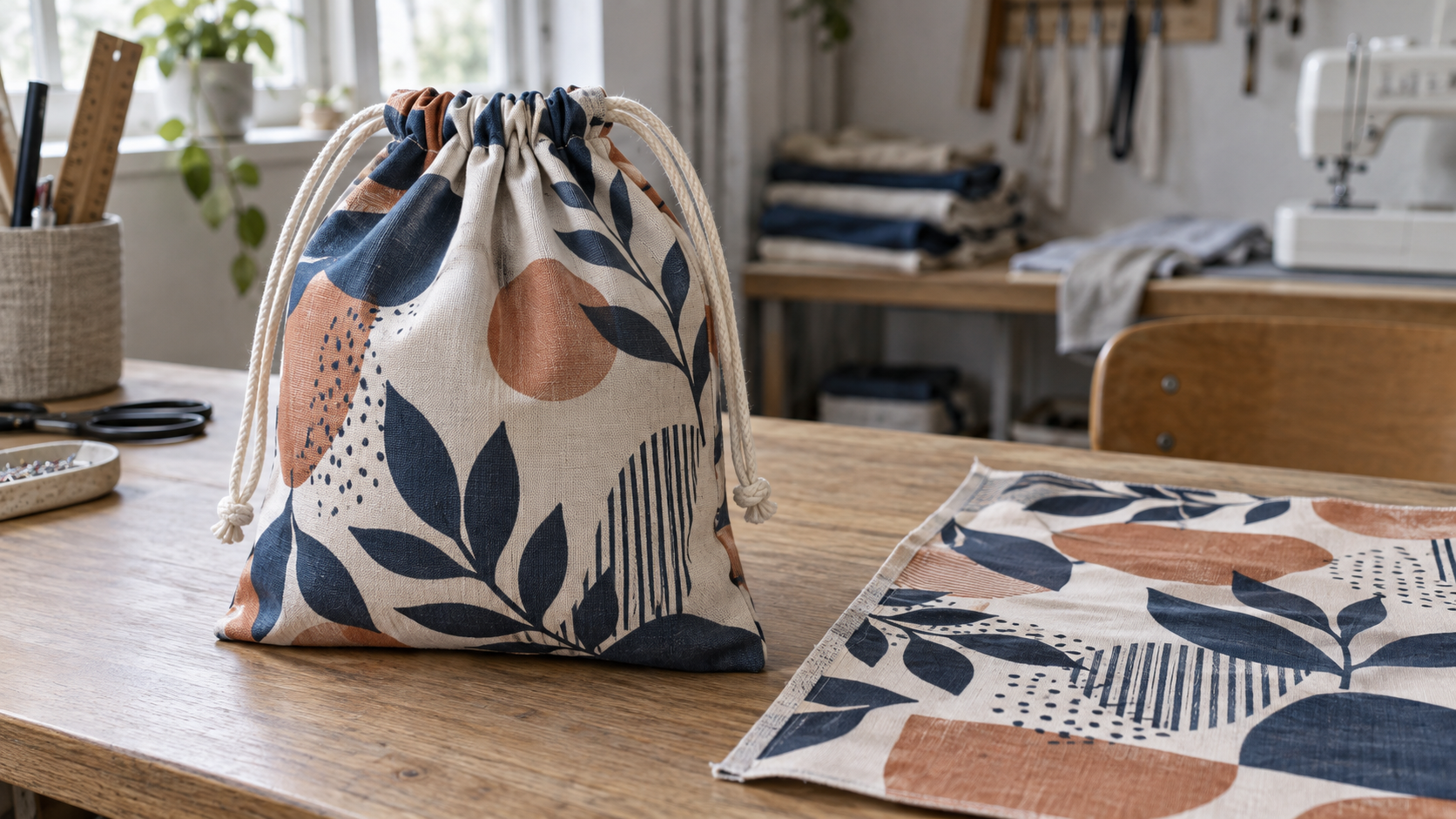
Custom Drawstring Bag Quality Control Checklist
A drawstring bag can look correct on a table yet fail the moment someone pulls the cords, inserts the intended product or carries it by the lower corners. A useful quality-control checklist therefore checks the complete bag in its intended state, not only its flat appearance. This guide gives buyers a drawstring-specific inspection plan they can adapt to an approved sample and written purchase specification.
The checklist applies to small jewelry and gift pouches, shoe and apparel sacks, and backpack-style drawstring bags. It is not a universal pass/fail standard: dimensions, tolerances, loads, pull cycles, sampling rules and defect limits must be agreed for the particular design. Browse LUCKYSTAR's custom drawstring bag range to identify the closest format before writing the acceptance plan.
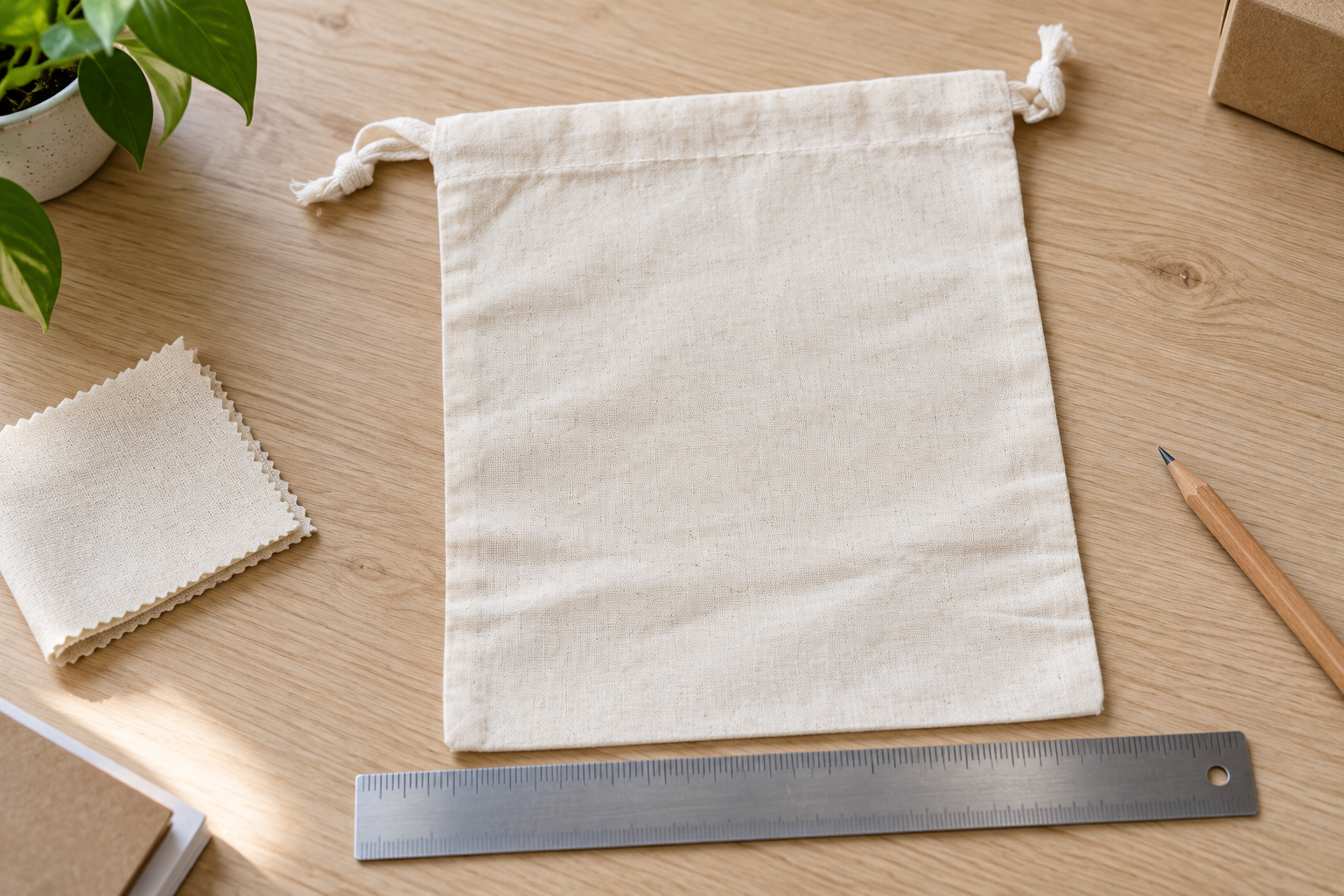
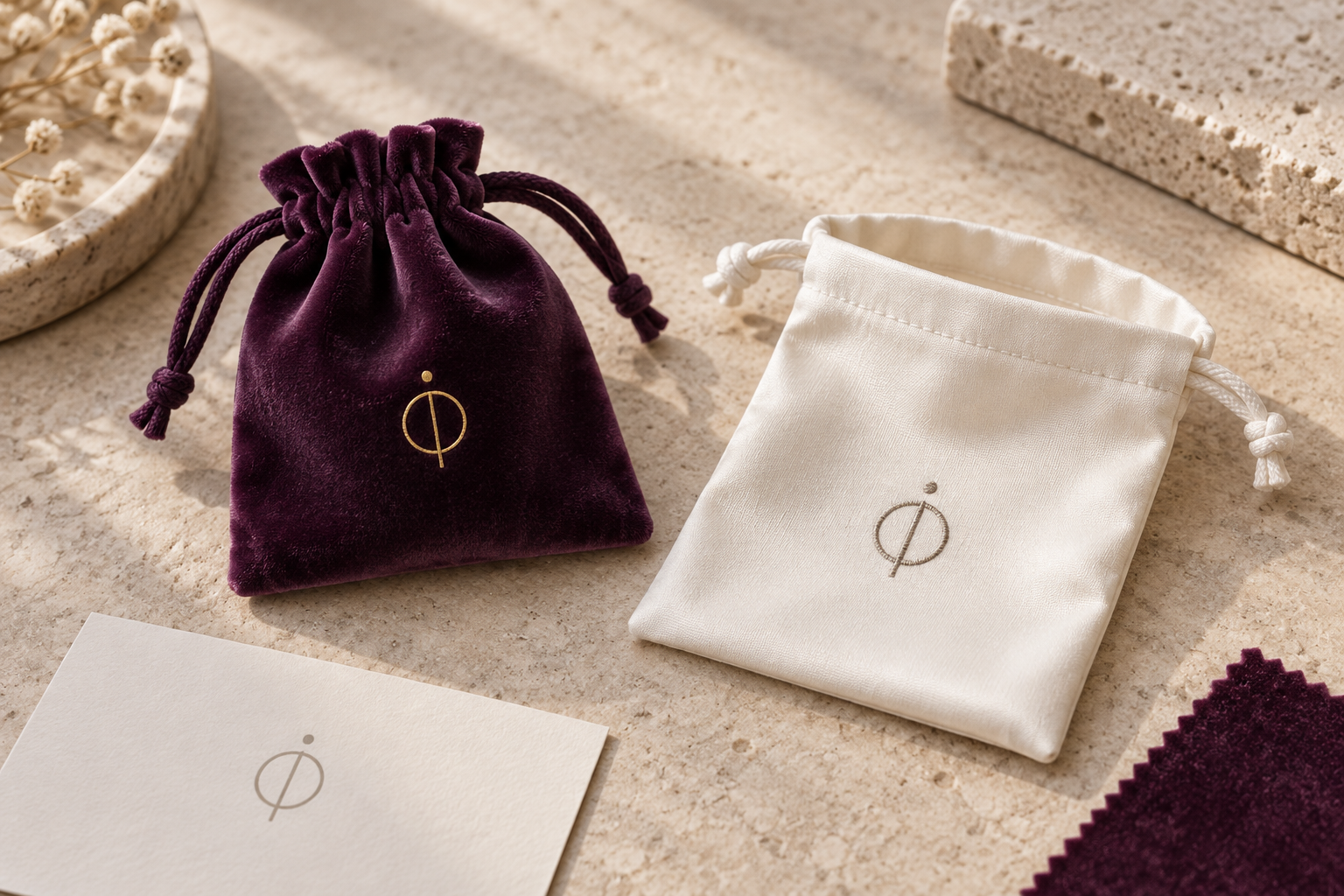
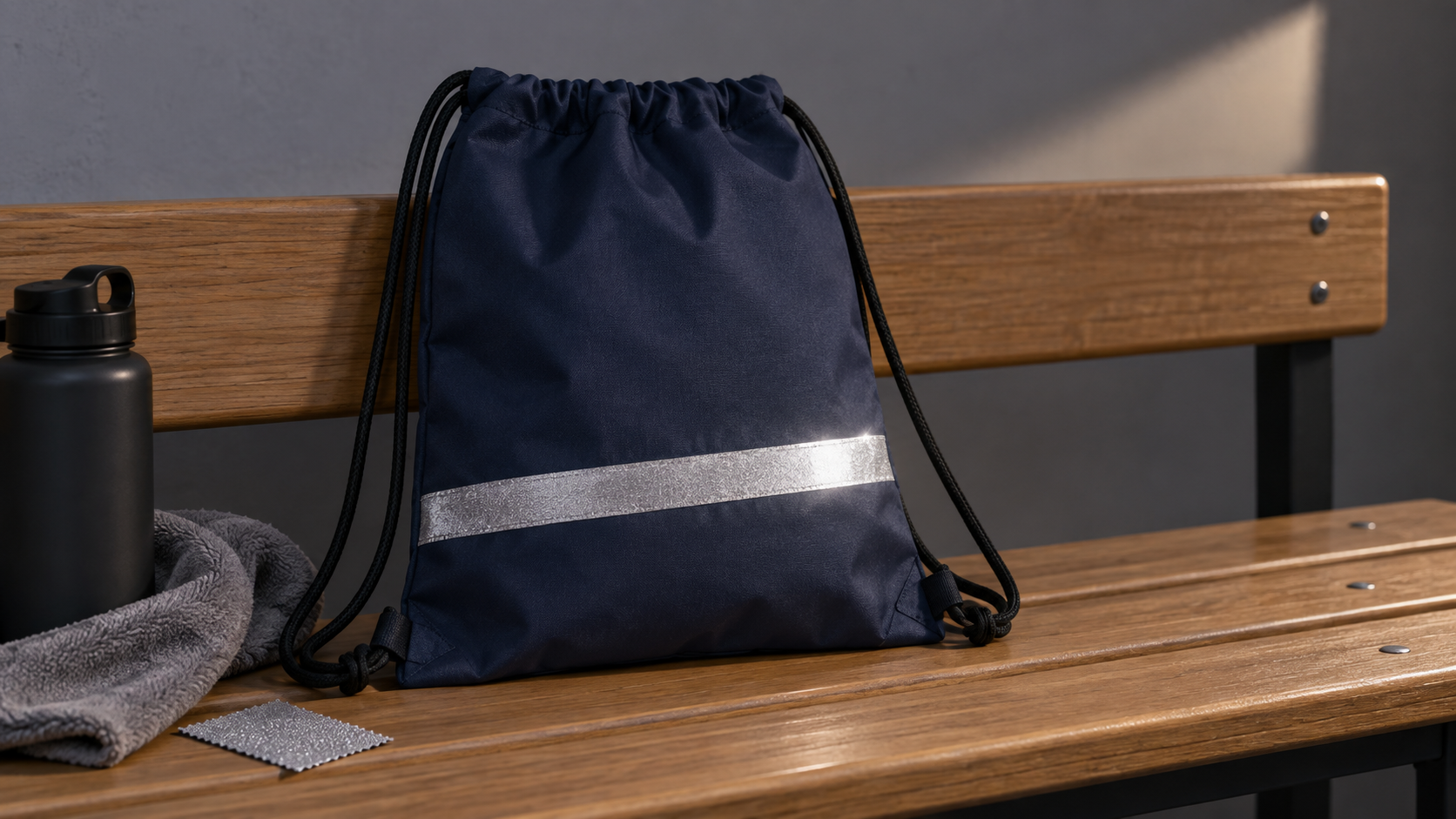
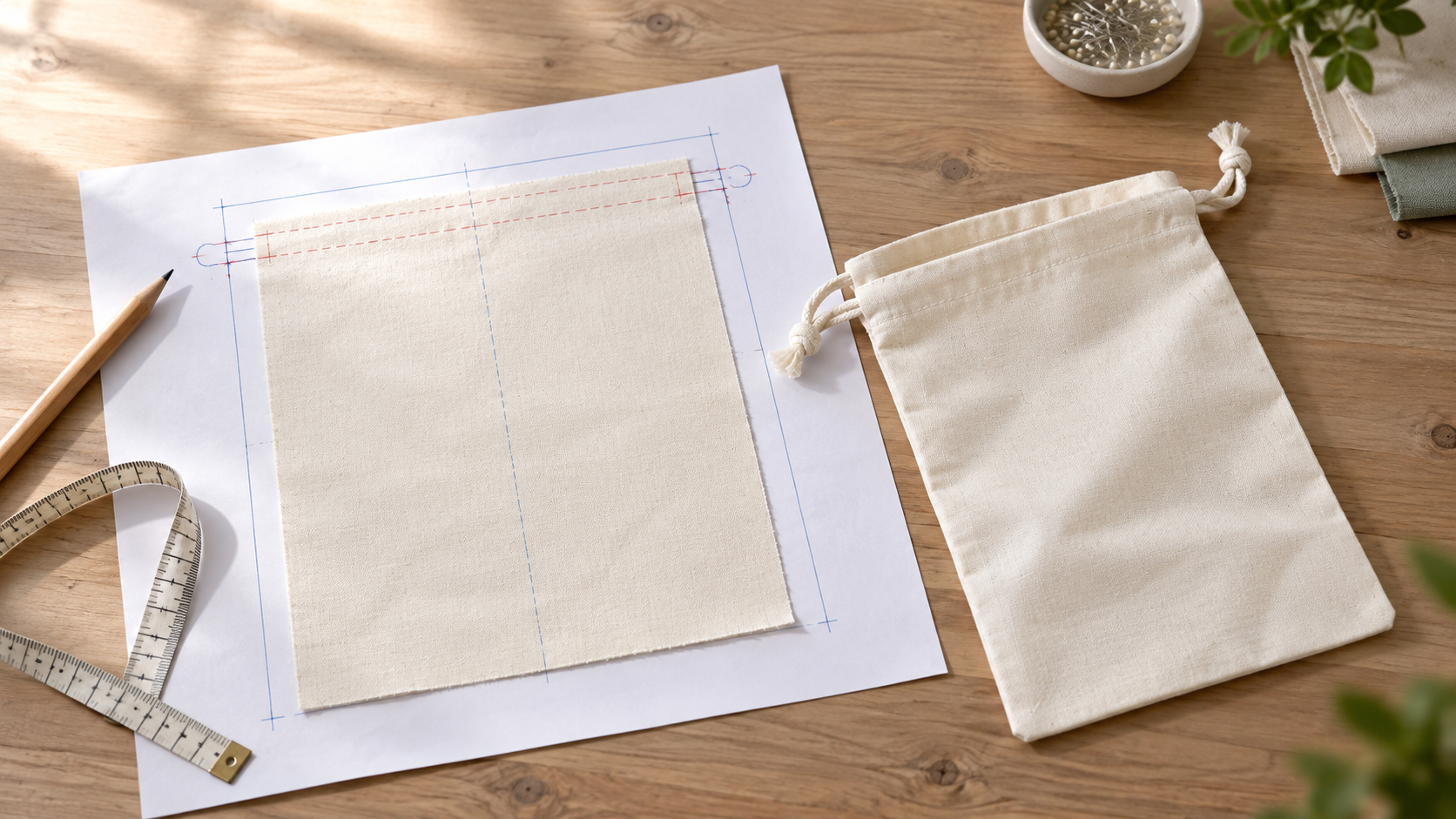
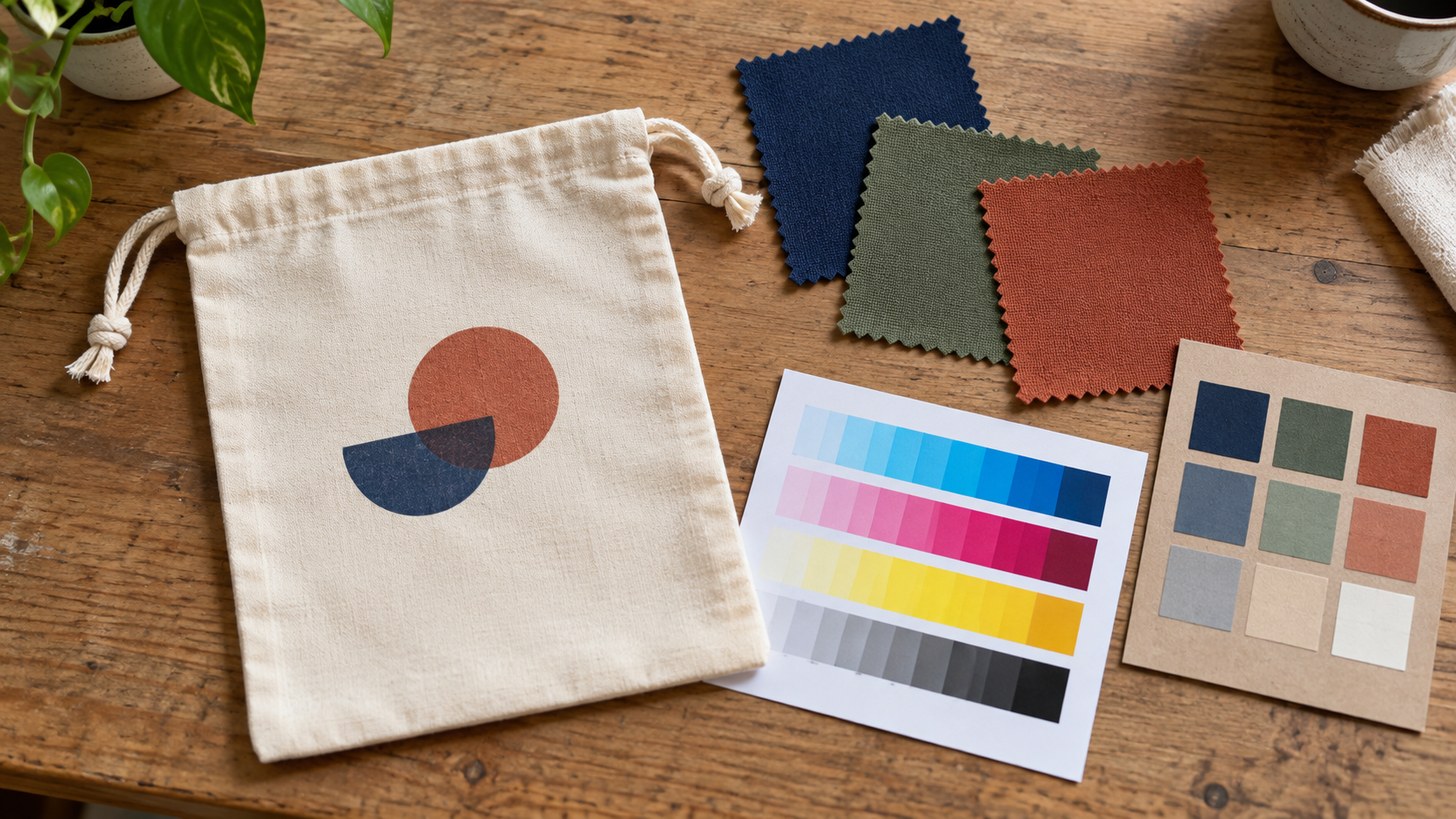
Construction-informed editorial illustration, not a photograph of a LUCKYSTAR inspection, a customer order or a tested product. Inspect the actual approved sample for your project.
Quick answer: what should a buyer inspect?
Check six things before releasing a custom drawstring bag order: identity and reference version; material and dimensions; cord, channel and anchor function; seams and finished shape; decoration and presentation; and packing and lot records. For each line, write the reference, method, acceptance rule, sample or frequency, and action if it fails. Do not rely on “looks acceptable” or a photo alone.
| Control area | The drawstring-specific question | Evidence to retain |
|---|---|---|
| Revision | Is this the approved size, material, cord routing and artwork version? | Signed specification, approved sample and change log |
| Fabric and components | Do the actual panels, cords, eyelets or reinforcements match the approved references? | Material/trim identifiers and incoming check |
| Opening system | Does the mouth open, close and hold as intended without cord snagging or escape? | Functional check on an assembled bag |
| Carry path | Does the lower cord attachment or pouch seam remain sound in the agreed loaded-use check? | Test method, load/contents, observations |
| Appearance | Are construction, color, logo and cleanliness acceptable in the specified viewing state? | Defect record and photos |
| Pack-out | Are size/color assortments, labels, counts and cartons correct? | Packing instruction and carton record |
This article concentrates on inspection and shipment decisions. For selecting the supplier rather than inspecting a lot, use How to Choose a Custom Drawstring Bag Manufacturer. For the wider sourcing framework, start with the Custom Bag Manufacturer guide; its companion Custom Bag Quality Inspection Checklist addresses cross-category controls, while the checks below focus on drawstring-bag failure modes.
1. Freeze the reference package before anyone inspects
An inspector cannot verify “the correct bag” if the latest drawing, sample, and order notes disagree. Put one controlled reference package at the workbench and in the buyer's approval record. It should name the product code, revision, approved physical sample, finished measurement chart, bill of materials, artwork file, color reference, construction diagram, packing instruction and any market-specific requirement. Record who approved each change and when. A later cord substitution or revised logo position is a new version, not an informal exception.
The approved sample is powerful because it shows hand feel and shape, but it cannot communicate every quantitative acceptance rule. Add a measurement method, the permitted variation and the filled-state expectation. If no tolerance has been agreed, the inspector should flag that gap for approval; they should not invent a number at the table.
| Reference to freeze | Why it matters for a drawstring bag | Common ambiguity to close |
|---|---|---|
| Finished drawing | Defines width, height, gusset, channel height and seam position | Is “height” measured above or below the cord channel? |
| Material and trim schedule | Identifies shell, lining, cord, end finish, eyelet or patch | Is cord color a visual match or a specified component code? |
| Cord-routing diagram | Defines single or double draw, exits and lower anchoring | Must tails be equal when the bag is open, closed or loaded? |
| Approved physical sample | Defines practical appearance, feel and function | Which sample revision is the production reference? |
| Artwork and placement diagram | Defines mark size, color and distance from seams | Is placement measured flat or on the filled bag? |
| Inspection/packing plan | Defines checks, frequency, defects and release authority | Who approves a concession or rework? |
The drawstring bag tech-pack guide explains how to document these details during development. The sample-development guide covers the approval handoff. Quality control starts only after those decisions have a stable record.
2. Inspect incoming fabric, cord and components
Start before cutting, when a wrong material can still be isolated rather than sewn into hundreds of units. Compare the delivered fabric with the approved material identification and swatch. Confirm any specified composition, weight or construction from supplier documentation and the agreed verification method. A photo cannot prove fiber content or coating. Compare colors under agreed lighting, note batch or roll identity, and check for stains, slubs, holes, marks or inconsistent face direction that would be conspicuous on the finished bag.
Check cords as components, not decoration. The approved cord must fit the channel and exit geometry, have the intended hand feel, and accept the specified knot or end finish. Inspect any eyelet, grommet, stitched guide, bottom patch, lining, pocket, insert or label against its component reference. If an upstream certificate or material claim is required, check the actual supplier, material, scope and applicable order documents; do not infer that a whole bag or the LUCKYSTAR company holds a universal certification.
| Incoming item | Practical check | Hold trigger |
|---|---|---|
| Shell and lining | Identity, color, face orientation, visible defects, specified weight/finish evidence | Wrong material or unexplained lot change |
| Cord or ribbon | Type, diameter/width, color, end finish, fraying and compatibility with channel | Different component, poor finish or jamming in first-article test |
| Eyelet or sewn guide | Size, finish, edge quality and position template | Sharp edge, wrong trim or fit conflict |
| Patch/reinforcement | Fabric, grain/orientation, dimensions and attachment instruction | Missing or incompatible reinforcement |
| Decoration material | Ink, transfer, thread or label against approved artwork/strike-off | Unapproved color or process substitution |
| Packing material | Individual bag, insert, label, carton and mark revision | Wrong assortment or protection method |
For material-selection tradeoffs, see Best Materials for Custom Drawstring Bags. Material selection is upstream of this checklist; this step verifies that the approved selection reached production.
3. Release the first article as a complete assembled bag
Before a sewing run is allowed to continue, inspect a complete first article made with production-intent fabric, cord, decoration and assembly settings. Photograph it open and closed. Measure it flat using the agreed method, then insert the intended product or a defined surrogate. Pull the cords, check the mouth, inspect the inside and examine every load path. If the first article exposes a tight channel, misplaced print or weak corner, changing the spec during a run creates two populations of goods. Record the disposition of units already made and reapprove the revised first article.
For a backpack-style bag, include strap-routing symmetry and the lower attachment under the agreed contents. For a small pouch, prioritize opening clearance, knot quality, product insertion and whether the inside surface could snag the item. The manufacturing-process guide describes where this first-article gate fits in the order sequence.
4. Measure the finished bag consistently
Measure the finished, relaxed bag—not a cut panel. Lay it on a flat surface without stretching the fabric, identify the mouth and base, and use the same landmarks on every unit. Specify whether width includes side seams or is seam-to-seam; whether height includes the channel; and whether gusset depth is measured flat or opened. Record actual values, not “within tolerance” alone.
| Measurement point | Reproducible method to specify | Why it can affect use |
|---|---|---|
| Finished width | Seam-to-seam at named height, bag relaxed | Product fit and logo proportion |
| Finished height | Base seam/fold to top edge, noting channel inclusion | Usable internal height |
| Usable height | Base to lower edge of channel or closure obstruction | Item clearance when closed |
| Gusset/bottom | State whether opened, flattened or folded | Stable volume and filled shape |
| Mouth opening | Measure usable opening with cord released | Insertion of a rigid box or shoe |
| Channel height | Stitch line to fold/top edge at set points | Cord travel and bunching |
| Cord/tail length | Define state: open, closed or loaded | Carry fit, symmetry and knot retention |
| Logo position | Reference edge/seam and filled-state view | Brand visibility after gathering |
A bag can pass overall dimensions and still fail fit: the channel may reduce usable height or the mouth may be too small for the product's widest insertion path. Conduct a real fit check with the agreed item. See the Drawstring Bag Size and Capacity Guide for the design calculation; the QC decision here is whether the produced bag matches the approved functional envelope.
5. Check drawcord function, channel and exits
This is the control that separates drawstring-bag inspection from a generic tote checklist. Operate the completed closure through the agreed number of open/close cycles. Observe the force and smoothness qualitatively or with an agreed measurement method. Check that neither cord migrates into the channel, catches at a seam, rolls into a tight twist, abrades against hardware or draws one side much faster than the other when symmetry is required. A longer cycle trial can be specified for reusable applications, but no universal cycle count is asserted here.
Inspect the entire cord path: channel fold, seam allowance, cord entry/exit, end finish, knot, stopper if present and attachment point. On a double-cord bag, pull both sides independently and together. On a single-cord pouch, confirm the intended closure holds without a stopper if that is the approved design. A smooth empty-bag pull is not enough; repeat the check with the agreed contents inside.
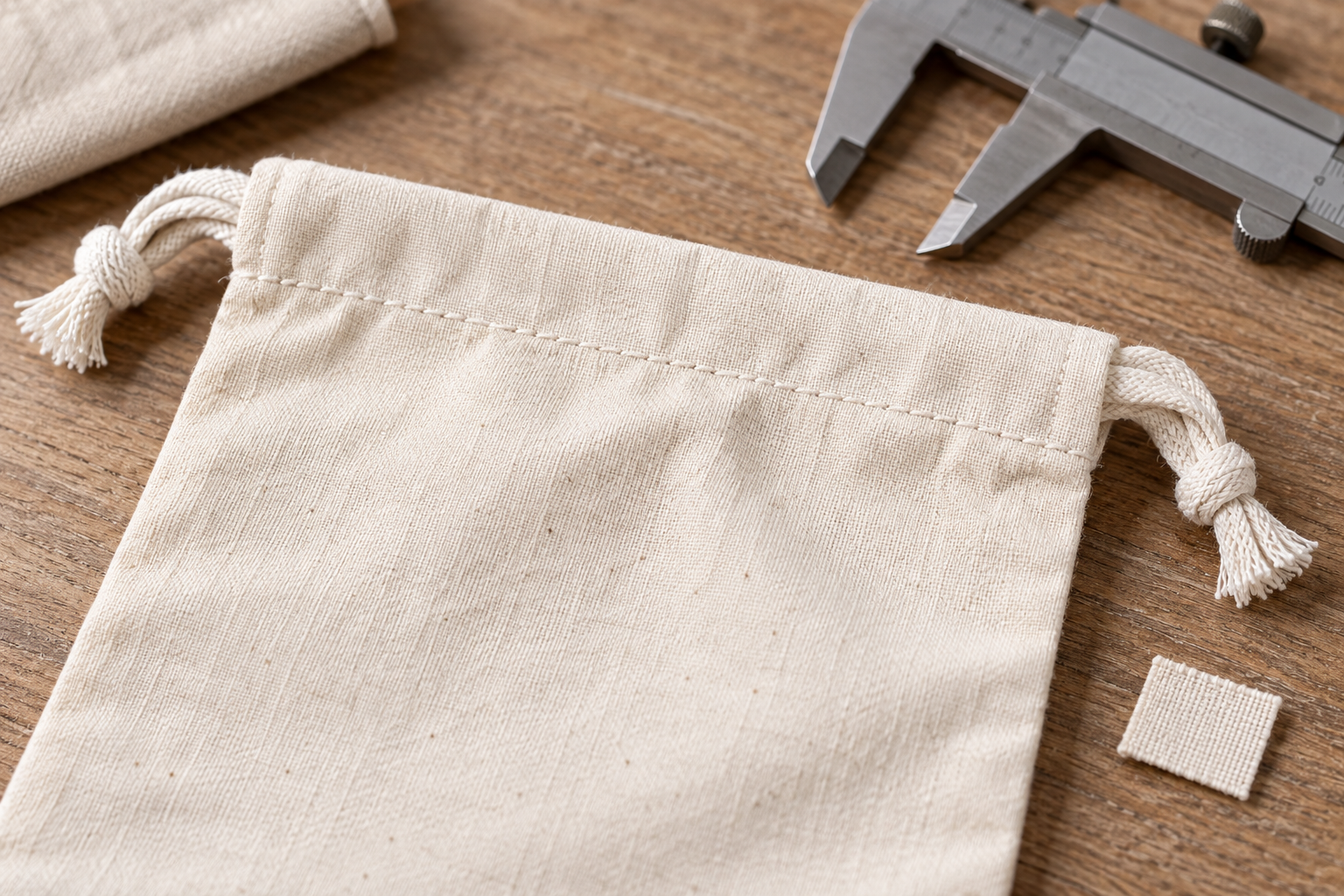
Illustrative detail derived from an unbranded pouch construction reference; not a LUCKYSTAR inspection photograph or evidence of tested performance.
| Defect seen during use | Likely inspection point | Immediate decision |
|---|---|---|
| Cord sticks or scrapes | Channel clearance, seam intrusion, exit edge, cord diameter | Hold first article or affected lot; identify cause |
| Cord pulls out | End finish, knot size, stopper or routing | Hold; verify design and rework feasibility |
| Mouth closes unevenly | Cord length, routing, channel symmetry | Compare with approved routing and filled sample |
| Eyelet rubs or cuts cord | Burr, crimp, edge distance, alignment | Stop affected trim use; examine cord damage |
| Bottom attachment creeps | Patch, stitch placement and load path | Quarantine; repeat defined loaded-use check |
| Gathered top distorts logo | Placement and channel-to-artwork clearance | Compare to approved filled-state sample |
If the project is still deciding cord type, hardware and reinforcement, use the separate Cord, Eyelet and Reinforcement Guide. This checklist assumes those choices were made and asks whether the delivered assembly works.
6. Inspect seams, anchors and inside finish
Turn a representative bag inside out when construction allows. Follow each seam from the top opening to the base: skipped stitches, open seams, unintended puckering, exposed raw edges, loose thread ends, uneven seam allowances and misaligned panels should be recorded by location and consequence. A minor loose thread in a non-contact area is different from an opening seam at the cord anchor.
For backpacks, inspect the lower cord attachment as a load-bearing interface. For pouches, examine the channel end where repeated pulling concentrates stress. If there is a metal eyelet, check secure seating and edge quality; if there is a fabric patch, check that the cord load reaches the intended stitched reinforcement, not only a decorative outer layer. Test the assembled bag as specified, because fabric strength alone does not establish seam or corner strength. ISO's fabric strip-tensile method illustrates a substrate test; it is not a substitute for an agreed whole-bag use check and is not normally applicable to every nonwoven or coated bag material.
Look inside the pouch for adhesive residue, sharp trim, thread loops, exposed embroidery backing, loose lint or color transfer risk relevant to its contents. A jewelry pouch and a sports sack need different acceptance details: the former may prioritize a smooth contact surface, while the latter may prioritize load path and carrying comfort. The buyer must state which risks control release.
7. Verify branding on the real fabric and shape
Compare the decorated first article and sampled finished bags against the approved physical strike-off or decorated sample. Inspect color under the agreed lighting; then check logo dimensions, location, orientation, edge definition, coverage, registration and whether the mark remains readable when the mouth is gathered and the bag is filled. Flat print placement alone may not predict the customer-facing view.
For printed textile panels, the buyer may specify dry and wet rub-fastness testing where color transfer matters. ISO 105-X12:2016 describes a method for determining resistance to rubbing and staining for dyed or printed textiles. It does not assign a universal pass grade to this order; the test scope and acceptance grade belong in the buyer's requirement. Embroidery, heat transfer and applied labels need their own process-appropriate checks rather than a borrowed print-only criterion.
Use the Drawstring Bag Logo Placement and Print Size Guide to set the design reference and Custom Drawstring Bag Printing Methods to choose the process. Quality control verifies the specific approved combination.
8. Run a defined filled-bag use check
“Load test passed” is meaningless without contents, mass, loading method, duration and observations. For a pouch, insert the actual box or a dimensionally faithful surrogate, close the mouth, lift or handle it as intended, remove the item and inspect the product-contact surface. For a backpack-style bag, use the stated mass and distribution, wear/carry orientation and agreed number of cycles. Photograph the bag before and after. Record seam opening, cord slippage, hole elongation, permanent deformation, color transfer and damage to the contents.
| Test field to write before inspection | Buyer-specified value or method |
|---|---|
| Product/contents | Actual item or approved surrogate, including size and shape |
| Loading state | Mass, distribution, closure position and carry orientation |
| Operation | Pull, open/close, lift, carry or repeated use sequence |
| Duration/cycles | Order-specific number; no assumed universal threshold |
| Environment | Dry/wet or other condition only if relevant and specified |
| Observation | Seam, cord, hardware, shape, decoration and contents |
| Acceptance | What must remain functional; what cosmetic change is allowed |
| Record | Sample ID, date, operator, photos and result |
This is a buyer-specified protocol template, not a statement that LUCKYSTAR has run a particular load or cycle test. If a destination market or end use demands a regulated method, obtain the applicable requirement for that SKU and do not substitute a casual demonstration.
9. Classify defects by consequence, not appearance alone
Agree defect definitions before inspecting bulk. A useful classification considers the intended use and the customer's brand promise. A sharp metal edge near a user's hand or a cord that escapes during normal closure might be critical or major depending on product and risk assessment; a tiny loose thread may be minor if it does not affect function or presentation. These are illustrative categories, not a universal AQL scheme.
| Illustrative class | Drawstring-bag example | Typical response to define in the plan |
|---|---|---|
| Critical | Hazardous sharp component, prohibited material, identity/safety failure | Stop release and escalate under buyer policy |
| Major | Cord cannot close, load anchor fails, product cannot fit, wrong artwork, open seam | Quarantine affected lot; investigate and rework or remake |
| Minor | Small removable thread or slight non-prominent cosmetic variation | Record against agreed sample/limit; accept or clean if permitted |
For final sampling, define the lot, randomization method, inspection level, defect classes, sample size, acceptance/rejection numbers and reinspection after correction in advance. An AQL label by itself is not a product specification or a promise of zero defects. ISO's current ISO 2859-1:2026 entry concerns lot-by-lot attribute sampling; the buyer and supplier still must agree which scheme and defect limits apply. A high-consequence function can instead require an every-unit check or an additional targeted check, even when other attributes are sampled.
10. Use stage gates and traceable inspection records
One final inspection cannot reliably repair a wrong cord batch or an artwork alignment problem repeated across the whole run. Assign each risk to the earliest point where it can be detected and contained. ISO's ISO 10005:2018 quality-plan guidance is a useful model for establishing, reviewing and applying a plan; it does not certify LUCKYSTAR or impose bag-specific requirements.
| Gate | Minimum decision | Record that supports release |
|---|---|---|
| Incoming | Correct material, cord, trims and print inputs? | Component identity and batch check |
| First article | Complete bag matches revision and functions with contents? | Measurements, photos, approval |
| In-process | Are channel, anchor, stitch and logo trends stable? | Sample log by line/time/lot and corrections |
| Final | Does sampled production meet agreed appearance/function/packing rules? | Result by defect class and lot |
| Shipment | Are counts, colors, labels, carton marks and documents correct? | Pack-out and shipment sign-off |
When a defect appears, identify the earliest and latest potentially affected units, not just the one photographed. Hold that range, identify the cause, correct the process, document rework and reinspect the corrected population according to the agreed plan. Do not mix revised units back into unchecked cartons. A concession, if permitted, should be written and approved by the named buyer authority before shipment.
A compact inspection record template
| Field | Record |
|---|---|
| Order / product / revision / colorway | __________ |
| Approved sample and artwork reference | __________ |
| Lot size, location and selected sample IDs | __________ |
| Inspection date, stage and inspector | __________ |
| Measurement values and tolerance version | __________ |
| Cord/closure and loaded-use method/result | __________ |
| Defects by class, count and photo ID | __________ |
| Corrective action, affected range and recheck | __________ |
| Pack-out and carton verification | __________ |
| Release authority, decision and date | __________ |
Copy this into a supplier inspection form, then replace blanks with the actual order's acceptance values. Photographs are supporting evidence; they do not replace measurements or a signed decision.
11. Check packing and carton release
Drawstring bags can be damaged after passing sewing inspection. Check the specified folding method so cords do not knot, kink or snag adjacent units. Confirm individual bag or bulk-pack configuration, inserts, labels, barcode placement if required, size/color ratio, units per inner pack and outer carton, carton marks and total counts. For a velvet or light-colored pouch, decide whether abrasion and staining protection are needed. For a bulky backpack, verify that tight packing does not permanently crease the decoration or distort the hardware.
Do not claim carton optimization or transit protection without a defined packaging configuration and, where needed, an agreed transit test. Release should use the approved packing instruction rather than an improvised arrangement at the loading dock.
Why choose LUCKYSTAR for a controlled custom-bag project?
LUCKYSTAR publicly offers custom drawstring bag formats and OEM/ODM-oriented sourcing support. For a buyer, the useful advantage is the ability to bring format, material, logo, sample and inspection requirements into one order-specific conversation. Ask the team to review the intended contents, cord routing, reinforcement, printable area, approval sample and release evidence together before a quotation is finalized. That connects the bag's design to the checks that will later determine whether production is acceptable.
This is an invitation to define a verifiable project plan, not a claim of a universal in-house factory, certified quality system, fixed pass rate, standard load rating, guaranteed MOQ or guaranteed lead time. Confirm who performs each operation and which records will be supplied for your order. For supplier due diligence, revisit How to Choose a Custom Drawstring Bag Manufacturer; for broader purchasing responsibilities, see the Custom Bag Manufacturer buyer guide.
Buyer RFQ: request a sample and QC response together
Send the intended use, dimensions, material direction, quantity by color, artwork, contents, destination and target delivery date. Then request these quality items in the quotation response: proposed physical sample route; cord and anchor construction; measurement points and tolerances; decoration strike-off; filled-bag function test; defect definitions; inspection sampling and records; pack-out; and the person authorized to approve changes. If any criterion remains open, label it to be agreed before bulk, not “standard.”
The product configuration, price, MOQ, sample arrangements, testing, inspection scope and schedule are subject to specification and written confirmation. LUCKYSTAR's custom drawstring bag product page shows format starting points; it does not replace an order specification.
Frequently asked questions
Is a pre-production sample enough to approve bulk quality?
No. It establishes a reference, but bulk still needs defined material controls, first-article release, in-process checks, final inspection and a recorded decision. The sample should be linked to the exact revision and kept available to the inspector.
Should every bag be pull-tested?
That depends on the risk, method and economics agreed for the order. A critical closure feature may justify an every-unit functional check; a destructive strength test usually needs a defined sample. Separate non-destructive closure operation from destructive or fatigue testing, and record the selected frequency before production.
What if the delivered cord differs from the approved sample?
Treat it as a proposed substitution. Hold the affected components, compare the new cord's fit, color, hand feel, end finish and performance in the complete bag, then obtain written approval or reject it. A visually close color alone is insufficient.
Does AQL guarantee a defect-free shipment?
No. Attribute sampling is a decision method for a defined lot and defect scheme. It does not replace the acceptance specification and cannot guarantee that every uninspected unit is defect-free.
How should we inspect a pouch used for jewelry or gifts?
Check the actual item's insertion and removal path, interior smoothness, closure, contact cleanliness, logo presentation and retail pack-out. Do not borrow a sports-backpack load criterion unless it reflects the pouch's intended use.
What if a defect is found after cartons are sealed?
Identify the potentially affected lot and cartons, place them on hold, document the defect and root cause, correct or segregate affected units, then reinspect under a documented plan. Shipment release needs a fresh authorized decision.
Turn this checklist into your order standard
The best checklist is specific enough that two inspectors would make the same decision on the same bag. Start with a controlled sample and specification, convert the drawcord, seams, branding, filled use and packing into observable checks, and agree how failures will be contained before bulk begins. That is how a simple drawstring bag becomes a repeatable branded product rather than an uncertain visual match.
Tell LUCKYSTAR about your drawstring bag and request an order-specific quote. Include your intended contents and any inspection requirements so the team can respond on the actual scope.

The GET QUOTE image opens LUCKYSTAR's contact form. Sampling, pricing, MOQ, testing and production terms require written confirmation for the final specification.