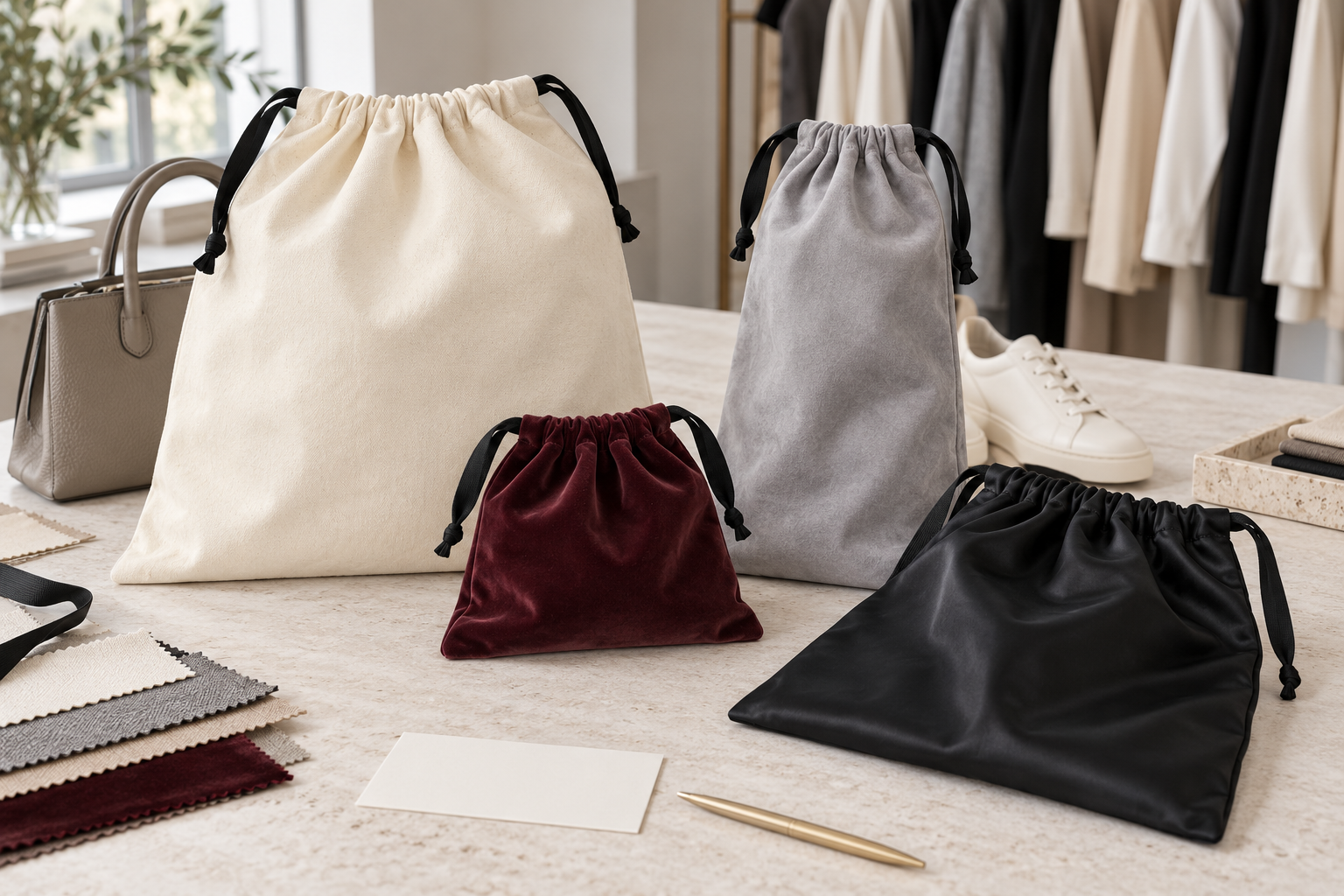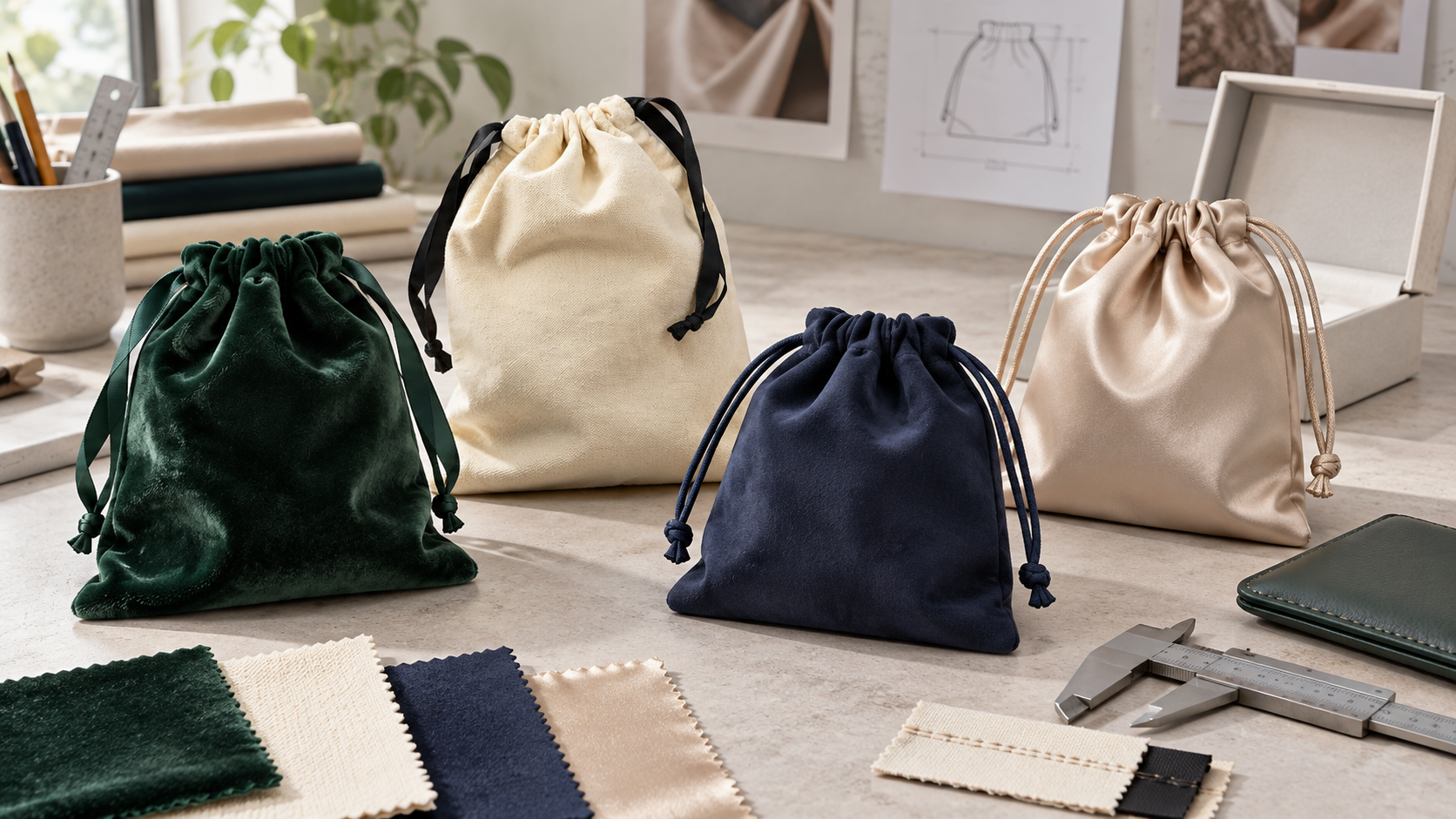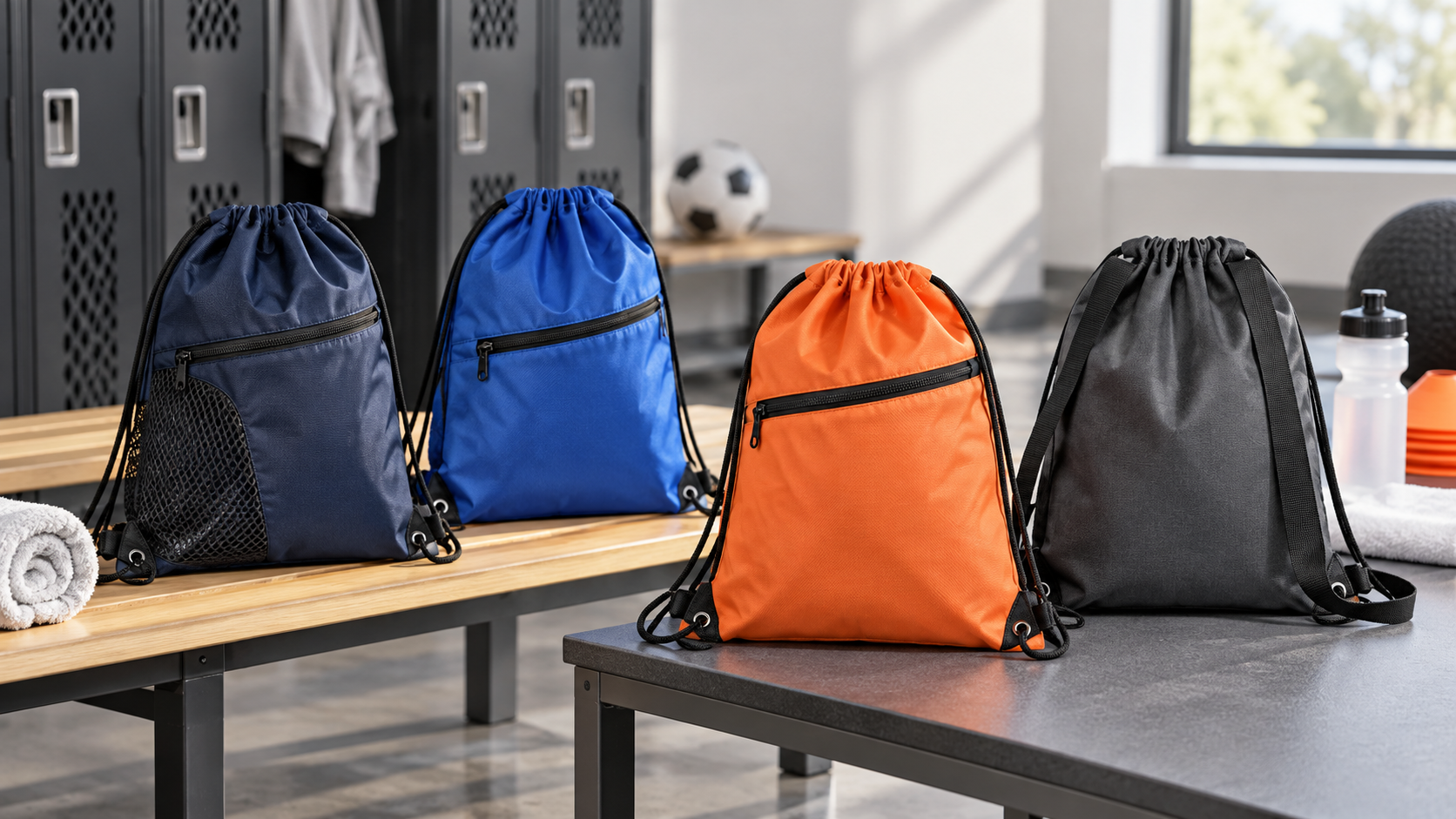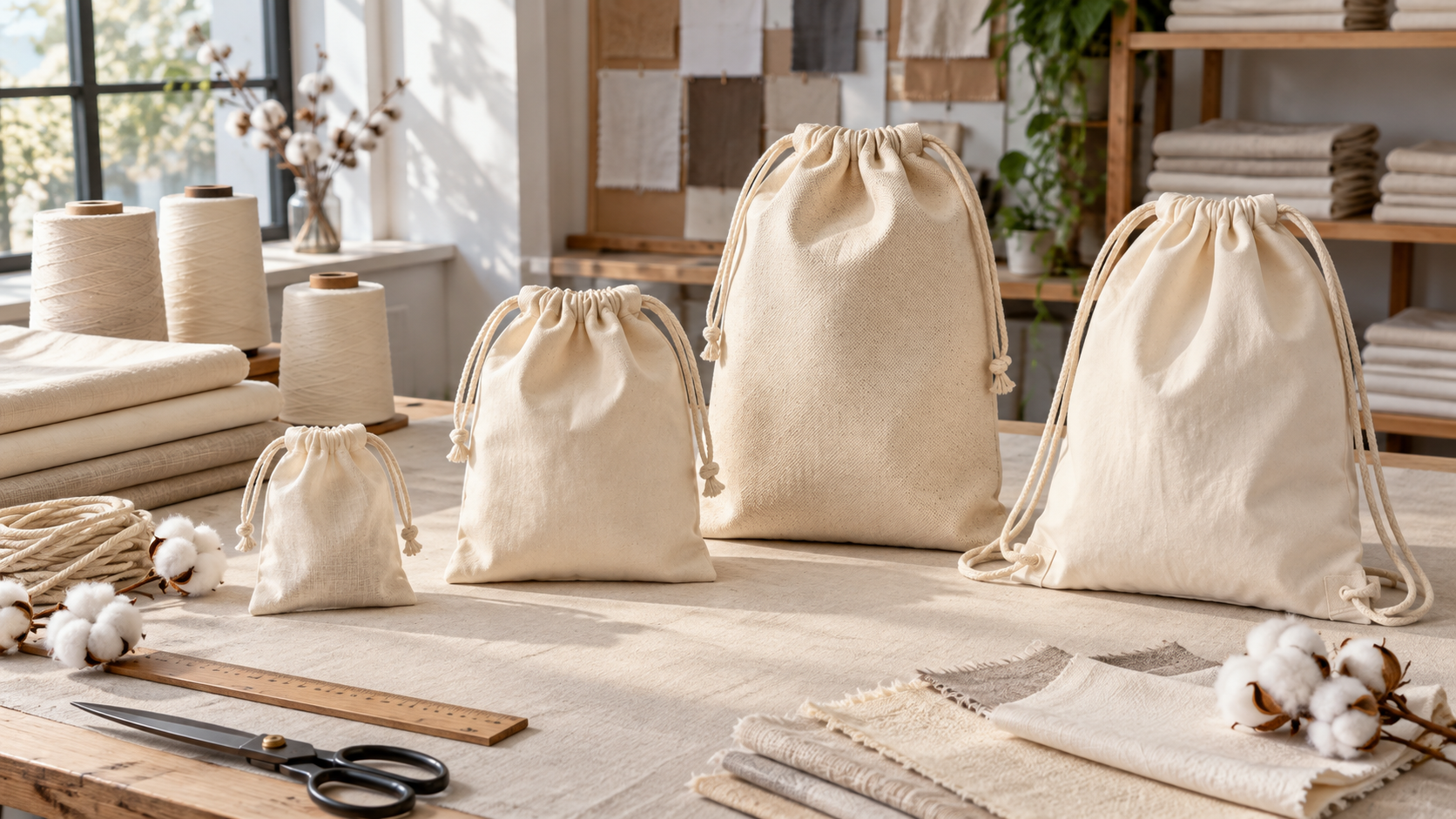
Last reviewed: September 16, 2026
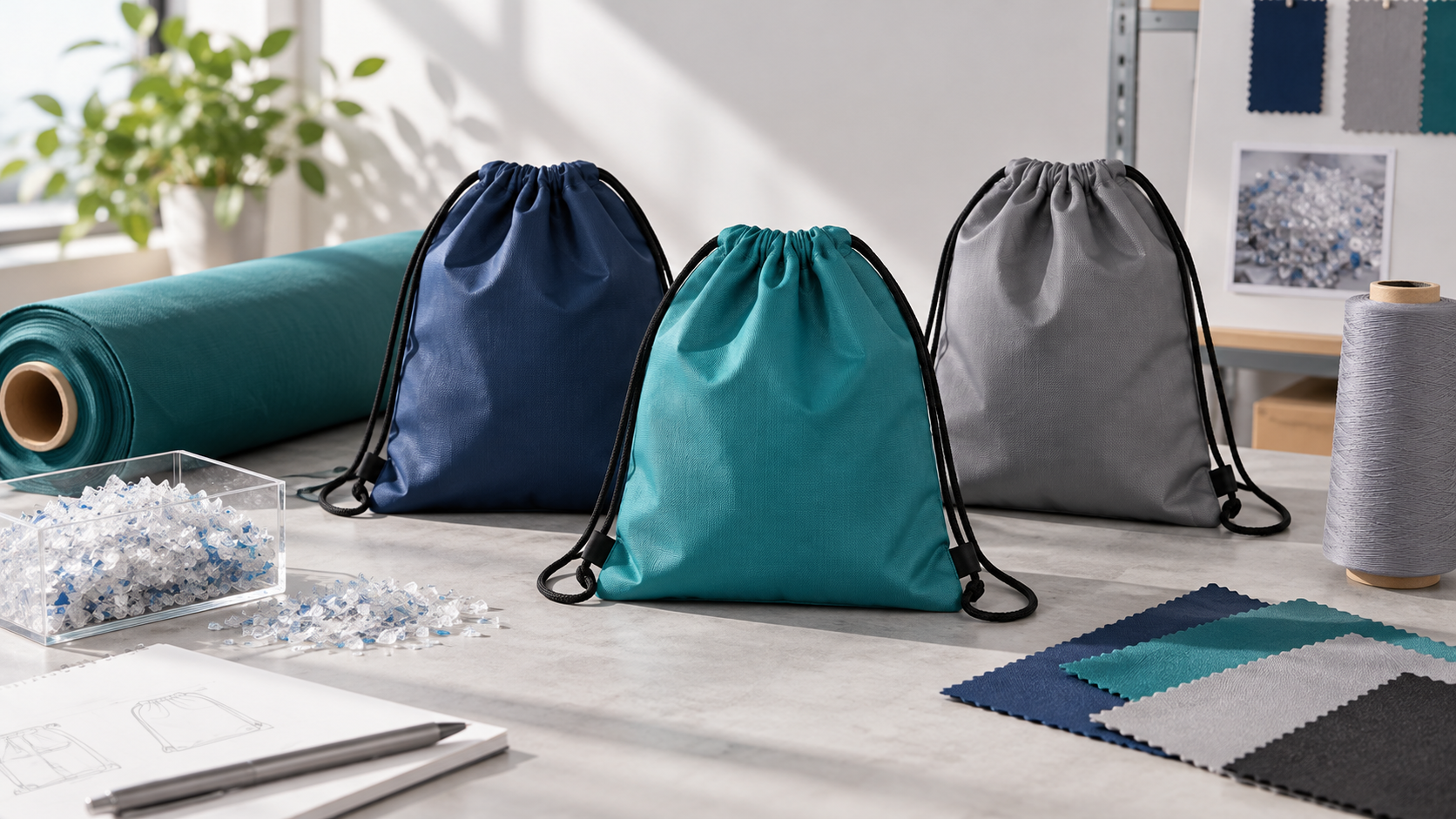
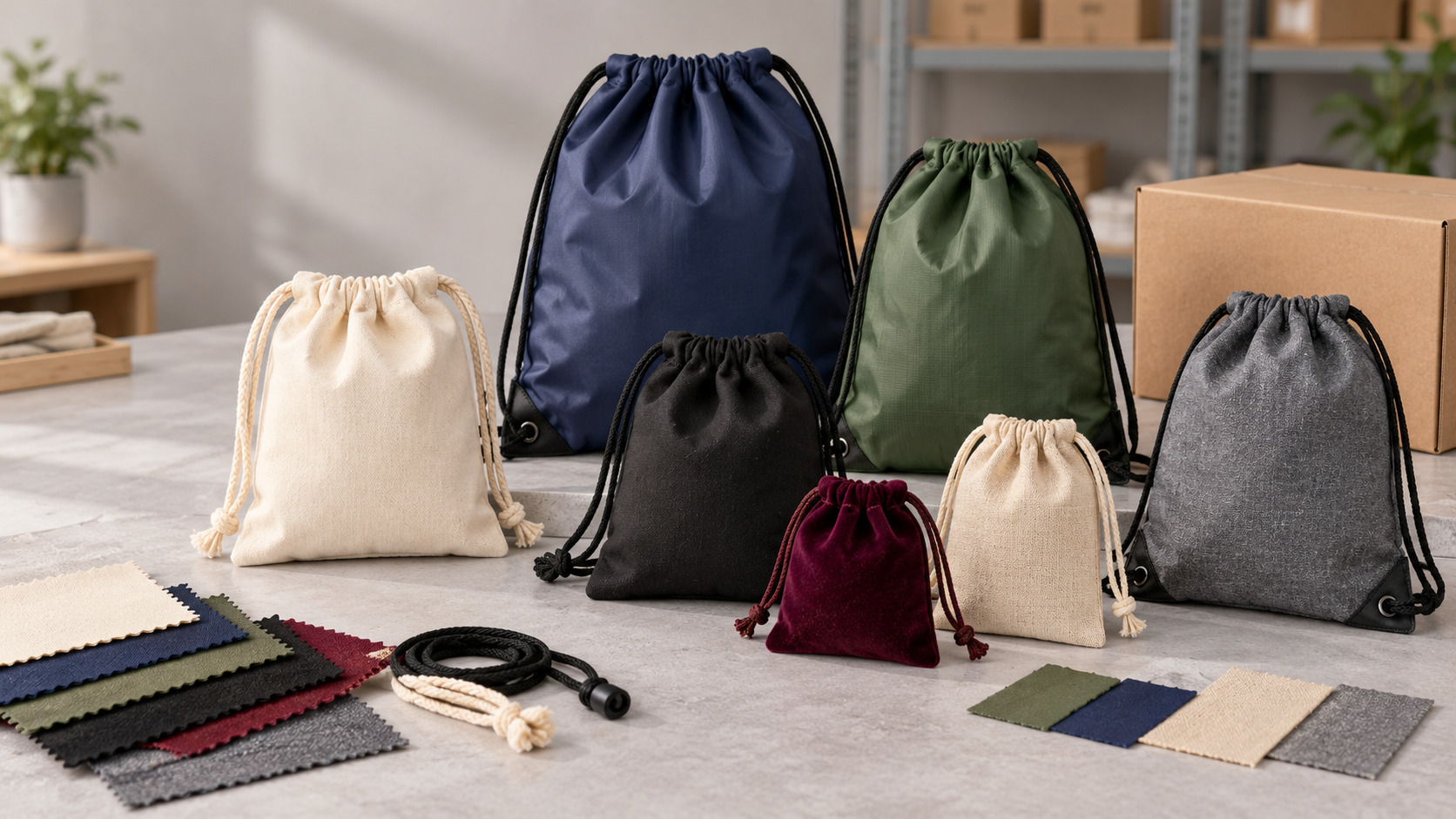
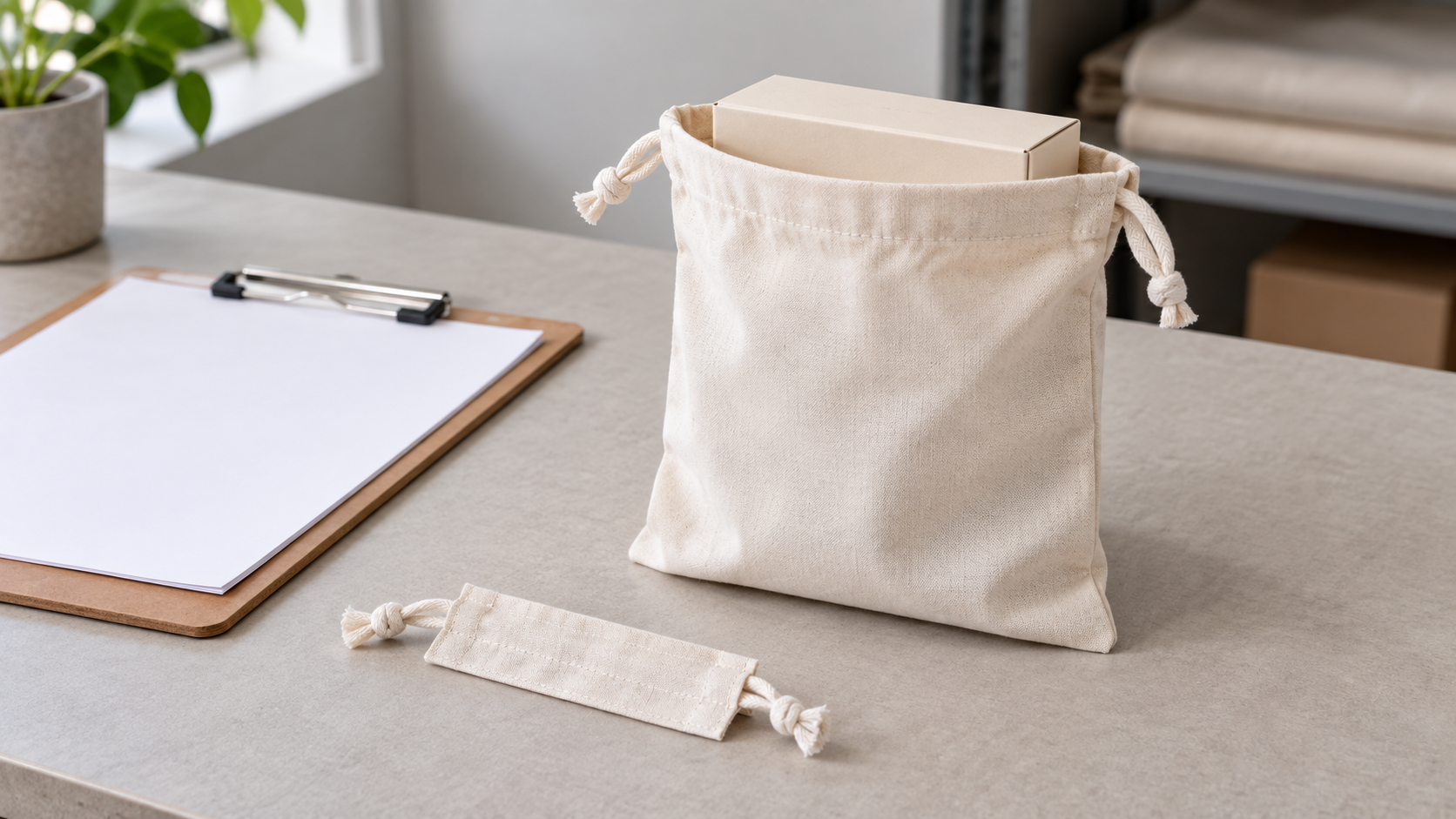
Develop a custom drawstring bag sample by checking product insertion, usable space after closure, cord-and-channel movement, seam or corner attachment and decoration on the filled bag. Use a component coupon or print strike-off when it can answer a narrow question, then confirm the complete assembly. Record what each sample proves, any substitutions and the evidence required before production approval.
Need a sample plan that closes specific decisions? Send the intended contents and load, usable size, material and construction direction, cord/channel details, artwork and decoration, quantity and variants, current sample stage, questions to prove, evidence and test needs, approval owner, packing, destination and target date. LUCKYSTAR can return a proposed sample ladder, required inputs, substitutions to disclose and approval gates.
This guide focuses on physical sample decisions for gift pouches, storage bags and sports sacks. It covers filled fit, gathering, drawcord movement, artwork appearance and approval records. Use the linked manufacturing guide for bulk operations after approval, and the drawstring tech-pack guide for the controlled specification.
Explore LUCKYSTAR's custom drawstring bag options before preparing your sample request. If you are still evaluating partners, start with How to Choose a Custom Drawstring Bag Manufacturer. For category-wide supplier governance, see the Custom Bag Manufacturer Guide.
Quick answer: what is the correct sample sequence?
For most custom drawstring bags, use a decision ladder rather than asking one sample to prove everything:
- define the intended contents, use conditions and critical-to-quality requirements;
- approve identified fabric, cord, thread, trim and color references;
- test the channel and cord as a small construction coupon when closure risk is high;
- build an undecorated structural prototype to prove size, usable space and assembly;
- approve a decoration strike-off on production-intent material;
- review a complete decorated sample while flat, filled and closed;
- issue one revision-controlled comment log and close every decision;
- approve a pre-production or golden-sample package, not just an attractive object;
- transfer its specification, references and controls to the bulk-production team;
- preserve duplicate references and a change record for inspection and reorders.
Straightforward projects may combine stages. High-risk materials, new constructions, strict color requirements, multiple variants or demanding use conditions may need additional evidence. The sample plan should follow risk, not a fixed number of rounds.
| Sample gate | Main question | Release evidence |
|---|---|---|
| Brief gate | Is the development question defined? | Approved brief, CTQs and open issues |
| Component gate | Are the proposed fabric, cord and trims identified? | Referenced swatches/component samples |
| Construction gate | Do pattern, channel, seams and fit work? | Measured blank prototype and comments |
| Decoration gate | Does the logo process work on the real substrate? | Approved strike-off with artwork revision |
| Complete-sample gate | Does the finished assembly work in use? | Filled-and-closed evaluation record |
| Production-reference gate | Is one buildable version fully documented? | Approved sample plus specification/BOM |
| Transfer gate | Can production and QC use the same standard? | Control plan, first-piece points and retained references |
Why drawstring bag sampling needs its own method
Drawstring bags look structurally simple, which makes them easy to under-specify. The closure concentrates several variables into one narrow area: cord form and dimensions, channel depth, seam bulk, cord exits, knots or end finishes, top-edge behavior and usable height. Decoration is also affected by gathering. A logo centered on a flat panel can look low, curved or partially hidden when the pouch is filled and closed.
The risk changes by format. A small velvet jewelry pouch is judged by symmetry, surface direction, shade and presentation. A sports sack uses its cord as both closure and carrying system. A mesh bag may distort at seams. A lined gift pouch can lose internal capacity or twist when layers are not balanced. The sample program must therefore prove the specific assembly and intended use.
The Custom Drawstring Bag Supplier Guide covers material, construction, MOQ and basic sourcing questions. This article goes deeper into how each open question should be assigned to a sample and converted into an approval record.
Before sampling: write the decision the sample must support
Do not begin with “Please make one sample.” Begin with the decision required after the sample arrives. Examples include:
- Can the intended product enter the bag and close without excessive force?
- Is the specified logo size visually balanced below the gathered area?
- Does a selected cord move smoothly through the proposed channel?
- Can the material accept the selected print, transfer, embroidery or foil process?
- Does a lining improve presentation without reducing usable volume too far?
- Can the proposed fold and individual pack preserve the product appearance?
When the question is explicit, the team can choose a lower-cost coupon, mock-up or strike-off instead of building a full final sample too early.
Build a sample hypothesis
A useful development statement has four parts: the proposed solution, the risk, the evidence and the decision. For example: “Use the selected flat cotton-like cord in the proposed folded channel; check repeated opening, full closure and seam interference; approve the combination or increase channel clearance.” The material description in a real order must be based on current evidence, not visual assumption.
Create a drawstring-bag sample brief
The sample brief should be complete enough to reduce guessing, while clearly marking information that is still open. Separate mandatory requirements from preferred options. If cost, material or process alternatives are welcome, state which characteristics must not change.
| Brief section | Required drawstring-bag inputs | Common ambiguity to remove |
|---|---|---|
| Use | Contents, orientation, insertion method, closure, carrying and distribution | “For gifts” without product size or presentation needs |
| Dimensions | Finished width × height × base/gusset, usable space, units, measurement state | Mixing cut, flat-finished and internal dimensions |
| Main material | Composition, construction, weight/thickness method, finish and color reference | “Canvas,” “velvet” or “eco fabric” without evidence |
| Cord system | Material, flat/round form, width/diameter, length, routing, color and ends | “Matching drawstring” |
| Construction | Channel fold, seams, lining, reinforcement, bottom shape and edge finish | “Same as photo” without inside construction |
| Decoration | Artwork file/revision, process, dimensions, colors, position and tolerance | “Logo centered” without a datum or finished view |
| Performance | Defined fit, closure, handling, rub, wash or loading conditions if applicable | “Durable” or “strong” without a pass condition |
| Packing | Fold, cord position, individual protection, labels, assortment and carton | “Standard export packing” |
| Compliance | Destination, end user, product contact, labeling, tests and documents | Asking for generic certificates after the sample is built |
Use vector artwork where possible and identify the controlling file by name and revision. Include photographs as context, but do not let an unmeasured reference image become the specification.
Map the sample ladder before spending on a full prototype
The most efficient sample is the smallest piece of evidence that can close the current question. A channel coupon can reveal cord drag without sewing a complete bag. A decoration strike-off can compare ink or thread behavior without paying for multiple finished units. A blank structural prototype can prove capacity before final colors are ready.
| Evidence item | Best used for | Usually unnecessary when |
|---|---|---|
| Material and cord kit | Shortlisting texture, color direction, component size and compatibility | Current approved references are already valid and traceable |
| Channel coupon | Testing fold, cord clearance, exit finish and gathering | Closure is a previously approved unchanged construction |
| Decoration strike-off | Checking process, scale, coverage, color direction and substrate response | Decoration is unchanged on the same verified substrate/process |
| Blank structural prototype | Proving dimensions, shape, lining, opening and usable volume | An unchanged approved pattern is being repeated |
| Complete decorated prototype | Reviewing total appearance and function | Earlier evidence already reveals a fundamental redesign is needed |
| Pre-production sample | Confirming the build intended for bulk | Production-intent inputs or routing are still unresolved |
| Pack-out sample | Checking fold, protection, labels and carton presentation | Packing is unchanged and documented by an approved reference |
The broader Custom Bag Sample Development Process explains the general sampling logic. The drawstring-specific ladder above prevents repeated full samples when the open problem is only a cord, channel, artwork or fit decision.
Sample type 1: material, cord and trim references
Start by identifying the proposed components. For the main fabric, record the supplied reference, claimed composition, construction, nominal weight or thickness method, finish, color and any relevant lot information. For the cord, record material description, flat or round form, width or diameter, weave or braid, color, length basis and end treatment. Add thread, labels, linings, hardware and packaging components where applicable.
Evaluate components as a system
A cord that feels suitable by itself may be incompatible with the channel. A soft outer fabric may behave differently after a lining is added. Dense embroidery can stiffen or distort a lightweight substrate. Heat-based decoration may affect a surface finish. The sample plan should therefore move from component review to assembly review rather than treating approvals as isolated.
Material names alone do not prove environmental or performance properties. Cotton, polyester, nylon, velvet, satin, mesh, jute-like fabrics and other routes may be requested, but the current order needs its own composition, specification and evidence. Do not treat a swatch label, folder name or marketing phrase as a certificate.
Sample type 2: the cord-channel coupon
A cord-channel coupon is a short piece of the proposed top construction with the intended cord inserted. It is especially useful when the cord is thick, the fabric is bulky, the exit is unusual, the opening must gather tightly, or the design uses hardware or complex reinforcement.
Check the folded depth, stitch position, internal clearance, side-seam intersection, exit finish, cord movement, gathering symmetry and end-stop behavior. If the bag will be repeatedly opened, agree a realistic cycle or handling check and record the exact method. Do not call the result a universal durability proof.
| Coupon observation | Possible cause | Next controlled decision |
|---|---|---|
| Cord drags | Insufficient clearance, seam bulk, surface friction or cord variation | Adjust channel geometry or cord specification |
| Top will not gather evenly | Unequal route, inconsistent channel or asymmetric exit | Correct pattern/assembly and repeat the coupon |
| Knot enters the channel | End stop too small for the opening | Change knot/end finish or exit dimensions |
| Fabric frays at exit | Opening or edge finish unsuitable for the material | Add a controlled finish and reassess appearance |
| Channel twists | Folding, grain/orientation or seam sequence is unstable | Mark operation sequence and build a new coupon |
Sample type 3: the undecorated structural prototype
The structural prototype answers whether the bag works as an object. It can use a documented substitute material if the purpose is limited to pattern, opening or fit, but every substitution must be visible on the sample record. A buyer should never discover later that a “fully approved” prototype used different fabric, cord or lining.
Review the pattern, bottom form, gusset, lining, channel, cord route, seams, reinforcements, opening and finished dimensions. Turn the bag inside out where the construction permits, and compare both sides. Evaluate the product when empty, filled and closed.
Measure usable space, not only flat size
The channel consumes height, seams consume width, linings consume internal volume and gathering changes the opening. Record measurement datums and conditions. A fit test should use the actual contents or an accurate dimensional dummy with the correct orientation and clearance.
| Measurement state | What it reveals | Record with the result |
|---|---|---|
| Flat and relaxed | Finished exterior geometry and symmetry | Datum, method, unit, tolerance and conditioning |
| Opening extended | Access for insertion and removal | Opening definition and test orientation |
| Filled | Real volume, corner behavior and visual proportion | Contents/dummy dimensions and fill method |
| Filled and closed | Remaining usable height, gathering and cord position | Closure state and acceptable exposure/clearance |
| After agreed handling | Dimensional or appearance change relevant to use | Exact handling method and evaluation timing |
Sample type 4: the decoration strike-off
Approve decoration on the production-intent substrate whenever possible. The same artwork can change with material color, texture, pile, coating, stretch, absorbency, heat response, backing or surface treatment.
Review artwork revision, dimensions, orientation, position system, color reference, edge definition, opacity or coverage, hand feel, reverse-side effect and the agreed performance check. For embroidery, examine puckering, density, backing, thread shade and interior finish. For transfer, screen print, digital print, foil, patch or label routes, agree the relevant appearance and adhesion or rub evaluation.
Position the logo on a filled, gathered sample
The strike-off proves process feasibility; the complete bag proves composition. Gathering can bend a logo or move visual attention upward. Define the decoration position from stable finished datums and review it on the finished pouch both open and closed.
The article on drawstring bag design risk in OEM production explains why decoration and closure geometry must be considered together.
Sample type 5: the complete decorated prototype
The complete sample combines the current material, construction, cord and decoration decisions. Review it in a fixed order so visual excitement does not hide functional problems:
- verify identity and revision;
- confirm supplied components and declared substitutions;
- inspect exterior and interior construction;
- measure using the agreed method;
- insert the intended contents;
- open and close the cord system;
- review decoration while flat, filled and gathered;
- perform agreed product-specific handling checks;
- evaluate folding and preliminary pack presentation;
- record each finding as accept, revise or open.
A sample may be attractive but still unsuitable for production. Approval requires both appearance and buildable, documented inputs.
Adapt the review to the drawstring bag format
| Bag format | Sample questions that deserve priority | Useful evidence |
|---|---|---|
| Small jewelry or fragrance pouch | Surface, symmetry, product contact, closure elegance, internal finish | Filled presentation sample and surface/contact review |
| Cotton or canvas-style gift sack | Shrinkage/relaxation concern, seam bulk, print interaction and fit | Measured decorated sample and use simulation |
| Polyester sports sack | Cord comfort, routing, bottom attachments and carrying load path | Loaded trial with approved construction and conditions |
| Velvet or satin pouch | Pile direction, shade, marking, abrasion and draw appearance | Lot references and filled/closed visual review |
| Mesh drawstring bag | Stretch, snagging, seam containment and opening distortion | Bound-seam/channel sample and intended-content trial |
| Lined or structured pouch | Layer balance, turning, bulk, wrinkles and usable capacity | Section details, inside-out photos and fit test |
These are risk prompts rather than guaranteed properties. The actual verification method must match the specified materials, end use, destination market and written agreement. For material-selection context, see Canvas vs Nonwoven Drawstring Bags.
Run a loaded fit-and-closure review
This review is the heart of drawstring bag sampling. Place the actual product or controlled dummy inside, orient it as it will be packed, pull the cords to the intended closed position, and observe usable clearance, seam stress, gathering, logo visibility, cord balance and ease of removal.
Before the fit-and-closure review, record the contents or dummy ID, its dimensions and mass where relevant, insertion orientation, target closure state and agreed acceptance criteria. Assess insertion, exposure after closure, cord movement, seam distortion and removal separately. Record the observation and decision for each; do not substitute a general comment such as “works well” for a measurable result.
Separate carrying tests from closure tests
For a gift pouch, the cord may only close the top. For a sports sack, it may also carry the load through bottom tabs or eyelets. These are different load paths. State the load, duration, motion, repetition, environment and acceptance criteria for any handling trial. A successful sample under one condition does not prove all loads or lifetime performance.
Record comments as controlled decisions
Blank sample feedback record — complete for your project
Sample ID / revision / review date: [enter]
Contents or dummy / insertion orientation: [enter]
Condition checked: [flat / open / filled / closed / carrying]
Issue ID / location / photo reference: [enter]
Observed result: [enter]
Required result / specification reference: [enter]
Proposed correction and affected fields: [enter]
Evidence needed: [coupon / full sample / measurement / other]
Owner / due date: [enter]
Decision: [open / correction requested / approved]
Approver / date / closure evidence: [enter]
Use one feedback log for each sample revision. The DS-02 entry below is an illustrative example, not a completed Luckystar sample review. Replace its references with your actual issue IDs and retain evidence of the observed condition, requested correction, responsible person and approval. A proposed solution remains open until the agreed evidence is reviewed.
| Comment field | Example of a controlled entry | Why it matters |
|---|---|---|
| Issue ID | DS-02 | Prevents comments being lost or duplicated |
| Location | Top channel, left cord exit | Makes the correction actionable |
| Observation | Cord drags when closing the filled sample | Separates evidence from opinion |
| Requirement/reference | Closure CTQ-03; channel drawing rev B | Connects feedback to the controlling standard |
| Requested action | Increase agreed clearance without changing finished height | Defines the intended correction and constraints |
| Owner/due point | Named role and next sample gate | Establishes responsibility |
| Resolution evidence | Coupon rev C video plus physical sample | Shows what was changed |
| Status/approval | Closed by authorized buyer on date | Prevents unresolved issues entering bulk |
Use annotated images, but keep dimensions in the specification
An annotated photo is excellent for identifying a location. It is weak as the only source for dimensions, tolerances, colors or material identity. Put technical requirements in the controlled specification and link the image to the relevant issue ID.
Configuration control is a useful model for this discipline. ISO 10007:2017 provides guidance on configuration management across the product or service life cycle. Referencing that principle does not mean LUCKYSTAR or any production site is certified to ISO 10007.
Decide whether a second full sample is necessary
Not every correction requires another complete physical sample, and not every correction can be safely approved from a photograph. Base the decision on the effect of the change.
| Change | Possible evidence route | Physical re-sample is usually important when |
|---|---|---|
| Minor thread trimming or cleaning | Corrected close-up plus updated instruction | Appearance standard remains unclear or widespread |
| Artwork position | Dimensioned layout plus decorated panel/full view | Gathering or filled appearance is affected |
| Cord dimensions or material | New component plus channel coupon | Pull behavior, comfort or load path changes |
| Main fabric or lining | New material reference and rebuilt relevant assembly | Fit, sewing, decoration, color or claims are affected |
| Pattern, channel or gusset | Revised structural sample | Capacity, measurement or construction changes |
| Packing method | Pack-out sample or documented trial | Presentation, labels, compression or transit risk changes |
If a change alters fit, material behavior, construction, decoration, use performance, compliance evidence or packing, require enough new evidence to approve the affected function.
Approve the pre-production sample as a package
A pre-production sample, often called a PP sample, should represent the intended production build to the extent stated. The approval must list anything that is not production-intent. The physical item alone is not sufficient because it cannot reliably identify hidden inputs, tolerances or revision history.
The approved package should contain:
- sample ID, date, SKU, size/color/artwork variant and revision;
- final specification and measurement method;
- bill of materials and referenced components;
- artwork and decoration file/version;
- construction and workmanship points;
- CTQs and agreed test methods/pass criteria;
- approved color/material references;
- packing and labeling reference;
- closed decision log and open conditional items;
- permitted deviations and named approval authority.
ISO 10005:2018 gives guidance for establishing, reviewing, accepting, applying and revising quality plans for products, processes, projects or contracts. In a bag order, that principle supports connecting the approved sample to a product-specific control plan. It is not evidence that LUCKYSTAR or a site is ISO 10005 certified.
Build a golden-sample pair, not a single traveling object
Where practical, retain matched references with the buyer and supplier or at the responsible production/QC location. Identify them consistently and record which reference controls if differences arise. Protect samples from light, moisture, crushing, contamination and unauthorized alteration as relevant to the material.
A physical golden sample can age, fade, compress or become damaged. It should be supported by current written data, dated photographs and component references. A beautiful sample without a specification cannot reliably control a reorder.
Define the authority of the golden sample
State which aspects the sample controls—appearance, construction, hand feel, decoration or pack-out—and which aspects are controlled by written limits or test methods. If the sample and specification conflict, the order documents should define the resolution process rather than leaving production to guess.
Transfer sample approval into bulk production
Before handing the approved sample to bulk production, confirm the current sample ID, technical-pack revision, closed comments, remaining authorized exceptions and release owner. The drawstring bag manufacturing guide covers the next production stages. The table below identifies the sample evidence each stage should receive; it is a handoff checklist, not proof that a particular order has passed inspection.
| Approved sample characteristic | Production control | Evidence at release |
|---|---|---|
| Fabric and color | Incoming identity/lot comparison | Material record and referenced approval |
| Pattern and usable size | First-cut/first-piece measurement | Dimension report using the approved method |
| Channel and cord | Assembly first-piece plus in-line function checks | Closure result and issue containment record |
| Decoration | Setup approval and periodic comparison | Artwork/process reference and output checks |
| Sewing/workmanship | Operation guidance and in-line inspection | Findings and corrective action by bundle/time window |
| Pack-out | Line reference and count/label checks | Packing photos, assortment and carton data |
Use the Custom Bag Quality Inspection Checklist to connect the sample standard to incoming, first-piece, in-line and final inspection.
Plan sample timing by dependencies
There is no responsible universal promise for sample days. Timing depends on how complete the brief is, whether materials and colors are available, whether custom dyeing or components are required, the decoration setup, construction complexity, testing, sample rounds, approval response and sample shipping.
Request a milestone plan instead of one unexplained date:
| Milestone | Start condition | Typical reason it moves |
|---|---|---|
| Technical review | Complete brief and files received | Open dimensions, unclear use or missing artwork |
| Component proposal | Material/cord direction and evidence needs agreed | Sourcing, color or claim requirements change |
| Coupon/strike-off | Process variables and reference material available | New cord, ink, thread, backing or finish is required |
| Structural prototype | Pattern inputs and intended contents confirmed | Fit target or construction changes |
| Complete sample | Key component and decoration gates released | Earlier gate has unresolved findings |
| Buyer review | Sample delivered with decision log | Multiple stakeholders or unclear approval authority |
| PP/golden sample | Revision list closed and production-intent inputs available | Substitute materials remain open |
MOQ, sample fee, tooling or setup cost and refundable conditions also vary by project. They must be confirmed in the current quotation. The MOQ overview explains quantity drivers. Review costing separately in the Custom Bag Pricing Guide, then use the lead-time and cost guide to plan dependencies.
Decide what can be approved remotely
Remote reviews can close visible and dimensional questions when evidence is controlled. Ask for a neutral overview, front/back/interior views, the bag flat and filled, the bag closed, channel and cord-exit details, a scale or measurement method where needed, consistent lighting and the sample ID in the accompanying record.
Physical review remains important for hand feel, true color comparison, fit with actual contents, cord friction, surface effects, odor concerns, subtle workmanship and any agreed use test that cannot be reliably reproduced on video. Photos and videos should supplement the sample record rather than replace it by default.
Manage multiple colors, sizes and artworks without sampling every unit
Create a variant matrix. Identify which variables are common and which create a new risk. One structural master may represent several artwork variants only if construction and material are unchanged and the decoration process is adequately proven. A new fabric color may affect print coverage. A new size may alter logo proportion, channel geometry or capacity. A new cord may require a fresh compatibility coupon.
| Variant change | Reuse possible | Additional proof to consider |
|---|---|---|
| Artwork only, same process/substrate | Structural evidence may be reused | Artwork/layout approval and relevant strike-off |
| Color only, same verified material construction | Pattern may be reused | Color reference and decoration contrast/coverage |
| Size change | Some construction details may be reused | Pattern, usable-space and logo-position review |
| Fabric construction or finish change | Limited reuse | Component, sewing, decoration and fit reassessment |
| Cord change | Bag pattern may be reusable | Channel coupon and closure/handling check |
| Lining or reinforcement change | Exterior concept may be reused | Capacity, bulk, turning and workmanship review |
Protect intellectual property and sample identity
Confirm that artwork, patterns and brand assets are used only for the authorized project and channels. A manufacturing authorization or a sample photograph does not automatically create permission to display a customer's logo in marketing. Use unbranded or rights-cleared images for public content.
Mark internal and shipped sample records with the SKU/revision without placing confidential customer information into public photographs. Keep commercial documents, order data and customer artwork in access-controlled systems.
Common drawstring sampling failures and prevention
| Failure | Why it escapes early review | Prevention |
|---|---|---|
| Product fits only while bag is open | Flat dimensions were approved without closed fit | Test actual/dummy contents with cord fully closed |
| Cord jams after sewing | Cord and channel were approved separately | Build a channel coupon and complete assembly |
| Logo looks too low or distorted | Artwork was reviewed only on a flat panel | Review the filled and gathered bag |
| Bulk team uses the wrong revision | Feedback is split across chats and photos | One issue log, one active spec and clear supersession |
| PP sample uses substitutions | “Looks close” hides non-production inputs | List every substitute and require final evidence |
| Packing creases decoration | Pack-out is decided after product approval | Approve folded/packed sample before shipment |
| Historical test is generalized | Report title is treated as a category claim | Match applicant, sample, scope, date and order need |
Company-claim boundary: the following section is publisher self-description and a commercial sourcing option. It does not independently prove factory ownership, that every sample or bulk operation is performed in-house, universal capability, capacity, material composition, product performance, certification, compliance, MOQ, price, timing or superiority. The legal seller, assigned sites and subcontractors, sample route, production route, evidence, tests, QC, packing and delivery terms depend on the exact order, final specification and written confirmation.
Why choose LUCKYSTAR for drawstring bag sample development?
LUCKYSTAR supports OEM/ODM development and production or supply coordination from the buyer's brief through sampling, quality review and shipment preparation. This connected workflow does not imply that all operations happen inside a single facility owned by LUCKYSTAR.
Drawstring-specific specification support
The development discussion can cover fabric composition and weight/thickness, finished and usable dimensions, flat or shaped bottom, single or double cords, cord material and form, channel, lining or insert, decoration, packing and relevant checks. This makes the sample purpose clearer and helps reduce hidden assumptions.
Evidence-gated sample planning
Instead of treating every request as one full prototype, LUCKYSTAR can coordinate component references, construction coupons, decoration trials, fit samples and a production-intent sample as the project requires. The exact route, sample cost and timing remain subject to specification and written confirmation.
Revision and production-transfer discipline
Comments can be consolidated against a named revision, with open differences disclosed before approval.
The approved sample can then be paired with a written specification, BOM, artwork, quality points and pack-out reference so production and inspection evaluate the same product.
Evidence-conscious claims
Materials, tests and certificates should be described only within their verified scope. A historical cotton drawstring sample report is not presented as proof for all current bags. For inquiries through luckystarcreation.com, the website company context is Ningbo Luckystar Commodities Co., Ltd.; the legal entity on quotations, contracts and evidence should still be confirmed for the transaction.
Begin on the custom drawstring bag product page. Provide the intended contents, desired size, material direction, cord configuration, artwork, quantity, destination, packing needs and required arrival date; the linked request button below opens the contact page.

Request a decision-led sample plan
Assign each open question to the least expensive sample that can answer it, then carry every approved reference and unresolved difference into the production record.
Review LUCKYSTAR custom drawstring bag options, then send your sample brief through the contact form or Email a project brief. The email link opens a prefilled draft for your review before sending.
Sample route, materials, substitutions, evidence, testing, capacity, availability, price, MOQ, sample cost, packing, schedule and delivery terms are subject to current order-level verification, destination requirements, final specification and written confirmation.
Sample request checklist for buyers
| Send this | Why LUCKYSTAR needs it | If it is not decided |
|---|---|---|
| Intended contents and use | Sets usable-space, closure and handling questions | Send product dimensions/photos or request a fit recommendation |
| Finished and usable size | Controls pattern and capacity | State the minimum item clearance and closure condition |
| Material direction | Guides sourcing, sewing and decoration trials | Share appearance, hand-feel and budget priorities |
| Cord configuration | Determines channel and closure sample needs | Describe pull, carrying and end-finish expectations |
| Artwork | Enables process and placement review | Send vector/logo files and target visual size |
| Variant matrix | Prevents unplanned size/color/artwork risk | Provide forecast options for a proposed proof plan |
| Performance/compliance needs | Defines test or document questions early | State destination, end user and marketing claims |
| Packing and logistics | Allows pack-out development before bulk | Describe retail, warehouse or marketplace receiving needs |
Frequently asked questions
How many sample rounds are normal for custom drawstring bags?
There is no universal number. A clear, familiar construction may combine several gates, while a new material, cord system, artwork process, size set or compliance requirement may need more evidence. Count unresolved risks rather than promising a fixed number of rounds.
What is the difference between a prototype and a pre-production sample?
A prototype proves selected design or function questions and may use disclosed substitutions. A pre-production sample is intended to represent the proposed bulk build to the extent recorded, with remaining differences explicitly listed.
Can I approve a drawstring bag sample from photos?
Photos can support identity, visible workmanship, layout and some measurements. Physical review is preferable when decisions depend on color, hand feel, fit, cord friction, surface, odor, structure or real-use handling.
Should the first sample use final materials?
Use production-intent materials when the decision depends on their behavior. A structural mock-up may use a documented substitute for pattern or capacity questions, but it must not be presented as final approval for material, color, decoration or performance.
What should be tested on a drawstring bag sample?
At minimum, evaluate the requirements that matter to the intended use: usable size, insertion and closure, cord/channel action, seams, decoration, cleanliness and pack presentation. Any load, cycle, rub, wash, contact or compliance test requires an agreed method and pass condition.
Is the approved sample the only bulk quality standard?
No. Pair it with a written specification, BOM, artwork, measurement method, defect definitions, control plan, pack-out instruction and change record. Some characteristics are better controlled by numerical limits or named methods than by visual comparison.
What if the approved material becomes unavailable?
The supplier should report the change before use, provide identified alternatives and assess effects on appearance, fit, sewing, decoration, performance, claims, price and timing. The buyer then approves the required new evidence or rejects the change.
Who should keep the golden sample?
Matched retained references are useful for the buyer and the responsible supplier, production or QC team. Record identity, custody and control priority, and protect the samples from damage or aging conditions relevant to the material.
Does sample approval guarantee identical bulk units?
No. Sewn products require agreed tolerances and process control. Sample approval defines the target; incoming, first-piece, in-line and final controls manage production variation against it.
When does sample development end?
It ends when the required decisions are closed, the production-intent reference package is approved, remaining conditions are explicit, and production/QC can identify the correct specification and controls. The next stage is the documented drawstring bag manufacturing process.
Approve a reproducible decision, not a perfect-looking sample
The strongest drawstring bag sample program makes uncertainty smaller at every step. It uses component references for material questions, coupons for closure questions, strike-offs for decoration questions, prototypes for structure and fit, and a pre-production package for bulk transfer.
The physical bag matters, but its value comes from the decisions attached to it. Record what it proves, what remains conditional, which revision is active, how it was measured, which contents were used, and who approved each change. When the sample, written specification and control plan agree, the buyer has a production reference that can survive handoffs, inspection and future reorders.