Drawstring Bag Size and Capacity Guide
Choosing a drawstring bag size starts with the item—not a generic label such as small, medium, or large. Measure the product in its packed orientation, add only the clearance needed for insertion and closure, then confirm the result with a physical sample. A flat pouch’s width and height do not directly equal usable capacity: seams, fabric thickness, the drawcord channel, gussets, product shape, and how tightly the mouth must close all consume space.
This guide shows brand, retail, gift, promotional, and packaging buyers how to specify dimensions, estimate volume without overstating it, select a construction, and approve a loaded sample. For available development directions, visit LUCKYSTAR’s custom drawstring bags.
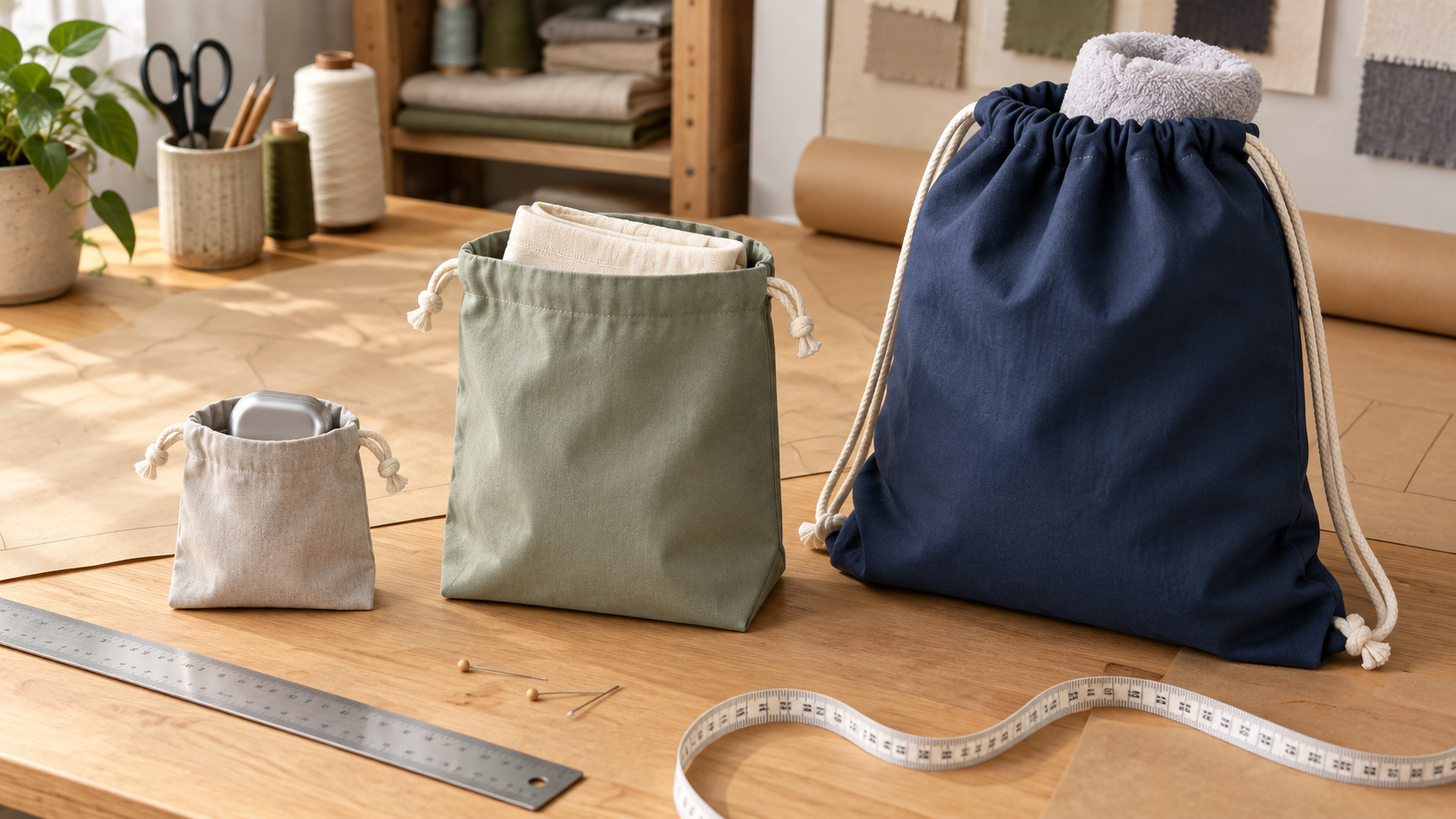
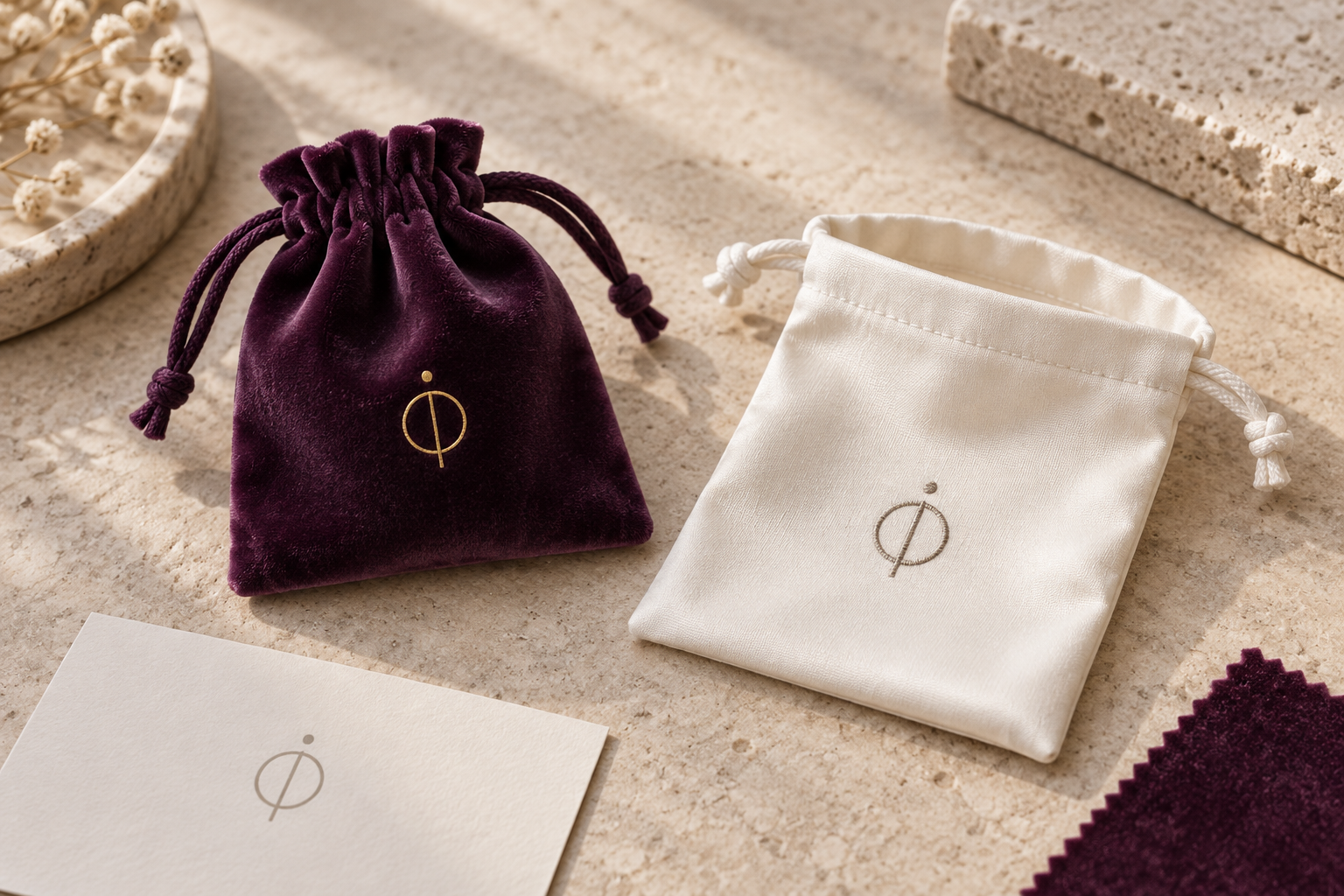
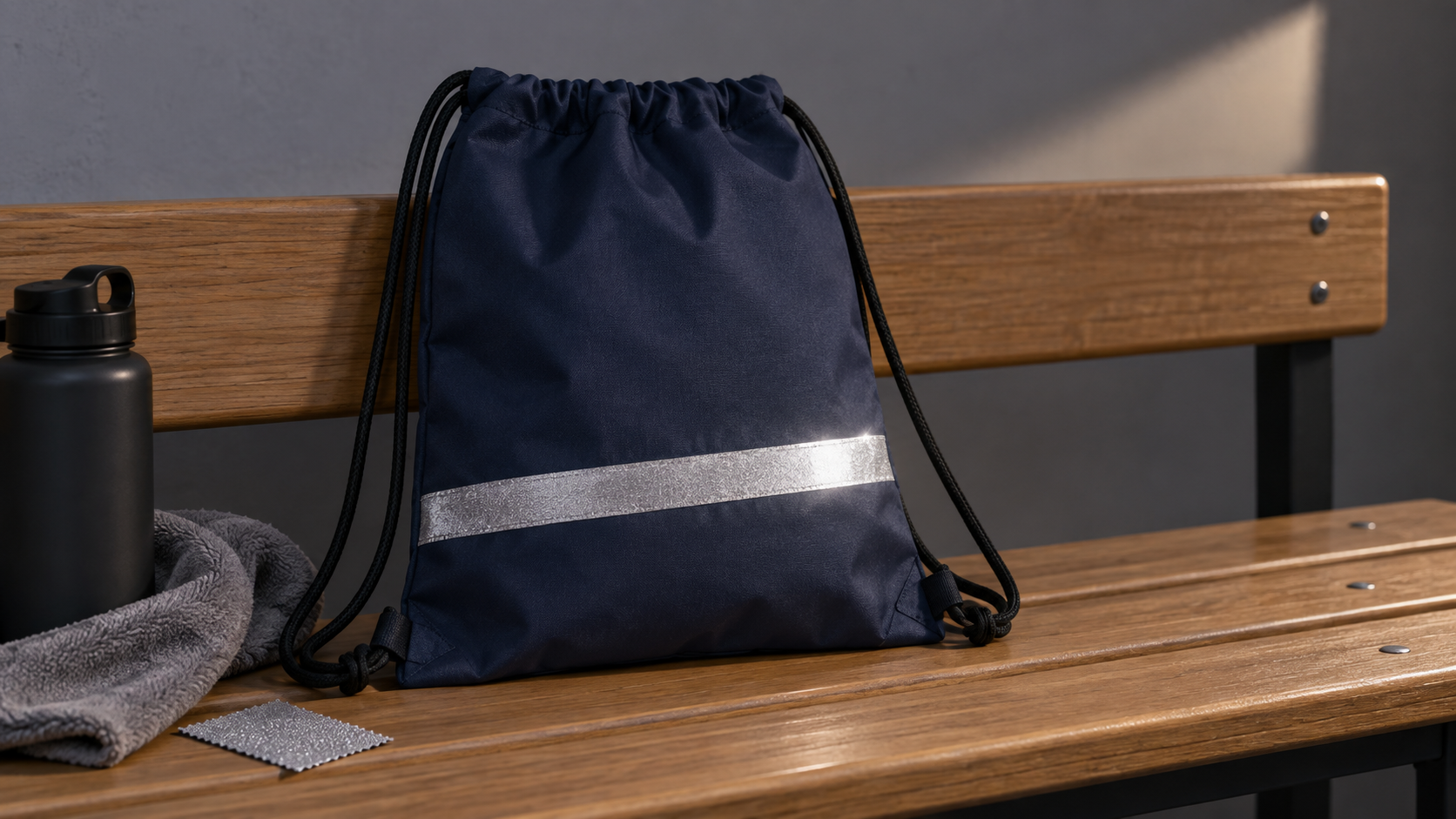
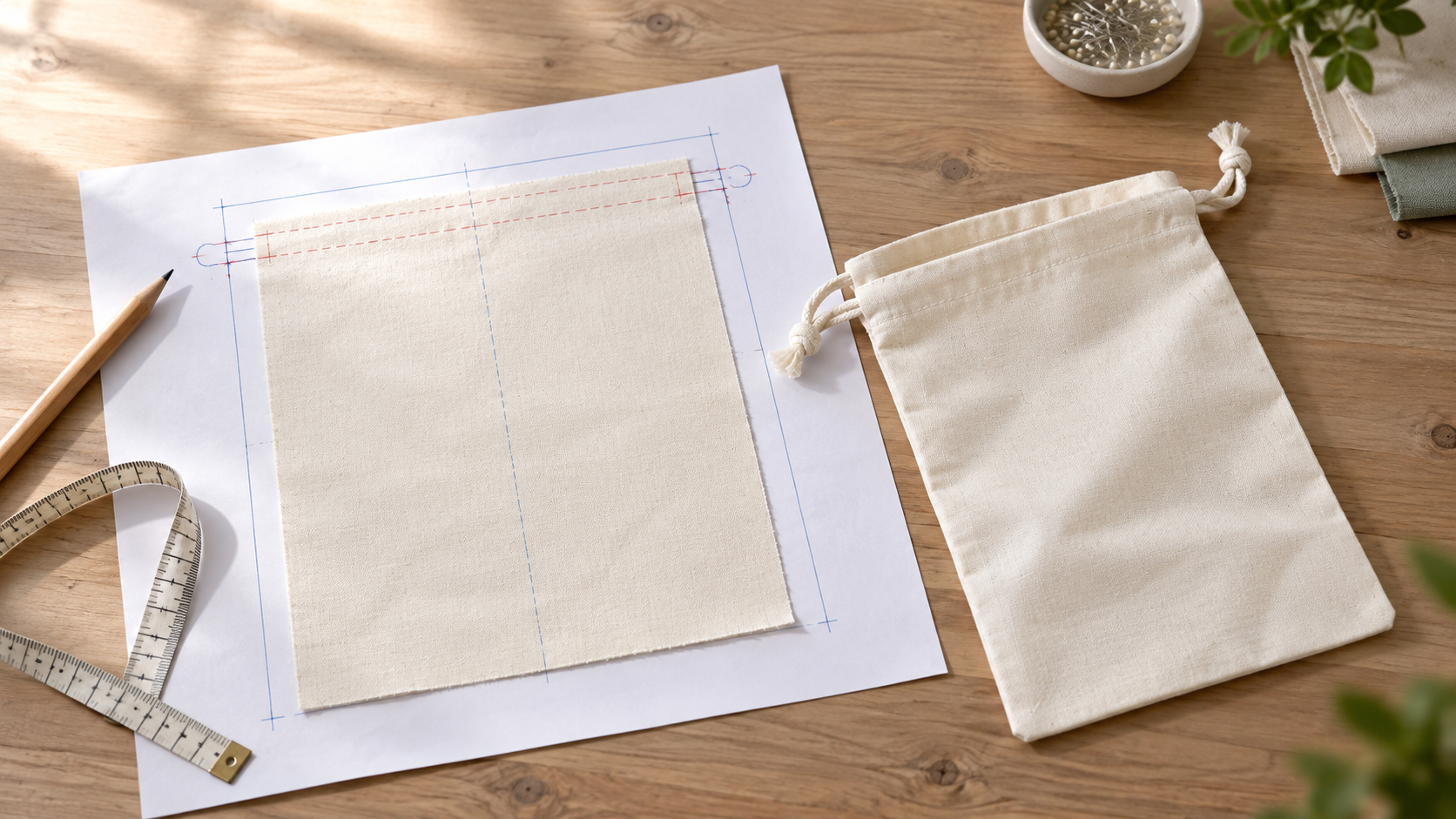
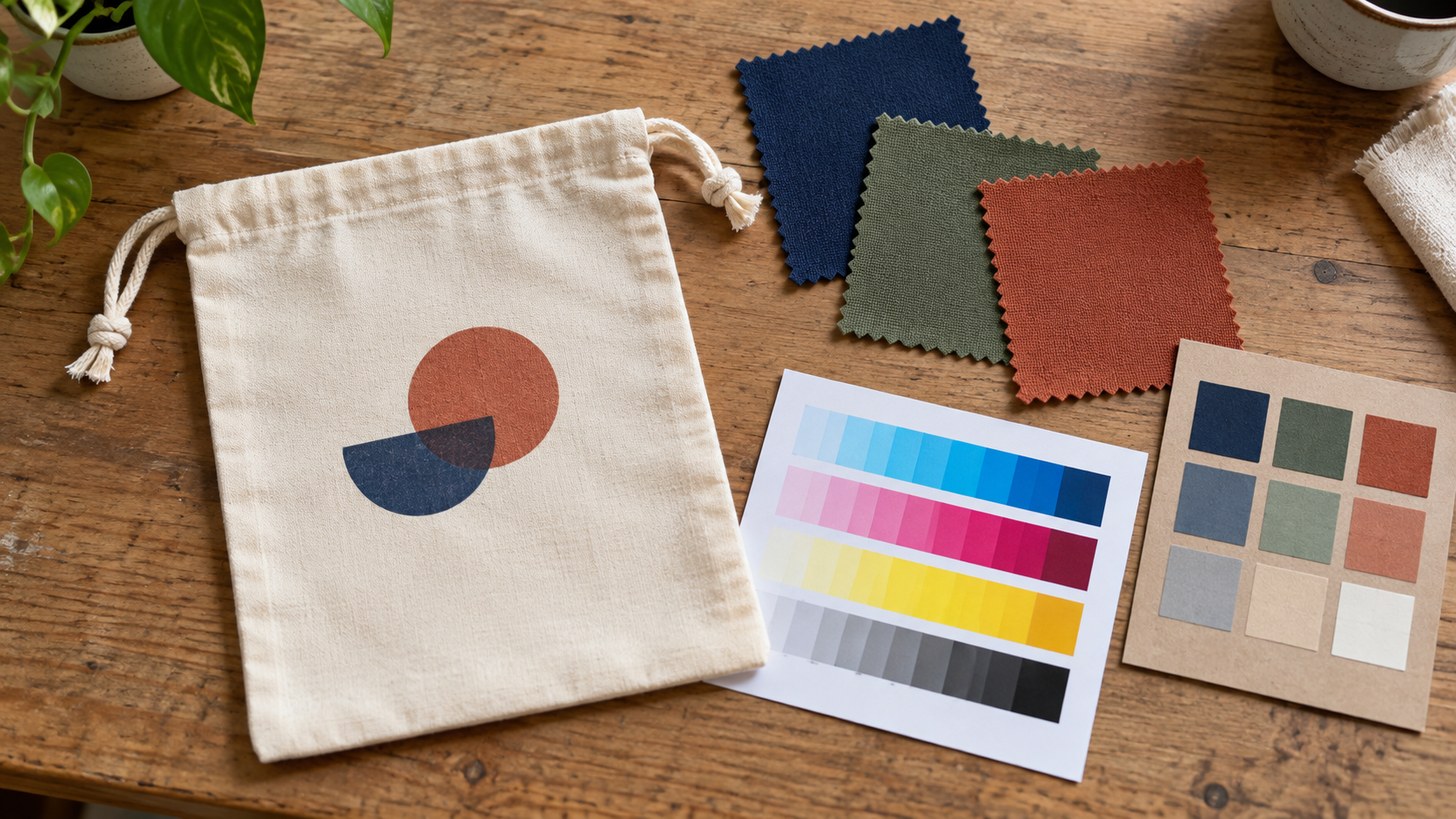
Illustrative disclosure: this reference-guided AI image uses a real company sample only as a structural reference for pouch proportion, double drawcords, stitching, and natural fabric behavior. The three unbranded bags are illustrative size classes, not current SKUs, fixed company dimensions, or tested capacity claims.
The Short Answer: How Do You Select the Right Size?
Follow this order:
- Define exactly what goes inside, including retail packaging and accessories.
- Measure the item in the orientation customers will use.
- Decide whether the bag should fit closely, allow easy access, or hold a variable assortment.
- Select flat, bottom-gusseted, side-gusseted, round-base, or backpack-style construction.
- Reserve usable height below the drawcord channel and gathered closure.
- Make a size sample, load it, close it, carry or handle it, and inspect the final silhouette.
The correct size is the smallest construction that meets insertion, closure, protection, presentation, and handling requirements without unwanted strain or excessive empty space.
Size, Volume, and Capacity Are Different
These terms should not be used interchangeably.
| Term | Practical meaning for a drawstring bag | Common mistake |
|---|---|---|
| Finished size | Agreed external dimensions measured by a defined method | Omitting the dimension order or measurement condition |
| Pattern size | Cut-panel dimensions before seams, turns, and assembly | Treating it as the finished size |
| Geometric volume | Mathematical volume of an idealized three-dimensional shape | Presenting it as guaranteed usable capacity |
| Usable capacity | What the completed bag can hold while still closing and functioning | Estimating it from a flat photograph |
| Rated load | The mass and load pattern the agreed construction is designed or tested to handle | Assuming a larger bag automatically carries more weight |
| Pack-out quantity | Number of specific items that fit in the approved orientation | Ignoring dividers, voids, closures, and item variation |
A bag may have generous volume but poor access, or sufficient dimensions but an unsuitable load path. Capacity is therefore a product-system result, not a single number printed beside width and height.
Use One Dimension Order Everywhere
Write dimensions as width × height × depth/gusset, with units, unless the drawing defines another order. State whether width is measured at the opening, body, base, or widest point.State whether height includes the top channel.
| Dimension | Recommended definition | Measurement note |
|---|---|---|
| W — width | Horizontal finished distance between agreed side points | Measure flat without stretching unless the specification says otherwise |
| H — overall height | Base to top finished edge | Record whether the gathered lip is included |
| U — usable height | Base to the functional closure line or available product zone | Verify with the bag closed around the item |
| G — gusset/depth | Finished side or bottom expansion by the agreed method | A folded gusset may be recorded as fold depth or total opened depth; specify which |
| C — channel height | Finished depth of the drawcord tunnel | Match it to cord diameter, seam bulk, and pull behavior |
| O — opening | Clear access dimension during insertion | Measure in the condition customers actually use |
Use the same labels on the tech pack, pattern, sample comments, inspection sheet, and carton plan. Our custom drawstring bag tech pack guide explains how to control these measurement points in one document.
Overall Height Is Not Usable Height
The top of a drawstring pouch contains a turn-back, seam, channel, and gathered fabric. When the cord is pulled, part of the upper body forms a crown rather than product space. A tall item that appears to fit inside an open bag may block full closure.
Specify both overall height and the maximum permitted product height. Then test the actual item with the mouth fully closed to the required appearance. Do not subtract a universal fixed allowance: thick velvet, light polyester, stiff nonwoven material, lined canvas, and a double-channel construction gather differently.
Why a Flat Pouch Has No Simple Liter Formula
A two-panel flat pouch has width and height but no fixed depth. Once filled, the panels curve and borrow material from both dimensions. The resulting shape depends on fabric flexibility, seam construction, item geometry, fill level, and closure tension. Multiplying width × height × zero obviously gives no useful result; assigning an arbitrary depth is equally unreliable.
For a flat pouch, use a physical item-fit test or a stable volumetric method agreed between buyer and supplier. If you need a predictable rectangular volume, add a defined gusset or another shaped base.
Estimating Volume for a Gusseted Bag
For early comparison only, an ideal rectangular envelope can be estimated as:
Nominal envelope volume (L) = W (cm) × usable H (cm) × opened G (cm) ÷ 1,000
This uses the relationship that one liter equals one cubic decimeter and one milliliter equals one cubic centimeter, as summarized by the U.S.National Institute of Standards and Technology in its SI units for volume guidance.
The calculation is an upper geometric envelope, not a promised bag capacity. Rounded corners, seams, inward folds, a sloping shoulder, closure gathering, fabric thickness, lining, and irregular contents reduce usable space. Apply no generic “utilization percentage” unless it has been validated for the specific design and load.
Worked Example: From Geometry to a Sample Question
Suppose a concept has an internal design envelope of 30 cm width, 40 cm usable height, and 10 cm opened depth. The ideal rectangular calculation is:
30 × 40 × 10 ÷ 1,000 = 12 L
The correct sourcing conclusion is not “this bag holds 12 liters.” The correct conclusion is: “12 L is the theoretical rectangular envelope; now verify how much space remains after seams, bottom folds, gathering, and the intended packed items.” A pair of shoes, twelve rigid cartons, loose garments, and granular test media will each use the same envelope differently.
Common Size Classes—Use Cases, Not Standards
The ranges below are illustrative briefing bands, not LUCKYSTAR standard SKUs, promised availability, or industry certification. Actual dimensions must be confirmed for the project.
| Illustrative class | Possible finished-size band | Typical starting applications | Main fit question |
|---|---|---|---|
| Mini pouch | About 7–12 cm wide and 9–15 cm high | Rings, coins, samples, small favors | Can the item pass through the opening without stressing the logo or seam? |
| Small pouch | About 12–20 cm wide and 15–25 cm high | Jewelry sets, cosmetics, cables, amenity kits | Is there enough closure clearance above the tallest item? |
| Medium pouch | About 20–35 cm wide and 25–45 cm high | Gifts, footwear, folded apparel, travel sets | Does a gusset improve fit and presentation? |
| Large sack | About 35–50 cm wide and 45–65 cm high | Laundry, larger gifts, product dust bags, light sports use | Will contents settle and pull at corners or cord exits? |
| Backpack format | Size defined around torso, opening, and intended load | Events, schools, sports, promotional kits | Are cord length, corner reinforcement, comfort, and load distribution suitable? |
These bands help buyers start a conversation, but a finished specification should use exact dimensions, tolerances, material, and construction.
Mini Pouches for Jewelry and Small Items
Mini drawstring pouches are sensitive to millimeters.A wide seam allowance, thick cord, bulky channel, internal label, or embroidered logo backing can consume a meaningful share of the interior. Opening access may matter more than nominal area, especially for a rigid ring box or a wide bracelet.
Measure the product at its maximum width, height, and thickness, including tissue, card, insert, or protective sleeve. Place the logo only after the closure line and filled silhouette are known. A logo centered on an empty flat panel may appear too low once the pouch is filled and gathered.
For category-specific planning, see our jewelry drawstring pouch guide.
Gift, Cosmetic, and Amenity Pouches
These bags often hold several differently shaped components. Begin with a pack-out map rather than adding their individual volumes. Bottles create vertical peaks, jars create hard circular zones, and flexible sachets settle into gaps. The bag must still close without pulling the logo into severe folds.
| Pack-out variable | Why it changes the bag | What to submit with the RFQ |
|---|---|---|
| Tallest component | Controls usable height and closure clearance | Height including cap or carton |
| Widest rigid component | Controls opening and flat width | Maximum diagonal during insertion |
| Component count | Changes stacking and pressure | Exact assortment and orientation |
| Leakage or abrasion risk | May require lining or separation | Product-contact and protection requirement |
| Presentation order | Determines what should be visible first | Unboxing sketch or reference photo |
If the assortment may change, define the largest approved configuration and the acceptable appearance for smaller configurations.
Shoe and Apparel Drawstring Bags
Footwear and folded apparel are compressible but irregular. Shoe length alone is insufficient: outsole width, heel height, pair orientation, tissue, and whether each shoe needs its own pouch can change the dimensions. Apparel thickness varies with size, fabric, fold, and quantity.
Use a packed-product sample or a dimensionally accurate dummy. Photograph the approved folding or shoe orientation and include it in the pack instruction. If the bag is also a customer-facing dust cover, evaluate the silhouette after storage rather than only at the packing table.
Backpack-Style Drawstring Bags
A drawstring backpack combines closure cords with shoulder carrying. Capacity and fit therefore affect comfort and structural loads. An oversized body invites overfilling; short cords restrict access or wearing; long cords can hang too low. Bottom-corner attachments, eyelets, reinforcement patches, seam type, fabric, and cord must be reviewed as a system.
Do not infer a safe load from dimensions or denier alone. Define the intended contents and handling cycle, then agree on a test method and acceptance criteria. For material decisions, compare 210D, 420D, and 600D polyester drawstring bags and polyester vs nylon drawstring bags.
Flat, Bottom-Gusseted, and Side-Gusseted Construction
| Construction | Capacity behavior | Visual/packing advantage | Watchpoint |
|---|---|---|---|
| Flat two-panel | Wraps around contents; no fixed depth | Simple, compact, efficient for slim items | Width and height are consumed as the bag expands |
| Bottom gusset | Creates depth near the base | Better standing shape and base support | Fold definition, corner sewing, and settled load |
| Side gussets | Adds depth along the body | Suits rectangular packs and variable fill | Side folds may interrupt artwork and closing |
| Side + bottom structure | Approaches a box-like interior | More predictable pack-out | More seams, bulk, cost, and measurement points |
| Round base | Supports cylindrical or grouped contents | Distinct premium silhouette | Base diameter, circumference match, and seam accuracy |
A gusset is useful only when the contents can occupy it. A rigid item that bridges above the fold may leave the lower depth unused.
Lining, Padding, and Inserts Reduce Interior Space
Lining can conceal seams or provide a selected contact surface. Foam, batting, dividers, and base inserts may improve presentation or protection. Every layer also consumes space and changes stiffness, opening access, sewing bulk, and closure behavior.
Measure a finished, layered sample instead of subtracting material thickness from a two-dimensional drawing. Textile thickness is pressure-dependent. ISO 5084:1996 describes textile thickness measurement under specified pressure and excludes nonwovens, geotextiles, coated fabrics, and textile floor coverings from its stated scope. Confirm the appropriate method for the chosen construction rather than applying one method to every bag material.
Fabric Flexibility Changes the Loaded Shape
A soft cotton pouch can conform closely to irregular contents. Heavy canvas may preserve a cleaner outline but need more insertion clearance. Nonwoven polypropylene can crease or retain fold lines depending on its build. Velvet adds surface bulk at the channel. Coated polyester may resist drape and create a narrower effective opening.
Do not compensate by applying an unsupported universal size increase. Sample the intended material because weight, weave/knit, backing, coating, lining, and finish affect the relationship between flat size and capacity. Our guides to cotton vs canvas drawstring bags and non-woven drawstring bag GSM and construction provide material-specific checkpoints.
Product Clearance: Snug, Standard, or Loose Fit
Clearance is a design choice, not leftover space.
| Fit intent | Useful for | Risk if too tight | Risk if too loose |
|---|---|---|---|
| Snug presentation | Single rigid product, premium reveal, controlled orientation | Difficult insertion, incomplete closure, seam strain, surface rubbing | Not applicable if deliberately close-fitting |
| Easy-access fit | Repeated use, travel accessories, retail handling | Customer effort and damage during removal | Product shifts and presentation becomes inconsistent |
| Variable-assortment fit | Gift sets, promotions, changing bundles | Largest configuration may not fit | Small configurations appear underfilled |
| Protective overbag | Dust cover, footwear, accessory storage | Hard edges press against seams | Excess fabric catches or folds into contact areas |
Approve clearance with the real product and intended user action. A supplier cannot infer it reliably from product dimensions alone.
The Opening Must Fit the Insertion Path
The clear opening can be smaller than the body width because the channel, cord exits, side seams, and stiff material limit expansion. A rectangular box may need to enter diagonally; a handled item may snag; a padded product may compress during insertion but recover inside.
Record the largest cross-section that passes through the mouth, the insertion angle, and whether the customer uses one or two hands. If the pouch needs frequent access, add an open-close-insert-remove cycle to sample approval.
Drawcord Length and Channel Dimensions
Cord length affects both access and appearance. The bag must open far enough for loading, draw closed to the intended mouth, and leave tails that suit tying or carrying. Cord diameter must move through the channel without excessive friction, yet not feel undersized beside a large bag.
| Cord-related decision | Measurement/control point | Functional check |
|---|---|---|
| Single vs double drawcord | Cord path and number of exits | Symmetry and one- or two-handed operation |
| Channel height | Finished tunnel dimension | Smooth pull with seam intersections included |
| Tail length | From exit to finished end in agreed condition | Tie method, loose ends, and customer handling |
| Cord diameter | Declared nominal size and approved sample | Friction, hand feel, knot stability, and visual scale |
| End treatment | Knot, heat-seal where appropriate, tip, or hardware | Pull-off risk, roughness, and target-market requirements |
For bulk inspection, define how the bag and cords are positioned before measurement.
Measurement Conditions and Tolerances
Textiles respond to humidity, temperature, relaxation, handling, and tension. The official page for ISO 139:2005 reports that the publication was reviewed and reconfirmed in 2025. Its scope establishes the characteristics and use of a reference atmosphere for conditioning textiles and determining physical or mechanical properties, with an alternative atmosphere available by agreement.A commercial bag inspection need not invoke this standard automatically, but repeatable conditions and a defined relaxation period make measurements more comparable.
Set tolerances by dimension and function rather than copying one number across the product. A tiny pouch may need tighter absolute control than a large laundry sack. Critical dimensions can include clear opening, usable height, gusset, logo placement, cord length, and component positions—not just overall width and height.
How to Measure a Finished Drawstring Bag
Use an agreed measurement board or flat surface and a flexible tape or rule suitable for the point being checked.
- Identify the bag condition: empty, relaxed, unclosed, and un-stretched unless specified otherwise.
- Align seams without forcing the material square.
- Measure width between the defined side reference points.
- Measure overall height from the defined base point to the top edge.
- Measure usable height to the functional closure line if required.
- Open and record gusset depth by the specified fold or total-depth method.
- Measure channel, opening, cord tails, and logo coordinates separately.
- Repeat across the inspection sample and record individual results rather than only an average.
Photos in the measurement chart prevent different inspectors from choosing different reference points.
How to Verify Actual Capacity
Choose a test medium that represents the intended use.
| Verification route | Best for | Procedure summary | Limitation |
|---|---|---|---|
| Actual product pack-out | Retail sets, footwear, devices, gifts | Pack the approved assortment and close the bag | Most relevant but specific to that assortment |
| Dimensionally accurate dummies | Confidential or unavailable products | Use rigid forms matching maximum dimensions and mass | Does not reproduce every surface or compressibility issue |
| Count test | Identical cartons, bottles, favors | Record orientation and maximum accepted count | Count changes if item packaging changes |
| Controlled fill medium | Comparing prototypes | Use the same agreed medium, method, and closure endpoint | Result may not translate to irregular real products |
| Three-dimensional scan or CAD envelope | Complex engineered programs | Compare interior and product geometry digitally | Still needs physical confirmation of textile behavior |
Do not use water unless the bag and procedure are designed for it; leakage, absorption, stretching, and contamination can invalidate the sample and create safety issues.
Capacity and Load Are Not the Same Test
A bulky towel may fill a bag while imposing little mass. Dense hardware may occupy little space while stressing seams and cord anchors.Capacity checks whether contents fit and the closure works; load testing checks whether the construction withstands an agreed mass, distribution, handling cycle, and acceptance criterion.
Define both when relevant. A passed load test on one size, material, seam, cord, and reinforcement does not automatically cover a larger bag or another construction.
Logo Placement Depends on the Filled Bag
Flat artwork coordinates do not guarantee a centered-looking logo in use. Gussets pull the face around corners. A round object curves the print field. The gathered top can lift or compress artwork. A very large logo may cross the deformation zone.
Approve decoration on a filled sample viewed from the intended presentation angle. Record the logo’s finished width, height, centerline, distance from reference seams, and allowable rotation. For process selection and material behavior, consult best materials for custom drawstring bags.
Carton and Shipping Effects of Bag Size
Bag dimensions affect more than user capacity. Larger panels increase material consumption, print area, folding size, and carton volume. Stiff gussets and inserts may prevent compact packing. Aggressive compression can crease coated fabrics, flatten pile, distort logos, or leave cord marks.
Compare designs using the complete pack-out: individual packaging, fold method, units per inner pack, master-carton dimensions, gross mass, recovery after unpacking, and destination handling.Do not reduce a bag until product fit is at risk simply to improve carton count; instead, examine unnecessary headspace, fold direction, insert size, and SKU proliferation.
Sampling the Size Before Bulk Production
| Approval stage | What the sample should answer | Evidence to retain |
|---|---|---|
| Paper/CAD envelope | Does the proposed geometry surround the product? | Dated drawing and assumptions |
| Unbranded size sample | Do opening, usable height, gusset, and loaded shape work? | Measurement sheet and loaded photos |
| Decorated sample | Is the logo positioned correctly in flat, filled, and closed states? | Approved artwork coordinates and physical sample |
| Pre-production sample | Are final material, construction, cord, lining, and packing correct? | Signed specification and approval record |
| Production retain | Does bulk match the approved reference? | Sealed sample and inspection record |
See our custom drawstring bag sample development process for a stage-gate method that keeps fit decisions distinct from later color and artwork sign-off.
Size and Capacity Quality-Control Checklist
Inspect more than three headline dimensions.
| Checkpoint | Why it matters | Suggested evidence |
|---|---|---|
| Material identity and lot | Thickness and flexibility alter fit | Approved swatch, article code, incoming record |
| Overall and usable dimensions | Confirms the product zone | Measurement chart with method and tolerance |
| Opening access | Controls loading and customer use | Approved product insertion check |
| Gusset formation | Creates intended depth | Opened-depth measurement and first-piece photo |
| Drawcord/channel function | Controls closure and access | Repeated open-close check under agreed load |
| Loaded silhouette | Protects presentation and logo | Approved pack-out photo |
| Seam and anchor condition | Supports the intended load path | Workmanship standard and test record where required |
| Pack recovery | Confirms carton compression is acceptable | Timed unpacking evaluation |
Use our custom bag quality inspection checklist to translate checkpoints into defect classes, sampling rules, and release criteria.
Cost, MOQ, and Lead-Time Implications
Changing size changes fabric yield, cutting layout, logo scale, sewing length, cord consumption, lining, inserts, individual packing, and carton utilization. A wider bag may cross a fabric-width threshold and create disproportionate waste. Multiple nearby sizes can split material, print, and packaging quantities, raising effective minimums.
There is no universal LUCKYSTAR MOQ, price, or production time for every drawstring bag. The feasible terms depend on the confirmed material, size, colors, decoration, components, packing, quantity, testing, and schedule. Review custom drawstring bag MOQ and production time and the 2026 drawstring bag pricing guide before comparing quotations.
How to Reduce Size-Related Cost Without Reducing Fitness
Start with the largest approved product configuration, then remove unused space through sample evidence. Consolidate sizes only when one pouch can serve several items without harming presentation or protection. Reuse cord, color, and packing specifications across SKUs where practical. Place artwork within a stable zone so the same process remains feasible after proportion changes.
Avoid arbitrary percentage reductions.A small change near the closure or opening can create a failure even when the bag still looks large enough. The article on reducing custom drawstring bag costs without sacrificing quality offers a function-first cost review.
Why Choose LUCKYSTAR for Custom Sizing?
LUCKYSTAR supports OEM/ODM bag development for international brands, wholesalers, importers, distributors, and retail or gift programs. The team can help convert a product, sketch, reference sample, or rough size idea into a clearer pouch specification, then coordinate material selection, sample development, artwork placement, production follow-up, inspection planning, and packing alignment.
The value of this process is controlled interpretation:
- The product and pack-out define the dimensions instead of a vague S/M/L label.
- Usable height, opening, gusset, cord path, and filled appearance are reviewed together.
- A physical approval sample can become the reference for bulk measurements and future reorders.
- Material, decoration, carton, and commercial decisions remain tied to the approved project.
These services and all commercial conditions are subject to design feasibility, material availability, quantity, testing needs, schedule, and written confirmation. LUCKYSTAR does not turn one historical sample size, load result, or supplier document into a universal product-line promise.
For category-specific supplier screening, start with how to choose a custom drawstring bag manufacturer. Use the broader Custom Bag Manufacturer guide when comparing operating models across bag types. The drawstring bag manufacturing process shows how the approved size moves into production.
RFQ Checklist for Size and Capacity
| RFQ field | Information to provide |
|---|---|
| Intended contents | Product name, count, individual packaging, dimensions, mass, and photos |
| Packed orientation | Vertical, horizontal, nested, folded, paired, or mixed assortment |
| Fit intent | Snug presentation, easy access, variable assortment, or dust cover |
| Proposed dimensions | Width × overall height × gusset/depth with units and measurement points |
| Closure requirement | Fully closed, tied, easy-open, backpack carry, or decorative gathering |
| Material/build | Fiber/fabric direction, weight/thickness target, lining, padding, or insert |
| Branding | Artwork, process, size, placement, and filled-view priority |
| Performance | Opening cycles, intended load, product-contact, cleanliness, or customer test |
| Quantity and variants | Total, size/color split, repeat-order plan, and acceptable consolidation |
| Packing/delivery | Fold, individual pack, carton needs, destination, and required arrival date |
If sourcing internationally, combine this specification with the documentation and logistics steps in how to import custom drawstring bags from China.
Frequently Asked Questions
What is the standard size of a drawstring bag?
There is no single standard size covering jewelry pouches, gift bags, shoe bags, dust covers, laundry sacks, and drawstring backpacks. Use the actual contents, closure requirement, material, and intended handling to define the finished dimensions.
How do I calculate drawstring bag capacity in liters?
For a genuinely box-like gusseted interior, width × usable height × opened depth ÷ 1,000 gives an ideal liter envelope when dimensions are in centimeters. It is not guaranteed usable capacity. Validate seams, folds, gathering, lining, and product geometry with a finished sample.
How much extra space should I add around a product?
No universal allowance works for all products and fabrics. Required clearance depends on insertion angle, rigidity, compressibility, surface sensitivity, fabric flexibility, seam bulk, lining, and how tightly the pouch must close. Approve clearance through a product-fit trial.
Does the drawcord channel count in the bag height?
It may count in overall external height, but it should not automatically count as usable product height. Define both measurement points on the specification and verify the item below the functional closure line.
Is a gusseted drawstring bag always larger than a flat bag?
Not necessarily in external width and height, but a gusset can create more predictable depth. Whether it improves capacity depends on whether the product can occupy the expanded base or sides.
How should I size a pouch for a box?
Measure the box in its insertion orientation, including any sleeve or tissue. Check the widest diagonal at the opening, reserve closure clearance above the box, and make a sample in the intended fabric and lining.
Can one drawstring bag size serve several products?
Yes, if the largest product fits and smaller products still present acceptably. Use inserts, tissue, or alternative folds only if they are included in cost, packing, and approval. Document every approved pack-out.
How are finished dimensions inspected?
Use a measurement chart with named points, bag condition, units, method, tolerances, and photos. Inspect a defined production sample and record individual results. Functional dimensions such as clear opening and usable height may be as important as overall size.
Does a larger drawstring bag carry more weight?
Not automatically. Carrying performance depends on material, seams, cord, anchor points, reinforcement, load distribution, and handling. Establish a project-specific load and test method rather than inferring strength from size.
Can LUCKYSTAR make a custom size from my product sample?
LUCKYSTAR supports development from product information, drawings, reference samples, and buyer specifications. Feasibility, sample terms, dimensions, tolerances, MOQ, timing, testing, and bulk conditions require project review and written confirmation.
Final Recommendation
Treat a size label as a conversation starter, not a production specification. Define width, overall height, usable height, opening, gusset, channel, cord, fit intent, and loaded shape.Use theoretical volume only for early comparison, then prove capacity with the actual product and a production-equivalent sample.
LUCKYSTAR can help turn your pack-out into a controlled custom drawstring bag brief. Send the product dimensions, packed orientation, quantity, artwork, destination, delivery target, and performance priorities so the first sample answers the right questions.