
Buyer quick answer
Heat transfer is not one universal print method. A cut film, digitally printed transfer, screen-printed transfer and sublimation route require different substrates, artwork and controls. Approve the exact system on the exact production material, then record time, temperature, pressure, peel condition, print size and acceptance tests before bulk production.
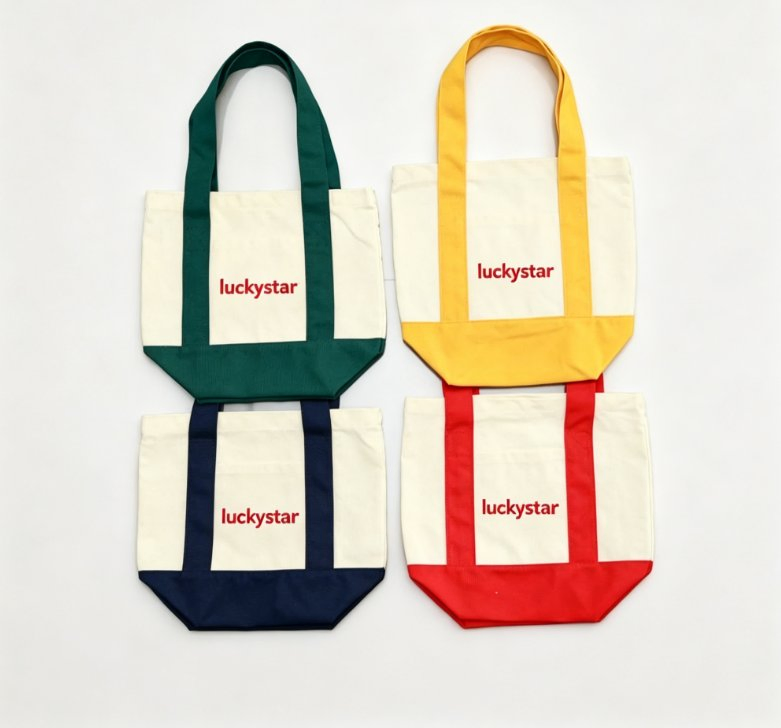
A detailed graphic can look correct in a digital mock-up and still fail on the finished bag. The panel may scorch, shrink or gloss under heat. A transfer edge may lift after folding. Polyester dye may migrate into a pale design. A seam or handle can prevent even pressure. These are not merely artwork issues; they connect material selection, bag construction, transfer chemistry, press access and quality control.
This guide is for brands, importers, retailers and promotional buyers evaluating heat transfer printing for custom bags. It explains what must be specified, sampled and inspected. LUCKYSTAR lists heat transfer among its available decoration options, but compatibility, MOQ, price, lead time and test requirements are confirmed for each project and material.
1. Scope: what this page covers—and what belongs elsewhere
The site already has broader printing guides. Keeping each URL responsible for one buyer question prevents repeated copy and makes the next step clearer.
| Page | Primary buyer question | Use it when |
|---|---|---|
| This guide | How should a heat-transfer bag project be qualified, sampled and controlled? | Heat transfer is already under consideration and the buyer needs a factory-ready process. |
| Custom Shopping Bag Printing Methods | Which printing family fits paper, PP, textile or clear shopping bags? | The substrate and printing route are still open. |
| Screen Printing vs Heat Transfer for Tote Bags | Which of these two processes is the better starting point? | The shortlist is screen print versus heat transfer. |
| Custom Tote Bag Printing Methods | How do common tote decoration methods compare? | The product is a sewn tote and the buyer needs a method overview. |
| Full-Surface Graphics on Shopping Bags | How should artwork cross folds, gussets and converted panels? | The graphic covers most or all of the constructed surface. |
2. “Heat transfer” describes a family of processes
A factory quotation that says only “heat transfer” is incomplete. Ask for the named transfer system and supplier specification. The following routes can look similar in an online photo while behaving differently in production.
| Route | How the image reaches the bag | Useful starting point | Main qualification questions |
|---|---|---|---|
| Cut heat-transfer film | Solid-colour film is cut, weeded and pressed. | Names, numbers, simple logos and selected special effects. | Minimum detail, film thickness, weeding labour, edge adhesion and flex. |
| Digitally printed transfer | A full-colour image is printed to a carrier or film and heat applied with its adhesive system. | Gradients, fine detail and artwork with several colours. | White layer, contour, colour profile, transfer edge, hand feel and compatible substrate. |
| Screen-printed transfer | Ink layers are screen printed to transfer media and later applied to the bag. | Repeat graphics where a transfer format improves handling or placement. | Ink and adhesive system, colour separation, storage, application window and lot control. |
| Sublimation | Heat converts suitable dye into a state that diffuses into a compatible polyester-rich surface. | Light-coloured polyester products engineered for the route. | Polyester content, base colour, coating, heat tolerance and ghosting; it is not a universal cotton, PP or dark-material process. |
| Special-effect transfer | Reflective, metallic, flock, raised or other qualified films create a designed surface effect. | Controlled accents rather than an assumed all-purpose solution. | Thickness, bending, abrasion, layering, target-market requirements and appearance after packing. |
Application instructions are product-specific. For example, transfer-film manufacturers publish separate time, temperature, pressure and peel instructions for their own materials. Siser's official introduction treats those variables as a combined application system; it should not be read as a universal recipe for all bags or all films. See Siser's heat-transfer guidance.
3. Start with the production material—not the artwork preview
| Bag surface | What must be confirmed before pressing | Typical risks to challenge in a sample |
|---|---|---|
| Cotton or canvas | Fibre content, weight, weave, dye, coating or finish, surface texture and panel access. | Uneven contact across texture, scorch or pressure marks, heavy hand, edge lift and shrink interaction. |
| Polyester or polyester blend | Fibre blend, dye system, finish, base colour and actual heat window. | Dye migration, colour contamination, glossing, platen marks and shrinkage. |
| Nylon or coated textile | Coating chemistry, heat sensitivity, adhesion and intended care conditions. | Weak bond, coating damage, distortion or edge failure; only a qualified low-temperature or compatible system should be considered. |
| Non-woven polypropylene | Basis weight, bond pattern, lamination, exposed side, surface treatment and conversion route. | Shrinkage, melting, holes, glossing, bond-point bridging and poor adhesion. Use the dedicated non-woven printing guide for route selection. |
| Woven PP or laminated PP | Whether the artwork belongs on film before lamination or on a finished surface after conversion. | Heat distortion, weak bond, fold cracking or selecting a transfer when a printed-film route is more stable. See woven PP printing methods. |
| PVC, TPU or other clear sheet | Exact polymer, thickness, plasticizer or surface treatment, heat tolerance, opacity and bag-forming sequence. | Distortion, haze, blocking, migration, weak adhesion and pressure marks. The method must be qualified on the actual sheet. |
| Jute, coarse weave or mesh | Surface openness, fibre variation, backing support and required detail. | Incomplete contact, broken image edges and unstable fine detail; a label, patch or different print route may be more reliable. |
Buyer rule: a material name is not a full print specification. Two “canvas” bags can use different yarns, weights, weaves, dyes and finishes. The approved transfer on one is not automatic approval for the other.
4. Build a production-ready artwork and placement pack
Send the supplier a controlled artwork package instead of a logo pasted into an email. At minimum, include:
- source vector artwork where possible, plus an approved visual reference;
- finished print width and height, not “large logo” or “same as the image”;
- front/back/side designation and coordinates from fixed finished-bag datums;
- brand colour references and the role of Pantone, CMYK, RGB or a physical master;
- white-underbase and transparent-area instructions for printed transfers;
- contour, bleed and minimum-detail decisions;
- whether names, numbers, languages or designs vary by unit or SKU;
- critical clear zones around seams, folds, gussets, pockets, zippers and handle reinforcement;
- artwork revision number and written approval owner.
The shopping bag artwork and dieline guide explains production files; the logo placement and print-size guide turns visual intent into measurable coordinates. For colour workflow, compare Pantone and CMYK roles and document the physical approval path described in the colour-matching guide.
5. A controlled heat-transfer bag workflow
| Stage | Factory action | Buyer evidence to approve |
|---|---|---|
| 1. Feasibility review | Match the exact bag material, construction, artwork, print area, quantity and end use to candidate systems. | Written open-issue list and named route—not only “heat transfer.” |
| 2. Material confirmation | Identify production-grade fabric or sheet, colour, finish, supplier lot and panel access. | Approved swatch or production material reference. |
| 3. Transfer selection | Choose film, ink/adhesive or sublimation system compatible with that material and use. | Supplier specification and internal compatibility result. |
| 4. Artwork preflight | Check scale, resolution, colour, white layer, contour, mirror direction, variable data and placement. | Dimensioned artwork proof with revision number. |
| 5. Parameter trial | Establish a workable time-temperature-pressure-peel window on the actual substrate. | Trial record showing settings and observed defects. |
| 6. Decorated strike-off | Produce the graphic at final size and colour on production material. | Visual, edge, hand-feel and colour approval. |
| 7. Finished bag sample | Decorate at the real production stage, complete sewing/conversion and packing. | Measured bag with approved decoration, function and packing. |
| 8. Pilot or first-off check | Verify equipment, operator method, placement jig and material lot before full output. | Signed first-off record and retained reference. |
| 9. In-process control | Record press readings, pressure method, peel/cooling, placement and defect response. | Lot-linked production and inspection log. |
| 10. Final and packing review | Inspect decoration, bag function, quantity, folding and carton pressure effects. | Final inspection record and approved packing sample. |
For the wider development chain, use the shopping bag sample-development process. The approved physical sample should be tied to a written specification and change record; a photo or digital mock-up is not enough.
6. Control time, temperature, pressure and peel as one process
Factories sometimes copy a press recipe from a T-shirt or a previous tote. That is unsafe. The bag material, colour, finish, moisture, seams, platen coverage and transfer lot can all change the result.
| Variable | If it is too low or inconsistent | If it is too high or poorly controlled | Record |
|---|---|---|---|
| Temperature | Incomplete adhesive activation or weak bond. | Scorching, glossing, dye migration, shrinkage or substrate damage. | Setpoint, measured platen condition and permitted range. |
| Time | Edges or fine details may not bond completely. | Excess heat exposure can distort material or change colour/hand. | Dwell time and timing method. |
| Pressure | Patchy contact, voids over texture or edge lift. | Platen marks, flattened texture, adhesive squeeze or distortion. | Pressure-setting method and jig/platen configuration. |
| Peel and cooling | Removing the carrier at the wrong stage can disturb edges or surface. | Excess cooling or reheating may also change appearance, depending on the system. | Hot/warm/cold peel instruction and handling time. |
| Second press or cover sheet | An omitted required step can leave weak contact. | An unnecessary or excessive step may change gloss or texture. | Cover material, second-press condition and purpose. |
Record the actual system rather than publishing universal numbers. If a transfer supplier changes, the material lot changes, or the print area becomes larger, reopen qualification as needed.
7. What a qualified factory should be able to show
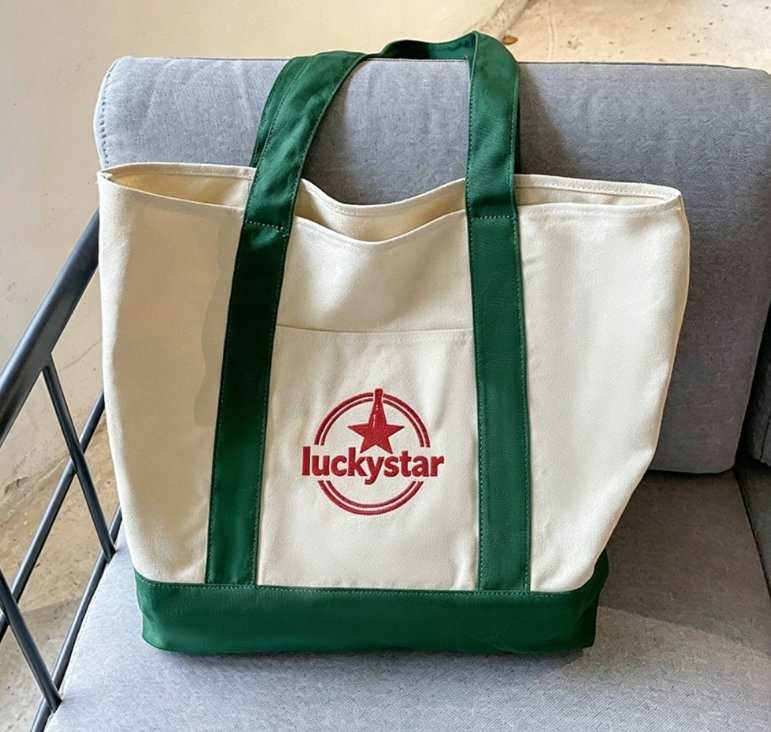
- Named process: the exact transfer family, compatible material range and known exclusions.
- Production sequence: whether decoration happens before or after cutting, sewing, heat sealing or final assembly.
- Press access: platen size, seams or hardware that interfere, and how pressure is levelled.
- Parameter record: approved time, temperature, pressure, peel and cooling method for the selected system.
- Material traceability: fabric/sheet and transfer lots used for the approved sample and bulk order.
- Colour approval: digital proof, transfer strike-off and physical reference hierarchy.
- Placement control: dimensioned artwork, jig or datum and achievable tolerance agreed in writing.
- First-off release: who checks and signs the first production units.
- Defect standard: edge lift, cracking, contamination, ghosting, pressure marks and colour variation examples.
- Test plan: rub, flex, care, packing or other end-use checks selected for the order.
- Change control: what happens if the fabric, finish, transfer material or equipment changes.
- Rework rule: how failed prints are segregated and whether any re-press is permitted.
These questions belong inside broader supplier due diligence. Use the custom shopping bag manufacturer pillar for shopping-bag capability and the complete custom bag manufacturer guide for cross-category sourcing.
8. Heat-transfer quality control: approve the failure mode, not “good quality”
| Check | What to observe | How to define approval |
|---|---|---|
| Appearance | Colour, opacity, detail, contamination, ghost image, carrier or platen marks. | Approved physical reference plus viewing conditions and allowed variation. |
| Edges and bond | Lift, incomplete contour, adhesive halo, bridging over texture or seam interference. | Agreed edge standard after cooling and after the selected conditioning/test. |
| Placement and size | Width, height, coordinates, rotation and front/back orientation. | Nominal dimensions and achievable order-specific tolerance. |
| Hand and flex | Film stiffness, creasing, cracking, recovery and comfort where the panel is handled. | End-use simulation and agreed failure definition. |
| Dry/wet rubbing when relevant | Colour or material transfer and surface damage. | Named method, rating target and tested configuration. ISO 105-X12:2016 covers dry and wet rubbing of textiles, including printed textiles; applicability and acceptance level still need agreement. |
| Care cycle when claimed | Edge lift, delamination, cracking, colour change or substrate distortion. | Written care method, number of cycles and acceptance criteria appropriate to the product. |
| Packing simulation | Film-to-film blocking, fold lines, pressure imprint and colour transfer inside the carton. | Approved fold, pack count, separator, load, time and environment. |
| Finished-bag function | Handle, seam, closure and shape still perform after decoration and packing. | Checks from the approved bag specification—not only the print panel. |
Combine print checks with the custom shopping bag quality-control checklist and select order-specific methods through the reusable shopping bag test guide. Do not claim fixed wash, abrasion, sunlight or weather resistance unless the exact product has been tested under a stated method.
9. Diagnose common defects by source
| Defect | Likely areas to investigate | Buyer response |
|---|---|---|
| Edge lifting | Compatibility, pressure uniformity, dwell, temperature, peel timing, texture and contamination. | Hold affected units; compare settings and lots with the approved first-off sample. |
| Scorching or gloss mark | Heat window, press time, cover sheet, moisture, dark dyes and platen pressure. | Do not accept a colour-correct print that damages the bag surface. Requalify the route. |
| Dye migration | Polyester dye system, transfer opacity/blocker, heat exposure and storage time. | Assess after conditioning, not only immediately after pressing. |
| Cracking on fold | Film thickness, graphic geometry, adhesion, bend position and packing fold. | Move artwork, change system or redefine packing after a finished-bag trial. |
| Patchy bond on canvas | Coarse weave, seam height, platen access and pressure distribution. | Use a compatible platen/pad or different decoration route; do not compensate blindly with more heat. |
| Ghost or doubled image | Carrier movement, sublimation paper shift, pressure release and re-press handling. | Improve fixture and handling; confirm the first-off unit before continuing. |
| Correct swatch, failed bag | Seams, pockets, handles, zippers or converted geometry changed press contact. | Require a completed bag sample and first-production check. |
10. MOQ, cost and timing depend on the runnable specification
Heat transfer can reduce some screen or plate setup, but it is not automatically the cheapest short-run method. Quote drivers include transfer type, image area, transfer-sheet yield, white layer, contour cutting or weeding, number of designs, personalization, bag access, press cycle, placement labour, rejected prints, material pre-treatment, testing and packing.
Ask for quantity by bag material × bag colour × size × artwork × print side × transfer system × destination. A total of 5,000 pieces split across ten artworks is not the same job as one 5,000-piece design. Review the site's MOQ and production-time guide and 2026 cost framework for the broader planning logic; final commercial terms remain subject to specification and written confirmation.
11. Copyable heat-transfer RFQ checklist
- Bag type, intended use and target market
- Finished dimensions, construction, print side and usable panel
- Exact material, weight/thickness, colour and finish—or a reference sample
- Artwork source file, finished size, placement and colour references
- Required transfer family, if already specified; otherwise permission to recommend
- Quantity by bag colour, size, artwork and destination
- Personalization or variable-data matrix
- Appearance, hand-feel, rub, flex, care and packing expectations
- Individual packing, labels, barcodes, carton and fold method
- Required delivery date, Incoterm and destination
- Requested sample evidence, first-off record and final inspection scope
12. How LUCKYSTAR supports a heat-transfer bag project
LUCKYSTAR, established in 2015, supports international brands, importers, retailers and distributors with custom bags and related branded merchandise. Projects can cover specification review, sampling, production coordination, quality control and export-ready packing. The available custom shopping bag range includes multiple material and construction directions, while the wider product range supports related bag, cap and apparel programs.
For heat transfer, the responsible next step is not a generic promise. Share the actual bag brief and artwork. The team can review material compatibility, missing specifications, sample evidence and production controls, then confirm MOQ, price, sample plan, lead time, testing and packing in writing for that order.
13. Related printing and development guides
Shopping bag printing methods
Tote bag printing methods
Screen print vs heat transfer
Digital vs screen printing
Artwork and dielines
Logo placement and print size
Full-surface graphics
Pantone vs CMYK
Shopping bag manufacturer guide
Custom bag manufacturer pillar
MOQ and production time
Cost framework
Frequently asked questions
Is heat transfer suitable for every custom bag?
No. The substrate, coating, colour, texture, heat tolerance, bag geometry and end-use test determine suitability. Non-woven PP, nylon, PVC/TPU, jute and coarse canvas require especially careful qualification, and another decoration route may be more stable.
Is DTF the same as heat transfer?
DTF is one digitally printed transfer route within the wider heat-applied family. “Heat transfer” can also mean cut film, screen-printed transfer, sublimation or special-effect materials. Specify the exact system in the quotation and approval record.
Can the factory use the same press settings as a T-shirt?
Do not assume so. A bag can use a different textile, coating, colour, thickness and seam geometry. Establish the parameter window on the actual production material and finished-panel configuration.
Does heat transfer always work better for small orders?
It can reduce some tooling for detailed or variable artwork, but total cost also includes transfer preparation, cutting or weeding, press time, placement, sample work, rejects and testing. Compare the complete production route.
How can a buyer check durability?
Define the failure that matters: rubbing, flexing, care cycles, edge adhesion, packing pressure or another end-use condition. Agree the method, conditioning, sample size and acceptance criteria before testing. A vague “durability test” is not enough.
Can a digital mock-up approve the print?
No. It can approve layout intent, but it cannot prove surface texture, colour on the actual material, transfer edge, hand feel, heat damage or finished-bag placement. Approve a decorated strike-off and completed sample.
What should be frozen before bulk production?
Freeze the bag material and colour, transfer system and supplier, artwork revision, print size and coordinates, approved physical reference, parameter window, peel/cooling method, first-off release rule, tests, packing and change-control responsibility.
Review your bag, artwork and transfer route together
Share quantity, dimensions, production material or reference sample, colour, logo artwork, print size and placement, packing, destination and required tests. LUCKYSTAR will review feasibility and confirm the sample, quotation and production plan in writing.
Send a project brief Email a prefilled heat-transfer briefReviewed: September 24, 2026. Commercial terms, material availability, transfer-system compatibility, testing and certifications are order-specific and subject to written confirmation.






