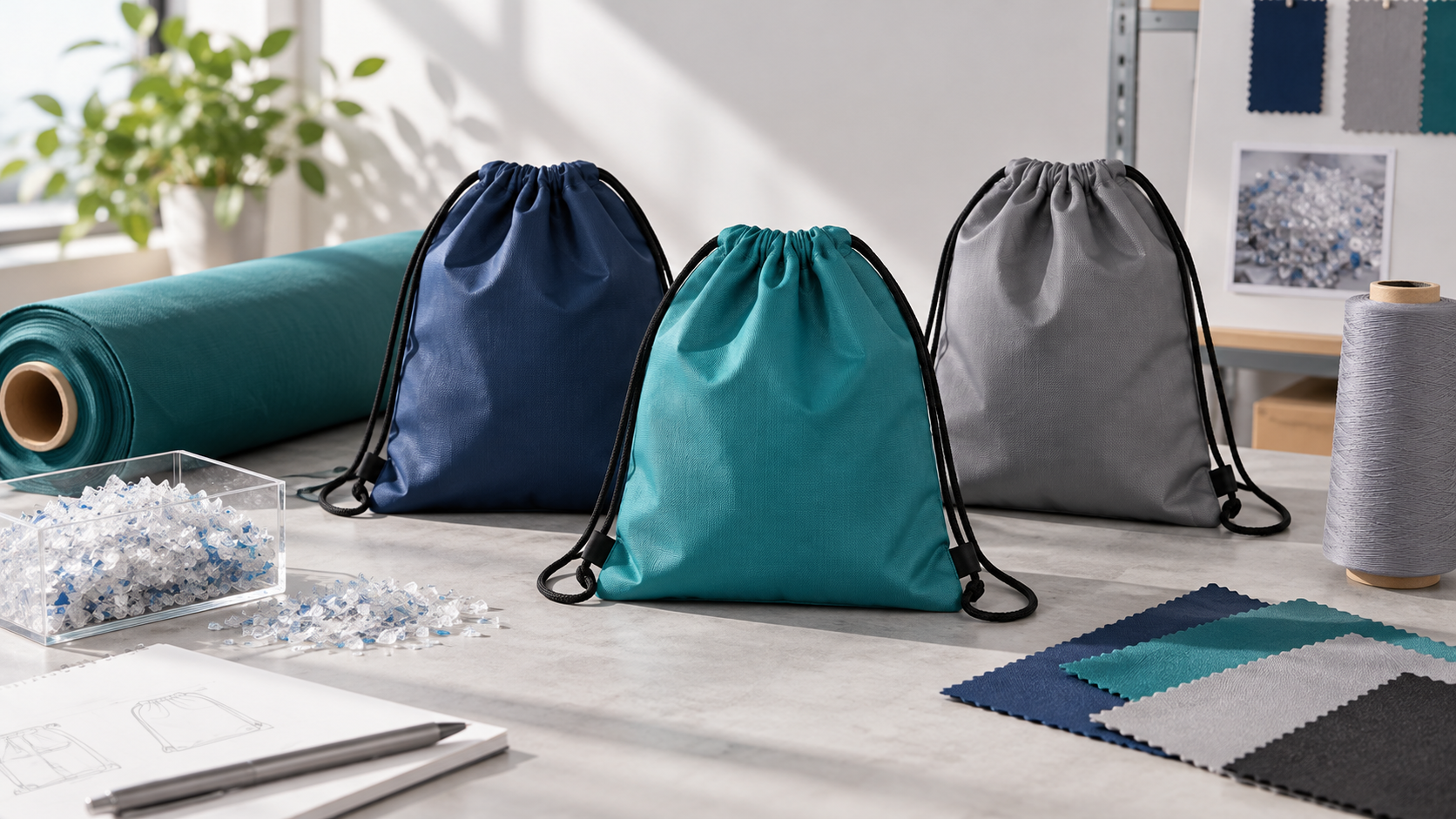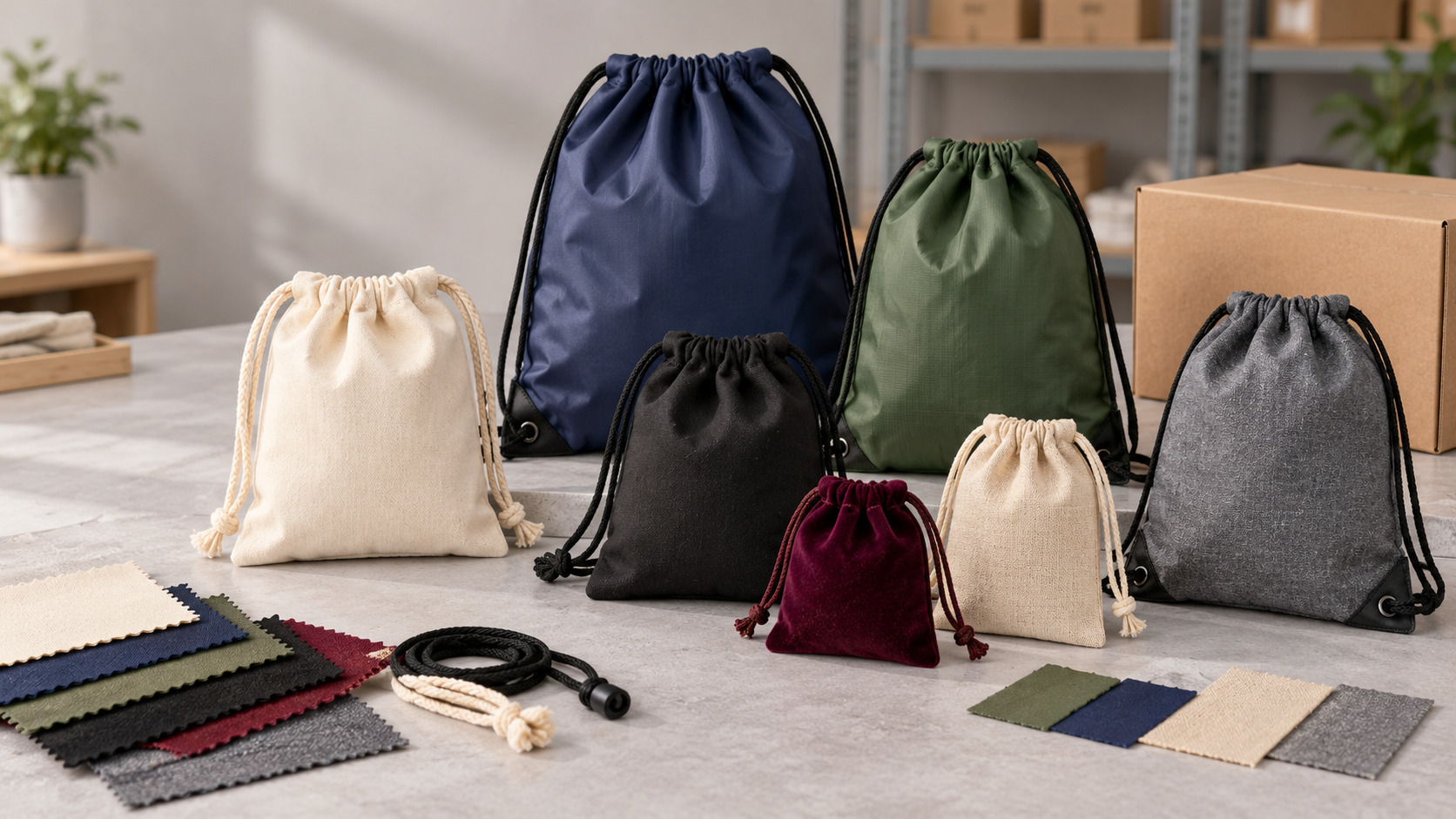
A woven polypropylene shopping bag can look like a simple two-colour grocery carrier or a glossy, photo-quality retail package. Those appearances may start with the same broad polymer family, yet the printing routes, layer stacks and commercial thresholds are very different. A buyer who asks only for “full-colour printing on woven PP” leaves the factory to guess whether the image should be printed directly on coated tape fabric, printed on a film before lamination, applied to a finished bag or produced by a short-run digital system.
This guide explains the main Printing Methods for Woven PP Shopping Bags from a brand and production perspective. It compares direct flexographic printing, reverse gravure-printed BOPP film with lamination, direct screen printing and qualified digital or transfer routes. The purpose is to help retail teams specify the receiving surface, approve colour and registration, and compare quotations on the same construction. For a cross-material introduction, first read the complete shopping-bag print overview; for the base-material decision, read the woven and non-woven PP comparison.
Begin with the structure, carrying requirement and artwork on LUCKYSTAR’s custom shopping bags page. For supplier evaluation, use the Shopping Bags cluster pillar; for wider factory due diligence, use the custom bag manufacturer guide.
Planning an order? Send a woven-PP print and layer-stack brief. Include base tape/weave and weight, coating, film type/gauge and print position, bag construction, artwork/white layer/coverage, quantity per SKU, route candidates, colour/appearance target, adhesion/rub/flex/bond/blocking tests, samples, packing, destination and required date.
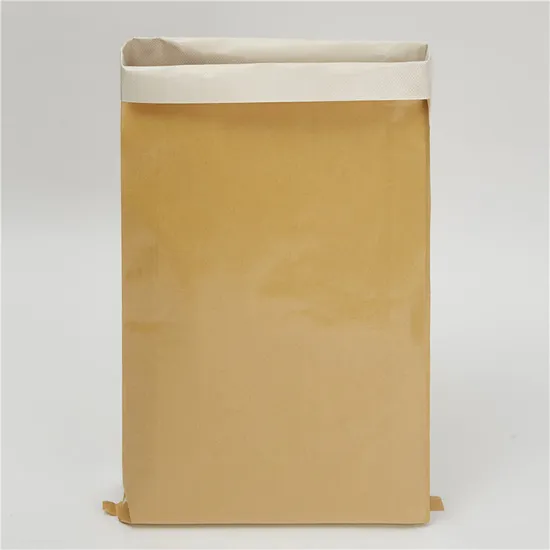
A real paper-plastic composite woven bag product from LUCKYSTAR’s Made-in-China store. It is shown as a traceable example of a woven/composite substrate and unprinted panel—not as a claim that every retail woven PP bag uses this exact layer stack.
Page role: This technical guide owns print-route selection for woven polypropylene shopping bags, including flexographic, gravure-laminated, screen and applicable digital workflows. Use the worldwide shopping bag manufacturer guide for a supplier shortlist, and the custom shopping bag collection for specification and quotation planning.
1. Define woven PP before choosing a printing process
Woven PP fabric is made from polypropylene tapes interlaced in warp and weft directions. In a shopping bag, the weave provides load-bearing structure, while a coating or laminated film can close the surface, improve printability and change appearance. The visible face may therefore be raw woven tape, extrusion-coated woven fabric, a clear or opaque film bonded to the fabric, or another decorated layer. Ink adhesion and image resolution depend on the face that actually receives the print.
A specification such as “120 gsm woven PP” is incomplete. The stated mass may refer to the base fabric, the coated fabric or the complete laminate. Ask for base-fabric weight, tape construction, coating weight, film type and gauge, print side, lamination route, seam method and total finished weight. This prevents a quotation for a lighter face or different laminate from appearing artificially inexpensive.
| Specification field | What the buyer should state | Why it changes printing | Approval evidence |
|---|---|---|---|
| Base fabric | Polymer, tape/weave description, base weight, colour and supplier article | Controls texture, stiffness, stretch, opacity and conversion response | Signed base-fabric swatch and lot code |
| Coating | Coating polymer, one or two sides, nominal weight and treated print face | Creates the direct-print interface and affects wetting, gloss and pinholes | Coated swatch plus treatment/process record |
| Laminating film | BOPP/other film, clear or opaque, gauge, print position and finish | Determines whether print is exposed or protected below film | Layer-stack drawing and peeled/cross-section sample |
| Bag geometry | Width, height, gusset, bottom, handle, seam and fold map | Sets repeat, safe area and print-to-cut/handle registration | Production dieline and approved converted sample |
| End use | Load, reuse, abrasion, moisture, cleaning, pack and storage conditions | Sets ink/laminate durability and acceptance tests | Buyer-approved performance plan |
2. Four practical printing routes for woven PP shopping bags
Woven PP bags are often discussed as though the image is printed on the weave. In reality, a high-resolution retail graphic is frequently printed on film and then laminated to the woven support. Direct printing remains useful, but it has different visual limits. The table below separates the process families before price comparison.
| Route | Best-fit brief | Typical setup | Primary buyer risk |
|---|---|---|---|
| Direct flexography | Repeating spot/process graphics on printable coated woven PP at volume | Plate per colour, anilox/ink, surface treatment, web and dryer setup | Wetting, weave/coating texture, repeat-to-cut register and colour drift |
| Reverse gravure on film + lamination | Photographic or broad-coverage graphics with stable, larger runs | Cylinder per separation, BOPP film, inks, white layer, lamination and conversion | Cylinder economics, film-to-bag register, laminate bond and blocking |
| Direct screen printing | Local one- or few-colour logos on suitable panels or finished bags | Screen/stencil, ink, platen/jig, squeegee and cure | Uneven deposit, opacity, cure, fold cracking and placement |
| Qualified digital/direct-transfer | Samples, regional art, many designs or shorter quantities | Preflight/RIP, white/base strategy, pretreatment or transfer and cure | Compatibility, per-piece cost, adhesion, banding and repeatability |
3. Direct printing and reverse-film printing are different constructions
Direct print places the ink on the exposed coated woven face. The ink must wet that surface, survive rubbing and remain flexible as the bag folds. Reverse-film printing places the ink on the back of a transparent film; the printed side is then laminated inward. The film can protect the image from direct abrasion, but the system gains a film-to-ink-to-adhesive/coating-to-woven interface that must remain bonded.
An opaque white film can provide a uniform background for process colour. With a clear film, a controlled white separation may be printed behind selected or full areas. The white layer affects colour, opacity, cost, cylinder count and trapping. It should be visible in the separation plan rather than left as an unquoted factory assumption.
| Construction question | Direct printed coated weave | Reverse-printed laminated film | Approval focus |
|---|---|---|---|
| Image receiver | Coating on woven PP | Inside face of transparent/selected film | Identify the exact treated face |
| Image protection | Ink remains exposed | Film shields reverse print from direct contact | Rub plus laminate-bond tests |
| Background colour | Base fabric/coating colour influences the image | Opaque film or printed white can isolate the graphic | Signed body swatch and white plan |
| Visual texture | Weave/coating irregularity can remain visible | Film normally gives a smoother graphic face | Full-size solid, gradient and fine-detail trial |
| Main failure | Ink lift, pinholes, scuff or uneven solid | Delamination, wrinkle, tunnel, blocking or register shift | Finished-bag flex, pack and ageing checks |
4. Direct flexographic printing: efficient when the surface and repeat are stable
Flexography meters liquid ink through an anilox system, transfers it to raised plate areas and prints a repeating web. On woven PP, direct flexo is normally considered on a coated or otherwise prepared face rather than on an uncontrolled open weave. It can be commercially efficient for repeated artwork, but efficiency depends on enough runnable metres per exact design and on a stable later conversion process.
Plate distortion, web tension and repeat length must be linked to the bag’s cut, gusset and seam geometry. A logo that is correctly registered to a mark on the roll can still drift into a fold after cutting and conversion. Include repeat marks or other agreed controls and inspect the converted bag, not only the printed web.
ISO 12647-6:2020 defines data exchange, colourimetric aims and process-control responsibilities for four-colour flexographic printing, including flexible packaging. It was confirmed in 2025 and remains current. The standard is a useful communication reference; it does not replace a plant-specific fingerprint on the actual woven PP construction.
5. Gravure-printed BOPP lamination: the high-coverage retail route
Gravure uses engraved cylinders to carry ink. For woven PP retail bags, artwork is commonly reverse printed on film before the film is laminated to the woven substrate. The route can deliver fine process colour, smooth solids and broad coverage. It also creates cylinder, film, ink, white, lamination and web-conversion setup that must be spread over sufficient quantity per design.
The brand should approve the complete stack: film type and gauge, print sequence, white layer, adhesive or extrusion-lamination interface, woven base, finish and total weight. Cylinder ownership and storage matter for reorders. Ask whether a repeat order uses stored cylinders without change, whether damaged cylinders are charged again and how revised artwork is handled.
Compare this route with direct screen production in LUCKYSTAR’s screen/gravure decision guide. The important dividing line is not “premium versus cheap”; it is the artwork/coverage requirement, layer structure and quantity that make each setup economical.
6. Direct screen printing: strong local marks with restrained artwork
Screen printing can apply an opaque spot-colour logo to a panel or a finished bag. Each colour normally needs a separate screen, alignment and print/cure pass. The method is useful when the printable area is accessible and the design does not justify film lamination or a continuous web route.
Woven texture, coating variation, gussets and seam thickness can change squeegee pressure and ink deposit. Fine reverse type may fill, while a solid may show texture or pinholes. If the body is dark, an opaque ink or underbase may be needed. Approve the final hand, gloss and flexibility because a very heavy deposit can crack at a fold or block when stacked before cure is complete.
The factory should state whether screen printing occurs on flat cut panels or assembled bags. Panel printing supports a flatter surface but creates version-control risk before sewing. Finished-bag printing reduces panel-mixing risk but may be constrained by handles, gussets and platen access.
7. Digital printing and transfers: use them for the right short-run problem
Digital routes can be valuable when a buyer needs prototypes, several regional designs, personalisation or a smaller first test. “Digital” is not one process. It may mean printing on a film that is later laminated, qualified flatbed UV printing on a coated face, a supplier-specific transfer or another controlled system. The quotation should name the image receiver, ink/toner/transfer family, white strategy and cure.
Direct UV-cured ink may form a harder film than the flexible bag surface; test fold cracking and edge lift. A transfer may bridge surface texture or create a visible edge. Heat-assisted routes must not distort PP, coating or laminate. Ask for a production-condition sample and compare the per-design cost with Digital Printing vs Screen Printing for Low MOQ Shopping Bags.
Do not choose digital solely because the total order is small. A simple one-colour mark may still be more stable by screen. Conversely, ten different four-colour designs may favour a digital film route even when the combined order is not tiny. Quote quantity per exact artwork.
8. Surface energy and contamination decide whether ink stays attached
Polypropylene has relatively low surface energy, so the receiving surface normally needs treatment or a suitable coating/primer to support wetting and adhesion. Treatment level can decay with storage, and slip additives, dust or handling contamination can interfere. The printed side, treatment method, target, measurement method, ink family and elapsed time should be recorded.
Enercon’s printing application guidance explains that low surface energy or contamination can prevent ink bonding and that corona treatment is used for flexographic, gravure and digital printing on materials including PP and BOPP. The page supports the principle—not one universal dyne value. The converter must qualify the target for its specific film/coating, ink and line speed.
| Control variable | What it affects | Failure signal | Bulk record |
|---|---|---|---|
| Receiving face | Which coating or film carries ink | Wrong-side printing or unexpected appearance | Roll orientation, article and side identification |
| Surface treatment | Uniform spread of the selected ink or bonding layer | Poor wet-out, local lift or weak rub performance | Method, target, result, time and roll lot |
| Ink system | Colour, opacity, flexibility, cure and adhesion | Lift, crack, tack, odour or blocking | Ink batch, mix, viscosity and additives |
| Drying/cure | Final film formation and residual solvent/moisture | Set-off, smudge, blocking or weak bond | Speed, temperature, airflow and conditioning |
| Lamination condition | Film-to-woven bond and appearance | Wrinkle, bubble, tunnel, curl or peel | Nip, temperature, tension, adhesive/coating and age |
9. Prepare artwork for the actual press and layer stack
A visually approved PDF is not a production separation. Supply vector logos, linked high-resolution raster images, named spot colours, process images, white and finish layers, a full-size placement file and a SKU matrix. Ask the assigned printer to return process-specific limits for positive/reverse type, line width, trap, tonal range and total ink coverage.
Reverse printing requires mirrored artwork at the film-printing stage, but the brand should normally review the final right-reading appearance. White ink may print last in the press sequence but appear behind the colour in the finished laminate. Create a clearly named white separation and define choke/spread. Do not rely on a white rectangle that someone adds during prepress without approval.
Use LUCKYSTAR’s artwork-and-dieline preparation guide to mark gussets, side seams, bottom folds, handle patches, stitch/bond zones and safe areas.
| Artwork item | Direct flexo/screen concern | Reverse gravure-film concern | Evidence before tooling |
|---|---|---|---|
| Spot logo | Opacity, deposit, trap and coating texture | Spot cylinder or process simulation plus white backing | Production-substrate drawdown/strike-off |
| Fine type/rules | Plate/screen gain, fill-in and weave/coating interruption | Cylinder engraving, reverse-print trap and laminate distortion | Full-size critical-detail proof |
| Photography | Direct texture and tonal limits may reduce detail | Profile, film/white background and process sequence | Colour-managed physical proof plus press trial |
| White layer | Underbase can add plate/screen, trap and hand | Behind-colour white controls opacity and body-colour influence | Separation view and printed opacity sample |
| Gusset wrap | Repeat-to-cut and seam interruption | Accumulated alignment error from film printing through final bag making | Opened converted sample around all panels |
10. Colour approval needs a hierarchy, not one Pantone reference
A Pantone designation identifies an intention, not the appearance of a finished woven PP bag. Film transparency, white ink, body colour, gloss, coating texture and viewing condition all influence colour. Approve the substrate/film stack before judging the final colour.
For flexographic process work, FTA’s FIRST framework connects brand requirements, design, prepress, substrates and press process control. The practical lesson for buyers is to define a physical reference and an agreed measurement/visual method rather than forwarding a screen capture.
Build the approval chain from material swatch to ink drawdown or colour proof, press/process sample, converted golden bag and bulk first-off. LUCKYSTAR’s colour approval workflow connects those gates.
11. Approve the bag in stages that resolve different risks
A digital layout confirms content and placement but cannot prove adhesion. A printed film proves colour direction but not laminate bond. A laminated panel cannot prove handle clearance or gusset register. Each approval sample should answer a defined question.
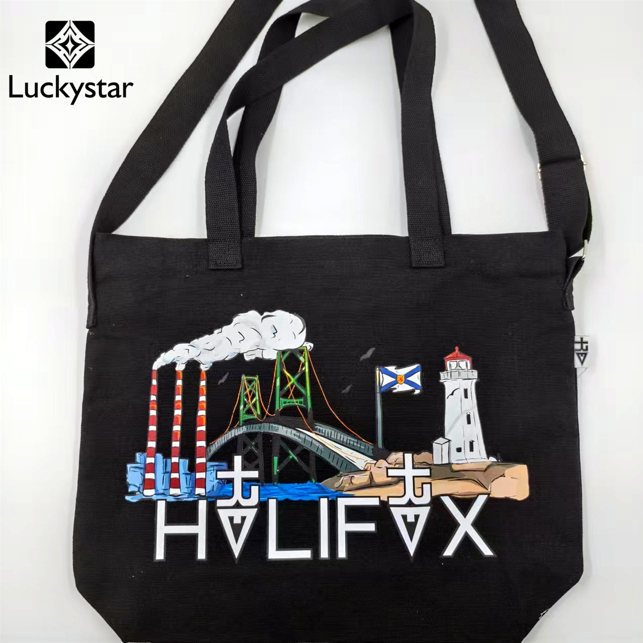
A real printed LUCKYSTAR shopping/tote bag used to illustrate complex artwork scale, colour detail and handle clearance. It is not presented as evidence of woven PP material or a specific woven PP printing process.
| Approval gate | What it proves | What it does not prove | Release decision |
|---|---|---|---|
| Digital layout | Copy, orientation, dimensions, separations and safe areas | Physical colour, white opacity, adhesion or laminate bond | Release corrected file only |
| Drawdown / colour proof | Colour direction, opacity and process expectation | Final web repeat, conversion or long-run stability | Freeze colour target and viewing condition |
| Production-process print | Actual plate/cylinder/screen/digital route on the intended face | Finished gusset, seam, handle and pack interaction | Approve print condition |
| Laminated/converted sample | Layer appearance, bond, placement, folds and bag function | Bulk drift unless run under representative settings | Sign and retain the finished reference bag |
| Bulk first-off | Actual materials, inks, tools, line, conversion and pack | Later drift without in-process controls | Approve, correct or stop before the run continues |
Use the shopping-bag sample gate workflow to label a visual mock-up, process sample and production-representative sample correctly.
12. Inspect print and lamination as part of the finished bag
Inspect after the declared drying, cure and conditioning time. Then fold the bag along actual pack and gusset lines, load it, rub it and open it repeatedly. A flat panel can pass while the image cracks at a bottom fold or the laminate lifts at a seam.
| Check | Purpose | Warning sign | Sampling record |
|---|---|---|---|
| Visual / register | Colour, detail, pinholes, streaks, set-off and print-to-cut position | Image enters seam/fold or changes by lane/roll | Roll, lane, time, bundle and carton |
| Ink adhesion | Screens gross bond failure on exposed print | Ink lifts or transfers after agreed tape/rub method | Tape/material, dwell, action and acceptance |
| Dry/wet rub | Challenges the surface under handling and specified moisture | Transferred pigment, burnishing or visible substrate | Applied force, cycle count, cloth and rating |
| Laminate bond | Checks film attachment after conditioning and flex | Edge peel, tunnel, bubble or local separation | Location, peel method, age and environment |
| Blocking / pack hold | Verifies stacked bags separate after pressure and temperature | Film or print sticks, marks or glosses | Pack count, load, temperature, duration |
| Fold / load cycle | Connects decoration to real gusset and carrying stress | Crack, whitening, delamination or seam damage | Load, cycles, fold line and failure rule |
Combine print checks with the finished shopping-bag QC protocol and the reusable shopping bag testing guide.
13. Diagnose woven PP printing defects at the correct interface
Weak or mottled direct colour: check the receiving coating, treatment, contamination, anilox/ink, plate impression and dryer before increasing ink blindly. Print lifts: verify surface treatment age, ink compatibility, cure and handling contamination. Fine reverse type closes: revisit the minimum feature, gain compensation, trap and production fingerprint.
Image is sharp but colour shifts after lamination: investigate film, white backing, adhesive/extrusion layer, pressure, temperature and optical change. Wrinkles or tunnels appear: trace film and woven-web tension, nip, temperature, coating/adhesive uniformity and conditioning. Correct roll print becomes misplaced on the bag: trace repeat-to-cut, gusset formation, side seam, bottom fold and handle attachment.
Bag faces stick in cartons: examine drying/cure, residual solvent/moisture, film treatment, winding/stack temperature, pressure and packing time. Do not accept a quick powder or separator workaround unless it is approved for appearance, odour, compliance and end use.
14. MOQ and cost depend on quantity per artwork and layer stack
Flexo cost includes plates, prepress and web make-ready. Gravure-laminated work includes cylinders, film, inks, white, lamination and conversion setup. Screen printing adds a screen and setup per colour/design. Digital systems reduce some tooling but can carry higher per-square-metre or per-piece cost, white usage and handling.
One order for 20,000 bags split into ten artworks is not one 20,000-piece print run. Quote each size × base colour × laminate/finish × artwork × print route. Separate one-time tooling, unit printing, film, lamination, conversion, packing and freight. State cylinder/plate ownership and reuse terms.
If the buyer can standardise bag size, film and background while changing only a small local area, ask whether the designs can share part of the setup. Do not assume ganging is possible; the printer must confirm repeat, press width, colour sequence and version control. Review the MOQ and timeline planning guide before releasing a fragmented SKU matrix.
15. Sustainability claims must describe the complete printed structure
“Reusable,” “woven PP” or “water-based ink” does not by itself establish a broad environmental claim. Consider base polymer, recycled-content evidence, coating, BOPP film, ink, white layer, adhesive or extrusion laminate, handles, stitching, rejected setup material, durability and the actual collection/recycling route in the destination market.
A laminated bag can provide durability and wipeability, yet the added film and bonding interface may affect recovery. A direct-printed structure can be simpler, but poor adhesion or low durability can shorten useful life. Claims should identify the verified feature rather than use an unsupported “eco-friendly printing” label.
Company-claim boundary: LUCKYSTAR statements in this section are publisher self-description, not third-party verification, ISO/FTA certification, printer accreditation, laboratory result or assurance of a particular MOQ, price, colour, bond, durability, environmental result, compliance status or delivery date. Confirm the contracting entity, assigned tape/weaving/coating/film/printing/laminating/converting sites and subcontracting; exact layer stack, route, equipment, tools, samples, tests, inspection, packing and release terms for the order.
16. How LUCKYSTAR describes its woven-PP print review
LUCKYSTAR states that its project team can compare direct flexographic, reverse-printed film lamination, direct screen and qualified digital or transfer routes around one locked woven-PP shopping-bag specification, subject to specification and written confirmation. The review connects the image-receiving layer and print stage to artwork, conversion, validation and commercial assumptions.
- Layer-stack identity: record base tape/weave and weight, coating side/type/weight, film type/gauge/finish, white/background plan, print position, adhesive or extrusion layer and total finished structure.
- Route definition: state whether ink is exposed on coated weave, reverse printed below film, screen printed on a panel/finished bag or applied by a defined digital/transfer workflow.
- Artwork preflight: return process-specific separations, repeat, white layer, trap, minimum detail, tonal range, gusset/fold/handle safe zones and print-to-cut tolerances.
- Physical approval: separate screen proof, production-material strike-off, printed web/film, laminated/conversion sample, retained finished bag and bulk first-off.
- Acceptance plan: define colour/opacity/gloss/texture, adhesion, rub, flex/fold, laminate bond, blocking, register and complete-bag checks with conditioning and acceptance rules.
- Comparable quotation: separate material/film minimums, plates or cylinders/screens, artwork/SKU changes, white/background, lamination, samples, waste, tool ownership, pack-out, substitutions and reorder controls.
Review the public custom shopping bag range, the woven-versus-non-woven PP comparison and the print-route overview. Then send one layer-stack drawing, finished-bag specification, artwork and quantity-by-SKU matrix for a route-specific proposal.
17. Build a quotation brief that factories can price consistently
| Input group | Details to provide | Decision affected |
|---|---|---|
| Bag construction | Finished size, gusset, bottom, seam, handle, reinforcement and load | Defines printable area, repeat and conversion risk |
| Material stack | Base woven weight, coating, film type/gauge, print position, finish and total weight | Makes offers comparable and identifies the image receiver |
| Artwork | Final-size files, colours, process/spot plan, white layer, coverage and printed sides | Determines process, tooling, cylinder/plate count and limits |
| SKU matrix | Units for every combination of size, substrate shade, film, graphic, finish and market | Exposes the true run length and changeover count |
| Appearance | Colour reference, opacity, gloss/matte, texture and placement tolerance | Creates a measurable and visual approval target |
| Performance | Rub, flex, load, moisture, pack hold, cleaning and compliance needs | Builds the correct ink/laminate and test plan |
| Commercial terms | Sample level, tooling ownership, quantity tolerance, pack scheme, trade term and deadline | Protects price comparison and reorders |
Buyer FAQs about woven PP printing
What is the best printing method for woven PP shopping bags?
The answer depends on the receiving layer, artwork, finish and runnable quantity. Direct flexo suits repeating graphics on a controlled printable surface; reverse-printed film lamination suits detailed full coverage at larger stable volumes; screen suits local spot logos; qualified digital routes suit selected short or multi-design work.
Can woven PP bags be printed directly?
Yes, normally on a suitable coated or treated face using a qualified ink/process. Raw or uncontrolled weave texture limits wetting and detail. Confirm the exact receiving layer and test adhesion, rub and flex after conversion.
Why are many photographic woven PP bags laminated?
A smooth film can carry fine reverse-printed graphics and protect the ink after lamination. The route can improve image smoothness and coverage, but it adds film, cylinders, bonding and delamination/blocking controls.
Is flexographic or gravure printing cheaper?
The answer depends on artwork, coverage, colour count, film/lamination and quantity per design. Flexo often has lower tooling than gravure; gravure can become efficient for long, stable, high-coverage film runs. Compare total landed cost on the same stack.
Can screen printing work on laminated woven PP bags?
It can work on a compatible exposed film/coating after treatment and ink qualification, but it may not be the most efficient route. Test adhesion, opacity, flexibility, blocking and cure on the exact finished surface.
Can digital printing be used for low-MOQ woven PP bags?
Yes, through selected film, direct or transfer systems, but “digital” must be named and qualified. Check white strategy, colour, surface compatibility, fold cracking, edge lift and repeatability before bulk.
What is reverse printing on BOPP film?
The image is printed on the inside face of transparent film, usually in reversed orientation during production, then laminated inward so the finished graphic reads correctly through the film. The film protects the ink from direct contact.
How should print colour be approved?
Approve the material/film stack first, then an appropriate drawdown or proof, production-process sample, converted golden bag and bulk first-off under defined viewing/measurement conditions.
Which defects should buyers check on laminated woven PP?
Check colour/register, wrinkles, bubbles, tunnels, curl, edge peel, laminate bond, blocking, fold whitening, scuff, image-to-gusset position and finished load-cycle performance.
What files does a woven PP printer need?
Provide final-size vector artwork, linked high-resolution images, named spot/process colours, a separate white/finish layer, an approved dieline with safe zones and a SKU matrix showing quantity per exact design.
Conclusion
The correct Woven PP Bag Printing route starts with the layer stack and the receiving surface. Direct flexography is effective for controlled repeating work; reverse gravure film lamination supports high-detail, broad-coverage programmes; screen printing handles selected local spot graphics; and qualified digital systems can solve smaller or more variable requirements. Every route still needs process-specific artwork, colour hierarchy, adhesion/bond testing and a converted bulk first-off. Well-specified Printed Woven Polypropylene Bags are therefore bought as a controlled material-plus-process system, not as a generic printed shell.
Explore custom woven and reusable shopping bag options. For shopping-bag-specific sourcing, consult the supplier selection framework; for company-wide evaluation, consult the main manufacturer due-diligence page.

Send LUCKYSTAR your bag structure, artwork, colour target and quantity per design for a print-route quotation.
Request a comparable woven-PP print proposal
Use one layer-stack drawing, finished-bag specification and quantity-by-SKU matrix so route assumptions can be compared.
Review LUCKYSTAR custom shopping bag options, then send your project details through the contact form or Email a project brief. The email link opens a draft for your review before sending.
Site assignment, layer stack, treatment, ink/transfer/laminate system, equipment, tooling, sample, colour, performance, claims, inspection, price, MOQ, packing, schedule and release terms are subject to due diligence, specification and written confirmation.