
Buyer specification guide · Last reviewed 24 September 2026
Custom Hang Tags for Bags & Apparel: Specification, Printing & QC
A hang tag is small, but the file behind it is not. For a retail-ready bag or garment, buyers must control the tag stock, size, print, finish, hole position, fastener, attachment point, copy, SKU data and packing method as one approved specification.
What this guide covers
- Hang tag, permanent label or pack label?
- The 14-field hang-tag brief
- Stock, print and finishing choices
- Artwork and dieline controls
- Barcode and QR-code checks
- Attachment by product type
- Sampling-to-bulk workflow
- Quality-control checklist
- Cost, MOQ and lead-time drivers
- How LUCKYSTAR supports the project
- Related guides without overlap
- RFQ checklist and FAQs
1. Hang tag, permanent label, insert or pack label?
Start by assigning each piece of information to the correct component. A hang tag is normally removable and visible at retail. A sewn-in or otherwise permanent label stays with the product. An insert sits inside a bag or package. A barcode sticker may be applied to the tag, polybag or carton. Combining all four into one undefined “label” is a common source of missed content and wrong attachments.
| Component | Typical job | Approval question |
|---|---|---|
| Hang tag | Brand presentation, product story, price or SKU data, optional QR code, removable instructions. | Can the shopper read it, can operations scan it, and can it be removed without damage? |
| Permanent label | Required product identity, fibre composition, care or origin information where applicable. | Does the final-market requirement call for information to remain attached? |
| Insert / belly band | Use instructions, set contents, campaign message or gifting presentation. | Will it stay with the correct SKU through packing and transit? |
| Unit pack label | SKU, colour, size, barcode, warehouse or destination data on a bag or box. | Does the label remain scannable and visible in the actual pack? |
| Carton / logistics label | Outer-carton identification, quantities, routing and handling data. | Does it match the approved packing list and destination instructions? |
2. The 14-field custom hang-tag brief
The best RFQ is a small controlled data sheet. Put the following fields in the tech pack or component BOM instead of relying on a reference photo.
| Field | What to specify | Why it matters |
|---|---|---|
| 1. Finished size | Width × height; folded or flat. | Controls layout, cost, legibility and packing volume. |
| 2. Shape | Rectangle, rounded corner, circle or custom die-cut outline. | Custom shapes affect tooling, waste and hole clearance. |
| 3. Stock | Paper/card or another approved substrate; grade, colour, surface and required evidence. | A visual description such as “kraft” is not a material specification. |
| 4. Thickness | Caliper or paper weight using the supplier's measurable unit. | Prevents a tag that bends, cracks or feels different from the sample. |
| 5. Print | Sides, colour count, process, spot colours and variable data. | Determines file separation, proof route and version control. |
| 6. Finish | Matte/gloss film, aqueous finish, spot gloss, foil, emboss/deboss or none. | Finish can change colour, fold performance and recyclability claims. |
| 7. Hole / eyelet | Diameter, position from edges, reinforcement or eyelet details. | Insufficient clearance can tear the tag or cut into artwork. |
| 8. Fastener | String, ribbon, elastic, plastic fastener, pin, chain or other approved component. | Changes appearance, labour, removal and safety considerations. |
| 9. Attachment point | Exact seam, handle, zipper pull, label loop or other location. | Avoids punctures, marks, blocked openings or inconsistent presentation. |
| 10. Copy | Final text, hierarchy, languages, legal owner and approval status. | Prevents outdated or unapproved claims entering bulk production. |
| 11. SKU data | Style, colour, size, price field, barcode or QR-code data source. | Links each printed version to the correct product variant. |
| 12. Quantity matrix | Tag version × product SKU × order quantity plus agreed allowance. | Controls shortages, overprints and mixed variants. |
| 13. Unit packing | Attached before or after folding; orientation; polybag, set or box arrangement. | Protects the tag and keeps scan-facing data accessible. |
| 14. Acceptance standard | Approved sample, tolerances, inspection level and defect examples. | Turns a subjective accessory into an inspectable component. |
Place this component inside the same control system used for the product. The custom bag tech-pack guide explains how to connect drawings, BOM fields and revision history. If the program includes multiple labels and retail packs, the broader private-label bag launch guide owns that system-level topic.
3. Choose stock, print and finish as a system
Material and finishing options below are selection routes, not standing LUCKYSTAR specifications. Availability, minimums, test scope and final appearance must be confirmed against the project brief and approved sample.
| Route | Useful when | Control before approval |
|---|---|---|
| Uncoated paper/card | A tactile, low-glare surface or writable field is needed. | Ink absorption, rub resistance, edge quality and colour shift. |
| Coated paper/card | Fine graphics or a smoother printed result is required. | Surface glare, cracking at folds, scuffing and finish compatibility. |
| Coloured or kraft-look stock | The stock colour is part of the visual design. | Actual fibre/content evidence, ink opacity and batch colour variation; do not infer environmental performance from appearance. |
| Synthetic or water-resistant route | Moisture exposure is a defined use condition. | Substrate identity, print adhesion, disposal claim and order-specific evidence. |
| Foil, emboss or deboss | A focal logo or tactile hierarchy is needed. | Tooling file, minimum detail, registration, show-through and approved pressure/depth. |
| Spot gloss / film lamination | Contrast or surface protection is part of the brief. | Registration, curl, cracking, scuffing and claim implications. |
| Digital variable print | Versions, sequential data or smaller test runs are needed. | Colour consistency, data mapping, print resolution and unit sequence. |
Do not approve a finish from a monitor rendering. Ask for a physical stock swatch or printed sample where colour, touch, foil, emboss, fold and hole behaviour matter. For broader paper-bag presentation decisions, use the boutique paper shopping bag guide; for bag graphics, start with the promotional tote design guide.
4. Artwork and dieline controls
The artwork file should show more than the visible front panel. Use an approved dieline with finished cut, bleed, safe zone, fold, hole centre, eyelet boundary, foil/varnish/emboss layers and any variable-data area clearly separated.
- Supply vector logos and outlined or packaged fonts according to the agreed prepress workflow.
- Keep small text, thin rules and QR/barcode modules away from cut, fold and hole zones.
- Name spot colours consistently and include an approved physical colour reference when colour is critical.
- Separate CMYK artwork, spot colour, white ink, foil, varnish, emboss and cut lines into unambiguous layers.
- Record the file version, approval date and SKU assignment. Never replace a production file silently.
- Check back-panel copy in every required language; do not assume the English layout will fit after translation.
The shopping-bag artwork and dieline guide provides the larger-format file logic. The Pantone, ink-drawdown and bulk colour guide covers physical colour approval, while the retail finishing guide goes deeper on foil, emboss and surface effects. This article applies those controls specifically to the hang-tag component.
5. Barcodes and QR codes: test the printed object
A barcode that looks correct in the PDF may fail after printing, lamination, die cutting or attachment. Request final data from the brand or retailer's controlled system, generate the correct symbol, preserve the required quiet zone and verify the printed sample at its actual size. Dark bars on a light background are the safest starting point, but the applicable GS1 specification and trading-partner requirements control the final choice.
| Check | Buyer action | Failure prevented |
|---|---|---|
| Data ownership | Identify who issues the GTIN, URL or campaign destination and who approves it. | Duplicate, obsolete or unauthorized codes. |
| Symbol and size | Confirm barcode type, magnification and printed dimensions for the use case. | A correctly encoded but undersized symbol. |
| Quiet zone | Keep required clear space free of borders, text, foil, hole and cut edge. | Scanner interference. |
| Contrast / surface | Review bar and background colours, coating, foil reflection and texture. | Low contrast or glare. |
| Position in pack | Scan while the tag is attached and the item is in its actual unit pack. | Curved, covered, folded or inaccessible codes. |
| Production verification | Define scan sampling or formal verification according to retailer requirements. | A sample that works while bulk drifts out of tolerance. |
GS1's barcode guidance explains quiet zones, contrast, symbol size and print-quality verification. For QR codes, also test the exact destination, mobile behaviour and campaign ownership. Do not print a temporary or unapproved URL into bulk tags.
6. Match the attachment to the product
The attachment point is part of product construction. Specify it on a product drawing and approve a finished item with the tag attached—not just a loose tag and loose string.
| Product | Possible attachment route | What to test |
|---|---|---|
| T-shirt, hoodie or sweatshirt | Thread through a dedicated label loop, seam or approved fastener point. | No hole, snag, stretched knit, visible mark or conflict with permanent labels. |
| Cap or hat | Back closure, sweatband loop or another approved construction point. | No deformation, sharp contact, closure obstruction or surface damage. |
| Tote or shopping bag | Handle, zipper pull, side seam loop or dedicated attachment feature. | Tag faces outward, does not crease in the pack, and can be removed cleanly. |
| Drawstring pouch | Drawcord, cord channel area or approved side loop. | Closure still operates; fastener does not fray the cord or crush the tag. |
| Boxed or bundled set | Tag on the product, belly band, insert or pack label according to retail plan. | Correct components stay with the correct SKU through fulfilment. |
| Children's or special-use item | Project-specific route only after safety and market review. | Small-part, sharp-point, choking, entanglement and access risks as applicable. |

Use product-specific development pages when construction changes: private-label hoodies, custom T-shirts, custom caps and hats, and retail drawstring pouches. Those pages own garment or pouch construction; this guide owns the removable hang-tag component.
7. A 10-gate workflow from brief to bulk
- Freeze the product/SKU matrix. List every colour, size, language and destination variant.
- Issue the component brief. Record the 14 fields above and nominate the data owner.
- Review feasibility. Confirm stock, print, finish, die, hole, fastener and attachment constraints.
- Approve the dieline and digital proof. Check dimensions, layers, copy and version mapping.
- Review a blank dummy where useful. Test scale, fold, hole, string and physical fit before decorated sampling.
- Approve the printed tag. Compare colour, print, finish, cut, hole and variable data.
- Approve an attached finished-product sample. Confirm orientation, removal, product marks and unit packing.
- Freeze the approval record. Photograph the approved sample, sign/date the spec and archive the production files.
- Inspect first-off and in-line output. Catch print, die-cut, attachment and SKU-mapping drift early.
- Complete pack-out reconciliation. Match tag versions, product quantities, unit packs, carton labels and remaining components.
For the full product-development sequence, see the custom bag sample process and design-to-delivery manufacturing guide. They cover the entire item; the gates here prevent the hang tag from becoming an uncontrolled last-minute add-on.
8. Hang-tag quality-control checklist
| Stage | Inspection points | Reference |
|---|---|---|
| Incoming components | Stock identity/appearance, thickness, size, colour, quantity, fastener and eyelet components. | Approved material record and BOM. |
| Printing | Correct artwork version, colour, registration, density, small text and variable data. | Signed proof or approved printed sample. |
| Finishing | Foil/spot finish registration, emboss depth, laminate adhesion, curl and cracking. | Approved physical sample and tolerance. |
| Cut / hole | Finished size, shape, clean edge, corner, hole diameter/position and tearing. | Dieline and measured tolerance. |
| Fastener assembly | Correct string/fastener, colour, length, knot/lock and pull integrity. | Component specification. |
| Attachment | Correct product point, orientation, no product damage, no blocked function. | Approved attached sample. |
| Data / scan | Correct SKU, language and destination; barcode/QR content and scan performance. | Controlled data file and scan plan. |
| Pack-out | One correct tag per unit or agreed set, protected presentation, correct unit and carton labels. | Packing instruction and quantity matrix. |
Classify defects before inspection. A wrong barcode, wrong language, missing tag or unauthorized claim may be critical to the buyer even if the printing looks clean. Use the broader custom bag inspection checklist for finished-product sampling, measurements and workmanship. The hang-tag checklist above should be added as its own component section.
9. What changes cost, MOQ and lead time?
No single MOQ, price or lead time applies to every hang-tag project. LUCKYSTAR confirms commercial terms after the tag specification, quantities, artwork, packing and production schedule are reviewed. The main drivers are:
- stock type, colour, thickness and whether it is standard or custom sourced;
- finished size, custom shape, die and number of layouts imposed per sheet;
- print sides, colour process, spot colours, white ink and variable data;
- foil, emboss, spot coating, lamination, eyelets and other finishing steps;
- number of SKUs, languages, barcode versions and quantities per version;
- fastener material, length, colour and manual assembly complexity;
- attachment labour and where it occurs in the packing sequence;
- proof, dummy, printed sample, barcode verification or testing scope;
- overage/shortage rule, individual packing and destination/carton sorting.
10. How LUCKYSTAR can support the component
Ningbo Luckystar Commodities Co., Ltd. publicly presents custom bags, packaging and merchandise through its independent-site product range and Made-in-China storefront. The company knowledge base records labels and packing—including hangtags, barcode packing, sets and cartons—as customizable project dimensions. This means the team can review a hang-tag requirement within a bag or apparel OEM/ODM brief; it does not mean every material, finish, certification, MOQ or performance claim is pre-approved.
Start with custom tote bags, custom drawstring bags or custom T-shirts, then add the controlled hang-tag component.
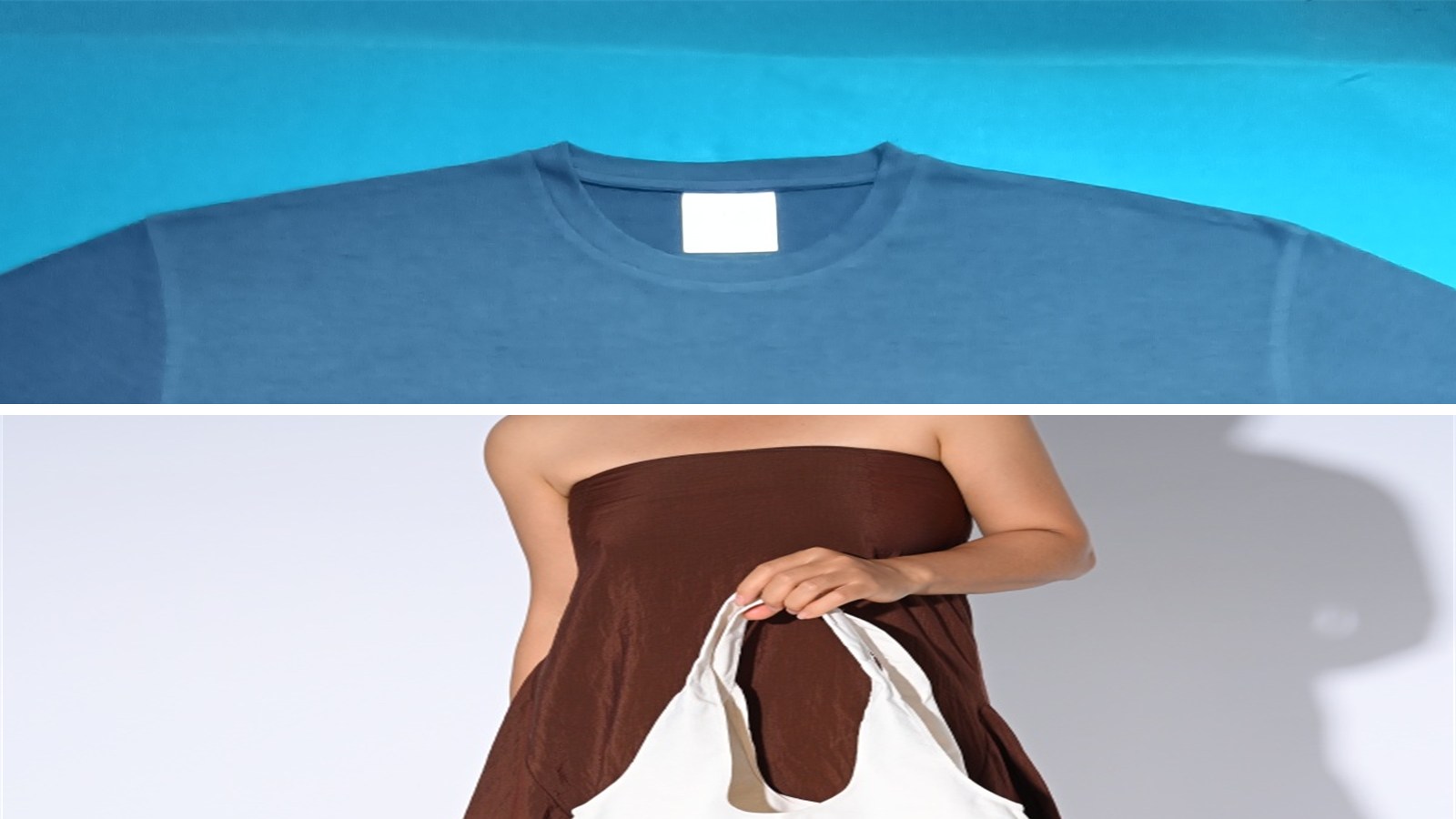
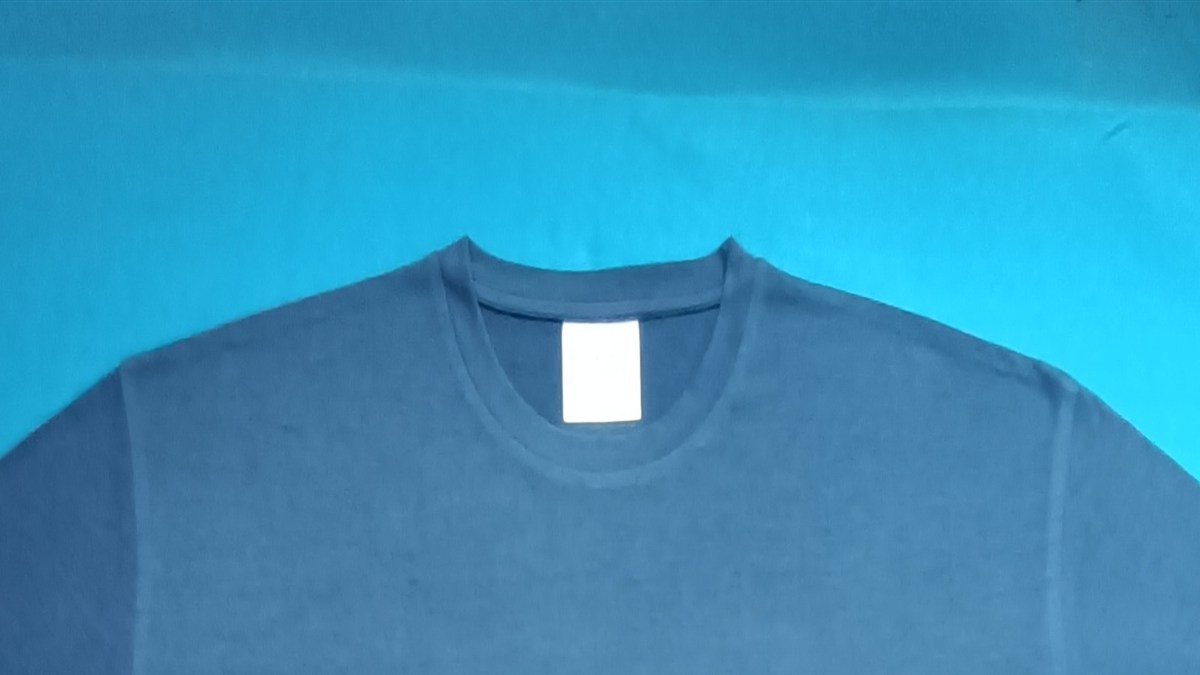
The apparel product reference used for the label-area image shows an actual product record. Photography alone does not approve tag construction.
Material, dimensions, logo, label, packing, sample and quality requirements are reviewed against the project brief and approved sample.
MOQ, price, sample route, production timing, test scope and destination packing are confirmed in writing for the order.
For overall supplier qualification, use the custom bag manufacturer buyer's guide. For coordinated bags, cartons and other pack components, see the packaging solutions overview. Neither page replaces the component-level hang-tag specification here.
11. Related guides and overlap boundaries
We checked this topic against the full published blog corpus before rewriting it. The closest page is the private-label bag guide, which owns the complete SKU/label/packaging system. This updated article is intentionally limited to the removable hang tag: its physical specification, data, attachment, sample gates and QC.
| If your main question is… | Use this page | Why it does not duplicate this guide |
|---|---|---|
| How do I launch a retail-ready private-label bag line? | Private Label Bag Supplier | Owns the full brand/SKU/label/packaging/reorder system. |
| How do I qualify a custom bag supplier? | Custom Bag Manufacturer Guide | Owns supplier model, capability, sampling and commercial evaluation. |
| How should a cosmetic-bag pack be engineered? | Custom Cosmetic Bag Packaging | Owns loaded sets, protection, presentation and beauty-channel pack-out. |
| How do retail carry bags support a campaign? | Retail Packaging Bags | Owns field deployment, measurement and campaign inventory. |
| How do I plan bag artwork and colour? | Artwork & Dielines and Colour Approval | Own large-format bag graphics; this page adapts the controls to tags. |
| How do I manage samples or finished-bag QC? | Sample Development and Quality Inspection | Own the finished product; this page adds the tag component gates. |
Additional product-specific reading
Use when the tag attaches to a cord or sits within a gift set.
12. RFQ checklist
Send these items with the product enquiry:
- product type, SKU list, quantities by SKU and destination market;
- hang-tag finished size, shape, stock, thickness and colour;
- print sides, colours, finishes, hole/eyelet and fastener specification;
- exact attachment point shown on the product drawing or sample photo;
- vector artwork, dieline, final copy, languages and responsible approver;
- barcode/QR data source, required symbol, scan/verification requirement;
- unit packing, set configuration, carton sorting and destination labels;
- sample route, approval deadline, target delivery date and Incoterm;
- any material, performance, sustainability or compliance claim with its required evidence scope.
Frequently asked questions
What is the difference between a hang tag and a product label?
A hang tag is usually removable and used for retail presentation or variable data. A permanent product label remains attached and may carry information required for the destination market. Define both separately in the BOM.
Can a barcode be printed directly on a hang tag?
Yes, when the symbol, size, quiet zone, colour, surface and data are appropriate. Test and, where required, verify the actual printed and attached tag—not only the PDF.
Which attachment is best for bags?
There is no universal best choice. The handle, zipper pull, seam loop, drawcord or another approved point may work depending on construction, presentation, removal and packing. Approve a finished sample.
Can LUCKYSTAR provide custom hang tags with bags or apparel?
LUCKYSTAR can review hangtags, labels, barcode packing and project-specific export packing within an OEM/ODM brief. Feasibility, material, finish, MOQ, price and timing are confirmed for the specific order.
What file format should we send?
Vector artwork is preferred for logos, cut lines, foil and other production layers. Also send the approved copy, fonts or outlined text, colour references and a controlled SKU/data file. Final prepress requirements are confirmed with the selected production route.
How should environmental claims on a hang tag be handled?
Treat every claim as evidence-dependent. Bind the wording to the specified material, percentage, certificate or test scope and responsible legal review. A brown stock, recycling icon or supplier statement alone does not prove a claim.
Should we order extra tags?
Agree an order-level allowance only after the SKU matrix, replacement need, packing process and inventory-control method are known. Uncontrolled excess tags can create version, claim and misuse risks.

Build the hang tag into the product brief
Send LUCKYSTAR the product quantities, tag specification, artwork, SKU matrix, attachment point, packing requirements and destination. The team can review feasibility, sampling and written commercial terms for the project.
Request a specification review and quotation → Or email a prefilled hang-tag brief.
Evidence note: company capability wording is limited to the current LUCKYSTAR knowledge base and public independent-site / Made-in-China records. Product photographs are real reference images from public LUCKYSTAR product records, cropped to remove customer artwork. They show product construction context but do not prove a particular hang-tag substrate, finish, certification or performance. Commercial terms and claims remain subject to the approved specification, sample and written order confirmation.





