
Drawstring Bags for Subscription Boxes
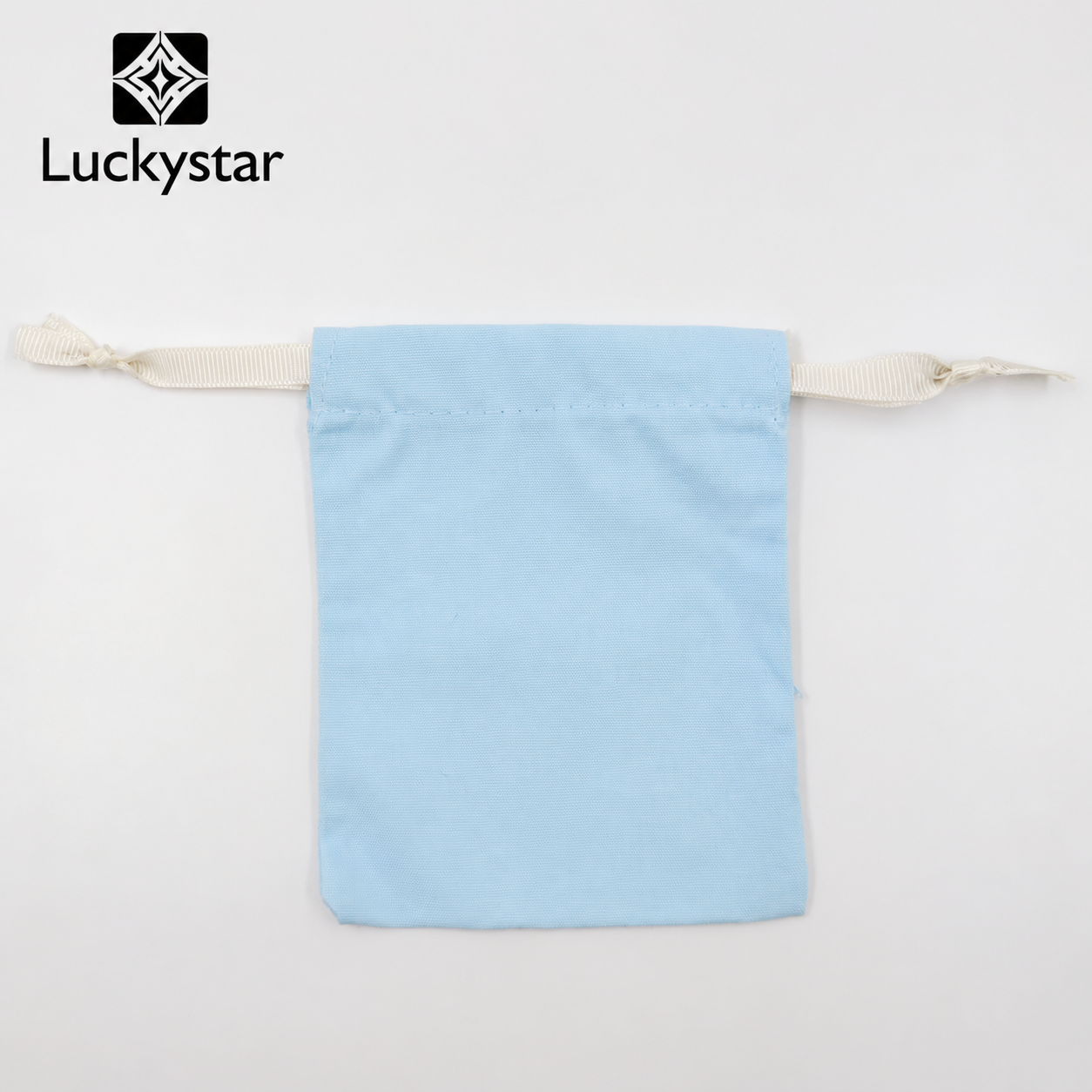
A current LUCKYSTAR public product photograph, edited only to remove third-party sample markings. The image demonstrates a drawstring-pouch format; it does not by itself verify a particular fiber, order, performance result, or certification.
The short answer: a drawstring bag can make a subscription box feel more organized, giftable, and reusable—but only when the bag has a defined job. The correct specification starts with the products it must hold, the parcel space it may occupy, the packing workflow, and the subscriber cohort that will receive it. It does not start with a fashionable fabric name or an arbitrary pouch size.
For most programs, the best plan is not “put the same bag in every monthly box.” A stronger plan may use an evergreen pouch at onboarding, at a renewal milestone, in a premium tier, or when a product set genuinely needs containment. That approach can protect the unboxing experience without creating unnecessary cost, weight, or obsolete branded inventory.
This guide explains how subscription teams can specify, sample, test, forecast, and reorder custom drawstring bags. It also shows where LUCKYSTAR can support an order while keeping commercial terms, material claims, testing, and final specifications subject to written confirmation.
Quick Decision Summary
| Buyer question | Practical answer | Evidence to approve |
|---|---|---|
| Should every shipment include a bag? | Only if the bag performs a recurring function worth its cost and parcel space | Cadence map and landed-cost review |
| How should size be selected? | Build around representative product sets, not one current SKU | Filled-pack sample and closed-box trial |
| Which material is best? | The one that matches product protection, appearance, reuse intent, printing, and budget | Approved material swatch and sample |
| How should branding be handled? | Keep the base design evergreen when future themes are uncertain | Artwork approval and version register |
| What must be tested? | Fit, closure, seams, cord, print, color transfer, and complete parcel behavior | Order-level test and inspection plan |
| How should quantities be forecast? | Order against an eligible subscriber cohort plus defined operational allowances | Cohort forecast, allocation file, and reorder trigger |
What Job Should the Drawstring Bag Perform?
A bag inside a subscription box should solve a problem. If its purpose cannot be stated in one sentence, the team may be buying decorative packaging rather than useful packaging.
Five valid roles inside a subscription program
| Role | What the bag does | Suitable subscription moment | Main design risk |
|---|---|---|---|
| Product-set organizer | Keeps several small items together | Monthly or themed assortment | Items exceed the planned payload |
| Protective secondary pouch | Separates a delicate surface from other contents | Jewelry, accessories, electronics add-ons | Fabric or decoration rubs against the product |
| Reusable subscriber item | Extends the experience beyond delivery day | Welcome or renewal box | Bag is too small or weak for repeat use |
| Tier marker | Visually distinguishes standard and premium plans | Premium or limited edition | Too many versions create dead stock |
| Campaign collectible | Supports a seasonal story or collaboration | Occasional special release | Dated artwork remains after the campaign |
The job determines the specification. A pouch that contains sample sachets needs different seam, closure, and cleanliness decisions from a backpack-style drawstring bag intended for gym use. Buyers who need a basic product-capacity framework can begin with the drawstring bag size and capacity guide.
Should a Subscription Box Include a Bag Every Month?
Usually, the answer must be earned through program economics and subscriber use—not assumed. Repeating the same pouch in every box can reduce novelty, consume fulfillment space, and build unwanted inventory in subscribers' homes. A lower-frequency schedule may produce more perceived value.
Cadence options
| Cadence | Best use | Advantage | Watch-out |
|---|---|---|---|
| Welcome only | New-member onboarding | Clear acquisition moment and stable forecasting | New and returning cohorts must be separated correctly |
| Quarterly | Seasonal organization or premium drops | More novelty than monthly repetition | Four artwork or material decisions may still be complex |
| Renewal milestone | Six- or twelve-month retention event | Links the item to subscriber tenure | Fulfillment data must identify eligible members accurately |
| Premium tier | Higher-value plan differentiation | Concentrates spend where it supports the offer | Tier colors and SKUs require disciplined inventory control |
| Product-triggered | Only when an assortment needs containment | Every bag has a functional reason | Forecast depends on final assortment approval |
| Limited campaign | Collaboration or holiday edition | Strong thematic relevance | Dated stock has little recovery value |
A company should compare bag cost, packing time, freight effect, damage prevention, reuse potential, and expected subscriber value together. No single metric decides the answer. Any forecast or performance target should be treated as a business assumption until the brand validates it with its own program data.
How This Topic Differs From Nearby Packaging Guides
Several existing LUCKYSTAR articles address adjacent buyer questions. They should not be treated as interchangeable.
| Existing guide | Primary intent | When to read it instead |
|---|---|---|
| Cosmetic Bags for Beauty Subscription Boxes | Structured or zippered cosmetic organizers for beauty assortments | The container needs compartments, a zipper, wipe-clean construction, or a toiletry-bag shape |
| Drawstring Bags for Corporate Gift Kits | One-time or periodic employee/client gifting | The program centers on corporate policy, recipient groups, and gift presentation |
| Drawstring Packaging Bags for Beauty Brands | Beauty-brand packaging across launches and retail programs | The core question is cosmetics packaging rather than recurring subscription operations |
| Custom Drawstring Pouches: Packaging Fit and Use-Case Guide | Broad pouch-format selection | The buyer is still deciding whether a pouch format fits at all |
This article focuses on the operational system unique to subscriptions: recurring assortments, rotating products, subscriber cohorts, timed kitting, parcel constraints, version control, and replenishment risk.
Build a Payload Envelope, Not a One-SKU Pouch
Subscription assortments change. A bag designed tightly around this month's hero product may fail as soon as the next box contains a taller bottle, a wider card deck, or more units. Instead, define a payload envelope: the smallest and largest realistic product group the pouch must accommodate during the period in which the same bag will be used.
Create representative product sets
Select at least three physical sets:
- A compact set with the smallest expected item count.
- A typical set that reflects the normal pack plan.
- A challenging set with the largest dimensions or least compressible shapes.
Measure the assembled products, including any protective wraps or retail cartons. Then load each set into a physical pouch. Confirm that the cord closes to the required position without excessive force, the contents do not distort the logo panel, and the filled bag still fits the subscription mailer.
| Measurement field | What to record | Why it matters |
|---|---|---|
| Maximum product width, height, and depth | Dimensions after retail packaging | Determines usable pouch volume |
| Item count range | Minimum, typical, maximum | Exposes underfilled and overfilled presentation |
| Rigid versus compressible items | Product-set composition | Changes how the bag conforms inside the box |
| Fragile or rub-sensitive surfaces | Contact restrictions | May require a softer interior or item separation |
| Leakage or dust concern | Product risk | May make a textile pouch insufficient as primary containment |
| Final mailer internal space | Space after inserts and cushioning | Prevents a pouch that fits products but not the parcel |
Bag dimensions should be agreed as finished measurements with a stated tolerance. Pattern dimensions, flat measurements, and usable internal dimensions are not identical. The approved sample should be the visual and dimensional reference for production.
Control Parcel Space and Shipping Impact
A fabric pouch is flexible, but it is not volume-free. Folded fabric, cord knots, labels, and gathered closures can raise the product stack or create pressure points against the mailer. A small change in construction can affect how the complete box closes.
Test the whole parcel
Pack the pouch with representative products, inserts, cushioning, and any cold-chain or protective components. Close the actual mailer. Check lid bowing, compression marks, movement, and presentation after handling. If a fulfillment partner uses a specific pack sequence, reproduce it during the trial.
| Parcel variable | Check | Possible response |
|---|---|---|
| Folded bag thickness | Does an unused or partly filled pouch raise the stack? | Reduce fabric bulk or change placement |
| Cord and knot position | Do knots create localized pressure? | Reposition, shorten, or change cord format |
| Gathered top | Does the closure consume vertical space? | Increase channel allowance or use a flatter closure plan |
| Product movement | Can items migrate and collide? | Add internal grouping or a paper insert |
| Mailer closure | Does the lid close without force? | Resize pouch, revise pack sequence, or review box size |
| Unboxing order | Is branding visible at first opening? | Change fold, orientation, or artwork location |
Do not claim that a pouch lowers shipping impact without measuring the actual packaging system. A lighter component may still increase parcel dimensions; a reusable component may not be reused. Environmental statements need defined evidence and scope.
Design for Fast, Repeatable Kitting
Subscription operations are time-sensitive. The bag must be practical at the packing station, not only attractive in a sample-room photograph.
Map every hand movement: unfold the pouch, identify orientation, open it, load items, add an insert, close it, inspect it, and place it into the box. Then identify where workers could confuse versions or damage decoration.
A kitting trial should record
| Observation | Question | Specification implication |
|---|---|---|
| Opening behavior | Does the channel open quickly without snagging? | Cord diameter, tape finish, channel width |
| Product insertion | Do corners catch on seams or lining? | Opening width and seam finish |
| Artwork orientation | Is the logo consistently facing the box opening? | Pack instruction and print placement |
| Closure consistency | Can workers reach the same gathered appearance? | Cord length and work instruction |
| Version recognition | Can teams distinguish tiers without reading small text? | Color code, label, or outer-carton marking |
| Inspection point | Can defects be seen before the pouch enters the mailer? | Lighting, sample board, and QC step |
The goal is not an invented universal seconds-per-pack benchmark. It is a repeatable internal method. The buyer and fulfillment partner should time their own pilot because product shapes, staffing, automation, and pack sequence vary.
Choose Material From the Product Risk
Material selection should balance appearance, tactile feel, printing, strength, care expectations, and the product it touches. A fiber label alone does not determine quality or environmental performance.
| Material family | Useful characteristics | Subscription fit | Buyer verification |
|---|---|---|---|
| Cotton or cotton canvas | Natural hand feel; broad decoration options | Lifestyle, wellness, home, premium sampling | Composition, weight, shrinkage, color transfer, construction |
| Polyester | Lightweight; available in many constructions | Sports, travel, general promotional use | Denier or construction, finish, colorfastness, print compatibility |
| RPET-based textile | Can support a recycled-content brief when documented | Programs with evidence-based recycled-content requirements | Transaction and scope documentation for the specific order |
| Non-woven PP | Lightweight and cost-conscious | Larger runs or short-use organizing functions | GSM, bonding, seam method, load requirement |
| Mesh | Visibility and airflow | Fitness, produce, laundry, wet-item separation where suitable | Hole size, snagging, edge finish, strength |
| Velvet or microfiber | Soft or premium presentation | Jewelry, accessories, collectible products | Pile direction, lint, rub transfer, print/embroidery suitability |
For a wider comparison, use the best materials for custom drawstring bags. Material weights, recycled percentages, finishes, certifications, and performance must be confirmed for the order; they should not be inferred from a photograph or generic category name.
Match Cord and Closure to the Contents
The cord is a working component. Its diameter, surface, stretch, knot, channel, eyelet, and attachment method affect both use and failure risk. A decorative ribbon that suits a small jewelry pouch may be uncomfortable or unstable on a larger reusable bag.
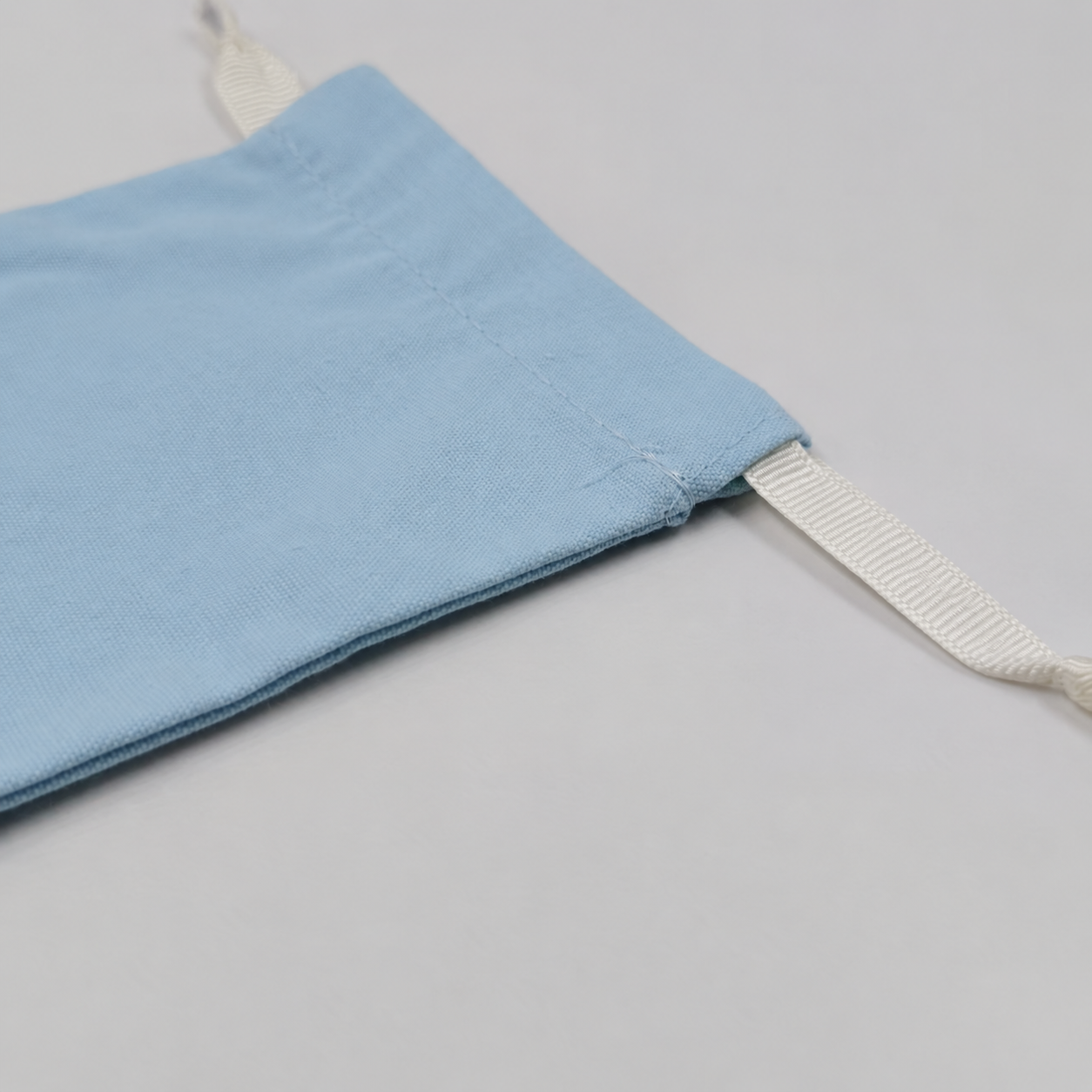
Close-up derived from the same current company-public product photograph, with third-party wording removed. Buyers should approve their own cord, channel, seam, and performance requirements on the order sample.
Closure selection matrix
| Product situation | Closure priority | What to examine in the sample |
|---|---|---|
| Small loose components | Gap control | Opening after normal closure and shaking |
| Heavy set | Cord strength and seam load | Pull test and filled carry trial |
| Delicate surface | Low-abrasion contact | Cord ends, hardware, internal seam exposure |
| Premium presentation | Symmetry and hand feel | Gather distribution, cord color, knot consistency |
| Child-oriented program | Market-specific safety review | Cord length, small components, intended age and destination requirements |
| Fulfillment-speed program | Easy opening and closing | Channel friction during repeated packing |
The drawstring cord, eyelet, and reinforcement guide explains these components in more depth. Safety and labeling requirements depend on product design, intended users, and sales market, so the buyer should define applicable requirements before approval.
Protect Products Without Overstating the Bag's Role
A textile drawstring pouch is normally secondary packaging. It should not be assumed to provide a liquid barrier, sterility, food-contact compliance, tamper evidence, or impact protection unless the exact construction has been evaluated for that purpose.
For liquids, powders, sharp corners, magnets, coated surfaces, or fragile components, create a contact-risk map. Identify what touches the fabric, cord, print, or hardware during shipment. If a leak could contaminate the pouch or other products, keep the required primary container and seal. If two products could abrade one another, consider individual wraps, dividers, or a different internal arrangement.
Keep Branding Evergreen and Version-Controlled
Subscription boxes often change themes faster than packaging can be consumed. A base pouch printed with a permanent seasonal message can become obsolete after one delayed shipment or forecast error. An evergreen identity—brand mark, simple pattern, or durable use instruction—usually gives the inventory more recovery options.
Use variable components for changing messages: a paper card, removable band, compliant label, or box insert. This separates long-lead pouch inventory from short-lead campaign content.
Artwork architecture
| Layer | Recommended content | Change frequency | Inventory risk |
|---|---|---|---|
| Base pouch | Evergreen brand assets and stable care information | Low | Lowest when usable across cohorts |
| Tier marker | Color, small label, or controlled variant | Medium | Requires separate allocation |
| Campaign insert | Theme, month, QR destination, offer | High | Easier to revise than the pouch |
| Shipping label or pick code | Operational information | Every batch | Must remain outside consumer-facing art when possible |
Approve print size and placement on a filled bag, not only on a flat dieline. Gathering and product bulk can move or distort the visible panel. See the logo placement and print size guide, printing methods guide, and artwork and dieline preparation guide.
Plan Tiers and Personalization Without Losing Control
Personalization can improve relevance, but every extra pouch version creates a separate inventory and picking risk. Before adding names, months, plan levels, regions, or partner logos, ask whether a variable insert can achieve the same result.
If multiple bag versions are necessary, create a version register with artwork code, color, size, approved sample, eligible cohort, ordered quantity, delivered quantity, remaining stock, and disposition rule. Avoid encoding private subscriber data on bulk packaging files unless the business has an approved data-handling process.
| Complexity level | Example | Operational burden | Safer control |
|---|---|---|---|
| One evergreen version | Same pouch for all eligible subscribers | Low | Single artwork and sample |
| Color-coded tiers | Standard and premium colors | Moderate | Distinct SKU and carton marking |
| Campaign variants | Different seasonal graphics | High | Frozen allocation and no substitution rule |
| Individual names | One-to-one decoration | Very high | Data validation, exception process, and privacy review |
Forecast Quantity by Eligible Cohort
Do not multiply total subscribers by an assumed cadence without segmenting eligibility. The purchasing file should state which active members receive the bag, the forecast cut-off, the expected new-member additions, replacements, QC reserve, sampling needs, and whether canceled or paused accounts remain eligible.
Forecast worksheet fields
| Field | Owner | Decision supported |
|---|---|---|
| Cohort definition | Subscription operations | Who should receive the bag |
| Forecast freeze date | Planning | When quantity becomes purchasing input |
| New joins and churn assumption | Growth/retention team | Demand range before fulfillment |
| Replacement policy | Customer service | Allowance for damaged or missing items |
| Inspection/sample quantity | Quality team | Units unavailable for subscriber allocation |
| Late-production contingency | Procurement | Reorder or substitution trigger |
| Residual-stock plan | Brand and finance | How unused evergreen or dated stock is handled |
MOQ, unit price, sample charge, production time, freight, and reorder timing vary with the final size, fabric, decoration, quantity, destination, and approval status. They should be confirmed in a written quotation rather than copied from a platform snapshot. For planning concepts, see custom drawstring bag MOQ and production time.
Sample the Complete Subscription Experience
A visually approved empty pouch is not enough. The sample process should include the actual or dimensionally accurate products, the insert stack, the mailer, and the intended pack sequence.
Recommended approval stages
- Material and color review: confirm fabric, hand feel, color target, cord, hardware, and decoration route.
- Construction sample: confirm finished dimensions, channel, seam, reinforcement, closure, and usable capacity.
- Artwork sample: inspect color, registration, adhesion, placement, and appearance when filled.
- Pack-out trial: load the planned assortment, close the mailer, handle it, reopen it, and review the unboxing order.
- Written approval: freeze the sample, artwork version, specification, tolerances, test plan, packing method, and change-control contact.
The custom drawstring bag sample development process provides a fuller approval sequence. Any change after approval should be documented and re-evaluated for its affected characteristics.
Define a Risk-Based Test Plan
Testing should follow foreseeable use and failure modes. A premium pouch carrying a lightweight accessory does not need the same program as a backpack-style bag carrying shoes and a water bottle.
| Test area | Example method | Failure being screened | Approval basis |
|---|---|---|---|
| Finished dimensions | Measure conditioned sample at defined points | Poor fit or inconsistent presentation | Written tolerance |
| Seam and bottom | Static load or cyclic lift with agreed payload | Seam opening or distortion | Intended load and cycle plan |
| Cord/attachment | Pull at defined direction and rate | Cord, knot, channel, or corner failure | Approved order protocol |
| Closure retention | Close, shake, and handle filled pouch | Small items escaping | Product-specific acceptance |
| Print durability | Rub, flex, tape, or abrasion method as applicable | Cracking, peeling, or transfer | Decoration-specific standard |
| Color transfer | Dry/wet rub or contact trial | Color marking products or garments | Material and end-use requirement |
| Parcel trial | Complete packed-box handling or approved lab method | Product movement, pressure, presentation loss | Brand/fulfillment protocol |
| Odor/cleanliness | Sensory and visual inspection under agreed conditions | Unacceptable odor, lint, debris, or contamination | Approved sample and written limit |
Do not publish a universal load rating or pass result unless it belongs to the exact product and test conditions. The tests custom drawstring bags should pass guide helps teams connect test choice to intended use.
Set Quality Control Before Production
Quality control begins with a clear specification, not at final inspection. The order file should define materials, finished measurements and tolerances, seam construction, cord and hardware, artwork version, color reference, defect examples, packing, test requirements, and approval responsibilities.
Defect classification should reflect risk
| Defect group | Possible examples | Typical decision logic |
|---|---|---|
| Critical | Prohibited sharp component, serious safety or regulatory nonconformity | Usually not accepted; market requirements govern |
| Major | Open seam, nonfunctional closure, wrong artwork, severe size deviation | Product cannot perform or brand presentation is materially affected |
| Minor | Small cosmetic variation outside the approved visual limit | Function remains intact but workmanship is below the agreed reference |
If lot sampling is used, the buyer and supplier should agree the inspection level, AQL, lot definition, sampling timing, and defect classification in writing. ISO lists ISO 2859-1:2026 as the current edition of its sampling procedures for inspection by attributes; applying it still requires order-specific decisions rather than a generic “ISO inspected” claim (ISO overview). Use the custom drawstring bag quality-control checklist and the pre-shipment inspection guide to build the order file.
Make Sustainability Claims That the Evidence Can Support
“Reusable,” “recycled,” “biodegradable,” and “eco-friendly” are not interchangeable. A brand should state exactly what attribute is being claimed, which component it covers, how it was verified, and what limitation applies.
For example, a recycled-content claim should specify the material and percentage supported by order-relevant documentation. A reuse claim should not imply a measured environmental benefit unless the use scenario and comparison have been evaluated. The U.S. FTC's Green Guides summary advises marketers to qualify environmental claims so consumers understand their basis and limits.
Do not apply GRS, GOTS, FSC, BSCI, ISO, REACH, or RoHS language across LUCKYSTAR's entire range. Before any such statement is published, verify the current document, named legal entity, covered scope, validity period, and relevance to the specific order. Ask for documentation tied to the selected material and transaction, and approve the exact public wording before launch.
Organize Production, Pack-Out, and Reorders
Subscription calendars often leave little room for late changes. Create one critical-path sheet covering artwork freeze, material approval, sample approval, production, inspection, packing, shipment, fulfillment arrival, and box assembly. Add decision deadlines rather than relying only on target delivery dates.
At reorder, do not write “same as last time” as the entire specification. Reconfirm the approved sample or retained reference, artwork version, color target, material construction, dimensions, cord, packing, tests, and destination. Raw material or process changes can affect color and print even when the SKU name remains the same.
The broader custom drawstring bag manufacturing process explains the path from design to delivery. For supplier selection, consult the drawstring manufacturer selection guide; for the wider category framework, use the Custom Bag Manufacturer Guide.
Why Choose LUCKYSTAR for Subscription-Box Drawstring Bags?
LUCKYSTAR is a practical fit when a buyer needs specification coordination rather than a generic blank pouch. The team can help translate a rotating product set into decisions on size, material, closure, artwork, sampling, quality checks, and packing.
What the collaboration can cover
| Stage | LUCKYSTAR support | Buyer input still required |
|---|---|---|
| Requirement definition | Organize size, material, closure, decoration, quantity, destination, and use case | Representative products, market, timeline, and brand rules |
| Option review | Compare feasible constructions and decoration routes | Target experience and budget priorities |
| Sample development | Coordinate sample details and revision comments | Consolidated written approval or correction list |
| Production file | Align approved specification, artwork, and packing | Final signed-off files and order confirmation |
| Quality planning | Translate critical features into checks and defect references | Acceptance criteria, tests, and inspection authority |
| Delivery coordination | Confirm packing and shipping information for the order | Consignee, schedule, labels, and written logistics instructions |
The value is the link between product design and repeatable execution. It is not a promise that every material, certification, test, MOQ, price, or lead time applies to every order. Those items remain subject to the final specification, evidence availability, sample approval, and written commercial confirmation.
What to Include in an RFQ
A clear request for quotation reduces assumptions and speeds up a useful response.
| RFQ field | Details to provide |
|---|---|
| Subscription use | Welcome, recurring, renewal, premium tier, or campaign |
| Product payload | Dimensions, weight, count, rigid/compressible, contact risks |
| Bag format | Pouch or backpack style; flat or gusseted; lining/pocket if needed |
| Finished size | Width, height, gusset, tolerance, and measurement method |
| Material | Composition, construction/weight, color, finish, documentation needs |
| Closure | Cord/tape type, length, ends, eyelets, reinforcement, safety constraints |
| Decoration | Method, colors, dimensions, placement, artwork file, color standard |
| Quantity structure | Total, versions, tier allocation, reorder possibility |
| Quality plan | Tests, AQL/inspection, defect classes, approved sample reference |
| Packing and delivery | Fold, individual packing, carton marks, destination, deadline |
Frequently Asked Questions
Are drawstring bags suitable for subscription boxes?
Yes, when they organize, protect, present, or extend use of the products. Suitability should be verified with the actual assortment and full parcel. A textile pouch should not be assumed to replace required primary packaging or product protection.
What size drawstring bag works best for a subscription box?
There is no universal size. Use compact, typical, and challenging product sets to define a payload envelope, then test the filled bag inside the actual mailer. Agree finished dimensions, tolerance, and measurement method in writing.
Is cotton or polyester better for subscription pouches?
Neither is automatically better. Cotton may suit a natural tactile brief; polyester may suit a lightweight or sports-oriented brief. The decision also depends on construction, printing, colorfastness, care, intended reuse, cost, and product-contact risk.
Should the bag be branded with the subscription month?
Only when the team accepts the obsolete-inventory risk. An evergreen pouch plus a variable insert often preserves more reuse and recovery options while still supporting monthly storytelling.
Can the same pouch be used for every product assortment?
It can if the planned assortments stay inside the approved payload envelope. When product dimensions, weight, leakage risk, or fragility move outside that range, the team should recheck size, closure, seams, contact, and parcel fit.
How can a brand reduce subscription-bag inventory risk?
Use an evergreen base design, limit versions, forecast by eligible cohort, set a freeze date, define replacement allowances, and establish reorder and residual-stock rules. Avoid buying against total subscriber count without segmentation.
What artwork files should a buyer send?
Send editable vector artwork where possible, with fonts outlined, color references identified, print size and placement stated, and a version code. The factory-facing file should match the approved visual and should not rely on a low-resolution screenshot.
Which tests matter most?
Start with the failure modes: fit, seam and bottom integrity, cord attachment, closure retention, print durability, color transfer, cleanliness, and complete parcel behavior. Test methods and acceptance limits should reflect the intended payload and destination market.
Can LUCKYSTAR provide certified recycled material?
Availability and claim wording must be checked for the selected material and order. Buyers should request current, transaction-relevant documentation and confirm the certified entity, scope, standard, percentage, and validity before making a public claim.
What affects MOQ, price, and production time?
Size, fabric, color, decoration, number of versions, quantity, packing, testing, sample revisions, shipping method, and destination all matter. Final commercial terms are subject to the confirmed specification and written quotation.
Turn the Subscription Concept Into an Order-Ready Brief
Send LUCKYSTAR the planned product sets, mailer dimensions, bag role, subscriber cadence, quantity by version, target material, artwork, destination, and test requirements. The team can use those inputs to develop an order-specific solution for custom drawstring bags.

The GET QUOTE image links directly to the LUCKYSTAR inquiry page. Specifications, prices, MOQ, samples, documentation, testing, and lead times are subject to the final product brief and written confirmation.





