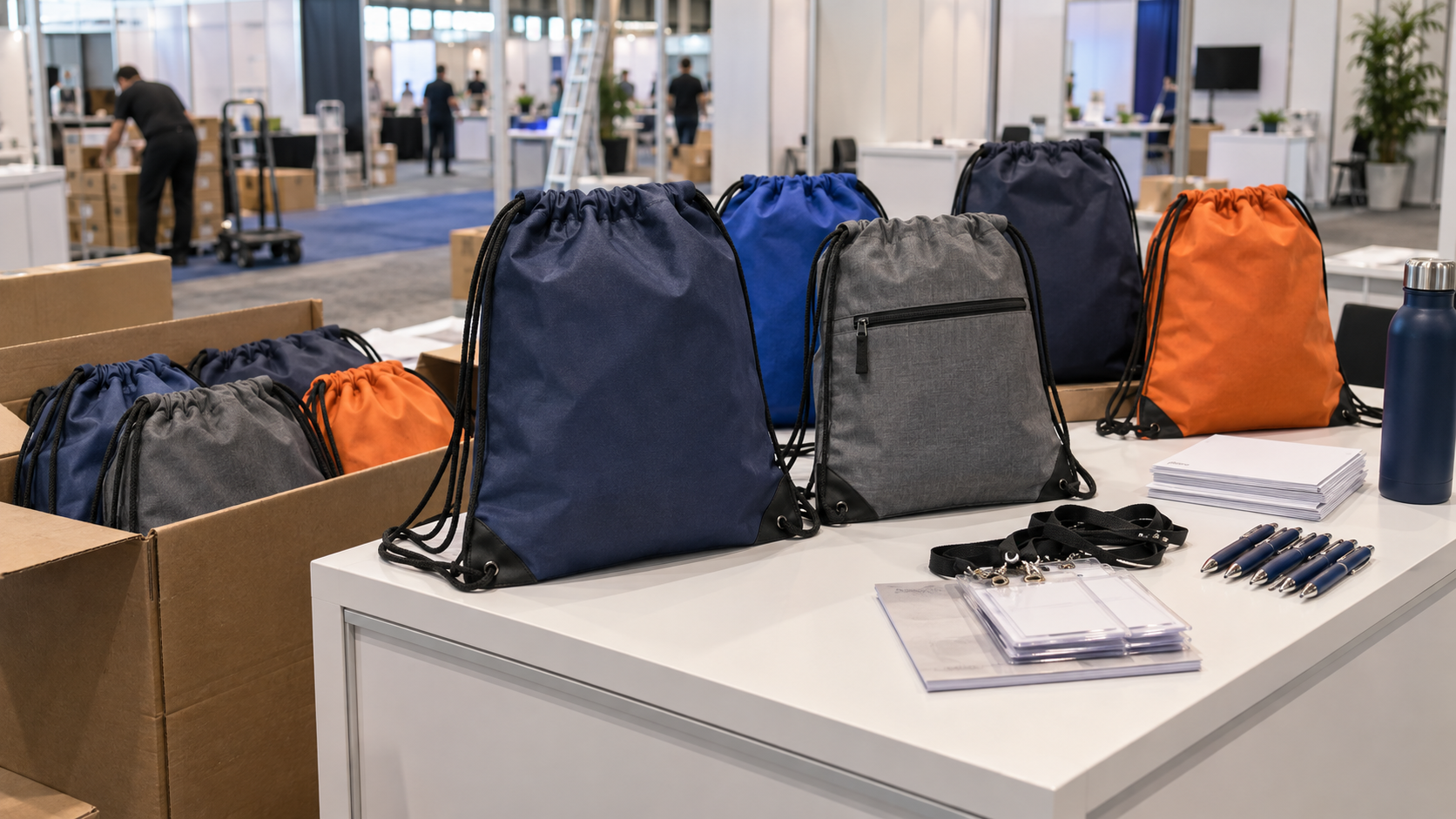
Drawstring Packaging Bags for Beauty Brands
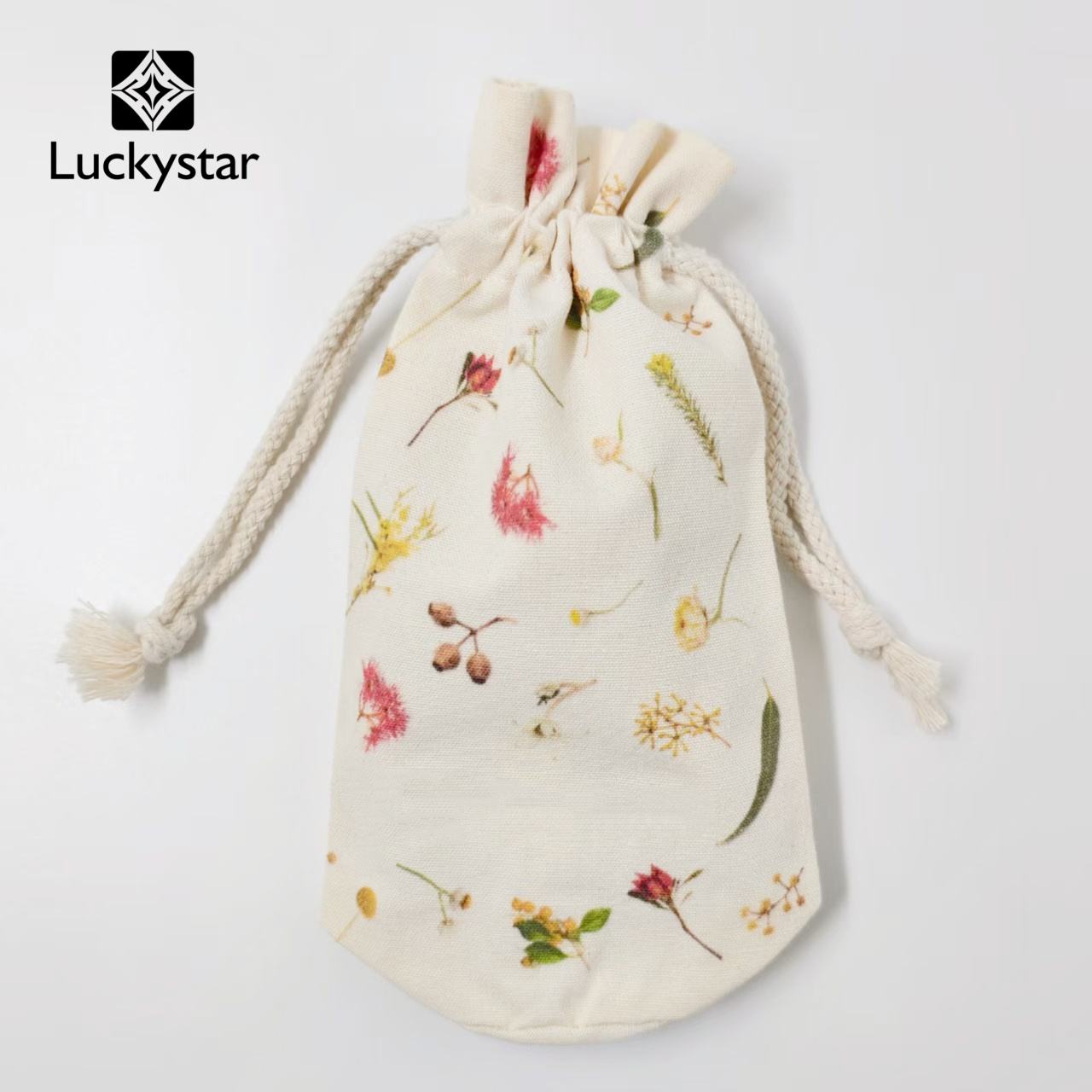
A current LUCKYSTAR public product photograph used as a construction and print reference. The image does not prove material composition, performance, certification or a customer relationship.
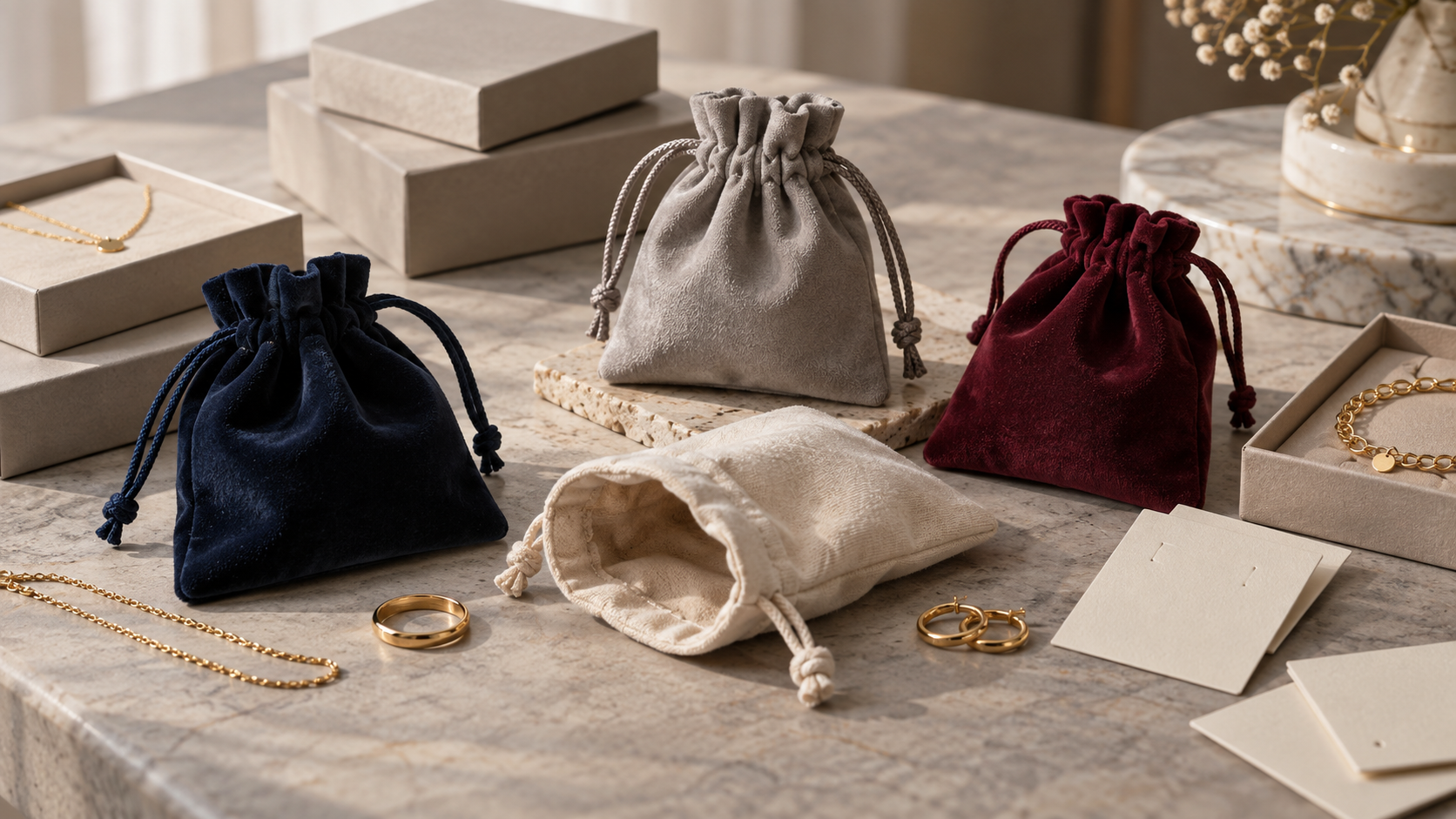
Drawstring packaging bags for beauty brands are reusable secondary packs designed to organize, present or protect closed cosmetic products such as bottles, jars, tubes, compacts and gift sets. They work best when the brand specifies the pouch around the complete pack: product dimensions, closure security, material contact risks, artwork, inserts, retail or e-commerce route, testing and pack-out.
They are not automatically a substitute for a cosmetic bag, primary container, leak barrier or transit carton. The correct format depends on whether the project is a gift-with-purchase campaign, PR mailer, discovery set, retail gift set, travel kit or protective inner pack.
LUCKYSTAR's custom drawstring bag range provides a starting point for fabric, size, closure and decoration discussions. The confirmed order brief determines final material, dimensions, MOQ, price, testing and production timing.
Quick answer: how should a beauty brand specify the bag?
Start with the products and campaign route, not a generic pouch size. Define which closed items go inside, how they are oriented, whether they can leak or abrade each other, the required presentation, how the pouch travels, and which results must be approved before production.
| Decision | Question to answer | Approval evidence |
|---|---|---|
| Program purpose | Is this for GWP, PR, retail gift set, discovery set or storage? | Written use-case brief |
| Product set | Which bottle, jar, tube or accessory SKUs go inside? | Product list and packed photos |
| Finished size | What usable internal space is required? | Filled fit sample |
| Material | What hand feel, structure, lint and color behavior are acceptable? | Approved material swatch and sample |
| Closure | How securely should the opening retain the set? | Filled closure trial |
| Decoration | What logo, pattern, message or label is required? | Approved artwork sample |
| Quality | Which defects, tests and sampling rules apply? | Signed specification and inspection plan |
| Pack-out | How are products, inserts, pouch and carton assembled? | Visual packing instruction |
Drawstring pouch or cosmetic bag?
Beauty buyers often use the terms pouch, cosmetic bag and gift bag interchangeably, but they solve different problems. A drawstring pouch is usually a flexible pack with a cord channel. A cosmetic bag often uses a zipper, more structured panels, lining, compartments or hardware and may be designed for repeated personal organization.
| Format | Best use | Important limitation |
|---|---|---|
| Drawstring packaging bag | Gift sets, discovery kits, PR items, simple product grouping and soft presentation | Does not create a liquid-tight or rigid protective barrier |
| Zipper cosmetic bag | Reusable organizer, travel kit and higher-structure GWP | More components, sewing operations and cost |
| Rigid box with insert | Premium alignment, fragile items and controlled unboxing | Higher volume and different shipping economics |
| Paper gift bag | Retail handover and external branding | Limited product separation and storage protection |
| Drawstring pouch inside a box | Layered presentation with surface protection and organization | Requires full pack-out validation |
If the buyer needs a structured organizer rather than a soft drawstring pack, use the custom cosmetic bag packaging guide for beauty brands. The present article focuses specifically on drawstring packaging.
Match the pouch to the beauty program
The same-looking pouch may perform very differently across a one-day event, a subscription shipment and a prestige retail set. Define the program before choosing fabric or decoration.
| Beauty program | Primary objective | Specification focus |
|---|---|---|
| Gift with purchase | Brand visibility and useful perceived value | Cost-per-set, logo quality, campaign quantity and pack speed |
| PR or influencer mailer | Controlled presentation and shareable unboxing | Artwork, insert layout, clean appearance and outer-mailer compatibility |
| Discovery or sample set | Keep small units grouped and identifiable | Small-part retention, SKU labeling, cord closure and internal movement |
| Retail gift set | Consistent shelf or counter presentation | Color, fold, logo orientation, barcode/label position and replenishment |
| Skincare routine kit | Group products in use order | Size, weight distribution, bottle/jar separation and instruction card |
| Fragrance or glass set | Reduce direct item-to-item contact | Inserts, sleeves, filled handling trial and rigid outer protection |
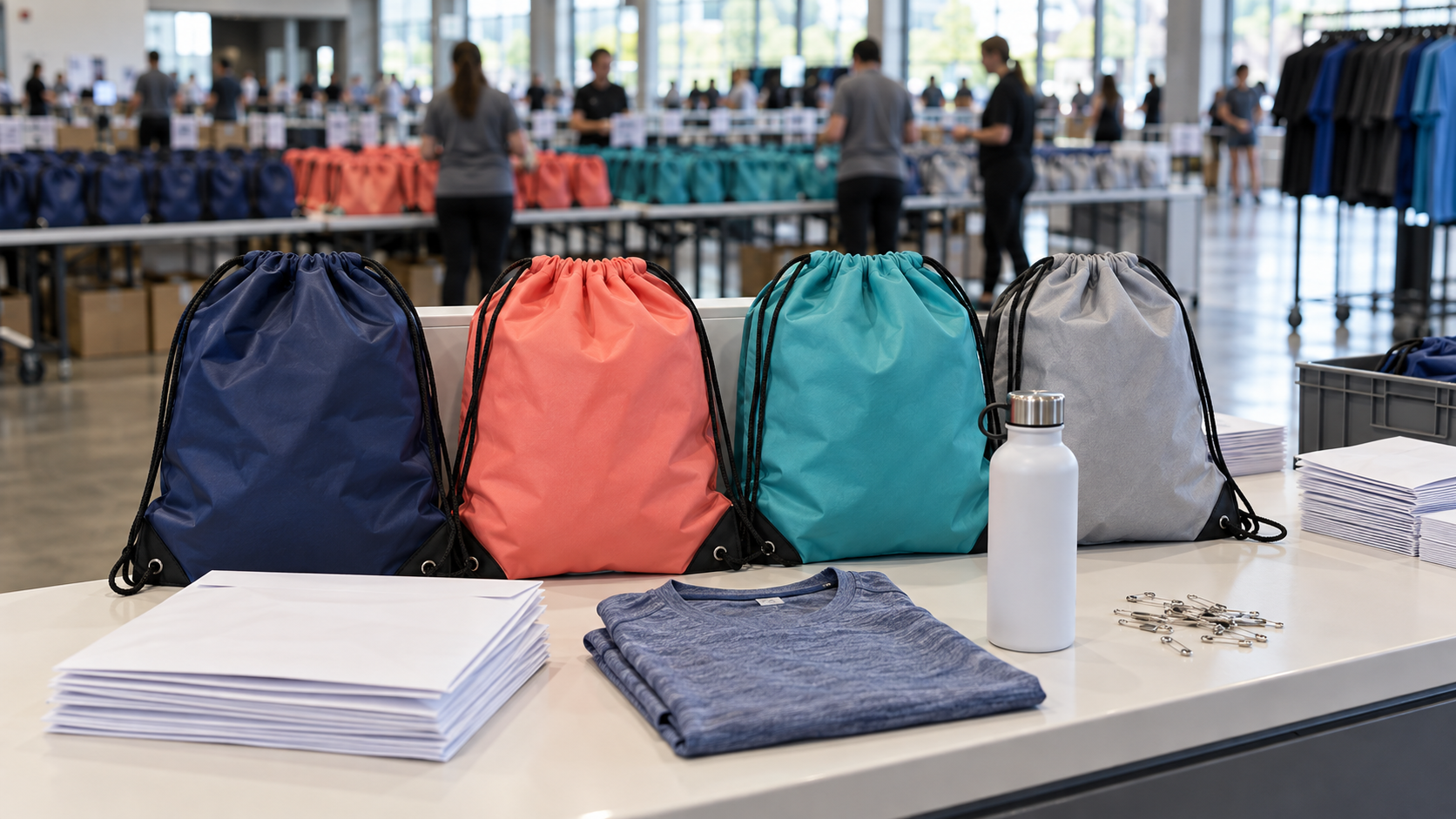
| Event giveaway | Fast packing and visible branding | Simple construction, pack quantity, decoration durability and timing |
| E-commerce add-on | Survive fulfillment and parcel handling | Fold profile, product movement, leak contingency and carton fit |
For broader GWP planning, compare the program with the beauty brand cosmetic bag GWP guide. A drawstring pouch may be the better choice when the campaign values light weight, flexible sizing and simple closure more than internal organization.
Build the specification around the closed product set
A drawstring bag is secondary packaging. It should normally hold fully closed retail or sample containers, not exposed formula. The brand remains responsible for the primary pack, formula compatibility, labeling and market compliance.
Record the packed product envelope
Measure the complete set in its real packing orientation. Include caps, pumps, shoulders, cartons, applicators, cards, tissue and any protective sleeves. A bottle's nominal fill volume does not reveal its packed width or height.
| Input | Why it matters | Common error |
|---|---|---|
| Maximum packed width | Controls entry and usable interior width | Measuring individual items but not the grouped set |
| Maximum packed height | Sets closure clearance | Letting the cord channel press against pumps or caps |
| Maximum packed depth | Determines flat-bag ease or gusset need | Treating round jars as flat objects |
| Total packed weight | Influences seams, cord and bottom construction | Testing with empty containers |
| Item count and orientation | Controls internal movement and presentation | Allowing glass or decorated surfaces to collide |
| Outer package dimensions | Confirms the pouch fits the box or mailer | Approving the pouch separately from the campaign pack |
The drawstring bag size and capacity guide explains general measurement logic. For a beauty program, validate the result with the exact closed products or dimensionally and materially representative dummies.
Define ease rather than adding an arbitrary percentage
The pouch needs enough room for insertion and closure without crushing cartons, activating pumps or distorting the presentation. Too much room can allow uncontrolled movement. Use a filled sample to define acceptable ease; do not rely on one universal allowance for every product family.
Treat leakage as a system risk
A fabric pouch should not be described as leakproof unless the exact construction and test evidence support that claim. If a primary container could leak, define secondary sleeves, seals, absorbent elements or barriers separately. Test the complete packed system under the intended handling conditions.
Choose material according to presentation and risk
Material choice affects hand feel, structure, lint, shade, print, fold profile, odor and cost. Fiber name alone does not establish performance.
| Material family | Beauty-brand advantages | Watch points | Typical program fit |
|---|---|---|---|
| Cotton | Familiar natural hand feel and broad print compatibility | Shrinkage, wrinkles, lint and shade variation | Lifestyle skincare, gifting and reusable kits |
| Canvas | More body and perceived durability | Bulk, textured print surface and possible abrasion | Larger kits and repeat-use positioning |
| Polyester | Consistent construction options and wide color range | Static, sheen, odor and dye-transfer behavior vary | Campaigns needing color and scalable decoration |
| RPET option | Can support a specific recycled-content brief when evidence is available | Percentage, scope and certification must be verified per order | Evidence-led sustainability programs |
| Velvet-type fabric | Soft, premium presentation | Nap, pressure marks, lint and decoration limits | Fragrance, prestige gifts and small premium sets |
| Microfiber-type fabric | Smooth hand feel and fine presentation | Composition and contact performance must be confirmed | Delicate decorated containers and beauty tools |
| Non-woven fabric | Lightweight and cost-efficient for selected campaigns | Tear strength, hand feel and reuse expectations depend on construction | High-volume promotional distribution |
| Mesh | Visibility, ventilation and fast product identification | Limited dust coverage and possible snagging | Tools, bath items and selected event kits |
Use the best materials for custom drawstring bags as a category overview. For premium small pouches, the velvet versus microfiber comparison explains differences in pile, hand feel and decoration.
Manage lint, odor and surface transfer
Pale cartons, lacquered caps, coated bottles and decorative finishes may reveal lint, dust or color transfer. Evaluate the chosen fabric and cord against representative product surfaces. If odor matters, define conditioning, assessment conditions and acceptance language; “no odor” is not a measurable specification on its own.
Use lining only when it solves a defined problem
A lining may conceal seams or provide a different contact surface, but it adds material, sewing, bulk and another source of shade or transfer variation. Decide whether the benefit is separation, appearance, clean finish or structure, then approve both layers.
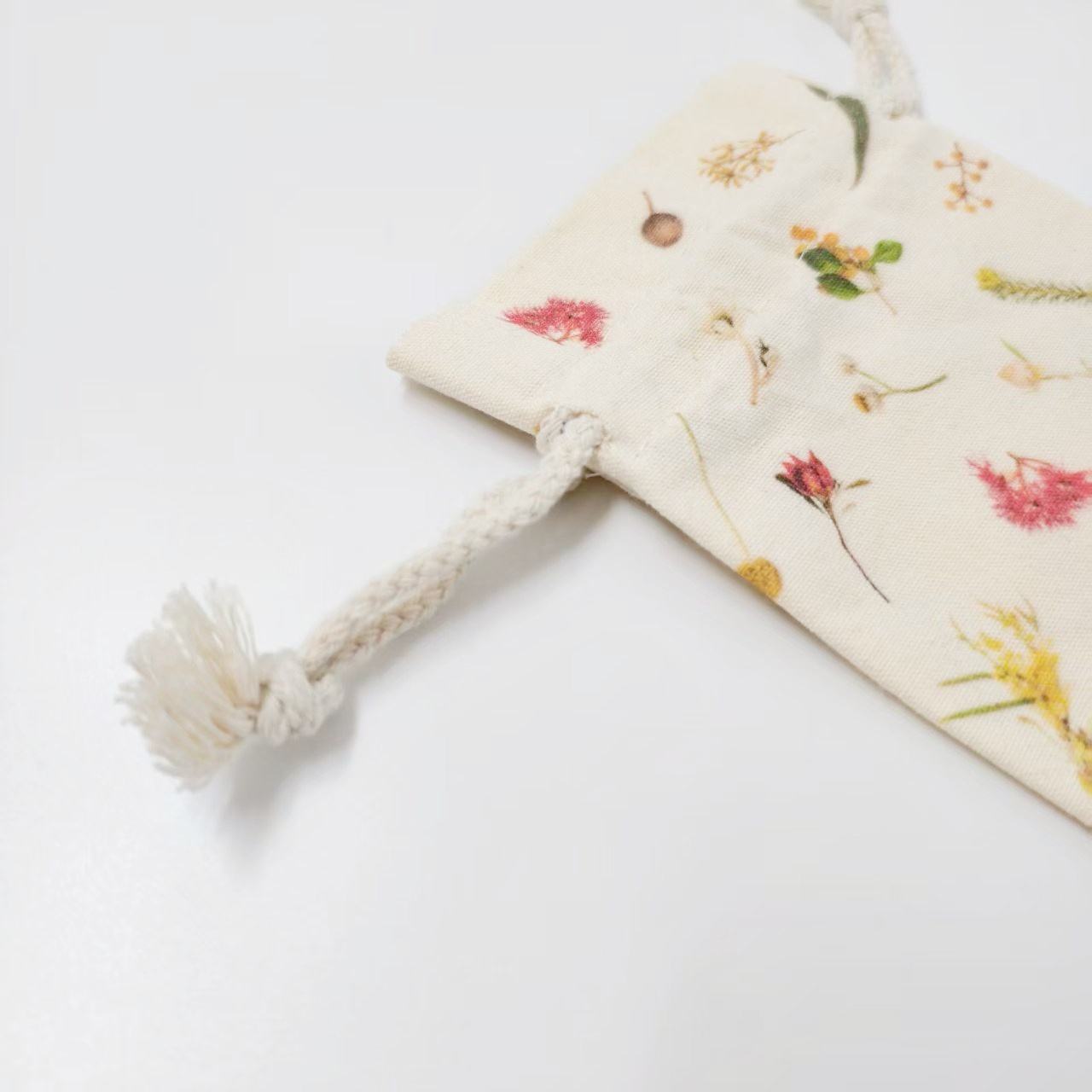
A detail from a current LUCKYSTAR public product photograph. It shows the fabric, print and cord construction only; it does not establish fiber content, colorfastness, certification or suitability for a specific cosmetic product.
Design the closure for retention and pack speed
The closure must gather cleanly, retain small items and open without excessive force. Specify cord material, diameter or width, color, channel height, end treatment and whether the bag uses one or two drawcords.
| Closure decision | Benefit | Risk to validate |
|---|---|---|
| Single cord | Fewer components and fast packing | Uneven gathering and one-sided force |
| Double cord | Balanced appearance and familiar gift presentation | Tangling and more pack handling |
| Round cord | Smooth movement and broad availability | Pressure points and knot migration |
| Flat tape or ribbon | Decorative appearance and broad color impact | Twisting, fraying and channel bulk |
| Knotted ends | Simple component control | Knot size and repeat consistency |
| Finished tips | Refined appearance | Detachment, scratch risk and added component control |
Small discovery products can escape if the opening does not gather sufficiently. Run a filled shake and handling trial, then define what counts as secure closure. Consult the cord, eyelet and reinforcement guide for component choices. Exposed metal eyelets or tips should be assessed for contact with bottles, cartons and decorative surfaces.
Select construction for the product shape
A flat two-panel pouch is efficient for many sample sets. A side or bottom gusset can improve standing volume and reduce distortion around jars or multiple bottles. A boxed bottom may support presentation but adds construction steps and inspection points.
Construction requirements should identify:
- finished width, height and gusset with tolerances;
- seam type and required inside finish;
- cord channel height and usable opening;
- stitch security at seam ends and cord exits;
- reinforcement at load-bearing points;
- thread color and acceptable thread-tail standard;
- cleanliness and control of loose fibers or debris;
- whether the pouch must lie flat, stand or fit an insert.
The construction should be tested with full product weight. An empty pouch can look correct while a filled pouch strains the bottom seam or distorts the logo.
Plan artwork for the filled pouch
Beauty packaging often carries logos, campaign graphics, ingredient stories, routine steps or limited-edition artwork. Keep mandatory product information on compliant primary or retail packaging unless the brand's regulatory team approves another treatment. The pouch should not become an uncontrolled substitute for required labeling.
Establish a safe print zone
Measure logo placement from finished edges. Keep critical elements away from seam allowances, gusset folds and the gathered closure. Review the artwork on a filled sample because a centered flat print can shift visually around round products.
The logo placement and print size guide provides general positioning principles. The artwork and dieline guide covers file setup, bleed and revision control.
Match decoration to material and campaign
| Decoration | Strong use | What to test |
|---|---|---|
| Screen printing | Solid logos and repeat campaign volumes | Coverage, hand feel, abrasion and fine-line limits |
| Heat transfer | Detailed or multicolor graphics on suitable fabrics | Edge adhesion, heat marks, flexing and surface feel |
| Sublimation | Full-color polyester applications when construction allows | Color target, show-through and artwork at seams |
| Embroidery | Premium texture and durable brand mark | Puckering, backing, stiffness and inside contact |
| Foil | Metallic accent for prestige presentation | Continuity, heat/pressure response and abrasion |
| Woven label | Flexible SKU or brand identification | Label edge, attachment and placement consistency |
Compare methods in the custom drawstring bag printing guide. Final color approval should be physical: substrate, ink, coating, pile and lighting can all change the perceived result.
Engineer inserts and product separation
Drawstring pouches do not naturally hold every bottle upright. If arrangement matters, use a paperboard insert, molded insert, wrapped divider, elastic holder or separate inner pouch only after evaluating the full pack.
| Product risk | Possible control | Validation |
|---|---|---|
| Glass-to-glass contact | Sleeves, divider or separate compartments | Filled handling and drop-risk review |
| Pump activation | Cap, lock, orientation or clearance | Compression and pack-out trial |
| Small item escape | Tighter closure, inner envelope or card mount | Filled shake test |
| Decorated cap abrasion | Soft wrap or controlled orientation | Contact/abrasion check |
| Product movement in mailer | Insert or outer void fill | Parcel-system trial |
| Instruction card creasing | Defined card pocket or placement | Finished pack review |
An insert changes usable capacity and assembly time. Approve the pouch, insert, products and outer packaging together, not as independent parts.
Build a beauty-specific test plan
The test plan should follow the actual product set, claim and route. There is no universal certificate or single laboratory result that proves every drawstring pouch suitable for every beauty application.
| Risk | Practical check | Buyer-defined acceptance |
|---|---|---|
| Incorrect size | Filled insertion, closure and removal trial | Approved product list and acceptable ease |
| Seam failure | Static load or agreed handling cycles | Weight, duration, cycles and failure definition |
| Closure failure | Repeated opening/closing and retention trial | Cycle count and allowed damage |
| Shade variation | Swatch/sample comparison under agreed lighting | Reference, lighting and tolerance method |
| Color transfer | Dry/wet rubbing or product-contact protocol | Surface, condition and grade |
| Lint or debris | Wipe and visual inspection | Inspection method and allowed residue |
| Print damage | Adhesion, flex and abrasion evaluation | Method, cycles and appearance limit |
| Odor | Conditioned sensory assessment | Environment, panel and acceptance language |
| Product movement | Filled shake or handling simulation | Orientation and allowable displacement |
| Parcel damage | Test complete retail/e-commerce pack | Route severity and failure criteria |
ISO 2859-1:2026 provides AQL-indexed sampling schemes for inspection by attributes. It does not set one universal AQL or defect classification for beauty packaging. Agree the inspection level, defect classes, AQL values and special tests in writing before production.
The drawstring bag testing guide can help structure a risk-based plan. Where decoration durability is critical, use the print adhesion and abrasion testing guide.
Control cleanliness without overstating compliance
The buyer should define what clean means for this secondary package. Common controls can include clean work surfaces, protected components, closed storage, visual checks, odor review and packaging that limits dust during transport. Requirements depend on whether the pouch is assembled near finished cosmetic products and on the brand's quality system.
Do not describe a pouch as sterile, food-grade, cosmetic-grade, hypoallergenic or compliant without evidence tied to the actual material, process, legal entity and order scope. A clean visual appearance is not proof of microbiological status or chemical suitability.
Approve a production-intent sample
The sample should use the intended fabric, shade, cord, thread, construction and decoration whenever practical. Mark every temporary substitute and close it before bulk release.
| Approval point | Question | Record |
|---|---|---|
| Product fit | Do all approved SKU combinations fit and close? | Filled photos and product list |
| Appearance | Is shape, shade and gathering acceptable? | Dated approved sample |
| Branding | Are logo size, position and color correct? | Artwork revision and measurement |
| Workmanship | Are seams, channel and inside finish controlled? | Specification with close-ups |
| Contact | Is lint, transfer and abrasion acceptable? | Agreed method and result |
| Pack-out | Does the full set fit the box or mailer? | Visual packing instruction |
| Handling | Does the filled pack survive intended handling? | Test conditions and outcome |
Use the custom drawstring bag sample development process to manage revisions. A signed sample is useful only when the matching specification identifies which attributes it controls.
Inspect bulk production before release
Inspection must compare bulk goods with the approved specification. Classify defects before production: critical for serious safety, legal or contamination risks; major for failures that prevent intended use or materially damage presentation; minor for smaller appearance deviations. Exact definitions are order-specific.
Recommended inspection sequence
- Verify the purchase order, specification, approved sample and artwork revision.
- Confirm material, color, dimensions, cord and construction.
- Check carton identity, assortment and quantities.
- Draw the agreed sample according to the written sampling plan.
- Measure dimensions and inspect workmanship and cleanliness.
- Run the agreed functional and decoration checks.
- Validate filled fit with the correct beauty product configuration.
- Record defects, evidence, quantities and disposition.
Build the inspection sheet from the custom drawstring bag quality control checklist. Before shipment, follow the drawstring bag pre-shipment inspection guide.
Design an efficient pack-out
Beauty programs can involve many SKUs, promotional codes and destinations. A clear pack-out instruction reduces mixing and presentation defects.
| Pack-out control | What to define |
|---|---|
| Product orientation | Position of bottles, caps, jars, cards and tools |
| Inner protection | Sleeves, wraps, dividers, inserts and leak contingency |
| Pouch closure | Pull direction, closing point and cord arrangement |
| Folding | Whether the pouch is pre-folded, filled open or presented flat |
| Labels | SKU, barcode, removable label and placement requirements |
| Assortment | Set composition and color/size ratio |
| Inner pack | Quantity, bagging and moisture protection where justified |
| Carton | Quantity, dimensions, gross weight, marks and orientation |
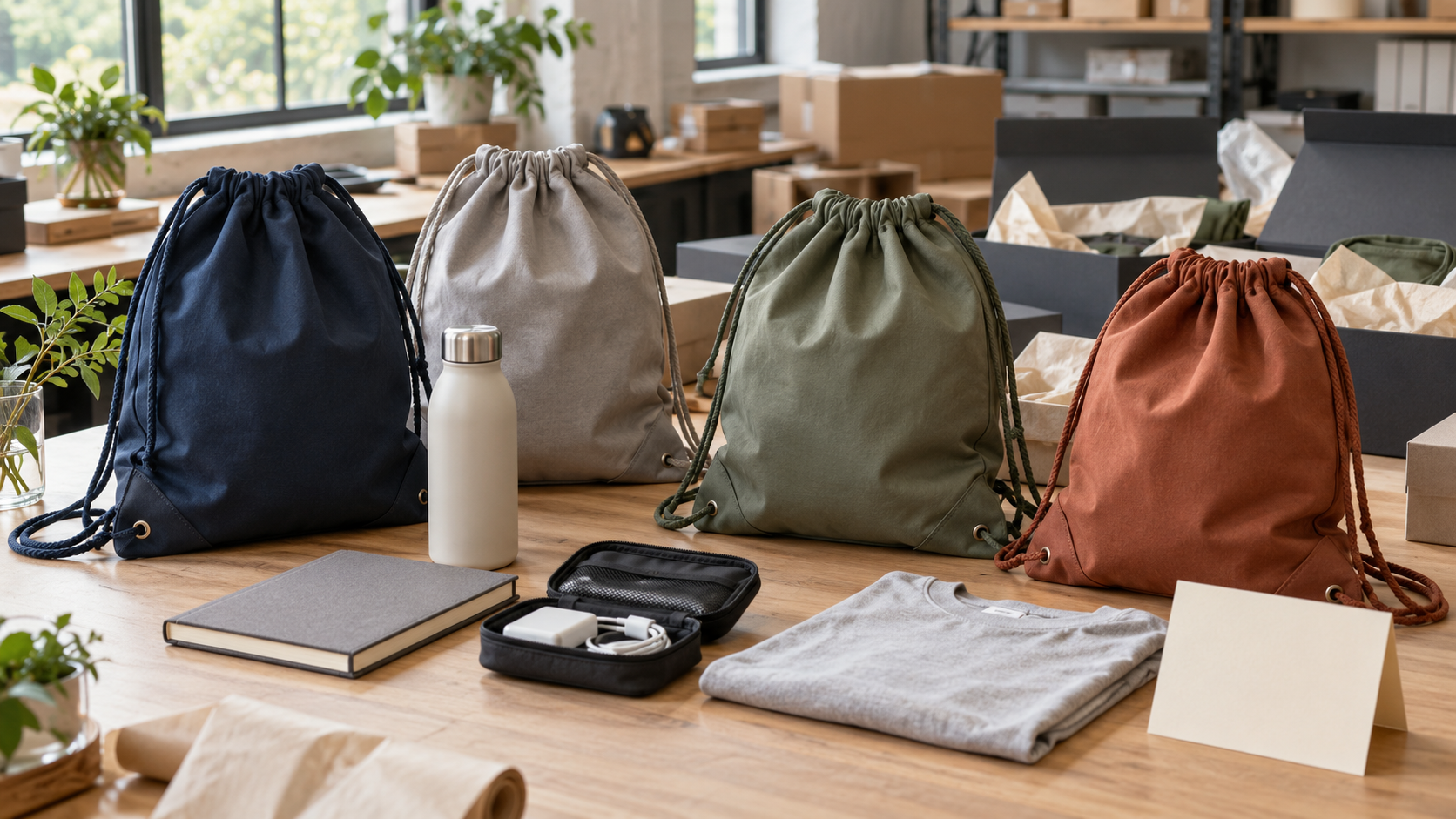
For subscription or e-commerce programs, validate the pouch inside the actual parcel. For corporate kits and multi-item programs, the drawstring bags for corporate gift kits guide provides related assembly planning.
Plan multi-SKU control and reorders
Beauty campaigns often reuse the same visual identity across different product sets. Create a controlled size and artwork architecture instead of treating every order as a new pouch.
Record product-set membership, finished dimensions, material code, shade reference, cord, decoration revision, pack quantity and destination. A small woven size label or removable internal code can help fulfillment teams distinguish similar pouches, provided it does not interfere with presentation.
On reorders, do not rely on “same as before.” Reference the approved sample and master specification, then confirm any material, color, artwork or pack-out change in writing before bulk production.
Make environmental claims carefully
A drawstring pouch is not automatically sustainable because it looks reusable or uses a natural-color fabric. Any claim about recycled content, organic material, biodegradability, compostability, recyclability or reduced impact needs defined product scope and evidence.
For US-facing communications, the FTC Green Guides summary explains why broad, unqualified environmental claims can be difficult to substantiate. Other markets may impose different requirements. The brand should review current market rules and order-specific documentation before publishing a claim.
If certification is required, verify the certificate holder, standard, product/material scope, validity period and transaction or order evidence where applicable. Do not treat a platform badge or historical document as a current company-wide certification.
Why beauty brands choose LUCKYSTAR
LUCKYSTAR can help convert a campaign concept into an order-level drawstring packaging specification. The useful work is coordination across the product set, pouch dimensions, materials, closure, artwork, sample, testing, inspection and pack-out.
For beauty programs, this can include:
- separating discovery sets, GWP campaigns, PR kits and retail gift sets by function;
- developing size families around the real bottle, jar, tube or accessory mix;
- matching material and decoration to presentation, contact and handling risks;
- coordinating production-intent samples and filled-pack approval;
- documenting artwork, shade, components, inspection and pack-out for reorders;
- supporting multi-SKU briefs within one consistent brand system.
These are project-level capabilities, not blanket performance or certification claims. MOQ, samples, test scope, price, timing and availability are subject to the final specification and written confirmation.
For supplier due diligence, start with the custom bag manufacturer guide. Then apply the category-specific questions in how to choose a custom drawstring bag manufacturer. The drawstring bag manufacturing process explains how approved inputs move toward bulk production.
RFQ checklist for beauty-brand drawstring packaging
| RFQ field | Information to provide |
|---|---|
| Program | GWP, PR, discovery set, retail kit, event or e-commerce use |
| Product set | SKU list, closed-container dimensions, total weight and photos |
| Pouch dimensions | Target finished size and tolerance, or request fit development |
| Material | Construction, hand feel, color, weight target and required evidence |
| Closure | Cord type, size, color, configuration and end treatment |
| Decoration | Method, artwork file, colors, size, placement and revision |
| Inserts | Divider, card, sleeve, label or other internal components |
| Testing | Methods, conditions, quantities and acceptance criteria |
| Inspection | Defect definitions, sampling plan and release responsibility |
| Pack-out | Set composition, folding, inner pack, carton and destination |
| Quantity | Units by size, artwork and shipment lot |
| Timing | Sample deadline, approval window and requested shipment date |
This RFQ format produces more comparable quotations than asking only for “a branded beauty pouch.” If the specification is incomplete, request an assumptions list so price and timing are not compared on different scopes.
Frequently asked questions
Are drawstring bags suitable for skincare gift sets?
Yes, when closed products fit without damaging pumps, caps or cartons and the pouch works within the complete pack. Use inserts or sleeves where movement, leakage or surface contact creates risk.
What size should a beauty drawstring pouch be?
Base size on the maximum three-dimensional envelope of the complete packed set, not product volume alone. Include closure clearance, inserts and outer-box constraints, then approve a filled sample.
Which material looks most premium?
Premium appearance depends on the brand and product. Velvet-type and microfiber-type fabrics can give a soft presentation; cotton and canvas can communicate a natural or lifestyle direction; polyester can support consistent color and detailed decoration. Test hand feel, lint, shade and print on the actual construction.
Can the pouch touch cosmetic products?
It can hold closed primary containers after the brand evaluates contact and cleanliness risks. Do not place exposed formula in a general fabric pouch or infer chemical compatibility from appearance. The product owner should define required evidence.
Should a PR mailer use a pouch or a zipper cosmetic bag?
Choose a pouch for flexible grouping, lower bulk and drawstring presentation. Choose a zipper cosmetic bag when the recipient needs longer-term organization, structure or compartments. Validate either format inside the final mailer.
How should logo size be approved?
Approve dimensions and placement on a filled production-intent sample. The gathered top, side seams and product volume can change how a centered flat logo appears.
What should be tested before shipment?
At minimum, confirm dimensions, workmanship, closure, filled fit, shade, decoration, cleanliness, pack assortment and any order-specific load, transfer, abrasion or handling tests. Define acceptance criteria before production.
Can a beauty pouch be called eco-friendly?
Avoid an unqualified claim. State the specific material or feature only when current evidence supports the exact product and market. Reusability, recycled content and certification are separate claims.
Can LUCKYSTAR coordinate several pouch sizes for one campaign?
LUCKYSTAR can review a multi-SKU brief and coordinate size families, materials, artwork, samples, inspection and pack-out. Feasibility and commercial terms depend on the final specification and written confirmation.
Request a specification-based quotation
Send product dimensions, photos, total filled weight, quantity by size and artwork, material preference, target market, testing needs, pack-out and schedule. LUCKYSTAR can then identify assumptions, sampling steps and quotation inputs for your beauty-brand drawstring packaging program.

Contact LUCKYSTAR for a drawstring packaging quotation. LUCKYSTAR will confirm recommendations, price, MOQ, testing and timing against the final approved order brief.