Last reviewed: September 28, 2026
A custom bag becomes a useful branding tool when the brand is built into the product, not simply printed on the largest available panel. Shape, material, color, carry experience, decoration, labels, hardware, and packaging all influence what a customer remembers. The practical task is to translate those brand decisions into specifications a factory can sample, measure, approve, and repeat.
This guide focuses on brand-system decisions for custom bags. It does not repeat the full topics of supplier selection, price, MOQ, or manufacturing workflow. For that broader sourcing route, start with the Custom Bag Manufacturer Guide. Buyers who are ready to compare factory capabilities can use the separate manufacturer evaluation checklist.
What does personalization mean for a bulk custom bag?
In factory production, personalization can describe several different levels of change. It may mean adding artwork to an established bag, selecting custom colors and trims, adapting a proven construction, or developing an original OEM style. Individual names or one-to-one variable graphics are a different workflow and may require a specialist finishing step after the main production run.
Clarify the level before requesting a quote. The OEM vs ODM bag manufacturing guide explains how design ownership and development responsibility change between routes. This prevents a buyer from asking for a stock-bag price while expecting fully custom construction.
| Personalization level | What changes | Best fit | Evidence to approve |
|---|---|---|---|
| Decoration only | Logo, campaign artwork, or label on an established format | Events, uniforms, short campaigns, and straightforward promotions | Artwork proof, strike-off, and finished decorated sample |
| Configured product | Color, material option, handles, zipper, pockets, trims, and packing within a proven platform | Retail programs needing differentiation with controlled development | Material set, component board, and pre-production sample |
| Adapted construction | Dimensions, pocket layout, strap system, reinforcement, lining, and closures | Programs with a specific use case but no need to start from zero | Revised drawing, measured prototype, and function review |
| Original OEM design | Complete bag architecture, materials, branding system, labels, and packaging | Private-label collections and distinctive long-term products | Controlled tech pack, approved sample, and sealed production reference |
Start with the brand job, not the logo size
Write a one-sentence job for the bag: who receives it, what they carry, where they use it, how long it should remain useful, and what impression it should create. A conference giveaway, premium employee kit, retail tote, beauty gift, travel organizer, and membership welcome pack require different products even when they use the same logo.
For a campaign tote, the promotional tote design guide goes deeper into audience, message hierarchy, and distribution. If the project is a retail canvas bag, use the canvas shopping bag buyer guide for fabric weight, handles, and construction.
Build a three-level brand cue hierarchy
A bag can carry many brand elements, but they should not all compete at the same volume. Establish a hierarchy before choosing decoration. This gives designers and factories a shared reason for every visible detail.
- Primary recognition cue: the element noticed first, such as the silhouette, color block, hero artwork, handle treatment, or exterior mark.
- Secondary ownership cues: details that confirm the brand at closer range, including a woven label, zipper pull, side tab, lining print, or signature stitch color.
- Private experience cues: elements discovered during use, such as an interior message, pocket organization, care label, dust bag, or thoughtful packing sequence.
The goal is not maximum logo coverage. It is consistent recognition across distance, touch, and repeated use. A subtle exterior can still feel strongly branded when material, hardware, and inside details reinforce one design language.
Match the bag format to the visibility moment
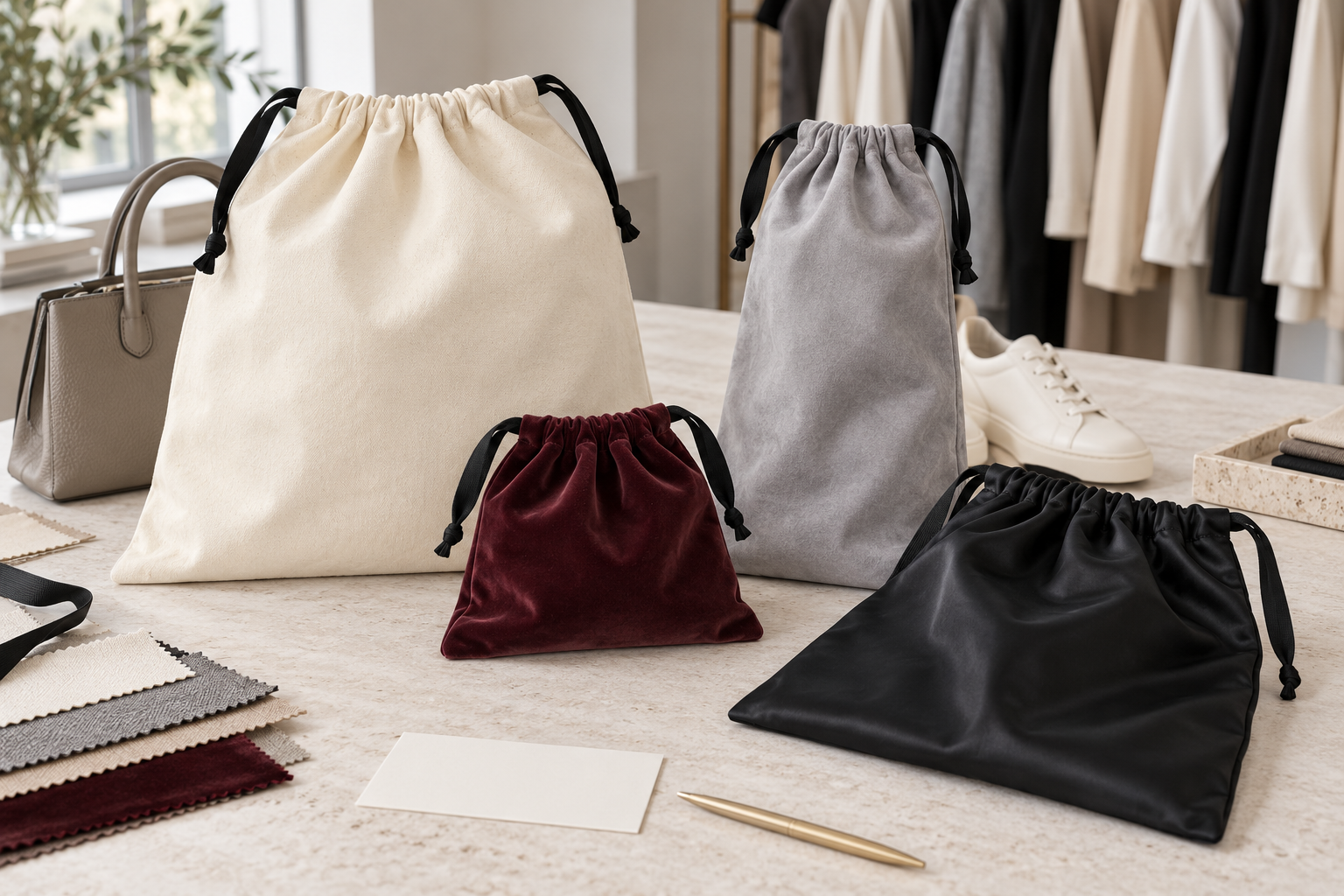
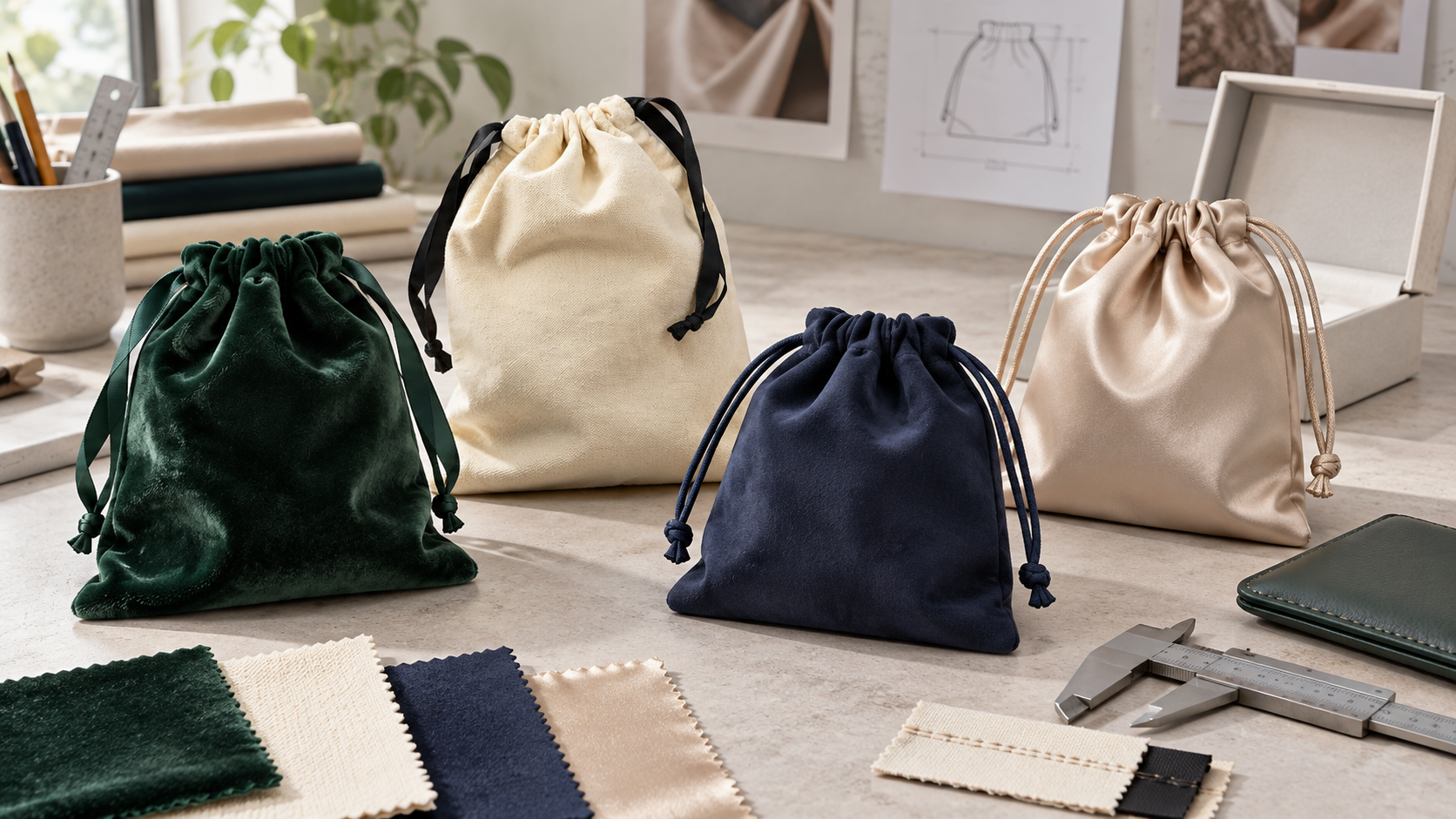
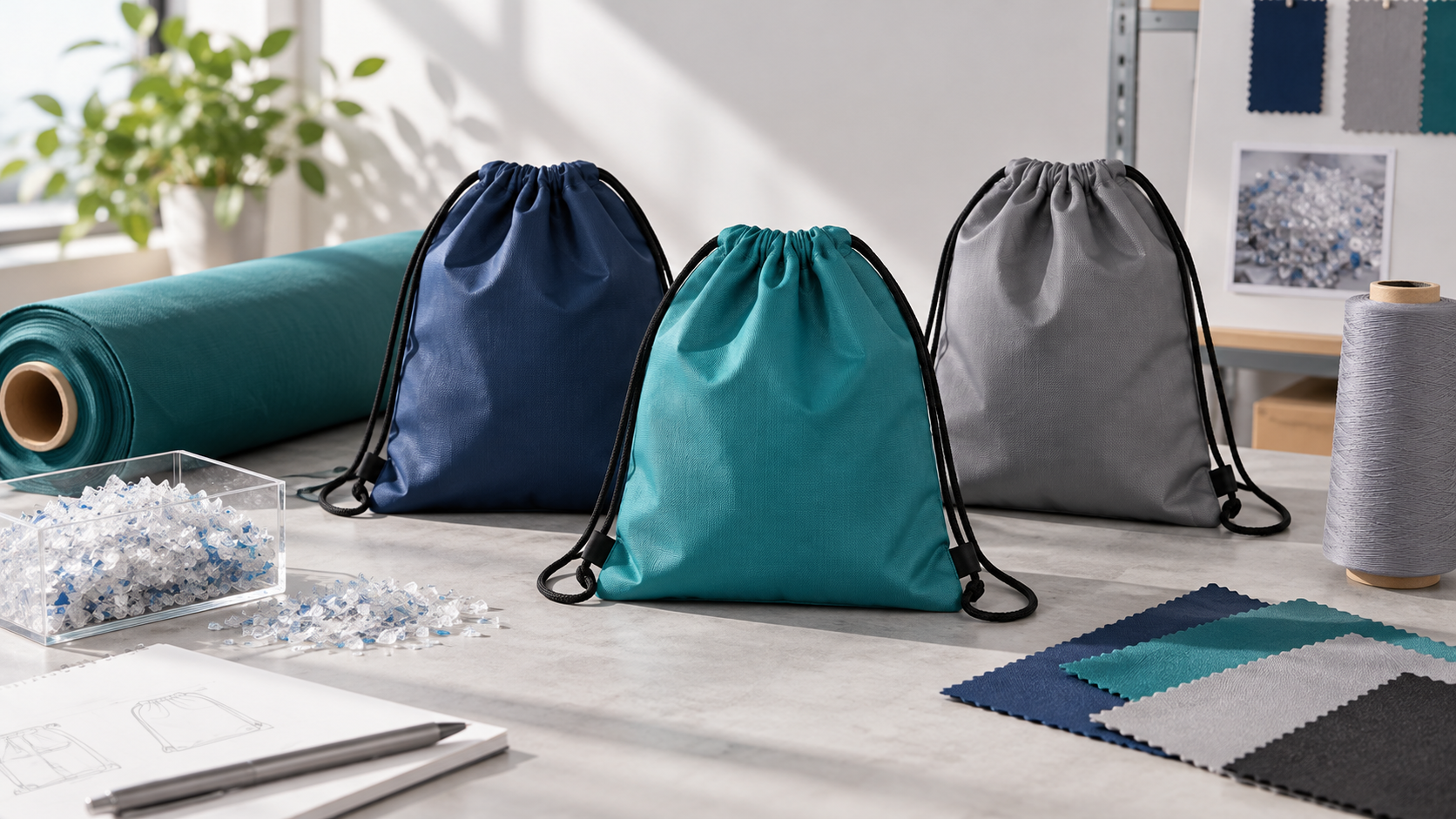
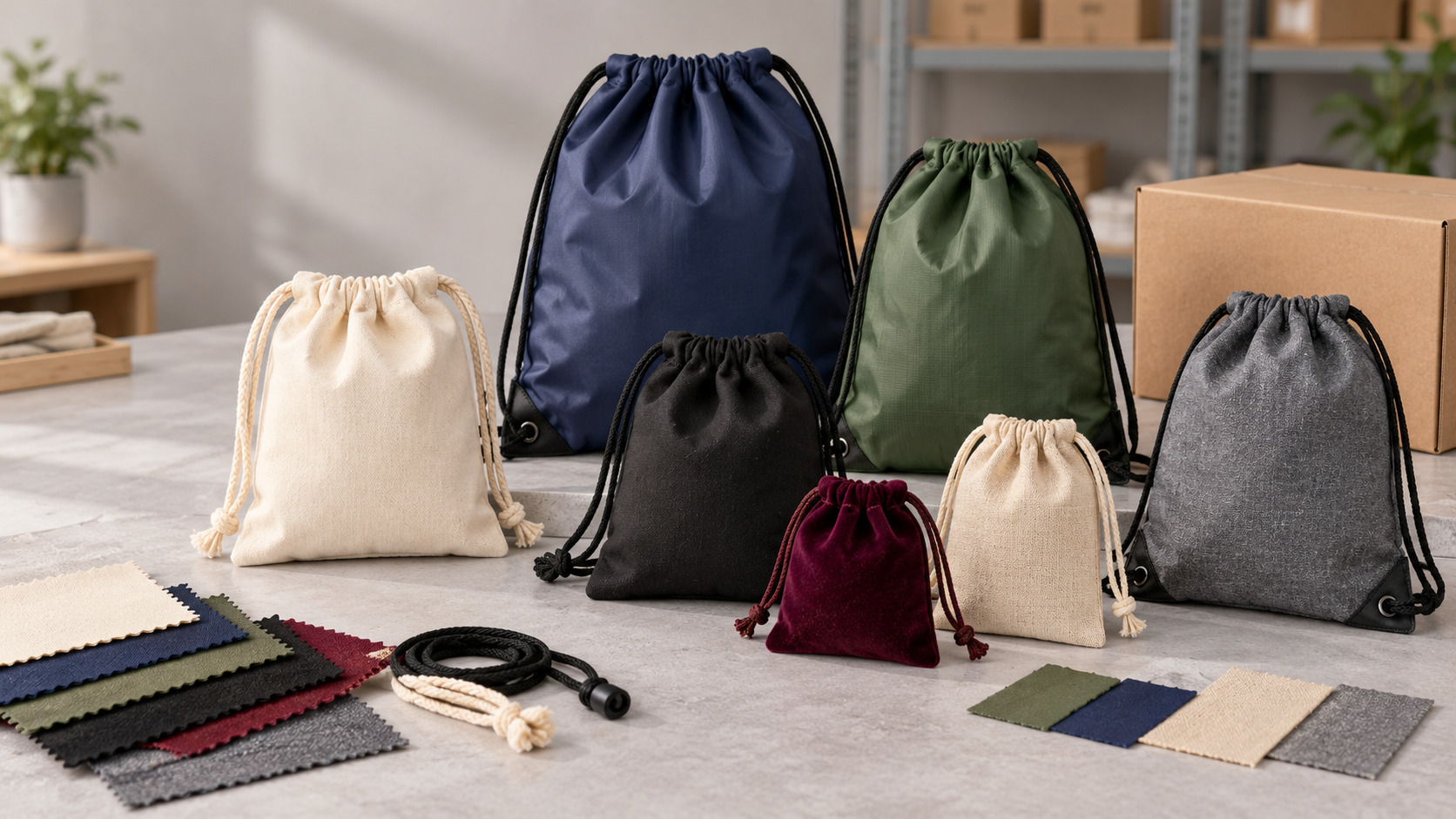
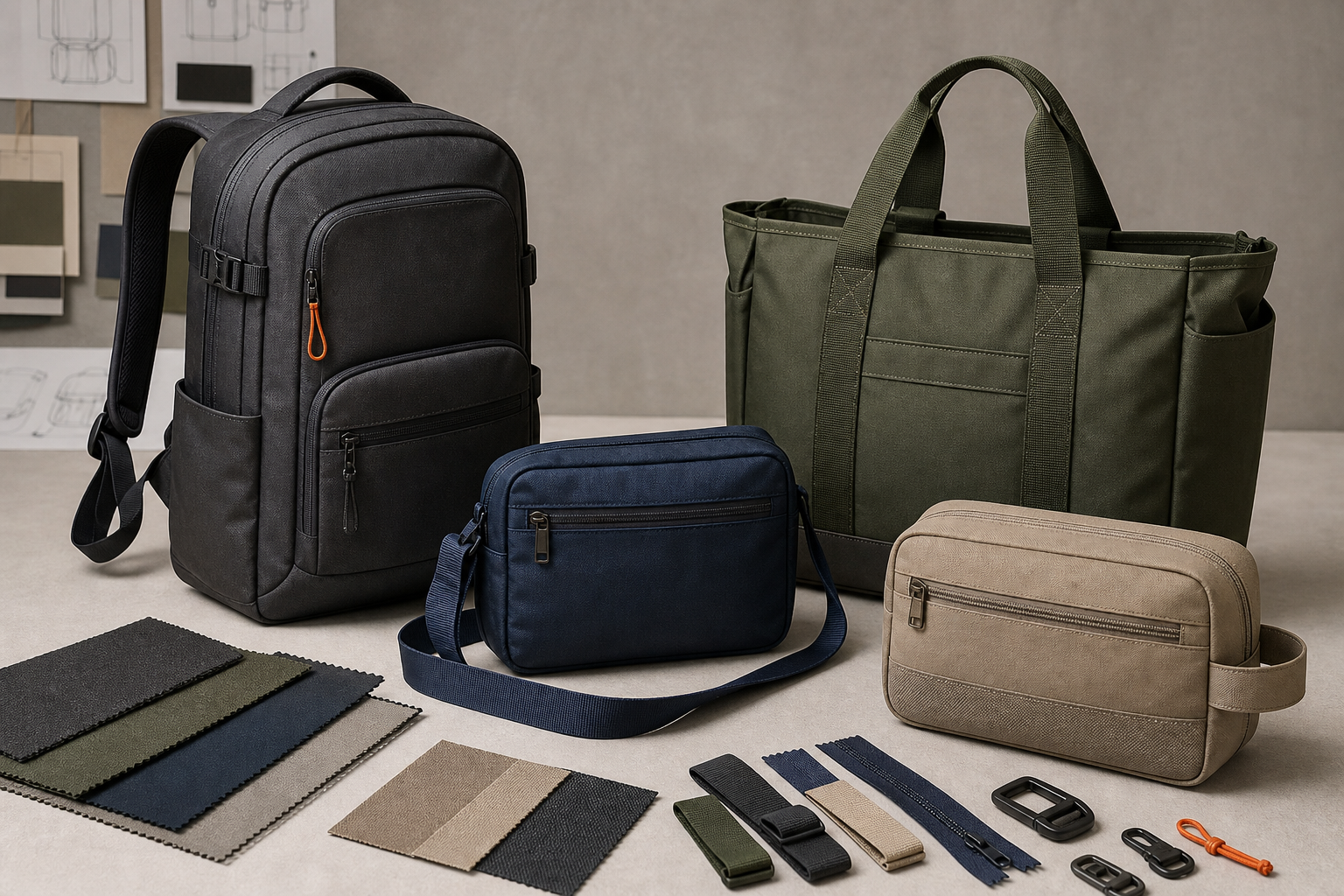
Different formats create different viewing angles, carrying durations, and print areas. Compare suitable starting platforms in custom tote bags, custom shopping bags, custom drawstring bags, custom pouch bags, and custom cosmetic bags. These are starting points, not a substitute for a project specification.
| Bag format | Typical visibility moment | Useful primary cue | Common mistake |
|---|---|---|---|
| Tote or shopping bag | Carried at the side in retail, commuting, and events | Proportion, handle color, graphic panel, or bold but controlled print | Designing artwork without accounting for seams, folds, and carrying distortion |
| Backpack | Seen in motion and from behind over repeated daily use | Distinctive panel geometry, zipper detail, patch, or restrained embroidery | Prioritizing the logo while ignoring comfort and load balance |
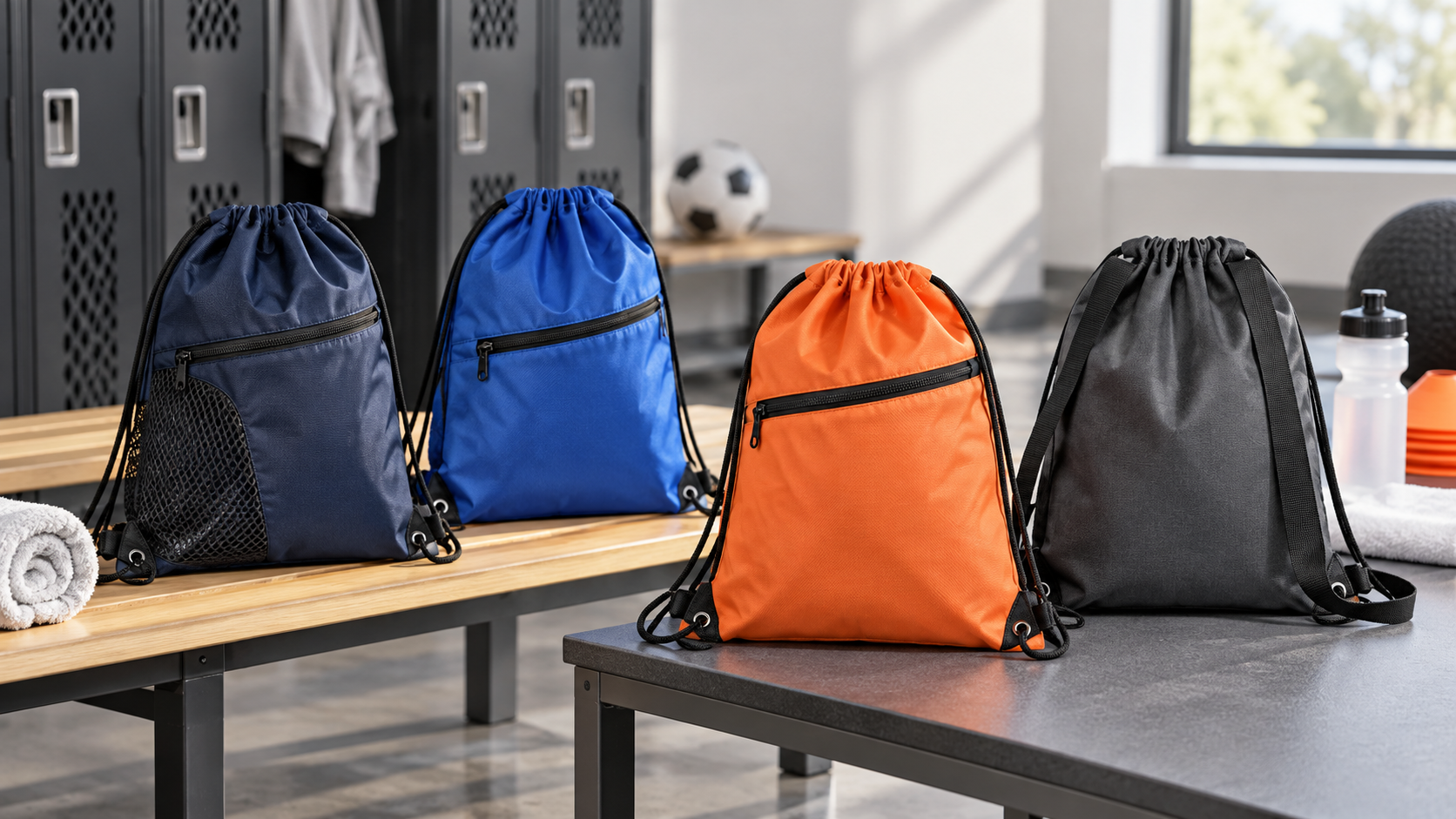
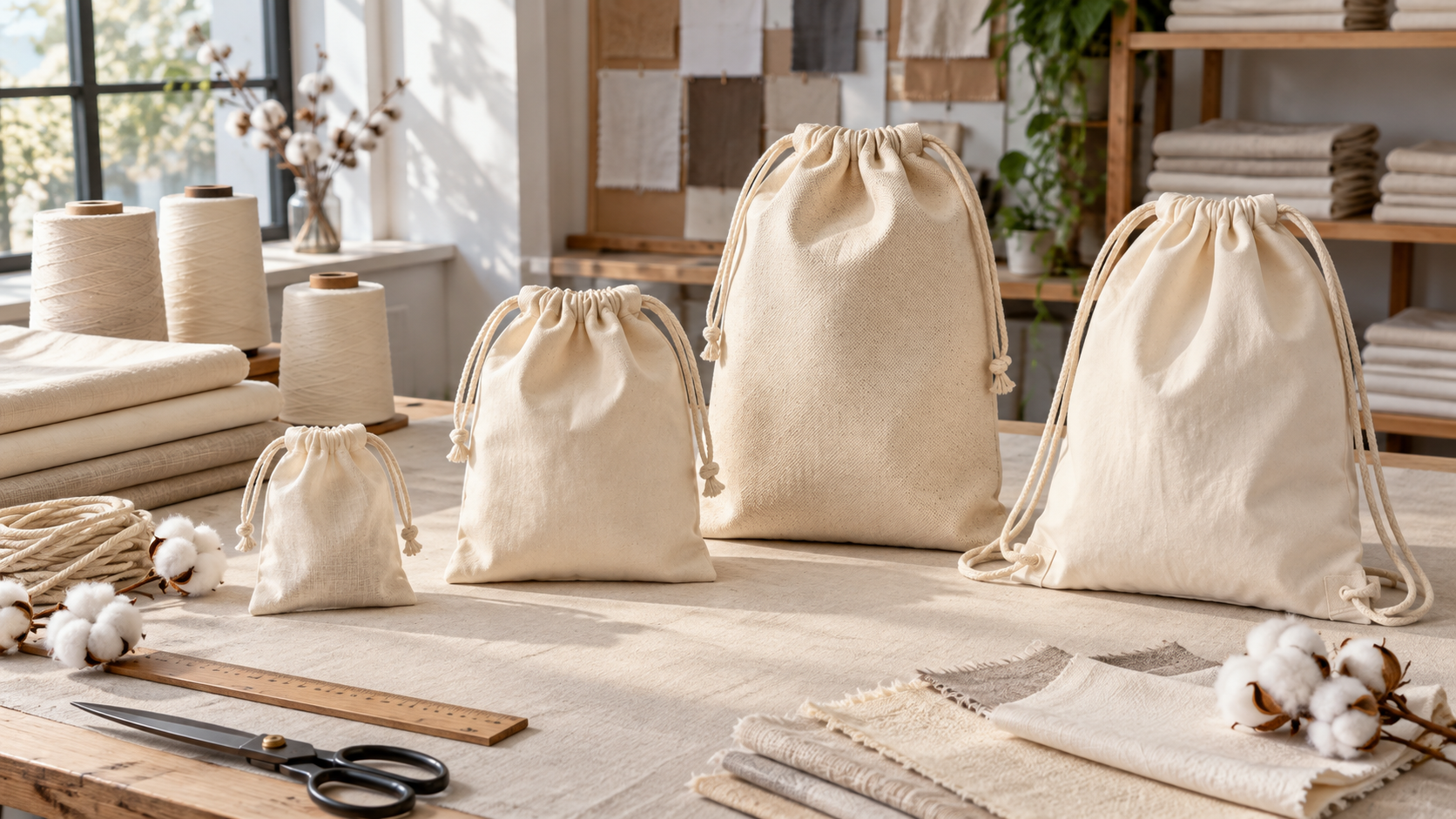
| Drawstring bag | Sports, school, events, and lightweight packing | Color field, cord contrast, centered graphic, or simple repeated motif | Placing artwork where gathers or the cord channel will distort it |
| Pouch or cosmetic bag | Viewed closely during opening, organizing, gifting, and travel | Tactile material, zipper pull, woven label, debossing, or small precise mark | Using artwork that is too detailed for a small surface or textured material |
| Cooler or utility bag | Outdoor, food, team, travel, and practical work settings | Color blocking, durable patch, webbing detail, or high-contrast label | Choosing decoration before checking coating, insulation, and seam locations |
Choose material and decoration as one system
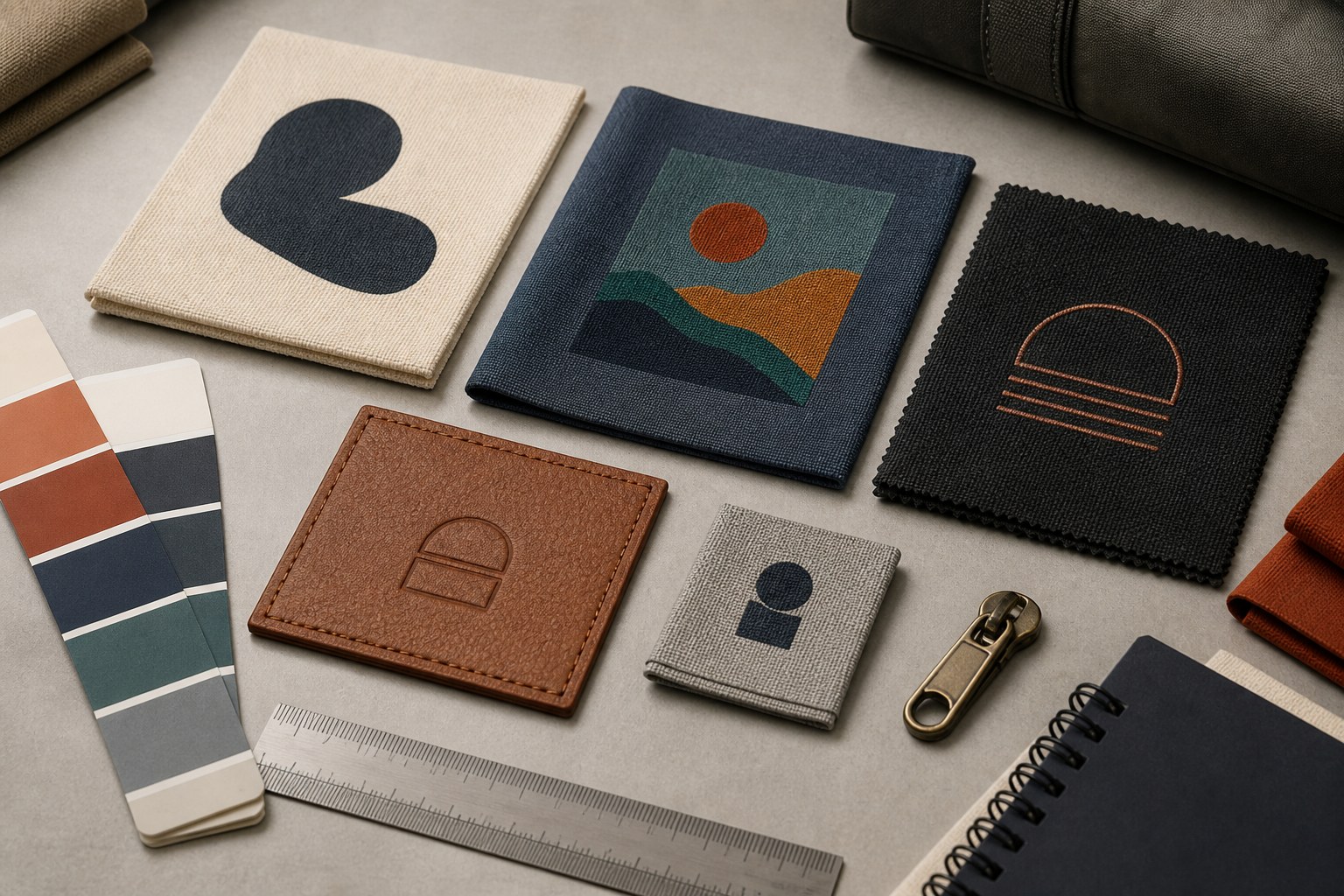
Current page-one guides consistently emphasize that decoration must suit the substrate. Canvas texture can soften fine print detail. Embroidery adds thread and backing, which can affect lightweight panels. Sublimation is normally a polyester and color-dependent process. Debossing relies on surface behavior and pressure. A factory should review the artwork, material, color, product construction, quantity, and intended appearance together.
| Branding method | Best starting point | Strength | Sample risk to check |
|---|---|---|---|
| Screen print | Bold spot-color artwork on suitable flat woven panels | Clear color and efficient repeatability for appropriate quantities | Ink coverage, edge definition, shade, registration, and adhesion |
| Heat transfer or DTF | Detailed or multi-color graphics on compatible surfaces | Color flexibility and fine artwork | Hand feel, edge lifting, heat marks, stretch, and wash or abrasion behavior |
| Sublimation | Suitable light-colored polyester and all-over graphics | Integrated color with no raised surface | Color shift, seam alignment, white gaps, and substrate limits |
| Embroidery | Structured fabrics and tactile premium marks | Texture, durability, and strong close-range perception | Small-detail loss, puckering, stiffness, backing, and thread shade |
| Woven or printed label | Seams, side tabs, interiors, and collection-wide identity | Consistent ownership cue across different bag materials | Legibility, edge finish, fold, placement, and stitch quality |
| Patch or badge | Sport, outdoor, streetwear, travel, and utility styles | Distinct shape, texture, and strong recognition | Edge attachment, thickness, cracking, finish, and corner lifting |
| Debossing or custom hardware | PU, leather-like surfaces, pullers, plates, and premium details | Quiet, tactile identity without a large graphic | Depth, edge clarity, plating, scratch resistance, and attachment |
For a method-level comparison, use the custom tote bag printing methods guide. Buyers choosing between two common routes can compare screen printing vs heat transfer.
Place artwork on the finished three-dimensional bag
Do not approve a logo only on a flat artboard. Mark its size and position from named construction points on the finished bag. Check seam allowance, pocket openings, zipper curves, gussets, folds, handle attachments, and the way the panel changes when the bag is loaded. Define orientation for both empty and carried states.
Use actual-size vector artwork, identify spot colors or approved color references, convert or include fonts, and show every colorway. If the bag will have front, back, side, lining, label, and packaging artwork, assign each file a clear name and revision. The custom bag tech pack guide provides the full document-control structure.
Control color on the actual material
A color reference is a target, not proof that every substrate will look identical. Base fabric color, weave, coating, ink opacity, thread sheen, pile direction, lighting, and hardware finish can shift perception. State where an exact match is critical and where a reasonable material-appropriate match is acceptable.
- Approve body material, webbing, zipper tape, thread, print, labels, and hardware as one color set.
- Review the branding on production-intent material, not only on paper or a screen.
- Record the approved supplier codes, color references, date, and intended product location.
- Check every planned colorway; a method that works on natural canvas may behave differently on black coated fabric.
Design for repeat use, not a one-day impression
Repeated visibility depends on usefulness. Specify the load, dimensions, strap drop, closure, pockets, lining, reinforcement, and cleaning expectations before adding decorative complexity. A recipient is more likely to carry a bag that protects its contents, feels comfortable, and suits the situation.
Category-specific guidance is available for custom drawstring bags, custom cooler bags, and custom dust bags for luxury products. These pages address construction and sourcing details that should not be duplicated in a general branding guide.
Approve samples in the right sequence
A digital mockup checks direction, not production quality. The sample process should separately close structure, material, color, decoration, labels, and packing. If the first prototype uses substitute material or hardware, record the difference and identify what must change before approval.
- Concept review: confirm audience, bag job, format, message hierarchy, and customization level.
- Material and component review: approve the body fabric, lining, webbing, zipper, hardware, color, and decoration compatibility.
- Prototype review: load the bag, carry it, measure it, and inspect the artwork on the finished construction.
- Pre-production approval: lock all materials, measurements, artwork, labels, workmanship, and packing.
- First-output check: compare early bulk units with the approved sample before the entire order is completed.
Use the sample development process for stage definitions and the custom bag quality checklist for bulk release criteria.
Keep a collection coherent without making every bag identical
A tote, pouch, drawstring bag, and backpack can share a design language without using the same decoration at the same size. Create a small brand-application standard that defines primary and secondary colors, preferred logo versions, minimum reproduction size, exclusion space, label format, hardware finish, tone of packaging, and which cues may change by product.
Keep one or two collection constants, then allow product-specific solutions. For example, the collection may share a woven side label and hardware finish while using screen print on canvas, embroidery on a backpack, and debossing on a PU pouch. This protects recognition and material compatibility at the same time.
Understand how brand decisions affect MOQ, price, and time
Additional colors, custom-dyed material, unique metal molds, complex embroidery, multiple artworks, and small quantity splits can add setup work or minimum commitments. This does not mean the brand should remove every distinctive feature. It means the RFQ must show which features carry the most value so alternatives can be evaluated deliberately.
Use the dedicated guides for custom bag MOQ, custom bag pricing, and production lead time. The design-to-delivery manufacturing process shows where each approval enters production.
Send an RFQ that protects the brand result
A useful request for quotation includes the bag type, use case, dimensions, material and weight or denier where relevant, lining, pockets, closures, handles, hardware, artwork files, decoration method or desired result, placement measurements, colors, labels, packing, quantity by color and artwork, destination, target date, testing needs, and reference images with notes.
Separate fixed requirements from open decisions. A factory can recommend a compatible method when it understands the visual goal, but it should not guess whether a different color, smaller mark, lighter fabric, or standard zipper is acceptable.
Common custom bag branding mistakes
- Choosing the decoration before confirming the bag material and panel construction.
- Using a logo file that looks clean on screen but is too detailed for the final method or size.
- Approving color on a monitor without reviewing a physical material or decoration reference.
- Placing artwork without accounting for seams, pockets, gussets, folds, or carrying distortion.
- Adding many identity elements with no hierarchy, making the result look promotional rather than intentional.
- Calling a bag sustainable, waterproof, premium, or durable without defining evidence for the claim.
- Approving a prototype while assuming unrecorded corrections will automatically appear in bulk.
FAQ about custom bags for personalization and branding
Which bag branding method is best?
There is no universal best method. The answer depends on the material, surface, artwork detail, color count, quantity, desired hand feel, use conditions, and budget. Approve the method on the intended production material.
How large should a logo be on a custom bag?
Start with viewing distance, bag proportions, and the role of the mark. Confirm the size in millimeters on the finished bag, not as a percentage on a digital mockup. Check how the artwork looks when the bag is loaded and carried.
Can every bag in a collection use the same decoration?
Not always. A consistent label, color, or hardware finish may travel across categories more reliably than one decoration method. Choose the process that suits each substrate while preserving shared brand cues.
Can bulk orders include individual names?
Sometimes, but variable names require a different production and data-control workflow from repeating one logo. Ask whether personalization happens during main production or through a separate finishing partner, and confirm file format, sequence, proofing, packing, privacy, and error handling.
What should be approved before bulk production?
Approve the current specification, material and component references, dimensions and tolerances, construction, artwork, placement, decoration result, colors, labels, packing, and any documented corrections to the final sample.
Turn brand identity into a repeatable bag specification
Browse the current OEM/ODM product range to shortlist formats before the brand-cue hierarchy and decoration route are approved. Ningbo Luckystar Commodities Co., Ltd. supports buyers developing custom tote bags, shopping bags, drawstring bags, pouches, cosmetic bags, and related merchandise. Explore the Luckystar product range and review company capabilities. For the complete sourcing cluster, return to the core custom bag manufacturer guide.
Prepare a branding brief for review
Send the intended audience and use, bag format, dimensions, material direction, artwork, desired branding result, colors, quantity by variant, packing, destination, and target date. Mark the fixed brand cues and the decisions where you want production recommendations.
Email a prefilled custom bag branding brief

Ningbo Luckystar Commodities Co., Ltd.
Tel / WeChat / WhatsApp: +86 15957446693
Email: sales@luckystarcreation.com
Address: Room 2202, Meijin Building, No. 125 Mingyuan Lane, Ningbo, Zhejiang, China 315104