Intent boundary: This page covers private-label cosmetic bag programs for beauty brands. It is not the broad China supplier hub. For the complete sourcing workflow, use the China Cosmetic Bag Manufacturers Guide.
A private label cosmetic bag should look as if it was designed inside the beauty brand, not bought from a catalog and decorated at the last minute. The supplier must translate the brand into silhouette, hand feel, color, lining, zipper, labels and retail presentation while protecting the details that make the range recognizable. That requires a different shortlist from one based only on sewing capacity.
This guide screens ten Private Label Cosmetic Bag Manufacturers for beauty brands. It separates supplier profiles by a specific commercial route: rapid adaptation of a proven pouch, material-led positioning, premium PU collections, packaging-coordinated launches, pilot production or fully custom retail accessories. Start with LUCKYSTAR's custom cosmetic bag collection for product directions. For a broader supplier comparison, see the Top 10 Custom Cosmetic Bag Manufacturers Worldwide in 2026.
Planning a private-label beauty program? Send one collection brief. Include the private-label level, target contents, SKU/color plan, brand assets, ownership needs, materials, packaging, evidence, destination and launch date.
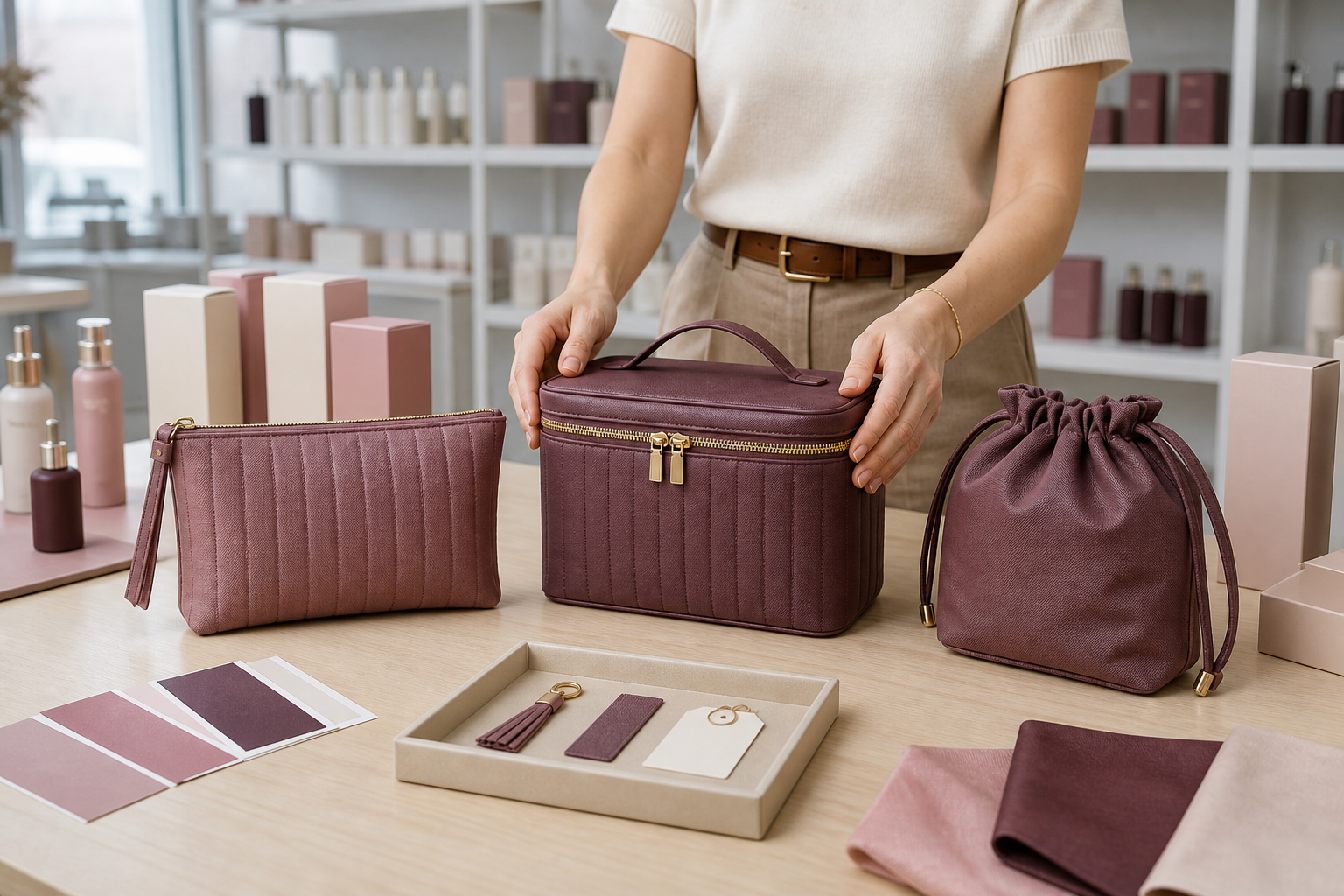
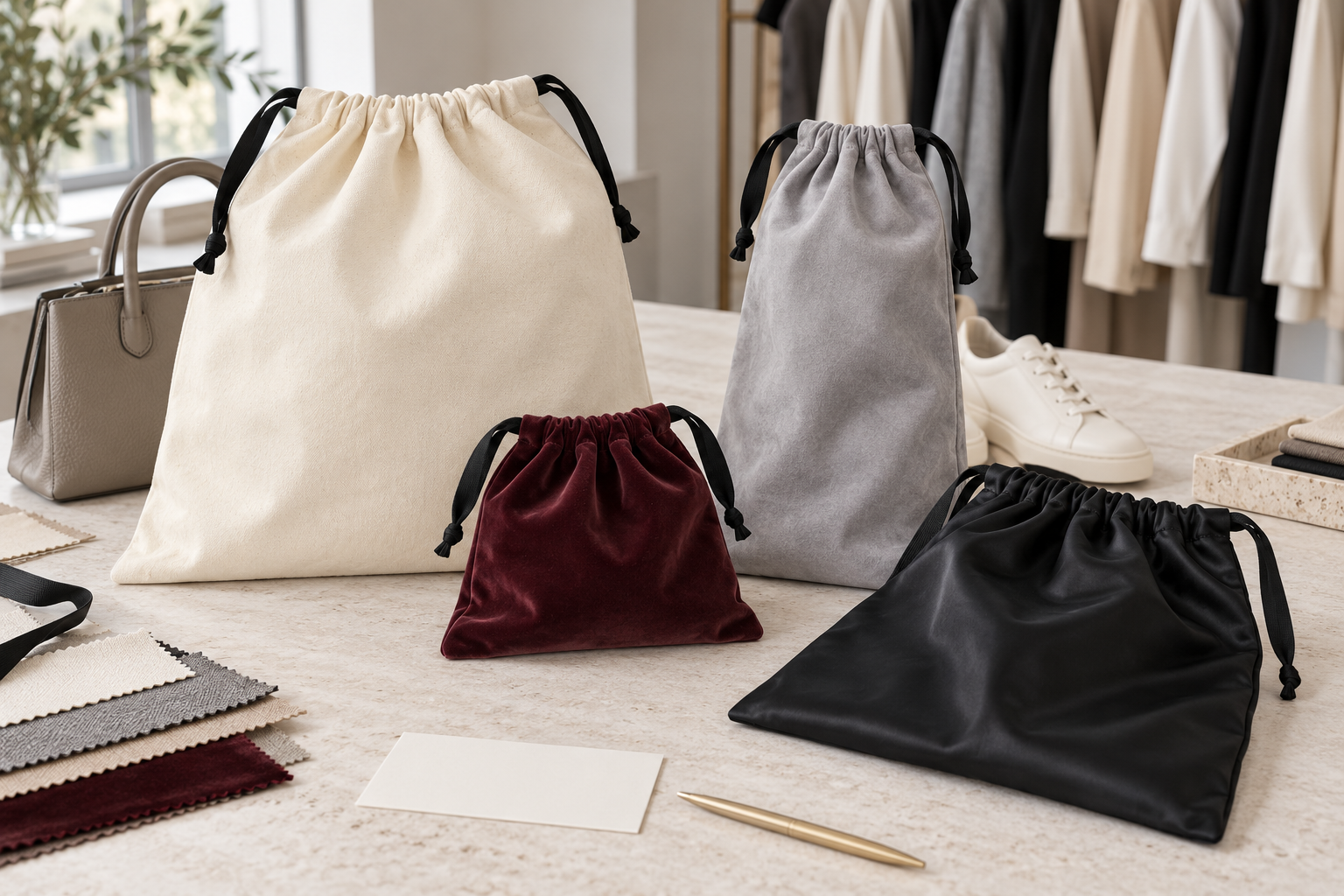
A credible private label collection coordinates several structures through repeatable color, hardware, lining, labels and packaging.
Quick answer: ten private label partners to compare
No supplier profile fits every beauty program. A startup adapting one proven pouch needs a different service from a prestige skincare brand developing proprietary hardware, or a subscription business replenishing a color-changing monthly accessory. The useful question is which supplier model fits the collection you are actually funding.
| Manufacturer | Private label strength | Potential beauty-program fit | Verify first |
|---|---|---|---|
| 1. LUCKYSTAR | Balanced collection development and export coordination | Retail, skincare, GWP and multi-item launches | Customization level, MOQ by SKU, sample gates and production site |
| 2. Rivta | Material-led beauty pouches and alternative-material options | Sustainability-positioned skincare, fragrance and hospitality | Claim evidence, composition, certificate scope and durability |
| 3. Uinta Design | US-led design, 3D mockups and managed global production | Brands needing guided concept-to-shelf support | Legal seller, assigned factory, design fees and ownership |
| 4. NOVOTE | Premium PU/leather aesthetics and stated low-MOQ route | Emerging prestige, influencer and fashion-beauty labels | MOQ by design, PU grade, hardware finish and aging test |
| 5. NEWSTEP | Cosmetic pouches coordinated with luxury packaging | Skincare gift sets and retail launches needing one visual system | Bag production route, pack-out responsibility and color control |
| 6. Jin Sheu | Premium from-scratch pouch development | Refined travel, skincare and beauty accessory lines | Construction sample, premium-material specification and QC criteria |
| 7. Lion Paper Products | Retail packaging, broad customization and compliance support | Retailers and beauty programs with structured documentation | Current audit scope, test plan and factory responsibility |
| 8. Ciffnoo | Print-led collections and design visualization | Seasonal artwork, subscription and promotional beauty drops | Artwork rights, strike-off, repeat placement and color tolerance |
| 9. Bags2Crown | India-based pilot flexibility and regional pouch production | Local-market pilots, hospitality pouches and short regional runs | MOQ confirmation, material lot, export packing and capacity |
| 10. Nezni | Turkey-based canvas/fabric formats and international support | European beauty, gifting and natural-textile programs | Exact material, production site, sampling and delivery terms |
Define the private label level before comparing quotations
“Private label” can mean adding a logo to a supplier's standard pouch or creating an exclusive retail accessory owned by the beauty brand. Both can be valid. They should not be quoted as if they involve the same engineering, risk or minimum quantity. The following ladder makes proposals comparable.
| Level | What changes | Commercial advantage | Watch-out |
|---|---|---|---|
| 1. Decorated stock body | Logo, standard color and simple packing | Fastest validation route and usually the lowest development burden | Little structural distinction; base body may be sold elsewhere |
| 2. Curated private label | Material/color, lining, logo, label, puller and carton | Recognizable brand expression without a new pattern | Component minimums can exceed bag MOQ |
| 3. Adapted platform | Base dimensions, pockets, opening, handle and trim are modified | Better user fit while retaining proven construction | Every structural change needs a controlled sample revision |
| 4. Exclusive custom body | New silhouette, pattern, tooling, component system and packaging | Strongest differentiation and clearer ownership potential | Highest development cost, schedule and MOQ exposure |
If you have already selected a supplier and need to build the actual accessory program, continue with our Private Label Cosmetic Bags for Skincare Brands implementation guide. This ranking stays focused on supplier fit and does not repeat that SKU-planning workflow.
How we evaluated private label cosmetic bag manufacturers
The ranking gives more weight to brand execution and repeatability than to the size of a catalog. Public proof of materials, structures, labels, packaging, mockups, sampling or quality control counted more than generic “one-stop” language. Because online information cannot prove bulk consistency, the score creates a shortlist—not final supplier approval.
| Evaluation area | Weight | What beauty buyers should test |
|---|---|---|
| Brand-asset execution | 20% | Pantone control, decoration, labels, pullers, lining and packaging alignment |
| Private label route clarity | 15% | What is standard, modified or exclusive and who owns each element |
| Beauty-channel fit | 15% | Retail, GWP, subscription, travel, hospitality or kit-assembly suitability |
| Sample/change control | 15% | Mockups, numbered comments, pre-production sample and approval record |
| Quality and reorder continuity | 15% | Golden sample, test plan, component records, tolerances and retained references |
| Retail readiness | 10% | Barcode placement, warning copy, packaging, assortment and carton discipline |
| Commercial fit | 5% | MOQ by SKU, setup charges, color splits, timeline and reorder economics |
| Public evidence quality | 5% | Specific, challengeable claims instead of superlatives |
Comparison boundary: every supplier description below summarizes public, supplier-controlled information. Capabilities, locations, factories, materials, sustainability or performance claims, certificates, audits, customer references, MOQs, capacity, prices and schedules must be verified for the exact legal entity, production site, document scope and order. LUCKYSTAR statements are publisher self-description and remain subject to the same order-specific verification.
1. LUCKYSTAR — listed for coordinated private-label beauty programs
LUCKYSTAR describes a coordinated route for beauty brands that want one team to connect the bag, identity details and the wider campaign. The project can begin with a proven pouch direction for speed or a more distinctive structure for retail. Color references, artwork, lining, labels, custom zipper details, individual packing, master cartons and inspection requirements are treated as one specification rather than separate purchases.
The Product Range is useful when the pouch belongs to a launch containing totes, travel accessories, apparel or promotional items. Shared references across categories reduce the chance that “the same rose” becomes several different production colors.
- Possible fit: skincare retail, GWP, beauty kits, subscription programs and coordinated multi-item campaigns.
- Public profile signal: balanced customization, project coordination and export support.
- Confirm: final platform level, SKU/color MOQ, assigned production route, sample stages and delivery critical path.
- Potential mismatch: a domestic micro-run of a few dozen stock pouches may fit a local decorator better.
2. Rivta — listed for a material-led private label story
Rivta publishes separate OEM, ODM and private-label entry routes plus a large selection of recycled, natural, transparent and alternative leather materials. This is useful when a beauty brand wants the pouch material to reinforce its positioning rather than merely carry a logo.
A material story is credible only when order evidence supports it. Ask which organization holds the certificate, whether the selected input and facility fall inside scope, what transaction record is available, and which coatings or mixed components sit outside the claim. Use the RPET cosmetic bag sourcing checklist before approving environmental artwork.
- Possible fit: skincare, fragrance, hospitality and travel-retail collections with a documented material direction.
- Public profile signal: visible material depth and clearly described development routes.
- Confirm: composition, claim boundary, certificate holder, performance and MOQ for the chosen material.
3. Uinta Design — listed for brand-led design with managed production
Uinta Design presents a US-led design route with 3D mockups, sampling, global production, custom labels, hangtags and packaging. It can suit a founder or brand team that has a strong aesthetic but lacks a production-ready bag specification. Mockups allow silhouette, opening and logo placement decisions before sewing the first sample.
The managed model adds convenience but also another contracting layer. Clarify the legal seller, factory country, production site, QC owner, design charges and ownership of mockups, patterns and tooling. Ask whether future reorders must remain inside the same managed network.
- Possible fit: design-conscious beauty startups and US teams seeking guided development.
- Public profile signal: visual concept work paired with managed delivery.
- Confirm: factory visibility, IP terms, fees, MOQ, test standard and escalation route.
4. NOVOTE — listed for premium PU and emerging prestige brands
NOVOTE markets private-label makeup bag development through leather, microfiber and PU constructions, with a stated low-MOQ direction for selected projects. Structured bodies, edge finishing and metal hardware can help a smaller prestige brand create a more fashion-oriented accessory than a simple printed fabric pouch.
Premium appearance depends on material aging as much as the day-one photograph. Specify substrate, surface coating, colorfastness, hydrolysis expectations, edge paint, puller plating and contact protection. Compare an aged component sample—not just a pristine sales sample—when the bag is expected to remain in retail inventory.
- Possible fit: prestige skincare, influencer launches and fashion-beauty crossover collections.
- Public profile signal: structured premium look and a published small-brand route.
- Confirm: MOQ per design/color, material grade, finish tolerance, tooling ownership and aging tests.
5. NEWSTEP — listed for aligning the pouch with luxury packaging
NEWSTEP presents cosmetic pouches for beauty brands alongside a wider luxury packaging business. Its published bag page includes multiple decoration routes and materials for retail, skincare, subscription and seasonal programs. That combination can be valuable when a gift set needs pouch, paper packaging and visual presentation to read as one family.
Do not assume one company directly performs every step. Map who develops and manufactures the sewn bag, who converts the carton, where final kit assembly occurs and which party owns the completed inspection. The custom cosmetic bag packaging guide helps define a realistic pack-out trial.
- Possible fit: prestige skincare gift sets, launch kits and coordinated retail packaging.
- Public profile signal: visual continuity between accessory and presentation packaging.
- Confirm: bag factory, packaging plant, kit-assembly point, color master and final QC responsibility.
6. Jin Sheu — listed for premium made-from-scratch cosmetic pouches
Jin Sheu describes fully custom cosmetic pouch development rather than only stock-catalog decoration. Its page emphasizes structure, premium materials, waterproof lining directions and zipper selection for emerging and established brands. This route fits buyers willing to fund the details that create a refined hand feel.
“Luxury” must become measurable. Define stitch density and alignment, seam allowance, reinforcement, zipper specification, metal finish, lining cleanliness, odor limit, acceptable wrinkles and cosmetic appearance under retail lighting. Ask for boundary samples where subjective workmanship could create disagreement.
- Possible fit: premium travel-beauty pouches, refined skincare accessories and custom retail collections.
- Public profile signal: from-scratch positioning and premium component emphasis.
- Confirm: factory scope, development cost, appearance standard, material test and pre-production approval.
7. Lion Paper Products — listed for retail documentation and packaging discipline
Lion Paper Products publishes cosmetic and toiletry bag customization covering material, structure, logo, zipper, hardware and retail packaging, together with compliance-support language. It may suit retailer-facing programs where paperwork, package presentation and buyer-specific testing matter alongside the pouch.
Audit and testing claims are time- and site-specific. Request the current report, facility name, scope and corrective-action status. Build an order test matrix rather than treating one certificate as universal proof. The bag, decoration, metal part and packaging can each create different requirements in the destination market.
- Possible fit: department-store, specialty retail and documented beauty programs.
- Public profile signal: broad identity customization with retail packaging awareness.
- Confirm: current audit, assigned factory, destination tests, pack-out standard and inspector access.
8. Ciffnoo — listed for print-led seasonal beauty collections
Ciffnoo presents custom cosmetic-bag manufacturing with design, visualization and printing capabilities. This can be relevant for artwork-heavy pouches where surface design—not only material color—creates seasonal distinction. A coordinated print can also support subscription boxes or promotional drops that change without rebuilding the entire structure.
Printing requires its own approval system. Record color space, Pantone references where applicable, repeat size, motif placement, seam interruption, panel orientation and acceptable registration drift. Obtain a production-method strike-off on the real fabric rather than approving a monitor image. The cosmetic bag color-matching guide explains the approval sequence.
- Possible fit: seasonal launches, artwork collections, subscription programs and branded fabrics.
- Public profile signal: print-led differentiation and visible design support.
- Confirm: artwork license, print method, strike-off standard, panel mapping and repeat-order color control.
9. Bags2Crown — listed for India-based pilot pouch programs
Bags2Crown describes Mumbai production of cosmetic bags, vanity cases and amenity pouches with printing, hardware and private-label options. It also publishes a flexible pilot-to-bulk direction. This may fit brands selling primarily in India, hospitality buyers or regional pouch programs that benefit from local communication.
A flexible minimum is not automatically available for every material, color or custom component. Ask for the minimum at each level: finished SKU, fabric dye lot, printed panel, custom puller, label and carton. Confirm how a pilot reference is retained when the order moves to a larger production line.
- Possible fit: India-market beauty pilots, hospitality amenities and promotional pouch programs.
- Public profile signal: regional production and a stated flexible starting route.
- Confirm: itemized minimums, exact line, material reservation, export carton and scale-up transfer.
10. Nezni — listed for Turkey-based fabric and canvas programs
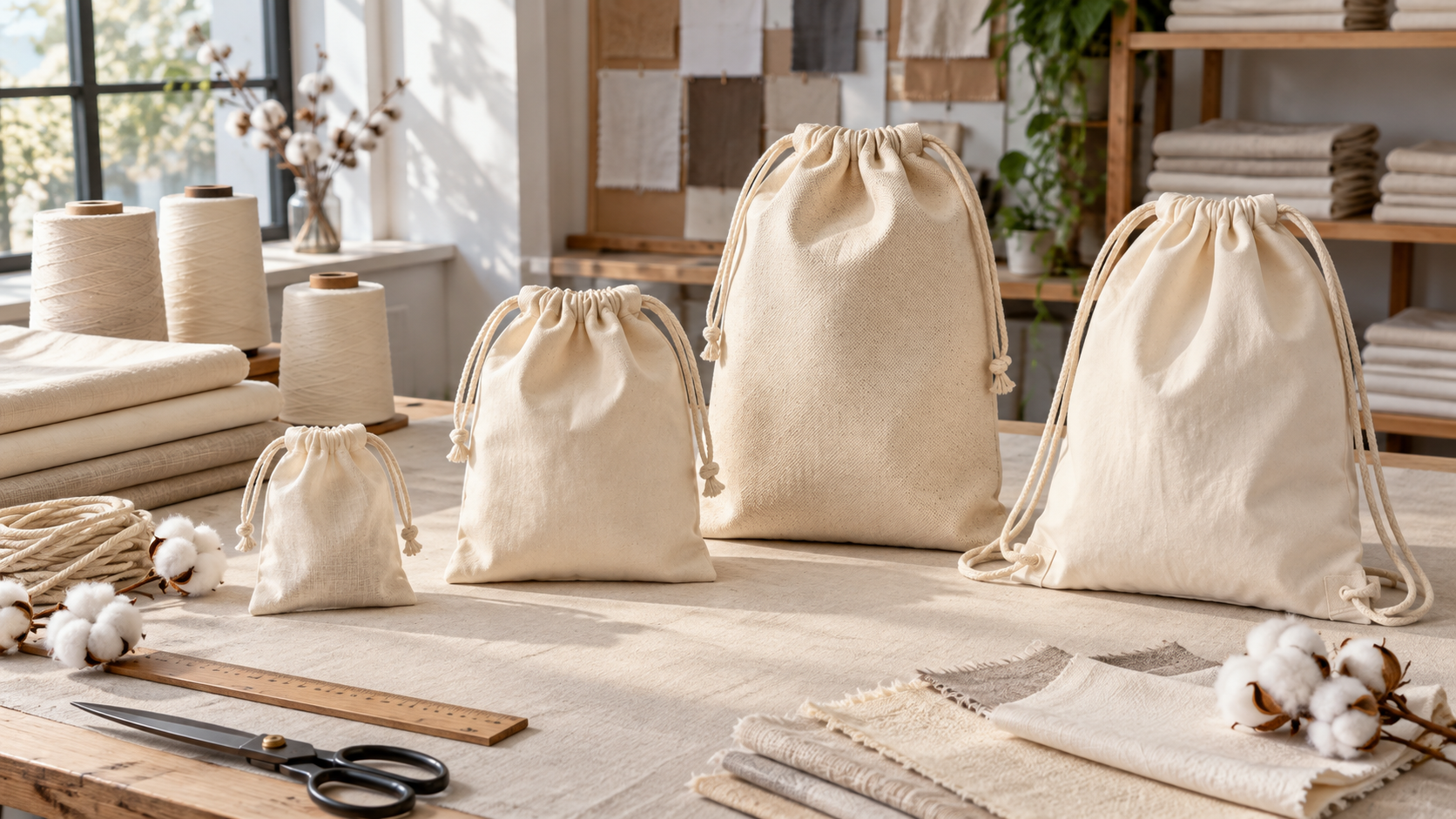
Nezni publishes custom cosmetic bag production in Turkey across structured, flat, printed and lay-flat fabric formats for beauty, gifting, travel and private-label programs; cotton or canvas directions may appeal to natural-positioned brands, while the location can be commercially useful for some European delivery plans.
Country proximity does not replace a landed-cost comparison.Confirm material origin, production address, Incoterm, export packing, freight mode and realistic transit. For natural textiles, freeze fabric weight, weave, shrinkage, shade tolerance and print behavior because nominally similar cottons can produce visibly different pouches.
- Possible fit: European beauty labels, natural-textile stories, gifting and travel collections.
- Public profile signal: Turkey-based development with multiple fabric structures.
- Confirm: material specification, site, MOQ, sample timing, Incoterm and repeat-lot tolerances.
Which supplier profile fits your beauty brand?
| Brand situation | Candidates to verify | Priority proof |
|---|---|---|
| First private-label SKU | LUCKYSTAR, Uinta Design, NOVOTE | Clear platform level, total setup cost, saleable sample and reorder path |
| Material-positioned skincare | LUCKYSTAR, Rivta, Nezni | Composition, claim evidence, real-material sample and care instructions |
| Prestige retail accessory | LUCKYSTAR, NOVOTE, Jin Sheu | Hand feel, finish boundary samples, hardware aging and packaging presentation |
| Gift set with coordinated carton | LUCKYSTAR, NEWSTEP, Lion Paper Products | Color master, physical pack-out, assembly owner and drop test |
| Artwork-heavy seasonal drop | Ciffnoo, LUCKYSTAR, Bags2Crown | Strike-off, panel map, registration tolerance and seasonal capacity |
| India or Turkey regional route | Bags2Crown or Nezni | Local factory visit, material availability, delivery terms and scale limit |
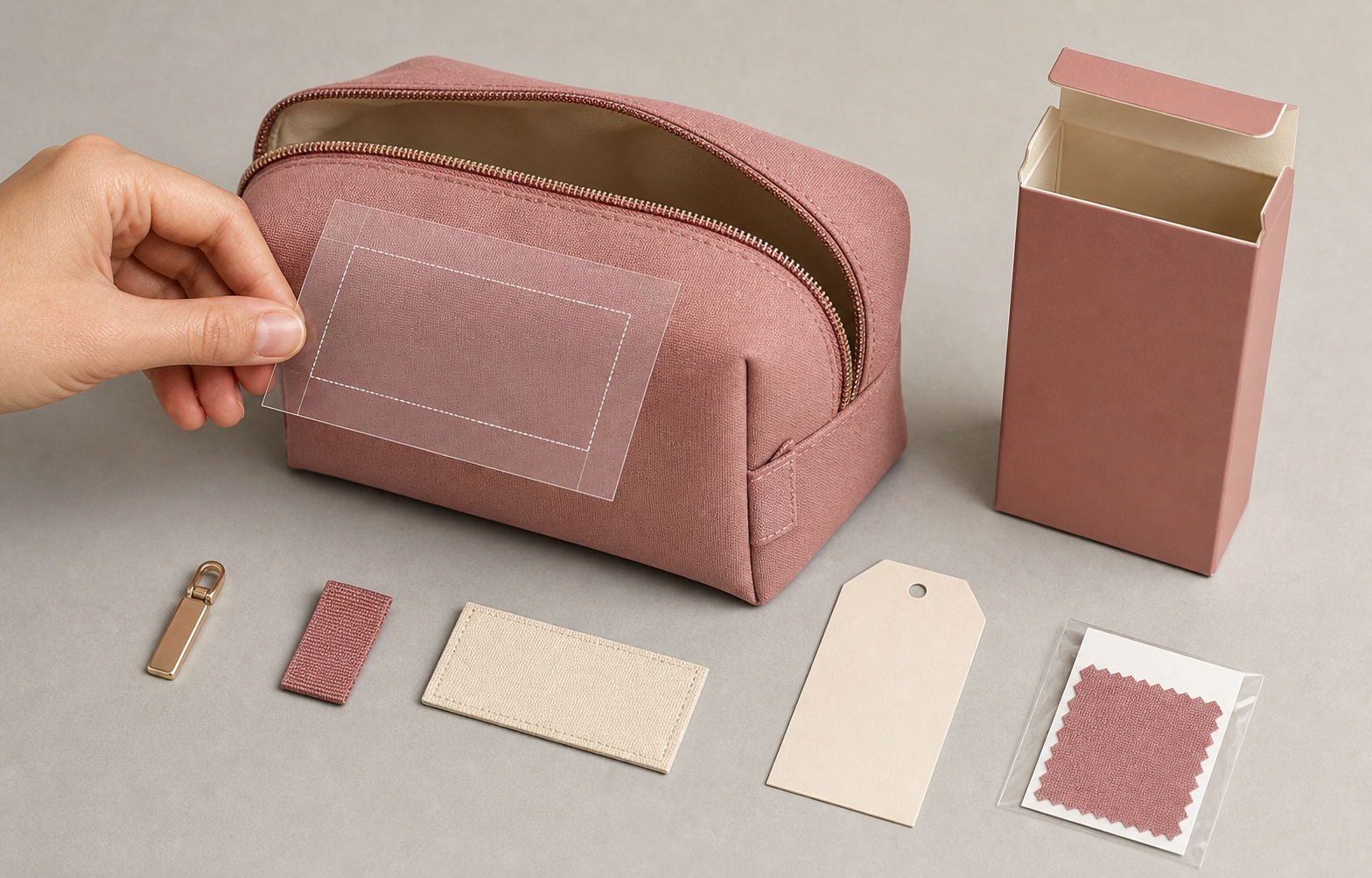
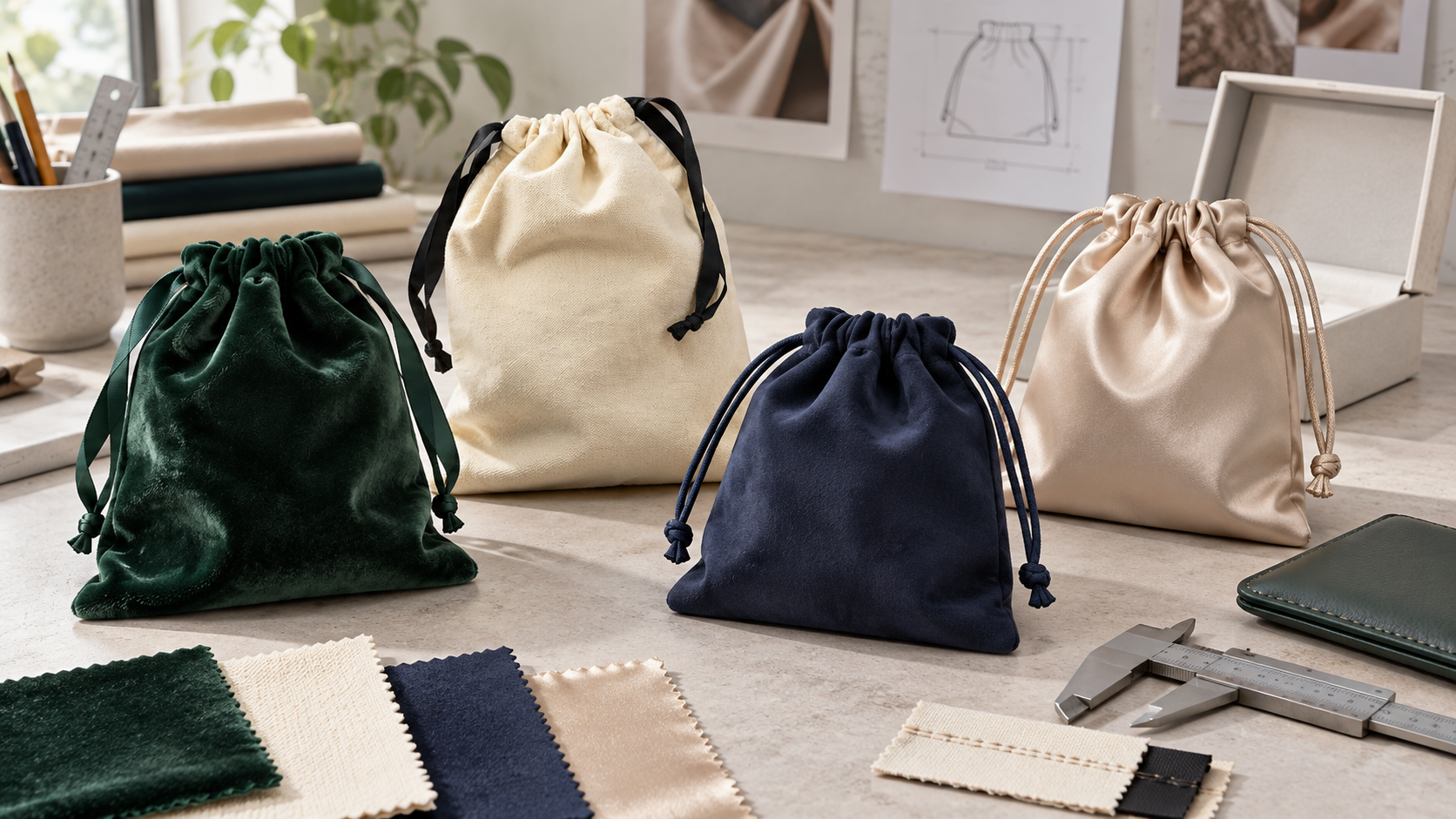
Approve identity as a system: exterior mark, puller, woven label, care label, lining, hangtag and carton should share one controlled reference set.
Build the brand through five controlled layers
Private label becomes defensible when several subtle decisions repeat across products. A large exterior logo cannot compensate for generic hardware, an unrelated lining or a carton that uses a different color standard. Freeze the five layers below in one brand-asset approval pack.
| Layer | Typical decisions | Approval evidence | Common failure |
|---|---|---|---|
| Silhouette | Proportion, gusset, opening, handle and pocket architecture | Dimensioned sample plus loaded-use photos | Catalog body does not fit the intended routine |
| Material and color | Face fabric, lining, padding, coating and color standard | Sealed swatch, lab dip or approved production-material cutting | Bag and beauty packaging look mismatched under store light |
| Hardware | Zipper chain, slider, puller, plating and protective packing | Mounted component board and functional test result | Plating shade changes or puller damages adjacent products |
| Soft identity | Exterior mark, woven label, care label and lining print | Placement overlay, artwork revision and sewn approval | Logo is legal but care/origin information is missing |
| Retail presentation | Hangtag, tissue, insert, barcode, individual pack and carton | Physical pack-out and shipping-carton trial | Beautiful pouch arrives crushed or cannot scan at retail |
Negotiate exclusivity in components, not slogans
A factory saying “your design is confidential” does not explain whether another buyer may order the same base pattern, whether the custom zipper mold is shared, or who can move the tooling after the relationship ends. Attach an ownership schedule to the purchase agreement.
| Asset | Question to settle | Useful contract record |
|---|---|---|
| Supplier's base body | Can competitors buy the same pattern? | Non-exclusive platform identified by style number |
| Buyer-modified pattern | Who owns the modified measurements and pattern file? | Ownership, permitted use and transfer terms |
| Artwork and repeat | May the factory display or reuse the print? | License limited to the named PO and buyer |
| Custom puller/tool | Who paid, stores, maintains and releases the mold? | Tool ID, ownership, storage term and disposal instruction |
| Custom-dyed material | Can excess material be used for another customer? | Residual-material ownership and authorized disposition |
| Sample and photography | May the supplier publish the product before launch? | Embargo date and written portfolio permission |
Send one private label RFQ to every finalist
Do not ask “How much for 1,000 cosmetic bags?” Give every shortlisted supplier the same commercial and technical inputs. Separate mandatory brand codes from optional upgrades so each company can suggest a realistic route without silently removing important details.
| RFQ block | Information to provide | Answer required from supplier |
|---|---|---|
| Program | Retail/GWP/subscription role, market, launch date and annual volume | Recommended platform level and critical path |
| SKU architecture | Styles, dimensions, colors, quantities and replenishment plan | MOQ by SKU/color plus component minimums |
| Product | Contents, structure, material, lining, closure and functional needs | Feasibility, substitutions, tolerance and price impact |
| Identity | Pantone/artwork, decoration, labels, puller and placement | Method, setup/tool charge, strike-off and ownership |
| Packaging | Hangtag, insert, barcode, individual pack and carton target | Pack-out drawing, carton quantity, dimensions and weight |
| Quality | Tests, inspection level, defects, golden sample and documentation | QC plan, test cost, inspection point and corrective action |
| Commercial | Currency, Incoterm, destination, sample request and payment constraints | Itemized quote, exclusions, validity, payment and delivery terms |
Use the custom cosmetic bag sample process to plan approval gates and the cosmetic bag quality checklist to convert visual expectations into an inspection record.
How LUCKYSTAR describes its private-label coordination
LUCKYSTAR describes a process that connects private-label design choices with manufacturing constraints. It may begin with a lower-complexity platform, then reserve custom structure, hardware or packaging for selected brand details; the exact route remains subject to the approved specification and order.
LUCKYSTAR states that one project team can coordinate materials, color references, decoration, labels, packaging, sampling, inspection and export timing for qualified orders. That continuity matters when a launch contains multiple bag styles or companion promotional products. Buyers who need a deeper manufacturer qualification process can also use our guide to choosing a cosmetic bag manufacturer.
Choosing a Cosmetic Bag Manufacturer for Beauty Brands should begin with the launch model, not a generic factory claim. Benchmark the operating options in our worldwide cosmetic bag manufacturer comparison, then contact LUCKYSTAR with the route and evidence your team needs.
- Practical routes from proven-body private label to fully custom construction.
- One approval system for bag, trim, labels, packaging and cartons.
- Support for retail, skincare, GWP, subscription and multi-item programs.
- Order-level discussion of MOQ, samples, quality checks and delivery.
Frequently asked questions
What is a private label cosmetic bag?
It is a cosmetic bag sold or distributed under the buyer's brand. The project may use a proven supplier body or a new exclusive pattern, but the approved product carries the buyer's identity through selected materials, colors, decoration, labels, hardware and packaging.
Is private label the same as adding a logo?
No. A logo-only stock pouch is the simplest private-label level. Stronger programs coordinate silhouette, hand feel, color, lining, zipper, labels and pack-out. The level should match the brand's commercial objective and budget.
What MOQ should a beauty brand expect?
There is no universal MOQ. It depends on whether the body is existing or new, material availability, custom color, decoration, hardware, labels and packaging. Ask for minimums at both finished-SKU and component level. Our cosmetic bag MOQ and production-time guide explains the interaction.
How many private label bag SKUs should launch first?
Many emerging brands are better served by one hero structure in one or two colors than several weakly differentiated bags. Expand after sell-through, repeat use, complaint and replenishment data justify the added inventory.
Can a manufacturer match our beauty packaging color?
It can work to a defined reference, but fabric, PU, metal and paper reflect light differently. Approve each substrate under agreed lighting and define the tolerance. Do not expect a numeric Pantone reference alone to make unlike materials appear identical.
How do we keep the design exclusive?
List each asset separately: base body, modified pattern, artwork, custom hardware, dyed material, label and packaging. State ownership, permitted use, territory or channel limits, storage, transfer and disposal. Confidentiality alone does not create ownership.
Should a retail bag and a GWP bag use the same specification?
Not automatically. A retail accessory carries a price promise and usually needs stronger presentation and durability. A GWP is designed around campaign economics and conversion. The retail versus promotional cosmetic bag comparison helps separate the briefs.
What should be approved before bulk production?
Approve the physical pre-production sample, dimension and tolerance sheet, material and color references, decoration placement, components, label copy, packaging, testing plan, inspection standard and dated production schedule. Record every approved revision in one handoff pack.
Final recommendation
Shortlist manufacturers by the private-label route you need, then send the same RFQ and compare physical samples—not promises. A good custom bag manufacturing partner will say which elements come from a proven platform, which are newly developed, which are exclusive and which claims still require order evidence. For a separate comparison of development ownership, read the Top 10 OEM/ODM Cosmetic Bag Manufacturers in 2026.
LUCKYSTAR can review your target contents, reference products, brand assets, quantity, budget and launch date, then recommend a controlled route for your private label cosmetic bag collection.

GET A QUOTE for a private label route, sample plan and order-specific quotation.
Send a private-label cosmetic bag collection brief
Define the private-label level, SKU/color plan, brand assets, ownership terms, construction, packing, evidence, destination and launch date. Send the same brief to every candidate.
Review LUCKYSTAR custom cosmetic bag options, then send your project details through the contact form or Email a project brief. The email link opens a draft for your review before sending.
Supplier fit, development scope, factory route, intellectual-property terms, materials, claims, samples, testing, documentation, packaging, inspection, MOQ, price, schedule and delivery terms are subject to due diligence, specification and written confirmation.