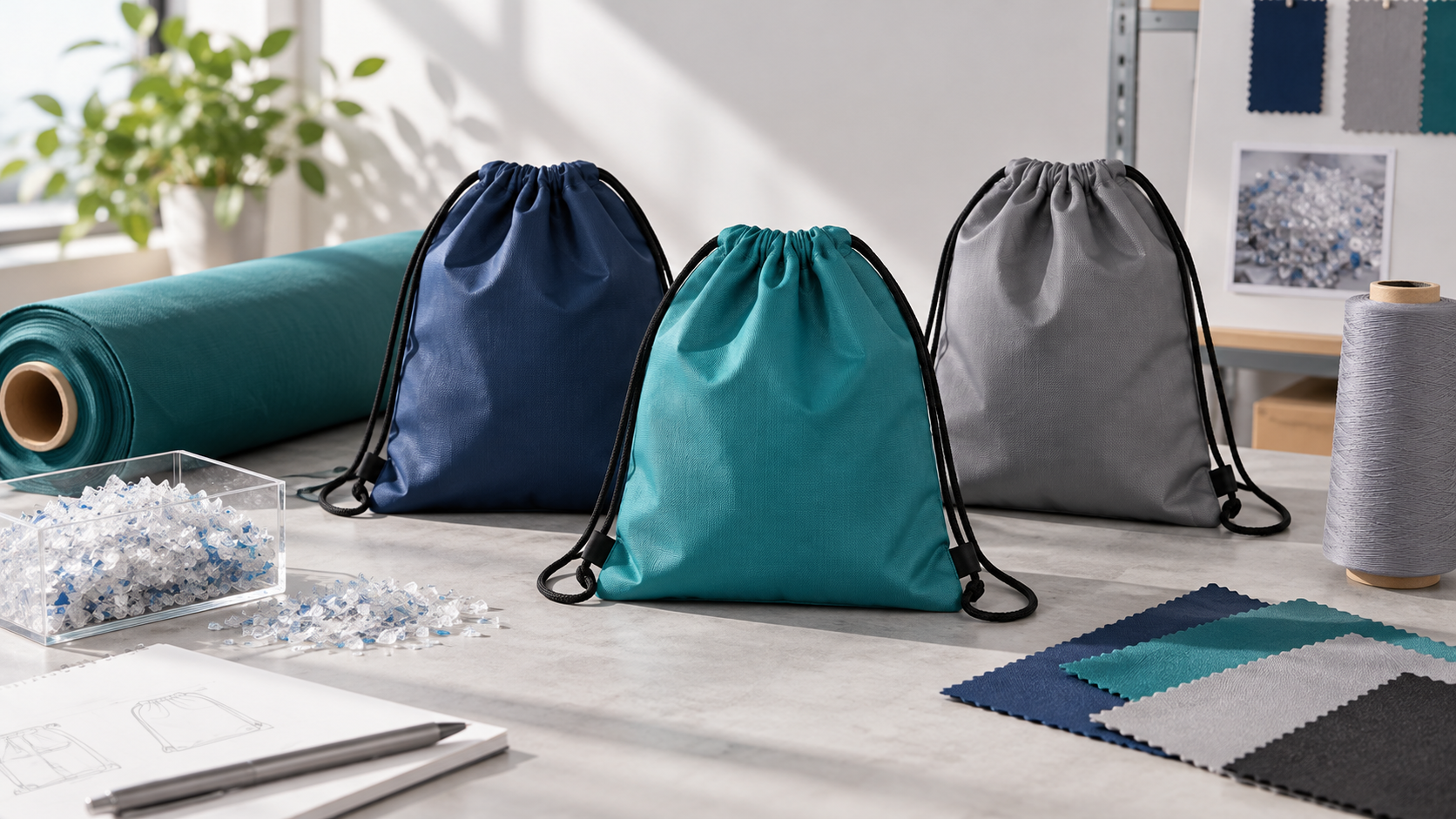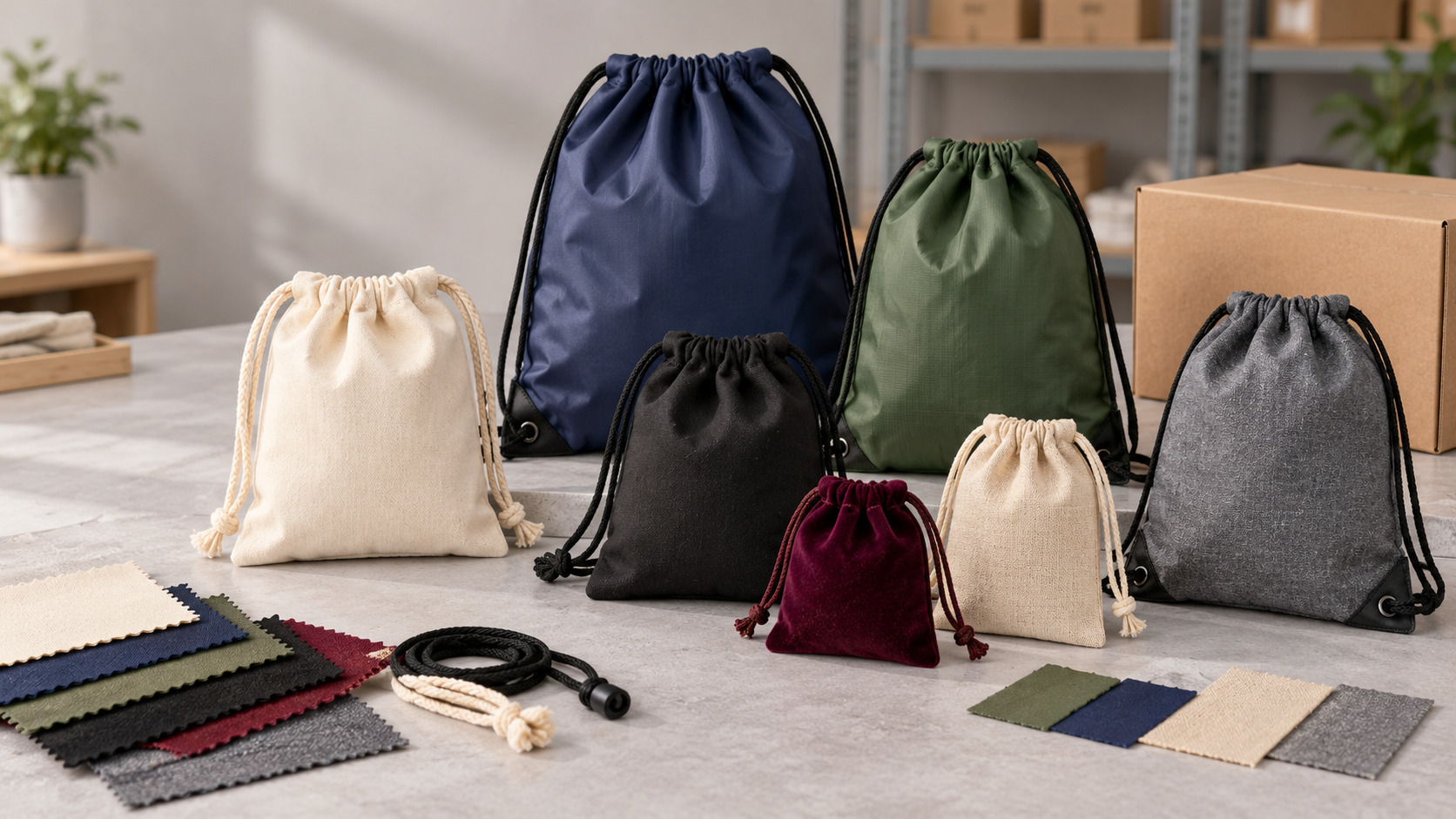
Intent boundary: This page covers low-MOQ cosmetic bag routes for small-brand pilot orders. It is not the broad China supplier hub. For the complete sourcing workflow, use the China Cosmetic Bag Manufacturers Guide.
A low minimum order can protect a small brand from excess inventory, but the headline number rarely tells the whole story. One supplier's “100 pieces” may mean an existing pouch in one available color with a printed logo. Another factory may accept 500 pieces for a new color and lining, while a custom zipper pull alone requires 1,000 or more. The lowest finished-bag MOQ is useful only when it matches the product you are actually allowed to make.
This guide compares ten Low MOQ Cosmetic Bag Manufacturers by the scope behind their public claims, the kind of first order they appear best suited to support, and the evidence a small brand should request before paying. Browse LUCKYSTAR's custom cosmetic bag collection for possible starting formats. For suppliers with different regional and operating models, use our worldwide cosmetic bag manufacturer comparison.
Planning an order? Send one low-MOQ comparison brief. Include the product structure, materials, target quantity, color split, decoration, packaging, evidence needs, destination and required date.
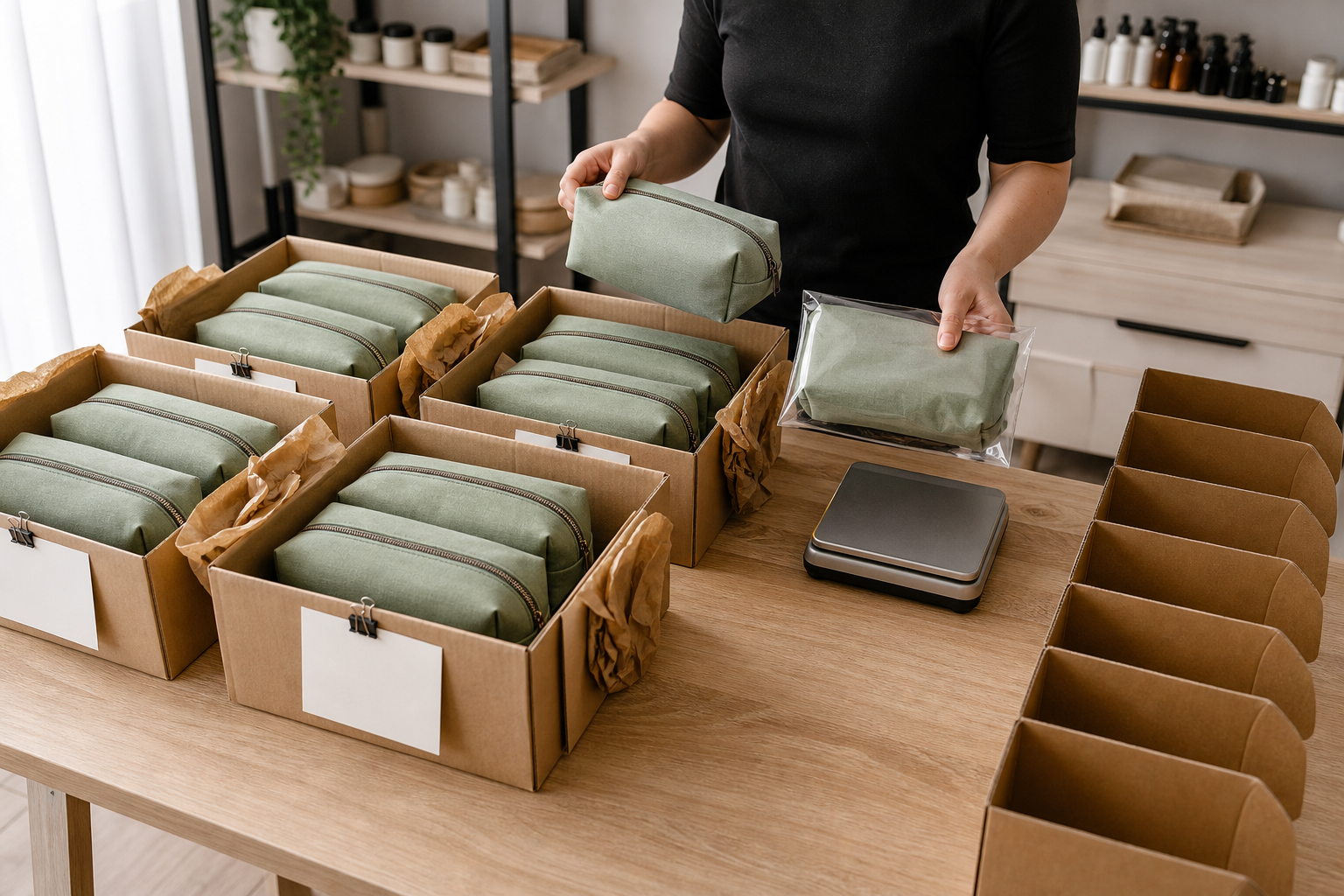
A useful low-MOQ order is small enough to control but complete enough to test the product, packaging, fulfillment and customer response.
Quick answer: low MOQ does not mean the same thing at all ten suppliers
The list deliberately includes several routes. FastCustomPack, Solton Leather and FIU Bags publish 100-piece entry points for defined products or existing structures. KONCAI publishes 300 units. Rivta and Synberry publish 500-piece starting points for selected cosmetic programs. Other companies promote flexible or low minimums without a universal number, which makes the project-specific quotation—not the website headline—the decision document.
| Manufacturer | Published entry signal | Potential first-order route | Main condition to verify |
|---|---|---|---|
| 1. LUCKYSTAR | Project-specific; no universal public number | One focused SKU using a feasible material and branding plan | Written MOQ by style/color and every custom component |
| 2. FastCustomPack | From 100 pieces per style for selected material/structure | Existing body with light logo customization | Eligible style, material, included decoration and freight |
| 3. Solton Leather | 100 pieces/style/color on cited cosmetic bag | PU or leather-look pouch based on a published design | Whether broader 50-piece claim applies to the selected bag |
| 4. FIU Bags | 100 pieces on cited printed organic-cotton pouch | Standard natural canvas pouch with front print | Available dimensions/colors, print area and destination freight |
| 5. Uinta Design | “Low minimums”; exact quantity by design | Guided private label with mockup and managed production | Exact MOQ, design fees, legal seller and assigned factory |
| 6. KONCAI | Flexible MOQ stated at 300 units | Makeup bags or structured cases needing prototypes | 300 per style/color or total, and eligible constructions |
| 7. Rivta | 500 pieces on published makeup-pouch program | Material-led beauty pouch with a defined brief | MOQ for chosen material/color and claim evidence |
| 8. Synberry | Starting cosmetic-bag MOQ stated at 500 pieces | A conventional custom pouch with scale-up potential | Production country, style eligibility and color split |
| 9. Bags2Crown | No fixed minimum stated; project-specific | India-based pilot, amenity pouch or kit assembly | Actual itemized MOQ, price band and pilot-to-bulk transfer |
| 10. Biben | 500–1,000 pieces per design | PVC, cotton, Oxford or Tyvek custom programs | Exact threshold by process, color and welded/sewn route |
Four low-MOQ routes—and what the buyer gives up
Small brands can lower the starting quantity by reducing novelty. That is not a compromise when the chosen platform already fits the customer. It becomes a problem only when the product promise requires a structure or component that the low-MOQ route cannot deliver.
| Route | Relative starting-quantity tendency | What stays standard | Potential use |
|---|---|---|---|
| Printed ready body | Usually the lowest when the selected body, material and color are already available | Shape, fabric, zipper, lining and usually available colors | Events, validation, influencer kits and simple merchandise |
| Existing body, light private label | Often lower than a newly developed product when the base pattern and components remain standard | Core pattern; buyer changes logo and selected trims/packing | First saleable SKU with controlled brand details |
| Adapted production platform | Depends on which structure, material or component changes create separate supply minimums | Construction method and much of the supplier's component system | Better product fit without fully new engineering |
| Fully custom manufacturing | Usually the highest because new materials, tooling or custom components may create separate commitments | Only the factory's feasible processes and available supply chain | Proprietary structure, dyed material or custom hardware |
These are planning tendencies, not quotations. The detailed Cosmetic Bag MOQ and Production Time guide explains how material, decoration and packaging minimums interact after a supplier is selected. This ranking instead identifies which companies publicly present plausible small-order entry routes.
How we evaluated low MOQ cosmetic bag manufacturers
| Evaluation area | Weight | Evidence considered |
|---|---|---|
| MOQ scope clarity | 20% | Quantity tied to a style, color, material and customization level |
| Small-brand route | 20% | Existing designs, light customization, mockups, pilots or flexible programs |
| Cosmetic-bag relevance | 15% | Pouches, vanity cases, organizers, clear bags and beauty use cases |
| Sample/risk control | 15% | Proofs, samples, approval record and bulk handoff |
| Reorder scalability | 10% | Ability to retain references and move from pilot to repeat production |
| Total-cost transparency | 10% | Setup, tooling, packaging, freight and component minimums |
| Public evidence quality | 10% | Specific claims that can be confirmed in a written quote |
Comparison boundary: each supplier description below summarizes public, supplier-controlled information. Claims about locations, facilities, capabilities, materials, sustainability, performance, certificates, audits, customers, quantities, prices and schedules must be verified for the exact legal entity, production site, document scope and order. LUCKYSTAR statements are publisher self-description and remain subject to the same order-specific verification.
1. LUCKYSTAR — listed for a controlled first SKU
LUCKYSTAR describes its small-brand route is not an arbitrary one-number promise. It is matching the first order to a feasible construction and supply chain. A founder can begin with a proven cosmetic-pouch direction, concentrate the quantity in one useful SKU, and spend customization budget on the details customers will notice: material hand feel, lining, zipper, logo placement and practical packaging.
The wider Product Range also helps a growing business coordinate the pouch with totes, travel accessories, apparel or promotional products without creating separate color and artwork systems.
- Possible fit: small beauty brands that want a saleable first product and a route to scale.
- Public profile signal: project engineering around one focused specification rather than a misleading universal threshold.
- Confirm: finished SKU MOQ, material/color minimum, decoration setup, packaging, sample cost and reorder quantity.
- Potential mismatch: a buyer needing one-off print-on-demand fulfillment may need a POD platform, not bulk manufacturing.
2. FastCustomPack — listed for a published 100-piece existing-style route
FastCustomPack states a starting MOQ of 100 pieces per style based on selected material and structure. It also describes a library of existing designs, light logo customization, 5–7 day samples for existing-style logo projects and a faster bulk route than fully new development. That makes its proposition easy for a small brand to understand.
The public 100-piece number should be treated as an eligible-route minimum, not permission to redesign every component. Ask the supplier to identify the exact base style, available colors, included branding, packaging options and every change that would move the order into a higher tier.
- Possible fit: a fast test using a proven pouch body with logo and modest packaging changes.
- Public profile signal: unusually clear link between the low quantity and existing-style light customization.
- Confirm: eligible SKU, print setup, sample charge, unit price, freight and full-custom threshold.
3. Solton Leather — listed for a 100-piece PU/leather-look test
Solton Leather lists 100 pieces per style/color for its cited PU cosmetic bag, together with customizable lining, branding and packaging. The page separately promotes flexible 50-piece entry points across selected leather-goods projects. A small brand should use the product-specific 100-piece number as the working reference until the supplier confirms otherwise.
PU and leather-look bags carry risks that a natural canvas pouch does not. Freeze the substrate, coating, surface grain, edge finish, color, odor and hardware. A low quantity does not make an aging or colorfastness failure cheaper after customer use.
- Possible fit: premium-looking travel or makeup pouches built from an eligible existing structure.
- Public profile signal: product-level MOQ disclosure rather than only a general “low minimum” badge.
- Confirm: which quantity applies, material grade, color split, logo method, aging test and packaging.
4. FIU Bags — listed for a simple 100-piece printed cotton pouch
FIU Bags publishes a 100-piece minimum for a custom-logo organic-cotton cosmetic pouch, with a front print included in its stated product route. This is a narrow but practical option for a small beauty brand, hotel, event or launch kit that values a natural fabric and simple decoration more than structural customization.
Confirm whether the pouch is made in the published Mexico production route, which dimensions and zipper colors are standard, and whether the cotton claim has supporting documentation. Review artwork size, print opacity and color on the real fabric. Door-to-door delivery estimates should be reconfirmed for the destination and required date.
- Possible fit: uncomplicated canvas merchandise, event kits and limited beauty drops.
- Public profile signal: defined product, visible price route and accessible published minimum.
- Confirm: stock choices, print limit, fabric evidence, production origin, delivery and reorder consistency.
5. Uinta Design — best guided low-minimum route for founders
Uinta Design markets low minimums, no setup fees and US-led design with managed global production, but it does not publish one quantity for every cosmetic bag. Its use of 3D mockups can help a founder resolve shape, closure and placement before committing to a sewn sample.
The service layer may reduce founder workload while adding cost and distance from the production site. Request the exact minimum, legal seller, factory country, production facility, design deliverables, fees, QC owner and pattern/tooling rights. Compare landed cost and responsibility—not MOQ alone.
- Possible fit: small US beauty teams that need design guidance and managed execution.
- Public profile signal: a published small-brand position rather than a volume-only factory pitch.
- Confirm: numeric MOQ, platform level, total fees, site visibility, IP and reorder terms.
6. KONCAI — listed for a published 300-unit route for bags and cases
KONCAI publishes a flexible MOQ of 300 units and rapid prototyping language for makeup bags and structured cases. The range can be relevant when a small professional-beauty or cosmetics brand needs more structure than a flat printed pouch.
Ask whether 300 units applies per style, per color or across a mixed order. Structured cases multiply component decisions through boards, foam, brush holders, mirrors, trays or special hardware. One non-standard element can reset the commercial minimum even if the shell is eligible for the headline number.
- Possible fit: emerging brands testing a more structured organizer or professional case.
- Public profile signal: a public numeric threshold paired with prototyping.
- Confirm: quantity basis, eligible structures, component minimums, sample rounds and bulk tolerance.
7. Rivta — best 500-piece route for a material-led pouch
Rivta publishes a 500-piece MOQ for selected custom makeup pouch programs and positions them for beauty, skincare, personal care, retail and private-label buyers. Its material range can suit a small brand that already has a defined sustainability or texture direction and can support a manufacturing-sized pilot.
Five hundred bags are not a low-risk order if the environmental statement is unsupported. Confirm composition, certificate holder and scope, transaction evidence where applicable, coating, care and performance. The RPET sourcing checklist helps buyers separate material marketing from PO evidence.
- Possible fit: small but established beauty programs using recycled or alternative materials.
- Public profile signal: a public pouch-specific MOQ and visible material specialization.
- Confirm: MOQ by material/color, certificate scope, testing, packing and repeat availability.
8. Synberry — listed for a 500-piece pilot with scale-up options
Synberry states a starting cosmetic-bag MOQ of 500 pieces and publishes broad pouch, organizer, vanity and clear-bag formats. It also presents production in China and Cambodia. This can interest a small brand that expects successful SKUs to grow and wants to discuss future origin or capacity options early.
A dual-country group does not mean a 500-piece order can freely move between plants. Freeze the site that develops and produces the first run. Record material source, approved sample, inspection standard and what triggers a new pre-production sample if the factory changes.
- Possible fit: buyers funding a conventional manufacturing pilot with credible reorder potential.
- Public profile signal: numeric entry point plus wider scaling infrastructure.
- Confirm: eligible bag, assigned country/site, color split, testing, transfer rules and reorder MOQ.
9. Bags2Crown — best India-based project-specific pilot
Bags2Crown describes cosmetic bags and pouches made on its Mumbai line with no fixed minimum order quantity, pilot-to-bulk support and multiple decoration routes. The statement is attractive for Indian beauty brands, hospitality projects or regional pouch programs, but “no fixed MOQ” means the viable quantity must be calculated for the actual product.
Ask for separate thresholds for fabric, print, zipper, puller, label and packaging. Then compare the lowest viable quantity with the quantity that produces a sensible unit and delivered cost. A factory may technically sew 50 bags while the commercial answer is still 200.
- Possible fit: India-market pilots, amenity pouches and regional programs.
- Public profile signal: explicit project flexibility and regional production.
- Confirm: commercial minimum, price breaks, exact line, material lot and bulk-transfer control.
10. Biben — best transparent 500–1,000-piece full-custom band
Biben publishes a 500–1,000-piece MOQ per design for PVC, cotton, Oxford and Tyvek cosmetic bags. That quantity is higher than a 100-piece decorated stock pouch, but the disclosure can be more useful for buyers who need custom material, printing, sewing or transparent-film work.
Ask which end of the range applies to each process. Clear PVC welding, custom-dyed textile and printed Tyvek may have different setup or material rules. Confirm whether “per design” also means per color and whether mixed sizes can share the total.
- Possible fit: small brands ready for a true manufacturing run rather than a stock-body test.
- Public profile signal: a public range tied to multiple cosmetic-bag processes.
- Confirm: exact MOQ by material/process, color split, sample timing, test plan and carton size.
Which low-MOQ supplier route fits your small brand?
| Small-brand situation | Candidates to verify | What to protect |
|---|---|---|
| Need about 100 simple branded pouches | FastCustomPack, FIU Bags, Solton Leather | Eligible stock body, included logo method and landed cost |
| Need guided design but want to start modestly | LUCKYSTAR, Uinta Design | Exact development scope, total fees and numeric MOQ |
| Need a structured case around 300+ | KONCAI, LUCKYSTAR | Boards, foam, interior parts, hardware and sample-to-bulk handoff |
| Can support a 500-piece manufacturing pilot | Rivta, Synberry, Biben | Material/process eligibility, color split and reorder route |
| Prefer India-based production | Bags2Crown | Commercial minimum, line assignment and scale-up reference |
| Expect rapid growth after validation | LUCKYSTAR, Synberry, Rivta | Retained references, capacity window and second-order price breaks |
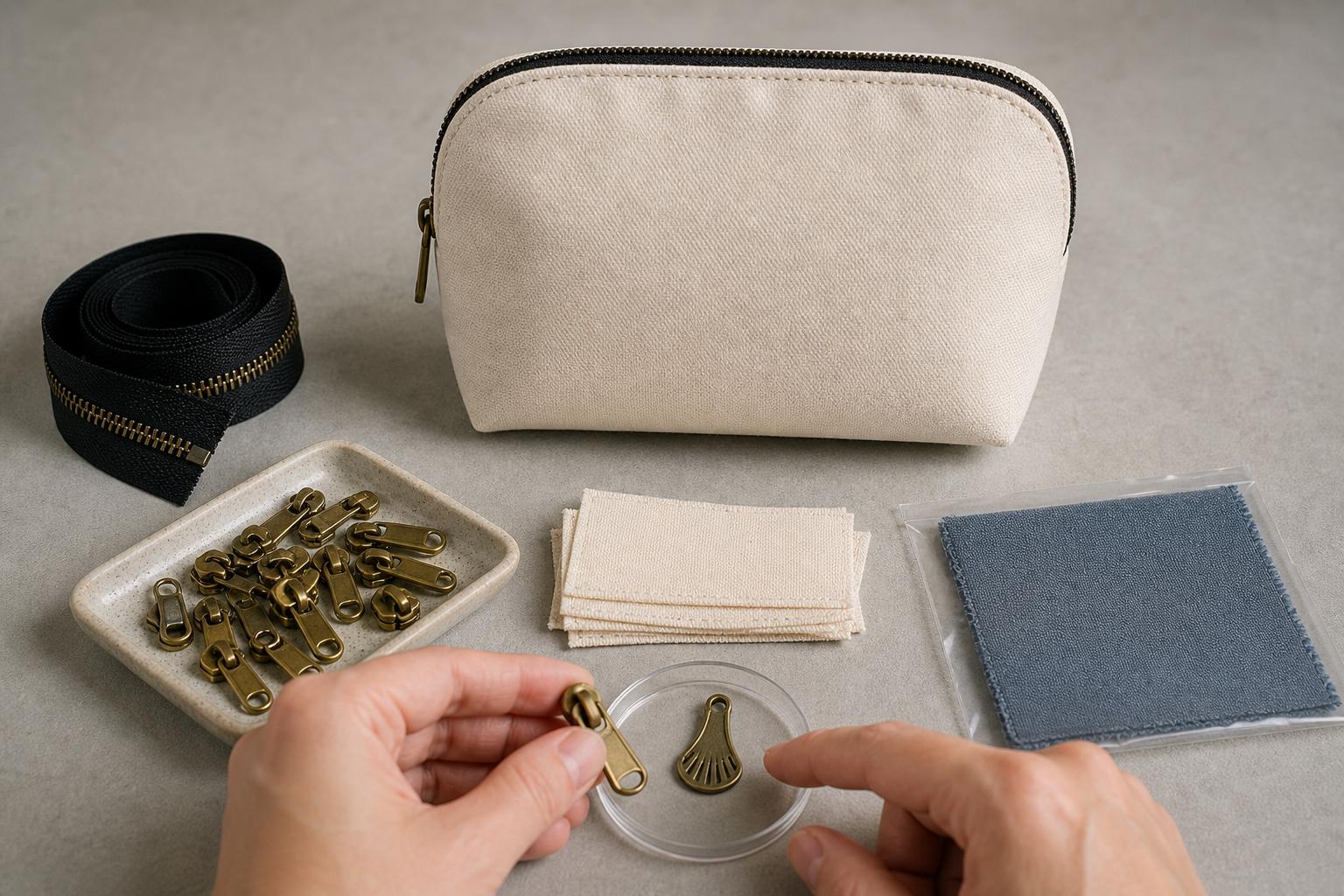
Using a proven body and standard components can lower the finished-bag minimum; a special puller, dyed material or custom package may create a separate commitment.
Ask for six minimums, not one
Every finalist should fill in the same MOQ stack. This does not repeat the full production-planning process; it exposes whether the advertised minimum survives your actual specification.
| MOQ layer | Question for the supplier | Small-brand response |
|---|---|---|
| Finished SKU | Minimum per bag style and per size? | Concentrate the first order in one hero SKU |
| Color | Minimum per color; can available colors share the total? | Launch one color or use supplier stock colors |
| Face/lining material | Stock, greige or custom dye; required meters and leftover ownership? | Use an available lot that passes the product tests |
| Decoration | Setup charge and minimum for print, embroidery or emboss? | Choose one robust method with a controlled artwork size |
| Hardware/labels | Minimum for zipper, custom puller, metal plate and labels? | Use standard hardware; customize a lower-risk label first |
| Packaging | Minimum for hangtag, printed bag, insert and carton? | Use neutral protection plus a small-run printed insert |
Low quantity can still create high cash risk
A cheap 100-piece order can become expensive when sample charges, setup, air freight and rejected units are divided across few saleable bags. Compare cash committed and cost per accepted unit, not the factory unit price alone.
| Cost/risk | Why it grows at low MOQ | Control |
|---|---|---|
| Development | Pattern and sample cost is spread over fewer units | Start from a suitable platform and limit revisions |
| Setup/tooling | Screens, dies and molds are mostly fixed costs | Prefer print/label routes using existing equipment |
| Materials | Supplier buys a full roll or dye lot | Use in-stock material or own the documented remainder |
| Freight | Express shipment has poor cost per unit | Compare courier, air and consolidated options on real cartons |
| Quality loss | A few rejected bags consume a larger share of inventory | Approve a clear sample and inspect before shipment |
| Stockout | Tiny order sells out before the reorder arrives | Place the reorder from sell-through data plus actual lead time |
Use the 2026 custom cosmetic bag pricing guide to calculate landed cost per accepted bag, and the sample development process to avoid paying for bulk before the product is proven.
Send one small-brand RFQ to every finalist
| RFQ block | Input from buyer | Answer required |
|---|---|---|
| Commercial target | Launch date, country, target quantity, target landed cost and annual potential | Recommended low-MOQ route and realistic price breaks |
| Product | Contents, size, structure, material, lining and closure | Closest proven body plus non-negotiable changes |
| Identity | Artwork, color, logo method, labels and simple packaging | Eligible method, setup cost and component minimum |
| Samples | Stock reference, customized sample and pre-production approval needed | Cost, timing, revision allowance and refund policy |
| Quality | Critical tests, tolerances, defects and inspection request | Test/inspection cost and corrective-action plan |
| Delivery | Incoterm, postal code, required date and fulfillment needs | Packed carton data, freight option and full dated schedule |
| Reorder | Expected replenishment trigger and growth case | Repeat MOQ, retained references, material availability and lead time |
How LUCKYSTAR describes its small-brand route
LUCKYSTAR describes a process for identifying a lower-complexity route that still meets the approved product specification. That may mean using a proven body, concentrating the order in one color, choosing available material, and reserving custom tooling for a later reorder. It does not mean quietly removing the feature that makes the pouch useful.
LUCKYSTAR states that one project team can coordinate the bag, logo, labels, packaging, sample record, inspection and delivery for qualified orders. When sales data supports expansion, the first-order specification becomes a controlled base for new colors or upgraded components. Brands comparing broader private-label support can also read our Top 10 Private Label Cosmetic Bag Manufacturers for Beauty Brands.
Before approving any first order, use our cosmetic bag manufacturer qualification checklist to verify legal identity, facility role, sample control, testing responsibility, inspection access and corrective-action terms.
To evaluate LUCKYSTAR as a Small Batch Cosmetic Bag Manufacturer, send us one target SKU, quantity, branding, budget and delivery destination. The team can discuss which requirements may support a lower starting quantity and which may create a separate commitment, subject to specification and written confirmation.
Frequently asked questions
What is considered a low MOQ for custom cosmetic bags?
Low MOQ is relative to the same approved specification. An existing pouch with light branding may start lower than a newly developed sewn or welded bag, while custom materials, colors, hardware or packaging may create separate minimums. Compare quotations only when the structure, material, color split, decoration and packaging are equivalent.
Can a small brand order 100 custom cosmetic bags?
Yes, some suppliers publish 100-piece routes, usually for selected existing styles and limited customization. A new pattern, custom-dyed fabric, molded puller or complex packaging may require a higher commitment.
Is MOQ normally per color?
Often it is, particularly when the material or zipper must be produced in that color. Available stock colors may sometimes share a total. The quotation must state whether the number is per order, style, size, color or design.
Why is a 100-piece bag expensive per unit?
Development, setup, administration and inspection are spread across few pieces, while freight is less efficient. Calculate the total landed spend and margin, but also compare the cash and inventory risk avoided by the smaller order.
Should a startup choose the lowest published MOQ?
Not automatically. Choose the smallest order that can validate the product customers will actually receive. A very low quantity of an unsuitable stock pouch can produce misleading market feedback.
How can a brand reduce MOQ without lowering quality?
Use one proven structure, one color, in-stock tested material, standard zipper/hardware and a scalable logo method. Reduce novelty, not workmanship or required testing. Our cost-reduction guide provides additional options.
What should be checked before placing a low-MOQ order?
Confirm the exact specification, saleable sample, all minimum layers, setup charges, packed carton, freight, defect standard, production site, delivery schedule and reorder terms. Use the cosmetic bag quality control checklist for the inspection scope.
When should a brand move to a higher-volume custom route?
Move when sell-through, feedback and repeat use justify a more distinctive structure or component, and when the projected volume can recover development/tooling cost without creating unsafe inventory.
Final recommendation
Start with the product and cash-risk limit, then select a supplier route. Compare supplier-published existing-body offers separately from custom-manufacturing quotations. A capable custom bag manufacturer should show exactly why its MOQ applies and how the first run can become a stable reorder. For development responsibility beyond quantity, review the Top 10 OEM/ODM Cosmetic Bag Manufacturers in 2026.
Choosing among Custom Cosmetic Bags for Small Brands is easier when every quote uses the same brief. Benchmark the candidates again in our global manufacturer core guide, then request an order-specific MOQ instead of relying on a page headline.
LUCKYSTAR can recommend a focused custom cosmetic bag route based on your target user, quantity, brand details and launch date.

GET A QUOTE for a style-specific minimum, sample plan and landed-cost quotation.
Send one low-MOQ cosmetic bag comparison brief
Define the product, quantity and color split, available-body or custom route, materials, decoration, packaging, evidence, destination and required date. Send the same brief to every candidate so the quantities and total costs are comparable.
Review LUCKYSTAR custom cosmetic bag options, then send your project details through the contact form or Email a project brief. The email link opens a draft for your review before sending.
Supplier fit, development scope, factory route, materials, claims, samples, testing, documentation, packaging, inspection, MOQ, price, schedule and delivery terms are subject to due diligence, specification and written confirmation.