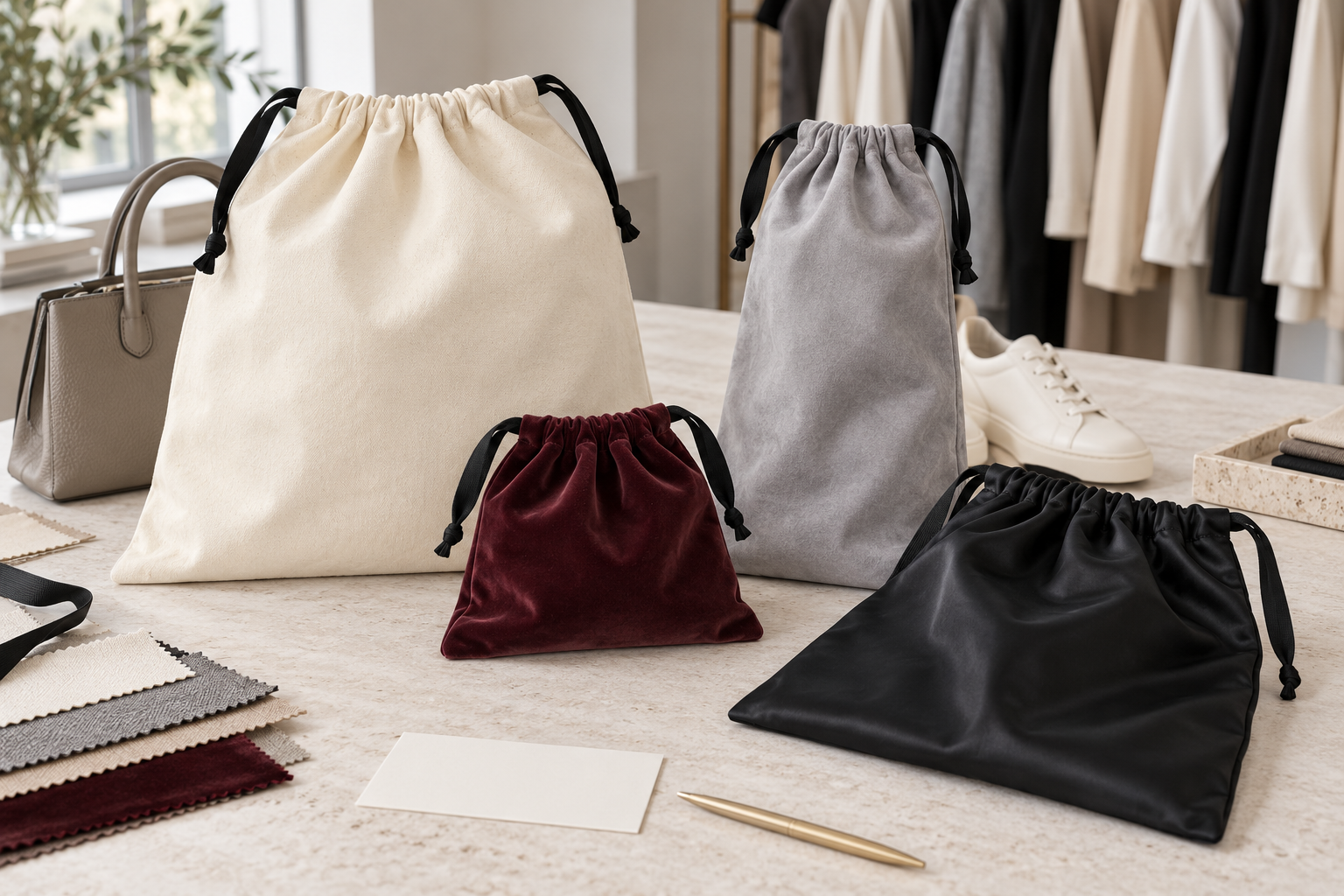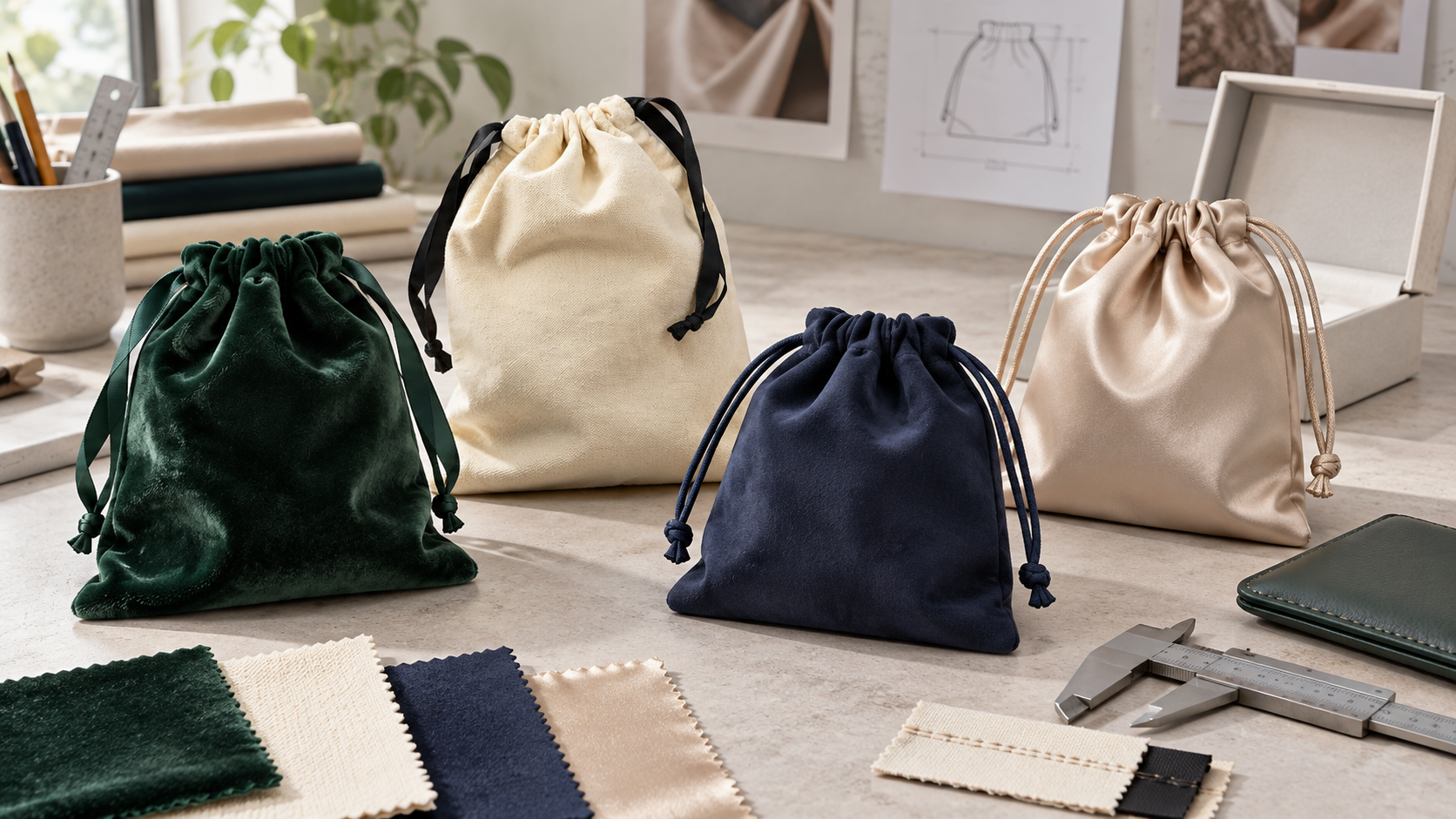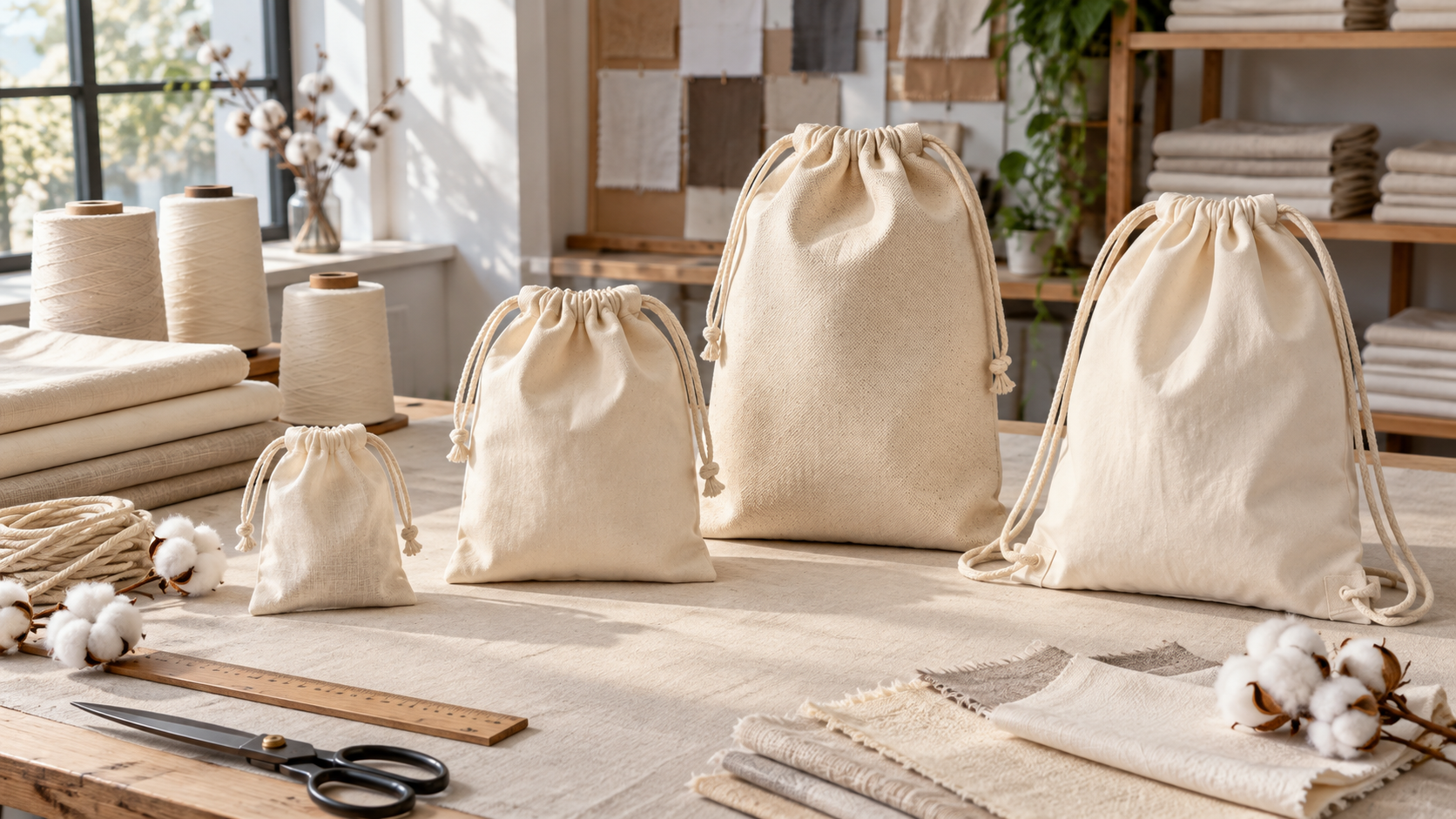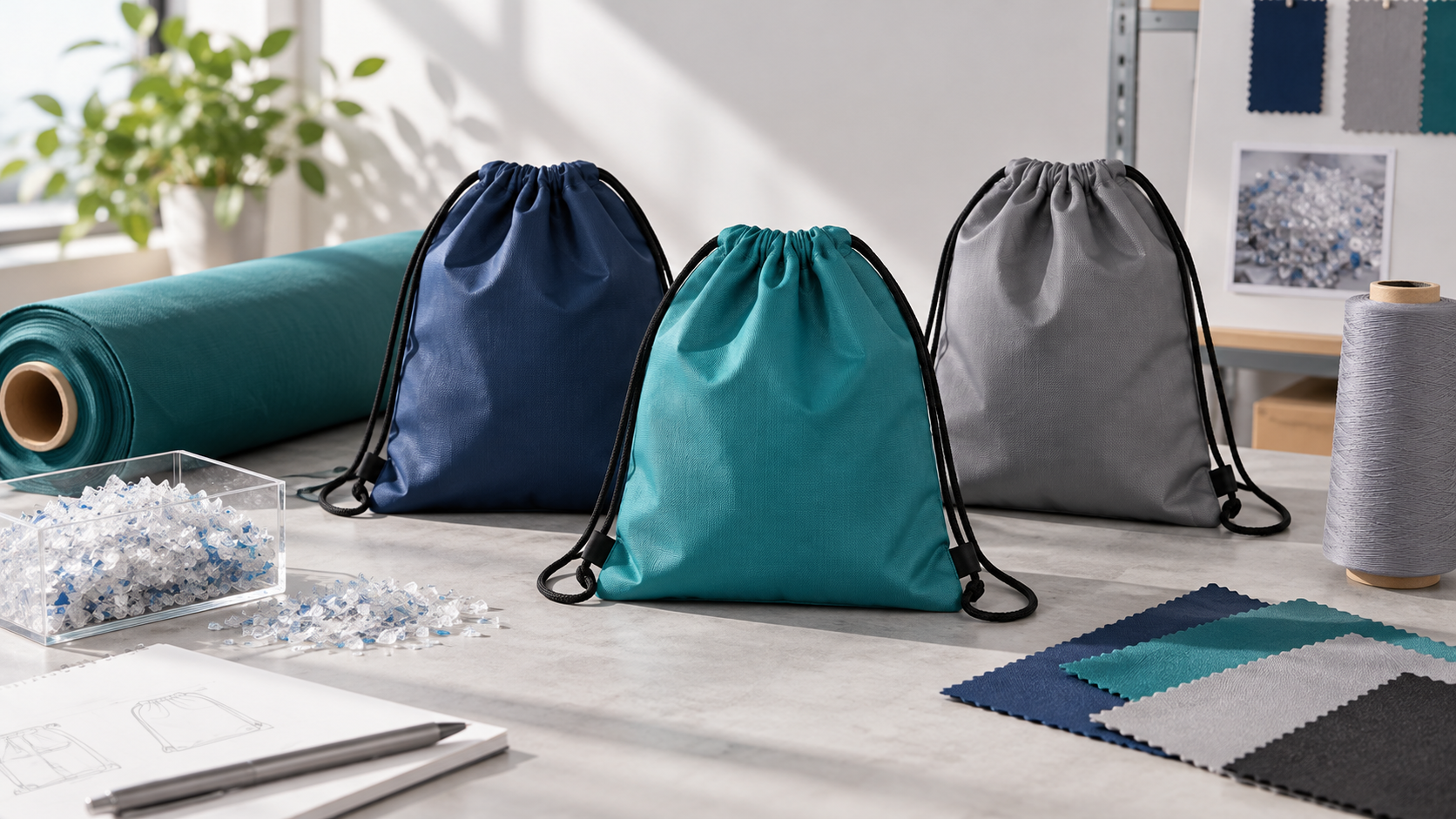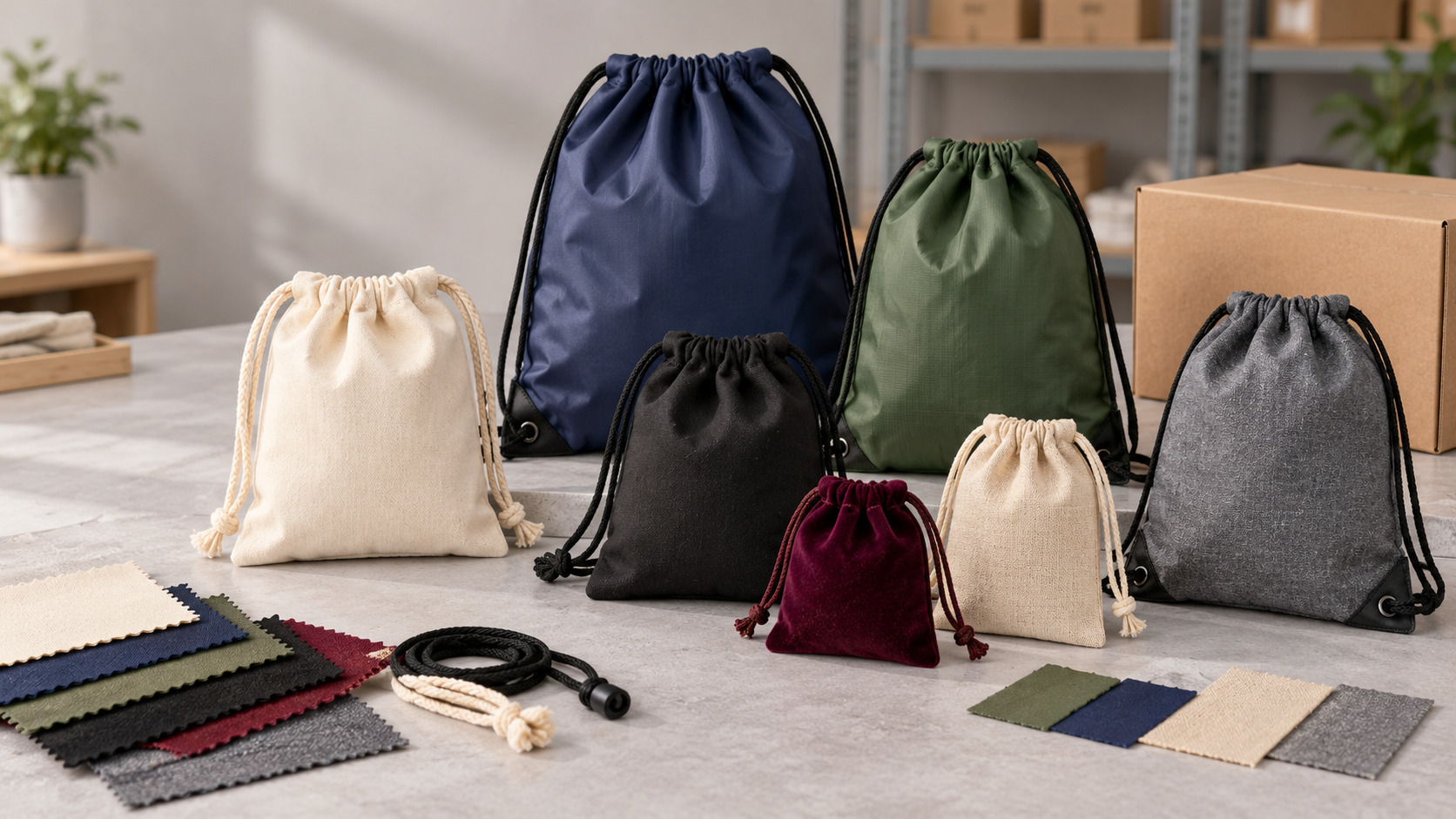
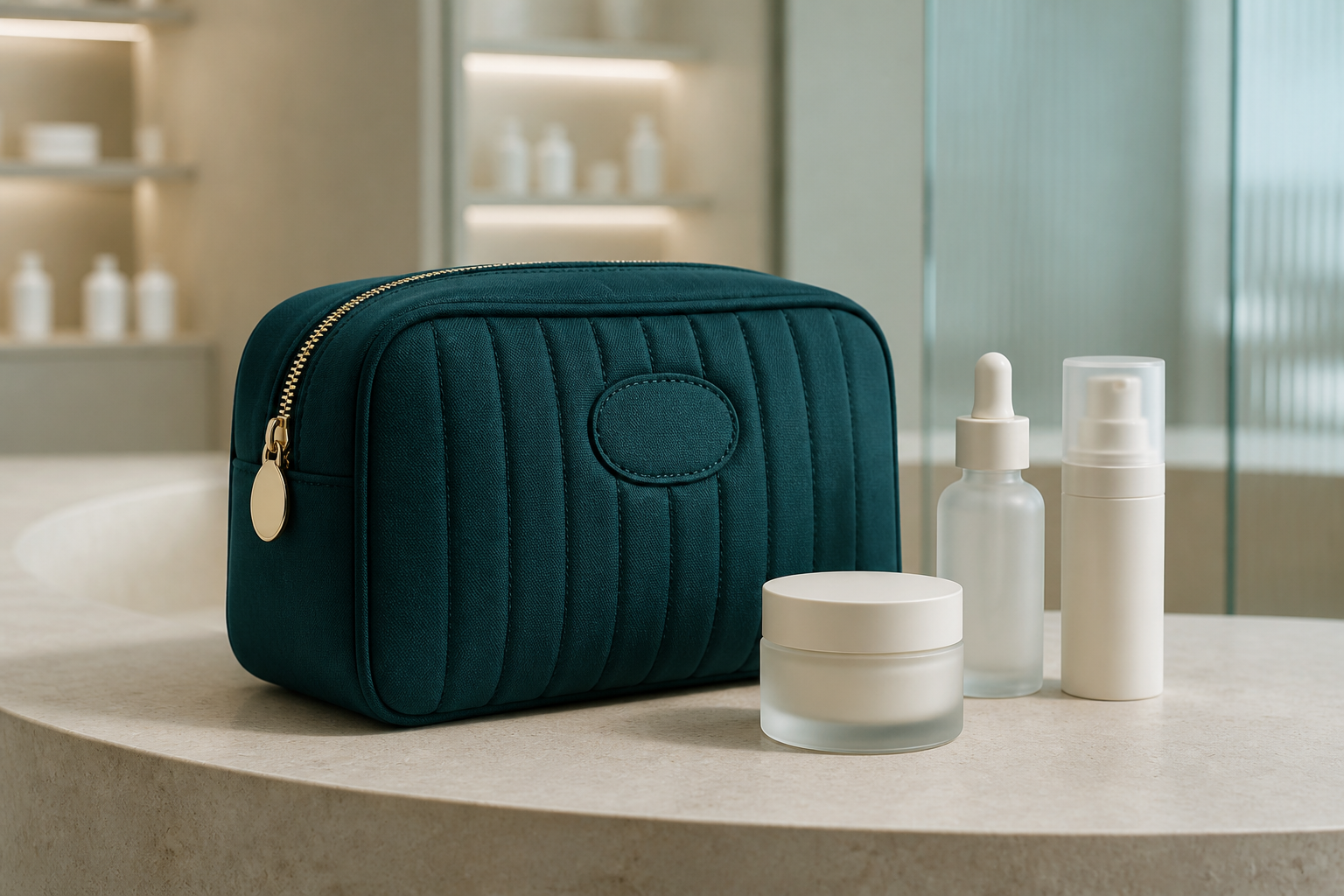
A private label cosmetic bag can do more than carry samples. For a skincare brand, it may become a permanent accessory SKU, a gift that improves conversion, a paid routine bundle, a subscription retention tool or a travel format that makes an existing regimen easier to use. Those jobs look similar in a mood board, but they require different margins, packaging, inventory rules and approval evidence.
Planning an order? Send the private-label program details already known. Include the bag role and sales channel, destination and intended user, skincare container list and filled weights, materials and construction, brand assets, exact claims, quantity by SKU and color, packaging, required evidence and launch date.
This guide explains how to develop Private Label Cosmetic Bags for Skincare Brands as controlled brand products. It focuses on the decisions that sit between a creative concept and a reliable reorder: the commercial role, skincare-container fit, ownership of specifications, claim evidence, launch gates and performance measurement.
Quick answer: start with the SKU role, not the bag style
The strongest private label brief begins with one sentence: “This bag will be used as…” That sentence decides which cost model applies, whether the unit needs retail packaging, what must fit inside, how much branding is appropriate, and which team owns the inventory.
| Private label role | Primary business objective | Design priority | Commercial measure |
|---|---|---|---|
| Permanent accessory SKU | Create a new revenue and margin line | Perceived value, repeat use and shelf readiness | Sell-through, gross margin and return rate |
| Gift with purchase | Increase conversion or order value | Broad appeal, clear brand recognition and deadline certainty | Redemption, conversion lift and acquisition cost |
| Paid regimen bundle | Raise basket value and simplify routine selection | Loaded fit, bundle presentation and component reconciliation | Bundle margin and attach rate |
| Subscription or loyalty benefit | Support retention and milestone rewards | Useful difference from earlier rewards and efficient fulfillment | Retention, activation and shipment cost |
| PR or creator kit | Improve presentation and content usability | Distinctive reveal, camera-friendly details and small-batch control | Qualified reach and content reuse |
For a broader comparison of sellable and giveaway routes, use our retail versus promotional cosmetic bag guide. This article goes one step further by treating the bag as a brand-owned SKU with its own commercial file.
1. Decide what “private label” means in your project
Private label is often used for several levels of customization. A buyer may only add a logo to an existing pattern, or may own a fully developed structure, material stack and hardware package. Neither route is automatically better. The important point is to name the level before requesting prices.
| Development level | What changes | Best fit | Main limitation |
|---|---|---|---|
| Stock platform + branding | Logo, selected stock color and simple packaging | Fast trial, event or low-complexity gift | Limited differentiation and color control |
| Modified platform | Dimensions, pocket layout, material, color and trims within a proven base | First sellable accessory or repeatable GWP | Some construction constraints remain |
| Brand-owned OEM style | Pattern, opening, structure, component specifications and visual details | Permanent retail line or signature regimen system | Higher development effort and more decisions to freeze |
| Collection platform | Shared construction rules across sizes or seasonal variants | Multi-SKU accessory program | Requires disciplined range and inventory governance |
If you are still comparing manufacturing capability, first review how to choose a cosmetic bag manufacturer.A reliable partner should explain which elements are truly custom, which use existing components and which changes trigger new tooling or MOQ.
2. Give every bag one commercial owner
A private label bag can fall between marketing, product development, packaging and operations. That creates predictable gaps: no one approves the final packed weight, the barcode location appears late, or a seasonal color is reordered without its original standard. Give one person authority over the finished bag SKU, then record supporting decisions by function.
| Owner | Approval responsibility | Evidence to retain |
|---|---|---|
| Brand or creative | Color, logo execution, visual hierarchy and customer-facing details | Artwork, physical color standard and signed appearance sample |
| Product development | Dimensions, construction, materials, components and usability | Tech pack, BOM, test plan and loaded-use record |
| Commercial or merchandising | Channel, retail price, margin target and assortment position | SKU brief, margin model and launch quantity |
| Operations | Pack-out, carton data, delivery window and replenishment route | Packing specification, carton approval and reorder calendar |
| Compliance or legal | Market rules, claims, warnings, traceability and intellectual property | Requirement matrix and substantiation file |
3. Separate the bag program from the skincare product program
An empty cosmetic bag is an accessory. A filled kit also contains regulated cosmetics, and sometimes the outer presentation becomes part of the product labeling that accompanies the formulas. Do not assume that a bag test report covers the creams inside, or that a formula dossier covers the bag’s material, zipper and consumer-product obligations.
| Offer configuration | Bag workstream | Skincare workstream | Integration check |
|---|---|---|---|
| Empty accessory sold alone | Consumer-product safety, construction, labeling and packaging | Not applicable | Avoid claims that imply formula performance |
| Bag supplied as an empty gift | Same finished-bag controls; confirm promotional route | Campaign products remain under their normal controls | Define whether products are inserted later |
| Paid set with products inside | Loaded fit, stain/leak response and packing protection | Formula safety, cosmetic label, batch and destination obligations | Reconcile components, labels and lot traceability |
| Subscription shipment | Repeated packing performance and change control | Monthly formula/SKU configuration | Confirm every shipment combination before release |
In the United States, the FDA cosmetics-labeling resources explain that cosmetic labeling and claims must comply with the applicable framework. In the EU, cosmetic notifications are handled through the Cosmetic Products Notification Portal; Great Britain has separate Responsible Person and notification guidance. These formula-related obligations should not be mistaken for approval of the empty bag.
4. Build the bag around a real skincare routine
Skincare payloads behave differently from makeup assortments. They often include upright pumps, fragile droppers, wide jars and tubes that can retain product around their caps. Start with physical containers from the final or representative packaging run. Record each item’s maximum dimensions, closure type, filled mass and preferred orientation.
| Container type | Bag design question | Useful validation |
|---|---|---|
| Glass dropper bottle | Can it stay separated from hard items and side impact? | Loaded drop and contact-point review |
| Airless pump | Is the cap protected from pressure and accidental actuation? | Closure clearance and compression trial |
| Wide cream jar | Does it create a bulge or unstable base? | Loaded silhouette and upright-standing test |
| Flexible cleanser tube | Can the cap rub, open or collect residue? | Pocket retention and repeated pack/unpack cycle |
| Face mist or sunscreen | Will it fit the travel routine and destination restrictions? | Height, opening and channel-specific packing review |
Use the detailed method in our cosmetic bag size and capacity guide when translating the payload into external dimensions. The goal is not maximum geometric volume; it is a controlled fit that remains easy to pack, close, carry and clean.
5. Write a regimen-fit specification
A mood board cannot prove usability. Add a regimen-fit sheet to the technical file. It should identify the exact or surrogate skincare containers, their orientation, the allowed movement and the pass/fail result after the bag is handled.
| Fit control | Example acceptance statement | Why it matters |
|---|---|---|
| Payload identity | Five approved container codes or controlled dummies listed | Prevents testing with smaller, lighter substitutes |
| Closure | Zipper closes without forcing or compressing pump heads | Reduces closure stress and accidental dispensing |
| Retention | Upright containers remain in their assigned loops after handling | Protects regimen order and limits contact |
| Bag profile | Loaded unit stands as intended and retains the approved silhouette | Protects product photography and perceived value |
| Access | Each item can be removed without unloading the full routine | Improves everyday use rather than display-only capacity |
| Cleaning | Representative residue can be removed by the approved care method | Makes the accessory credible for skincare use |
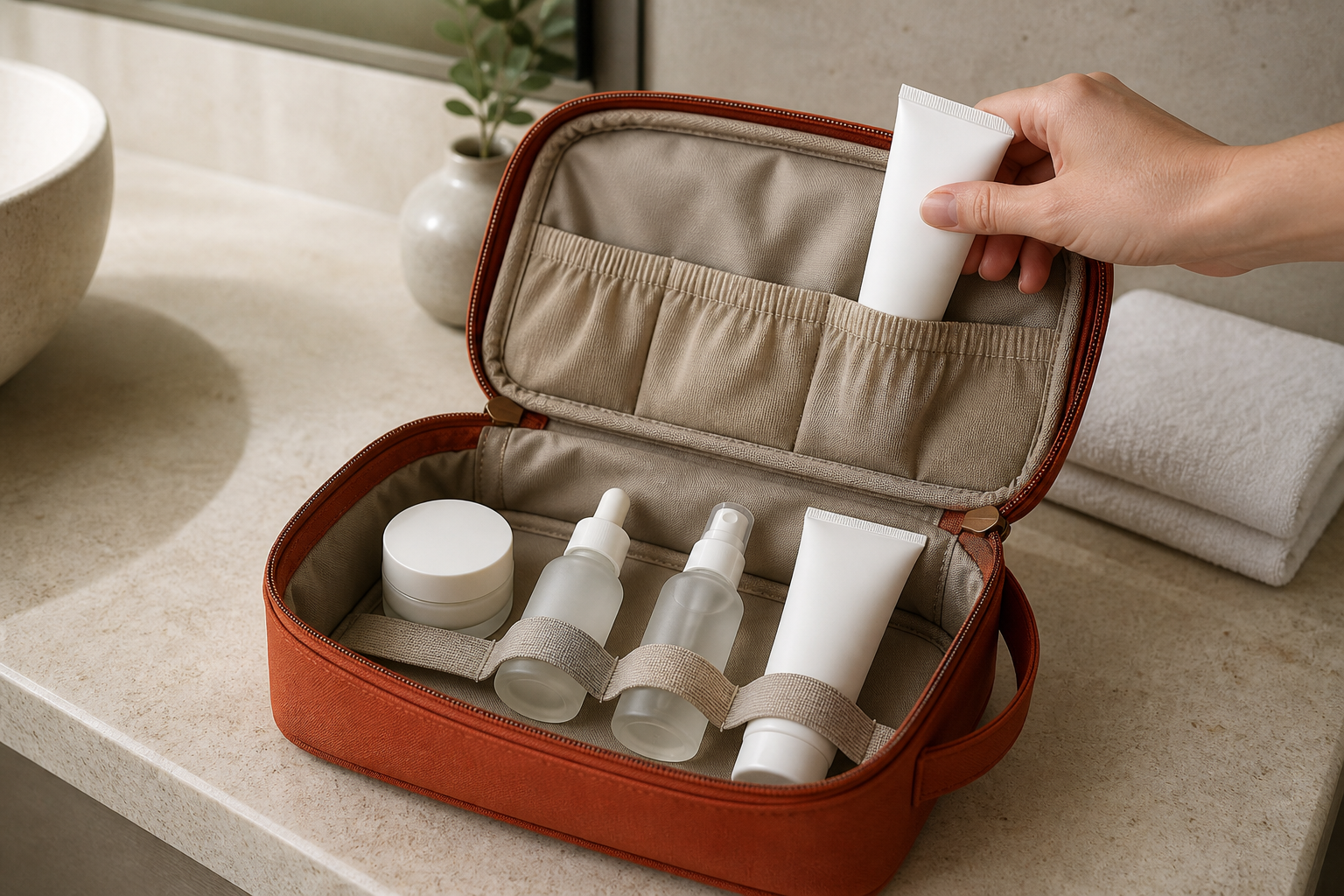
A loaded-use test reveals problems that an empty beauty shot cannot: pump clearance, pocket tension, access order, loaded balance and cleanability.
6. Choose an interior that tolerates skincare reality
“Wipe-clean” should describe a verified construction, not just a shiny fabric. Seams, binding, zipper tape and pocket edges may retain residue even when the center panel cleans easily. Sunscreen filters, facial oils, tinted products and active-rich formulas can also mark materials differently.
| Interior decision | What to specify | Common private label risk |
|---|---|---|
| Lining face | Material code, finish, color and approved cleaning method | A pale lining shows oil rings or color transfer |
| Seam treatment | Bound, coated, taped or conventional seam route | Liquid travels through needle holes or collects under binding |
| Pocket material | Elastic recovery, mesh openness or solid-panel finish | Small containers tip or labels abrade |
| Base support | Removable board, foam or laminated structure | Jar weight collapses the base after repeated use |
| Care communication | Safe cleaning steps validated on the finished bag | Consumer instructions damage coating or hardware |
For a deeper material decision, see our custom cosmetic bag material guide and lining construction and cleaning guide. If the program needs enhanced spill resistance, define the target precisely with the waterproof cosmetic bag manufacturing guide instead of using an unqualified waterproof claim.
7. Use organization only where it supports the routine
Private label value does not come from adding the largest possible number of pockets. A useful interior reflects how customers sequence products: cleanse, treat, moisturize and protect. Too many narrow loops increase labor, restrict future container changes and can make the bag feel cluttered.
| Organization feature | Good use | Watch point |
|---|---|---|
| Wide elastic channel | Airless pump or mist bottle | Specify circumference range and elastic recovery |
| Low divider | Separate jars from bottles without blocking access | Confirm it does not deform the shell |
| Zipped wet pocket | Contain a small used cloth or possible residue | Adds bulk, zipper labor and cleaning edges |
| Removable insert | Convert between home and travel routines | Creates a second component and packing count |
| Open slip pocket | Flat sachets or patches | Avoid depths that hide small items |
Use our compartments and holder guide to specify pocket geometry rather than requesting a generic “organized interior.”
8. Create recognizable brand codes without over-branding
A private label bag should remain identifiable when the logo is partly covered or the unit is viewed from the side. Build recognition through a small system: shell color, quilting or panel geometry, hardware finish, puller shape, lining contrast and one deliberate logo treatment.
| Brand code | Controlled reference | Approval question |
|---|---|---|
| Color | Physical master plus approved instrument or lab-dip data | Does the material change the perceived shade? |
| Logo | Vector artwork, size, position and process specification | Is it legible without dominating the product? |
| Hardware | Finish chip or sealed reference component | Does it coordinate with the skincare pack and resist wear? |
| Quilting or panel line | Dimensioned drawing and stitch sample | Can bulk sewing repeat the rhythm consistently? |
| Lining contrast | Material and color code | Does it improve visibility without showing residue too quickly? |
Color approvals should follow a documented sequence from reference to bulk; our Pantone, lab dip and bulk color approval guide explains that workflow. Zipper and metal details should be controlled with the cosmetic bag zipper and hardware guide.
9. Decide whether the bag is permanent, seasonal or campaign-specific
The lifecycle changes every sourcing decision. A permanent bag benefits from stable components and reorder discipline. A seasonal drop can accept a more distinctive color, but it needs an exit plan. A campaign gift is tied to a media and launch calendar, so on-time delivery may matter more than future replenishment.
| Lifecycle | Recommended design behavior | Inventory rule |
|---|---|---|
| Core | Use repeatable materials, controlled components and evergreen brand codes | Maintain reorder file and supplier change notification |
| Seasonal | Change one or two visible variables on a stable construction | Set launch, markdown and end-of-life dates |
| Campaign | Prioritize recognition and deadline resilience | Tie purchase quantity to qualified distribution |
| Test capsule | Limit SKU count and preserve a clear learning objective | Define success threshold before ordering |
| Loyalty milestone | Make the value feel exclusive without complex one-time tooling | Forecast by eligible customer cohort |
10. Build a SKU ladder that earns its complexity
A skincare brand rarely needs five bag shapes at launch. A more defensible ladder begins with a hero format, then adds a smaller or more structured option only when it serves a different routine or price point. Shared visual codes can make the family coherent without forcing every component to be identical.
| SKU role | Payload promise | Reason to add it |
|---|---|---|
| Daily essentials pouch | Short morning or evening routine | Broad entry point and low storage burden |
| Travel regimen bag | Full routine in travel-compatible containers | Clear occasion and higher functional value |
| Home organizer | Full-size jars, pumps and treatment items | Distinct capacity and countertop use |
| Launch-exclusive color | Same payload as a proven core style | Creates novelty without a new construction |
| Refill or subscription insert | Selected monthly components | Supports service experience rather than standalone retail |
If multiple sizes are justified, use the cosmetic bag collection-design framework to control shared and unique features. Do not add a SKU merely because the factory can make it.
11. Model economics according to the program
Private label profitability is not one unit price. A sellable bag needs a contribution-margin view. A gift requires an acquisition or retention budget. A filled bundle requires component-level reconciliation and must account for unsellable sets if one part is unavailable.
| Program | Useful calculation | Cost often missed |
|---|---|---|
| Retail accessory | Net sales minus landed bag cost, fulfillment and expected returns | Retail unit pack, channel fees and markdown |
| Gift with purchase | Landed bag cost divided by qualified redeemed orders | Over-redemption, late stock and campaign leftovers |
| Paid bundle | Bundle revenue minus bag, formulas, assembly, pack and fulfillment | Component imbalance and manual reconciliation |
| Subscription reward | Incremental retention value minus delivered reward cost | Postage step-up and service replacement units |
| PR kit | Cost per qualified recipient and reusable content asset | Small-run setup and presentation labor |
The 2026 custom cosmetic bag pricing guide explains the manufacturing cost drivers, while our cost-reduction guide shows where to simplify without removing the features customers notice. Use both only after the commercial role is clear.
12. Control MOQ at the SKU level
A quoted minimum may apply to the bag style, shell color, printed lining, custom puller, unit packaging or a material order. A four-color launch can therefore create more inventory than one “MOQ” number suggests. Ask the supplier to show which component sets each minimum.
| MOQ layer | Buyer question | Possible control |
|---|---|---|
| Finished bag | Is the minimum per style, size or color? | Launch one hero shape and fewer colorways |
| Dyed material | What is the minimum per custom shade? | Use an available base or share fabric across SKUs |
| Printed lining | Is setup tied to design or color? | Keep one lining across the initial family |
| Custom hardware | Does the puller or plate require tooling and plating minimums? | Use a controlled standard component for the pilot |
| Retail packaging | Is the print quantity separate from the bag quantity? | Use a flexible label or sleeve for the first run |
For a detailed timing and quantity framework, use the cosmetic bag MOQ and production-time guide.
13. Approve the private label bag through decision gates
Do not ask one early prototype to settle every question. Separate construction, brand appearance, loaded routine, packaging and production-standard approvals. This makes feedback specific and prevents an attractive sample from advancing with unresolved function.
| Gate | Question answered | Required output |
|---|---|---|
| Concept gate | Does the SKU have a valid commercial role? | Signed SKU brief and target economics |
| Architecture sample | Do size, opening and organization work? | Construction corrections and payload fit record |
| Appearance sample | Are material, color, logo and hardware coherent? | Physical appearance approvals |
| Loaded-use sample | Does the actual skincare routine pack and travel safely? | Photos, observations and pass/fail sheet |
| Pack-out sample | Can the unit be labeled, protected and fulfilled correctly? | Approved unit pack and carton arrangement |
| Production standard | Is there one reference for bulk manufacture and inspection? | Sealed sample linked to the final tech pack |
Use our cosmetic bag sample-development process for sample rounds and the cosmetic bag tech-pack guide for the final controlled specification.
14. Test the promise the customer will experience
The test plan should follow the marketed use, materials and destination rules. An accessory promoted for travel needs repeated opening, loaded handling and pocket retention checks. A claim about recycled content needs chain-of-custody evidence relevant to the actual production lot. A bag intended for children or including special features may trigger a different regulatory review.
| Promise or risk | Evidence route | Release question |
|---|---|---|
| Repeated daily use | Zipper cycling, seam review and loaded handling | Does function remain stable after the defined cycles? |
| Spill resistance | Representative liquid exposure and seam-path observation | Which zones resist liquid, and for how long? |
| Color durability | Rubbing, transfer and relevant exposure checks | Will the bag mark pale products, clothing or counters? |
| Material claim | Supplier scope, transaction record and applicable certification evidence | Does evidence cover this material, facility and lot? |
| Destination compliance | Market-specific requirement matrix and test reports | Are applicable rules identified for the finished offer? |
The custom cosmetic bag testing guide helps convert claims into test questions. In the United States, the CPSC testing and certification guidance makes clear that certification applies where a consumer-product rule covers the product. For EU consumer products, review the applicable obligations under the General Product Safety Regulation with a qualified compliance specialist.
15. Substantiate sustainability language before artwork release
Words such as green, eco-friendly, recycled, recyclable and biodegradable can imply more than a material quotation proves. Decide the exact claim, the part of the product it covers, the percentage or boundary, and the evidence that will travel with the production lot. Keep bag claims separate from statements about the skincare formula or its primary container.
| Claim question | Good file behavior | Weak behavior |
|---|---|---|
| What is covered? | Name shell, lining, webbing or packaging separately | Call the entire bag sustainable because one panel changed |
| How much? | State the supported percentage or defined component scope | Use an unqualified recycled claim |
| Which evidence? | Retain relevant supplier and transaction documents | Rely on an unrelated certificate screenshot |
| Which market? | Review local claim interpretation and disclosure rules | Reuse one global phrase without legal review |
| What changed? | Recheck the claim after material or supplier substitution | Keep old artwork after the certified input changed |
The FTC Green Guides explain how marketers can avoid misleading environmental claims. For recycled-polyester sourcing controls, use our RPET cosmetic bag certification checklist.
16. Design retail packaging around the selling channel
A private label bag does not always need a printed box. It does need an intentional unit condition, identification route and protection level. Ecommerce may prioritize scuff and moisture protection; a skincare boutique may need a hangtag or shelf-ready band; a filled set may require a component list and controlled assembly instruction.
| Channel | Unit-pack job | Release detail |
|---|---|---|
| Brand ecommerce | Protect the bag through pick, pack and parcel handling | Barcode, protective wrap and return-ready condition |
| Beauty retailer | Support shelf identification and visual presentation | Retailer label zone, hanging/shelf method and anti-tamper need |
| Filled regimen set | Keep the bag and cosmetic components reconciled | Assembly order, component count and outer-label review |
| Subscription | Fit the recurring shipper without a postage surprise | Packed dimensions, mass and insertion sequence |
| Gift with purchase | Enable fast distribution and campaign counting | Simple identification, master-carton quantity and campaign code |
Our beauty-brand cosmetic bag packaging guide covers pack architecture in depth. Once the unit route is approved, use the carton-optimization guide to control master-carton efficiency.
17. Freeze a reorder pack, not only a golden sample
A physical sample is valuable, but it cannot reveal a material code, color tolerance, approved logo file, test version or packaging count. A repeatable private label program keeps the sample and the written data synchronized.
| Reorder-pack item | Minimum content | Change-control purpose |
|---|---|---|
| Final tech pack | Dimensions, tolerances, construction, artwork and packing | Defines the released configuration |
| BOM | Supplier-specific material and component references | Identifies silent substitutions |
| Approval register | Color, material, hardware, logo and sample approvals | Shows which version is current |
| Test and compliance file | Reports tied to style, material and production scope | Triggers review after relevant change |
| Carton specification | Unit pack, quantity, dimensions, mass and markings | Protects freight and fulfillment assumptions |
| Change log | Requested change, reason, approver and effective order | Prevents undocumented drift between runs |
18. Inspect what carries the skincare brand
Bulk inspection should prioritize the attributes customers connect to the brand: shade, logo, feel, opening experience, cleanliness and loaded performance. Random units should be compared with the written specification and approved physical standards, not with memory or a phone photo.
| Inspection area | Private label checkpoint | Typical evidence |
|---|---|---|
| Identity | Correct SKU, colorway, logo version and packaging | Purchase order and approved art register |
| Appearance | Shade, quilting rhythm, panel symmetry and surface condition | Sealed sample and color standard |
| Function | Zipper travel, pocket recovery, handle strength and standing behavior | Defined checks with sampled results |
| Loaded use | Approved skincare dummies fit without forced closure | Payload list and loaded reference photos |
| Cleanliness | No objectionable odor, loose debris, stains or residue | Inspection criteria and defect record |
| Packing | Unit protection, identifiers, count and carton condition | Packing specification and carton sample |
Use the cosmetic bag quality-control checklist to turn these priorities into a pre-shipment inspection plan.
19. Measure the first launch before expanding the range
The first order should answer a small number of commercial questions. Did customers buy or redeem the bag? Did it increase basket value? Which complaints appeared after use? Did operations encounter packing or replacement problems? Capture those signals before approving more colors and sizes.
| Signal | What it can reveal | Possible next decision |
|---|---|---|
| Sell-through by week | True demand and launch decay | Reorder, pause or change price |
| Attach rate | Whether the bag strengthens a skincare purchase | Refine bundle or cross-sell placement |
| Return reason | Mismatch between promise and user experience | Correct size, opening, materials or listing |
| Customer-service tags | Leaks, odor, zipper or organization problems | Update construction or care communication |
| Fulfillment data | Packing time, dimensional weight and damage | Revise unit pack or carton plan |
| Repeat demand | Potential for a core accessory line | Convert capsule into controlled permanent SKU |
Official-source check: The linked FDA, European Commission CPNP, GOV.UK, CPSC, EUR-Lex GPSR and FTC resources were reviewed on 14 September 2026. Destination rules and guidance can change; the skincare brand, responsible entity and qualified advisers should confirm the current obligations for the formula, bag, claims, labels and finished offer before launch.
Why choose LUCKYSTAR for a skincare private label program?
LUCKYSTAR helps connect the brand idea to the manufacturing file. Instead of treating the project as “a pouch with a logo,” our team can work through the intended skincare routine, construction route, material and lining choices, color references, logo process, hardware, sample gates, packing details and production quality checkpoints.
| LUCKYSTAR capability | Value for a skincare brand |
|---|---|
| Multi-material development | Compare textile, coated and structured options against the intended position and cleaning route |
| Construction engineering | Translate container payloads and usage into dimensions, openings, pockets and support |
| Brand-detail control | Coordinate color, logo, quilting, lining and hardware as one visual system |
| Structured sampling | Separate architecture, appearance, loaded-use and packing decisions |
| Production and QC coordination | Link bulk inspection to approved specifications and physical references |
| Program scalability | Preserve the data needed for replenishment, seasonal color changes or a controlled SKU family |
Explore LUCKYSTAR custom cosmetic bag capabilities and the broader Product Range. For supplier strategy beyond this category, our custom bag manufacturer guide explains the full development and sourcing framework.
Project note: Available material development, custom components, color submissions, sampling, packing support, inspection documents and third-party testing coordination depend on the selected design, supplier route, destination requirements, quantity and written order specification. The skincare brand and its appointed responsible entities remain responsible for formula safety, cosmetic notifications, claims, labels and the final market offer.
Private label skincare cosmetic bag RFQ checklist
| RFQ field | Information to send |
|---|---|
| Commercial role | Retail accessory, gift, bundle, subscription reward or PR kit |
| Market and channel | Destination countries, ecommerce/retail route and intended customer |
| Payload | Container list, maximum dimensions, filled mass and preferred orientation |
| Bag target | Shape, external size, opening, organization and carrying behavior |
| Materials | Shell, lining, interlining, support and required finish |
| Brand codes | Color references, logo artwork, placement, hardware and quilting |
| Claims | Exact language plus evidence and destination review requirements |
| Packaging | Unit protection, label/barcode zone, set assembly and carton needs |
| Quantity | Units per SKU/color plus launch and reorder expectation |
| Calendar | Sample review dates, artwork freeze and required delivery date |
| Quality | Test matrix, inspection standard, loaded dummies and sealed-sample plan |
Frequently asked questions
Is a private label cosmetic bag the same as private label skincare?
No. The bag is a branded accessory; private label skincare normally involves the cosmetic formulation, filling, cosmetic safety file, labeling and market-specific responsibilities. When sold together, both workstreams must be reconciled without treating them as one interchangeable approval.
Should a skincare brand sell the bag or offer it as a gift?
Choose according to the business objective. A sellable accessory needs durable perceived value, retail margin and return readiness. A gift is measured against conversion, retention or qualified distribution. A paid bundle must support the combined margin and component availability.
How many private label bag SKUs should launch first?
Many brands learn more from one well-defined hero structure in one or two colorways than from a broad first range. Add a second format only when it serves a genuinely different routine, channel or price point.
Which cosmetic bag is best for a skincare routine?
The best construction depends on the actual containers. Tall pumps may need upright retention and cap clearance; glass droppers need separation; jars influence base support. Validate the physical regimen rather than choosing from a generic size name.
Can the bag be described as waterproof?
Only use a claim supported by the finished construction and a clearly defined test route. A coated shell may resist splashes while seams and zipper areas still allow ingress. More precise language such as water-resistant exterior may be appropriate when supported.
What should the approved sample include?
The production standard should include final construction, material, shade, logo, hardware, lining and packaging. Keep it linked to the current tech pack, BOM, approval register and loaded-use record so the factory and inspector follow the same release.
Can LUCKYSTAR help with low-complexity first launches?
Yes. The team can discuss stock-platform branding, modified platforms and full OEM development. The right route depends on the required differentiation, quantity, timing, material choices and repeat-order plan.
What information is needed for a quotation?
Send the bag’s commercial role, destination, quantity by SKU/color, skincare payload, dimensions or reference style, material direction, logo artwork, packaging, claims, test needs and delivery date. The more controlled the brief, the easier it is to compare realistic options.
Turn the branded accessory into a controlled product
Private Label Skincare Cosmetic Bags perform best when the brand gives them a clear commercial role, validates a real skincare routine, separates bag and formula responsibilities, approves brand codes physically, and keeps a reorder-ready manufacturing file. That discipline protects both customer experience and brand equity.
Review our custom cosmetic bags for skincare brands, use the cosmetic bag manufacturer selection checklist to evaluate development partners, and return to the custom bag manufacturing pillar page for the wider sourcing system.
To develop Custom Cosmetic Bags for Skincare Brands, contact LUCKYSTAR for a tailored quotation with your SKU role, container payload, brand references, quantity and launch calendar.

Request a private-label bag program review
Send the bag role, destination and channel, intended user, actual skincare payload, construction and interior requirements, brand assets, exact claims, quantity by SKU and color, packaging and label needs, buyer-required evidence, destination and launch date.
Send your project details through the contact form, or Email a project brief with this guide already referenced. The email link opens a draft for your review before sending.
Materials, construction, fit, branding, samples, testing, claims support, packaging, inspection, MOQ, price, schedule and delivery terms are subject to specification, applicable responsibility review and written confirmation.