Buyer quick answer
Compare China cosmetic bag manufacturers with one frozen RFQ and an evidence checklist. Verify the legal seller and production roles, then compare product capability, material control, sample stages, decoration, quality gates, packing, commercial scope and dated delivery assumptions.
Role boundary: “manufacturer,” “factory,” “OEM” and “ODM” are commercial descriptions until the supplier identifies who designs, sources, cuts, sews or welds, decorates, inspects, exports and receives payment for the specific order.
Comparing cosmetic bag suppliers? Send one product and evidence brief to obtain a comparable scope review.
Prepare a comparable cosmetic bag RFQ
- Use: sales channel, intended contents, target user, destination and required product claims.
- Product: structure, finished dimensions, capacity, pockets, closure, handle and loading condition.
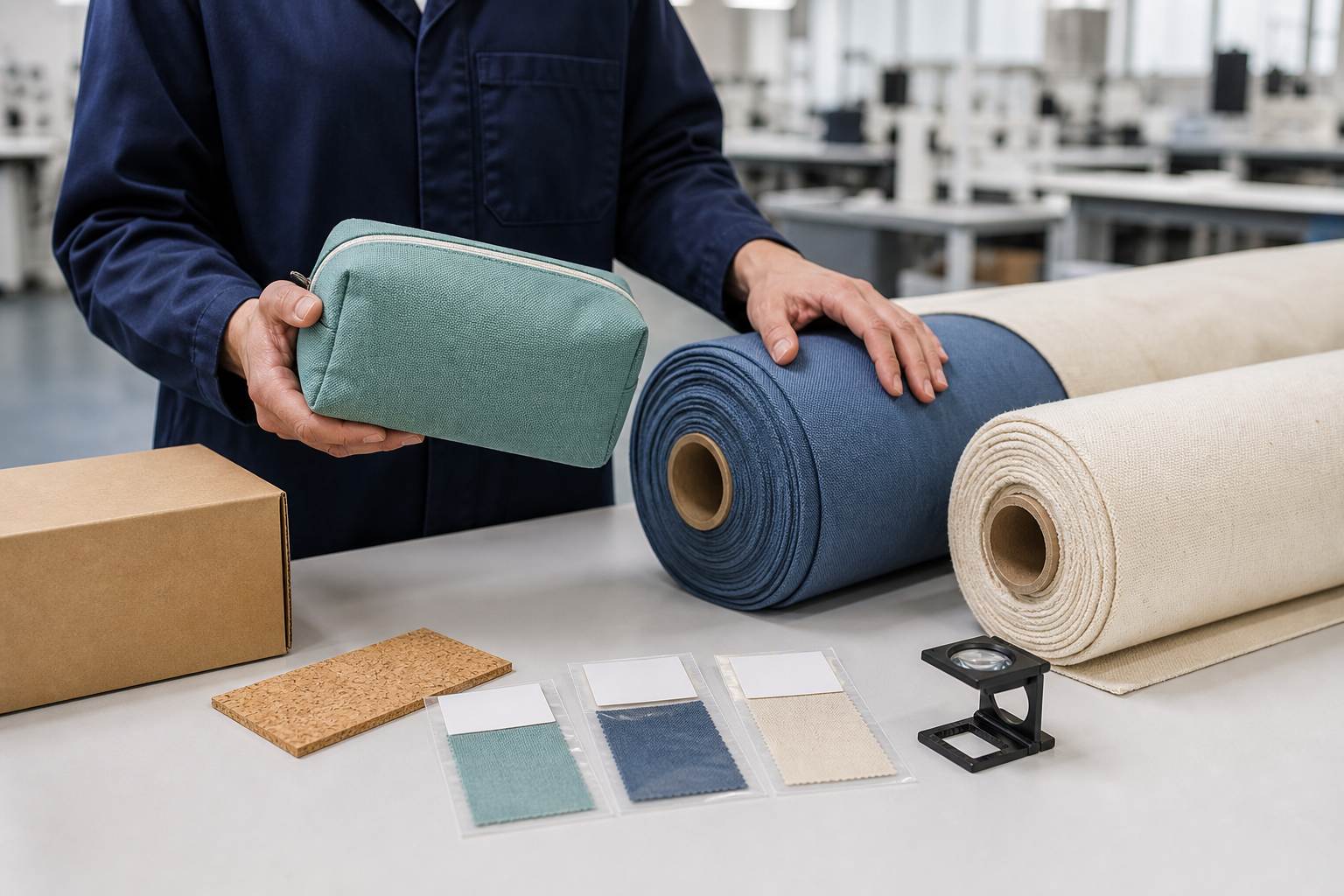
- Materials: outer, lining, interlining, zipper, hardware, trim, color, finish and evidence requirements.
- Branding: authorized file/version, method, size, position, colors, labels and market allocation.
- Order: quantity by SKU, samples, inspection, pack-out, Incoterm, destination and required date.
What Three Anonymized Cosmetic Bag Orders Show
These historical examples are anonymized from commercial documents and order records reviewed for this guide. Customer names, brands, contacts, prices, invoice or order identifiers and confidential terms are excluded. They show how volume, construction, color allocation and shipment planning change the sourcing work; they are not a promise of current capacity, MOQ, pricing or lead time.
Commercial PI rechecked
25,800-piece export order
The document records 25,800 cosmetic bags and ocean shipment from Ningbo.
Buyer lesson: keep the approved specification, packing plan and shipping documents aligned at order level.
Previously verified archive
70,000-piece, eight-color collection
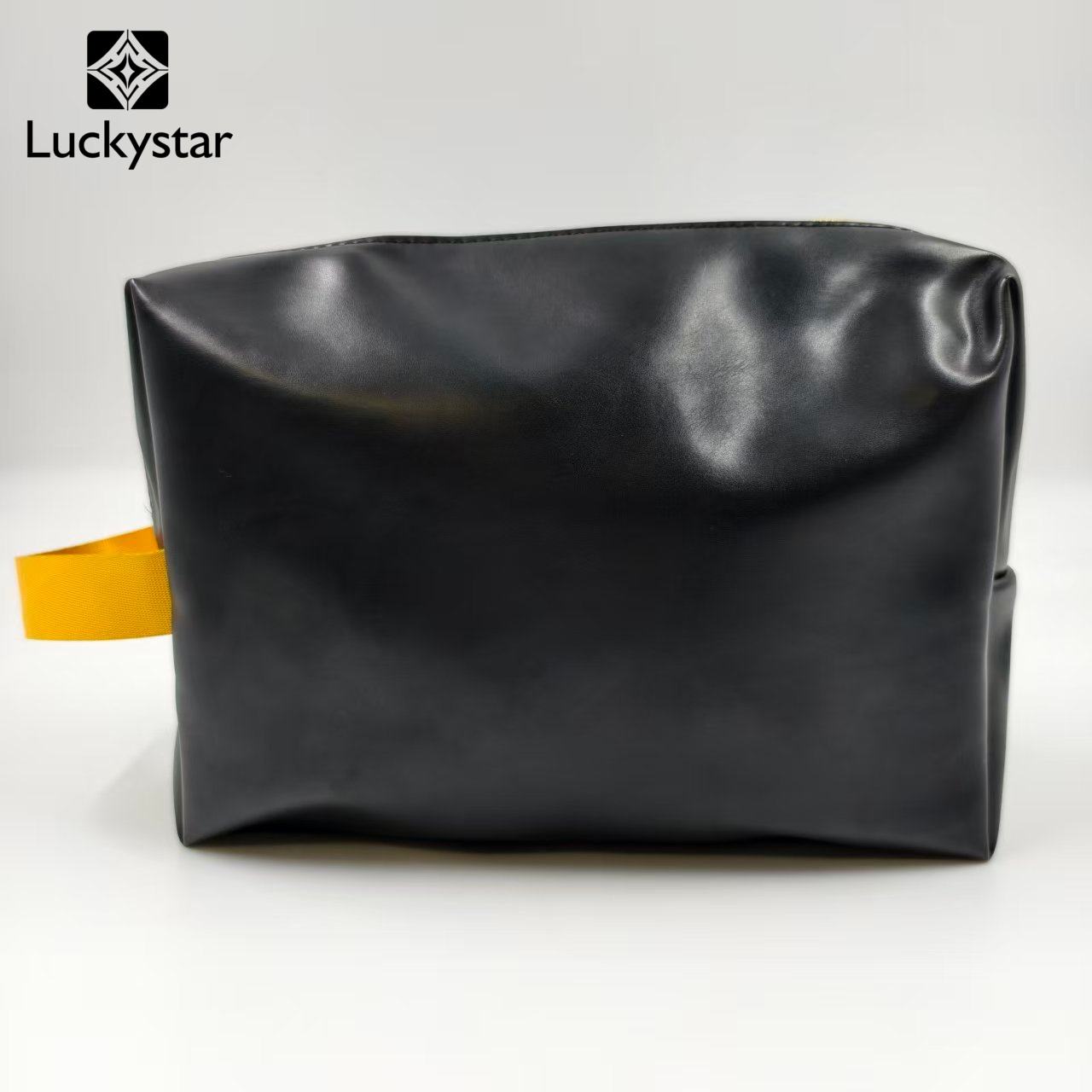
15 × 20 × 7.5 cm vertical format; peach-skin velvet; 210D polyester lining; gold nylon zipper; custom gold zipper pull; eight specified colors.
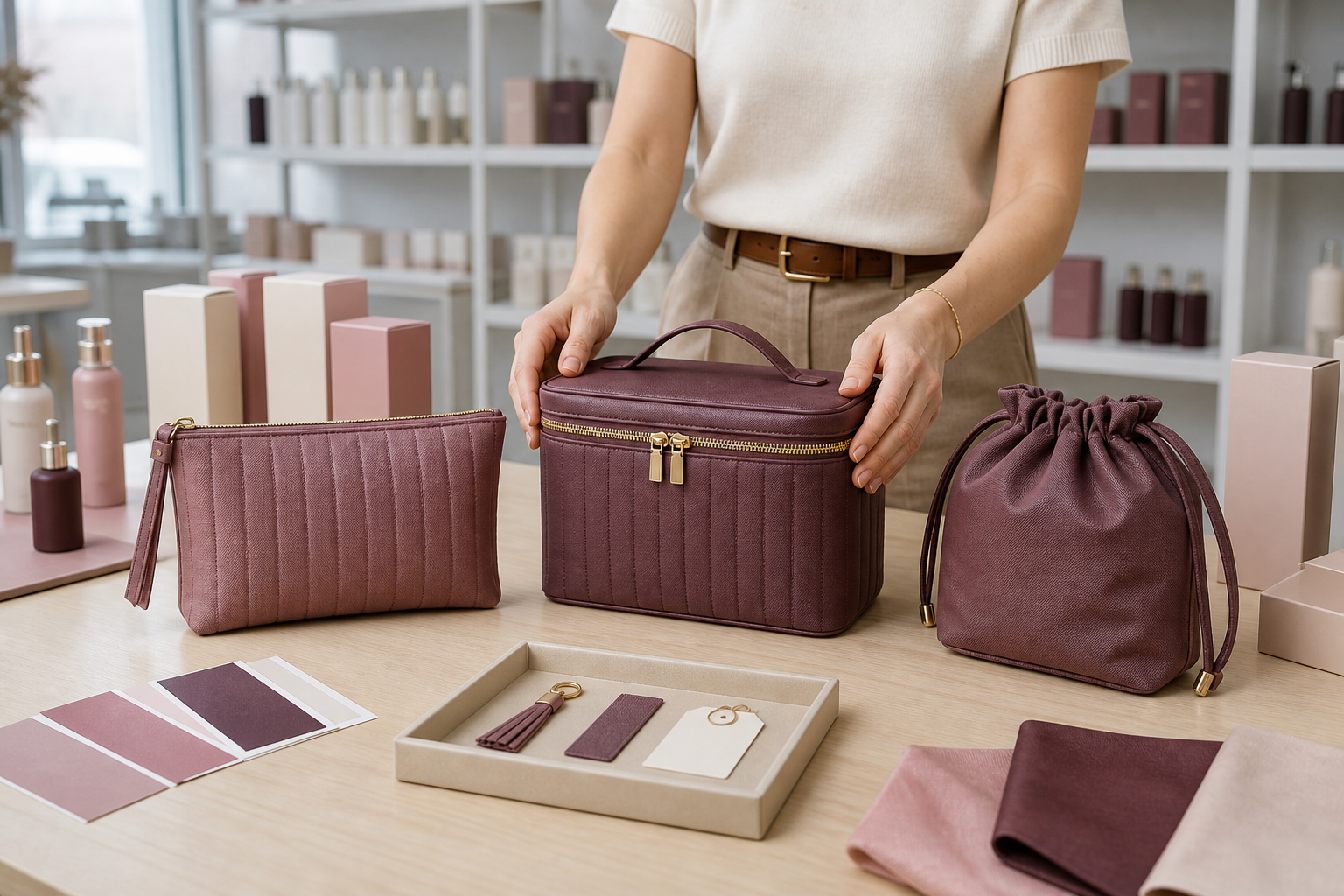
Buyer lesson: share one controlled construction across colors, while fixing shade references, quantity allocation, zipper finish and pack-out by color.
Order files and written quantity confirmation
91,000-piece program across five shipment lots
8 × 4.5 × 10 in dual-zip top-handle bag; 900D Oxford; 210D lining; 0.50 mm clear panel; matte black zippers; PP ring; two-color UV print and one-color screen print. The confirmed allocation was 1,000 and 12,000 pieces by air, then 19,000, 24,000 and 35,000 pieces by sea.
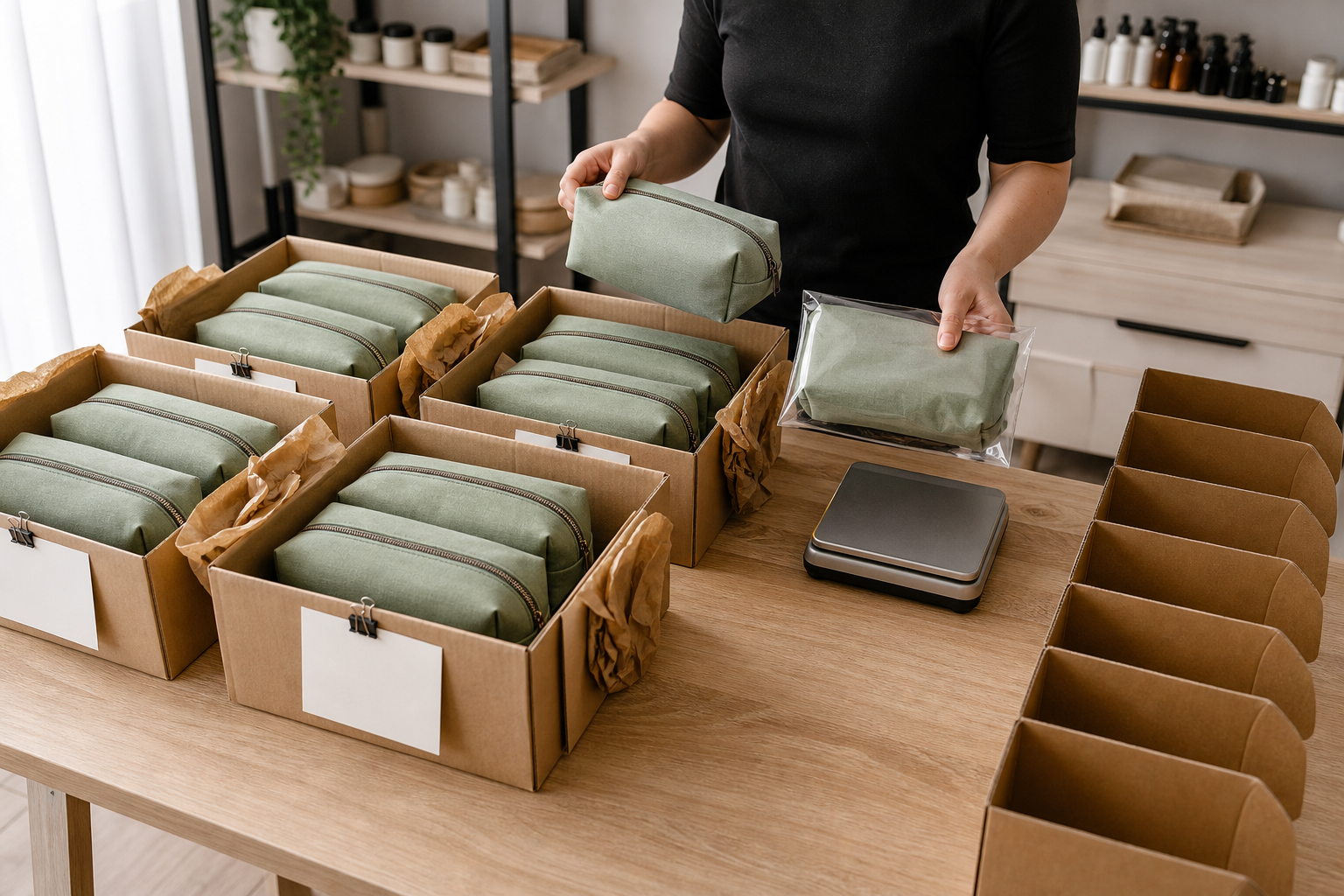
Buyer lesson: one controlled product revision must govern quantity, packing, inspection and documents for every shipment lot.
Evidence note: the 70,000-piece details were restored from the September 14 backup and the prior redacted workbook extraction because the source workbook was no longer available at its former location during this review. The 91,000-piece total and five-lot split remain based on the project owner’s written confirmation.
Review custom cosmetic bag options or send a comparable RFQ.
Choose the supplier model after defining the work
A stock or semi-custom program begins with an existing shape. OEM normally begins with buyer-controlled requirements. ODM normally includes more supplier contribution to product development. A sourcing partner may coordinate several production or packaging parties.
Ask each candidate to state the proposed model, which activities are direct or subcontracted, who owns patterns and design outputs, how revisions are charged and controlled, and who is accountable for nonconformities.
Start with the cosmetic bag’s job
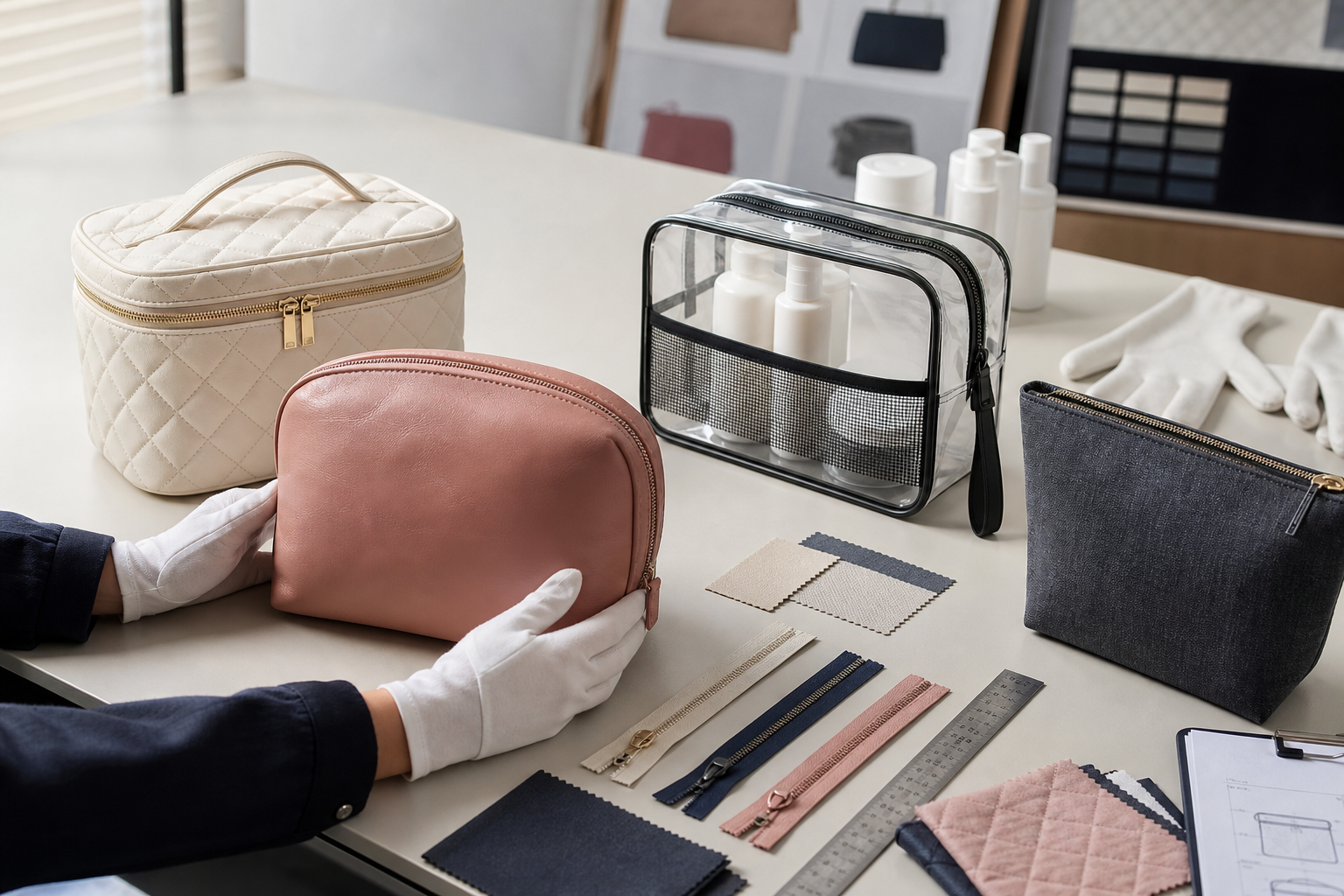
A flat promotional pouch, structured retail case, hanging organizer and filled beauty set create different construction and packing risks. List the intended contents, orientation, load, access frequency, cleaning expectations and shelf or transit presentation.
Use the proposed contents during sampling. Check capacity, closure strain, pocket access, lining interference, sharp contact points, base stability and recovery after representative packing.
Control material identity and claims
Specify outer and lining fiber or polymer, composition, weight or thickness basis, backing, coating, finish, color reference and relevant care. Link any recycled, organic, chemical, water-related or contact claim to the actual material, scope, standard, issuer, validity and order.
A fabric name, supplier statement or sample appearance is not evidence for every market claim. Define what documents or tests are required before quotation and verify that bulk lots match the approved basis.
Approve decoration on production material
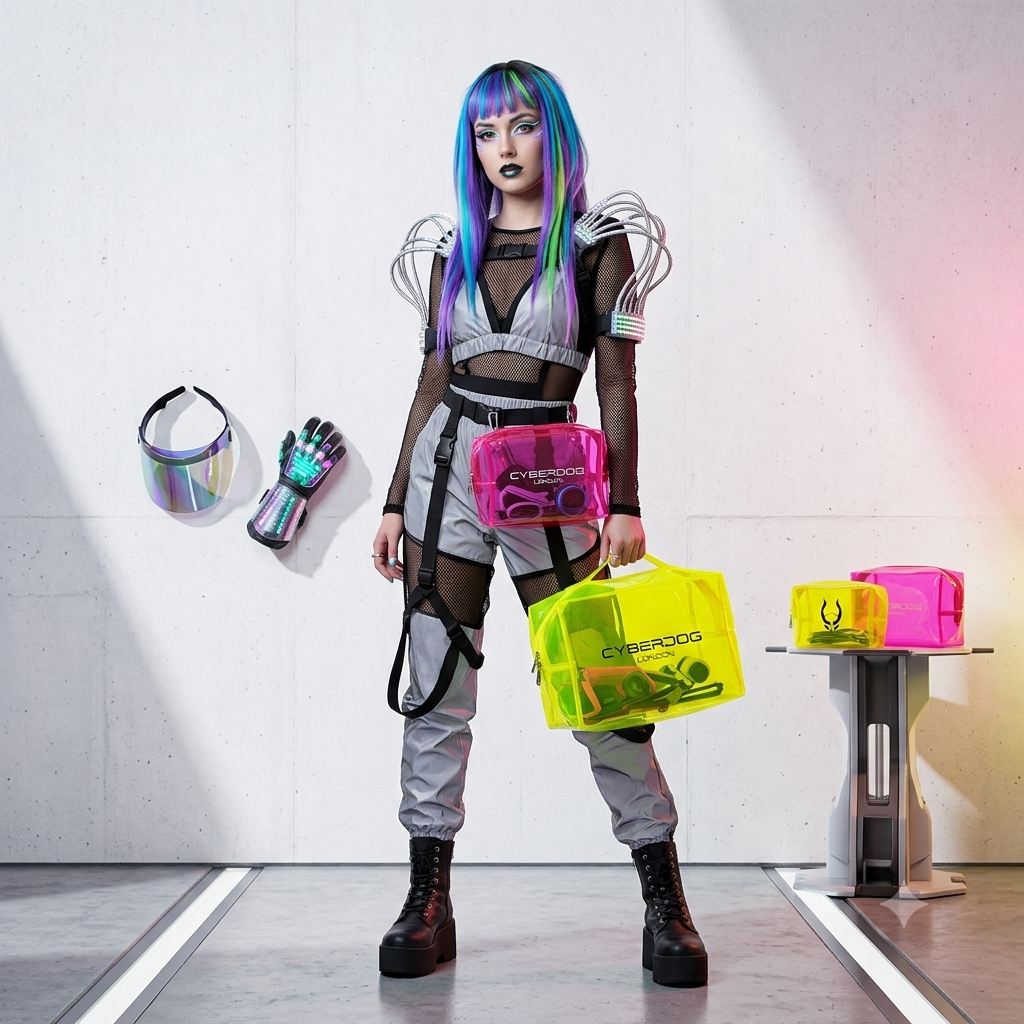
Screen print, transfer, embroidery, woven labels, patches and metal branding interact differently with woven fabric, PU, velvet and clear film. Approve the actual method on the proposed material.
Record artwork authorization and version, size, position, orientation, color reference, opacity or stitch details and tolerance. Test adhesion, rub, flex, sharp edges or attachment strength with an agreed method where relevant.
Define OEM and ODM deliverables
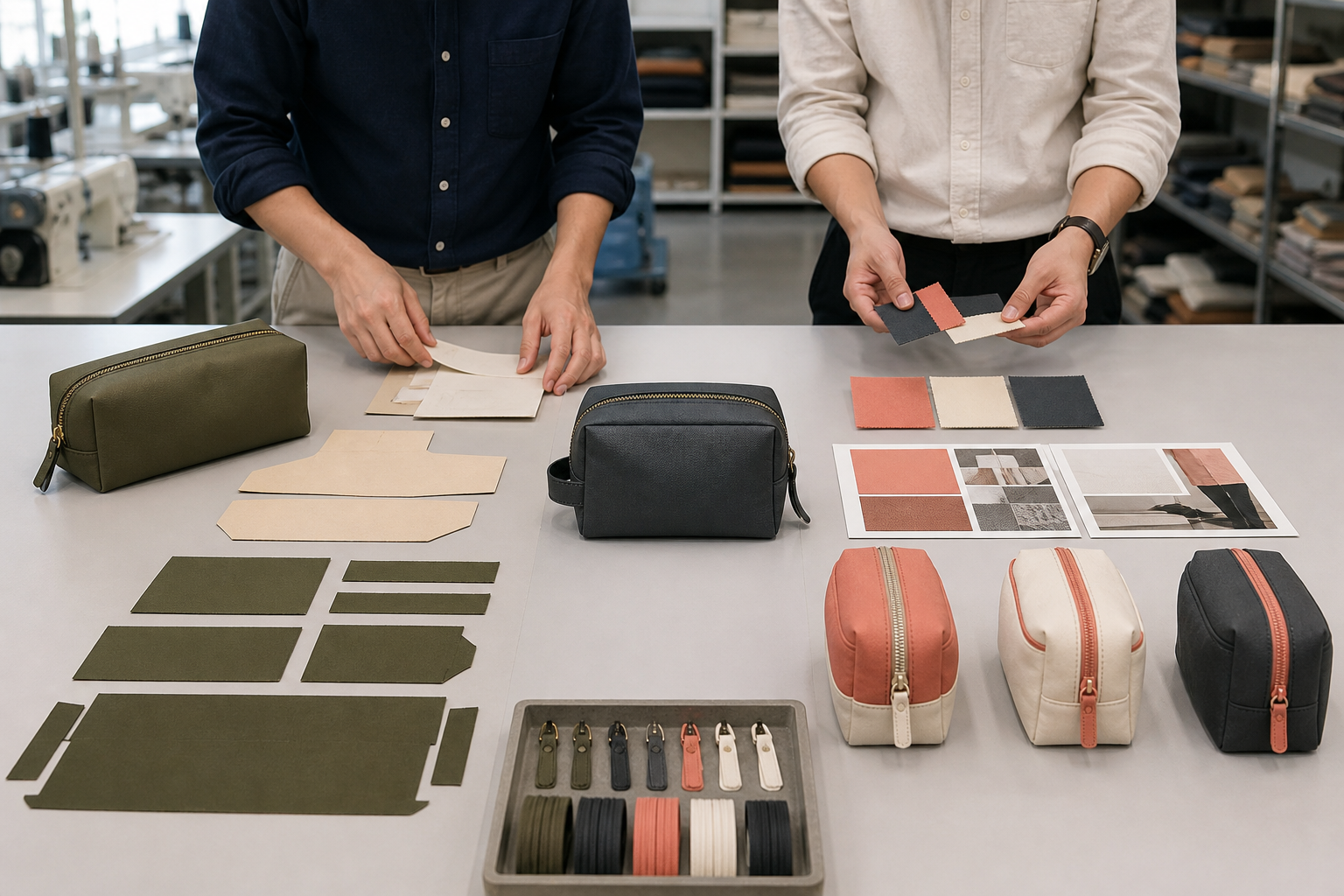
For OEM, state which dimensions, construction and materials are controlled by the buyer and which alternatives may be proposed. For ODM, define concept ownership, pattern and tooling access, exclusivity if any, revision rounds and whether the design may be offered elsewhere.
Both routes need a versioned bill of materials, drawing, approved sample, artwork, packaging file and change procedure. The label alone does not determine capability or ownership.
Use staged samples as release gates
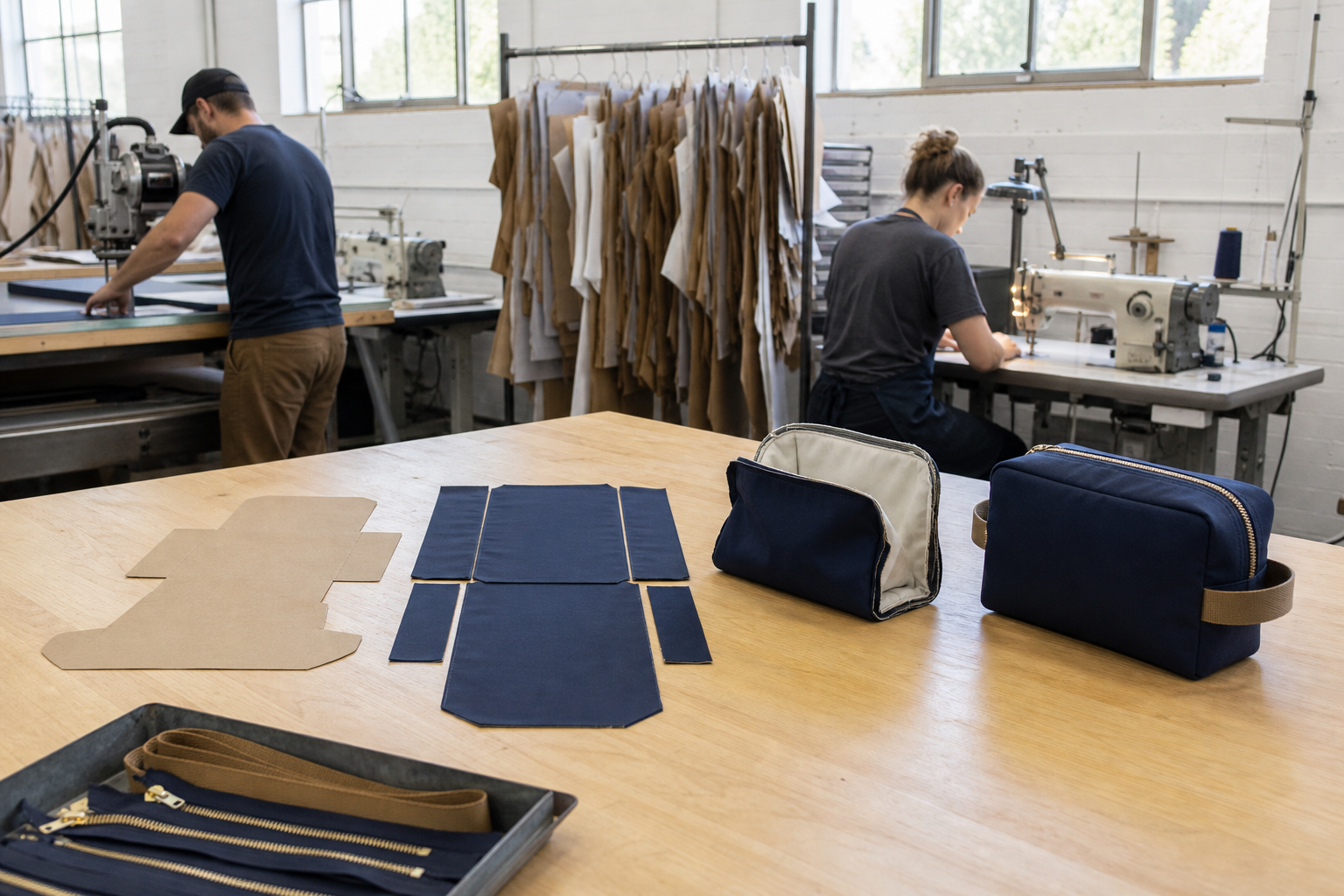
Material swatches and color approvals should precede a complete sample when inputs are uncertain. A construction sample proves fit and function. A decorated pre-production sample proves the combined material, trim, branding and pack-out.
Identify every approved sample by date or code and record open differences. Bulk release should reference the final specification revision and approvals in writing.
Normalize MOQ and price comparisons
MOQ may be driven by custom fabric, dyeing, printed lining, zipper tape, molded hardware, decoration setup, packaging or the quantity per color and artwork. Ask which component creates each minimum and whether stock inputs change the repeat-order risk.
Compare material and construction, setup, samples, unit packaging, labels, cartons, inspection, testing or documents, freight basis and Incoterm. Record exclusions and substitutions; otherwise unit prices may describe different products.
Build quality control around failure modes
Identify the risks customers will notice: wrong SKU, shade, size, zipper catch, lining pull, open seam, distorted corners, weak handle, decoration error, odor, stain, scratch, missing accessory or incorrect packaging.
Agree incoming, first-piece, in-line and final checks. Final selection should represent cartons, SKUs, artwork versions and production periods. Record measurement and function methods, defect classes, decision rules, corrective action and reinspection.
Use a dated production and delivery plan
Replace one unsupported “lead time” with milestones for specification freeze, material booking, sample submission, buyer approval, bulk material, decoration, assembly, inspection, rework allowance, packing, export handover and transport.
State which date starts the schedule and how delayed approvals or changes affect it. Production completion, cargo handover and arrival at destination are separate dates.
Verify the parties and documents
Identify the legal seller, payment recipient, production and decoration sites, inspection party, exporter and shipping party. Compare names and addresses across quotation, purchase order, invoice, packing list and shipping documents.
Request evidence relevant to the product and claim, with subject, scope and validity visible. A site audit, certificate or test for one entity, site, material or product does not automatically cover another.
China cosmetic bag supplier decision matrix
| Decision | Verify | Record |
|---|---|---|
| Supplier model | Direct/subcontracted work and accountability | Role map |
| Product fit | Comparable construction and material experience | Evidence gaps/questions |
| Development | Sample stages, revisions and ownership | Approved sample/version |
| Commercial | MOQ drivers, scope, exclusions and terms | Normalized quotation |
| Release | Quality, packing, documents and milestones | Inspection and shipment file |
Frequently asked questions
Can a supplier develop from a sketch?
Some can, but define the missing dimensions, contents, materials, construction, acceptable alternatives, revisions and ownership before development begins.
What is a normal MOQ?
There is no universal minimum. Ask for the driver by material, trim, process, color, artwork and SKU, then confirm it in the quotation.
How long should production take?
It depends on specification completion, material and trim availability, sample approval, quantity, process, inspection, packing and transport. Request a dated milestone plan.
Does a certificate prove the whole factory or product line is compliant?
No. Check the named entity, site, product or material, standard, scope, issue and expiry dates, and connection to the order.
How should suppliers be compared?
Use the same frozen RFQ, evidence checklist and commercial scope, then document assumptions, exceptions and substitutions.
Related sourcing guides
Source and scope: Luckystar custom cosmetic-bag category, linked sourcing guides, and the anonymized order records summarized above, checked September 22, 2026. Customer names, brands, contacts, prices, invoice or order identifiers and confidential terms are excluded. The cases evidence specific historical order records only; they do not prove current capacity, fixed MOQ, price, delivery time, universal material availability, factory ownership or certifications. Legacy production photos remain unpublished until public-display, trademark and portrait rights can be confirmed.
Request a China cosmetic bag supplier review
Send the product, materials, artwork, SKU quantities, OEM/ODM deliverables, evidence, inspection, pack-out, quote scope, destination and required date.
Use the website contact form or email a prefilled cosmetic bag RFQ. Review the draft before sending.
Materials, claims, certifications, roles, design rights, MOQ, price, capacity, availability and delivery are subject to specification and written confirmation.