Last reviewed: September 16, 2026
Choose a drawstring bag manufacturer by testing the proposed cord-and-channel assembly, usable capacity, seam or corner reinforcement, decoration and sample-to-bulk controls. A sports sack needs evidence for carrying loads and cord attachment; a gift or jewelry pouch needs evidence for product fit, neat closure and surface contact. Compare suppliers against the same bag specification and request records for the proposed production route.
Need a comparable manufacturer response? Send the intended contents and load, usable size, material and construction, cord/channel/reinforcement details, artwork and decoration, quantity splits, evidence and test requirements, sample approval route, QC and change-control expectations, packing, destination and date. LUCKYSTAR can return the proposed operating model, assumptions, evidence gaps and next approval step in writing.
This guide focuses on selecting and verifying a drawstring bag manufacturer. Use the general bag sourcing guide for the overall procurement route. Once shortlisted, continue with MOQ and scheduling, the drawstring technical pack, and sample approval.
Quick answer: choose evidence, not labels
A useful manufacturer should pass five tests before receiving a commercial order:
- Relevant-product test: it can show controlled experience with a similar bag type, fabric, closure, decoration, load, and pack-out.
- Process-ownership test: it identifies which operations it performs, coordinates, or subcontracts and who releases each stage.
- Specification test: it turns the RFQ and sample into one controlled product definition with tolerances and approval references.
- Production-control test: it provides a believable plan for incoming, first-output, in-line, and final checks.
- Repeatability test: it can preserve records, report changes, investigate problems, and support a matched reorder.
Do not award the order until commercial terms, evidence, and the physical sample point to the same product.
Why drawstring bags expose manufacturing weaknesses
A drawstring bag looks simple, but its closure concentrates multiple variables into a narrow area. Cord diameter must suit the channel. Channel depth reduces usable height. Seams must tolerate gathering. A sports sack transfers load through cords, corner tabs, or eyelets. A velvet jewelry pouch must close neatly without damaging presentation. A lightweight fabric can distort under dense embroidery. A coated material may react poorly to heat or ink.
| Drawstring format | Primary manufacturing risk | Evidence to request |
|---|---|---|
| Flat gift pouch | Lost usable height, uneven gathering, frayed cord ends | Filled-and-closed sample, channel dimensions, end-finish reference |
| Cotton or canvas sack | Shrinkage, seam bulk, print variation | Material record, measured sample, decorated strike-off |
| Polyester sports bag | Cord comfort, corner tearing, coating/print compatibility | Loaded-use sample, reinforcement detail, decoration test |
| Velvet or satin pouch | Shade, pile direction, dye transfer, abrasion | Lot swatch, rubbing review, finished-product contact check |
| Mesh drawstring bag | Snagging, seam binding, opening distortion | Mesh specification, bound-seam sample, intended-content trial |
| Lined or structured pouch | Layer misalignment, reduced capacity, wrinkling | Section sample, inside-out workmanship photos, packing test |
These are planning checkpoints, not universal material conclusions. Final tests must match the actual product, intended use, destination market, and written agreement.
Step 1: define the product before evaluating the manufacturer
A supplier cannot demonstrate capability against an undefined request. Start with the object the bag must contain and the experience you want the user to have. A fragrance pouch, shoe bag, event sports sack, and jewelry pouch require different evidence even if all close with cord.
Create a critical-to-quality list
Critical-to-quality requirements, often shortened to CTQs, are the few product characteristics that would make the order unacceptable if they fail. For a drawstring bag, they may include usable internal size, opening width, cord action, loaded seam integrity, color, logo position, product contact, cleanliness, or retail-ready packing.
| Requirement | Define it as | Avoid writing only |
|---|---|---|
| Capacity | Product dimensions, clearance, usable height below channel | “Medium” or “fits gifts” |
| Material | Composition, weight/thickness method, construction, finish, color | “Premium fabric” |
| Closure | Cord material, diameter/width, length, route, end finish, pull behavior | “Good drawstring” |
| Construction | Seam type, allowance, channel depth, reinforcement, lining/gusset | “Strong stitching” |
| Branding | File version, method, size, position, colors, tolerance | “Logo as artwork” |
| Performance | Named use simulation and pass condition | “Durable” |
| Packing | Fold, individual pack, quantity per inner/carton, labels and marks | “Standard export packing” |
If the product is still being developed, label open choices and ask for recommendations. Do not allow a supplier's unrecorded assumption to become the specification by accident.
Separate mandatory requirements from optimization options
Mark every requirement as mandatory, preferred, or open. This lets manufacturers propose alternatives without silently weakening the product. If a target cost cannot support a custom-dyed fabric, for example, the supplier can offer an available color as an explicit option instead of substituting it after approval.
Step 2: identify the supplier's actual operating model
“Factory,” “manufacturer,” “supplier,” and “OEM partner” are often used loosely. The name on a website does not prove that every operation occurs under one roof. A capable sourcing organization can still be valuable, but buyers need to know where responsibility sits.
| Operating model | Potential advantage | Main risk to investigate | Useful question |
|---|---|---|---|
| Direct single-site manufacturer | Short production communication chain | Limited material or decoration range | Which processes and product types are genuinely run at this site? |
| Specialist manufacturer with approved subcontractors | Access to printing, embroidery, dyeing, or finishing expertise | Weak handoffs or hidden changes | Which operations leave the site, and who approves their output? |
| Trading or sourcing company | Broad product access and consolidated management | Unclear production origin or control authority | Which legal entity contracts, which site produces, and who owns QC decisions? |
| Hybrid manufacturer/coordinator | Flexible route across multiple bag constructions | Capabilities may vary by SKU | Provide the process map for this exact bag, not the company brochure |
| Catalog decorator | Fast development on existing blanks | Limited control of blank specifications and reorders | Who makes the blank, and can its specification change? |
Ask LUCKYSTAR and every other shortlisted supplier to identify the contracting entity, proposed production sites, subcontracted operations and person responsible for inspection and shipment release. Assess the route for your specific bag. A coordination role or a product catalog does not establish ownership of every production facility.
Step 3: request a process-ownership map
Ask each shortlisted manufacturer to map the proposed order from raw material to packed carton. The document can be one page, but it should identify the responsible organization, location, approval record, and change authority for each stage.
Map the critical handoffs
For a sewn drawstring bag, the route may include material sourcing, dyeing or finishing, cord and trim sourcing, incoming inspection, pattern and cutting, decoration, sewing, thread trimming and cleaning, functional checks, packing, final inspection, and shipment release. A heat-sealed non-woven product or a paper-based pouch would follow a different route.
| Stage | Manufacturer should identify | Buyer should verify |
|---|---|---|
| Main material | Supplier/lot control, specification, color reference | Approved swatch and order-level evidence |
| Drawcord and hardware | Source, dimension, color, end treatment | Compatibility with channel and intended use |
| Decoration | Site/process, artwork version, setup, approval method | Decorated sample on production-intent material |
| Cutting/forming | Pattern or tooling version, tolerance controls | Measurement method and first-output record |
| Assembly | Seam/bond sequence, reinforcement, operator instructions | Critical workmanship sample and in-line check |
| Packing | Folding, protection, count, labels, carton plan | Pack-out sample and carton data |
| Release | Inspection owner, defect decision, shipment authority | Signed report and exception approval |
The Custom Bag Manufacturing Process explains how these handoffs connect from design to delivery.
Step 4: use an evidence ladder
Do not ask only, “Are you experienced?” Ask for evidence at increasing levels of relevance.
- Marketing evidence: website pages, catalog images, claims, and product listings.
- Capability evidence: equipment lists, process maps, staff roles, sample room records, and comparable construction examples.
- Product evidence: material swatches, technical drawings, decorated panels, prototypes, and measured samples.
- Order evidence: approved specification, purchase records, incoming checks, first-output approval, in-line reports, final inspection, and packing records.
- Improvement evidence: nonconformance records, root-cause analysis, corrective action, and verified closure.
The higher the business risk, the higher the evidence level should be. A catalog photo may be enough to start a conversation. It is not enough to release a branded order.
Ask for comparable evidence, not confidential customer data
A supplier should not need to reveal another buyer's name, logo, pricing, or order documents to prove capability. Accept redacted forms, unbranded samples, anonymous inspection extracts, or a live demonstration using your own development sample. This protects intellectual property while still showing process maturity.
Step 5: run a drawstring-specific engineering review
A good manufacturer challenges ambiguous details before sampling. Use the review to see whether the team understands how the bag functions.
Review the cord system as an assembly
Specify the cord material, construction, diameter or width, color reference, total length, routing, number of cords, knot or tip, and whether the cord becomes a shoulder strap. Check pull smoothness, hand comfort, end fraying, color transfer, and length consistency.
Measure usable space, not only flat dimensions
The channel and gathered top consume part of the nominal height. Place the intended item inside, close the bag, and measure the remaining clearance. For pouches, observe whether the item blocks closure; for sports sacks, observe how the loaded shape affects comfort and corner stress.
Match reinforcement to the load path
A gift pouch may need only a well-finished side seam. A backpack-style sack may require reinforced corner tabs or eyelets because the cord carries load. Ask the manufacturer to explain where force enters the bag and what construction controls that risk.
For product-choice context, compare canvas and non-woven drawstring bags and review how drawstring bag design reduces OEM production risk.
Step 6: test decoration on the production-intent substrate
Artwork approval on a screen does not prove performance on fabric. Texture, pile, coating, absorbency, heat sensitivity, seam placement, and bag color change the result.
| Decoration route | Manufacturer should prove | Common drawstring-bag risk |
|---|---|---|
| Screen printing | Ink/substrate compatibility, strike-off, color and cure | Ink gain on open weave, rubbing at gathered area |
| Heat transfer | Temperature/pressure/time window, edge and adhesion | Heat mark, stiff hand, lifting on creases |
| Sublimation | Compatible polyester route and color proof | White marks near seams, artwork shift |
| Embroidery | Stitch-out, backing, density, thread color | Puckering, reduced softness, stitch contact inside pouch |
| Foil or hot stamping | Foil/substrate trial and pressure control | Incomplete transfer, cracking during gathering |
| Woven label or patch | Label proof, placement, attachment construction | Crooked application, rough edge, inconsistent position |
Place decoration away from the cord channel or severe folds unless the approved test shows it will perform there. Define position from stable seams or finished edges, not from an untrimmed panel.
Step 7: normalize MOQ, price, and lead time
Two quotations are comparable only when they describe the same bag and the same commercial scope. Ask what drives each minimum: main material, custom color, cord, hardware, decoration setup, packaging, or production efficiency. Confirm whether MOQ applies per size, color, artwork, or total purchase order.
Build one quotation-normalization sheet
| Commercial field | Required comparison basis | Hidden difference to watch |
|---|---|---|
| Product | Same dimensions, material, cord, seams, reinforcement, branding | Lower quote uses lighter or simpler construction |
| Quantity | Total plus per-SKU/color/artwork splits | Headline MOQ cannot be divided as planned |
| One-time charges | Sample, screen/plate, digitizing, tooling and ownership | Low unit price hides setup cost |
| Quality | Inspection stages, sample size/rule, testing and reports | One quote excludes inspection or tests |
| Packing | Individual protection, inner quantity, carton, labels | Bulky packing changes freight and handling |
| Trade term | Same Incoterm and named place | EXW and delivered prices are treated as equal |
| Timing | Same start trigger and shipping-ready milestone | “Production days” excludes material or approval time |
| Validity | Quote expiry, input-price and capacity assumptions | Price cannot be held through the approval cycle |
Use the guides to typical custom bag MOQs, custom bag pricing, and reducing lead time and cost for the wider commercial logic. LUCKYSTAR does not have one universal public MOQ, price, or delivery promise; every figure must be confirmed for the final specification and schedule.
Step 8: audit claims and documents by scope
A certificate in a presentation is not automatically relevant to your bag. Check the legal entity, production site, material/product scope, standard version, certificate or report number, issue and expiry dates, verification route, and whether transaction- or batch-level evidence is required.
Keep claims as narrow as the evidence
If a test report covers one cotton drawstring pouch sample, it does not prove every drawstring bag, every material, or every future batch. If a scope certificate belongs to an upstream mill, it must not be described as the finished-bag seller's company-wide certification. If a buyer wants a recycled-content claim, define percentage, material, chain-of-custody evidence, label text, and order-level documents before quotation.
Ask the manufacturer to place each requested claim in a matrix:
| Claim field | Buyer records |
|---|---|
| Exact wording | What will appear on the product, packaging, website, or campaign |
| Object of claim | Fiber, fabric, component, finished product, facility, or company |
| Evidence | Certificate, transaction document, test report, declaration, or traceability record |
| Scope | Legal entity, site, product, material, percentage, color, batch, market |
| Validity | Issue date, expiry, standard version, verification status |
| Release | Person authorized to approve the public wording |
This method prevents a legitimate but narrow document from becoming an unsupported broad claim.
Step 9: include responsible-supply-chain due diligence
Product quality and responsible sourcing are related but not interchangeable. A bag can pass dimensions while the sourcing process still carries labor, environmental, integrity, or human-rights risk. The OECD Due Diligence Guidance for Responsible Garment and Footwear Supply Chains describes due diligence as an ongoing process to identify, prevent or mitigate, track, communicate, and where appropriate remediate adverse impacts. It is not a one-time certificate collection exercise.
Use a risk-based review
Ask how the proposed sites and upstream inputs are identified, how working-condition and environmental risks are assessed, who receives grievances, how findings are corrected, and what happens when the production route changes. The depth should reflect country, process, material, volume, and customer-policy risks.
The ILO Declaration on Fundamental Principles and Rights at Work gives a recognized foundation for labor-related expectations. Linking these sources does not claim that LUCKYSTAR or any proposed facility holds a particular social-compliance certification.
Step 10: evaluate the sample as a transfer package
The best-looking sample is not automatically the best production sample. A useful approval package connects the physical item to records that another team can follow.
What the approved sample package should contain
- controlled drawing or specification revision;
- bill of materials with approved material and trim references;
- finished measurement method and tolerances;
- cord/channel/reinforcement construction details;
- artwork version, decoration method, location, size, and color reference;
- labeled photos of inside and outside workmanship;
- intended-content or loaded-use test result;
- packing method and labels;
- list of any sample substitutions that will change in bulk; and
- names and dates of buyer and supplier approvals.
Use the Custom Bag Sample Development Process to manage revisions. The goal is not to eliminate every natural variation; it is to define what must remain controlled.
Step 11: approve a production control plan before deposit
Inspection added at the end can only sort or reject what has already been made. Ask the manufacturer where prevention and detection occur.
| Control point | Drawstring-bag examples | Release evidence |
|---|---|---|
| Incoming | Material identity/color, weight/thickness method, cord and hardware | Incoming record and approved references |
| Pre-production | Final spec, pattern, artwork, sample, work instructions | Signed production-release checklist |
| First output | Dimensions, channel, cord action, decoration and seams | First-piece approval with photos/measurements |
| In-line | Stitching/bonding, reinforcement, print placement, cleanliness | In-line findings and correction record |
| Final | Appearance, dimensions, function, quantity, packing | Final inspection report and disposition |
| Shipment | Carton marks, count, documents, approved exceptions | Shipment-release authorization |
If statistical acceptance sampling is used, name the standard, inspection level, sample-size code, defect classes, acceptance/rejection values, and lot definition in the inspection instruction. ISO 2859-1:2026 defines AQL-indexed lot-by-lot sampling schemes, but the standard does not choose your product requirements or defect severity. Do not copy an arbitrary AQL from another product.
The Custom Bag Quality Inspection Checklist helps convert these stages into a project document.
Step 12: verify change control and communication
Manufacturing changes are not inherently bad; hidden changes are. The supplier should seek approval before changing the main material, dye lot strategy, cord, hardware, thread, decoration method, production site, subcontractor, construction, packing, or test/document route when those changes can affect the agreed product.
Test the escalation path before the order
Ask a practical scenario: “The approved cord is unavailable ten days before cutting. What happens?” A capable answer identifies who reports the issue, what alternative evidence is supplied, how cost and timing change, who approves, and how records are updated. A weak answer is simply, “We will handle it.”
Require one accountable project contact and a written decision log. Verbal chat can accelerate communication, but approvals that affect product acceptance should enter the controlled record.
Step 13: use a trial order with a scale-up gate
A trial order should test the production system, not only sell a small quantity. Define what must be learned: material consistency, line execution, defect pattern, packing efficiency, transit condition, store handling, customer use, or reorder accuracy.
| Trial-order result | Scale-up decision |
|---|---|
| CTQs pass and records are complete | Confirm current inputs and prepare volume quotation |
| Minor correctable findings | Close corrective actions and approve updated reference |
| Repeated process drift | Require root cause and another controlled trial |
| Undisclosed substitution | Pause approval and reassess supplier governance |
| Claims evidence incomplete | Remove or narrow claim; do not release unsupported wording |
| Packing or transit failure | Redesign pack-out and repeat distribution test |
A larger order is a new decision. Reconfirm material availability, sites, lead time, commercial terms, and quality plan rather than assuming the pilot conditions continue automatically.
Use a weighted manufacturer scorecard
The scorecard below is an illustrative buyer worksheet, not a supplier ranking, audit result or validated industry weighting. Adjust the weights before comparing candidates, identify the evidence behind each score and record unknown items as pending. Keep mandatory approval requirements separate so a high numerical total cannot override a failed requirement.
| Criterion | Suggested weight | Evidence scored |
|---|---|---|
| Relevant drawstring capability | 15 | Comparable construction, material, decoration, load, and pack evidence |
| Specification and engineering | 15 | CTQ review, drawings, tolerances, risk identification |
| Sample-to-bulk transfer | 15 | Approval package, revision control, first-output method |
| Quality system for this order | 15 | Incoming/in-line/final plan, records, nonconformance handling |
| Process-route transparency | 10 | Site and subcontractor map, ownership, change notification |
| Commercial clarity | 10 | Normalized MOQ, price, timing, packing, Incoterm, validity |
| Claims and traceability | 8 | Scope-matched documentation and controlled wording |
| Responsible sourcing | 5 | Risk-based due diligence process and corrective-action path |
| Communication | 4 | Named owner, response quality, escalation and decision log |
| Scale and reorder readiness | 3 | Record retention, capacity logic, change control |
| Total | 100 | Score evidence quality, not presentation quality |
Add a pass/fail gate for critical issues such as intellectual-property protection, restricted substances, child/forced-labor policy requirements, product safety, or legally required documentation. A high weighted score must not override a failed mandatory requirement.
Red flags during manufacturer selection
- The company claims to make every material and process in-house but will not map the order route.
- The sample is excellent, yet no specification, material reference, or production record exists.
- The quote omits per-color/per-artwork MOQ, packing, test scope, or trade term.
- “Same as sample” is the only quality standard.
- Certification files do not match the contracting entity, product, site, or current date.
- The supplier uses customer logos or private order documents freely as sales evidence.
- Substitutions are treated as internal decisions rather than buyer-controlled changes.
- AQL is advertised as a quality guarantee without a lot definition, defect list, or sampling plan.
- Production time has no start trigger or approval cutoff.
- Corrective action means sorting only, with no root-cause or recurrence prevention.
One red flag may be explainable. A pattern of vague evidence and absolute promises is a reason to pause.
Questions to ask during a video or site review
Avoid a generic facility tour. Follow one comparable product through the workflow.
- Where are material, cord, labels, and packaging received and identified?
- How is the approved color or lot reference used at incoming inspection?
- Who releases artwork and decorated panels before assembly?
- How are pattern and measurement revisions controlled?
- Which operation creates the highest defect risk on this bag?
- Where are cord action, corner reinforcement, and loaded behavior checked?
- How are nonconforming units separated and dispositioned?
- Which operations or sites are external to this facility?
- What record would show an approved substitution?
- How are cartons counted, labeled, and released?
If a remote review cannot show a critical process because it occurs elsewhere, schedule evidence from that location or include it in third-party inspection scope.
Intellectual property and sample confidentiality
Before sending artwork or a distinctive construction, confirm the contracting entity, confidentiality terms, authorized uses, data retention, subcontractor access, and what happens to rejected samples, screens, plates, embroidery files, and tooling. State whether the supplier may display the product or logo publicly.
Likewise, do not ask the supplier to violate another customer's confidentiality to impress you. A manufacturer that handles other brands' files casually may handle yours the same way.
Company-claim boundary: the following section is publisher self-description and a commercial sourcing option. It does not independently prove factory ownership, universal capability, capacity, material composition, product performance, certification, compliance, MOQ, price, timing or superiority. The legal seller, assigned sites and subcontractors, production and decoration route, evidence, samples, tests, QC, packing and delivery terms are subject to the exact order, final specification and written confirmation.
Discuss your drawstring bag project with LUCKYSTAR
Use the LUCKYSTAR product range to identify a starting construction, then submit your own contents, closure requirements and specification for review. Ask for confirmation of the material, available configuration, proposed production route and order-level evidence before treating any catalog example as a match.
Request a project-specific response
- Identify the gift-pouch or sports-sack format and intended contents.
- Ask which cord, channel, reinforcement and decoration details need sampling.
- Request the proposed production route, approval owner and inspection records.
- Confirm sample scope, quantity split, packing and delivery assumptions in writing.
These are questions for a project review, not verified claims about every LUCKYSTAR product or facility. Material identity, test evidence, availability and production arrangements must be confirmed for the specific order. Terms remain subject to specification and written confirmation.
A manufacturer RFQ that produces comparable answers
Send this information to every shortlisted partner:
Use and market: what the bag holds, how it closes/carries, sales channel, destination country
Product family: gift pouch / sports sack / shoe bag / mesh bag / lined pouch / other
Finished dimensions: width × height × gusset, measurement method, usable-height need
Material: composition/weight/finish preference or performance brief
Drawcord system: type, diameter/width, length, routing, color, end finish, hardware
Construction: seams, channel, reinforcement, lining, pockets, labels
Branding: vector file, method preference, size, position, colors
Quantity: total and split by size, color, artwork, destination
Quality: CTQs, tests, defect classes, inspection expectation
Claims: exact public wording and evidence required
Packing: individual pack, labels/barcodes, inner/carton, carton marks
Schedule: target approval, shipping-ready, and in-hand dates
Commercial: currency, Incoterm and named place, quote validity
Supplier response: process map, proposed sites, evidence list, sample plan, MOQ drivers, quote exclusions, change-control method
The OEM vs ODM Bag Manufacturing guide can help decide how much design responsibility to place with the supplier.
Final decision checklist
Before issuing the purchase order, confirm that:
- the contracting and invoicing entity is clear;
- the proposed production route and subcontracted processes are disclosed;
- the final quote matches the approved specification and quantity splits;
- the physical sample and all intentional bulk differences are recorded;
- material, cord, decoration, construction, and packing references are controlled;
- claims and documents match the product, entity, site, standard, date, and batch needs;
- the quality plan names checkpoints, defect decisions, and release authority;
- changes require timely buyer approval;
- the schedule starts from named approvals and material conditions;
- IP, confidentiality, tooling/file ownership, and public-image permission are agreed; and
- the scale-up and reorder records are defined.
Frequently asked questions
Is a custom drawstring bag manufacturer better than a trading company?
Not automatically. A direct manufacturer may offer a short production chain, while a sourcing company may coordinate specialized materials and decoration more effectively. Compare the disclosed process route, accountability, technical control, evidence, and order fit—not the label alone.
What should I ask a drawstring bag manufacturer first?
Send the intended contents and use, finished size, material direction, drawcord system, construction, artwork, quantities by version, packing, destination, tests, and date. Then ask the supplier to identify open risks and its proposed production route.
How can I verify that a supplier really controls quality?
Request anonymized examples of incoming, first-output, in-line, and final inspection records; define CTQs for your bag; and observe whether the approved sample is connected to work instructions and release criteria. A generic QC slogan is not evidence.
Do I need to visit the factory?
Not for every low-risk order, but the verification method should match the risk. A remote process review, sample audit, document review, third-party inspection, or site assessment can be combined. A visit is useful only if it follows the actual product route and includes outsourced critical processes.
What is the best material for custom drawstring bags?
There is no universal best material. Cotton/canvas, polyester or nylon, non-woven polypropylene, mesh, jute, velvet, satin, microfiber, and layered constructions serve different loads, decoration methods, presentation goals, budgets, and evidence needs. Select against the use case and test the actual specification.
What is a normal MOQ for a custom drawstring bag?
MOQ depends on material availability, custom color, cord and hardware, decoration setup, construction, packing, and SKU splits. Ask for the finished-bag minimum plus component and per-version minimums. LUCKYSTAR confirms MOQ by project rather than publishing one permanent figure for all bags.
How should I approve the sample?
Measure it, use it with the intended contents, operate the closure repeatedly, inspect inside and outside workmanship, review decoration and packing, and link it to a signed specification revision. Record any substitutions that will be corrected in the pre-production standard.
Should every order use AQL inspection?
No single sampling plan suits every order. If acceptance sampling is chosen, specify the applicable standard/version, lot definition, inspection level, defect classes, sample size, and acceptance/rejection numbers. Critical product or legal requirements may need different controls or testing.
How do I prevent the reorder from changing?
Retain the approved specification, material and trim references, artwork files, color standards, sample photos, inspection criteria, packing method, and prior findings. Require notification and approval for relevant source, material, process, or site changes.
Choose a manufacturer that makes the order auditable
The most reliable selection decision is not “Which supplier says yes fastest?” It is “Which supplier makes assumptions, responsibilities, evidence, and changes visible before they become defects?” Define the product, map the route, inspect comparable evidence, approve a transfer-ready sample, agree the production controls, and score every candidate against the same rules.
LUCKYSTAR can review your custom drawstring bag brief and coordinate a project-specific development route. Send the intended contents, dimensions, material direction, drawcord and construction details, artwork, quantity splits, packing, destination, quality requirements, and target date.

Request a project-specific manufacturer response
Use one controlled specification and evidence checklist for each candidate so responsibilities, assumptions, sample status, quality controls, packing and delivery can be compared on the same basis.
Review LUCKYSTAR custom drawstring bag options, then send your controlled brief through the contact form or Email a project brief. The email link opens a prefilled draft for your review before sending.
Supply route, materials, evidence, testing, capacity, availability, price, MOQ, sample cost, packing, schedule and delivery terms are subject to current order-level verification, destination requirements, final specification and written confirmation.
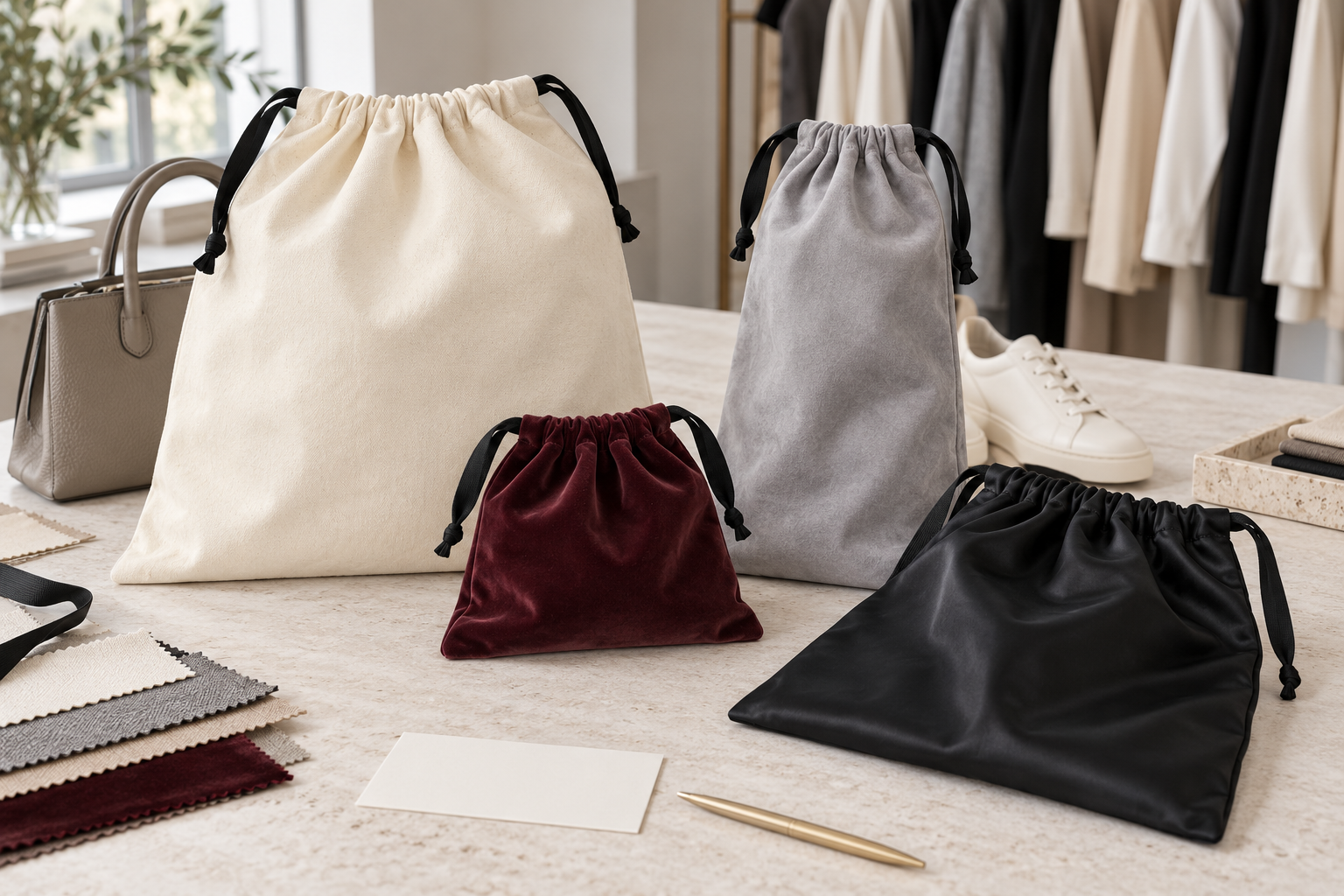
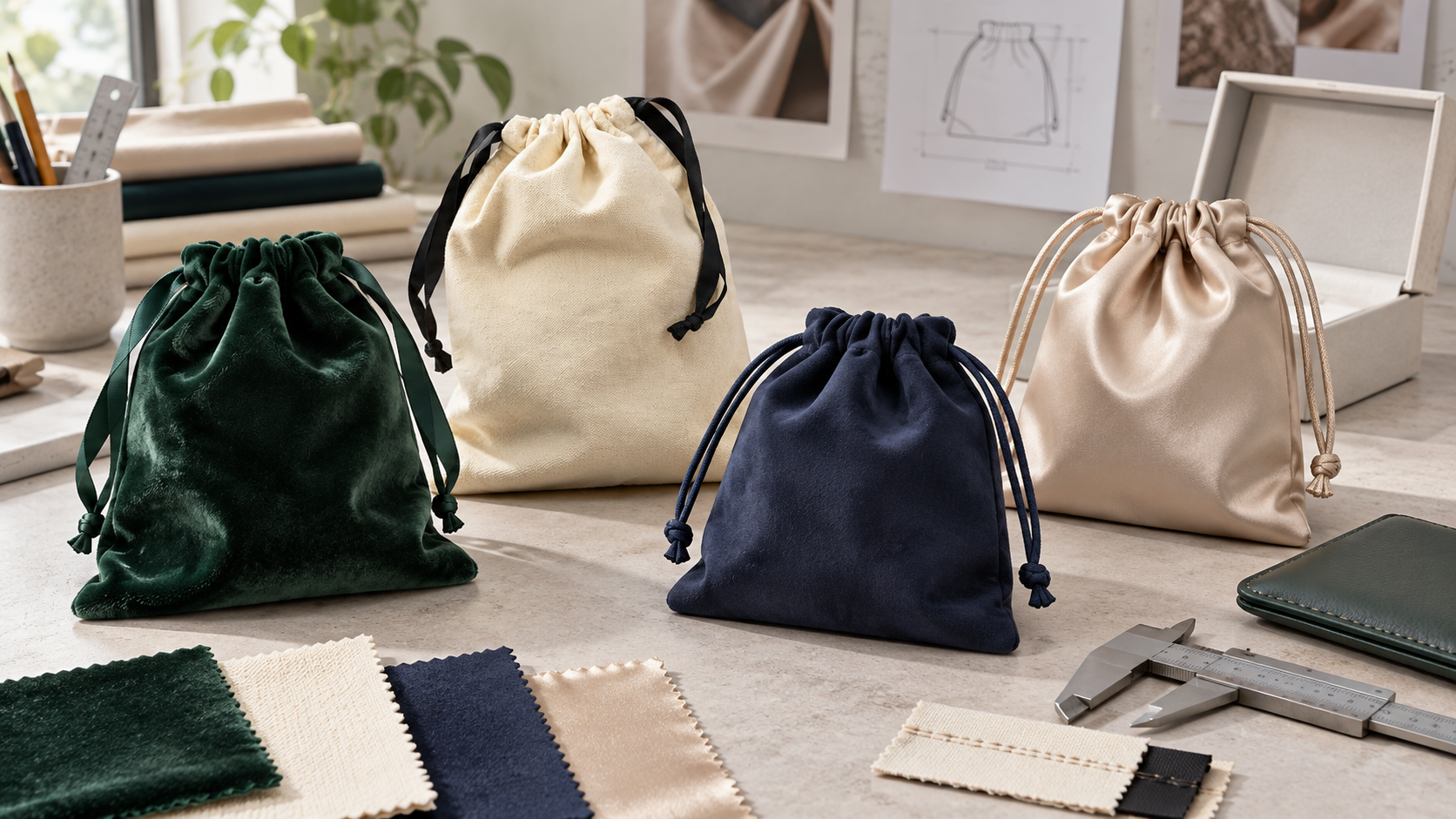
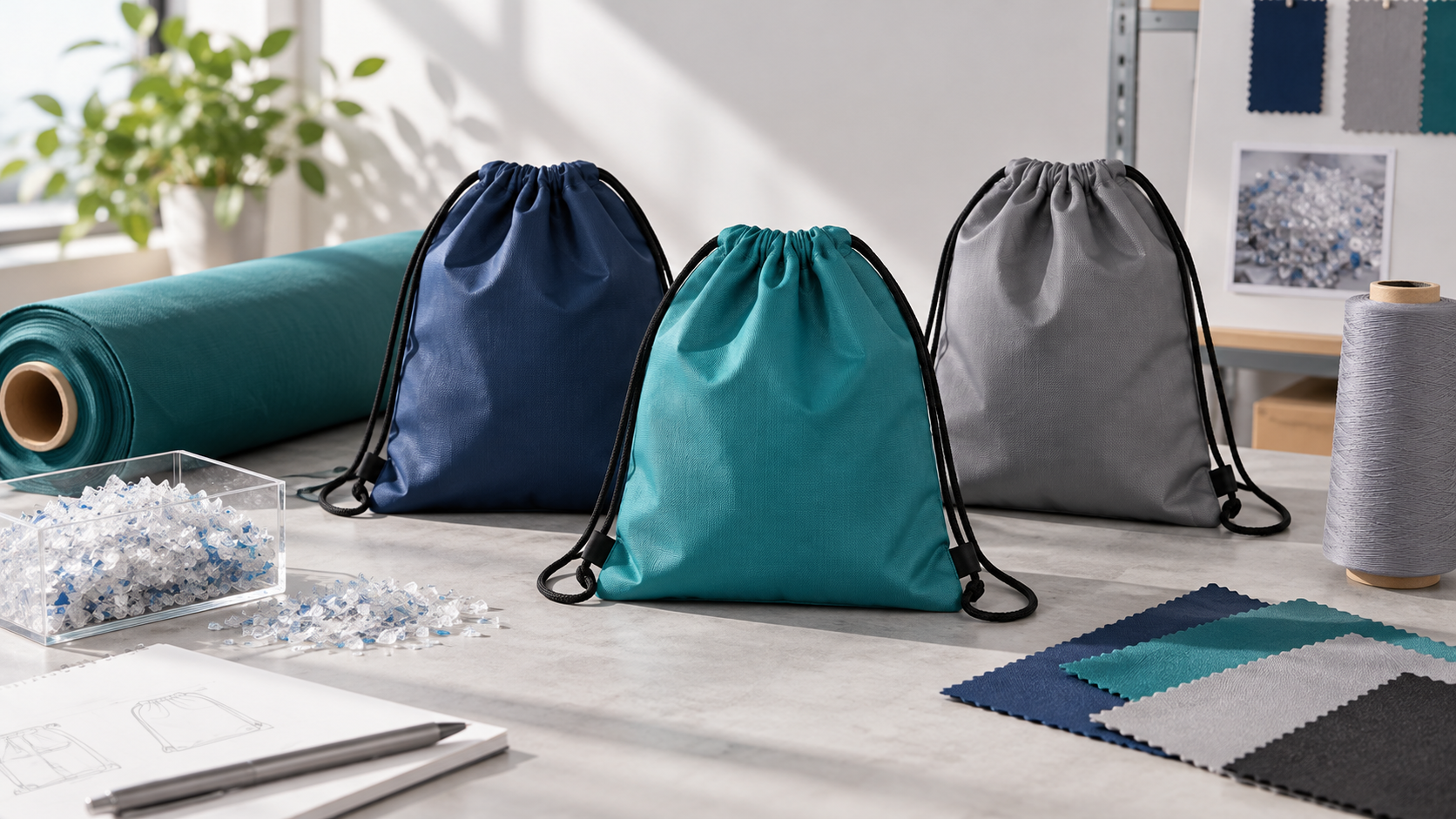
Image note: the hero is an AI-assisted studio composition based on an internal unbranded sample photograph. It is a visual construction reference only and does not establish material composition, weight, certification, test status, production site, current availability or universal capability.