Last reviewed: September 16, 2026
Prepare a custom drawstring bag tech pack with a controlled revision, intended-use statement, dimensioned views, material list, matched cord-and-channel specification, artwork placement, inspection criteria and packing instructions. Separate total height from usable capacity and specify the bag state for each measurement. Mark unconfirmed values as proposals, then link the approved version to the physical sample before bulk release.
Need a drawstring-bag specification review? Send the intended contents and load, bag format, finished and usable dimensions, material/component direction, cord/channel/reinforcement details, artwork and decoration, quantity and variant matrix, tests and evidence, current sample stage, packing, destination and date. LUCKYSTAR can return missing fields, order-specific assumptions, proposed references and approval gates.
That definition matters because a drawstring bag concentrates many decisions in a deceptively simple form. Finished width and height do not reveal usable height below the cord channel. A cord that looks appropriate may bind after the channel is sewn. A centered logo on a flat panel may look too high after gathering. A tolerance that is sensible for a large sports sack may be unsuitable for a small jewelry pouch.
This guide shows how to build a drawstring-specific technical package rather than repeating the general bag template covered in our Custom Bag Manufacturer Guide.If you are still selecting a supplier, use the custom drawstring bag manufacturer selection guide.If the supplier is already selected, the pages below can become the working source of truth for development and bulk-order handoff.
Quick answer: what the drawstring bag tech pack must define
Use these sections as a completeness checklist and combine them where the product is simple. The essential requirement is that every drawing, material reference, measurement, approval and open issue points to the same style and revision. The number of document sections is not itself an industry standard.
| Section | What it must settle | Drawstring-specific question |
|---|---|---|
| Document control | Style, owner, date, revision, approval status | Which revision may be sampled or produced? |
| Product intent | Contents, use, load, user and service conditions | Is this a gift pouch, retail pack, storage sack or wearable gym bag? |
| Technical views | Front, back, inside, side/bottom and details | How does the bag look flat, filled and fully gathered? |
| Measurements | Points of measure, method and tolerances | Is height measured above or below the channel? |
| Bill of materials | Shell, lining, cord, reinforcement, thread and trim | Which cord construction must fit which channel? |
| Construction | Seam, hem, channel, gusset, eyelet or corner | Where does the closure load enter the body? |
| Decoration | Artwork, technique, color, size and placement | Is placement referenced to the cut panel or finished usable area? |
| Workmanship | Defect definitions and visible limits | What counts as puckering, skipped stitch, fraying or poor gathering? |
| Test and inspection plan | Check, method, stage, sample and record | How will closure operation and attachment security be evaluated? |
| Packaging | Fold, insert, unit pack, carton and marks | Can the pack-out crease or abrade the decoration? |
| Claims and evidence | Exact wording, applicable part and supporting record | Is a material claim tied to this material and order? |
| Variants | SKU matrix and controlled differences | Which colors, sizes and artworks share construction? |
| Change log | What changed, why, by whom and when | Did a new cord require a channel or knot change? |
| Approval block | Responsible approvers and approval evidence | Is the physical sample linked to the same revision? |
| Open-issue list | Owner, due date and closure evidence | Which decisions remain assumptions? |
| File index | Native files, PDFs, artwork and reference images | Can another team find the authoritative file quickly? |
The pack does not need to be visually elaborate. It needs unambiguous references, controlled versions and fields that match the real risks of the selected bag.
A tech pack is a controlled product definition—not a mood board
A mood board communicates visual direction. A quotation brief asks for commercial information. An artwork file defines graphics. A sample shows one physical interpretation. The tech pack connects those items and states which source wins if they disagree.
| Document | Primary purpose | What it cannot safely replace |
|---|---|---|
| Mood board | Style, audience and visual direction | Dimensions, construction or tolerance |
| RFQ | Price-and-feasibility request | Final production specification |
| Artwork file | Printable or stitchable graphic | Finished placement, process settings or bag construction |
| Material swatch | Tactile/color reference for one component | Finished-bag performance or order-wide certification |
| Physical sample | Three-dimensional approval reference | A searchable record of every controlled field |
| Tech pack | Defines and links controlled product requirements | Physical validation of an untested design |
Write an order of precedence into the first pages. For example: approved written revision controls dimensions and construction; named physical reference controls agreed tactile or appearance characteristics; approved artwork file controls graphic geometry; signed color standard controls color; and any supplier proposal requires written approval before use. This is more useful than saying “sample quality must be good.”
Start with the bag format, because one template does not fit every drawstring bag
The same field names can hide different engineering problems. Select the product architecture before populating the specification.
Flat gift or jewelry pouch
Record finished external size, usable internal area, channel depth, cord exit treatment, bottom corner shape, lining if any and presentation requirements. Small pouches magnify millimeter-level placement errors. If the contents have sharp edges, add an insert or abrasion concern rather than assuming the shell will protect them.
Backpack-style sports sack
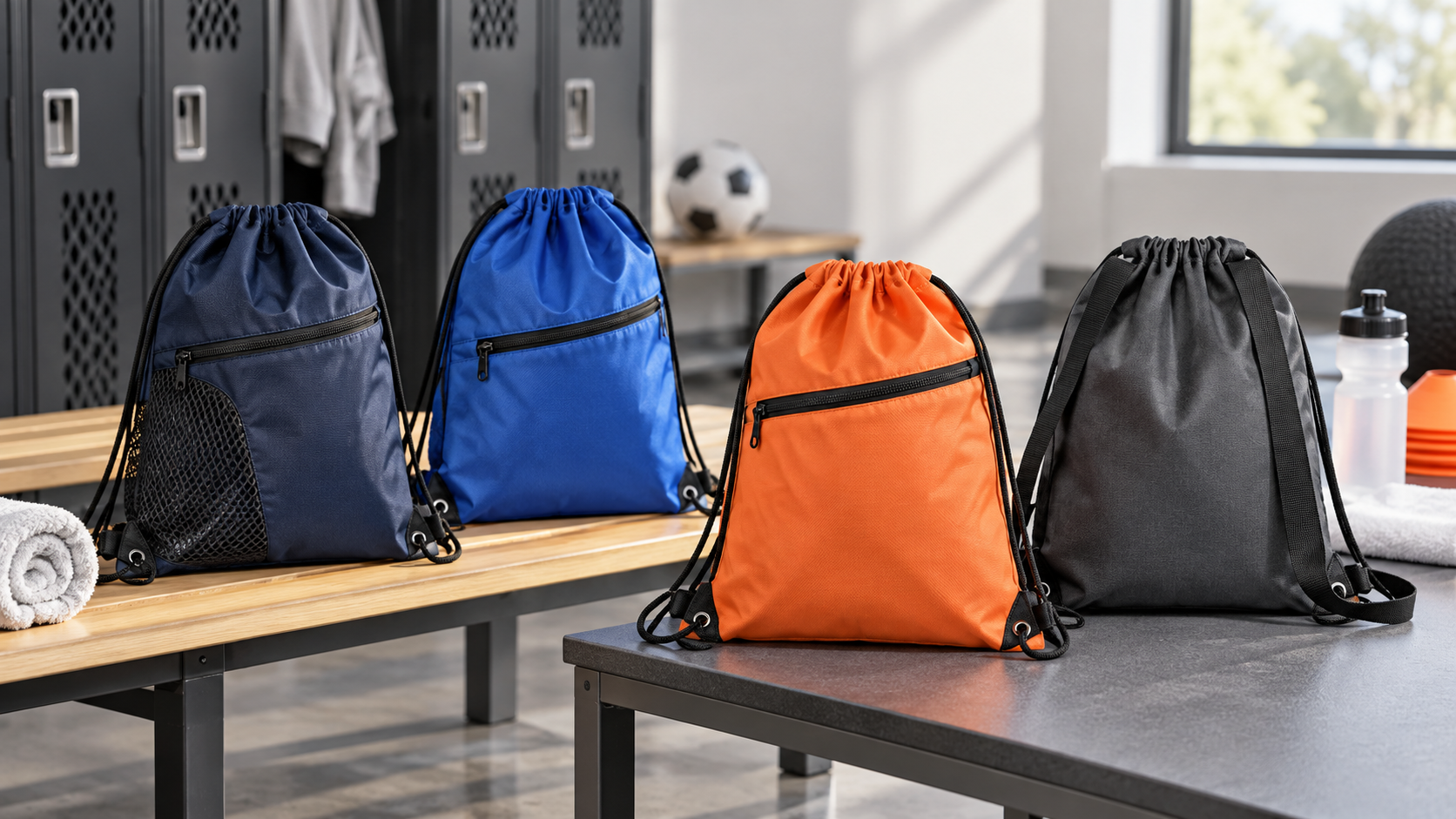
Define the load path from the cords to bottom tabs, reinforced corners or eyelets. Include cord length in the wearing configuration, attachment geometry, reinforcement layers and intended use. A sports sack is not just a large pouch; closure components may also carry the product.
Premium lined or soft-touch pouch
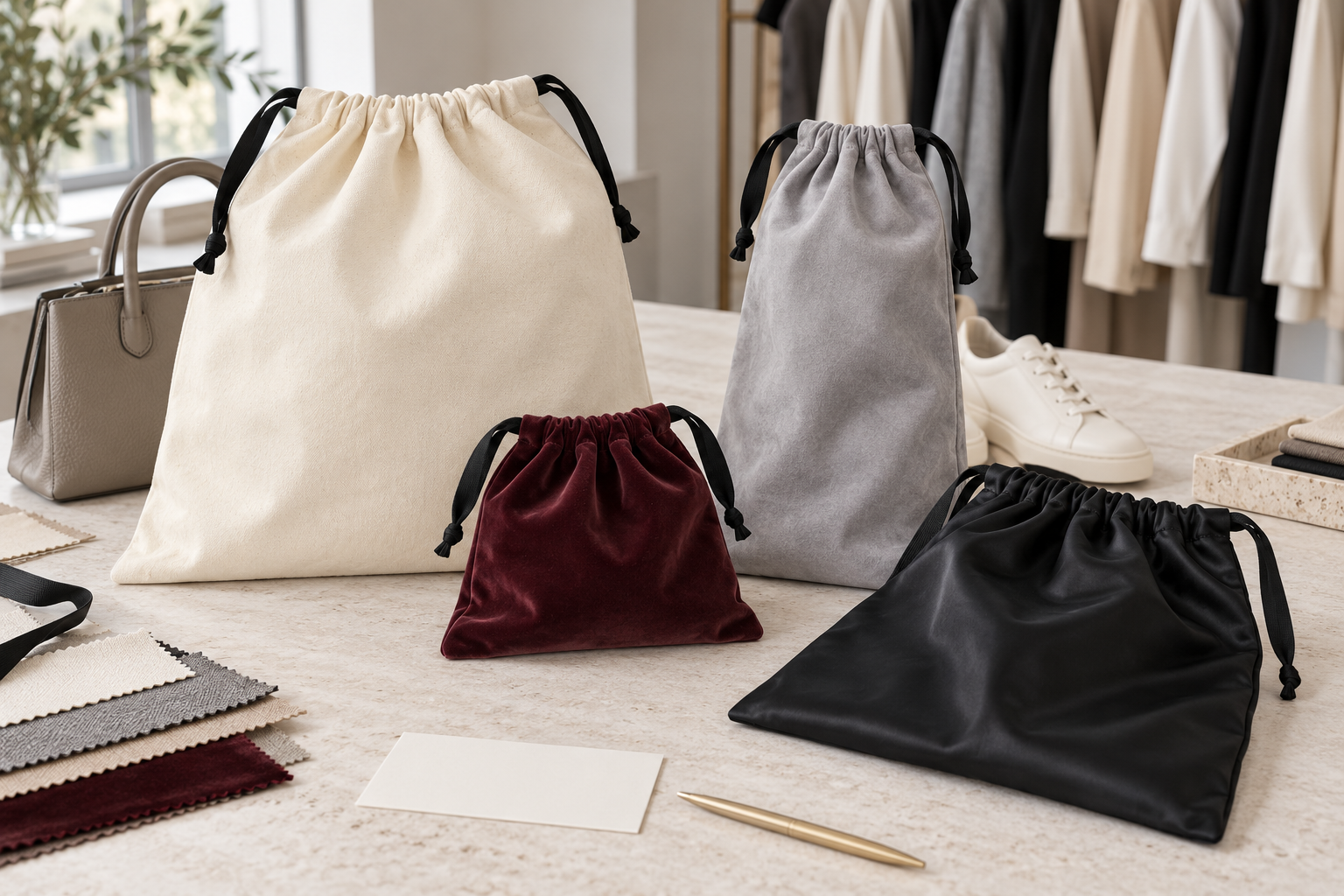
Show shell-to-lining assembly, turn opening, seam bulk, top-edge behavior and how the lining sits when the bag closes. Decoration and pressing methods must be compatible with the selected shell and lining. Terms such as “velvet,” “satin” or “microfiber” are not complete material specifications by themselves.
Mesh or multi-material pouch
State mesh opening or approved reference, binding, transparency objective, seam capture and which measurement state applies. If different materials stretch differently, identify the datum material and define whether dimensions are checked relaxed, laid flat or under a stated conditioning method.
Use the custom drawstring bags product page to organize format options, then confirm the actual material, structure and availability for the project in writing.
Page 1: build a document-control block before drawing the bag
The first page should identify the exact configuration. Use a stable internal style code rather than a marketing name alone. Add brand/customer project, intended market, product owner, document owner, original date, current revision, revision date, development stage, confidentiality status and the locations of native artwork and reference files.
Do not label every document “FINAL.” Use a state such as draft for review, released for sample, sample approved with corrections, released for pre-production sample, or released for bulk. A document can be complete enough for costing yet not approved for cutting material.
ISO 10007 describes configuration-management guidance across the product life cycle. Its practical lesson here is to identify the controlled configuration and make changes traceable; citing that principle does not mean that a bag, supplier or brand is ISO-certified. See the official ISO 10007 overview for the scope and current status.
Translate the use case into critical-to-quality requirements
Begin with what the bag must do before selecting components. A short use statement might say: “A reusable retail pouch for a boxed personal-care set, hand-carried from store to home, with a smooth two-sided closure and a front graphic visible when filled.” That sentence gives the supplier more engineering direction than “high-quality cotton bag.”
List the contents, approximate filled dimensions and mass, desired presentation, handling route, expected closure frequency, age/user considerations, storage conditions, destination markets and disposal or reuse message. Then identify critical-to-quality characteristics (CTQs).
Typical drawstring CTQs include usable opening, filled fit, smooth pull, balanced gathering, cord retention, corner or eyelet integrity, seam security, decoration position after closure, appearance of the lining, and unit-pack presentation. Not every characteristic needs the same inspection intensity. Prioritize features whose failure would make the product unsafe, unusable, legally problematic or visibly off-brand.
Draw the bag in the states people will actually evaluate
A useful drawing set resolves geometry; it does not need artistic shading. Use consistent view names and page references.
Include flat, open, gathered and filled views
The front-flat view should show finished width, height, decoration and cord exits. The open-top detail should show channel construction and usable opening. The gathered view reveals how the body folds affect the logo. A filled schematic identifies whether the stated capacity and presentation are plausible. For a sports sack, include the wearing/load path.
Magnify the closure and load-transfer details
Add separate detail views for the channel, cord exit, knot or tip, grommet, bottom tab, reinforcement patch, gusset and lining attachment. If a seam allowance, fold or hidden layer changes the result, show it. “Same as sample” is not enough when a different team must reproduce the sample months later.
Use numbered callouts that map to the bill of materials and construction table. Callout C03 should mean the same cord everywhere, and seam S02 should have one definition. This simple discipline prevents diagrams and tables from drifting apart.
Create a points-of-measure table that removes measurement debates
Every dimension needs a named point of measure (POM), a diagram reference, a measurement state, a target, a tolerance and the unit. Specify whether the item is laid flat, gently smoothed without stretch, fully open, fully gathered, empty or filled with a named reference object.
| POM | Measurement method | Why buyers often get it wrong |
|---|---|---|
| Finished width | Across the body at the stated level, laid flat | Side gussets or taper can make “width” ambiguous |
| Total finished height | Bottom edge to top edge, laid flat | This may include channel area that is not usable storage height |
| Usable height | Bottom interior to lower channel boundary | Often omitted, causing a product-fit failure |
| Opening width | Usable top opening in the defined open state | External width does not guarantee the same opening |
| Channel depth | Top edge to lower channel seam or named fold line | Controls usable space and gathering behavior |
| Gusset | Use a diagram-defined fold or opened depth method | Folded and expanded readings are not interchangeable |
| Cord exposed length | From exit to specified end point in a defined state | Open and gathered configurations give different results |
| Logo position | From artwork bounding box to defined datum edges | “Centered” changes when the channel consumes visual area |
Keep total finished height, channel depth and usable internal height as separate measurements with their own diagram references. Record width with the bag relaxed in the stated condition, and define exposed cord length separately for open and gathered states. Dimension the logo bounding box from named finished seams and specify the state used for visual approval. If drawings, measurements and the sample disagree, record the discrepancy and obtain a revised approval before production.
Build a bill of materials that purchasing can actually use
A bill of materials (BOM) must identify each component precisely enough to source an approved equivalent, yet it should not invent properties that have not been verified. Give every item a code and connect it to the drawings.
| BOM field | Example of the right level of detail | Weak entry to avoid |
|---|---|---|
| Shell | Composition, construction, target weight/thickness method, finish, approved color/reference and supplier reference if controlled | “Eco fabric” |
| Lining | Composition, construction, color, finish and attachment | “Soft lining” |
| Drawcord | Fiber/material, braided/knitted/twisted form, profile, nominal diameter, color, hand feel and approved reference | “Matching rope” |
| Eyelet/hardware | Material, dimensions, finish, color, washer/reinforcement and attachment | “Metal ring” |
| Reinforcement | Material, dimensions, layer count and location | “Strong patch” |
| Thread | Fiber, size/class if required, color logic and stitch use | “Same color thread” |
| Decoration inputs | Ink/film/thread/patch system and controlled reference | “Print logo” |
| Labels and packaging | Substrate, size, artwork revision, placement and pack count | “Normal packing” |
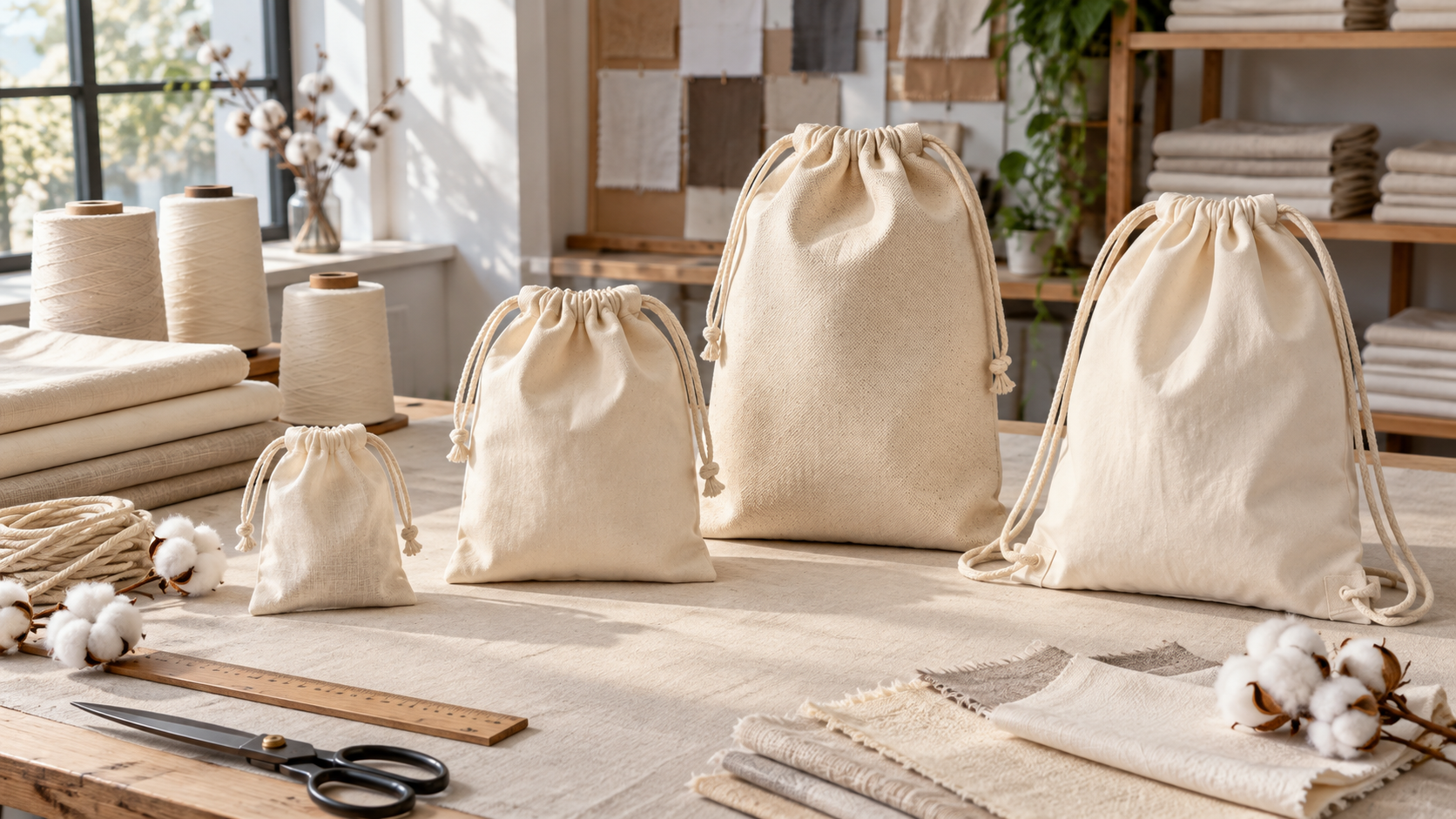
If a commercial material name is used, also define the measurable or reference-based attributes that matter. “Canvas,” “non-woven,” “polyester,” “mesh” and “velvet” each cover broad ranges. The canvas versus non-woven drawstring bag guide helps compare routes, but the final BOM must be order-specific.
Engineer the cord and channel as a matched closure system
The drawcord, channel and exits should be specified together. Changing only one can alter pull force, gathering, appearance, usable opening and durability.
| Closure field | Record in the tech pack | Verification question |
|---|---|---|
| Cord count and path | Single or double draw, routing diagram and exits | Does both-side pull close evenly? |
| Cord construction | Material, profile, nominal diameter and surface | Does it move without excessive binding or slip? |
| Channel geometry | Finished depth, fold/layer construction and seam position | Is clearance suitable after sewing? |
| Exit finish | Folded opening, stitched eyelet, metal/plastic eyelet or bound opening | Does the exit abrade the cord or body? |
| End treatment | Knot, heat-cut, dipped tip, sewn end or hardware | Can it fray, detach or enter the channel? |
| Attachment | Free cord, side loop, bottom tab or reinforced corner | Where is operational or carrying load transferred? |
| Operating state | Empty/filled test condition and defined motion | Does the selected condition represent actual use? |
Do not specify a universal pull-force number or cycle count without an intended use, method and approved target.
Instead, define the test setup or physical approval reference for this project. The supplier can then flag a cord-channel mismatch before material is committed.
Control decoration from the finished bag, not just the flat artwork
Artwork approval should cover file geometry, process feasibility and placement on the real bag. Link the tech pack to the exact native file and a viewable PDF, and record color mode, fonts outlined, minimum line/text limits agreed with the process provider, underbase or stitch assumptions, and any trapping or bleed requirement.
Choose a placement datum that survives gathering
Measure the artwork bounding box from named finished seams or the lower edge of the channel—not from a loose cut-panel edge unless the conversion is documented. Show both the bag flat and the bag gathered. If a centered mark must appear visually balanced when filled, state which state controls.
Separate artwork identity from production settings
The logo file says what the graphic is; the decoration specification says how it will be applied. Record screen print, heat transfer, embroidery, sublimation or another agreed method; print/stitch area; side; orientation; color references; texture or gloss expectation; and approval sample. For broader risk considerations, see how drawstring bag design reduces OEM production risk.
Define color by reference, component and viewing condition
“Navy” can refer to shell, cord, thread, lining, ink and hardware—each made through a different process. Give each a component-specific color ID. State whether the master is a current physical swatch, approved sample, color standard, lab dip, strike-off or printed reference. Digital screen color is useful for communication but is rarely an adequate production master by itself.
Also record the viewing method used for approval and how unavoidable substrate differences are handled. A print color on natural fabric may not visually match dyed cord. If “tone-on-tone” is the objective, define whether visual harmony or instrument values control and who approves the result.
Write construction specifications as operations and outcomes
Connect seam and operation codes to drawings. Useful fields include seam type, seam allowance, stitch class or approved construction reference, stitch density method, edge finish, backtack/lock method, channel fold sequence, reinforcement placement, lining assembly, corner shape and pressing restrictions.
Avoid false precision. If the team has not yet validated a stitch density or seam allowance, mark it “supplier proposal required—approve in sample” rather than filling a number copied from another style. The drawstring bag manufacturing process guide shows where these instructions enter sourcing, cutting, decoration, assembly, inspection and packing.
Create a short workmanship standard with photographs or diagrams where appearance terms could be subjective. Define examples such as asymmetric gathering, twisted lining, exposed raw edge, skipped stitch, loose thread, cord fray, distorted eyelet, puckered print area, stain, shade mismatch and incorrect fold. Classify defects for the project; do not assume every visible issue has the same consequence.
Add tolerances and an inspection plan that match product risk
A target without a tolerance invites inconsistent decisions. A tolerance without a measurement method invites argument. Keep the target, tolerance, method, stage, sampling rule and record together.
| Characteristic | Stage | Method or reference | Record/decision |
|---|---|---|---|
| Incoming shell and cord identity | Receiving | Approved component reference and purchase specification | Accept, hold or escalate |
| First cut/print output | Setup | Drawing, artwork revision and color reference | Release or correct setup |
| Channel geometry | Sewing first output | Defined POM and construction detail | Release or adjust operation |
| Closure operation | In-line/final | Stated empty or filled operation method | Pass, rework or investigate |
| Finished dimensions | Final | POM table and conditioning/state | Record readings and disposition |
| Decoration | First output/final | Approved strike-off or sample and placement datum | Approve appearance/position |
| Packing | Packing/final | Unit-pack and carton instructions | Verify count, fold and marks |
ISO 10005 provides guidance for establishing, reviewing, accepting, applying and revising quality plans. Use that as a planning principle while creating an order-level control plan; the standard itself is guidance, and mentioning it is not evidence that LUCKYSTAR, a supplier or the product holds an ISO certification. The official ISO 10005 page explains its scope.
For defect classification, lot definition, inspection stage and acceptance logic, coordinate this tech pack with the custom bag quality inspection checklist. If acceptance sampling is used, name the exact plan/version and decision parameters instead of writing “AQL standard” alone.
Specify labeling, unit packing and cartons before the quote is frozen
Packing can affect both cost and appearance. Show the fold sequence, cord position, tissue or insert if required, unit-pack material, warning or market label requirements, barcode data ownership, pieces per inner/outer pack, carton arrangement and shipping-mark approval process.
Keep regulated warnings and claims separate from decorative copy. Ask the responsible party to confirm destination-market requirements. A supplier should not infer a warning, fiber label or environmental mark from a picture. Confirm carton dimensions and gross/net weights from the approved pack-out rather than inserting estimates as permanent facts.
If pack-out has not been tested, mark it as a development item. A pristine sample presented open on a table does not prove that the decoration, shape and cords will recover after compression in a shipping carton.
Create a claims-and-evidence matrix inside the pack
Claims should be treated as controlled requirements, not marketing decorations. List the exact proposed wording, the component/product to which it applies, the evidence owner, document identifier, issuing body where relevant, validity or batch scope, permitted channel and approval status.
| Proposed claim type | Evidence question | Tech-pack status until verified |
|---|---|---|
| Fiber composition | What current material record supports the stated percentage? | Pending—do not print or publish |
| Recycled content | Does chain-of-custody evidence cover the material, supplier and order scope? | Pending—use precise conditional wording |
| Organic content | Are certification holder, product scope and validity confirmed? | Pending—no blanket company claim |
| Reusable/durable | What intended-use and service-life method supports the statement? | Define method before approval |
| Chemical compliance | Which exact material, color, component, market and report are covered? | Product/order-specific review required |
| Recyclable/compostable/biodegradable | Under which collection or processing conditions, standard and jurisdiction? | Legal and evidence review required |
The current LUCKYSTAR knowledge base does not support treating GOTS, GRS, BSCI, ISO, REACH or RoHS as universal company or product-line certifications. Historical reports must stay tied to their named samples, materials, methods and dates. Ask for the claim evidence relevant to the actual quotation and destination before placing copy on the bag.
Use a variant matrix to prevent SKU combinations from multiplying silently
One base style may have three sizes, four shell colors and six graphics. That does not automatically mean seventy-two interchangeable combinations. Put every orderable SKU on a matrix and state which construction, BOM, color, artwork, label and packing revision it uses.
Identify shared components and exceptions. For example, a dark shell may need a decoration underbase; one size may require a different cord length; one market may need a different label; and a small pouch may need reduced artwork. The matrix also helps the supplier expose component minimums and setup changes. Consult the custom-bag MOQ guide and custom-bag cost guide, but confirm all commercial figures against the final configuration.
Make revision control visible on every page and file
Use a revision code in the filename, title block and change table. Never distribute a silent overwrite. Each change entry should show the revision, date, page/field, previous state, new state, reason, requester, technical reviewer, commercial impact, sample impact and release decision.
| Change | Questions before release | Typical downstream effect |
|---|---|---|
| Shell weight or construction | Does drape, print, seam behavior or cost change? | New material approval and possible resample |
| Cord diameter/material | Does it fit the channel and end treatment? | Channel, closure and pack-out review |
| Logo size/position | Does the gathered or filled appearance change? | New artwork proof or strike-off |
| Bag size/gusset | Do contents, artwork datum and carton count change? | Fit test, consumption and packing review |
| Decoration method | Are artwork limits, hand feel and substrate compatibility different? | Process trial and appearance approval |
| Supplier/site/process route | Which controls or evidence must be repeated? | Risk review and written authorization |
Archive superseded versions so the history remains readable, but mark them clearly as obsolete. Configuration-control discipline is especially valuable for reorders: the team can identify whether it is reproducing the approved configuration or creating a revised style.
Convert the tech pack into a sample-and-approval checklist
The tech pack is ready for sampling when open assumptions are visible and assigned—not necessarily when every experiment is already finished. Send it with source files, reference materials and a structured question list. Ask the supplier to acknowledge the revision and return a feasibility review that separates confirmed items, alternatives, risks and questions.
During sample review, record results against numbered fields. Do not write “make it better.” Write what differed, where it was measured, the desired correction and whether a new sample, component sample, artwork proof or written confirmation closes the issue. The Custom Drawstring Bag Sample Development Process explains those physical gates; the general bag sample-development guide provides a category-wide framework.
After approval, update the tech pack to the as-approved state. Link the physical sample ID, sample date, photographs, material references, artwork proof and written exceptions. The approved sample should not carry undocumented fixes that exist only in an email thread.
Common tech-pack failures and how to correct them
| Failure | Why it causes trouble | Correction |
|---|---|---|
| Only a front sketch is supplied | Hidden construction and closure assumptions remain open | Add inside, back, bottom/side and closure-detail views |
| Finished height is the only vertical dimension | The contents may not fit below the channel | Add total, channel and usable-height POMs |
| Cord is specified by color alone | Diameter, construction and surface may not suit the channel | Define the cord-channel system and approve a component reference |
| Logo is “centered” | Supplier cannot know the intended datum or use state | Dimension the bounding box from named finished edges |
| BOM says “eco-friendly” | It does not define composition, claim scope or evidence | State measurable material requirements and evidence status |
| Every field is marked final too early | Guesses become false requirements | Use proposed/pending/approved states and named owners |
| Sample comments are scattered in chat | Corrections may disappear at handoff or reorder | Consolidate them into the next controlled revision |
| Packaging is postponed | Fold marks, cord tangles and carton consumption appear late | Develop the pack-out with the product |
| One sheet covers every SKU implicitly | Color, artwork and size exceptions are missed | Add a complete variant matrix |
| Tolerances are copied from another bag | Limits may not reflect size, material or function | Set project-specific tolerances after feasibility and sample data |
Company-claim boundary: the following section is publisher self-description and a commercial sourcing option. It does not independently prove factory ownership, in-house control of every operation, universal capability, capacity, material composition, product performance, certification, compliance, MOQ, price, timing or superiority. The legal seller, assigned sites and subcontractors, document ownership, production and decoration route, evidence, samples, tests, QC, packing and delivery terms depend on the exact order, released specification and written confirmation.
Why work with LUCKYSTAR on a drawstring bag tech pack
LUCKYSTAR can help buyers convert a commercial concept into an order-level specification for custom bag sourcing. The useful value is not a promise that every material, process or test sits under one roof. It is coordinated clarification across the product fields that often create disputes: intended contents, finished and usable dimensions, shell and lining direction, cord-channel compatibility, construction, artwork, color reference, sample corrections, inspection points and packing.
For a well-prepared brief, the team can review whether the information is sufficient for a comparable quotation, identify open assumptions, coordinate project-specific sample development, document agreed changes and connect the approval to production and inspection records. Available materials, decoration routes, MOQ, sample fees, timing, test needs, production route and delivery terms remain subject to specification and written confirmation.
That evidence-first approach is why buyers may include LUCKYSTAR in their supplier evaluation:
- Product-category focus: the company presents multiple custom bag and packaging categories, including drawstring options, while treating each specification as a separate project.
- Specification support: questions can be organized around measurable dimensions, materials, closure details, decoration, workmanship and pack-out rather than vague quality labels.
- Development continuity: the same controlled revision can follow the project from feasibility to samples, bulk handoff and reorder review.
- Claim discipline: certifications, test results and environmental statements should be checked for the applicable entity, component, order, market, scope and validity before use.
- Commercial transparency: quotation assumptions and variants can be made visible so buyers compare like with like.
For a wider view of supplier roles, traceability and production-route questions, read the Custom Drawstring Bag Supplier Guide and the OEM versus ODM bag manufacturing guide.
A copy-ready starter and release checklist
Style / SKU: [enter]
Revision / date / document owner: [enter]
Release status: [draft / sample / bulk]
Intended contents and use: [enter]
Bag format: [pouch / sports sack / other]
Total height / usable height / channel depth: [values, units and diagram references]
Width / opening / gusset: [values and measurement states]
Targets / tolerances / measurement method: [enter or assign for approval]
Shell / lining / reinforcement references: [enter]
Cord material / diameter / color / path: [enter]
Cord length and open or gathered state: [enter]
Logo file / bounding box / finished datum / approval state: [enter]
Inspection method / criteria / evidence: [enter]
Packing / label / quantity by SKU: [enter]
Open issue / owner / due date / closure evidence: [enter]
Approved sample ID / revision / approver / date: [enter]
Copy the blank starter below and replace every bracketed field with a confirmed value, a referenced document or a named open issue. It is a planning template, not an approved Luckystar specification or order record. Do not treat an unfilled target or tolerance as permission for the supplier to choose silently.
- Project and style identifiers, owner, date, revision and release status.
- Intended contents, filled dimensions/mass, user, handling route and presentation objective.
- Bag format, front/back/inside/side or bottom views, plus closure details.
- POM diagram, measurement state, units, targets and proposed tolerances.
- BOM with shell, lining, cord, thread, hardware, reinforcement, labels and packaging.
- Cord path, channel geometry, exits, end treatment and attachment/load path.
- Construction codes, seam/edge finish, reinforcement and workmanship criteria.
- Artwork source files, PDF proof, process, size, placement datum and color references.
- Inspection/test characteristics, stage, method, sample/record and decision owner.
- Unit pack, fold, label, carton configuration and shipping-mark approval route.
- Claims matrix with exact wording and current supporting evidence status.
- Complete SKU/variant matrix and exception list.
- Open issues with owners and closure dates.
- Change log, approval block and index of linked files/material references.
Then ask the supplier to return four lists: confirmed, proposed alternative, technical risk and missing information. This response is often more valuable than a quick unit price because it reveals whether both parties are pricing the same product.
Frequently asked questions
Can I make a drawstring bag tech pack in a spreadsheet?
Yes. A spreadsheet can control the BOM, dimensions, variants, tests and change log, while a drawing or presentation file holds diagrams. Export a locked, dated PDF set for each release and keep native files in a controlled location. Consistent IDs and versioning matter more than the software brand.
Do I need a professional technical illustrator?
Not always. Clear proportionate flats, measured callouts and magnified details may be sufficient.
A complex lining, gusset, reinforcement or load path may benefit from CAD or a technical drawing. The supplier must be able to interpret the geometry without guessing.
Should dimensions be finished or cut-panel measurements?
Finished dimensions should control buyer-facing fit.
Cut-panel dimensions and seam allowances may be added for construction control, but they must be labeled separately. Never use the same symbol for both.
How detailed should the drawcord specification be?
Detailed enough to reproduce the approved closure: material/fiber direction, construction, profile, nominal diameter, color/reference, exposed length, path, end treatment and attachment. Treat it together with the channel and exit finish.
Where should I measure logo placement?
Use a named datum on the finished bag, such as the lower channel seam and side seams, and dimension the artwork bounding box. State whether visual approval occurs flat, filled, gathered or in more than one state.
Should a tech pack include MOQ, price and lead time?
It can record quotation references and assumptions, but do not turn dynamic commercial figures into permanent product attributes. Material, color, decoration, size, variant split, packing, tests and schedule can change feasibility and cost. Review the lead-time and cost reduction guide and reconfirm terms in the current quotation.
Does an approved sample replace the tech pack?
No. The sample helps control three-dimensional feel and appearance; the tech pack identifies the approved configuration and measurable requirements. Use both, linked by sample ID and revision.
What happens if the supplier proposes a substitute?
Record the exact old and proposed new component or process, reason, commercial effect, visual/functional risk, validation needed and decision. Do not allow an unrecorded “similar material.” Approve, reject or require a sample in writing.
How should a tech pack handle certification requests?
Name the exact claim or market requirement and request documents tied to the relevant certification holder, product/material scope, transaction or order, standard, validity and chain of custody where applicable. A supplier logo sheet or unrelated certificate is not sufficient evidence.
When is the tech pack ready for bulk production?
When the released revision matches the approved physical and artwork references, required tests/records and open issues have defined dispositions, variants and pack-out are clear, and responsible parties have issued written approval. Production timing and route still require order-level confirmation.
Prepare one source of truth before requesting the final quote
A strong custom drawstring bag tech pack does not predict every factory decision. It makes the intended configuration, measured requirements, evidence, open issues and authority to change them visible. Draw the bag in real use states, separate total from usable dimensions, specify cord and channel together, anchor the artwork to finished datums, connect the BOM to drawings, build inspection and claims into the same revision, and carry every approved change forward.
LUCKYSTAR can review your specification package for a project-specific custom drawstring bag inquiry. Send the intended use and contents, sketches, dimensions, material direction, cord/closure concept, artwork, color references, quantity by variant, packaging, destination, evidence requirements and target date.

Request a drawstring-bag tech-pack review
Share the current revision even when fields remain open. Marking a value as proposed creates a review task; leaving it ambiguous lets suppliers quote different products.
Review LUCKYSTAR custom drawstring bag options, then send your specification brief through the contact form or Email a project brief. The email link opens a prefilled draft for your review before sending.
Document support, production route, materials, evidence, testing, capacity, availability, price, MOQ, sample cost, packing, schedule and delivery terms are subject to current order-level verification, destination requirements, released specification and written confirmation.
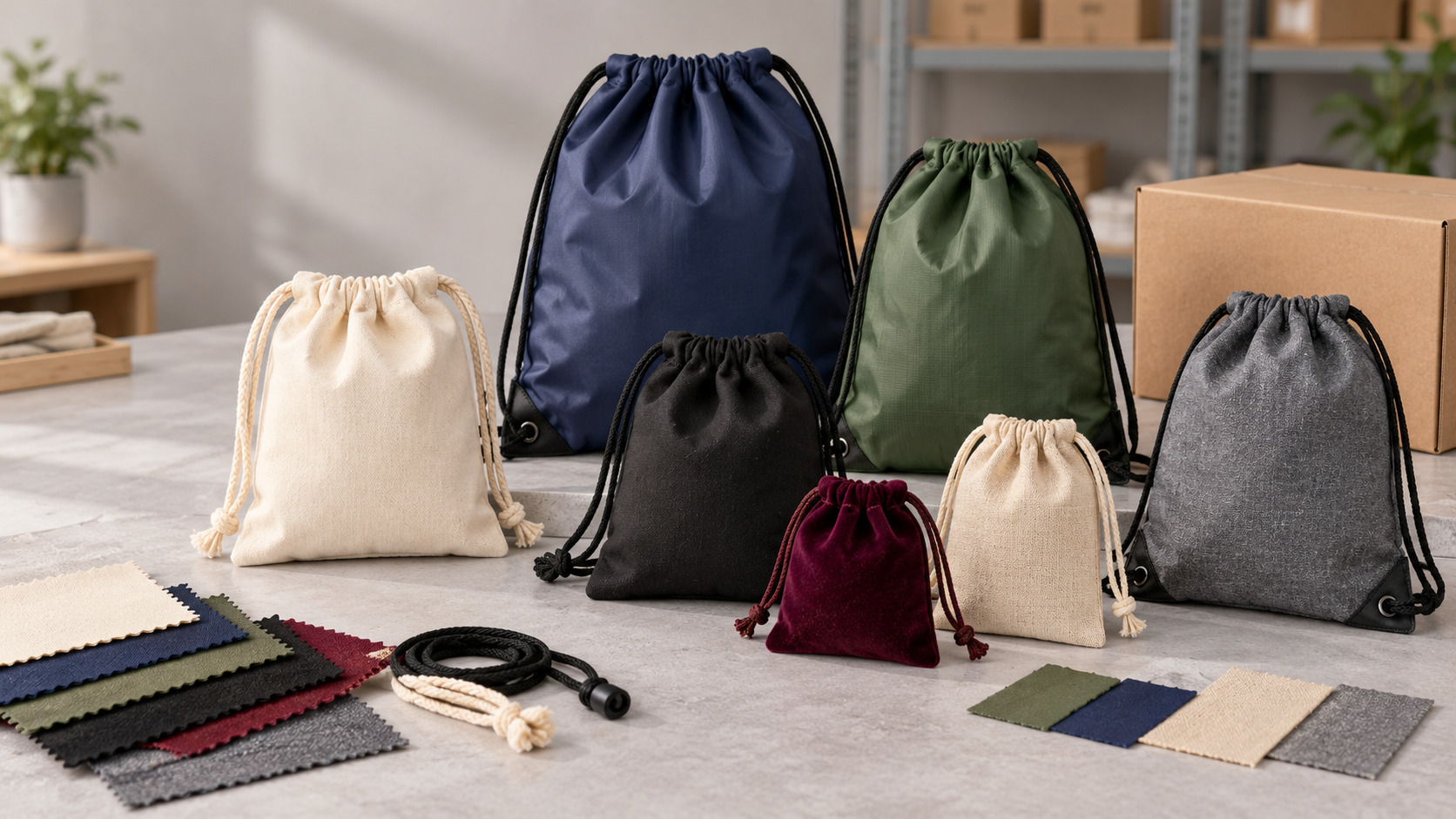
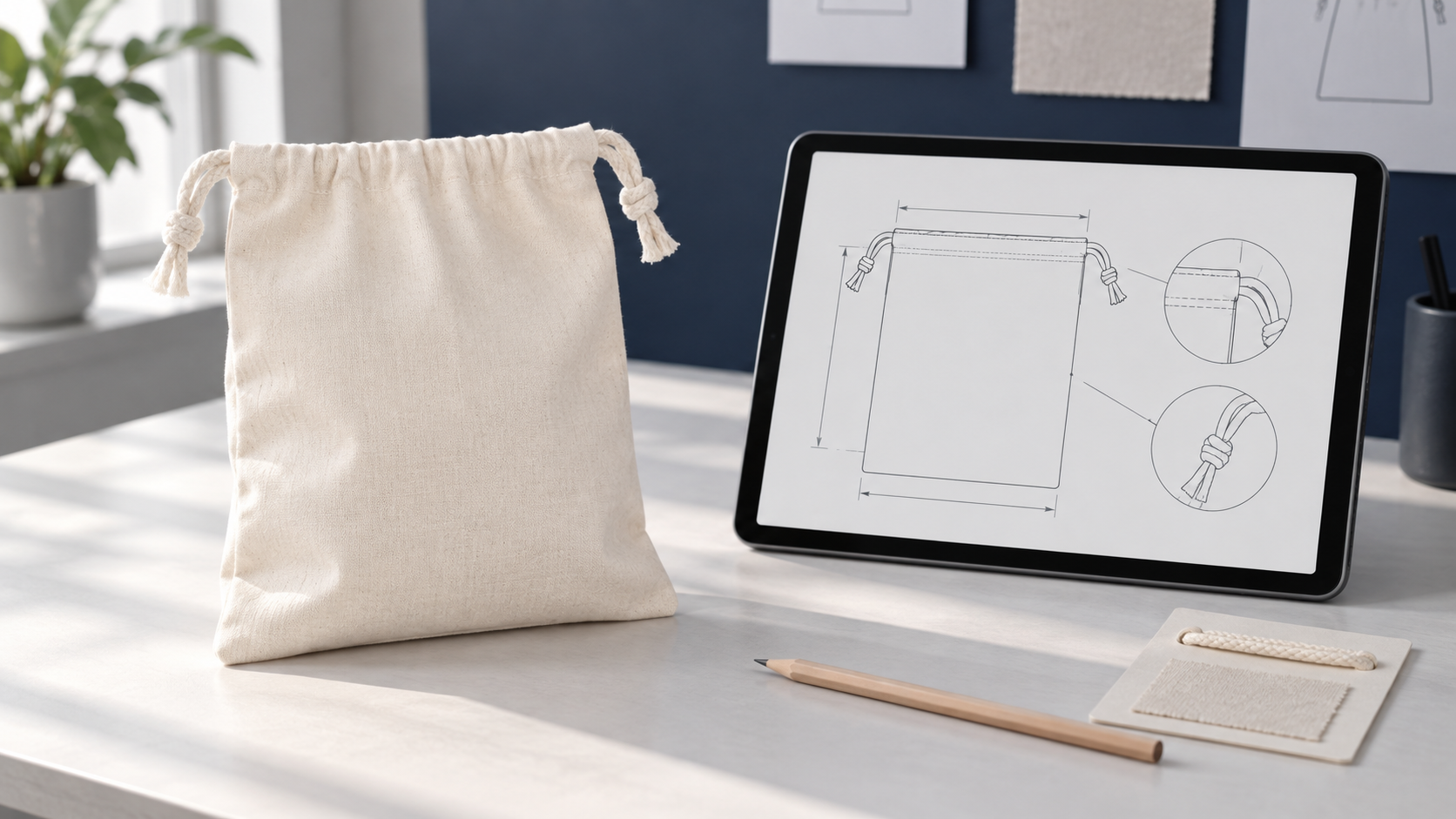
Image note: the hero is a generated product-development composition informed by an internal photograph of a plain, unbranded pouch. It illustrates specification communication only and does not establish material composition, dimensions, performance, certification, machinery, site ownership, current SKU availability or universal capability.