
Custom Dust Bags for Handbag and Shoe Brands
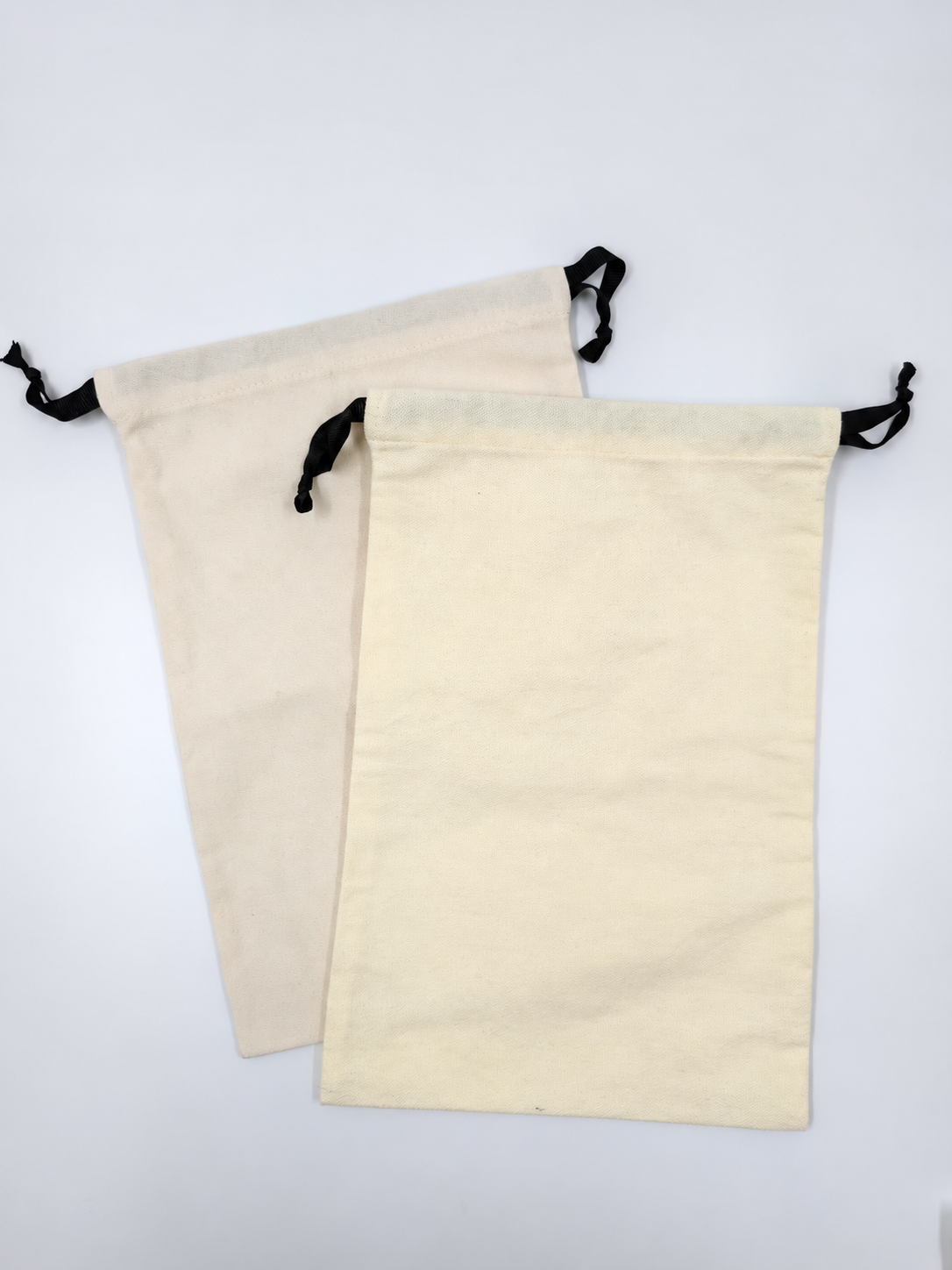
Edited from a current LUCKYSTAR public product photograph; third-party sample text was removed. It is an unbranded construction reference, not proof of material composition, protective performance or a customer order.
Custom dust bags for handbag and shoe brands should be specified as part of the product's packaging system, not ordered as generic fabric pouches. The right specification starts with the product's packed dimensions, surface sensitivity and distribution route, then defines fabric, seams, closure, branding, testing and pack-out. Handbags and footwear often need different size logic, contact controls and handling instructions, even when they share a visual identity.
For a practical starting point, review LUCKYSTAR's custom drawstring bag options. Final material, dimensions, decoration, pricing, minimum order quantity and lead time remain subject to the approved specification and written order confirmation.
Quick answer: what should a brand specify?
A useful dust bag brief answers seven questions: what goes inside, how the item is measured, which surfaces touch the fabric, how the opening closes, where the logo sits, how the packed item travels and what evidence is required before shipment. The table below turns those questions into sourcing decisions.
| Decision | Handbag program | Shoe program | Evidence to approve |
|---|---|---|---|
| Fit | Allow room for handles, gussets and structured corners | Define one shoe or one pair; include outsole and heel geometry | Filled fit sample and measured photo |
| Contact surface | Control lint, dye transfer and hardware rubbing | Control abrasion, outsole soil transfer and pair-to-pair rubbing | Contact test using production-intent materials |
| Closure | Avoid cord pressure on delicate handles or trim | Confirm the pair cannot escape during handling | Closure and pull test on a filled bag |
| Construction | Select seam and bottom shape for the handbag profile | Reinforce for weight and angular soles or heels | Seam review and load test |
| Branding | Balance logo scale with premium presentation | Keep artwork readable after the bag wraps around shoes | Approved artwork placement sample |
| Pack-out | Define folding, stuffing, hardware protection and carton orientation | Define pair orientation, inserts and box fit | Pack-out trial and carton specification |
| Reorder control | Lock material, color, dimensions and artwork revision | Lock size family and pair/single-pack convention | Approved master specification and retained reference |
Start with the product, not the pouch
The most common dust bag problem is beginning with a familiar pouch size and trying to make the product fit. That reverses the correct process. A dust bag is useful only when it protects the intended item without excessive compression, uncontrolled movement or awkward presentation.
Create one product-to-packaging worksheet for every meaningful SKU family. Record the product dimensions in its actual packing configuration, including handles folded or upright, detachable straps, tissue, inserts and any hardware covers. A structured handbag with rigid corners behaves differently from a soft tote. A pair of high heels behaves differently from low-profile sneakers.
Measure the packed product envelope
Measure maximum width, height and depth after the product has been prepared exactly as it will ship. Do not rely only on catalog dimensions. Catalog measurements may exclude protruding hardware, folded straps, heel height or the thickness created by paired shoes.
| Measurement input | Why it matters | Common mistake |
|---|---|---|
| Maximum packed width | Sets usable pouch width and opening access | Measuring only the body and ignoring handles or outsole flare |
| Maximum packed height | Determines closure clearance | Placing the cord channel directly over product hardware |
| Maximum packed depth | Drives gusset or flat-bag allowance | Treating a three-dimensional item as a flat rectangle |
| Entry geometry | Confirms the item can pass through the opening | Assuming the body fits because the finished pouch looks large enough |
| Compression tolerance | Defines acceptable ease and movement | Making the pouch tight to reduce fabric consumption |
| Final outer pack | Checks compatibility with box, tissue and carton | Approving the pouch without the retail or shipping pack |
For a broader method of translating dimensions into pouch capacity, use the drawstring bag size and capacity guide. The final size should still be validated on a filled sample, because fabric thickness, seam allowance and closure construction reduce usable space.
Handbag dust bags: fit and protection priorities
Handbag brands normally need to protect decorative surfaces, handles, straps, metal parts and structured edges while preserving an intentional unboxing experience. One universal bag rarely performs equally well across mini bags, shoulder bags, totes and travel styles.
Structured handbags
A structured bag needs enough ease to enter without scraping the opening. Corner pressure can distort the pouch or polish the product surface through repeated movement. A side gusset or a roomier flat construction may improve fit, but the decision should follow a filled trial.
The closure should sit above the product body. If a drawcord cinches across a top handle, zipper pull or rigid frame, it may create pressure or an untidy presentation. Define the product orientation and closing point in the pack-out instruction.
Soft handbags and totes
Soft bags may fold for distribution, but over-folding can crease coated surfaces, print panels or reinforcements. The dust bag specification should state whether the handbag is stuffed, folded or laid flat. It should also define whether detachable straps are wrapped separately inside the handbag, placed beside it or put in a smaller accessory pouch.
Hardware and decorative surfaces
Metal feet, chain straps, studs, buckles and zipper pulls can rub against fabric or the product itself. A dust bag cannot replace appropriate hardware wrapping or internal product protection. Treat the dust bag, tissue, sleeves, inserts and product box as one system. If the brand expects the pouch alone to prevent scratching, that expectation needs a product-specific validation method.
Shoe dust bags: decide between pair and individual packing
Footwear programs begin with a choice: one pouch for a pair, or one pouch per shoe. The best format depends on product value, surface sensitivity, packing space, retail presentation and cost target.
| Format | Advantages | Limitations | Suitable examples |
|---|---|---|---|
| One bag per pair | Fewer pieces, simpler packing, lower decoration count | Shoes can rub together; larger bag may shift in the box | Casual shoes and cost-sensitive programs after contact review |
| One bag per shoe | Separates decorated surfaces and hardware; premium presentation | Two pieces, more packing labor and higher total fabric use | Heels, polished leather styles and special editions |
| Pair bag with divider or wrapping | Controls contact without two fully branded bags | More complex pack-out and added material | Programs needing separation with one outer pouch |
| Mixed-size family | Better fit across boots, heels and sneakers | More SKU control and reorder complexity | Broad footwear collections with stable volume |
Sneakers and casual shoes
Confirm whether the outsole is clean at packing and whether the pouch will be reused by the consumer. A pale inner surface can show soil quickly; a dark or heavily dyed fabric may require additional color-transfer evaluation. The opening must accommodate the widest part of the pair without forcing the shoes through.
Heels and embellished footwear
Heel tips, buckles, crystals and other angular details can concentrate force. Test the actual product rather than a substitute weight. Consider separate shoe pouches or local wrapping where two shoes could abrade each other. Construction strength around the bottom and opening is especially important.
Boots
Boots need more than added height. Shaft shape, heel profile and fold method change the packed envelope. Confirm whether the boots are upright, folded or nested, and ensure the pouch still fits the shoe box without creating uncontrolled compression.
Choose the material by contact behavior and use case
Material selection should balance hand feel, lint, color-transfer risk, strength, print compatibility, care expectations and price. Fiber name alone does not determine performance. Fabric weight, weave or knit structure, dyeing, finishing and construction also matter.
| Material family | Typical strengths | Watch points | Useful applications |
|---|---|---|---|
| Cotton | Natural hand feel, versatile printing, familiar premium presentation | Lint, shrinkage, wrinkles and shade variation require specification | Handbags, shoes and lifestyle accessories |
| Canvas | More body and abrasion resistance than many light cotton fabrics | Bulk, texture and possible surface abrasion on delicate finishes | Structured products and reusable storage |
| Polyester | Consistent appearance, broad color options and good dimensional stability | Static, sheen and dye-transfer performance vary by fabric and finish | Scalable retail programs and travel-oriented products |
| Microfiber-type fabric | Soft surface and refined presentation | Composition, pile direction, lint and colorfastness must be confirmed | Delicate surfaces and smaller premium products |
| Velvet-type fabric | Luxurious visual and tactile effect | Nap direction, pressure marking, lint and decoration compatibility | Premium accessories and presentation-led programs |
| Non-woven fabric | Lightweight and economical for selected applications | Tear strength, hand feel and long-term reuse expectations vary by GSM and construction | Promotional or basic protective programs |
Use the cotton versus canvas drawstring bag comparison when choosing between softer cotton constructions and heavier canvas. For general luxury pouch decisions, compare the purpose of this category-specific guide with the broader custom luxury dust bag guide.
Do not infer protection from a material name
Terms such as cotton, microfiber and velvet do not prove that a fabric will not transfer color, shed fibers or mark a product. Test the production-intent fabric against the actual or representative product surface. If the product contains sensitive leather, coated material, lacquer, metal plating or pale textiles, let the product owner define the acceptance criteria.
Lining is not automatically better
A lining can conceal seams or add separation, but it also adds thickness, cost, sewing operations and another contact material. Specify a lining only when it solves a defined problem. Both layers require material, shade and contact review. Loose layers can also bunch during insertion if construction is not controlled.
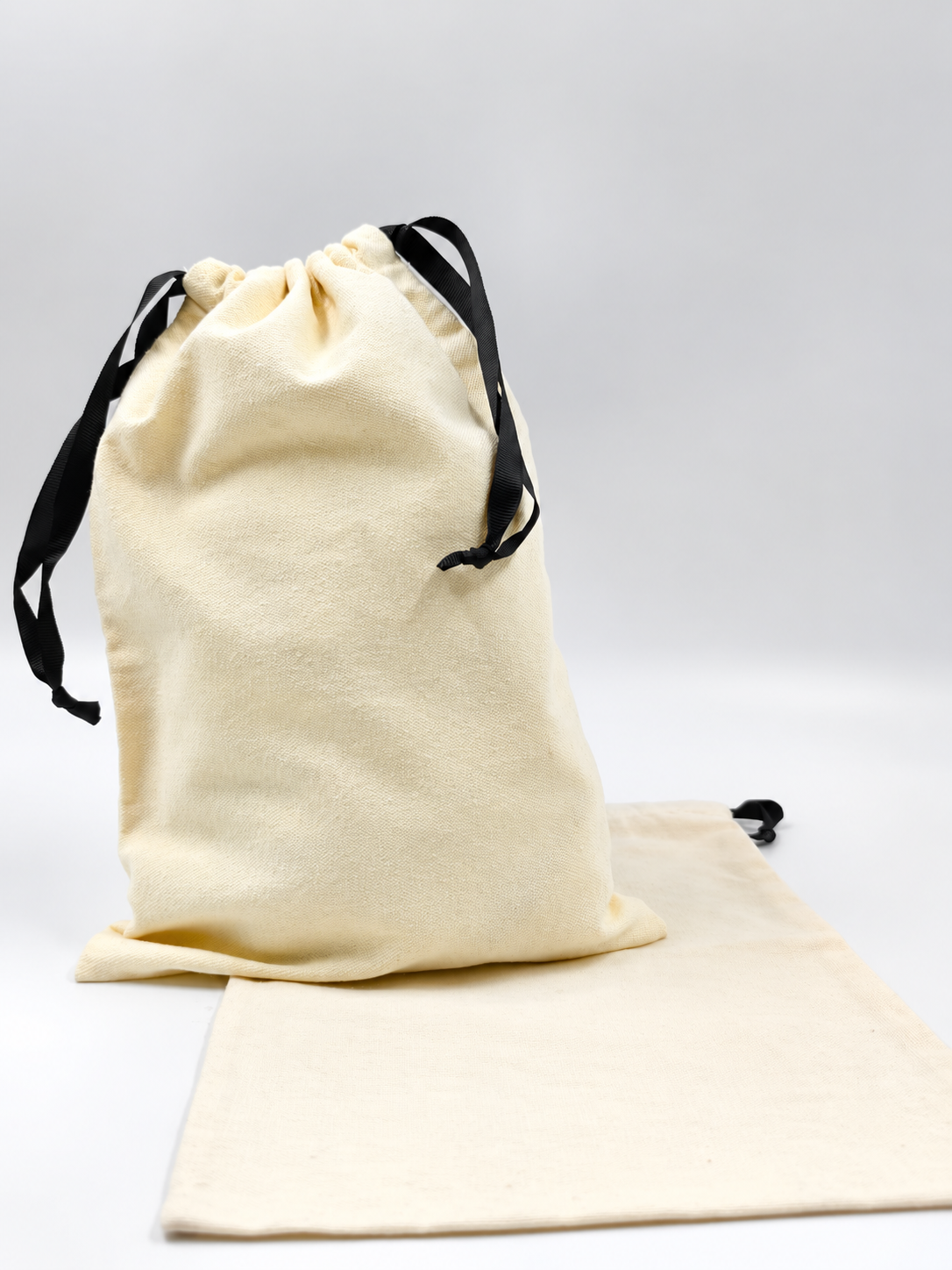
Edited from a current LUCKYSTAR public product photograph; third-party sample text was removed. It shows an unbranded construction reference, not proof of material composition, protective performance or a customer order.
Select a closure that works with the product
The closure affects access, retention, appearance and stress distribution. Specify cord material, diameter or width, color, end treatment, channel construction and the intended closing force.
| Closure option | Benefit | Risk to manage | Approval check |
|---|---|---|---|
| Single drawcord | Simple, economical and easy to operate | Uneven gathering and one-sided pull | Close a filled bag and inspect retention |
| Double drawcord | Balanced closing and familiar premium presentation | More components and possible tangling | Pull both sides and check symmetry |
| Ribbon drawcord | Soft, decorative appearance | Edge fraying, twisting and lower grip | Cycle the closure and inspect cut ends |
| Round cord | Smooth operation and broad availability | Pressure point and knot migration | Define diameter, end treatment and pull force |
| Flat cord or tape | Wider hand contact and distinctive look | More channel bulk and possible folding | Check channel clearance and repeated operation |
For detailed cord and reinforcement choices, see the drawstring cord, eyelet and reinforcement guide. Dust bags often use sewn channels rather than exposed metal eyelets, especially when metal-to-product contact is undesirable. If hardware is used, the product-contact risk and pull-out resistance must be evaluated.
Build seams and bottoms for the actual load
A dust bag may look simple, but failure usually begins at a seam end, cord exit, bottom corner or poorly controlled allowance. The specification should identify seam type, stitch density or approved appearance, reinforcement points, finished dimensions and tolerance.
A flat bottom is efficient for low-profile items. A side or bottom gusset can help with depth, but it changes the product silhouette and folding method. Boxed corners may improve the presentation of structured handbags or paired shoes, while adding sewing steps and inspection points. Do not select a bottom style from appearance alone; test insertion, closure and box fit.
Critical workmanship points include:
- secure back-tacking or equivalent seam-end control;
- no raw edge exposed where the specification requires a finished edge;
- even cord channel height and unobstructed cord movement;
- controlled thread tails, skipped stitches and puckering;
- correct reinforcement at load and pull points;
- clean inside surfaces without sharp debris or loose components.
Design branding around folds and closure zones
Artwork should remain legible when the dust bag is filled, gathered and packed. A logo centered on a flat dieline may appear too low, too close to a side seam or distorted around a three-dimensional product.
Define a safe branding zone
Keep critical artwork away from seam allowances, bottom folds, gusset creases and the drawcord channel. Specify placement from finished edges rather than raw cut edges. The drawstring bag logo placement and print size guide provides a useful starting framework, but the final position needs a filled sample.
Match decoration to the fabric
| Decoration | Strong fit | Limitations to test | Best approval evidence |
|---|---|---|---|
| Screen printing | Solid logos and repeat bulk programs | Ink hand, cracking, abrasion and coverage on textured fabric | Printed production-intent sample plus rub test |
| Heat transfer | Fine detail and selected multicolor art | Edge feel, heat marks and adhesion after flexing | Approved sample and adhesion/abrasion evaluation |
| Embroidery | Textured premium effect | Backing, puckering, thread contact and added stiffness | Front-and-back sample review on the chosen fabric |
| Foil stamping | Metallic presentation on suitable surfaces | Foil continuity, abrasion and heat/pressure compatibility | Lighting review plus handling test |
| Woven label | Stable small branding and multi-SKU flexibility | Edge feel, placement and label attachment | Sewn sample and pull inspection |
Artwork files should define vector paths, color references, dimensions and location. The artwork and dieline preparation guide explains the handoff, while the print adhesion and abrasion testing guide helps teams define decoration checks.
Pantone references can communicate a target, but substrate, ink, finish, pile direction and viewing conditions affect the result. Approve the physical sample and define acceptable variation rather than treating a digital screen view as a production standard.
Build a size architecture instead of one-off SKUs
Handbag and shoe brands can reduce complexity by grouping products into validated size families. A family is not simply small, medium and large; it is a controlled set of products that share the same packed envelope and performance needs.
| Family control | What to record | Why it helps |
|---|---|---|
| Product membership | SKU or style codes approved for the pouch | Prevents an untested product being assigned by guesswork |
| Finished pouch dimensions | Width, height, gusset and tolerances | Makes reorders measurable |
| Product orientation | Handle, strap, toe, heel and closure position | Standardizes packing |
| Material and color | Construction code, weight or approved swatch reference | Reduces accidental substitution |
| Decoration revision | Artwork filename, size, color and placement | Controls brand consistency |
| Pack quantity | Pieces per inner pack and carton | Supports warehouse and purchase-order accuracy |
Color-coded cords, woven labels or discreet size codes can help operators distinguish similar pouch sizes. Any visible coding should be reviewed for brand presentation, and any barcode or SKU label needs a defined removal or permanence requirement.
Plan the complete pack-out workflow
The dust bag's performance depends on what happens before and after it is closed. Create a visual packing instruction for the production, fulfillment or retail team.
- Confirm the product is clean, dry and ready for packing.
- Apply required hardware sleeves, tissue, inserts or protective wraps.
- Orient handles, straps, shoes or accessories as shown in the approved pack-out.
- Insert the product without forcing it through the opening.
- Close the drawcord to the approved position without excessive compression.
- Fold or place the pouch in the product box as specified.
- Apply labels only in the defined locations.
- Verify the final retail or e-commerce pack before carton loading.
An attractive empty pouch can fail once packed into a tight box. Validate the complete sequence with the real product, box and shipping configuration.
Test the risk, not just the fabric
A test plan should follow the brand's product, market and claim requirements. There is no universal test package that automatically proves every dust bag is suitable for every handbag or shoe.
| Risk | Practical evaluation | What the buyer must define |
|---|---|---|
| Incorrect fit | Filled insertion, closure and removal trial | Product orientation and acceptable ease |
| Seam failure | Static load, repeated handling or agreed pull method | Load, duration, cycles and failure criteria |
| Cord failure | Repeated opening/closing and cord or channel pull | Method, cycles, force and acceptable damage |
| Color transfer | Dry/wet rubbing or product-contact protocol | Contact surface, condition and grading threshold |
| Lint or fiber shedding | Wipe/contact inspection on representative product surface | Allowed visible residue and inspection lighting |
| Print damage | Adhesion, flex and abrasion protocol | Cycles, pressure and acceptable appearance |
| Odor | Controlled sensory review after agreed conditioning | Panel, environment and acceptance rule |
| Washability claim | Agreed laundering and dimensional/appearance checks | Care method, cycles and shrinkage limit |
| Shipping damage | Packed-product handling or distribution simulation | Pack system, route severity and failure definition |
ISO 6330:2021 sets out household-style laundering and drying procedures used in textile evaluation. It does not by itself decide whether a dust bag is washable or set a universal shrinkage limit. Use it only when laundering is relevant, then define the exact procedure, number of cycles and acceptance criteria in the order specification.
For acceptance sampling, ISO 2859-1:2026 provides AQL-indexed sampling schemes for inspection by attributes. It does not prescribe one universal AQL for all brands or defects. The buyer and supplier should agree inspection level, defect classes, AQL values and any special tests before production.
Create a pre-production approval gate
Do not release bulk production from a digital mockup alone. The approval sample should use production-intent fabric, color, construction, cord and decoration whenever practical. If any component is a substitute, label it clearly and close the difference before bulk production.
Sample approval checklist
| Check | Approval question | Record to retain |
|---|---|---|
| Dimensions | Does the finished sample meet the agreed tolerance? | Measurement sheet and dated photos |
| Filled fit | Can the intended SKU be inserted, closed and removed correctly? | Filled sample photos or video |
| Surface contact | Is lint, rubbing or transfer acceptable for the product? | Test method and result |
| Color | Is the physical shade approved under agreed lighting? | Signed swatch or sample reference |
| Artwork | Are size, placement, color and edge quality correct? | Artwork revision and approved sample |
| Construction | Are seams, channel, reinforcement and inside finish correct? | Specification with close-up photos |
| Pack-out | Does the pouch work with the full retail/shipping pack? | Pack-out instruction and packed sample |
The custom drawstring bag sample development process can help buyers structure revisions. Record each change by revision number instead of relying on scattered messages.
Inspect bulk production before shipment
Inspection should connect every result to the approved specification. Visual checking alone cannot confirm dimensions, fit or functional performance.
Classify defects before inspection. A critical defect may create a safety, legal or serious contamination risk; a major defect may prevent intended use or create a material brand failure; a minor defect may affect appearance without preventing use. These are program definitions, not universal labels.
Suggested inspection sequence
- Verify purchase order, approved sample, specification and artwork revision.
- Confirm carton count, SKU labels and packing assortment.
- Draw the agreed sample according to the written sampling plan.
- Measure finished dimensions and key construction points.
- Inspect workmanship, shade, contamination and decoration.
- Run agreed functional tests on the defined sample quantity.
- Compare packed fit using the correct handbag or shoe reference.
- Record defects with photos, quantities and disposition.
Use the custom drawstring bag quality control checklist to build the inspection form, then follow the pre-shipment inspection guide for release controls.
Control pack-out, cartons and warehouse handling
Dust bags can arrive wrinkled, stained or mixed even when sewing is correct. Define folding direction, bundle quantity, moisture protection where justified, inner labels, carton strength, carton dimensions, gross weight and assortment.
Avoid over-compressing plush or pile fabrics. For pale pouches, assess whether colored cords, tissue or other components can transfer during storage. Carton markings should identify purchase order, SKU, size family, quantity and destination without exposing restricted consumer or customer information.
If the pouch is packed with the finished handbag or shoes at another facility, clarify which party performs the final fit and contact check. Ownership gaps between pouch production, product manufacturing and fulfillment are a common source of unverified assumptions.
Make reorders repeatable
Reorders should reference a controlled specification rather than “same as last time.” Materials, dye lots, machines and personnel can change. A robust reorder pack includes:
- approved material and color reference;
- finished dimensions and tolerances;
- construction diagram and seam details;
- cord and trim codes;
- artwork file, revision, placement and color target;
- test and inspection requirements;
- pack-out and carton specification;
- approved sample identification;
- documented change-control procedure.
If a component becomes unavailable, the supplier should propose the change in writing, provide a comparison and obtain approval before substitution. Repeat orders still require incoming, in-process and final checks appropriate to the risk.
Make sustainability claims that can be supported
A reusable-looking pouch is not automatically sustainable, recyclable, biodegradable or made from recycled content. Claims should identify the relevant material, percentage, product scope, evidence and market conditions. Avoid broad, unqualified environmental language.
For US-facing marketing, the FTC Green Guides summary explains why broad claims such as “green” or “eco-friendly” can be difficult to substantiate. Other markets may apply different rules. Legal review and current market-specific evidence remain the brand's responsibility.
If recycled content or a certification is required, request current documents that match the relevant legal entity, material, product scope and validity period. A platform badge, historical certificate or sample-level statement should not be expanded into a company-wide claim.
Why handbag and shoe brands work with LUCKYSTAR
LUCKYSTAR can help buyers translate a visual packaging concept into an order-level drawstring bag specification. The value is not a generic promise that one dust bag suits every product; it is coordinated decision-making across size, material, construction, decoration, sample approval, quality checkpoints and pack-out.
For handbag and footwear programs, that coordination can include:
- separating handbag, boot, heel and sneaker requirements instead of forcing one universal size;
- matching fabric and decoration choices to the product-contact and presentation risks;
- developing physical samples for filled-fit and pack-out approval;
- documenting artwork, color, dimensions, components and revisions for reorders;
- agreeing inspection and test requirements before bulk production;
- coordinating multiple pouch specifications within a consistent brand system.
LUCKYSTAR should be evaluated against the exact order brief. Product availability, MOQ, sample cost, price, test scope and lead time are subject to specification and written confirmation. Begin supplier due diligence with the custom bag manufacturer guide. Then apply the more specific criteria in how to choose a custom drawstring bag manufacturer. For category-wide sourcing risks, consult the dust bag procurement mistakes guide and dust bag manufacturer guide.
RFQ checklist for handbag and shoe dust bags
Send an RFQ that allows comparable quotations. At minimum, include:
| RFQ field | Information to provide |
|---|---|
| Product | Handbag or shoe type, SKU family and intended use |
| Packed dimensions | Maximum width, height and depth with orientation photos |
| Pouch size | Target finished dimensions, gusset and tolerance, or request engineering support |
| Material | Fiber or construction target, fabric weight/hand feel and color reference |
| Contact needs | Sensitive surfaces, lint, transfer or abrasion concerns |
| Closure | Single/double cord, material, size, color and end treatment |
| Decoration | Method, artwork, size, position, colors and file revision |
| Quantity | Units per size/artwork and forecast, without assuming a fixed MOQ |
| Testing | Exact methods, conditions, sample quantities and acceptance criteria |
| Inspection | Defect classes, sampling plan and release responsibility |
| Pack-out | Folding, inner pack, labels, carton assortment and shipping destination |
| Timing | Sample deadline, approval window and required shipment date |
This information is more useful than asking only for “a cotton shoe dust bag” or “a luxury handbag pouch.” It allows the supplier to identify cost drivers and technical risks before sampling.
Frequently asked questions
What is the best material for a luxury handbag dust bag?
There is no universal best material. Select it according to the handbag surface, desired hand feel, lint and transfer risk, decoration, care expectation and budget. Approve a production-intent sample and test contact with the actual or representative product.
Should shoes be packed in one dust bag or two?
Use one bag per shoe when separation is important for delicate finishes, heels, buckles or premium presentation. One bag per pair can reduce pieces and packing labor when product-contact trials show that the shoes can be packed safely together.
How much extra space should a dust bag have?
Enough ease is needed for insertion, closure and removal without compression, but a large arbitrary allowance can produce movement and poor presentation. Calculate from the packed three-dimensional envelope and validate on a filled sample; do not rely on a universal percentage.
Can a cotton dust bag be described as eco-friendly?
Fiber identity alone does not substantiate a broad environmental claim. Define the specific claim, evidence, product scope and target market. Consider material quantity, durability, care, packaging and actual reuse rather than using an unqualified “eco-friendly” label.
Does a dust bag need to be washable?
Only if the intended use or marketing claim requires it. If washability matters, specify the care method, test procedure, number of cycles and limits for shrinkage, shade, seams, cord and decoration. Without those details, “washable” is ambiguous.
Which defects should be checked before shipment?
Check dimensions, seam security, channel and cord function, contamination, shade, logo placement, decoration quality, filled fit, packing assortment and any agreed performance tests. Define critical, major and minor defects in the purchase specification.
How can a brand keep dust bags consistent across reorders?
Use a controlled specification, approved material and color references, artwork revision, retained sample, test requirements and written change control. “Same as last order” is not enough when materials or processes change.
Can LUCKYSTAR supply one coordinated program for handbags and shoes?
LUCKYSTAR can review a multi-SKU brief and help coordinate size families, materials, construction, decoration, samples, quality checkpoints and pack-out. Feasibility and commercial terms depend on the final specification and written confirmation.
Request a specification-based quotation
Share product dimensions, photos, quantity by SKU, material preference, artwork, target market, testing needs, pack-out and delivery schedule. LUCKYSTAR can then review the brief and identify the sample and approval path for your handbag or shoe dust bag program.

Contact LUCKYSTAR for a custom dust bag quotation. Recommendations, pricing, MOQ, test scope and lead time are subject to the final specification, sample approval and written order confirmation.





