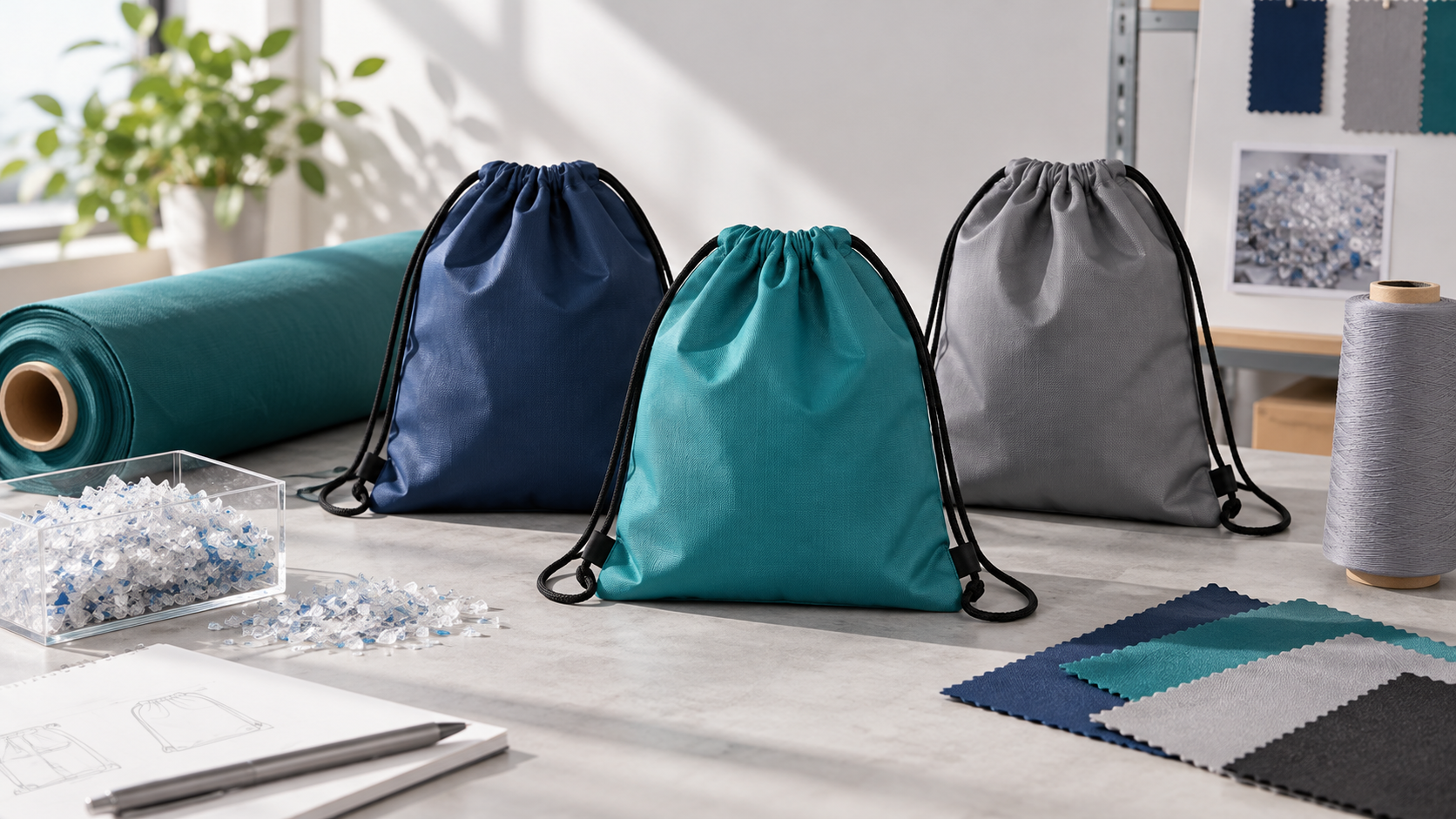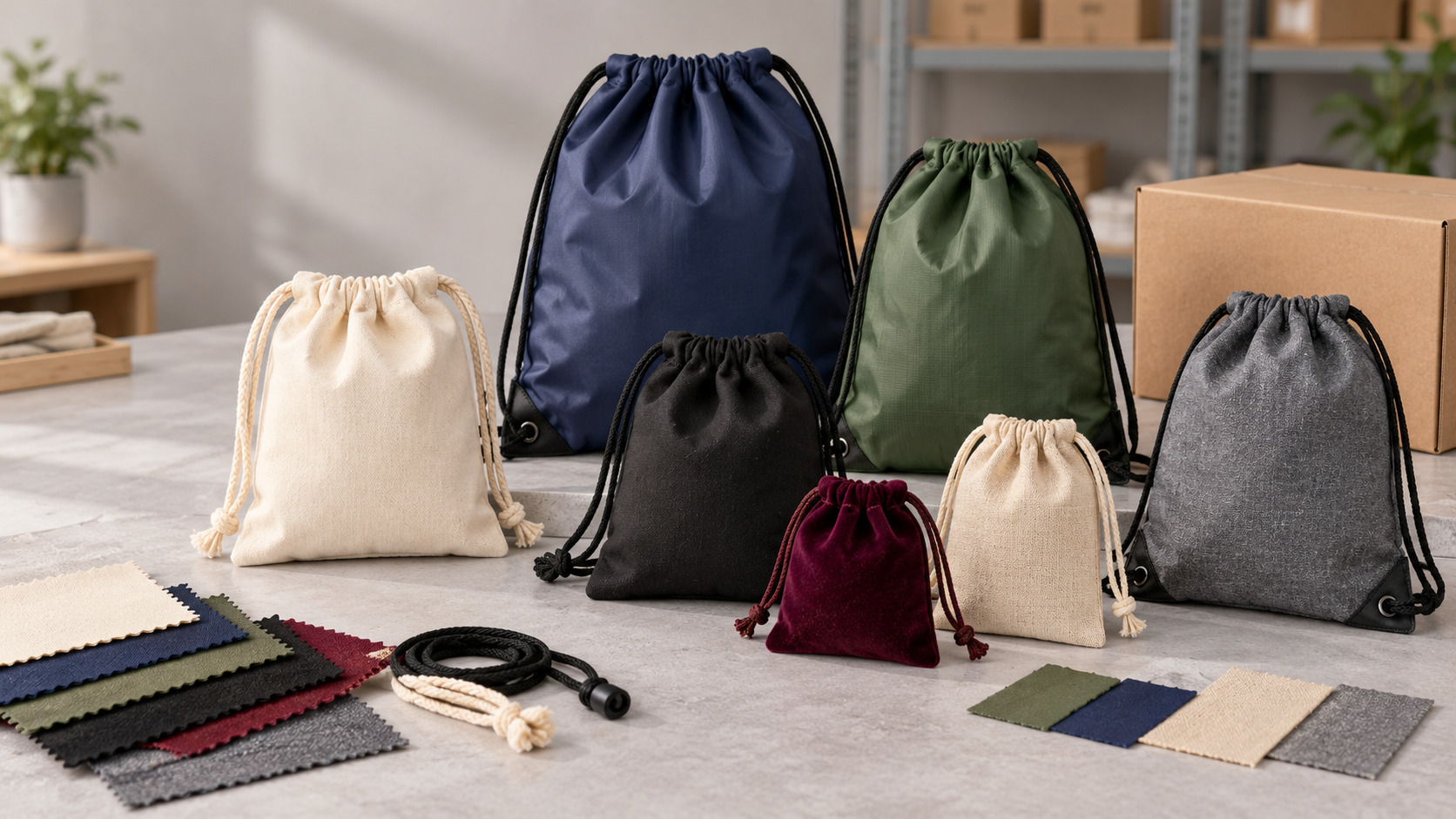
A non-woven shopping bag can carry a one-colour event logo, a four-colour retail illustration or a full-coverage photographic panel. Those results should not be quoted as the same printing job. The correct route depends on whether the polypropylene web is exposed or laminated, whether printing happens on a roll or a finished bag, how many colours and designs are required, and how the ink or transfer will adhere after the bag is folded, bonded, sewn and packed.
This guide compares the main Printing Methods for Non-Woven Shopping Bags: direct screen printing, roll-fed flexography, gravure-printed film with lamination, heat-transfer decoration and qualified digital inkjet/transfer routes. It also explains where a method stops being commercially sensible. It does not repeat the all-material overview in Custom Shopping Bag Printing Methods or the material comparison between woven and non-woven PP.
Start by matching the retail brief to a construction on LUCKYSTAR’s shopping bag product page. Converter qualification belongs in the Shopping Bags supplier-selection pillar; broader factory due diligence belongs in the main custom bag sourcing guide.
Planning an order? Send a non-woven print-route brief. Include the exact web/polymer, gsm, colour and exposed side; treatment and laminate stack; bag construction; artwork dimensions, coverage, colours, white layer and SKU split; intended use; route candidates; sample, adhesion/rub/flex/blocking and converted-bag checks; packing, destination and required date.
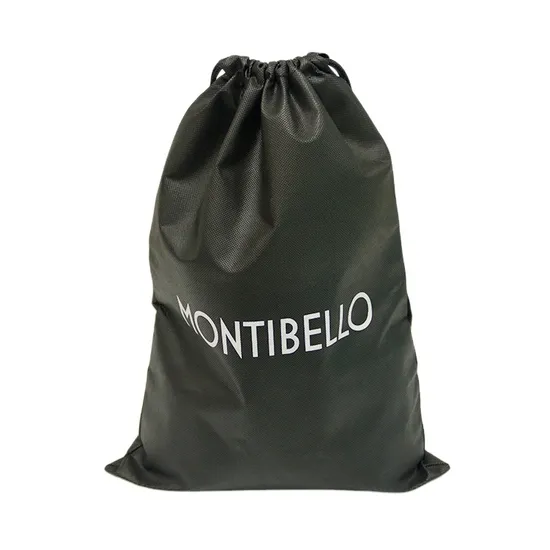
A real branded non-woven product from LUCKYSTAR’s Made-in-China store. The exposed bond-point texture, dark body colour and simple light artwork show why surface, opacity and adhesion must be reviewed together.
1. Specify the non-woven surface before discussing print
The current vocabulary standard, ISO 9092:2026, separates nonwovens from woven, knitted and papermade materials. In common shopping-bag production, spunbond polypropylene filaments form a web and receive structural integrity through bonding. The embossed bond-point pattern visible on many bags is not decoration; it is part of the material architecture.
ISO 9092:2026 does not define a shopping-bag print grade. Buyers must still state polymer, web type, mass per area, body colour, treatment, additive/masterbatch, finish, roll lot and whether a film or coating covers the web. Two fabrics both described as “80 gsm PP non-woven” can wet, flex and accept ink differently.
For exposed spunbond, ink touches a low-energy polyolefin surface broken by bond points and local texture. For laminated non-woven, the graphic may sit on top of a film, beneath a transparent film or inside a printed-film laminate stack. These are different interfaces. Compare the surface architectures in Laminated vs Unlaminated Non-Woven Shopping Bags before requesting a print quote.
| Specification field | What to record | Why printing changes | Evidence to retain |
|---|---|---|---|
| Base web | Polymer, web type, nominal gsm, colour and approved article/lot | Texture, absorbency, heat response and shade affect the image | Signed material swatch and supplier code |
| Exposed surface | Untreated/treated side, corona/plasma status, coating and storage age | Surface energy controls wetting and ink/adhesive bond | Treatment target, measurement method and lot record |
| Lamination stack | Film polymer, gauge, print position, adhesive/tie layer and side coverage | Ink may bond to film rather than non-woven and face different heat/flex | Layer-stack drawing and peeled/cross-section sample |
| Conversion stage | Print roll, flat panel, cut blank or finished bag | Determines registration, platen/jig, seams, folds and possible image area | Process map with inspection handoffs |
| End use | Basket/load, reuse, moisture, abrasion, cleaning and storage | Sets ink/transfer chemistry and performance tests | Buyer-approved test and acceptance plan |
2. Compare the five practical printing routes
No single process is “best” for non-woven. A one-colour conference giveaway and a full-coverage supermarket campaign need different economics and controls. Start with artwork, surface and runnable quantity per exact design—not the total purchase order.
| Printing route | Strongest use case | Main setup | Buyer’s critical risk |
|---|---|---|---|
| Direct screen printing | One to a few spot colours, moderate coverage, stock-colour unlaminated bags | Separation and screen/stencil per colour; ink, jig and cure setup | Opacity, fill-in, bond-point texture, rub and cure |
| Roll-fed flexography | Repeating graphics at useful web volume before bag conversion | Plate per colour, anilox/ink, web, treatment, repeat and dryer | Wetting/adhesion, repeat-to-cut register and web distortion |
| Gravure-printed film + lamination | High coverage, fine process colour and large repeat programmes | Cylinder per separation, film, ink, lamination and conversion setup | Layer bond, image-to-bag register, scuff, blocking and MOQ |
| Heat transfer | Detailed or multicolour local graphics on qualified finished bags/panels | Transfer production, heat/pressure/time, jig and placement | Heat gloss/shrinkage, edge, peel, hand and bond-point bridging |
| Qualified digital direct/transfer | Short runs, multiple artworks, prototypes or variable graphics | Preflight/RIP, white/base strategy, treatment and cure/transfer | Ink or transfer compatibility, banding, adhesion and reproducibility |
The routes above are process families, not promises. “Digital” may mean flatbed UV inkjet, UV transfer, DTF-style transfer or another supplier-specific system. “Flexo” may use different plate, anilox and ink combinations. Demand the named route and production condition in the quotation.
3. Decide whether to print the web, panel or finished bag
Printing position in the process chain can matter more than the press name. Roll printing provides a flat, continuous surface and supports repeatable web handling, but the image must later align with bag cut length, gussets, bottom fold, handle position and ultrasonic/sewn joins. Finished-bag printing avoids repeat-to-cut conversion error but introduces uneven thickness, seams, gussets and limited platen access.
Panel printing can provide a flat working area before sewing or bonding. It also creates work-in-process that must remain version-controlled. A left and right panel, several sizes or different store logos can be mixed before conversion if identification is weak.
| Print stage | Operational advantage | Distinct limitation | Registration checkpoint |
|---|---|---|---|
| Continuous web | Efficient roll transport and repeat printing before conversion | Artwork must fit web width/repeat and downstream cut/bond geometry | Web repeat → panel cut → gusset/fold → handle |
| Flat cut panel | Clean access and easy local print/transfer placement | Panel identity, orientation and shrink/heat changes require control | Printed panel → joined bag → finished dimensions |
| Finished flat bag | Direct visual placement on assembled item | Seams, handles and gussets interfere with platen, screen or heat pressure | Jig stop → visible panel → seam/handle clearance |
| Printed film laminate | Reverse image can be protected beneath film and cover large areas | Film print, lamination and bag conversion each add a register system | Film repeat → laminate → panel → finished bag |
Map the image on a production dieline. Follow the placement-file reference, marking front, back, gussets, bottom, handles, bonds and safe zones.
4. Direct screen printing: practical for strong spot graphics
Screen Printing Non-Woven Bags can be efficient when a brand needs one or two solid colours, a local logo and enough units to absorb screen making. Ink passes through open stencil areas carried by mesh. Each colour normally has a separate screen and must register with the others.
The bond-point pattern creates high and low areas. Fine reverse type can fill, a heavy solid can look uneven, and excessive pressure may spread the image. Mesh, stencil, ink, squeegee, off-contact and cure must be matched to the surface. PRINTING United Alliance screen-making guidance explains how mesh opening, stencil and artwork feature size work together and influence deposited ink film.
Dark body colours may require opaque ink or a white underbase, which adds a screen, pass and cure stage. Ask whether the quote includes the underbase. Check halos around small elements and flex the printed area after cure. A thick deposit that looks strong while flat can crack at folds or block when bags are stacked warm.
5. Flexography: direct web printing for repeat volume
Flexography transfers metered liquid ink from an anilox system to raised plate areas and then to the web. It can print repeating graphics before the material becomes a bag. Efficiency comes from a stable web, repeat and longer run—not merely from calling the method “automatic.”
Non-woven porosity and texture can interrupt solids and fine detail. Web tension can stretch or skew light material. Treatment must support ink wetting, while dryer heat and tension must not shrink, curl or weaken the web. Map plate distortion and repeat to the later bag cut. A graphic that is accurate on the roll can still move into a gusset after conversion.
FTA’s FIRST resources connect customer graphics, prepress, print and process control across the flexographic supply chain. They are a framework, not proof that every plant can print the specified non-woven. Request comparable samples and the printer’s declared production condition.
6. Gravure and printed-film lamination: full coverage at scale
For photographic or full-coverage graphics, a supplier may reverse-print a film by gravure and laminate it to the non-woven. The transparent film can protect the ink because the image sits beneath the outer surface. This is not direct printing on the fibrous web; it is a multi-layer packaging construction.
Gravure cylinders, film and lamination create meaningful setup. Large stable runs can dilute it, while fragmented designs multiply cylinders or changeovers. The final quality depends on film gauge, treatment, ink, adhesive/tie layer, nip, temperature, tension, conditioning and converted register. Compare direct screen and printed-film routes in Screen Printing vs Gravure Printing for Shopping Bags.
Inspect laminate bond, bubbles, wrinkles, tunnelling, curl, blocking, scuff and fold whitening. Test at gussets and ultrasonic/sewn joins, not only on a flat central panel. Lamination may make a face easier to wipe, but it does not automatically make an open bag waterproof or recyclable.
7. Heat transfer: useful only after temperature and bond trials
Heat transfer can reproduce detailed local graphics without one screen for every visible colour. A transfer is positioned on the bag or flat panel and pressed under controlled temperature, pressure and time. The route can suit smaller design batches, but polypropylene non-woven is heat-sensitive. Excessive heat or dwell can create gloss, flatten bond points, shrink the panel, distort colour or weaken a local area.
Approve the transfer’s edge, hand and opacity. Bend it across expected folds and rub the edge. Measure the panel before and after pressing. If a seam, handle patch or gusset creates uneven thickness, a flat press may not apply uniform pressure. Record the press platen, protective sheet, setpoint, actual condition, dwell and cooling/release method.
8. Digital printing: promising for variation, not universally compatible
Direct inkjet or digital-transfer production may support samples, regional art, short runs or many designs. However, standard textile DTG assumptions should not be carried over from cotton to polypropylene. The ink, pretreatment, white base and cure must be designed for the actual non-woven surface.
Flatbed UV printing can be proposed on selected substrates, while UV-DTF or other transfers may be proposed for certain coated surfaces. Require the supplier to name the route. Check ink flexibility, adhesion and fold cracking; a rigid cured film can fail on a flexible bag. Also inspect banding, white alignment, pinholes at bond points and reproducibility across lots.
For a short-run comparison, use the digital-versus-screen low-MOQ guide. It explains why quantity per design and artwork variability can change the commercial answer.
9. Surface treatment and storage control ink adhesion
Polypropylene commonly has low surface energy. Treatment can raise receptivity so an ink, coating or adhesive wets the surface more consistently. Enercon’s printing application guidance notes that corona treatment can improve ink adhesion on plastic films and nonwovens. Its non-woven trial reporting also shows why treatment type and water-based ink adhesion must be validated on the exact substrate.
Do not use one universal dyne number from a generic specification. The correct target depends on ink/adhesive surface tension, treatment method, material formulation, additives, storage and the converter’s process. Treatment can decay, and contamination can reduce wetting. Measure close to printing using an agreed method, identify the printed side and record the material lot.
| Process variable | What it controls | Failure if unmanaged | Record for bulk |
|---|---|---|---|
| Surface treatment | Ink/adhesive wetting and initial bond | Beading, picking, poor tape/rub resistance | Side, method, target, result, time and lot |
| Ink/transfer family | Compatibility, opacity, flexibility and cure | Peel, crack, block, migrate or remain tacky | Product/batch, mix, viscosity or preparation |
| Deposit | Colour strength, opacity, detail and hand | Weak solid or excessive thickness/fill-in | Screen/mesh or anilox/plate/process setting |
| Dry/cure/press | Final film/transfer formation and adhesion | Smudge, blocking, odour, peel or heat damage | Temperature, time, speed/pressure and cooling |
| Conditioning | Stabilisation before testing, stacking or conversion | Premature false pass/fail or pack blocking | Elapsed time and storage environment |
10. Prepare artwork for bond points, folds and body colour
Non-woven texture limits fine detail. Ask the assigned printer for minimum positive and reverse line, type size, trap, tonal range and total coverage. Do not borrow limits from paper or smooth film. Simplifying very fine reverses may improve both yield and appearance.
The body colour participates in the image. Transparent inks on dark or saturated non-woven will shift; a white underbase or opaque spot colour may be required. On laminated reverse print, white may sit behind colour within the film stack. Document which separation is white, its choke/spread and whether it covers the entire image or selected areas.
| Artwork feature | Direct print question | Printed-film question | Approval evidence |
|---|---|---|---|
| Spot logo | Ink opacity, deposit and surface texture | Spot or process simulation beneath film | Production-substrate drawdown/strike-off |
| Fine positive/reverse | Bond-point interruption, spread/fill and screen/plate limits | Cylinder/film resolution and later laminate distortion | Full-size critical-detail sample |
| Gradient | Stable minimum dot and texture interaction | Tonal range, white backing and film appearance | Physical tonal wedge on actual stack |
| Dark body colour | White/opaque layer, trap and hand | White separation behind reverse print | Approved body-colour lot and opacity sample |
| Full coverage | Drying, hand, blocking and cost may become unacceptable | Film route may be more controllable at scale | Converted sample after folding/packing |
| Gusset continuation | Repeat-to-cut and bond/fold interruption | Film repeat, lamination and conversion register | Opened finished bag around all panels |
Use the shopping bag colour approval workflow to connect the colour target to body-colour swatch, print sample and bulk first-off.
11. Build a proof ladder that reaches the finished bag
A screen rendering can approve text and layout, not opacity or adhesion. An ink drawdown can compare colour, not repeat-to-cut register. A printed web can prove print, not gusset placement. Build the approval ladder around the risk that each sample resolves.
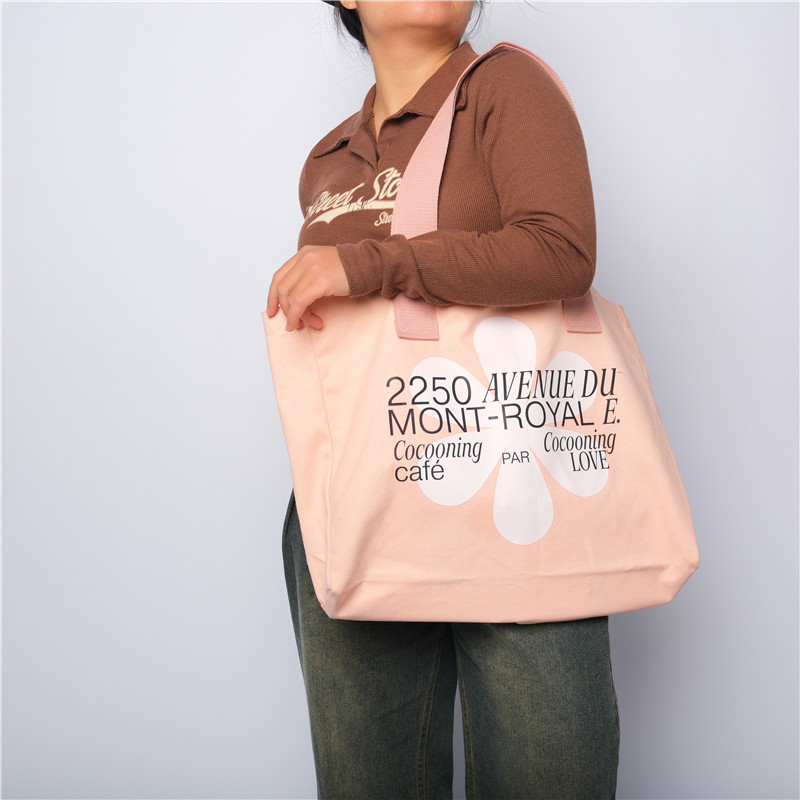
A real printed shopping bag from LUCKYSTAR’s independent-site range, used here to show artwork scale and handle/gusset clearance. The image is not presented as proof of non-woven material or a specific print route.
| Approval gate | What it can prove | What it cannot prove | Release decision |
|---|---|---|---|
| Digital layout | Content, dimensions, orientation and separations | Physical colour, texture, opacity or bond | Release corrected file only |
| Ink/transfer trial | Wetting, colour direction, opacity, edge and initial adhesion | Bag conversion, repeat and long-run stability | Select chemistry/process direction |
| Production-process print | Actual screen/plate/cylinder/digital condition on production material | Finished gusset, handle and pack interaction if still flat | Freeze print target and settings |
| Converted sample | Placement, folds, bond/seam, handles, function and print flex | Long-run drift unless run under representative conditions | Create golden finished-bag master |
| Bulk first-off | Actual material/ink/tool/line/pack condition | Later drift without in-process monitoring | Release, adjust or hold before full run |
The shopping bag sample-development guide helps distinguish appearance mock-ups from production-representative samples.
12. Inspect adhesion, rub, blocking and converted registration
Test after the defined drying, cure and conditioning interval.A freshly printed surface may appear sound and then block in a carton, while a laminate may develop bond failure after folding. Use methods appropriate to the declared end use rather than a generic “quality passed” stamp.
| Check | Purpose | Typical warning sign | Lot control |
|---|---|---|---|
| Visual / register | Colour, detail, pinholes, smudge, banding and alignment | Image crosses bond/fold/handle zone or drifts by lane | Check by roll/lane/time or production interval |
| Tape / adhesion | Screen gross ink/transfer/film bond failure | Ink lifts, transfer edge peels or laminate separates | Method, tape, dwell, peel action and acceptance |
| Dry and wet rub | Resistance to handling and defined moisture exposure | Colour transfer, gloss change or exposed base | Load, cycles, cloth and visual/colour rating |
| Fold / flex | Behaviour at gussets, pack folds and repeated opening | Cracking, whitening, edge lift or delamination | Specified fold line, cycles and recovery |
| Blocking / packed hold | Stacked bags separate after time, pressure and temperature | Ink/film sticks, transfers or glosses | Pack count, load, environment and duration |
| Converted bag function | Print survives opening, loading, carrying and handling | Artwork hides, bond weakens or handle crosses image | Approved basket/load sequence and failure definition |
Combine print checks with the finished shopping bag QC workflow and the reusable shopping bag test-selection guide.
13. Diagnose defects by process stage
Ink beads or lifts: verify printed side, treatment, storage, contamination, ink compatibility and cure before increasing deposit. Screen detail fills: review artwork minimum, mesh/stencil, ink, pressure and bond-point texture. Flexo solid looks weak: review treatment, anilox/ink, plate/impression, viscosity, drying and web condition.
Heat-transfer edge peels: check transfer compatibility, pressure uniformity, time/temperature, cooling and bond-point bridging. Panel shrinks or glosses: reduce or redesign the heat route rather than forcing the blank through a cotton-derived setting. Laminate wrinkles or tunnels: trace film/non-woven tension, adhesive/tie layer, nip, temperature and conditioning.
Print is correct on flat material but wrong on the bag: investigate repeat-to-cut, panel orientation, gusset formation, bottom fold and handle placement. Print and conversion records should identify the affected roll, lane, bundle and carton.
14. MOQ and cost are driven by runnable artwork
Screen cost grows with colours and designs because each separation needs a screen and setup. Flexography needs plates and web make-ready. Gravure film printing needs cylinders and lamination setup. Heat transfer and digital production reduce some physical tooling but add transfer/RIP, white layer, handling and per-image costs.
A total order of 5,000 bags split into ten designs of 500 is not the same as one 5,000-piece design. Quote quantity by body colour × size × artwork × print route × finish. Separate one-time tools from variable printing and conversion. Ask how screens, plates or cylinders are owned, stored, remade and charged on reorder.
Review shopping bag MOQ and scheduling and the 2026 shopping bag cost framework before selecting only by printed unit price.
15. Sustainability claims must include ink, surface and layer stack
A water-based ink does not make the finished bag recyclable, and a digital process does not automatically make it low-waste. Consider base polymer, additives, recycled-content evidence, treatment, ink/coating, transfer film/powder, laminate, adhesive, rejected setup material, durability and the destination recovery system.
A printed-film laminate adds layers and can change recovery options. Direct print may keep the structure simpler, but heavy coverage or incompatible chemistry can create other concerns. Avoid broad claims such as “eco-friendly printing.” State the exact material and process feature supported by evidence.
Company-claim boundary: LUCKYSTAR statements in this section are publisher self-description, not third-party verification, ISO/FTA certification, printer accreditation, laboratory result or assurance of a particular MOQ, price, colour, bond, durability, environmental result, compliance status or delivery date. Confirm the contracting entity, assigned non-woven and printing/converting sites, subcontracting, exact material/side/treatment/layer stack, process, ink/transfer, sample, test method, inspection, packing and release terms for the order.
16. How LUCKYSTAR describes its non-woven print review
LUCKYSTAR states that its project team can compare direct screen, flexographic, printed-film lamination, heat-transfer and qualified digital routes around one locked finished-bag specification, subject to specification and written confirmation. The review connects the exposed surface and print stage to artwork, conversion, tests and commercial assumptions.
- Material identity: record polymer/web type, nominal gsm, body colour, printed side, treatment method/result/age, storage and any film, coating, adhesive or tie layer.
- Route definition: name whether printing occurs on the web, film, panel, cut blank or finished bag and record press/transfer family, tooling, white/base strategy, dry/cure/press condition and conversion sequence.
- Artwork preflight: return route-specific separations, minimum positive/reverse detail, tonal range, trap, repeat, gusset/fold/handle safe zones and allowable coverage.
- Physical approval: separate a layout mock-up from a production-substrate strike-off, converted sample, retained finished reference and bulk first-off.
- Acceptance plan: define colour/opacity/hand/edge, adhesion, dry/wet rub, flex/fold, blocking, register, laminate bond and complete-bag checks with conditioning and acceptance rules.
- Comparable quotation: separate material/bag MOQ, tooling by colour/artwork, print/lamination setup, samples, changeovers, waste, quantity by SKU, pack-out, substitutions and reorder controls.
Review the public custom shopping bag range, laminated-versus-unlaminated guide and print-route overview. Then send the material/layer-stack record, artwork and quantity-by-SKU matrix for a route-specific proposal.
17. Send a factory-ready RFQ
| RFQ section | Required input | Why it matters |
|---|---|---|
| Bag construction | Size, gusset, bottom, joining, handles, reinforcement and intended basket | Defines printable area and conversion register |
| Base material | Polymer/web type, gsm, body colour, treatment, laminate/film build and article | Defines ink/transfer/adhesive and heat compatibility |
| Artwork | Final-size files, separations, colour targets, white layer, coverage and sides | Determines method, tooling, setup and achievable detail |
| SKU matrix | Quantity by exact size × body colour × artwork × finish × destination | Reveals runnable MOQ and changeovers |
| Appearance | Opacity, gloss/matte, hand, edge, colour and placement tolerance | Creates measurable/visual approval criteria |
| Performance | Rub, moisture, flex, pack hold, cleaning and regulatory/claim needs | Builds the correct ink/transfer and test plan |
| Commercial route | Sample type, tool ownership, permitted quantity variance, pack scheme, trade term and deadline | Makes offers comparable and protects reorders |
Frequently asked questions
What is the most common printing method for non-woven shopping bags?
Direct screen printing is common for simple spot-colour logos on unlaminated bags. Larger roll programmes may use flexography, while full-coverage laminated graphics may use printed film. The actual best route depends on surface, art and volume.
Can non-woven bags be printed in full colour?
Yes, through qualified process screen/flexo, digital/transfer or printed-film lamination routes. The method depends on detail, coverage, quantity and surface. Approve colour, opacity, hand and adhesion on the production stack.
Is screen printing suitable for dark non-woven bags?
Yes when the ink system and surface are compatible. An opaque spot ink or white underbase may be required. Confirm whether the underbase adds a screen/pass and inspect halos, hand, flex and cure.
Can digital printing be applied directly to polypropylene non-woven?
Only with a system qualified for the exact surface. Do not assume a cotton DTG route will work. Specify ink/pretreatment/white/cure, then test adhesion, flex, rub and repeatability.
Why does ink peel from non-woven material?
Common causes include low or aged surface treatment, wrong printed side, contamination, incompatible ink, insufficient cure or excessive flex. Diagnose the interface and process record before changing artwork or adding more ink.
Is flexographic printing better than screen printing?
Neither is universally better. Flexography can suit web-fed repeating graphics at volume; screen printing can suit local spot graphics and moderate setup. Compare artwork, web/conversion route, tooling and accepted unit economics.
When should a buyer choose gravure-printed lamination?
Consider it for high-coverage, detailed graphics when quantity per artwork can support cylinders, film and lamination. Approve the complete layer stack, bond, register, scuff, blocking, folds and converted bag.
Does lamination protect the printing?
Reverse printing beneath a film can protect ink from direct abrasion, but the laminate introduces bond, wrinkle, blocking, fold and delamination risks. It also changes hand and material structure.
What files should be supplied for non-woven bag printing?
Provide final-size vector logos, high-resolution raster images, named spot colours, white/finish layers, a placement/dieline file and a SKU matrix. Let the assigned printer return route-specific minimums and separations.
How should bulk printing be approved?
Approve material, route-specific sample and converted golden bag first. At production, hold a bulk first-off made with the actual material lot, ink/transfer/film, tools and line, then monitor by roll, lane or time interval.
Conclusion
The right Non-Woven Bag Printing method begins with the layer that receives the image and the point where printing enters the conversion process. Screen printing is strong for controlled spot artwork; flexography serves repeat web production; gravure-printed film supports high-coverage laminated programmes; and transfer or digital routes can support smaller or more variable graphics when the surface passes qualification.
Compare available custom non-woven shopping bag directions. Use the Shopping Bags sourcing pillar for supplier selection and the broader manufacturer framework for group-wide due diligence.

Send LUCKYSTAR the bag structure, layer stack, files and per-design quantities for a print-route quotation.
Request a route-specific non-woven printing proposal
Use one material/layer-stack record, finished-bag specification and quantity-by-SKU matrix so route assumptions can be compared.
Review LUCKYSTAR custom shopping bag options, then send your project details through the contact form or Email a project brief. The email link opens a draft for your review before sending.
Site assignment, material, treatment, ink/transfer/laminate system, equipment, tooling, sample, colour, performance, claims, inspection, price, MOQ, packing, schedule and release terms are subject to due diligence, specification and written confirmation.