
Last reviewed: September 24, 2026
An embossed logo bag is easy to describe and surprisingly easy to specify incorrectly. Buyers may use “embossed” for any logo that can be felt, while a sample may actually be debossed, foil stamped, welded, moulded, applied as a patch or fixed as a metal plate. Those routes use different materials, tools and approval standards.
This guide focuses on one narrow purchasing decision: how to specify and control raised or recessed logos on flexible bag panels. It does not repeat the broad supplier-selection framework in our custom bag manufacturer buyer’s guide, the brand-system decisions in Custom Bags as a Branding System, or the paper-carrier finishing detail in the Luxury Retail Shopping Bag Finishing Guide.
Quick answer: what should a buyer approve?
- Name the effect correctly: raised emboss, recessed deboss, blind relief, foil stamp, combination foil-and-relief, or an applied logo component.
- Freeze the complete surface: face material, backing, thickness, grain, coating, colour and any foam or lining behind the decorated panel.
- Approve the tool and artwork together: finished logo size, minimum strokes and gaps, relief direction, depth target or signed visual master, and acceptable reverse impression.
- Judge a finished bag: a good flat-panel trial can distort after sewing, turning, filling or packing.
- Write defect limits: edge definition, fill-in, cracking, gloss change, halo, position, panel distortion and lot-to-lot consistency.
1. Emboss, deboss, blind stamp and foil are not the same
| Term | What the buyer should see | Typical control question |
|---|---|---|
| Emboss | The logo is raised above the surrounding face. | How will the die and counter-support form the relief without stretching or cracking the surface? |
| Deboss | The logo is pressed below the surrounding face. | What backing and process settings keep the floor and edges even without crushing the panel? |
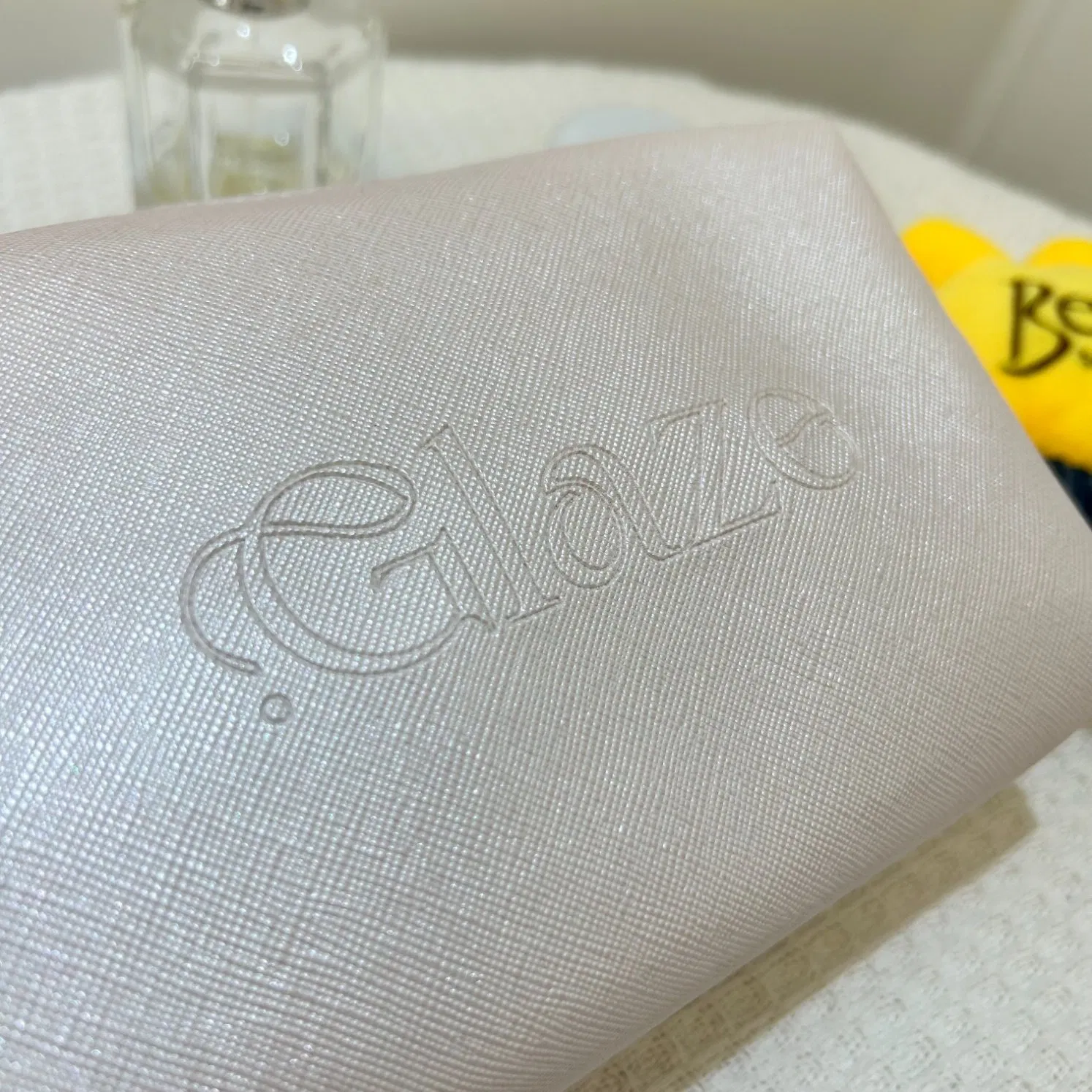
| Blind relief | The raised or recessed mark uses the material’s own colour, without an added colour layer. | Will the relief remain legible under normal light, after flexing and on the approved grain? |
| Foil stamp | A transferred film creates metallic, pigment or special-effect colour; it may be flat. | Is foil adhesion, coverage and edge definition approved on the exact surface? |
| Combination foil and relief | Foil and a raised or recessed form are registered to the same mark. | Can the production route maintain both foil coverage and relief registration? |
| Applied logo | A separate PU patch, silicone/rubber component, moulded badge, woven label or metal plate is attached to the bag. | Is the part construction and attachment method being confused with direct embossing? |
On soft bags, commercial listings sometimes use “embossed logo” as a broad visual description. The purchase specification should not. A raised moulded patch is not direct embossing, and a recessed heat mark is not automatically suitable for another material. If the desired result is mainly colour or fine graphic detail, compare the relief route with the options in Custom Shopping Bag Printing Methods before paying for tooling.
2. Start with the material stack, not the logo effect
Relief quality comes from the complete construction under the tool. “PU leather,” “leather” and “canvas” are category names, not production specifications. Surface chemistry, coating, grain, backing cloth, thickness, compressibility and heat sensitivity can change the result. The Best Materials for Custom Cosmetic Bags guide explains the broader outer-material and lining decision, while PU vs Polyester Cosmetic Bags owns the material comparison. Here, the question is narrower: can the selected surface hold the agreed relief?
| Surface route | Relief potential | Main sample risks | Buyer instruction |
|---|---|---|---|
| PU or other synthetic leather | Often a practical candidate for recessed marks, subject to the exact grade and construction. | Gloss halo, whitening, coating damage, shallow recovery, grain loss, panel distortion or backing print-through. | Approve the exact material lot or signed equivalent, not only a colour swatch. |
| Natural leather | Can accept restrained relief, but hide type, finish and natural variation matter. | Uneven depth, shade response, finish marking and variation across panels. | Define leather identity, surface finish and grading; use the Leather Tote Bag Material, Craft and QC Guide for the wider leather controls. |
| Coated or laminated textile | Possible only after route-specific trials. | Film lift, cracking, sheen change, puckering, bond failure or poor relief retention. | Test the actual laminate/coating stack and inspect after bending. |
| Uncoated cotton, canvas or woven fabric | Direct permanent relief may be weak or visually inconsistent. | Soft edges, fabric spring-back and weave masking fine detail. | Compare direct relief with an embossed PU patch, woven label, embroidery or printing. |
| Paper shopping bag | Uses paper-converting controls rather than soft-bag panel controls. | Fibre cracking, reverse impression, crease interaction and registration. | Use the dedicated luxury shopping bag finishing guide instead of applying this soft-bag checklist unchanged. |
A supplier should be able to explain why the proposed substrate, backing and tool are compatible. “We can emboss any material” is not evidence. Ask for a trial on the intended material and a finished sample built with the intended reinforcement and lining.
3. Turn the logo into a production specification
A clean vector file is the start, not the whole instruction. Relief changes how thin strokes, small counters, tight gaps and sharp corners form. The team should review artwork at the finished physical size, not only while zoomed on screen. For bag-panel geometry, use the shopping bag artwork and dieline guide; for position and usable decoration area, use the logo placement and print size guide.
| Specification field | What to record | Why it matters |
|---|---|---|
| Artwork master | Vector file, revision, fonts converted to outlines and one approved composite view. | Prevents font substitution, scale changes and use of an obsolete logo. |
| Finished size | Width and height in millimetres, plus measured location from stable panel references. | Tooling and visual proportion depend on actual size. |
| Minimum features | Smallest strokes, gaps, counters and isolated elements retained after feasibility review. | Fine elements can close, soften or cut the surface. |
| Relief definition | Emboss or deboss, blind or with foil, visual depth target or signed physical master. | Words such as “deep” and “subtle” are not measurable approval standards by themselves. |
| Surface construction | Material reference, colour, grain, face coating, backing and thickness. | The same die can produce a different result on another surface. |
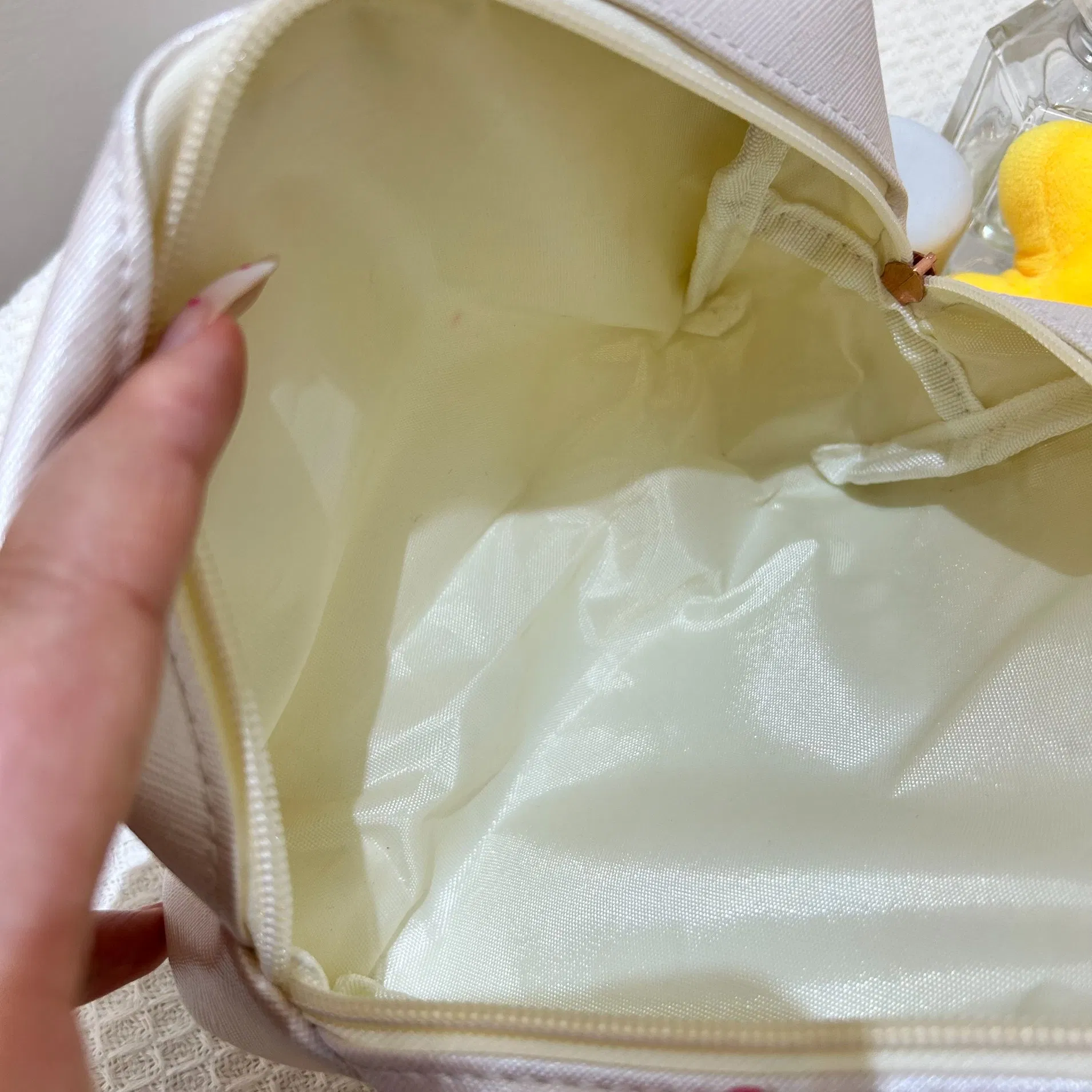
| Panel environment | Seams, folds, zipper, pockets, gussets, foam, lining and reinforcement behind the mark. | Nearby construction changes pressure support and final appearance. |
| Reverse allowance | Whether a reverse impression is visible, covered or unacceptable. | Relief can telegraph to the back or inner layer. |
| Approved viewing | Diffuse light, raking light, touch review and agreed sample photography. | Blind relief can disappear or look harsher under different angles. |
4. Approve the logo through staged samples
The lowest-risk path separates surface feasibility from complete-bag approval. It also prevents an expensive finished sample from being the first time anyone checks the tool. The Custom Cosmetic Bag Sample Development Process explains the complete cosmetic-bag route, and Custom Sample Bag Manufacturer: Scope, Cost & Handoff shows how to define sample ownership and deliverables. Use the following relief-specific gates within that wider process.
- Material coupon: confirm the face, grain, colour and backing that will receive the logo.
- Tool trial: compare viable depths or make-ready conditions on the coupon. Record which trial becomes the reference.
- Decorated cut panel: inspect position, edges, surface damage, reverse impression and nearby construction zones.
- Finished sample: sew, turn, line, fill and close the bag. Check whether the mark stretches, puckers, tilts or becomes obscured in use.
- Pre-production confirmation: freeze artwork revision, material reference, tool revision, placement method, signed master and allowable defect limits.
- First-off approval: compare early production pieces with the signed master before the lot advances.
Photographs help communication but should not replace a retained physical master when relief, touch and sheen are important. If colour is added through foil, ink or a contrasting component, also define the physical colour approval route; the cosmetic bag colour-matching guide explains why a screen value is not a production colour standard.
5. Write a defect standard before bulk production
| QC characteristic | What to inspect | Typical reject discussion |
|---|---|---|
| Direction and relief | Raised versus recessed result; visual depth or comparison with the signed master. | Wrong direction, visibly shallow areas, double impression or uneven floor. |
| Edge definition | Clean outline under normal and raking light. | Feathered edge, drag, cut surface, lost serifs or inconsistent corners. |
| Fine-detail formation | Counters, narrow gaps and separate artwork elements. | Filled counters, bridged gaps, missing marks or broken fine lines. |
| Surface condition | Coating, grain, gloss, colour and contamination around the tool zone. | Crack, whitening, burn, excessive shine, halo, delamination or transfer marks. |
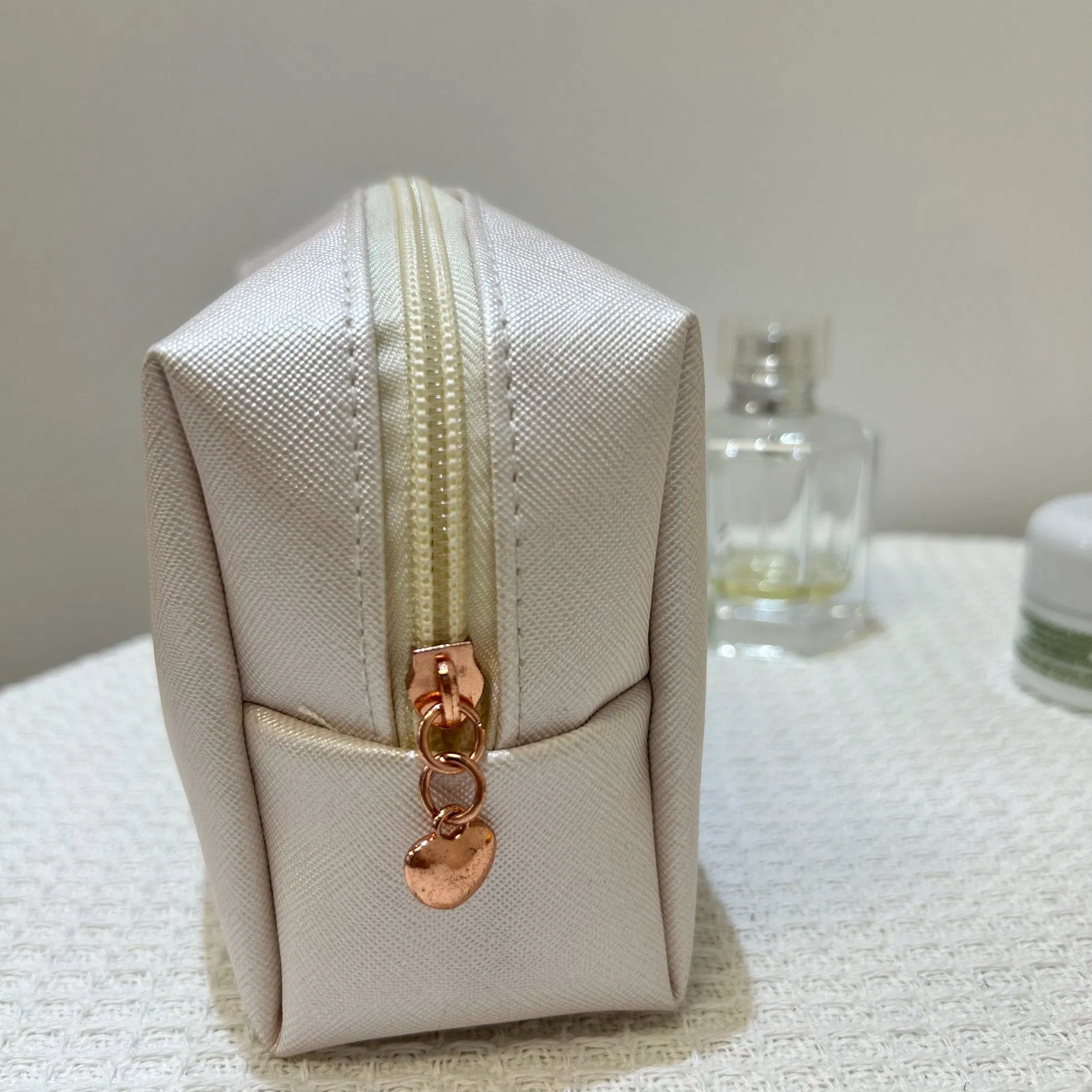
| Panel shape | Flatness and alignment before and after sewing, filling and closing. | Puckering, twisting, stretch, tilted mark or distortion from internal support. |
| Position | Measured location and level relative to agreed panel references. | Logo outside tolerance, visually off-centre or too close to a seam/zipper. |
| Reverse side | Visible back impression, lining mark or reinforcement damage. | Telegraphing beyond the approved master or damage to the inner layer. |
| Handling response | Agreed flex, rub, packing or filled-use check for the selected route. | Relief disappears, foil lifts, surface cracks or gloss changes outside the agreed limit. |
| Lot consistency | Comparison across pieces, cartons, shifts or material lots under consistent lighting. | Obvious depth, position, colour or surface variation beyond the approved range. |
There is no universal test list or pass value for every bag. Methods, sample size and acceptance criteria should match the material, intended use, market and written purchase specification. Place these decoration checks inside the broader Custom Shopping Bag Quality Control Checklist rather than treating the logo as the only quality characteristic.
6. How to evaluate an embossed logo bag supplier
The “best” supplier is not the company with the deepest sample or the longest process list. It is the partner that translates the desired appearance into a controlled, repeatable specification and states what remains order-specific. Evaluate the following evidence:
- physical examples on the same or genuinely comparable material construction;
- a documented route for artwork feasibility and tool approval;
- clear identification of whether the work is done internally or through an approved specialist;
- tool revision, ownership, storage, replacement and reuse terms;
- sample comments returned as a controlled revision record, not chat messages alone;
- first-off comparison and bulk inspection records tied to the signed sample;
- a process for material-lot or shade changes before reorders;
- written quotation assumptions for material, logo size, positions, colour splits, packing and delivery.
Pause the order if evidence and language do not match. Warning signs include a supplier showing only computer renders, refusing to identify the exact trial material, describing a recessed sample as raised embossing, changing the surface after tool approval, or quoting without the finished logo size and position. Another risk is approving one attractive close-up while ignoring the rest of the bag: a logo can be clean yet the panel, zipper, seams or lining remain unacceptable. Record approvals against the full sample and bill of materials so a later material substitution cannot silently become a decoration change.
Supplier model also matters. If your team owns a complete specification, compare the control differences in OEM vs ODM Bag Manufacturing. If the bag itself is still being developed, the decoration cannot be frozen independently; use the sequence in Custom Bag Manufacturing Process: From Design to Delivery.
7. What changes cost, MOQ and lead time?
LUCKYSTAR does not treat one published price, MOQ or lead time as a permanent rule for every embossed or debossed bag. Commercial terms are confirmed after the specification and production schedule are reviewed. The main drivers include:
- custom die, counter-die or support tooling;
- logo area, geometry, detail and number of decorated positions;
- material construction, grain and any custom colour or finish;
- blind relief versus foil, multi-step or applied-component routes;
- extra reinforcement, lining access or panel handling;
- sample rounds, tool changes and approval courier timing;
- quantity by colour, size, artwork and packing configuration;
- inspection, performance evidence and destination requirements.
For total bag economics, see How Much Do Custom Bags Cost?. For cosmetic-bag-specific drivers, see How Much Do Custom Cosmetic Bags Cost?. Those pages own pricing context; this page only identifies the relief-specific inputs a supplier needs before quoting.
8. Where this guide stops — and which related page to use
| If your main question is… | Use this page | Why it does not belong here |
|---|---|---|
| How do I select and verify a bag manufacturer? | Custom Bag Manufacturer: Complete OEM/ODM Buyer’s Guide | It owns broad supplier, sampling, QC and quotation selection. |
| How should the bag express our brand system? | Custom Bags as a Branding System | It owns visual hierarchy and brand-to-product translation. |
| Which logo method fits a cosmetic bag? | Custom Logo Cosmetic Bag: What Buyers Should Check | It owns the broader cosmetic-bag logo decision. |
| How do I source leather cosmetic bags? | Branded Leather Cosmetic Bags Manufacturer | It owns category-level material, zipper and supplier checks. |
| How do I control leather identity and craft? | Leather Tote Bag Material, Craft and QC Guide | It owns leather traceability, grading and construction. |
| How do I specify paper bag embossing and foil? | Luxury Retail Shopping Bag Finishing Guide | Paper relief has different fibres, conversion and reverse-impression controls. |
9. How to use LUCKYSTAR’s public product references
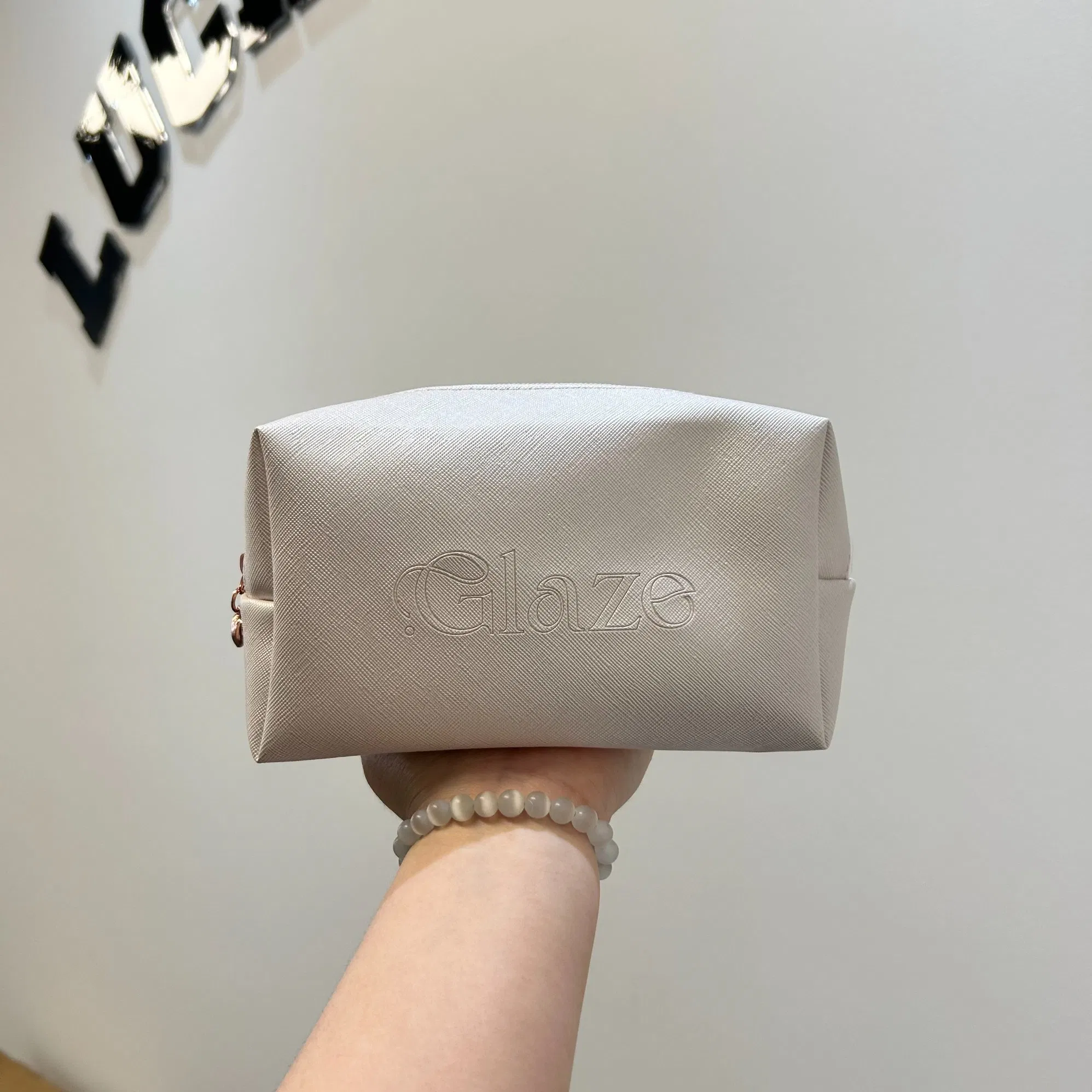
Our current independent-site reference for a PU cosmetic bag lists debossing among the logo methods that can be reviewed as suitable. That is a capability option, not an automatic promise that every PU grade, logo or bag construction will work. The final composition, finish, colour, decoration route and performance evidence are confirmed against the approved project specification and sample.
You can compare current styles in the custom cosmetic bags collection and the wider LUCKYSTAR product range. For an international-storefront reference and the real sample photography used in this article, see the PU leather cosmetic bag listing on Made-in-China.com or visit Ningbo Luckystar Commodities Co., Ltd.’s storefront. Public images help establish a direction, but the approved order sample remains the controlling reference.
10. RFQ checklist for embossed or debossed logo bags
Send enough information for every supplier to quote the same product:
- bag type, intended use, finished dimensions and quantity by SKU;
- surface material specification or a physical reference sample;
- lining, padding, reinforcement and nearby seams/pockets/zippers;
- vector logo, finished size, exact position and number of locations;
- emboss or deboss, blind or foil, plus a visual/physical target;
- acceptable reverse impression and surface-change limits;
- sample stages, revision allowance and required approval records;
- bulk inspection scope, packing, destination, Incoterm and target delivery date;
- tool ownership, storage and reorder requirements.
MOQ, price, sample timing and production timing remain subject to the final specification, material availability, artwork, packing and written confirmation.
Frequently asked questions
Is embossing raised or recessed?
Embossing is raised; debossing is recessed. Sales language is often inconsistent, so include a section view, marked reference photo or physical sample in the specification.
Is PU leather always suitable for debossing?
No. PU is a broad material category. Coating, grain, backing, thickness and heat/pressure response vary. Approve the result on the intended material construction.
Can a canvas bag have an embossed logo?
A direct relief on an open woven surface may be weak or unstable. An embossed or debossed PU patch, moulded component, embroidery, screen print or transfer may be more controllable. Sample the exact route.
Can debossing be combined with foil?
It can be possible, but the route, registration and adhesion depend on the substrate, foil and equipment. Approve foil coverage and relief together on the intended surface.
Do we need a custom die?
A custom logo normally requires logo-specific tooling. Confirm what the tool includes, who owns it, how long it is stored, when replacement is required and whether a repeat order can reuse it.
How deep should a debossed logo be?
There is no universal best depth. A visual and tactile master is usually more useful than an arbitrary depth request because materials compress and recover differently. The supplier should confirm what can be produced consistently without damage.
What should we inspect in bulk?
Inspect relief direction and consistency, edge definition, fine-detail formation, surface damage, panel distortion, position, reverse impression and any agreed handling response. Compare under consistent light with the signed master.
Request a material-and-logo review
Send LUCKYSTAR your bag sketch or reference, vector logo, intended material, quantity, packing, destination and target date. We can review the decoration route, identify the samples and evidence needed, and confirm order-specific commercial terms in writing.
Contact LUCKYSTAR for a custom embossed or debossed logo bag quotation. Or email a prefilled material-and-logo brief.






