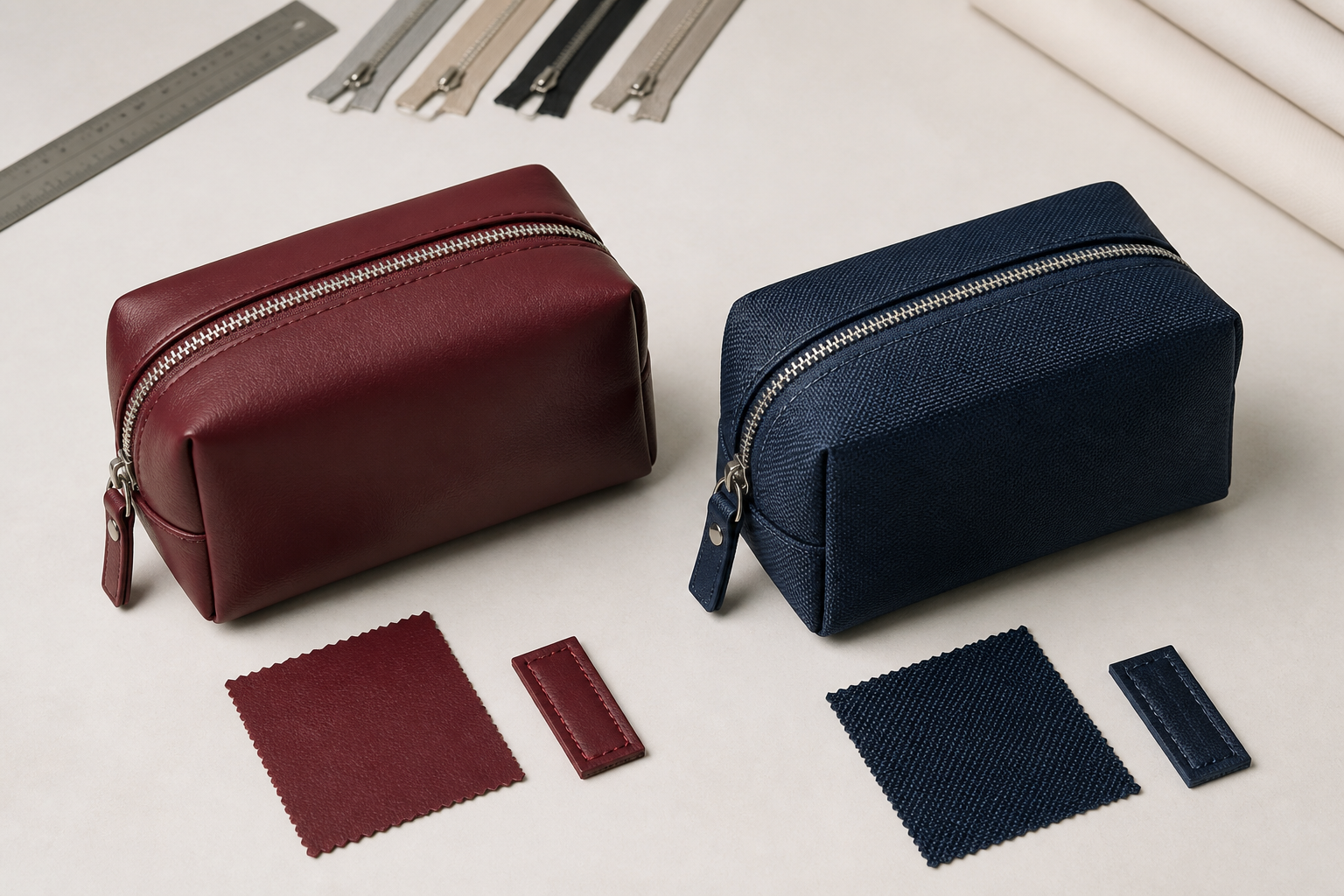
PU vs polyester bags: which is better? PU is usually the better starting point when a leather-like surface, crisp structure or debossed branding drives the brief. Polyester is usually better when low weight, flexible packing and broad print options matter more. Neither material is universally better: compare finished samples built to the same size, lining, zipper, reinforcement and packing specification.
The useful question is not “Which material is better?” It is “Which complete construction is better for this user, price position, logo, quantity and expected life?” This guide compares PU vs polyester cosmetic bags on an equal basis, using the same pattern and functional brief. For a wider view of outer fabrics, linings and support layers, see our Best Materials for Custom Cosmetic Bags guide.
Buyers comparing suppliers across several product categories can also use the Custom Bag Manufacturer Guide. If the beauty-accessory brief is already defined, browse LUCKYSTAR’s custom cosmetic bag range for development starting points.
Last reviewed: September 23, 2026
Need a matched PU-versus-polyester comparison? Send the target user and price position, bag dimensions and contents, reference images, required shape, preferred surface, logo method, cleaning and moisture expectations, durability risks, quantity by SKU, destination, labeling/compliance needs, pack-out and required arrival date. LUCKYSTAR can return the questions needed to compare two order-specific constructions on the same scope.
Quick answer: PU for surface-led structure, polyester for textile-led flexibility
Choose PU when a smooth or leather-like surface, debossed detail, clean fashion presentation and a more structured hand are central to the product. Choose polyester when low weight, flexible packing, broad textile construction choices and print versatility matter more. Either material can be supported with lining, foam or interlining, so shape should not be attributed to the outer surface alone.
A premium polyester can outperform a low-grade PU for a travel program. A carefully specified PU can create a stronger retail impression than a basic woven fabric. Compare physical samples built to the same pattern, with the same lining, zipper, reinforcement and packing, before choosing.
| Decision point | PU cosmetic bag | Polyester cosmetic bag | Buyer check |
|---|---|---|---|
| Visual language | Smooth, grained, matte, glossy or leather-like | Woven, textured, technical, soft or printed | Review under retail lighting and after normal handling |
| Natural hand | Often more surface-led and panel-like | Often more textile-led and flexible | Compare the complete outer stack, not loose swatches |
| Typical branding strength | Debossing, selected foil or print, labels and hardware | Screen print, transfer, selected digital routes, embroidery and labels | Approve artwork on the actual material lot |
| Common failure concern | Surface wear, fold marks, peeling, odor or edge damage | Fraying, snagging, coating change, puckering or low visual weight | Test the highest-risk area of the finished sample |
| Packing behavior | May need shape protection and crease control | Can often pack flatter, depending on reinforcement | Review the real pack-out and recovery after unpacking |
1. First understand what each material name hides
PU is a composite, not one sheet of “leather”
PU synthetic leather usually combines a polyurethane-based surface with a textile or other supporting base. Surface formulation, backing, total thickness, grain, color, softness and finishing influence how the material cuts, folds, stitches and ages. Two PU swatches can look similar in a photograph but behave differently around corners or under repeated flexing.
Ask for the actual material reference and identify which side of the specification controls the order. “Premium PU,” “vegan leather” and “water-based PU” are descriptions or claims, not complete purchasing standards. Any environmental or material claim should be tied to evidence and reviewed for the market in which the bag will be sold.
Polyester is a family of woven and finished fabrics
Polyester fabric may be light and smooth, densely woven, textured, ripstop, brushed, printed, laminated or backed. Yarn-related terms such as denier do not describe the entire finished cloth. Weave density, fabric weight, coating, backing, luster, hand and color method all influence the product.
A tight matte polyester with stable backing can feel substantial. A light shiny fabric can suit a high-volume giveaway where low weight and color matter more than structure. Neither version should be quoted simply as “polyester” if suppliers are expected to offer comparable products.
| Specification field | Define for PU | Define for polyester |
|---|---|---|
| Material identity | Surface system, base/backing and supplier reference | Fiber, weave/knit construction and supplier reference |
| Mass or thickness | Total thickness and tolerance using an agreed method | Fabric weight, yarn/construction data where useful and tolerance |
| Appearance | Grain, luster, color, surface feel and approved cutting | Texture, luster, color, weave face and approved cutting |
| Finish | Top finish, print compatibility and edge method | Coating/backing, print preparation and cut-edge method |
| Known risk | Flex, surface abrasion, storage conditions, odor and color transfer | Abrasion, snagging, fraying, coating adhesion and colorfastness |
| Substitution control | No new surface or backing without submitted sample approval | No change in weave, weight, coating or shade without approval |
2. Appearance: premium is an execution result
PU is often selected for premium beauty sets because its surface can look clean and intentional with relatively little visual noise. Grain and luster can support fashion positioning, and a debossed logo can feel integrated into the panel. The same surface also makes mistakes visible: needle holes, scratches, crooked folding and adhesive marks can be difficult to hide.
Polyester communicates through weave, softness, print and functional detail. It can look technical, minimalist, sporty or casual. Quality depends on material density, finish, color, seam control and the way the bag holds its shape. A lightly reinforced woven shell with well-proportioned binding may look more considered than a stiff PU pouch assembled with bulky corners.
If the choice is driven by brand position, photograph both prototype options in the intended packaging and lighting. A swatch board does not show how the finished bag will sit in a gift box, hang from a retail hook or recover after carton packing.
3. Shape and protection come from the layer stack
PU often appears more structured because many grades have a stable surface and backing. Polyester often appears softer because the common promotional constructions are light. These tendencies are not fixed rules. Foam, interlining, board, quilting, piping, lining and pattern geometry can make either outer material soft or structured.
| Target form | PU route | Polyester route | Prototype evidence |
|---|---|---|---|
| Flat promotional pouch | Soft thin PU with controlled folding and simple lining | Stable woven fabric with light backing if needed | Logo, zipper opening and pack-out time |
| Soft handbag organizer | Supple PU with minimal structure | Flexible textile with soft lining | Bulk, corner comfort and recovery after folding |
| Boxy travel case | PU outer plus foam/interlining and protected edge construction | Dense woven outer plus foam/board, piping or binding | Loaded stability, compression recovery and zipper travel |
| Premium gift presentation | Selected grain with crisp panel control and coordinated hardware | Tactile weave or custom print with shaped support and clean trims | Appearance after final packing and transport simulation |
4. Cleaning and moisture claims need precise wording
A smooth PU face can often be wiped more easily than an open textile weave. A coated polyester may also shed light splashes and clean efficiently. The decisive details are the exact finish, stain type, cleaning method, seam construction, zipper and lining.
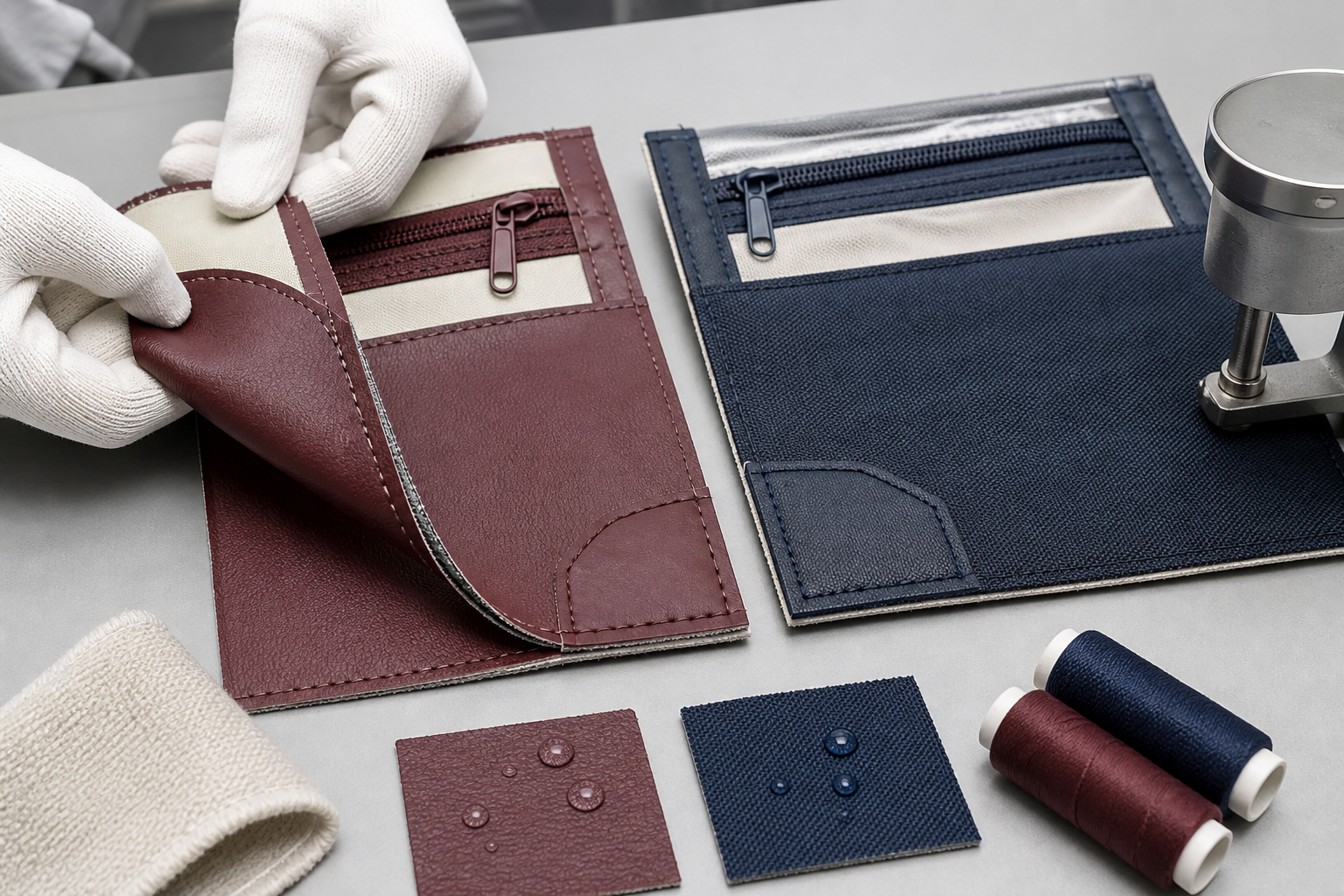
Do not describe a finished bag as waterproof merely because droplets bead on the outer material. Sewing holes, zipper openings, bound edges and pockets create entry paths. A safer development process defines the intended claim—such as easy-wipe surface or splash resistance—then tests the whole sample under a relevant condition.
Makeup also introduces oils, pigments and solvents that a plain water test does not represent. Use buyer-approved representative products on spare cuttings before the bag is sampled, and repeat the check on the constructed interior and exterior where exposure is plausible.
5. Branding routes favor different surfaces
PU works well when the logo should feel like part of a fashion surface. Polyester offers more textile print and stitch options. Actual compatibility depends on finish, coating, color, artwork and process settings. Approve strike-offs on the production-representative material rather than assuming a process works because it succeeded on another PU or polyester.
| Branding method | PU considerations | Polyester considerations |
|---|---|---|
| Debossing / embossing | Often a strong option; confirm definition, recovery, temperature, tooling and surface damage | Generally not the natural route for an ordinary woven surface |
| Screen printing | Ink adhesion and flex must suit the surface finish | Texture affects coverage; coating and curing must be controlled |
| Heat-applied transfer | Check heat marking, adhesion and surface change | Can suit compatible fabric; test migration, edge lift and color shift |
| Embroidery | Needle holes and local stiffness require careful reinforcement | Often practical on stable fabric; check puckering and reverse finish |
| Digital or sublimation-related route | Usually requires a specifically compatible print system rather than a generic PU | Selected polyester constructions may support detailed print; color, coating and sequence matter |
| Metal badge / woven label | Reinforce attachment and protect the surface from scratching | Control seam bulk, fraying, pull and label alignment |
6. Durability: compare likely failure modes, not slogans
“PU is durable” and “polyester is strong” are not useful acceptance standards. PU surfaces may show abrasion, flex cracks, peeling, edge wear or changes after unfavorable storage. Polyester may snag, fray, pill, lose coating, transfer color or distort beside a seam. The lining, zipper and construction may fail before either outer material.
| Risk area | PU-focused check | Polyester-focused check | Check both constructions |
|---|---|---|---|
| Repeated opening | Flex marks and surface change near the zipper | Puckering, fray and coating stress | Zipper smoothness, end stops and access under load |
| Corners | Scuffing, fold quality and exposed backing | Abrasion, seam slippage and yarn damage | Layer bulk, binding width and reinforcement |
| Surface cleaning | Finish dulling, staining or color transfer | Absorption, residue, coating change or dye transfer | Representative spill, wait time and care method |
| Packing and storage | Creases, surface blocking, odor and heat/humidity sensitivity | Wrinkling, compression marks and recovery | Final pack-out, carton pressure and unpacking recovery |
| Decoration | Cracking, lifting, heat marks or poor relief | Migration, adhesion, puckering or thread distortion | Artwork size, position, color and handling |
Agree on tests that match the project and destination requirements. The Custom Bag Quality Inspection Checklist can help carry approved materials, appearance and construction details into bulk production.
7. Cost and MOQ: the outer material is only one line
PU is often assumed to cost more, while polyester is often assumed to be the budget choice. That may be directionally true for two basic options, but the completed product can reverse the comparison. PU may require slower corner work, protective tissue or a larger carton. A premium coated or custom-printed polyester may add material setup, printing and reinforcement. Cutting yield, defect allowance, decoration and packing all matter.
| Cost / MOQ driver | PU route | Polyester route | Question for the quotation |
|---|---|---|---|
| Color | Stock roll versus custom surface/color production | Stock shade versus custom dyeing or printing | What is the minimum by color and material reference? |
| Cutting and rejects | Surface defects and permanent needle marks can reduce yield | Weave direction, fray and print placement affect yield | What usable width and defect allowance are included? |
| Construction labor | Folding, topstitching and edge finishing may add control | Binding, heat cutting, backing and reinforcement may add steps | Which operations differ between the two samples? |
| Branding | Tooling may apply to debossing or custom hardware | Screens, transfer setup, print minimums or embroidery programs may apply | Which setup charge and reject rate are included? |
| Packing | Shape and surface may need more protection | Some constructions can fold flatter | What is the packed unit and carton volume? |
For a fair comparison, keep dimensions, lining, zipper, pockets, logo, quantity, quality level, packing and trade term constant. Our article on custom bag cost drivers explains why two unit prices may describe different scopes.
8. When a hybrid PU-and-polyester design works better
A project does not always need an all-PU or all-polyester answer. Polyester can form the flexible main body while PU reinforces the base, zipper ends, handle tab or logo patch. This can add visual focus without covering every panel in PU. The reverse is also possible: a PU outer case may use polyester pockets, mesh and lining for interior function.
Hybrid construction introduces its own controls. The two materials may respond differently to needle tension, seam turning, heat, color transfer and cleaning. Approve the junction, not only the individual swatches. Check whether added components create another MOQ, color-matching problem or slower operation.
9. Run a controlled A/B sample instead of debating swatches
The most useful comparison uses one frozen pattern and two outer systems. Keep every other component the same where technically sensible. This isolates the material decision and reveals differences in finished weight, shape, sewing, logo appearance, pack-out and price.
| A/B review gate | Keep constant | Record separately |
|---|---|---|
| Material | Color family and intended quality position | PU construction/reference; polyester construction/reference |
| Bag architecture | Pattern, dimensions, lining, zipper and pocket layout | Any support layer needed only because of the outer material |
| Branding | Artwork size, color and position | Best compatible process and setup for each surface |
| Functional review | Contents, loading sequence, cleaning scenario and handling | Observed surface, seam, zipper and recovery differences |
| Commercial review | Quantity, packaging, destination and trade term | Material MOQ, production steps, carton volume, unit cost and lead-time risk |
Use numbered samples and a written comment sheet so the selected option becomes a production reference. See our Custom Bag Sample Development Process for a practical approval route.
Company-claim boundary: the following section is publisher self-description and a commercial development option. It does not independently prove factory ownership, in-house control of every operation, material composition or origin, durability, water or cleaning performance, compliance, certification, test results, capacity, stock, MOQ, price, lead time or superiority. The legal seller, assigned sites and subcontractors, exact PU and polyester references, layer stacks, samples, decoration, test and QC plan, substitutions, packing, commercial terms and delivery depend on the exact order, destination, released specification and written confirmation.
Why choose LUCKYSTAR for PU and polyester development?
LUCKYSTAR helps beauty brands compare material systems as finished products, not as disconnected swatches. Our role is to connect the outer material to the bag’s shape, lining, zipper, branding, packing and bulk control.
- Matched prototype comparison: PU and polyester options can be reviewed on the same silhouette with controlled components.
- Specification clarity: surface/backing or weave/coating details are recorded with approved references rather than reduced to a generic material name.
- Construction feedback: we identify where an outer material changes seam bulk, edge finishing, reinforcement or packing.
- Branding coordination: logo methods are evaluated on the actual selected panel and in the intended position.
- Transparent alternatives: cost, MOQ and timing changes can be tied to a stated option rather than a silent substitution.
- Bulk follow-through: approved samples, cuttings and checkpoints support incoming, in-process and final quality review.
- Multi-category support: beauty projects can be coordinated with selected items from the required Product Range where a campaign includes other promotional products.
Explore the LUCKYSTAR custom cosmetic bag collection and share the contents, target quantity, logo, price position and required date. Our broader cosmetic bag manufacturer selection guide explains what evidence to request from a development partner.
Frequently asked questions
Are PU cosmetic bags more durable than polyester bags?
Not automatically. Durability depends on the exact PU surface and backing or the exact polyester weave and finish, plus lining, seams, zipper and use conditions. Compare the failure risks of the proposed constructions and test representative samples.
Which material is easier to clean?
A smooth PU surface often wipes more easily than an uncoated woven polyester. Coated polyester can also perform well. Test the real finish with representative spills and the proposed care method. Surface cleanability does not make the whole bag waterproof.
Which is better for a promotional cosmetic pouch?
Polyester is often a practical starting point for flexible, print-led, higher-volume programs. PU may be worthwhile when the campaign depends on a fashion surface or debossed presentation. The correct answer depends on quantity, logo, packaging, delivery date and desired user life.
Which is better for a premium retail cosmetic case?
PU can support a leather-like retail position, but a premium textured polyester with controlled structure and hardware can also work. Evaluate the finished presentation, handling, packing recovery and product economics rather than choosing from the material name.
Can polyester cosmetic bags look premium?
Yes. Dense or tactile fabric, restrained color, clean binding, thoughtful structure, good hardware and precise branding can produce a premium textile product. Avoid treating polyester as one low-cost grade.
Direct answer, search snippet, FAQ structure and inquiry attribution updated September 23, 2026. Material selection remains construction- and order-specific.
Compare finished constructions on one brief
Keep the pattern, dimensions, lining, zipper, hardware, artwork position, contents, packing and destination constant. Record only the changes required by each outer material so appearance, performance, cost and timing remain comparable.

Review LUCKYSTAR custom cosmetic bag options, then send your comparison brief through the contact form or Email a project brief. The email link opens a prefilled draft for your review before sending.
Material identity and composition, surface and backing, finish, colour, decoration, cleaning and water performance, compliance, testing, inspection, capacity, stock, price, MOQ, samples, packing, schedule and delivery terms are subject to destination requirements, released specification, order-specific evidence and written confirmation.
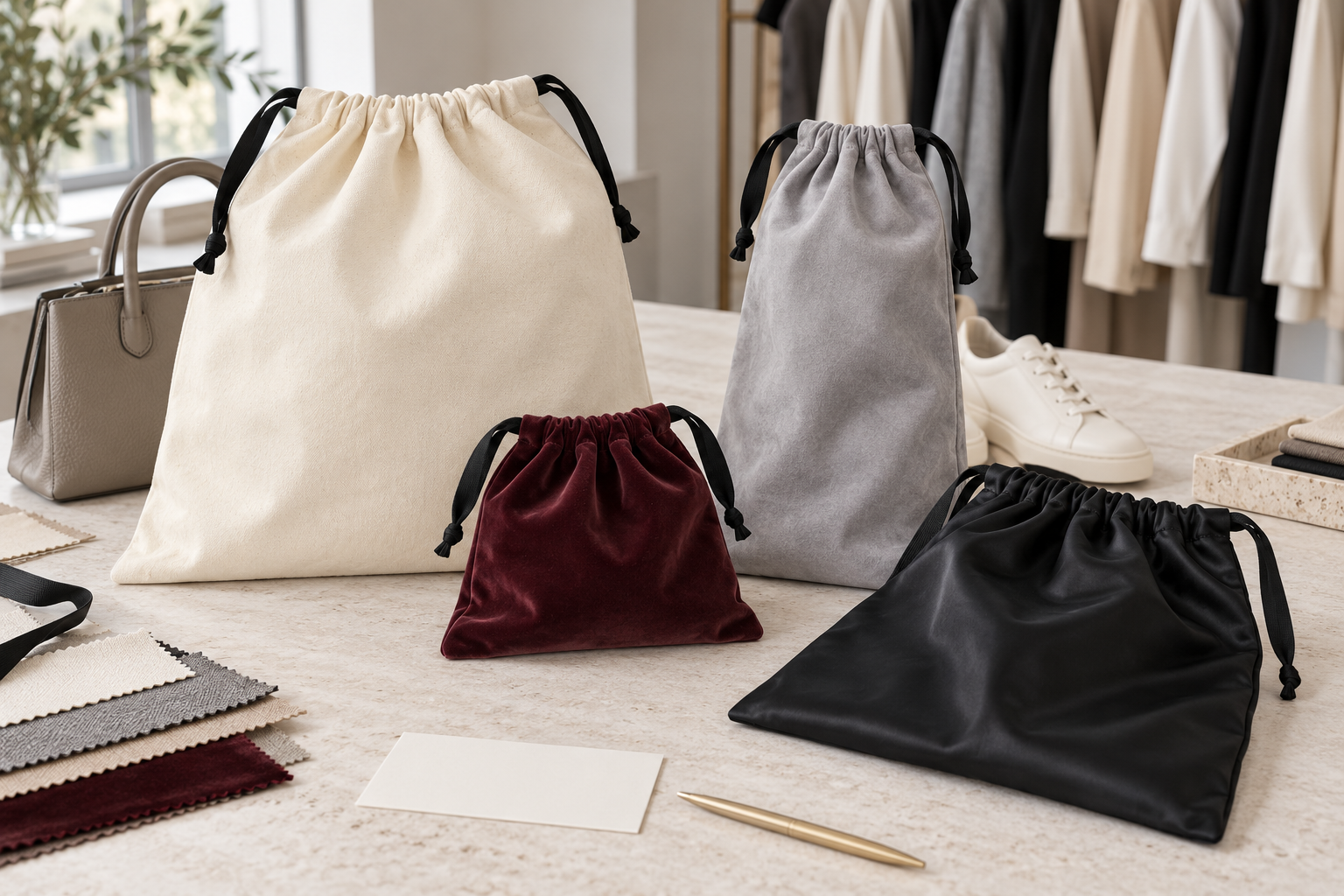
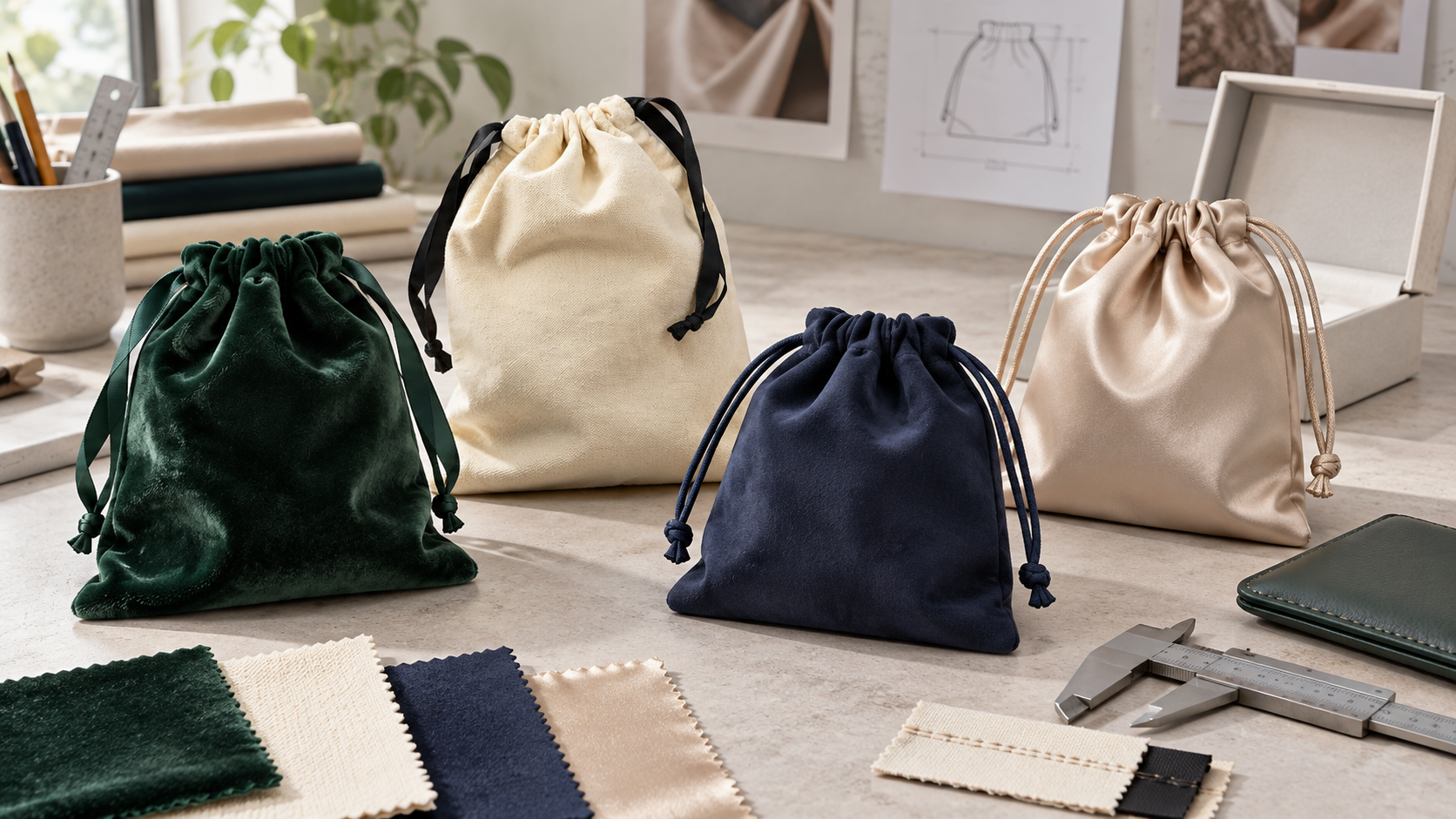
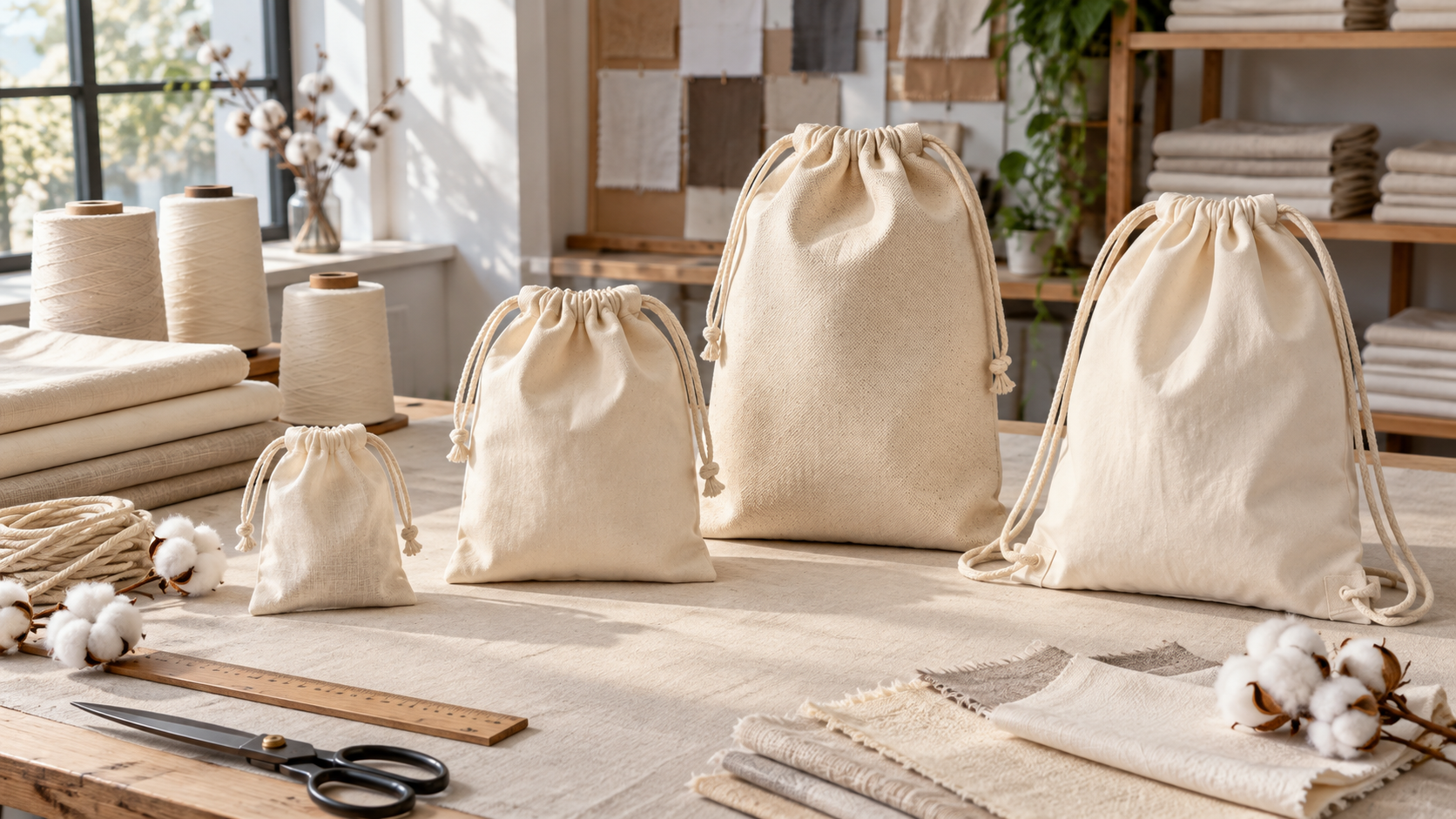
Image note: the matched-bag and material-panel images are illustrative. They do not establish a material grade, composition, performance result, compliance status, factory ownership, production route, capacity, price, MOQ or lead time.