How to Make Defensible Sustainability Claims for Reusable Shopping Bags
A defensible sustainability claim for a reusable shopping bag is specific about the product and attribute, limited to the evidence actually held, current for the market and order being sold, and presented so that words, images, icons, and omissions do not create a broader impression. “Reusable,” “contains 60% post-consumer recycled polyester,” “recyclable,” “compostable,” and “carbon neutral” are not interchangeable claims. Each needs a different proof file and different qualifications.
The practical method is to build a claim from the finished bag’s bill of materials, define its basis and boundary, connect every number or certification reference to a dated source, review the complete consumer impression, and release the wording through a controlled claim register. If the evidence proves only the main fabric, say so. If disposal depends on a collection or industrial-composting system, state the condition. If a certificate belongs to an upstream supplier, do not present it as a company-wide LUCKYSTAR certification.
This guide gives brand, procurement, compliance, and marketing teams a working review system for custom reusable shopping bags. It is general business guidance, not legal advice or a regulatory safe harbor. Claims should be reviewed against the destination market, sales channel, product configuration, and campaign date by the buyer’s qualified legal or compliance reviewer.
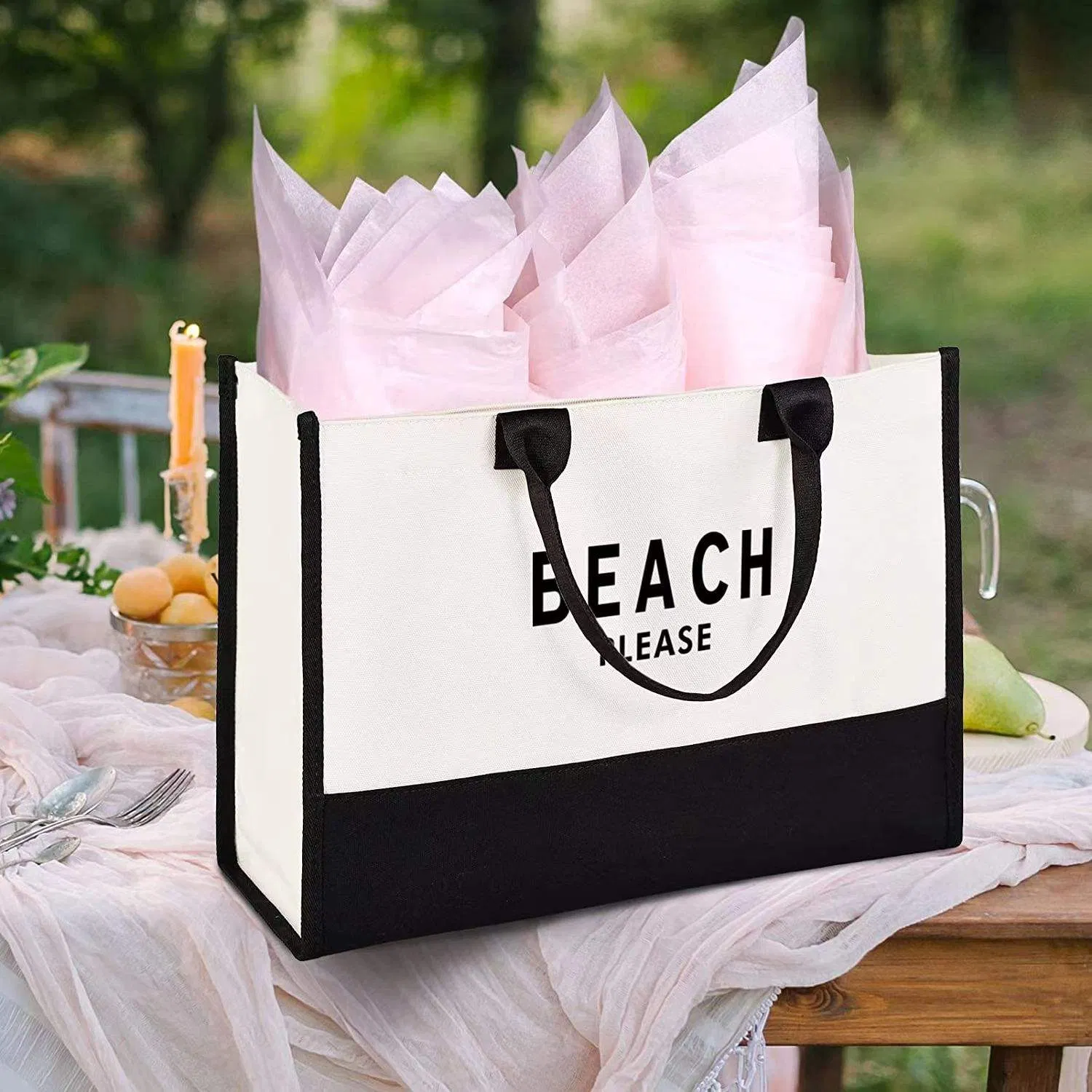
A reusable shopping tote displayed on a LUCKYSTAR public product channel. The photograph is evidence of a reference appearance only; it does not by itself prove fiber composition, recycled content, durability, recyclability, biodegradability, certification, or environmental superiority.
Need an evidence-ready bag RFQ? Send the legal seller/brand, markets/channels/languages, intended use and quantity by SKU, complete BOM/component weights, exact proposed claim/qualification/icon, percentage basis or comparison boundary, certificate/test/traceability requirements, artwork, inspection/substitution rules, packing, Incoterm and required date. The team can return evidence gaps and order assumptions; claim approval remains with the buyer's qualified legal/compliance reviewer.
Page role: This evidence guide owns claim wording, product and component scope, substantiation records, market review, version control and revalidation for reusable shopping bags. Use the worldwide shopping bag manufacturer guide for a supplier shortlist, and the custom shopping bag collection for specification and quotation planning.
The short answer: use a claim-to-evidence chain
Before publishing a sustainability statement, a brand should be able to move in both directions through this chain:
Published words and visuals → approved claim record → finished product and components → measurement method and boundary → current evidence → responsible reviewer → order, market, and channel.
Release only when the complete visual impression matches a defined product/component and attribute; evidence covers the finished order rather than only a historical sample or supplier; limitations are prominent; all channels use the same approved version; and an owner, review date and change triggers exist. If reviewers cannot trace the ad to the specification—or a changed component to every affected claim—the claim is not ready.
What this guide covers—and what related cluster pages already own
This article owns brand-side wording, implied-claim review, release and change control. Use the life-cycle guide for baselines, Sustainable Bags That Last for durability, the supplier evidence audit for entities/sites/certificates, the RPET checklist for recycled-polyester chain of custody, the organic cotton guide for GOTS/OCS questions, and the mesh-bag evidence guide for mesh-specific claims. The custom bag manufacturer guide and shopping bag manufacturer guide remain the sourcing pillars.
Build the claim sentence from eight defined fields
Do not start with a fashionable adjective. Start with structured fields, then write the sentence. The more consequential the claim, the less room there is for an undefined noun or hidden basis.
| Field | Question to answer | Evidence or control | Common failure |
|---|---|---|---|
| Claimant | Which legal entity or brand is making the statement? | Approved company/brand name and channel owner | A supplier’s credential is presented as the buyer’s or LUCKYSTAR’s own certification |
| Product object | Which SKU, size, colorway, order, or product family is covered? | Frozen specification, SKU list, artwork version, purchase order | Evidence for one sample is extended to every shopping bag |
| Component | Whole bag, main body fabric, handles, coating, trim, print, or packaging? | Bill of materials and component weight ledger | “Bag contains…” is used when only the shell fabric is evidenced |
| Attribute | Recycled content, intended reuse, durability, recyclability, compostability, source reduction, chemistry, or climate result? | Attribute-specific test, calculation, certificate, or technical file | One attribute is allowed to imply overall environmental superiority |
| Quantity or threshold | What percentage, performance level, or measured difference is claimed? | Calculation sheet, test method, sampling plan, and units | A vague “high recycled content” or “better” claim has no measurable basis |
| Baseline and boundary | Compared with what, over which life-cycle stages, geography, and time? | Comparable reference product, functional unit, study boundary, exclusions | “Lower impact” has no named baseline or ignores important trade-offs |
| Conditions | What use, disposal, facility, care, or availability conditions matter? | Use instructions, infrastructure data, test conditions, local guidance | A recyclable or compostable claim ignores real collection or processing access |
| Validity | For which market, channel, order, and review period is the claim approved? | Claim ID, owner, approvals, evidence date, next review date | Old evidence remains online after a material, supplier, or rule changes |
A useful internal sentence template is:
“For [market/channel], [specified product/component] [has/contains/achieves] [defined attribute and quantity], based on [method and dated evidence], subject to [material conditions or exclusions].”
The published version can be shorter, but the internal record should preserve all eight fields.
Review express and implied claims together
“Contains 50% recycled content” is express; a leaf seal, circular arrows, “Earth Collection” name and nature imagery can imply broader benefits. EU law includes text, pictorial, graphic and symbolic representations in environmental claims, while ACCC guidance also stresses visuals and overall impression. Show the final layout to an uninvolved reviewer. If they infer a broader product, scope, certification or benefit than the evidence supports, change the words, imagery or qualification.
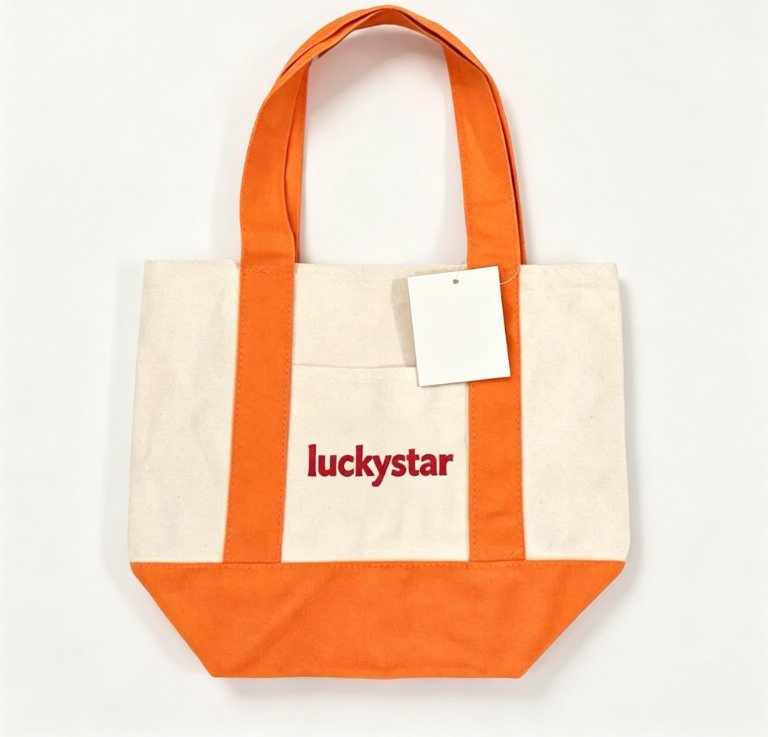
A LUCKYSTAR-branded reference bag with a separate swing-tag location, shown on a company public product channel. The image illustrates that a bag body, handles, bottom panel, print, thread, and tag are separate claim objects. It does not establish their composition or environmental attributes.
Match each claim family to its own evidence
The following matrix is a drafting aid, not model legal wording. Final copy depends on evidence, local rules, the product and channel, and professional review.
| Claim family | Evidence the file should normally address | Risky shorthand | More defensible drafting pattern |
|---|---|---|---|
| Reusable | Intended repeated use, construction, load/use conditions, durability test plan, care limits, and replacement/failure criteria | “Eco-friendly reusable bag” | “Designed for repeated shopping use; performance assessed against the approved load-and-cycle protocol for SKU X.” Do not imply net environmental superiority without a separate comparison |
| Recycled content | Named component, percentage, mass basis, pre-/post-consumer definition, chain-of-custody or supplier records, lot/order link, and exclusions | “Made from recycled bottles” | “Main body fabric contains X% post-consumer recycled polyester by mass; excludes handles, thread, coating, print and trim,” if that exact statement is evidenced |
| Organic/natural fiber | Fiber identity and percentage, certified stage/scope if claimed, transaction/order records, blending, accessories, and final-product eligibility | “100% sustainable organic bag” | “Main body fabric contains X% certified organic cotton,” only when the certificate and transaction chain cover that component and claim |
| Recyclable | Material identification, design compatibility, separability, collection/sorting/reprocessing access in the target market, and clear disposal instructions | Universal recycling arrows with no explanation | “Check local acceptance: [specified component] may be recyclable where facilities accept [material/form]; remove [component] if instructed,” if true and useful |
| Compostable or biodegradable | Test standard and version, product/components tested, industrial or home conditions, time and disintegration limits, toxicity/ecotoxicity as applicable, certification scope, and facility access | “Biodegradable” with no environment or time | “Certified industrially compostable to [identified standard] for [specified component/product]; not suitable for home composting,” only if current evidence supports it |
| Source reduction | Like-for-like predecessor, material mass or packaging unit, function maintained, measurement date, and exclusions | “Uses less material” | “Uses X% less main-body material by mass than our SKU Y sold in [period], while retaining the stated capacity,” if the comparison is valid |
| Free-of, safe, or non-toxic | Substance list, threshold, applicable law/standard, test scope and method, component/batch identity, and why the substance is relevant | “Chemical-free” or “non-toxic” | “Tested for [named substances] against [named limits] on [specified sample/component],” without converting a limited test into a universal safety claim |
| Carbon or climate | Defined product/system boundary, activity data, emission factors, methodology, allocation, uncertainty, reductions, residual emissions, credit quality/retirement, and reporting period | “Carbon neutral bag” or “climate positive” | Publish a transparent quantified result and methodology with reductions separated from any offsets; obtain specialist and legal review before release |
| Certification or seal | Certificate owner, issuer, verification route, standard/version, sites, products/components, scope, number, dates, transaction chain, logo license, and channel rules | An in-house green badge that resembles independent approval | Name the actual certified entity/component/scope and current validity; use a mark only under its owner’s rules |
| Generic environmental benefit | Evidence for the full reasonable interpretation across material life-cycle impacts and trade-offs | “Green,” “planet-friendly,” “sustainable,” “conscious,” or “good for the Earth” | Replace the broad adjective with a narrow, measurable attribute and a prominent qualification |
If the team cannot agree which row a proposed statement belongs to, the wording is probably too vague.
Start with a finished-bag bill of materials, not the product title
A reusable shopping bag can include a shell, lining, handles, reinforcement, interlining, coating or lamination, zipper, slider, fastener, thread, ink, transfer film, patch, label, hangtag, and individual packaging. The marketing noun “cotton bag” or “RPET bag” rarely describes every component.
For every component, record location, material code and description, verified composition, finished mass and percentage basis, color/finish/treatment, supplier/site/lot, evidence ID and validity, inclusion or exclusion from each claim, and its connection to the approved sample and inspection record.
Photographs and supplier listing titles help identify the object but do not establish composition. A natural color does not prove unbleached fiber. A coarse texture does not prove jute. A plastic-like fabric does not prove recycled polyester. Obtain the material specification and order evidence.
The custom shopping bag tech pack guide helps freeze components and version identifiers. Use the custom shopping bag sample development process to connect those records to an approved physical reference.
A reusable claim describes intended use—not total environmental impact
“Reusable” should not be treated as a synonym for “better for the environment.” It can describe a design intended for repeated use, but the environmental result depends on materials, manufacturing, distribution, washing, actual reuse, load carried, replacement, and end-of-life. A heavier bag that is rarely reused may not deliver the expected comparison.
Define repeated use through intended load, product type, carry method, cycle/service condition, failure criteria, and care. Test the assembled bag, not only the fabric: handles, seams, bottom, closures, coatings, and print may fail first. Retain dimensions/capacity, load and conditioning protocol, applicable seam/handle/abrasion/colorfastness/washing/drop results, sample identity, method/lab, failures, and pass criteria.
Use Which Tests Should Reusable Shopping Bags Pass? to create an order-level test plan, then control production with the custom shopping bag quality checklist. A result for one sample does not automatically prove every future reorder.
Comparative claims need a functional unit and named baseline
“Lower impact,” “uses less energy,” or “reduces waste” always has a baseline. Name the compared bag/SKU, functional unit, life-cycle stages, geography, period, data sources, allocation/recycling assumptions, impact categories, and material exclusions. If the function is carrying a stated load for a number of trips, comparing unit mass alone is misleading. A supplier’s generic material study is not a product result unless its product, process, geography, and boundary match.
The life-cycle decision guide provides the detailed functional-unit framework. The claim register should link to that study rather than copying a conclusion into marketing without its assumptions.
Recycled-content wording must name the component and basis
For a multi-material bag, first determine whether the percentage refers to the main body fabric, a yarn, a component, or the total finished product. Record whether the percentage is based on input mass, finished-component mass, or another recognized calculation. Distinguish post-consumer and pre-consumer material where the evidence and applicable rules require it.
The U.S. Federal Trade Commission’s current Green Guides summary says a recycled-content claim should be specific and that a product made only partly from recycled material should state the percentage. It also explains recycled content as material recovered or diverted from the waste stream, either during manufacturing or after consumer use. Do not improvise the definition on a product page.
For RPET shopping bags, connect polymer/fiber/yarn/fabric records to the component, supplier, site, and order. A current scope certificate can show that an organization is certified for certain processes or products; it does not alone prove the recycled percentage in a particular shipment. Transaction or order-chain evidence may also be needed. Follow the dedicated RPET shopping bag checklist.
Treat organic, end-of-life, chemical, climate, and certification claims separately
A plant-derived fiber is not automatically certified organic, and an organic claim does not cover dyes, accessories or the whole bag. Record the component, fiber and percentage; verify certificate holder, stage, sites, scope, version, validity, transaction chain and label rules. Historical upstream GOTS/GRS files in the LUCKYSTAR knowledge base are expired and do not prove current company-wide certification. Use the organic cotton traceability guide.
For recyclable, compostable or biodegradable wording, define the whole bag or component, separability, test/standard, processing environment, time, disposal instructions and real collection/processing access. For U.S. unqualified recyclable claims, the FTC Green Guides use at least 60% facility availability among consumers or communities where sold; do not export that threshold globally. Industrial-composting evidence cannot become a home-compostable claim.
Chemical-compliance tests do not prove recycled content or low impact, and sample-specific historical reports cannot cover all LUCKYSTAR bags. Climate claims need a defined product system, functional unit, stages, data, factor versions, allocation, uncertainty, reductions and any retired credits, plus specialist review. For any certificate or seal, verify entity, sites, scope, number, issuer, dates, transaction evidence and logo licence. An upstream certificate does not make LUCKYSTAR company-wide certified; one tested sample does not make all products certified. Use the supplier claim evidence audit for the full check.
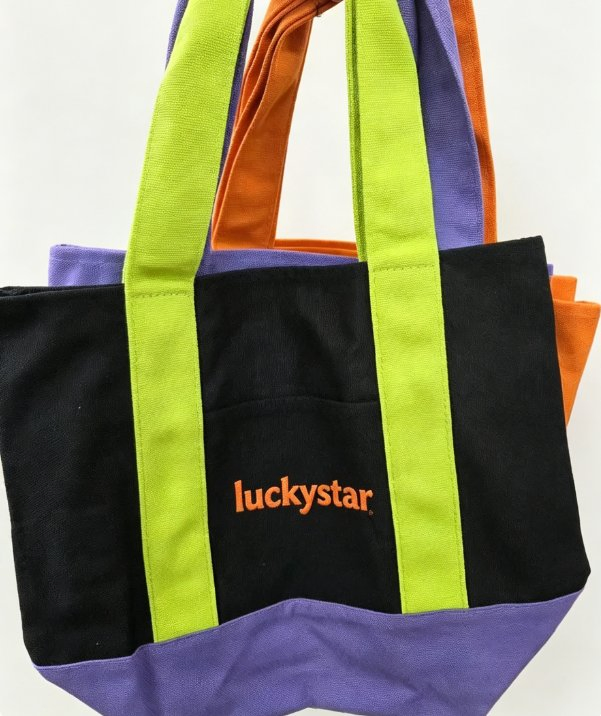
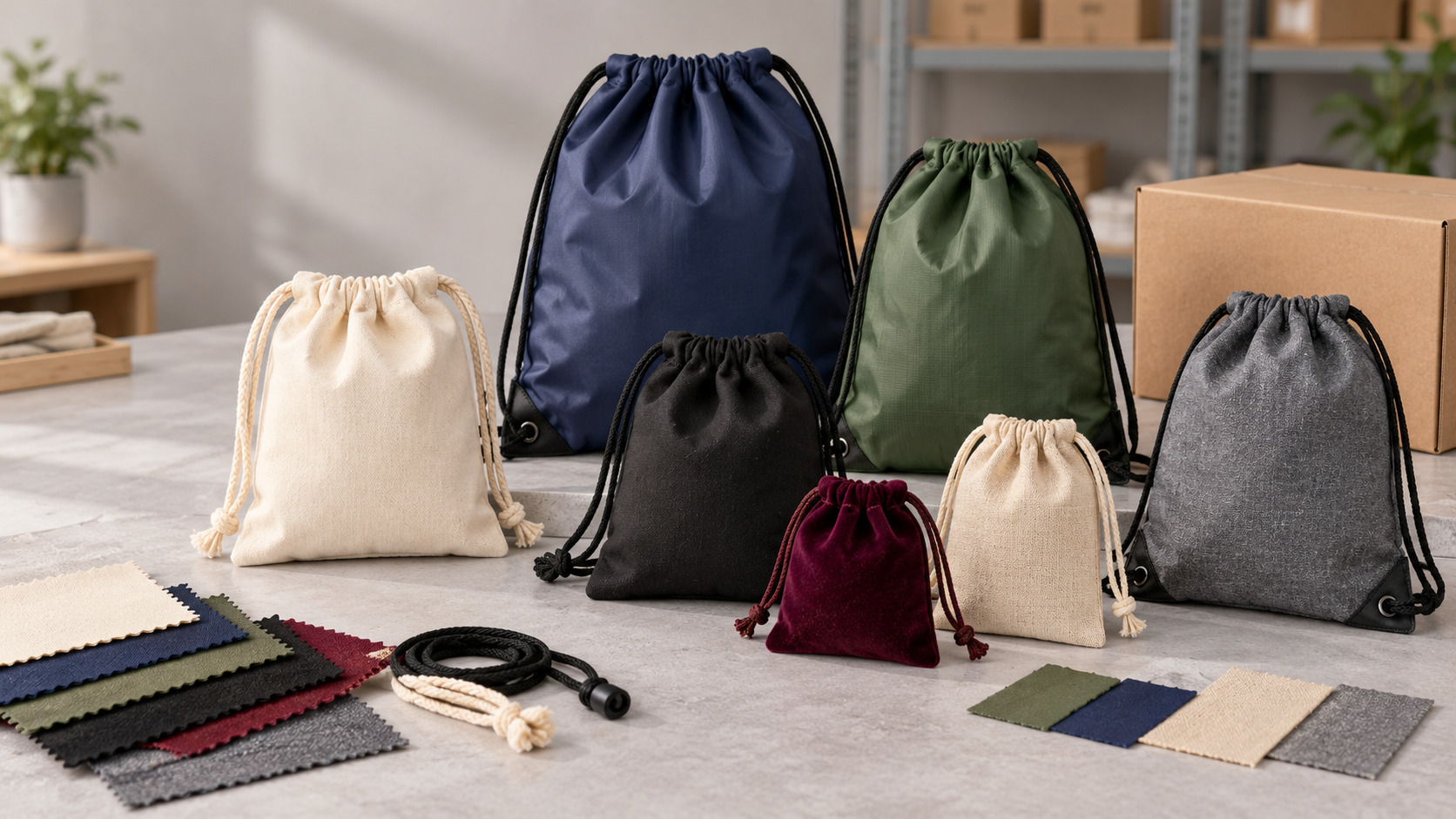
Reference shopping bag colorways shown on a LUCKYSTAR public product channel.Similar appearance does not mean identical composition, certification status, recycled percentage, manufacturing site, or environmental performance; each order and component still needs its own evidence chain.
Know the current rule direction in major markets
The legal environment is changing. The following snapshot is a routing tool for 15 September 2026, not a complete legal analysis.
| Market/framework | Current point relevant to reusable-bag claims | Workflow consequence | Primary source |
|---|---|---|---|
| United States—FTC Green Guides | Broad unqualified “green” or “eco-friendly” claims should not be used; qualifications should be clear, prominent, and specific. The Guides address recycled content, recyclable, compostable, degradable, certifications, carbon offsets, and other claims. They state agency interpretation and do not independently create an offense | Identify the applicable section, substantiate express and implied claims, and review state laws and channel requirements as well | FTC Environmental Claims: Summary of the Green Guides and 16 CFR Part 260 PDF |
| European Union—Directive (EU) 2024/825 | Adopted 28 February 2024; Member States had to transpose by 27 March 2026, and the measures apply from 27 September 2026. It targets generic environmental claims and sustainability labels, including claims communicated through words or visual representation | At this article’s review date, the application date is 12 days away. Check national transposition, old-stock/transition guidance, claim specificity, and label/certification basis before EU campaigns go live | European Commission sustainable consumption overview and Directive (EU) 2024/825 |
| United Kingdom—CMA Green Claims Code guidance | Claims should be truthful and accurate, clear and unambiguous, not omit important information, make fair and meaningful comparisons, consider the full life cycle, and be substantiated | Review the overall impression and life-cycle boundary; retain evidence before the claim is published | CMA environmental claims guidance |
| Australia—ACCC guidance | Eight principles include accuracy, evidence, no hidden important information, explanation of conditions, avoidance of broad unqualified claims, clear language, non-misleading visuals, and openness about transition | Include imagery and icons in review, explain conditions, and avoid marketing future intentions as completed performance | ACCC guide to making environmental claims |
| International—ISO 14021:2026 | Published in June 2026 and replaces the 2016 edition. It covers self-declared environmental claims made with words, symbols, or graphics in product/packaging labels, literature, advertising, and digital media, and strengthens the documented-program approach | Update internal references to the 2026 edition, retain documentary information, and align terminology/methods where the standard is selected for the program | ISO 14021:2026 |
Always check current primary sources at the time of release. A global website may be accessed in many markets even when the paid campaign targets one. Legal teams should decide whether to create market-specific pages or use wording that satisfies the strictest applicable requirement without becoming unclear.
Create one claim dossier for each approved statement
Do not store “sustainability evidence” as a loose folder. A product may support several claims with different owners and expiry dates. Give every public statement a claim ID and dossier.
| Dossier field | What to record | Release gate |
|---|---|---|
| Claim text and impression | Exact headline, qualification, icon/seal, image context, translation, and expected reasonable takeaway | Reviewer confirms that the complete impression matches the evidence scope |
| Product scope | Legal seller/brand, SKU, sizes, colors, component, BOM revision, artwork, supplier/site, order and market | No unlisted product or future reorder inherits the claim automatically |
| Measurement and boundary | Attribute definition, numerator/denominator, mass or other basis, method/standard version, functional unit, baseline, life-cycle stages, geography, conditions, exclusions, uncertainty | Calculation can be reproduced by a competent reviewer |
| Evidence register | Document ID, title, issuer, holder, site, product/component, report/certificate number, issue/effective/expiry date, verification URL, file owner, and access controls | Originals reviewed; scope and validity match the claim |
| Approval | Product/procurement, quality/technical, marketing, legal/compliance, country owner, and date | All required roles approve the exact version—not a paraphrase |
| Channel deployment | Product page, tag, bag artwork, marketplace, ad, distributor file, language, live URL/file, and launch date | Each channel uses the approved qualification and current creative |
| Monitoring and change control | Next review, expiry alerts, supplier/BOM/artwork/rule triggers, complaints, corrections, takedown owner, and archived versions | Claim can be found, corrected, or withdrawn quickly |
Keep the certificate or report itself in controlled storage where necessary. The public claim register can reference a document without exposing customer orders, supplier pricing, personal data, or restricted reports.
Release, print, monitor, and revalidate the governed claim
A qualification must be close, prominent, readable and specific; a hidden link cannot rescue an overbroad headline. Marketing records the intended takeaway; product/procurement freeze the BOM and sites; quality defines tests; the evidence owner verifies scope and order links; legal/compliance reviews the full creative and translations; production checks every channel; and the live owner monitors changes. Use the artwork and dieline guide and retail campaign production guide.
Put the claim ID in the artwork release, website ticket, marketplace folder and sales sheet. Inspect objective fields—material code, component mass, construction, statement, batch and packing ID—rather than asking inspectors to judge “eco-friendly.” Verify the printed percentage and qualifier with the printing QC checklist. For material or print changes, use the material/print guide and defect-prevention guide.
At reorder, compare entity/market, SKU/BOM, sites, materials, lot chain, certificates, tests, factors/baseline, artwork/translation/channel and current rules. Reopen the claim for any critical change or challenge and maintain a next-review date. The reorder consistency guide provides the visual master-data model. Assign an owner who can pause ads, edit pages, stop obsolete artwork and document corrections.
Use imagery as evidence of the product—not the environmental claim
Product photographs can show proportions, structure, handles, seams, printing, or styling. They cannot prove fiber identity, recycled percentage, certification, durability cycles, disposal compatibility, or lower environmental impact.
Nature backgrounds deserve extra care because they can amplify an implied claim. If a bag is photographed among forests, oceans, leaves, or recycling imagery, ask what environmental message the audience will infer. Keep the caption and surrounding copy narrow, and never let visual mood replace product evidence.
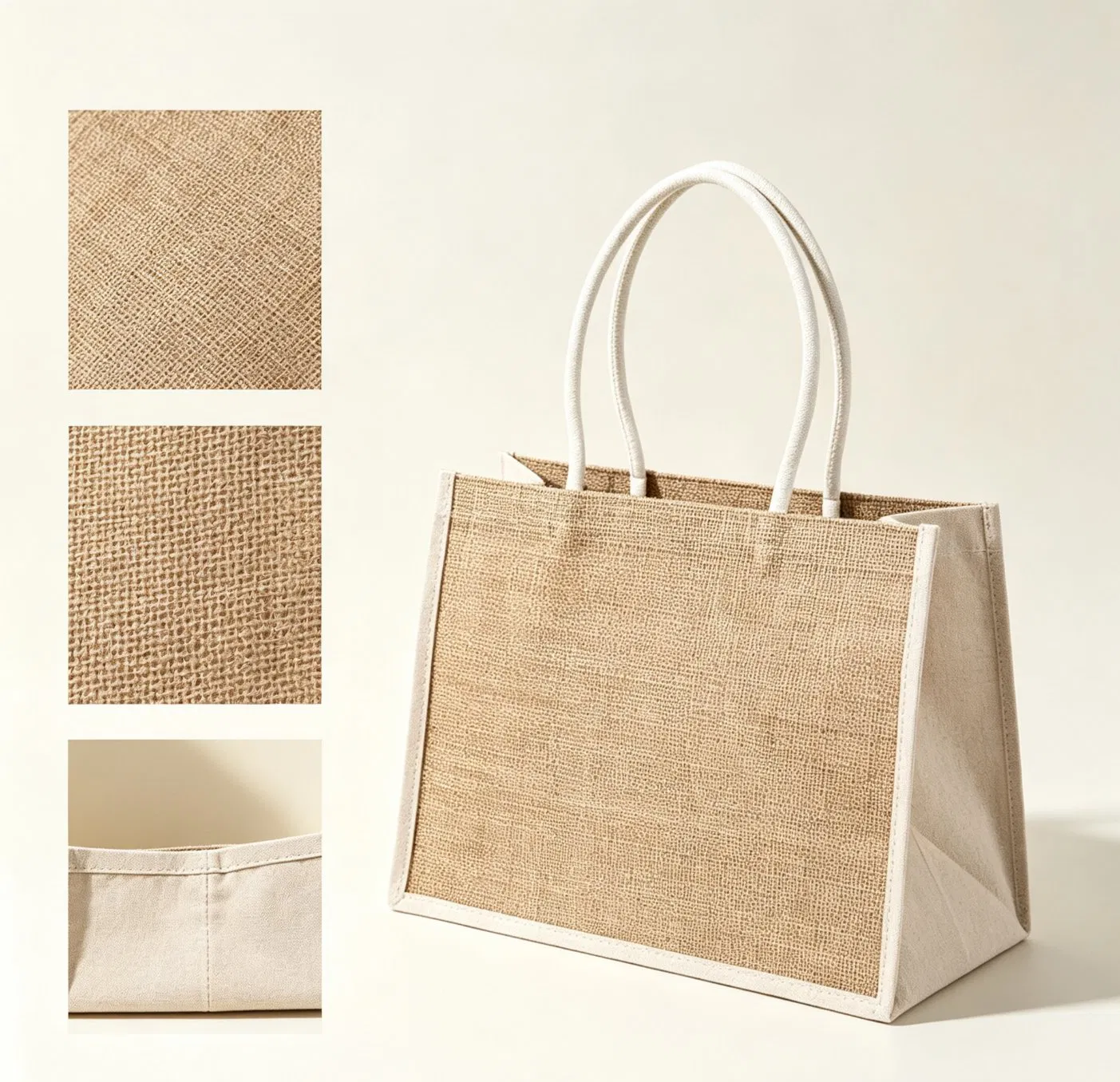
A material-detail reference from a LUCKYSTAR public product channel. Texture, color, and construction can guide specification questions, but visual appearance alone does not prove jute, cotton, recycled content, biodegradability, compostability, or lower impact.
Company-claim boundary: LUCKYSTAR statements in this section are publisher self-description, not third-party verification, current company-wide certification, transaction-level chain of custody, laboratory evidence, material-composition proof or legal approval of a proposed environmental claim. Product route, materials, evidence, samples, tests, certifications, claims, MOQ, price, timing, packing and delivery are subject to current documents, final scope and written confirmation.
How LUCKYSTAR describes its evidence-readiness review
LUCKYSTAR states that its project team can coordinate product-development and sourcing information needed to evaluate a claim, while the buyer retains responsibility for legal/compliance approval and publication.
- Freeze the product object: identify legal seller/brand, SKU/order, BOM revision, sizes/colourways, components, decorations, supplier/site and destination markets.
- Define the exact statement: record headline, qualification, icon/seal, imagery, translation, channel and the reasonable takeaway to be reviewed.
- Request attribute evidence: map composition, percentage/basis, certificate/test/calculation, chain of custody, dates, owner/site/scope and order links without generalizing.
- Separate claim families: treat reuse, recycled content, organic, recyclability, compostability, chemistry, climate, comparison and certification as different evidence files.
- Control production changes: identify material/site/supplier/BOM/artwork/substitution/test changes that pause the claim or trigger reapproval.
- Retain release records: archive approved wording/creative, evidence register, reviewers, channels, dates, monitoring, expiry and correction/withdrawal owner.
Review the public custom shopping bag range, the supplier evidence audit and the life-cycle decision guide. Then send the exact proposed claim and product/evidence brief for an RFQ readiness review.
What to send in an RFQ when claims matter
Send markets/channels/languages; intended use, size, capacity, load and reuse/care scenario; every material/component and decoration; the exact proposed claim, qualification and icon; required composition, percentage, certification, test or traceability evidence; and quantity by version, destination, Incoterm, target date, inspection, approval and substitution rules.
MOQ, sample timing, unit price, production timing, testing, and documentation depend on the confirmed specification, quantity, materials, decoration, packing, and schedule. Use the custom shopping bag MOQ and production-time guide and the 2026 shopping bag cost guide to prepare the commercial brief, then obtain a written quotation.
Final pre-publication checklist
Before releasing a claim, confirm that:
- the full words, visuals and reasonable impression are archived and no broader than the evidence;
- product/component, SKU/order, market/channel/date, BOM and percentage basis are defined;
- originals are current, verified, scoped and linked to the order;
- reuse is not presented as automatic superiority and comparisons name the functional unit, baseline and boundary;
- each claim family is reviewed separately, qualifications remain prominent, and all channels use the approved version;
- inspection, expiry, change, reorder, correction, withdrawal and specialist-review owners are assigned; and
- restricted supplier, customer, pricing, personal and report data remain protected.
A credible sustainability statement is usually narrower than the first marketing draft. That is a strength. Specific claims help buyers understand what was actually designed, measured, tested, or documented, while a traceable dossier helps the business answer questions long after the campaign launches.
Frequently asked questions
What makes a reusable shopping bag sustainability claim defensible?
A defensible claim states exactly what is being claimed, which bag or component it covers, the material or comparison basis, the destination market and channel, and the current evidence that supports that wording. The approved claim, product version and evidence record should remain linked.
Does reusable automatically mean environmentally better?
No. Reusable describes intended repeated use; it does not by itself prove lower overall environmental impact. Any comparative benefit needs a defined functional unit, baseline, use assumptions and evidence appropriate to the market.
How should recycled content be described on a shopping bag?
Identify the exact component, percentage and calculation basis, and keep order-level material and chain-of-custody evidence where required. Do not extend a component claim to the whole bag unless the evidence supports the complete product statement.
When should a sustainability claim be revalidated?
Revalidate when material, supplier, construction, process, artwork, destination market, applicable rule or supporting document changes, and when time-limited evidence expires. Reorders should not inherit an old claim without change control.
What should a buyer send when sustainability claims matter?
Send the intended wording, target market and sales channel, bag specification and component breakdown, available evidence, artwork and labels, quantity, destination and required approval timing. Open assumptions should be confirmed in writing before production.
Request an evidence-ready reusable shopping bag quote
Send LUCKYSTAR your intended use, quantity, finished dimensions, load requirement, complete material/component brief, artwork, target claim, destination markets, evidence needs, packing, Incoterm, and delivery date. The team can review customization and sampling options and identify which commercial and evidence items require order-specific written confirmation.

Click the standard GET QUOTE banner to submit your reusable shopping bag brief. Final specification, materials, testing, documentation, MOQ, price, and timing are subject to feasibility review and written confirmation.
Legal/source review date: 15 September 2026. This article is general information and should not replace advice from qualified legal, regulatory, life-cycle, testing, or certification professionals for the destination market.
Request an evidence-ready reusable shopping bag RFQ review
Send the proposed claim together with the exact product scope, BOM, market/channel and evidence requirement so sourcing questions are separated from legal approval.
Review LUCKYSTAR custom shopping bag options, then send your product and claim brief through the contact form or Email a project brief. The email link opens a draft for your review before sending.
Entity/site assignment, composition, evidence, certification, testing, claim approval, material and capacity availability, price, MOQ, packing, schedule and release terms are subject to due diligence, qualified review, current specification and written confirmation.