How Much Do Custom Drawstring Bags Cost? 2026 Pricing Guide
Last reviewed: September 16, 2026
Custom drawstring bag cost cannot be reduced to one reliable 2026 price per piece. A small plain pouch may consume little fabric yet require careful handwork, cord finishing and individual packing. A large backpack-style sack uses more material and cord, but a stable high-volume specification may spread setup work across more units. Custom-dyed fabric, several logo versions, reinforced eyelets or special packaging can make two similar-looking bags follow completely different cost routes.
The honest answer to “How much?” is therefore a specification-based quotation, not a generic online number. A usable quote should identify the bag configuration, quantity split, included development and quality work, commercial boundary and validity date.
This guide shows buyers how to build that quote without assuming that the lowest unit price is the lowest business cost. For category-wide sourcing context, begin with the Custom Bag Manufacturer Guide and the broader guide to how much custom bags cost. If you are evaluating suppliers, use the custom drawstring bag manufacturer checklist alongside the costing method below.
Need a comparable drawstring-bag quotation? Send the intended use and contents, finished and usable dimensions, material and cord construction, artwork and decoration, quantity by SKU, sample stage, evidence and tests, pack-out, destination, Incoterm, currency and required in-hands date. LUCKYSTAR can return a current configuration-based quotation with recurring and one-time charges, assumptions, exclusions, change rules and validity shown separately.
Quick answer: price the approved configuration, not “a drawstring bag”
Before expecting a dependable price, define these commercial inputs:
| Pricing input | Minimum information | What remains unclear if omitted |
|---|---|---|
| Use and contents | Product, approximate filled dimensions/mass and handling | Required size, reinforcement and service risk |
| Bag architecture | Flat, gusseted, lined, backpack-style or multi-material | Operations and material layers |
| Finished dimensions | Width, total height, usable height and gusset method | Consumption and capacity |
| Shell/lining | Composition direction, construction, target weight/thickness, color and finish | Material source and yield |
| Closure system | Cord material/profile/diameter, route, channel, exits and ends | Component and sewing cost |
| Decoration | Method, artwork, colors, coverage, sides and placement | Setup and running cost |
| Quantity matrix | Pieces per size, shell/cord color, artwork and pack SKU | Setup amortization and runnable lots |
| Development | Sample and proof gates, revisions and approval owners | One-time work and calendar risk |
| Quality/evidence | Tests, inspections, documentation and claims | Verification cost and release path |
| Packing/delivery | Fold, unit pack, labels, carton and commercial handover point | Packing labor, freight volume and landed cost |
LUCKYSTAR does not publish one permanent price for every custom drawstring bag because materials, quantities, process routes and market requirements change. Quotes, samples, production timing, tests and delivery terms remain subject to the agreed specification and written confirmation.
Use a five-part cost architecture
Build the budget in layers. This prevents a low ex-factory figure from hiding development, quality or logistics work elsewhere.
| Cost layer | Typical contents | Buyer question |
|---|---|---|
| Product conversion | Shell, lining, cord, hardware, thread, cutting, decoration, sewing and finishing | What exact configuration does the unit price reproduce? |
| Non-recurring development | Pattern, tooling, screens, digitizing, proofs and samples | Which charges occur once, per artwork or per revision? |
| Quality and evidence | Incoming checks, first-output approval, final inspection, testing and documents | What is included, and who owns retest/rework decisions? |
| Packing and order handling | Folding, unit pack, labels, sorting, cartons and SKU control | Is retail-ready pack-out included? |
| Logistics and risk | Inland handling, handover, freight, duties/taxes where applicable, insurance and contingency | Where does the supplier price stop? |
A practical evaluation metric is:
Total project spend ÷ accepted, usable units at the buyer’s required point
This is more informative than supplier unit price alone. It exposes rejects, shortages, separately charged setup, rework, replacement freight and SKU-handling costs.
The shell cost starts with usable geometry
Bag dimensions change more than the visible area. Material consumption depends on cut dimensions, seam allowance, channel folds, gussets, pattern direction, print repeat, shrinkage or process allowance, defects and marker efficiency.
For a drawstring bag, total finished height is not the same as usable internal height. A deeper channel may require additional material while reducing capacity below the closure. If the contents do not fit, the “cheaper” bag can become unusable.
Ask the supplier to cost from a dimensioned drawing rather than a photo. Record:
- finished width and total height;
- usable height below the channel;
- side or bottom gusset measurement method;
- channel depth and fold construction;
- seam/turn allowances where relevant;
- shell and lining layers;
- grain, nap, pattern or print orientation; and
- approved measurement state and tolerance.
The custom drawstring bag tech-pack guide explains how to document these fields so later quotes can be compared against the same geometry.
Material names do not predict material cost
“Cotton,” “canvas,” “polyester,” “non-woven,” “mesh,” “velvet” and “satin” describe broad families, not one price or performance level. Composition, yarn/fiber route, construction, weight or thickness, width, finish, color, coating, order quantity, source, testing and evidence all matter.
| Material decision | Cost mechanism | Verification needed before price lock |
|---|---|---|
| Available standard color | May reduce development and custom-dye exposure | Current reference, lot/quantity and reservation condition |
| Custom color | Adds color development, approval and material-lot dependency | Physical standard, approval method and bulk verification |
| Heavier or denser construction | Changes consumption, cutting, sewing and decoration behavior | Current specification and representative sample |
| Nap, shine or direction | Can reduce marker efficiency and increase appearance control | Orientation rule and approved appearance |
| Coating/lamination | Adds a process and may change fold, seam or print compatibility | Actual layered sample and method |
| Lining or interlayer | Adds material, cutting, assembly and turning/finishing | Layer map and attachment construction |
| Claimed recycled/organic content | May add traceability and document requirements | Current holder, scope, order/material evidence and validity |
Do not select a material from a screen image and assume the quote is final. Use a current swatch or approved sample and state whether the supplier may propose equivalents. For a focused comparison of common routes, read Canvas vs Nonwoven Drawstring Bags.
The drawcord is a cost system, not a minor accessory
Cord cost includes more than length. Material, braided/knitted/twisted construction, profile, diameter, color, finish, ends, routing and attachment determine the component and the assembly work.
| Cord/closure choice | Direct cost effect | Possible secondary effect |
|---|---|---|
| One-cord side pull | Cord length and one routing operation | Uneven appearance if channel/exit is poorly matched |
| Two-sided double draw | More cord and handling | Better balanced gathering when correctly engineered |
| Custom-dyed cord | Development and component batch | Color approval and unused-stock exposure |
| Thick or textured cord | Higher component use in some routes | Larger channel, exit and end treatment may be needed |
| Knot or simple sewn end | Low hardware count | Finish must still control fraying and channel entry |
| Molded/metal tip or stopper | Custom component and assembly | Tooling, component MOQ and detachment risk |
| Eyelet or grommet | Hardware, reinforcement and setting | Finish/color control and possible testing |
| Bottom tab attachment | Extra materials and sewing | Becomes part of the carrying load path |
Cost the cord and channel together. A cheaper replacement cord can bind, slip, fray, look inconsistent or force a construction change. The drawstring bag OEM design-risk guide explains why closure geometry should be validated before bulk material is committed.
The small-pouch paradox: less fabric does not always mean much less cost
Jewelry, cosmetic, fragrance or gift pouches may use little shell material, yet manual handling remains. Operators still cut pieces, form the channel, route cord, close ends, inspect decoration, trim threads, shape the pouch and pack it. Very small components can be harder to manipulate or position consistently.
Decoration may also represent a large share of a small pouch’s cost. A centered embroidery, metallic transfer or sewn label can require nearly the same setup whether the bag is small or medium. Individual inserts, tissue, barcode labels or gift-box packing add work per unit.
When comparing a small pouch with a larger flat sack, separate:
- material consumption;
- operation count;
- handling time;
- decoration setup and run;
- closure finishing;
- appearance inspection; and
- unit-pack labor.
This prevents the buyer from using surface area as the only price predictor.
Sports sacks are priced by the load path as well as size
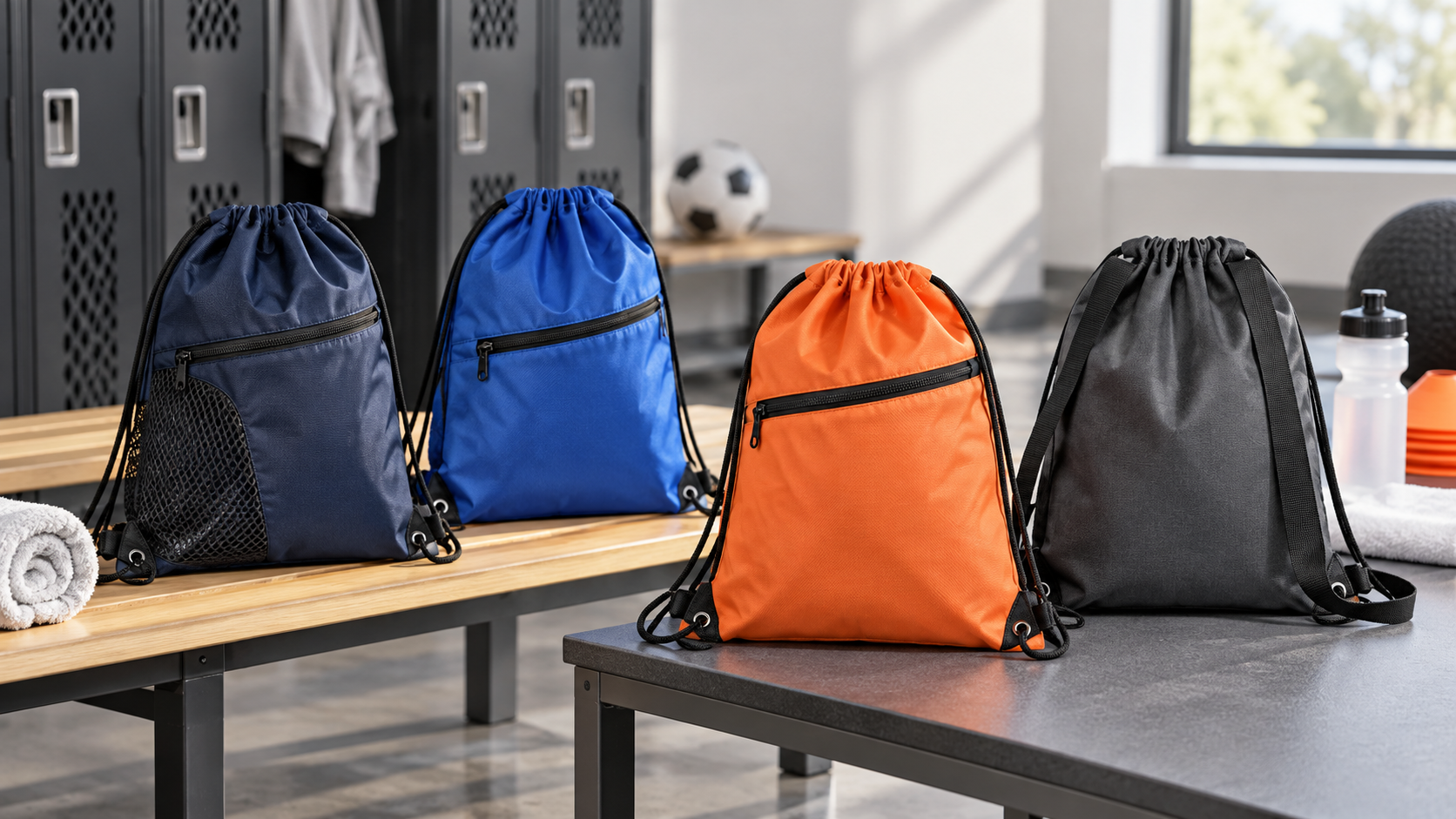
A backpack-style drawstring sack may transfer carrying load through cords into bottom tabs, reinforced corners or eyelets. The costed design should therefore identify reinforcement layers, hardware or tab construction, cord length, attachment geometry and intended load/use.
A lighter shell can reduce material spend but may require reinforcement, a different seam or a narrower use claim. A heavier shell may influence cord channel behavior, decoration and packing volume. There is no responsible “cheapest construction” without the intended contents and acceptance method.
Ask what is included in reinforcement and closure validation. A quote based on a promotional giveaway sack should not be compared directly with one based on a repeatedly carried sports bag.
Lining, gussets and shaped construction add conversion work
Each additional layer or three-dimensional feature can change cutting, matching, turning, top-edge finishing and inspection.
| Construction feature | Work introduced | Cost question |
|---|---|---|
| Full lining | Separate cut set, assembly, turning/closing and appearance control | Is lining material and color included? |
| Bottom or side gusset | Extra pattern geometry and seam/fold control | Is the quoted capacity based on the same gusset method? |
| Boxed corners | Additional sewing and dimensional checks | Are corner dimensions/tolerances specified? |
| Reinforced channel | Extra layer, fold or tape and more seam control | Does it alter usable height or cord clearance? |
| Internal pocket | Extra components, decoration/access and placement | Is pocket closure or label included? |
| Patch panel | Component cutting, decoration and attachment | Does the patch create a separate material/setup minimum? |
| Bound mesh edge | Binding material and controlled capture of mesh | Is binding stretch/color approved? |
Count operations rather than assuming a visual style word captures them. The custom drawstring bag manufacturing process shows how sourcing, cutting, decoration, sewing, finishing and packing connect.
Decoration cost depends on coverage, substrate and sequence
Logo price is not simply “one color versus two.” The supplier needs the actual artwork, size, position, number of sides, substrate/color, desired finish and quantity per version.
Screen printing
Cost may include screens, ink matching, setup, first-output approval and running impressions. More colors, positions or designs can multiply setup. A dark or textured substrate may require a different approach from a light, smooth one.
Heat transfer
The transfer itself, cutting/ganging, application and substrate compatibility matter. Large coverage can change hand feel and press exposure. Confirm the actual film/ink system and approve it on the quoted material.
Embroidery
Digitizing is usually a separate development task from stitching. Stitch count, density, size, thread colors, backing and placement influence cost and fabric behavior. A small artwork can still be dense and expensive to sew.
Sublimation or all-over print
The route generally depends on a compatible substrate and may occur before cutting. Panel size, print layout, color approval and cutting registration can become part of material conversion rather than a small logo add-on.
Patch, label or applique
The component may carry its own development, minimum, artwork and attachment cost. Confirm whether the quote includes producing the patch and attaching it.
For every method, identify whether decoration occurs on roll goods, cut panels or finished bags. Sequence changes the risk, setup and rework point.
Quantity lowers only the costs that can be spread
As volume rises, one-time setup and development can be distributed across more accepted units. Material purchasing, cutting plans and line setup may become more efficient. However, direct material and labor do not disappear, and a larger order can introduce more inspection, packing, storage or shipment complexity.
Use a simple model:
Unit economics = recurring unit work + allocated setup/development + allocated order-level quality/handling
Ask which charges are fixed per order, fixed per color/artwork, variable per unit or tiered by quantity. A quantity discount should have a reason, not just a percentage.
The companion guide on Custom Drawstring Bag MOQ and Production Time shows how runnable lots and schedule gates affect this calculation.
SKU fragmentation gives setup savings back
An order of 3,000 pieces may be one runnable lot or thirty small variants. Sizes, shell colors, cord colors, hardware finishes, artwork, labels, barcodes and pack-outs create changeovers and control work.
| Fragmentation source | What may repeat | Cost-control option |
|---|---|---|
| Multiple sizes | Pattern/cutting setup, cord length and measurement checks | Launch one core size or group by shared construction |
| Shell colors | Material lots and decoration conditions | Use verified available colors where suitable |
| Cord/hardware colors | Component procurement and sorting | Standardize one compatible closure system |
| Artwork versions | Proof, screen/program/transfer batch and first output | Reduce launch designs or share one placement |
| Destination labels | Artwork, data control and pack sorting | Freeze market/SKU matrix early |
| Different unit packs | Folding, inserts, bags and carton configuration | Use one pack architecture where possible |
Request price breaks against the exact SKU matrix, not only the purchase-order total. The general custom-bag MOQ guide provides additional negotiation questions.
Separate one-time charges from recurring production charges
An honest first-order budget identifies charges that may not repeat unchanged.
| Charge class | Examples | Reorder treatment |
|---|---|---|
| Product development | Pattern, engineering review, sample construction | Reconfirm if design/material changes |
| Decoration setup | Screen, digitizing, plate, mold or tooling | Check ownership, storage and usable life |
| Approval evidence | Strike-off, sew-out, lab dip or component sample | Repeat when controlled input changes |
| Production | Materials, cutting, decoration, sewing and finishing | Recurs for every order |
| Order-level quality | Inspection booking, testing and report | Depends on lot, market and buyer plan |
| Packing setup | Label/barcode artwork and pack-out trial | Reuse only if data and pack remain unchanged |
| Logistics | Handover, freight, duties/taxes and destination service | Requote for route, date and shipment |
Ask whether samples, courier, tools, proofs, test reports, third-party inspection and packaging artwork are included. Also ask who owns tools or surplus custom components and what happens if they become obsolete.
Sample and approval cost should protect the bulk order
Sampling is not merely a miniature production order. It helps resolve material, proportion, usable capacity, cord-channel operation, artwork, workmanship and packing before the larger commitment.
Possible development items include a construction sample, material or color submission, print strike-off, embroidery sew-out, revised sample, packaging mock-up and pre-production reference. The correct set depends on risk; more samples are not automatically better, and skipping all physical validation is not automatically cheaper.
Use the Custom Drawstring Bag Sample Development Process to select the gates. For a broader framework, see the custom bag sample-development guide.
Record which sample charges can be credited, which courier costs are separate and what change triggers a new sample. These are commercial terms—not universal LUCKYSTAR policies—and require written confirmation.
Quality cost belongs before the defect, not after it
A very low quote may omit controls that another supplier has priced.
Buyers should define incoming, first-output, in-line, final and packing checks according to the bag’s risks.
Drawstring-specific characteristics can include:
- shell, lining and cord identity;
- finished and usable dimensions;
- channel depth and seam placement;
- smooth, balanced closure operation;
- cord retention and end finish;
- eyelet, tab or corner reinforcement;
- seam security and raw-edge control;
- decoration size, position and appearance;
- shade/lot consistency;
- cleanliness and packing accuracy; and
- quantity by SKU.
Testing or inspection charges should identify the method, sample, laboratory or inspector where applicable, reporting, retest responsibility and decision rule. A test on one historical sample cannot be priced or promoted as evidence for every future bag. The custom bag quality inspection checklist helps buyers define the plan before quotation.
Environmental and compliance claims may change both evidence and price
If the product or marketing uses terms such as recycled, organic, biodegradable, compostable, recyclable, reusable or chemical-compliant, write the exact intended claim and destination. Then identify which material, component, order and supply-chain record must support it.
Possible cost effects include controlled material sourcing, documentation, transaction evidence, testing, segregation, labeling and review. None should be assumed from a certificate logo shown in a sales deck.
Existing records do not authorize any company-wide certification statement for the entire bag range. References involving organic or recycled schemes, social-audit programs, management standards, or REACH/RoHS testing must each be checked separately for the named entity, holder, scope, product/material, order, standard, date and destination before appearing in a quotation or public claim.
Packing cost is a product decision
A bulk-packed promotional pouch, individually sleeved retail pouch and gift-ready presentation set do not share one packing cost. Folding, cord arrangement, tissue, inserts, hangtags, warning labels, barcodes, unit bags, inner cartons and assortment work all add material or handling.
Packing can also affect appearance. A large transfer may crease; eyelets may mark adjacent bags; long cords may tangle; a soft pouch may not recover from compressed packing. Approve the fold and pack-out with the product rather than treating it as a final quotation note.
Ask for pieces per inner/outer carton, estimated carton dimensions and weight after the pack-out is confirmed. Those fields influence logistics but should not be promoted as permanent values before actual verification.
Compare EXW, FOB and landed figures only after defining the boundary
Commercial labels matter because two “unit prices” can stop at different places. Record the named place, included services, packing, export handling, transport, insurance, duties/taxes where applicable and destination work.
For internal evaluation, build a landed-cost worksheet:
| Budget line | Supplier quote | Buyer/forwarder | Contingency/owner |
|---|---|---|---|
| Finished accepted goods | Record quoted basis | Not applicable | Procurement validates specification |
| One-time development/setup | Record inclusions | Buyer approvals/courier if separate | Product owner controls revisions |
| Testing/inspection | Record included work | External booking if buyer-managed | Quality owner controls disposition |
| Unit and carton packing | Record configuration | Destination relabeling if needed | Operations approves pack-out |
| Origin handling/export boundary | Record named place | Forwarder confirms handover | Logistics owns interface |
| Destination-charges/duties/taxes | Record if applicable | Broker/finance estimate | Recheck jurisdiction and classification |
| Shortage/reject/rework allowance | Record contractual remedy | Internal risk reserve | Quality/procurement owns decision |
Add international transport and insurance as separate worksheet lines using a current route quotation and a named logistics owner. This is a budgeting template, not a universal list of legally payable charges. Confirm the transaction and destination with qualified logistics, customs and tax professionals.
Three drawstring bag cost profiles—without inventing unit prices
The relative matrix below shows why a photo cannot supply a dependable number. “Lower,” “medium” and “higher” describe likely cost pressure within this comparison only; they are not quotations.
| Configuration | Material pressure | Conversion pressure | Decoration/setup pressure | Packing/control pressure |
|---|---|---|---|---|
| Plain flat giveaway pouch, available shell/cord, one small graphic, bulk pack | Lower | Lower | Lower to medium | Lower |
| Small lined gift pouch, precise logo, neat cord ends, individual presentation pack | Lower to medium | Medium to higher | Medium | Medium to higher |
| Backpack-style sack, long double cords, reinforced bottom attachments, front graphic | Medium | Medium to higher | Medium | Medium |
| Multi-material retail pouch, custom colors, special trim, multiple artworks and labels | Higher | Higher | Higher | Higher |
The buyer should use this matrix to identify the cost-driving fields, then request a current price for the selected configuration. It should never be converted into an assumed percentage or public LUCKYSTAR price range.
A three-stage quotation is more reliable than an instant final price
Different information supports different confidence levels.
Stage 1: budget indication
Based on use, approximate size, material direction, decoration concept, total quantity and destination. Useful for selecting a feasible route, but assumptions must be visible.
Stage 2: specification quotation
Based on dimensioned construction, BOM direction, cord system, production artwork, SKU split, quality/evidence needs and pack-out. Suitable for supplier comparison if every bidder uses the same revision.
Stage 3: approval-based confirmation
Based on agreed material/component references, approved sample/proofs, released specifications, final quantity matrix and current commercial/logistics conditions. This is the appropriate point to freeze order-specific terms in writing.
If a supplier calls Stage 1 “final,” ask what happens when the sample changes. If a buyer keeps changing the configuration after Stage 3, expect price and schedule review.
Why quotations change after sampling
A changed price is not automatically suspicious; the important question is whether the reason is traceable. Sampling may reveal that the requested fabric differs from the assumed one, the cord needs another diameter, usable height requires more shell, embroidery needs reinforcement, a gusset adds operations or retail packing is more complex.
Require a change log showing:
- previous quoted assumption;
- approved new requirement;
- recurring unit effect;
- one-time effect;
- MOQ or surplus-component effect;
- production-time effect;
- testing/packing/logistics effect; and
- buyer approval.
Unexplained increases are not acceptable, but neither is forcing the old price to cover a materially different bag. Change control protects both parties.
How to reduce cost without damaging the bag’s job
Start with configuration complexity rather than cutting quality controls.
- Use one core size and closure system for the initial order.
- Select a verified available material/color where it meets the use case.
- Keep the cord, channel and exits standard and compatible.
- Reduce artwork versions, positions or unnecessary color complexity.
- Design the logo for the chosen decoration method and substrate.
- Remove hardware or lining only if function and presentation still pass.
- Standardize labels and packing across variants where permitted.
- Consolidate approvals so sampling does not repeat for conflicting comments.
- Define CTQs early to prevent rework and rejection.
- Compare landed cost per accepted unit, not the cheapest ex-factory line.
The broader guide on reducing custom bag cost and lead time offers more planning levers. Cost reduction should be recorded as an intentional specification change, not an undisclosed substitution.
How to compare two quotes that are far apart
Normalize the following fields before negotiating:
| Comparison field | Quote A entry | Quote B entry | Buyer decision |
|---|---|---|---|
| Specification revision | Record A | Record B | Same finished bag? |
| Material/weight/finish | Record A | Record B | Same evidence and color route? |
| Cord/channel/exits | Record A | Record B | Same closure and end treatment? |
| Decoration | Record A | Record B | Same method, artwork, coverage and sides? |
| Quantity split | Record A | Record B | Same size/color/artwork/pack SKUs? |
| Included setup/sample | Record A | Record B | One-time charges visible? |
| Quality/testing | Record A | Record B | Same inspection and evidence scope? |
| Packing | Record A | Record B | Same unit and carton configuration? |
| Commercial boundary | Record A | Record B | Same named place and included handling? |
| Validity/change rules | Record A | Record B | What can trigger requotation? |
If fields differ, do not average the prices. Ask each supplier to reprice the same released configuration or state the technical alternative openly.
Company-claim boundary: the following section is publisher self-description and a commercial sourcing option. It does not independently prove factory ownership, in-house control of every operation, universal capability, lowest cost, a current unit price, available capacity, stock, material composition, product performance, certification, compliance, MOQ, timing or superiority. The legal seller, assigned sites and subcontractors, production and decoration route, samples, evidence, tests, QC, packing, price and delivery terms depend on the exact order, released specification and written confirmation.
Why choose LUCKYSTAR for custom drawstring bag costing
LUCKYSTAR can help turn a visual idea into a quoteable drawstring-bag configuration. The value is not a claim that one company-owned facility performs every possible material, decoration, testing and packing step. It is the coordination of the fields that determine whether a quote can be understood and reproduced.
For a project inquiry, the team can review intended use, dimensions, shell and lining direction, cord/channel construction, decoration, quantities by variant, development gates, quality needs and packing. Open assumptions can be separated from confirmed requirements so the quotation does not quietly price a simpler product than the buyer expects.
Buyers may choose to evaluate LUCKYSTAR because of:
- Drawstring-specific specification support: usable height, channel geometry, cord path, exits, ends and load attachments can be defined before price lock.
- Multi-category sourcing context: the company presents several custom bag and packaging routes while keeping material and capability claims project-specific.
- Quote comparability: inclusions, SKU splits, one-time charges and commercial boundaries can be made visible.
- Sample-to-bulk continuity: approved changes can move into the released specification instead of remaining in scattered messages.
- Quality-planning discipline: inspection points and evidence requirements can be included in the commercial discussion.
- Conservative claims control: certificates and test results should be checked for the actual entity, product/material, order, scope, standard, market and validity.
Read the Custom Drawstring Bag Supplier Guide for product-level sourcing questions. All current commercial terms must still be confirmed for the actual project.
What to send for an accurate LUCKYSTAR quotation
Provide one controlled request containing:
- Intended contents, use, filled dimensions/mass and presentation objective.
- Finished width, total and usable height, gusset and measurement method.
- Shell, lining, reinforcement and finish direction with physical references if available.
- Cord construction, diameter/profile, color, route, channel, exits, ends and attachments.
- Decoration method, native artwork, size, colors, sides and finished placement.
- Quantity matrix by size, shell/cord color, hardware, artwork, label and pack-out.
- Required samples, proofs, tests, inspection and documents.
- Exact marketing/compliance claims and destination markets.
- Fold, unit packing, labels/barcodes, assortment and carton requirements.
- Target ship-ready/arrival milestones and requested commercial handover point.
- Alternative materials or simplifications the supplier may propose.
- Reorder reference and controlled changes, if applicable.
Ask the quotation to identify unit cost basis, one-time charges, component/SKU minimums, surplus custom materials, sample and production assumptions, packing, quality/testing scope, validity and change triggers.
Frequently asked questions
How much do 500 custom drawstring bags cost?
No defensible universal amount can be stated without size, material, cord system, construction, artwork, SKU split, packing, quality/evidence requirements and delivery boundary. Send those fields for a current order-specific quotation.
Are cotton drawstring bags always more expensive than non-woven bags?
No. Material specification, weight, size, construction, print method, quantity, sourcing and evidence determine the comparison. A family name alone does not establish price or performance.
Does adding a logo always add the same amount?
No. Method, dimensions, colors, coverage, substrate, positions, artwork versions, setup and approval route all matter. Dense embroidery and a small one-color print have different cost structures.
Why does a tiny jewelry pouch still cost money to make?
Although it consumes less fabric, it still requires cutting, channel formation, cord routing/finishing, decoration, inspection and packing. Precise small-scale placement and premium presentation may increase handling.
Are custom drawstring bag samples free?
There is no universal policy. Pattern work, material, decoration setup, labor and courier may be charged, credited under stated conditions or separated. Confirm the sample scope and commercial treatment in writing.
Will a larger quantity always reduce the unit price?
It may spread setup and improve some production efficiencies, but direct work remains. Additional SKUs, custom materials, testing, complex packing or logistics can offset savings. Request breaks using the same configuration matrix.
Is shipping included in the bag price?
Only if the quotation explicitly defines the commercial boundary and included route/services. Separate finished-goods price, origin handling, international transport, insurance, destination charges and taxes where relevant.
Why did my price change after the sample?
The approved sample may contain a different material, cord, dimension, reinforcement, decoration or pack-out from the inquiry assumption. Ask for a line-item change explanation and approve the revised specification and price together.
Can LUCKYSTAR quote from a photo?
A photo can support an initial discussion, but it cannot prove hidden construction, dimensions, composition, cord details, artwork method, quality requirements or packing. LUCKYSTAR can identify missing fields and prepare a more comparable specification-based route.
What is the cheapest custom drawstring bag?
The lowest-cost workable option is the simplest configuration that still meets the intended use, brand presentation, quality and evidence needs. It may use an available material, compatible standard cord, one size, limited artwork and simple packing, subject to confirmation.
How do I calculate cost per accepted bag?
Combine product, one-time development, inspection/testing, packing and applicable logistics spend; then divide by the quantity accepted and usable at the defined point. Keep taxes, duties and internal overhead treatment consistent across comparisons.
Should I include a contingency in the budget?
For planning, assign ownership to uncertain material, freight, testing, revision and timing items. Do not hide the reserve inside supplier price. Reduce it as specifications, approvals and current route quotations become confirmed.
Turn “How much?” into a comparable quotation
Ask every supplier to price the same released configuration and commercial boundary. Compare total project spend and cost per accepted, usable unit at the required handover point, with one-time charges and logistics visible.

Review LUCKYSTAR custom drawstring bag options, then send your quotation brief through the contact form or Email a project brief. The email link opens a prefilled draft for your review before sending.
Prices, currency, minimums, setup, samples, tooling, material and claim evidence, testing, inspection, packing, capacity, availability, schedule, freight, duties or taxes and delivery terms are subject to current order-level verification, destination requirements, released specification and written confirmation.
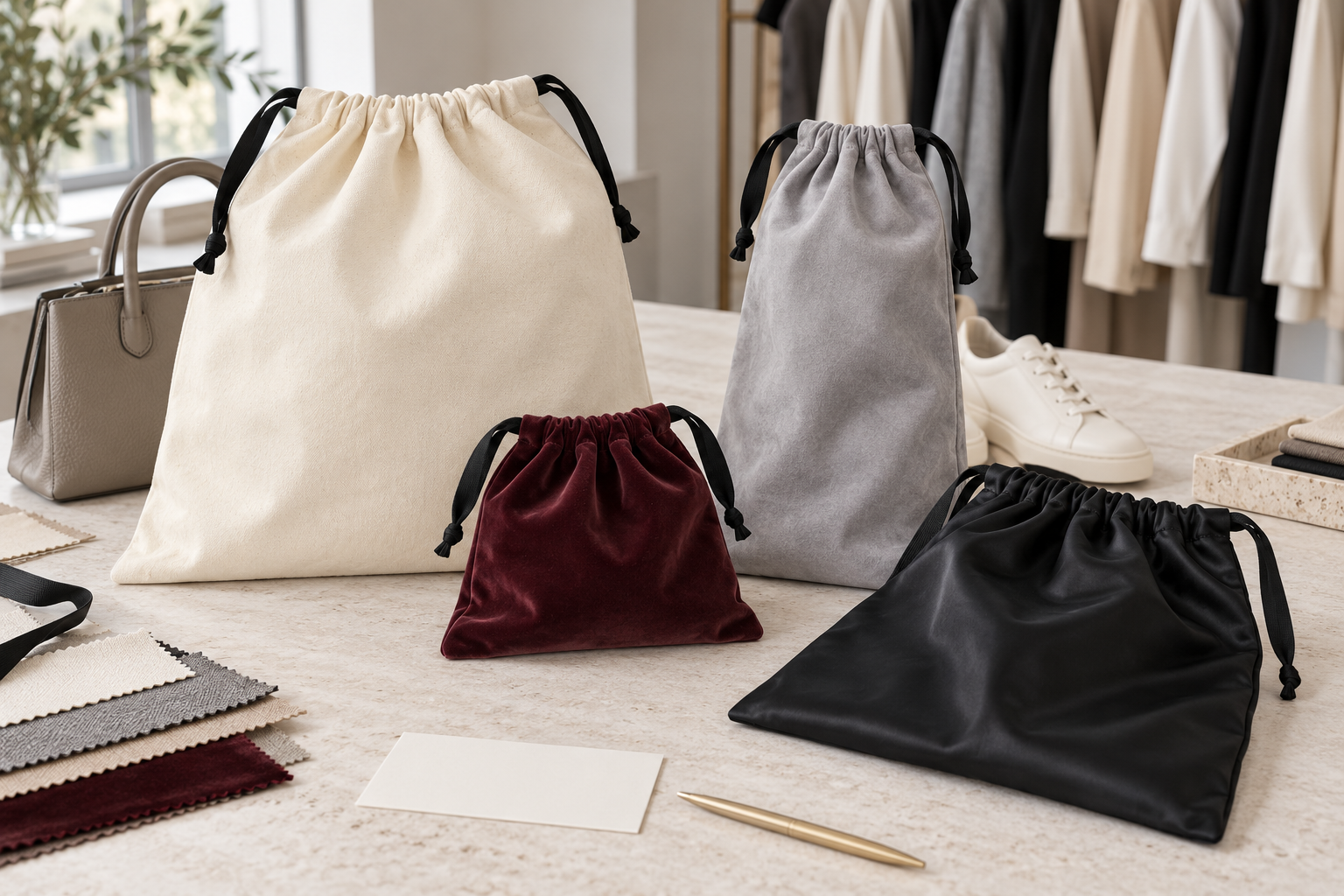
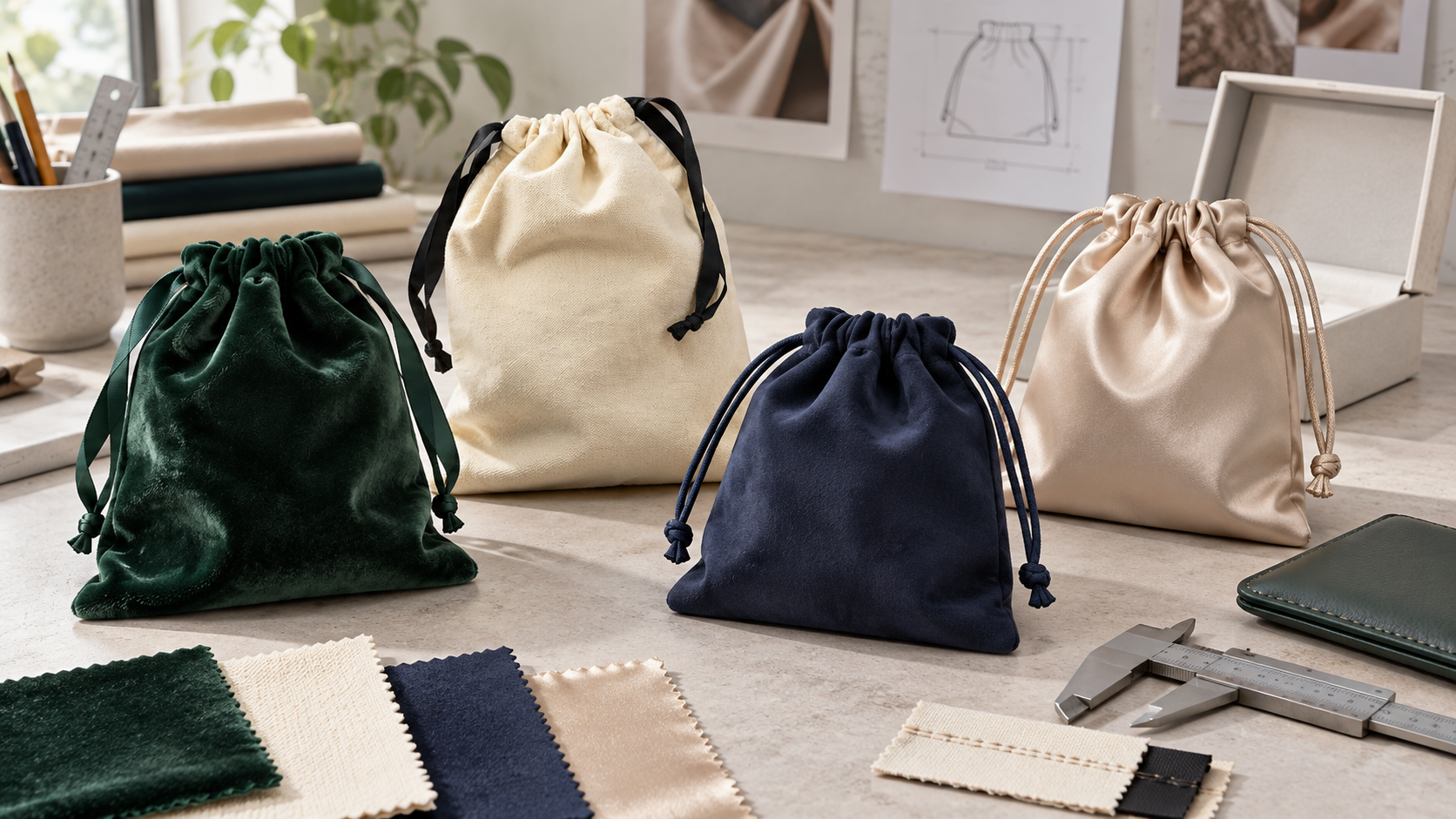
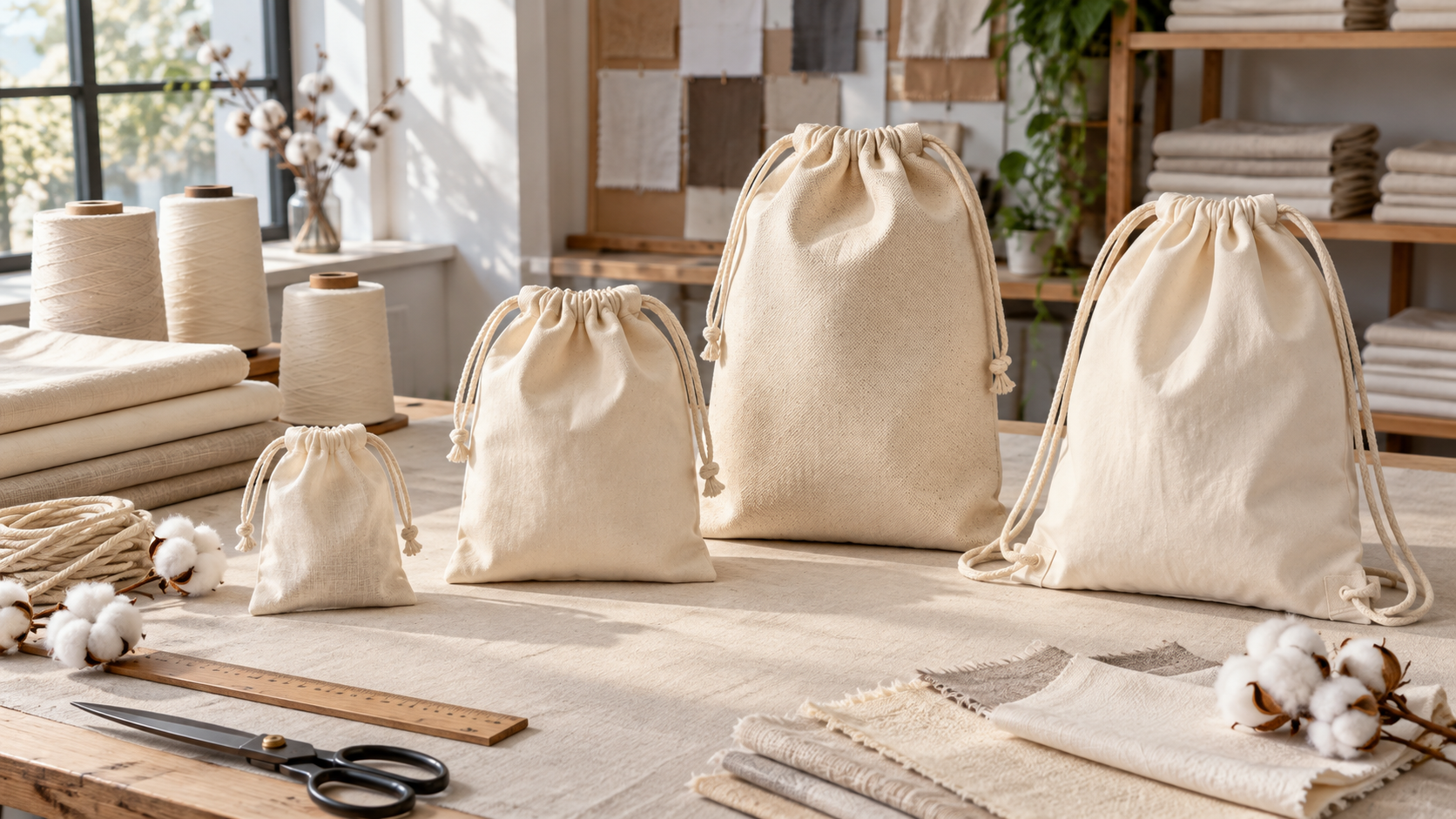
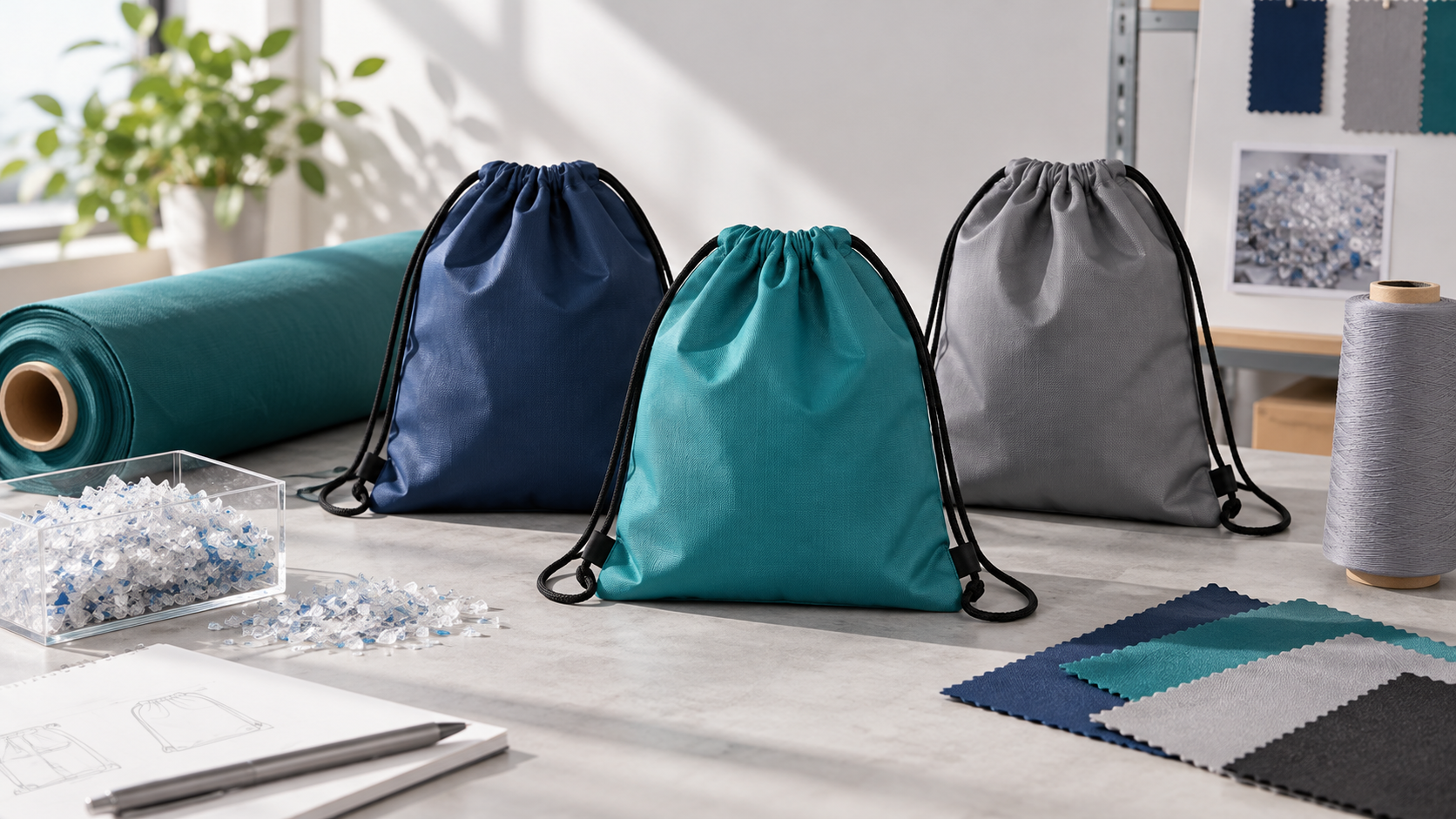
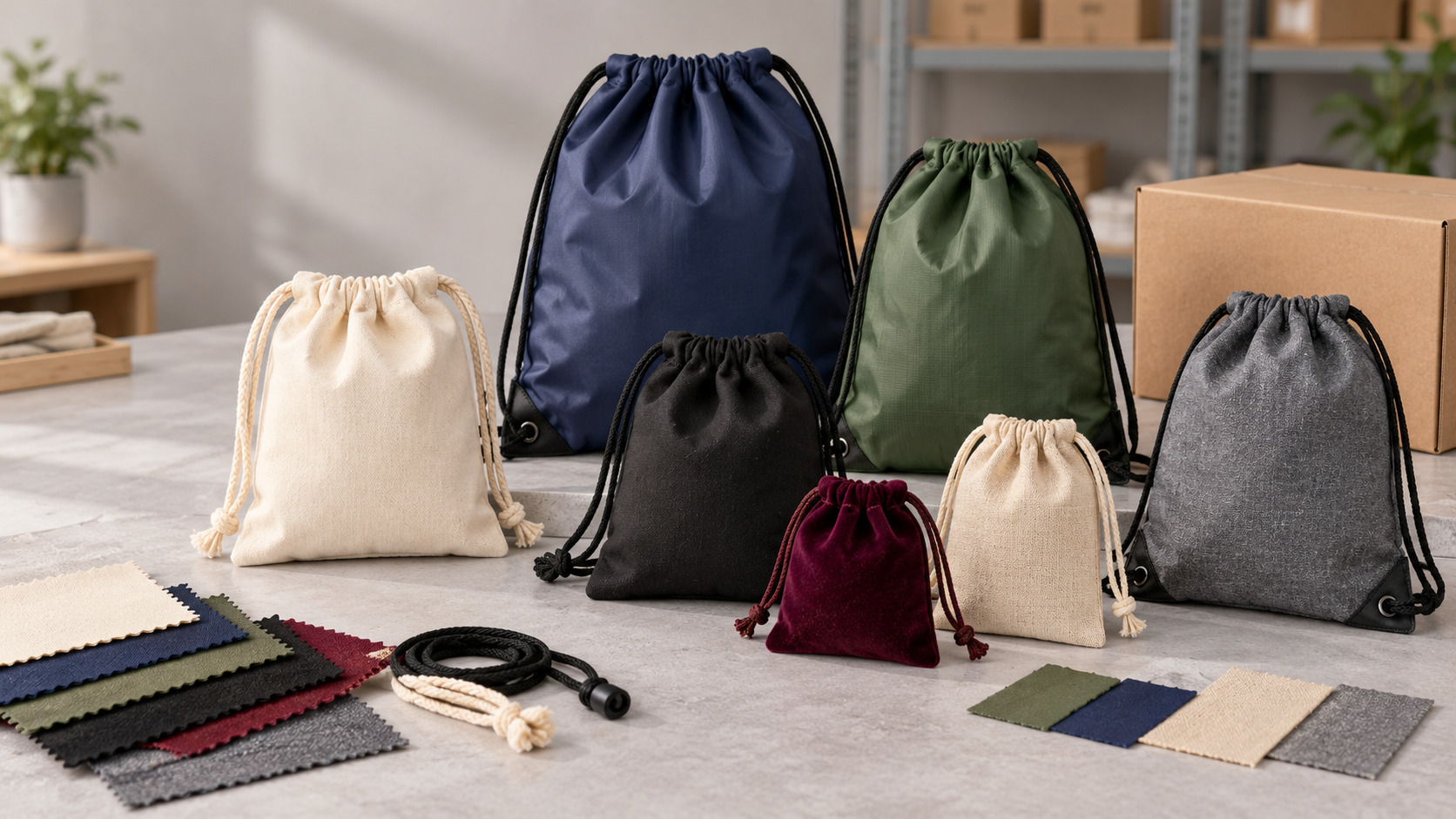
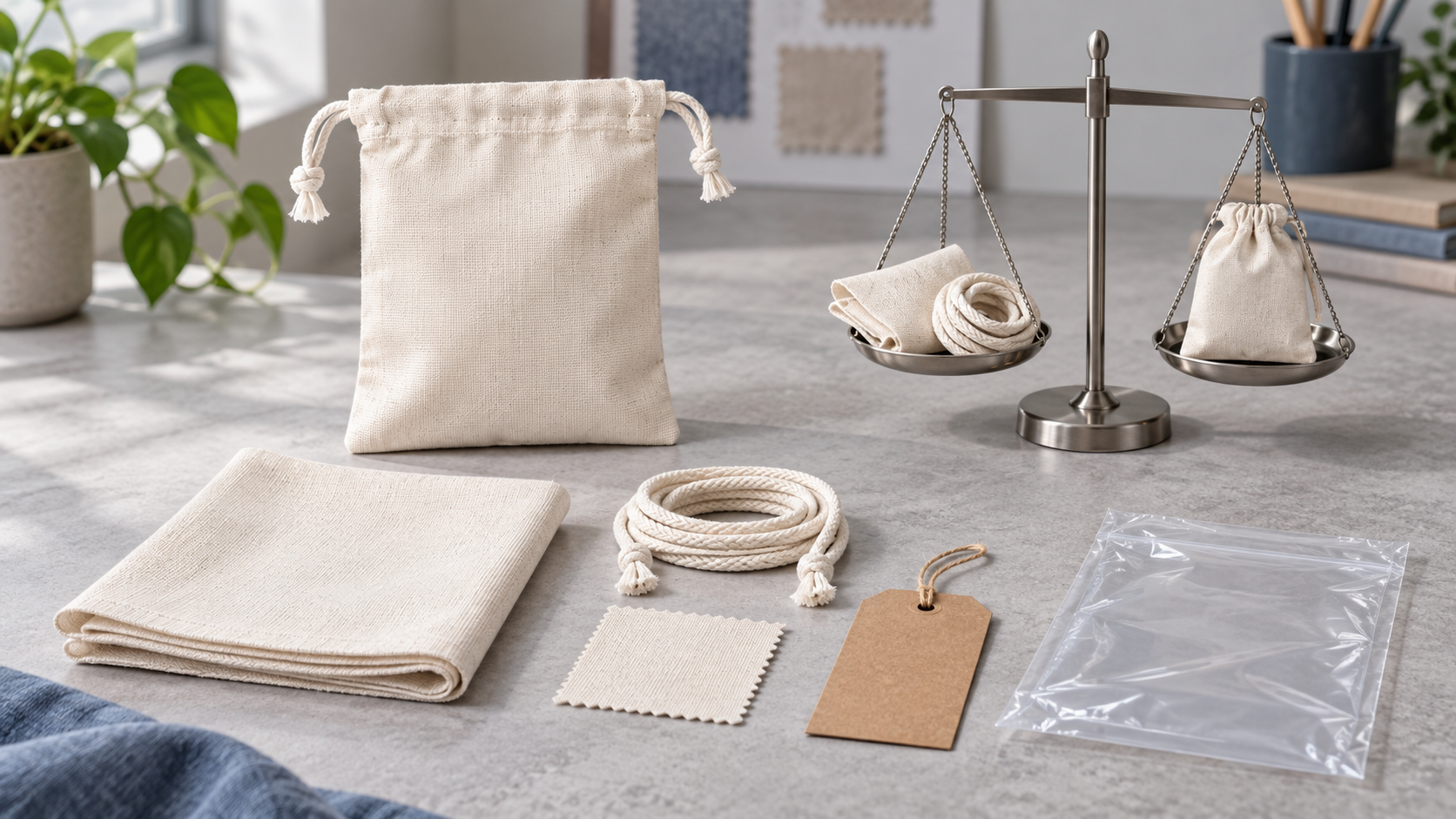
Image note: the hero is a generated cost-planning illustration informed by an internal photograph of a plain, unbranded pouch. It does not establish material identity, unit pricing, MOQ, inventory, capacity, timing, site ownership, certification, testing or current SKU availability.