Last reviewed: September 28, 2026
Shopping bags began as a checkout convenience, but a modern retail bag has a much larger job. It carries products safely, supports the brand after the sale, affects packing and freight, and may create an environmental claim that the buyer must be able to explain. The useful question is no longer, "Which material sounds greenest?" It is, "Which bag performs the required job with the least unnecessary material and a credible plan for repeated use and end of life?"
This guide gives brand, retail, procurement, and sustainability teams a practical life-cycle decision framework. It does not replace a product-specific life-cycle assessment, and it does not repeat our separate guides about supplier selection, MOQ, printing, or canvas construction. Use the complete custom bag manufacturer guide for the broader OEM/ODM sourcing process.
Buyer quick answer
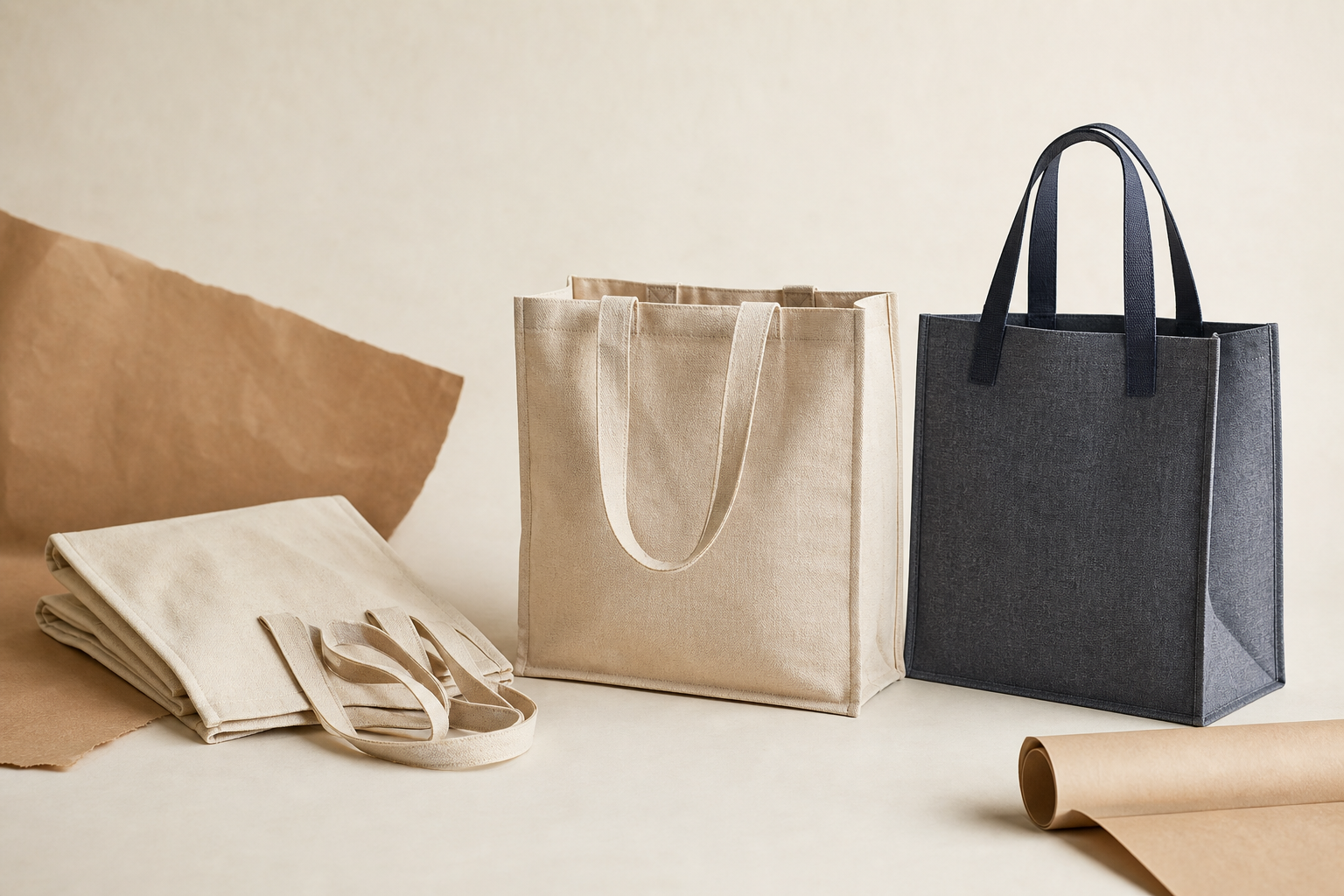
A more sustainable shopping bag is not identified by material name alone. Define one comparable service, such as carrying a specified load over a planned number of shopping trips. Then compare material weight, expected reuse, seam and handle durability, decoration, packing volume, transport, care, and a realistic end-of-life route in each sales market. Select the lowest-complexity construction that can reliably complete that service, and retain evidence for every public claim.
Give this article a clear role in your content system
Luckystar already has dedicated content for individual materials and buying tasks. The canvas shopping bag buyer guide covers canvas specification, while canvas versus cotton and canvas versus non-woven shopping bags compare narrower material choices. The sustainable shopping bag factory guide focuses on supplier execution.
This page owns a different intent: how a buyer creates a defensible sustainability decision before and during product development. That boundary prevents one broad article from competing with every material, factory, and wholesale page.
Start with a functional unit, not an environmental adjective
A fair comparison needs the same job for every option. "One shopping bag" is not enough because a lightweight checkout bag and a reinforced reusable tote may deliver very different amounts of service. Write a functional unit that includes:
- the typical product category and load weight;
- the bag size and useful volume;
- the expected number of trips or reuse cycles;
- the transport and storage conditions;
- the required presentation and branding result;
- the intended end-of-life market.
For example, a boutique may need a premium carrier that protects garments and is likely to be kept. A grocery program may prioritize moisture resistance, load strength, folding, and frequent reuse. An event giveaway may fail the sustainability objective if recipients already own many similar bags. The functional unit makes these differences visible before artwork and pricing dominate the discussion.
Build the baseline before claiming improvement
"Better" requires a comparison. Record the current bag material, weight, dimensions, handle, print coverage, packing quantity, damaged-bag rate, and the proportion that customers appear to reuse. If measured customer-use data is unavailable, label the estimate as an assumption rather than turning it into a fact.
A practical baseline can be simple. Weigh five current samples, record packed-carton dimensions, review complaints about handle or seam failure, and ask store teams how customers use the bag. These observations are more useful than an unsupported statement that a replacement is automatically eco-friendly.
Compare shopping bag systems, not isolated materials
| Bag system | Useful strength | Main decision risk | Evidence to request | Best-fit use |
|---|---|---|---|---|
| Kraft paper carrier | Retail presentation and widely understood disposal route in many markets | Moisture, handle reinforcement, heavy print coverage, or mixed components may limit performance or recovery | Paper specification, recycled-content evidence if claimed, load test, ink and handle construction | Dry, moderate-load retail purchases |
| Lightweight film bag | Low material weight and efficient packing | Litter risk, short use, regulation, and limited local film collection | Gauge, resin and recycled-content declaration, local legal review, collection route | Only where legally permitted and operationally justified |
| Non-woven or woven PP bag | Good strength-to-weight ratio and repeat-use potential | A heavy bag that is rarely reused can lose its intended advantage | Fabric weight, load-cycle result, recycled-content evidence, component map | Grocery, events, and value-focused retail reuse |
| Recycled-polyester foldable bag | Portable, washable, and easier to carry for repeated trips | Recycled claim traceability and mixed trims require control | Fiber declaration, transaction or batch evidence, wash and load testing | Frequent-use programs where compact storage matters |
| Cotton or canvas tote | Strong tactile value, repairability, and long brand visibility when retained | High material mass is difficult to justify if the bag is overbuilt or seldom used | Fiber, fabric weight, dye and finish, seam test, care plan, expected use scenario | Merchandise, fashion retail, gifting, and long-use programs |
| Jute bag | Rigid natural texture and strong shelf presence | Lamination, odor, fiber shedding, moisture, and component separation | Fiber and coating specification, seam and handle test, storage conditions | Gift, home, food, and rustic premium presentation |
No row is a universal winner. The decision changes with the required service, local energy and waste systems, transport distance, actual reuse, and end-of-life behavior. For product-specific material details, continue to the cotton shopping bag guide or the paper shopping bag guide.
Use six evidence gates before choosing a concept
| Evidence gate | Question | Useful record | Stop signal |
|---|---|---|---|
| Function | Can the bag carry the defined products and load? | Size, volume, load and use specification | The team cannot describe the real use case |
| Material efficiency | Is every gram needed for function or useful life? | Finished bag weight and component bill | Extra thickness is used only to look sustainable |
| Durability | Will handles, seams, print, and shape survive the planned cycles? | Load, cycle, wash, rub, and seam review | The repeat-use claim exceeds the test plan |
| Logistics | Does the design pack efficiently without damage? | Units per carton, carton cube, gross weight | Rigid features create avoidable shipping volume |
| End of life | Is the stated recovery route available to the intended customer? | Market-specific collection and component map | The claim depends on a system that does not exist locally |
| Claim evidence | Can each public statement be traced to a current document? | Specification, certificate, test, approval, and claim register | Marketing language is broader than the evidence |
Design repeat use into the physical bag
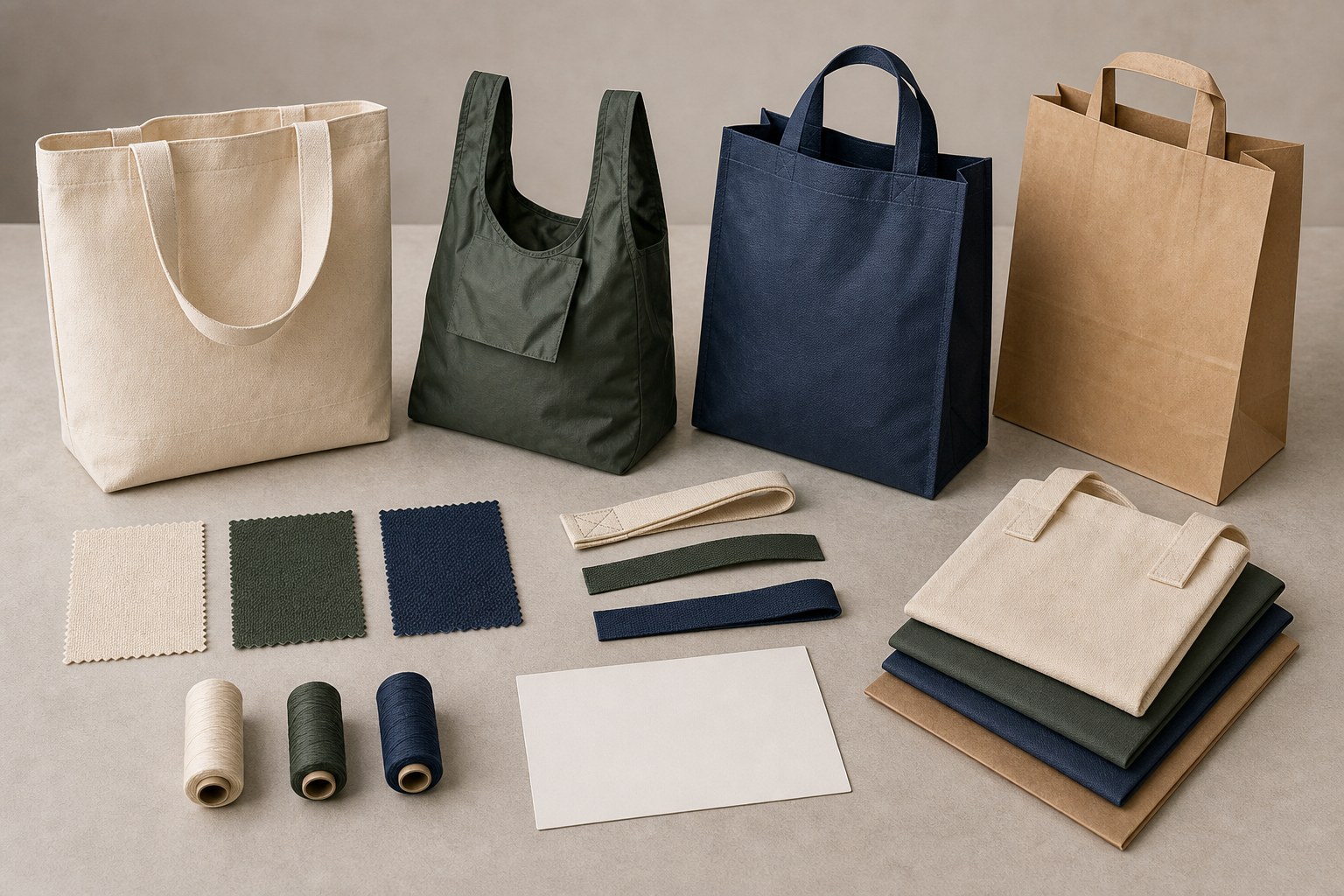
A reusable label does not make a bag reusable in practice. People keep a shopping bag when it is comfortable, appropriately sized, visually useful, easy to store, and strong enough to survive normal mistakes. A bag that is too large, too rigid, difficult to fold, painful to carry, or hard to clean may be discarded even if its material is durable.
Translate repeat use into specifications. Define handle length and width for the intended carry mode. Set the base and gusset for the actual products. Decide whether the bag needs a closure, pocket, washable finish, or compact fold. Avoid adding features just because they appear premium. Each added component brings material, assembly, potential failure, and a future separation question.
Right-weight the construction instead of maximizing it
Overbuilding can increase material and freight without increasing real use. Underbuilding creates failures and early disposal. The correct target is enough strength for the defined load and service life, supported by testing. Start with the lightest credible construction, then reinforce the known stress points rather than increasing every panel.
For textile shopping bags, pay special attention to handle attachment, seam allowance, stitch density, bottom shape, and localized reinforcement. The fabric weight guide explains why GSM or ounce weight cannot be evaluated alone. The reusable tote manufacturing process shows where construction decisions enter production.
Set durability tests around expected failure modes
A single static load test may miss the problem that ends the bag's useful life. Build a test plan around how the product could fail:
- repeated lifting to evaluate handle and seam fatigue;
- overload or shock loading for realistic customer behavior;
- rub or abrasion review at corners and printed areas;
- wash, wipe, moisture, or colorfastness checks where relevant;
- folding and unfolding for compact reusable formats;
- carton compression and transit review for paper carriers;
- visual inspection after the target use cycles, not only before them.
Record the method, load, number of cycles, conditioning, sample count, and pass criteria. A vague statement such as "strong and reusable" is difficult to repeat across reorders. A controlled test result can be added to the tech pack and inspection plan. Use the custom bag tech pack guide and the bag quality inspection checklist to structure those records.
Keep decoration compatible with useful life
Large print coverage, heavy coatings, laminated surfaces, metallic effects, patches, and mixed trims may support the brand, but they can add process steps, restrict recovery, or fail before the base bag. Choose the branding hierarchy first: which cue must be permanent, which information can be placed on a removable label, and which decoration is optional?
Approve decoration on the finished bag after folding, loading, rubbing, and any planned cleaning. Use the custom tote bag printing methods guide for process selection and the promotional tote design guide for artwork planning. For a broader brand-cue system across products, see custom bags as a branding system.
Measure packing efficiency before approving the design
A bag is transported before the customer uses it. Ask the factory for folded dimensions, pieces per inner pack, carton dimensions, net and gross weight, and photographs of the packed configuration. Compare concepts using both finished-bag weight and carton volume.
Small design changes can matter: removing an unnecessary rigid board, reducing handle bulk, nesting paper bags correctly, or changing the fold can improve container and warehouse efficiency. Do not reduce packing protection so far that products arrive creased, wet, or damaged. The relevant measure is a saleable bag delivered with no avoidable material or empty space.
Make end-of-life instructions market specific
"Recyclable" is incomplete without a place and a route. Collection systems vary by country and city, and multi-material components can change whether a bag is accepted. Map the base material, handle, reinforcement, coating, closure, label, and decoration. Then confirm which parts can remain together and which must be removed.
If no realistic recovery route exists, prioritize long useful life, repair where practical, and honest disposal guidance. Do not use a recycling symbol or broad claim as a substitute for this check. Review local requirements again before each market launch because regulation and collection conditions can change.
Control sustainability claims with an evidence register
| Proposed claim | Evidence needed | Better controlled wording | Review trigger |
|---|---|---|---|
| Contains recycled material | Material scope, percentage method, supplier or chain-of-custody evidence, batch linkage | State the verified percentage and the component it applies to | Material source or batch changes |
| Designed for reuse | Use case, load and cycle test, care instructions, construction specification | Describe the tested function instead of promising unlimited life | Size, handle, fabric, or factory changes |
| Recyclable | Component map and an available collection and processing route in the target market | Name the accepted material and local disposal condition | Market, coating, ink, handle, or label changes |
| Lower-impact option | Defined baseline, consistent boundary, data sources, assumptions, and review method | State the exact measured improvement and comparison basis | Baseline, supplier, logistics, or methodology changes |
| Biodegradable or compostable | Applicable standard, certification scope, required conditions, and local treatment route | Name the conditions and do not imply rapid breakdown in every environment | Material, certification, market, or facility access changes |
The evidence register should show the claim owner, supporting document, version, applicable SKU, market, approval date, and next review date. It keeps marketing, procurement, compliance, and the factory aligned when the design or supply chain changes.
Pilot the bag and measure behavior
A small controlled pilot can reveal whether the reuse assumption is realistic. Select representative stores, products, and customer groups. Track bag failure, complaints, repurchase or replacement, staff feedback, packing time, and customer retention signals. A simple follow-up question about whether the bag is still in use can be more valuable than an ambitious unsupported forecast.
Use pilot findings to remove unnecessary features, strengthen only the true failure points, adjust the carry experience, and update care instructions. Keep the pilot separate from a broad environmental claim unless the method and sample support that conclusion.
Prepare a sustainability-ready RFQ
Send suppliers one controlled brief rather than asking for the "most eco-friendly" option. Include:
- functional unit, load, size, volume, and intended reuse;
- target markets and relevant restrictions;
- material options and maximum finished-bag weight;
- handle, seam, reinforcement, closure, and care requirements;
- artwork size, colors, print coverage, and decoration method;
- durability tests and pass criteria;
- recycled-content or certification evidence required;
- component and end-of-life information;
- folded size, packing method, carton data, and destination;
- sample stages, approval owners, order quantity, and delivery date.
For factory due diligence, use how to choose a custom shopping bag manufacturer. For the complete cross-category workflow from RFQ through bulk production, return to the core custom bag manufacturer guide.
Common mistakes that weaken the program
- Ranking materials without a functional unit: the options do not deliver comparable service.
- Assuming reuse: a durable bag is not automatically carried again.
- Using extra thickness as proof: additional material must earn its place through function or useful life.
- Ignoring trims and decoration: the base material is only one part of the product.
- Skipping logistics: weight and packed volume are part of the system.
- Using one disposal message globally: collection conditions differ by market.
- Letting claims outrun evidence: specific, limited wording is more credible than a broad promise.
- Failing to update records: a material, supplier, or construction change can invalidate prior evidence.
FAQ about sustainable shopping bag decisions
Which shopping bag material is the most sustainable?
There is no universal winner. The answer depends on the service delivered, material weight, production, transport, actual reuse, durability, and local end-of-life route. Compare complete systems using the same functional unit.
Is a cotton tote always better than a plastic bag?
No. Cotton and plastic systems have different impacts and functions. A cotton tote needs enough useful reuse to justify its material and production. A lightweight plastic bag may use less material but can create litter, regulation, and collection problems. The use case and local system determine the responsible choice.
How can a brand prove that a shopping bag is reusable?
Define the intended load and cycles, test the complete finished bag, record the method and result, provide suitable care guidance, and avoid promising more than the test supports. Actual pilot-use data makes the claim stronger.
What documents should be requested for recycled content?
Request a clear material and component scope, the stated percentage and calculation basis, current supplier or chain-of-custody evidence where applicable, and a way to link the evidence to the production batch. Requirements vary by claim and market.
Should every shopping bag carry a recycling claim?
No. Use a recycling claim only when the components and local collection route support it. If recovery is uncertain, focus on durability, repeated use, simple components, and accurate disposal information.
Turn sustainability intent into a testable bag specification
Review the current custom shopping bag range to shortlist candidate constructions before the functional unit and evidence plan are approved. A useful shopping bag program connects customer behavior with engineering and evidence. Define the job, compare complete systems, right-weight the construction, test the likely failures, simplify decoration, check logistics, map local end of life, and control every claim. This approach produces a bag that procurement can source, stores can use, customers may keep, and the brand can explain honestly.
Research basis: life-cycle guidance consistently recommends evaluating the full system rather than assuming one material wins every category. See the UNEP Life Cycle Initiative shopping bag recommendations and the UNHCR sustainable packaging sourcing guidelines.
Request a shopping bag sustainability review
Send the products carried, load, size, intended reuse, target markets, preferred materials, artwork, quantity, evidence requirements, packing limits, and delivery plan. Luckystar can help convert the brief into a sample and production specification for custom shopping bags.
Email a prefilled shopping bag sustainability brief

Ningbo Luckystar Commodities Co., Ltd.
Tel / WeChat / WhatsApp: +86 15957446693
Email: sales@luckystarcreation.com
Address: Room 2202, Meijin Building, No. 125 Mingyuan Lane, Ningbo, Zhejiang, China 315104