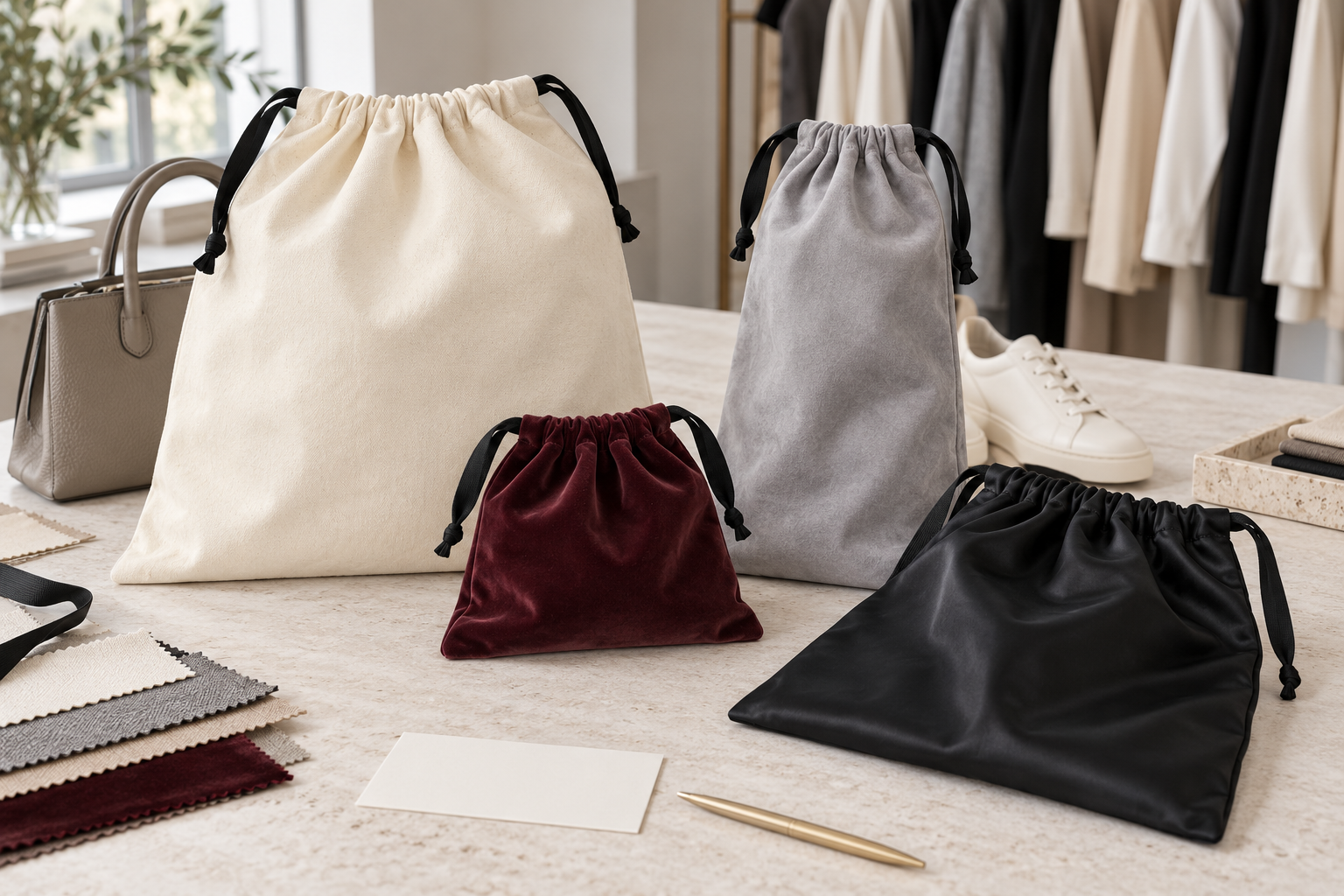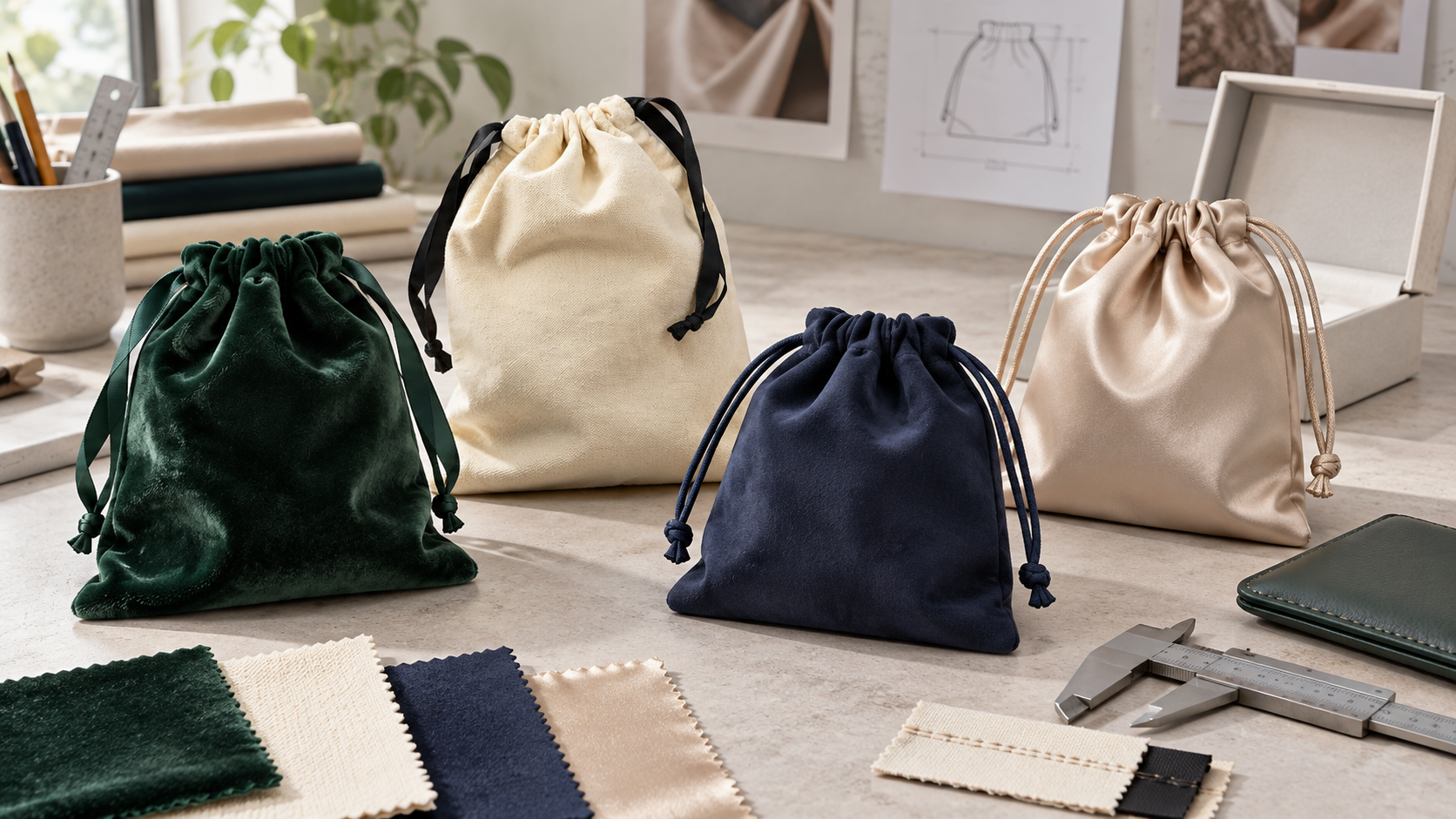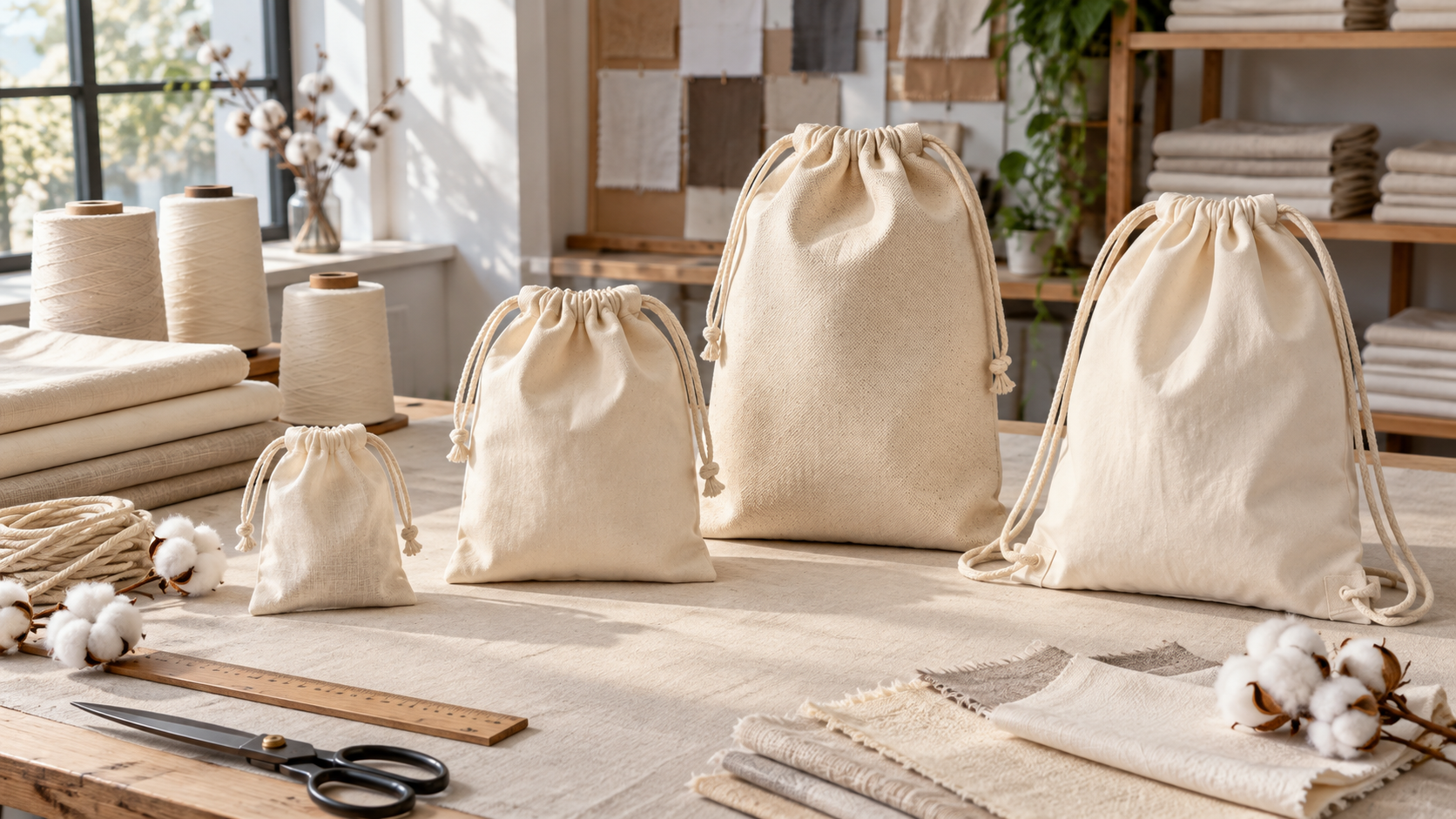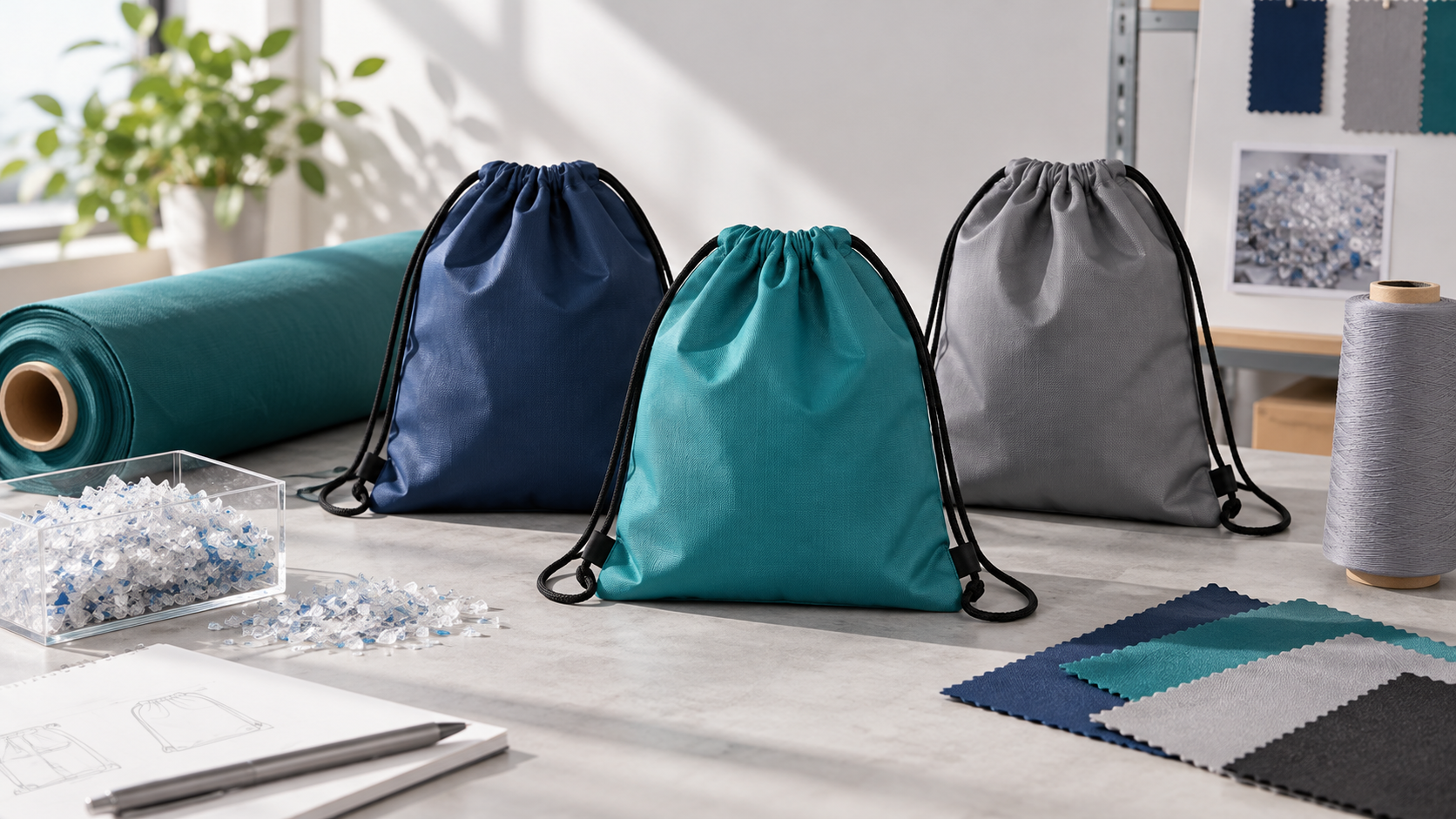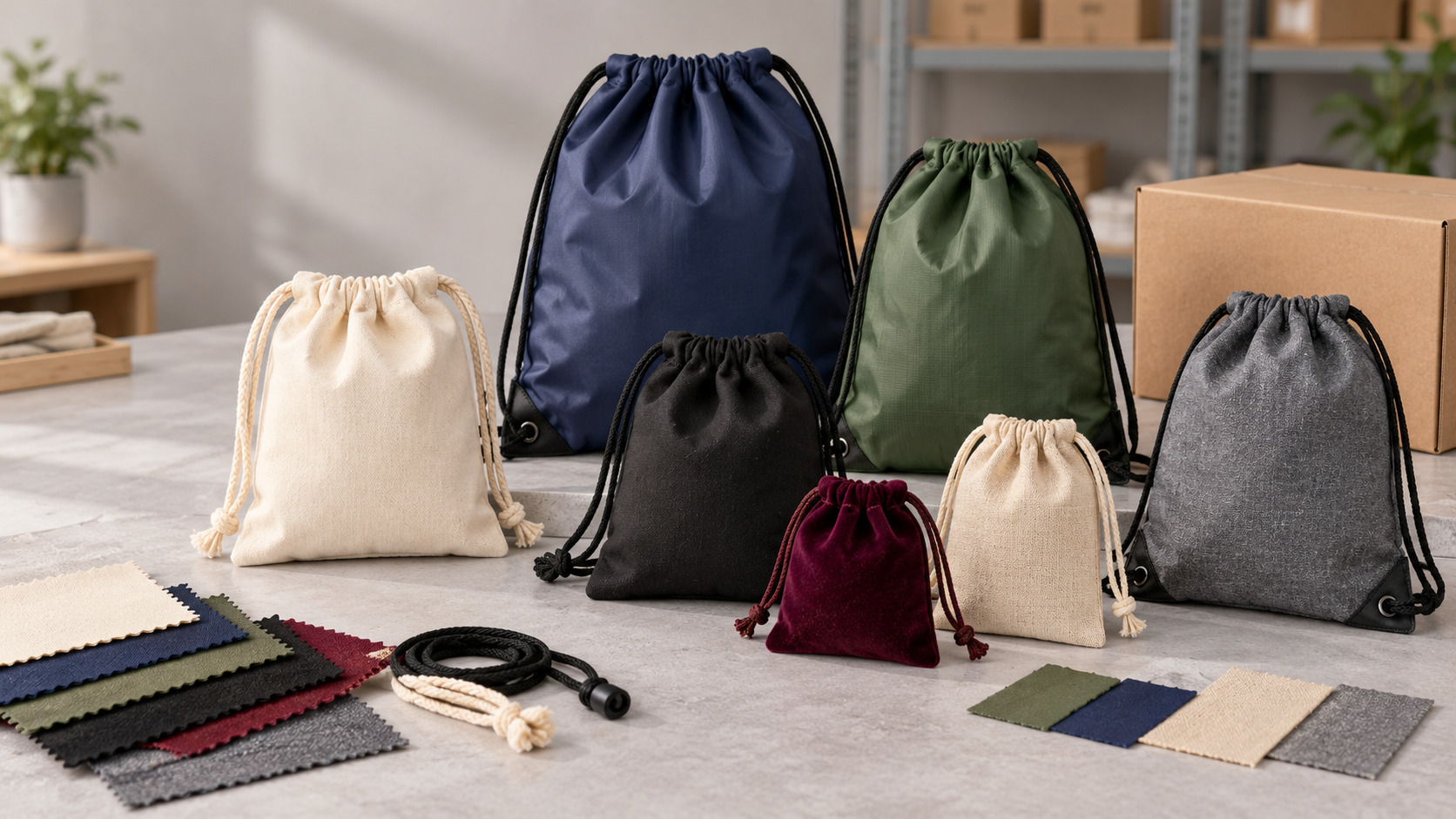
Four cosmetic bags in four colors do not automatically form a collection. They may only be four unrelated SKUs sharing a purchase order. A real collection gives each item a reason to exist, creates a recognizable family at first glance and limits unnecessary variation behind the scenes.
Planning an order? Send the collection brief and SKU plan already known. Include the customer and channel, proposed product roles, size and payload ladder, shared design rules, material and color direction, forecast by SKU, destination and target launch date.
Learning how to design a cosmetic bag collection means working at two levels at once. The customer sees size, shape, color and function. The manufacturer sees patterns, materials, zippers, decoration, components, minimum quantities and line changes. The strongest range connects both views.
This guide focuses on assortment architecture rather than repeating general advice about one bag’s fabric or zipper. Buyers can browse LUCKYSTAR’s custom cosmetic bag collection for shape references and use the Custom Bag Manufacturer Guide when planning the wider OEM/ODM relationship.
Quick answer: build a range with roles, rules and limits
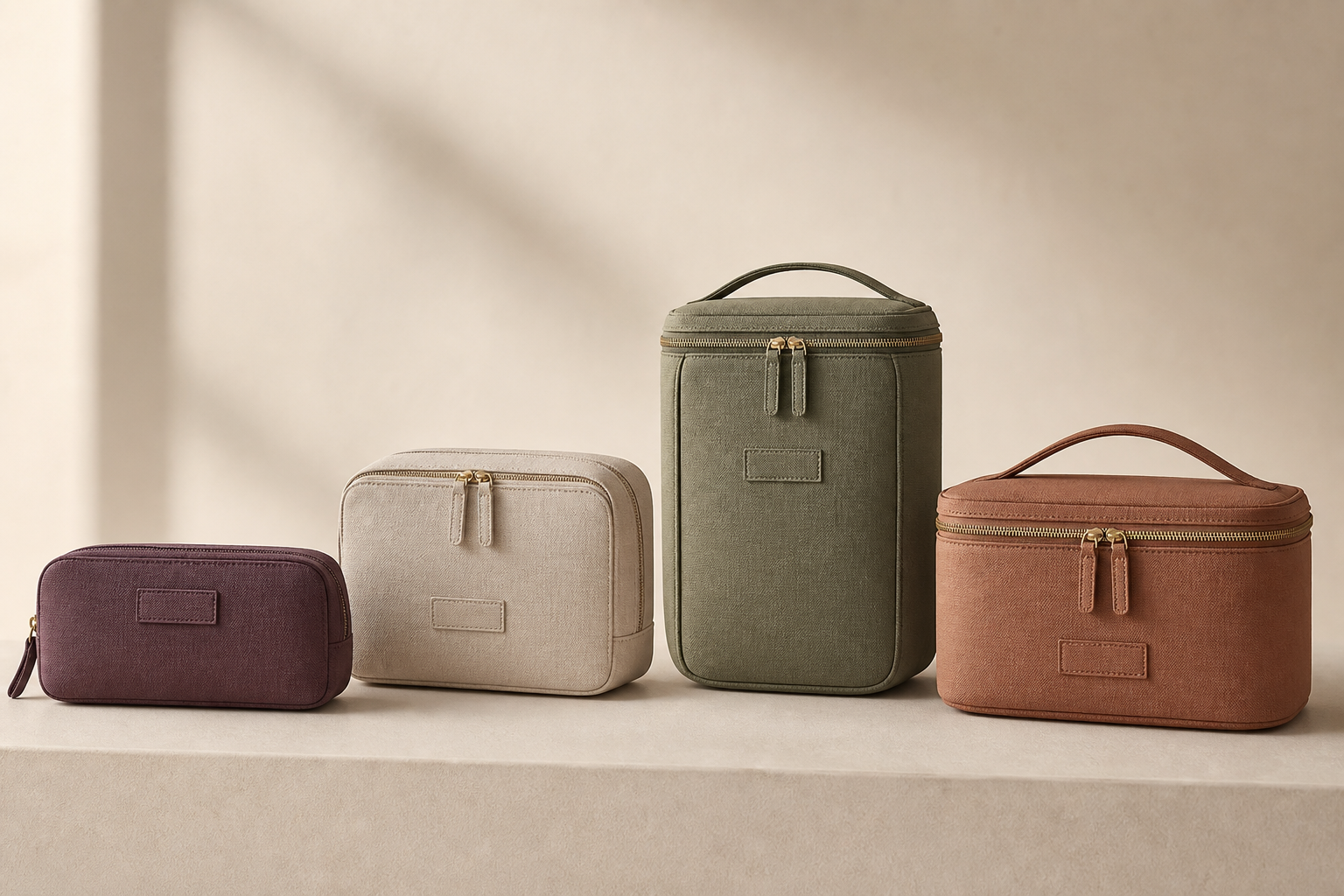
Start with a small product-role map.Decide which style is the accessible entry item, which one is the everyday core, which one solves travel or organization, and which item creates visual interest for the campaign. Give each bag a defined user, payload, channel, target price and volume expectation.
Then write the rules that make the items related: perhaps one corner radius, one zipper-pull family, a consistent logo zone, two approved linings and a controlled palette. Finally, set limits on how many sizes, materials, colors and artwork versions can launch. A collection becomes clearer when variation is deliberate rather than unlimited.
| Collection role | Commercial purpose | Possible cosmetic bag format | Question it must answer |
|---|---|---|---|
| Entry | Accessible add-on,small gift or trial purchase | Slim zip pouch or compact soft case | What is the simplest useful introduction to the range? |
| Core | Broadest everyday demand and repeatable volume | Medium box pouch with practical opening | Which style solves the most common routine? |
| Travel / utility | Higher capacity or organization | Tall case, double compartment or handled organizer | Which use case is not served by the core bag? |
| Hero | Campaign focus,strong visual story or premium upsell | Structured vanity case or distinctive construction | What gives the collection a memorable point of view? |
| Capsule / seasonal | Freshness without rebuilding the permanent line | Selected core silhouette in a controlled material or color update | What can change temporarily while the family remains recognizable? |
1. Write the collection brief before drawing every style
The collection brief should describe the business problem before the visual solution. Is the range sold as standalone accessories, paired with skincare sets, used for gifts with purchase or developed for travel retail? Does the customer buy one bag, choose between sizes or collect several over time? Will the assortment live for two seasons or support repeat orders for years?
Define what the line is not. A tightly edited wellness collection may not need a glossy statement case. A mass campaign range may not support four custom hardware finishes. Boundaries prevent the design team from developing attractive samples that do not belong in the same commercial plan.
| Brief field | Decision to record | Why the collection changes |
|---|---|---|
| Customer and occasion | Daily routine, gifting, travel, professional use or promotion | Controls capacity, access, durability and price expectations |
| Channel | Retail, ecommerce, GWP, subscription, PR or wholesale | Changes merchandising, packaging, information and forecast logic |
| Range lifetime | Permanent core, seasonal launch or limited capsule | Changes tooling,component commitment and repeat-order priorities |
| Price architecture | Entry, core and premium target retail/landed-cost bands | Prevents every SKU from accumulating the same expensive features |
| Launch scope | Maximum styles, colors and market versions | Keeps sampling, MOQ and inventory within a workable plan |
| Brand rules | Signature shape, trim, logo, palette and material direction | Creates family recognition across different silhouettes |
2. Create an assortment architecture, not a list of ideas
Put every proposed SKU into a matrix with role on one axis and use case or capacity on the other. If two styles serve the same user, payload, price and channel, one may be redundant. If no style supports taller skincare bottles or a quick daily carry, the range has a functional gap.
A useful first launch may contain three or four silhouettes rather than ten. The entry pouch attracts broad volume.The core bag carries the collection. The travel or organizer style solves a distinct need. The hero style creates campaign imagery or a premium anchor. Additional ideas can remain in the development pipeline until sales data justifies them.
3. Build a size ladder from payloads, not adjectives
“Small, medium and large” is too vague for pattern development. Assign representative contents to every size. A mini pouch might carry lip products and a compact. An everyday size may need foundation, brushes and a small tube. A travel case may need upright bottles, compartments or a handle. Test the largest expected objects and the total filled weight.
Leave enough access and zipper clearance, but avoid creating three sizes whose usable capacities feel almost identical. The difference should be visible in photographs and meaningful in use. When a style is designed to hold a beauty set, follow the payload and pack-out method in Custom Cosmetic Bag Packaging for Beauty Brands.
| Illustrative tier | Payload definition | Structural priority | Approval method |
|---|---|---|---|
| Mini / entry | Lip products, compact,keys or small daily items | Efficient opening and low bulk | Load the approved small-item set and check removal |
| Everyday / core | Routine makeup assortment plus one or two small skincare items | Flexible volume and visibility | Compare loaded and empty appearance |
| Organizer | Mixed tools, tubes, compacts and selected bottles | Controlled compartments without wasted space | Use every pocket and confirm the largest item fits |
| Travel / hero | Taller bottles, full routine or gift assortment | Base stability, handle load and protected access | Carry, close,pack and unpack at target weight |
4. Define the visual DNA of the collection
Consistency does not mean making the same rectangle four times. Choose a few repeatable cues that survive changes in scale and structure. A collection might share softly rounded corners, a narrow piping profile, a distinctive cord pull, a fixed logo proportion and one metal finish. The tall case and slim pouch can look related without having identical patterns.
Separate signatures from conventions. A zipper is a convention; the way its pull, tape color and end treatment work together may be a signature. A logo patch is not automatically distinctive; its material, shape, scale and placement can become a repeatable rule.
| Design-DNA element | Collection rule example | Production control | Allowed variation |
|---|---|---|---|
| Silhouette language | Soft rectangular forms with one family of corner radii | Pattern templates and finished measurement points | Height,depth and opening type by role |
| Zipper and puller | One chain finish and pull shape across permanent styles | Approved component references and strength/function checks | Tape color or pull cord by colorway |
| Logo zone | Centered lower-front placement at a controlled visual proportion | Placement coordinates, artwork size and tolerance | Method can change only when material requires it |
| Edge detail | Consistent narrow piping or clean turned edge | Cord diameter,seam position and color reference | Selected premium SKU may use contrast piping |
| Interior cue | One lining family with a repeated pocket shape | Lining quality, pocket dimensions and stitch layout | Pocket count follows the product role |
5. Decide what should be shared and what should be unique
Shared components improve consistency and can consolidate purchasing. One lining, zipper chain, slider finish, label and thread family may serve several silhouettes. Unique features should earn their complexity by improving use, price position or recognition.
Do not force commonality when it damages performance. A tall travel case may need a stronger handle attachment than a small pouch. A wide-opening organizer may require a different zipper length and construction. Share the specification where technically suitable, not merely because the items appear together in a presentation.
| Component | Good candidate to share? | Reason to differentiate | Collection decision |
|---|---|---|---|
| Outer material family | Often, across core styles | Hero or travel performance needs another construction | Limit the launch to one core family plus one justified exception |
| Lining | Yes,when use and care needs align | A spill-focused or padded style needs different performance | Use one common lining unless the test brief requires another |
| Zipper hardware | Often for finish and pull identity | Chain size,opening load or water-control target differs | Share visual finish while specifying the correct technical size |
| Logo execution | Preferably | Material surface cannot support the same process | Keep logo proportion and zone stable even if method changes |
| Internal organization | Only selected details | Every role carries a different payload | Repeat one pocket language, not one identical layout |
6. Build a color system before multiplying SKUs
A palette is not the same as an SKU plan. Six attractive colors across four silhouettes create twenty-four combinations before market labels or logo versions are added. Forecast and MOQ may not support that breadth.
Divide colors into permanent neutrals, a brand anchor and seasonal accents. The core bag may carry the widest palette because it has the strongest forecast. The hero style may launch in one or two deliberate colors.An entry pouch can test an accent before it is extended across the range.
| Color strategy | Entry pouch | Core bag | Travel/hero | SKU effect |
|---|---|---|---|---|
| Every style in every color | 4 colors | 4 colors | 4 colors | 12 SKUs before artwork or market splits |
| Role-led edited palette | 2 colors | 4 colors | 2 colors | 8 SKUs with more forecast per combination |
| Core + seasonal test | 1 seasonal accent | 3 permanent colors | 1 brand anchor | 5 focused SKUs and a controlled learning vehicle |
Review the quantity and timing consequences in Cosmetic Bag MOQ and Production Time before approving the final color matrix.
7. Create a real price ladder
If every bag uses the same material, hardware and number of features, the collection may lack a meaningful price ladder. Start with target landed cost and retail position by role. Then allocate value where the customer notices it.
The entry pouch can use a simple construction and the same recognizable puller. The core style may add lining and one useful pocket. The premium organizer might justify padding, a handle and more controlled internal structure. Avoid downgrading the entry item until it feels disposable; it still introduces the brand.
| Tier | Keep consistent | Add value selectively | Avoid |
|---|---|---|---|
| Entry | Brand color logic, clean logo and reliable zipper | Efficient shape and one useful interior detail | Thin, unstable construction that weakens the whole range |
| Core | Signature form, trim and material family | Lining,better access and practical pocket | Features that duplicate the premium role |
| Premium / hero | Recognizable design DNA | Structure, handle, organization, special finish or larger format | Decoration with no functional or visual purpose |
Use How Much Do Custom Bags Cost? to connect the price ladder with material, labor, setup, packing and volume rather than comparing unit prices without a specification.
8. Select materials as a portfolio
Material decisions should support the hierarchy and supply plan. One woven textile may cover entry and core styles, while a coated or structured material creates the hero. Alternatively, the whole permanent line can share one surface and rely on silhouette for differentiation.
Evaluate color availability, cutting yield, logo compatibility, lining, cleaning, repeat-order continuity and minimums across the full range. A material that works beautifully on a flat pouch may crease on a tall structured case. Read Best Materials for Custom Cosmetic Bags for a wider material framework and PU vs Polyester Cosmetic Bags for two common systems.
If moisture protection is part of the collection brief, define which styles need easy-wipe, splash or containment performance. The Waterproof Cosmetic Bag Manufacturing guide explains why the finished construction—not a material label—determines the claim.
9. Prototype the system in the right order
Do not sample every color and SKU at once. Begin with the style that contains the most important design DNA or the highest construction uncertainty. That may be the core bag, because it carries volume, or the hero, because its structure defines the family.
Approve the base material, corner language, zipper, logo zone and construction principles on that style. Then develop size or silhouette extensions. Use color swatches and logo strike-offs before sewing complete duplicates. This reduces the number of expensive full samples while keeping the collection review physical.
| Development stage | What to build | Decision to close | What waits |
|---|---|---|---|
| Architecture mock-up | Simple volume models or adapted references | Roles, size spacing and obvious duplication | Final colors and decorative details |
| Anchor prototype | Core or hero style in representative material | Design DNA,construction route and payload fit | All colorway duplicates |
| Extension prototypes | Remaining silhouettes using controlled shared details | Family coherence and role-specific performance | Final market packaging |
| Color and logo approvals | Swatches, lab dips, print or embroidery strike-offs | Palette, artwork, finish and tolerance | Unnecessary full-bag color samples |
| Pre-production collection | One controlled reference per approved SKU or agreed representative set | Specification, packaging,quality and production handover | Bulk release until blocking issues close |
The Custom Bag Sample Development Process provides a revision and approval structure for keeping sample evidence connected to specifications.
10. Review the collection together, not one sample at a time
Place all prototypes, swatches, trim and packaging references on one table. A bag can look successful alone and still weaken the range. Check whether two colors are too similar, whether the size ladder reads clearly and whether the hero still belongs beside the core.
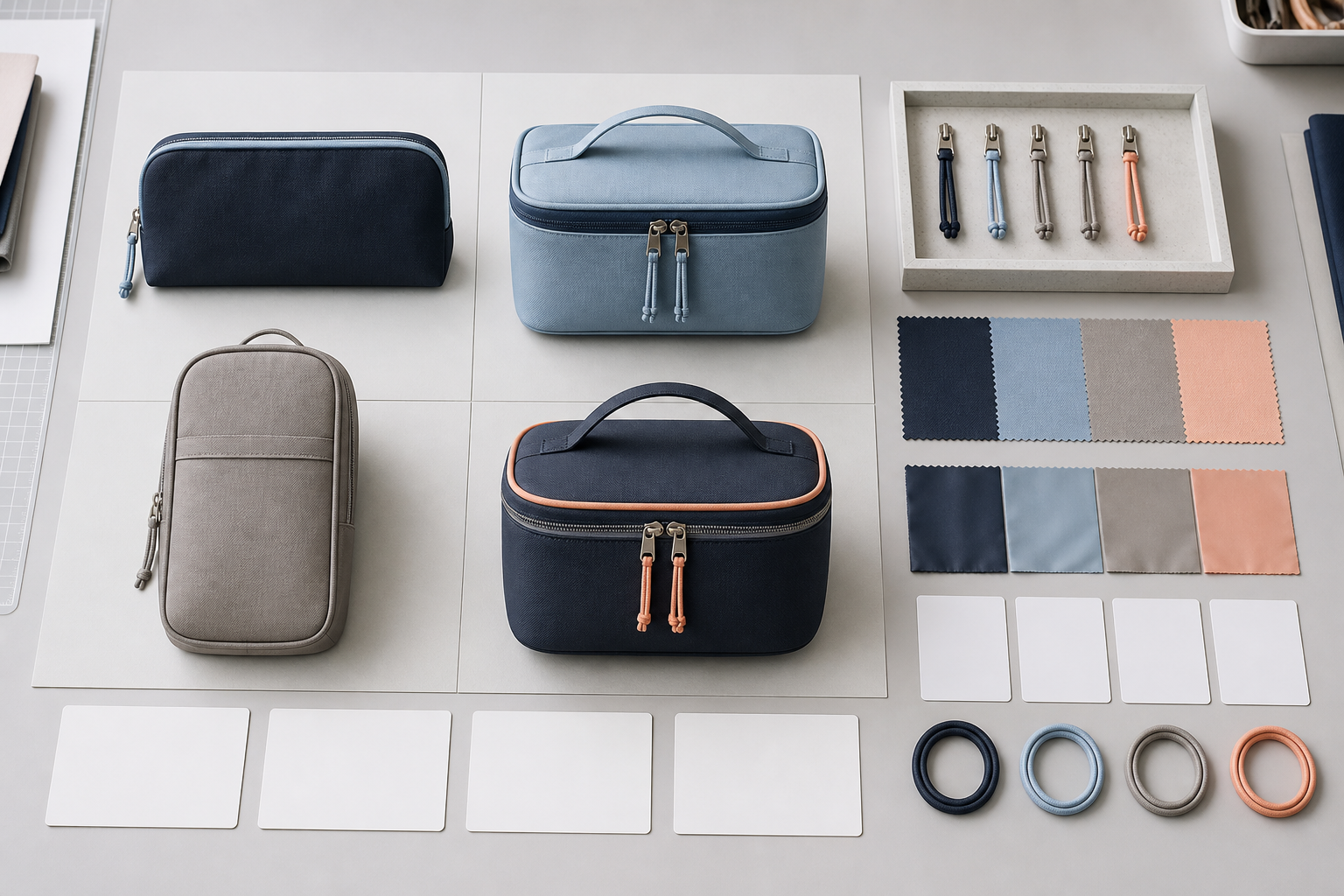
Run five reviews. The visual review checks family recognition. The functional review loads each role with its intended contents. The commercial review examines price and forecast. The manufacturing review checks shared components, material yield and operations. The merchandising review considers how the line appears on a shelf, product page or campaign image.
11. Control collection-level packaging and merchandising
Packaging should help customers understand the hierarchy without creating a unique box for every SKU by default.A common hangtag structure can carry size-specific information. A shared sleeve format may adapt across two sizes. Ecommerce photography should show scale consistently so the customer understands why the organizer costs more than the entry pouch.
When bags hold beauty products, packaging is part of the product system rather than a final decoration step. Link every set SKU to its payload, insert, label and carton recipe using the beauty-brand cosmetic bag packaging guide.
12. Plan MOQ, inventory and repeat orders at collection level
Every new combination of style, color, logo and packaging can become a separate production or inventory unit. Build the SKU matrix before quotation and give each combination a forecast. Use common linings, zipper finishes or packaging structures where they genuinely fit, then concentrate custom variation in the visible areas that matter.
Design repeatability into the permanent line. Record material and component references, pattern revisions, color standards and approved samples. Seasonal accents can then change on top of a stable base rather than reopening every construction decision.
Why choose LUCKYSTAR to develop a cosmetic bag collection?
LUCKYSTAR can help buyers move from individual ideas to a coordinated, manufacturable product family. We connect range planning with material sourcing, pattern development, component strategy, sampling, production and quality control.
- Collection architecture support: styles can be reviewed by customer, use case, size, price and channel before sampling expands.
- OEM and ODM flexibility: brands can combine original concepts with production-proven starting points where appropriate.
- Shared design-system development: materials, zipper pulls, logo zones, linings and edge details can be coordinated across silhouettes.
- Payload-led pattern work: every size can be checked against representative contents and intended handling.
- Edited color and SKU planning: the team can identify where variation creates separate minimums or production paths.
- Controlled sampling: anchor styles, extensions, swatches and strike-offs can be sequenced to close risk without making every possible sample.
- Bulk quality handover: shared rules and style-specific tolerances can become incoming, in-line and final checkpoints.
- Broader program coordination: cosmetic bags can be developed alongside selected items from LUCKYSTAR’s Product Range.
Explore LUCKYSTAR’s custom cosmetic bags product page and send your intended customer, channels, style count, target prices, forecast, launch date and visual references. The How to Choose a Cosmetic Bag Manufacturer guide provides additional supplier-evaluation criteria.
Recommended collection-development workflow
- Define customer, use cases, channel, range lifetime and commercial targets.
- Assign entry, core, travel/utility, hero and optional capsule roles.
- Build a size and payload ladder that gives every silhouette a distinct job.
- Write the collection’s visual-DNA rules and permitted exceptions.
- Choose which materials, trims and construction details are shared.
- Edit the color matrix and calculate the real number of finished SKUs.
- Create a price ladder and allocate features according to product role.
- Prototype an anchor style, then extend the approved system.
- Review the complete collection visually, functionally, commercially and operationally.
- Freeze specifications, packaging, allocations, quality standards and launch schedule.
The Custom Bag Manufacturing Process explains how the approved collection moves from development into materials, bulk work, inspection and delivery. Use the Custom Bag Quality Inspection Checklist to define shared and style-specific acceptance points.
Frequently asked questions
How many styles should a cosmetic bag collection include?
There is no universal number. A focused first range may work with three or four distinct roles. Add styles only when they serve another customer, payload, price point or channel and have sufficient forecast to support production and inventory.
Should every bag use the same material?
Not necessarily. One core material can create coherence and purchasing efficiency, while a hero style may justify another construction. The exception should support performance or positioning, and still follow the collection’s visual rules.
How many colors should launch?
Start from forecast and minimums, not palette size alone. Give the strongest core style more colors and keep lower-volume or premium silhouettes edited. Remember that every style-color combination becomes another SKU before artwork and market variants.
Should all sizes be scaled versions of one pattern?
No. Proportional scaling may make a small opening too narrow or a tall case unstable. Preserve design DNA while adjusting panel proportions, opening, reinforcement and pockets for the role and payload.
Which style should be sampled first?
Start with the anchor style that carries the most volume, design language or technical uncertainty. Close the common material, trim, logo and construction principles there before extending the system.
How can a brand reduce collection development cost?
Edit the assortment early, use volume mock-ups before full prototypes, share technically suitable components, approve swatches and logo strike-offs separately, and avoid making every color in every silhouette during development.
How do we know whether the collection is coherent?
Review every style together. A customer should recognize the family without needing identical shapes. Check repeated cues, clear size and role differences, controlled color logic, meaningful price steps and no redundant SKUs.
Design the system before multiplying the products
A successful cosmetic bag collection balances recognition with usefulness. Its products share enough DNA to belong together, yet each has a clear reason to be purchased. The range is also disciplined behind the scenes: common components where they help, controlled exceptions where they matter and an SKU count that the forecast can support.
For the broader strategic value of reusable beauty accessories, see Custom Cosmetic Bags as Branding Tools. For individual structure and use-case fundamentals, review the existing Cosmetic Bag Design Guide.
Return to the Custom Bag Manufacturer Guide when connecting collection design with sourcing, MOQ, lead time, quality and long-term supplier management.

Prepare a collection-development request
Include the intended customer, use cases and channel, proposed product roles, size and payload ladder, shared design language, material, trim and color direction, forecast and target price band by SKU, packaging, destination and target launch date.
Send your project details through the contact form, or Email a project brief with this guide already referenced. The email link opens a draft for your review before sending.
Collection scope, material and component availability, samples, SKU minimums, tooling, pricing, schedule and delivery terms are subject to specification and written confirmation.