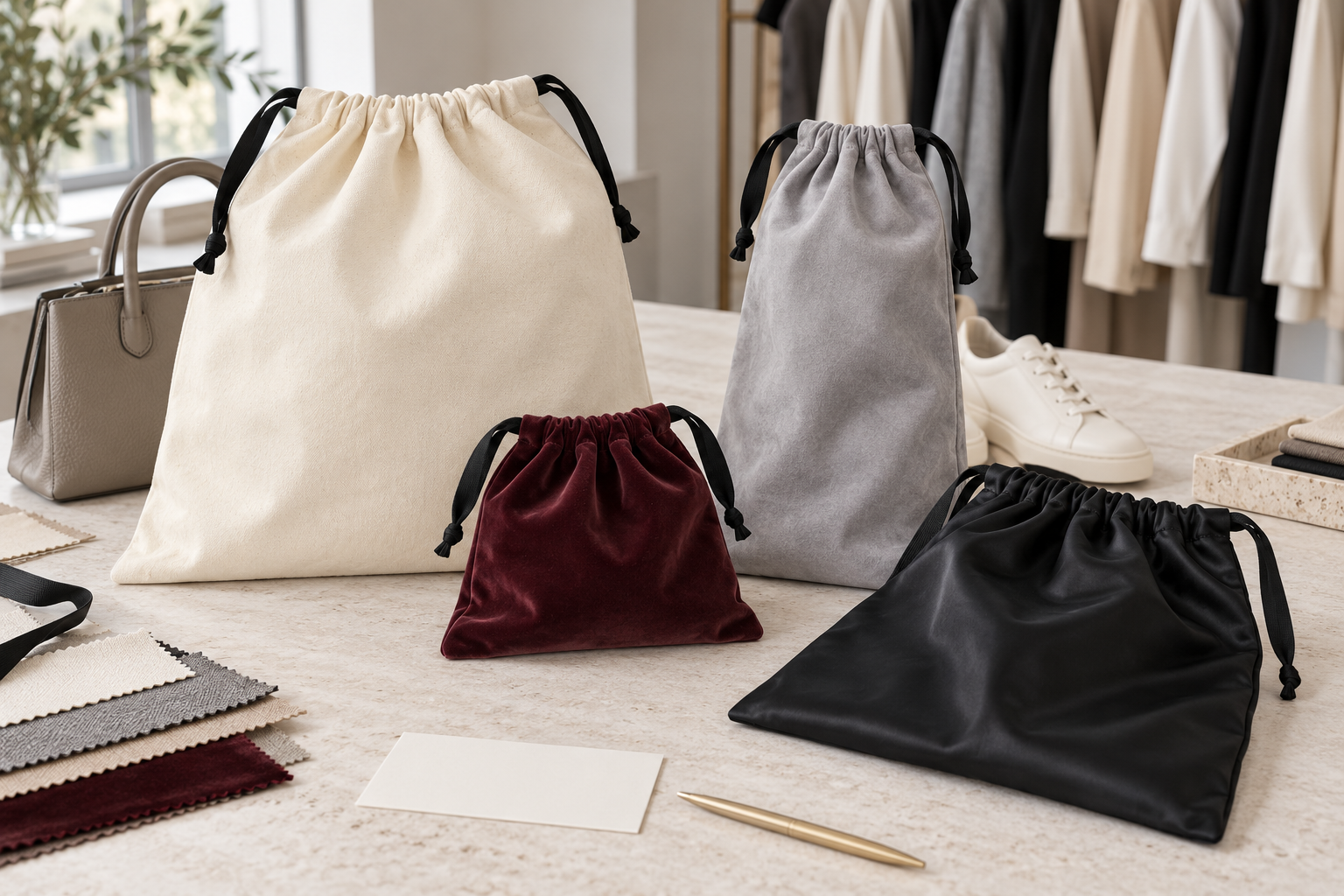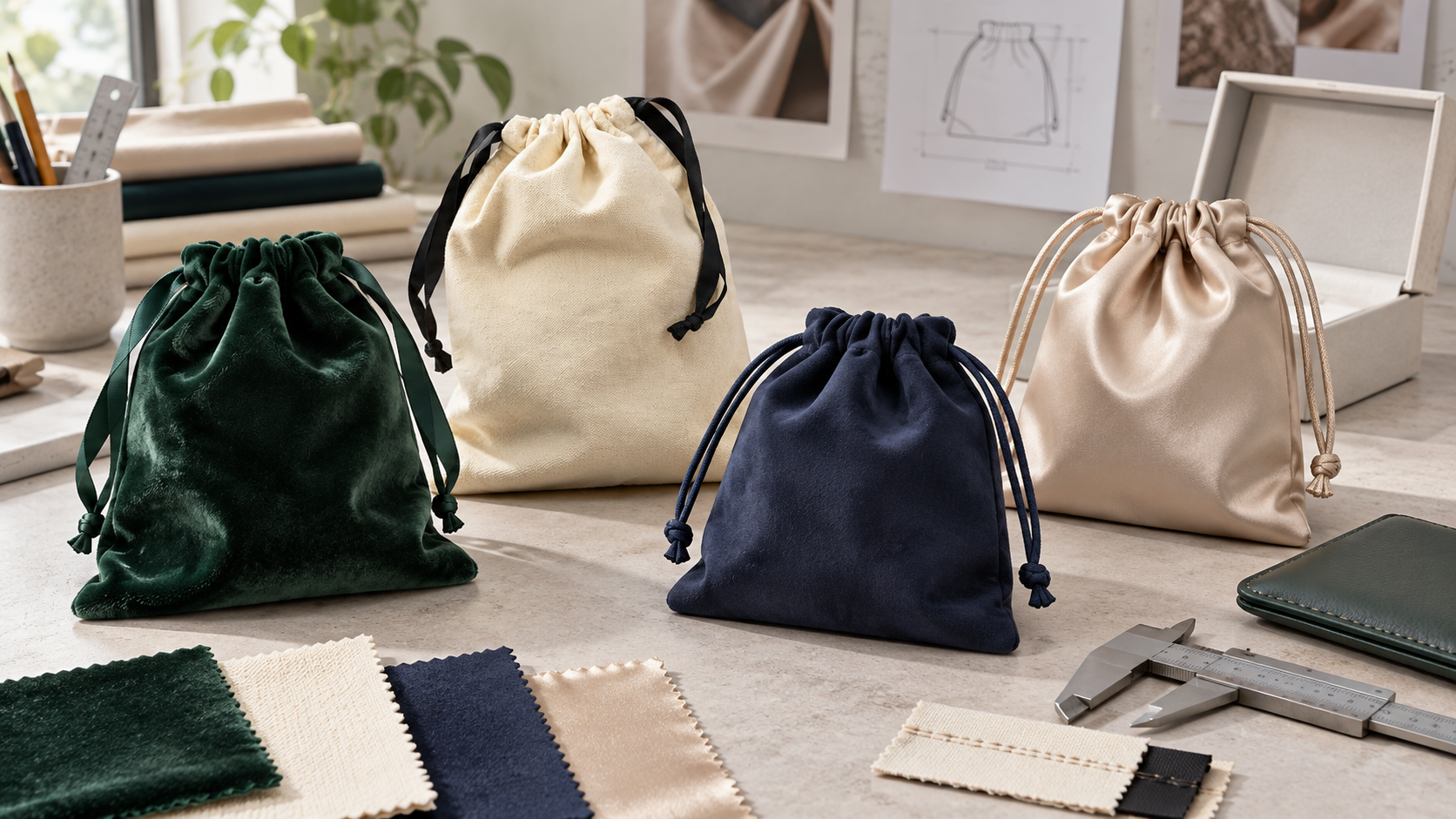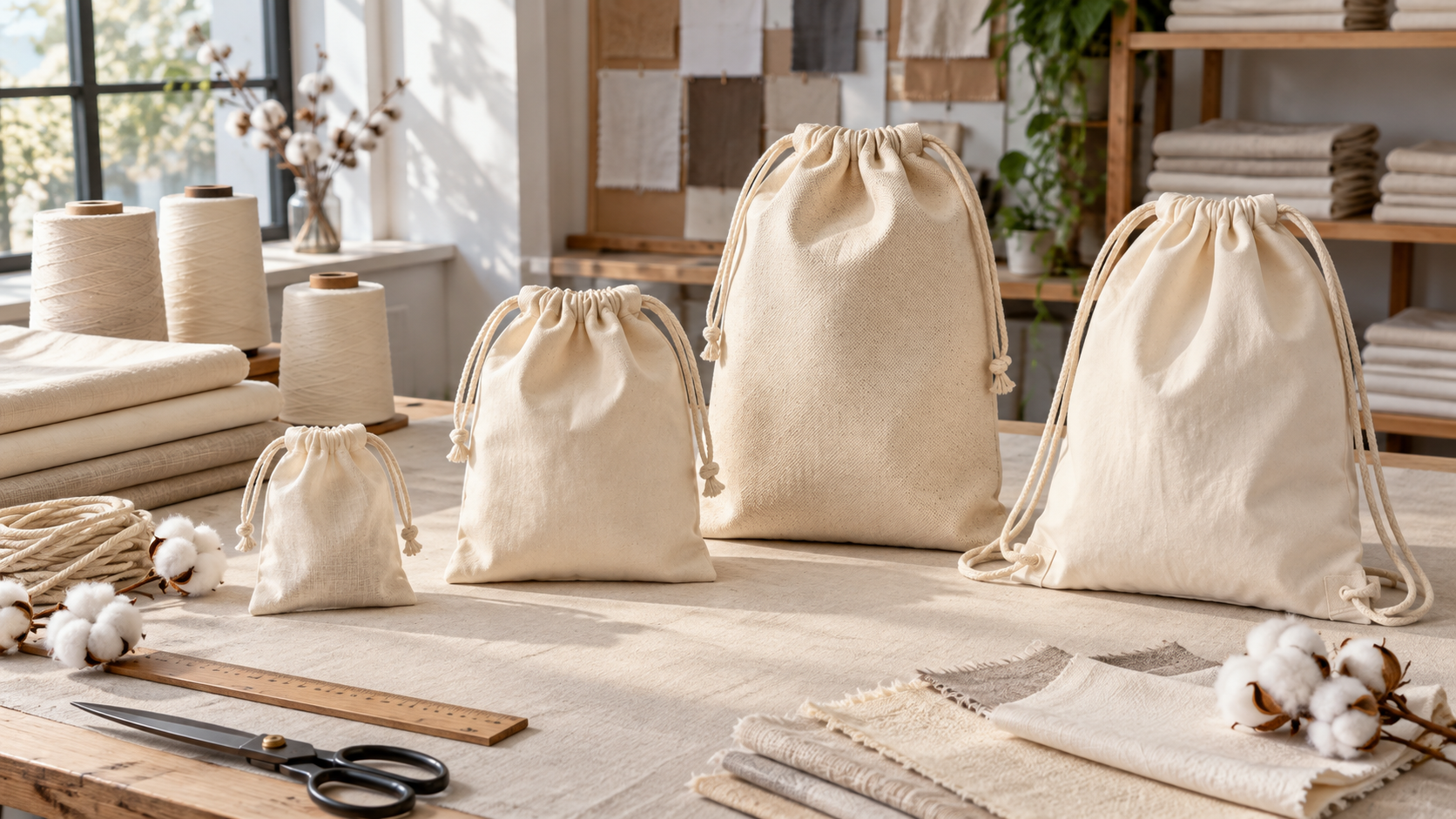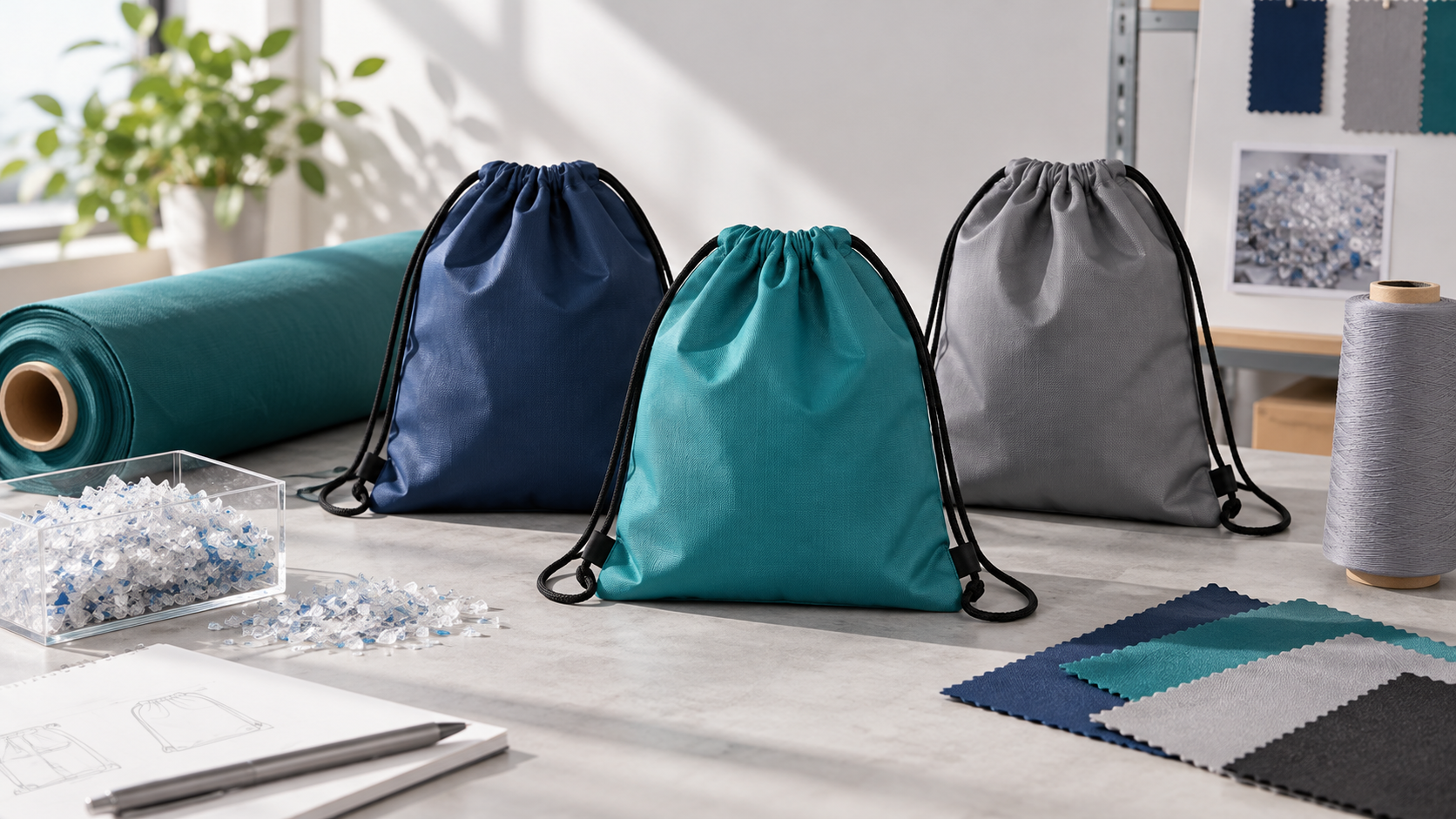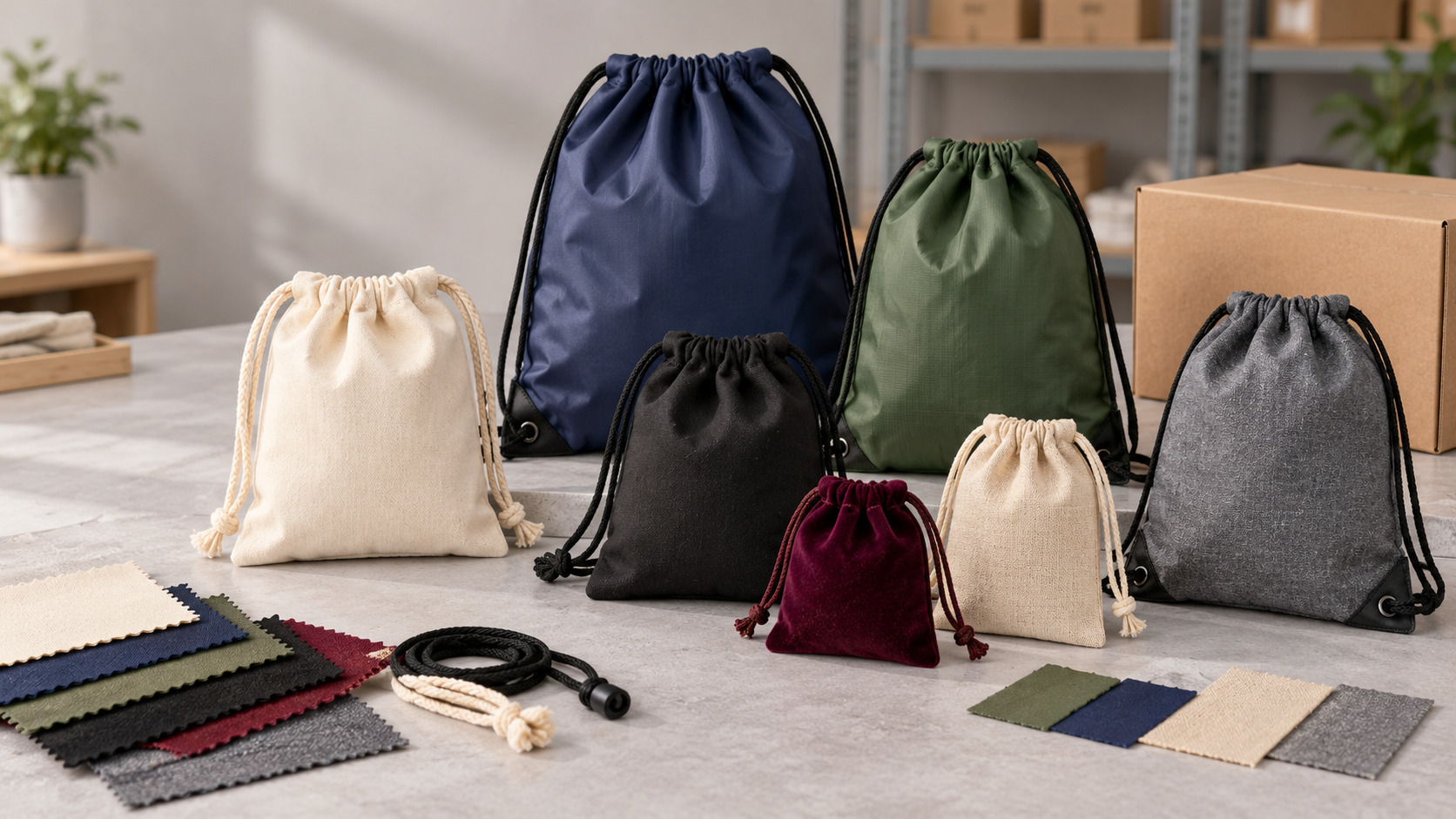
Custom cosmetic bag prices vary widely because the products being quoted can be fundamentally different. A flat polyester pouch with a standard zipper and one-color print is a different product from a structured vanity case with lining, padding, brush holders, custom hardware and retail packaging.
Planning an order? Send the specification and quantity split already known. Include the intended contents, finished size, outer and lining materials, construction, zipper and hardware, logo, packaging, quantity by SKU, destination and required arrival date.
The useful question is therefore not simply, “How much do custom cosmetic bags cost?” It is: what specification, quantity and delivery basis does the price cover? A low number based on an undefined pouch is not a budget. It is an assumption waiting to change.
This buyer cost guide focuses specifically on cosmetic-bag construction and pack-out. For the broader cost model across tote bags, backpacks, cooler bags and other categories, read How Much Do Custom Bags Cost?. For supplier evaluation across the full sourcing cycle, return to the Custom Bag Manufacturer Guide.Buyers ready to compare category options can begin with LUCKYSTAR’s custom cosmetic bags.
Quick answer: define the quotation basis before comparing cost
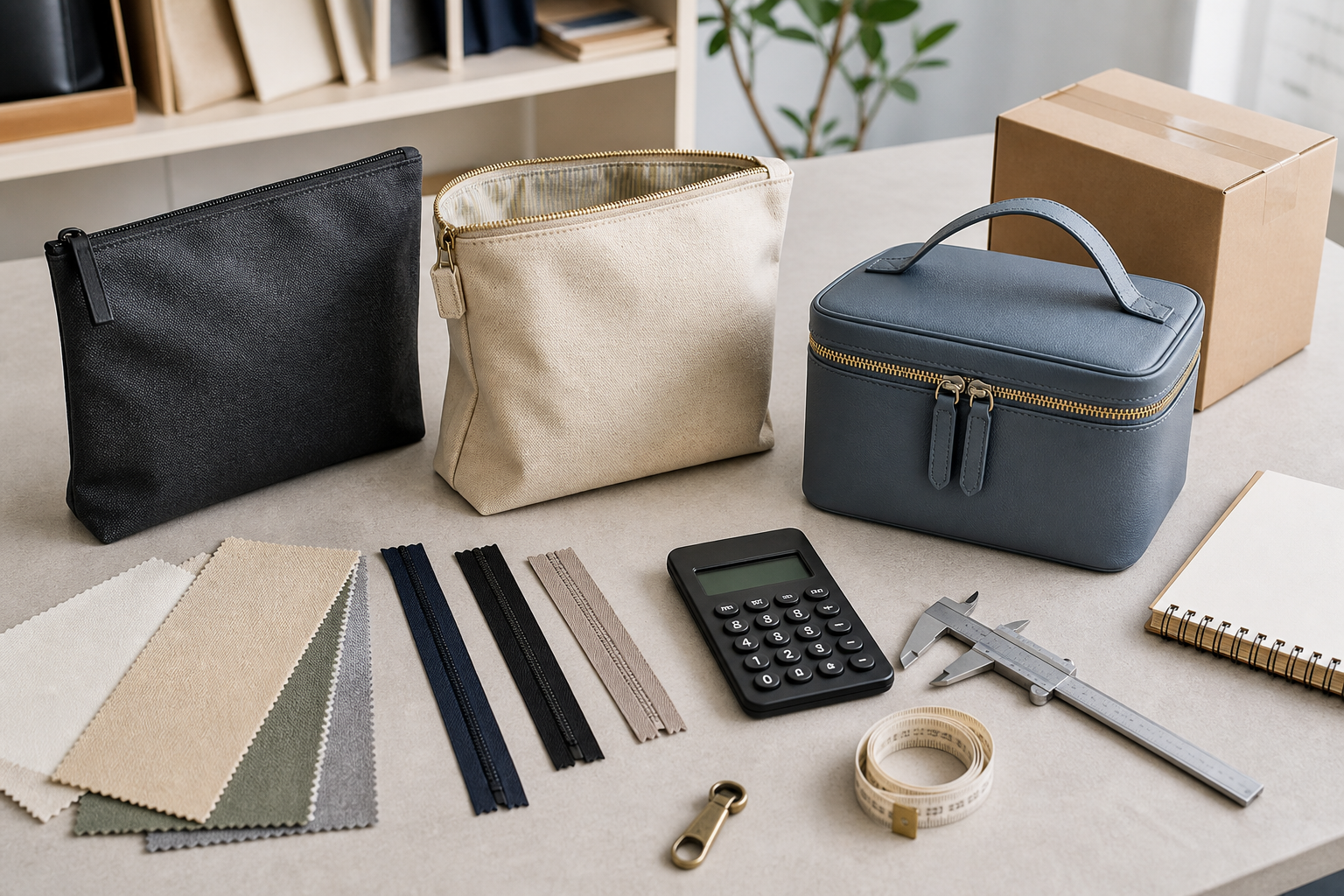
No reliable public unit-price band applies to every custom cosmetic bag. A stock-shape pouch with simple branding, a made-to-order lined bag and a structured multi-compartment case use different materials, operations, components and approval routes. Build the budget from the actual specification and quantity allocation, then request a dated written quotation.
Treat any online price range as an illustration until its assumptions are stated. Sampling, tooling, inspection, freight, duty and local delivery may sit outside a factory unit price. Material markets, exchange rates, current capacity and the final specification affect a real quotation.
Custom cosmetic bag cost is ultimately built from the chosen product route, material consumption, number of operations, component minimums and commercial delivery basis. Keep those inputs visible whenever an initial budget is converted into a supplier quotation.
| Cosmetic bag route | Main cost basis | Usually included in the construction | What moves it upward |
|---|---|---|---|
| Available or stock-shape pouch + logo | Existing style, stock status, decoration setup and quantity | Existing size, stock fabric, standard zipper, simple decoration | Low quantity, several artworks, large print or special packing |
| Custom flat cut-and-sew pouch | Pattern, material consumption, zipper, lining and logo setup | Custom dimensions, common fabric, one zipper, optional basic lining | Heavy fabric, custom color,all-over artwork or upgraded trims |
| Lined gusseted cosmetic bag | Shell and lining materials, gussets, seams, zipper and decoration | Separate shell and lining, formed base, standard zipper, one logo | Piping, pockets, padding, wide opening and stronger shape support |
| Structured PU vanity case | Surface material, interlining, bound construction, opening and hardware | PU shell, interlining or foam, bound construction, upgraded opening | Premium surface, double zipper, handle, custom pullers or debossing |
| Multi-compartment organizer or premium case | Panel count, organization, reinforcement, assembly, packing and tests | Several panels, dividers, brush holders, mesh pockets and reinforcement | Large size,molded structure, complex assembly, gift packaging or testing |
A range is useful only when the assumptions travel with it. Ask whether the price is EXW, FOB, CIF or delivered; whether one logo and standard packing are included; and whether the quantity applies per style, color and artwork. The final written quotation tied to an approved specification is the number that matters.
1. Structure usually changes cost more than appearance
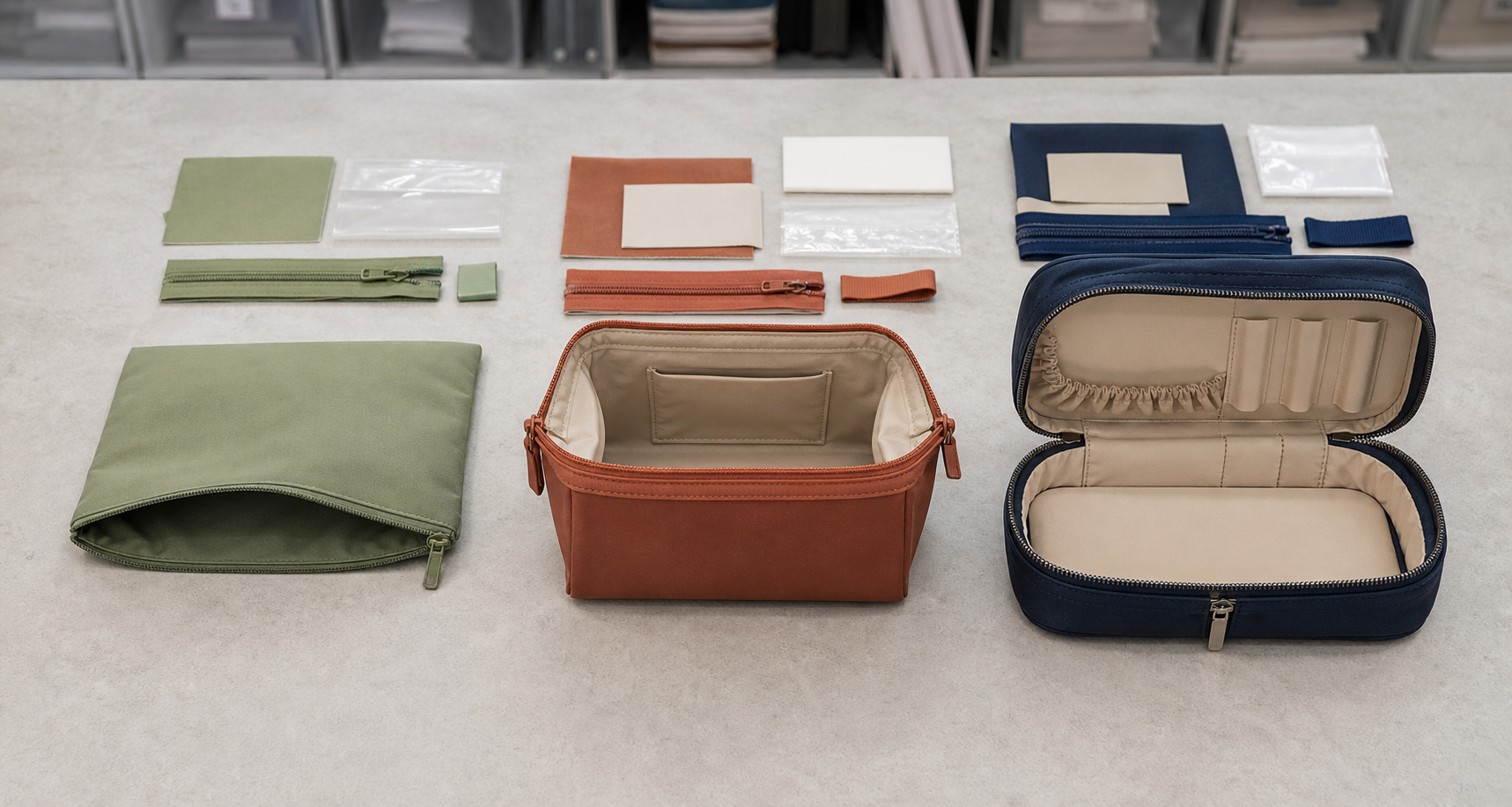
Cosmetic bags are priced through materials plus manufacturing operations. A flat pouch can use two main body panels and a zipper. A box-shaped bag adds gussets, corner handling and more sewing. A vanity case may add lid panels, foam, binding, a handle, double zipper tracks and interior organization. Each new part creates material consumption, cutting, positioning, sewing and inspection work.
A photo can hide these differences. Two bags with the same outside dimensions may have very different panel counts, seam routes and usable interiors. Request an open-bag photo, inside view and construction description before comparing their prices.
| Construction decision | Cost mechanism | Commercial value | Buyer check |
|---|---|---|---|
| Flat body | Efficient cutting and short sewing route | Good for samples, mini products and compact promotions | Load with the intended items; confirm the opening is usable |
| Bottom or side gusset | Extra panels,seams and corner control | More capacity and a stronger shelf profile | Measure the usable base rather than only the outside depth |
| Lining | Second material set plus insertion and finishing labor | Cleaner interior, improved hand feel and easier brand coordination | Check slack, cleanability and interference with the zipper |
| Padding or reinforcement | Foam, board or interlining plus lamination and shaping | Protection and shape retention | Confirm recovery after carton compression |
| Dividers and brush holders | More pieces, elastic,positioning and assembly time | Organized use for defined beauty products | Test every slot with actual contents before approval |
2. Material cost includes more than price per meter
The quoted material name is not a complete specification. Polyester varies by denier, weave, coating and backing. Canvas varies by composition and weight. PU varies by surface, thickness, backing and finish. Clear film varies by polymer, gauge, clarity and sewing or welding behavior.
The material also changes factory efficiency. A slippery fabric may need additional handling. Thick PU can create bulky corners. A directional print produces more cutting waste. Clear films show scratches and uneven seams more readily, which can increase protection and rejection requirements. For selection criteria, use Best Materials for Custom Cosmetic Bags and the category comparison in PU vs Polyester Cosmetic Bags.
| Material family | Relative cost direction | Useful strengths | Hidden cost question |
|---|---|---|---|
| Standard polyester or nylon | Value to mid-range | Consistent supply, broad colors, flexible construction | Is coating, backing, weight and stock color confirmed? |
| Cotton or canvas | Value to premium depending on weight | Natural texture and good compatibility with selected decoration | Will shrinkage, shade,print direction or fabric weight change yield? |
| PU | Mid-range to premium | Structured appearance, wipeable surface and debossing options | What surface, backing, thickness and color standard are included? |
| Clear PVC, EVA or TPU-type film | Value to premium depending on grade | Product visibility and wipe-clean use | Are clarity, odor, thickness, edge method and protective film controlled? |
| Verified recycled material | Depends on evidence and supply route | Supports documented recycled-content programs | Are certificates, transaction evidence or testing included in the quote? |
“Waterproof material” can also be misleading in a quotation.A coated outer may resist splashes while needle holes, zipper openings and seams still admit water. If protection matters, define the performance level and test method. The Waterproof Cosmetic Bag Manufacturing guide separates surface resistance from finished-bag construction.
3. Size, shape and cutting yield affect every unit
A larger bag uses more material, but geometry also matters. Increasing a flat pouch by two centimeters may have a modest effect. Increasing the depth of a structured case can alter the gusset, zipper path, foam panels, lining, binding and carton count. Rounded corners and directional patterns can reduce cutting efficiency even when the finished footprint seems small.
Do not choose dimensions from a competitor photo. Build the bag around the intended contents and measure width, height, depth, opening length and important internal clearances. A smaller bag that fits the products correctly can reduce both product cost and freight without feeling downgraded.
| Dimension decision | Possible cost effect | Better approval method |
|---|---|---|
| Overall width and height | Changes body-panel consumption and carton footprint | Lay out the actual products and allow practical access |
| Gusset or depth | Adds capacity, panels,corner work and packed volume | Approve both empty shape and loaded stability |
| Zipper opening length | Affects zipper usage and sewing route | Check that the largest item passes without forcing the opening |
| Curved or irregular panels | May reduce marker efficiency and increase sewing control | Request a physical sample and finished tolerance points |
| Coordinated size set | Requires separate patterns and may split production quantities | Share materials and trims while defining the purpose of each size |
4. Zippers, pullers and hardware can become a separate price project
A standard coil zipper with an available slider is normally economical. A custom tape color, polished metal teeth, branded puller, plated plate or molded accessory introduces setup, upstream MOQ and approval work.A puller that adds only a small amount per finished bag may still require a mold or a component order larger than the bag quantity.
Ask the supplier to price the standard functional option and the branded upgrade separately. Also ask who owns any tooling, how long it is stored, whether it can be reused and what happens to surplus hardware. The cheapest zipper is not automatically the lowest-cost choice if it snags, stains or creates returns.
| Closure or hardware option | Setup direction | Per-piece direction | Approval evidence |
|---|---|---|---|
| Standard coil zipper and stock puller | Low | Value | Color reference,smooth operation and end-stop check |
| Custom zipper tape color | Color approval and supplier minimum | Moderate depending on quantity | Lab dip or approved tape sample under standard light |
| Branded molded puller | Tooling or mold | Moderate | Drawing, dimensions, finish, fit and pull test |
| Metal plate or plated component | Die, engraving or plating setup | Moderate to premium | Finish sample,attachment method and surface protection |
| Double zipper opening | Usually no unique tool if components are standard | Higher material and assembly cost | Alignment, meeting point and repeated operation |
5. Branding cost depends on artwork, material and coverage
One-color screen printing is often efficient for clear artwork and stable volumes. Heat transfer or digital processes can handle detailed color. Embroidery brings texture but adds stitch time and can distort a light panel. Debossing suits selected PU surfaces but requires a die. Woven labels and metal plates move branding into a separate component.
Quote the real artwork—not only “logo included.” Provide vector art, finished size, colors, position, coverage and number of versions. A 40 mm mark on one panel is not the same cost as an all-over pattern aligned across seams. Approve the branding on the actual production material because absorption, texture, heat and stretch change the result.
| Branding method | Cost is most sensitive to | Often suitable for | Common quote omission |
|---|---|---|---|
| Screen printing | Color count, coverage, positions and screens | Simple spot-color artwork and larger runs | Screen fee or additional position |
| Heat transfer or digital transfer | Image area, film route and application time | Detailed or multicolor artwork on compatible surfaces | Strike-off,color adjustment or panel preparation |
| Embroidery | Stitch count, density, size and thread colors | Canvas and selected textile panels | Digitizing and backing needed to prevent puckering |
| Debossing or foil | Die size, surface behavior and application | PU and premium minimalist branding | Die ownership, foil proof or repeat setup |
| Woven label, patch or metal plate | Component MOQ, colors, mold and attachment | Repeat programs sharing a brand component | Surplus pieces and installation labor |
6.Quantity lowers some costs, but SKU fragmentation gives them back
Unit pricing usually improves as setup is spread across more pieces, materials are purchased more efficiently and the sewing line stabilizes. The curve is not perfectly linear. A useful price break may occur at a full material roll, a complete decoration batch or an efficient production run.
However, 3,000 pieces divided into six colors are not commercially identical to 3,000 pieces in one color. Each outer material, zipper tape, lining, artwork and packaging combination can create another setup and minimum. The Cosmetic Bag MOQ and Production Time guide explains this split in detail.
| Quantity position | Expected price behavior | Main opportunity | Main risk |
|---|---|---|---|
| Below normal factory MOQ | Highest unit cost or limited specification | Test demand with a stock or adapted route | Setup dominates and repeatability may be weak |
| At workable MOQ | Balanced starting level | Access to normal cut-and-sew production | Too many colors can divide the order below component minimums |
| Next efficient tier | Potentially meaningful improvement | Better material yield and setup absorption | Extra inventory, cash and storage exposure |
| Repeat program | Stronger negotiation when specification and forecast are stable | Shared components, reserved capacity and consistent controls | Design drift or obsolete custom components |
7. Packaging can change both unit cost and freight
Bulk packing, individual protective bags, tissue, hangtags, barcode labels, sleeves, inserts and retail boxes create very different budgets. Packaging also changes labor and carton volume. A structured vanity case that must retain its shape may require an insert or tissue. A flat pouch may nest efficiently and reduce freight.
Design the bag and pack-out together. The Custom Cosmetic Bag Packaging for Beauty Brands guide explains presentation, protection, labeling and carton trials.If the cosmetic bag is pre-packed with beauty products, identify who supplies, inspects and assembles each component; that is a different workflow from shipping an empty bag.
| Packing route | Direct cost direction | Freight effect | Approval point |
|---|---|---|---|
| Bulk or grouped packing | Lowest | Usually efficient | Surface protection and quantity per inner pack |
| Individual protective bag | Low addition | Small volume increase | Material, warning text if applicable and sealing method |
| Hangtag,barcode or insert card | Moderate component and labor addition | Usually limited | Artwork, placement, scan and market allocation |
| Printed sleeve or retail box | Moderate to high | Can increase cube significantly | Dieline, print proof, fit, scuffing and carton compression |
| Shape-retaining insert | Material plus packing labor | May reduce carton efficiency | Shape after transit and removal experience |
8. Development, testing and quality control belong in the budget
A custom sample may require a pattern, material sourcing, logo setup, hand cutting, individual sewing and courier delivery. The sample price is not the future mass-production unit price. Ask what the sample fee covers, how many revisions are included and whether any tooling can be reused.
Quality costs are easier to manage before production. Define measurements, workmanship, zipper function, appearance, packing and any performance tests while the specification is still open. The Cosmetic Bag Quality Control Checklist provides category-specific release points. The Custom Bag Sample Development Process connects the approved sample to bulk production.
| Project-level cost | What it may cover | Question to settle before payment |
|---|---|---|
| Pattern and sample | Drafting, sourcing, sample sewing and one review route | How many revisions, colorways and courier shipments are included? |
| Decoration setup | Screens, embroidery digitizing, die, transfer or proof | Can it be reused, and who owns the setup or tooling? |
| Material or product testing | Composition, colorfastness, restricted substances or performance checks | Which standard, market,sample and pass criteria apply? |
| Inspection | Incoming, in-line, final or third-party verification | What quantity, checklist, defect rules and corrective action are included? |
| Rework or replacement allowance | Sorting, repair, remake or extra production | Who bears the cost when agreed requirements are missed? |
9. Calculate landed cost per accepted bag
The factory unit price is only one line. Add development, tooling, inspection, packaging, freight, insurance where used, import duty or tax, customs and local handling. Then divide by the number of accepted, saleable bags—not automatically the purchase-order quantity.
Landed cost per accepted bag = (production + development + setup + inspection + freight + duty/tax + local handling) ÷ accepted saleable quantity.
Consider an illustrative order of 2,000 lined gusset bags. Production is USD 2,900, sample and setup USD 180, inspection USD 200, freight and export/import handling USD 900, and estimated duty or local charges USD 350. If 1,950 bags are accepted and usable, the planning total is USD 4,530 and the landed cost is about USD 2.32 per accepted bag.This is a teaching example, not a LUCKYSTAR offer or a duty calculation for any market.
| Illustrative cost layer | Example amount | Why it belongs in the comparison |
|---|---|---|
| 2,000 bags | USD 2,900 | Production cost tied to one defined specification |
| Sample and setup | USD 180 | First-order development cost |
| Inspection | USD 200 | Verification before release |
| Freight and handling | USD 900 | Moves goods to the planned destination |
| Estimated duty/local charges | USD 350 | Destination-dependent cost outside the factory price |
| Total / 1,950 accepted bags | About USD 2.32 each | More useful than dividing only the production line by 2,000 |
Use current freight quotations, the correct commodity classification and professional customs advice for the destination. Do not copy a landed-cost percentage from another importer.
10. Compare quotations line by line
Two cosmetic bag prices are comparable only when the specification and commercial basis match. One supplier may quote a lightweight unlined pouch in bulk packing. Another may include a denser outer, lining, upgraded zipper, individual packing and final inspection. The lower number does not necessarily describe better value; it may describe less product.
| Quotation field | What must match | Typical hidden difference |
|---|---|---|
| Dimensions and construction | Finished measurements, gusset, lining, padding, pockets and tolerances | Reference photo substitutes for a measurable specification |
| Materials | Composition, weight or thickness, backing, finish and color | Generic “polyester” or “PU” hides a lower grade |
| Zipper and hardware | Chain, tape, slider, puller,finish and custom parts | Standard puller quoted while the sample photo shows branded metalwork |
| Branding | Method, size, colors, positions, coverage and setup | One print position is included but the artwork requires two |
| Quantity split | Units by style, color, size, artwork and market | Headline MOQ applies per color rather than to the total |
| Packing | Individual protection, tags, barcodes, inserts and carton quantity | Retail presentation is priced after the bag is approved |
| Quality basis | Approved sample, inspection plan,tests and defect rules | No measurable acceptance standard is included |
| Commercial basis | Incoterm, named place, payment, validity and timing | EXW and delivered prices are compared as if equivalent |
Use the How to Choose a Cosmetic Bag Manufacturer checklist to evaluate the supplier behind the number. A capable partner should explain why the quotation changes when the specification changes.
How to reduce cosmetic bag cost without making it feel cheap
- Protect the user’s job: keep the capacity, opening and durability that the program actually needs.
- Start with a proven construction: adapt dimensions or visible details instead of rebuilding every panel.
- Use stock colors strategically: reserve custom dye for the detail that truly carries brand recognition.
- Share hidden components: use one lining, zipper or binding across a coordinated range where suitable.
- Reduce initial SKU count: put more volume behind fewer colors and learn before expanding.
- Match decoration to artwork: do not specify embroidery or metalwork when a clean print or label communicates the idea better.
- Design for carton efficiency: avoid unnecessary structure or retail packing that mostly ships air.
- Freeze the brief before sampling: repeated changes consume development time and can strand materials or tooling.
- Inspect early: a first-piece correction is normally cheaper than sorting or remaking completed goods.
Cost control should happen while the collection is being designed, not after a complex specification has been approved. Use How to Design a Cosmetic Bag Collection to coordinate size, color, function and SKU logic.
Why choose LUCKYSTAR for a custom cosmetic bag quotation?
LUCKYSTAR treats pricing as a specification exercise. We review how the cosmetic bag will be used, what it must carry and which details create customer value before recommending a construction. That makes each custom cosmetic bag cost discussion easier to trace and helps buyers compare a value route with an upgraded route without quietly changing the product.
- Category-specific review: shell, lining, zipper path, structure, compartments and pack-out are considered together.
- Visible assumptions: dimensions, materials, branding, quantity split and packing can be tied to the quotation.
- Value engineering: standard components or proven patterns can be suggested where they do not weaken the intended experience.
- OEM and ODM support: buyers can work from a defined tech pack or develop from a use case and reference.
- Sample-to-bulk control: the approved outcome can be connected to specifications, first pieces, in-line checks and final release.
- Program coordination: brands can combine cosmetic bags with selected products from LUCKYSTAR’s Product Range for wider campaigns.
Explore LUCKYSTAR’s custom cosmetic bag product range and send the target contents, dimensions, material direction, structure, artwork, quantity by color, packaging, destination and required date. For the full design-to-delivery sequence, review the Custom Bag Manufacturing Process.
What to send for an accurate quotation
| RFQ item | Information to provide | Why it changes price |
|---|---|---|
| Use and contents | Retail, GWP, travel, subscription, salon or another program; actual product sizes | Defines capacity, protection and expected life |
| Dimensions | Width, height, depth, opening and important internal measurements | Controls patterns, material yield and carton volume |
| Material | Outer and lining composition, weight/thickness, color and finish | Controls raw cost, handling,MOQ and defect sensitivity |
| Construction | Gusset, lining, padding, piping, pockets, dividers, handles and closures | Defines components and sewing operations |
| Branding | Vector artwork, method, size, colors, position and number of versions | Defines setup and application work |
| Quantity allocation | Total plus pieces by style, color, size, artwork and market | Reveals the true production lot and component minimums |
| Packing and quality | Individual packing, labels, retail presentation, tests and inspection | Adds materials, labor,carton volume and approval gates |
| Delivery basis | Destination, required arrival date and preferred Incoterm | Connects factory price to logistics and landed cost |
When some decisions remain open, ask for two controlled versions rather than one vague quote: for example, a value option using stock trims and a premium option using the preferred custom hardware. Keep the same dimensions, quantity and delivery basis so the difference is visible.
Frequently asked questions
How much does it cost to make 500 custom cosmetic bags?
The cost cannot be determined from 500 pieces alone. The bag route, dimensions, materials, lining, zipper and hardware, logo, packaging, SKU split, sampling, inspection and delivery basis all affect the quotation. Send one defined specification and allocation table instead of multiplying a generic online unit price.
Why is a custom cosmetic bag quote higher than a tote bag quote?
A cosmetic bag may include shell and lining, zipper, shaped panels, binding, interlining, pockets and tighter appearance work. A simple flat tote often has fewer components and operations. The price difference should be explained through the specification, not assumed from category names.
Does adding a logo always increase the price?
Usually there is either a setup cost, a per-piece application cost or both.The impact depends on method, size, colors, coverage, positions and quantity. A quotation may already include one standard logo, so ask exactly what is included.
Are custom cosmetic bag samples free?
Sample availability, fees, tooling and courier terms vary by project. A made-to-spec sample can require pattern work, material sourcing, branding setup and individual sewing outside bulk-production efficiency. Confirm in writing what the fee covers, the revision scope and whether any amount is credited after a bulk order.
Can a higher MOQ lower the unit price?
Often, because setup and material purchasing become more efficient. The saving must be compared with inventory, storage and cash exposure. Ask for the confirmed MOQ, forecast quantity and next efficient tier rather than buying extra pieces only to reach an arbitrary discount.
Is shipping included in the cosmetic bag unit price?
Only when the quotation clearly says so. Confirm the Incoterm and named place. An EXW number, an FOB number and a delivered price cover different responsibilities and should not be compared directly.
Why did the price change after sampling?
The sample may confirm a heavier material, larger consumption, stronger zipper, revised structure or different decoration than the initial estimate assumed. Ask for a revised cost basis and a list of specification changes before approving bulk production.
What is the best way to get an accurate price?
Provide the use, contents, dimensions, outer and lining materials, construction, zipper and hardware, artwork, quantity allocation, packaging, quality needs, destination and deadline.Ask the manufacturer to list every assumption and exclusion.
Turn the price into a production decision
A custom cosmetic bag price becomes useful when it is attached to a bag the customer can use, a specification the factory can repeat and a delivery basis the buyer can budget. Compare the total landed cost per accepted bag—not only the smallest number in the unit-price column.
LUCKYSTAR can review a value route and a premium route against the same brief, helping brands see where material, construction, decoration and packaging spend creates a real difference.
Return to the Custom Bag Manufacturer Guide when connecting price with factory selection, sampling, quality control and repeat-order planning.

Request an order-specific quotation
Include the intended contents and dimensions, outer and lining materials, construction, zipper and hardware, logo, packaging, quantity by style, color, artwork and market, destination, required arrival date and preferred Incoterm.
Send your project details through the contact form, or Email a project brief with this guide already referenced. The email link opens a draft for your review before sending.
Prices, currency, sample fees, tooling, MOQ, component minimums, freight, duty assumptions, capacity and delivery terms are subject to specification and written confirmation.