
Wholesale custom logo makeup bags do not become brand assets merely because a logo appears on the front. The artwork has to be legally cleared, translated into a production file, matched to the bag surface, approved on the intended material and inspected against a repeatable standard. Those controls matter even more when one program contains several colors, decoration methods, sales channels or reorders.
Buyer quick answer
Give the supplier one controlled logo pack: editable vector artwork, named colors, finished dimensions, a datum-based location, approved variants, usage restrictions and the required surface effect. Select the decoration method only after reviewing the actual makeup-bag material and construction. Approve a physical strike-off and a finished sample, then use both for bulk inspection and every reorder.
Scope: this article is the artwork-to-bulk logo-control guide. For the wider decision on shape, material, construction, MOQ, price and supplier selection, use the complete custom logo makeup bag buyer guide. The Custom Bag Manufacturer Guide remains the core OEM/ODM sourcing pillar.
Control the logo as product data
A brand team may think of the logo as a familiar visual. Production teams need a defined object: which mark, which version, which size, which colors, which surface effect and which file. If any one of those items is unclear, the supplier may produce a technically neat result that is still wrong.
The World Intellectual Property Organization explains that trademarks are signs capable of distinguishing one enterprise's goods or services and that trademark owners control use through the applicable rights framework. Before releasing artwork, confirm ownership or authorization, target markets, product scope and any brand-license restrictions. A purchase order, historical sample or image found online is not automatically permission to reproduce a mark.
Create a logo control sheet
The control sheet should identify the brand, artwork filename and revision, master mark, permitted lockups, single-color version, reverse version, minimum size, exclusion zone, color references, intended decoration method, finished position and approving person. Record prohibited treatments too—for example, no outline, no distortion, no unapproved gradient and no substitution of a wordmark for a symbol.
| Control field | What to state | What can go wrong without it | Approval evidence |
|---|---|---|---|
| Artwork identity | Exact filename, revision and checksum or controlled-system reference | An old logo or local copy enters sampling | Released vector master and revision log |
| Rights and territory | Owner or license, products, markets,channels and validity | A mark is used outside the authorized scope | Written authorization reviewed by the responsible party |
| Size | Finished width and height plus permitted tolerance | Operators scale by eye or from a screenshot | Measured strike-off and finished sample |
| Position | Datum,direction and distance from fixed construction points | A centered file looks off-center after sewing or filling | Dimensioned drawing and sample photographs |
| Color | Named physical reference and whether substrate show-through is allowed | Screens and production surfaces give different results | Physical color or approved production sample |
| Surface effect | Matte, gloss, raised, recessed, stitched, metallic or other defined result | The method is technically correct but visually wrong | Tactile strike-off under agreed lighting |
| Change authority | Who may approve artwork, method,color or location changes | A convenience substitution reaches bulk | Written deviation or revised release |
Choose the decoration method after the bag surface
There is no universal best logo method for wholesale makeup bags. A soft textile, coarse mesh, fuzzy pile, coated fabric, transparent film and molded or laminated panel behave differently. The same artwork can appear sharp on one surface and broken, sunken, distorted or translucent on another. Review the cosmetic bag material guide before treating a decoration method as interchangeable.
| Method direction | Useful when | Questions to resolve | Sample evidence |
|---|---|---|---|
| Screen printing | The surface, ink system and artwork suit direct printing | Mesh count, ink/substrate compatibility, opacity, cure, edge definition and handling | Actual-material strike-off plus finished sample |
| Heat transfer | Fine graphics or multiple colors require a transferred layer | Transfer type, temperature, pressure, dwell, carrier mark,flexibility and surface change | Actual-material panel before and after agreed flex or handling checks |
| Embroidery | A textile structure can support stitches and a raised thread effect | Backing, stitch count, density, small-detail loss, puckering and interior coverage | Digitized sew-out and finished bag |
| Deboss or emboss | A suitable surface can retain a pressed impression | Tooling, pressure, temperature if used, depth, edge definition and recovery | Tooling proof on the intended material |
| Metal plate or badge | A separate hardware element fits the design language | Weight, edges, finish, fastening, reinforcement,backs and packing contact | Physical component and attachment sample |
| Woven or printed label | A sewn-on identity element gives more substrate freedom | Fold, cut edge, weave or print resolution, seam allowance and placement | Label proof plus sewn application sample |
Use the screen-printing supplier guide, heat-transfer process guide and embossed-logo supplier guide for method-specific questions. These links provide decision frameworks; they do not prove that every method fits every cosmetic-bag material or current order.
Handle transparent and mesh surfaces deliberately
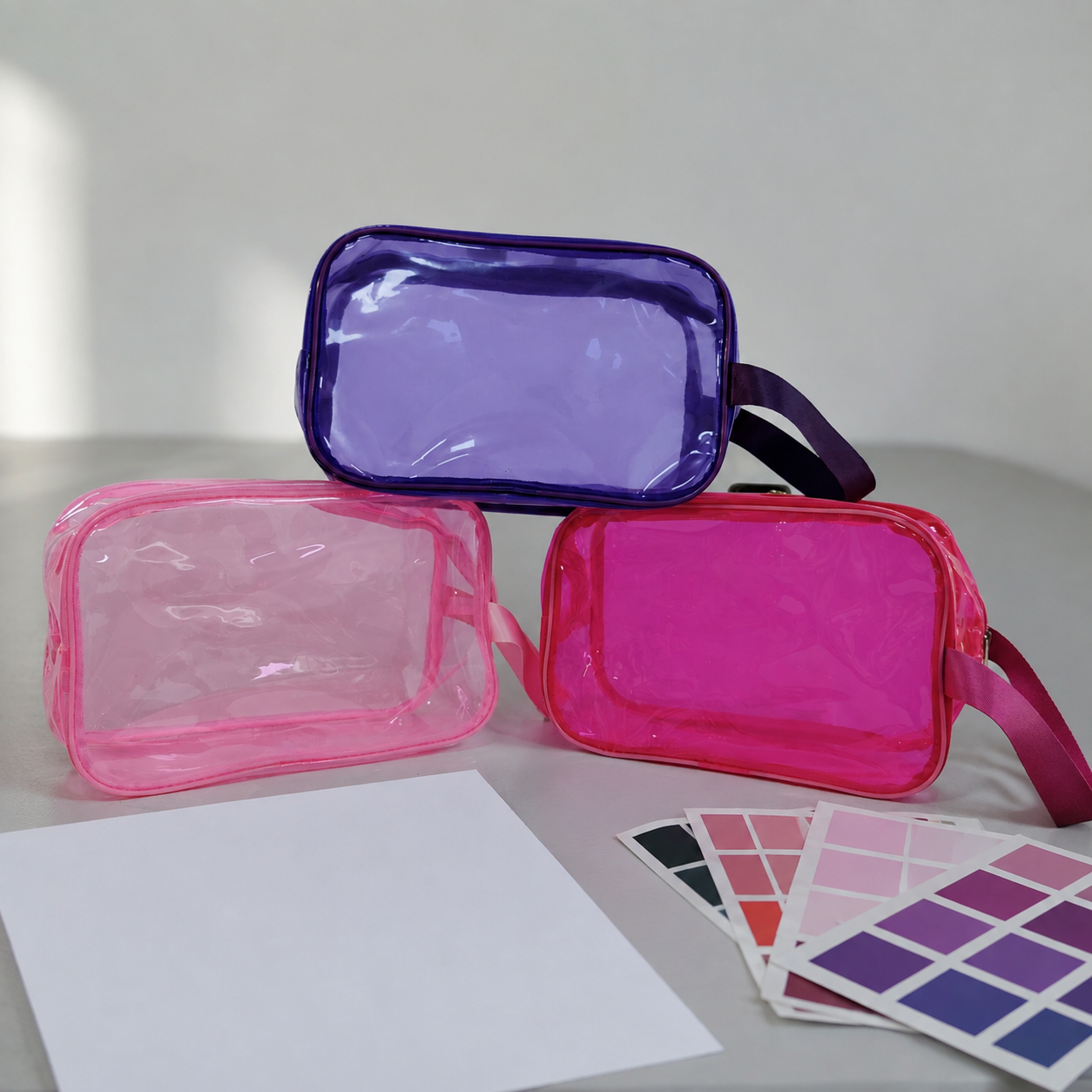
The old version of this page centered on a pink mesh concept, while the current image direction shows transparent bags from the company's archive. Both surfaces create logo challenges that a flat white mockup conceals. Mesh breaks a printed area into open and solid zones. Transparent film lets the contents, lining, seams and background alter perceived color and contrast.
Decide whether the background should show through
A logo on clear material may need a controlled opaque base, a translucent effect or a separate label or plate. Specify the intended appearance from both the outside and inside. A white underlayer can improve opacity but may create a visible halo when registration shifts. A transparent effect can be attractive but may disappear against dark contents.
Reserve a stable decoration zone
Keep logos away from zipper curves, bindings, folds, gussets, welded seams, pocket edges and areas that distort when the bag is filled. If the surface is too flexible or visually busy, add a defined patch, panel or label area rather than forcing fine artwork onto an unsuitable zone. Check the cosmetic bag zipper and hardware guide before a logo, puller or plate competes with the opening path. The public custom logo mesh cosmetic pouch reference and clear PVC cosmetic-bag reference show different starting formats; final material, decoration and claims still require order-level confirmation.
Release production-ready artwork
A PNG pasted into a document may communicate intent, but it rarely defines production. Send editable vector artwork where the selected process requires it.Outline fonts or include the legally licensed font package as appropriate. Remove hidden objects, stray points, clipping errors and unapproved spot colors. Name every file so teams can distinguish a master from a preview.
Separate the master from the production proof
The master preserves the approved brand geometry. The production proof records how that geometry is interpreted for a specific method and size. Embroidery may need stitch compensation; screen printing may need separations; a deboss tool may need minimum line widths; a woven label may simplify small details. Keep the approved master unchanged and document any process adaptation as a controlled derivative.
Do not use a screenshot as the color standard
Screen colors depend on devices, profiles, software and viewing conditions. The International Color Consortium describes ICC profiles as connections between color encodings. That is useful for managed digital workflows, but it does not turn a screen preview into a physical production standard. Name the digital profile for proofs and separately approve a physical output on the intended substrate.
Dimension logo placement from fixed datums
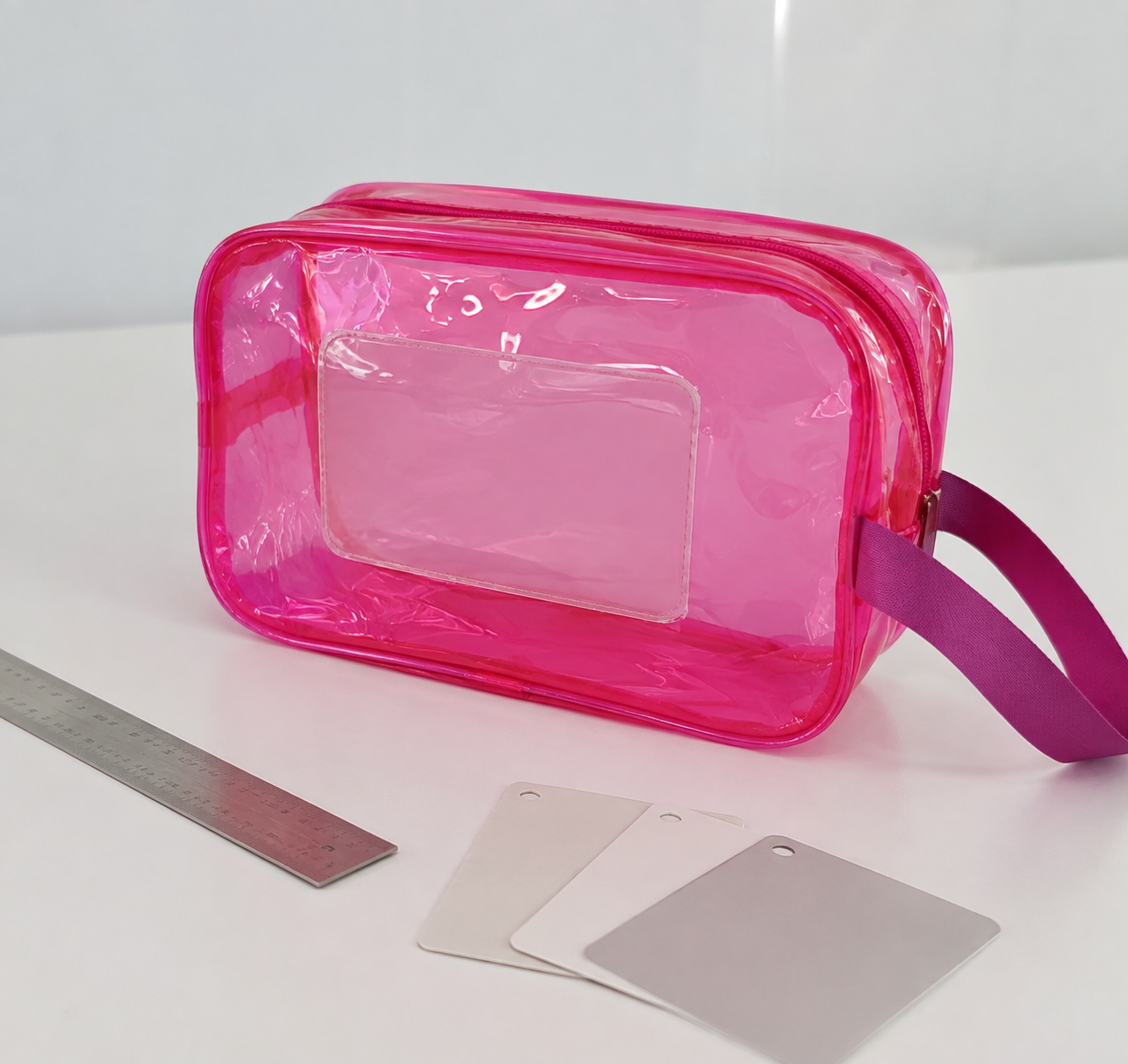
“Centered on the front” is ambiguous. Is the front measured before sewing or after filling? Does center include the gusset, binding or visible panel? Is the logo centered to the entire bag, the transparent window or the area between a pocket and zipper? A dimensioned callout should identify stable construction points and the orientation of the finished bag.
Measure the printed or stitched result
Record the finished artwork width and height, not only the source-file artboard. For a patch, label or metal plate, also state the component dimensions and attachment position. If a flexible bag changes shape, define whether the position is assessed empty, supported or filled with a standard insert.
Approve the visually difficult color
One placement may look balanced on a pale sample but disappear on a dark colorway. Review the smallest logo, lowest-contrast color, coarsest surface and most curved location. Those are better test cases than the easiest combination.
Use a two-stage logo approval
A strike-off isolates the decoration on the intended material. A finished sample shows how the logo interacts with seams, shape, filling and packing. Approving only one leaves a gap: a good strike-off can be sewn into the wrong position, while a finished sample can hide a poorly controlled print process because only one piece was selected.
| Approval gate | What it should answer | Minimum record | Release decision |
|---|---|---|---|
| Digital proof | Is the right mark, variant, size and basic position proposed? | Versioned proof linked to the controlled artwork | Approve for physical sampling only |
| Material strike-off | Does the method produce the intended definition, opacity, color and hand on the real surface? | Material/component identity, method settings or supplier reference, dated approval | Approve,revise or reject the decoration setup |
| Finished sample | Is the logo correctly placed and visually balanced after construction and filling? | Sample ID, measurements, photographs and exceptions | Approve for pre-production handoff |
| Pre-production unit | Do intended bulk inputs and setup reproduce the approval? | Lot references, first-piece record and signed comparison | Release production or correct the setup |
| Bulk inspection | Does the shipment remain within the agreed limits? | Sampling plan, defect record and disposition | Accept, rework, sort or reject according to the agreement |
Place these gates inside the custom cosmetic bag sample-development process.For a wider cross-category view, compare the custom bag sample process. The released tech pack should connect artwork, bill of materials, construction and packing; the cosmetic bag tech-pack guide shows that data structure.
Define logo tests from the real use risk
A logo can fail through rubbing, flexing, folding, stretching, transfer to another surface, cleaning, heat, moisture, chemical contact or abrasion against packaging. Do not copy a universal cycle count or test method from an unrelated product. Identify the material, process, destination market, expected use and claim, then agree the applicable method, conditioning, specimen and acceptance criteria.
For dyed or printed textiles, ISO 105-X12:2016 specifies a method for assessing color resistance to rubbing and staining of other materials, with dry and wet rubbing options. It is a useful reference when its scope and specimen suit the project, but linking it does not mean that every makeup bag requires this method, that a pass level is universal or that LUCKYSTAR holds an ISO product certification. Transparent films, coatings, transfers, hardware and other systems may need different methods.
Test the system, not the logo alone
- Use the intended production material, color, backing and surface treatment.
- Include the real artwork size, coverage, edge detail and underbase.
- Condition the sample as defined before and after the selected check.
- Assess appearance, transfer, cracking, lift, distortion and substrate damage separately.
- Record the method, equipment, settings, specimen identity, result and decision.
Convert subjective logo quality into limits
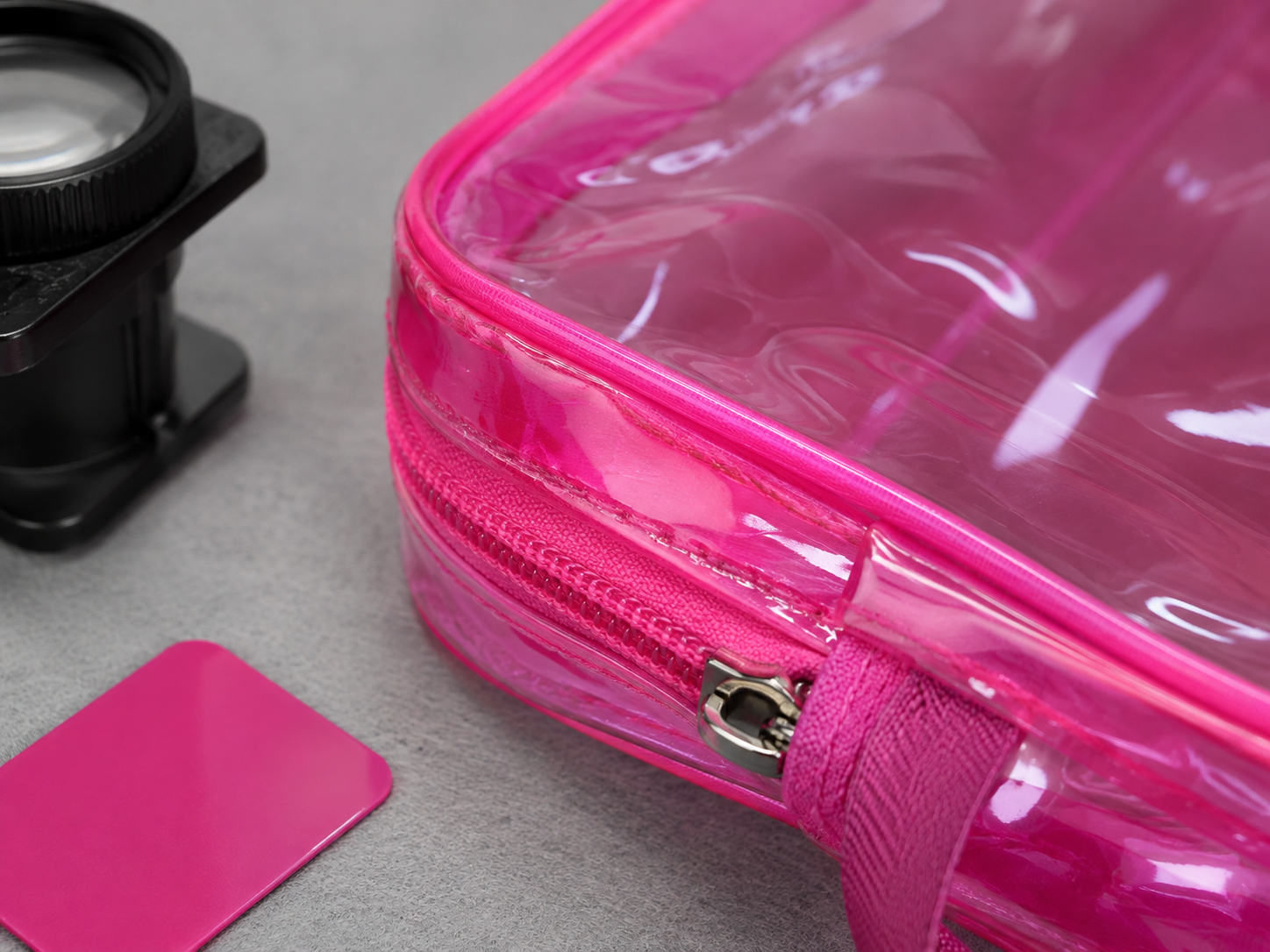
“Looks good” cannot guide bulk inspection. Build a defect catalogue using approved physical examples or calibrated photographs under agreed lighting. Name which defects are critical, major or minor for the program and how combinations are handled.
| Defect family | What to define | Why it matters | Possible evidence |
|---|---|---|---|
| Wrong identity | Mark, variant, orientation, language or artwork revision | The product carries the wrong brand asset | Controlled master and digital proof |
| Position and size | Datum, tolerance, rotation and finished dimensions | Small shifts become visible across a retail display | Dimensioned drawing and measured units |
| Color and opacity | Physical reference, viewing light,substrate influence and allowed variation | The logo changes across colors or lots | Approved strike-off and limit samples |
| Definition | Broken lines, fill, edge sharpness, pinholes, registration and small-detail loss | Fine artwork becomes unreadable or inconsistent | Magnified approval image and physical sample |
| Adhesion or durability | Lift, cracking, transfer, abrasion or change after the agreed method | The logo degrades during intended handling | Named test record for the correct sample |
| Substrate damage | Gloss change, scorching, indentation, distortion,puncture or puckering | Decoration harms the bag even when the mark remains | Before/after comparison and finished sample |
| Contamination | Ink, adhesive, foil, thread or marks outside the decoration zone | Visible surfaces and contents can be affected | Cleanliness standard and inspection photos |
Inspect bulk at the points where errors can be stopped
Final inspection is too late to discover that the wrong artwork file ran across the order. Verify the released artwork and component labels before setup. Approve the first strike-off or first sewn unit. Check after a shift, color, material lot, screen, transfer batch, embroidery program, tool or operator change according to risk. Segregate nonconforming output so it cannot mix back into accepted goods.
Link the logo plan to the full bag QC plan
Logo approval does not replace bag inspection. Dimensions, zipper function, lining, seams, odor review where relevant, labels, packing and quantity still require controls. Use the cosmetic bag quality-control checklist, the broader custom bag inspection checklist and the prevention logic in How to Prevent Quality Issues in Custom Bags.
Plan colorways and SKUs before the quotation
A wholesale order of 10,000 pieces is not one simple run if it contains five bag colors, two logo versions and different retail labels. State quantities by exact SKU and identify which items share material, artwork setup, hardware, packaging and inspection. Ask suppliers to quote tooling, sampling, setup, unit price and packing on the same basis.
Do not assume one logo color works everywhere
Create an approved logo-to-bag-color matrix. A dark logo may suit a pale bag but fail on purple or black. A white mark may need an underbase on clear or colored material. Metallic effects can change with texture and lighting. The cosmetic bag color-matching guide explains how to manage physical references, lab dips and bulk approval without pretending a screen preview is final.
Protect logo consistency across reorders
Reorders fail when teams rely on the last product as memory rather than a controlled record. Retain the approved master, production proof, physical strike-off, finished sample, material and component references, setup record, defect limits and packing standard. Record every approved deviation. At the next order, compare new inputs with retained references before producing the full quantity.
Review aging and availability
Physical samples, inks, films, coated materials and finish references can change over time. Store them appropriately and set a review rule. If an input is unavailable, treat the replacement as a change requiring feasibility review and approval—not as a routine purchasing substitution.
Connect the logo to the commercial program
A retail SKU, gift-with-purchase item, subscription-box component and hotel amenity may use the same bag shape but require different logo prominence, labels, packing, assortment and timing. First choose the program role, then engineer the artwork and bag together. The retail versus promotional cosmetic bag guide defines that split, while the GWP campaign guide connects demand, timing and fulfillment.
If the bag carries products or enters a larger beauty set, use the custom cosmetic bag packaging guide to map the complete pack-out. For a multi-style launch, the cosmetic bag collection guide helps control shared design language and SKU growth. The logo is one part of each system, not a substitute for it.
Why include LUCKYSTAR in the project review?
LUCKYSTAR is a relevant sourcing partner when a buyer needs to connect logo artwork with the rest of a bag specification: material direction, sample development, zipper and hardware, construction, quality checkpoints and export packing. The independent site publicly presents a custom cosmetic bag category, a broader custom bag range and custom pouch formats. Public product references include a zippered PU toiletry-bag direction in addition to mesh and clear formats.
The practical reason to contact LUCKYSTAR is not a blanket promise of the lowest price, a fixed MOQ, a fixed lead time, universal certification or ownership of every production operation. It is the ability to review a custom bag project at specification level, identify missing artwork and sample decisions, and coordinate related pouch and bag categories. A beauty brand can discuss a makeup bag alongside a tote, drawstring dust bag or gift pouch while keeping each item's construction and evidence separate. See the wider custom bag branding guide and wholesale pouch planning guide.
What LUCKYSTAR needs for a useful reply
- Program type, destination market, target user and intended contents.
- Makeup-bag format, finished dimensions, material direction, lining, closure and hardware.
- Controlled vector logo, brand rules, authorization status, size, position and color references.
- Preferred decoration effect plus any method that is prohibited.
- Quantity by bag color, logo version, SKU and shipment.
- Packing, retail labels, barcode work, testing or documentation needs, destination and target date.
After reviewing those inputs, LUCKYSTAR can identify feasible development directions and the questions required for a written quotation. Material availability, MOQ, sampling, production timing, price, testing and compliance remain subject to the final specification and written confirmation.
Wholesale custom logo makeup bag RFQ checklist
- Define the commercial program and the exact payload.
- Choose the bag format and material direction before locking the decoration.
- Release authorized vector artwork and a revision-controlled logo sheet.
- State physical color references, size, location, surface effect and viewing conditions.
- List the quantity for every bag-color and artwork combination.
- Agree a strike-off, finished sample and pre-production approval sequence.
- Define logo defects, methods and acceptance limits according to use risk.
- Connect logo checks to the complete cosmetic-bag QC plan.
- Specify packing surfaces so prints, plates and zipper pullers do not mark one another.
- Retain records and references for a future reorder.
Use China Cosmetic Bag Manufacturers for the broader sourcing landscape and How to Choose a Cosmetic Bag Manufacturer for supplier evidence. If performance is central to the program, start with Which Tests Should Custom Cosmetic Bags Pass? and select methods for the actual product and market.
Official LUCKYSTAR channels
Product ranges and platform terms can change. Confirm the current project specification and commercial basis directly through the LUCKYSTAR contact page or compare the company's official international storefronts:
- LUCKYSTARCREATION on Alibaba.com
- ECOGREENBAG on Alibaba.com
- NB-ECOGREEN on Alibaba.com
- NB-LUCKYSTAR on Alibaba.com
- LUCKYSTAR on Made-in-China.com
Frequently asked questions
Which logo method is best for a makeup bag?
The best fit depends on the material, surface texture, artwork detail, desired effect, order structure, expected handling, packing contact and test requirements. Screen printing, transfer, embroidery, debossing, plates and labels each create different tradeoffs. Approve the selected method on the intended material and finished bag.
Can I send a PNG or JPG logo?
A bitmap preview can communicate appearance, but many production routes need editable vector artwork and controlled colors. Send the master file, a visual PDF, the artwork revision and font or outline information as appropriate. Do not ask the supplier to redraw a protected mark without a controlled approval process.
Why does the logo color differ from my screen?
Displays, profiles, ambient light, production method, ink or thread, opacity and the bag substrate all affect appearance. Use a managed digital proof for communication and a physical strike-off on the actual material for production approval.
Should I approve a logo strike-off or a full sample?
Use both when the risk justifies it. The strike-off isolates method and material interaction. The finished sample confirms placement, scale, construction effects and appearance when the bag is filled and packed.
How can logo placement be inspected?
Define fixed datums, finished dimensions, position tolerances, orientation and the assessment state of the bag. Inspect with the agreed tool and method; avoid subjective instructions such as “approximately centered.”
Can a logo be printed directly on clear PVC or mesh?
Possibly, but feasibility depends on the exact material, surface, ink or transfer system, artwork and desired opacity. Clear and open surfaces can alter contrast and adhesion. Trial the actual production material and consider a patch, label or plate if a direct method cannot meet the requirement.
What determines MOQ and lead time?
Material and component minimums, bag colors, logo versions, tooling, sample revisions, decoration setup, packing and the current production schedule all matter. Ask for a project-specific written quotation and define the event that starts the quoted timing.
How should a reorder keep the logo consistent?
Retain the controlled artwork, physical strike-off, approved finished sample, material and component references, setup record and defect limits. Compare new inputs with those references, document changes and approve a first piece before releasing the full reorder.
Turn the logo brief into an approvable sample
Send the bag format, material direction, controlled vector logo, size, position, color references, quantity split, packing, destination and target date. LUCKYSTAR can review the artwork-to-sample route and identify the decisions needed for a written quotation.
Contact LUCKYSTAR about your custom logo makeup bag program. Or email a prefilled artwork brief.

Editorial review: September 8, 2026. Product availability, decoration feasibility, material, MOQ, price, sampling, production timing, testing, compliance and documentation are project-specific and subject to the final specification and written confirmation.





