Last reviewed: September 28, 2026

What Wholesale Pouch Bags Means in This Guide
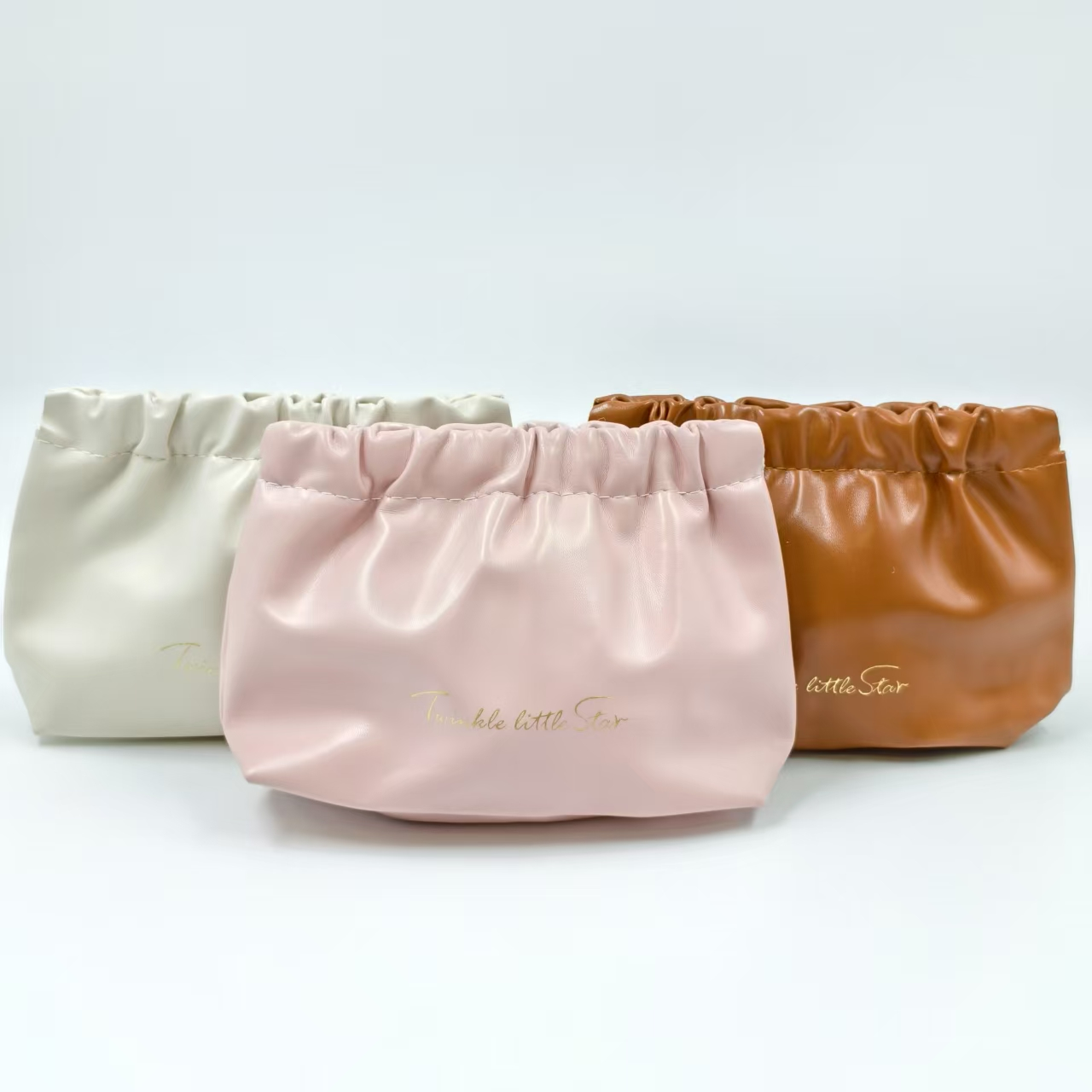
A pouch is a small soft-sided bag with a zipper, drawstring, flap or related closure. In a gift program it can be the gift, the organizer that holds several gifts, or the reusable inner package inside a shipping box. Those roles are not interchangeable. A simple dust pouch may protect one product but offer little organization. A structured zip pouch may present a multi-item kit well but consume more storage and carton volume.
Wholesale describes the commercial quantity, but quantity alone does not create a workable program. The buyer must connect the pouch specification to every item it will hold, the filling location, the delivery schedule and the recipient experience. This article treats those decisions as one system.
Freeze the Gift Kit Before You Size the Pouch
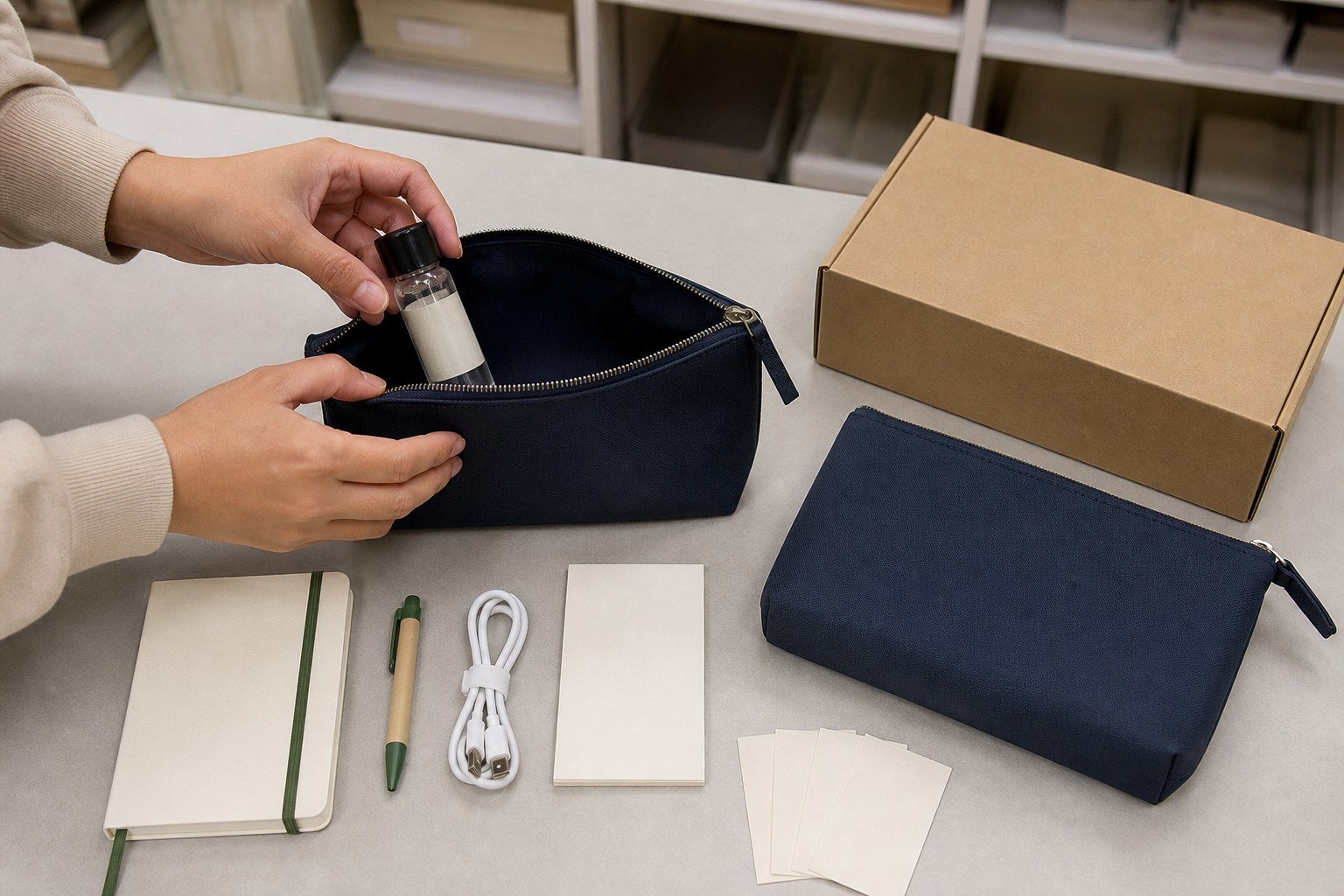
Start with a controlled bill of contents. Record the name, quantity, finished dimensions, weight, fragility and orientation of every item. Include the insert card, tissue, sleeve, cable, sample bottle and any protective wrap. Small packing components often decide whether the finished pouch closes cleanly.
Do not size from website descriptions or nominal product capacities. Use physical samples or verified finished dimensions, including retail packaging. If one item is still changing, identify its maximum allowed envelope and weight. Otherwise every late product change becomes an unplanned pouch revision.
Assign One Primary Job to the Pouch
Write the primary job in one sentence. Examples include: hold an employee onboarding kit, protect a premium accessory during presentation, organize a travel welcome set, or serve as the reusable gift after the original contents are removed. The sentence should name the user, contents and handoff moment.
This prevents feature drift. A pouch designed mainly as protective packaging may prioritize soft contact surfaces. A pouch intended as a lasting organizer may need a stronger opening, cleaner interior and neutral branding. If brand visibility is the primary question, use the dedicated custom bag branding system guide.
Define a Usable Internal Envelope
Flat width and height are not the same as usable internal space. Seams, zipper tape, drawstring channels, gussets, lining, foam and edge binding reduce the envelope. Thick or irregular contents also create local pressure that an empty measurement cannot reveal.
Build a simple load block from the real contents. Arrange items in the intended order, measure the maximum loaded width, height and depth, and note the corners or closures that experience pressure. The sample must provide enough tolerance for normal packing variation without looking loose or underfilled.
Choose the Access Path From the Handoff
A zipper creates controlled access and can support repeated organization. A drawstring opens quickly and adapts to irregular contents, but the gathered top reduces usable height. A flap may support a deliberate presentation moment but needs a reliable fastening route. Choose according to how the kit is filled and how the recipient first opens it.
Test the closure while the pouch is loaded. Check whether a worker can close it without forcing items downward, whether the recipient can open it without spilling contents, and whether the closure still works after the gift is removed and the pouch enters daily use.
Compare Pouch Formats by Pack-Out Behavior
| Pouch format | Pack-out strength | Main limitation | Best evidence before approval |
|---|---|---|---|
| Flat zipper pouch | Efficient for slim stationery, cables and flat samples | Bulges quickly with bottles or rigid objects | Loaded side profile and zipper-close test |
| Gusseted zipper pouch | Creates stable volume for mixed small items | Gusset and lining reduce the nominal footprint | Filled standing posture and base-seam review |
| Drawstring pouch | Fast filling and flexible fit for one item or a loose set | Gathered closure consumes height and offers less restraint | Closure retention and top-clearance check |
| Structured organizer | Protects presentation and separates multiple items | Higher component count and shipping volume | Compartment fit, drop handling and carton cube |
| Clear-panel utility pouch | Makes contents visible during packing and use | Privacy, scratching and material claims require care | Visibility, surface and packed-shipment review |
| Nested pouch set | Creates roles for several categories in one gift | More SKUs, counts and matching decisions | Complete-set count and variant pairing trial |
Build a Physical Load Map
A load map shows where each item sits in the finished pouch. It is more useful than a list because it reveals collisions, hidden items, pressure points and wasted corners. Place fragile, sharp, leak-prone and frequently accessed items deliberately. Keep long objects away from the zipper path and stop hard edges from pressing through soft exterior panels.
Photograph the approved arrangement from above and from the side. Number the items and connect the photograph to the packing instruction. The image should represent normal production, not an unusually careful arrangement that workers cannot repeat at volume.
Check Product Compatibility, Not Only Capacity
Capacity answers whether items fit. Compatibility asks whether they can safely share the space. A metal pen may mark a light lining. A bottle cap may open under pressure. Printed cards can scuff against hardware. A cable can catch in an open zipper coil. Review contact surfaces and movement during shipping.
If a product needs its own sleeve, cap seal or protective wrap, add that component to the bill of contents and sample. Do not assume the pouch itself provides moisture, impact or leak protection unless a defined construction and test support that requirement.
Decide Where the Kit Will Be Filled
There are three common routes: the pouch factory fills buyer-supplied contents, a separate fulfillment partner combines the pouch and gifts, or the buyer's local team assembles the kit. Each route changes shipping, counting, liability, inspection and schedule responsibilities.
Make the decision early. Sending contents to a pouch factory may reduce handoffs but adds inbound coordination. Local filling may improve control of sensitive or market-specific items but requires the pouch to arrive in a condition that is easy to store, identify and open for assembly.
Define Pack-Out Ownership in Writing
| Pack-out route | Buyer must provide | Control point | Typical handoff risk |
|---|---|---|---|
| Pouch factory fills the kit | Approved contents, inbound quantities, packing sequence and acceptance rules | First packed unit before full assembly | Late or short delivery of buyer-supplied items |
| Third-party fulfillment | Pouch specification, kit bill, variant map and receiving plan | Arrival inspection plus pilot pack-out | Different interpretation of the approved arrangement |
| Buyer fills locally | Storage space, labor plan, instructions and final inspection | Receiving sample and local line trial | Pouches packed too tightly for fast assembly |
| Split-market filling | One master specification and market-level content lists | Golden packed sample for each market | Mixed inserts, languages or gift variants |
Write the Packing Sequence Before Production
A useful sequence names the pouch orientation, order of insertion, item direction, insert location, closure step, appearance check and final carton position. Keep it short enough to follow at a worktable. Use a photograph for spatial information and words for exceptions.
Run the sequence with several people who did not design the product. Record the time, awkward motions and common mistakes. If workers must stretch the opening, rearrange items repeatedly or force the closure, improve the design or sequence before scaling.
Control Inserts, Names and Market Variants
Personalized cards and market-specific inserts create a data problem as well as a packing problem. Define who supplies the file, how records are matched to physical units, what identifier follows the item, and what happens when an insert is damaged or missing. Keep personal data outside unnecessary production documents.
For color, artwork or language variants, create a matrix that connects pouch code, content code, insert code and destination. Avoid relying on descriptive names such as blue kit or VIP version when several teams are involved. A short controlled code reduces mixing during receiving and assembly.
Approve the Appearance After Filling
Evaluate the front, back, base and closure after the pouch is packed. Confirm that artwork is not distorted, seams do not twist, hard objects do not create unattractive peaks and the kit feels intentional when held. An underfilled structured pouch can collapse; an overfilled flat pouch can turn a clean logo into a curved surface.
Review the opening moment as well. The insert should appear in the intended place, loose components should not fall out, and the first visible item should support the program goal. This is presentation control, not decorative styling alone.
Design the Carton Around the Packed Unit
A filled pouch can occupy much more volume than an empty one. Decide whether units lie flat, stand, nest or alternate direction. Record the number per inner and master carton, carton dimensions, gross weight and orientation. Check whether pressure from stacked units changes shape or marks the exterior.
If empty pouches ship to a separate filler, protect the parts that matter for assembly: opening access, exterior appearance and variant identification. The lowest shipping cube is not useful if every pouch must be reshaped before filling.
Reconcile Counts at Every Handoff
A gift kit cannot be completed when one component runs short. Define expected quantities, allowed production tolerance, replacement stock and the count method at receipt. Buyer-supplied contents, printed inserts and pouches may all have different overage rules; reconcile them before assembly starts.
Keep leftover items identifiable after the run. A sealed, labeled remainder can support replacement kits or investigation. Loose leftovers without a recorded version can create the wrong kit in a later campaign.
Approve a Fully Packed Golden Sample
The golden sample should include the production-intent pouch, every representative content item, insert, protective component and final closure. It should show the approved arrangement and the acceptable finished appearance. Keep clear photographs and a signed or controlled record with revision status.
The wider custom bag manufacturing process explains how a design moves through sampling and production. For this pouch program, the critical addition is that approval happens in the packed condition, not only on an empty bag.
Use Pack-Out Quality Gates
Separate pouch workmanship from kit completeness. The empty pouch may pass sewing inspection while the assembled kit has a missing insert or wrong variant. Establish a first packed unit, periodic in-process count, appearance check and final carton reconciliation.
| Gate | What to check | Evidence | Reaction if it fails |
|---|---|---|---|
| Incoming components | Identity, quantity, condition and revision | Receiving record and reference sample | Quarantine unclear or damaged items |
| First packed unit | Fit, sequence, closure, insert position and appearance | Approved physical unit and photographs | Stop and correct before volume filling |
| In-process assembly | Item count, variant pairing and repeatability | Timed checks at defined intervals | Isolate units since the last accepted check |
| Final unit | Exterior, closure, weight range and identification | Inspection record linked to batch | Rework or separate affected units |
| Master carton | Units per carton, destination, orientation and label | Packing list and carton record | Reconcile before release |
| Receiving trial | Carton condition, count and local unpacking workflow | First shipment feedback | Update the next packing or release plan |
Plan Quantity From the Gift Schedule
Start from recipients, events, markets, replacement needs and delivery waves. Then calculate pouch quantity by exact variant. Do not let an attractive price break determine the number of gifts. The dedicated custom bag MOQ guide explains how material, artwork and construction affect minimums, while the custom bag cost guide explains quotation drivers.
If the program has several release dates, ask whether finished pouches or completed kits can be delivered in stages. Compare storage, handling and inventory risk, not only unit price. Use the cost and lead-time guide when simplifying variants or consolidating components.
Manage Buyer-Supplied Contents as a Separate Workstream
When the factory or fulfillment partner receives gifts from other vendors, agree on delivery address, booking date, carton labels, packing list, acceptable condition and shortage procedure. Clarify responsibility for customs, duties and replacement items before anything ships.
Do not send high-value, regulated, temperature-sensitive or personal items into a filling route without a documented handling review. Some contents may be better added locally. The pouch specification should support that operational choice rather than force every item through one location.
Make Sustainability Claims Match the Whole Kit
A reusable pouch can reduce disposable wrapping only when its design, durability and recipient value support continued use. Document the claimed material precisely and keep evidence for the approved supply route. Avoid broad claims based only on a fabric name.
Also consider the complete pack-out: extra sleeves, foam, individual polybags, inserts and oversized cartons can undermine the intended story. Reduce components only after confirming they are not needed for protection, counting or contamination control.
Warning Signs in a Wholesale Pouch Program
- The pouch is selected before the gift contents are frozen.
- Finished size is approved without checking the usable internal envelope.
- The sample is reviewed empty even though production units will be filled.
- No team owns the first packed unit or final kit inspection.
- Personalized cards and pouch variants are matched by memory.
- The carton plan is based on empty pouches instead of packed units.
- Price breaks decide quantity before recipients and delivery waves are counted.
- Sustainability language is not connected to material evidence or the full pack-out.
How Luckystar Supports Wholesale Pouch Programs
Luckystar can review the pouch role, representative contents, usable dimensions, closure, branding, quantity, filling location, pack-out instruction, carton plan and target in-hand date. A useful review separates the pouch manufacturing specification from the gift assembly specification, then connects them through a fully packed sample.
Buyers establishing a broader supplier relationship can use the core Custom Bag Manufacturer Guide and the practical checklist for choosing a custom bag manufacturer. Retail brands developing an owned product line can also review the Private Label Bag Supplier Guide.
Information to Send for a Useful Quote
- Program purpose, recipient, market and target in-hand date.
- Complete bill of contents with dimensions, weight and reference photos.
- Required pouch role, closure, structure, material direction and artwork.
- Quantity by pouch, insert, content and destination variant.
- Preferred filling location and responsibility for buyer-supplied items.
- Expected pack sequence, individual packing and carton requirements.
- Any handling, privacy, compliance or replacement constraints.
Send the contents, dimensions, quantity, artwork, pack-out route and delivery target. Luckystar can review the information needed for a packed sample and quotation.
Email a prefilled gift-kit pack-out brief

Frequently Asked Questions
Should I choose the pouch before the gift contents?
No. Freeze the representative contents and their finished dimensions first. Then select a pouch format and usable internal envelope that support the loaded items, presentation and shipping route.
Who should fill wholesale pouch bags?
The pouch factory, a fulfillment partner or the buyer can fill them. Choose according to content location, handling requirements, schedule and inspection responsibility. Approve the first packed unit at the actual filling location.
Why is an empty pouch sample not enough?
Loading changes shape, zipper behavior, artwork appearance, internal pressure and shipping volume. A fully packed sample reveals whether the complete gift kit can be assembled and delivered consistently.
How much extra space should a gift pouch have?
There is no universal percentage. Build the real load, include all packing components and test normal variation. The pouch should close without force while avoiding an obviously loose, underfilled appearance.
How can multiple gift-kit variants avoid mixing?
Use a controlled matrix linking the pouch, contents, insert and destination codes. Verify the first unit for each variant, conduct periodic in-process checks and reconcile every master carton before release.
Approve the Packed System, Not Only the Empty Pouch
Review the current custom pouch bag range to identify the starting format before the packed system is approved. A successful wholesale pouch program connects product fit, recipient experience, assembly responsibility, version control, inspection and shipping. Start with the complete gift kit, translate it into a usable pouch envelope and repeatable packing sequence, then approve the fully packed unit. That process turns a small bag into a reliable delivery system for the whole gift program.