
Last reviewed: September 24, 2026
Buyer Quick Answer
Choose a screen printed bag supplier by asking for a controlled production record, not only a good sample. The supplier should identify the exact bag revision, fabric lot, artwork version, print side, ink system, screen and setup record, strike-off, finished sample, first production piece, in-process checks, cure validation, packing method and reorder reference.
This page owns supplier capability verification and bulk print consistency. It does not repeat our printing-method comparison, printed tote artwork approval guide, screen print versus heat transfer guide or shopping bag color-control guide.
Send Your Screen Printed Bag Specification
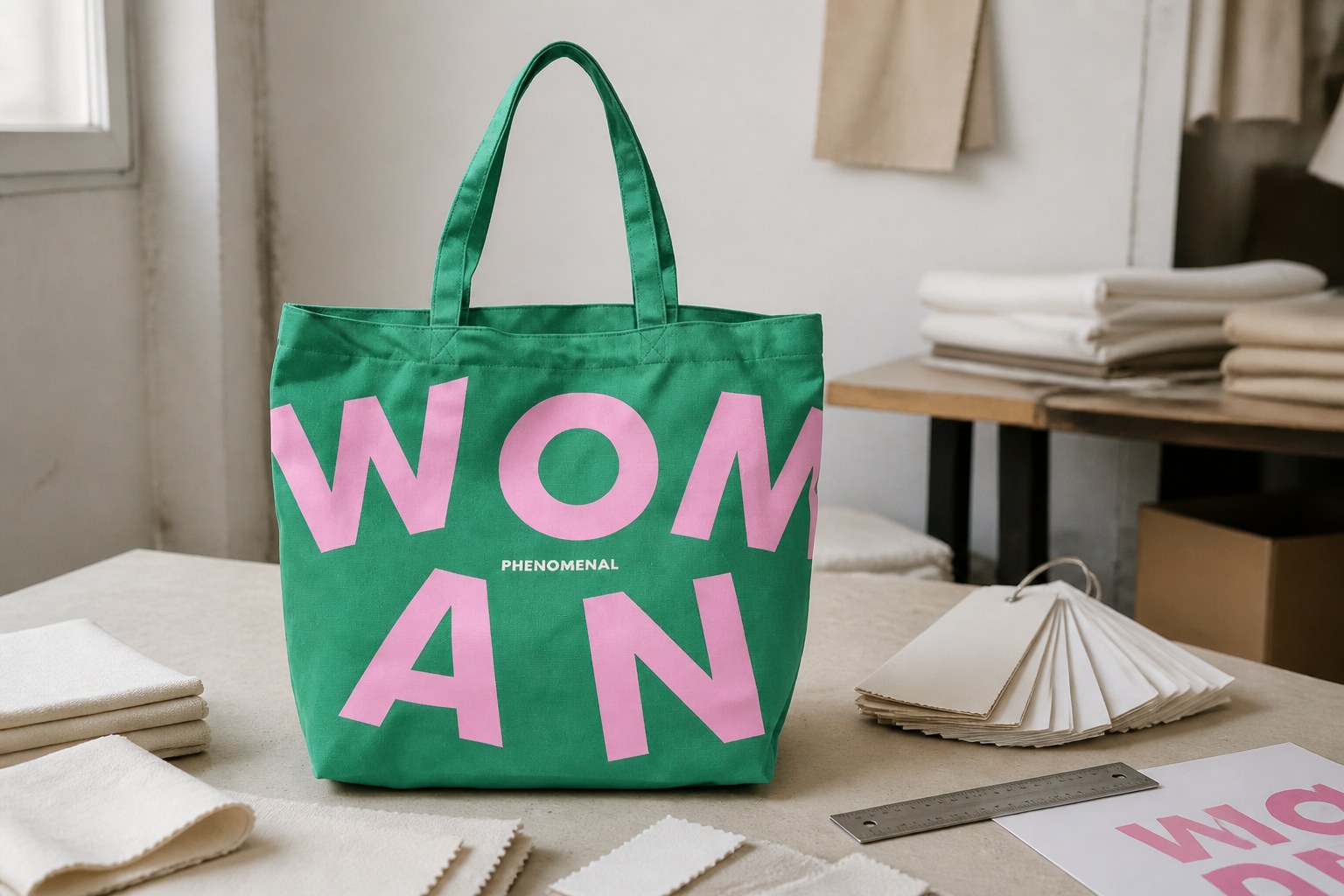
A Premier Supplier Is a Control System, Not a Marketing Label
A supplier can make one attractive tote and still struggle to repeat it across thousands of pieces. Bulk orders expose variables that a single photograph cannot show: fabric-lot texture, panel flatness, screen condition, ink preparation, operator setup, registration, drying or curing, handling between colors, sewing sequence, inspection and carton pressure.
The useful buyer question is therefore not "Can you screen print bags?" It is "What evidence connects my approved sample to every production carton?" The broader Custom Bag Manufacturer Guide explains general factory qualification. This article applies that discipline specifically to screen printed bags.
Keep Each Printing Guide Responsible for One Decision
| Buyer decision | Page that owns it | What this page adds |
|---|---|---|
| Choose screen print, digital, transfer or embroidery | Custom tote bag printing methods | How to verify the selected screen-print route in production |
| Approve artwork size, side and coordinates | Artwork approval guide | How the released file becomes a controlled shop-floor record |
| Control Pantone targets and viewing conditions | Color matching and drawdowns | How to detect drift during the run |
| Qualify the supplier and bulk control process | This guide | Evidence, sample gates, first-off, in-process QC, packing and reorder identity |
Ask Who Controls Every Handoff
A screen printed bag may move through material sourcing, cutting, panel printing, drying or curing, sewing, finishing, inspection and packing. Some suppliers operate every process internally; others coordinate qualified specialist partners. Either model can work when one team owns the specification and traceability.
| Handoff | Supplier evidence | Buyer risk if missing |
|---|---|---|
| Fabric to cutting | Material identity, lot reference, color and usable width | The sample and bulk use different surfaces |
| Cut panel to printing | Panel orientation, printable zone, side and artwork revision | Correct artwork is printed on the wrong side or position |
| Printing to sewing | Released print, cure status, contamination protection and bundle identity | Unapproved or mixed panels enter assembly |
| Sewing to final QC | Finished dimensions, print coordinates, function and appearance checks | A good flat print becomes distorted on the finished bag |
| QC to packing | SKU, quantity, fold, protection, carton and shipping marks | Transfer, abrasion or SKU mixing appears after inspection |
Make the Bag Printable Before Building the Screen
Bag design and print design cannot be separated. A coarse canvas, soft non-woven panel, coated polyester, natural cotton and jute surface do not accept the same detail or ink system in the same way. Seams, pockets, gussets and handle attachments can stop a panel from lying flat. Dark or strongly colored substrates may require a qualified underbase or a revised color expectation.
Freeze the bag material, color, finish, panel direction, construction sequence and printable zone before final screen preparation. If printing happens after sewing, approve the actual support method and check that internal seams or hardware do not lift the print surface. If printing happens before sewing, protect orientation and bundle identity so the correct panel reaches the correct SKU.
Require a Production Record, Not a Universal Recipe
There is no responsible single mesh count, squeegee pressure, ink deposit or cure temperature for every screen printed bag. The supplier should select and record the combination for the actual substrate, artwork and ink manufacturer's technical requirements. Coarser mesh can deliver more ink while finer mesh can hold more detail, but thread diameter, opening, stencil, ink chemistry and surface texture also affect the result.
A useful internal record identifies the substrate lot, screen, stencil or emulsion reference, ink system and batch, underbase, print sequence, setup settings, cure or dry route, operator, date and approved control sample. PRINTING United's technical guidance also emphasizes controlling variables and balancing mesh with ink behavior rather than treating one setting as universal. Review the screen-printing technical guide as process context, then follow the actual ink supplier's data sheet for the selected system.
Use Four Approval Gates
| Gate | What it proves | Release evidence |
|---|---|---|
| Ink drawdown or test print | Basic color, opacity and interaction with the named substrate | Dated substrate and ink reference |
| Same-material strike-off | Detail, registration, edge, hand feel and print dimensions | Signed physical strike-off and released artwork |
| Finished printed sample | Print placement after sewing, bag function, folding and packing exposure | Golden sample with version and measurements |
| First production piece | Bulk material, setup and construction match the approvals | First-off inspection before the run continues |
Request a Screen Print Sample Plan
Validate Cure and Durability for the Intended Use
A dry surface is not proof of a fully validated print. Ask how the supplier follows the selected ink system's technical requirements and how it confirms the result on the actual bag substrate. Depending on the use, the review may include dry and wet rubbing, flexing, adhesion, folding, washing or another buyer-approved method. Use the test relevant to the product instead of adding every available test.
The AATCC textile test-method directory helps buyers identify relevant textile colorfastness and appearance methods. The purchase order should name the agreed method, sample preparation, acceptance criteria and test stage. Do not claim washability, colorfastness or chemical compliance without evidence for the actual product.
Control Drift During Bulk Production
The best print at the start of the line does not represent the entire order. Sample across time, material lots, operators, artwork variants, colors and cartons. Keep the approved strike-off and finished sample at the inspection station. If the line changes ink, screen, material lot or setup, define whether a new first-off approval is required.
| Observed defect | Possible process source | Evidence to review |
|---|---|---|
| Weak or uneven opacity | Substrate variation, screen deposit, ink preparation or underbase | Material lot, screen record, ink batch and approved strike-off |
| Blurred edge or loss of small detail | Artwork limit, screen condition, movement or excessive deposit | Released file, screen, setup and first-off |
| Color-to-color misregistration | Panel movement, registration setup or handling between colors | Control marks, pallet support and in-process samples |
| Peeling, cracking or rub-off | Ink-substrate mismatch, contamination or incomplete cure | Ink TDS, substrate, cure record and agreed durability test |
| Correct flat print but wrong finished placement | Cutting, orientation, sewing or measurement-reference error | Panel map, finished-bag coordinates and golden sample |
Review Your Bulk Print QC Plan
Protect the Print During Sewing, Folding and Shipping
Print quality can deteriorate after it leaves the press. Sewing bundles can rub together, folding can create pressure marks, and uncured or incompatible surfaces can transfer inside tightly packed cartons. Approve the folding direction, interleaving or protective packing when needed, pieces per inner pack, carton count and moisture protection.
For repeat orders, retain the bag specification, material and color reference, print file, screen or setup record, ink reference, approved strike-off, golden sample, QC findings and packing standard. If any input changes, treat it as a controlled change and revalidate the affected gate.
Use Luckystar's Confirmed Planning Data Correctly
The figures below are company-provided planning references, not unconditional promises. Timing starts only after a usable specification, artwork, material route and sample approvals are clear. The exact quotation and schedule must be confirmed for each project.
| Planning item | Luckystar reference | Buyer qualification |
|---|---|---|
| Custom-order MOQ | 100 pieces and above | Confirm by material, bag construction, colors, print sides and artwork variants |
| Sample timing | 3-7 days | After usable specifications and required materials are available; special development may differ |
| 25,000-piece production plan | 40 days | Confirm after sample, artwork, material and packaging release |
| 50,000-piece production plan | 50 days | Confirm SKU count, print capacity and packing sequence |
| 100,000-piece production plan | 60 days | Confirm staged materials, line allocation, inspection and shipment plan |
| Main cost drivers | Material plus single- or double-sided printing | Also send color count, print area, underbase needs, packaging and testing requirements |
| General handmade size reference | The Luckystar tote catalogue notes a general +/-1 cm size tolerance | Agree the actual measurement method and product-specific tolerance in the purchase order |
Verify Luckystar Through Real Company Sources
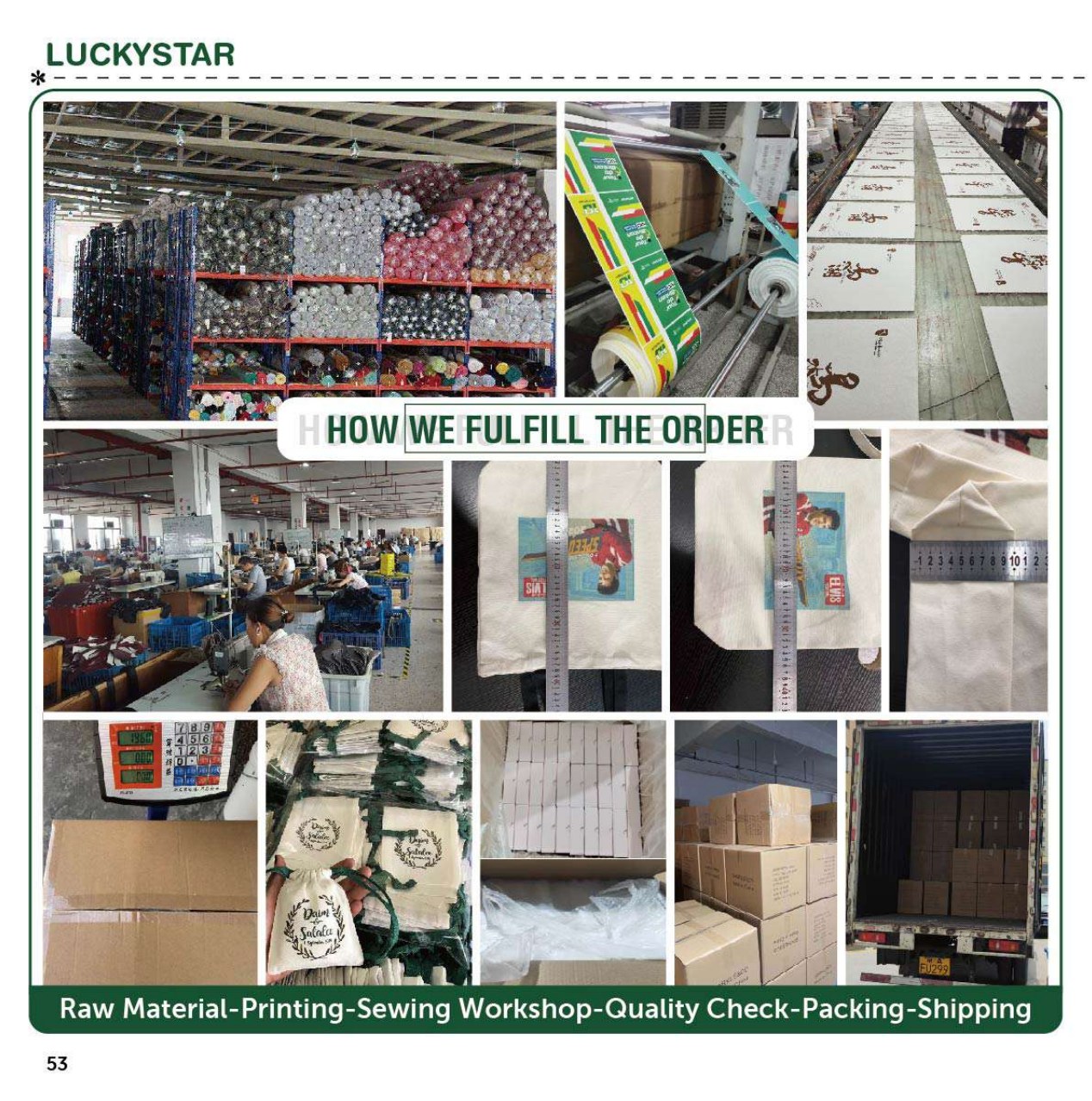
Buyers can compare this guide with Luckystar's own public materials. Review the independent-site product range, the custom printed shopping bag product page and the Luckystar tote bag catalogue. The catalogue includes the real order-workflow photographs used above.
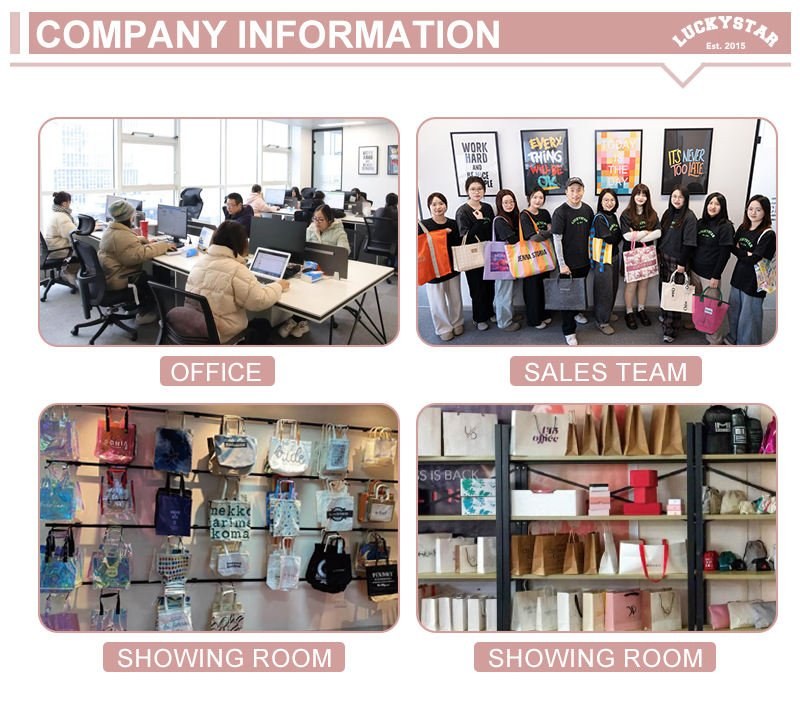
For international-platform references, view the specific silk printed canvas tote listing on Made-in-China and Luckystar's Alibaba verified manufacturer profile. These sources show actual product, customization and supplier information rather than a generic stock factory.
Screen Printed Bag RFQ Checklist
- Bag type, finished dimensions, target load and use case.
- Material, weight or construction, color and finish.
- Quantity by bag color, artwork version and destination.
- Vector artwork, finished print dimensions and color references.
- Front, back or both sides, plus measurable placement references.
- Required opacity, hand feel and intended care or durability exposure.
- Labels, individual packing, carton marks and barcode needs.
- Target sample date, delivery date, destination and shipment split.
If the factory or trading model has not yet been qualified, complete the evidence checks in the Custom Bag Manufacturer Guide before releasing the RFQ to bulk production.
Send Your Complete Screen Printed Bag RFQ
Email a prefilled screen-print brief
Related Sourcing Guides
- Complete custom bag manufacturer sourcing guide.
- Custom tote bag printing method selection.
- Printed tote artwork and placement approval.
- Screen printing versus heat transfer.
- Pantone, drawdown and bulk color control.
- Printing methods across shopping-bag substrates.
- Hemp tote printing and same-material strike-offs.
- Repeatable custom tote supply programs.
- Custom bag process from design to delivery.
Frequently Asked Questions
What should a buyer ask a screen printed bag supplier to show?
Ask for a same-material strike-off, a finished printed sample, the first production piece, the production-control record, in-process samples, durability evidence, final inspection results and the approved packing standard.
Is one digital mockup enough to release bulk production?
No. It can approve content and general placement, but it cannot prove ink behavior, opacity, registration, texture, hand feel, finished-bag coordinates or durability.
Is there one best mesh count for canvas tote bags?
No. Mesh count works with thread diameter, stencil, artwork detail, ink system, substrate texture and required deposit. Approve the physical result and require the supplier to retain the production setting.
How can buyers reduce color and opacity drift?
Freeze the substrate and ink references, approve a same-material strike-off, keep it at the line, sample across the run and require a new first-off when a controlled input changes.
What information changes a screen printed bag quotation?
Material, construction, quantity, number of bag colors, artwork colors, print area, one- or two-sided printing, underbase, samples, tests, labels, packing and delivery plan all affect the quotation.
Company and project contact
Ningbo Luckystar Commodities Co., Ltd. reviews screen printed bag projects against the submitted material, artwork, sample, inspection and packing requirements. Capability, commercial terms and evidence are confirmed for the specific order.
Review About Us, browse product capabilities, explore custom printed shopping bags, or contact the project team.






