Last reviewed: September 24, 2026
Waxed Canvas Bag Supplier: Finish, Ageing and QC Guide
A waxed canvas bag is not ordinary canvas with a heritage description. Its base cloth, wax system, application level, shade, surface transfer, crease behavior and ability to be restored must work as one controlled specification. This guide helps brands qualify a supplier, approve the right appearance and keep bulk production consistent without duplicating our broader canvas-manufacturing and tote-sourcing guides.
1. Buyer Quick Answer
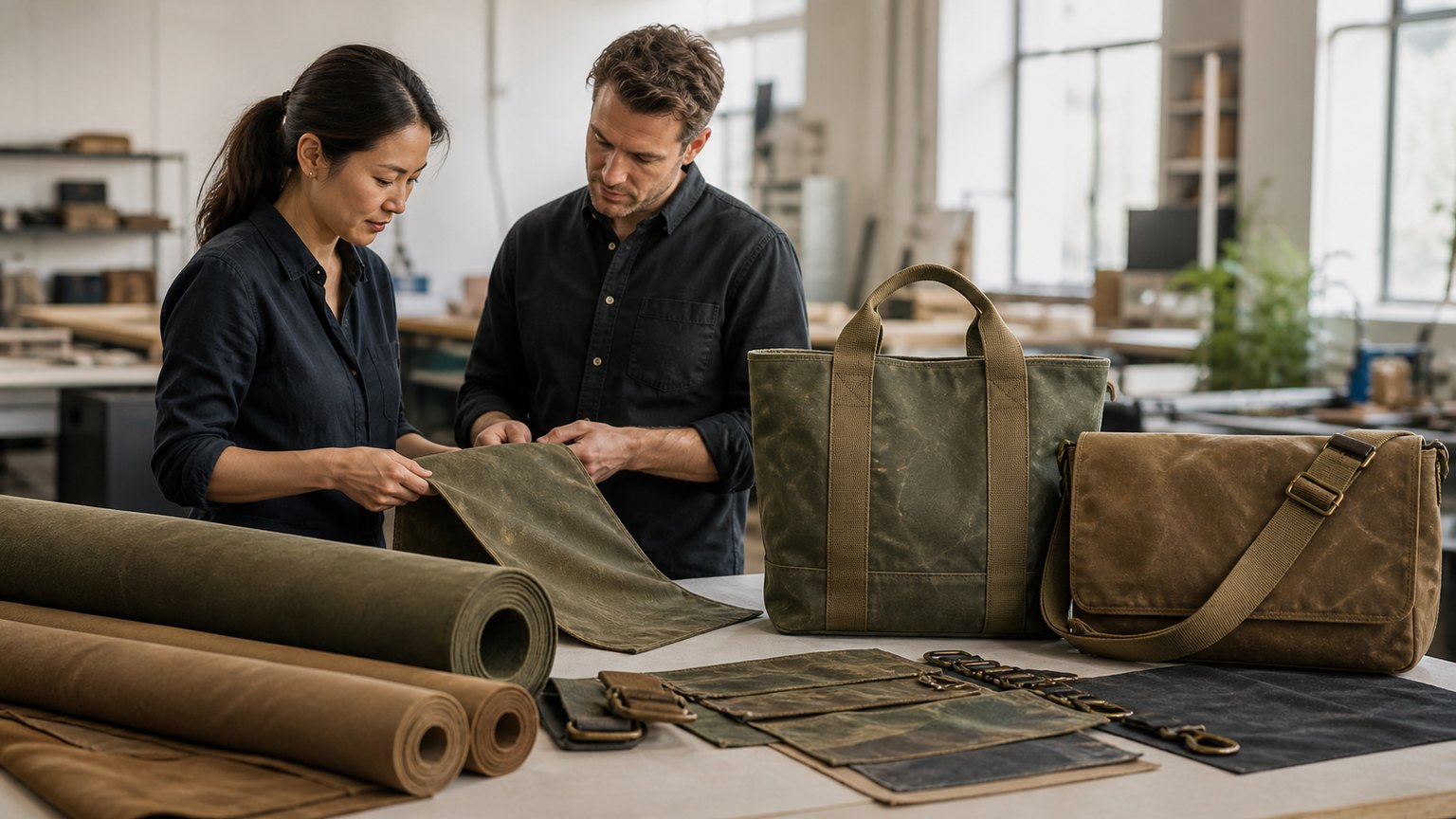
Specify the base-fabric composition, finished weight, wax or finish family, shade, hand feel, transfer limit, initial water repellency, abrasion-after-repellency result, crease appearance and care route. Approve a sealed reference set under agreed lighting, then make the mill article, dye lot and finish batch traceable through bulk production. Use the Custom Bag Manufacturer Guide for the wider supplier-selection framework.
2. Scope: The Wax Finish Is the Product Variable
This page owns finish identity, patina, transfer, water repellency, ageing and re-waxability. General canvas construction belongs in the premium canvas workmanship guide; retail assortment and ordering belong in the canvas shopping bag buyer guide. Separating those intents prevents three pages from repeating fabric weight, seams and supplier basics.
3. Define the Bag’s Real Use
Name the product, contents, load, weather exposure, abrasion points, temperature range, storage pattern and retail positioning. A fashion tote used in light rain needs a different finish balance from a field bag exposed to repeated folding and rough surfaces. Define whether visible creasing and shade variation are desired character or defects. The supplier cannot control an aesthetic that the brief never describes.
4. Lock the Base Canvas Before Waxing
Record fiber composition, weave, yarn, greige weight, finished weight, usable width, pretreatment and color. Wax can make a lightweight cloth feel substantial, but it cannot replace adequate tear strength or a stable weave. Compare base cloth and finished cloth as separate articles. For weight decisions, use the custom tote fabric-weight guide.
5. Separate Canvas, Duck and Twill
Suppliers may use “canvas” broadly. Plain canvas, numbered duck and twill differ in texture, drape, abrasion pattern and how wax reveals the weave. Specify a physical mill article rather than a category name. If buyers are still deciding between ordinary cotton and heavier canvas, the canvas vs cotton comparison should resolve that upstream choice first.
6. Define the Finish Family
“Waxed” can describe traditional oily wax, drier wax, emulsified systems or proprietary hybrids. These routes can differ in hand, surface rub-off, cold behavior, patina and maintenance. Ask the mill to state the commercial finish family and care limitations without demanding a confidential formula. The objective is reproducible performance and honest labeling, not reverse engineering.
Traditional or oily wax
This route can create rich color, strong crease marking and a tactile surface, but may feel tackier or transfer more readily. Confirm temperature sensitivity, packaging contact and lining compatibility. A romantic sample is not enough; review how it behaves after stacking, shipping and warm storage.
Dry wax
A drier surface can reduce handling concerns and support cleaner retail presentation. It may show a different patina and restoration behavior. Define dryness with a rub-transfer method and reference sample rather than relying on the phrase “dry touch,” which different suppliers interpret differently.
Emulsified or hybrid finish
These systems may feel closer to untreated textile and can be engineered for stable application, but buyers should not assume they age, wash or reproof like traditional wax. Obtain the supplier’s care guidance, restrictions and re-treatment compatibility, then test the complete bag.
7. Compare Finish Routes
| Finish route | Buyer appeal | Main risk | Approval evidence |
|---|---|---|---|
| Traditional/oily | Rich patina and tactile story | Transfer and heat sensitivity | Rub, stack and heat conditioning |
| Dry wax | Cleaner handling | Different crease and reproof behavior | Crease board and care trial |
| Emulsified/hybrid | Softer, more uniform hand | Marketing name hides chemistry route | Supplier declaration and performance tests |
8. Specify Finished Weight, Not Just Base Weight
Wax adds mass, so a base-cloth figure cannot describe the finished material. Record both values, test method and tolerance. Large weight variation can signal inconsistent application and may change drape, sewing, freight and retail feel. Measure samples after conditioning, because surface temperature and moisture can influence handling and apparent weight.
9. Approve Shade Under Controlled Lighting
Wax deepens color and makes pressure marks visible. Approve shade, undertone, luster and acceptable variation under named lighting, with the swatch oriented consistently. Keep an unwaxed color reference only for process diagnosis; bulk acceptance must compare finished waxed material to the sealed waxed standard. Define whether edge darkening is acceptable.
10. Define Patina Before It Becomes a Dispute
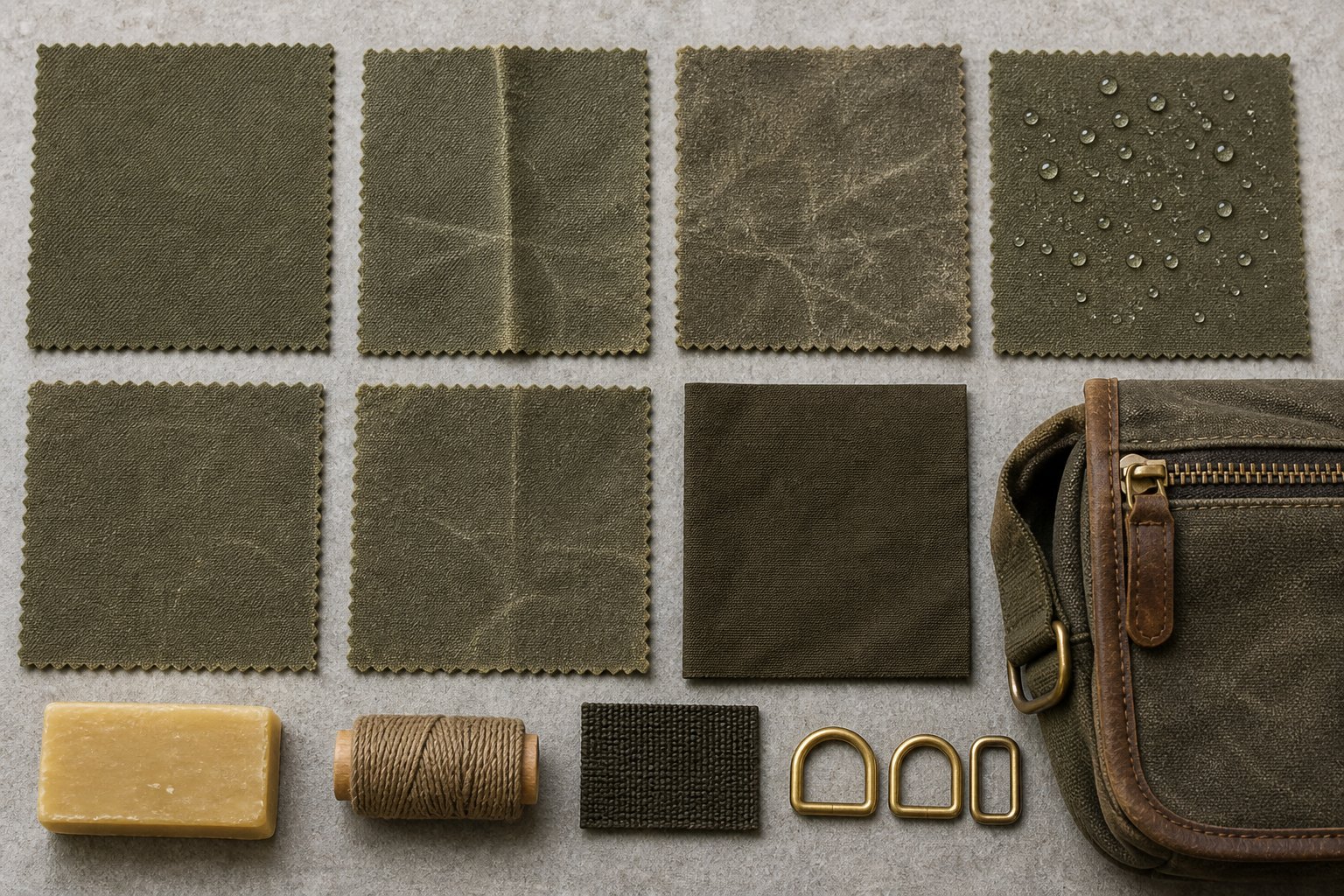
Patina is progressive surface change from folds, rubbing and wax movement. Brands may value it, while customers expecting a uniform fashion surface may see damage. Build a small ageing board showing new, flexed, rubbed and restored conditions. Photographing it under controlled light helps sales, quality and customer service use the same vocabulary.
11. Set Hand-Feel Boundaries
Words such as dry, waxy, firm and supple need reference samples. Approve a center target plus unacceptable too-dry and too-tacky limits. Evaluate after material conditioning and again after handling. A bag can look correct yet feel oily, noisy or overly stiff. Sensory approval should supplement measurable transfer, weight and flex tests.
12. Measure Surface Transfer
Rub the waxed face against specified white and dark contact fabrics under controlled load and cycles, then grade staining and color transfer. Include intended lining, apparel-contact and packaging materials. Repeat after warm conditioning if the sales route includes hot warehouses or vehicles. The signed standard should state both test setup and permitted grade.
13. Evaluate Odor Without Vague Promises
Agree on conditioning, panel size, assessor count and acceptance wording. Odor can intensify inside sealed packaging, so test after a defined closed period as well as in open air. Do not mask it with fragrance. Investigate finish, storage, lining, adhesives and packaging separately when a sample fails.
14. Treat Water-Resistant and Waterproof Differently
Waxed canvas can resist surface wetting, but seams, needle holes, closures and prolonged exposure can admit water. Avoid an unqualified waterproof claim unless the complete bag passes a suitable test for the intended exposure. State “water-resistant” with conditions and limitations where supported, and keep submersion claims out of ordinary lifestyle-copy approval.
15. Use a Repeatable Spray Test
AATCC TM22 measures fabric resistance to surface wetting through a controlled spray and visual rating. The official AATCC TM22 summary explains its purpose and scope. Specify the edition or agreed internal equivalent, specimen orientation, conditioning and required rating. Test new material and aged material rather than relying on initial repellency alone.
16. Add Hydrostatic Testing Only When Relevant
Hydrostatic-pressure testing answers resistance to water penetration under pressure, a different question from spray wetting. It may be useful for certain panels but can overstate whole-bag protection if seams and openings are ignored. Select methods from the real use case, record face orientation and avoid combining unrelated results into one vague “waterproof” badge.
17. Test Abrasion Before and After Repellency
Abrasion can move or remove finish before the base cloth fails. Define abrading medium, load, cycles and specimen face, then inspect appearance, mass change and water repellency. This sequence reveals whether a beautiful new sample maintains function. Route general seam and construction tests to the bag quality standards guide.
18. Examine Flex and Crease Behavior
Fold material repeatedly along consistent directions and inspect whitening, cracking, tack change and permanent lines. Repeat at the coldest realistic use temperature if necessary. Creasing may be desired patina, but brittle cracking, delamination or exposed base color may be failure. Approve photographic examples instead of subjective descriptions alone.
19. Condition for Heat and Cold
Warm storage can soften wax and increase transfer; cold can stiffen the finish or exaggerate creases. Define safe conditioning temperatures based on shipping and use, not extreme numbers chosen for marketing. After conditioning, assess blocking, color, hand, odor, transfer and closure operation. Allow specimens to return to room conditions and note reversible versus permanent change.
20. Check Blocking in Stacks
Folded bags and cut panels can remain under pressure for weeks. Simulate face-to-face and face-to-lining contact with controlled pressure and temperature. Check sticking, imprinting and color migration. If tissue or interleaving is needed, make it part of the packing specification and cost calculation rather than a late factory workaround.
21. Validate Sewing on the Actual Finished Cloth
Wax changes friction at guides, needles and feed mechanisms. Sewing trials should use production finish, thread, needle, seam allowance and reinforcement. Inspect skipped stitches, tension marks, wax buildup and appearance around needle holes. General construction checkpoints remain in the custom bag inspection checklist.
22. Control Handle and Base Reinforcement
Waxed canvas is often paired with webbing, leather or coated trims. Specify the complete load path and whether reinforcement is visible. Compatibility matters: wax transfer can mark pale webbing or lining, while rigid trim edges can abrade the cloth. Approve the assembled bag after load cycling, not isolated fabric performance only.
23. Choose Linings for Compatibility
Test lining color transfer, adhesive interaction, odor trapping and blocking. A pale cotton lining can reveal migration that a dark lining hides. A waterproof lining can reduce breathability and change the product claim. Record lining composition and attachment so a supplier cannot switch it without reviewing finish compatibility.
24. Select Hardware and Trim Deliberately
Antique brass tones often suit waxed canvas, but finish durability and destination-market chemical requirements still apply. Approve plating, color, pull force, sharp edges and corrosion behavior. Leather, synthetic leather and cotton webbing each create different care and sourcing implications. The leather tote material guide covers leather identity and finishing where genuine leather is specified.
25. Plan Branding Around the Surface
Wax can reduce ink or adhesive bonding and make fine print inconsistent. Test decoration on production-finished cloth after conditioning and abrasion. Woven labels, embroidery or mechanically attached patches may be more controllable than some transfers, but every method changes appearance and care. Compare options in the tote bag printing guide.
26. Approve a Four-State Sample Set
| State | Purpose | Approval points |
|---|---|---|
| New | Bulk appearance target | Shade, hand, weight, transfer |
| Flexed | Expected crease language | Whitening and recovery |
| Abraded | Wear boundary | Surface and repellency retention |
| Re-waxed | Care feasibility | Uniformity, color and transfer |
27. Seal the Golden Sample and Swatch
Approve a finished bag, material swatch, aged reference and signed data sheet. Seal them against substitution and record date, lot, mill article, finish batch and reviewer. A single photograph cannot preserve hand or transfer behavior. Follow the custom sample approval guide for control through pre-production.
28. Define Bulk Tolerances
Write measurable limits for finished weight, shade, width, transfer, water rating and dimensional stability, plus graded visual limits for crease and bloom. Define sampling frequency by roll and lot. “Same as sample” is helpful but insufficient when buyers and factories must decide whether a borderline roll can be cut.
29. Control Mill and Finish Batches
Record base-cloth lot, dye lot, finish lot, receipt date and roll identity. Do not mix noticeably different lots within one bag or retail set. Segregate and shade-band rolls before cutting. A supplier should explain traceability, retained samples and escalation when the mill changes a finish article.
30. Inspect Incoming Rolls
Check roll width, length, weight, shade sequence, surface streaks, bare spots, excessive wax, contamination, edge variation and blocking. Sample both ends and the middle when risk justifies it. Quarantine suspect rolls before they reach cutting; finished bags cannot economically correct inconsistent coating across panels.
31. Plan Cutting and Panel Orientation
Nap-like visual direction, pressure marks and shade variation can make reversed panels look mismatched. Mark face, grain direction and orientation in the marker plan. Protect cut bundles from heat, dust and compression. Yield calculations should include visual segregation, not only geometric nesting, and belong in the wider canvas sourcing plan.
32. Use In-Line Checks at Risk Points
Inspect material identity at issue, panel matching after cutting, surface damage after sewing, transfer at lining assembly and blocking before packing. Short feedback loops prevent an entire lot from acquiring the same mark. Record defect location and likely cause so correction targets handling, machine contact or incoming finish rather than random cleaning.
33. Build a Final Inspection Plan
| Checkpoint | Method | Failure signal | Record |
|---|---|---|---|
| Appearance | Controlled light vs standard | Unapproved shade or streak | Lot and defect map |
| Transfer | Specified rub/contact | Staining above grade | Cloth and rating |
| Function | Load and closure cycle | Seam, handle or hardware failure | Sample and result |
| Packing | Stack/heat check | Blocking or imprint | Packing configuration |
34. Design Packing Around the Finish
Use clean, compatible contact materials and avoid tight folds across display faces. Test tissue, bags, belly bands and cartons for imprinting and migration. Include ventilation only where product protection and shipping conditions allow it. Pack orientation, units per carton and warehouse temperature can affect appearance as much as the final sewing operation.
35. Write Accurate Care Instructions
Care depends on the actual finish, so obtain mill and reproof-product guidance. Many traditional waxed canvases should not be machine washed or treated with ordinary detergent because those actions remove finish. Tell customers how to brush or spot clean, dry, store and reproof. Validate the instructions on a finished sample before printing them.
Re-waxing trial
Use the intended maintenance product, application amount, temperature and cure time. Check evenness, shade shift, odor, tack and water repellency after restoration. Re-waxability is not proven by the existence of a wax bar; the finish system and customer procedure must be compatible.
Customer-service boundary
Explain that natural crease marks and patina may be expected while exposed base cloth, persistent tack, severe transfer or cracking may require review. Give customer service the approved ageing board so normal character is not misclassified and real defects are not dismissed as heritage.
Storage after care
Store the cleaned bag dry, supported and away from direct heat. Avoid sealing a damp or newly re-waxed product immediately, because trapped moisture, odor and surface contact can alter the finish. Validate any dust bag against migration before recommending long-term storage.
36. Avoid Automatic Sustainability Claims
Repairability and long use can be positive attributes, but cotton plus wax is not automatically biodegradable, recyclable or lower impact. Finish chemistry, components, use life and end-of-life infrastructure matter. Translate durability into a tested use-life claim using the sustainable bag use-life guide rather than using “eco-friendly” without evidence.
37. Compare Cost on the Same Specification
Quotes must use the same base cloth, finished weight, finish family, test plan, trim quality, packing and defect allowances. A lower quote may simply remove finish mass or shift material. Use the custom bag cost guide to separate material, process, testing and commercial terms.
38. Audit the Supplier’s Real Capabilities
Ask who sources or applies the finish, which controls are performed by the mill and assembler, how lots are traced, and whether the supplier retains aged and bulk samples. Review corrective-action examples. The tote manufacturer selection guide covers capacity and commercial fit; this page adds wax-specific controls.
39. Recognize Red Flags
Escalate when “waxed canvas” has no mill article, finished weight or finish family; when a supplier promises waterproof performance without a test; when color is approved only from a screen; when bulk lots cannot be segregated; or when care advice is copied from another finish. Uncontrolled rewaxing, unexplained oily transfer and claims that every crease is acceptable are also warning signs.
40. Send a Waxed-Canvas-Ready RFQ
Send product drawings, load, use environment, base composition and weight, finish target, shade, hand and patina references, transfer limit, water and ageing tests, trim materials, branding, packing, quantity and destination. Request mill/finish traceability and a four-state approval set. Connect development to the custom bag manufacturing process, and use the manufacturer checklist for final due diligence.
Request a Waxed Canvas Bag Quote
Send the intended bag type, dimensions, load, base canvas, finish appearance, required tests, trim route, logo, quantity and market. We can identify the sample stages and evidence required before bulk approval. Compare the current custom tote bag range. For the complete OEM/ODM sourcing framework, return to the core Custom Bag Manufacturer pillar guide.
Get a Waxed Canvas Bag Quote
Email a prefilled waxed-canvas brief