Top 10 Low MOQ Shopping Bag Manufacturers for Small Brands
Last reviewed: September 16, 2026
A low minimum order quantity can protect a small brand from excess inventory, but the smallest number on a product page is not automatically the best deal. A supplier may accept one decorated stock tote while requiring hundreds or thousands of pieces for a custom size, dyed fabric, special handle, printed gusset, or traceable material claim. Those are different products, even if both are described as a “custom shopping bag.”
This 2026 guide compares ten practical sourcing options for small brands. It covers paper carrier bags, non-woven and woven polypropylene shoppers, cotton or canvas bags, and reusable textile formats—not only flat totes. It also shows how to compare minimums at the SKU, color, size, artwork, and shipment level so that a cheap test order does not become an expensive operational mistake.
The list was reviewed on September 8, 2026 using current public supplier information. Published minimums, prices, inventory, decoration methods, lead times, territories, and material claims can change. Confirm the exact SKU and written quotation before ordering. LUCKYSTAR is the publisher of this guide, so its first-place position is a disclosed editorial assessment, not an independent award.
Need a small pilot without hiding the real minimum commitment? Send the pilot objective, bag use and target load, stock or custom route, dimensions, material and construction, artwork and decoration, quantity by SKU/colour/design, sample and approval path, evidence requirements, acceptance criteria, packing, destination and required date. LUCKYSTAR can return the order-level MOQ drivers, one-time costs, evidence gaps and repeat-order assumptions in writing.
Page role: This page is responsible for low-MOQ pilot routes, split minimums, setup economics and scale-up planning. Use the worldwide manufacturer comparison when a larger program becomes viable, and the custom shopping bag collection to define a pilot RFQ.
Quick answer: which supplier route fits your first order?
For one to a few pieces, a no-minimum decorator or print-on-demand service is usually the cleanest route. For a launch of several dozen units, decorated stock bags or online packaging catalogs can offer a better balance of unit cost and risk. Once a brand needs its own dimensions, construction, material weight, handle, packaging, or repeat-production controls, a custom development partner becomes more relevant—even when its order-specific minimum is higher.
| Small-brand situation | Usually suitable route | What is normally customized | Main compromise |
|---|---|---|---|
| One prototype or creator sample | No-minimum digital decorator | Artwork on a listed blank | Limited structure, color, and bag geometry |
| 12–50 event or pop-up bags | Stock-bag decorator | Logo, one or two print locations | Blank inventory controls the available options |
| 30–100 paper or cotton bags | Online packaging catalog | Selected size, material, and print menu | Options vary by product and destination |
| 100–500 operational pilot | Custom supplier using available materials | Size, print, trim, handle, construction within practical limits | MOQ depends on every specification |
| Repeat retail program | Managed custom development | Approved specification, sampling, QC, packing, reorder references | More development work before production |
If your need is strictly a flat promotional tote, also read our separate low MOQ custom tote bag manufacturer guide. This article has a wider shopping-bag scope and uses a different evaluation model.
Low MOQ is not one number
The most useful way to think about MOQ is as a vector, not a single figure. Ask for the minimum of each element below.
| Minimum layer | The question to ask | Why it changes the real order |
|---|---|---|
| Order MOQ | What is the minimum total quantity? | This is the headline figure but rarely the whole answer |
| Per SKU MOQ | Is the minimum repeated for each size or construction? | Two sizes may double the commitment |
| Per-color MOQ | Is each bag body or trim color subject to a minimum? | A 300-piece order split into three colors may be rejected |
| Per-artwork MOQ | Can different logos share the same order? | Event, store, and influencer artwork may be treated separately |
| Material MOQ | Does custom fabric, paper, film, or lamination require a mill minimum? | Special inputs can exceed the sewing or converting minimum |
| Decoration MOQ | Is the print method available at the quoted quantity? | Screen, transfer, digital, embroidery, and gravure have different economics |
| Shipment MOQ | Can one order be divided across destinations? | Split freight and handling can erase the pilot-order saving |
| Reorder MOQ | Will the same low minimum apply next time? | Stock, color, plate, and setup conditions can change |
A supplier advertising “MOQ 1” may be completely accurate for one digital-print stock item. It does not mean that a Pantone-dyed, custom-gusseted bag with reinforced handles is also available at one piece.
How we evaluated the top 10
The ranking favors usefulness to a small brand rather than the lowest advertised quantity alone. We considered:
- the range of shopping-bag formats accessible at modest quantities;
- the clarity of product-level minimums and online configuration;
- the difference between decorating stock and developing a custom bag;
- sampling, artwork, quality, and repeat-order support;
- the path from a test order to a controlled commercial run; and
- the amount of verification a buyer must still complete.
“Manufacturer” is used in the search-category sense. The list includes manufacturing and sourcing partners, promotional-product suppliers, decorators, and online platforms. A buyer should identify the actual operating model before treating any seller as the producer of every item in its catalog. For a deeper supplier due-diligence framework, use the Custom Bag Manufacturer Guide and our guide on how to choose a custom shopping bag manufacturer.
Top 10 at a glance
| Rank | Supplier | Best small-brand use | Public low-quantity signal reviewed | Important verification |
|---|---|---|---|---|
| 1 | LUCKYSTAR | Controlled custom pilot with a scale-up path | MOQ quoted by specification; no universal public minimum | Per-SKU and per-color minimum, production route, terms |
| 2 | Custom Ink | One-off or short-run decorated stock bags | No-minimum products are identified in its bag catalog | Exact SKU, decoration method, print area, delivery date |
| 3 | Totally Promotional | Small event runs from promotional stock | Some listed products start at low double-digit quantities | Product-specific minimum and inventory |
| 4 | ToteBagFactory | Short-run logo decoration on stocked totes | Public decoration minimums vary by method | Blank availability, print method, artwork limits |
| 5 | Packhelp | Low-quantity paper carriers and selected cotton bags | Current pages show starting quantities by product | Country availability, configuration, taxes, freight |
| 6 | VistaPrint | No-minimum visual tests and small decorated runs | Many tote products are available from one unit | Stock item versus full-custom construction |
| 7 | 4imprint | Promotional programs with item-level quantity tiers | Catalog products show their own minimums | Ship date, decoration, setup, exact product source |
| 8 | ePromos | Comparing many promotional bag types | Catalog filters and product pages expose minimums | SKU-specific quantity, stock, decoration, schedule |
| 9 | Bagmasters | US-focused promotional bag sourcing | Product pages list minimum quantities | Decoration assumptions, samples, freight, availability |
| 10 | noissue | Standardized branded cotton tote route | Standard-handle products use a self-service route | Self-service quantity; custom options may require much more |
The table is a starting map, not a transferable promise. A published minimum for one item must not be generalized to the supplier's full range.
Publisher and ranking disclosure: LUCKYSTAR is the publisher and first-ranked supplier in this article. The placement is a commercial editorial judgement and does not independently verify superior low-MOQ capability, factory ownership, capacity, material availability, origin, price, timing, print performance, certification or compliance. The legal seller, assigned production and decoration route, economic minimum, evidence, samples, QC, packing, cost and delivery commitment depend on the exact order, final specification and written confirmation.
1. LUCKYSTAR — best for a controlled pilot that can become a repeat program
LUCKYSTAR custom shopping bags are a strong fit when a small brand has moved beyond “put this logo on any available tote” and needs a bag designed around retail use. The value is not a blanket claim of the market's lowest MOQ. It is the ability to align the pilot with the future order: construction, size, material, handle, artwork, inspection points, packing, and reorder references can be discussed as one sourcing brief.
Why LUCKYSTAR can make sense for a small brand
A useful low-quantity quote should show what has been simplified to make the pilot possible. For example, an available material or standard trim may reduce the entry quantity, while a custom-dyed body or unusual lamination may raise it. LUCKYSTAR can review those trade-offs through OEM/ODM development and supply coordination, subject to the confirmed specification and written quotation.
Small brands can ask for two scenarios:
- a pilot route that uses practical, available inputs; and
- a repeat route that reflects the expected commercial volume and tighter brand controls.
That comparison makes the cost of learning visible. It also helps avoid validating a bag that cannot be reproduced economically. Use our shopping bag MOQ and production-time guide before submitting an RFQ.
What to verify with LUCKYSTAR
Confirm the minimum by material, size, colorway, artwork, print process, packing method, and destination. Ask which operations are coordinated through the supply chain and which evidence will be available for your actual order. Commercial terms, claims, lead time, sample charges, and MOQ remain subject to specification and written confirmation.
2. Custom Ink — best for one-off validation on catalog bags
Custom Ink's public bag catalog includes grocery and shopping totes, paper bags, plastic bags, and a no-minimum bag category. Its current tote pages say that selected reusable bags can be ordered without a minimum, which is useful for a founder sample, staff mock-up, photoshoot, or very small activation.
Where it is strongest
The route is convenient when the product already exists in the catalog and the main variable is artwork. Digital or transfer-based decoration can avoid the setup logic associated with some bulk print methods.
What to verify
Check whether “no minimum” applies to the exact product, color, print location, and decoration method you selected. Confirm artwork detail, color expectations, production schedule, and the delivery promise shown in the final cart. A one-piece decorated blank is not the same as a fully developed custom shopping bag.
3. Totally Promotional — best for low-double-digit event quantities
Totally Promotional offers a broad promotional tote assortment, including non-woven options. Some public product pages show minimums in the low double digits, making the supplier relevant to pop-ups, local launches, community events, and staff kits where a stocked form is acceptable.
Where it is strongest
Small buyers can compare many colors, shapes, and event-oriented products without building a bag specification from zero. That shortens the sourcing cycle when the event date matters more than structural exclusivity.
What to verify
Treat every product page independently. Confirm whether the minimum is per color, whether setup is included, the approved imprint area, overrun or underrun policy, inventory at order time, and the committed ship date. If color fidelity matters, follow a written approval path rather than relying only on a monitor preview; our Pantone, ink drawdown, and bulk color guide explains why.
4. ToteBagFactory — best for choosing decoration economics
ToteBagFactory publicly separates minimums by decoration route: its current information describes different entry quantities for screen printing, digital printing, and embroidery. This is useful because the artwork and method—not only the bag—often determine the feasible pilot size.
Where it is strongest
The model suits brands willing to choose from stocked totes and then optimize the decoration method for quantity and design. A simple one-color mark may point to one route; a full-color launch graphic may point to another.
What to verify
Confirm blank stock, actual fiber and weight specification, printable area, color count, underbase requirements, setup charges, proof type, spoilage allowance, and reorder availability. The lowest minimum may not produce the lowest acceptable cost per usable bag.
5. Packhelp — best for low-quantity paper carriers and configured cotton bags
Packhelp is especially relevant when “shopping bag” includes retail paper carriers. Its current public pages show selected custom paper bags starting at 30 pieces and a configured cotton bag starting at 50 pieces. Those quantities are product-specific and may vary by market, configuration, or availability.
Where it is strongest
An online packaging configurator helps a small retailer compare dimensions, paper or textile choices, print coverage, and quantity tiers. This can be more suitable than a textile-only tote supplier when the brand needs a paper carrier for a boutique or launch event.
What to verify
Check which country site you are using, the exact material and weight, handle type, print coverage, artwork template, VAT or tax treatment, delivery charge, and dispatch estimate. For a physical retail fit check, start with the shopping bag size and capacity guide.
6. VistaPrint — best for a no-minimum visual test
VistaPrint's current US tote catalog identifies many products as having no minimum quantity, and its full-custom tote page says one unit can be ordered for that specific product. Its broader bag page also explains that minimum behavior varies by decoration method: screen printing may carry a minimum while digital, heat-transfer, or embroidery options may not.
Where it is strongest
It is practical for testing artwork scale, gifting a founder sample, or producing a few bags for content. The online design path is accessible to teams without packaging engineers.
What to verify
Separate product customization from construction customization. A “full-custom” print can still be tied to a fixed listed bag. Confirm panel size, seams, handle, lining, print technology, care, color expectation, and shipping before using that sample as the benchmark for a later factory order.
7. 4imprint — best for item-level promotional planning
4imprint carries a large promotional tote and shopping-bag catalog. Public listings show different minimums and ship-time signals at item level, so small brands can shortlist products around an event quantity rather than assume one company-wide MOQ.
Where it is strongest
The range is useful when function and delivery certainty dominate: conference bags, grocery totes, insulated shoppers, and other stock-based formats can be assessed side by side.
What to verify
Record the item number, minimum, color, imprint method, included decoration, setup, proof, estimated ship date, and freight on the same day. Catalog breadth can hide differences in origin, construction, and repeat availability. Ask for a physical sample when the bag carries a paid retail purchase rather than a lightweight giveaway.
8. ePromos — best for comparing promotional categories
ePromos provides a broad tote and bag catalog with filters for materials, minimum quantities, and other attributes. This can help a small brand narrow an initial field by use case and budget.
Where it is strongest
The catalog approach works for buyers who need a familiar promotional product quickly and are willing to use a standard construction.Filters can accelerate discovery across cotton, non-woven, recycled-content listings, insulated bags, and specialty forms.
What to verify
Filter results are not a final specification. Verify the product page, current quantity, material wording, decoration process, print area, available colors, production time, and freight. If an environmental attribute matters, request order-level supporting documentation and use narrow language; do not turn a catalog label into a company-wide certification claim.
9. Bagmasters — best for US promotional sourcing support
Bagmasters lists promotional tote categories and product-level minimum quantities. It can suit a US small brand that wants guidance choosing from stocked products rather than engineering a new structure.
Where it is strongest
The route can reduce decision load for standard campaigns. A buyer can focus on the product, imprint, quantity, and required date.
What to verify
Ask whether the online minimum applies to the selected color and decoration, whether the displayed price includes setup, how proofs are approved, what substitutions are allowed, and how a repeat order is matched. Read our logo and color consistency guide for shopping bag reorders before approving a program expected to return season after season.
10. noissue — best for a standardized branded cotton-tote route
noissue publishes specifications for custom cotton tote options. Its current help material distinguishes a standard-handle self-service option from some custom handle or development paths that require a quote and may carry a 1,000-piece minimum.
Where it is strongest
This distinction is valuable: it shows how a standardized route can be accessible while added construction choices change the economics sharply. Small brands that accept the standard format can explore the self-service path.
What to verify
Confirm the actual self-service quantity available in your market and cart, material weight, print restrictions, handle length, lead time, shipping, and documentation for any material or certification statement. Never assume that a claim tied to one product or supply chain applies to another.
Supplier type matters more than the badge “low MOQ”
| Sourcing model | Typical entry logic | Best use | What it usually cannot prove |
|---|---|---|---|
| Print on demand | One item produced after an order | Artwork and audience validation | Bulk color matching or custom construction |
| No-minimum catalog decorator | Listed blank plus eligible decoration | Samples, staff kits, micro-events | Ownership of the blank's manufacturing process |
| Stock promotional supplier | Case or method-based minimum | Short event run with a fixed shape | Long-term stock continuity |
| Online packaging platform | Product-specific configured quantity | Boutique paper bags and standardized textiles | Uniform terms across every region and product |
| Custom development partner | Order-specific minimum based on inputs and process | Operational pilot and repeat program | One universal minimum for every design |
For small brands, “low MOQ” should mean the lowest quantity that can answer the next business question. A single printed sample may answer, “Does the artwork look appealing?” It cannot answer, “Will 300 bags pack efficiently, survive store use, and match again in six months?”
MOQ evidence boundary: treat every minimum as a dated configuration, not a supplier-wide promise. Record whether it applies per blank SKU, colour, size, artwork, print side, decoration method, custom material, destination or production lot. Compare total pilot cost, usable quantity, approval risk and repeatability; a one-piece digital sample and a low-volume production-ready bag answer different business questions.
The hidden costs behind a tiny order
Setup cost is only the first layer
Screens, plates, digitizing, artwork cleanup, proofing, sample shipping, carton handling, and customs clearance may be spread over very few units. A low minimum can therefore carry a high landed cost per usable bag.
A color split can multiply the commitment
Suppose the advertised MOQ is 100 pieces, but it applies to each body color. Four colorways may require 400 pieces, while two artworks on each color can create additional decoration minimums. Ask the supplier to write the matrix explicitly.
Freight is indifferent to your marketing language
Small express shipments can be fast but expensive. Bulky reusable bags also ship a large amount of air if they are not folded and cartonized well. Compare carton dimensions, pieces per carton, gross weight, and volumetric weight. Our carton optimization guide provides the calculation fields.
| Quote that looks low | Possible hidden issue | Better comparison field |
|---|---|---|
| “From 1 piece” | Only one digital-print stock SKU qualifies | Exact SKU and decoration route |
| “MOQ 50” | Minimum repeats by color or size | Total order and split minimums |
| Low unit price | Setup, proof, or freight excluded | Landed cost per accepted unit |
| Fast production | Clock starts after proof or stock arrival | Approval-to-dispatch timeline |
| Recycled / organic / certified | Claim may be product- or batch-specific | Document, scope, issuer, validity, transaction evidence |
| Custom bag | Only the logo is customized | Editable construction parameters |
Calculate the minimum viable order, not only the MOQ
Use this simple planning formula:
Minimum viable order cost = product + setup + sampling + packing + freight + duties/taxes + inspection + expected unusable units
Then divide by the number of accepted units you can actually deploy. A 50-piece order with five samples, three damaged units, and two late replacements gives only 40 launch-ready bags. A slightly larger, better-controlled pilot may create a lower cost per usable unit and a more reliable learning result.
Our 2026 custom shopping bag pricing guide explains the main cost drivers without pretending that one public price applies to every construction.
Choose the pilot quantity by decision risk
| Decision to validate | Suggested evidence | Quantity logic |
|---|---|---|
| Artwork scale and placement | Digital mock-up plus one physical sample | One or a few may be enough |
| Product fit and carrying comfort | Samples loaded with actual merchandise | Test each intended size and use case |
| Pop-up demand | Small decorated stock run | Match likely event traffic and acceptable leftovers |
| Store operations | Controlled pilot with staff feedback | Cover multiple shifts and real checkout behavior |
| Print and construction repeatability | Pre-production approval plus inspected batch | Enough units to observe process variation |
| National rollout | Pilot followed by planned bulk order | Validate before committing to the forecast |
The custom shopping bag sample-development process helps separate a visual prototype from a pre-production reference.
A three-stage sourcing plan for small brands
Stage 1: prove the message
Use one or a few decorated stock bags to test logo size, campaign language, photography, and customer response. Do not over-engineer the bag before the brand knows what matters.
Stage 2: prove the operation
Run a controlled pilot in the intended store, event, or fulfillment workflow. Check product fit, handle comfort, loading, checkout speed, packing, print rub, seam behavior, and how many customers reuse the bag.
Stage 3: lock the repeat specification
Once the design earns a repeat, document dimensions and tolerances, material description and weight, colors, print method and location, handle construction, reinforcement, packing, inspection criteria, and approved references. The shopping bag tech-pack guide shows the fields to freeze.
Match bag format to the low-quantity route
Paper shopping bags
Paper carriers can work well for boutiques and launches because selected online packaging products begin at modest quantities.However, paper weight, handle attachment, folds, coatings, ink coverage, and moisture exposure all affect performance. A sample that only looks attractive on screen is insufficient.
Non-woven PP shopping bags
Non-woven polypropylene stock bags are widely available through promotional catalogs. They can be economical for events, but fabric weight, seam or heat-seal construction, gusset, handle attachment, and print process differ. Compare the actual specification rather than the generic material name.
Woven PP shopping bags
Woven polypropylene bags often make more sense when the program needs higher load capacity, a structured body, lamination, or broad graphics. Their material, printing, converting, and packing route can make very small fully custom orders less practical than decorated stock totes.
Cotton and canvas shopping bags
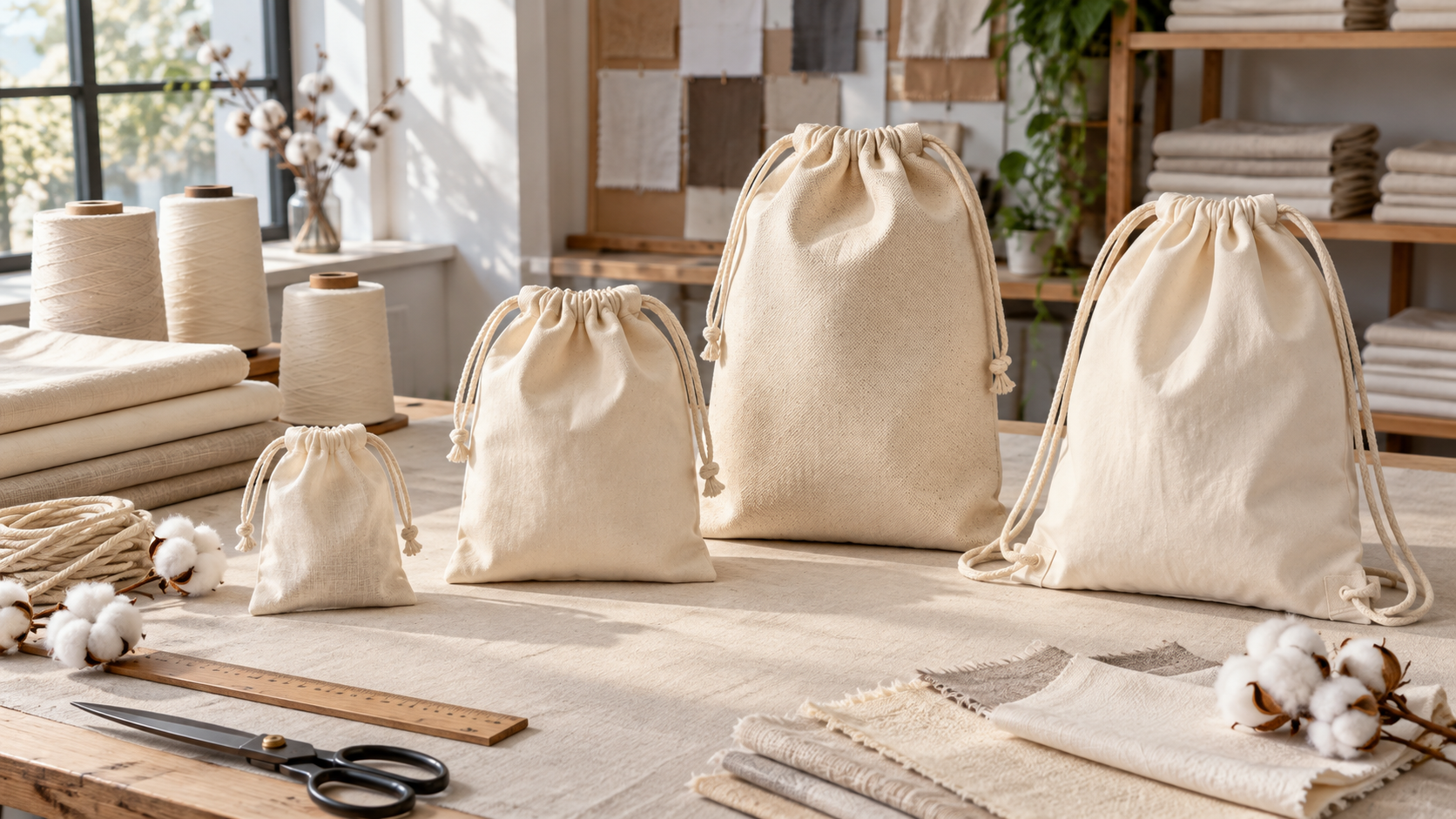
Cotton and canvas catalogs offer many low-quantity decoration options. Weight, weave, shrinkage, raw-edge finishing, handle attachment, and print hand feel vary substantially. A 4 oz flat tote and a structured 12 oz shopper are not interchangeable.
For a construction-specific comparison, review shopping bag handles and gusset and bottom reinforcement before choosing only by price.
What a complete low-MOQ quotation should contain
| Quote field | Pilot scenario | Repeat scenario |
|---|---|---|
| Quantity and splits | Total plus each SKU/color/artwork | Expected reorder tiers |
| Bag specification | Size, material, weight, construction | Same fields with tighter repeat controls if needed |
| Decoration | Method, colors, location, print area | Reusable screens/plates/files and matching references |
| Samples and approvals | Type, charge, timing, shipping | Approval standard retained for reorder |
| Quality plan | Inspection stage and acceptance criteria | Batch records and change notification |
| Packing | Fold, inner pack, pieces/carton | Optimized carton proposal |
| Timing | Artwork-to-sample and approval-to-dispatch | Capacity window and reorder assumptions |
| Commercial terms | Unit cost, setup, freight, taxes, payment | Tiered pricing and validity period |
Ask the supplier to identify exclusions. “Freight extra,” “stock subject to availability,” and “color may vary” are not small footnotes when the order is your entire launch inventory.
How to test quality without turning the pilot into a laboratory
Build tests around foreseeable use. Load the bag with the intended products, lift it repeatedly, check handle comfort, observe seam or bond behavior, rub the print, expose it to the expected packing process, and inspect dimensions across more than one unit. Photograph the setup and record pass/fail criteria.
For larger reusable programs, use an order-specific test plan. Our custom shopping bag quality-control checklist, printing quality-control checklist, and printing-defect prevention guide provide practical checkpoints.
Red flags when a supplier advertises low MOQ
- The seller will not identify the exact product to which the minimum applies.
- “Custom” is used without saying whether it means print-only or custom construction.
- The quote omits per-color, per-size, and per-artwork minimums.
- Material weight, dimensions, print area, or handle details are absent.
- A sustainability or certification claim has no product scope or current evidence.
- The sample and bulk route are different, but the difference is not disclosed.
- The delivery date is presented without an approval cutoff.
- The supplier cannot explain what will be retained for a repeat order.
The best response is not a longer marketing claim. It is a clearer specification and evidence request.
Why a low MOQ can produce a bad sustainability result
Ordering less can reduce obsolete inventory, but “small order” does not automatically mean lower environmental impact. Express freight, repeated sampling, multiple micro-shipments, unusable bags, or a design that customers do not reuse can offset the inventory benefit. Optimize the system: right-size the pilot, consolidate where practical, build for the intended service life, and measure actual use.
Avoid broad terms such as “eco-friendly” unless you define the attribute and evidence. A material, product, batch, and supply-chain claim should remain within its documented scope.
How to reduce MOQ without making the bag generic
Small brands can often reduce the entry barrier by controlling variables:
- use an available body material and create distinction through print and trim;
- launch one size before creating a family;
- keep one body color and vary a removable insert, tag, or approved artwork only where feasible;
- select a decoration method suited to the pilot quantity;
- avoid a custom dye until demand is validated;
- use standard handles or closures during the first run; and
- request tiered quotes so pilot decisions do not damage the scale-up economics.
These are design decisions, not universal promises. A supplier must confirm whether each option changes MOQ, quality, or lead time. See how to reduce shopping bag costs without sacrificing quality for a broader value-engineering approach.
How to compare samples from different suppliers
Do not compare a premium canvas sample with a lightweight non-woven event bag and conclude that one supplier has “better quality.” Create a common evaluation sheet.
| Check | Measurement or evidence | Pass condition |
|---|---|---|
| Dimensions | Width, height, gusset; defined method | Within agreed tolerance |
| Material | Declared type and weight/thickness method | Matches approved specification |
| Handles | Length, width, attachment, comfort | Suitable for intended load and carry |
| Position, size, color reference, adhesion | Matches approved standard within agreed tolerance | |
| Construction | Seams/bonds, reinforcement, loose threads | No critical defect; agreed workmanship level |
| Function | Real product load and handling cycle | Passes the defined use test |
| Packing | Fold, protection, count, carton | Arrives usable and store-ready |
| Documentation | Quote, proof, approval, inspection record | Version-controlled and attributable |
Reorder readiness is the real small-brand advantage
A successful pilot should make the next order easier. Retain the approved artwork version, dimensions, material description, color reference, print method, sample photos, inspection criteria, packing pattern, and any screens or plates governed by the commercial agreement.Ask the supplier to notify you before changing the blank, input material, process, or production route.
Without those controls, the first 50 bags may look good while the next 500 look unrelated. Reorder continuity is one reason a growing brand may move from a no-minimum decorator to a managed custom program.
Company-claim boundary: the following section is publisher self-description and a commercial custom-supply option. It does not independently prove factory ownership, a universal MOQ, available capacity, product origin, stock, material claims, print or load performance, certification, compliance, price, timing or superiority. The legal seller and assigned production, decoration and fulfillment routes are subject to the current order, final specification, evidence review and written confirmation.
Why choose LUCKYSTAR after demand is validated?
LUCKYSTAR is most relevant when the buying problem becomes coordination rather than simply finding one printed blank. The team can discuss paper, non-woven PP, woven PP, cotton/canvas, and other order-appropriate shopping-bag routes; translate a use case into a specification; coordinate sampling and production; and define quality and packing checkpoints for a repeatable program.
The practical reasons to consider LUCKYSTAR include:
- Specification-first development: size, gusset, handles, material, print, reinforcement, and packing are treated as connected decisions.
- Pilot-versus-repeat comparison: buyers can request a simplified pilot route and a scale-ready route instead of optimizing only the first invoice.
- Artwork and approval discipline: technical files, samples, and written approvals can be aligned before bulk production.
- Quality checkpoints: inspection can focus on the risks that matter to the actual bag and end use.
- Reorder control: reference information can be retained to support logo, color, construction, and packing consistency.
- Commercial clarity: MOQ, timing, price, claims, and documentation are confirmed for the specified order rather than promoted as universal guarantees.
LUCKYSTAR should not be presented as “MOQ 1” or as holding universal certifications across all shopping bags. The better question is whether the team can design a commercially sensible pilot and a credible route to scale for your specification.
RFQ template for a small-brand shopping bag pilot
Send one complete brief instead of asking only, “What is your MOQ?”
Product use: retail checkout / event / merchandise / delivery
Target pilot quantity: ___ pieces
Expected repeat quantities: ___ / ___ / ___ pieces
SKU split: ___ sizes × ___ colors × ___ artworks
Required bag size and gusset: ___
Intended contents and working load: ___
Preferred material and weight/thickness: ___ or supplier recommendation
Handle type, length, and attachment: ___
Print method/coverage/colors: ___
Required claims and evidence: ___
Packing and destinations: ___
Required in-hand date: ___
Please quote: pilot route, repeat route, setup, sample, packing, freight, lead time, and quote validity.
Frequently asked questions
What is a good low MOQ for shopping bags?
There is no responsible universal number. One piece can be appropriate for a digitally decorated catalog tote; 30–50 can be a practical starting point for selected paper or cotton catalog products; a fully custom bag may require more because materials, printing, converting, and assembly have their own setup thresholds. Judge the minimum against the exact specification and the business question the order must answer.
Can I order custom shopping bags with an MOQ of one?
Yes, selected suppliers list one-piece or no-minimum options. These are commonly fixed catalog products with eligible digital, transfer, embroidery, or other decoration. Confirm the exact product and understand that full construction customization is different.
Does low MOQ always cost more per bag?
Usually the unit cost is higher because setup and handling are spread over fewer pieces, but total cash exposure can still be lower. Compare landed cost per accepted, usable unit and the value of the learning generated by the pilot.
Can different colors share one MOQ?
Sometimes, but never assume they can. Body colors, trims, inks, materials, and artwork can each carry a separate minimum. Ask for a written split matrix.
Should I use a local supplier or an overseas custom partner?
Choose by route. A local decorator can be excellent for a few stock bags and urgent delivery. A custom development and supply partner can become more suitable when construction, price at scale, sampling, inspection, packing, and repeat control matter. Compare equivalent specifications and landed terms.
How can a startup avoid over-ordering?
Launch one bag size and one body color, use a suitable stock or available material, validate the artwork physically, run an operational pilot, and request tiered repeat quotes before adding variants. Track actual use and remaining inventory.
Which documents should I approve before production?
Approve the quotation, specification or tech pack, artwork and print location, color reference, sample or proof, packing method, quality criteria, and production timeline. Version each record and identify which one governs bulk acceptance.
How do I verify a sustainability claim on a small order?
Define the exact claim first, then request evidence tied to the material, product, batch, supplier chain, and date as applicable. Check issuer, scope, validity, and whether transaction-level documents are required. Do not convert a product-specific document into a blanket claim about the supplier or brand.
Final recommendation
For a founder sample or micro-event, start with a no-minimum or low-double-digit catalog route. For a boutique paper carrier, compare product-specific online packaging minimums. For a shopping bag that must fit your merchandise, represent the brand, survive use, pack efficiently, and repeat consistently, ask for a controlled custom pilot and a scale-up quotation at the same time.
The winning supplier is not the one with the smallest headline number.It is the one that makes the real minimum, real specification, real landed cost, and real next order understandable before you commit.

Share your target pilot quantity, expected repeat volume, bag dimensions, contents, material preference, artwork, color split, destination, and required date. LUCKYSTAR can review a practical custom shopping bag route; final MOQ, pricing, timing, claims, and documentation are subject to specification and written confirmation.
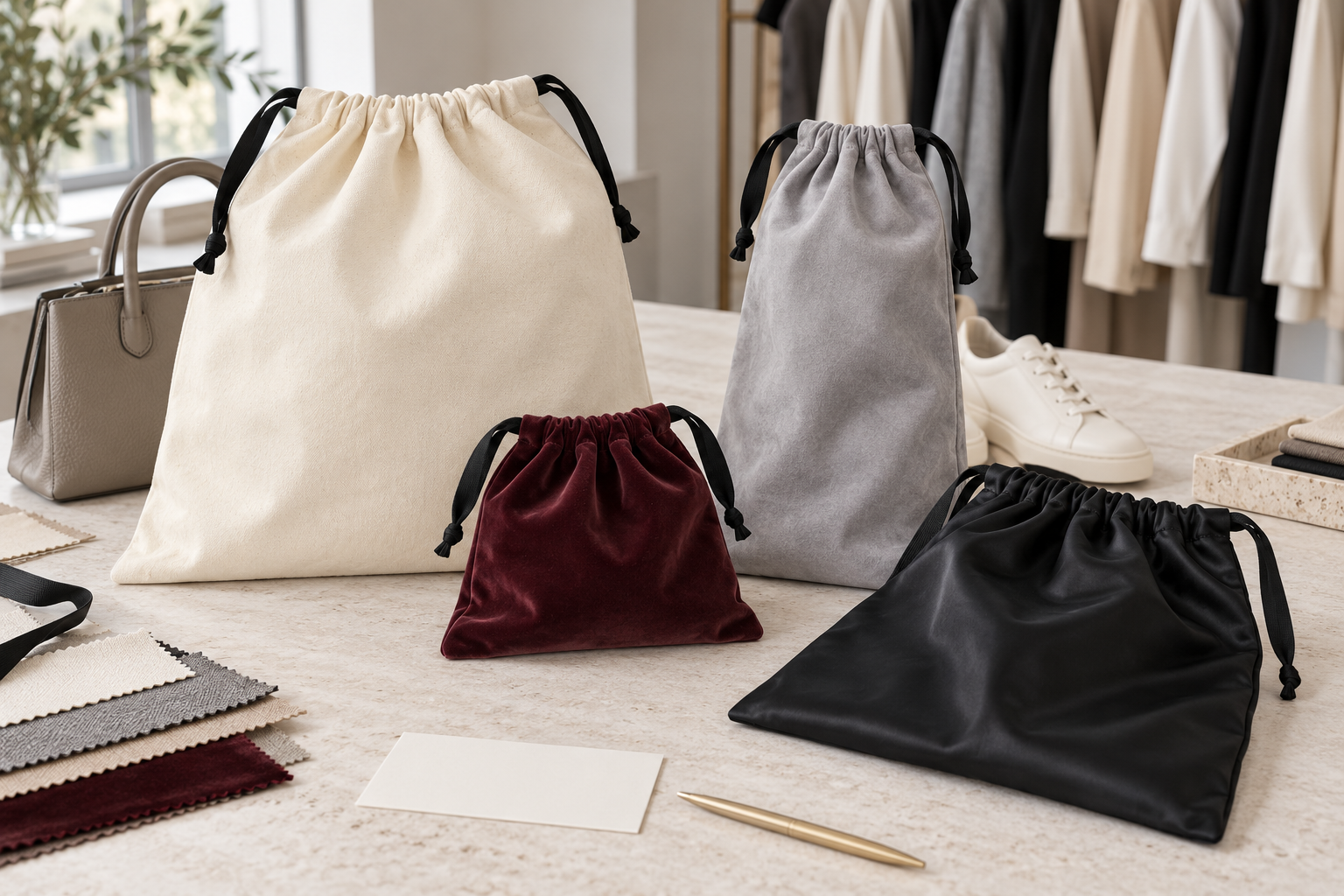
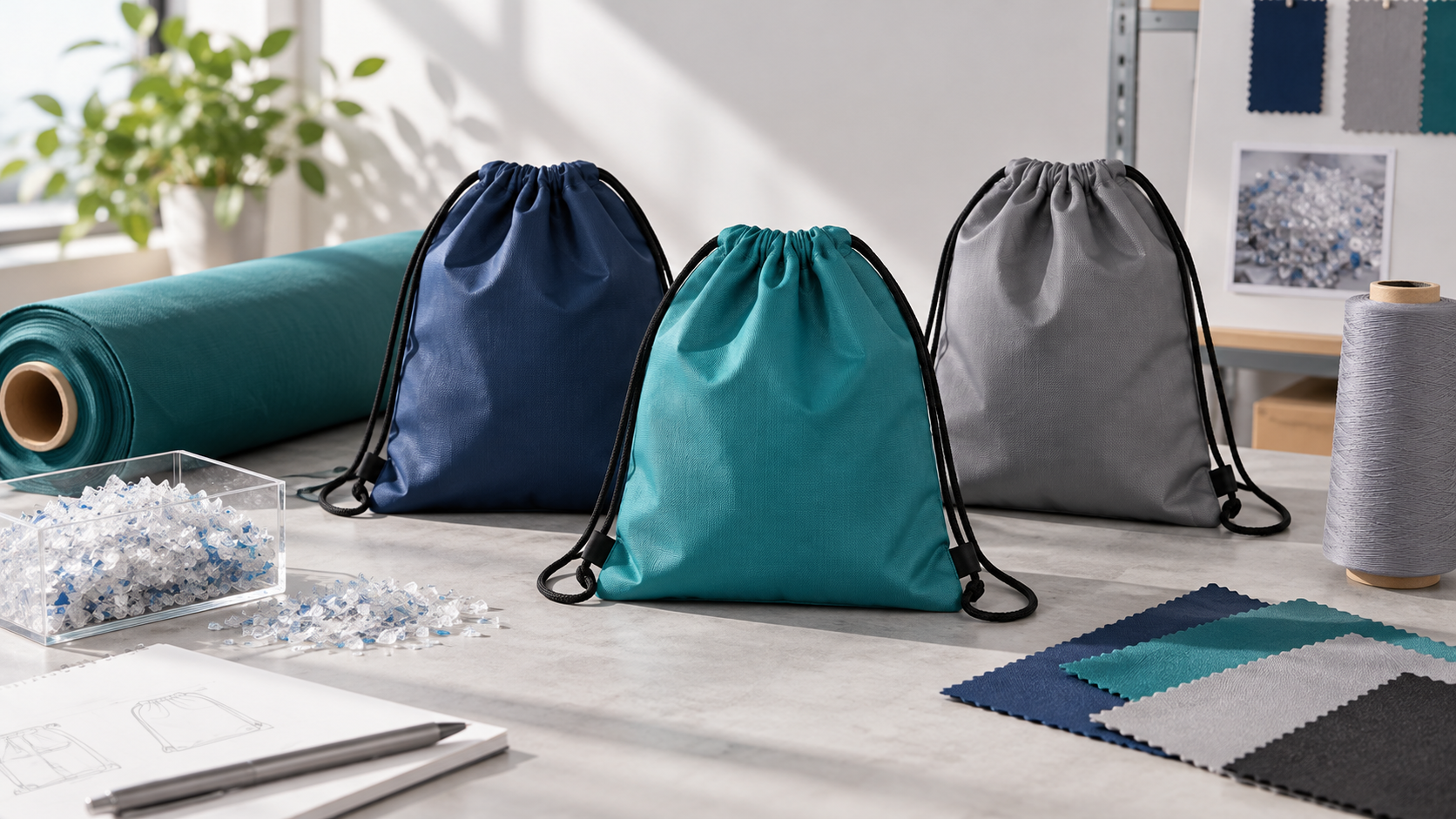
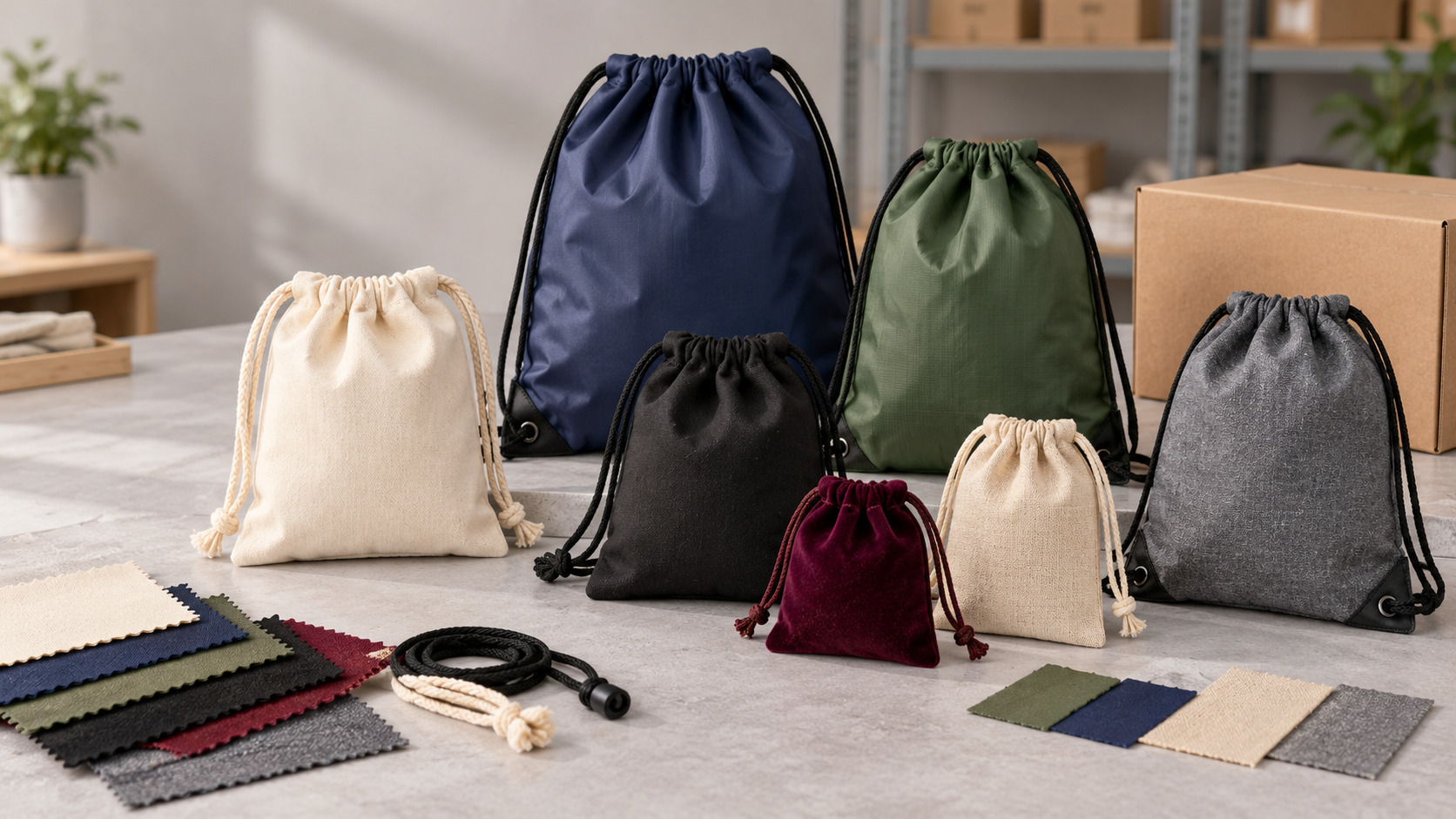
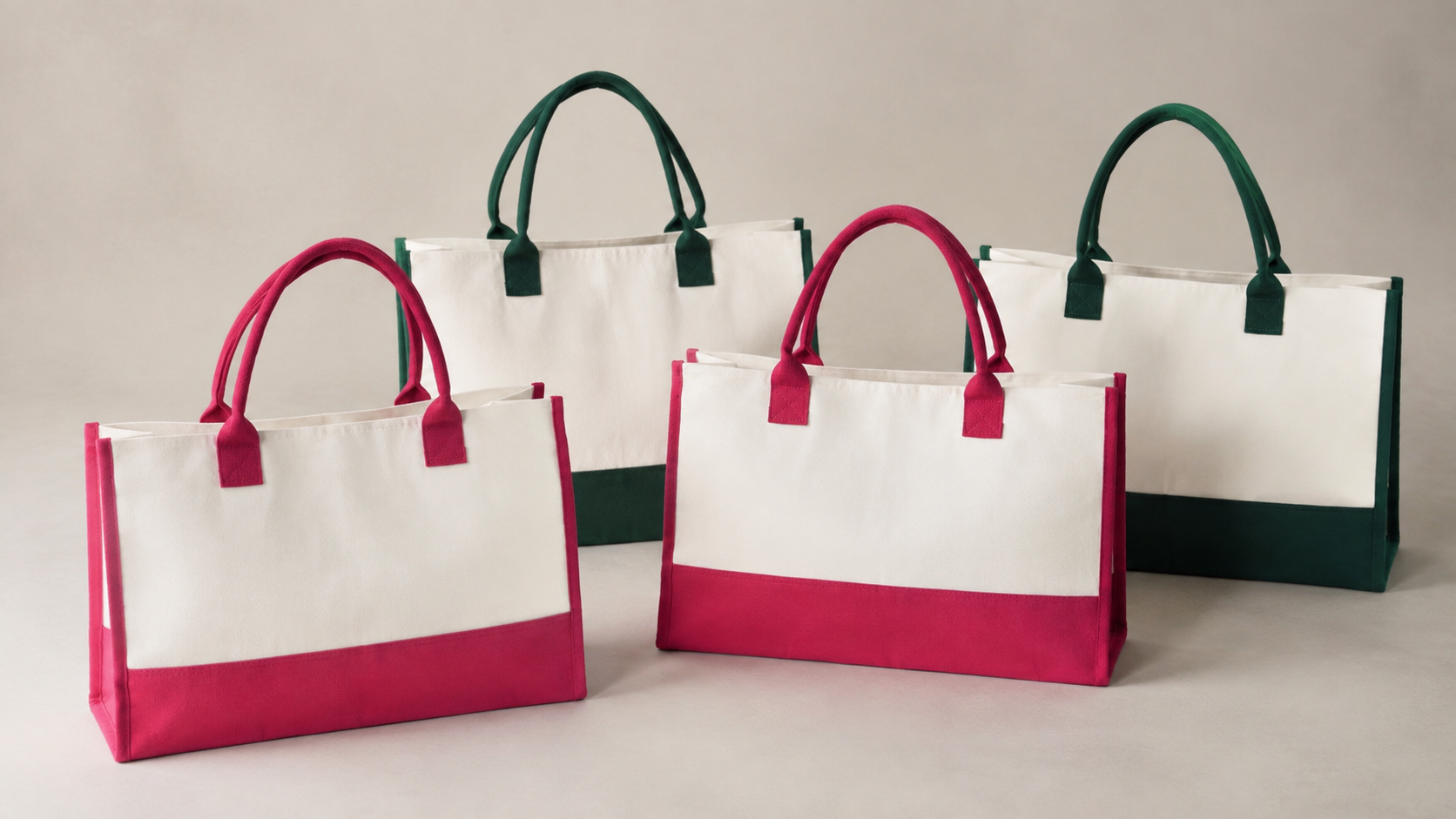
Research and disclosure note: Supplier information was checked against public pages on September 8, 2026. This article compares purchasing routes and does not certify every listed company as the physical manufacturer of every product. The hero image is an AI-assisted studio composition based on recent internal sample photographs. It shows visual design references only and does not prove material, specification, certification, current availability, or public-use rights beyond this reviewed draft.
Request a controlled low-MOQ pilot
Use one baseline specification and a separate option sheet so each supplier quotes the same bag, decoration, evidence, approval route, packing and delivered-date basis.
Review LUCKYSTAR custom shopping bag options, then send your pilot brief through the contact form or Email a project brief. The email link opens a prefilled draft for your review before sending.
MOQ, setup, sample cost, material and claim evidence, testing, capacity, availability, price, packing, schedule and delivery terms are subject to current order-level verification, destination requirements, final specification and written confirmation.