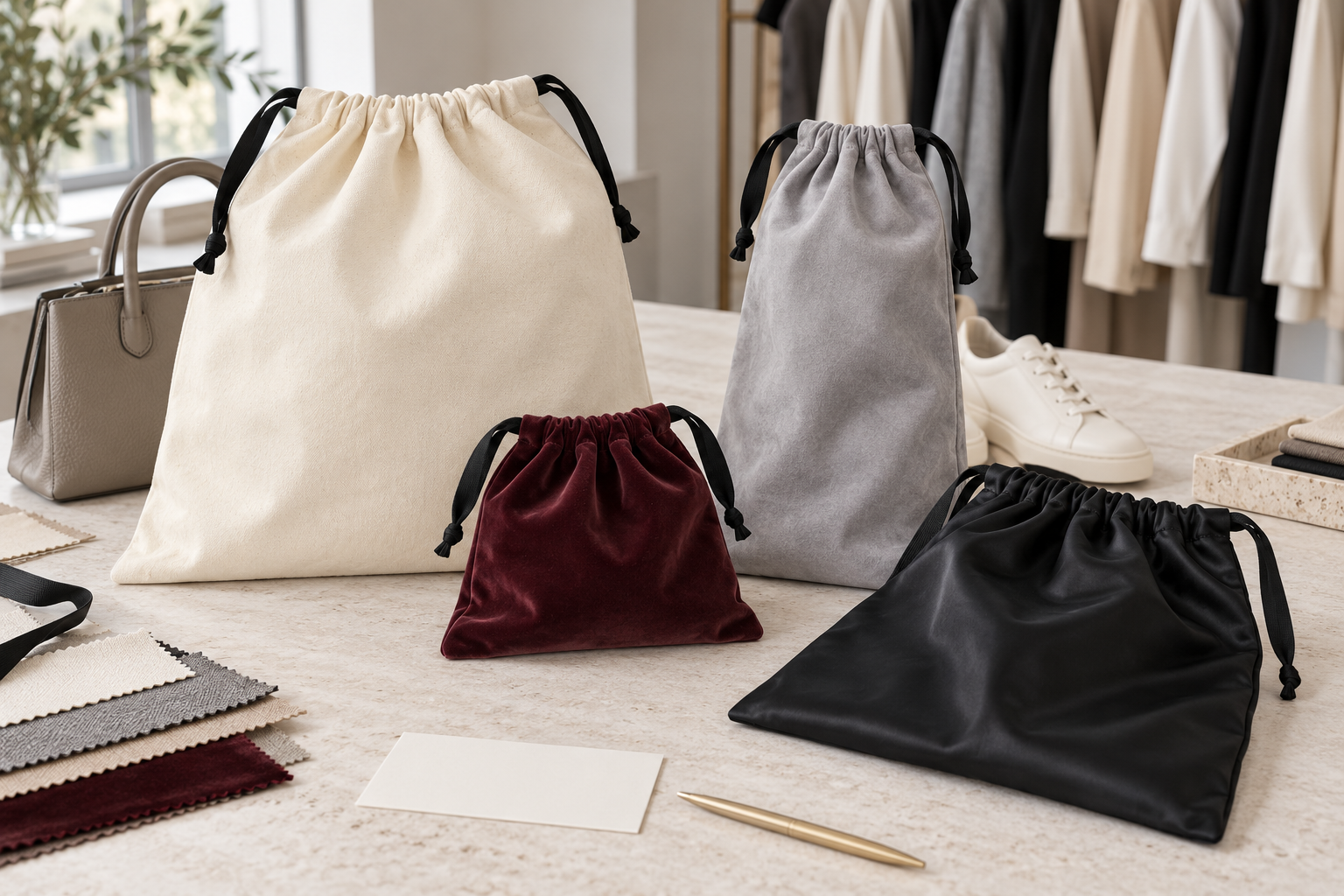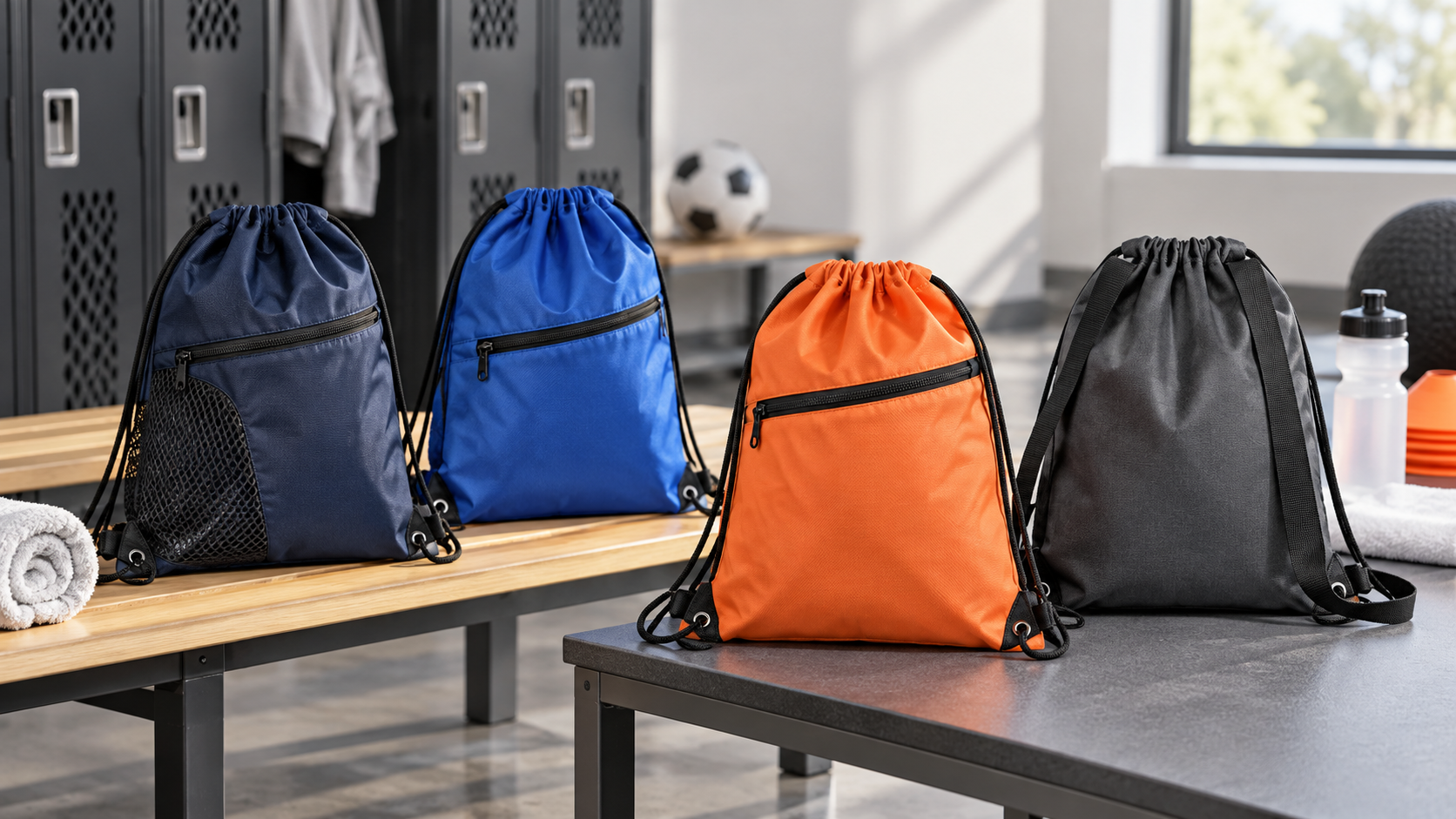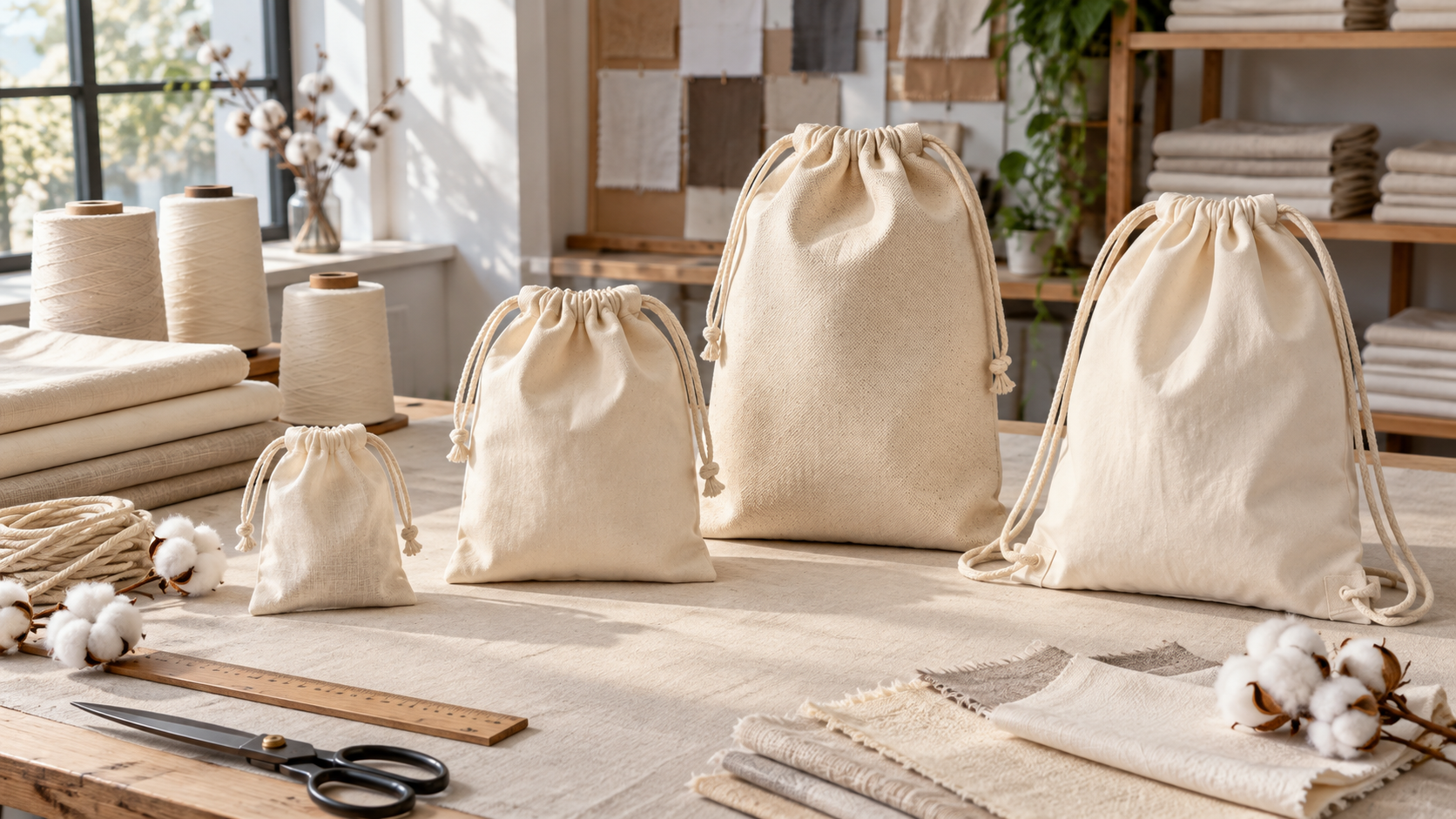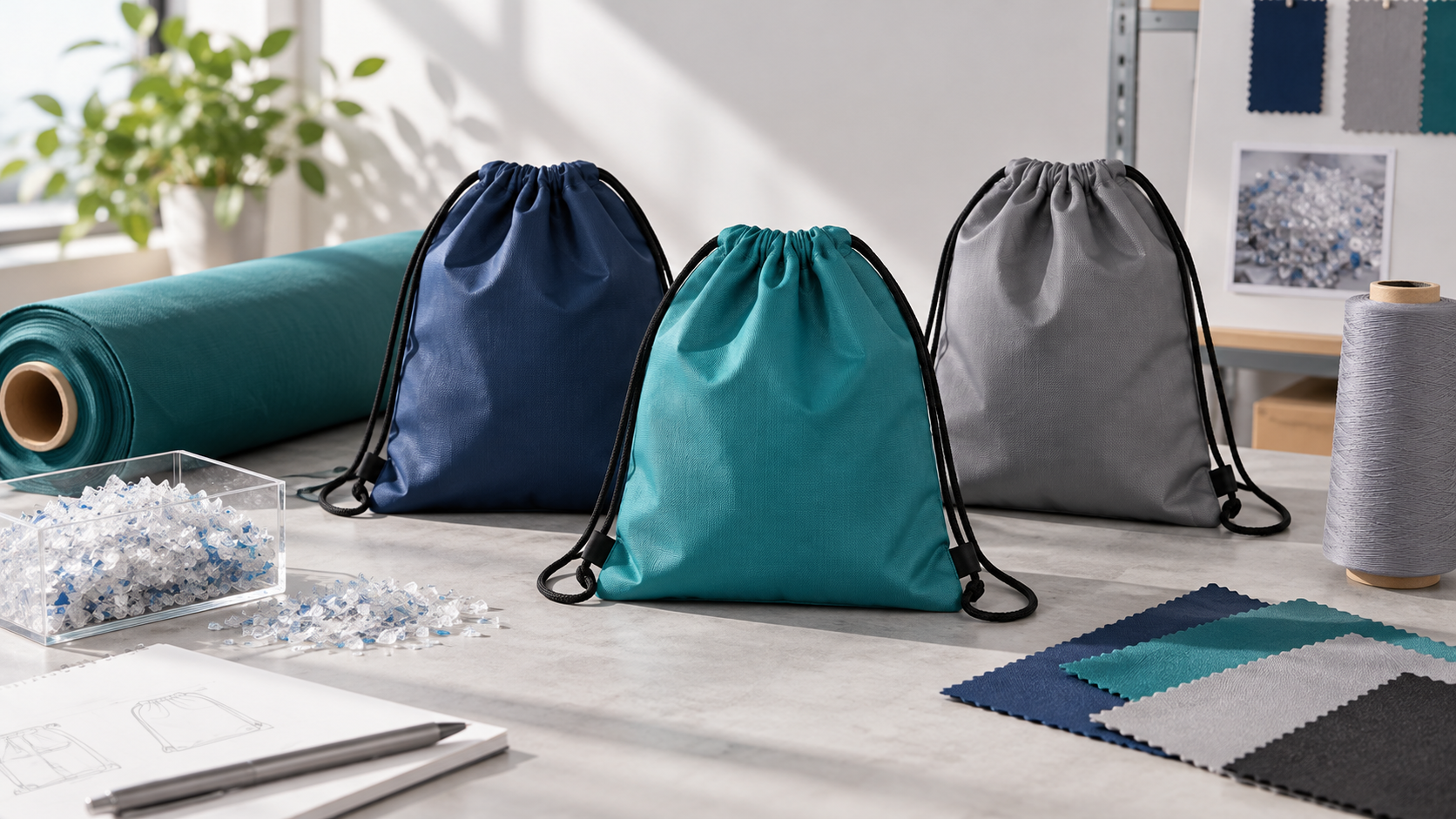
A cheaper shopping bag is not necessarily a lower-cost shopping bag. The apparent saving may return as line stoppages, print sorting, crushed handles, mixed store allocations, slow checkout opening, emergency freight or customer complaints. Cost reduction is real only when the brand still receives the agreed appearance, carrying function, claim evidence and store-ready quantity.
This guide explains How to Reduce Shopping Bag Costs Without Sacrificing Quality by redesigning the retail system around the bag—not by quietly reducing paper weight, fabric performance or reinforcement. It focuses on the decisions that are distinctive to custom shopping carriers: paper versus polypropylene versus textile conversion routes, shopping-basket fit, handle/load-path integrity, artwork coverage, SKU changeovers, nested pack-out and the labor required inside a store.
Review the available constructions on LUCKYSTAR’s custom shopping bags product page. If the manufacturing partner is still being evaluated, use How to Choose a Custom Shopping Bag Manufacturer and the broader Custom Bag Manufacturer Guide before opening a cost-down project.
Planning an order? Send a cost-down comparison brief. Include the protected retail job, bag route, intended basket/load, dimensions, artwork, quantity by runnable SKU, current quote boundary, required destination/date, pack-out, quality/test scope and the changes open for review.

Good value engineering keeps one approved retail job in the center while comparing more efficient ways to deliver it.
1. Define the protected output—not a vague “same quality” promise
Quality cannot be protected until it is translated into observable outputs. A luxury paper carrier may need clean color, sharp folds, a stable base, comfortable handles and premium opening behavior. A reusable grocery bag may prioritize cyclic carrying, wipeability, load balance and fold recovery. A promotional non-woven bag may need legible branding, adequate attachment strength and fast distribution at a defined campaign budget.
Ask retail, brand, quality and sourcing teams to classify each output as protected, adjustable within a stated range or removable. Cost proposals can then change only what the owner has opened for review. This prevents procurement from saving on a feature that customers value and prevents design from paying for hidden complexity that serves no retail job.
| Protected output | How to make it measurable | Cost can move here | No-go change |
|---|---|---|---|
| Shopping-basket fit | Named products, orientation, normal/upper mass, opening access and remaining clearance | Remove unused volume or split one poor universal size into an efficient family | Reduce dimensions until loading damages the goods or strains the bag |
| Carry system | Handle clearance, loaded balance, attachment construction and buyer-defined load/cycle result | Use the right reinforcement geometry instead of adding weight everywhere | Shorten, narrow or weaken the attachment without loaded-bag validation |
| Brand presentation | Approved substrate, controlled color reference, artwork position and visual defect boundary | Concentrate decoration on the customer-facing area; share hidden construction | Substitute an unapproved surface, ink route or finish because it looks similar on screen |
| Store readiness | Correct units/SKU/carton, opening time, handle separation, barcode scan and shelf footprint | Reconfigure bundles and cartons to reduce unpacking and resorting | Increase packing density until bags block, crease or tangle |
| Claims/compliance | Exact claim wording, destination, applicable evidence and marked product version | Select a route whose existing supply chain can support the required evidence | Keep a recycled, certified or reusable claim after its basis changes |
| Repeatability | Controlled BOM, sample ID, tolerances, test/inspection rules and change notification | Reuse proven materials, settings, tools and cartons on reorders | Allow “equivalent” substitution without the affected approvals |
The Custom Shopping Bag Tech Pack guide explains how to place those outputs into drawings, material specifications, artwork files, tolerances and approval records. A cost target belongs beside that reference package, never in place of it.
2. Measure cost per accepted, store-ready thousand
Unit price rewards exclusions. A more useful project metric is total cost per 1,000 accepted bags that arrive at the correct store, open as intended and are ready for use. The calculation can include goods, allocated setup/tooling, sampling, planned testing and inspection, packing, freight, import/handling, receiving labor, expected shortage/reject treatment and obsolescence from the SKU plan.
The number is specific to the buyer and route; it is not a public benchmark. Use a baseline order and measure every proposal against the same quantity matrix, quality scope, trade boundary and arrival date. Keep uncertain items visible as scenarios rather than hiding them in a single optimistic figure.
The American Society for Quality separates quality cost into prevention, appraisal, internal failure and external failure. That distinction is useful here: a first-off print check is prevention/appraisal; scrapping a finished color lot is internal failure; store sorting, replacements and customer complaints are external failure. Removing the first check may lower one invoice line while increasing total cost.
| Cost layer per 1,000 | Inputs to record | Often-hidden loss | Evidence source |
|---|---|---|---|
| Approved goods | Unit price × accepted quantity, plus allocated setup/tooling | Short shipment, rejects, rework and unusable overrun | PO, final inspection and receipt by SKU |
| Quality prevention/appraisal | Sample, first-off, tests, in-process controls and final inspection | Repeated checks that sort the same defect without correcting its source | Quality plan, reports and corrective-action trend |
| Packaging/distribution | Unit pack, cartons, pallets, CBM/weight, freight, destination handling | Air shipped empty space, carton damage, re-palletizing and detention | Physical pack-out and logistics invoices |
| Store handling | Receipt, resorting, bundle opening, storage, replenishment and checkout seconds | Mixed variants, tangled handles, excess unit wrapping and difficult separation | Timed trial at a representative store/backroom |
| Inventory exposure | Demand by SKU, reorder lead time, campaign date and safety stock | Obsolete artwork, slow colorways and emergency replenishment | Sell-through, remaining stock and rush-freight history |
| Failure after release | Claims, returns/replacement, sorting, store communication and lost launch time | Brand damage and staff time that never reaches the supplier debit note | Complaint/incident log and campaign post-mortem |
Use the existing 2026 Custom Shopping Bag Pricing Guide to understand quoted cost drivers. This article begins after that breakdown: it asks which work, variation and loss can be removed while the protected output remains intact.
3. Select the economical manufacturing route before squeezing its specification
The largest safe saving can come from choosing a route naturally suited to the retail job. Trying to force premium small-run artwork through a high-setup lamination process—or expecting a simple promotional construction to behave like a long-life grocery carrier—creates either excess cost or quality risk.
Route selection should consider order scale per runnable design, artwork coverage, expected uses, feel/presentation, folding behavior, evidence/claim needs and manufacturing capability. The table below is a discussion guide, not a declaration that one material is always cheaper or better.
| Route | Where it can be cost-efficient | Cost pressure point | Quality item to protect |
|---|---|---|---|
| Paper carrier | Retail presentation, flat storage, scalable converting and simple-to-premium finish range | Paper/finish, print make-ready, handle fitting, reinforcement and visible reject yield | Fold/glue integrity, base, handle pull, color and crease/finish condition |
| Bonded/sewn non-woven PP | Promotions and reusable programs using stock colors and controlled graphics | Fabric/bag line minimum, print changes, sewn versus bonded operations and handle style | Web uniformity, bond/seam and handle attachment under the defined basket |
| Laminated woven PP | Higher-volume grocery/retail programs with strong full-coverage graphics | Printed-film setup, lamination, registration, binding and order fragmentation | Laminate bond/flex, conversion alignment, edge binding and complete load path |
| Cotton/canvas | Sold merchandise, premium reusable carriers and longer perceived service | Fabric consumption, sewing minutes, special dye/finish, artwork application and packing thickness | Composition/weight, seams, shrink/care response, handle comfort and print retention |
| Jute or natural-texture carrier | Gift, seasonal and natural-look retail programs where texture creates visible value | Material variability, backing/lining, cutting/sewing, trim and bulky pack-out | Cleanliness, odor/moisture, shedding, shape and reinforced attachments |
| Mesh/clear or mixed-material route | Programs where visibility, drainage or a specific presentation job justifies the structure | Special material, difficult interfaces, edge finish, hardware and protective packing | Edge/attachment performance, clarity/scratch, claims and intended-use suitability |
Ask the supplier for two or three route concepts against the same retail brief. Do not request “the cheapest paper bag” and “the cheapest reusable bag” without a common basket, artwork, order matrix, arrival boundary and quality outputs. LUCKYSTAR can compare these routes through the shopping bag manufacturing range rather than forcing every project into one familiar material.
4. Fit the size family to real baskets and stores
A single oversized bag wastes body material, handles and cubic storage on small purchases. Too many sizes create dies/patterns, purchasing splits, store allocation and training complexity. The economical answer is usually a deliberate family: the smallest number of sizes that covers important baskets without poor loading or excessive spare volume.
Build a basket library from real transactions. Record representative product dimensions, fragility, normal and upper mass, how staff load them and whether boxes should remain upright. Trial opening, placement, handle clearance, base support and finished carry. Include the backroom shelf and checkout bag well: a bag that fits products but not the store process is not right-sized.
| Basket class | Inputs to observe | Efficient design question | Validation |
|---|---|---|---|
| Small, high-value item | Box orientation, presentation, security and handle comfort | Can a compact premium format replace unused volume without looking mean? | Loaded presentation and carry trial with actual packaging |
| Standard mixed purchase | Typical item count, largest base footprint and stacking sequence | Which one mid-size covers the largest share of transactions? | Timed checkout pack plus loaded balance |
| Bulky/light purchase | Volume, corners, opening access and shelf/storage demand | Can gusset/base geometry add usable space without increasing every panel? | Fit, corner contact, fold and carton-cube review |
| Dense/heavy basket | Mass distribution, rigid edges, carry distance and hand/shoulder mode | Should the route or reinforcement change instead of simply making the body heavier? | Complete-bag static/cyclic protocol and user handling |
| Gift or campaign kit | Fixed contents, insert, presentation order, fulfillment and release date | Can bag and kit pack-out be designed together to remove secondary packing? | Full assembly, transit and unboxing/store handoff trial |
Freeze dimensions only after the basket trial. A one-cent drawing revision is cheap; changing dies, printed material or finished stock is not. The Custom Shopping Bag Sample Development Process separates early volume mock-ups from production-intent approvals so fit questions can close before expensive commitments.
5. Match brand treatment to the surface and buying scale
Artwork cost is not governed only by the number of colors. Coverage, print passes, registration across folds/gussets, substrate preparation, curing, lamination, foil/emboss tools and acceptable visual yield all matter. Put the strongest treatment where it creates customer recognition; do not duplicate premium processes on hidden surfaces without a reason.
A one-color flexographic or screen treatment may be logical for a simple mark, while full-coverage graphics may fit a preprinted paper or laminated-film route at suitable volume. Shorter programs may favor a process with lower setup even if the application cost per unit is higher. Approve on the production substrate because color, opacity, gloss and edge behavior are route-specific.
| Brand decision | Potential saving | Quality protection | Evidence before approval |
|---|---|---|---|
| Prioritize one hero face | Reduce extra print coverage/passes while keeping the main brand moment | Maintain required logo size, color and visibility in carry position | Front/back physical mock-up and retail viewing test |
| Use substrate color strategically | Avoid printing a large flood where a suitable stock/custom body color does the job | Confirm color tolerance, lot consistency, rub/transfer and claim compatibility | Actual material swatch and finished-bag first-off |
| Simplify tiny details | Reduce registration difficulty, screen/plate count or rejected fine features | Preserve trademark legibility and brand-system minimums | Production-size artwork proof—not enlarged screen art |
| Keep decoration away from stress/fold zones | Reduce cracking, scuffing, rework and special handling | Maintain balanced placement and intended visibility | Converted sample folded, carried and packed |
| Share one process across variants | Pool setup, reduce line change and simplify color control | Variant identification remains unmistakable | SKU matrix and mixed-pack scan/count trial |
| Remove a premium finish only by choice | Eliminate tool and extra conversion pass when it adds little perceived value | Buyer reviews side-by-side presentation, not a price sheet alone | A/B samples under retail lighting |
Do not retain sustainability wording automatically when material, print, coating or supply-chain route changes. For forest-based claims, use current FSC chain-of-custody information to verify certificate holder, validity, product scope, claim and sales documentation for the actual order. For recycled-content claims, consult Textile Exchange’s GRS 5.0 and transition information, then verify the certificate holder and product scope and obtain shipment-level transaction evidence where applicable. The buyer’s claim owner should approve the exact statement for the actual product and transaction.
6. Build a retail platform, then postpone visible differences
One purchase order can hide many short manufacturing runs. Three sizes × four colors × three artworks create thirty-six runnable variants before store packs are considered. Each may trigger separate material segregation, print setup, first-off approval, counting and carton identification.
Reduce variation where customers do not need it. Several campaigns might share body size, handle, reinforcement, print color, carton and performance standard while differing through one artwork area, removable band, approved label or late-stage pack component. “Postponement” means keeping the common product common until the latest controlled point—not relabeling products informally after quality release.
| Portfolio lever | Cost removed | Control needed | When not to use it |
|---|---|---|---|
| Shared body/handle platform | Material splits, component minimums, sewing/converting changes and spare stock | Common BOM plus clear variable artwork/component list | When a basket or brand tier needs genuinely different performance |
| Fewer body colors | Custom color minimum, shade lots, cleanup/changeover and obsolete inventory | Brand approval under retail lighting and replenishment plan | When color is the primary collection navigation |
| Common ink/foil color | Setup, material and approval repetitions | Contrast checked on every substrate/body shade | When accessibility/legibility or brand standards fail |
| Late-stage approved label/band | Finished-goods fragmentation and forecasting risk | Label position, adhesion/removal, barcode and claim governance | When it makes the product look temporary or conflicts with recycling/use |
| Core launch, phased variants | Low-volume startup, excess stock and development congestion | Defined demand trigger and preserved tooling/color standards | When all variants are contractually required on day one |
| Common master carton | Carton SKUs, minimums and warehouse complexity | Safe gross weight, fill/void control and unambiguous marks | When underfill or over-compression creates damage/cube loss |
The goal is not fewer choices at any price. It is a deliberate relationship between visible assortment and invisible manufacturing variants. Use the Custom Shopping Bag MOQ and Production Time guide to see how each runnable SKU affects material and process minimums.
7. Protect the handle and load path while simplifying construction
Shopping-bag failures concentrate at interfaces: handle to body, reinforcement edge, seam/bond intersection, gusset/base fold and stiff product corner. Removing reinforcement because it is hidden may save material and one operation, then increase external failure cost. Conversely, adding heavier body material everywhere may be an expensive attempt to compensate for one poorly designed attachment.
Map the force from basket to base, sides, seam/bond, attachment and handle. Improve geometry before mass: adequate attachment area, controlled stitch/bond pattern, appropriate reinforcement location, rounded stress transitions and a handle length/width suited to the carry mode. Test the complete bag with representative contents; component certificates cannot prove the converted system.
If a cost-down change affects fabric/paper grade, adhesive, ultrasonic parameters, thread, handle, patch, seam allowance or reinforcement, define the evidence before making samples. The Reusable Shopping Bag Testing guide explains how route, use and failure mechanism determine the protocol.
8. Remove store labor and empty cube, not presentation
Bag cost continues after the warehouse receipt. Staff may open master cartons, remove individual plastic, untangle handles, sort artwork, move bags to checkout, open each bag and scan or count remaining stock. A packaging change that saves two cartons but adds a few seconds at every transaction can be a false economy.
Run a store-readiness trial with a representative carton. Time safe opening, variant identification, replenishment, single-bag separation and checkout loading. Measure shelf/bag-well footprint and waste.Ask whether unit wrapping is necessary for protection or only inherited from an old specification. Replace it only after transit, surface-transfer, moisture and store-cleanliness risks are reviewed.

Store-ready cost includes the time needed to receive, identify, separate, open and load a bag—not only carton freight.
| Retail-pack variable | Potential saving | Risk to check | Trial measure |
|---|---|---|---|
| Handle alignment/nesting | More stable carton, faster single-bag separation and less checkout handling | Tangle, deformation, twist or paper-handle pullout | Separation time and condition after packed hold |
| Units per bundle | Fewer touches and accurate replenishment batches | Miscount, band marks, trapped moisture or excess waste | Count accuracy, opening time and waste per 1,000 |
| Individual protection | Less material, unpacking labor and disposal | Ink transfer, abrasion, dirt, odor, blocking and claim implications | A/B transit/packed-hold and retail appearance review |
| Carton density | Fewer cartons, lower CBM and reduced handling | Crush, crease, finish marking and poor recovery | Actual closed carton dimensions plus reopened bag condition |
| Store-specific assortment | Less distribution-center sorting and fewer store transfers | Wrong allocation, mixed barcode or hard-to-audit counts | Carton/SKU scan reconciliation and receiving time |
| Carton opening/display feature | Faster shelf/checkout setup when a shipper becomes a dispenser | Reduced transit strength, sharp edges or unstable display | Distribution test followed by setup and use trial |
ISTA’s design and test-selection guidance emphasizes understanding the actual distribution environment, using representative samples and defining damage/degradation criteria before testing. This applies to the packaged-product distribution decision, not the shopping bag’s carrying claim. Describe the actual factory-to-DC-to-store route and validate the production-representative product-package combination with the current appropriate procedure.
9. Move quality spending upstream
The cheapest inspection is not necessarily no inspection; it is a control placed early enough to prevent a repeatable defect. Approve the production material and artwork, release a first-off conversion/print against objective limits, monitor the process characteristic that creates the risk, and use final inspection to decide lot acceptance—not to manufacture quality at the end.
ISO’s explanation of ISO 9001 highlights the process approach, risk-based thinking, documented information, monitoring and continual improvement. ISO’s ISO 9001 status page listed edition 6 as under publication on 15 September 2026, to replace ISO 9001:2015. Confirm the current applicable edition and certification scope; a quality-management-system standard or certificate is not product certification and does not prove one shopping bag meets the buyer’s specification.
For lot-by-lot attribute inspection, ISO 2859-1:2026, published as the third edition in January 2026, provides AQL-indexed sampling schemes. It does not define shopping-bag defects, severity, tests, durability limits or commercial acceptance terms. AQL sampling is not a promise that every unit is defect-free and does not replace design qualification, process control or any justified 100% check. Define defect classes and consequences through the Custom Shopping Bag Quality Control Checklist.
10. Approve cost-down ideas with a controlled option card
Never ask the supplier simply to “take another 8% out.” That instruction rewards hidden changes. Ask for separate option cards. Each card should name one change, the affected SKUs, current and proposed construction, unit/setup/logistics cost direction, protected outputs, risks, sample/test/inspection evidence, implementation timing and approval owner.
Compare options first by decision quality, then by exact quotation. A useful sequence is:
- Confirm that the proposal leaves compliance and claim validity intact.
- Check whether it changes basket fit, carry path, appearance or store readiness.
- Estimate saving per accepted, store-ready thousand—not headline unit only.
- Quantify new setup, inventory, transport and failure exposure.
- Define a representative sample and pass criteria before commissioning it.
- Update the BOM, drawing, approved sample and quotation together.
- Validate the first stable bulk run and retain the decision record for reorders.
11. Compare the same commercial boundary
A cost-down comparison is invalid if one option is EXW, another includes origin handling and a third reaches the warehouse. Use the same named place, quantity matrix, packing and quality scope. ICC’s current Incoterms® 2020 information covers delivery obligations, costs and risk allocation; the rules do not replace the sales contract. Write the chosen rule, exact named place/point and “Incoterms® 2020,” then compare other shipment-specific charges and exceptions separately.
Model tooling/setup, freight, insurance where selected, import charges, destination handling, inspection, storage and urgent exceptions separately. If the program imports from China, the Custom Shopping Bag Import Guide shows how carton data, commercial documents and destination responsibilities remain aligned.
Company-claim boundary: LUCKYSTAR statements in this section are publisher self-description, not third-party verification, a cost guarantee, certification, test result or proof that one saving applies across all factories and orders. Confirm the contracting entity, assigned production site and subcontracting; current/proposed SKU and BOM; approved sample; claim evidence; test/inspection scope; exact quotation boundary; pack-out; implementation date; and change authorization for each order.
12. How LUCKYSTAR describes its shopping bag value-engineering review
LUCKYSTAR states that its project team can compare route, size family, handle/attachment, decoration, shared components and pack-out against one protected retail brief, subject to specification and written confirmation. The purpose is to show each proposed change and its evidence need instead of blending silent substitutions into a lower headline price.
- Protected output: define basket fit, carrying function, presentation, claim evidence, SKU accuracy and store readiness.
- Controlled option: identify one change, affected SKUs, proposed construction, cost direction, risk and owner.
- Representative proof: agree physical samples, converted artwork, load/use checks, packed condition and approval criteria.
- Comparable boundary: keep quantity matrix, quality scope, packing, named delivery point and destination assumptions consistent.
- Implementation control: update BOM, specification, sample reference, inspection points, carton data and reorder records only after approval.
The Custom Shopping Bag Manufacturing Process shows where decisions enter production. Teams still comparing suppliers can review the shopping bag manufacturer selection framework and custom bag sourcing guide. Then send the protected outputs and options open for review.
Frequently Asked Questions
What is the safest first step to reduce shopping bag cost?
Define the bag’s protected outputs and calculate the current cost per 1,000 accepted, store-ready units. Then rank losses—SKU changeovers, rejects, excess cube, store handling, obsolete stock and rush freight—before changing material performance.
Should I reduce paper weight or fabric gsm?
Not as an isolated instruction. Weight is only one input to the complete carry system. A proposed change needs route-appropriate checks for body, base, seams/bonds, handle attachment, print/finish and the intended basket, plus claim/compliance review.
Does a higher MOQ always create a real saving?
It may dilute setup and improve run efficiency, but excess inventory, obsolete artwork and tied cash can outweigh the unit reduction. Calculate demand and reorder risk by runnable SKU, not total order quantity.
Can fewer sizes lower costs without hurting customers?
Yes when basket data shows redundant sizes. No when consolidation forces small purchases into wasteful bags or heavy/bulky products into an unsuitable format. Build the smallest size family that still covers important retail baskets and store equipment.
How can printing cost be reduced safely?
Prioritize the hero face, use the substrate color intelligently, simplify details that do not reproduce well, share process colors across variants and keep graphics away from severe stress/fold zones. Approve the result on the actual converted material.
Can packaging changes save more than a material change?
Sometimes. Better nesting, bundle design, carton density and store allocation can reduce freight, waste and staff time across every unit. Validate bag condition, opening speed, count accuracy and the real distribution route before adopting the change.
How should two supplier cost-down proposals be compared?
Use the same specification, quantity-by-SKU matrix, approved quality/test scope, packing, named Incoterms® point, destination and required date. Compare total per accepted, store-ready thousand plus risks—not percentage discount alone.
What makes Cost-Effective Custom Shopping Bags repeatable?
A stable product platform, clear variable-SKU rules, approved samples, controlled materials and processes, early quality gates, verified pack-out and retained reorder data. The saving must survive the second order, not only the negotiation.
Remove loss, preserve the retail job
The durable way to Reduce Shopping Bag Costs is to eliminate work and risk the customer never asked for: the wrong manufacturing route, unused volume, fragmented setups, invisible decoration, tangled pack-out, repeated sorting and late failure. Protect basket fit, carry performance, presentation, evidence and store readiness; test proposed changes before they become bulk.
Share your bag route, dimensions, intended basket, artwork, quantity by SKU, destination and required warehouse date through the custom shopping bags page. LUCKYSTAR can return a controlled base quote plus value-engineering options instead of blending silent compromises into one low number.

Request a controlled shopping bag cost comparison
Define the protected output and compare one change at a time against accepted, store-ready cost, evidence needs and the same commercial boundary.
Review LUCKYSTAR custom shopping bag options, then send your project details through the contact form or Email a project brief. The email link opens a draft for your review before sending.
Factory assignment, materials, performance, claims, certification, samples, testing, inspection, price, MOQ, delivery terms, packing, schedule and savings are subject to due diligence, specification and written confirmation.