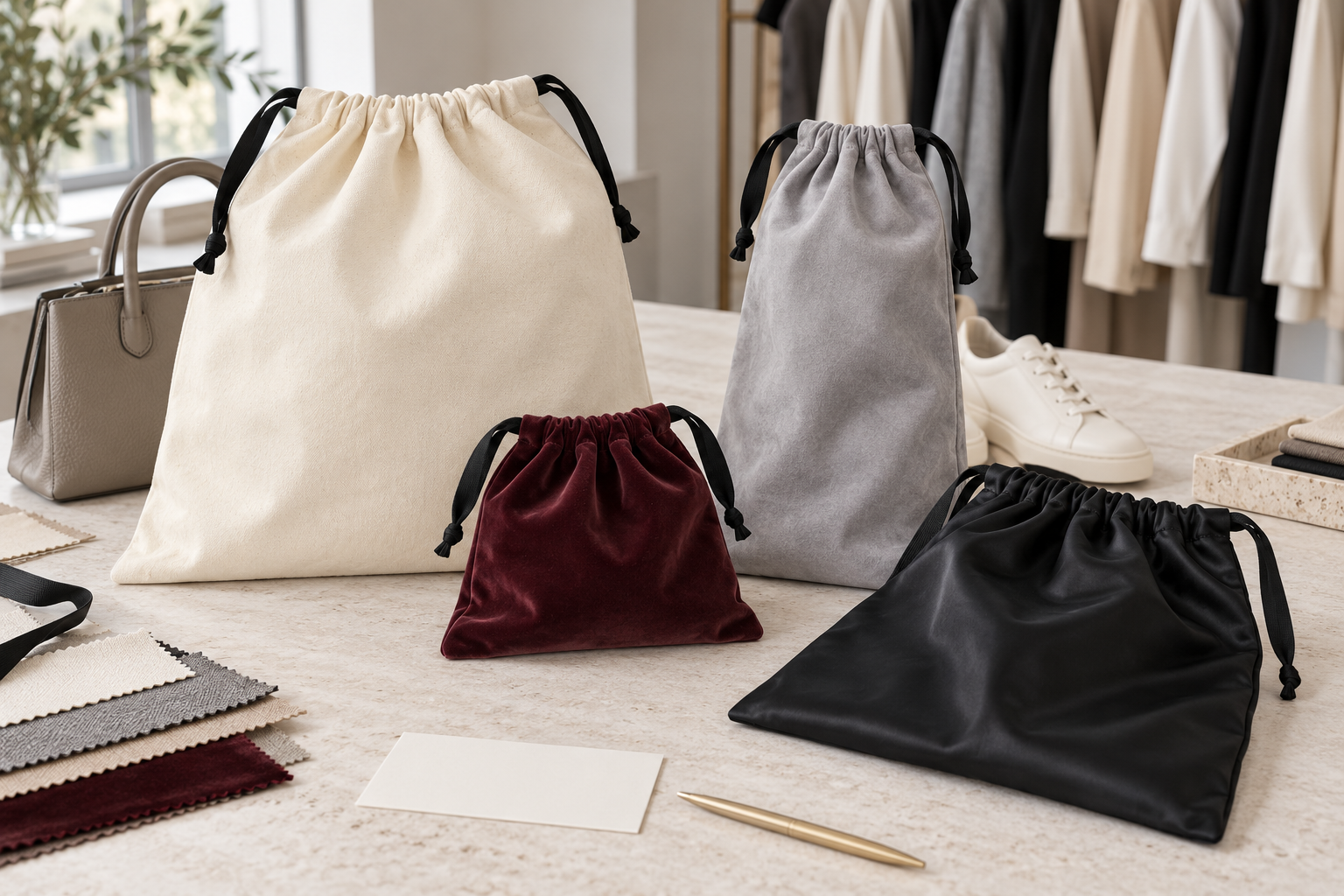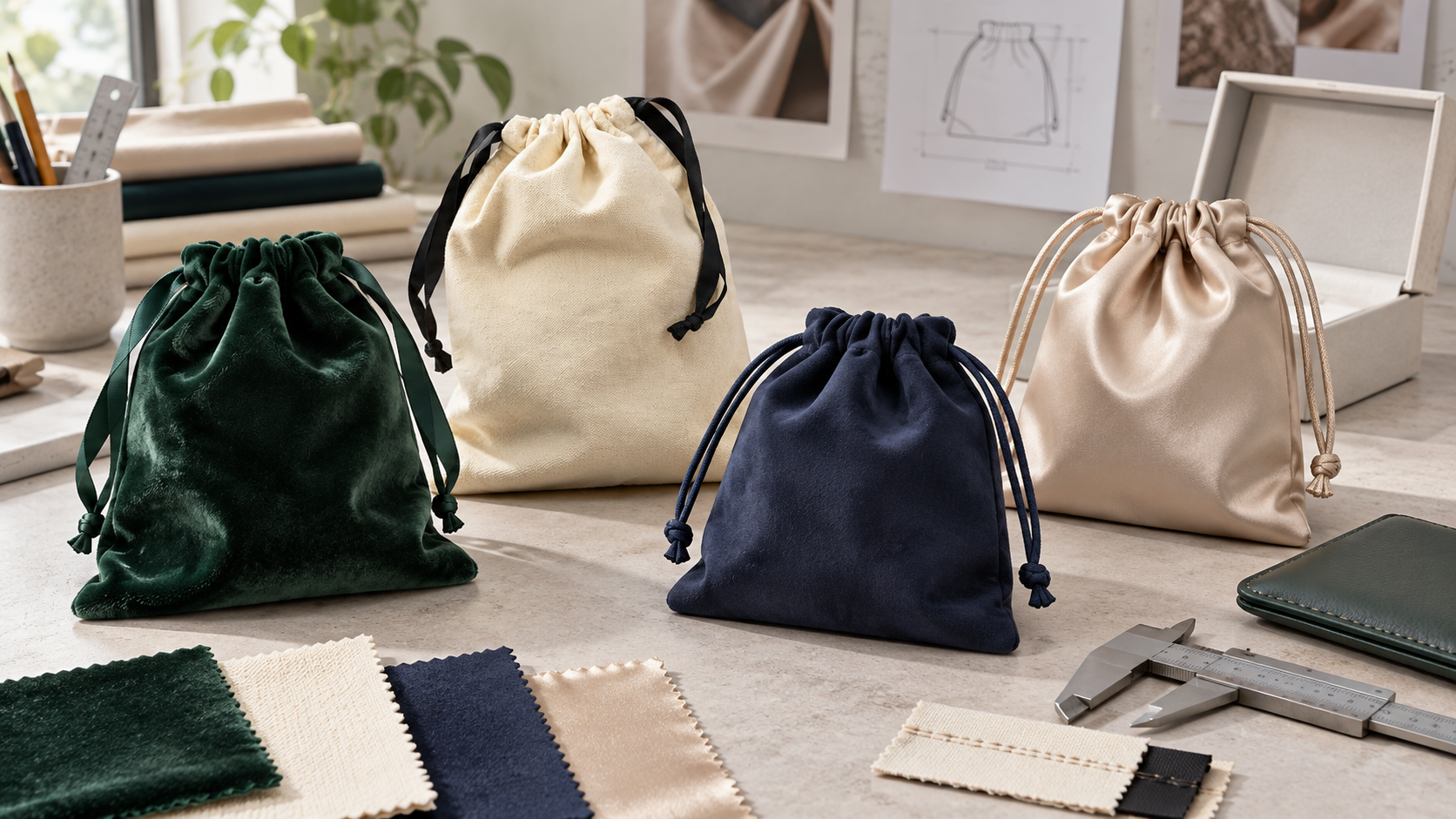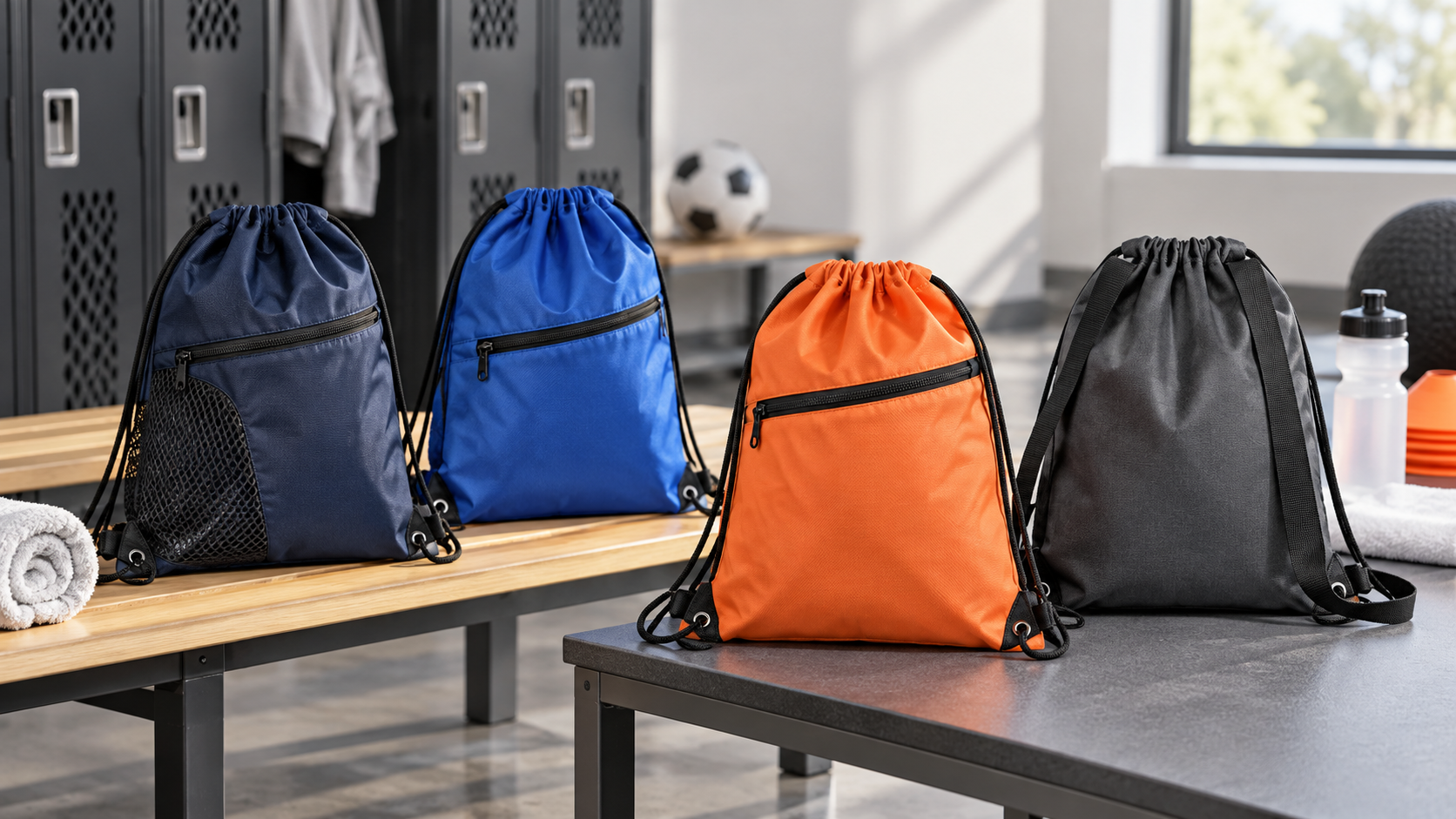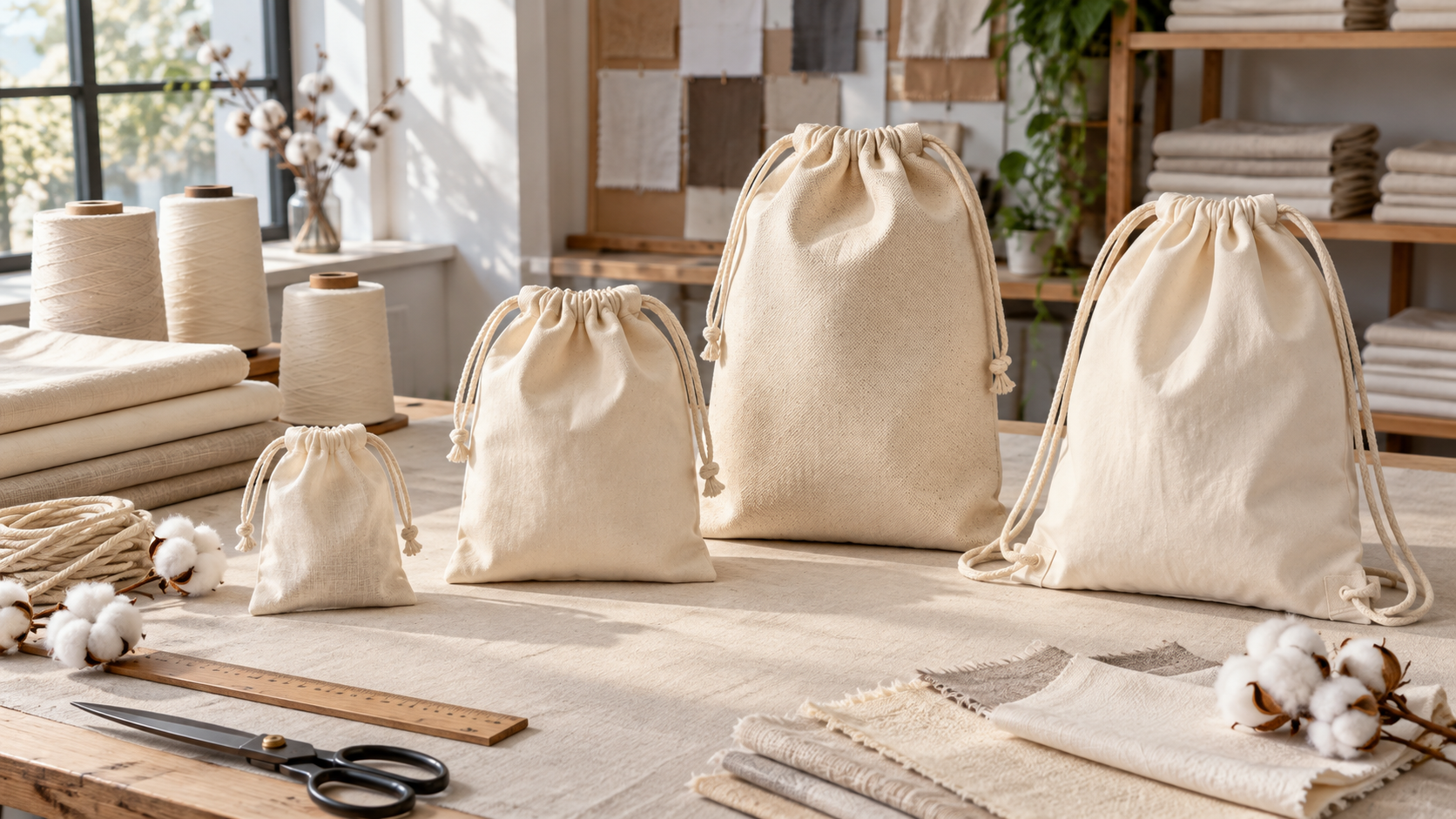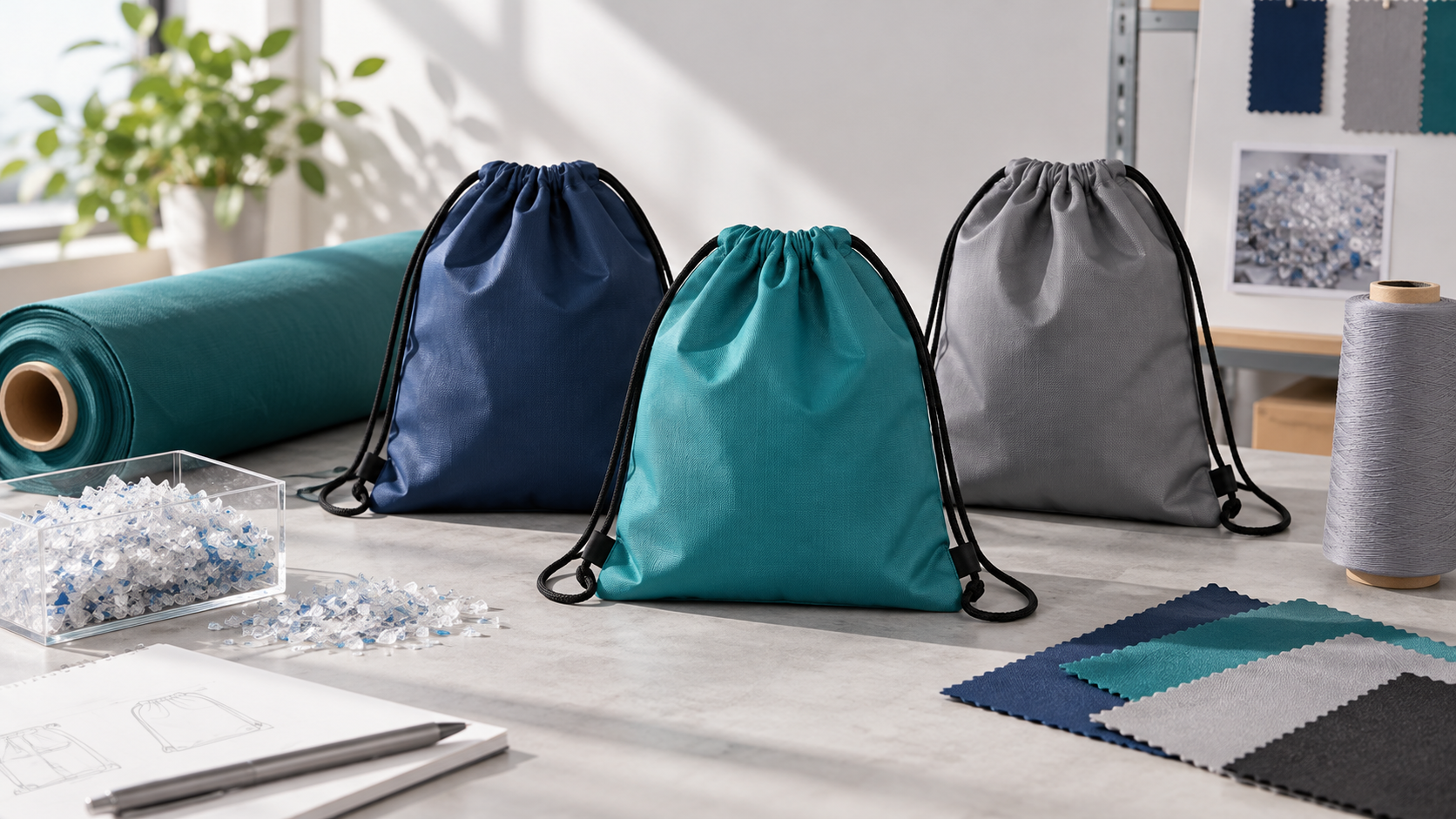
Custom bag production time must be confirmed against the design, material availability, quantity split, approvals and production capacity. Separate sample development, material preparation, bulk manufacture, inspection and transport. Ask for a dated milestone schedule with a defined starting trigger and finish point; this guide does not establish a universal number of weeks.
Need a milestone schedule for a bag launch? Send the bag construction, quantity/SKU split, artwork and sample status, material/component choices, tests and inspection, cargo-ready point, destination and required arrival date. LUCKYSTAR can return its dated assumptions, dependencies and proposed order milestones for written review.
An order based on an approved pattern and available fabric has different dependencies from a new backpack requiring custom hardware and testing. Buyer review time, material approval and reserved capacity can affect the completion date. Compare those conditions before comparing lead-time estimates.
The useful way to discuss time is to build a milestone schedule. Separate clarification, quotation, sample development, approvals, material procurement, production, inspection, packing and transport. For the broader supplier and sourcing framework, start with our Custom Bag Manufacturer: Complete OEM/ODM Buyer's Guide.If the product format is still open, review the product range before requesting a schedule.
Choose the Starting Conditions for Your Timeline
Use the following routes to identify what the supplier must confirm before proposing dates. These are planning categories, not measured lead-time benchmarks. Record separate cargo-ready and warehouse-arrival dates so transport is not silently excluded.
| Project route | Required schedule confirmation | Typical starting point | What can move it outside the range |
|---|---|---|---|
| Logo on an available or production-proven bag | Confirm stock allocation and decoration slot | Stock material, standard size and trim, simple decoration | Artwork changes, unavailable color, custom packaging or peak capacity |
| Standard custom cut-and-sew bag | Confirm sample approval and material-ready dates | New dimensions or details using commonly sourced materials | Several sample rounds, custom dyeing, split colorways or complex print |
| Complex backpack, cooler or travel bag | Confirm tooling, tests and component dependencies | New pattern, lining, padding, multiple components and functional checks | New molds, specialty material, testing, pilot run or corrective work |
| Repeat order against a controlled specification | Reconfirm materials, specification and capacity | Approved design, available materials and unchanged packaging | Discontinued trim, new dye lot, specification revision or factory queue |
A short stated lead time is meaningful only when its start and finish are defined. "Thirty days" might mean thirty days after deposit and final sample approval, with materials already available. It rarely means thirty days from the first inquiry to delivery in another country.
What the Custom Bag Timeline Actually Includes
Custom bag lead time is a chain of work and decisions. Some tasks can overlap; others cannot start until the previous gate is approved. A manufacturer can prepare a material inquiry while a pattern is being reviewed, but it should not blindly purchase custom-dyed bulk fabric while the size and color are still changing.
| Stage | Date or dependency to obtain | Main output | What releases the next stage |
|---|---|---|---|
| Brief clarification and quotation | Agreed date for complete RFQ and quotation | Defined scope, assumptions, price basis and initial schedule | Buyer confirms route, quantity and commercial direction |
| Pattern and first sample | Confirmed prototype completion date | Physical prototype and working specification | Sample is shipped for review or assessed with agreed evidence |
| Sample transit and buyer review | Courier estimate plus buyer review deadline | Consolidated, measurable approval comments | One decision-maker releases a revision or approves the sample |
| Revision sample, if required | Revision scope and next approval date | Corrected sample and updated specification | All blocking points are closed |
| Materials and pre-production | Confirmed availability for each bulk input | Bulk materials, artwork, packing and production standard | Incoming checks and pre-production review pass |
| Bulk cutting, decoration and sewing | Reserved production slot and completion date | Completed production quantity | Inline issues are closed and quantity is complete |
| Final inspection, packing and release | Inspection booking, corrective-work allowance and release | Inspection result, packed cartons and shipping data | Buyer or authorized inspector approves release |
Some activities can overlap once their inputs are confirmed; others must wait for an approval or component. Ask the supplier to identify the sequence of dependent tasks controlling the earliest finish date, record the owner of each task and revise the schedule when a blocking assumption changes. Do not add all stage estimates blindly or assume every stage can overlap.
When Does the Lead-Time Clock Start?
Factories and buyers often use the same date language but count from different events. Put the starting trigger in the purchase order or schedule. A credible production start normally requires more than a verbal go-ahead.
| Possible trigger | Is the clock truly ready to start? | Why |
|---|---|---|
| First inquiry sent | No | The product, quantity, artwork and material may still be undefined |
| Quotation accepted | Not always | Deposit, artwork, sample approval or packaging information may remain open |
| Deposit received | Only if technical approvals are also complete | Money does not resolve an unapproved color, dimension or construction |
| Final sample and specification approved | Usually the main technical trigger | The factory now has a repeatable production reference |
| Bulk materials confirmed or received | Often the practical floor trigger | Cutting cannot begin without released material of the right identity and shade |
| All of the above plus factory slot confirmed | Best basis for a dependable schedule | Technical, commercial and capacity conditions are aligned |
The same discipline applies to the finish date. "Production complete" can mean sewing is finished while thread trimming, inspection and packing remain. "Ship date" may mean ex-factory handover, cargo delivered to a forwarder, vessel departure or estimated arrival. Each is a different milestone.
Sampling Is Usually the Most Variable Stage
Sampling looks small because only one or two pieces are made, yet it contains concentrated decision-making. The sample room interprets the brief, develops patterns, sources small quantities, prepares decoration and builds the product without the efficiency of a production line. The buyer then needs time to receive, use and comment on the sample.
A simple tote adapted from an existing pattern may be ready quickly. A new travel bag with several compartments may need a mock-up to check proportion, a functional sample to test access and capacity, and a pre-production sample in final materials. Each round is justified only when it resolves important uncertainty.
| Sampling variable | Possible time effect | How to control it |
|---|---|---|
| Incomplete measurements | Pattern work stops for clarification or the first sample is built on assumptions | Mark finished dimensions, handle drop, openings and pocket positions |
| Non-production artwork | Logo proof and decoration setup are delayed | Send vector artwork, color references, final size and placement |
| Many reviewers | Comments conflict or arrive over several days | Nominate one owner and issue one consolidated comment sheet |
| Changes to the concept | A revision becomes a new development round | Separate corrections from new optional ideas |
| Temporary sample materials | Final color or performance must be approved again | List every substitution and define the bulk approval method |
| Courier and customs | Physical review begins later than the factory completion date | Include sample transit and local clearance in the calendar |
The Custom Bag Sample Development Process explains what to review at each sample gate. The aim is not to approve quickly at any cost. It is to remove ambiguity efficiently before that ambiguity is repeated across the full order.
Materials and Components Often Control the Critical Path
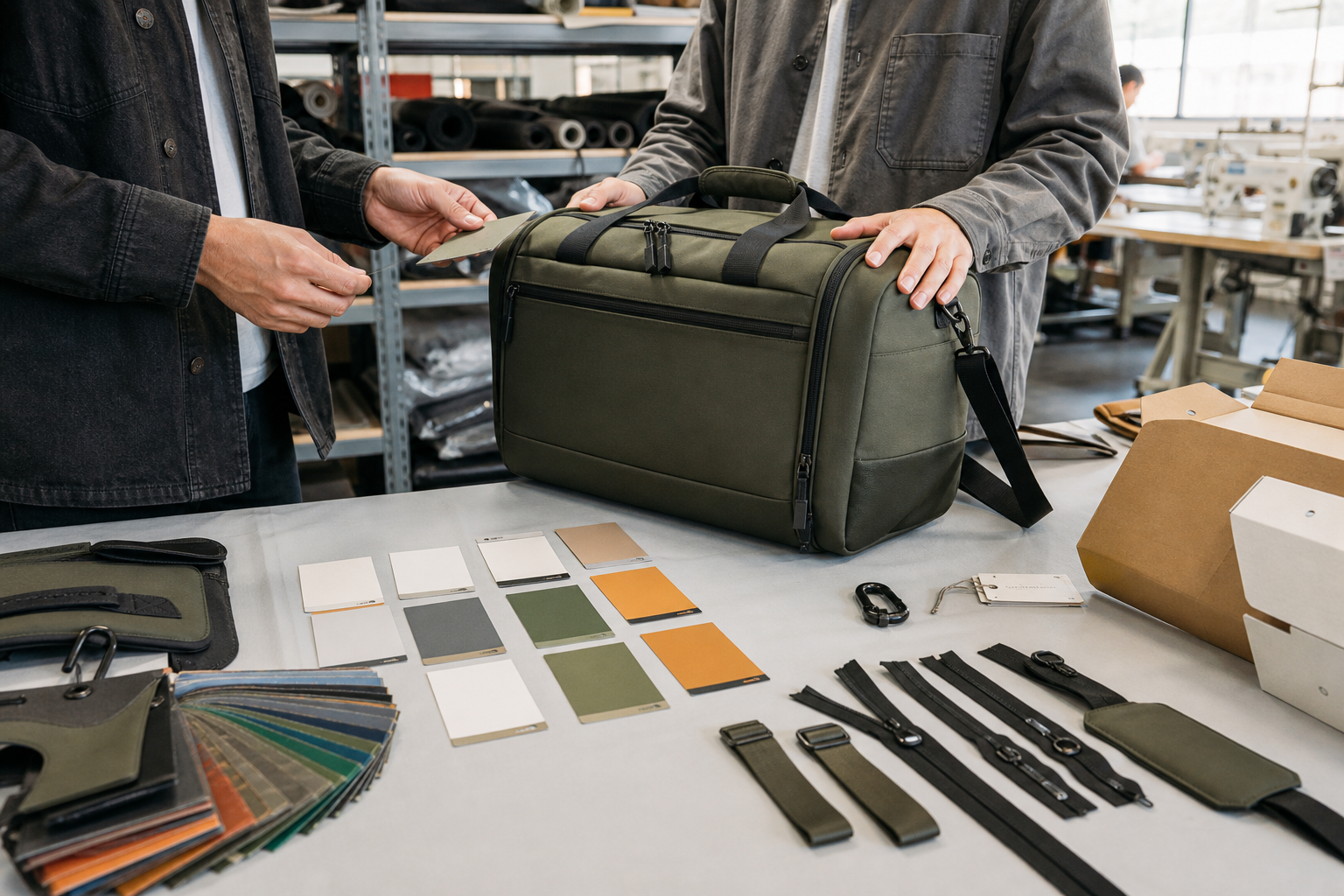
Sewing capacity receives most of the attention, but the longest-lead item may be fabric, webbing, zipper tape, a molded puller, a printed lining or retail packaging. A factory cannot recover two lost weeks of material sourcing simply by asking operators to sew faster.
| Input | Faster route | Longer route | Schedule question |
|---|---|---|---|
| Body fabric | Available composition, weight and stock color | Custom weave, dye, coating, lamination or certification | When can the bulk lot be reserved and approved? |
| Zippers and webbing | Standard size and available color | Color-matched tape, specialty grade or custom width | Is the component stocked by the bag factory or ordered upstream? |
| Metal or plastic hardware | Standard buckle, hook or puller | New mold, plating, engraving or exclusive shape | Does the tooling need a separate sample approval? |
| Decoration | One-color print with production-ready art | Full print, dense embroidery, woven patch or several placements | Is approval digital, physical, or both? |
| Packaging | Standard protective bag and master carton | Printed box, insert, barcode, assortment and retail pack-out | When must final copy and dielines be released? |
| Testing | Known material and agreed in-house checks | Third-party chemical or performance testing with corrective retest | Which exact sample or bulk lot will be tested? |
Availability also affects order quantity. A custom fabric or component may require a minimum batch before the supplier will start it. The guide to the typical MOQ for custom bags shows how quantity, material and setup decisions connect. A material substitution made only to save time should still be checked for appearance, strength, sewing behavior and compliance.
Product Type Changes the Production Rhythm
Bag type alone does not determine the schedule, but construction complexity changes the number of operations and the chance that one operation becomes a bottleneck. Two products at the same quantity can require very different amounts of cutting, preparation and sewing.
That is why the question "How long does custom bag production take?" should always be answered against a defined product. The construction tells the factory which operations, skills, machines and components must fit into the available production window.
| Bag type | Typical production characteristics | Likely timing pressure |
|---|---|---|
| Flat non-woven or cotton shopper | Few panels, simple handles, limited trim | Printing setup, fabric availability and large-volume packing |
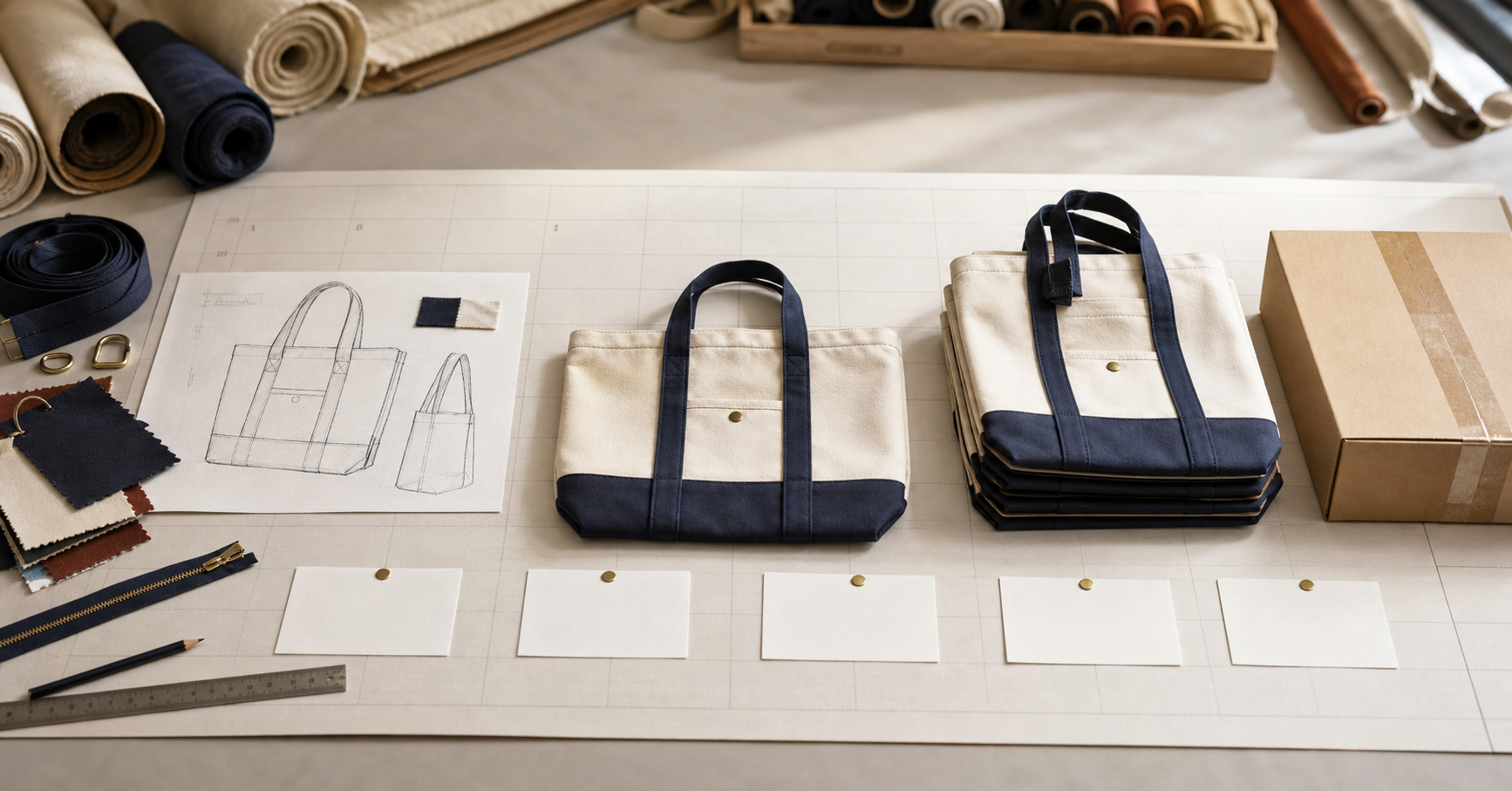
| Canvas tote with lining and zipper | Heavier fabric, more reinforcement and interior assembly | Needle choice, shrinkage, top-edge control and hardware |
| Cosmetic bag | Small panels, zipper curves, lining and binding | Accurate components, clean interior work and logo placement |
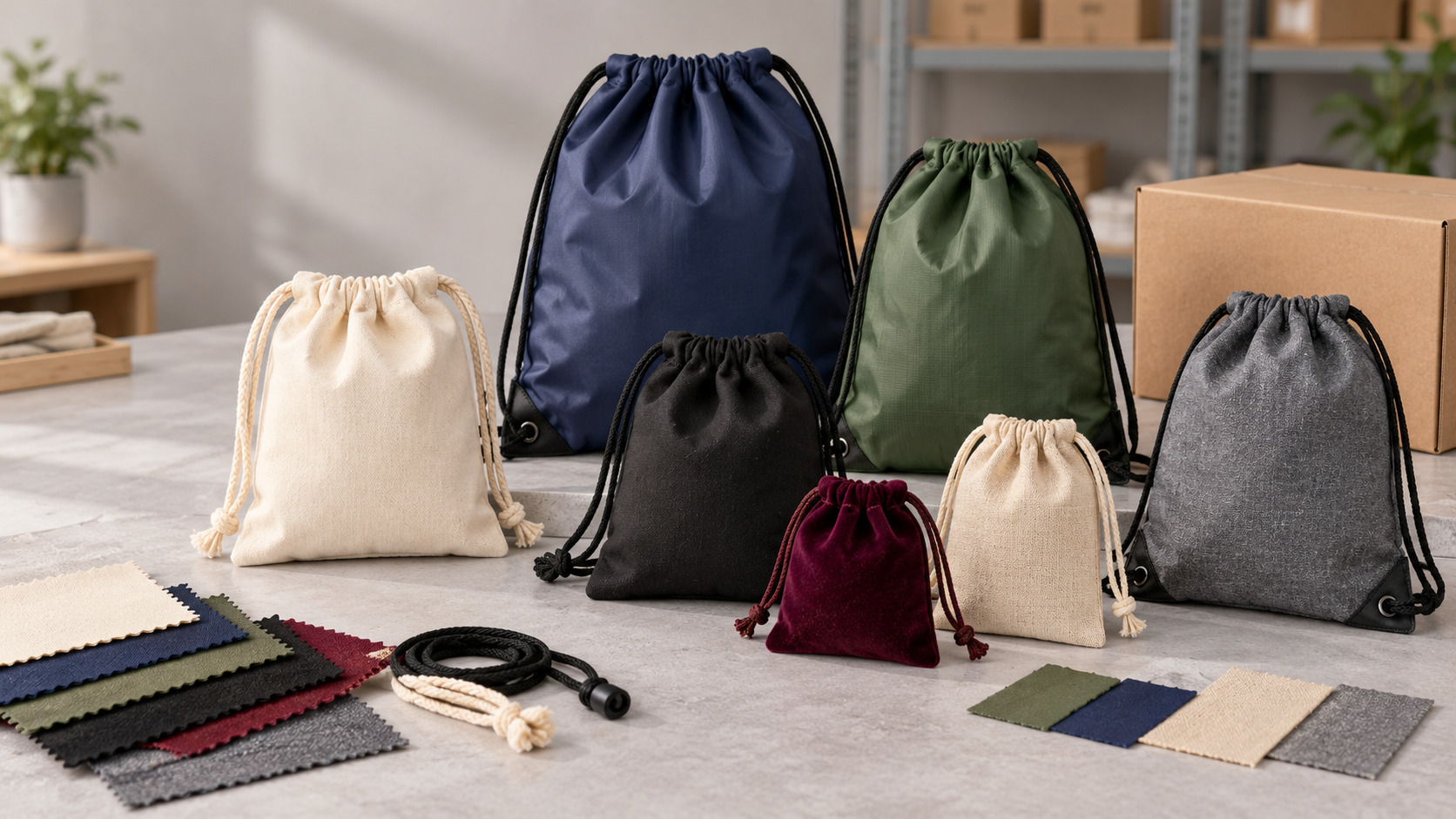
| Drawstring bag | Simple body but cord channel and corner reinforcement | Cord, eyelets, full-panel decoration and color split |
| Backpack or travel bag | Many pattern pieces, compartments, padding, straps and zippers | Component coordination, sewing sequence and functional review |
| Cooler bag | Insulation, lining, leak-resistant details and bulky assembly | Material compatibility, edge binding and performance checks |
A product with many pockets is not merely a larger sewing job. Every extra panel must be sourced, cut, labeled, decorated if required, positioned and checked. The complete custom bag manufacturing process from design to delivery explains how those operations connect after the sample is approved.
Some Work Can Run in Parallel - Some Should Not
A good schedule is not a long list of tasks placed end to end. The factory may begin packaging artwork review while the final sample is in transit, or reserve an available fabric while a logo proof is being approved. Smart overlap protects the date without gambling on unresolved design decisions.
| Workstream | Reasonable overlap | Unsafe shortcut |
|---|---|---|
| Material planning | Confirm availability, price and reservation terms during sampling | Cut custom bulk fabric before dimensions and pattern are frozen |
| Decoration | Prepare screen, embroidery file or digital proof from final artwork | Run full bulk decoration before placement and color are approved |
| Packaging | Develop dielines and collect barcode data while the bag is sampled | Print retail packaging before legal copy and packed dimensions are final |
| Capacity | Tentatively reserve a factory window against an agreed decision date | Promise a fixed ship date without a released product standard |
| Testing | Plan protocols and laboratories during development | Assume a prototype result automatically covers a different bulk material lot |
| Shipping | Request routing options and estimated carton data early | Book final freight from an unverified packing estimate |
When a deadline is firm, ask which decisions must be made at risk. The answer should state the financial exposure if the product changes. Reserving a standard fabric may be manageable; committing to custom printed lining before artwork approval may not be.
Production Is Not Finished Until the Order Is Released
Bulk sewing is followed by finishing, inspection and packing. These steps protect the buyer from shipping a large problem faster. Loose threads are removed, closures are operated, dimensions and artwork are checked, assortments are counted, and cartons are built to the approved pack-out.
A final inspection needs time to report and resolve findings. If a minor issue can be corrected, the order may need sorting or rework followed by reinspection. A schedule with zero space between production completion and cargo pickup assumes that every unit and document will be perfect on the first attempt.
- Define the inspection basis before production, including critical dimensions, workmanship, artwork and packing.
- Reserve a buffer between planned completion and the last acceptable cargo handover date.
- Confirm actual carton dimensions and gross weight before final freight booking.
- Do not confuse a production sample with statistical approval of the full order.
- Record any accepted deviation so that it does not silently become the repeat-order standard.
Add Transport Time to Calculate the In-Hand Date
Define whether the quoted finish point means cargo-ready, carrier handover, departure, destination terminal or delivered arrival. For an in-hand date, include pickup, export handling, booking and cutoffs, main transport, transshipment where applicable, clearance, delivery appointments and receiving. ICC's current Incoterms® 2020 page explains that the rules allocate specified delivery obligations, costs and risks. State the exact rule, named place and edition, while obtaining current route estimates separately: the trade rule does not establish production time, carrier capacity, transit duration, customs clearance or a guaranteed arrival date.
| Transport route | Route-specific information to request | Best suited to | Main planning caution |
|---|---|---|---|
| International express | Current service estimate to the delivery address | Samples, urgent small cartons or launch-critical replacements | High cost and dimensional-weight charges |
| Air freight | Booking estimate with handling and delivery scope | Time-sensitive commercial quantities | Space, security, handling and final-mile time still apply |
| Ocean freight | Current sailing, cutoff and destination arrangements | Larger orders where freight economy matters | Cutoff, consolidation, port congestion and customs add variability |
| Couriered approval sample | Courier estimate and sample review appointment | Physical sample review | Import clearance or remote delivery can extend the review start |
Use current forwarder estimates for the actual route; do not copy a transit number from a previous season or another destination. Work backward from the required warehouse date and protect a buffer for customs, delivery appointments and internal receiving.
What Commonly Delays Custom Bag Production?
| Delay source | What it looks like | Preventive action |
|---|---|---|
| The brief is still moving | Dimensions, pockets or material change after sampling starts | Freeze the product objective and mark optional features separately |
| Artwork is incomplete | Low-resolution logo, missing colors or uncertain placement | Release vector art with size, color and location |
| Feedback is fragmented | Several people send different comments over a week | Use one approver and one revision-controlled comment list |
| A long-lead component appears late | Custom zipper, buckle or box is added after quotation | Review the full bill of materials and packing before approval |
| Color is subjective | Approvals rely on phone photos under different lighting | Use a physical standard or named reference and define tolerance |
| The schedule ignores factory capacity | Approval arrives after the reserved line window has passed | Tie approval deadlines to a capacity-reservation policy |
| Inspection finds a systemic issue | Sorting or rework is needed near the ship date | Check first-off pieces and inline production before the lot is complete |
| Packing is decided last | Labels, cartons or assortments block finished goods | Approve packaging copy and pack-out during sampling |
The cheapest response to a late project is often to simplify a nonessential variable, not to remove quality control. The article How Much Do Custom Bags Cost? can help distinguish features that add customer value from costs and delays created by unnecessary complexity.
How Buyers Can Shorten Lead Time Without Creating New Risk
- Start with the in-hand date. Work backward through transport, inspection, packing, production, material and sampling milestones.
- Choose the right development route. A proven construction may be faster when it meets the product objective. Compare the trade-offs in OEM vs ODM Bag Manufacturing.
- Send a decision-ready brief. Include use, size, material direction, logo, quantity, color split, packing, destination and target date.
- Use stock inputs selectively. An available fabric or standard zipper can save time when it still meets appearance and performance needs.
- Consolidate sample comments. One precise revision list is faster than several rounds of vague messages.
- Approve in the right format. Use physical color standards, signed samples, final artwork and version-controlled specifications.
- Reserve capacity with conditions. Agree on the decision date required to protect the tentative production window.
- Inspect early. A first-off or inline check can identify a repeated issue before the full quantity is complete.
- Keep a transport option open. Price the cost of air or split shipment before the deadline is already missed.
Speed should come from removing waiting, confusion and avoidable rework.It should not come from skipping a sample, accepting unidentified material or shipping without an agreed inspection. When comparing suppliers, the custom bag manufacturer checklist helps test whether a short schedule is supported by real controls.
A Practical Backward-Planning Template
Start with the latest acceptable in-hand date and assign an owner to every gate. The supplier owns factory actions; the buyer owns timely decisions and complete information. Shared milestones make a delay visible while there is still time to respond.
| Milestone | Target date | Owner | Evidence of completion |
|---|---|---|---|
| Required in-hand date | Fixed commercial date | Buyer/logistics | Warehouse receipt or delivery appointment |
| Cargo handover | Work backward from transit and buffer | Supplier/forwarder | Booking and handover document |
| Final release | Before cargo cutoff | Buyer/inspector | Passed report or documented release |
| Production complete | Allow inspection and rework buffer | Factory | Finished quantity and packing status |
| Bulk production start | Based on confirmed capacity | Factory | First-off or line-start record |
| Materials ready | Before cutting | Factory/suppliers | Incoming material approval |
| Production standard frozen | Before procurement at risk | Buyer/factory | Approved sample, specification and artwork |
| Final sample approval | Protect the reserved factory slot | Buyer | Dated written approval and closed comments |
| First sample dispatched | Include courier time | Factory | Sample photos and tracking |
| Brief and order route agreed | Project start | Buyer/factory | Confirmed RFQ, assumptions and schedule |
Company-claim boundary: the following section is LUCKYSTAR publisher self-description and a commercial scheduling proposal. It is not independent proof of factory ownership, reserved capacity, material availability, testing or inspection competence, MOQ, price, production speed, carrier capacity or delivery performance. Legal seller and production sites, capacity reservation, materials, samples, tests, packing, handover and dates remain order-specific and subject to current evidence, final specification, quotation, contract and written confirmation.
How LUCKYSTAR describes its order-specific schedule review
LUCKYSTAR states that it can review a controlled bag brief and return its proposed dependency and milestone schedule for buyer approval.
- Define the clock: identify the start trigger, cargo-ready or handover finish point, destination arrival target and the approvals included.
- Freeze inputs: connect the SKU, quantity, current specification/artwork, sample status, material/component route and packing.
- Expose dependencies: identify custom materials, tooling, sample/revision gates, testing, inspection, rework allowance and buyer decision deadlines.
- Confirm capacity: distinguish tentative planning from written material allocation, upstream commitments and a reserved production window.
- Track changes: reissue dated milestones when a specification, approval, material, quantity, route or capacity assumption changes.
Review the bag product range and sample-development process, then send the launch brief for an order-specific schedule proposal.
Frequently Asked Questions
Can a custom bag order be finished in two weeks?
Do not assume that a two-week deadline is feasible. Ask the supplier to confirm available inputs, approval status, the production slot and every included stage in writing. State whether the requested deadline is cargo-ready or delivered. If the schedule cannot accommodate the agreed quality checks, revise the specification or target date.
Does the quoted lead time include sampling?
Often it does not. Many bulk lead times begin after the final sample, specification, deposit and artwork are approved. Request separate sample and production schedules, including sample shipping and buyer review.
Does a larger order always take longer?
Not in direct proportion. A larger stable run may use setup efficiently, but it still needs more material, sewing hours, inspection and packing. Quantity split across many colors or artworks can behave like several smaller runs and create extra changeovers.
Can the factory order materials before sample approval?
It can reserve or purchase confirmed inputs when both sides understand the risk. Custom materials tied to unresolved dimensions, colors or artwork should not be committed casually. Put liability, cancellation limits and possible reuse in writing.
How much buffer should I add?
The buffer should reflect launch consequences, construction novelty, material risk, inspection plan and transport route. A routine repeat order by express needs less contingency than a first production run moving by ocean freight before a fixed retail launch.
How do I compare two lead-time promises?
Normalize the start trigger, included stages, material assumptions, factory capacity, inspection, finish point and transport. Then ask for milestone dates rather than one total. A longer transparent schedule is often safer than a shorter number built on unstated assumptions.
Turn the requested arrival date into dated decision gates
Work backward from the delivery facility, then connect transport, handover, release, inspection, bulk production, material readiness and sample/specification approval to named owners and evidence.

Review the LUCKYSTAR bag range, then send the schedule inputs through the contact form or Email a project brief. The email link opens a prefilled draft for your review before sending.
Legal seller and facilities, material and component availability, samples, testing, inspection, capacity, MOQ, price, packing, production dates, carrier schedules, route assumptions and delivery terms are subject to current evidence, final specification, quotation, contract and written confirmation.