How to Reduce Custom Drawstring Bag Costs Without Sacrificing Quality

Last reviewed: September 16, 2026
The safest way to reduce custom drawstring bag cost is to remove work and variation that the user does not value—not to weaken the features that make the bag usable. Start by protecting usable dimensions, closure performance, load-bearing seams, decoration acceptance, required evidence and clean pack-out. Then optimize fabric yield, cord construction, operation count, artwork, SKU architecture, sampling and cartons around that quality floor.
This distinction matters because a cheaper quoted unit can become a more expensive accepted unit after rejects, sorting, repacking, delayed launches or replacement freight. Buyers evaluating custom drawstring bags should therefore ask two questions for every proposed saving: What cost driver disappears? and What approved outcome could change? A supplier should be able to answer both before the specification is revised.
| Protect as critical to quality | Usually open to value engineering | Evidence before approval |
|---|---|---|
| Fit for the intended contents | Small dimensional changes outside the fit envelope | Filled fit check and approved points of measurement |
| Smooth opening and closing | Cord fiber, diameter, end finish or single/double routing | Closure-cycle sample and cord-channel review |
| Seam integrity for expected use | Seam count, lining, gusset or reinforcement geometry | Construction sample and risk-based load check |
| Legible, correctly positioned branding | Print method, color count, coverage and artwork size | Strike-off or decorated production-intent sample |
| Required material or compliance claim | Unseen component standardization | Order-specific document and evidence review |
| Clean, saleable delivery | Folding method, inner-pack count and carton arrangement | Approved packing sample and carton specification |
Need controlled cost-down options? Send the current bag specification or sample, intended contents and use, dimensions, material and cord system, artwork and decoration, quantity by SKU, must-keep quality criteria, current defects or cost pressure, evidence and tests, packing, destination, Incoterm and target date. LUCKYSTAR can separate baseline, value-engineered and simplified options, showing what changes, what stays protected and what must be reapproved.
1. Change the target from “lowest price” to “least avoidable cost”
An effective cost-down brief does not say, “Make the same bag cheaper.” It describes the job the bag must still perform and asks which inputs, operations or variations can be removed without changing that job. This turns negotiation into engineering.
For a jewelry pouch, the protected job may be soft contact, controlled presentation and a neat closure. For a backpack-style promotional sack, it may be carrying comfort, seam resistance and logo visibility. For a reusable retail pouch, it may be repeated opening, a clean interior and consistent reorder appearance. These products may all be called drawstring bags, but the useful cost levers are different.
Write one sentence that defines the retained result before discussing savings. For example: “The finished pouch must contain the approved product, close without snagging, preserve the approved logo zone and arrive ready for retail packing.” This sentence becomes the decision filter for every option.
2. Build a no-cut list before changing the specification
Cost reduction becomes dangerous when the team has not separated requirements from preferences. A critical-to-quality, or CTQ, list should be short enough to enforce and specific enough to test. It should describe outcomes rather than premium-sounding adjectives.
Protect the contents and usable space
Flat width and height do not equal usable capacity. The cord channel consumes vertical space; side seams consume width; a lining, gusset or bulky object changes the internal envelope. Reducing a dimension by a few millimeters can improve cutting yield, but only if a filled sample confirms that the intended contents still load, close and present correctly.
Record the product dimensions, orientation, insertion method and acceptable movement inside the bag. If the bag carries several items, define the most demanding approved pack-out rather than testing only an empty pouch.
Protect the closure as a system
The drawcord, channel, side opening, knot or end finish and fabric surface interact. A thinner cord may lower input cost yet feel harsher, slip through an opening or gather unevenly. A tighter channel may look neat when flat but increase pulling force. The protected outcome should therefore be closure behavior, not a cord description alone.
Protect the load path and presentation surface
Identify where force transfers when the bag is carried or pulled closed. On a small flat pouch, the main risk may be the channel-side-seam junction. On a sports sack, the lower cord attachment and side seams may be more important. At the same time, define the visible face, logo zone, allowable distortion after gathering and appearance under the intended fill.
The custom drawstring bag tech pack guide explains how to turn these outcomes into dimensions, component fields and approval references.
3. Compare cost per accepted, usable bag
Unit price is only one line in the commercial result. A more useful internal measure is:
Accepted usable cost = product, development, inspection, packing, logistics and failure-related costs ÷ units that arrive acceptable for use.
The American Society for Quality’s cost-of-quality model separates prevention and appraisal costs from internal and external failure costs. Applied to drawstring bags, this means a clear specification, closure coupon or first-output check is not automatically “extra cost.” It may prevent a much larger expense after all panels are printed, sewn or shipped.
| Cost category | Drawstring-bag example | Poor saving decision | Better question |
|---|---|---|---|
| Prevention | Construction review, approved artwork datum, cord-channel trial | Delete the trial because it is not part of the unit | Can a low-cost coupon close the riskiest unknown? |
| Appraisal | Incoming reference check, first-piece review, final inspection | Remove inspection without reducing process risk | Which checkpoint catches the failure while it is reversible? |
| Internal failure | Recut panels, reprint, resew, sorting | Ignore rework when comparing quotes | What is the expected accepted yield for this configuration? |
| External failure | Returns, replacement goods, missed campaign, emergency freight | Treat post-delivery cost as the buyer’s problem | Which failure would damage the launch or brand most? |
Do not assign invented savings percentages. Compare scenarios using the same quantity, accepted quality definition, packing boundary, Incoterm and destination assumptions. Where figures are not yet verified, use an indexed model and replace it with supplier quotations after the design is specific.
4. Map the drawstring bag cost stack
A cost map helps the team find the real source of avoidable work. It is more actionable than asking for an unexplained discount.
| Cost driver | What creates cost | Practical value-engineering direction | Quality guardrail |
|---|---|---|---|
| Shell material | Composition, construction, weight, finish, width and purchase unit | Improve utilization; choose performance-fit material | Confirm identity, hand feel, opacity and intended use |
| Pattern yield | Panel dimensions, orientation, seam allowance and defects | Align size family with usable fabric width | Recheck usable capacity and tolerances |
| Conversion | Cutting, seams, channels, gussets, lining and inserts | Remove redundant operations | Preserve closure, load path and presentation |
| Drawcord system | Cord type, diameter, routing, hardware and end treatment | Standardize compatible components | Test pull feel, retention and end security |
| Decoration | Setup, colors, coverage, registration and sequence | Match method to substrate and artwork | Approve legibility, color reference and placement |
| SKU variation | Sizes, colors, cords, logos, labels and packs | Share a common platform; delay differentiation | Maintain traceability by approved variant |
| Development | Samples, freight, revision loops and approvals | Use decision-specific samples and one comment owner | Do not skip unresolved risk |
| Quality and evidence | Checks, testing, documents and claim review | Match evidence to destination and claim scope | Keep mandatory and high-risk controls |
| Packing and freight | Folding, inner packs, carton cube, protection and mode | Reduce empty space and unnecessary pack layers | Prevent crushing, moisture exposure and mixed counts |
The 2026 drawstring bag pricing guide provides the complementary “what creates price” view. This article focuses on how to change those drivers without quietly changing the approved product.
5. Improve material yield before downgrading the shell
Changing material is visible and risky; improving material utilization is often less visible to the customer. Begin with actual roll width, cutting direction, panel nesting, seam allowance and defect allowance. A minor finished-size change may create a better cutting layout, but the supplier must show the proposed finished measurements and the resulting fit—not only the estimated saving.
Size around the contents, not a convenient round number
Measure the contents and define an allowance for loading, closure and presentation. Then review nearby size options as a family. If several SKUs differ by only a small amount, one common bag may serve more than one pack-out. That can reduce pattern, sampling, setup and inventory complexity.
Do not force consolidation when it makes small products look lost or large products hard to insert. The decision should be based on filled samples and retail handling.
Specify a performance window instead of “thickest available”
Material weight alone does not determine durability or perceived quality. Fiber, yarn, weave or knit, coating, finishing, seam geometry and product use all matter. State the required composition, construction, weight tolerance when relevant, color reference, finish and performance outcome. Allow an alternate only through written review and a production-intent sample.
For material-route trade-offs, compare the context in canvas versus non-woven drawstring bags. The correct route remains specification- and order-dependent.
6. Simplify the cord and channel together
The closure is a small assembly with several cost points: cord purchase, cutting, routing, knotting or tipping, hardware, channel sewing and inspection. Changing only one component can transfer cost into another operation or create failures.
Choose single or double drawcord by function
A double-cord closure can create balanced gathering and a familiar opening action, but it also uses more cord and handling than a single-cord format. A single cord may be appropriate for some flat pouches, provided opening width, security and presentation remain acceptable. Backpack-style sacks have different load and comfort needs and should not inherit a jewelry-pouch solution.
Remove hardware only when it has no necessary job
Cord locks, metal eyelets, branded tips and decorative beads add components, assembly steps and inspection points. Remove them when they provide no required adjustment, reinforcement or brand function. If an eyelet distributes load or a stopper supports the use case, deleting it is a specification change—not a free saving.
Standardize cord details across variants
One compatible cord color, diameter and end finish across several shell colors can reduce separate purchasing and handling. Before standardizing, check color appearance, rubbing, pull feel, knot security and how the cord behaves against the selected channel fabric.
| Closure option | Potential cost effect | Appropriate when | Approval check |
|---|---|---|---|
| Single drawcord | Less cord and routing work | One-sided closure meets use and presentation needs | Fully open width, pull force and retention |
| Double drawcord | More component and assembly input | Balanced gathering or the carrying format requires it | Symmetry, cord length and closed appearance |
| Knotted end | Simple end treatment | The cord does not fray excessively and knot size is acceptable | Knot security and end cleanliness |
| Tipped or hardware end | Adds parts and operations | Finish, adjustment or function justifies the detail | Attachment, sharp edges and consistency |
7. Remove operations, not structural logic
Every seam, lining panel, insert, pocket, label and special corner creates material movement and a possible quality checkpoint. The correct question is not “Can we delete it?” but “Which customer or product requirement does it satisfy?”
A lining may protect delicate contents, hide construction or create a premium opening experience. An insert may maintain shape. A gusset may create necessary usable volume. If these jobs do not exist, simpler flat construction may be a better design. If they do exist, removing the feature may merely transfer cost to packing, damage or customer dissatisfaction.
Look for operations that can be combined or made repeatable: common seam allowances, one channel construction across sizes, standard label locations and construction compatible with existing equipment. The drawstring bag manufacturing process shows where a late design decision creates rework at later stages.
8. Match decoration ambition to the substrate
Brand visibility does not automatically increase with more colors, larger coverage or more processes. Decoration cost depends on setup, artwork complexity, substrate behavior, required opacity, registration, print area, order split and production sequence.
Preserve the recognizable brand element first. Then ask whether secondary copy, an extra back print, a special effect or edge-to-edge coverage changes the customer outcome. A strong one-position mark may outperform a technically demanding composition when the pouch gathers or curves.
| Artwork decision | Possible cost reduction | Quality question before approval |
|---|---|---|
| Reduce nonessential colors | Fewer setup and registration demands | Does the approved brand color and contrast remain? |
| Reduce coverage | Less ink, transfer area or run time depending on method | Is the mark still legible when the bag is filled and closed? |
| Use one print position | Removes a second setup or handling step | Is the unprinted side acceptable in the use context? |
| Simplify fine detail | Improves compatibility with textured substrates | Does the simplified artwork remain brand-correct? |
| Select another decoration route | May fit quantity, substrate or coverage better | Has it been approved on production-intent material? |
Approve decoration on the intended shell material, color and finish. A digital mockup cannot demonstrate ink absorption, transfer adhesion, embroidery distortion or how gathering affects placement.
9. Design one platform instead of many unrelated SKUs
Cost often hides in variation. Five colors with separate cords, labels, artwork files and packing instructions are not one production configuration merely because the total purchase order is large.
Create a variant matrix with rows for finished size and columns for shell, cord, decoration, label and pack. Identify which components can genuinely be shared. If a visible difference can be added late—such as an order label or outer carton mark—postpone it until after common operations. This reduces mix-up risk as well as setup burden.
Use variant codes on approvals and production references. Standardization without traceability can create a cheap but incorrect assortment.
10. Treat MOQ as a process signal
MOQ is not a universal company number. It may reflect material purchasing, color preparation, decoration setup, sewing changeovers, accessory quantities, packing or administrative handling. Ask which constraint sets the minimum for each variant and what design change would remove that constraint.
For example, a stock-compatible cord or shared shell color may reduce fragmentation, while a custom-dyed component or separate artwork can create a new minimum. Combining quantities helps only when the configurations share meaningful inputs and processes.
The detailed drawstring bag MOQ and production-time guide explains how to build a runnable-SKU matrix. Any MOQ, sample timing or bulk schedule from LUCKYSTAR should be confirmed for the actual material, artwork, quantity split and delivery conditions.
11. Use sampling to close decisions once
Repeated full samples are expensive because they consume material, setup, labor, coordination and express freight. Skipping sampling is also expensive when unresolved decisions reach bulk production. The value-engineering answer is to use the smallest sample that can close the current risk.
| Decision | Efficient evidence | Move to a full sample when |
|---|---|---|
| Material hand feel or color direction | Swatch or referenced material cutting | Surface and construction need to be judged together |
| Cord-channel compatibility | Sewn channel coupon | Overall size and appearance also need approval |
| Logo reproduction | Decoration strike-off on intended substrate | Placement and gathered appearance must be confirmed |
| Capacity | Undecorated structural prototype with actual contents | Branding and final trims affect the complete experience |
| Production release | Approved production-intent sample plus specification | Open issues are closed and references are controlled |
Consolidate buyer comments through one decision owner, mark every comment as required or optional, and issue a revision identifier. The custom drawstring bag sample development process provides a sample ladder for avoiding unnecessary complete prototypes.
12. Spend quality effort before defects become expensive
Deleting controls is not the same as improving efficiency. A better quality plan places a focused check immediately after the process that creates the risk.
For drawstring bags, that may mean confirming incoming shell and cord references, approving the first cut bundle, checking the first decorated panel, reviewing the first completed closure and verifying pack-out before cartons are sealed. The exact plan should follow product risk rather than a generic checklist.
The principles of process control and evidence-based decisions are consistent with the ISO quality management principles.In practical buying terms, the strongest cost-down idea is one that has a defined change, a measurable acceptance criterion and evidence from the changed configuration.
Do not claim “zero defects” or assume a final inspection guarantees every unit. Define defect categories, sampling or inspection scope, decision authority and corrective-action handling in writing. See the broader custom bag quality inspection checklist for an order-level control framework.
13. Reduce packaging cube without exposing the product
Finished drawstring bags can ship inefficiently when folding, inner packs and cartons are decided after production. Review the finished bag’s foldability, decoration sensitivity, cord behavior, moisture risk, assortment method and warehouse unpacking needs before confirming packing.
Remove unnecessary individual layers only when cleanliness, surface protection, labeling and destination rules still permit it. Standardize inner-pack counts where it improves reconciliation. Test a denser fold arrangement for crease recovery, print transfer, cord tangling and carton strength.
Commercial comparisons must also use the same Incoterm and named place. The ICC Incoterms® 2020 rules allocate tasks, costs and risks between seller and buyer; they do not make differently bounded quotations directly comparable. Compare the full route to the agreed destination, including origin handling, freight, insurance where applicable, customs-related charges, duties or taxes, and final delivery under the buyer’s actual arrangement.
14. Request three controlled quotation options
Instead of asking a supplier to “do their best,” request three versions that share the same delivery boundary and show every changed assumption.
| Option | Purpose | What may change | What must remain visible |
|---|---|---|---|
| A: Reference configuration | Establish the approved baseline | Nothing unless listed as an open point | Complete specification, packing and commercial boundary |
| B: Value-engineered configuration | Remove low-value cost and variation | Yield, standard components, operation count, artwork or pack-out | CTQ results, changed BOM lines and new approval evidence |
| C: Simplest acceptable configuration | Define the practical lower boundary | More substantial simplification | Explicit trade-offs; no hidden substitution |
Ask for quantity tiers only after each option has a stable configuration. Each quotation should state validity, currency, quantity and SKU split, sample basis, packing, named Incoterm/place, start conditions and exclusions. Price changes after specification changes should be traceable to the change, not buried in a new total.
15. Never cut these controls merely to reach a target price
Some apparent savings remove the buyer’s ability to verify what is being purchased. Keep the following controls unless a documented risk review supports an alternative.
| Do not remove blindly | Risk created | Minimum safer control |
|---|---|---|
| Material identity when making a composition or recycled-content claim | Unsupported marketing or wrong input | Order-linked material evidence and receiving reference |
| Finished dimensions and usable-space checks | Product does not fit or close | Approved points of measurement plus filled check |
| Cord-channel approval | Snagging, uneven gathering or pull-through | Production-intent closure sample or coupon |
| Reinforcement in a real load path | Seam or attachment failure | Construction review and use-relevant check |
| Artwork identity and placement datum | Wrong logo, scale or post-gather position | Controlled artwork file and decorated approval |
| First-output review after a material/process change | Bulk deviation begins unnoticed | Recorded first-piece acceptance |
| Destination-specific evidence | Noncompliant claim, label or shipment | Requirement matrix with responsible reviewer |
| Pack count and carton reconciliation | Shortages, mixed variants or receiving delay | Count method, carton marks and release record |
Past certificates, reports or supplier statements should not be expanded into company-wide claims. Evidence must match the relevant entity, product or material, standard, scope, issue date and validity. LUCKYSTAR should confirm availability for the specific order in writing; no certification mentioned in a generic discussion is automatically included.
16. Run a seven-gate cost-down workflow
The sequence below keeps commercial pressure from outrunning product control.
- Define the use case and quality floor. Record contents, handling, closure, branding, destination and required evidence.
- Freeze a reference configuration. Use a specification, bill of materials and approved reference rather than a product nickname.
- Map cost drivers. Identify material, yield, operations, decoration, variants, packing and risk costs.
- Propose one change at a time. State the cost mechanism, affected requirements and evidence needed.
- Test the changed interface. Use a coupon, strike-off, fit prototype or full sample according to risk.
- Normalize quotations. Align quantity split, pack-out, Incoterm, destination and exclusions.
- Release with change control. Update the specification, sample status, inspection points and reorder archive.
This workflow connects naturally to drawstring-bag design for OEM production and the broader custom bag cost-control guide, while keeping the decisions specific to the closure and construction of a drawstring bag.
Company-claim boundary: the following section is publisher self-description and a commercial sourcing option. It does not independently prove factory ownership, in-house control of every operation, universal capability, guaranteed savings, lowest price, available capacity, stock, material composition, product performance, certification, compliance, MOQ, timing or superiority. The legal seller, assigned sites and subcontractors, proposed alternatives, samples, evidence, tests, QC, packing, price and delivery terms depend on the exact order, released specification and written confirmation.
17. Why work with LUCKYSTAR on cost optimization?
LUCKYSTAR’s useful role is not to promise one universal “lowest” number. It is to help a buyer turn a use case into comparable, order-specific options for material, construction, decoration and packing, then connect approved decisions to sampling and quality checkpoints.
Drawstring-specific specification review
LUCKYSTAR can help structure the questions that materially affect the bag: shell composition and weight, finished and usable dimensions, flat or shaped construction, single or double cord, cord material and finish, lining or inserts, decoration, packing and destination needs. Actual available options remain subject to the selected specification, sample and written quotation.
Option-based development
Instead of hiding a substitution inside a cheaper quote, buyers can ask LUCKYSTAR to distinguish a reference option from a value-engineered option. The team can then compare what changes, why it changes cost, what must be resampled and which acceptance criteria remain protected.
Connected approval and quality coordination
The company’s documented workflow supports pre-production definition, material and first-output checks, in-process review, finished-product inspection and packing confirmation according to order risk. This is an operational coordination approach, not a guarantee that every product or order uses an identical test plan.
Evidence-conscious communication
Claims about composition, recycled content, certification, testing, performance or social compliance should be tied to current, applicable evidence. LUCKYSTAR’s public content should not convert a historical or product-specific document into a general company credential. Ask what document can be supplied for the exact order and verify its entity, scope and validity.
The luckystarcreation.com site is used in the business context of Ningbo Luckystar Commodities Co., Ltd. The contracting, invoicing and payment entity for a specific transaction should be matched in the written commercial documents rather than inferred from a brand name or channel page.
For a wider supplier-evaluation framework, use the Custom Bag Manufacturer Guide and the focused guide on how to choose a custom drawstring bag manufacturer.
18. Send an RFQ that makes savings measurable
Provide enough information for engineering and commercial teams to discuss the same bag:
| RFQ field | What to provide | Why it affects cost control |
|---|---|---|
| Use and contents | Product dimensions, weight, handling and presentation | Defines the real quality floor |
| Bag format | Flat pouch, shaped pouch, lined format, backpack sack or other | Determines pattern and operation route |
| Shell | Composition, construction, target weight/finish and color reference | Prevents incomparable material assumptions |
| Closure | Single/double cord, material, diameter, route, ends and hardware | Exposes the full closure cost system |
| Finished measurements | Drawing, usable area and measurement method | Enables fit and yield review |
| Decoration | Vector artwork, size, colors, position and appearance standard | Allows method and setup optimization |
| Variants | Quantity by size, shell, cord, artwork and pack | Reveals fragmentation |
| Quality | CTQs, defect priorities, inspection or test requirements | Protects accepted yield |
| Claims and destination | Market, labeling, composition or certification request | Defines evidence scope |
| Packing and delivery | Unit pack, assortment, carton limits, destination and Incoterm | Makes landed comparisons meaningful |
Use the custom drawstring bags product page to frame material and format possibilities, then send the filled specification through the contact link below. Price, MOQ, sample arrangements and timing remain subject to the approved configuration and written confirmation.

19. Frequently asked questions
What is the safest first cost cut for a custom drawstring bag?
Start with avoidable variation and poor material utilization. Review whether several sizes, cord types, labels or pack instructions can share a platform, and whether finished dimensions can move slightly without affecting filled fit. These changes can remove setup and handling before the team considers weakening a visible or functional component.
Should I choose a lighter material?
Only after defining the required outcome. A lighter option may work for a low-load gift pouch but fail the opacity, hand feel, seam or reuse needs of another application. Compare production-intent samples and update the material specification; do not approve a material solely from nominal weight.
Is one drawcord always cheaper than two?
It generally uses fewer components and routing steps, but it is not automatically the better value. Check fully open width, closing effort, retention, symmetry and user expectations. If double cords serve the carrying or presentation function, their removal can damage quality.
Can I reduce print cost without making the bag look cheap?
Often yes. Protect the most recognizable brand element, place it where gathering will not obscure it, and simplify nonessential colors, fine details or extra positions. The selected method must still be tested on the intended substrate and color.
Does a larger order always lower the true cost?
No. A larger quantity may spread setup costs, but excess inventory, many fragmented variants, storage and obsolescence can offset that benefit. Compare total accepted and usable cost at realistic demand levels, not only the lowest quoted unit tier.
Which sample can be eliminated safely?
There is no universal answer. A full prototype may be unnecessary when a swatch, closure coupon or decoration strike-off resolves the only open question. A production-intent sample remains important when material, construction, closure, artwork and pack-out must be judged together before release.
How should I compare two value-engineered quotes?
Normalize their finished specification, variant quantities, evidence, inspection scope, pack-out, Incoterm, named place, delivery assumptions and exclusions. Then compare cost per accepted, usable unit. If one supplier cannot identify what changed, the quotations are not yet comparable.
Can LUCKYSTAR guarantee a fixed saving, MOQ or lead time?
No universal figure should be inferred. LUCKYSTAR can review the actual design and prepare order-specific options. Any price, MOQ, sampling arrangement, production schedule, evidence package or delivery condition must be stated in the current written quotation and confirmed after the relevant approvals.
Reduce avoidable cost while protecting the approved job
Use one baseline and require each alternative to show the exact technical and commercial change. Approve cost reductions through samples, evidence and risk-based quality gates before updating the production specification.
Review LUCKYSTAR custom drawstring bag options, then send your cost-down brief through the contact form or Email a project brief. The email link opens a prefilled draft for your review before sending.
Savings, prices, minimums, samples, tooling, materials, evidence, testing, inspection, capacity, availability, packing, schedule and delivery terms are subject to current order-level verification, destination requirements, released specification and written confirmation. A lower quote does not establish equivalent quality unless the protected criteria and commercial boundary are the same.
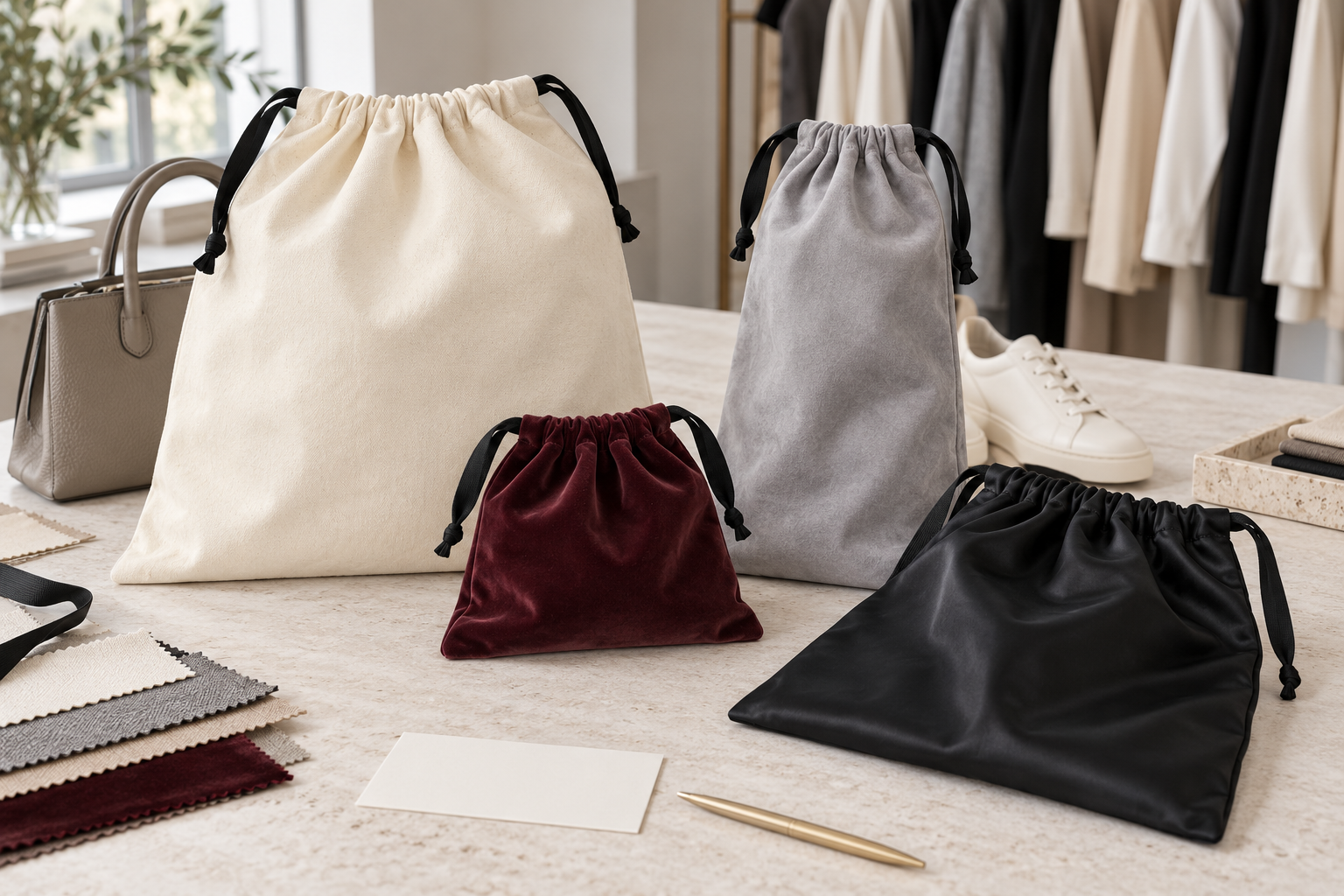
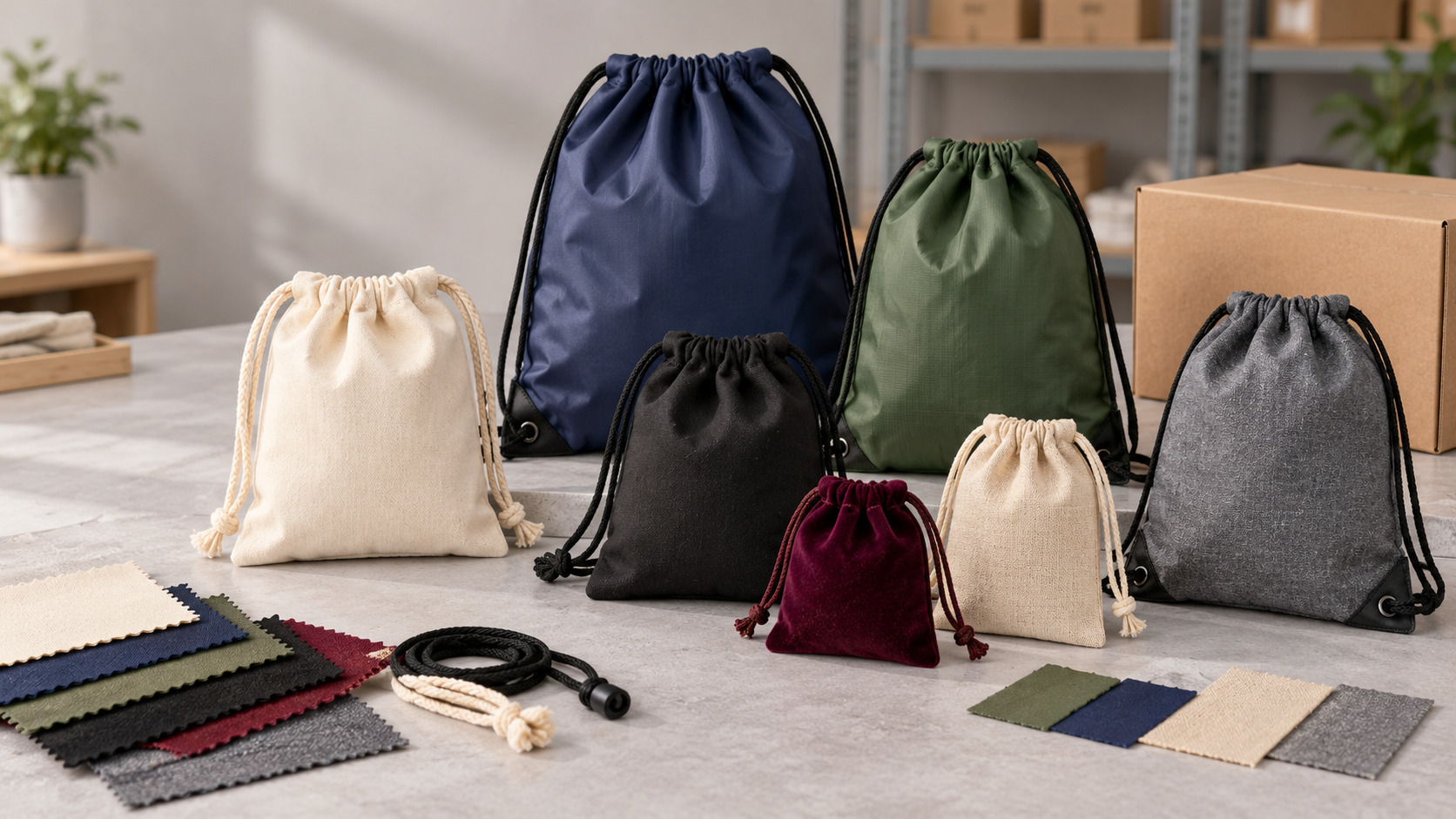
Image note: the hero is a generated cost-review illustration. It does not establish material identity, product performance, tested durability, savings, unit price, MOQ, inventory, capacity, timing, site ownership, certification or current SKU availability.