Best Materials for Custom Drawstring Bags

Last reviewed: September 16, 2026
The best material for a custom drawstring bag is the one that protects the packed item, closes smoothly, carries the expected load, accepts the intended decoration and supports the brand's evidence-based claims. There is no universal winner. Cotton may suit a natural-looking retail pouch, velvet may create a premium unboxing moment, polyester may work for a lightweight sports bag, and mesh may be preferable when visibility or ventilation matters.
For buyers, the important decision is therefore not simply cotton versus polyester. It is the complete material system: fiber, fabric construction, weight or density, finish, lining, cord, channel, seam and print process. This guide provides a practical framework for comparing those variables and turning a material name into a production-ready specification.
If you already know the application, explore LUCKYSTAR's custom drawstring bag options. If supplier evaluation comes first, use our custom bag manufacturer guide and drawstring bag manufacturer selection guide alongside this material guide.
Need a material shortlist for a real product? Send the packed item and load, intended use and user group, bag format and finished dimensions, target handfeel and appearance, cord and closure needs, artwork and decoration, quantity and colours, required performance or claim evidence, pack-out, destination and target date. LUCKYSTAR can return comparable material-system options, open risks, sample stages and order-specific evidence questions.
Quick Answer: Which Drawstring Bag Material Is Best?
For most sourcing projects, the shortlist can begin with the following use-case logic. Treat it as a screening tool, not a final specification.
| Primary requirement | Useful material route to sample | Main reason | Verify before approval |
|---|---|---|---|
| Natural retail presentation | Cotton or cotton-look woven fabric | Familiar handfeel and broad decoration options | Composition, weight, shrinkage, shade and print result |
| More body and repeated handling | Canvas construction | Structured feel and potential load performance | Fiber blend, weave, seam bulk and draw-channel movement |
| Rustic presentation | Jute or burlap-style fabric | Distinct coarse texture | Shedding, odor, dimensional stability and lining need |
| Premium small pouch | Velvet or velvet-like fabric | Soft pile and rich color depth | Pile direction, marking, backing and logo definition |
| Smooth gift pouch | Satin construction | Lustrous surface and fluid drape | Fiber identity, snagging, seam slippage and color variation |
| Soft protective pouch | Microfiber or suede-like fabric | Gentle handfeel and low-bulk protection | Surface transfer, thickness, backing and cleaning method |
| Lightweight sports or event bag | Polyester or nylon woven fabric | Low weight and practical handling | Denier or construction, coating, seam strength and print adhesion |
| Ventilated or see-through storage | Mesh | Airflow and product visibility | Hole size, recovery, edge stability and snag risk |
| Cost-sensitive light-duty promotion | Non-woven PP | Efficient construction for appropriate loads | Basis weight, seam method, handle/channel strength and intended life |
| Recycled-content program | Verified recycled-polyester route | Can support a quantified recycled-content specification | Transaction documents, scope, percentage and chain of custody |
The word “best” becomes meaningful only after the bag's job is defined. A jewelry pouch and a gym sack may share a drawcord, but their surface, load, abrasion and branding requirements are entirely different.
Start With the Bag's Five Functions
Before choosing a fabric, describe what the bag must do. A good material brief covers five connected functions.
1. Contact and protection
What touches the product? Consider abrasion, dust, moisture exposure, odor transfer, lint, delicate finishes and whether a lining or insert is needed. A soft surface is not automatically non-abrasive, and a dense fabric is not automatically waterproof.
2. Closing and gathering
The shell has to fold into the drawcord channel repeatedly. Very stiff, bulky, slippery or loosely constructed materials may require changes to the channel height, cord diameter, eyelets or reinforcement.
3. Carrying the load
Load performance comes from the combined shell, seam, cord and attachment design. Fabric weight alone cannot predict whether a bag will survive repeated lifting.
4. Carrying the brand
The surface must reproduce the required logo at the intended size and color. Screen print, heat transfer, embroidery and other methods impose different limits on detail, opacity, stretch and surface texture.
5. Packing and shipping
Material thickness, recovery and crease sensitivity affect pieces per carton, unpacking appearance and storage. A premium fabric can disappoint if compression leaves visible pile marks or permanent folds.
A Material Name Is Not a Material Specification
“Canvas,” “satin,” “velvet” and “mesh” often describe construction or appearance rather than one guaranteed fiber composition. Even “cotton bag” leaves critical variables undefined. Two suppliers can use the same material label for fabrics that behave differently in sampling and production.
| Specification layer | What to record | Why it matters |
|---|---|---|
| Fiber composition | Fiber names and percentages | Influences handfeel, care, claim language and performance |
| Construction | Woven, knitted, non-woven, mesh, pile or other structure | Influences stretch, fraying, print surface and strength |
| Weight/density | GSM, oz/yd², denier or another agreed unit where applicable | Helps control body, opacity and lot consistency |
| Surface/finish | Brushed, calendered, coated, laminated, washed or untreated | Changes appearance, adhesion, feel and packing behavior |
| Color standard | Pantone reference, lab dip or approved physical swatch | Reduces subjective color approval |
| Functional build | Lining, reinforcement, seam and channel details | Determines performance as a finished bag |
| Evidence | Supplier declaration, test report or chain-of-custody documents as relevant | Supports purchasing and external claims |
A useful RFQ replaces “12-inch cotton pouch” with an agreed finished size, tolerances, fabric composition and weight, color reference, cord type, construction drawing, artwork, packaging and test expectations. Our drawstring bag tech pack guide explains how to put those controls into one file.
Cotton: Versatile, Familiar and Specification-Dependent
Cotton is a common starting point for gift, retail, packaging and promotional pouches because buyers recognize its textile feel. It can work with simple line art or larger printed areas, depending on weave, color, pretreatment and ink system. It can also be washed or finished for a softer appearance, but every finish changes the production variables.
Where cotton works well
- Natural-looking packaging where texture is part of the brand presentation.
- Small to medium pouches that need a flexible, familiar handfeel.
- Programs that require screen print, transfer or embroidery trials on a woven surface.
- Designs where a light shell and matching cotton-look cord create a coherent appearance.
What to control
Do not approve cotton by touch alone. Specify composition, construction, weight, shade, shrinkage expectation, surface finish and dimensional tolerance. Natural fibers can show shade and texture variation, so the approved range should be documented rather than left to memory. Claims such as “organic,” “chemical-free” or “biodegradable” require their own evidence and must not be inferred from the word cotton.
Canvas: Better Body, but Not One Fixed Fiber
Canvas generally refers to a robust woven construction. It may be cotton, polyester, a blend or another specified fiber. Compared with a lighter plain weave, it can provide more body and a more substantial retail feel, but it also creates thicker seams and a stiffer draw area.
When canvas is a strong candidate
Canvas can suit reusable retail bags, footwear pouches, kits and merchandise that benefit from a structured silhouette. It may also provide a stable print surface, provided the weave texture and artwork are compatible.
The closing-system tradeoff
Heavier is not always better. Increasing fabric weight without adjusting the channel and cord can make the mouth hard to gather. Sample the final size with the actual cord and seam allowance, then test closure force, loaded lifting and repeated opening. For a focused comparison of two common promotional routes, see canvas versus non-woven drawstring bags.
Jute and Burlap-Style Fabrics: Distinctive but Coarse
Jute or burlap-style drawstring bags can support rustic, craft or natural visual directions. Their coarse yarns and open-looking texture make the material immediately recognizable, but the same characteristics can affect fine print, lint, shedding and contact with delicate products.
Questions to resolve in the sample
Inspect odor, fiber shedding, weave openness, color consistency, seam containment and draw-channel friction. A lining can create a cleaner contact surface and improve opacity, but it adds material, labor, bulk and another compatibility point. Small text and fine marks may lose definition on a coarse weave; test actual artwork rather than relying on a digital mockup.
Jute appearance alone does not prove a particular environmental outcome. The finished product still needs a defined composition, manufacturing route, expected use and end-of-life context.
Velvet and Velvet-Like Fabrics: Premium Tactility With Pile Control
Velvet is often selected for jewelry, fragrance, cosmetics, electronics accessories and gift packaging because pile creates depth and a soft handfeel. However, “velvet” can describe different fibers, pile constructions, backings and finishes.
Why pile direction matters
Pile reflects light differently by direction. Panels cut or assembled inconsistently can appear to be different colors under the same lighting. The specification should define the face, pile direction and acceptable shade appearance. Packing pressure may also leave temporary or persistent marks.
Decoration considerations
Embroidery, foil-like effects, transfer and print methods should be sampled on the exact material. A dense pile can obscure fine lines or reduce apparent edge sharpness. Decoration success depends on backing, temperature, pressure, stabilizer and artwork—not only on the process name.
Satin: Smooth Appearance, Variable Fiber and Construction
Satin describes a weave or surface effect, not a guaranteed fiber. A satin pouch may use polyester or another specified material. The smooth, reflective face suits beauty, wedding, accessory and gift applications, but it can reveal creases, needle marks and seam distortion.
Sample risks to inspect
Check snagging, seam slippage, fraying at cut edges, print or transfer adhesion, color under different light and the way the channel gathers. A soft satin may collapse attractively around a small item yet perform poorly as a larger loaded sack. Lining, overlock treatment or altered stitch density may be necessary depending on the construction.
Microfiber and Suede-Like Fabrics: Soft Protection With Hidden Variables
Microfiber and suede-like materials are useful when the brand wants a soft, matte, protective impression. They are frequently considered for eyewear, jewelry, electronics and premium accessories.
Specify beyond the surface name
Define fiber composition, thickness or weight, backing, nap direction, colorfastness expectations and whether the fabric will contact a sensitive finish. Rub testing with the actual product—or an agreed proxy—can reveal lint, dye transfer or surface marking. A soft touch is a sensory benefit, not evidence of a particular fiber or sustainability attribute.
Polyester and Nylon: Lightweight Performance Routes
Polyester and nylon woven fabrics are common routes for sports, travel, event and lightweight utility bags. They can offer low bulk, color options and practical handling, but the material label still does not specify denier, weave, coating, finish or strength.
Polyester
Polyester can be a versatile shell for lightweight gym sacks and event bags. Print quality depends on surface treatment, color, ink or transfer system, heat exposure and artwork. Dye migration or show-through should be evaluated when placing light graphics on dark fabric.
Nylon
Nylon may provide a smooth, technical hand and good flexibility in suitable constructions. Heat sensitivity, coating behavior and print adhesion should be established by sample. If water resistance is required, specify a test method and acceptance level; the fiber name alone does not prove that performance.
| Variable for synthetic woven bags | RFQ question | Sample check |
|---|---|---|
| Yarn/construction | What denier, weave and density are proposed? | Compare body, opacity and tear initiation |
| Finish/coating | Is there a coating, calendering or other finish? | Check odor, blocking, cracking and surface feel |
| Color | How will color be approved and controlled? | Review lab dip or physical sample under agreed light |
| Decoration | What method suits the fabric and artwork? | Test adhesion, migration, stretch and rub behavior |
| Seams | What seam and reinforcement are proposed? | Conduct loaded and cyclic opening tests |
Recycled Polyester or RPET: A Material Route Plus an Evidence Route
Recycled polyester may be selected when a brand has a defined recycled-content objective. Visually, it may be impossible to distinguish from conventional polyester, so appearance cannot verify the claim. Buyers should specify the percentage, scope, calculation basis and documentary evidence required for the specific order.
The Textile Exchange Recycled Claim Standard and Global Recycled Standard overview explains that recycled-material claims involve third-party certification and chain-of-custody criteria. Its Content Claim Standard overview also highlights documentation, material handling and volume reconciliation. These references describe verification systems; they do not mean that every supplier, facility, fabric or LUCKYSTAR order is certified.
A practical evidence checklist
| Evidence point | Buyer question | Why it matters |
|---|---|---|
| Claimed percentage | Is it a percentage of the shell, total textile input or finished bag? | Prevents an ambiguous headline number |
| Certified scope | Which organization, site, process and product scope are covered? | A certificate may not cover the quoted order |
| Validity | What are the issue and expiry dates? | Certification status is time-bound |
| Transaction trail | What order-level documents connect material to finished goods? | Supports traceability through the chain |
| Non-certified components | What are the cord, lining, thread, ink and trims made from? | Prevents a shell claim from becoming a whole-bag claim |
LUCKYSTAR does not treat a recycled-looking fabric or old document as universal proof. Any recycled-content wording should be confirmed against the applicable material, supplier evidence and order scope before publication.
Mesh: Choose Hole Size and Recovery, Not Just Fiber
Mesh works when airflow, drainage or product visibility matters—for example produce, sports equipment, beach items or organized storage. Performance depends on fiber, knitting or weaving method, hole size, stretch recovery, edge stabilization and seam construction.
A fine mesh may hold smaller objects but reduce ventilation; a large opening may increase snag risk. Test the smallest packed item, sharp edges and loaded deformation. The draw channel often needs a denser companion fabric or reinforcement because the open structure alone may not hold stitching and cord pressure reliably.
Non-Woven PP: Efficient for Defined Light-Duty Programs
Non-woven polypropylene can suit promotional, event and light-duty packaging programs where the specification is matched to the load and expected service. Basis weight, bonding, color, seam method and channel reinforcement all affect the result.
Where buyers go wrong
The common mistake is to choose the lowest basis weight before defining the packed item and reuse expectation. A bag that passes a visual sample may fail when a loaded cord concentrates force at the top corners. Sample the final construction, not only a flat material swatch. Also avoid treating “reusable” as an automatic material label; expected use, design durability and consumer behavior all matter.
Match Material to the Product and Customer Journey
The best material supports both the product and the moment in which the customer encounters it.
| Application | Shortlist to test | Design focus | Common mismatch |
|---|---|---|---|
| Jewelry or watches | Velvet, suede-like fabric, satin | Soft contact, small size, refined closure | Coarse cord or logo too detailed for pile |
| Fragrance, candle or soap | Cotton, canvas, satin, lined jute | Odor/contact review, upright presentation | Assuming fabric protects against leakage |
| Shoes and handbags | Cotton, canvas, microfiber, polyester | Scuff protection, breathability, usable opening | Bag dimensions based only on flat product width |
| Gym and sports | Polyester, nylon, mesh | Loaded carry, sweat/moisture context, cord comfort | Thin cord or weak corner construction |
| Event giveaway | Non-woven PP, polyester, cotton | Print visibility, distribution volume, packing | Over-specifying premium fabric but under-specifying print |
| Reusable retail | Canvas, cotton, woven synthetic | Repeated load and brand visibility | Choosing weight without reuse testing |
| Produce or ventilated storage | Mesh or hybrid mesh/solid fabric | Hole size, drainage and edge stability | Openings larger than the packed item |
| E-commerce insert pouch | Cotton, non-woven, satin, microfiber | Flat packing and unboxing presentation | Crease-sensitive material compressed too tightly |
This matrix should produce two or three sample candidates, not an instant purchase order. Use the sample development process to compare them under the same artwork, size and test conditions.
Cord and Channel Compatibility Can Change the Winner
A shell material cannot be approved independently from its closure. Cord diameter, surface, elasticity and end treatment influence both feel and function. The channel height and seam allowance must accommodate the material stack after folding.
| Shell behavior | Possible closure response to test | Failure signal |
|---|---|---|
| Thick or stiff canvas | Larger channel or adjusted cord diameter | Mouth does not close fully |
| Slippery satin | Controlled cord surface and secure end treatment | Knot loosens or cord retracts |
| Coarse jute | Smoother cord or lined channel | High pulling force and abrasion |
| Stretch mesh | Reinforced solid-fabric channel | Distortion or stitch pullout |
| Lightweight synthetic | Low-bulk seam and suitable cord | Puckering or fabric cutting at channel exit |
| Pile fabric | Clean channel construction and directional cutting | Uneven gathering or crushed pile |
Test opening and closing repeatedly with the intended load. Record whether the cord ends fray, knots move, channel exits distort and the bag mouth reopens after closure.
Match Decoration to the Exact Surface
Decoration should be selected after the material shortlist—not added at the end. Each surface changes the way a mark appears.
Screen print
Often effective for bold artwork on suitable cotton, canvas, non-woven and some synthetic surfaces. Weave texture, ink opacity and curing conditions can change edge definition and handfeel.
Heat transfer
Can reproduce multicolor designs on compatible fabrics, but temperature and pressure must suit the substrate and finish. Test for gloss changes, dye migration, bonding and distortion.
Embroidery
Adds texture and perceived value but introduces needle penetration, thread weight and backing. It may overwhelm a lightweight shell or disappear into deep pile unless the artwork is adapted.
Other effects
Foil-like, puff, silicone, woven-label and patch routes can be evaluated where suitable. Their availability and performance depend on the order specification. Never assume a digital rendering predicts production color or texture.
| Surface | Artwork direction | Proof to request |
|---|---|---|
| Smooth woven cotton/canvas | Bold lines, controlled ink coverage | Strike-off or decorated sample |
| Coarse jute | Larger marks and simplified detail | Actual-size print on quoted fabric |
| Velvet/pile | Simplified logo or embroidery test | Directional-light review and rub test |
| Satin | Lightweight, low-distortion application | Heat/pressure test and seam review |
| Synthetic woven | Process compatible with finish and color | Adhesion, migration and rub checks |
| Mesh | Label/patch or print only on compatible solid area | Finished construction sample |
For repeatable decoration decisions, pair this guide with the custom drawstring bag manufacturing process, which maps artwork approval to material sourcing, sampling and production controls.
Weight Matters, but Construction Matters More
GSM, oz/yd² and denier can help compare material options, but they are not interchangeable measures and cannot replace finished-bag testing. A heavier fabric may feel premium, yet a poor seam or narrow cord can still fail. A lighter engineered construction may perform well for its intended load.
Use weight as a control point within one material family. Approve a range, measurement method and tolerance, then verify dimensions, seam strength, opacity, handfeel and closure behavior on the finished sample. Also check whether the bag's quoted size is a flat outer dimension or usable internal space after seams and gathering.
Linings, Coatings and Laminations Create a New Material System
Adding a lining can improve contact feel, opacity, body or appearance. A coating or lamination may add a functional or visual property. Each addition also creates new variables: bonding, seam bulk, recyclability context, odor, flexibility, cracking, delamination and packing behavior.
Do not describe a coated bag as waterproof without a defined performance test. “Water-resistant” also needs an agreed method and use condition. Likewise, a lining that protects a product does not automatically make the bag suitable for food contact or other regulated uses.
Environmental Claims Need Product-Level Evidence
Material selection and environmental marketing are related but not identical. The U. S. EPA's sustainable materials management framework uses a life-cycle perspective that includes extraction, manufacturing, use, reuse, maintenance and end-of-life management. That means a material name alone cannot establish total environmental performance.
The current ISO 14021:2026 overview sets principles and requirements for self-declared environmental claims and their supporting evaluation and documentation. Before using words such as recycled, recyclable, compostable or biodegradable, define exactly what is being claimed, for which component, under what conditions and with what evidence.
| Proposed claim | Minimum clarification before use | Avoid |
|---|---|---|
| Recycled content | Percentage, component scope, calculation and chain documentation | “Made from recycled materials” with no quantified scope |
| Recyclable | Material combination, collection/sorting reality and target market | Universal recyclability language |
| Reusable | Intended use, durability design and relevant test/consumer context | Treating every thicker bag as automatically reusable |
| Organic | Valid certification/evidence tied to material and order | Inferring organic from natural color |
| Biodegradable/compostable | Standard, conditions, components and certification where applicable | Unqualified “earth-friendly” language |
| Lower impact | Defined comparison basis, boundary, data and period | Broad superiority claims without a study |
This evidence gate protects both the buyer and supplier. LUCKYSTAR can discuss order-specific material and documentation requirements, but certifications and claims remain subject to the applicable entity, facility, scope, product and validity period.
Build a Short Sample Ladder Instead of Ordering Blind
A controlled sample ladder reduces expensive changes after bulk material is committed.
- Material swatches: Compare texture, color, weight, opacity and finish.
- Construction sample: Confirm size, channel, seam, cord and usable opening.
- Decorated sample: Approve logo size, location, color and surface result.
- Functional verification: Test load, opening cycles, rub, dimensions and product fit.
- Sealed reference: Retain the signed or digitally controlled approval for production comparison.
Define which stage is chargeable, how revisions affect timing and what “approved” means. Our MOQ and production-time guide explains why material availability, decoration and sampling decisions affect both minimum quantity and schedule.
Material Testing and Approval Checklist
The right test plan is tied to the application. A promotional giveaway does not need the same protocol as a pouch contacting a polished accessory.
| Check | Suggested method | Record |
|---|---|---|
| Composition/documentation | Review agreed material declaration and relevant evidence | Source, date, scope and lot/order link |
| Weight/density | Measure using the agreed method | Individual results, average and tolerance |
| Color | Compare to approved lab dip or physical standard under agreed lighting | Instrumental or visual acceptance rule |
| Dimensions | Measure flat and usable dimensions | Points of measure and tolerances |
| Draw operation | Repeat open/close cycles on finished bag | Force, snagging, fraying and reopening |
| Load | Lift or cycle with defined mass and duration | Seam, cord, channel and deformation results |
| Decoration | Rub, stretch or adhesion review as applicable | Method, cycles and pass criteria |
| Product contact | Place actual product or approved proxy in bag | Lint, transfer, scratches, odor and fit |
| Packing | Pack to proposed carton configuration | Creasing, pile marking, recovery and count |
For production-level inspection planning, use the custom bag quality inspection checklist.Test standards and acceptance levels should be agreed in writing for the specific product and market.
How Material Choice Affects Cost, MOQ and Lead Time
Material cost is only one part of total unit economics. Stock status, custom dyeing, minimum roll quantity, cutting yield, seam speed, decoration setup, lining, reinforcement, inspection and carton volume can matter just as much.
| Decision | Potential cost/MOQ effect | Lower-risk response |
|---|---|---|
| Custom-dyed fabric | May require material-level minimums and extra approval time | Compare stock colors with custom color value |
| Heavy canvas or lined build | More material, seam bulk and shipping volume | Test the lightest construction that meets the use case |
| Fine multicolor logo | More process control or different decoration route | Simplify art or compare two approved methods |
| Specialty velvet/satin | Availability and lot variation may influence schedule | Reserve material only after sample approval |
| Mixed-material bag | More sourcing and assembly points | Use each component only when it solves a defined need |
| Recycled-content claim | Adds documentation and traceability requirements | Define evidence before quotation |
Never remove a reinforcement or reduce weight without revalidating the bag. The better objective is cost per acceptable use, not the lowest quoted unit price. See how to reduce drawstring bag costs without sacrificing quality and the 2026 drawstring bag pricing guide for a structured commercial review. All commercial terms remain subject to specification and written confirmation.
How to Compare Two Material Quotes Fairly
Normalize the specification before comparing prices. If Quote A uses a lighter shell, smaller usable size, stock color and simple print while Quote B uses custom color, lining and embroidery, their unit prices do not describe supplier competitiveness.
Create one comparison sheet with finished size, composition, construction, weight, color route, cord, lining, print method, packaging, inspection, quantity and Incoterm. Mark every deviation. When a supplier proposes a substitute, ask which performance and appearance variables change.
For an overseas program, material normalization should happen before the logistics comparison. Use the guide to importing custom drawstring bags from China to align samples, trade terms, shipment documents and destination requirements.
Company-claim boundary: the following section is publisher self-description and a commercial sourcing option. It does not independently prove factory ownership, in-house control of every operation, universal material availability, composition, performance, certification, compliance, test results, environmental benefit, capacity, stock, MOQ, price, timing or superiority. The legal seller, assigned sites and subcontractors, material and component route, samples, evidence, tests, QC, packing and delivery terms depend on the exact order, destination, released specification and written confirmation.
Why Choose LUCKYSTAR for Material Development?
LUCKYSTAR approaches material choice as an order-specific engineering and sourcing decision rather than a catalog label. For the website context, the operating entity is Ningbo Luckystar Commodities Co., Ltd. Buyers can discuss OEM, ODM or hybrid development routes, including drawing-based, sample-based and full-custom projects, subject to the agreed specification and written quotation.
One brief across material, construction and decoration
We help translate the application into comparable options: shell material, weight, cord, channel, lining, decoration and packaging. This prevents a fabric decision from becoming disconnected from the finished bag.
Sample-led approval
Material swatches, construction samples and decorated samples can be used to close the gap between a digital concept and production reality. The exact sample route, fee and timing depend on the project.
Practical quality checkpoints
Dimensions, draw operation, cord ends, seam execution, decoration and cleanliness can be included in the order-specific control plan. Requirements should be documented in the tech pack and approval record.
Disciplined claim language
We do not turn a material name, old report or supplier statement into a universal certification claim. If your program includes recycled content or another environmental attribute, specify the evidence, scope and intended market at the RFQ stage.
A clear development model
If you own a complete specification, an OEM route may fit. If you need the supplier to develop more of the product solution, an ODM or hybrid route may be more efficient. The OEM versus ODM drawstring bag guide helps assign design authority, approvals and change control before sampling.
RFQ Template for Custom Drawstring Bag Materials
Send enough information for suppliers to quote the same product.
| RFQ field | Information to provide |
|---|---|
| Application | Packed product, customer journey and expected use |
| Dimensions | Finished width/height/gusset plus points of measure and tolerance |
| Load | Product weight, shape and any sharp or sensitive surfaces |
| Material | Candidate fiber/construction, weight/density, finish and color |
| Closure | Single/double draw, cord material/diameter, end treatment and channel |
| Decoration | Artwork file, size, position, colors and preferred/acceptable methods |
| Interior | Lining, divider, insert or contact-surface requirements |
| Performance | Load, cycle, rub, color, dimensional and product-fit checks |
| Claims/evidence | Exact wording, component scope, standard and document requirements |
| Order | Quantity by color/design, destination, packing and requested delivery window |
Attach drawings and reference samples where possible, but state which features are mandatory and which are inspiration only. If you are developing a new shape, follow the drawstring bag sample development guide before approving bulk material.
Common Material-Selection Mistakes
Choosing by photograph
Lighting and editing hide weight, texture, opacity and handfeel. Request physical swatches or a sample in the proposed material.
Choosing the heaviest option
Extra weight may increase cost, seam bulk and carton volume without improving the actual failure point.
Ignoring the packed product
The item inside determines abrasion, fit, load and contact risks. Test the real product whenever practical.
Approving material before decoration
An attractive blank pouch can fail once heat, ink, pressure or embroidery is applied.
Using a certification as a material adjective
Certification is scope- and validity-dependent. Verify the entity, site, process, product and order documents before making a public claim.
Treating a sample as the specification
A sample shows one result. Production control still needs measurable requirements, tolerances and an approved reference.
Final Material Selection Scorecard
Score each candidate against the same weighted criteria. Adjust the weights for your program.
Project score
| Criterion | Example weight | Cotton | Canvas | Velvet | Polyester | Mesh |
|---|---|---|---|---|---|---|
| Product protection and fit | 25% | Project score | Project score | Project score | Project score | Project score |
| Closure and load performance | 20% | Project score | Project score | Project score | Project score | Project score |
| Decoration result | 15% | Project score | Project score | Project score | Project score | Project score |
| Brand look and handfeel | 15% | Project score | Project score | Project score | Project score | Project score |
| Evidence/claim readiness | 10% | Project score | Project score | Project score | Project score | Project score |
| Packing and logistics | 10% | Project score | Project score | Project score | Project score | |
| Commercial fit | 5% | Project score | Project score | Project score | Project score | Project score |
Do not fill the table with generic internet scores. Use actual samples, supplier documents, test results and landed-cost inputs. The winning material is the one that meets the agreed acceptance criteria with the fewest unresolved risks.
Frequently Asked Questions
Is cotton always the best material for custom drawstring bags?
No. Cotton is versatile, but the best route depends on load, product contact, closure, decoration, packing and claim requirements. A synthetic woven fabric may be better for a lightweight sports bag, while velvet may be better for a small premium pouch.
Is canvas always made from cotton?
No. Canvas describes a robust woven construction and may be made from cotton, polyester, a blend or another specified fiber. Confirm the composition and weight in the quotation and approval sample.
Which material gives the sharpest logo?
Smooth, stable surfaces often support finer reproduction, but artwork, ink, transfer film, pressure, curing and color contrast also matter. Run a strike-off or decorated sample on the exact production material.
What is the best material for a luxury drawstring pouch?
Velvet, satin, microfiber, fine cotton and lined constructions can all create premium results. The decision should reflect the product's surface sensitivity, desired handfeel, logo technique and packing method.
Can I call an RPET drawstring bag sustainable?
Avoid a broad, unqualified claim. Define the recycled-content percentage and component scope, verify chain documentation, and assess other life-cycle factors. Use wording your evidence can support in the target market.
Does a thicker fabric always last longer?
No. Service life depends on fabric construction, seams, reinforcement, cord, channel, load and use. Test the finished bag under a defined cycle and load.
How many materials should I sample?
Usually two or three well-chosen candidates are more useful than a large unfocused set. Keep dimensions, cord and artwork constant so the comparison isolates the material decision.
Can LUCKYSTAR recommend a material?
Yes, based on the packed product, use scenario, target appearance, decoration, quantity, destination and evidence requirements. Final availability, performance, MOQ, price and timing are subject to specification, sampling and written confirmation.
Choose a material system by evidence and end use
Define the product job, compare a short list under the same dimensions, cord, decoration and packing, then approve the finished construction with a controlled reference and explicit claim evidence.

Review LUCKYSTAR custom drawstring bag options, then send your material-development brief through the contact form or Email a project brief. The email link opens a prefilled draft for your review before sending.
Material identity, composition, available colours, substitutions, performance, certification, claims, evidence, testing, inspection, capacity, stock, price, MOQ, samples, packing, schedule and delivery terms are subject to current order-level verification, destination requirements, released specification and written confirmation.
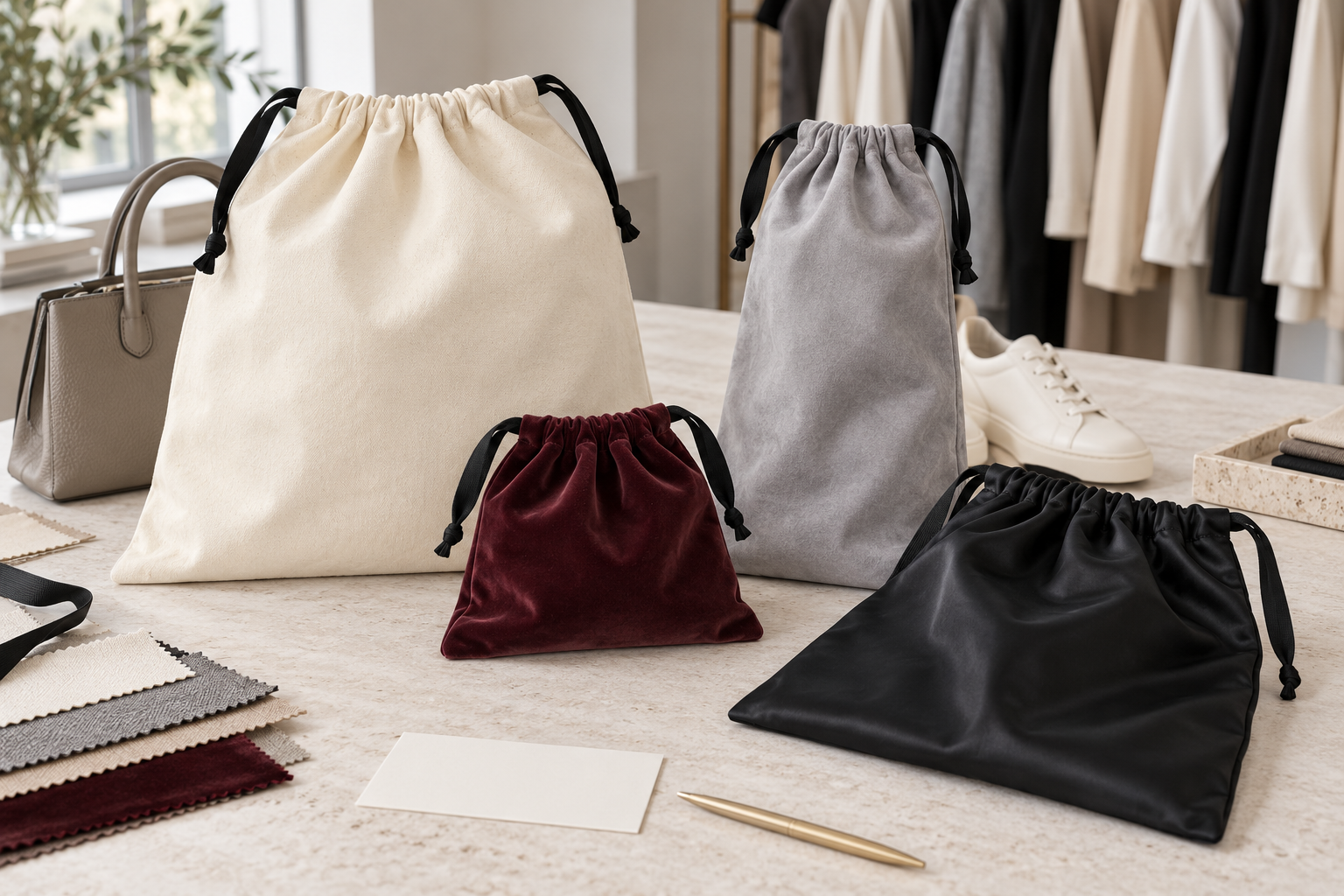
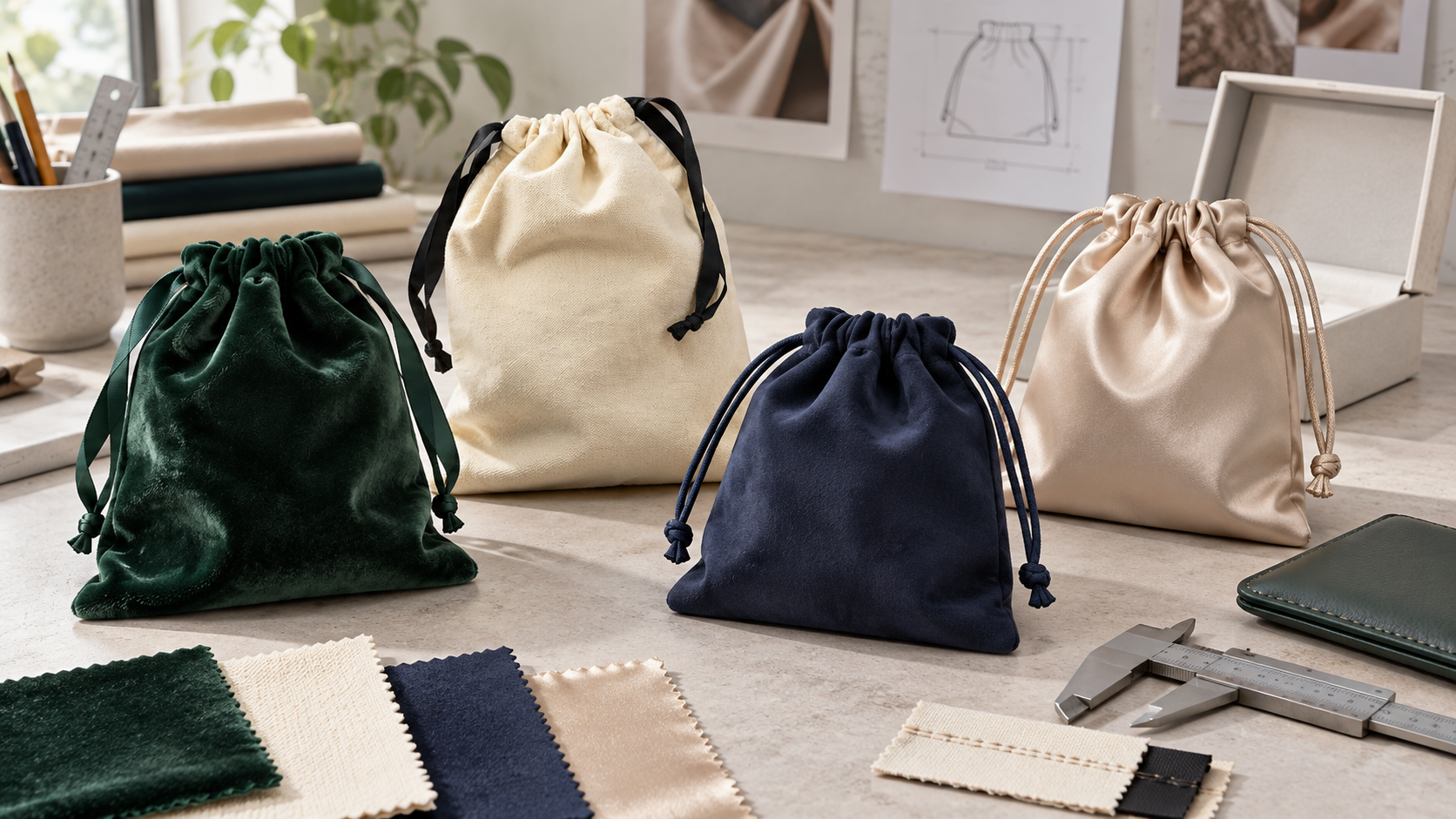
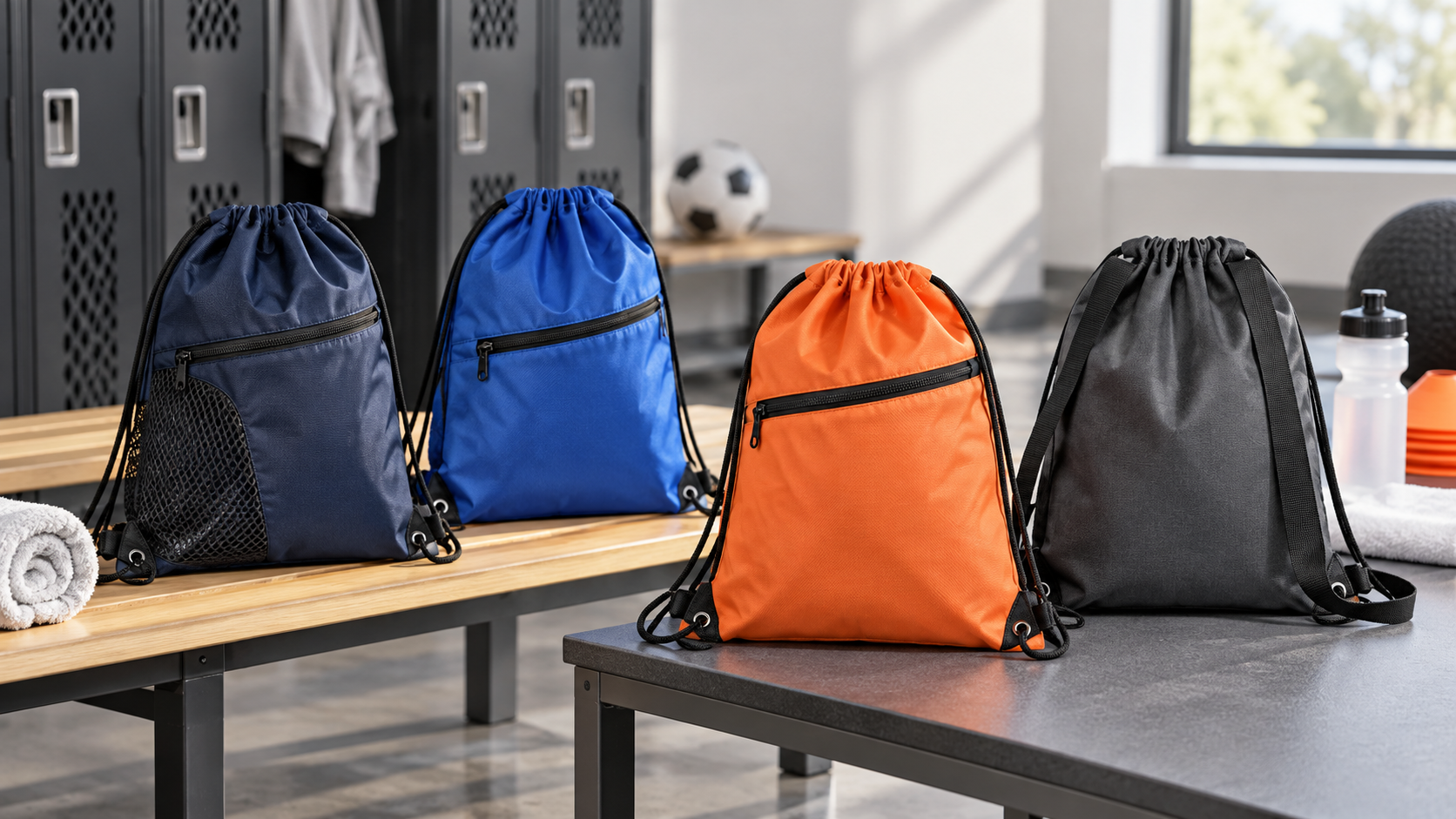
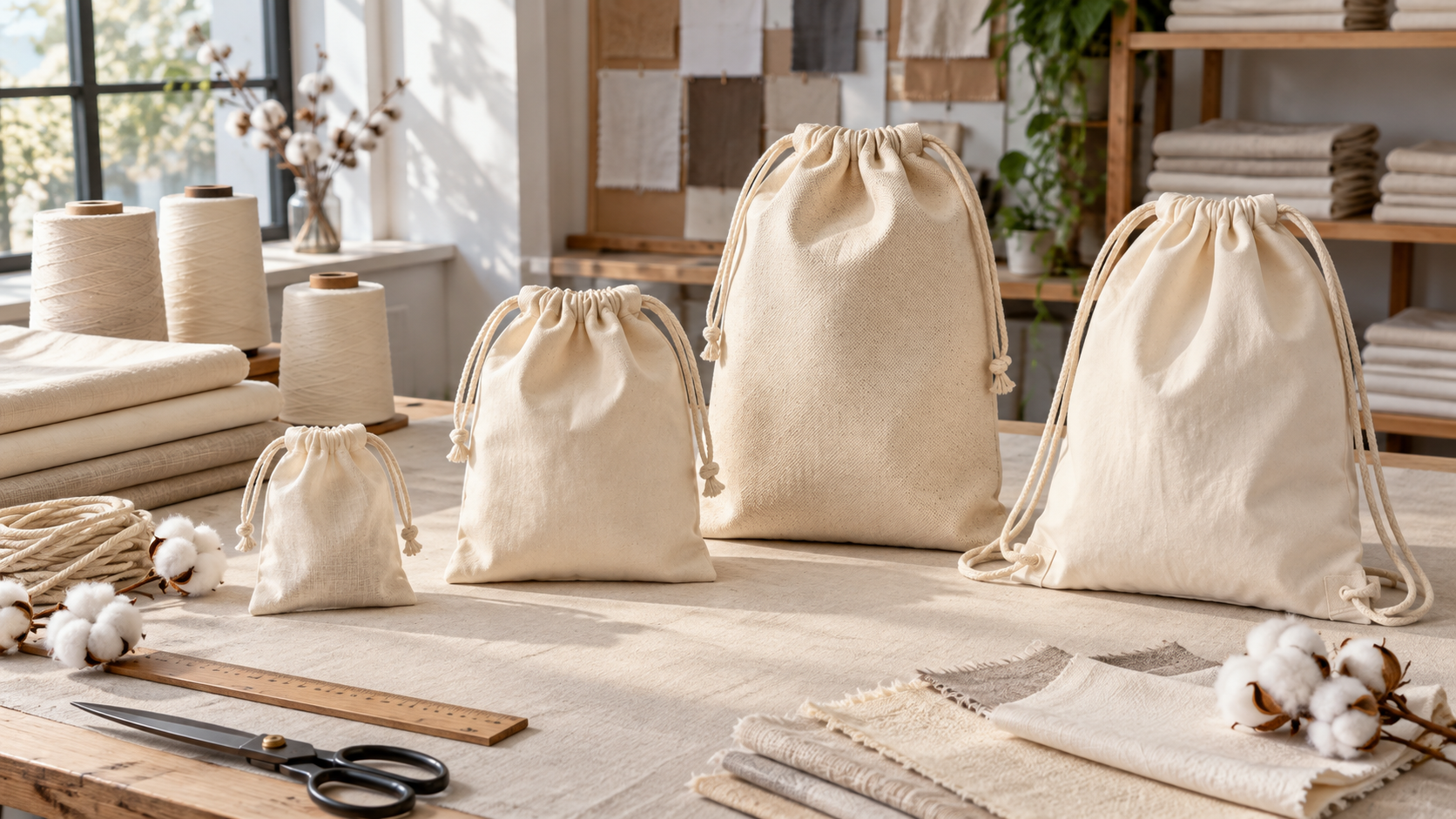
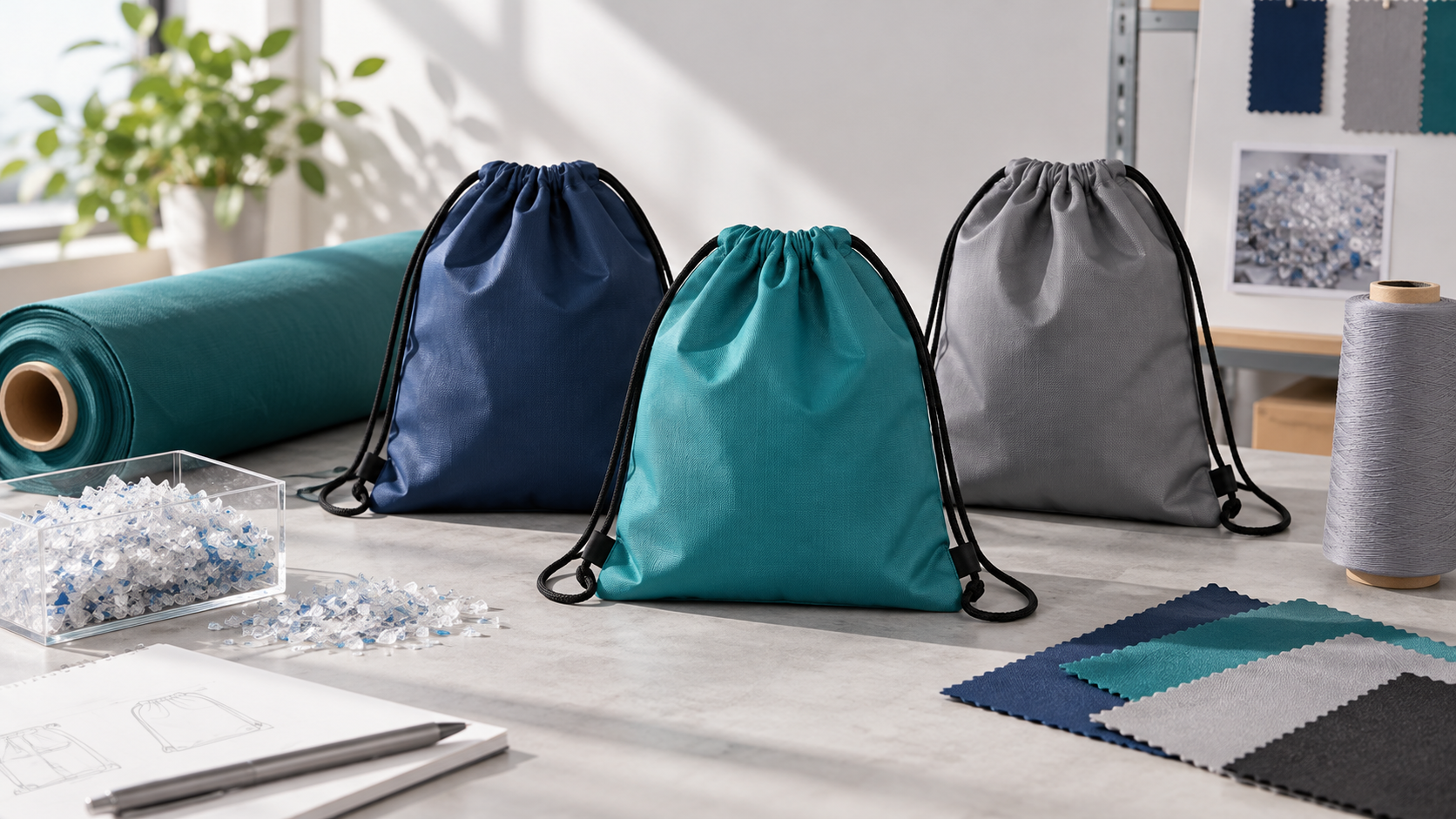
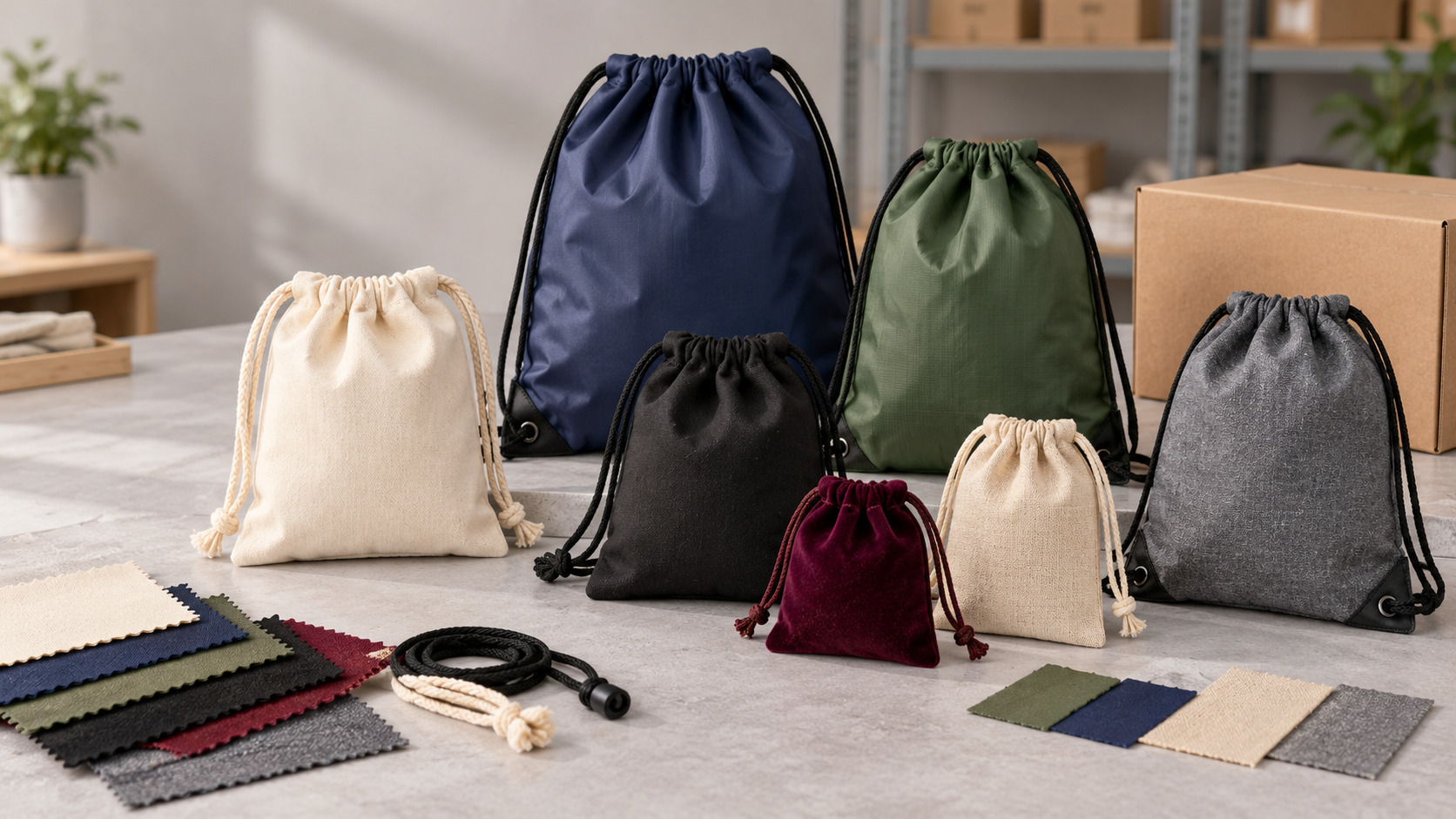
Image note: the hero is a generated material-selection illustration. It does not establish fiber composition, recycled content, material weight, performance, certification, testing, environmental benefit, site ownership, inventory, capacity, price, MOQ or timing.